Cover Versions, Gone but not forgotten, Hard-to-find

Turtle-y Magic

Field Music are a real enigma. Nominees for this year’s Mercury Music Prize, like most who appear on the list they occupy a strange place somewhere between cult band and the mainstream. A hotchpotch of clanging riffs with prog leanings, their music isn’t all that original. Their music isn’t all that groundbreaking either. Plenty of other artists have used similar instruments to similar effect. And their music, like plenty of artists before them, is not that well-known outwith those in the know (think this generation’s XTC). But their music is colossal. And tuneful. And therefore radio-friendly. And by rights they should be a whole lot more successful (whatever that is these days) than the latest hastily assembled ‘gang’ of skinny-jeaned, stupid-haired, stage school stooges armed with various combinations of the same tune and not much else. Despite the best efforts of those in positions of influence, such as 6 Music’s Marc Riley, who plays them and enthuses about them ALL THE TIME, Field Music aren’t so much under most folks’ radar as completely off it.

A few weeks ago they released a very limited (and now sold out) covers LP. Featuring their versions of Robert Wyatt, Pet Shop Boys, Roxy Music etc etc songs, it has the uncanny knack for a covers album of sounding like the band who made it, not the band who wrote it. Not for Field Music a faithful run through of Ringo’s plodding country ‘n western heartache ‘Don’t Pass Me By’. Instead, they turn what is undeniably a Beatles clunker into something that could sit happily on 2010’s Measure LP. Warm, metallic and with added Beatles riffs/references for those in the know.

Best track to these ears is their version of Syd Barrett‘s Terrapin. Barely recognisable from Syd’s whimsical off-kilter psychedelic sketch, Field Music add riff upon riff to doubletracked vocal upon doubletracked vocal. The outrageous falsetto breakdown in the middle reminds me of an old Beatles bootleg I have where you get to hear John and Paul working out the harmonies to Taxman. It really does sound terrific – incredibly well-produced, tight, taut and with perfectly-executed sudden stop silent bits – and normally I wouldn’t post something as box-fresh as this. However, given that the LP is already sold out and never to return, well…..

Syd, of course, is very much a musicians’ musician. The great and the good all dig Syd and for many The Pink Floyd of the mid 60s are far more credible than the stadium-hogging Floyd (Man) of the mid 70s. The Trashcan Sinatras created a luscious and bluesy 6 and a half minute paen to Syd, choc-full of nudge, nudge, wink, wink references to Syd and his music. Emily. The UFO Club. Painting. Hand in hand with The Eskimo. Even the title, Oranges & Apples is Syd-like and a play on The Pink Floyd’s Apples & Oranges. But you knew that already. Give it a listen. It’s one of the best things the Trashcans ever did. Quite something when you consider the embarrassment of riches in their back catalogue.

*Bonus Track!

Field Music‘s Them That Do Nothing from their Measure LP. The perfect introduction to the sound of Field Music, it‘s XTC-esque in its pastoralism, sonically-rich with its chiming guitars and tight-knit harmonies and unexpected left-turn wonky bits. Jeez. That’s a sentence I doubt I’ll ever write again.

Gone but not forgotten, Hard-to-find, Sampled

It’s Chic Co. Time

Jeez! Plain Or Pan used to be all about Beta Band outtakes and multiple versions of La’s demos, the odd foosty soul survivor and long-forgotten obscurios by long-forgotten oddballs. It still is, of course, but just not today.

I have a long-time love of disco. To these ears, it doesn’t matter that it’s considered kinda naff and uncool, which, when placed next to any amount of other musical bits n’ pieces, it may well be. In the mid-late 70s, when straddled by the ugly, oiky twin-headed monster of glam and punk, it was certainly the musical choice for the straight-laced amongst society. Folk who bought one single a year bought Saturday Night Fever. Folk who bought one single a week owned the entire back catalogues of The Sweet and Sham 69. What I like about disco is the musicality of it all. If the Floyd (man) and Can (man) are head music, disco is most definitely music designed for below the waist. Rock music is, they say, ‘proper’ music. But so is disco! Made on proper instruments and played as well as or even better than the patchouli-smelling long hairs in afghan coats from bygone eras, disco is all about a slick riff, a fluid bassline and a four-to-the-floor, hi-hat enhanced beat that never lets the lyrics get in the way of a good groove.

The difference between rock and disco is that rock music has the virtuosos, the soloists and the guitar heroes. Who’s Pink Floyd’s guitarist? Easy, eh? But if I asked you to tell me who played the slick riffs on Night Fever or Rock Your Baby, chances are you’d be struggling. You could probably have a good stab at naming half the members of Can. But asked to tell me who played the fluid basslines on Car Wash or Young Hearts Run Free and chances are you’d be asking the audience or phoning a friend who answers to the name of Mr Google. Disco, for one reason or other has been ridiculed and put in its place as someway unimportant. Of course there are exceptions to the rule.

Nile Rodgers was developing serious Class A substance abuse at the age most of us are just getting to grips with the technicalities of Eagle-Eyed Action Man. Passed back and forth at a young age from East Coast to West Coast on a succession of Greyhound buses between his drug-addicted prostitute mother and far-off, far-out aunts and uncles on the other side of America, it’s a wonder he thrived at all. But thrive he did. Playing in a variety of  covers acts, reputation enhanced by his ability to read music, fate lead him to Bernard Edwards and eventually Chic were born. It was watching an early Roxy Music show that gave Nile his band’s manifesto: The clothes were as important as the music. The women on the record sleeves would give the band glamourous identity. Chic would be a company. An organization. Singers would come and go, but the core of Rodgers and Edwards would remain the constant. They’d write songs for other artists. They’d discover knew ones. Like an East Coast Family Stone, in sharp suits rather than hippy garb, but fuelled by the same high grade white powders, Chic and their music would rule the world. You know the songs. You know the stories. You can read all about it in Nile’s excellent ‘Le Freak‘ autobiography.

It’s worth noting that the Nile Rodgers’ guitar sound has been appropriated by the musos that form white rock’s guitar untouchables. Edwyn Collins’ blatant homage to the sound can be heard all the way from the opening bars to the fade out of Orange Juice’s Rip It Up (perhaps even more so on the strangulated none-more-80s 12″ mix). Johnny Marr was so enraptured by Nile that he based his guitar line on the second verse of The Boy With The Thorn In His Side on those wee choppy rinky-dink Chicisms. Johnny turned up earlier on in the year playing Le Freak on stage with Nile. And just in case you missed the point, he even named his son Nile. Dance records over the past decade or so, proper dance records, made by machines and everything, often stray close to the Chic sound. Modjo’s Lady for one. Spiller’s Groovejet another. And Stardust’s The Music Sounds Better With You. Chicesque, the three of ’em. Even Da Funk by Daft Punk is built around that clipped guitar sound. Ubiquitous. Is that not what they say?

Here are some of the Chic Organization’s wonderful world-ruling results. Every one features Bernard’s ripe-for-sampling, slap-happy, fluid-as-mercury bassline and Nile’s trademark 3 string rinky-dink guitar, chattering away incessantly in the background like a couple of old ladies clacking their false teeth at one another down the Mecca on a Saturday night. It might just be my favourite sound in music.

ChicGood Times

Norma JeanSorcerer (12″ mix)

Diana RossUpside Down (original Chic mix)

Sister SledgeThinking Of You (Dimitri From Paris mix – officially sanctioned by Chic, it’s a cracker)

Carly SimonWhy (12″ mix)

And the influence of Good Times et al lives on, seemingly forever…

Cover Versions, Get This!, Gone but not forgotten, Hard-to-find

This Is My Truth, Tell Me Yours

It’s the mid 90s and Everything Must Go has just been released by the Manic Street Preachers. An album full of Spectorish bombast and tunes for van drivers to whistle, it’s light years away from their previous album, the Richey Edwards-enhanced The Holy Bible, an album so difficult to digest in one sitting that Everything Must Go sounded like S Club 7 in comparison. And whilst the hardcore MSP fans point to The Holy Bible as ‘the one’, the million+ sales and ubiquity of Everything Must Go (despite half the songs featuring Edwards’ oblique lyrics) made chart stars (and millionaires) out of the Manics.

At this time, I was fighting in the trenches of the Britpop wars, working in music retail. Now, speak to anyone in retail and they’ll tell you unbelievable-but-true stories about the regulars who frequent their shops. Our shop was no different. We had a regular customer, an older guy with a cracking quiff, complete with an electric blue streak up the front, who wore the Elvis aviator shades in November and the ’68 Comeback leather jacket in July. He spoke in a hokey hillbilly American accent and gave his address as Dundonald whenever he ordered something. Dundonald, in case you need to ask, is about as near to America as Mars. People in Dundonald tend to speak in broad Ayrshire, though with a slightly posher accent, given that the village (?)/town (?) is located just inside the environs of the beautiful South of Ayrshire, and a couple of generous Colin Montgomerie drives from the fourth tee at Royal Troon. He always gave his name as Jesse Garon, which just so happens to be the name of Elvis’ twin brother who died at birth. “Je-huss-ay Gar’n, suh,” he’d drawl, without the slightest hint of irony. Local lunatic, eccentric and Elvis freak, I thought he was great. Jesse, it turned out, was highly thought of and sought-after in the world of tribute acts, and had a regular gig in Blackpool, doing a kinda Scottish McElvis tribute. Which is ironic really, given that off-stage he spoke cod-Elvis, yet on-stage he celebrated his Scottishness, wearing a white cape with a saltire emblazonned across the back and whatever else have you. Every Summer he’d head off for the season and do his well-polished Elvis act for the stags ‘n hens’ n’ steamers ‘n stoaters who stumbled into the music hall at the end of the pier. (If you’re an MSP fan, by now you may have worked out where this is going).

One day, Jesse popped in to order something. “Ahm lookin’ fur sumthin’ swampee. S’gotta be swampee. Y’know like when thu Deep South mists roll across them swamps? Ah need music ta soun’track that. S’for ma show, y’see. Intra music ta make tha folks sit up an notice that ol’ Elvis here is ’bout ta enter tha building.”  A long while later, after having exhausted my general knowledge of all things swampy, he settled on a since-forgotten bit of Ry Cooder slide blues. This, he assured me, was just what he was after. And, with a wee Elvisy point of his index finger in my direction, and a tip of the gold-framed aviators, off he went.

I’ve hunted high and low and googled near and far for a qualifying quote to back me up here, but to no avail. So you’ll just have to believe the next bit. James Dean Bradfield, talking about the Everything Must Go album mentioned that opening track Elvis Impersonator, Blackpool Pier was written after him and Richey Edwards had watched an Elvis impersonator do his act at the end of Blackpool Pier. Bradfield mentioned that the impersonator was (and I’m paraphrasing here) “crap and Scottish” – two things yer actual Elvis wasn’t. Now, I know there are approximately more Elvis impersonators than there are people in China, but when you add ‘crap’, ‘Scottish’ and ‘Blackpool’ into the mix, well, all the signs pointed to the one Elvis impersonator I knew. The next time Jesse was in the shop, probably about a year later, when preparing ‘intra music‘ for his next set of shows, I told him about the Manic Street Preachers and their massive-selling album and about the first track on it and how the band had written it after seeing a Scottish Elvis impersonator in Blackpool (though missed out the part about him being crap) and let him hear the song. You could tell he was quietly pleased at the thought of someone writing a song about him, especially as it was the opening track on such a successful LP, even if he did think the song itself was “a crocka sheeeit, sonny! Crocka sheeeit!”, a phrase everyone and their mother heard as he bawled it across the counter whilst wearing the big headphones perched on top of his blue-streaked quiff.

During his fat Vegas years, ol’ Elvis Himselvis used to come on stage to this, Richard Strauss‘s Also Sprach Zarathustra. You might know it better as the theme to 2001: A Space Odyssey. My favourite version is Deodato‘s outrageously eeeeelongated funkified version, Fender Rhodes, clipped guitar ‘n all. Jazz funk? Funk jazz? Prog soul? Who knows, who cares? This is the sound of afros jammin’. Extraordinary!

For reasons I have never quite fathomed, Also Sprach Zarathustra also makes an appearance several times in the lyrics of The Fall‘s Free Range, where Mark E Smith battles over synthesized beats and too-low-in-the-mix guitars to sound like a demented steamer arguing with himself at a bus stop. I’ve got this on one of those supposedly limited 7″s, where the sleeve was spray painted by yer actual band. You probably have it too.

Get This!, Gone but not forgotten, Hard-to-find

Marvin Gaye In A Dirty Mac

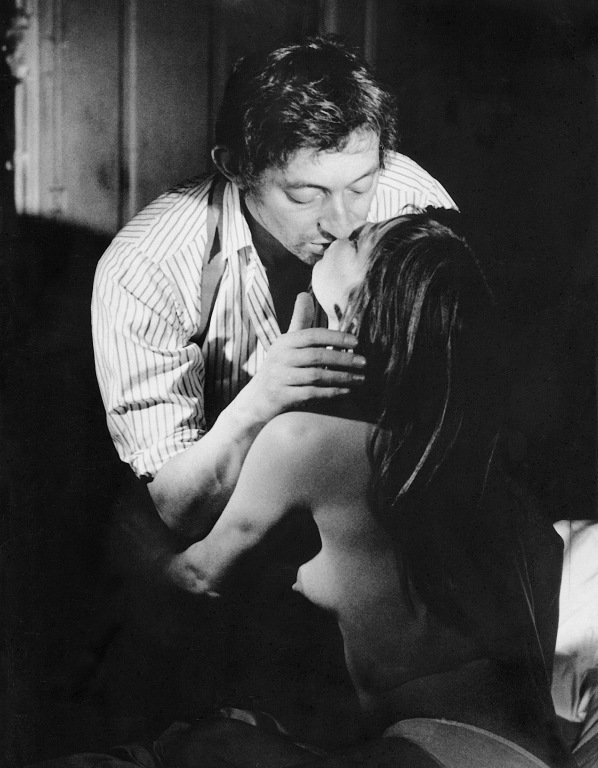
I’ve written about Serge Gainsbourg before, after hearing Histoire de Melody Nelson and all its street walking, hip thrusting bass and funk guitar for the first time. A concept album about an older man’s relationship with a much younger woman girl, it could make for fairly uneasy listening. If you’re fluent in 1970s French street jive, it probably does. Since my French goes little further than Je suis allez au Magnum a la weekend, I’m none the wiser. But I still get the drift. Have a listen to Melody. You’ll get the drift too.

Here’s a wee film to help you along:

In France, Serge is considered something of a cultural and musical revolutionary, held in far greater esteem than any musicians really have the right to be. Over here, we’re proud of our artists and more than a wee big smug when considering the enormous contribution they’ve made to popular music. In France, Serge is right up there, above the clouds, above the stratosphere, above God. He is King. Say a bad word about him anywhere between Montparnasse and Montpellier and you’re liable to cause a good old fashioned émeute before the angry mob turns up at your door demanding your head on a stick. Oui, regardless of the sometimes dodgy subject matter, in France Serge can do no wrong.

Oh, Serge! Mes vêtements semblent avoir diminué au très de vue que vous!

His music can be equal parts folky chanson, string-swept stripped-bare funk, spoken-word, Gaulois-rasping after-hours jazz and repetetive, hypnotic and practically hip-hop in nature. It’s no wonder the breakbeat community love him, as his funkier records are choc-full of material ripe for sampling. Have a listen to Breakdown Suite. Another track, Requiem Pour Un Con, was cut-up by lo-fi indie experimentalists The Folk Implosion and sampled and looped into a fantastic instrumental tribute to Gainsbourg named ‘Serge‘. Amongst his best stuff, you’ll find such muse-driven objets d’art as Bonnie & Clyde or Melody Nelson’s L’Hotel Particulier and Cargo Culte or the super-Barryesque La Horse or Initials BB. Every one luscious, lascivious and chocolate fudge cake-rich in production. Big, booming mid-70s analogue treats. If you like these, do yourself a favour and track his stuff down. You won’t be disappointed.

Get This!, Gone but not forgotten, Hard-to-find, Most downloaded tracks, Yesterday's Papers

Yesterday’s Papers – Coke After Coke After Coke After Coca Cola

Yesterday’s Papers is my way of infrequently getting new life out of carefully selected old posts. It’s terrific that new readers seem to find Plain Or Pan on a daily basis and often request particular pieces of music which, for one reason or another no longer have working links. There’s also some stuff on here that I, being vain and narcissistic, still enjoy reading and, even though I would like to take an editor’s pen to the text and re-write much of it, I think new and not so new readers might enjoy reading it too.

Every Yesterday’s Papers post is presented exactly as it was written when it first appeared on Plain Or Pan, apart from the odd spelling mistake or grammatical error that escaped my editorial eye first time around. Oh, and the links to the music have all been updated too.

First appeared March 19, 2007

This slideshow requires JavaScript.

Hey! Get down! Dig it with the Vanilla Fudge and Coca Cola! My mum tells me that in the swinging 60s, most provincial teenagers never had access to, never mind actually try, the mind-bending drugs that were so obviously shaping music, fashion and the consciousness of society. Instead, the hip, with-it teenagers in my wee corner of the west of Scotland would pop a couple of aspirins into their Coca Cola and swing the night away in a tripped-out approximation of sixties bliss.

Coca Cola were well aware that things indeed go better with a Coca Cola, and their 60′s marketing team were so on the ball that they got the groups du jour to record Coke jingles for local radio and the likes. Most of these jingles are bloody magic. They are quite blatant pastiches of those artists’ current hit singles and fall into 3 distinct categories:

  • 1. The soul/r’n’b artist – Aretha Franklin, Marvin Gaye & Tammi Terrell, Carla Thomas, The Supremes, Otis Redding, Ray Charles etc etc
  • 2. The fuzzed-out, beat-driven, blues-influenced garage bands – The Who, Vanilla Fudge, Troggs, Box Tops, Dave Dee Dozy Beaky Mick & Titch (so that stretches it a bit, but you get the point)
  • 3. The pop stars/crooners – Bee Gees, Lulu, Roy Orbison, Petula Clark, Nancy Sinatra, etc.

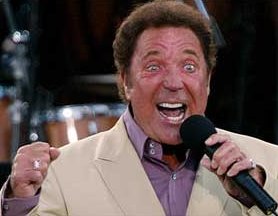
Here are three examples of the above. The Who’s Coke after Coke, The Supremes pastiche ofBaby Love and Tom Jones’ rerun ofIt’s Not Unusual that is quite fantastic, hilarious and hideous all at the same time. “Say, I could do with a Coke right now. Somebody get me one please?” The big orange freak.

tom-jones.jpg

Did someone order a Tango?

I’ll put up more of these soon. Next up Otis Redding, Aretha Franklin, Nancy Sinatra, Vanilla Fudge, any requests…..

Cover Versions, Gone but not forgotten, Studio master tapes

Phew, What A Scorcher ‘n All That…

*Disclaimer 1

I wrote this on Saturday, telling myself I’d finish it later and went out to enjoy the weather. It’s now Tuesday and the storm clouds are gathering.

Y’know, I make a point of digging deep to turn up the rarest of the rare when sometimes it’s the obvious ones that are the best. With the school holidays nearly over, the weather has (naturally) taken a turn for the better and we’re currently basking in what the tabloids of yore might refer to as a heatwave. Phew, what a scorcher and all that. There’s no denying. I’m in shorts. I’ve cut the grass. The smells of barbecuing meats are wafting from somewhere across my back door. The shrieks and high pitched laughter from wee ones in paddling pools is competing for ear space with the football on the radio and I’m contemplating painting my fence, safe in the knowledge that the job’ll be done before the rain comes on. Because at the moment it looks like we’ve as much chance of rain as the Costa del Sol. Great, eh!

Heat Wave was a 1963 hit single for Martha Reeves & the Vandellas. From the collective pen of Holland-Dozier-Holland, the oft-forgotten about songwriting team who are up there with your Lennons & McCartneys and Jaggers & Richards in the Sixties Premier League of hit songwriting teams, it’s sometimes referred to as (Love Is Like A) Heat Wave. Straight off the Motown production line, it’s a Funk Brothers piano-led, hand-clapping, gospel-tinged, giddy call-and-response shout-out to the joys of being in love, ell you vee love and all that, and it gave the Vandellas their first big hit single, reaching number 4 on the Billboard charts. Since then, it’s been covered by all manner of artists, from label mates The Supremes (a facsimile of the original), via celebrity coat ‘n hat checker Cilla Black (Surprise, Surprise, it’s very good!) to Linda Ronstadt’s mid 70s FM-friendly AOR version, replete with subtle bongos and meanderingly polite soft rock guitar solo, the sort of thing you might expect a half-arsed covers band to be playing at a Holiday Inn in the background of a TV movie. The most effervescent covers tend to have been by the boys. Both The Who and The Jam channeled their inner mod and bashed out R ‘n B tinged faithful reworkings. The Who’s version is fast. The Jam’s is faster.

This slideshow requires JavaScript.

(Love Is Like A) Heat Wave:

Martha & the Vandellasoriginal

Diana Ross & The Supremesversion

Cilla Black‘s version

The Who‘s version

Linda Ronstadt‘s version

The Jam‘s version

Martha & the Vandellas‘ vocal-only studio outtake. These vocals gained the group a Grammy Nomination. And rightly so. They’re terrific!

*Bonus Track!

Martha & the Vandellas‘ vocal-only take of Jimmy Mack.

That fence painting job? I’m just contemplating, though. Not doing. This weather doesn’t happen too often. I think I’m going to get some sounds on and sit in the sun and enjoy it. I might even pour myself a drink. Costa del Sol, or Costa del Peroni, it won’t matter.

*Disclaimer 2

I’ve since painted the fence. It looks fine.

Cover Versions, demo, Gone but not forgotten, Hard-to-find

Who’s Nicked

A few years back, as a mature student in desperate need of income, I ran a wee guitar group. Obviously, far better than working a shift in B&Q, I was my own boss and set my own rules. 30 folk of all ages and abilities formed 3 groups of 10 who came to the local community centre to learn the difference between a b-minor and a blues lick and play along to a wide selection of recognised classics, with the odd personal favourite thrown in. Not only that, but along the way these eager students were educated in the ways of guitarists and guitar playing. Steve Cropper was more important than Slash, I’d tell them. Johnny Marr was better than Eric Clapton. Jimi Hendrix played guitar behind his back with his teeth. Try it! First person to play an E minor gets a mini Mars Bar. The beginners loved shaking their hair to The Ramones Surfin Bird, even if they had difficulty changing from an A to a D and back again at the same speed as Johnny and Dee Dee. Over time though, they managed to do a spot-on version of These Boots Are Made For Walking, complete with their own wee choreographed foot dance when Nancy asks, “Are you ready boots? Start walkin'”. The best players in the ‘top group’ could replicate Stairway To Heaven note for note. Well, almost. But my greatest achievement was with the ‘middle group’. Accomplished enough that they could play blues licks in b minor, but not yet fluid enough to think they were Slash, I taught them to windmill like Pete Townshend through the opening bars of The Who‘s Baba O’ Riley. It was a magic sight. 10 arms windmilling round in perfect time. Wind Out -mill! here Wind in -mill! the Wind fields -mill! Some nights we played it 3 or 4 times, such was their joy at playing it. What’s that Roger? Teenage wasteland? Not in here! Happy days!

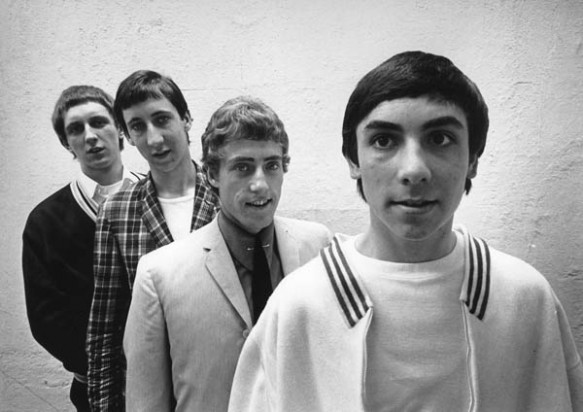
Anyway, after what I’ve just said, you may be surprised to learn that I never totally got The Who. I thought Keith Moon was pretty special, although who doesn’t? Always entertaining to watch. But the others? The Ox, in his later days wore a red leather blouson jacket that was about as close to ‘mod’ as  Alex Turner’s Olympics haircut. And he played his bass at throat height, which, no matter what you’re playing on it, is never a good look. Roger Daltrey always seems like a wee guy trying too hard to be macho. Always taking his top off and baring his chest. And he had a haircut like Barbra Streisand for about 20 years during the 70s and 80s. Which, again, is about as close to ‘mod’ as Alex Turner’s Olympics haircut. Pete Townshend? Great windmills (yeah!), great Clockwork Orange boiler suits ‘n Docs combo on the stage ‘n all that, but those child porn allegations from a few years back have tainted him forever for me. I dunno. I like the big singles that everyone likes. But as an album band, their first album excepted, they never really did it for me.  I suppose for a live album, ‘Live At Leeds‘ makes all the right noises, and The Who ‘Sell Out’ has some pretty good tracks on it, Armenia City In The Sky, to name one, and I like the pirate radio concept but really, that’s about it. The problem I have is that everything they’ve done seems to have been, aye, a ‘concept’ album. Not just ‘Sell Out’Quadrophenia is a concept album. Tommy is a concept album. Pete Townshend’s doomed Lighthouse Lifehouse project was another concept. A Quick One was a rock opera fergawdsakes! Everything seems just a bit too calculated and pre-conceived. I like my rock bands to be unpredictable and raggy round the edges. Which is why the only Who album I truly like from start to finish is their first.

What I like even better than The Who’s first album is the few tracks they recorded as The High Numbers. They’re nothing extraordinary, really just rehashed 12 bar blues-based R’nB tunes so beloved of the early 60s mods. But the sound they made! Big, booming, compressed-sounding mono tracks that jump out the speakers. The bass sounds like it’s playing under the floorboards next door. Ironically, given the advances in technology, it’s a sound that modern studios just can’t seem to replicate. Just ask Jack White (although he’s made a good fist of it) or long-lost La Lee Mavers, if you can find him.

I’m The Face was the B-Side of The High Numbers first single, Zoot Suit. Designed, at the insistence of  manager Peter Meaden, to appeal to the local pilled-up mods who got their kicks from American R’nB, I’m The Face was practically a cover of Slim Harpo‘s I Got Love If You Want It. Actually, practically a cover is being kind. This is daylight robbery long before Jimmy Page got his first copy of Down At The Crossroads with Robert Johnson and Some Other Blues Guys No-One’s Heard Of Yet. Slim’s tune stayed the same, although the band played it with a feral garage band intensity lacking in the original’s nasal reediness. On The High Numbers’ version, the harmonica wails just that bit more out of tune. Keith Moon’s drums clatter in time to Townshend’s reverberated chords and perfectly executed solo (did the afore-mentioned Page play this part? After all, he played everyone else’s around this time) and the Entwhistle bass runs divebomb to the very centre of your purple-hearted heart.  In keeping with the A-Side (I’m the snappiest dresser right down to my inch-wide tie) manager Meaden changed the lyrics to be more mod-friendly, I’m the face baby is that clear? and referencing Ivy League jackets and wild buckskin shoes along the way.

With all this studied contriving going on you could be forgiven for thinking Zoot Suit/I’m The Face was some sort of UK smash. It wasn’t. Like a gazillion other life-affirming effervescent pieces of 7 inch 60s plastic, it flopped. A disheartened High Numbers went back to the drawing board, changed their name to The Who and tried again. This time, things seemed to work out a wee bit better. Proof? Here‘s the st-st-st-st-stuttering m-m-m-m-mono version of My Generation. Sounds like a tank. (Winks). Some of you will get that reference, some of you might not.

*Bonus Tracks!

Taken from an Abbey Road session, October 1964, here’s The High Numbers doing their re-hashed r’nb 12 bar blues again:

Smokestack Lightning  Instrumental pop-art crashing proto-Who.

Memphis Tennessee  Instrumental. Big. Booming. Bass from under the floorboards.

Cover Versions, demo, Get This!, Gone but not forgotten, Hard-to-find

Kings, Queens & Other Chess Pieces

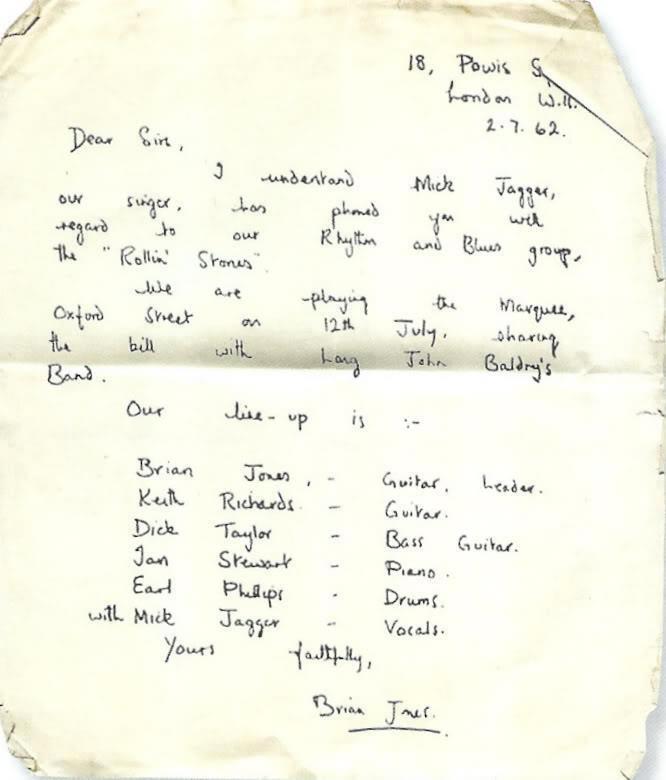
I meant to mark this occasion and put something up last week, but the RJ Ellory post (below) took over slightly. A week later, it would be churlish of me not to give a nod and a wink to that creaky old juggernaut that keeps limping on, like your smelly old dog with 3 good legs that’s deaf in one ear and blind in the only eye it has left. Aye,The Rolling Stones as a rock and roll group have now been in the game for no less than 50 years. That surely makes them one of the oldest musical acts still going strong. The Four Tops still do the odd show here and there (mainly ‘there’, in Vegas), and from 1953 until the death of Lawrence Payton in 1997 managed to keep the original line-up intact. The Drifters started in the 50s, but most (or all?) of the originals have, cough, drifted off. They probably played 5 shows last night anywhere between Blackpool Butlins and the Bermuda Triangle, so you can’t really count them. The Stones survive with 3 original members (Mick, Keith and Charlie, who actually joined after their first gig, see image at the bottom) and with Ronnie Wood having been in the band longer than The Fall have been a going concern. And how many members have they gone through in that time, eh? (Answer: about 66, at the last count).

Nowadays, they’re a bit more creased around the edges and a bit more expensive of cloth (though evidently, unlike most men of their age (and 10, 20, 30 years younger), no more expansive of waist). Sure, they’re a whole lot less vital than they once were, their live shows still trade on their Golden Era (early 60s – mid 70s, if you need to ask) and nowadays they’re a brand not a band – you can buy their merchandise in Primark if you fancy! But, as you already know, the Stones were totally, absolutely, dynamite in their heyday.

Chess Studios, 1964.

There’s a famous story (not an urban myth, as Keith goes at great lengths to point out in his autobiography) that when they turned up midway through their first US tour to record at the famous old Chess Studios, band hero Muddy Waters (he wrote I’m A Rollin’ Stone) was painting the outside of the building, whitewash streaming down his face, only stopping to help Bill Wyman in with his amplifier from car to studio. It didn’t matter that Muddy was a legend to the Stones and all those other Thames Delta blues bands, in his homeland he had yet to make that leap from unfashionable unknown to undeniable blues great. As Keith astutely notes, “If you want to stay on the payroll, get to work.”

Chess Studios, 1964

The stuff that the band recorded at Chess in 1964 was brilliant – Keith says 14 tracks in 2 days, my bootleg has 27, including their version of Bobby Womack’s It’s All Over Now that gave them their first number 1. Organic and rootsy, deep-rooted in the blues, the music has a big, booming, beefy sound, all reverb and twang and feral snap. Most of the recordings they made there for a potential album remain unreleased to this day (Google 2120 Michigan Avenue. Go on!) and it knocks spots off of anything that their sha-la-la, she-loves-me-and-I-love-her contemporaries were tossing off into the Hit Parade. But you knew that already…

The Tunes:

The Rolling StonesIt’s All Over Now

The Rolling Stones2120 South Michigan Avenue

The Rolling StonesTime Is On My Side (version 2)

The Rolling StonesDon’t You Lie To Me

The Rolling StonesStewed & Keefed

The Rolling StonesThe Under-Assistant West Coast Promotion Man

The Originals:

Bobby WomackIt’s All Over Now

Irma ThomasTime Is On My Side

Cover Versions, demo, Gone but not forgotten, Kraut-y

Riff Trade #2

Or, There’s Always Been A Dance Element To Our Music. Post Stone Roses, everyone in 1990 had sacked their rock drummer, got themselves a loose-limbed octopus who could replicate Clyde Stubblefield‘s funkier moments from James Brown’s Greatest Hits and began making records that folk in outdated quiffs could sorta shuffle around to in a faux-druggy state. I know, because I was one of those shuffling folk with outdated quiff. Two months later and it had been fashioned into a Paul McCartney ’65 classic, but when the first strains of the Paris Angels or Northside or Flowered Up began to appear in the gaps between The Cramps and Smiths records at The Attic in Irvine, it was quiffs everywhere for as far as the eye could see. You’ll know this already, but Northside et al weren’t the first bands to shout accusingly at the drummer, “Less thunk, more funk!” There are plenty of examples of when ‘rock’ bands go ‘dance’.

Back when Joy Division were unsigned and known as Warsaw, RCA gave them some money to record a demo. Celebrated local Northern Soul DJ Richard Searling convinced the band they should record a version of Nolan Porter‘s Keep On Keepin’ On. Porter’s record was a staple of the northern soul scene, a gigantic record with a jagged, juddering riff that could’ve come straight off The Stooges first LP. It still sounds urgent, fresh and NOW!, even more so today. Jessie J and David Guetta at T In The Park?!? Fuck right off! Sorry. I digress. Warsaw, keen to impress RCA and gain a record deal went so far as to record a version of Keep On Keepin’ On, but as Bernard Sumner ruefully reflected, “they tried to make Ian Curtis sound like James Brown.” Given that this wasn’t quite the sound these intense young men were looking for, their recording was aborted, never to see the light of day. However…

Click the image for full effect!

Sumner turned the riff inside out, played it 10 times faster than Nolan Porter and presented his band with a new tune. Using the RCA money, they cut Interzone. Listen to both tunes then spot the similarities. They’re all there. Warsaw’s take on the gigantic, jagged, juddering riff is even more Stooges-like, the perfect foil for the Ian Curtis body pop. Nothing at all like the Nolan Porter record, it was unsurprising that RCA didn’t like it. Which as it turned out, was good news for Tony Wilson, Factory Records and for all of us.

*Bonus Tracks!

Joy DivisonInterzone (Unknown Pleasures LP version)

David BowieWarszawa (the glacial track that in 1977 christened Ian Curtis’ band with no name)

Cover Versions, Gone but not forgotten, Hard-to-find, Studio master tapes

Riff Trade

Di’-di’-di’-di’    (pause)      duh-di’-di’-di’   (half pause)    di’-di’

I’ll name that tune in 4, Lionel!”

Go on then, Name That Tune!”

Obviously, it’s Hitch-Hike, the number 30 in ’63 hit for Marvin Gaye, released on the Tamla Motown label…”

Indeed it is. (Show off). Hitch-Hike was one of Marvin’s early hits and, in best Motown tradition was a family affair, featuring the singing secretaries, Martha Reeves and her Vandellas, on backing vocals. A practically perfect 2 minutes-odd ode to finding his runaway girlfriend, it‘s signature stuttering guitar riff briefly lead to a short-lived but groovy (baby) Hitch-Hike dance craze, where participants looked like demented second prize winners in a Paul McCartney impressions contest….

I like the fact that the girl at the end is dancing in her pants on live telly. Nowadays she’d probably just whip them off for shock value and hardly anyone would bat an eyelid.

A couple of short years later, The Rolling Stones put out their version of Hitch-Hike on Out Of Our Heads.  The current issue of Mojo magazine has a good feature on early Stones and listening to it made a good accompaniment to reading the article. Out Of Our Heads is the Stones as garage band; rough, feral, fast and frantic. The guitar interplay between Keith and Brian is brilliant. Who plays what at any given time is hard to work out. Riffs, power chords and super-distorted slashing freak-out leads are all in the mix. Never heard it? It’s never too late…

High on industrial strength drugs (possibly) in his Chelsea loft appartment (maybe) and with a mono copy of Out Of Our Heads spinning on the old Dansette (very likely), Lou Reed suddenly had a thought. An inspiration. A bloody cheek. “A-ha!” he shouted, Archimedes-like, and right there and then pinched the Hitch-Hike riff lock, stock and barrel for his and the Velvet Underground‘s own There She Goes Again.

Di’-di’-di’-di’    (pause)      duh-di’-di’-di’   (half pause)    di’-di’

Can you tell what it is yet?

Fast forward 18 years and we find Johnny Marr in his Kensington flat (probably), mono copy of Out Of Our Heads spinning on the old Dansette (certainly). The Hitch-Hike riff kicks in and Johnny, never one to look a gift horse in the mouth, takes the feel of it and applies it to the set of chords he’s been fiddling around with. A bit more subtle than Lou Reed, but listen to the start of There Is A Light That Never Goes Out. Ah! D’you see what he did there? Johnny was hoping he could fool the know-it-all journalists who’d no doubt point out that he nicked the riff from The Velvet Underground, the band that anyone who was anyone in a mid 80s guitar band could pilfer and steal their image or an idea or two from. That’ll be you I’m looking at, William and Jim Reid. And Ian McCulloch. And the rest of you. You know who you are.

As Johnny himself said in 1993, “There’s a little in-joke in there just to illustrate how intellectual I was getting. At the time everyone was into the Velvet Underground and they stole the intro to ‘There She Goes Again’ – da da da-da, da da-da-da, Dah Dah! – from the Rolling Stones version of ‘Hitch-Hike,’ the Marvin Gaye song. I just wanted to put that in to see whether the press would say, Oh it’s the Velvet Underground! Cos I knew that I was smarter than that. I was listening to what The Velvet Underground was listening to.”

“If we needed some songs fast, then Morrissey would come round to my place and I’d sit there with an acoustic guitar and a cassette recorder. ‘There Is A Light That Never Goes Out’ was done that way.”

Morrissey was sat on a coffee table, perched on the edge. I was sat with my guitar on a chair directly in front of him. He had A Sony Walkman recording, waiting to hear what I was gonna pull out. So I said, ‘Well, I’ve got this one’ and I started playing these chords. He just looked at me as I was playing. It was as if he daren’t speak, in case the spell was broke.”

“We recorded ‘There Is A Light That Never Goes Out’ in 10 minutes. I went on to add some flute overdub and strings and a couple of extra guitars, but really, the essence and the spirit of it was captured straight away, and that normally means that something’s gone really, really right. I have a version (get it! get it!) of that take with just the three instruments and the voice on it – it absolutely holds up as a beautiful moment in time. The Smiths were all in love with the sound that we were making. We loved it as much as everyone else, but we were lucky enough to be the ones playing it.”

I didn’t realise that ‘There Is A Light’ was going to be an anthem but when we first played it I thought it was the best song I’d ever heard.”

Andy Rourke also loved There Is A Light That Never Goes Out. He calls it the indie Candle In The Wind. Make of that what you will.

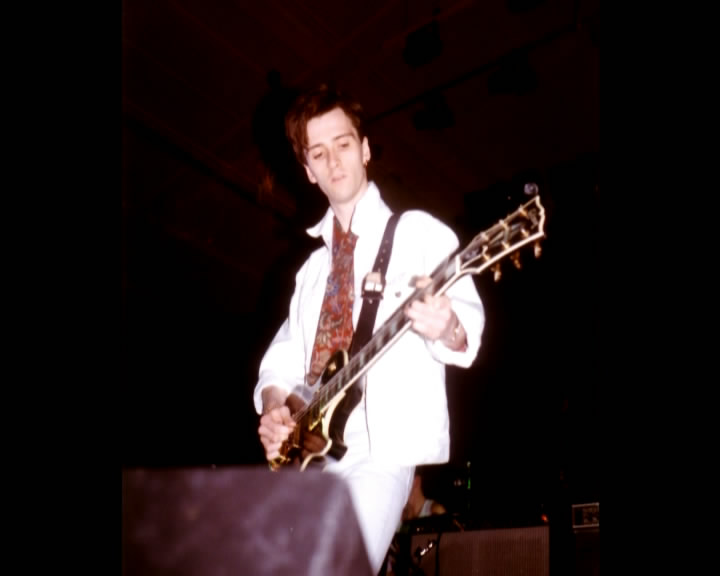
Johnny Marr onstage with The Smiths when they played The Magnum Leisure Centre in my hometown of Irvine, September 1985. It still kills me that I never went. Stupid boy.

*Bonus Track!

Get this – one of those studio outtake thingies that caused Plain Or Pan to go into meltdown a couple of years ago. It’s the vocal-only version of Marvin Gaye‘s Hitch-Hike, every broken high note, breathless fade-out, ‘hmm‘ and ‘yeah‘. Pure soul, man. Pure soul!