demo, Get This!

And Now, A Word From Our Sponsors

What follows is the result of a blatant and barefaced attempt at getting something cool for free…and succeeding.
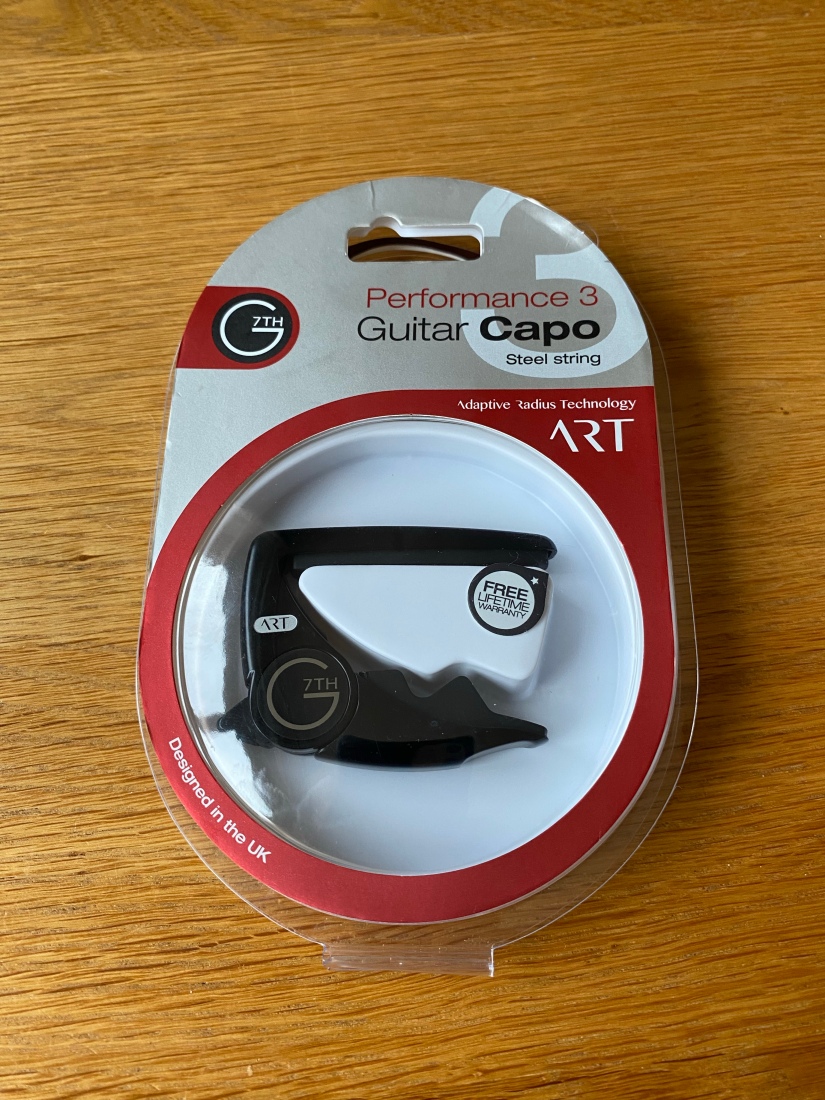
I’d noticed on Instagram that one or two musicians I follow seemed to endorse G7th Capos (the finest capos around, dontchaknow) so I speculatively suggested to the good folks who make them that if I were perhaps to reveal the finer details of the capo trick I showed to yr actual Johnny Marr a few years ago, I too might be worthy of such endorsement. Johnny himself is a G7th Capo user – he favours the Gen 1 model – and was genuinely tickled with my capo trick, so it stands to reason that I should be in receipt of a spanking new G7th Performance 3 capo should I share the secret.

The good people at G7th Capos not only concurred with the idea, they went as far as personalising a sleek satin black capo, just for me.
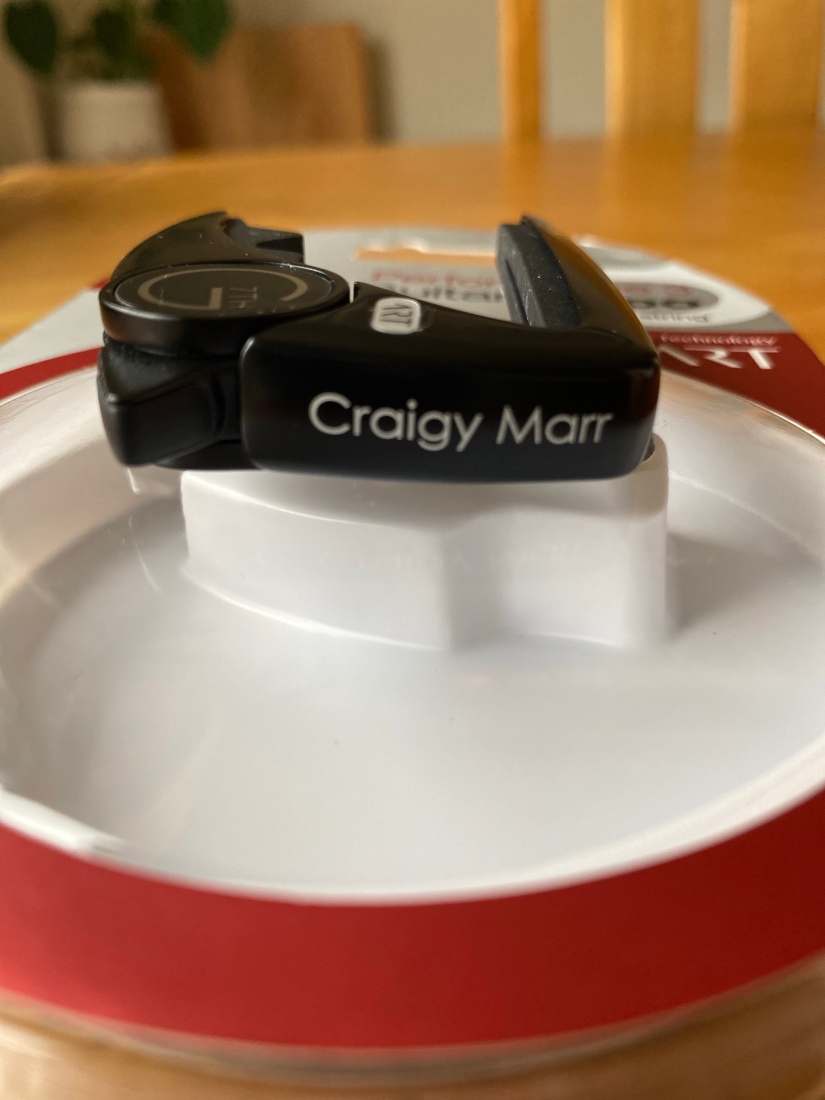
Magic!

The capo itself is solid and chunky yet light enough that you won’t even notice its weight when you’ve attached it to your guitar (acoustic or electric, it will work on either). Due to its unique Adaptive Radius Technology, there’s none of the string buzz or muted notes you might get from your current capo. You’ll not need to fine tune any of the strings. It’s designed to ensure fidgeting with it is kept to an absolute minimum – there are no screws to turn and adjust at the back. Through research and wizardry, the rubber pad cleverly distributes even pressure across all strings. Basically, clip it on, play immediately and you’ll sound clean, clear and in tune. That tapping you might hear in the background is the sound of sexy people at your window wanting to see who’s playing this beautiful capo’d music. Really, every guitar player should have one.

The G7th Performance 3 features a super-cool mechanism that allows the capo to be slid single-handedly by the player, even mid-song should the need arise. If you’ve ever seen Teenage Fanclub perform I Don’t Want Control Of You in concert, you’ll notice that Norman Blake performs a similar sleight of hand with his capo when the song’s key change kicks in. Years of playing the song live has enabled Norman to do this smoothly and almost unnoticed, unless, like me, you’re a geek for this sort of thing. So, yeah, I’m sure after a couple of hours experimenting with it, a G7th Capo should let you do this effortlessly too.

I wish I’d had one all those years ago when I stumbled upon the move – my signature move, if I may be so bold – while I was playing around with different tunings and looking for interesting open notes and how they rung out.

Here’s the trick. Make sure your guitar is in standard tuning then grab yr capo – a G7th Capo is clearly the preferred capo of choice – and do as follows:

Attach the capo to the 4th fret, but…

…attach it only across the bottom 5 strings so that the top E (the thinnest string) is still open. If you’re not a lucky G7th Performance 3 owner, sorry, but you may need to put your old capo on upside down and fidget about with the screw to make it fit better.

Next, play a standard C chord, but also place your pinky on the relative 3rd fret of the top string. Practise between pinky on and pinky off. It’s got a nice ring to it, hasn’t it? That’ll be due to the open E string playing alongside the ‘C’ chord which, when played at the 4th fret is technically an E chord. But enough of the hokey theory…you knew that already;

Mastered the pinky on/off strumming pattern with the C shape? Course you have. Now replicate that pattern, 3rd fret pinky included, by playing an A minor instead of the C. Once you’ve got the hang of that, begin playing a pattern between the 2 chords. Sounding good so far?

Let’s change it up a bit. Go to a standard open G chord. Strum it, then intersperse those strums by moving your finger (possibly your pinky, maybe your ring finger, depending on how you play a G) from top string, 3rd fret to 2nd string, 3rd fret. That open top E you’ll get when you remove your pinky now rings out loud and clear, the finger on the 3rd fret of the 2nd string helping to add a previously hard to get pleasing harmonic chime to the riffage.

Resolve your chord sequence by going back to the C chord, still with pinky on top string, 3rd fret.

At this point in our telephone conversation, yr actual Johnny Marr said, “Oh! Right! Run that past me again…C chord with pinky? A minor? G plus open E? I’m off to try that. Bigmouth and There Is A Light are played in that position. That trick might add something to them. Cheers!

I suggested to Johnny that he throw in the odd D minor or E minor for extra colour. “You’ll get a good tune out of all of that,” I ventured. He said he’d have a play around with it, and for the moment, that was the end of that.

You can imagine the thrill, then, when a month or so later, we’re standing side by side having a chat after a triumphant show at Kilmarnock’s Grand Hall. By this point, Johnny’s met the fans, heard the stories, signed whatever’s been put in front of him, packed the tour bus and is in the process of saying goodbye. “Bye guys! Great show!” And off he goes. Then he turns, looks at me and with a glint in his eye says, “Oh yeah – neat capo trick, by the way! I’m gonna use that on something!

And now you should too. Get yourself a G7th Capo and change your playing for the better.

Here’s Johnny’s demo of Some Girls Are Bigger Than Others. No capo required, unless you’re playing along to the live version from Brixton Academy. Same picking pattern, only you’ll need your capo onĀ  the 4th fret for that version.

The SmithsSome Girls Are Bigger Then Others (demo)


G7th Capos can be found here.

The Performance 3 Capo can be found here.

Check out their socials in all the usual places.

Check out Hope For Justice, the charity supported by Gth Capos.

Get This!, Live!

Monkey Business

Imagine the music. Skittering, pistol shot Axelrod drum breaks. Staccato Fender bass. Thelonious Monk piano trills. Elegant woodwind and sweeping strings that swoop to an unresolved Bacharach chord and hang motionless in expectant dead air.

Now picture a scene sound-tracked by the music above. A private jet at high altitude. Only two passengers and a pilot. One of the passengers is greying at the temples. His sandpaper stubble is silvery against his Mediterranean complexion. He has a laptop open and is logged in to an official-looking government intranet. His much younger companion leans in to take a closer look at the data on the screen, perhaps even to afford him a peck on the cheek. In one swift move – and as the music moves up a subtle gear – she injects him with a poison, sees that he’s immediately dead and copies the laptop’s information onto a memory stick. Before the pilot knows what’s happened, she’s kicked open the jet’s emergency exit and – as that Bacharach chord hovers around the emptiness – jumped, her parachute billowing out high above a sparkling ocean and a waiting yacht far below. As a pair of tripleted musical stabs jar the senses, the camera cuts back to the inside of the jet, first to the passenger, a trickle of blood coursing thinly from his mouth and around a dimple on his square jaw, then to the pilot caught in the terror of knowing he has a dead VIP and no door on the side of his jet.

The music levels out and the singing begins.

Don’t get emotional, that ain’t like you…”

The camera is back on the female assassin, now on board the yacht, shaking her hair free and embracing another man – similar age, similar ethnic origin to the man she’s just murdered – as the jet lazily spirals out of the background sky and straight into the ocean, a discarded silken parachute the only sign that anything might be amiss.

Back in the mid ’90s, at the height of the easy listening fad, any group who could name you two Andy Williams’ numbers was busy lobbying the Bond franchise in the hope that they’d be asked to provide the next Bond theme. Pulp, St Etienne and Blur were just three of the acts of the time who embraced strings, clever arrangements and space for the brass to breathe and recorded Bond-esque songs, clearly with an eye on the prize. The tracks though would ultimately end up on b-sides, the none-less-Bondish Sheryl Crow coming up on the outside as the rank outsider to take the spoils. Now, I don’t know if someone has tipped Arctic Monkeys the nod that the Bond people might be looking for submissions, but you’ve got to think that Alex Turner and co had Bond (and Bowie – a lot of Bowie) on their collective minds when Arctic Monkeys recorded There’d Better Be A MirrorballĀ and released it as the, eh, trailer for their current album The Car.

Here, listen again…

Arctic MonkeysThere’d Better Be A Mirrorball

You’re getting cynical and that won’t do…

Arctic Monkeys took a whole load of flack over the weekend for having the nerve to fill most of their Glastonbury headline set with music from their two most recent records, records oozing with melodies that spool slowly outwards from the backing music as freely as the loose threads on the designer suits they’ve taken to wearing nowadays. Records jam-packed with AOR sophistication and adult arrangements, nuance and nods to grown-up influence: Bowie’s Station To Station, Serge Gainsbourg, Scott Walker, the aforementioned David Axelrod. Records that will still provide fresh listening experience a year, three years, ten years from now. But records nonetheless that have outgrown the thrashed out rock riffs and knee-trembling rhythms married to rapid-fire observational lyrics of the band of yore.

Brilliant as those records and that band was, Arctic Monkeys have gone and grown up, and many of their fans – the casual fans, you’d have to say, the ones who like the debut album and a couple of singles and were looking forward to seeing them for the first time – just didn’t get it. And nor did some of the ‘real music fans’ online who only the day previously had been applauding brave Peter Gabriel for filling half of his current live set with brand new material. You can debate the ‘correct’ way to headline Glastonbury but I for one am delighted that Arctic Monkeys have chosen to self-indulgently plough their own rich furrow with nary a thought for their doubters. Where to next?

Get This!, Kraut-y

Dancing With Myself

The watusi was a brief dance craze of the early ’60s, popularised through surfing music. To dance the watusi, you didn’t need a partner. You planted your feet firmly on the ground as if standing carefully yet confidently on your surfboard and then, with arms outstretched and palms facing down, flailed those upper limbs as if drowning in time to the beat of the music. The more carefree watusi dancer might also bob their head or even shake their hair as the beat continues. If you’re hearing “Wwwwwwipe-out!!!” and picturing half a dozen enthusiastic teenagers windmilling wildly on a palm-tree lined beach, you’ve got the idea.

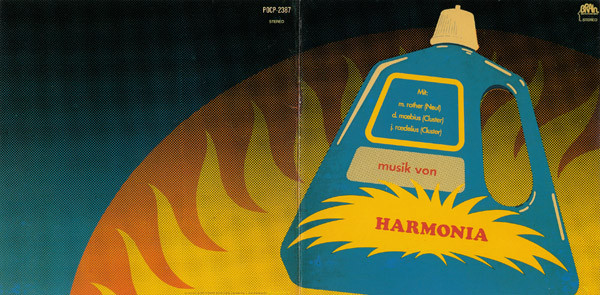
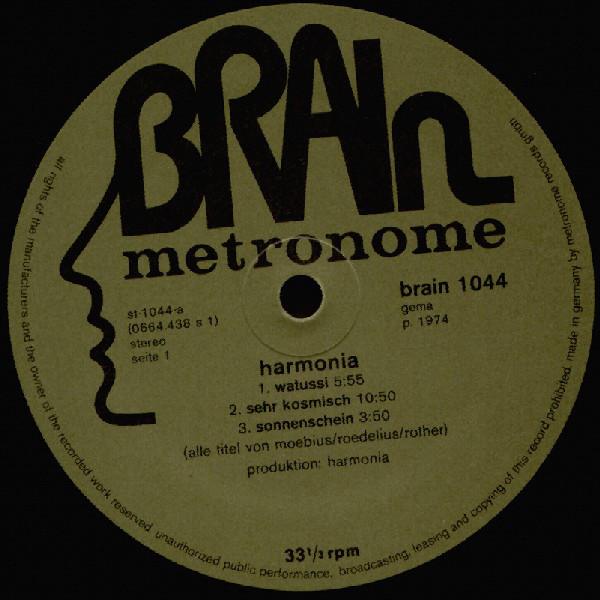
Watussi (with 2 Ss) is also the name of the opening track on Harmonia‘s Musik Von Harmonia. Quite how you’d dance to it though is anyone’s guess.

HarmoniaWatussi

Like most experimental German music of the era (1974), Watussi ploughs a distinctly non-conformist six minute ambient path. It fades in on a looping soundbed of early pioneering synths and fuzz-heavy electric guitar, its ping-ponging melodies and skeletal processed drum beat making for a longform, hypnotic and repetitive track. In Krautrocksampler, his bible of the times, Julian Cope highlights the track’s flat-footed drum machine and otherworldly qualities as markers of true progressive spirit and derring-do.

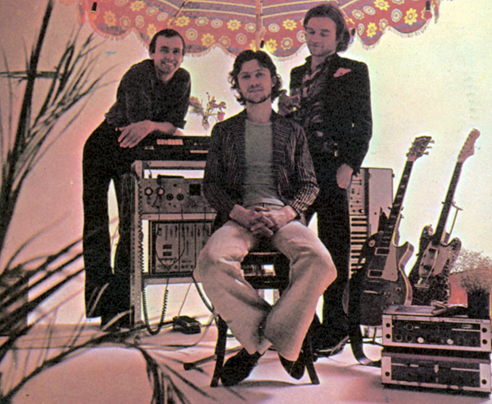
Watussi is a track you can easily get lost in, a definite marker of what is to follow on the rest of the record, Ā Disciplined to the max, the three musicians responsible for its woozy and otherworldly soundscape play only for one another, intuitively locked in to its steady, broken pulse. Not bad at all for a collective whom Neu’s Michael Rother pulled together with a view purely to flesh out the live sound of his band. One session in and Rother realised he had created something unique and worth pursuing.

Listen once and you may be confused. Underwhelmed even. Listen more than once and Watussi begins to make sense. You might find yourself immersed in its bubbling, propulsive bass for a bit, or the 5 note motif that loops continually while the soundbed shapeshifts disorientatingly below, or its occasional long-noted electric guitar that fades in and out between the huge washes of fuzz synth that envelope everything in a white noise fug.

In 1974’s musical landscape of Wings, Wombles and Candle In The Wind, Harmonia‘s Watussi floats alone and dances with itself; out-there rock for out-there people. A clear influence on groups such as Boards Of Canada and Stereolab, My Bloody Valentine and GLOK, it’s a near-50 year old track that sounds even now like it may have been beamed in from a far more cerebral and kosmische future. Dive in!


Get This!

Hi, My Name Is Stereo Mike

Vancouver, September 1997. We’re there on honeymoon, living in a downtown hotel with a revolving restaurant at the top, our midpoint between 5 days in Toronto and 3 nights at a log cabin/hotel combo in the up and coming resort of Whistler. Not quite yet the destination for rich spring breakers or the Winter Olympics committee, our cabin is right on the side of Blackcomb Mountain, exactly where the Olympic downhill skiing will be a few years later. Everything is untouched, pristine and brand new. Everything is shrinkwrapped – the sheets, the board games, the kettle, even the ‘Bears Roam In This Area‘ sign. The only things not clinging in film are the chipmunks who dart around looking for crumbs as soon as the doors are open (briefly – the bears!) to air the place. I’d like to go back again someday.

Anyway, back to Vancouver. We frequent this small deli every morning for bagels and coffee. Vancouver FM or whatever plays continually in the background, and each day when we’re there I hear a familiar song, a current and local ‘hot hit’. I’d heard it plenty of times that year, but something about the balmy late summer/early autumn weather and the fresh coffee and the cool, rounded Vancouverite accent of the hip waitress shines new light on a track that I always thought was good…good, but not great. Or maybe kinda great, but not grrrreat.

By the time we’re home from Canada, though, I think Bran Van 3000‘s Drinking In L.A. is just about the grrreatest track that year. 1997, remember, was the year of Bittersweet Symphony and Never Ever, of Lovefool and Mmm Bop, so it’s not to be taken lightly. You’re all scholars of pop, so you don’t need me to point out that Drinking In L.A. – like at least one of those tracks mentioned above – is one of the greatest little one hit wonders around.

Bran Van 3000Drinking In L.A.

Give us a ring-a-ding-ding, it’s a beautiful day…

It’s four minutes of jam-packed freshness with an awful lot going on, a magpied gathering of multiple mid ’90s genres, fed into the machine and recreated as quirky and hummable pop music. The crackling backbeat and distorted mic of the male vocal is pure slacker hip hop, Beck’s Loser replayed in the blazing sunshine of Venice Beach. The Snoop Dogg-borrowing lines – “Laaaid back! With ma mind on ma money and ma money on maaa mind! Blarin’ out the G-Funk, sippin’ on gin and juice!” – serve only to enhance this. But there’s also fuzz guitar. And fake radio phone ins. And gorgeously woozy woo-ah-ooh vocals. A lot, repeat, A LOT! going on.

Behind the female vocal – a vocal that might’ve fallen straight offa non more a ’90s signifier than Jagged Little Pill – there are subtle exotica tinges and catcall and response lines. We did nuthin’, absolutely buttkiss that day, “Get your ass out of bed!” he said I’ll explain it on the way, You could catch ’em all bitchin’ at the bar, I got the fever for the nectar know the payback will be later

There’s a proper tale of looming existential angst unfolding somewhere between the punny lyrics – Hell-A, Hell-Hell-A and the the on-trend beats and on-the-one bass. Then there’s the song’s hooky chorus? Bridge? Resolution? What the hell am I doin’ drinkin’ in L.A. at 26? Who knows what you call it, but I bet you’re singing it right now.

Cover Versions, Get This!

It’s A Funny Little Thing When It Dawns Upon Ya*

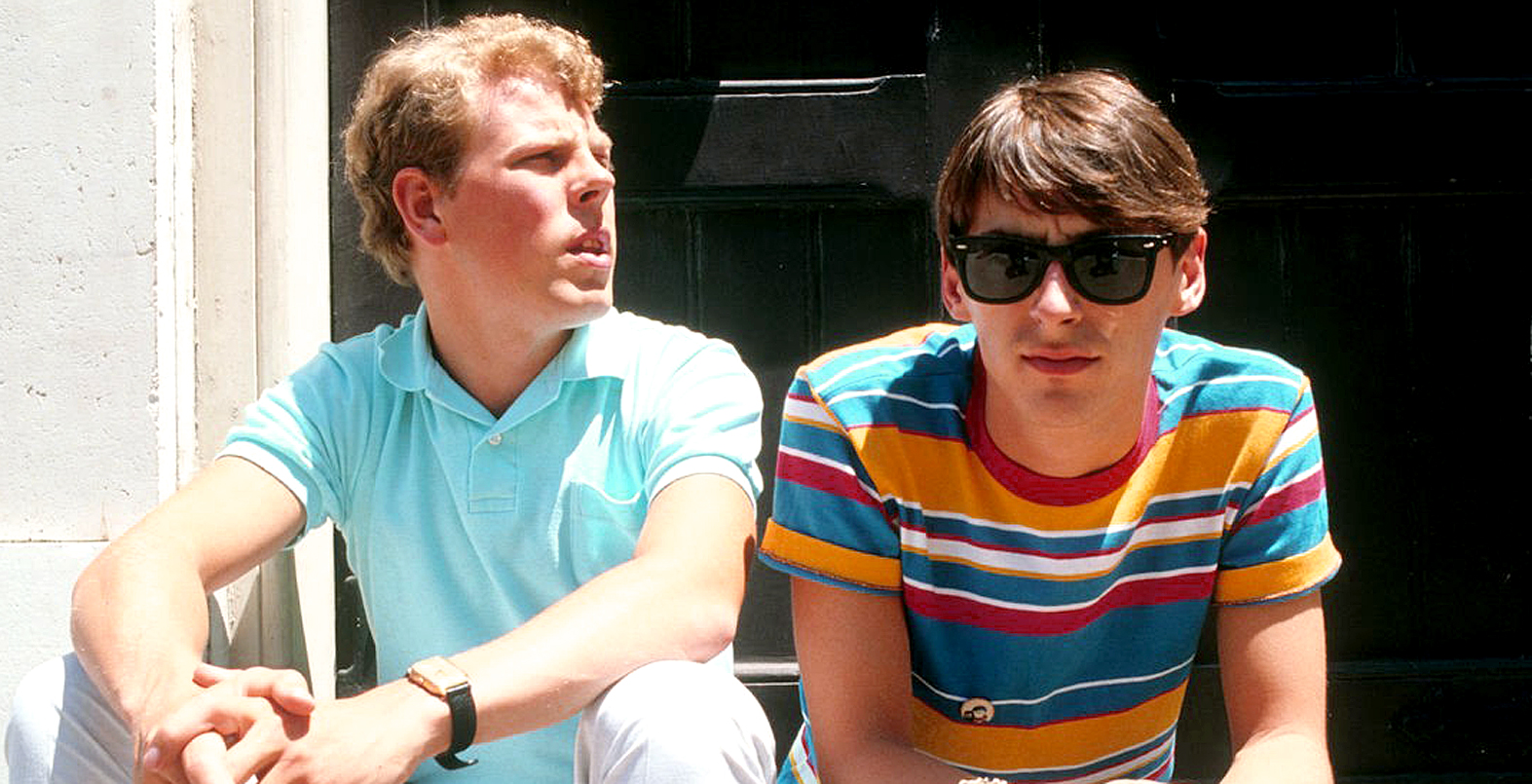
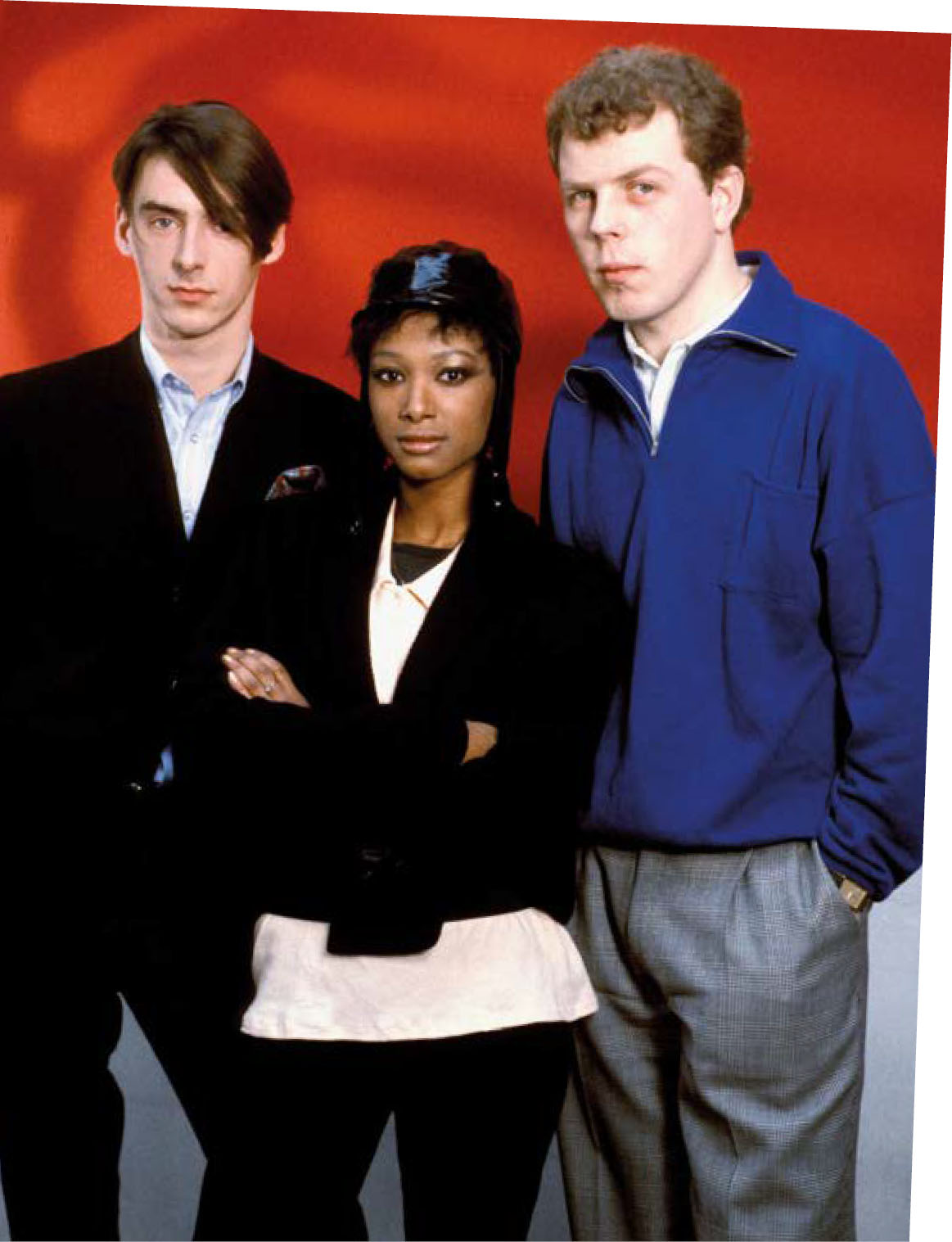
The Style Council’s Shout To The Top is the bright ā€˜n breezy signifier of a summer just around the corner. A groove of loose piano and stabbing guitar, it’s a string swept beauty that endures to this day.

If you’ve caught Paul Weller on any recent tour, there’s a good chance he’ll have slotted it in mid-set, a major 7th audience perker-upper after one new track too many. It still has the ability to raise a smile and just a smidgen of Proustian angst, of being glued to Top Of The Pops in the hope that it might make it to that week’s show. A frothy and enduring number, it reached number 7 and was, serendipitously, single number 7 for The Style Council as well. One of its writer’s very best, for sure.

The Style CouncilShout To The Top

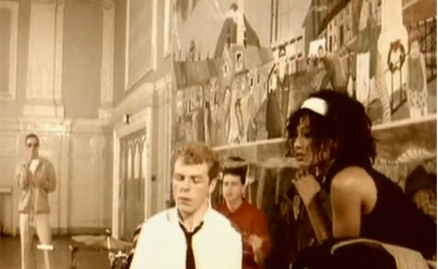
It’s got a stylish video too, all four group members in its spotlight with Weller happy to fade to the back when he feels like it. Weller is understated cool, the gum-chewing singer in carefully chosen penny loafers and well-cut ankle hugging trousers, the missus alongside him in a sleeveless halter neck and hair band, tight fighting capri pants and bee stung lips, looking fantastic and dredging up all sorts of forgotten teenage fantasies. YouTube is your pal, old man, YouTube is your pal.

Weller glides the soles of his loafers across the floor, almost northern soul shuffling, hanging on to that era-defining skinny mic for all its worth, his swept back and centre-parted hair looking distinctly European and modernist.

By the time The Style Council were playing it live, Weller’s fringe had fallen as long as the silly faces on all those old Jam fans who still pined for a clanging Rickenbacker and an angry vocal delivery. Imagine having to pretend you didn’t like Shout To The Top. Life’s too short for that sort of idiocy, man. Embrace the new and, yeah, shout to the top.

There’s a magic, discofied club version out there. Loleatta Holloway takes over from Weller, giving it the full soaring house diva approach, Philly strings, Italo piano and a four-to-the-floor disco beat replacing much of The Style Council’s idiosyncratic nuances, taking it home in a riot gold hot pants and over the topness.

Originally released in 1998 with dance production team Fire Island, the track was reworked into a thumping, filling-loosening club classic by Hifi Sean a year or two ago. Stretched out and funked up, you need it in your life.

Fire Island ft. Loleatta Holloway Shout To The Top (Hifi Sean mix)

* I know that’s not the line that Weller sings in the bridge, but it’s what I’ve always sung. It’s a funny little thing when it dawns upon ya right enough.

Get This!, Gone but not forgotten

Beat Writer

Or, There’s Always Been A Jazz Influence To My Writing. Not in the true ‘Beat’ sense, you understand. Not like Kerouac or Ginsberg or Burroughs who lived in it, lived through it, wrote from the eye of the howling storm and emerged many hundreds of pages later, daddio, with hardened personality traits and track marks and publishable manuscripts to show for it. Nah, that’s not me. In the months and years since lockdown, I’ve taken to soundtracking any and all working from home sessions with jazz; piano-led and in the background or with ear-splitting horns in the foreground, vocal-free and meditative or with a heavy bossa nova boogaloo breakdown, it doesn’t matter. I’ll never know the thrill of being waited upon in the smoky and claustrophobic environs of a late ’50s/early ’60s Village Vanguard or Birdland but I just might get to imagine it through the music that sustains. I’ve plenty of jazz records and CDs to pick from, and pick from I do.

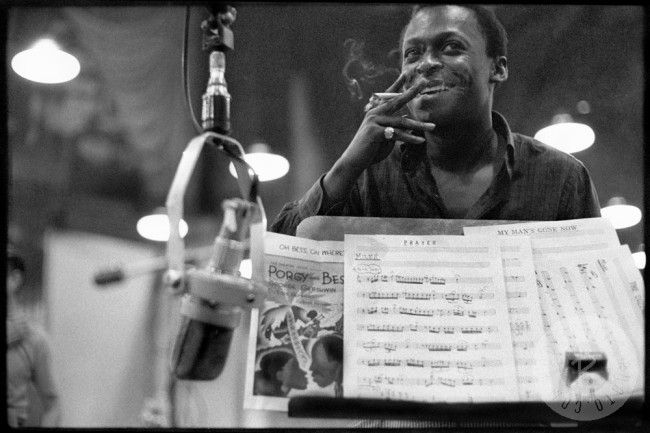
I’ve a soft spot for the accepted classics – A Love Supreme (uh-huh) and Getz/Gilberto (obvs) and Mingus Ah Um (of course) and Kind Of Blue (Come away in! – What took you so long?!) – but I’ve a growing appreciation of other artists and albums, many of which would very probably feature on a ‘Seriously?! 20 Obvious Jazz Albums‘ kinda list; Wayne Shorter’s meandering and highly sampleable Speak No Evil is a great ‘get your act’ together record. By the end of the first side, you should find yourself engrossed and focused on the task at hand. Cannonball Adderley’s Somethin’ Else is the ideal ‘take me to lunch’ but finish this bit off before we get there record. Sonny Clark’s Cool Struttin’ works best as a post-lunch kick-starter, all high brass and big band grooves  – a proper afternoon slump destroyer. And if you find yourself against a tight deadline with tea time fast approaching and no-one to rustle it up but yourself, stick on Money Jungle, Duke Ellington’s bruising one take riffathon where tracks are played/improvised and recorded in the one go.

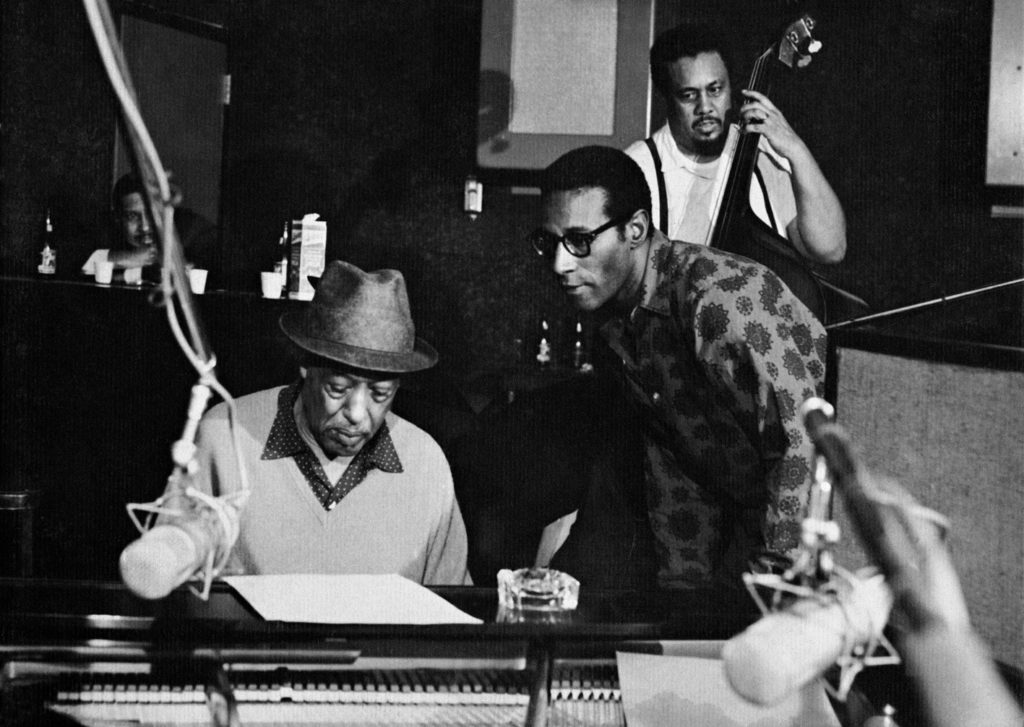
The story goes that the trio – Ellington, double bassist Charles Mingus and multi-limbed drummer Max Roach – were given freedom to play in whichever way they saw fit, so side one begins slowly as the trio eke out a style and pattern of play, then fall into a groove somewhere before the end of that side, continue in the same wildly original fashion on side two before eventually ending in an inevitable all out sonic assault – atonal notes, dissonant chords, drum fills that sound like the Eastenders’ theme being pushed off a cliff, basslines that sound like the annoying guy at the back of maths who’s twanging his ruler off the end of his desk while the teacher tries to explain a particularly challenging strain of calculus – because by this point in the session the three players had worked out that they didn’t particularly like one another and were communicating exactly that through their instruments. See yr Troggs tapes? Zilch in comparison.

If, like me you’re a sleevenotes ‘n credits reader, you’ll notice the same musicians cropping up on one another’s recordings all the time. John Coltrane and Cannonball Adderley add their blues-flecked signatures to Miles’ Kind Of Blue. Across his ouvre, Miles himself gives piano roles to Wayne Shorter, Gil Evans and Herbie Hancock. Cannonball’s Somethin’ Else allows Miles and drummer Art Blakey to step out of the shadows and stamp their not insignificant presence across the grooves.

You play on my album and I’ll play on yours would appear to be the mandate of jazz. When it works, like on Kind Of Blue, great. When it don’t, (Money Jungle, maybe) eurgh. In rock music terms, it’s a bit like having Alex Turner guest on a Bobby Gillespie album where St Vincent and Johnny Marr swap guitar riffs while Zak Starkey and Viv Albertine pin down the groove, their respective management thrashing out the publishing rights with the various labels involved. Art v’s publishing? It’s exactly why, unless you’re the Style Council, this sort of stuff doesn’t really happen in ‘rock’ very often. Weller, man, he really was influenced by the jazzers in more ways than you realise.

Someone who wishes he was influenced in the same way is the aforementioned Bobby Gillespie. A walkin’, talkin’, stick-thin clichĆ©, you’re never far away from an achingly hip point of reference when his mouth starts spouting the same StonesWhoPistolsClashDubFunkPunkSkunk jive that he’s whiffled on about since 1990. Just what is it that you want to do, Bob? Smash the system? Or sell-out to the M&S advert makers? It’s your call, clearly. The kids’ school fees must be due. Loaded, indeed.

At the Ayr Pavilion in 1994, Gillespie was mid duet with Denise (it may have been during Give Out But Don’t Give Up) and, as the band took it down – “Take it down, Throb, take it down!” – see?, the clichĆ© kills – he starts to scat: ‘A love supreme, a love supreme, a love supreme…‘ over and over, leading the band higher and faster and louder to the song’s conclusion. The guy next to me turns to his pal and says earnestly,  “Davie! He’s daein a Will Dowling cover!” (Google it if you need to). Very funny. An appalled Bobby would’ve split his skanky leather breeks if he’d heard them.

John ColtraneA Love Supreme, Pt. 1 (Acknowledgment)

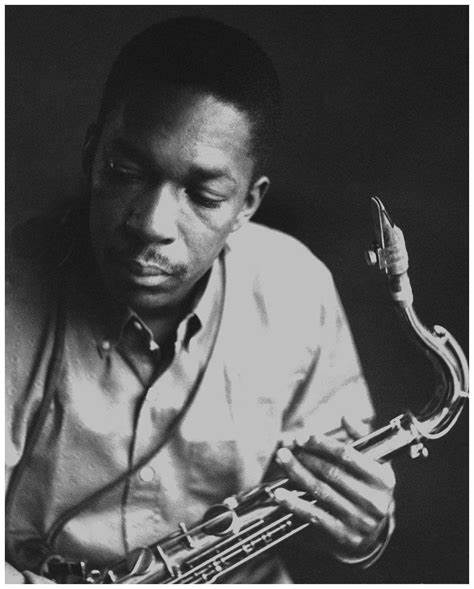
John Coltrane‘s A Love Supreme record is, clichĆ© klaxon alert, meditative (honk!) and spiritual (Honk!) and contemplative (HONK!) and religious (HONKETY-HONK!), and it’s wonderful for it. Built around a core of four notes – dum, dum, dah-dum, and four syllables – A-Love-Su-Preme – Coltrane and the rest of his quartet fly far and wide, to Marrakesh, to Tangiers at times, Elvin Jones thrashing the hell out of his kit, McCoy Tyner hammering the ivories one moment, feather dusting them the next, Jimmy Garrison’s double bass walking the long road home at every opportunity. Coltrane and his tenor sax plays it all; hard boppin’, slow burnin’, furious riffin’, ee-long-gay-ted mood swings.

The quartet always comes back to the core though. Whether it’s Tyner on the keys or Garrison’s bass, or even Jones’ cymbal splashes, they always come back to the four note core.  It’s premier league jazz, A Love Supreme, Haaland and Rashford and Trent and Billy Gilmour in a special meeting of minds when their four distinct personalities create something even greater than the sum of their parts, a record as essential as any other record you might care to offer up.

Cover Versions, Get This!

Coronation Treat

As we hurtle downhill without the brakes on towards a weekend of jingoistic flag waving…and making Britain Great again…and wall-to-wall TV coverage…and stupid folk camping out, Blitz spirit style, to secure a spot on The Mall…and the same stupid folk participating in a mass swearing of allegiance to our newly minted monarch, my social media timelines have become increasingly filled with anti-Royal rhetoric. Much of it is eloquently put. Most of it is blunt in its dislike – hatred, even – of our Royal Family.

Privileged rich guy wearing a crown of stolen jewels parades through the austerity-hit streets in a golden carriage to wave at the less fortunate seems to be the cut of the anti-monarchists’ jib. And it’s a fair point.

Not many folk in my social circles, it seems, will be sitting down to view Saturday’s proceedings, and if they are, they’re keeping schtum about it.

There are over 6000 streets in Glasgow and not one has applied for a street party licence. Quite the turnaround from 1977 when the entire Scottish landscape was littered in wilting Union Jack bunting, brittle novelty crowns and broken pasting tables for months afterwards. It appears that the Royals, from the echo chamber of my Scottish social media feed at least, are antiquated and irrelevant, a relic from a bygone era that might only make some sort of sense on the pages of a history book.

I’m not a Royal hater as such – I’m a lover, not a fighter, as someone once said – but while I might sneak a peak at the plastic pomp and daft ceremony of it all (as I did when the Queen’s funeral was televised. History, innit?) I can’t really be doing with a figurehead who represents a family steeped in theft, crime, racism and bigotry, hush-ups, cover-ups, adultery and paedophilia, by both association and the inference suggested via multi-million pound pay-offs and the keeping of a low profile. That’s yr best of British, right there, ma’am. Imagine being born into all of that, and condoning it – benefitting from it, even – through a closing of Royal ranks and mouths.

I believe they do some good, somewhere (and so they should for the bulging purses and estates they receive for their pleasure) and by all accounts, Charles is a thoroughly decent bloke, ya, when it comes to small talk and pleasantries, but what use are they? Maybe Johnny Rotten was right when he pointed out that they need saving because, well, tourrrists are mu-neee. That would seem to be it.

Spare a thought for auld Charles though. That crown, rich in Empire-pilfered bijouterie is heavier than your last energy bill. Just as well he has the jug ears to keep it from slipping.

Here’s McCarthy with their shambling, jangling, rattling and rolling anti-Royal ranting Charles Windsor. I doubt Radio 2 have included this on their Coronation Celebration playlist. Or maybe they have, on account of its title alone. Some poor researcher might end up at the guillotine…

McCarthyCharles Windsor

And here’s Manic Street Preachers spitting punkish vitriol and bile in their (far superior) version. To tha guillo-tine! Chop chop chop off your head indeed.

Manic Street PreachersCharles Windsor

Get This!

Ear-a-tating

I like the name cuz it’s ear-a-tating. It’s a stupid name.

That’s Kim Deal, interviewed on Snub TV back in 1989, discussing her group just as their second album proper, Doolittle, was on the cusp of release.

I like it cuz it’s Pixies. “Like, oh wow, really rock n roll.” It’s better than, like, Lords Of Destruction or something.

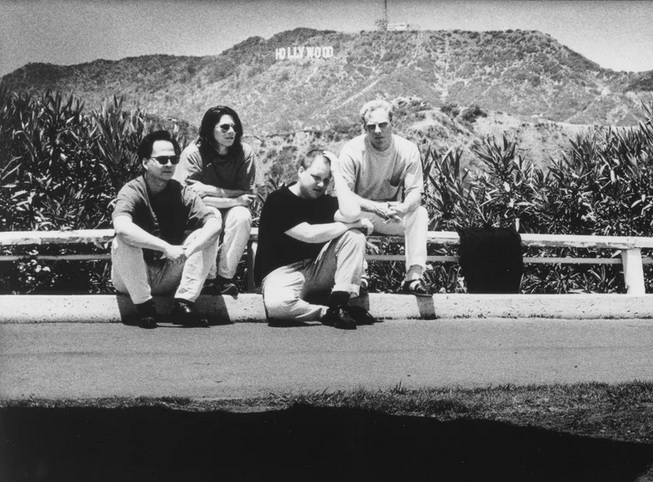
They were a weird wee band, Pixies. Four disparate characters that on appearance gave no indication at all about the sort of noise they’d create. Indiscriminately square. Dressed normally. Not a flamboyant haircut or intangible edge to any of them. Kim looked like an office secretary. David and Joey the groovy geography teachers who might play in a covers band at the weekend. Frank Black/Black Francis, out front in his lumberjack shirt and an equally-balanced love of The Beatles and Peter, Paul and Mary gave off no vibes at all about how his band might sound.

As an entity, Pixies were the very force of nature. Scrubbed to the knuckle, sandpapered acoustic guitars played in mind-melting triple chord sequences rubbed up against white-lightning guitar squalls, lung-shredding vocals and quiet/loud passages, often all within the first half minute of the song.

And the songs. You are the son of a muthur-fuckur. Losin’ my penis to a whore with disease. We’ll have our sons, they’ll be well hung. He bought me a soda and he tried to molest me in the parking lot. There was this boy who had two children with his sisters who were his daughters who were his favourite lovers. I mean, come on! Stop and listen. Really listen. It’s uncomfortable and uncompromising in equal measure. Thrilling too, though – as much as it seems wrong to say so.

So the songs are all sex and death and random swearing mainly, much of it a Hispanic mystery but, man, they totally, like, rock. They were exciting, Pixies. It didn’t matter that the song you were currently listening to wasn’t really your favourite because by the time you’d decided that, it was a short guitar twang and feedbacking space rocking blow-out away from the end.

It’s the early records that tend to be the first ones I’ll grab – Come On Pilgrim and, especially, Surfer Rosa and Doolittle – as good a one-two as any band before, then or since – but the next time you’re inclined to binge on Pixies, go straight to the albums that followed in their aftermath.

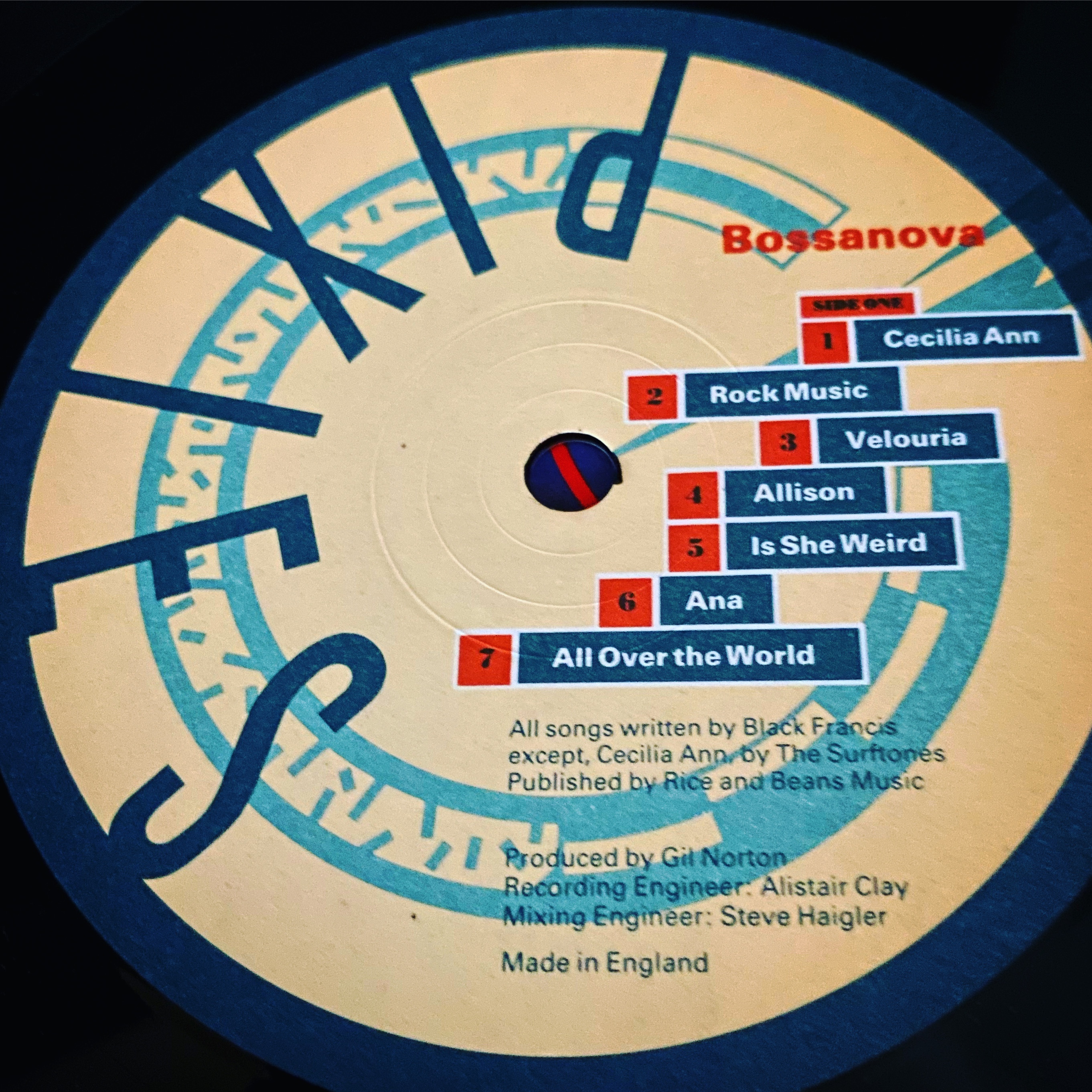
Bossanova‘s sci-fi surf still thrills. A well balanced mix of shouters and shufflers, its hard slamming riffs still rattle the brain, its weird lyrical content still surprises. With sudden endings and sudden beginnings, the tracks begin to blend as one, something Pixies did on the early records and continued to do. It can be disconcerting at times, wondering if you’re still listening to the same track you were a minute ago, but it makes for a thrilling listen. By the end of side 2 you’ll want to flip straight back over and jump in again…and it’s arguably Pixies’ weakest record in that initial run.

PixiesRock Music

Second track in is Rock Music, a self-explanatory stall-setter that rides in on a squiggle of wiggling feedback, air raid siren guitars and rat-a-tat drums, the tension before the release of Frank’s lung ripper of a nonsensical vocal, doing well to keep itself above the racket of gear-changing electric guitars and just about hanging in there. Suh-lag! is what he screeches for a full stop at the end, if y’didn’t know. Those folk who’ve complained today about not hearing that government-endorsed emergency warning test alert on their phones? They’ve been listening to this at 3pm, obviously.

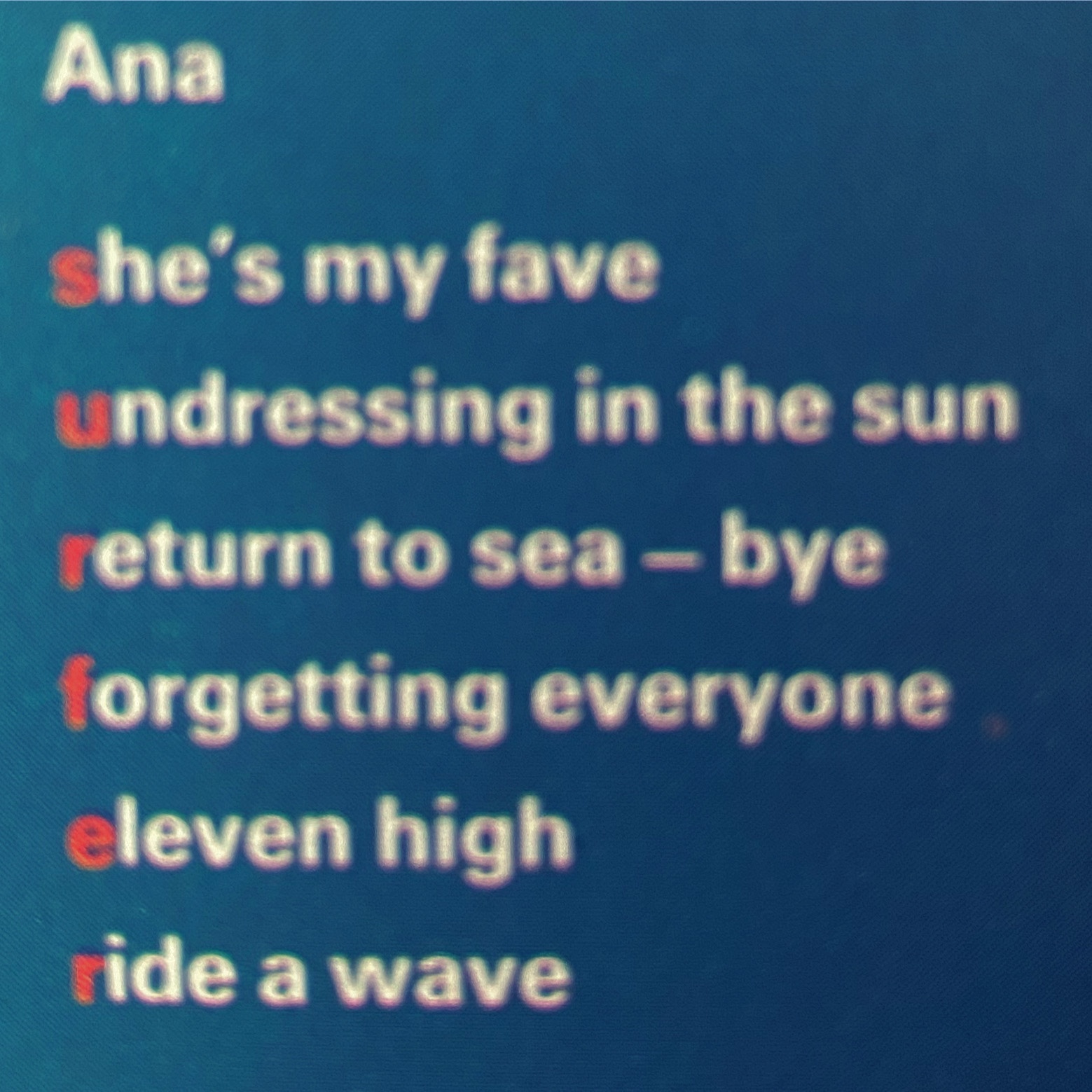
The unassuming best track on the record may well go to the acrostic Ana. It’s a slow burning two minutes of reverb, shimmer and twang that brilliantly surfs the effect pedal-rich zeitgeist of the times, slo-mo and self-assured, the brushed drums softening Pixies normally bruising approach. The lyrics, when laid out, show that the initial letter of each line spells out the word ‘SURFER’. Simple but smart-arsed. Not enough bands do this.

PixiesAna

I’ll tell you what. Lana Del Rey, with her bleached-out ’50s heartbreak and sulky torch song vibe would totally kill this track. Think about it as it plays. Her A&R person should see to it that it happens.


Get This!, Sampled

Music, Make The People, Come Together

There’s a constant digging around here, an archaeological scraping and raiding of tombs, done purely for the purpose of highlighting the marginalised and forgotten, the nearly weres and never would bes that the decades have been less than kind to. Not for nothing is the tagline above ‘Outdated Music For Outdated People‘. You’ll be well aware of that if you’re a regular.

Sometimes, an old track comes flying back into the conscience, usually, although, as in this case, not always, on the back of radio play or an old film and you think, why continue to unearth the underheard when bangers – yes, bangers! – such as this exist.

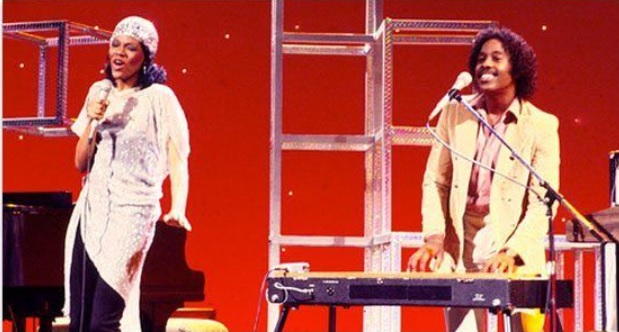
Such is the case with Yarbrough & Peoples’Ā Don’t Stop The Music.

Yarbrough & Peoples – Don’t Stop The Music (12″ mix)

My ex-hospital radio station copy

From straight outta nowhere this afternoon, the track’s programmed electro bassline body popped its way into my head, slinky and sinuous, the half cousin of – sorry for this – Level 42’s Lessons In Love, but ten times as funky and a hundred times more listenable, despite the lack of human touch. It’s 43 years old and lost none of its mid-paced, head-nodding grooveability. Keyboards sizzle and fizz, hi hats hiss and clavinets play a top line that Stevie Wonder himself might’ve considered being on the verge of dangerously funky. Has Fatboy Slim sampled it yet? I can only assume he has – those keyboards have a total S.O.S. Band feel to them, and he’s sampled them, as well you know, although a quick Google proves inconclusive.

I can sing the refrain if y’like; monotoned white man doo-wop, flat and out of tune but entirely soulful and heartfelt. Dawn’t yew stap it, dawn’t yew stap, stap tha moozic. Even to rhythmically-challenged Ayrshiremen of a certain age, the track has an unputdownable swagger.

Formed in Dallas from the same musical sphere that birthed the Gap Band – the Fatboy sampled them too, Calvin Yarbrough and Alisa Peoples found ubiquity with the track, its comically sped-up backing vocals and gospelish refrain sending it to number one on the Billboard R&B chart for over a month. Remember when there were multiple charts? Remember charts at all? The duo’s story is one of church choirs and pick-up bands until one night in 1977 when Peoples joined Yarbrough’s band on stage for a number and the stars aligned to cast their magic.

Yarbrough & Peoples would continue as a duo for far longer than they were welcome, with ever-decreasing returns and increasingly shallow chart positions, but that’s almost irrelevant considering how timeless, how great their big hit single was. If you’re not still playing the track a week after you’ve read this, questions will be asked.

Get This!, Gone but not forgotten

Well Well Well

Just as there are two Pink Floyds – the Syd-era Pink Floyd and the Syd-less, stadium straddlin’ ā€œFloyd, manā€, there are two Fleetwood Macs.

Before their ā€˜70s metamorphosis into a coke-dusted, partner-swapping omnipresent global phenomenon with Rumours repeatedly rotating across much of the planet on an hourly basis, ā€˜The Mac’ was a blues-infused single-sex beat combo more used to the claustrophobic stage of the Marquee in London’s West End than the widescreen enormodomes of the American Midwest. Lead by the soulful playing of Peter Green, their inward-looking 12 bar jams are a gazillion miles and a gazillion sales away from what they would become…and in many ways, far more exciting for it.

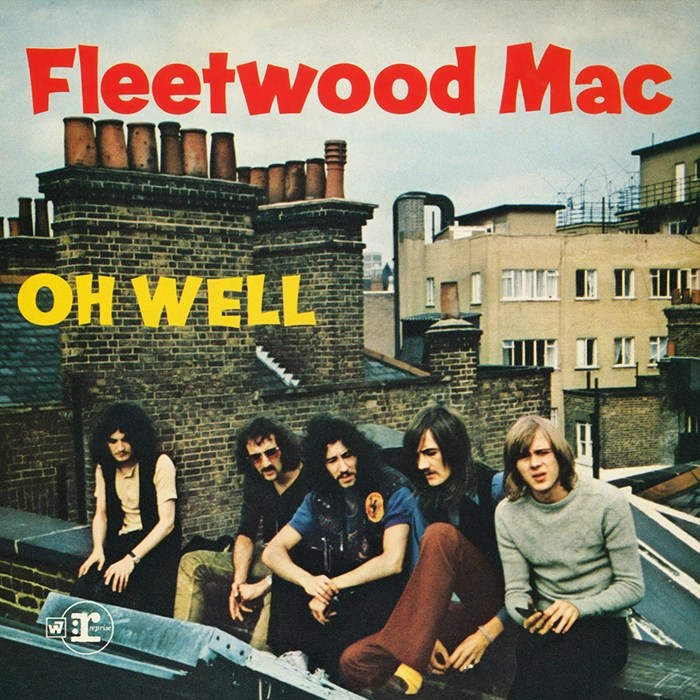
I’ve always had a thing for the battered and feral Oh Well.

Fleetwood MacOh Well

I know it’s an almost hackneyed and cliched tune nowadays, all blazing Les Pauls and up the frets fireworks, but I love it. Low-slung and slinky, it’s a proper groove of a tune, helped in no small way by the loose and funky acoustic riff, the cowbell punctuation marks and the Bo Diddley-isms of the off-beat maracas. 

The electric guitar on top, playing the same riff as the acoustic, with occasional forays into harmonies – Thin Lizzy must’ve loved Oh Well – is, well, electrifying. With fingers as long as his corkscrew hair, Peter Green curls his digits into the six strings, teases lightning rods of hot-wired blooze from the fretboard and lets fly. He would later call the riff ‘throwaway‘. Pffft. Yeah. 

This version from 1969’s Monster Music Mash on the BBC is where it’s at.

There’s no hierarchical posing here, no shunting of the drummer to obscurity behind the lead singer. Just four guys, equal status, equally responsible for the sound to be made. The toms are a riot of pre-Pollocked home design and are justly tubthumped into the ground. There are three guitarists, none of whom is playing bass, one of whom ignores the gorgeous tobacco-coloured Strat around his neck in favour of being Brian Jones on the maracas for a couple of minutes, and another who is clearly so into the intricacies of playing The Riff, a blur of fringe and guitar face, he’s lost in the heady racket that his band mates are cooking up.

I bet Lee Mavers used this clip when planning out The La’s particular mode of sonic attack. I bet they’d have done justice to a version of Oh Well too. I doubt we’ll ever find out. Mavers, as Peter Green was, is, as you well-know, one of music’s enigmas.