Get This!, Gone but not forgotten, Hard-to-find

The Madness of King Robert George

Robert George Meek was better known as Joe Meek. A maverick record constructor, sonic architect and visionary of what was possible from the seemingly impossible, he led a turbulent life, permanently perched on the line right between madness and genius. Many of the main protagonists in the Joe Meek story went onto bigger and more successful things (though not necessarily better), but equally, many of the characters who crossed paths with Meek during his quest for sonic perfection ended up troubled, broke (mentally, physically and financially) and even dead. By comparison, Joe Meek’s story makes Phil Spector’s look almost insignificant.

joe-meek

From his rented flat above a handbag shop on London’s Holloway Road (Number 304 – there’s now a wee unobtrusive plaque there for anyone with a keen eye and musical trainspottery tendencies), and with financial backing from a somewhat eccentric ex-army major who made his fortune from importing children’s toys, Joe crafted a selection of minor hits, major hits and million-sellers, all sewn together from an unlikely array of self-built echo chambers and a Health & Safety Officer’s wet dream of spaghettied electrical cables across landings and staircases via the bathroom and bedroom to the wee cupboard/control room where it all came together. Windows were covered up for sound-proofing. It could be the height of summer but no-one inside the ‘studio’, least of all Joe, could have known. To the piano keys Joe added drawing pins to give it a more sparkly sound. Vocals were nearly always recorded in the tiled bathroom, where there was a better, more natural reverb.

Joe couldn’t play a note of music, so he would hum and sing the tune he was wanting to the musicians, who would then be instructed to play it back note perfect. Often, in the search for perfection, they would be asked/encouraged to play the same tiny fragment of a song over and over again, way into the wee small hours if necessary, until they captured the essence of what Meek was hearing in his tortured head (sometimes even at gunpoint, when Joe’s demons got the better of him – more on them in a bit). It’s quite clear that Joe was not like any of the other 9 to 5 shirt-and-tied record producers of the day. Lee Mavers would’ve loved him.

joe meek studio

Joe’s personal life was significant for two reasons. One: He had an interest in the spiritual world and the occult. He regularly channeled the spirits for guidance and inspiration. On meeting Buddy Holly, Joe told him he had foreseen his death. “February 3rd,” said Joe. “That’s today,” replied Buddy. A year later, on February 3rd 1959, Buddy Holly hopped on board a light aircraft in Iowa and died when the plane crashed.

Joe, like many people in the early 60s, had a huge interest in space travel and the possibility of civilisations on other planets. Watching the launch of the Telstar satellite and mesmerised by it’s capabilities for beaming live television and audio around the world, Joe began working on his most famous record. The music for Telstar came to Joe in a dream. Re-creating the drama of lift-off and the other-worldliness of outer space, Telstar was like nothing that had been before. A combination of twanging minor key surf guitar and distorted clavioline it has since had the dubious distinction of being known as Margaret Thatcher’s favourite record. But don’t let that put you off. Telstar was also one of the catalysts for Joe’s descent into madness. But more of that in a moment.

Have a listen to Telstar by The Tornadoes:

The other significant aspect of Joe’s life was that he was homosexual. Still illegal in early 60s Britain, Joe was forced to keep his true self under wraps. Surrounding himself in his studio with eager young boys, Joe was on a mission to find the next Billy Fury, a singer he nearly ‘got’ before showbiz giant Larry Parnes snapped him up, and who’s success Joe found hard to cope with. Joe began managing a young German-born hopeful called Heinz. Heinz had little talent and minimum appeal but Joe spent the major’s money on far too many promotional shoots in an attempt to hype him into the charts. He lavished clothes, cars and even a boat on him and began a very one-sided love affair that was doomed to failure from the start.

No hits were forthcoming and the major was starting to ask for a return on his money. So too was Joe’s landlady, a woman who put up with much and to a point had allowed Joe to defer payment on his rent. But Joe had no money to give them. Around this time, Joe was arrested, George Michael style, for soliciting an undercover policeman in a public toilet. Named and shamed in the newspapers, friends stopped calling and Joe slipped into a spiral of drugs and the unpredictable madman/genius behaviour he has since become known for – waving guns around the studio, sacking the session musicians who had played on all his tracks and constantly checking for hidden bugs around his studio/flat when he became wracked with paranoia thinking Decca Records and even Phil Spector were somehow stealing all his ideas.

Still from the excellent 'Telstar' Joe Meek Biopic.
Still from the excellent ‘Telstar’ Joe Meek Biopic.

Hey Joe! Where you goin’ with that gun in your hand?

The success of Telstar should have eased the situation. It spent 5 weeks at Number 1 in the UK. It was the first British record to reach Number 1 in the USA. It won an Ivor Novello award. More importantly, it sold millions. It should’ve made Joe and everyone involved very comfortable. However, as the record grew in success, Jean Ledrut, a French composer decided that Joe had taken the melody for Telstar from his track La Marche d’Austerlitz.

Contrast and compare with Ledrut‘s tune:

Royalty payments were subsequently frozen and a lengthy courtroom case began. This deprived Joe of much-needed income. Perhaps, more significantly, along with the public toilet episode and the subsequent hushed-up blackmailing of him, it robbed Joe of any dignity he had left. Joe maintained his innocence, that the tune had come to him in a dream, but by now the people doubted his talent. Joe spiralled even further into madness. With his studio dismantled and possessions confiscated following a court order for non-payment of bills, he got into an argument with his landlady over his over-due rent. Pulling the gun on her, he shot her before turning the gun on himself. The date? February 3rd. Albeit 8 years apart, the same date as Buddy Holly’s death.

joe meek newspaper 2

The Music:

John LeytonJohnny Remember Me.

John Leyton was the original actor-turned-singer, long before Simon Cowell trawled the karaoke bars of Blackpool in search of the inspiration required in order to turn a couple of ugly actors into million-selling chart stars, and make himself a fortune in the process. Along with The Shangri-La’s Leader Of The Pack, Johnny Remember Me is all you really need for sides 1 and 2 of  Now That’s What I Call Melancholic Teen Angst. Like a spaghetti western theme, all galloping Spanish guitars and teen heart throb vocals, Meek’s trick is to add a gallon of reverb, a ghostly female wail and enough pathos to soften the collective hearts of every spiv, shyster and Kray Twin who flirted with the music business in the early 60s. Wee Alex Turner and Miles Kane, when doing their Last Shadow Puppets album had this on constant rotation, I’d bet.

The OutlawsSwingin’ Low.

A post-Shadows, pre-Beatles twang affair, this is neither rock nor roll. On account of all the wee bits where the musicians get to showcase their individual talents, it falls into the almost novelty record category – the sort of record Benny Hill might have sequenced one of his dolly bird chases to. The Outlaws were Meek’s backing band of choice and various combinations of them played on many of Joe’s sessions. Given the chaotic nature of Meek’s recording, and the sheer volume of un-labelled tapes in the Meek archive, no-one knows for sure exactly who played on what. Bass player Chas Hodges went onto greater fame in his own right as Chas from Chas ‘n Dave. Guitarist Richie Blackmore went on to join Deep Purple, form Rainbow and live more recently as a 17th century mandolin playing medieval minstrel. Occasional drummer Clem Cattini went on to do sessions for The Kinks, Tom Jones and played un-credited on any number of  1960s hit singles.

The HoneycombsHave I The Right.

Stealing the chorus from the Everly Brothers Walk Right Back, Have I The Right is yer classic stomping 60s smash. The stomp was created by banging brooms, boots and all manner of bangable things on the studio’s wooden floor, much to the annoyance of everyone in the handbag shop downstairs. It’s just my opinion, but I think the Sex Pistols based their jackboot stomp on this record when they recorded Holidays In The Sun.

The TornadoesTelstar.

Other-wordly, of its time, yet still contemporary sounding today, Telstar is Meek’s legacy. In an ironic post-script to the Joe Meek story, just 3 weeks after Meek’s death, a judge ruled in favour of Meek, citing the fact that Ledrut the Frenchman’s music hadn’t been played outside of France and that Meek could not possibly have heard it. Given that Meek spent every hour cooped up in his little flat/studio, he does have a point. Had the judge’s ruling been made earlier, perhaps Joe might still be with us today, kicking against the pricks and doing something interesting. We’ll never know.

joe meek plaque

Get This!, Gone but not forgotten, Sampled

Rapped. Rapt.

A fuggy haze hangs low over the East River between Manhattan’s Financial District and the brownstones of Brooklyn. Clattering like one of those wooden toy snakes across the Williamsburg Bridge weaves a long, low train, lazily rolling its way along the J line. Sprayed in a dulling array of  pinks, greens and primary colours, tagged to within an inch of illegibility to those over 35, its contents sit in silence, oblivious to the multi-coloured carnage in which they are cocooned. Inside is not much different. It looks violent. It feels violent. Doors, windows, seat coverings; every available surface space is thick with the same chunkily inked shout-outs to whoever is reading. Every passenger finds a point in front of themselves and focuses, daring not to lift their head and avert their gaze lest they happen to catch the eye of someone close by. Women clutch their bags and count the stops until they can get off. Men, the good ones, the ones who’d like to think of themselves as the have-a-go hero when something bad kicks off in here, try to look both non-threatening  yet tough. The bad ones just look threatening. And tough.

One of the good guys

If this was the start of a movie, it’d be soundtracked by this, Shambala from The Beastie BoysIll Communication LP. Purveyors of the finest gravel-throated shouty hip hop since 1981, Beastie Boys also did a mean line in often-overlooked instrumentals. Shambala is spacey, droney and built upon a bed of Buddhist chants and brooding wah-wah. Kinda vegetarian funk, I suppose. There’s a nice drop out where the hi-hat does its best Theme From Shaft impersonation before the clipped wah-wah brings us back to the incidental music in a 1976 episode of Starsky And Hutch. That wee scratchy noise you can hear in the background isn’t authentic vinyl hiss – it’s the sound of the Stone Roses taking notes in preparation for their next set of ker-ching! comeback dates.

Also on Ill Communication is Bobo On The Corner, another fantastic slice of Beastie funk. More clipped wah-wah and droney bass, this time the sampled Stubblefield-aping shuffle beat comes from, presumably, one of those New York street musicians who can make 3 oil drums and an empty can of vegetable oil from Chinatown sound like a particularly funky octopus playing Give It Up, Turn It Loose. A bit like this guy…(maybe he’s the real Bobo on the corner. Or maybe not)….

“Gimmefidollahs!”

If you prefer yer Ad Rocks ‘n MCAs ‘n Mike Ds rrrrrrappin ‘n rrrrrrhymin’, ch-check this out- Ch-Check It Out from 1997’s Hello Nasty, devoid of loops, samples and other assorted musical flim-flam. Just the 3 voices a-riffin’ and a-goofin’ off one another, like Benny and the Top Cat gang recast as super-bratty teenagers. And, bringing us back to where we came from, a vocal-only Stop That Train. Hot cuppa cwawfee and the do’nuts are dunkin’, Friday night and Jamica Queen’s funkin’. Essential!

Ach. Y’know you’re gettin on a bit when Beastie Boys start dying round about you. Rap on, MCA!

Get This!, Hard-to-find, Kraut-y, New! Now!

Skeletal Family

Vini Reilly is the public face of The Durutti Column, the first signing to Tony Wilson’s nascent Factory Records way back in 1978. Forever pasty-faced and ill-looking, he’s as wiry and fragile as the high ‘e’ string on his guitar, and on the rare occasion when this Wythenshaw will o’ the wisp pops his head out in public, he’s quietly spoken and totally intense. Clearly, he prefers his music to do the talking.

The Durutti Column’s first album, The Return of the Durutti Column was produced by Factory in-house knob-twiddling hedonist Martin Hannett on clear instruction from Reilly that he didn’t want ‘the usual, horrible distorted guitar sound.‘ What followed was a heady mix of chiming beauty, pastoral fragility and neo-classical intensity. All instrumental, and almost all featuring only layers of Reilly guitar, with the odd rudimentary skittering drum machine or piano part, the music is almost as revolutionary as the Spanish Situationists from whence Tony Wilson christened Vini’s band’s name. The music isn’t ‘rock’ or ‘post-punk’ or ‘jazz’ or any other obvious genre. It would be a huge disservice to lump it as (gads) ‘chill-out music’, but to these ears, in the same way that you could categorise someone like the Cocteau Twins, that is essentially what the music of The Durutti Column is. In later years, Tony Wilson would tell anyone who listened that at the end of a night at the Hacienda, he’d spark up a large one and mellow the wee hours away with The Durutti Column playing in the background. Vini’s music is perfect for this.

In one of the first great Factory marketing moments, The Return of the Durutti Column came packaged in a sandpaper-covered outer sleeve, intentionally designed to destroy any record sleeves you might have been careless enough to file besides it. If you happen to have one of those original LPs you may be interested to know that it was the four members of Joy Division who stuck the sandpaper onto each and every cardboard sleeve. I’m sure any decent policeman worth his salt could do some sort of DNA test to it if you asked- you might be sitting on a Curtis there! Or a Hook. (No luck).

Reilly was asked to produce Happy Mondays’ Freaky Dancing single, a choice that may have made sense musically, but personality-wise was a disaster. As Shaun Ryder says in his autobiography, “We initially tried recording with Vini Reilly but that only lasted about two hours before he decided he couldn’t handle us. I like Vini, and he’s a great guitarist, but he’s a bit of a weird one and everyone knows he’s a bit fragile. He once told everyone that I’d spiked him at the Hacienda, and the next morning I got phone calls from Wilson and other people at Factory having a go at me, saying stuff like, ‘Why did you do that to poor Vini? You know what he’s like,’ when I hadn’t even fucking done anything. It was all in his mind.

To quote Reilly – “I simply couldn’t work with them.”

A real musicians’ musician, he’s perhaps best-known for filling the substantial (desert) boots of Johnny Marr when The Smiths imploded. For the briefest of very brief moments, The Smiths looked like carrying on, until Morrissey decided otherwise. He instead roped Reilly in to play guitar on Viva Hate and, by chanelling his inner Marr, helped Morrissey’s solo career off to a flying start. But that’s a story for another day.

Durutti ColumnSketch For Summer

Durutti ColumnSketch For Winter

MorrisseyMargaret on the Guillotine

This post was all ready to go and then…

…my old pal DW put me onto Land Observations. “You’ll like them,” he said. “It’s just one guy and his guitar. No singing. It’s a bit motorik, a bit Krauty, with that sort of Michael Rother feel to it.” I quick listen on iTunes and I bought it….and I never buy anything from iTunes. But I had to have it there and then. And for the past week or so it’s been something of a constant on  the iPod. Motorik, krauty and sort of Michael Rother-ish, just as I was told. (A Soundcloud player should appear below. Please let me know if it doesn’t. It’s been a major headache trying to install it for some reason.)

It’s a concept album of sorts (hippies! prog-rock!), but stick with it. Loosely based on the journeys made along the Roman Roads of Britain, it’s the companion piece to an EP released last year. Unbelievably, given my instant love of the LP, I’ve still to buy the EP, but I will. The album, Roman Roads IV – XI, reminds me greatly of The Durutti Column – one guy who lets his guitar do the talking, no fancy pants widdly solos, just layered, textured, skeletal music that you can listen to, that makes you want to listen to it. And it sounds great through headphones. It’s currently at Number 3 in my ‘Favourite LPs of the Year’ list and climbing. Land Observations, folks. You’ll like them.

Cover Versions, Get This!, Gone but not forgotten, Hard-to-find

This Is My Truth, Tell Me Yours

It’s the mid 90s and Everything Must Go has just been released by the Manic Street Preachers. An album full of Spectorish bombast and tunes for van drivers to whistle, it’s light years away from their previous album, the Richey Edwards-enhanced The Holy Bible, an album so difficult to digest in one sitting that Everything Must Go sounded like S Club 7 in comparison. And whilst the hardcore MSP fans point to The Holy Bible as ‘the one’, the million+ sales and ubiquity of Everything Must Go (despite half the songs featuring Edwards’ oblique lyrics) made chart stars (and millionaires) out of the Manics.

At this time, I was fighting in the trenches of the Britpop wars, working in music retail. Now, speak to anyone in retail and they’ll tell you unbelievable-but-true stories about the regulars who frequent their shops. Our shop was no different. We had a regular customer, an older guy with a cracking quiff, complete with an electric blue streak up the front, who wore the Elvis aviator shades in November and the ’68 Comeback leather jacket in July. He spoke in a hokey hillbilly American accent and gave his address as Dundonald whenever he ordered something. Dundonald, in case you need to ask, is about as near to America as Mars. People in Dundonald tend to speak in broad Ayrshire, though with a slightly posher accent, given that the village (?)/town (?) is located just inside the environs of the beautiful South of Ayrshire, and a couple of generous Colin Montgomerie drives from the fourth tee at Royal Troon. He always gave his name as Jesse Garon, which just so happens to be the name of Elvis’ twin brother who died at birth. “Je-huss-ay Gar’n, suh,” he’d drawl, without the slightest hint of irony. Local lunatic, eccentric and Elvis freak, I thought he was great. Jesse, it turned out, was highly thought of and sought-after in the world of tribute acts, and had a regular gig in Blackpool, doing a kinda Scottish McElvis tribute. Which is ironic really, given that off-stage he spoke cod-Elvis, yet on-stage he celebrated his Scottishness, wearing a white cape with a saltire emblazonned across the back and whatever else have you. Every Summer he’d head off for the season and do his well-polished Elvis act for the stags ‘n hens’ n’ steamers ‘n stoaters who stumbled into the music hall at the end of the pier. (If you’re an MSP fan, by now you may have worked out where this is going).

One day, Jesse popped in to order something. “Ahm lookin’ fur sumthin’ swampee. S’gotta be swampee. Y’know like when thu Deep South mists roll across them swamps? Ah need music ta soun’track that. S’for ma show, y’see. Intra music ta make tha folks sit up an notice that ol’ Elvis here is ’bout ta enter tha building.”  A long while later, after having exhausted my general knowledge of all things swampy, he settled on a since-forgotten bit of Ry Cooder slide blues. This, he assured me, was just what he was after. And, with a wee Elvisy point of his index finger in my direction, and a tip of the gold-framed aviators, off he went.

I’ve hunted high and low and googled near and far for a qualifying quote to back me up here, but to no avail. So you’ll just have to believe the next bit. James Dean Bradfield, talking about the Everything Must Go album mentioned that opening track Elvis Impersonator, Blackpool Pier was written after him and Richey Edwards had watched an Elvis impersonator do his act at the end of Blackpool Pier. Bradfield mentioned that the impersonator was (and I’m paraphrasing here) “crap and Scottish” – two things yer actual Elvis wasn’t. Now, I know there are approximately more Elvis impersonators than there are people in China, but when you add ‘crap’, ‘Scottish’ and ‘Blackpool’ into the mix, well, all the signs pointed to the one Elvis impersonator I knew. The next time Jesse was in the shop, probably about a year later, when preparing ‘intra music‘ for his next set of shows, I told him about the Manic Street Preachers and their massive-selling album and about the first track on it and how the band had written it after seeing a Scottish Elvis impersonator in Blackpool (though missed out the part about him being crap) and let him hear the song. You could tell he was quietly pleased at the thought of someone writing a song about him, especially as it was the opening track on such a successful LP, even if he did think the song itself was “a crocka sheeeit, sonny! Crocka sheeeit!”, a phrase everyone and their mother heard as he bawled it across the counter whilst wearing the big headphones perched on top of his blue-streaked quiff.

During his fat Vegas years, ol’ Elvis Himselvis used to come on stage to this, Richard Strauss‘s Also Sprach Zarathustra. You might know it better as the theme to 2001: A Space Odyssey. My favourite version is Deodato‘s outrageously eeeeelongated funkified version, Fender Rhodes, clipped guitar ‘n all. Jazz funk? Funk jazz? Prog soul? Who knows, who cares? This is the sound of afros jammin’. Extraordinary!

For reasons I have never quite fathomed, Also Sprach Zarathustra also makes an appearance several times in the lyrics of The Fall‘s Free Range, where Mark E Smith battles over synthesized beats and too-low-in-the-mix guitars to sound like a demented steamer arguing with himself at a bus stop. I’ve got this on one of those supposedly limited 7″s, where the sleeve was spray painted by yer actual band. You probably have it too.

Get This!, Gone but not forgotten, Hard-to-find

Marvin Gaye In A Dirty Mac

I’ve written about Serge Gainsbourg before, after hearing Histoire de Melody Nelson and all its street walking, hip thrusting bass and funk guitar for the first time. A concept album about an older man’s relationship with a much younger woman girl, it could make for fairly uneasy listening. If you’re fluent in 1970s French street jive, it probably does. Since my French goes little further than Je suis allez au Magnum a la weekend, I’m none the wiser. But I still get the drift. Have a listen to Melody. You’ll get the drift too.

Here’s a wee film to help you along:

In France, Serge is considered something of a cultural and musical revolutionary, held in far greater esteem than any musicians really have the right to be. Over here, we’re proud of our artists and more than a wee big smug when considering the enormous contribution they’ve made to popular music. In France, Serge is right up there, above the clouds, above the stratosphere, above God. He is King. Say a bad word about him anywhere between Montparnasse and Montpellier and you’re liable to cause a good old fashioned émeute before the angry mob turns up at your door demanding your head on a stick. Oui, regardless of the sometimes dodgy subject matter, in France Serge can do no wrong.

Oh, Serge! Mes vêtements semblent avoir diminué au très de vue que vous!

His music can be equal parts folky chanson, string-swept stripped-bare funk, spoken-word, Gaulois-rasping after-hours jazz and repetetive, hypnotic and practically hip-hop in nature. It’s no wonder the breakbeat community love him, as his funkier records are choc-full of material ripe for sampling. Have a listen to Breakdown Suite. Another track, Requiem Pour Un Con, was cut-up by lo-fi indie experimentalists The Folk Implosion and sampled and looped into a fantastic instrumental tribute to Gainsbourg named ‘Serge‘. Amongst his best stuff, you’ll find such muse-driven objets d’art as Bonnie & Clyde or Melody Nelson’s L’Hotel Particulier and Cargo Culte or the super-Barryesque La Horse or Initials BB. Every one luscious, lascivious and chocolate fudge cake-rich in production. Big, booming mid-70s analogue treats. If you like these, do yourself a favour and track his stuff down. You won’t be disappointed.

Get This!, Hard-to-find

Lugton Calling To The Faraway Towns

So I’m looking over my 19 year-old shoulders, keepin’ the edgy with one eye whilst scanning for decent pallets of wood with the other. After a minute or so a criteria-matching pallet is duly found (“sturdy“, “wan ye could stamp oan an’ it widnae brek“), carefully dismantled (“shhh! Security guards, furfucksakes!“) and folded into the boot of my pal’s mum’s Mini Maestro before being sped out of Hysters at top speed and delivered to the back door of The Attic, venue for that night’s Nyah Fearties gig.

Nyah Fearties (pronounced Nyah Fearties) were a brilliant, brilliant 2-man folk/punk band from Lugton in Ayrshire, a place so small and insignificant that Google are still looking for it on one of their own maps, even if The Fearties did their best to put their wee toun there. They had a sound that had obvious reference points in The Pogues and The Men They Couldn’t Hang, but there was a rough and raggedyarsedness to their sound, more no-fi than lo-fi, that made MacGowan and co. sound like a slick jazz funk band from 1982 by comparison. The Fearties were very parochial. Not for them a Scottishness that reeked of purple heather and proud images of Edinburgh Castle, they sang of what they knew. Lugton Junction. Bible John. Sawney Bean. Red Kola. A Sair Erse.

At The Attic, the two Wiseman Brothers, Davy and Steven, thrashed the daylights out of their acoustic 6 strings and bass guitars, not so much playing them as wrestling with them as though they were man-eating pythons. They kicked the shit out of that freshly-borrowed pallet and by then end of the gig it was in pieces smaller than we’d made when trying to get it into the car. They sounded like the apocalypse. Wild-eyed and feral, they participated in an hour and a half of non-stop call and response cris de guerre, sweating like boxers in the final round yet still standing upright, as if held vertical by magic. And so were we. Fuelled on £5 Bob Marleys – an ice bucket filled with a shot of every spirit and diluted to taste with fruit juice and so called because, as the barman helpfully pointed out, “you’ll wake up black and dead“, we thrashed about in the wee area in front of what loosely passed as the stage. Bang in the middle of this area was a spiral staircase. And bang! At one point or other I chicken-danced myself into it and split my head in two. Didn’t notice a thing until the next morning when I did indeed wake up black and dead and very hungover, just in time for the half 7 start in Safeway, dried blood crusted on my forehead and a splintered plank of wood from our pallet lying next to my bed. Really.

Red Kola (pronounced Rid Kola) is one of The Fearties best. Written as an anthem to Curries’ Special Kola (not brown, but red, and teeth-rottin’ tasty) as well as a tongue in cheek response to REM’s Orange Crush and as a metaphorical warning of the Americanisation of the UK, it’s a breathless, clatterin’ rant and a half:

Cop shows, burger bars and American Cream Soda

Take them oot an’ drown them in a sea of Pepsi Cola

They swallowed up oor land in the name o’ Geordie Bush

He couldnae keep his piggie little eyes aff oor skoosh!

Rid Kola! Rid Kola! Oor guts are dyed wi’ Rid Kola!

Lugton Junction (pronounced Lugton Junction) is a tirade against British Rail. From the opening scaffolding poles and found-sound bashing that apes the sound of ancient steamtrains passing at high speed, to the slide guitar as train whistle, to the we’re no’ standin’ fur this vocals, it’s what you could call one of The Fearties’ Greatest Hits;

There’s a train comin’, it’s no stoppin’ here

There’s a train comin’ doon the track, it’s no stoppin’ here,

There’s a train comin’ doon the track, it’s no stoppin’ here.

It husnae stopped here fur 20 bloody years!

Lugton Station, 1966

A year or so after The Attic gig and me and a pal are on the bus to Glasgow. It stops at Lugton and who gets on but none other than Davy Wisemen (he cannae get a train, remember?) “A’right boys!” He sits down and entertains us and everyone else on the bus (he has a rather volumatic burr to his voice) with stories about anything and everything. He draws us a map of Arran, showing us where The Fearties are playing in a week or so. Then we’re in Buchanan Street bus station and he’s off to who knows where with a genuinely cheery cheerio. “Did embdy ever chin you about that pallet?” No, Davy, but I couldnae explain to my mum how a broken plank of wood had ended up in my bedroom.

Get This!, Gone but not forgotten, Hard-to-find, Most downloaded tracks, Yesterday's Papers

Yesterday’s Papers – Coke After Coke After Coke After Coca Cola

Yesterday’s Papers is my way of infrequently getting new life out of carefully selected old posts. It’s terrific that new readers seem to find Plain Or Pan on a daily basis and often request particular pieces of music which, for one reason or another no longer have working links. There’s also some stuff on here that I, being vain and narcissistic, still enjoy reading and, even though I would like to take an editor’s pen to the text and re-write much of it, I think new and not so new readers might enjoy reading it too.

Every Yesterday’s Papers post is presented exactly as it was written when it first appeared on Plain Or Pan, apart from the odd spelling mistake or grammatical error that escaped my editorial eye first time around. Oh, and the links to the music have all been updated too.

First appeared March 19, 2007

This slideshow requires JavaScript.

Hey! Get down! Dig it with the Vanilla Fudge and Coca Cola! My mum tells me that in the swinging 60s, most provincial teenagers never had access to, never mind actually try, the mind-bending drugs that were so obviously shaping music, fashion and the consciousness of society. Instead, the hip, with-it teenagers in my wee corner of the west of Scotland would pop a couple of aspirins into their Coca Cola and swing the night away in a tripped-out approximation of sixties bliss.

Coca Cola were well aware that things indeed go better with a Coca Cola, and their 60′s marketing team were so on the ball that they got the groups du jour to record Coke jingles for local radio and the likes. Most of these jingles are bloody magic. They are quite blatant pastiches of those artists’ current hit singles and fall into 3 distinct categories:

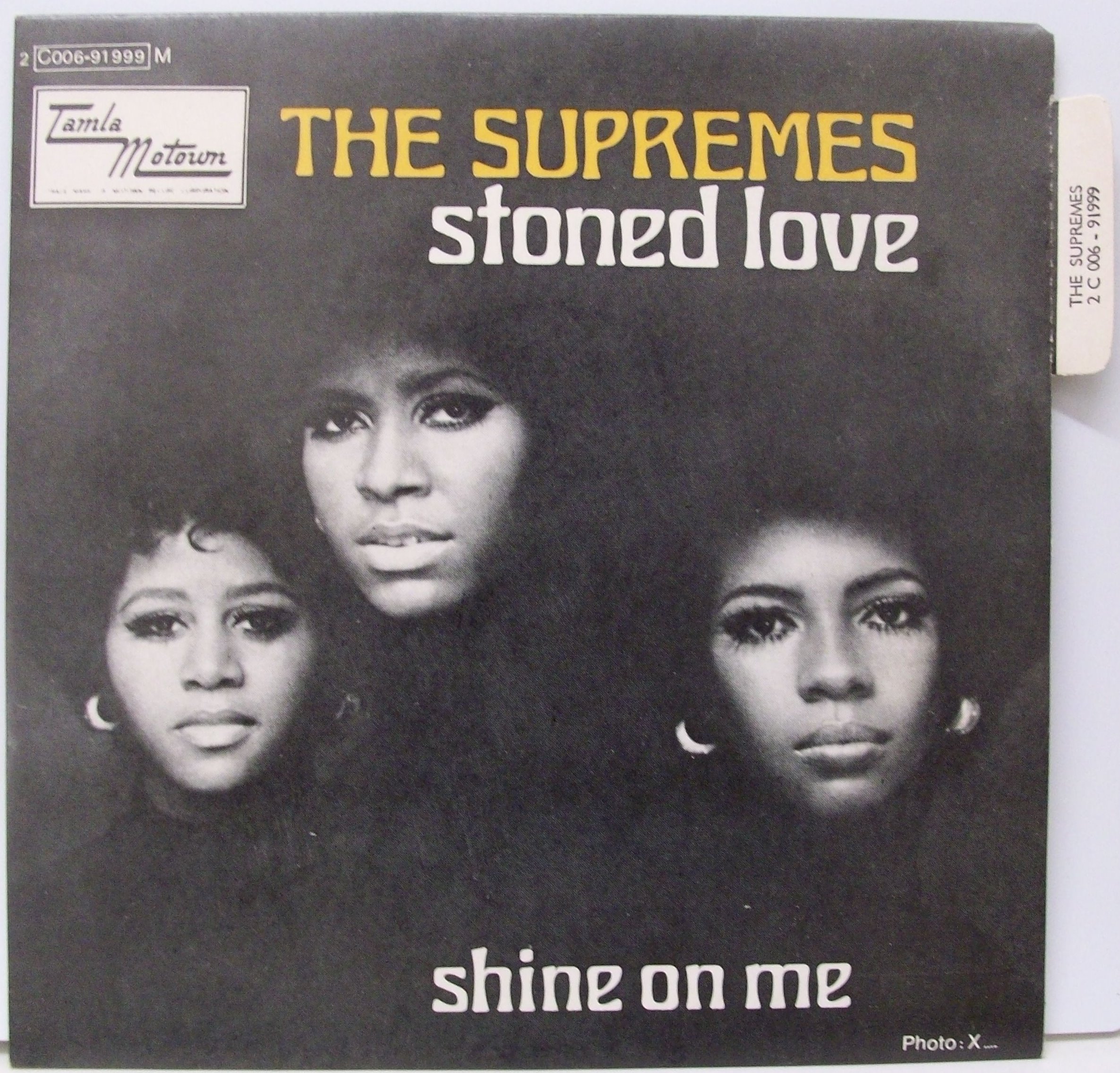
  • 1. The soul/r’n’b artist – Aretha Franklin, Marvin Gaye & Tammi Terrell, Carla Thomas, The Supremes, Otis Redding, Ray Charles etc etc
  • 2. The fuzzed-out, beat-driven, blues-influenced garage bands – The Who, Vanilla Fudge, Troggs, Box Tops, Dave Dee Dozy Beaky Mick & Titch (so that stretches it a bit, but you get the point)
  • 3. The pop stars/crooners – Bee Gees, Lulu, Roy Orbison, Petula Clark, Nancy Sinatra, etc.

Here are three examples of the above. The Who’s Coke after Coke, The Supremes pastiche ofBaby Love and Tom Jones’ rerun ofIt’s Not Unusual that is quite fantastic, hilarious and hideous all at the same time. “Say, I could do with a Coke right now. Somebody get me one please?” The big orange freak.

tom-jones.jpg

Did someone order a Tango?

I’ll put up more of these soon. Next up Otis Redding, Aretha Franklin, Nancy Sinatra, Vanilla Fudge, any requests…..

Get This!, Hard-to-find

Excess All Areas

Fritter about on the margins of success. Get signed. Release a hit single. Release a hit album. Tour bigger venues. Release a small run of future classic singles with killer b-sides. Release further singles and albums with ever-decreasing returns. Implode around 5th/6th LP when key member leaves or dies. A year or so down the line, entice same member back (unless dead) for one last hurrah and pay-day, but by then the magic is gone. All this is of course played out to a backdrop of drink and drugs and guns and girls and boys and Bentleys and bad and/or bent management. The trick for all bands is to make the upward trajectory as quick as possible, plateau for as long as everyone can stand you then make the downward trajectory as smooth and pain-free (and lucrative) as you can. (cf. most of your favourite bands, even that Stone Roses lot,  – they all fit the model to some degree or other, but you knew that already).

Happy Mondays were well into the downward trajectory of their life when they decamped, in part to escape the Manchester drug scene, to Barbados to record …Yes Please!, the album that proved to be their last. Unable to secure the services of Paul Oakenfold, the uber producer who’d sprinkled their previous work with hit-making fairy dust, the band instead chose to work with Talking Heads’ rhythm section, Chris Frantz and Tina Weymouth. On paper this sounds great – a decade earlier, Weymouth’s Tom Tom Club had taken the Talking Heads scratchy funk/punk blueprint and created proper full-on dance records, of their time, yet simultaneously ahead of the game, and Happy Mondays, via Oakenfold’s magic touch, had taken their clattering industrial funk and  propelled it into the charts, the mainstream and the collective minds of most of the under 25s in the UK. In practice, however, things were not so great. Never has an album been more aptly named. Paul Ryder and his brother Shaun (suffering heroin withdrawal when he left Manchester), a pair of walking, talking Scarface caricatures who at the best of times could make any substance shoved under their noses disappear in Dyson-quick doubletime, arrived in a Barbados that was buckling under the weight of a crack epidemic. Want some? Yes, please. The cost of funding this adventure eventually broke Factory Records and Shaun spent so much time building crack dens out of sun loungers beside the studio pool, that he forgot to write a single lyric for the album, a fact only discovered back in the UK when Tony Wilson was forced to pay £50 ransom to Ryder for the return of the studio mastertapes.

When it eventually materialised, …Yes Please! took a bit of a kicking. Melody Maker posted a lazy, half-arsed review that simply said, “No thanks.” Nirvana and their ilk were in full flow and for the first time ever, Happy Mondays seemed antiquated and irrelevant. It’s right there on the shelf behind me, but I can’t even remember buying it. Like many bands once they reach a certain point in their life, I bought it out of blind loyalty rather than musical merit. However….

…listening to it again recently had me doing some sort of mini re-appraisal. First single Stinkin ‘Thinkin’, with its ringing guitars and stoned, whispered vocal still stands up to repeated listens. The very antithesis of twistin melons, callin’ the cops and all that jazz, it’s downbeat, reflective and unlike anything Happy Mondays had done before or since. Drug confessional Angel is another that still cuts the mustard. “When did the Simpsons begin?” slurs Shaun, eyelids heavy with the fug of the night before. Although spoiled somewhat by foghorn-voiced Rowetta, the big haired, big mouthed wannabe rock chick the ill-advised Mondays brought into the fold for their later stuff, it‘s still a cracker. Currently appearing in pantomime at a medium-sized arena somewhere near you, Happy Mondays seem certain to eke out a living, Drifters style, from now on in. Stinkin’, yes. But not really thinkin’. Stop! Now!

Anyway, whether he’d ever acknowledge it or not, those two Happy Mondays tracks above were a definite influence on Damon Albarn when he wrote the tracks for Blur‘s final LP, Think Tank. I’ve been playing Think Tank a lot lately, what with the Blur reunion (of sorts) and the excellent No Distance Left To Run documentary on the TV the other night. The dark horse in the Blur catalogue, Think Tank is famous for being an almost Coxon-free zone, the guitarist contributing to the woozy, wobbly Battery In Your Leg before having left after being increasingly frustrated at the (sigh) direction the band’s music was going in. Recorded in Morocco, there’s a noticeable space between the grooves that allows the album to pop open the top button of its trousers and, like, breathe. (Sadly) it’s not tied up in any of those jerky, spasticated 2 minute shouty freakouts that Coxon does so well. (Thankfully) there’s none of those terrible bleep/bang/bleep/scree tune-free bits or free-form atonal rackets best saved for b-sides or solo LPs. Think Tank as a whole is dubby, spacey and tinged with African bangs ‘n beats. Now that I think about it, it’s basically a precursor to Gorillaz, without the big-name special guests. Best track by a country mile is Brothers And Sisters, a track so clearly in debt to those two Happy Mondays tracks that Shaun Ryder would indeed call the cops if he was ever sober enough to listen to it properly. Built on a bed of elastic band bass, Albarn’s loose, stoned, vocals practically stage whisper, “Tonight Matthew, I’m going to be Shaun Ryder!” Caffeine. Codeine. Cocaine. White doves. He reels off a tick-list Paul and Shaun would’ve had no bother putting away before breakfast.

Think Tank is also notable for featuring Me, White Noise, a hidden track you can find by rewinding from the start of the first track. With a backing track sounding like a fly trapped in a bass bin, Phil Daniels mutters and mumbles and shouts and swears his way through almost 7 minutes of thrilling stuff. “Fack orff!” he snarls. “I’ve got a gun, y’know…and I’d use it!” Thanks to this and Brothers And Sisters fore-mentioned prescription list, Think Tank got one of those stupid Parental Advisory stickers.

My parental advice? Split up when you’re at your peak. Leave them wanting more. Don’t reform. Ever. You’ll come back looking like this:

You might even become a respectable, bespectacled married member of society…

Holy fuck

*Bonus Tracks!

Although a Coxon-free zone by the end of the LP, Blur as a 4-piece recorded tracks during the Think Tank sessions that were never quite finished due to the guitarist walking out. Here’s a couple of Coxon-enhanced crackers that turned up on future b-sides.

Money Makes Me Crazy

Morricone

This half-considered Damon nicking off the Happy Mondays theory of mine may have legs. On the b-side of Happy Monday’s 24 Hour Party People single, you’ll find a track called Wah-Wah (Think Tank) Call The Cops!

Punch. Repeat. Punch. Repeat. Punch. Repeat.

Why could he not have walked out instead?


Get This!, New! Now!

Lightning Bolts ‘n Jessicarennis ‘n Andy Murray wins at Tennis

I’ll admit it. The Olympics have got me hook, line and sinker. From the opening ceremony onwards, via Wiggins’ magical time trial ride and the Scottish fella Jamieson who very nearly gubbed them all in the 200m breast stroke, until this weekend when Team GB have been picking up gold medals with all the carefree ease of Gladys and Agnes on a Tuesday morning at the pick ‘m mix in Woolies, I’ve sat, shouting sweary words of encouragement from the comfort of my sofa to people I had no idea existed a week ago. I was as cynical as many up here. Greatest Show On Earth? I don’t think so, pal. The Greatest Show On Earth is the World Cup. Everyone knows that. In no small part, my cynicism was due to Stuart Pearce’s (cough) Team GB football squad selection. A squad made up of numerous young Englishmen and a smattering of token Welshmen, with nary a Scot or Northern Irishman in sight. But more about them later. Yesterday was the opening game of the season for my team, Kilmarnock. It was a decent enough game, end-to-end, even, even if the BBC reported otherwise (their usual reporters have probably been deployed around the East End of London, I’d wager, and they’d been using some junior hack or other, not yet acquainted with the football normally played in the top league) yet I found my mind drifting back to events down south and couldn’t wait until half time in order to check the @TeamGB Twitter feed to see what I’d been missing. Good! My girl Jessicarennis was still burning the competition in the Women’s heptathlon.

It wasn’t long until I was home and catching up properly. Saturday night’s telly was sensational. But you knew that already. If you were watching ITV, silly you. If you were out, silly you. If, like me you whooped, hollered and punched the couch and the air and your wife with joyful abandon, you’ll know just how thrilling it was. When Jessicarennis lead from the front and came back strong and determined around that final bend; When the far-too-full-of-himself long jumper who’s name I’ve forgotten already messed up his last jump and bowed theatrically to the stadium; When Mo Farah, looking like someone Bob Geldof might be inclined to start an appeal for kicked his heels and dug out the strength to carry himself to victory; It was clear – that most dreaded of things, a feel good factor was suddenly everywhere. A ginger, a Muslim and a women of mixed race go into a pub. Everyone buys them a drink. I stole that from Richard Bacon. It’s a good one, eh?

Here in Scotland, following the manner in which oor ain Andy Murray casually disposed of Roger ‘The Greatest Ever‘ Federer, that feel good factor was multiplied ten-fold. Down south, people had a problem with Andy. He didn’t smile. He was dour in interviews. He battered his racquet around the court when things weren’t going his way. Good old stiff upper lip Tiger Tim Henman would never have displayed such vulgarities. Then, a month ago, the boy Murray blubbered like a big baby on the Centre Court and, well, some kind of thaw took place. It seems the public at large took him to heart. Today, when he climbed down from the Players’ Guests box and onto the scoreboard that declared his greatest ever victory, the wee boy who pushed his way to the front and shouted Andy back for a hug showed just how that feel good factor affects us all. That hug, as well as physical, was a metaphorical hug from all of Britain (but especially Scotland) to our own man.


The coverage on the BBC has been exceptional. This is what you pay your licence fee for. Handball over breakfast? Don’t mind if I do! Beach Volley ball at 10 in the morning? Oh aye! Easy on the eye! Beach Volleyball at 10 in the evening? Oh aye! Easy on the…but..hang on…they’re all wrapped up in, like, long lycra and jumpers and stuff. Damn that cold wind and British ‘summer’. Every sport is catered for and it’s all wrapped up and repeated if you happen to miss it first time round. One wee gripe? The commentators. Excellent and knowledgeable they undoubtedly are, they can also display an ignorance that cuts deep. It was that jumped up kids presenter Jake Humphries who did it first, during Team GB’s first women’s football match. “England this…England that….England the next thing“, and that’s a team that did have players from nations other than England in the starting 11. He said it about a dozen times. Then the normally reliable, likeable Lineker last night, “Well. So often before. And we’ve done it again. Out on penalties.” We, Gary? We? This is the first time we’ve ever entered a Team GB into any competition. We? You couldn’t possibly be referring to England, could we? The England who’s bottle crashes spectacularly at the merest whiff of a penalty shoot out? Did you not notice token Welshman and over-age player Ryan Giggs scoring there? Tut tut tut.  I’ll admit it, that’s why I took a tiny wee bit of satisfaction in seeing (cough) Team GB crash out of the football.

Anyway. This is supposed to be a music blog. The aptly-named Usain Bolt was pretty terrific in the 100m semi-final. The fastest man on Earth practically jogged over the line once he knew he’d qualified. Then the BBC ramped it up somewhat, with clocks counting down until the final itself. Re-runs of races from all angles. Slo-mo shots of Bolt goofing off to camera. And a 2 minute mini movie of the Best of Bolt for the majority of viewers who somehow knew that Bolt was The Man, yet were oblivious to his achievements to date. All sound-tracked by this. Lightning Bolt by Jake Bugg. One of my favourite singles of the year, it sounds like Bringing It All Back Home-era Dylan rattling his way through Bad Moon Rising, all nasal vocals and cow punk skiffle guitar. Like Bolt in the 100m final, it’s supremely self-assured, a blur, over before it’s begun, leaving the rest in its wake. Get it quick – I’ve a feeling the internet police won’t like it. But you will.

Beach bum.

Cover Versions, demo, Get This!, Gone but not forgotten, Hard-to-find

Kings, Queens & Other Chess Pieces

I meant to mark this occasion and put something up last week, but the RJ Ellory post (below) took over slightly. A week later, it would be churlish of me not to give a nod and a wink to that creaky old juggernaut that keeps limping on, like your smelly old dog with 3 good legs that’s deaf in one ear and blind in the only eye it has left. Aye,The Rolling Stones as a rock and roll group have now been in the game for no less than 50 years. That surely makes them one of the oldest musical acts still going strong. The Four Tops still do the odd show here and there (mainly ‘there’, in Vegas), and from 1953 until the death of Lawrence Payton in 1997 managed to keep the original line-up intact. The Drifters started in the 50s, but most (or all?) of the originals have, cough, drifted off. They probably played 5 shows last night anywhere between Blackpool Butlins and the Bermuda Triangle, so you can’t really count them. The Stones survive with 3 original members (Mick, Keith and Charlie, who actually joined after their first gig, see image at the bottom) and with Ronnie Wood having been in the band longer than The Fall have been a going concern. And how many members have they gone through in that time, eh? (Answer: about 66, at the last count).

Nowadays, they’re a bit more creased around the edges and a bit more expensive of cloth (though evidently, unlike most men of their age (and 10, 20, 30 years younger), no more expansive of waist). Sure, they’re a whole lot less vital than they once were, their live shows still trade on their Golden Era (early 60s – mid 70s, if you need to ask) and nowadays they’re a brand not a band – you can buy their merchandise in Primark if you fancy! But, as you already know, the Stones were totally, absolutely, dynamite in their heyday.

Chess Studios, 1964.

There’s a famous story (not an urban myth, as Keith goes at great lengths to point out in his autobiography) that when they turned up midway through their first US tour to record at the famous old Chess Studios, band hero Muddy Waters (he wrote I’m A Rollin’ Stone) was painting the outside of the building, whitewash streaming down his face, only stopping to help Bill Wyman in with his amplifier from car to studio. It didn’t matter that Muddy was a legend to the Stones and all those other Thames Delta blues bands, in his homeland he had yet to make that leap from unfashionable unknown to undeniable blues great. As Keith astutely notes, “If you want to stay on the payroll, get to work.”

Chess Studios, 1964

The stuff that the band recorded at Chess in 1964 was brilliant – Keith says 14 tracks in 2 days, my bootleg has 27, including their version of Bobby Womack’s It’s All Over Now that gave them their first number 1. Organic and rootsy, deep-rooted in the blues, the music has a big, booming, beefy sound, all reverb and twang and feral snap. Most of the recordings they made there for a potential album remain unreleased to this day (Google 2120 Michigan Avenue. Go on!) and it knocks spots off of anything that their sha-la-la, she-loves-me-and-I-love-her contemporaries were tossing off into the Hit Parade. But you knew that already…

The Tunes:

The Rolling StonesIt’s All Over Now

The Rolling Stones2120 South Michigan Avenue

The Rolling StonesTime Is On My Side (version 2)

The Rolling StonesDon’t You Lie To Me

The Rolling StonesStewed & Keefed

The Rolling StonesThe Under-Assistant West Coast Promotion Man

The Originals:

Bobby WomackIt’s All Over Now

Irma ThomasTime Is On My Side