Cover Versions, Peel Sessions

This Is A William Shatner Number

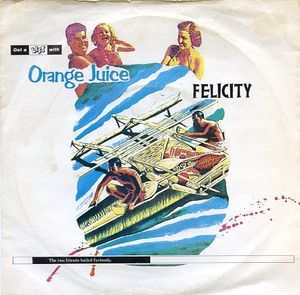
David Gedge introduced The Wedding Present’s breakneck run-through of Orange Juice‘s Felicity with those words, delivered in a perfectly-sighing, world-weary Yorkshire brogue. I first heard TWP version on Tommy, the album released in the wake of George Best‘s success, a stop-gap of odds and sods and radio sessions – Felicity came from a Peel Show – that would keep the growing fanbase happy and dipping into their pockets until the second album proper was ready. For reference, think Hatful Of Hollow at a hundred miles an hour. “William Shatner?” I pondered. “What on earth does Star Trek have to do with The Wedding Present?

Well, nothing, as was plainly obvious to everyone but me. Shatner’s Captain James T Kirk was the lead character in Star Trek. James Kirk also happened to be the name of the lead guitar player in the definitive line-up of Orange Juice. It was quite the epiphany when I joined the dots on that one. “Aaah,” I mused, safe in the glow of triangulation. It’s the simple things that matter.

It must’ve been great to have been in Orange Juice in 1981 and 1982. Just a hop and a step on from punk, these leaders of a brave new open-minded world channelled the sublime- Velvets/Buzzcocks/Chic with the ridiculous – Davy Crockett hats/Boy Scout shorts/open-toed sandals and white socks with no fear of ridicule. Bands these days, with their marketing strategies and social media channels and Spotify demographics might take all of this for granted, but believe me, Lewis Capaldi and Foals and Blossoms, it wasn’t always thus. Orange Juice had the reference points and the in-jokes and the fantastic haircuts. The world was theirs for the taking. By the time of You Can’t Hide Your Love Forever, they’d outgrown Postcard Records but hadn’t yet fiddled around with the magic ingredients in their sound, so that first album rattled and rolled majestically. The cover of Al Greeen’s L.O.V.E.…Edwyn’s incredibly tender In A Nutshell…the Motown by way of Mount Florida Falling & Laughing…. it really was the sound of young Scotland.

Orange JuiceFelicity

Felicity made itself known towards the end of side 2. The key word for it is collapse. From the wobbly woah-woahs onwards, it’s never more than a beat away from potential disaster. The guitars, brilliantly-shimmering and sparkling are forever a half-trip and stumble from being an unlistenable out of tune mess. The timing is slightly off, the game backing vocals admirable, the frothy enthusiasm of the four players clear for all to see, but when they clatter their way into the galloping key change near the end, it’s the four to the floor disco beat that keeps it all together, striving to maintain the semblance of musicality that helps Felicity come to a still-standing stop.

Look closely and you’ll see Edwyn’s magnificent, blow-dried quiff teeter on the verge of limp collapse, wrung out and hung out to dry. Look closer still (around the 2:15) mark) and you might even spot David Gedge forming yer actual Wedding Present. And who could blame him?
And then listen again. Really listen! Listen to the slo-mo piano line at the start. Zoom in on that bouncing bass line. Pay attention to those well thought-out guitar lines. The tremelo! The triple-string riffing! The referee’s whistle that was so de-rigeur in early 80s New York dance records! Even in a light years-away Glasgow tenement, Orange Juice clearly had a collective finger on the pulse. Then there’s Edwyn’s joyous James Brown cop near the end. “Take me to the bridge now!” he shouts with dizzy abandon. It’s a proper jangling racket, Felicity. The sound of happiness, as Collins sings, but also the sound of fishermen’s stripy t-shirts and pleated waists and eyebrows forever-arched; feisty and fey, young punkish enthuisasm bottled forever. Sexy, as Gedge remarks at the end of his band’s version. Sexy.

The Wedding Present Felicity
 

Get This!

Not All Ladies Love Cool J

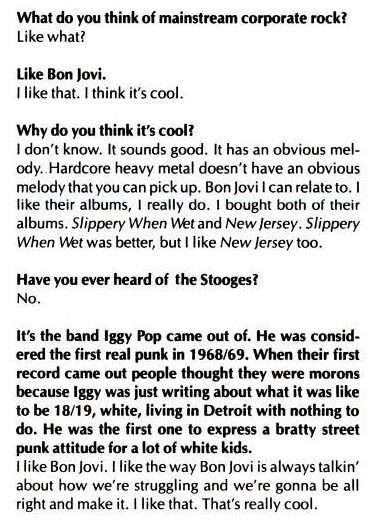
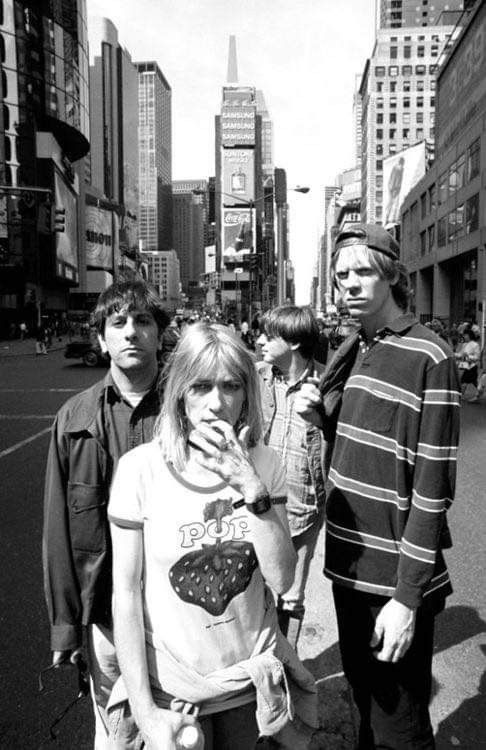
At the tail end of the 80s, Sonic Youth‘s Kim Gordon sat down with LL Cool J to interview him for a piece in US music magazine Spin. A fan of his music – she loved Cool J’s first album, Radio – the plan was to show how the artists maybe had something in common. Despite each coming from wildly differing marginalised backgrounds, Gordon, a woman from the underground punk rock scene and Cool J, a black man from the misrepresented rap scene would/should be able to empathise with each other’s experiences of prejudice in music. They had a tenuous common link in Def Jam supremo Rick Rubin who’d come out of the same scum-rocker scene that allowed Sonic Youth to grow and develop, but, really, that was about it.

Sonic Youth’s bass player quickly discovered she had very little in common with the hot to trot rapper. Indeed, it wouldn’t be out of sorts to say she didn’t really like him….and he didn’t really give two hoots in any case.

With his current album Walking With A Panther tearing up the Billboard Hot 100 and a fleet of luxury cars parked outside his brand new, furniture-free home, LL came across as very much the stereotypical big-shot rapper, a boy from the projects who had landed very much on the soles of his box-fresh sneakers, his frat-boy opinions on subjects as divisive as what made comedians funny and how to treat women drawing a clear line in the sand.

Amongst the tension, there’s a genuinely funny moment when Gordon prods Cool J into giving his opinion on contemporary rock music. As well as admitting to a love of Bon Jovi (“both their albums“), he just doesn’t get the obvious parallel between Iggy in the late 60s and his own experiences 20 years later.


The experience wasn’t a total flop though. Gordon went home and turned the meeting into song. Kool Thing is the howling sound of fringes flicking eyelids and torn-at-the-knees 501s, a dirty great tsunami of wonkily-tuned surf-punk guitar with a rhythm to ride on. It was the perfect output for expending post-interview pent-up frustration. To use that well-worn cliché, it rocks. Rawks, even.

Sonic YouthKool Thing

With references to Cool J (‘Kool thing, walkin’ like a panther’) and a lyric that takes exception to LL’s objectification of women, it’s fairly hard hitting. Political, pro-feminist, angry, anti-misogynist, it ramps up another level when Public Enemy’s Chuck D pops up to ‘tell ’em ’bout it. Hit ’em where it hurts.’

Hey, kool thing!” instructs the uber-cool, street-smart Gordon.

Come here, sit down. There’s something I go to ask you.

I just wanna know, what are you gonna do for me?

I mean, are you gonna liberate us girls

From male white corporate oppression?

Tell ’em ’bout it indeed. Maybe Kim Gordon thought that by changing the ‘C’ in ‘Cool’ to a ‘K’, LL wouldn’t realise it was about him. She was probably right. I wonder if he’s aware of it yet. I doubt, with his Benz, his BM, his Audi and his Porsche lined up in the drive of the house he called Fantasyland that he’d be all that bothered. I may be wrong, but I don’t think LL Cool J ever replied in rap to Gordon’s dis. Unusual for a rapper, that.

Hard-to-find

Week Strong

Working Men’s Club have just about the least Googleable name in music but they’re worth swiping through all references to the Wheeltappers & Shunters of the world until you find them. They really are. Last year they found their way to Plain Or Pan, directing me towards their excellent Bad Blood track, a song subsequently pressed on a limited 7″ that tickled the top ten of yer actual singles chart. The charts might not be relevant to you or I as much these days, but you can bet the lint in your pocket that it meant a whole lot to the young northern English three piece.

With an album imminent (5th June is the date to circle on your year planner) they’ve emerged from the studio with a slightly changed and expanded line-up, but no less of the tuneage and teenage abandon that made Bad Blood and its follow-up Teeth so great.

Album track A.A.A.A. spits and snarls like those ’80s/’90s Fall collaborations with Coldcut; vocals megaphoned in from across the Pennines…sparse guitars spitting fury…vintage synths hovering and  haemorrhaging between the processed beats…the whole thing sounding like a hornets nest on fire. It’s magic.


Working Men’s Club were due to go out on tour with Baxter Dury and yer actual Noel Gallagher over the coming weeks, gigs that obviously won’t now happen. I suggest you pre-order their album instead and then, when the live music scene gets up and running again, you’ll know every noise and every nuance on what promises to be a debut to rival all others this year. You might even find yourself at one of their own headline shows when they hit the virus-free road in their own right.

As far as guitar-based indie rock goes, 2019 arguably went to Fontaines DC. 2020 though is Working Men’s Club’s for the taking. Click the logo below and it’ll take you straight to your music retailer of choice.

Buy more records….


Get This!

Disappointed. Not Disappointed

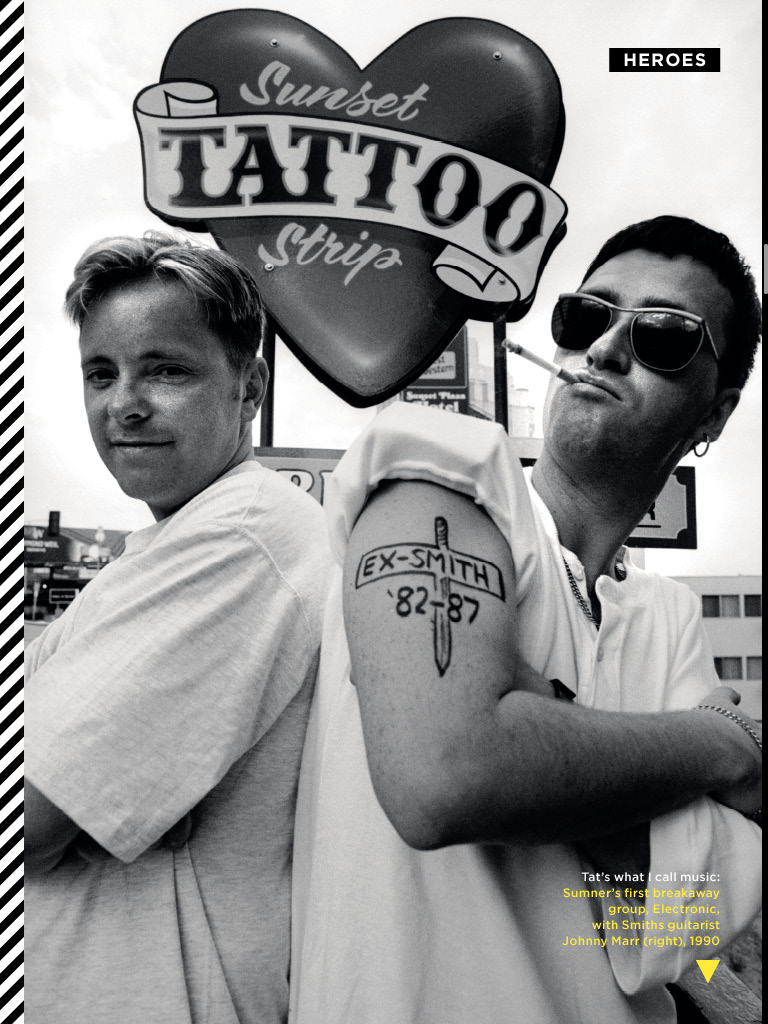
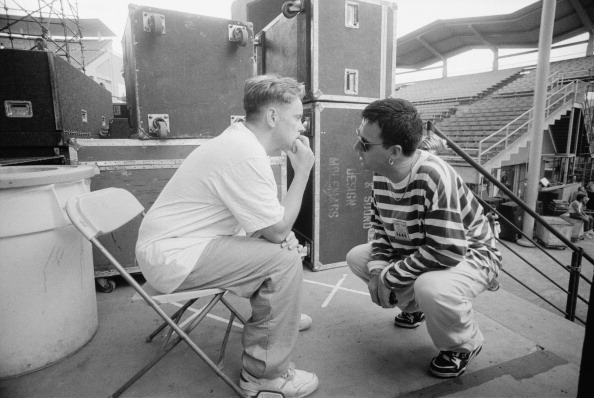
Like many of the tracks released by the constituent parts of the group that created it, Disappointed by Electronic was released as a standalone single, a gap-plugger that sated the appetite of their fans in the period between the first two albums. A fantastic gap-plugger it was too.

Bernard Sumner’s New Order were awfully fond of (perhaps even hell-bent on) ensuring singles stayed off of albums. Ceremony, Temptation and Everything’s Gone Green didn’t make it to Movement and Blue Monday, Confusion and Thieves Like Us didn’t appear on the chronologically closest Power, Corruption And Lies, although by the time of Low-Life, lead single The Perfect Kiss was a central part of the album and from then-on in, a good proportion all of their singles were used to promote a parent album.

Johnny Marr’s Smiths gave great value for money, regularly releasing one-off singles that would eventually appear as 33 rpm tracks on compilation albums further down the line; How Soon Is Now? (originally a b-side), Shakespeare’s Sister, Heaven Knows…, William…, Panic, Ask. All started life spinning at 45rpm.

Pet Shop Boys were perhaps the more conventional of the trio. On a major label they maybe didn’t have the same clout that an indie band might have on a small label (though what do I know?) and accordingly, almost all of their singles, in that imperial run from West End Girls and Love Comes Quickly through So Hard and Being Boring to 1991’s DJ Culture and Was It Worth It? were taken from their studio albums of the time.

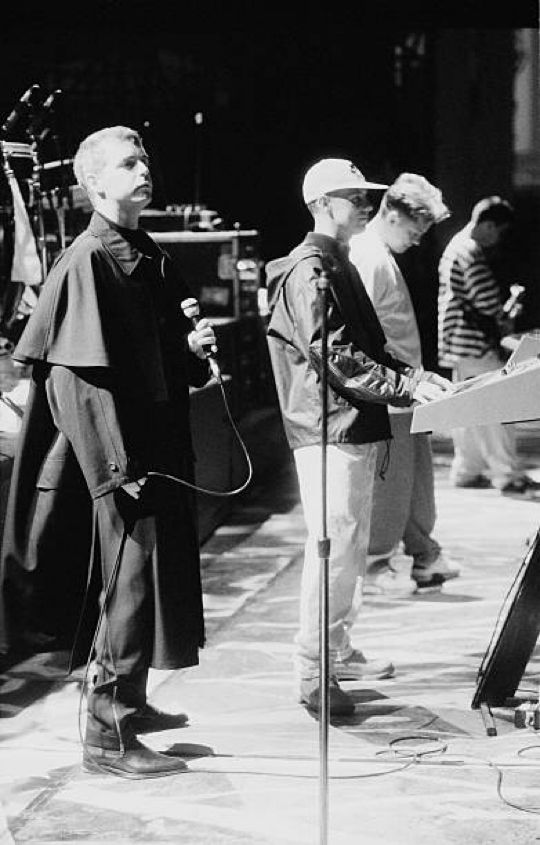
(Photo by Kevin Cummins/Getty Images)

Disappointed is very much a product of its time and place. Chronologically, it was written around the end of 1991, when Johnny was between The The projects and just before Bernard returned to New Order to record Republic. Despite being patchy in parts (and that’s a whole other blog post), the last decent album in New Order’s original form gave us Regret, arguably the last truly great New Order single; soaring and melancholic, built on a bed of asthmatic guitar and hard-wired technology, and, from the negatively-leaning titles in, you can draw a straight line between that New Order track and Electronic’s 4th single.

ElectronicDisappointed (7″ mix)

By the end of 1991, Pet Shop Boys had amassed 19 hit singles to their name (pop quiz – name them!) Anything they touched turned to sold and gold. They were the masters at minor key pop, “The Smiths you can dance to,” as Tennant famously said at the time. Arriving on a bed of synth washes and era-defining Italo house piano – conceived by Johnny’s brother Ian – Disappointed‘s hookiness (not Hooky-ness) is immediate and immersive, mainly due to Neil Tennant’s cooing ah-ah-aah refrain.

Three seconds in and it sounds like the greatest Pet Shop Boys hit that never was. Tennant employed all the best PSB tricks; minor key melancholy, smoothed-out spoken word in the verses, flying like a kite in the chorus, those earworming ah-ah-aahs and pulsing glacial synths to the fore.

It worked. On release in July ’92, the single climbed to number 6 on the UK charts, kept out of the top 5 by Mariah Carey’s helium-voiced take on the Jackson’s I’ll Be There. Ironically enough, the b-side to Disappointed was a remix of Idiot Country.

If you know your Euro-pop, and I’m sure many of you do, you’ll be aware that Tennant tips more than the brim of his trilby to Mylène Farmer’s Désenchantée single, a massive hit on the continent in 1991. It’s there in the smoothed-out synthesizers and mid-paced feel, the down-played vocal delivery in the verses and restrained euphoria in the chorus. I don’t think it’s a coincidence either that Tennant ‘borrowed’ her ‘Désenchantée/Disenchanted‘ lyric for his own chorus. Most of us in the UK would’ve been oblivious of this at the time (perhaps even Bernard and Johnny too), a fact I’m sure the pop boffin Neil would’ve been banking on.

Seemingly content to take more of a back seat at the time, Johnny has an understated role in the single. He breaks into full-on Nile Rodgers funk for most of it, riffing across the top 3 strings like he hadn’t done since 1985’s Boy With The Thorn In His Side, his right hand rattlin’ the rhythm while his left shapes the funk, but contribution-wise, Disappointed is probably 45% Neil, 35% Bernard and 20% Johnny. The sum is greater than its parts though. It’s a great single, almost a lost single really, given the ubiquity of Getting Away With It and its not-quite-as-good follow-up Get The Message, but one that deserves reappraisal.

ElectronicDisappointed (original mix)

Get This!

It’s Not Unusual

When Tom Jones brought It’s Not Unusual parping and swinging into the 60s, all bold as brass confidence and knicker-dodging hip-shakes, little did anyone know that the record that introduced the lothario from the Valleys to the world was in fact a demo recording. Yes. A demo. Jones was just another struggling singer, one flop single to the good and looking for a break, when he was asked to contribute a guide vocal for what was to be the next Sandie Shaw single. When Shaw heard the demo she immediately passed, claiming that she couldn’t better the vocal on the demo and suggested Jones’ version was released instead. It was, and from it, Jones went on to meet Elvis, catch more knickers than he could dodge and turn a suspicious shade of orange with each passing year. A good career move, you’d have to agree.

Established artists being offered and turning down songs is, if you pardon the pun, not unusual. The opportunity for the songwriter is clear; big artists have big hits and generate big money. Who wouldn’t want a slice of that? The Sheerans and Swifts of this world must be batting them off on an hourly basis. They’ll have layers of management filtering out only the very best of them of course, and if a writer is lucky, maybe their chosen artist will even listen to what they have to offer. Maybe.

Occasionally though, art is more important than commerce. The tectonically-paced Blue Nile have never been motivated by anything as crass as chart position or commercial success. Sure, they’ve had a (brief-ish) taste of both but for the Blue Nile, it’s music as art that’s the important thing. Their four albums stand as perfectly-considered collections in their own right, to be played as a whole from ebbing start to flowing finish, each Linn drum and symphonic sweep, every harmonising horn line and tight ‘n taut Strat part agonised over through hours – years, even – of studio sessions. The lyrics on top are just as precious, delivered as they are by Paul Buchanan’s iconic, laconic yawning drawl, a voice as idiosyncratic and essential as Bowie’s and that’s no lie.

They’re an enigma, the Blue Nile, as insular and secretive as they come, emerging only as and when they have something worth sharing. You might be walking up the Byres Road in Glasgow’s West End and imagine you’ve just passed Paul Buchanan coming out of Fopp or, later on, do a double take at the guy in the QM who looks really like PJ Moore, more grey than you imagined, more facial hair, perhaps….and then realise that it really was two thirds of the Blue Nile that you encountered in the one day. Hidden in plain sight, the Blue Nile have managed to attain the enviable position of maintaining both healthy record sales and anonymity on their hometown streets. What your Sheerans and Swifts wouldn’t give for that…

JJ Gilmour is a great songwriter (and singer, but we’ll come to that shortly.) He shot to prominence as a member of The Silencers, played massive shows in France and Germany where the band were, perhaps unbelievably but no less true, as popular as U2 and Simple Minds, before the downward slide of sales and the inevitable end. Since then, Jinky’s carved out a niche career penning the most beautiful and perfect songs, as melodic and melancholic as McCartney at his peak (and again, that’s no lie) and regularly plays shows that are heartbreaking and uplifting in equal measure. A career in stand up awaits Jinky should he choose to hang up his guitar, but comedy’s gain would be very much music’s loss.

Jinky’s songs are terrific, equally at home as stripped-back acoustic ballads or full-band blow outs. Melody is the key and Jinky’s songs have it in spades. On his last album, 2017’s Dix, JJ took the decision to record an acoustic album, augmented by occasional strings and complementary piano. Soul baring, naked and raw, it’s an album that would spin nicely at 2am after you’ve gone through the aforementioned Blue Nile’s back catalogue, with the lights low and a glass half empty.

Midway through you’ll find the incredible Glasgow Town.

JJ GilmourGlasgow Town

This slideshow requires JavaScript.

Jinky wrote Glasgow Town with Paul Buchanan in mind. You can hear it in the airy space between the notes, the arrangement stripped of superfluousness, the spotlight trained on the voice hanging in the vacuum. It would’ve made a great opener on either of the first two Blue Nile albums, records that are ingrained with the grit of Glasgow’s soul, albums that shimmer within and radiate majestically at the edges.

Jinky’s Glasgow Town does likewise. If you’ve ever been lucky enough to hear him perform it live, you’ll know. Time stops, the air is sucked out of the room and all the focus is on the wee guy stage centre, baring his soul in that wonderfully expressive voice. He’s loved, is Jinky, perhaps even more than that Buchanan fella, although I’m not so sure that he’s fully aware of that.

Through a network of connected friends, Glasgow Town eventually did make it to Paul Buchanan. The story goes, as Jinky heard from one of those mutual friends, that the Blue Nile vocalist, the guy with the voice as idiosyncratic and essential as Bowie’s and that’s no lie, liked it. “That’s perfect as it is,” he was heard to say. “I couldn’t do it any better.” He was right too. If you want to own a version of Glasgow Town, go for the original.

Unlike Tom Jones, Jinky hasn’t gone on to Vegas residencies and knicker-dodging global success, but then, Tom Jones will never write a song as wonderful as Glasgow Town. Who’s the real winner?

Live!

Furry Meek Brother

Not for the first time, I spent a wee bit of time over the weekend with Romeo Stodart, the gentle and quietly-spoken lead vocalist with the Magic Numbers. He was over in Rothesay on the Isle of Bute to headline the first night of Butesong, a boutique singer/songwriter festival held in a grand old Victorian hotel which I was involved in promoting. After a set of solo and Magic Numbers’ material, where he discussed the genesis of each song played, encouraged the audience to fill in the missing harmonies normally provided by the other Magic Numbers and told amusing tales of life in one of our most consistently great bands, Romeo joined the audience in the bar where, by 3 in the morning, he’d whipped out his guitar and was taking requests for songs from the stragglers still determined to avoid bed for the night. The back catalogues of Neil Young, The Smiths and The Beatles, amongst others, got a good going over, much to the delight of those there. At one point he handed me his guitar –  a beautiful old Martin acoustic that played like a dream – and, 5 sheets to the wind with a good 10 hours worth of gin in me, I regaled the stragglers with my greatest hit, A Wee Roll ‘n Slice (you should hear it – it’s a belter!) a bum note-filled bashing of McCartney’s Junk and sausage-fingered kickings of Last Night I Dreamt Somebody Loved Me and This Charming Man. “Great Johnny Marr riffing!” our new best pal lied kindly. “Play us another.” There was still time for a spirited go at the Trashcan Sinatras’ Hayfever – “I love those major 7ths, man!” before the relieved guitar was put back into its case. Not yer average Friday night then, and one to remember.

The event had me scurrying back to my Magic Numbers albums last night and as I sat to write the review of the weekend for the local paper, I fell back in love with songs that are as melodic as Teenage Fanclub’s, as harmonious as the Lovin Spoonful’s and as warm as The Mamas and Papas’ finest moments. I say ‘fell back in love with’ as I can’t remember the last time I properly sat and listened to the band. More fool me. Those songs have really stood the test of time. The debut album is suddenly 15 years old this year but the songs sound as fresh as they did on first listen. Many of them were played in Rothesay, occasionally more introspectively, now and again with more meander, sometimes with a little spoken interlude. “And this is the part,” laughed Romeo midway through a room-rousing Mornings Eleven, “when we’d really piss off the headline act who had expected us to finish our set by now.” Bah-bah-bah-bah-bah bah baaaah-ah goes the half-paced, mile-long outro, all false endings, a cake well (but not over) iced and we all sang along.

The Magic NumbersMornings Eleven

Magic Numbers’ albums all carry that great mix of melody, harmony and musicianship that sees them consistently put out terrific wee albums. Never quite flavour of the month, never anybody’s second-favourite group (the nation’s answer to that particular poser will always be Supergrass) they nonetheless have continued to plough a deeply rich furrow of well-crafted, expertly produced music.

2010’s The Runaway introduced anyone who was still listening to the womb-like Hurt So Good, a keening ambient swirl, the imagined results of Fleetwood Mac’s Albatross as produced by Phil Spector.

The Magic NumbersHurt So Good

It’s great, isn’t it? It’s the sound of heartbreak on wax, a heady flotation tank of syrupy-thick harmonies and Carole Kaye bassisms, out-there slide guitars, waterfalling riffs and that fantastic oh-oh-oh backing vocal. As far as melancholic music goes, this is up there with the best of it.

Likewise, 2014’s Alias includes the swooning Spector pop of Roy Orbison, a song written by Romeo that tells of getting through tough times by listening to the titular Big O. With softly beating Be My Baby drums, a cacophony of sweeping, weeping strings and a heart-breaking breakdown in the middle, it’s just about as perfect as you could wish for.

The Magic NumbersRoy Orbison

Romeo is due to head out on a solo tour in the coming months. Your social media platform of choice will have all the info you require on that front. If he’s half as engaging, funny and groovy as he was on Bute at the weekend, you’d be a fool to miss him if he’s anywhere nearby. Parent band The Magic Numbers will head out later in the year in support of that 15 year anniversary. If only to catch the impressive sight of Romeo’s sister Michelle taming her wild Fender bass into submission, you should probably look out for them playing near you too. Perhaps, with renewed focus on and reappraisal of what are undeniably great songs, they’ll have replaced the ‘Grass as everybody’s second-favourite band.


New! Now!

Set To Clean Up

There’s a terrific label that’s been releasing really great records with no fuss or fanfare for the past four years. Last Night From Glasgow – named, I imagine, from the opening line in Abba’s Super Trouper – is unique in that it exists through crowdfunding. Members pay upfront at the start of the year and the subscription fees are put towards the production of music from over a dozen acts. The music varies, from the wandering electronica of L Space and Broken Chanter‘s soulful folk to the E-Street isms of The Gracious Losers and a reborn, hard jangling Close Lobsters. The latter will launch their LNFG-curated Post Neo Anti LP this coming weekend at a sold-out Glasgow show and will, I suspect, feature strongly in the end of year Best Of lists. It’s a cracking record, one that, as a newly-converted member to the label, I’ve been lucky enough to have been listening to far ahead of its official launch date.

Another release of note is the eponymously-titled debut album by Glasgow 3-piece Cloth.

Released towards the end of last year and taking the label on yet another interesting path, the album almost defies classification and comparison. Squint and you might hear traces of Luscious Jackson’s more ethereal moments. The womb-like groove of Warpaint also springs to mind. The layered atmospherics of Built To Spill, maybe. But really, Cloth are fairly peerless. Sure, there are guitars on there. Chiming, perfectly clean and other-worldly in places, as far from ‘rocking’ as you can imagine. There are vocals too. Dry, high in the mix, gossamer-thin and spectral, yet honeyed and warm. There’s a drummer somewhere too, playing with an understated finesse that’s far more background than backbeat, and being under-stretched, she has the time and gumption to trigger an occasional bass sample to help put flesh upon the skeletal frame from which the songs hang. All in all, it’s a terrific sound.

ClothDemo Love

The album is only now gathering pace. Tom Robinson, a long-time supporter of the group has featured Cloth regularly on his BBC6 Music ….Introducing show. Stuart Maconie gave them a play at the weekend. Marc Riley, Gideon Coe, Vic Galloway, Steve Lamacq….all the big hitters really, have fallen for the band’s sound and given them generous airplay since the turn of the year.

ClothFelt

Guitars ping throughout. Airy atmospherics abound, swirling like the 5 in the morning mist on the Clyde. The rhythm chugs ever-forwards, propelled on a breeze of multi-layered breathy vocals. It’s all very lean. Fat-free. No superfluous clutter. By the third listen you’ll love this album, I tell you. Cloth, if you pardon the pun, are due to wipe the floor with all opposition.

Insular in sound, cosmopolitan in outlook, it’ll be exciting to see where 2020 takes Cloth. It’s not too late to jump aboard. Click the logo below and sign up to the label for the year ahead. Satisfaction and good music guaranteed.


Gone but not forgotten

Music’s Not For Everyone

Pioneering DJ and soundscaper Andrew Weatherall left us today. A quick look in the more esoteric corners of my record collection will find any number of 12″ singles, CD singles and compilations stamped with his unmistakable sonic signature; dark and dubby and as wildly creative as the hair on his face. Weatherall-enhanced records always grew on you (correction – still grow on you), revealing hidden layers with each new rotation, a sound that was simultaneously out of time and ahead of time.

It was Weatherall who taught Primal Scream that their records should be marathons rather than sprints, and he transformed them from a sniggered-at Asda-priced Guns ‘n Roses into a genre-hopping behemoth, welding MC5 chants to acid house beats to gospel samples to tripped-out, whacked-out house, sometimes within the same track. Before the release of Screamadelica, I’d wager that most folk who approached music from my stubborn and blinkered post-teenage point of view – guitars are where it’s at, dance music’s all nonsense, blah blah blah- would never have heard of Weatherall. That it’s now Primal Scream’s accepted era-defining classic is due mainly to the producer’s ability to channel the group’s punk spirit with the ‘new’ sound pumping out of the clubs. Proof, should it be needed, that the sum of a classic album is even greater than its constituent parts.

It was his magnificent melding of loose and tumbling Stonesy piano and crashing guitars on Loaded that signalled a brave new age in indie guitar music. It was now OK to tuck your melodies into a bed of beats. It was perfectly acceptable to loosen and lengthen your track to the point where it bore no resemblance to its original form. It was suddenly de rigeur to have a Weatherall or Two Lone Swordsmen remix on your single. Acts as wide and varied as Happy Mondays, Six By Seven, Tracey Thorn and Wooden Shjips have all benefited from the magic beats and bloops he sprinkled on top. A Weatherall remix, to use that hackneyed old term, rocked, but more importantly, they rolled.

Wooden ShjipsCrossing (Weatherall remix)

Bocca JuniorsRaise (63 Steps To Heaven)

His production alongside Heller and Farley on Bocca JuniorsRaise (63 Steps To Heaven), all Hanna-Barbera sampled starts, stolen Thrashing Doves piano loops and monster beats still sends the hairs on the back of my neck tingling in anticipation. Was it really played ahead of the Stone Roses gargantuan Glasgow Green show in 1990? I like to tell myself it was. I have some sort of warped memory of going bonkers to it at the time.

His thumping mix of Primal Scream‘s Uptown is a string-driven, disco-infused variant on The Clash’s Rock The Casbah going 15 rounds with Augustus Pablo and Elecronic’s Getting Away With It. Absolutely essential, if you listen to just one Weatherall remix this week…

Primal ScreamUptown (Andrew Weatherall Long After The Disco Is Over mix)

Sometimes, he beefed up the original record to the point where the Weatherall remix became the accepted version. My Bloody Valentine‘s Soon would be a case in point.

Sometimes, he’d take a tiny part of the original tune and steer it towards uncharted territory. The new shapes he twists from St Etienne‘s Only Love Can Break Your Heart were a step too far for these ears at the time. In the intervening years though, this slowcoach has caught up and jumped aboard.

Occasionally, the finished result bore no resemblance at all to the original record. His production on his remix of Flowered Up‘s Weekender, all 16+ minutes of it, is sensationally up there and out there, yet if the artist and title wasn’t on the label, I’ve no doubt that even the keenest of trainspotters would struggle to identify it.

Flowered UpWeatherall’s Weekender (Audrey Is A Little Bit More Partial)

An eclectic, catch-all artist – his setlists read a bit like a random John Peel show, with the added bonus that all tracks were played at the correct speed –  spanned 50s rockabilly…punk…acid house…new wave…no wave…nosebleed techno…avant garde ambience…and flowed seamlessly; dubby, clubby and ebbing and flowing like the best of nights out.

Sabres Of ParadiseTheme

The AsphodellsA Love From Outer Space

A true pioneer, his unmistakable stamp on the great records of the future will be greatly missed. For now, I’ll sate myself with the honest understanding that my knowledge of Andrew Weatherall’s work barely scratches the surface. I’m going in head-first for the next wee while.

Some content on this page was disabled on February 17, 2021 as a result of a DMCA takedown notice from Wayne Fox. You can learn more about the DMCA here:

https://wordpress.com/support/copyright-and-the-dmca/

Get This!, New! Now!

Leon On Me

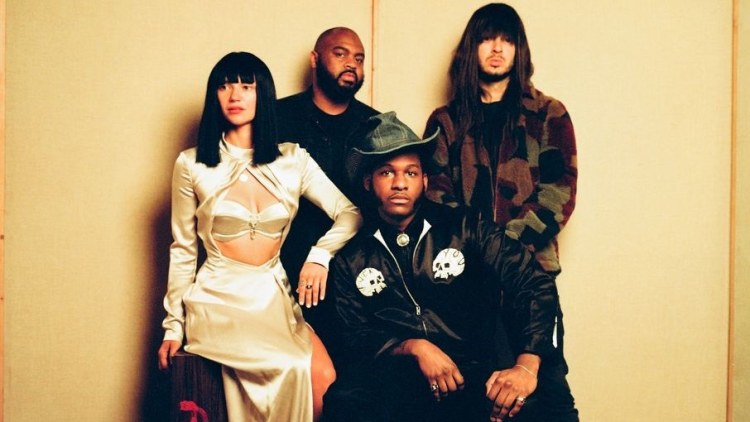
Currently rolling across the airwaves via your more clued-in radio presenters is Texas Sun, a heady collaboration between unlikely bedfellows Leon Bridges and Khruangbin.

Bridges is the very epitome of studied soul cool; the voice an amalgamation of Sam Cooke and Marvin Gaye, dress sense as lean and sharp as a pair of fifties Cadillac fins, and two albums into what you suspect might be a career that’s worth following.

Fellow Texans Khruangbin are also two albums to the good. Both are built around an anything-goes policy and the trio frequently magpie influences as disparate as r’n’b, psychedelia and foreign language and stir them into a heady soulful stew. 2018’s Con Tudo El Mundo should be your first point of reference if you’re unfamiliar with them.

A year in the melting pot, the 4 tracks on the collaborative EP grew out of shared tours and jam sessions and, in the shape of the title track, has yielded a modern-day stone-cold classic. Texas Sun blows like tumbleweed across a vast dustbowl landscape, big sky music that’s widescreen, expansive and wrung out on reverb and twang.


Caressing you from Fort Worth to Amarillo,” coos Bridges, his voice a controlled ol’ King Cole croon. “Come on roll with me ’til the sun dips low.” Weeping pedal steel slides effortlessly from the beautiful glowing orange grooves and out into the ether. Ghostly falsettos provide colour and tone in the background. And the guitar, strung-out and slow-burning, carries the whole thing home. It’s only February but if a better Lone Star State-borne shuffling love ballad is released this year I’ll head on out to the nearest Joshua tree and jab a cactus in my good eye.

The rest of the EP hasn’t yet quite matched the heights of the lead track – although I suspect at least two of them are proper growers that by this time next week will be perhaps on a par with the opener – but across those other 3 tracks there are plenty of vintage soul-influenced chops – rattlin’ wah-wah, understated Fender bass, Mayfield flutes, vibes, even a smarty pants Isaac Hayes sample – and a proper old-skool analogue sound from the production to sate your inner seventies soul boy. It’s a great record. Hopefully, an album will follow…

Alternative Version, Cover Versions

Simply Dread

Fisherman by The Congos is a proper chunk of roots reggae; thudding staccato bass, lilting scratchy guitar, blunt-powered off-beat drumming and the sweetest falsetto this side of Frankie Valli’s The Night. The opening track on The Congos 1977 Heart Of The Congos album, it’s exactly the sort of track you’d introduce to any cloth-eared fool who tells you they don’t like reggae.

The CongosFisherman


Produced by Lee Perry, Fisherman is testament to his genius at the controls. He allows the band to play with a tight fluidity, adds the requisite sonic watery boinks and drowns the whole load in a bathtub full of reverb and delay. There’s a spaciousness to it all, the sound of a group of musicians and producer playing, at the very least, in their slippers with their feet up, but more likely horizontally and under the influence of old, home-rolled Jamaican finest. His dub version is fantastic…

Lee PerryFisherman dub

As crucial as Lee Perry is to the sound of the record, the musicians themselves can’t be overlooked. Save the booming, brooding opening track, drums on the album were provided by the ubiquitous Sly Dunbar. That stellar bass is played by Boris Gardiner, best known in the UK perhaps for his unlikely mid 80s number 1 hit, I Want To Wake Up With You, but famed in reggae circles for his stellar contribution to the development of the genre from knee-trembling ska to filling-loosening whacked-out dub. Check out his fantastic take on Booker T’s Melting Pot for proof, if any was required, that bass playing and arranging doesn’t come much groovier.

Boris GardinerMelting Pot

Likewise, that lightly toasted, occasionally lightly rocking wockawockawocka wah-wahd guitar comes courtesy of Ernest Ranglin, a true originator who played on oodles of original Jamaica ska and rocksteady records – umpteen Prince Buster singles, My Boy Lollipop, Rivers Of Babylon amongst others. By the time of The Congos album, he was a guitar-for-hire sessioneer, as likely to be playing bebop in Ronnie Scott’s Jazz Club or on a James Bond soundtrack (Dr No) as he was to be found in Jimmy Cliff’s touring band or in Studio One and Black Ark. Add the floating falsetto of Cedric Myton and Ashanti Johnson’s baritone and you can appreciate the pedigree. The Congos wasn’t just a supergroup. It was a super group.

Record label politics being what they are, Chris Blackwell at Island Records balked when he heard Heart Of the Congos. He’d invested heavily in Bob Marley, smoothing out his thumping roots reggae to ensure radio play and appeal to fans of white rock music (because, y’know, whitey doesn’t dig the real roots reggae), and here was Heart Of The Congos; untampered, 100% proof roots reggae….a direct threat to Marley. Island ended up pressing just a few hundred copies of Heart Of The Congos, Marley went on to international success and The Congos disappeared into a footnote marked ‘cult groups with cult records’.

Here’s where it gets bizarre. In the mid 90s, none other than Mick Hucknall, the ruby-toothed, elfin-faced, ginger-corkscrewed perma shagger who keeps warm by tossing £50 notes onto an open fire every coupla minutes thanks to his omnipresent global smash hit Stars LP got hold of the original Black Ark tapes and arranged for Heart Of The Congos to be repressed. He did! See, Blackwell, whitey really does dig the real roots reggae! Nowadays, anyone buying a copy of the album, unless they’ve somehow managed to unearth one of those rare originals, owes a great deal of thanks to the focal point of Simply Red. What a brilliant and strange world we live in.

Now get yourself over to that there Amazon and relieve yourself of just twelve quid (as we go to press) for a copy of the record. I’m sure wee Mick is on Twitter or suchlike, should you fancy passing on your thanks.