Get This!

Hi, My Name Is Stereo Mike

Vancouver, September 1997. We’re there on honeymoon, living in a downtown hotel with a revolving restaurant at the top, our midpoint between 5 days in Toronto and 3 nights at a log cabin/hotel combo in the up and coming resort of Whistler. Not quite yet the destination for rich spring breakers or the Winter Olympics committee, our cabin is right on the side of Blackcomb Mountain, exactly where the Olympic downhill skiing will be a few years later. Everything is untouched, pristine and brand new. Everything is shrinkwrapped – the sheets, the board games, the kettle, even the ‘Bears Roam In This Area‘ sign. The only things not clinging in film are the chipmunks who dart around looking for crumbs as soon as the doors are open (briefly – the bears!) to air the place. I’d like to go back again someday.

Anyway, back to Vancouver. We frequent this small deli every morning for bagels and coffee. Vancouver FM or whatever plays continually in the background, and each day when we’re there I hear a familiar song, a current and local ‘hot hit’. I’d heard it plenty of times that year, but something about the balmy late summer/early autumn weather and the fresh coffee and the cool, rounded Vancouverite accent of the hip waitress shines new light on a track that I always thought was good…good, but not great. Or maybe kinda great, but not grrrreat.

By the time we’re home from Canada, though, I think Bran Van 3000‘s Drinking In L.A. is just about the grrreatest track that year. 1997, remember, was the year of Bittersweet Symphony and Never Ever, of Lovefool and Mmm Bop, so it’s not to be taken lightly. You’re all scholars of pop, so you don’t need me to point out that Drinking In L.A. – like at least one of those tracks mentioned above – is one of the greatest little one hit wonders around.

Bran Van 3000Drinking In L.A.

Give us a ring-a-ding-ding, it’s a beautiful day…

It’s four minutes of jam-packed freshness with an awful lot going on, a magpied gathering of multiple mid ’90s genres, fed into the machine and recreated as quirky and hummable pop music. The crackling backbeat and distorted mic of the male vocal is pure slacker hip hop, Beck’s Loser replayed in the blazing sunshine of Venice Beach. The Snoop Dogg-borrowing lines – “Laaaid back! With ma mind on ma money and ma money on maaa mind! Blarin’ out the G-Funk, sippin’ on gin and juice!” – serve only to enhance this. But there’s also fuzz guitar. And fake radio phone ins. And gorgeously woozy woo-ah-ooh vocals. A lot, repeat, A LOT! going on.

Behind the female vocal – a vocal that might’ve fallen straight offa non more a ’90s signifier than Jagged Little Pill – there are subtle exotica tinges and catcall and response lines. We did nuthin’, absolutely buttkiss that day, “Get your ass out of bed!” he said I’ll explain it on the way, You could catch ’em all bitchin’ at the bar, I got the fever for the nectar know the payback will be later

There’s a proper tale of looming existential angst unfolding somewhere between the punny lyrics – Hell-A, Hell-Hell-A and the the on-trend beats and on-the-one bass. Then there’s the song’s hooky chorus? Bridge? Resolution? What the hell am I doin’ drinkin’ in L.A. at 26? Who knows what you call it, but I bet you’re singing it right now.

Gone but not forgotten, Live!

Fab Fortress

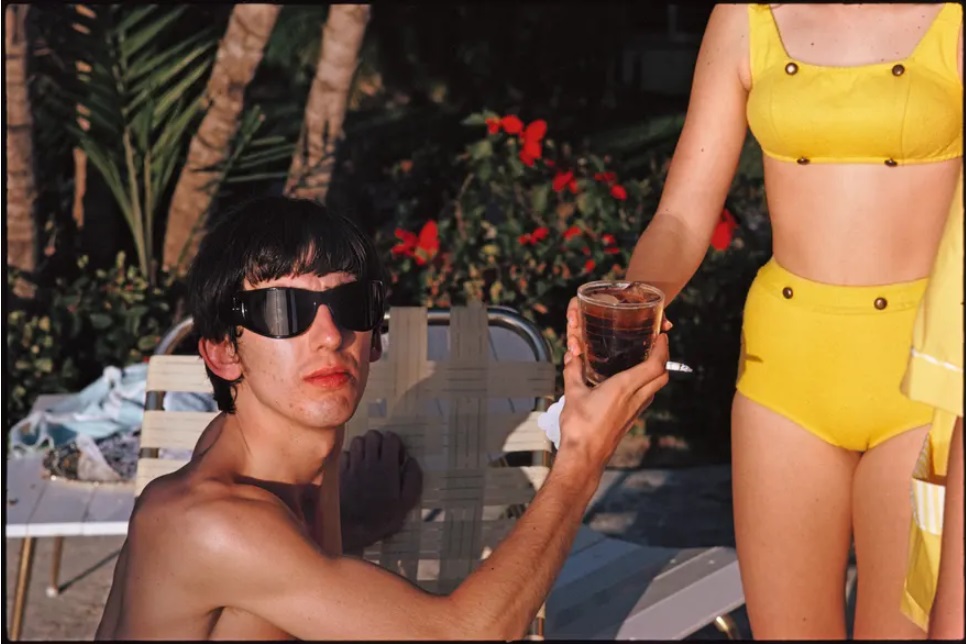
This photo of George Harrison appeared last week, initiating from Paul McCartney’s private collection and whizzed onto the internet, never to be private again.

It comes from an unseen collection of Beatles photographs, lost and found and gathered together in a new book – and later in the year, to be an exhibition at the National Portrait Gallery – all taken by McCartney over a 3 month period as Beatlemania took hold in Liverpool, London, Paris and during their life-changing US tour in ‘64; the limousine chases, the Ed Sullivan Show, the girls outside the hotels, all of that.

McCartney calls it a Beatles’-eye view of the world and it certainly places the viewer in the epicentre of what must’ve been a fucking great time for four virile and desired young men with the entire planet orbiting around them.

The picture of George was taken in the Miami sunshine. The use of colour film is no mistake, McCartney wanting to impress just how welcome the Florida sun was on the back of the harsh and monochrome New York winter. The composition too is deliberate, George’s female companion framed from the neck down, perhaps to protect her identity, but more to shine the spotlight on George.

Even in his shades and bare chest and surrounded by palm trees, George is still very much a Beatle. He might’ve shorn the Douglas Milling Beatle suit but the hair and enigmatic expression remains. Being a Beatle is a full time job, it says, even when mysterious young bikini-wearing women are bringing you generous measures of scotch and cola as you smoke yourself silly.

Is it any surprise that Paul would later write about flying in from Miami Beach, BOAC and not getting to bed last night? In Paul’s photo, George has a slightly self-aware ‘I can’t believe I’m getting away with this’ look on his young face. I bet he quickly got used to it.

The shot of the cameramen in Central Park is interesting, McCartney the hunted turning hunter to capture two of the press guys who’ve chased him and his three pals around New York City non-stop since they landed.

I love poring over period-defining photos of New York. Since being there last October, I’ve had a bit of a thing for bleached out and grainy Polaroids of Greenwich and Brooklyn in the ‘70s and ‘80s. From the buildings in the background, I can tell that the photo of the press above is taken next to the Central Park pond at the East 59th Street entrance. It’s a famous photo shoot stop-off location. Both Dylan and Mick Jagger have had their pictures taken here. Coincidentally too, it’s not far from the Dakota Building where Lennon would live out his final years.

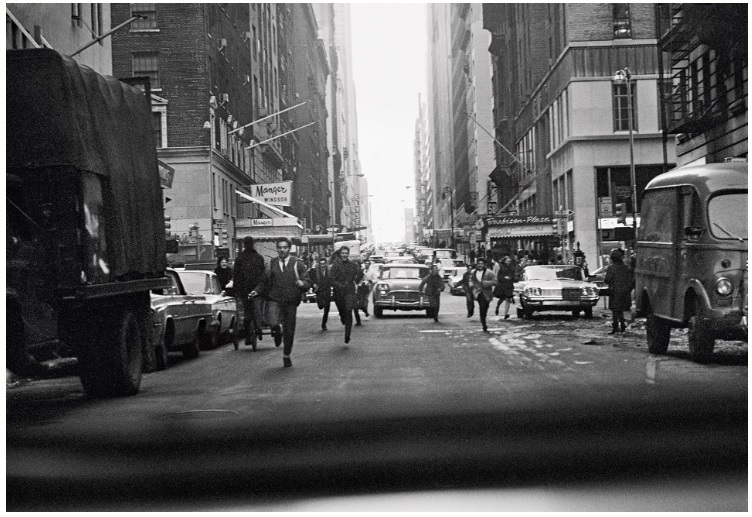
I’ve found myself somewhat obsessed over the photo taken out of the back window of The Beatles’ limousine, a photo snapped from literally inside the Eye of the Storm, as the book is called. It shows the Beatles chased by a handful of determined fans as they speed away from the Plaza Hotel on New York’s Fifty-Eight Street, cutting across 6th Avenue, just a stone’s throw from that Central Park photo shoot.

Chased by winter coat-wearing youngsters, all mile-wide smiles and mad intent, The Beatles zip away, up a slight incline and never to be glimpsed in the flesh by these admirers again. Looking back over his shoulder at the scene The Beatles have somehow found themselves involved in, McCartney clicks the shutter on his camera. A great photo. The wide-grilled and chromed cars are a portal to a time gone by, the purpose of the buildings they drive past now different – trust me, I’ve checked. ‘I’ve been there!’ I think, and straight away I’m Google-mapping the exact location. ‘I wonder if I’ve stepped on the exact spot where that Beatles car was?’ Anything to align you in anyway at all with the Fabs, y’know? Turns out I haven’t. Next time I’m in New York I must try and remedy that.

The BeatlesAll My Loving (Ed Sullivan Show, 9th Feb 1964)

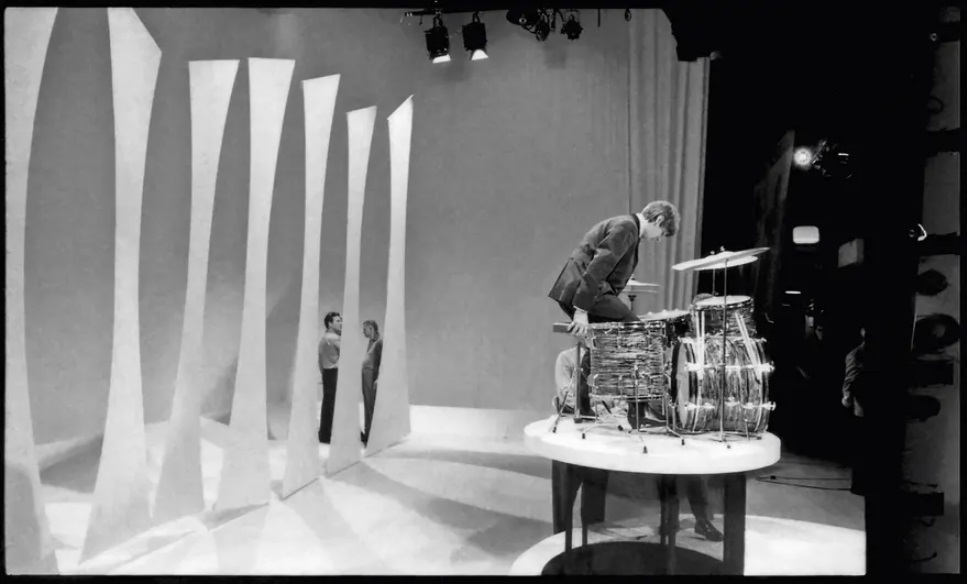
Ringo sets up on the Ed Sullivan show, Feb 9th 1964. Photo by Paul.

McCartney counts us in with a “One, Two, Three, Four, Five!” and off we go, 73 million Americans hearing – seeing! – The Beatles for the first time. Despite the hysterical screams anytime the three front Beatles step up to sing in close harmony, there’s a spectacular melding of voices around the 1.16 mark, just after rockin’ George’s twanging guitar break. Two voices (Paul and George), one golden moment, the protagonists not distracted in the slightest by the madness unfolding around them.

Buy the book, support the artist.

Cover Versions, demo, Hard-to-find

How Come I Love Them More?

Some songs are just there, like staircases and steering wheels and stainless steel sinks, as much a part of the fabric of life as to be ubiquitous and ever-present, unnoticed or unthought of and maybe even taken for granted. Blue Monday might be one. Come On Eileen certainly is. To this list I’d add The Bluebells’ Young At Heart.

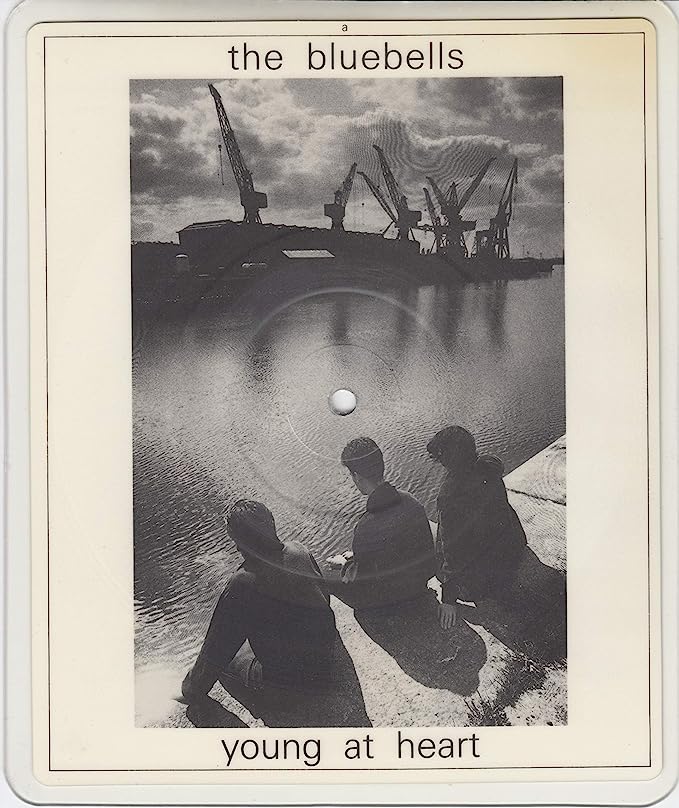
The Bluebells  – Young At Heart

You’ve heard Young At Heart, what, a hundred and seventeen times? A thousand and twenty four times? Seventeen million times in your life already? It’s just always been there, playing on an endless 40 year loop across the airwaves, a ‘hits station’ producer’s golden gift from the musical gods. Show in a slump and needing a toe-tapping lift? Reach for Young At Heart and its melancholic countrified hoedown will retain the listenership and have them baking tin bashing or dashboard beating all the way to the news and travel.

Young At Heart might seem overplayed to you. Or even stale. And you, yeah you, ya cloth-eared weirdo, you might never have liked it in the first place. You might never want to hear it ever again. But trust me though. You do.

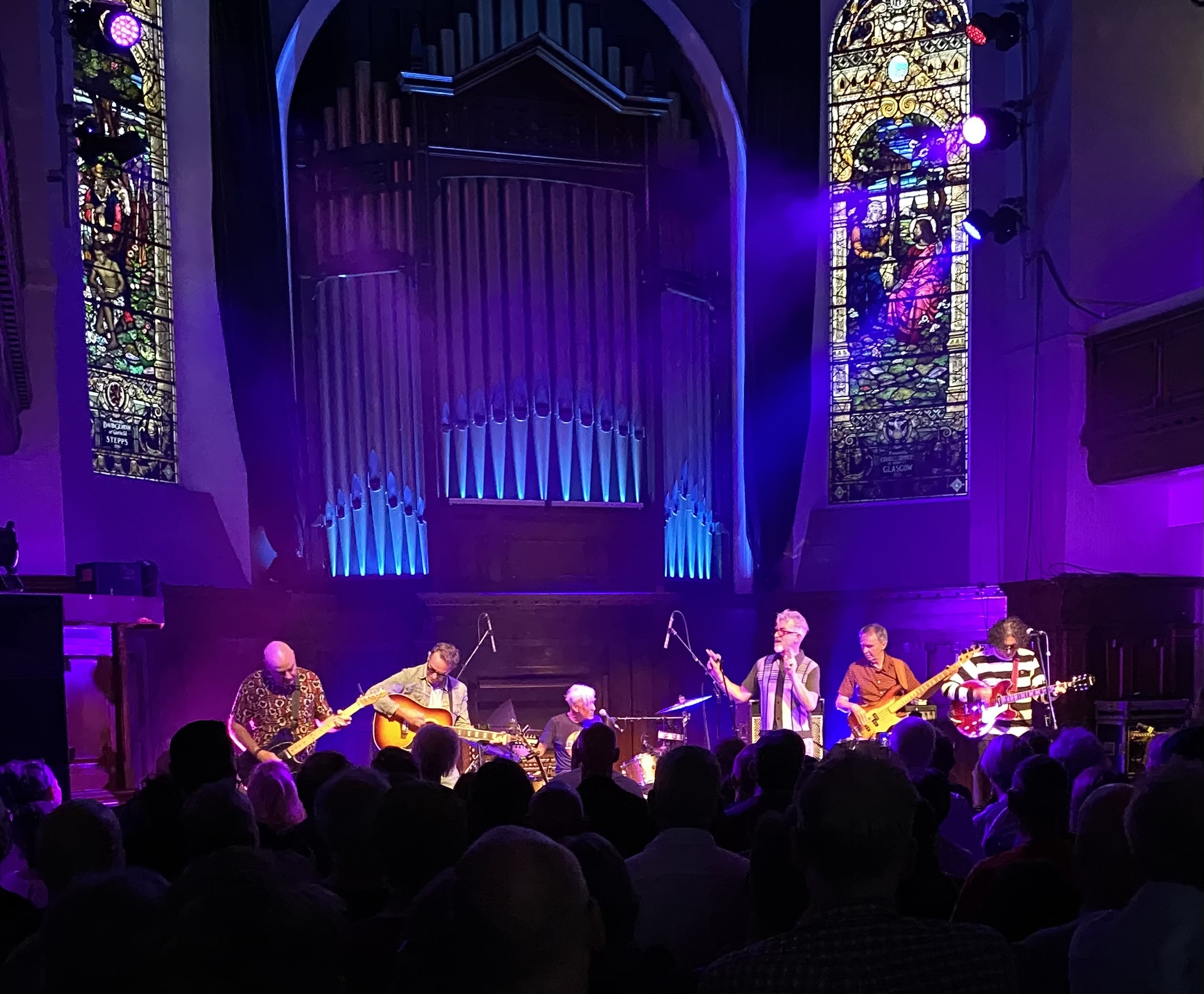
I’ve been floating since Sunday night when, at St Luke’s in Glasgow, The Bluebells encored their album launch show with it. Well, of course they did. We may all have been there to hear the bulk of The Bluebells In The 21st Century played out live, with an extended Bluebells featuring the cream of Scottish musicianship – Mick Slaven! Douglas McIntyre! Campbell Owens! John McCusker! – but there was no way Bobby or the McLuskey brothers were going to deny their audience an airing of Young At Heart. Or I’m Falling. Or Everybody’s Somebody’s Fool. Or a soul-stirring Cath. That ‘Cath/You led me up the garden path‘ line has thrilled me since it first leapt from the grooves of the well-thumbed copy of Sisters I borrowed from Irvine library sometime in the mid ’80s and I was waiting expectantly for it to be delivered on Sunday night. It didn’t disappoint.

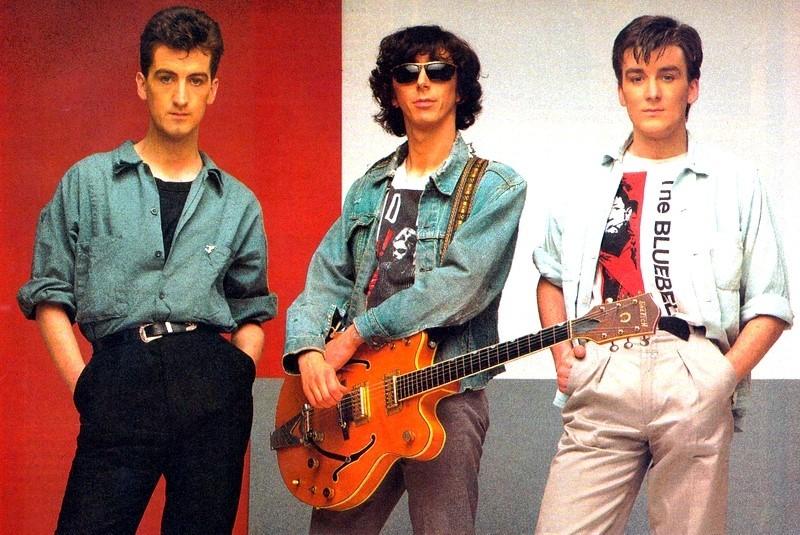
Young At Heart though. Ken, David and Bobby acknowledge its place in their history. With the band’s name spoken on the airwaves with every passing play and still in the collective conscience of an increasingly attention-span ravaged nation, it’s perhaps the reason The Bluebells are even still making records.

Young At Heart is a song that’s been very kind to its writers. Maybe not ‘Sting owns a vineyard in Italy’-levels of kindness, but I’d wager that Bobby Bluebell and Bananarama’s Siobhan Fahey, London Records’ golden couple at the time of its writing (and latterly Bobby Valentino, the player who provides the song’s signature violin motif and whose session fee was substantially upgraded years later to a writing credit) have done fairly well from it’s continual presence.

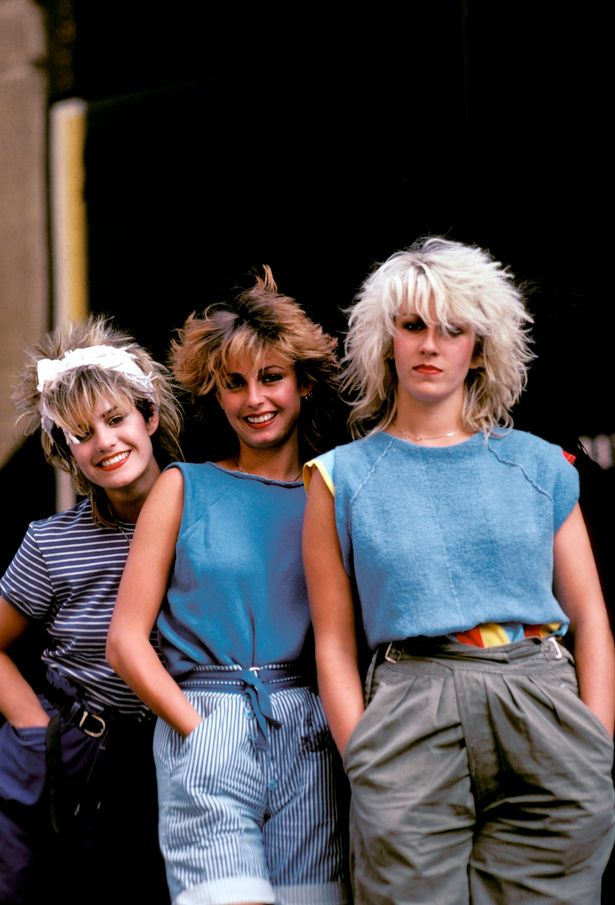
Bananarama  – Young At Heart

Bananarama’s version was the first to be released, a deep cut in the parlance of nowadays, and one that you’ll find on their debut album Deep Sea Skiving. It follows the blueprint of the original Bluebells’ demo; slightly reserved chorus, one dimensional verse, a bit flatly produced even, but whereas Bananarama half-heartedly do their best Supremes’ impression and don’t really know where to go with it, The Bluebells original version is a totally realised slice of pop/soul – and, as it turns out, a bit of an undiscovered beauty.

The Bluebells  – Young At Heart (demo)

It’s got that talc-dusted northern backbeat. Soaking wet slapback funk guitars. There are squelches of Rip It Up electro-synth woven between the words. Live, it was sometimes performed (like many bands of the time) with a stabbing brassy rash of Jam Trans Global Express horns. The whole thing is speed-freak Dexys hacked into the Wigan Casino’s electrical circuit and spat out in Glasgow’s West End. Essential listening, it goes without saying, and almost as thrilling as the masterpiece they eventually released.

Imagine writing a song that still resonates with anyone who hears it over 40 years later. Imagine! There’s not a songwriter on the planet who wouldn’t kill for a song like Young At Heart. Cherish it.


Cover Versions, Get This!

It’s A Funny Little Thing When It Dawns Upon Ya*

The Style Council’s Shout To The Top is the bright ‘n breezy signifier of a summer just around the corner. A groove of loose piano and stabbing guitar, it’s a string swept beauty that endures to this day.

If you’ve caught Paul Weller on any recent tour, there’s a good chance he’ll have slotted it in mid-set, a major 7th audience perker-upper after one new track too many. It still has the ability to raise a smile and just a smidgen of Proustian angst, of being glued to Top Of The Pops in the hope that it might make it to that week’s show. A frothy and enduring number, it reached number 7 and was, serendipitously, single number 7 for The Style Council as well. One of its writer’s very best, for sure.

The Style CouncilShout To The Top

It’s got a stylish video too, all four group members in its spotlight with Weller happy to fade to the back when he feels like it. Weller is understated cool, the gum-chewing singer in carefully chosen penny loafers and well-cut ankle hugging trousers, the missus alongside him in a sleeveless halter neck and hair band, tight fighting capri pants and bee stung lips, looking fantastic and dredging up all sorts of forgotten teenage fantasies. YouTube is your pal, old man, YouTube is your pal.

Weller glides the soles of his loafers across the floor, almost northern soul shuffling, hanging on to that era-defining skinny mic for all its worth, his swept back and centre-parted hair looking distinctly European and modernist.

By the time The Style Council were playing it live, Weller’s fringe had fallen as long as the silly faces on all those old Jam fans who still pined for a clanging Rickenbacker and an angry vocal delivery. Imagine having to pretend you didn’t like Shout To The Top. Life’s too short for that sort of idiocy, man. Embrace the new and, yeah, shout to the top.

There’s a magic, discofied club version out there. Loleatta Holloway takes over from Weller, giving it the full soaring house diva approach, Philly strings, Italo piano and a four-to-the-floor disco beat replacing much of The Style Council’s idiosyncratic nuances, taking it home in a riot gold hot pants and over the topness.

Originally released in 1998 with dance production team Fire Island, the track was reworked into a thumping, filling-loosening club classic by Hifi Sean a year or two ago. Stretched out and funked up, you need it in your life.

Fire Island ft. Loleatta Holloway Shout To The Top (Hifi Sean mix)

* I know that’s not the line that Weller sings in the bridge, but it’s what I’ve always sung. It’s a funny little thing when it dawns upon ya right enough.

Hard-to-find

Dad, d’you like Aphex Twin?

Not the first question I was expecting last week. My 16 year-old and myself were in the car and, in a rare change from discussing the misfortunes of football (both our team – Kilmarnock – and the local U17 team he plays for), the chat turned to music. Future Sound Of London’s Papua New Guinea was playing, all rattling breakbeats, throbbing bass and ghostly samples, but despite my enthusing over it, he remained unconvinced. Nothing new there, to be honest. I can point out a dozen great songs during any car journey and he’ll shrug, unconvinced (unwilling more likely) to admit to liking his dad’s taste in music. The electronic sheen of FSOL’s track endured though, and it clearly set off a synaptic sequence in his brain. And then he came out with it. “Dad, d’you like Aphex Twin?

He’d already blindsided me a few months ago by unselfconsciously humming I’ll Be Your Mirror as we passed on the stairs. When I stopped, turned and asked if that was The Velvet Underground he was singing, he shrugged nonplussed as though it was the most natural thing in the world. “D’you know it, like?” he threw back, not even stopping for confirmation. Of course I did, and of course he knew I did, and of course he knew that I had a copy (3 actually) of “the banana album that it’s on.”

How d’you know about the Velvet Underground?” I asked.

I dunno. I just heard them somewhere and liked them. I like Beginning To See The Light too. And Can’t Stand It. And Pale Blue Eyes…(thinks)…There She Goes Again…’Ah’m waitin’ fawr ma ma-yan’…

Jeez. Turns out he knows them all and can do a passable Lou Reed into the bargain.

D’you remember when we were in New York last year, and I stopped to take a picture of the street sign near our hotel and you all laughed at me? Maybe you’ll get the reference now...”

Oh…yeah!…

When I was his age, I spent the time properly denying my parents’ record collection. Apart from Dylan’s Bringing It All Back Home there was nothing much in there to shout about, although I did investigate it when no-one was looking, retaining some of the more interesting ones in the interests of cross-generational research purposes. He’s denying mine too, I think, but he knows far more of it than I’d ever have imagined. As teenagers, we had to dig deep, swap tales and stories and sometimes actual TDKs to gain access to the good stuff. Rake the record shops, sift through the shelves in the library, maybe occasionally get the loan of an album on promise of death if it was returned in less than the condition it was given to you in. Now, it seems, social media analytics throw all sorts of stuff in your direction. Act on any of its suggestions and a hundred more threads and recommendations will unravel, and all just for your ears only.

From the Velvets, he discovered The Strokes. Most teenagers love The Strokes, it turns out. Any aspiring local guitar stranglers look to them in the same way that we looked to the music of 20 years previously when we first started out. Watch out for the big Strokes renaissance when a wee local band breaks out and rides the crest of a scuzzy New York wave. It’s just around the corner.

Aphex Twin though. He’s so low profile, so uncompromising, so esoteric in a way that The Strokes and (nowadays) the Velvet Underground just aren’t. “How on earth did you find out about him?” I ask. “Tik Tok? Spotify? A video game? Somewhere else?

I dunno. He’s great music to study to. It’s longform and in the background and doesn’t distract you from what you’re trying to learn. It’s a bit like Minecraft music, just better. All the songs have strange titles…just numbers sometimes. I don’t know the names of the tracks I like. But I like what I’ve heard.”

Aphex TwinXtal

If it helps with the studying, no parent is going to complain about that, which is why, on Thursday night, our house was filled for an hour with the DIY ambience and womblike pulses of Selected Ambient Works Vol. 1, the pair of us headnodding around the living room, me the uncool dad playing him this new music that he thought was ‘his’, he the teenager, mortified at the thought of liking the same music as his dad.

Next week – “Dad, which Throbbing Gristle album should I buy first?”

(Answer: I dunno. He’ll probably be able to tell me.)

Gone but not forgotten, Hard-to-find, Studio master tapes

When Pop Stars Die

The unexpected news of the death of Andy Rourke from cancer flooded my social timelines this morning. From his old pal Johnny’s numb statement onwards, the outpouring was long and plenty. Lauren Laverne was playing William… as I pulled into the car park at work and despite having heard its 2 min 12 seconds of pathos and sparkle a million times, I stayed put until it had played out, paying particular attention to Andy’s trebly, melodic bass runs because, well, that’s what everyone tuned to 6 Music at that point was doing. After work, catching up with the minutiae of life on my phone, the roll call of people paying tribute – fellow musicians, pals, strangers – was never ending. No one had a bad word to say, not even Morrissey, whose well-worded tribute seemed genuine and sincere and a million miles from the sneering auld grump he’s become.

It’s quite amazing that someone who was only a quarter part of a group who burned brightly but briefly for roughly just 6 years should leave such an indelible mark, but that’s the power of the formative years for you.

The Smiths meant the world to many, me included, and were a lighthouse on the rocky shores of mid ‘80s music. I wasn’t disenfranchised or marginalised or trying to find myself or any of those clichés. I just needed a break from bad hair and bad productions and jaggy guitars and what was being sold to me and my peers as essential listening. The Smiths, with their pint-sized and elfin guitar wizard and singer with funny – that’s funny, not depressing – lyrics came along at the right time. They jangled, yeah, and they wailed, but there was far more to them than that, as you well know. There was a proper toughness to their sound, driving and thuggish and tough as nails – see Handsome Devil and Hand In Glove as evidence, but there was a proper tenderness too. A real musicality. Listen to This Night Has Opened My Eyes or later tracks such as I Won’t Share You for proof. Much of this is down to Johnny’s mercurial way with an augmented chord and a hellbent mission to overdub everything with tracks and tracks of smirry, smartarsed guitar, but the bedrock for Johnny’s free form colouring comes from Andy’s solid and steady playing, a duo playing in simpatico as only old pals can. A band ain’t nuthin’ without their rhythm section and The Smiths were blessed to have Andy pinning it all to the floor.

Many today have spotlit Andy’s magnificently trampolining workout on Barbarism Begins At Home, an early Smiths track so packed with Chicisms and the funk, so out of step with their material that it took until album two before they’d release a recording of it, as proof of Andy’s greatness. And they’d be correct. But look, there’s not a bassline on any Smiths track that isn’t considered, clever, unique and so obviously Andy. Whether he was dripping in elasticated funk or slapping out rockabilly or meandering like McCartney around the melody, he left a mark as distinguishable as the haircut he kept for all those years. Johnny today pointed to Andy’s contribution to The Queen Is Dead’s title track, saying that as Andy recorded it, he knew it was a moment he’d remember forever. Rock solid, reliable, dead centre, a bass player who could play in the background yet step out as lead instrument when required.

Check out the Motown-by-way-of-Moss Side twang of his isolated bass runs on This Charming Man. Rubber bandy Andy.

This Charming ManAndy’s Isolated Bass

When the news of any pop star’s passing is announced, it’s perfectly natural to feel something, especially if you’re a fan of their work. When Andy’s news gatecrashed my newsfeed this morning, a little bit of me, a little bit of every fan of The Smiths, died too. Memories of times soundtracked by The Smiths came blazing straight into sharp focus, along with the sudden realisation that while the memories remain, the principal player in creating those memories is gone. 59. No age at all, as they say.

God only knows what it’ll feel like when Johnny himself or, brace yourself, McCartney goes.


Get This!, Gone but not forgotten

Beat Writer

Or, There’s Always Been A Jazz Influence To My Writing. Not in the true ‘Beat’ sense, you understand. Not like Kerouac or Ginsberg or Burroughs who lived in it, lived through it, wrote from the eye of the howling storm and emerged many hundreds of pages later, daddio, with hardened personality traits and track marks and publishable manuscripts to show for it. Nah, that’s not me. In the months and years since lockdown, I’ve taken to soundtracking any and all working from home sessions with jazz; piano-led and in the background or with ear-splitting horns in the foreground, vocal-free and meditative or with a heavy bossa nova boogaloo breakdown, it doesn’t matter. I’ll never know the thrill of being waited upon in the smoky and claustrophobic environs of a late ’50s/early ’60s Village Vanguard or Birdland but I just might get to imagine it through the music that sustains. I’ve plenty of jazz records and CDs to pick from, and pick from I do.

I’ve a soft spot for the accepted classics – A Love Supreme (uh-huh) and Getz/Gilberto (obvs) and Mingus Ah Um (of course) and Kind Of Blue (Come away in! – What took you so long?!) – but I’ve a growing appreciation of other artists and albums, many of which would very probably feature on a ‘Seriously?! 20 Obvious Jazz Albums‘ kinda list; Wayne Shorter’s meandering and highly sampleable Speak No Evil is a great ‘get your act’ together record. By the end of the first side, you should find yourself engrossed and focused on the task at hand. Cannonball Adderley’s Somethin’ Else is the ideal ‘take me to lunch’ but finish this bit off before we get there record. Sonny Clark’s Cool Struttin’ works best as a post-lunch kick-starter, all high brass and big band grooves  – a proper afternoon slump destroyer. And if you find yourself against a tight deadline with tea time fast approaching and no-one to rustle it up but yourself, stick on Money Jungle, Duke Ellington’s bruising one take riffathon where tracks are played/improvised and recorded in the one go.

The story goes that the trio – Ellington, double bassist Charles Mingus and multi-limbed drummer Max Roach – were given freedom to play in whichever way they saw fit, so side one begins slowly as the trio eke out a style and pattern of play, then fall into a groove somewhere before the end of that side, continue in the same wildly original fashion on side two before eventually ending in an inevitable all out sonic assault – atonal notes, dissonant chords, drum fills that sound like the Eastenders’ theme being pushed off a cliff, basslines that sound like the annoying guy at the back of maths who’s twanging his ruler off the end of his desk while the teacher tries to explain a particularly challenging strain of calculus – because by this point in the session the three players had worked out that they didn’t particularly like one another and were communicating exactly that through their instruments. See yr Troggs tapes? Zilch in comparison.

If, like me you’re a sleevenotes ‘n credits reader, you’ll notice the same musicians cropping up on one another’s recordings all the time. John Coltrane and Cannonball Adderley add their blues-flecked signatures to Miles’ Kind Of Blue. Across his ouvre, Miles himself gives piano roles to Wayne Shorter, Gil Evans and Herbie Hancock. Cannonball’s Somethin’ Else allows Miles and drummer Art Blakey to step out of the shadows and stamp their not insignificant presence across the grooves.

You play on my album and I’ll play on yours would appear to be the mandate of jazz. When it works, like on Kind Of Blue, great. When it don’t, (Money Jungle, maybe) eurgh. In rock music terms, it’s a bit like having Alex Turner guest on a Bobby Gillespie album where St Vincent and Johnny Marr swap guitar riffs while Zak Starkey and Viv Albertine pin down the groove, their respective management thrashing out the publishing rights with the various labels involved. Art v’s publishing? It’s exactly why, unless you’re the Style Council, this sort of stuff doesn’t really happen in ‘rock’ very often. Weller, man, he really was influenced by the jazzers in more ways than you realise.

Someone who wishes he was influenced in the same way is the aforementioned Bobby Gillespie. A walkin’, talkin’, stick-thin cliché, you’re never far away from an achingly hip point of reference when his mouth starts spouting the same StonesWhoPistolsClashDubFunkPunkSkunk jive that he’s whiffled on about since 1990. Just what is it that you want to do, Bob? Smash the system? Or sell-out to the M&S advert makers? It’s your call, clearly. The kids’ school fees must be due. Loaded, indeed.

At the Ayr Pavilion in 1994, Gillespie was mid duet with Denise (it may have been during Give Out But Don’t Give Up) and, as the band took it down – “Take it down, Throb, take it down!” – see?, the cliché kills – he starts to scat: ‘A love supreme, a love supreme, a love supreme…‘ over and over, leading the band higher and faster and louder to the song’s conclusion. The guy next to me turns to his pal and says earnestly,  “Davie! He’s daein a Will Dowling cover!” (Google it if you need to). Very funny. An appalled Bobby would’ve split his skanky leather breeks if he’d heard them.

John ColtraneA Love Supreme, Pt. 1 (Acknowledgment)

John Coltrane‘s A Love Supreme record is, cliché klaxon alert, meditative (honk!) and spiritual (Honk!) and contemplative (HONK!) and religious (HONKETY-HONK!), and it’s wonderful for it. Built around a core of four notes – dum, dum, dah-dum, and four syllables – A-Love-Su-Preme – Coltrane and the rest of his quartet fly far and wide, to Marrakesh, to Tangiers at times, Elvin Jones thrashing the hell out of his kit, McCoy Tyner hammering the ivories one moment, feather dusting them the next, Jimmy Garrison’s double bass walking the long road home at every opportunity. Coltrane and his tenor sax plays it all; hard boppin’, slow burnin’, furious riffin’, ee-long-gay-ted mood swings.

The quartet always comes back to the core though. Whether it’s Tyner on the keys or Garrison’s bass, or even Jones’ cymbal splashes, they always come back to the four note core.  It’s premier league jazz, A Love Supreme, Haaland and Rashford and Trent and Billy Gilmour in a special meeting of minds when their four distinct personalities create something even greater than the sum of their parts, a record as essential as any other record you might care to offer up.

Gone but not forgotten

Jingle Jangle Mourning

There’s a great writer you may already be aware of and read and enjoy. If not, you must remedy that forthwith. Adam Turner blogs regularly at Bagging Area, a blog that’s been an internet sensation almost as long as Plain Or Pan. While the world twitches impatiently and slowly loses the ability to focus on something for longer than 3 seconds at a time, us elder statesmen and women of blogging (and there are a few of us scattered out there) fly the flag for words and a more genteel pace of online engagement. Adam’s blog contains the odd bit of crossover with the music that features here, but mainly Bagging Area is steeped in electronic music, new releases and remixes and things that bang and beat. There’s rarely a week goes by when I don’t find myself investigating further an artist that I’d previously been unaware of. Pay his blog a visit. Even if the music is not for you, I think you’d like it.

In the past 18 months, Adam has taken the brave – and clearly cathartic – decision to write about his son Isaac. In November 2021, Isaac lost his life due to complications brought on by Covid and Adam writes clearly and honestly about a life now steeped in grief; the anger, the rage, the black hole of helplessness, the sudden unexpected triggers of a Facebook memory or unanticipated postal delivery that brings it all to the fore again. Isaac’s death is an all-consuming thing, an ever-present in he and his family’s life – of course it is – and when Adam writes about his son, his words are nothing less than spectacular. Anyone who’s a parent will feel every nuance in the turns of phrase and dignity with which Adam writes, words that I’m not sure Adam would’ve thought himself capable of conjuring up a couple of years ago while writing enthusiastically about an Andrew Weatherall remix or another ACR Manchester show. I mean that as a compliment. Writing about frivolous stuff is one thing. Emoting plainly and matter-of-factly over the big stuff is quite another. Adam’s writing is unmissable.

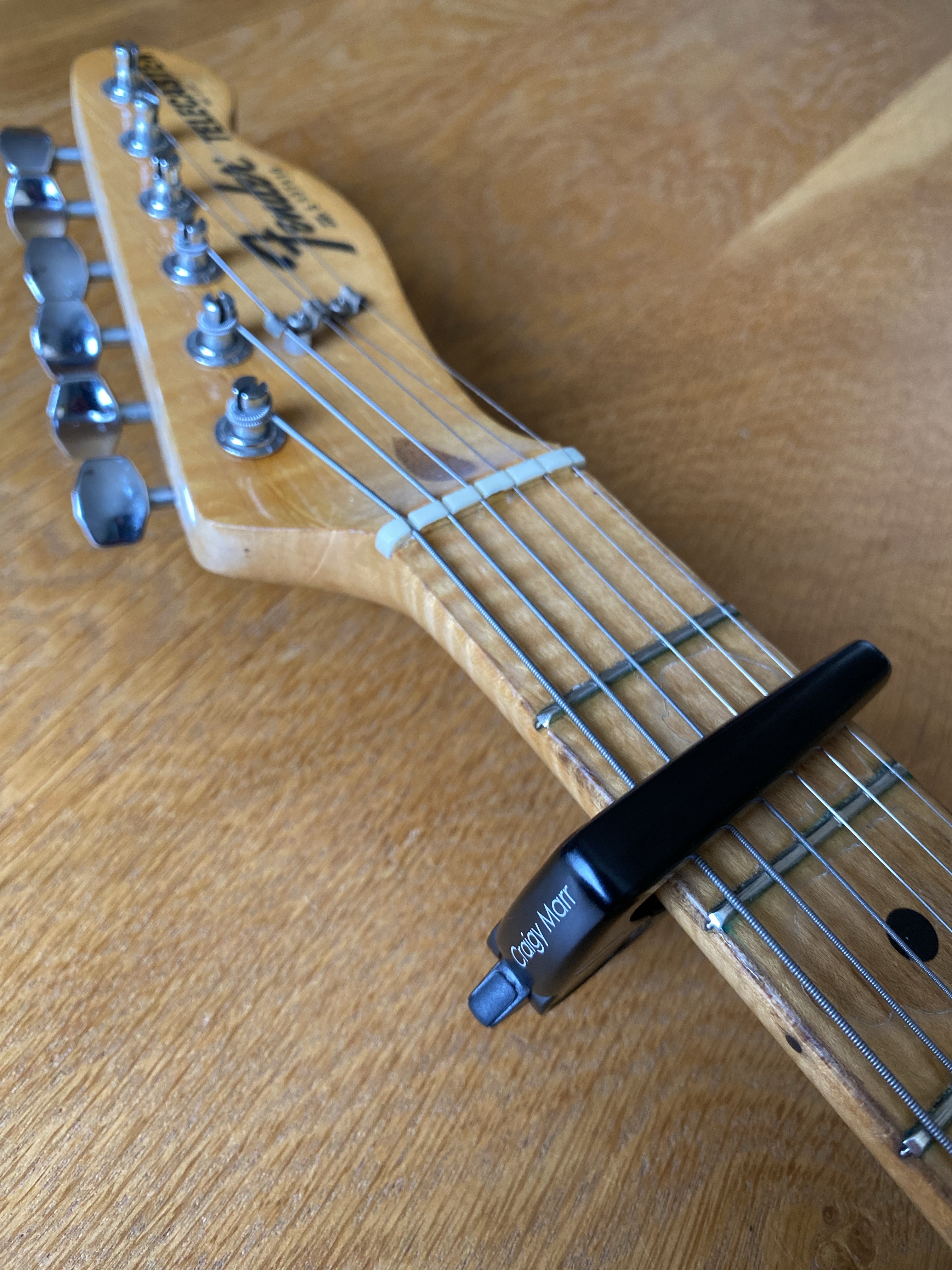
I’ve written not long ago about musical triggers; songs or lyrics or riffs that set off immediate Proustian rushes and have me scampering back to a time, place and people that made me who I am today. True Faith and Mark, Baker Street and my dad, Age of Consent and Derek. Not long after I’d read Adam’s latest blog, I was foutering about the house, REM‘s Reckoning album playing just that bit too loudly as I busied myself with the bins and the washing and what have ye. Don’t Go Back To Rockville started playing and, man, stone me if another one of those memories didn’t gatecrash my evening. As Peter Buck leans into his Rickenbacker, it’s suddenly and quite unexpectedly 1991 and Derek Reid and myself are in Grant’s dad’s living room. We’re in the process of putting together what will be the definitive line-up of Sunday Drivers, the greatest band that never was, and Derek and myself are sussing one another out, aiming for common ground and a base upon which to build our (cough) twin axe attack. He’s showing me the chords to Rockville and as we fall into it together, Grant stands disgusted behind Derek’s Jazz Chorus amp and scowls at us. He says nothing though, not even when Derek pulls off the flashy riff after the chorus – and as it plays tonight, I’m seeing Derek – goofy grin, Marti Pellow hair, ‘what d’ye think a that?‘ look on his face as it flies from his lovely yellowing Telecaster. It’s one of the songs that was played as the room filled up for his funeral and I saw him then too.

REMDon’t Go Back to Rockville

Right,” says Grant as we run out of steam. “Jist tae be clear – ah’m no’ singin’ in a fuckin’ country-rockin’ jingly jangly band, right? Yous can stop that pish right noo.”

We stopped that pish right there and then, found our fuzz pedals and the rest was(n’t) history.

I don’t go looking for musical triggers, but when they creep up on you and slap you clean on the face, it’s strangely comforting and somewhat brilliant.

Now, go and visit Adam at Bagging Area.

Hard-to-find

Hoovering To The Beatles

Those first two Ride EPs are, I’d imagine, a well-played pair of favourites amongst much of this readership. The red rosed and yellow daffodiled covers conceal the thrilling sounds of a band at egg-hatching stage, fresh outta the rehearsal room, their fringes and long-sleeved t-shirts just as studied as the music they are aiming for – a sound forged, so the legend goes, when Andy Bell’s mum began hoovering the living room while he listened to The Beatles. It’s fantastically evocative of time and place; loud, uncontrollable, thrashed and bashed, but with the whiff of a melody bubbling under the Panzer attack of effect-heavy twin Rickenbackers and careering, pummelling backline.

The twin vocal duties are steeped in heady Byrdsian/Beach Boys ambitions and sometimes even, like on Like A Daydream, they almost get there. Mainly though, Mark and Andy are guitar players…and don’t they know it. Heavy on the fuzz, generous with the compression and wholly feral with their whiplashed approach to the wah-wah, their tunes are scorched and scarred, dragged backwards through the edge and laid to rest on vinyl forever.

Live, Ride was an even more thrilling prospect. The rhythm section was suddenly fantastic. I mean, who knew?! Laurence the drummer played a fairly standard kit, but his cymbal splashes, his star-of-the-show scattergunning Moonisms and Bonham-ish thumps and thuds fairly shook loose the fillings. Steve – one of two Our Price alumni to play bass in a successful indie rock act – (a prize will be in the post for the first person to suggest the other) – was locked into the groove, eyes focused on his pedal board, huge slabs of thunk emanating forth.

Somewhere at the back of the room in the Glasgow Mayfair was Alan McGee, giving off full-on McLaren/Warhol vibes, his arms folded, admiring his charges, appreciating the huge Glasgow audience that had shown up so early in his band’s career, his ginger Dylan whitefro and Raybans setting off the biker jacket ‘n stripy tee-shirt combo perfectly. My abiding memory of the gig was just how rammed it was and that I had to watch most of the show by standing on one of the in-built velvet wall seats, seeing the stage and band reflected back to front, like a trippy pop promo, in one of the Mayfair’s many mirrors. Mark Gardener was playing his Rickenbacker and coaxing all manner of wild distortion and chiming echoes through a bog standard Peavey practice amp. There was hope for us all.

Despite the froth and Proustian rushes triggered by those first two EPs, it’s the band’s fourth EP that I’ve returned to over the years. Today Forever bridged the gap between the band’s first two albums and distils perfectly all that was great about the band at this time. If you were being generous, you might even consider this less of a single (or an EP) and more of a mini album. Less noisy (in places), certainly more refined and considered, it flirts with proggy undertones (their next single, Leave Them All Behind, was an all-out prog assault, but that’s for another time) and benefits from the band’s unshakeable confidence that everything they approached would be spectacularly great. Each track is unique in its own way. Each track is as essential as the last.

RideUnfamiliar

The lead track Unfamiliar fades in on a wave of controlled guitar and is carried along by one of their best basslines, underpinning heavily-treated guitars and more of Laurence’s unpredictable drums. There’s a great bit, just before the vocals come in, when the beat drops to half tempo and the guitars, whacked out and dubby, suddenly conjure up images of Lee Perry and Black Ark. And, just as that notion hits you, here comes the vocal, submerged in sadness and melancholy, two voices singing about who knows what – that’s not important, it’s how it sounds that matters – and man, this sounds great! Smart arses point to Chelsea Girl and Leave Them All Behind as the high points in the group’s back catalogue. Smarter arses known it to be Unfamiliar. Every time.

RideSennen

Just as you’re catching your breath from Unfamiliar‘s bruising and relentless yet ear-friendly assault, along comes Sennen. Named after Sennen Cove in Cornwall (and where the song’s video was filmed, I think) it’s built upon a lovely mesh of clean-chiming Cocteaus’ 12 strings and fuzzed-out riffage, topped off with more of those white boy indie rock vocals that make Home Counties girls called Emily and Rachel go weak at their stripy-tighted knees.

Sennen incorporates a lovely, subtle keyboard line that provides texture to the overload of overdubbed guitars. Since first hearing it, and on every play since, I’ve thought The Charlatans would do a great, Hammond-led version of this. There’s still time, Tim, there’s still time.

I heartily recommend pulling this record from your filing and giving it a fresh spin to what will be appreciative ears. It’s been playing an awful lot round here recently and so far no one has complained. In our house, that’s the mark of a good record, a very good record indeed.

Cover Versions, Get This!

Coronation Treat

As we hurtle downhill without the brakes on towards a weekend of jingoistic flag waving…and making Britain Great again…and wall-to-wall TV coverage…and stupid folk camping out, Blitz spirit style, to secure a spot on The Mall…and the same stupid folk participating in a mass swearing of allegiance to our newly minted monarch, my social media timelines have become increasingly filled with anti-Royal rhetoric. Much of it is eloquently put. Most of it is blunt in its dislike – hatred, even – of our Royal Family.

Privileged rich guy wearing a crown of stolen jewels parades through the austerity-hit streets in a golden carriage to wave at the less fortunate seems to be the cut of the anti-monarchists’ jib. And it’s a fair point.

Not many folk in my social circles, it seems, will be sitting down to view Saturday’s proceedings, and if they are, they’re keeping schtum about it.

There are over 6000 streets in Glasgow and not one has applied for a street party licence. Quite the turnaround from 1977 when the entire Scottish landscape was littered in wilting Union Jack bunting, brittle novelty crowns and broken pasting tables for months afterwards. It appears that the Royals, from the echo chamber of my Scottish social media feed at least, are antiquated and irrelevant, a relic from a bygone era that might only make some sort of sense on the pages of a history book.

I’m not a Royal hater as such – I’m a lover, not a fighter, as someone once said – but while I might sneak a peak at the plastic pomp and daft ceremony of it all (as I did when the Queen’s funeral was televised. History, innit?) I can’t really be doing with a figurehead who represents a family steeped in theft, crime, racism and bigotry, hush-ups, cover-ups, adultery and paedophilia, by both association and the inference suggested via multi-million pound pay-offs and the keeping of a low profile. That’s yr best of British, right there, ma’am. Imagine being born into all of that, and condoning it – benefitting from it, even – through a closing of Royal ranks and mouths.

I believe they do some good, somewhere (and so they should for the bulging purses and estates they receive for their pleasure) and by all accounts, Charles is a thoroughly decent bloke, ya, when it comes to small talk and pleasantries, but what use are they? Maybe Johnny Rotten was right when he pointed out that they need saving because, well, tourrrists are mu-neee. That would seem to be it.

Spare a thought for auld Charles though. That crown, rich in Empire-pilfered bijouterie is heavier than your last energy bill. Just as well he has the jug ears to keep it from slipping.

Here’s McCarthy with their shambling, jangling, rattling and rolling anti-Royal ranting Charles Windsor. I doubt Radio 2 have included this on their Coronation Celebration playlist. Or maybe they have, on account of its title alone. Some poor researcher might end up at the guillotine…

McCarthyCharles Windsor

And here’s Manic Street Preachers spitting punkish vitriol and bile in their (far superior) version. To tha guillo-tine! Chop chop chop off your head indeed.

Manic Street PreachersCharles Windsor