Cover Versions, Get This!, Gone but not forgotten, Hard-to-find, Sampled

Rasta-Far-Out

The ghosting season is upon us, the one time of year I truly despise. I hated it as a child. I hated it as a parent when my kids were young enough to participate. I just hate it. The dressing up… the greediness… those creeping Americanisms of going trick or treating for candy around cobweb-frosted front doors and plastic gravestone-enhanced gardens can do one.

Amazingly, brilliantly – God bless ye, Covid – this year there’ll be no drip-nosed grubbers standing at my door in their various states of grotesqueness, reeling off the same combination of tired and/or risque jokes (Q. ‘What’s the difference between the tyres on my dad’s car and a blonde?‘ A. ‘A blonde will go down quicker than my dad’s tyres.’) in return for a handful of Haribo and a “have you told your mum that joke?” telling-off from me. The wee girl who first let slip that horrorshow of a party piece four or five years ago, and every year since, might finally stop telling it for good now.

Anyway.

Reggae.

Bob Marley‘s Mr Brown is one of his earliest recordings, dating back to 1970. It just so happens to be a ghost song, written in response to local legend that told of a duppy/ghost that could be seen hurtling across Jamaica late at night on a three-wheeled coffin. Perched atop the coffin alongside the ghost were three crows, one of which could talk. The talking crow would repeatedly ask for a Mr Brown. If you ever saw this hideous and creepy apparition, the story went, then RUN!, because you didn’t have long left on this earth. 

Bob Marley & The (Wailing) WailersMr Brown

The tune itself is a gently lilting three chord skank, played at relaxed pace and featuring some sweet falsetto backing vocals. Guitars and keys lock the rhythm and never deviate, allowing Marley to tell the story of the out of control ghost-driven coffin and the talking crow. Not yer average subject matter, and all the better for it.
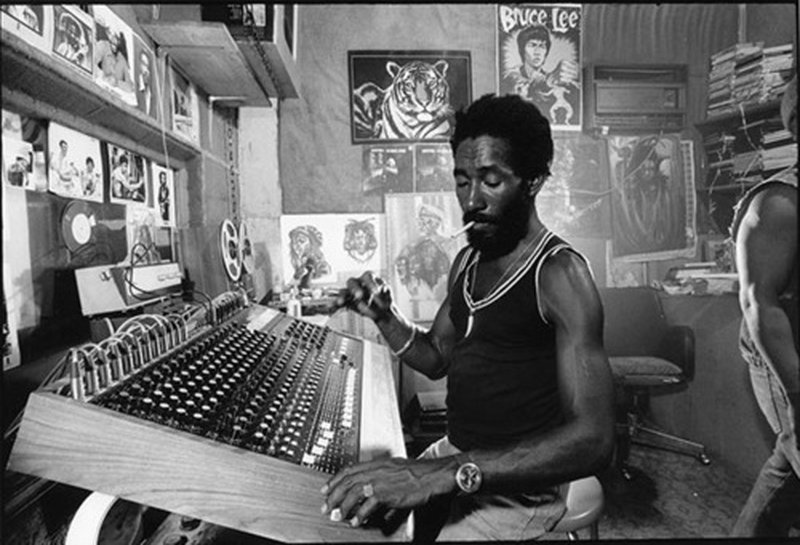
Mr Brown was produced by the ubiquitous Lee Perry. Lee Perry is synonymous with reggae. The more dubified the music, the more prominent his involvement. His blunted, mercurial touch has been applied to literally thousands of records from Jamaica and beyond, fried at the edges and sprinkled with madness but beating with a heart of thunderclapping echoes and cavernous bass.

As I get older, I’ve begun to appreciate his more outré work in much the same way age has allowed me to appreciate a fine malt. Slightly unpalatable at first, you quickly develop a taste and ponder how you could go an evening without it.

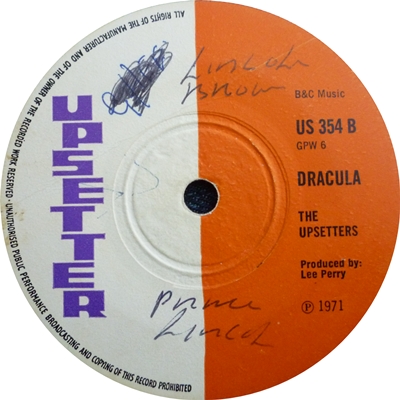
Playing around with the Wailers’ track, Perry removed the vocals, credited the instrumental to The Upsetters and manouevered it onto the flip side of the Wailers’ single. In keeping with the original’s ghostly/horror theme, it was given the title of Dracula.

The UpsettersDracula

I don’t for a second think that Bob, Bunny and Peter sat around in rehearsal saying, y’know what….what this tune really needs is a funky, alien vibration every now and again. That ever-present deep electronic shimmer that sounds like the ancient central heating pipes in a school I used to teach in was clearly the madcap work of Lee Perry. Half a century later, it’s that sound that’s become the record’s signature.

Removing Marley’s vocals also allowed Perry the opportunity to incorporate the instrumental version into his soundsystem and toast across the top of it should he fancy doing so. Forever forward-thinking.

Eco-aware long before there was such a thing, Lee Perry not only grew his own herbs, he recycled tunes for his own benefit. In a burst of foresighted creativity, and long before many a future hip-hopper or soundscaper was out of short trousers, Perry actually sampled the vibe from another record entirely and enhanced the Wailers’ and, subsequently, his own tune.

Jackie MittooPeenie Wallie

He’s lowered the pitch, from toe-tapping shuffling ska to head-nodding deep-fried reggae, but you can hear exactly where Perry welded the backing track onto the Wailers’ own easy skanking shuffle, enhancing and filling out what is a fairly straightforward run through by a band still finding their musical feet.

The track’s title – Peenie Wallie – intrigues me. Here in Scotland, if someone is unwell, pale faced, or indeed ghost-faced, we refer to them as peelie wallie. Not a million miles away from the Jackie Mittoo title. I’ve often thought the owner of Studio One might’ve been referring to such a person, albeit in slightly interpolated form. Which of course, would bring us back onto the subject of pale-faced make-up and ghouls and ghosts.

*Bonus Track!

“And for our next track….!”

Bob Marley & The WailersDuppy Conqueror

Bob and the Wailers went on to record an ‘answer record’ to Mr Brown, the self-explanatory Duppy Conqueror. Proving that there’s great mileage in reggae, it too used a variation of the same backing track as Mr Brown.

Poke your nose in and you’ll discover that reggae is full of wonderful, recycled tunes. You knew that already though.


Get This!

‘Day Release

Even in those tight leather trousers, he’d been up and down a gazillion stage lighting rigs, flying flags for Irish peace to mid-western Americans who couldn’t care less. He’d pulled embarrassed girls from the front rows of tiered arenas from Tampa to Tokyo for a less-than spontaneous cringing waltz while the rest of the band cut loose around him. He’d grown his hair, pulled the mullet into a pony tail and plonked a ten gallon Diddy hat on top of it, just because he could. In photos, on stage and seemingly everywhere else, he’d started wearing loosely buttoned waistcoats while forgetting to stick a shirt on underneath. Bare-chested and barefaced, he was Bono and he could do whatever the heck he liked.

In the period after the globe-straddling Joshua Tree tour, U2 could have rested a few months…a year…a couple perhaps…retired, even, and no-one would’ve complained. They were omnipresent, their serious, monochromed faces peeking out from below their wide-brimmed thinning-hair hiders with knowing looks that said, “We are Kings and don’t we know it!

The Joshua Tree was, to date, their peak, at least commercially if not critically. Material from those early chest-beaters Boy and War still featured strongly in their live set. The pinging ambience of the Eno-produced Unforgettable Fire was a chin-strokers’ favourite. But The Joshua Tree and its widescreen grandeur found favour with half the actual planet.

What came next was not a rest or a reboot (that came a year or two later) but Rattle And Hum, a self-indulgent movie ‘n album spectacular that jigsawed together the vibe of the Joshua Tree tour with material written in hotel rooms, soundchecks and studios in the cities where U2 happened to be playing. Although it has less of a stinky whiff about it nowadays, at the time of release Rattle & Hum was given a critical kicking.

By almost any rock & roll fan’s standards, U2’s Rattle and Hum is an awful record,” wrote Tom Carson in The Village Voice.

This is a mess with a mission,” wrote David Fricke in Rolling Stone. “But a mess nevertheless.”

It wasn’t so much the songs – Desire‘s tubthumping three chords and the truth swirl became the band’s first UK number 1. Album closer All I Want Is You is a classic, whichever way you choose to look at it – yer actual Van Dyke Parks did that beautifully weird and slow-burning string arrangement ferchristsake! And any album that includes Angel Of Harlem (more of which later) can never be considered awful.

Some of it was pretty grim, all the same.

The band appropriated The Beatles’ Helter Skelter, “stealing it back from Charles Manson” as the frontman boldly claims, right before the band limp their way through the blandest of cover versions. If The Beatles’ original was Jaws, all sinister menace and bite, U2’s version is the totally pointless and flacid Jaws 4.

It wasn’t just the songs though, but the way the band presented themselves. With the benefit of hindsight, should you not have noticed at the time, it’s actually hilarious.

Silver and Gold,” blabbed Bono, “came about after I’d spent an evening singing old blues songs around the piano with Keith Richards and Mick Jagger…  I was completely uneducated and I decided after spending a night singing these old timeless delta blues songs, that as I couldn’t contribute one, I’d write one. I went away and wrote it, very quickly.

Did ye, aye?” as they might say round here.

They say in the eighties that rock & roll is dead,” said the singer, before enlisting the help of BB King and his band for the sterile blues-by-numbers run-through of Love Comes To Town. “I don’t think it’s dead, but if it’s dying, it’s because groups like us aren’t taking enough risks.”

Risky, is it?” as they might say round here.

I Still Haven’t Found What I’m Looking For,” spouted a portentious Edge, “is actually a gospel song.”

Is it, aye?” as they might say round here.

To prove the point, U2 rocked up in Harlem, soaked up the vibes in a dusty old church and, to the exquisite sounds of the Edge playing his Strat through his AC30, brought out a gospel choir who proceeded to blow a straining Bono right out of the holy water. Actually, Edge, you might’ve been right about that. 

The band, well, mainly Bono  – there’s a pattern emerging, eh? – quickly aligned themselves to the totem pole of music; The Beatles and Stones, blues and gospel, and by their very association attempted to weld themselves to the holy lineage. It’s that that got up folks’ noses. 

At one point the Memphis-bound band found themselves in Sun Studios with an hour to kill and a killer song to cut. Recording live to tape they aimed to magnetise the magic of the ghosts of Sun Studios past – Elvis ‘n Carl ‘n Jerry Lee and what have ye – and ended up with a rattling, rolling upbeat classic.

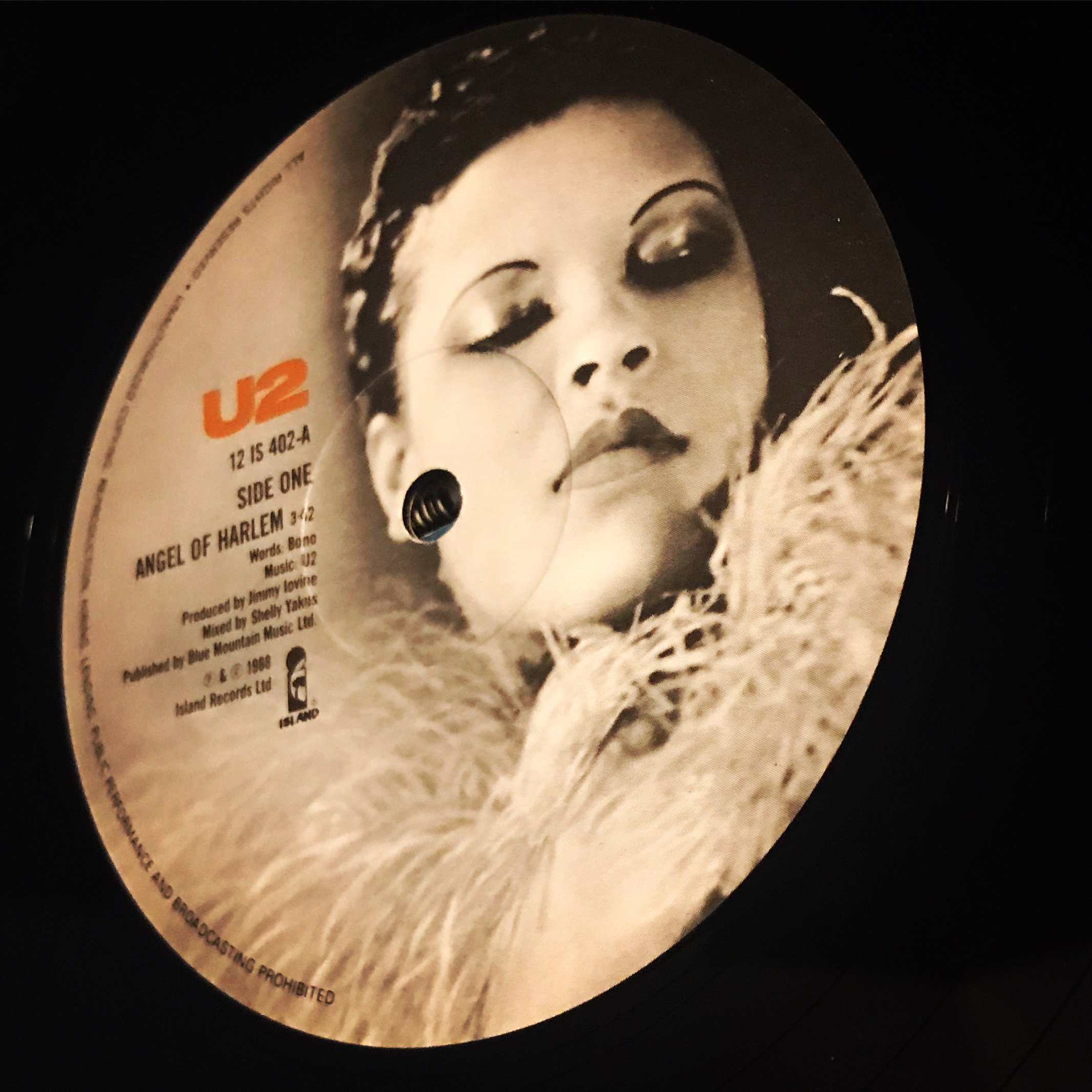
U2Angel Of Harlem

Angel Of Harlem starts on a couple of big, syrupy-thick beginners’ guitar chords, with none of the ricocheting ech-ech-echo that defines most of the Edge’s sound, then hits a groove and runs with it.

It was a cold and wet December day, when we touched the ground at JFK,” tells Bono, welcoming you, the listener, into his world.

Snow was melting on the ground, on BLS I heard the sound of an angel.” He’s in the taxi – limo, probably – making his way into Manhattan, radio tuned to NYC’s WBLS station. Billie Holiday is singing. It’s a scene setter, that’s for sure

New York like a Christmas tree, tonight this city belongs to me.” Slightly arrogant, aye, but then, it’s 1988. He’s everywhere, is Bono. The city and all its riches likely does belong to him. We can only imagine.

Birdland on 53…John Coltrane, Love Supreme…Miles.” Jeez. Not content with The Beatles and the Stones and the blues and gospel conections, he’s now aligning himself with jazz. Here comes Billie Holiday too.

Lady Day got diamond eyes, she sees the truth behind the lies. Angel.”

Forget the singer, man, the tune’s a cracker. The pistol crack punch of the snare drives it forward, Adam’s bass loose and funky. The Edge takes a back seat for once, allowing the Memphis Horns to shine gloriously in the gaps between the singing. The brass stabs and slurred trombone slides fill it all with a full-fat bluesy funk and when it slips into that stellar descending middle eight, you could be forgiven for thinking the whole thing has just eased itself off the grooves of an old Otis Redding session. It’s perfect.

It’s hard sometimes to see past the singer, I get that, but if you can make it that far, you’re rewarded with occasional bouts of greatness. Angel Of Harlem is one.


Sampled

Between The Lines

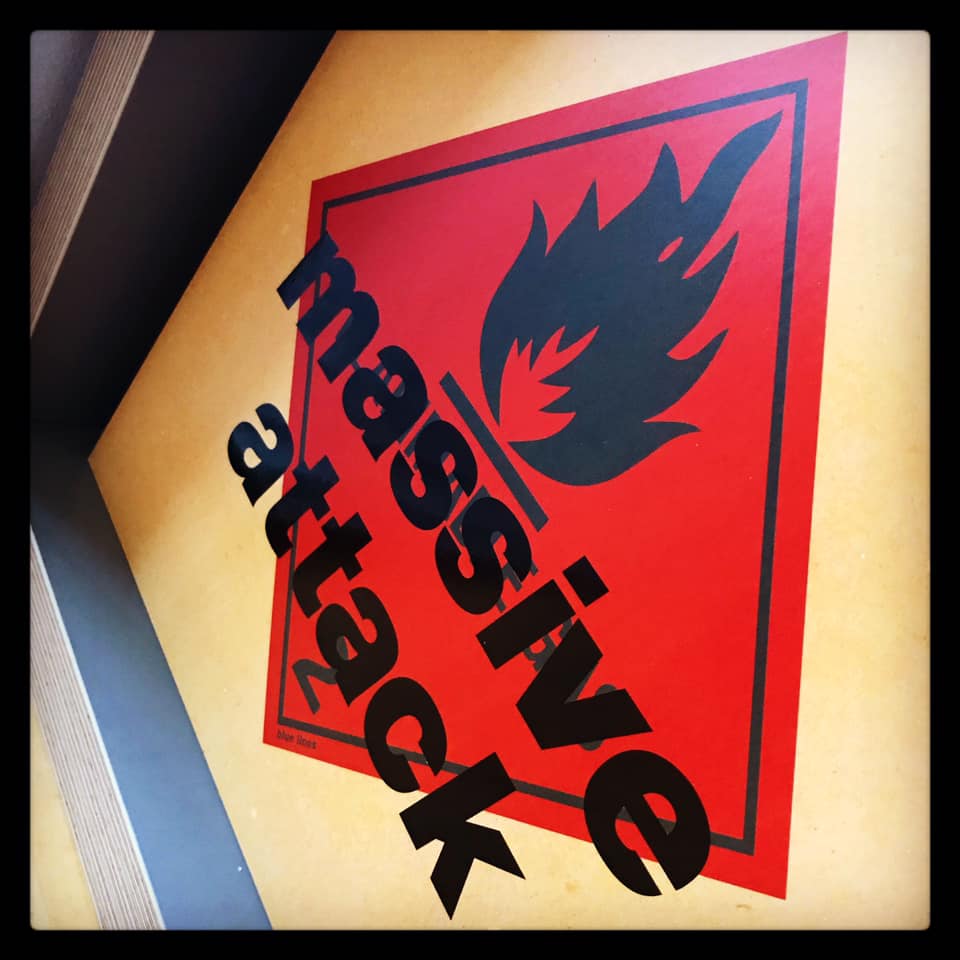
Massive Attack‘s Blue Lines added new textures to electronic dance music. It didn’t go for impersonal repetitiveness or hands in the air euphoria. It didn’t care much for sticking helium-voiced anonymous female vocals atop pounding 130+BPMs. The music sat around a head-nodding 100 beats per minute, occassionally dipping lower and slower into deeper, darker, dubbier moments. Blue Lines, a fantastically original mishmash of dub reggae, string-soaked house, parochial rapping and the choicest of samples opened many an eye and many a mind to the possibilities and endless limitations of sample-based electronic music. It’s a considered classic, and for good reasons.

You’ll know the album inside out, from the perpetually rolling Safe From Harm to the meditative Hymn Of The Big Wheel, via the peerless, timeless Unfinished Sympathy. I thought I knew it back to front until this week. With no distractions – I wasn’t listening on an iPod as I exercised or via the car CD as I commuted to and from work, I was in my favourite chair in the living room, the kids remotely jostling for their share of the bandwidth upstairs – and I stuck it on, sat there and listened. Then I flipped it over and continued. And when side two had finished, I did it all again. And again. New things leapt out at me, in particular a previously unnnoticed sample on the title track, Blue Lines.

Massive AttackBlue Lines

Tricky totally owns this track, spooling out a freeflowing stream of conscience rap that takes in relationships, paranoia, ethnicity, territorial tribalism – take a walk Billy, don’t be a hero – and existentialism in all its guises.

Built on a base of groovily shuffling drums and keys, all side-of-the-stick rim shots and noodling Fender Rhodes, it’s one of the album’s most downtempo moments. A scratching DJ and stut-stut-stuttering woozy re-set knocks the track briefly out of sync before a familiar guitar riff (James Brown?) brings the slo-mo rhythm back. It’s a sublime soundbed, the tight but loose rhythm and popping bass line making it a headnodder’s delight, no matter how many times you’ve heard it before.

The soundbed is lifted wholly from Tom Scott & the L.A. Express‘s 1974 jazz funk epic Sneakin’ In The Back. Contrast and compare…

Tom Scott & the LA ExpressSneakin’ In The Back

Cheeky sample

You can practically see the wispy blue curl of nicotine from smouldering Lucky Strikes jammed into headstocks, and the handlebar moustaches, white ‘fros and oversized baker boys caps as it plays.

With an expansive sax solo as wide and willfully free as a generously-cut bell bottom, the track would become something of a signature tune for Scott and his 5 bandmates. In the world of sampling and reappropriation, it was only a matter of time before someone such as Massive Attack would bend and shape the tune for their own ends. Or lift it, hook, line and wink (uh-huh) and base a whole new sound around it.

But what of that familiar guitar riff?

It had to be a James Brown riff, surely? Tighter than a pair of hot pants and ceaslesly funky, it had me scouring the tracks on the 4 album Star Time set until I found it.

I couldn’t.

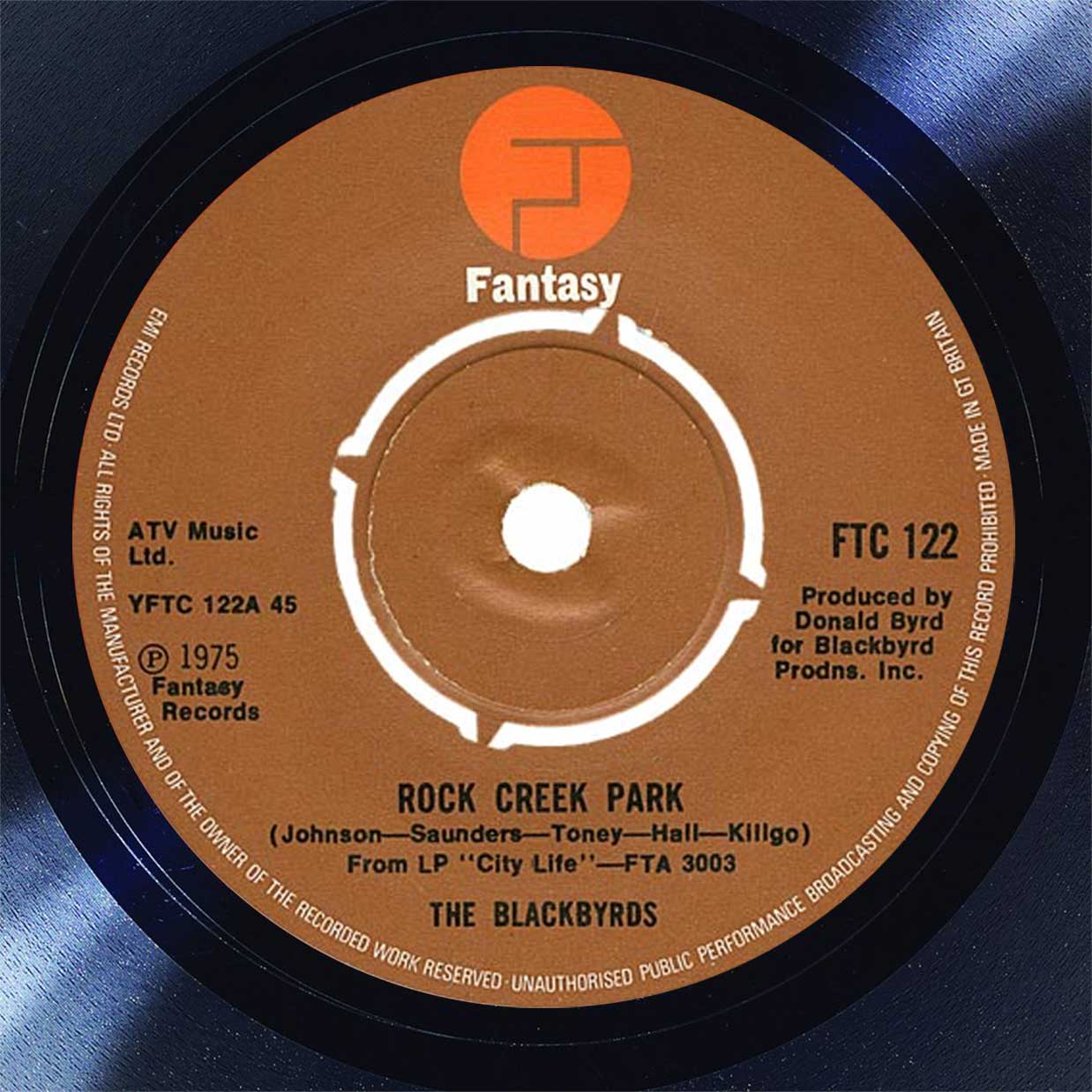
Ashamed of myself, I resorted to Google. And discovered it was a Blackbyrds riff. Of course it was. Massive Attack ground it down to 33rpm – I worked that out myself – a high intensity cardio-vascular workout slowed to the natural pace of resting breath and used to colour the Tom Scott track with some low in the mix additional funk. Like the final ingredient in a bowl of your granny’s soup, it helps take Blue Lines just that wee bit further into the out there.

The BlackbyrdsRock Creek Park

*Extra Track!

As an interesting aside, that brief and unexpected DJ scratch that Massive Attack employ at the start of their track became part of the fabric of Barry Adamson‘s Spooky-stealing Something Wicked This Way Comes. Poachers turn game keepers ‘n all that. If you’ve never heard it or its parent album, Oedipus Schmoedipus, you could do worse than rectify that right now. Listen out for the sample…

Barry AdamsonSomething Wicked This Way Comes

…and investigate the album. You’ll love it.

Alternative Version, Cover Versions, Peel Sessions, Sampled

Orderly Cue

New Order‘s Power Corruption & Lies has just had the luxuruious, deluxe treatment. Not for any anniversary reasons it seems, but it follows swiftly on the heels of the similar treatment afforded to its predecesor, Movement. Movement is a landmark album for New Order in some ways, not least the band’s decision to continue making music in the aftermath of Ian Curtis’s death, but Power, Corruption & Lies, as you know already, is the album where New Order is truly born.

Gone are the self-conscious carbon copy Curtis vocals and mannerisms. (Almost) nowhere to be heard are the rattling, richocheting Hannett-affected steam-powered drums. The high up the frets bass is, crucially, still there, more to the fore even; post-punk liquid mercury, fluid and meandering, creating that signature New Order sound without anyone being aware at the time.

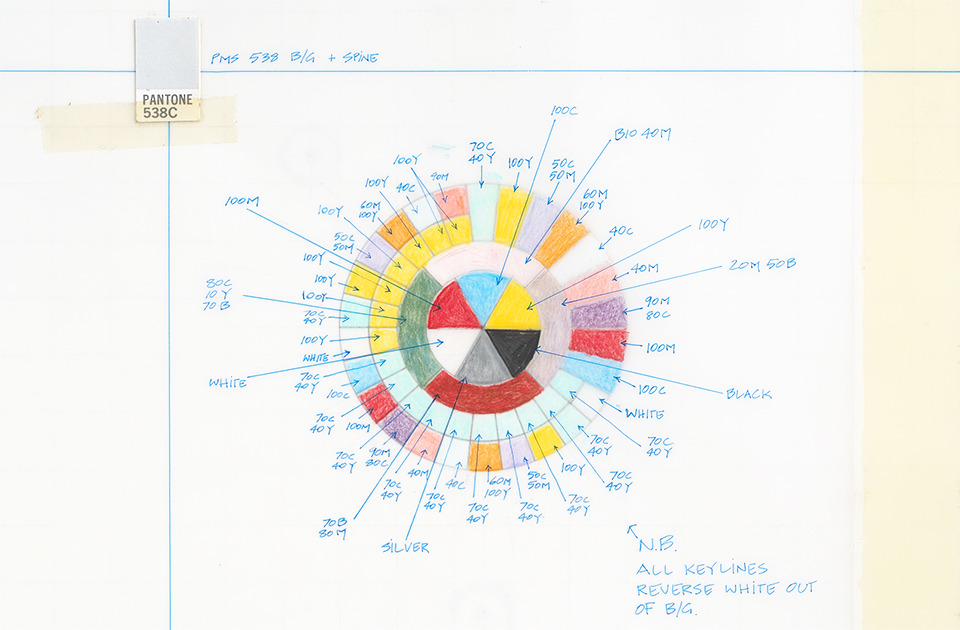
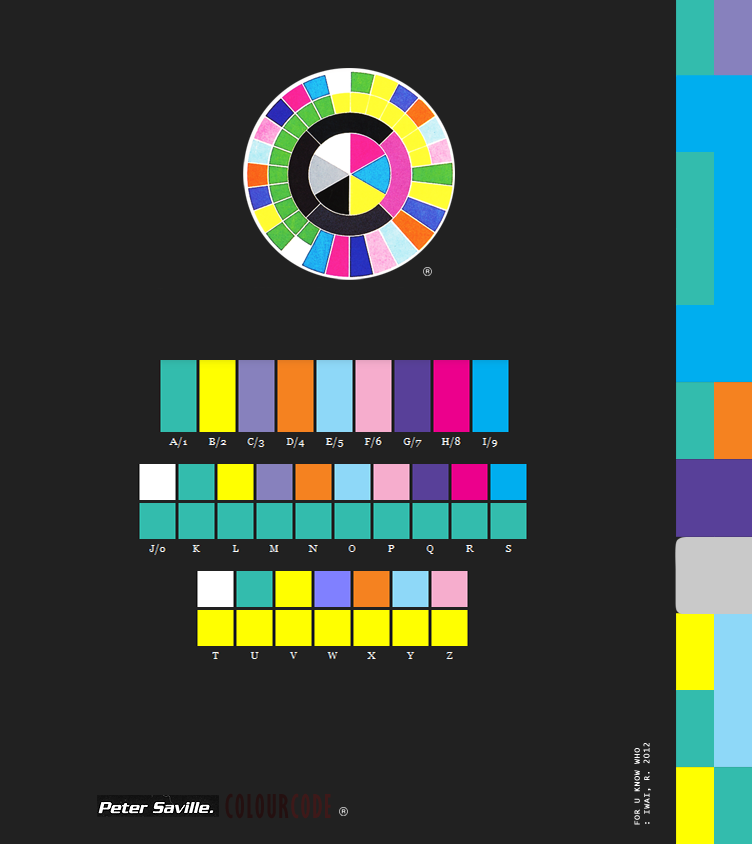
Where the synth lines on Movement were occasional and minimal, on Power, Corruption & Lies they’re elegant and glacial, polishing New Order’s confident new sound with a reflective sheen. From the flowers on the cover – the juxtaposition of old and new worlds, explained sleeve designer Peter Saville – and its code-cracking tracklisting on the back, via the grapple and struggle with new technology to Bernard finding his own shaky voice, everything about Power, Corruption & Lies screams fresh new start.

The soul of the band’s adventurous new sound can be found at the end of the 1st side.

New Order586

Peter Saville’s original sketched idea for the back sleeve

586 is, to begin with, a bit of a strange track. Those rattling, richocheting drums make a brief appearance at the start before a squelchy, squiggly keyboard line assumes the role of lead. Freeforming for a good couple of minutes, and just as you think it might be running out of ideas, a familiar ghostly synth line introduces itself, curling in like a cold, grey fog off the Manchester Ship Canal. Back in 1983 (or ’93 or ’03 or even right now,) New Order obsessives listening for the first time would have pricked their ears in a Proustian rush of recognition.

Coupled with the clattering sequenced electro and rapid-fire snare that follows immediately afterwards, 586 reveals itself to be Baby Blue Monday. It’s got it all going on – the tempo, the four to the floor dancefloor beat, the breakdown in the middle…but mostly, it’s in the propulsive, forward-thinking rhythm and pulsing, sequenced synths. Blue Monday was the stand alone single, released before the album, but 586 was clearly conceived at the same knee-trembling session behind the mixing desk. 

Peter Saville’s guide to cracking the tracklisting code

It’s significantly different in other ways though. Bernard’s voice is in a higher register, falsetto occassionally, and nothing like the bottom of the boots Curtisish vocal on Blue Monday. There’s an energy of its own to it and a high synthy melody that repeats throughout, giving way to warm and fuzzy synths before the gears begin to grind to a halt and the whole track sloooooows doooown to a juddering stop, bringing both itself and side 1 of the album to a definite close.

586 began life in May 1982 when Tony Wilson asked New Order for “20 minutes of pap.” The original version was put onto video and played when the Haçienda opened its doors for the first time. A shorter version was redone for the band’s Peel Session a month later.

New Order586 (Peel Session)

With backwards sections and helicoptering synths, bendy bass and a rhythm track made up of heavily treated sleigh bells and jangling percussion, it isn’t the “20 minutes of pap” that their label boss asked for, but it’s very much a lyric in search of a better tune. That tune duly turned up a year later, half of it soundtracking the album version, the other half lending itself to the greatest 12″ single of all time.

New Order/Ennio Morricone bassline

Talking of which – where would Blue Monday be without that twanging, Spaghetti Western bassline? Stolen twang for twang from Ennio Morricone’s soundtrack for For A Few Dollars More, it became Peter Hook’s signature sound on New Order’s signature record, and a sound that’s still very much likely to prick the ears of people of a certain age forever.

Cover Versions, Hard-to-find

I Want You To Want Me 2

Marvin Gaye‘s I Want You is a supreme slice of mid 70s soul. Taking its feel from one of its creator’s finest moments, you could be forgiven for assuming that What’s Going On‘s Mercy Mercy Me had slinked its way off the grooves of its parent album three years earlier, floated patiently in the ether while Marvin busied himself with rustling up another masterpiece, then alighted on the wax, a groove with no peaks or troughs and no real verses or choruses, but a slow and steady earworm of a track.

It’s heavy on Blaxploitation-era vibes – congas, elongated sweeping strings, tingaling percussion, parping brass, stinging guitar – and home to one of the singer’s greatest-ever vocal performances. What’s Going On (the album and its title track) – and to a lesser extent the follow-up Let’s Get It On – take some beating, and I Want You (the album and its title track) have been unfairly marginalised on the sidelines as a result. Indeed, you could make a decent claim for I Want You being the perfect third in a luscious, exquisite trilogy of soul. But that’s for some other writer who’s better qualified than I.

Marvin GayeI Want You

Marvin’s vocal on I Want You‘s title track is terrific. Double, triple, quadruple-tracked in places, he sings to himself, with himself and above and beyond himself. It’s there in the way he pre-empts the string motif at the start, it’s there in the high falsettoed call and response sections throughout and it’s most certainly there in the suggestive come hither moan that is emitted from somewhere below his belt line. Listen to the track 3/4/5/half a dozen times and I guarantee you’ll spot something you missed the last time around. It’s an astonishing performance.

Carried by a melody gifted from the Gods of Song, Marvin recasts himself as Nat King Cole for the right-on generation, a caramel-smooth crooner with perfect pitch and enunciation, the voice floating above and between his crack band of Motown sessioneers. When you want some of that badass, sidewalk struttin’ guitar on your record, who you gonna call? Ray Parker Jnr, of course.

You’d have to assume that Marvin had no bother when it came to the ladies. (Exhibit A, above, m’lud). Let’s Get It On was his previous call to arms, I Want You the next. I want you, he says, more a statement of fact than as a yearning for a partner that’s unattainable. No-one was ever out of Marvin Gaye’s league, right?, so when the Big M states that he wants you, he’s letting you know – out of gentlemanly manners – that tonight, you’re the chosen one.

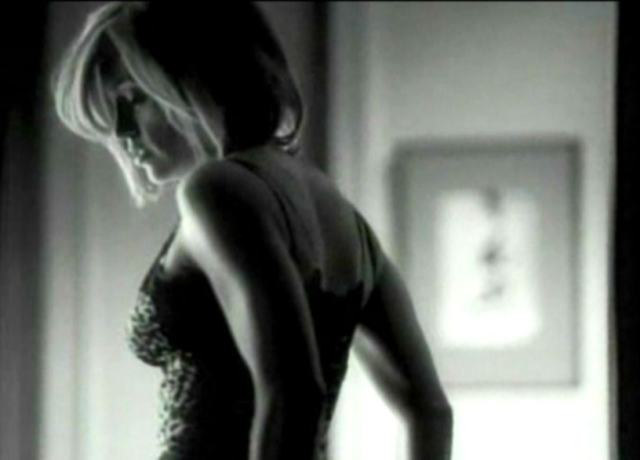
Madonna though. You’d have to assume that she has no bother in this department either. If she wants you, she’ll most likely get you, yet she tackles I Want You with all the uncertainty of a lovestruck teenager at the back of chemistry who wastes her day away drawing hearts around the name of the school stud that common consensus makes clear she has no chance with.

Madonna/Massive Attack I Want You

Slow and steady, powered by signature dark beats and a static crackle of tension, Madonna’s six and a half minute take on I Want You is the best approximation of being painfully, agonisingly in love with someone you’ll never be with that you’re ever likely to hear. Its treacle-thick ambience – stop-the-world, wooly and insular – captures perfectly that feeling of being lost in a place that you and only you understands. It’s an engrossing listen, the vocal drawn-out almost to the point of desperation. Madonna. Desperate. Let that sink in. It might be a cover version, but as far as great Madonna tracks go, I Want You is fantastic.

Much of the reverence should be reserved for Massive Attack’s sophisto instrumentation and Nellee Hooper’s on-the-nose production. They get Madonna to do the Marvin thing of singing the string line before it comes in. They get her, like Marvin, to sing to herself, with herself and above and beyond herself; a whisper here, a straight ahead measured vocal there, an immersive performance throughout. They even go for the tingaling percussion, synthetic rather than pitched and last heard on their own Unfinished Sympathy, and the strings too have seemingly slid straight off of that particular cracker and kept up the good work on the Marvin cover.

Slo-mo and cinematic, the Madonna/Massive Attack take on I Want You is sublime.