Get This!

Addis ababa-ba-ba

That much maligned Stone Roses second album – the grandiosly titled and underrepresentative Second Coming – is a strange beast. Not nearly as terrible as many suggested at the time, it came as a crushing disappointment to those of us who’d been blown away and swept along by the dizzy 60s-inspired sunshine psychedelia of the debut. From it’s lead single in, it was very obvious that this was Stone Roses’ take on Led Zep II. Such was the bombast and bluster and wheezing asthmatic slide guitar pyrotechnics that leapt from the fretboards with Pageian dexterity, they might as well have called that first single Whole Lotta Love Spreads and be done with it. Great tune ‘n all, but we’ve heard it all before, Stone Roses. That was a claim you couldn’t ever throw at the sparkling debut, and that’s why so many of us felt let down. A five year wait for this? C’mon Stone Roses, you’re better than this.

It has its moments. Both Driving South and Begging You are Hendrix filtered through a clattering dance groove, strangulated guitars at the big beat boutique, going nowhere, but thrillingly so for five minutes. Those liquid mercury guitar fills and coke-sprinkled riffs are relentless and tiresome on most of the other tracks though – the kinda stuff you hear played by showy assistants in guitar shops up and down the country. C’mon Stone Roses, you’re better than this.

And they were. Ten Story Love Song is a cracker, Sugar Spun Sister on steroids for those of us seeking a glimpse back to the heady summer of 1989. And the way it segues on the record into Daybreak is the greatest moment on the album.

Daybreak gives you a glimpse into the real Stone Roses, shackled of expectation and pressure, just the four of them grooving along to a fantastically loose-limbed jam. It’s so out of place with the rest of the album that I’m of the impression it was never really intended to be on it at all. A warm-up session perhaps for the ‘proper’ recording to follow, fortuitously captured by a quick-thinking tape op, magnetised forever and slotted early into the album sequence.

Stone RosesDaybreak

What’s great about it is that there’s little in the way of overdub or studio trickery. The four constituent parts are right there in the mix, easily identifiable, each doing their own thing, creating something far greater than the sum of their parts. It’s the rhythm, section that hits you first, isn’t it? It’s the way Reni and Mani drive the track with rat-a-tatting drums and rumbling jungle bass, eyes locked on one another, not even aware of what the other two are up to, working intuitively and cooking up a proper simmering stew that keeps the whole thing moving ever-forwards, speeding up, locking in, driving us to the logical conclusion.
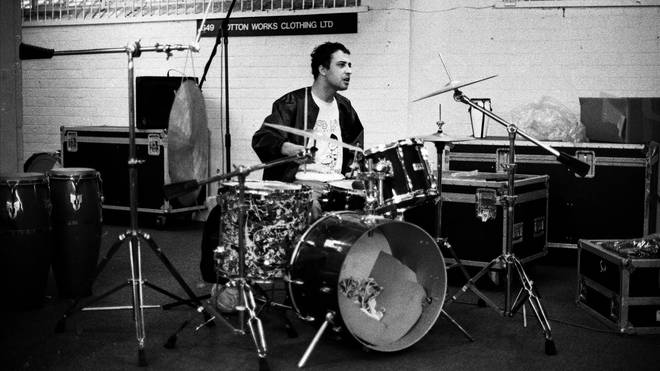
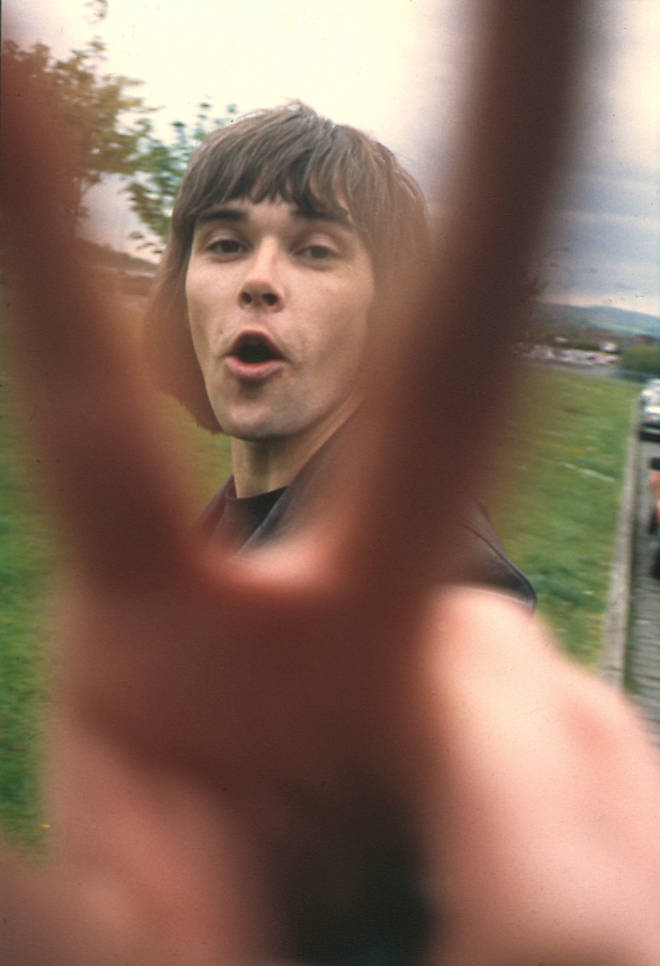
The solid rhythm allows John Squire to throw psychedelic shapes across the top, little splashes of colour as random and just-so as the paint spatters on those Pollock-inspired record covers. His right hand scratches the groove, his left fingers bend the notes, his momentus fringe keeping the whole thing swingin’ majestically. By the time Ian Brown comes up with the lyrics – a plea for peace and equality that’s part random geography lesson, part Rosa Parks infomercial (and a ‘love is the law here‘ line that Squire would nick post-Roses), Daybreak, for better or worse, is as loose and airy, yet tight and locked as anything off of Led Zep II.
Dylanish, Get This!, Gone but not forgotten

With(out) The Beatles

There’s a good argument for suggesting George Harrison‘s All Things Must Pass album is the pick of the solo Beatles’ output. In 1968, post White Album, George spent some time in Woodstock with Bob Dylan. Hearing the Zim’s stories of how The Band wrote; with equity, without hierarchy, everything considered on merit, he realised he was getting short thrift in The Beatles. Both John and Paul failed to give George’s songs the attention they deserved, instead throwing him the odd patronising scrap of encouragement when a space or two needed filled on an album. Discourteous and dismissive, Lennon & McCartney didn’t take George’s stuff nearly seriously enough and the youngest Fab, lacking clout and perhaps confidence, left many great songs in the archives.

In 1970, the floodgates opened. Spread over 6 sides of vinyl, the songs that made up All Things Must Pass showed the world – and his former bandmates – what they’d been missing.

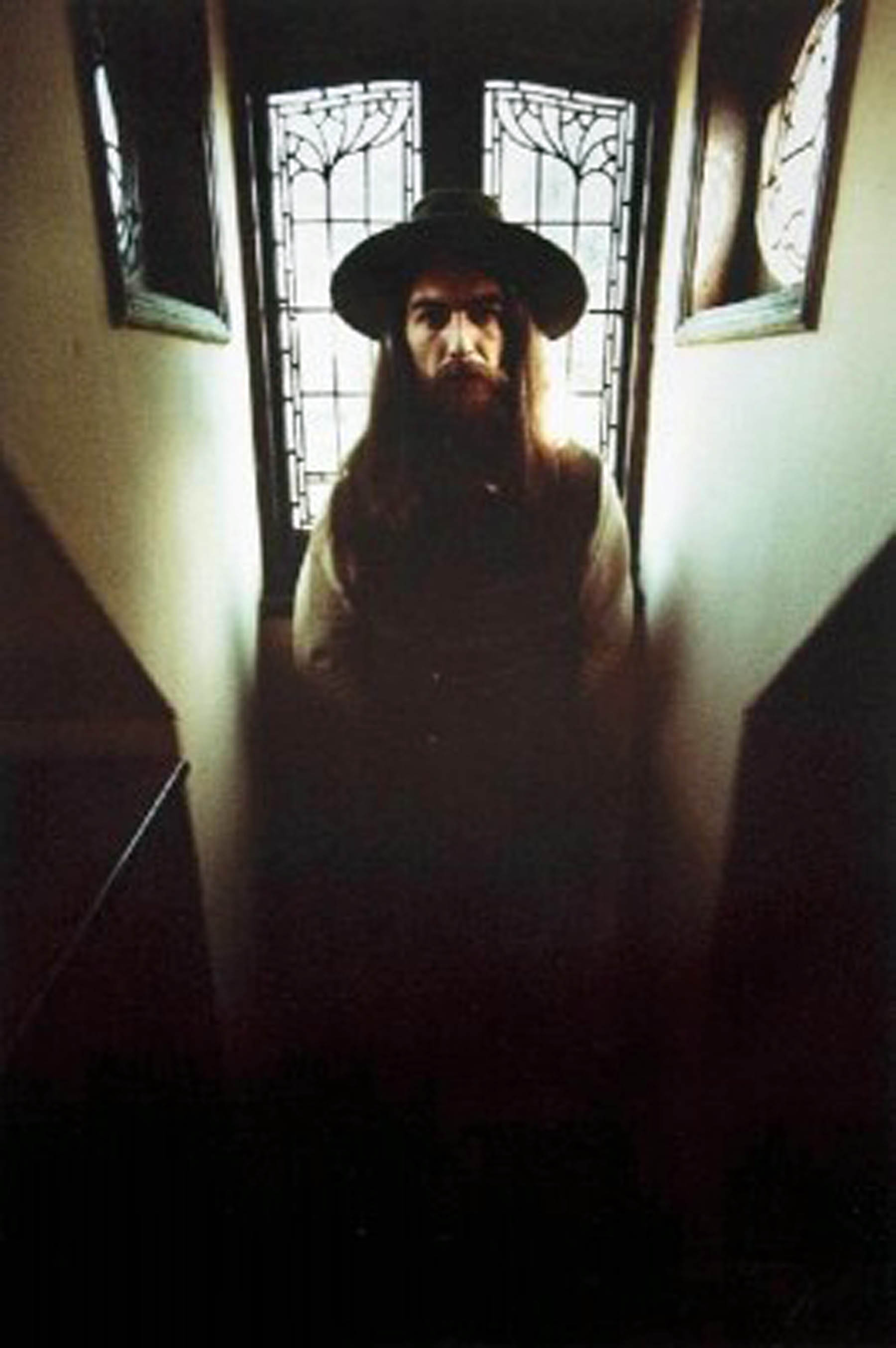
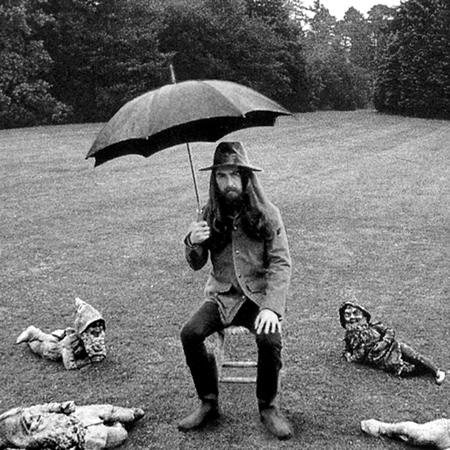
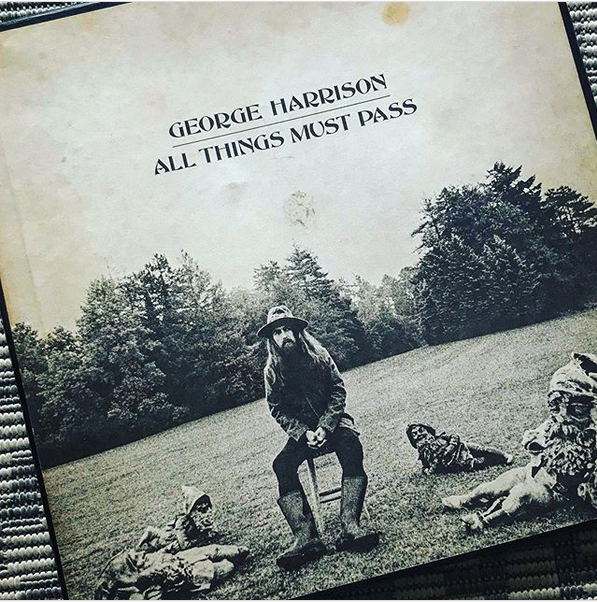
From the title in – The Beatles are finished, get over it, to the cover – a serious George, sitting in the middle of four metaphorically upturned garden gnomes (as similar to one another as The Beatles were at the height of Beatlemania), George throws open the doors to his vaults, brings in some high profile friends and adds life to songs that would’ve graced any late-era Beatles release.

You can practically see the double denim and scratchy beards as the whole things oozes past in a haze of hash and henna. George’s trademark slide guitar is all over it, gently weeping and effortlessly gliding off of the grooves and into that corner of the world that would be known from then on as soft rock.

It’s the opener, I’d Have You Anytime that sets the tone. Co-written with Dylan at that ’68 session, it’s produced by Phil Spector and features Beatles’ friend Klaus Voorman on bass. Guitar and drums are provided by the musicians who would soon become (Derek &) The Dominoes. Ol’ Slow Hand himself plays a tasetful slo-mo guitar part which would be more than a little bit recognisable to Beatles fans. Not content with stealing his pal’s wife, in order to keep I’d Have You Anytime softly rockin’ through the ether, Eric Clapton steals most of George’s solo from Something as well.

George HarrisonI’d Have You Anytime

A decade or so ago I’d Have You Anytime was a feature on one of my in-car CDs. Segued between World Party’s All I Gave and Elliott Smith’s Bottle Up And Explode!, the three tracks, all double tracked harmonies and wistful regret, regularly re-played (again! again!) to the point where I was sick of all of them.

George’s song happened to be playing one time as I was making my way through Crosshouse and past the hospital, back to the Kilmarnock bypass that would take me home. As the road opened up ahead, from one lane to three in preparation for the big roundabout at the Brewer’s Fayre pub, I happened to glance left to the car I was overtaking.

The woman driving it  – she was about ages with me, but that’s got nothing to do with the story – was bawling her eyes out. Proper uncontrollable tears, mouth twisted and agape, lips joined by a few lines of stretchy saliva, face red and swollen. It was fairly distresssing.

I wanted to get her attention, ask if she was OK, but her eyes remained crying, her gaze on the car in front and the impending rush hour roundabout. I too had to focus on the traffic around me. Easing forward in first gear, I had a car in front of me, another behind. I was two, maybe three cars from the front of the queue, anticipating where I might be able to join the roundabout. The car on my left nudged forward simultaneously but the driver wouldn’t shift her gaze.

Ping-ponging my attention from right (is that a gap?) to left (is she OK?) I eventually zoomed onto the roundabout. The car to my left stayed. As I made my way round the roundabout, I lost her in my rear view mirror. I’ll never know if she was OK.

Had she been at the hospital and received bad news? Had she been visiting someone who’d died? Had she been dumped? Or sacked from work? I don’t know. I’ll never know. But everytime I’d Have You Anytime comes on, I’m back at the roundabout, watching a woman break down in the car next to me. Funny how music works, isn’t it?


Get This!

FAC 11

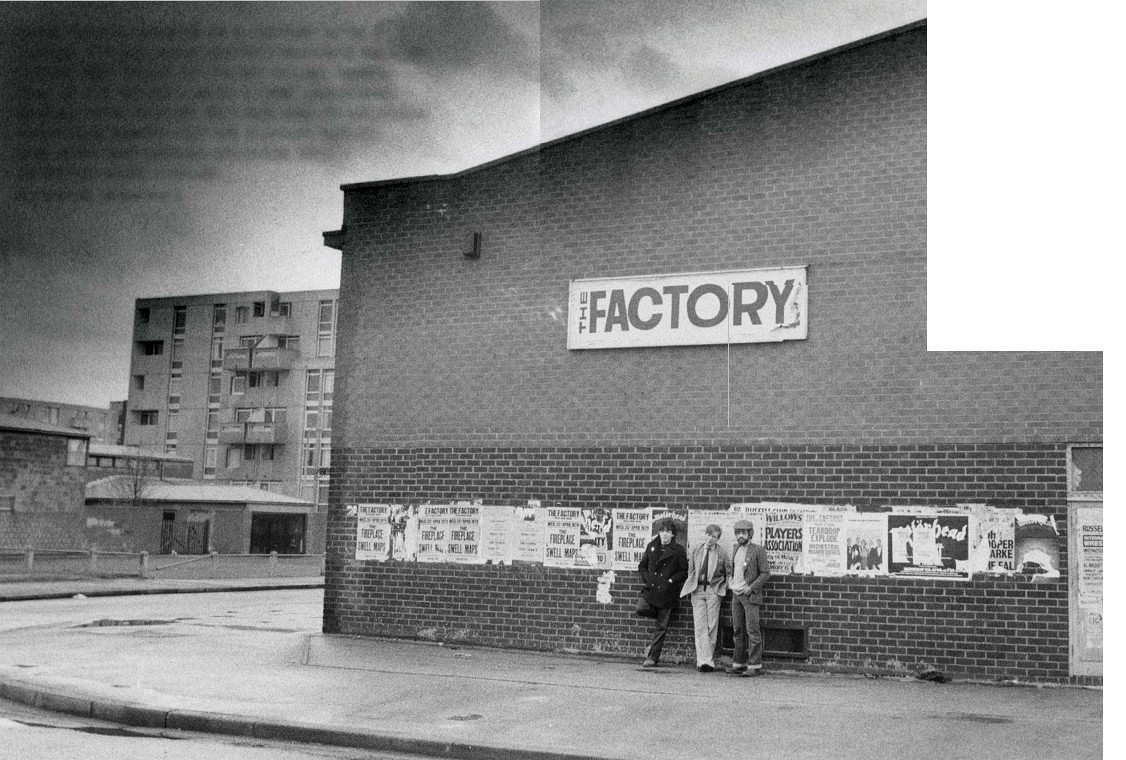
X-O-Dus was a political roots reggae act from Moss Side in Manchester. Formed in the mid 70s they honed their sound, grew in stature and became regulars on the Manchester scene. They shared many stages with the punk acts of the day and by the end of the decade they were playing in the Russell Club in the city’s Hulme area. The Russell Club is significant in British music history as the place where Peter Saville, Tony Wilson and Alan Erasmus ran the first Factory nights. The Factory Club begat Factory Records which begat Joy Division/New Order, ACR, Happy Mondays and a whole host of essential bands and records. But you knew that already.

Tony Wilson was so taken by seeing X-O-Dus and their self-billed ‘rainy city reggae‘ one night at the Russell Club that he offered them a record deal. The record they put out – just the one 12″ single – remained the only reggae release in Factory’s catalogue, but a mighty fine record it is.

X-O-DusEnglish Black Boys

It proved to be a frustrating release for the band. Recorded one June day in 1979, Factory, keen to acknowledge the significance of having a UK reggae act, reached out to hot-shot reggae producer Dennis Bovell, stock high from working on The Slits’ debut and Janet Kay’s Silly Games, to oversee the mixing of the record. Happy to get involved, he was less thrilled at the prospect of travelling to Rochdale to work on it and stalled, doing so for the remainder of the year.

In the meantime, Factory launched Electricity, the debut release by Orchestral Manouevres In the Dark and Joy Division’s epochal Unknown Pleasures. The X-O-Dus record became almost forgotten in the process.

Ten months down the line, Bovell eventually got to work, producing the window-rattlling, stop/start roots masterpiece that came to define the band. X-O-Dus though was less than happy with the outcome. Known for their unique sound at live shows – they were as much jazz and avant-garde noise as they were reggae, they didn’t like the pigeonholing, long and winding, dubby coda-oda-oda that came to define the record. I don’t know why – listening 40 years down the line you’d have to say it sounds fantastic!

Further delays occured. As was often the Factory way, designer Peter Saville took four months to produce the sleeve and then, just as they were about to release the record, a London based band with the same Marley-derived name forced the Manchester variant to rethink their moniker. Almost a year after being recorded, English Black Boys was finally given the catalogue number FAC 11 and released on Factory Records. Peel championed it, the music press loved it and the band set out on a tour to capitalise.

The Scottish leg was cringingly billed Reggae For The Jocks, where, mid tour they supported Gary Glitter at Strathclyde University’s Students’ Union. Not the ethos representative of a Factory act, the label chose to leave the tapes for an intended X-O-Dus album on the shelves, busying themselves instead with Joy Divison morphing into New Order. X-O-Dus, as so many of those little-known bands did, would eventually fizzle out.

Highly politicised, English Black Boys is as relevant today as it was when it was written at the height of the National Front. Play it loud until the windows ratlle and your bigoted neighbours tut in disapproval. Then play it again, twice as loud and for thrice as long. It’s a great record.

Get This!

Don’t Matter What I Do

There’s a new Paul Weller album out today. He’s clearly a prolific, unflinching, bloody-minded writer, an English version of someone like Neil Young. You can certainly draw parallels between the length of their hair these days, let alone the length of their careers. Both started out in successful bands, both went solo, both still steadfastly plough their own furrow, their generally considered ‘greatest albums’ far behind them.

It wouldn’t be unfair to suggest that Weller’s output can be grouped into four distinct categories: 1) The Jam, 2) The Style Council, 3) The solo years up until Stanley Road and 4) everything else since. This isn’t intended to be disingenuous. There are plenty of PW fans who will point to The Jam’s progression from angry, besuited punks to the soul-obsessed Beat Surrender that hinted at Weller’s next move, and from that soulful start to their misunderstood house-obsessed finish, The Style Council certainly rode the zeitgeist of musical movements. Plenty too will cite Wake Up The Nation as just as relevant an album as Wild Wood. I’d even agree – and Sonik Kicks too for that matter. But I have to admit to a slackening off in my engagement over the past couple of albums. Partly, that’s been down to the crazy prices he can charge for a deluxe version of the latest album and partly because the lead tracks from those albums kinda passed me by. If I had the money and time to invest in them, I daresay I’d have a different opinion. Maybe I should just steal them online like everybody else and form a considered opinion. The new album – On Sunset– has been trailed with an interesting set of 70s-inspired fonts against bleached-out orange, pink and yellow graphics. It looks like the sort of thing I should investigate, even if his hair these days is part Agnetha from Abba and Brian Connolly from The Sweet.

Weller has always been about moving forward – Start, Dig The New Breed, My Ever Changing Moods, Push It Along – but haud the bus, Paul. Rewind, look over your shoulder, listen again to some of your finest moments. The best bits easily still stand up today. Like Long Hot Summer

The Style CouncilLong Hot Summer

Long Hot Summer has it all. In a lineage that begins with The Young Rascals’ Groovin’ and continues through to Jazzy Jeff’s Summertime, it’s one of the truly great mid-tempo summer tracks. Its awkward shoe-shuffling electronic beat might be difficult to dance to but it’s essential for conjuring up the feel of, well, a long hot summer. It’s the bass synth that carries it. Instantly recognisable – I’ll name that tune in one, Paul! – when he played it quite unexpectedly mid-set at the Hydro a couple of years ago, I was beyond myself with excitement. Fuckin’ Long Hot Summer! I shouted to Fraz. Long Hot Fuckin’ Summer moaned the old punk to his pal on my left at the same time. The placement of the sweary word is important here. Said at the start, it’s generally a positive thing. Placed midway through the sentence, it makes for quite the opposite. So there y’go. Paul Weller, still polarising his audience all these years later.

It’s a great production, Long Hot Summer. Along with that bass line, Weller’s vocal comes across as something that might’ve flown straight off the grooves of What’s Going On. Low and spoken in places, floaty and falsetto in others, it runs the range of what makes soul music soul music. When used to transport the lyrics of loss and longing, well, it makes for quite the thing. There’s a chord structure to match too, right up to the major 7ths in the bridge. Then there are the handclaps, the shiddy-biddy-do-wap-waps and the bubbbling analogue synths. If the Isley Brothers or Chi-Lites made a better record, I’ve yet to hear it. Weller, amazingly, was barely into his 20s when he wrote it.

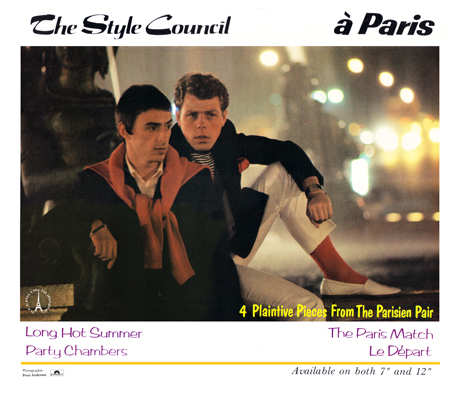
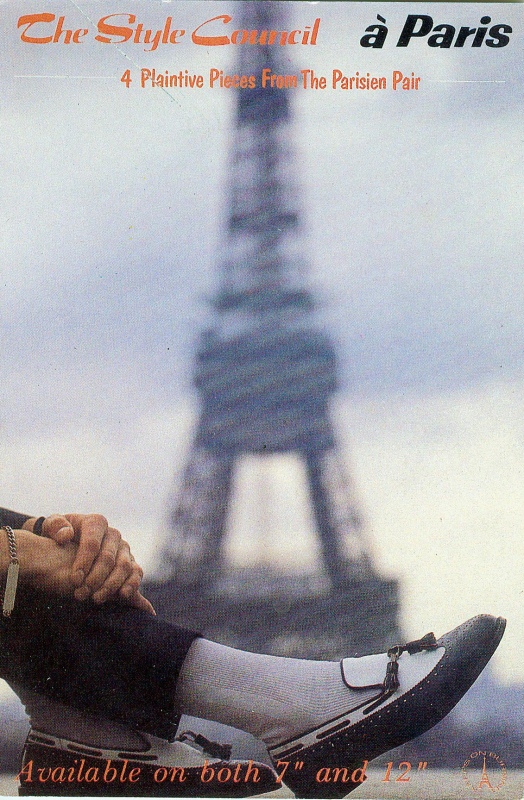
I’ve been playing The Style Council Á Paris EP a lot this week. Long Hot Summer is the lead track and the needle has gone back and forth across the A-Side a zillion times since I first rediscovered it on Monday. That line – the long hot summer just passed me by – is bothering me though. It’s a sign, a clue, a plea from the writer himself that I really should get to his more recent albums. A visit is in order.