Cover Versions, demo, Gone but not forgotten, Live!

Bathed In Light Of Love

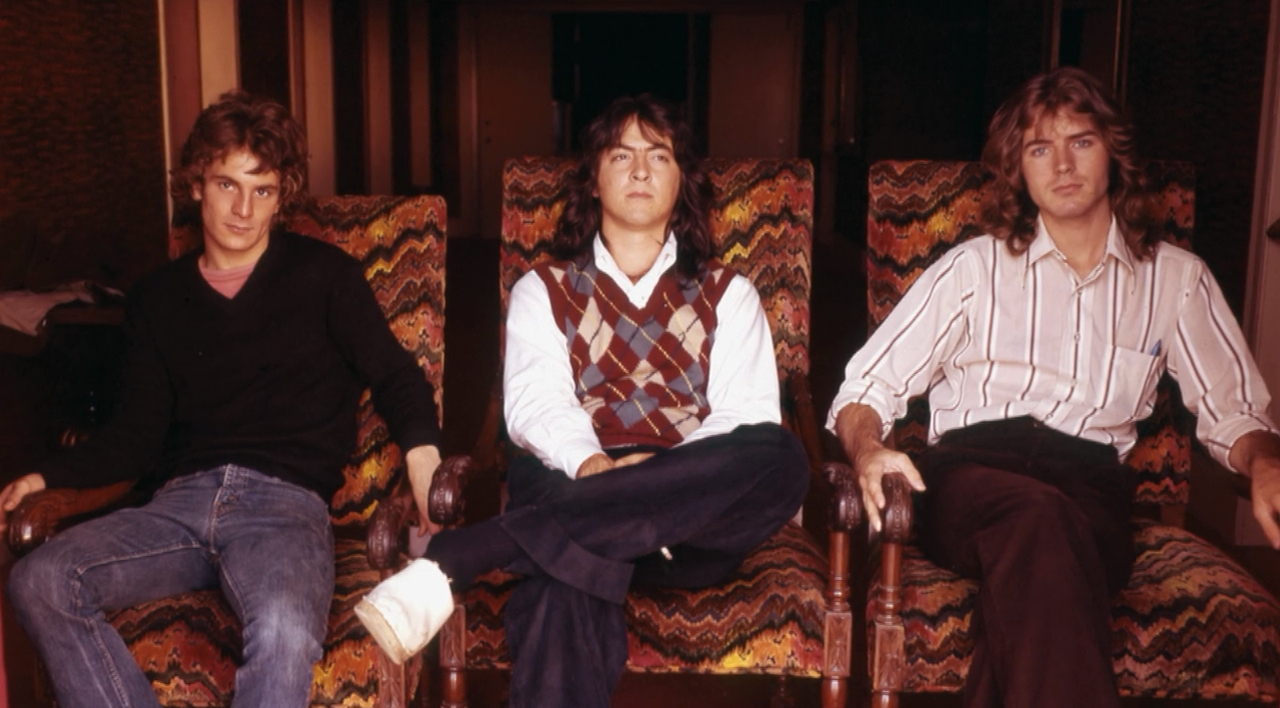
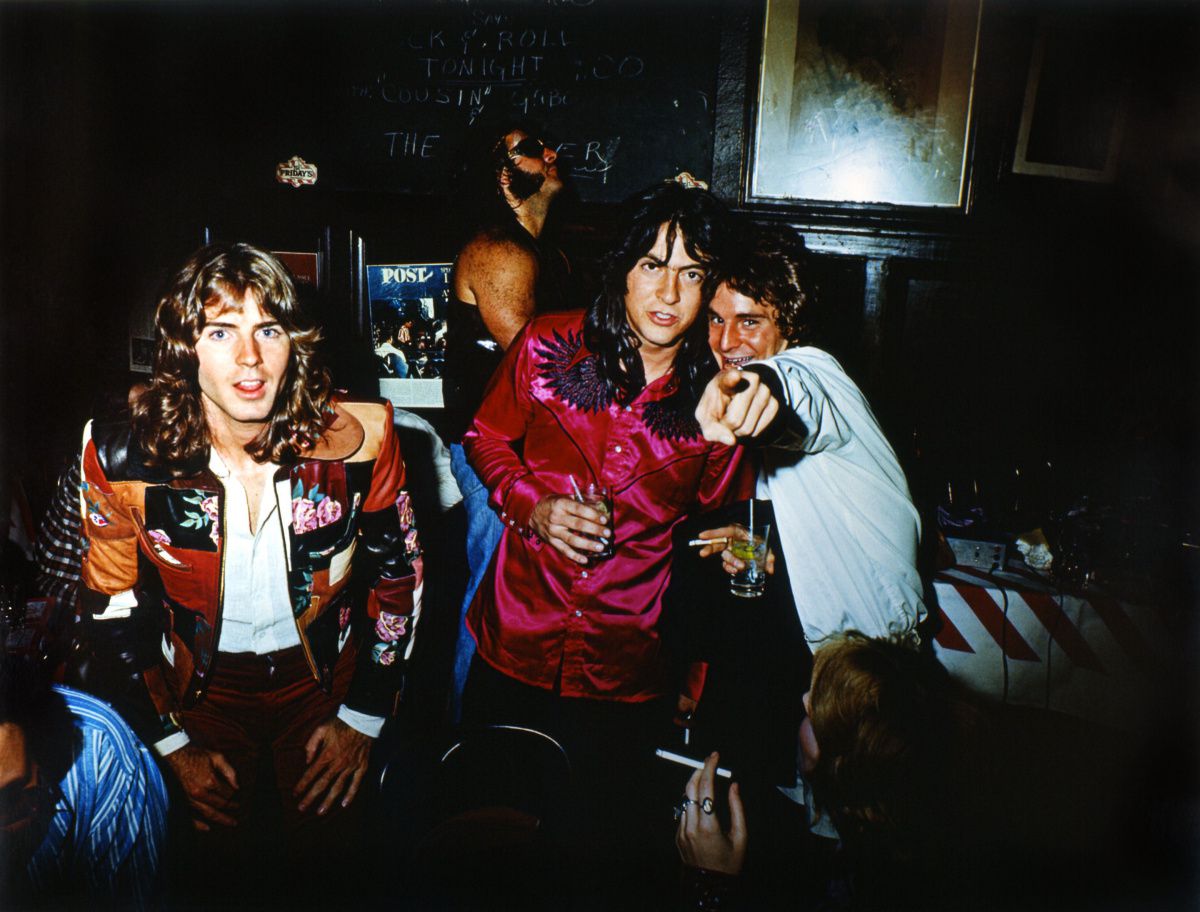
Dubiety surrounds the release of Big Star‘s third album, ‘Third’. Was it a true Big Star album in the way #1 Record and Radio City were? Given that the recordings were enhanced by an ever-revolving rotation of session musicians who’d play around the axis of Alex Chilton and Jody Stephens – Steve Cropper on the version of the VU’s Femme Fatale, for example, and given that Chilton wrote the lion’s share of the original music, it’s oft been considered the first real Chilton solo album. Studio tracking sheets from the time show references to Sister Lovers (Chilton and Stephens were in relationships with a pair of sisters at the time) which may or may not have been the intended name for the new record, or indeed, a new name for a band far-removed from its original identity. Despite the poor sales of the first two albums though, Ardent were dead keen to market it as a Big Star release and so, with little fuss or fanfare, Third was sent out into the world, Big Star’s ‘difficult’ third album with unfinished songs and little of the sparkling power-pop jangle that dusted the first two.
Big StarJesus Christ

Towards the end of side 2 you’ll find Jesus Christ, a mid-paced, straightforward celebration of the birth of the baby Jesus. On top of the occasional Spectorish tumbling toms and a honeyed Stax sax break that gives birth to Clarence Clemons and the E Street Band, you’ll spot references to angels and stars and Royal David’s City. The song is carried by Chilton’s instantly recognisable guitar style and sound, a welcome relief following the bleak and self explanatory Holocaust that precedes it on the record.

It’s a properly great Christmas tune, uplifting and joyful, yet as far-removed from the normal records that get played ad infinitum in shops, cafes, taxis, bars, wherever at this time of year. Indeed, the only time you’re liable to hear Jesus Christ in the changing rooms at TK Maxx will be from my mouth as I recoil in horror at the ill-fitting shirt from last season’s Katharine Hamnett collection that I struggled to get on and struggled to get off again. Jesus Christ, it was tight. Forgive me father etc etc…
Big StarJesus Christ (demo)

Chilton’s demo of Jesus Christ is great. Just Alex and a finely strummed acoustic 12 string, it has all the hallmarks of high watermark Big Star; Chilton’s ad libbed ooh-oohs, cracked, at the end of his range vocals on the high notes and the requisite sparkling jangle. What a great canvas for the other musicians to paint on.
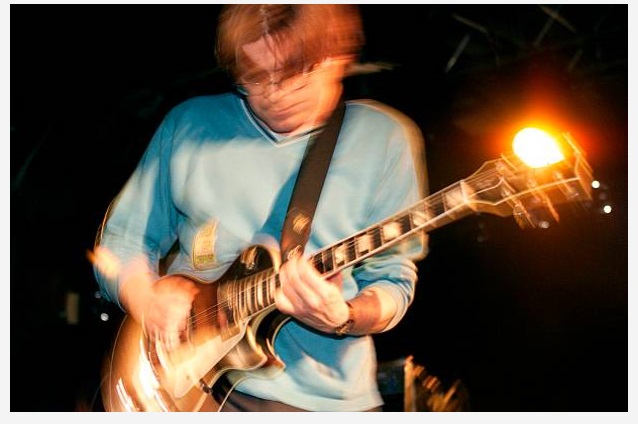
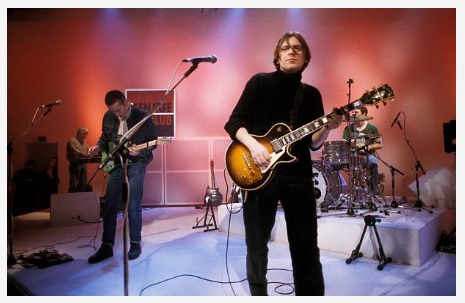
Teenage Fanclub (of course) do a terrific version of Jesus Christ. Released on one of the two CD singles to promote Ain’t That Enough, the lead single from the gold standard Songs From Northern Britain album, TFC were in a rich vein of writing form at the time, firing out guitar-fuelled and harmony-filled songs with ridiculous ease. That Ain’t That Enough was released in June with a cover of an obscure Christmas song as an extra track (the other was a nod and a wink cover of the VU’s Femme Fatale, funnily enough) mattered not a jot. Recorded at perfect head-nodding pace and employing the twin vocals of Norman and Gerry, it’s proper, vintage Fanclub. A heady sheen of fuzzed-at-the-edge electric guitar, a tastefully twangin’ Raymond solo and a heartfelt, sympathetic take on the original make this one of TFC’s best covers.
Teenage FanclubJesus Christ

My job in education has changed in recent years, meaning that nowadays I don’t get to drag my class up to sing a Christmas song in the church. I always liked the challenge of this. It was the one time of year I could put my guitar skills to proper use and I was always on the lookout for a left-of-centre song to tackle. Jesus Christ was one I often considered, but it was forever overlooked in favour of something else.

The arrangement was going to be a full-on Phil Spector epic too; some tinkling pitched percussion at the start, eking out the melody against my plaintive strums, a single voice – probably the quietest girl in the class – singing the opening lines, the whole class coming in on the ‘Jesus Christ was born today! Jesus Christ was born!‘ Then there’s my bit – “MY BIT, BOYS ‘N GIRLS!” – where I do my Alex/Norman run up and down the frets before the second solo voice – this time a boy – “And o! They did rejoice!” brings us back to the whole point of the song.

By the second chorus, the entire group is swaying side to side in time to the guitar’s rhythm. By the third, they’ve added handclaps, like a peely wally west of Scotland gospel choir. They’ve lost most of their self-consciousness by this point too. Jack at the back is still fidgeting with the zip on his school trousers and Chloe, front row and centre, has still to lift her eyes from the rich red carpet in the vestry, but look! One or two of them are even smiling. And I’m in my element, pushing it towards the end.

The chorus is repeated a couple more times before we finish in a blaze of frantically scrubbed acoustics, clashing glockenspiel and rapturous applause from the assembled parents in the pews upstairs. The head teacher, as usual, fails to acknowledge both the effort and the spectacle and we move swiftly on to the next class who shamble their awkward way through Santa Baby to the embarrassment of all in attendance. I miss these times most of all.

*Christmas Bonus!

Here’s Alex Chilton’s fantastically louche take on TFC’s Alcoholiday. Teenage Fanclub have never hidden their love for all things Chilton-related, but on this tune the gamekeeper turns poacher. He just about steals the show too.

Alex ChiltonAlcoholiday

Master/Apprentices

Get This!

Hot-Wired Punk Blooze

Ferox

1. Latin word: for strong, courageous, wild.

2. Can be used to describe Wilko Johnson (b. John  Wilkinson, England, 1947. Guitarist with Dr Feelgood, ’73 – ’77)

Words in the English language that borrow their root from ferox include fierce, ferocious, feral, ferment, fertile. When pre-punk guitar hero and latter-day cancer survivor Wilko Johnson straps on that Telecaster, these words also apply to him.

Plugged in, he’s the conduit for 2000 volts of white-hot electricity, half of it flowing from his guitar and out through his amp as freely as the tide in the Thames Estuary, the other half reserved for jolting the player, sparking wildly from fingers to fretboard and back again.

He wields that Tele like James Cagney with a Tommy Gun; waist height, held to the side, pointing straight ahead, and he fires off lightning-fast bolts of ferocious punk blooze, his eyes as feral as Marty Feldman’s without the squint, his gurning lips curled into a pout that’s half way between rebellious Elvis and self-satisfied “I told you so“, his thousand yard stare focused somewhere off in the distance as he concentrates on fermenting his open-handed riffs. His legs seem to work independently of the rest of him, juddering him this way then that, left and right, forward and backwards, a National Grid-powered, bowl-cut Frankenstein’s monster of six-string stupendousness.

When Wilko and his band Dr Feelgood crank into Roxette, it’s the sound of a car being hot-wired and stolen. The frantic part towards the end, when it goes double-time and the wailing harmonica clashes with the Animal-like drums and Wilko’s F-shaped riffing, is the sound of a Ford Cortina going from zero to 60 in 3 seconds flat, a screech of burning rubber and revving engine, tyre marks indelibly burned to the asphalt. Oh! To have seen this live in ’75! Play it and play it again.

Dr FeelgoodRoxette

Recorded (as is the whole of Down By The Jetty, its parent album) in pistol-packin’ mono, Roxette has a punchy, barely-contained self-restraint. Reminiscent of those great Who and Kinks and Stones singles of the 60s that seemed to leap off the grooves one louder than everyone else, it’s straight out the traps and into your ears. Wilko’s simple choppy riff is centre-stage, a standard 3 chord progression employed before and since by all the greats. It cuts like a knife, cheese-grater thin, razor sharp and fat-free. Wilko doesn’t feel the need to break into flashy fretboard wankery. It’s all in that fantastic knuckle-dusted rhythm, sparks flying as wildly and furiously as the sparks from a welder’s blow torch.

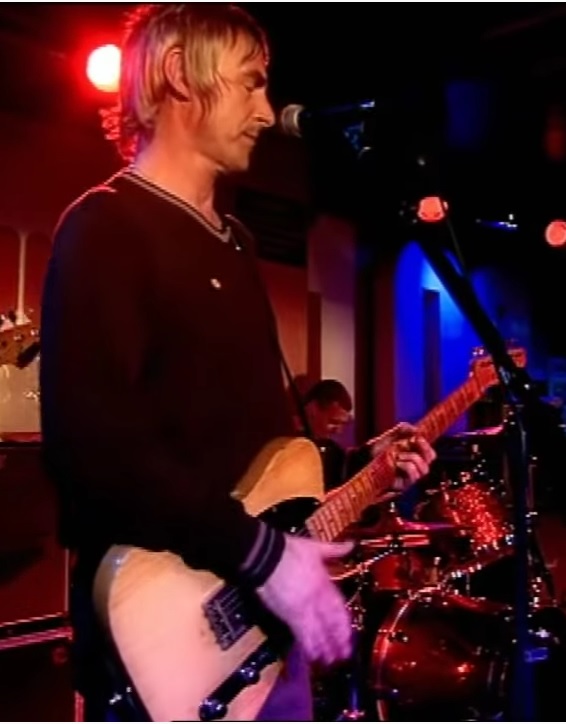
Have you ever watched Paul Weller doing From the Floorboards Up in concert? Really watched? In tribute to his hero, PW dispenses with his plectrum for the one song, riffing away like Wilko in ’78. Jings, he even employed a Telecaster on the original recording to cut through the backing band bluster of what was essentially Ocean Colour Scene at the time. Save for the boomeranging sound effects midway through (a terrific touch), it’s a slashing, ringing carbon copy of Wilko’s best bits. Artists will always pay tribute to their heroes. Weller’s is perhaps the most touching and subtle…and best for it.

Paul WellerFrom The Floorboards Up

Get This!

I’ll Tell You One Thing, He’s Not Building A Playhouse For The Children

Tom Waits was 70 at the end of last week. On the one hand this was quite surprising. Tom Waits?! 70?! No way! On the other though, Waits has looked at least 103 since the first time I set eyes and ears on him, round about the time they played a clip of In The Neighbourhood or some suchlike off of Swordfishtrombones on Whistle Test, or perhaps even the Oxford Road Show. This was back in the mid 80s when pop was shiny and bright with clean hair and cleaner teeth and here was Waits, crumpled and tramp-like with an electric shock of hair that even Keith Richards might’ve taken a comb to, his rough hewn chin and sharp cheekbones giving him the look of a werewolf on the verge of an asthma attack, attacking, not playing his upright piano. Cool as the proverbial fuck.


Waits really perfected that beatnik bum look, looking like the hobo in a Rockwell painting that had managed to peel himself free from the canvas and flop onto the nearest flat surface. It was in place for Closing Time, his first album, and he sort of grew into it with each subsequent release.

Delivered with a voice that’s equal parts gravel and gasoline, Waits sings bourbon-soaked mini operas of loving and losing, of romance and heart-break – Grapefruit Moon, for example, or Martha, or the astonishingly brilliant and Desolation Row-like Kentucky Avenue, yet he can be laugh-out-loud-funny when the mood needs lifting. Seek out All My Friends Are Married on Nighthawks At The Diner for a prime slice of all-bases-covered Waits’ melancholic pathos. In fact, listen to the whole album, it might just change your life. That’s an instruction, by the way, not a recommendation.

Tom WaitsMartha

As his back catalogue grew to be as wild and varied as the bottle selection behind a Bowery bar, so too did his approach to music. Waits’ anything goes attitude meant that accordions played polkas while bits of metal clanged rudimentary rhythms, skewed blues flipped and flopped underneath funereal Salvation Army band dirges, spoken word sections fought for your attention with ambient jazz….fantastically unpigeonholeable, that’s yer Waits.

This slideshow requires JavaScript.

Regardless of the style, the substance is always there. Taken as music-free words on a page, a Tom Waits’ lyric is a work of art in its own right, as essential a read as Bukowski or Kerouac, wonderful beat-influenced poetry that will be subjected to wonky actual beats once inside a recording studio. On 1999’s Mule Variations – 20 years ago – jeez! – you’ll find two of Waits’ most incredible tracks.

Tom Waits What’s He Building?

On What’s He Building?, Waits snarls a fantastic spoken word account of a mysteriously sinister neighbour who’s piqued the irk of the singer. Static squelches its way across the band waves. Heavy tools clank. Bandsaws whine and whir. The menace creeps as Waits lays out his problems with his neighbour. Or should that be neighbor?

What’s he building in there?
What the hell is he building in there?
He has subscriptions to those magazines
He never waves when he goes by
And he’s hiding something from the rest of us
He’s all to himself, I think I know why
He took down the tire-swing from the pepper tree
He has no children of his own, you see
He has no dog, he has no friends
And his lawn is dying
And what about those packages he sends?
What’s he building in there?
With that hook light on the stairs
What’s he building in there?
I’ll tell you one thing, he’s not building a playhouse for the children
What’s he building in there?
Now what’s that sound from underneath the door?
He’s pounding nails into a hardwood floor
And I swear to God I heard someone moaning low
And I keep seeing the blue light of a TV show
He has a router and a table saw
And you won’t believe what Mr. Sticha saw
There’s poison underneath the sink, of course
There’s also enough formaldehyde to choke a horse
What’s he building in there?
What the hell is he building in there?
I heard he has an ex-wife in some place called Mayor’s Income, Tennessee
And he used to have a consulting business in Indonesia
But what’s he building in there?
He has no friends but he gets a lot of mail
I bet he spent a little time in jail
I heard he was up on the roof last night, signalling with a flashlight
And what’s that tune he’s always whistling?
What’s he building in there?
We have a right to know

It’s the perfect soundtrack to a still-to-be-written Stephen King short story, a modern-day gothic horror tale of untold holy terrors behind suburban curtains. I wonder if Stephen King has heard it?

Rubbing uncomfortable shoulders with the creeping menace of What’s He Building? is the plaintive Take It With Me, a song so small and sad you wouldn’t believe it was the same artist who’d done both.

Tom WaitsTake It With Me

It’s a sweeping-up song, end of the night barroom jazz, a long look back on a love lost. We’ve all been there but, as usual, Waits puts it best.

Oceans as blue as your eyes,” “We lived in Coney Is-land,” “It felt just like the old days….

The memories linger, like the tendrils of tobacco and whiskey curling around the mouth of the piano player, playing to no-one but you in the corner of the bar.

In a land there’s a town, and in that town there’s a house
And in that house there’s a woman
And in that woman there’s a heart I love
I’m gonna take it with me when I go

This isn’t one of Tom Waits’ best-known songs, but it should be. Listen. Repeat. Share. Thanks.

Cover Versions, Get This!, Gone but not forgotten

Sledgehammers

There are many great sounds in music; that jazz-inflected major 6th “Yeah!” at the tail end of The Beatles’ She Loves You for one. The vibrating air as Miles Davis leans into So What on Kind Of Blue. Johnny Greenwood’s stuttering pre-chorus crunch as he tries to mess with Creep. John Lydon’s phlegmy Fagin-by-way-of-Steptoe “‘Allo? ‘Allo! ‘Allo!! Heurgh-heurgh-heurgh!” announcement on PIL’s eponymous debut single. The eerie slide guitar that punctuates the juddering How Soon Is Now?…the Cuban-heeled stomp of London Calling… Adam & the Ants Burundi beat…Clarence’ Clemons’ honey-coated sax….. You’ll have your own no doubt, hearing them in your head right now as you read this. Those sounds are what separates you, me and the rest of us from other people who consider music no more than background colour, something that happens to be on as the dishes are washed or the ironing tackled. Obsessives like us listen to music and revel in the small stuff. The minutae. The little bits that you miss when the iron is hissing steam at you while you press next week’s workwear. The important stuff.

Just about my favourite sound in music is the sound of Nile Rodgers‘ guitar interlocking with Bernard Edwards‘ bass. When they hit their stride and find the groove, they’re unbeatable. Like a pair of old ladies clacking away at the bingo, the combined sound is instantly recognisable, totally danceable and, while often copied, it’s a sound that’s never been bettered. When Nile and Bernard formed Chic, the idea was to write songs for different groups. Chic themselves were modelled on Roxy Music’s basic vision of style; smart dress and street-smart females, elements that were to them as important as the songs they were selling.

Chic employed female vocalists and had success on their own terms – you know all the hits – but as the Chic Organization, Bernard and Nile penned hits for others. Diana Ross, Sister Sledge, Carly Simon, Madonna, Bowie….all benefitted, and all came gift-wrapped in the same smoothly-clattering funk that coloured Chic’s biggest hits. Bowie’s Let’s Dance was a 12 string skifflish blues until Nile added those familiar massive rattling chords. Like A Virgin, with its keyboard and up the neck guitar stabs could’ve been a Chic hit rather than the smash that elevated Madonna into the conscience of half the world.

I’ve always had a thing for Carly Simon‘s Why. Hearing it out of context on Ibiza as an impressionable 18 year old perhaps helped. Here, it was no longer AOR radio fodder, it was late night/early morning comedown music, long, loping and lightly toasted reggae. In the right context, it made a whole lotta sense.

It’s what Nile and Bernard did for Sister Sledge on Thinking Of You that tops the lot. The chord progression is fantastic, an itchy and scratchy four chord progression from minor 7th to major 7th and back again, played between the 10th and 5th frets while the bassline bounces with fluid funk below. The staccato riffing as Kathy Sledge sings, “Everybody, let me tell you ’bout my love…” (the perfect opening line for the song, by the way – it really sets it up the anticipation for what’s to follow) “...brought to you by an angel from above,” is god-like. Nile takes the basic chords, ignores his bass strings then builds hook upon hook upon hook with just the top 3 strings. Your man-in-the-street’s idea of what might constitute a Guitar ‘Great’ could never comprehend why Nile is such a brilliant player. He’s the perfect example of less is more, a fat-free, lean and mustard-keen guitarist.

Behind all of this the strings sweep and swell. Brass parps in all the right places. Unfussy drums maintain the beat. And that’s about it. You can identify every instrument on Thinking Of You. The perfect example, again, of less is more.

Sister SledgeThinking Of You (Dimitri From Paris mix)

Dimitri From Paris took the original and, unsurprisingly, saw the beauty in what was already there and stayed faithful to it. No need for this remixer to strip a good song of its basic components and twist it out of all recognition. Dimitri’s mix is twice as long, allowing space for the breathy vocals to take centre stage before giving way to Rodgers’ incessant Strat, until he drops out and Edwards’ bassline is allowed to buckle and bend in the middle of the track. It’s a showcase not for Dimitri but for Chic, six and a half minutes long and not a moment wasted.

In 2004 Paul Weller took his stripped back, tastefully scrubbed acoustic version of Thinking Of You into the charts, proof, if it were needed, that Rodgers and Edwards songs transfer to all styles. It’s not a patch on the original, but the newly in love Weller’s vocal is pretty soulful and genuine and, given he was spare of decent self-penned material at the time, it was the perfect song to tide him over until his next visit from the song gods.

Paul WellerThinking Of You