Gone but not forgotten, Hard-to-find, Kraut-y

Keeping It Peel 2016

Keeping It Peel is the brainchild of Webbie, who writes the excellent and informative Football And Music blog. An annual celebration of all things Peel, its purpose is to remind everyone just how crucial John Peel was to enlightening and expanding listening tastes up and down the country; to ‘Educate and Inform‘, as was the motto of his employer.

Be it demo, flexi, 7″, 10″, 12″, EP, LP, 8 track cartridge, wax cylinder or reel to reel field recording, the great man famously listened to everything ever sent his way, and if it was in anyway decent he played it on his show. Sometimes, he played the more obscure records at the correct speed. Sometimes he didn’t. And sometimes, no-one noticed.

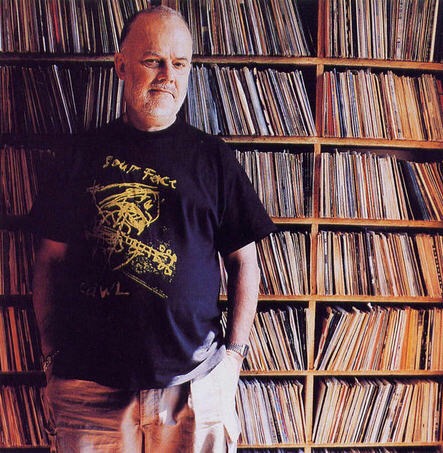
john-peel-bw

John Peel is the reason my musical tastes expanded beyond the left-field avant-garde edginess of Hipsway and Love And Money and the reason why my mum stopped singing her own version of whatever it was I was playing (“Take a ri-ide on the Suga Trayne!”) and started asking me to “turn that racket down” whenever she passed my teenage bedroom door. Pfft! Never Understand, indeed.

Thank you, John.

Not quite a Kennedy moment, but I distinctly remember where I was 12 years ago when I first heard of his death. Midway through a month-long placement in a pre-school nursery as part of my teacher training, it was my wife who told me. Being a student, we ran just the one car and she picked me up that day.

(I’m paraphrasing here)….

Shops…school….I’ll be taking it back….this happened earlier…’Loose Women’….butternut squash soup…school….I’m taking that back too….oh yes – that DJ you like died today. John Peel? Is that his name?

Thump.

It was fairly shocking. Certainly, for a ‘celebrity’ death it hit me far harder than it had any right to. I didn’t know him, yet I did. Nightly I’d have a sweaty finger hanging over the pause button on my tape recorder, with the sole aim of capturing every note of the latest House Of Love or Inspiral Carpets or Wedding Present session, minus any of his speaking. I was good at it too.

Somehow, I wished I had failed slightly in those self-imposed tasks and had managed instead to capture him forever on my crappy 3rd generation C90s. The odd moment survives – “Hey man! The bongos are too loud!” (whispered after The House Of Love premiered The Beatles & The Stones) but in the main I managed to get all of the music and nearly none of the great man.
I like to think if he was still educating and informing us with his 45s at 33 inbetween the Stump tracks and Electro Hippies sessions, Peel would’ve found time to play this:

It’s perfectly Peel.

Obscure.

Current.

Groovy.

Mysterious. Who are/is TVAM?

Influenced by all the right things west of East Germany.

Mancunian. OK, I Googled them. Him, actually.

Hard to find. (You can buy it here).

And ace.

(No they’re not)
Hard-to-find

Random Order

New Order. One of the truly great bands of the last 35 (!) years. That’s undisputed fact, but you know that already. Theirs is a history you’ll be well familiar with; the untimely death of a key member forcing their metamorphosis from the finest industrial grey post-punk act to a technicolour pop explosion, albeit with a heavy hint of the shading of yore.

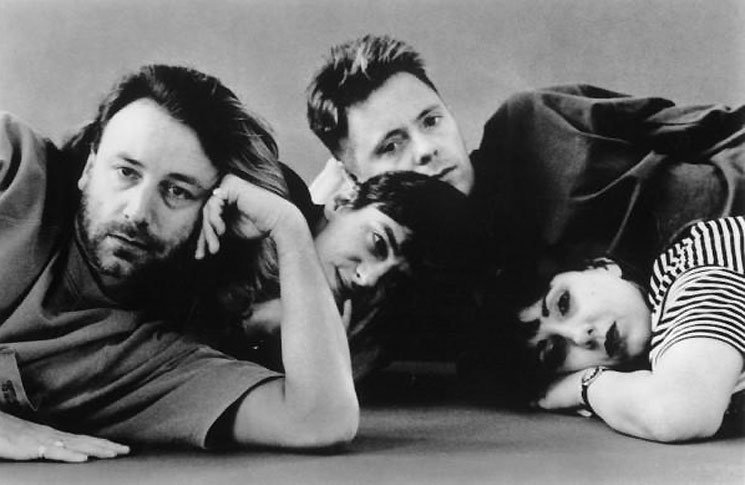
new-order

If you can ignore the sad pantomime of claims and accusations that’s become synonymous with their brand over the past few years, and put up with some of the sub-par material they’ve put their name to in that time – due to the availability of illegal downloads, Waiting For The Siren’s Call was the first New Order album I didn’t buy on the day of release. It was a right clunker before it was even in the shops to buy and it’s still a right clunker now. Their most recent, last year’s Music Complete was a fine return to the heady rush of Technique and a sun-kissed late 80s Ibiza, so, y’know, you take the good with the not so good. Every band who’s been at it for this long are allowed the odd dip in form, are they not? Despite this, I’d wager that New Order are probably one of your favourite bands.

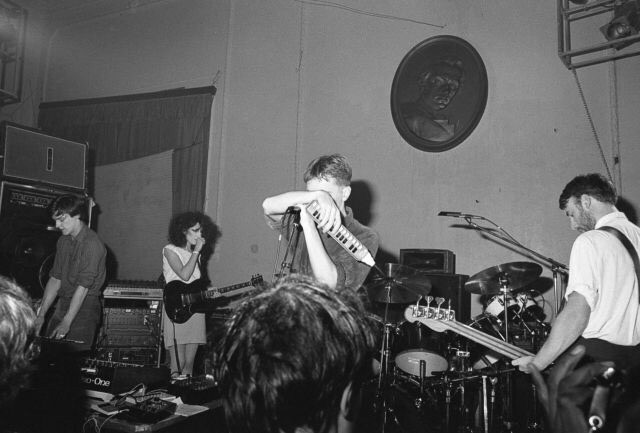
New Order, NYC 1981

Hidden at the back of their sparkling discography is 1981’s second single Procession. It popped up via the lottery of the iPod shuffle on the commute to work the other day, and it’s subsequently become my latest musical obsession. My play counts (I know, I know) currently show I’ve listened to it 14 times since Tuesday. It’s playing as I type and it’s likely to cross the 20 plays threshold before this piece is published. I’m still not fed up of it.

Ask a casual New Order fan to list their favourite tracks and it’s unlikely Procession would be one that makes the list, yet it’s beautiful and otherworldly, strange and obscure, soulful and hypnotic, arty, pretentious and in short, everything that makes New Order so unique.

New OrderProcession

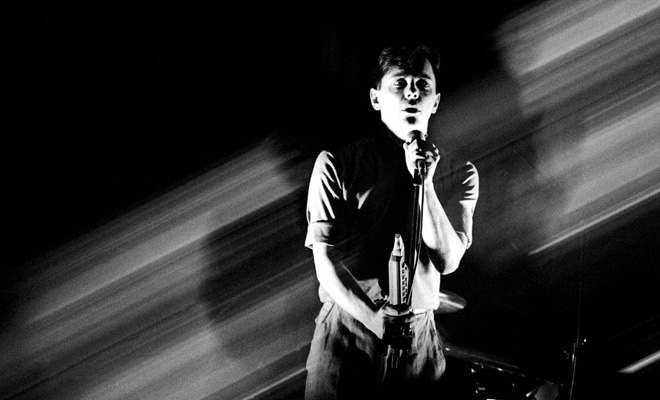
new-order-bernard-81

It‘s the record that sees the band peek through the outer shell of the Joy Divsion cocoon, almost but not quite ready to fly as New Order. Bernard still has the Curtis-apeing vocals (and image – see above), all character-free one liners (in itself character) which he tries his best to sing from somewhere below his knees, but the band soars. Driven by Hook’s instantly-recognisable trademark bassline, it’s awash with synths, electronically-enhanced drums and a wheezing, clattering guitar that verges on the point of being in tune. The magic touch though is Gillian Gilbert’s call-and-response vocals in the ‘chorus’, the sweet yin to Bernard’s morose yang. It works a treat – one of New Order’s finest compositions.

Taken from the excellent Factory Records – Complete Graphic Album

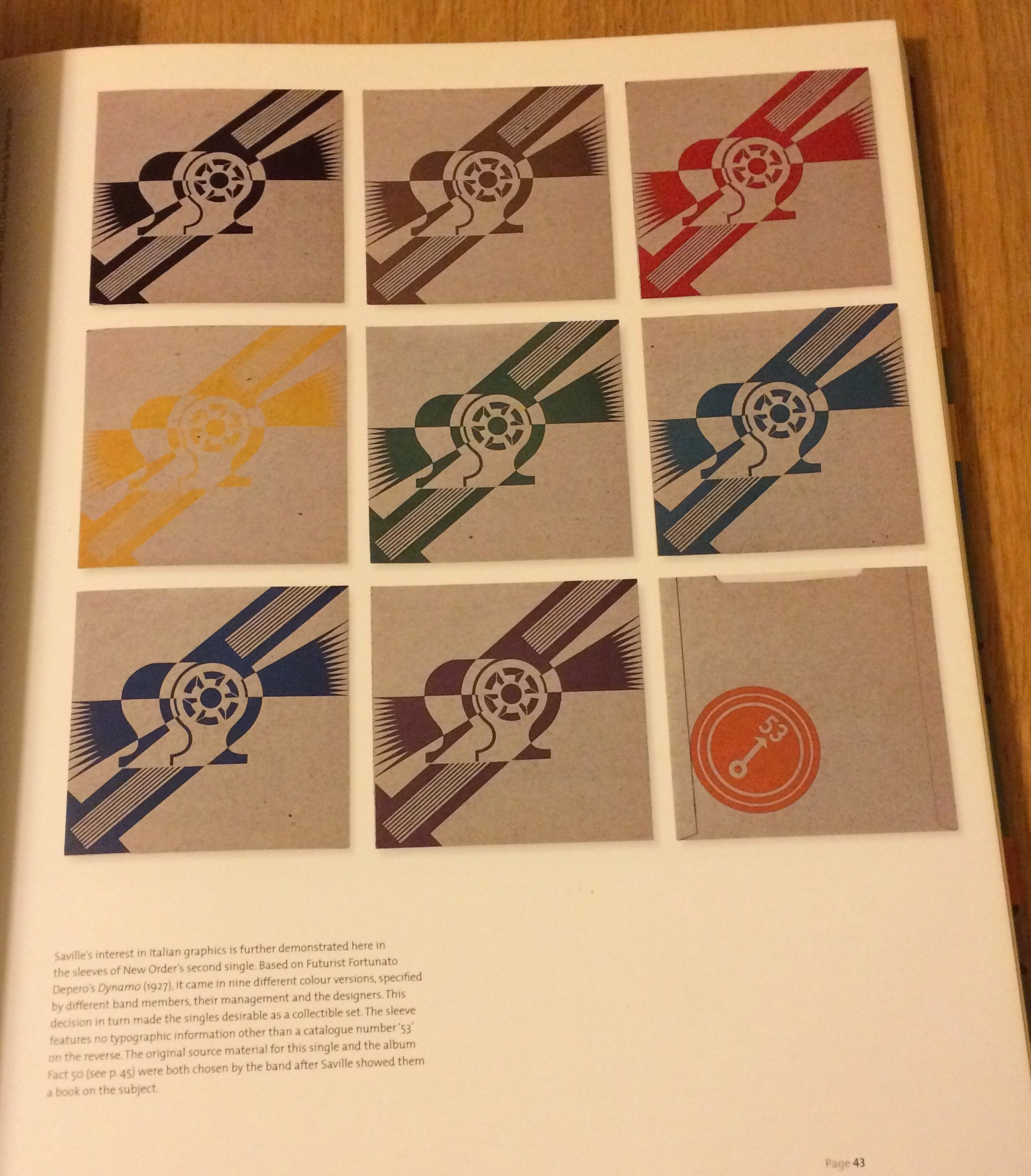
In true band style, Procession never made it onto any New Order album at the time, such was the high standard bands like this set for themselves in those days. Procession was released in a multitude of sleeves (9 differently-coloured ones – collect ’em all, Factory fetishists) featuring some beautiful Italian Futurist artwork on the cover. New Order and Futurism, the perfect partners.


Alternative Version, Cover Versions, demo, Gone but not forgotten, Hard-to-find

By George!

George Harrison, the youngest Beatle, bullied by John and Paul into 2nd tier status in the band, was essentially the runt of the litter yet wrote some of their most enduring songs. When writing sessions were underway ahead of a new Beatles’ recording, poor George had to bide his time while the other two writers hogged the limelight with their latest offerings. Only after they had been given careful consideration would George be allowed to show off what he’d been working on. In any other band, he’d have been the principal writer and held in higher esteem, but in The Beatles he was lucky to get more than one of his tracks onto each album.

 george_harrison_1968

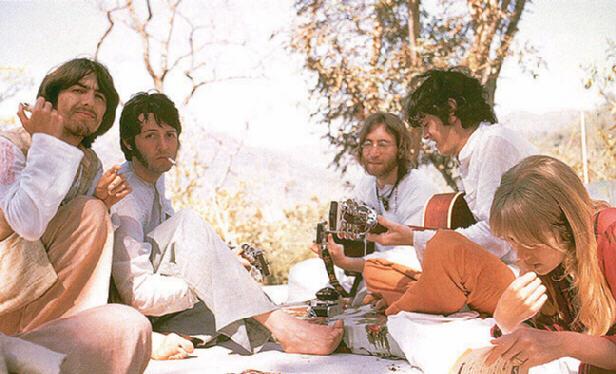
By 1968’s ‘White Album’, George had a handful of future classics under his belt. Writing sessions in Rishikesh in northern India proved particularly fruitful. The Beatles plus associated wives/girlfriends along with a raggle-taggle mismatch of musicians and actors (Donovan, Mike Love, Mia Farrow and her sister ‘Dear’ Prudence) gathered at the feet of the Maharishi to find out the ways of tanscendental mediatation.

1968

The trip was not without incident;  Ringo visited a doctor due to a reaction to the inoculation he’d taken before going, John complained that the food was lousy (Paul and Jane Asher loved it) and the Maharishi, as peace-loving and spiritual as he may have been, turned out to be a randy old man, intent on bedding as many of the female guests as he could.

George was particularly taken with meditation, leading John to quip, “The way George is going, he’ll be flying a magic carpet by the time he’s forty!

Against this backdrop, John, Paul and George wrote many songs that would appear on the new Beatles’ album at the end of the year. Donovan turned John onto a new style of fingerpicking that he’d picked up from the folk clubs and Lennon put it to good use on Dear Prudence. George might’ve been equally inspired, as the descending bass run that characterises Dear Prudence makes it into a couple of his own songs on the White Album.

beatles-india-68

While My Guitar Gently Weeps began life as a downbeat campfire singalong; folk in a minor key, with the ubiquitous descending bass line offest by an uplifting bridge. It’s understated and simple, nothing like the album version.

George HarrisonWhile My Guitar Gently Weeps (demo)

George had to wait an agonising 8 weeks from the start of the album sessions before being given the chance to showcase it. Quite how he kept his mouth shut as John ran through days and days of tape loops creating the arty (but tuneless, let’s be clear) Revolution 9 while Paul completed dozens of takes of the reggae-lite Ob-La-Di, Ob-La-Da and even Ringo had his moment in the spotlight with his honky tonkin’ Don’t Pass Me By is very impressive, but when given his moment (“I always had to do about ten of Paul and John’s before they’d give me the break,”) he rose to the occassion.

george-h-abbey-road-68

The demo of While My Guitar Gently Weeps was used as the blueprint and added to with layer upon layer of guitar and vocals through the use of an 8-track recording machine (the first Beatles’ track to do so) until it was the super-heavy version that appears on the album. An uncredited Eric Clapton was asked by George to play guitar on it. George had been bemoaning the fact that he’d spent hours aimlessly trying to recreate a weeping sound for the track and asked his pal instead to play the solo, which he did with majestic, understated aplomb.

The BeatlesWhile My Guitar Gently Weeps

It’s a perenial favourite, never bettered than when Prince put the other ‘stars’  – heavyweights Tom Petty, Jeff Lynne, Steve Winwood – firmly in their place with his outrageously brilliant cameo at the 2004 Rock ‘N Roll Hall Of Fame. Two questions, the first rhetorical. How overjoyed does Dhani Harrison look when the wee man steps up and takes the song to a whole new level?

Secondly, what happens to Prince’s guitar at the end? Watch….

Gone but not forgotten, Hard-to-find, Sampled

Big Brown Bag

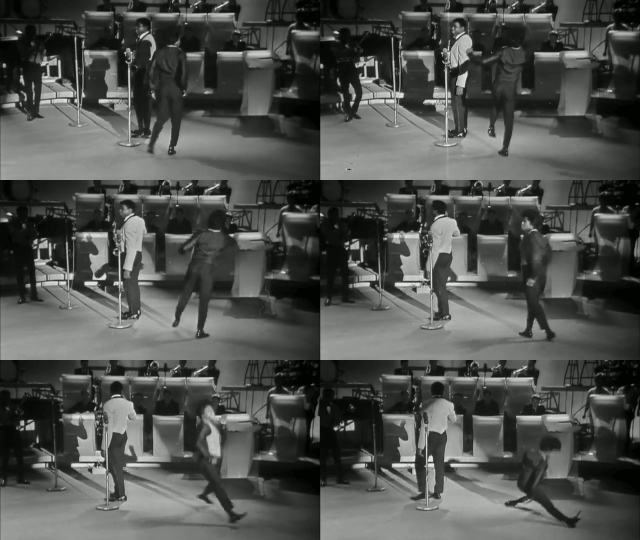
The mid 60s was an extremely fertile period for James Brown. By then he’d moved away from the tear-soaked, down-on-his-knees gospel/soul that defined much of his early career. Relatively straightforward 12 bar song structures were replaced instead by jerky, jagged one-chord grooves. Brass stabs emphasised the first beat – “On the one!” as he’d instruct his musicians, and the tracks would tick along with well-timed metronomic precision. No-one knew it at the time, but the Godfather of Soul was inventing funk.


To be in James’ band then must’ve been terrifically exciting, yet extremely stressful. Here you were, creating this new form of dance music, all the while unable to enjoy playing for playing’s sake, lest you miss the beat and risk a fine from the boss. James Brown records are littered with phlegmily barked instructions; “Horns! (Bap! Bap!) Maceo! (Toot! Toot!) Pee-ann-er! (rinky dink dink dink) – every musician hitting his part with laser precision. Miss the beat and you’d find your pay packet a wee bit lighter come the end of the week.

When you strip the records down into their component parts, they’re extremely simple affairs. Take 1965’s Papa’s Got A Brand New Bag. Individually, there’s fairly little going on; a rickety-tick drum beat played by Melvin (brother of Maceo) Parker, a repetitive, a see-sawing, octave-hopping bass line, a simple horn section, blasting ‘on the one’, a chicken scratching guitar, stuck forever on a Major 9th chord (I think it’s Db, though the released recording was sped up half a tone to make it faster and more energetic, so this, muso minds, would in effect make it an E major 9th) and James’ gravel-throated lyric about an old guy who’s discovered he likes the new dance all the kids are doing.

brown-gif

James Brown’s Star Time box set – one of THE essential additions to any serious music collection features the complete, unedited take of Papa’s Got A Brand New Bag. When the track was originally released as a single, it was edited so that ‘Part 1’ became the a-side, and the extended funk workout that followed was renamed ‘Part 2’ and featured on the b-side.

James BrownPapa’s Got A Brand New Bag (Parts 1, 2 and 3)

The box set includes James Brown’s declaration that, “This is a hit!” before a note is even played, and for the next 7 or so minutes, the band follows their leader with an unnerving mechanical rhythm. The whole recording sounds tight and taut, lean and mean, stripped of unnecessary excess and flab. It fair packs a punch.

A favourite dancefloor filler in this part of the world, it can make my pal Greg move in ways a white man from the west of Scotland has no real right to. Soul of a black man, feet of a rhythmically-challenged Glaswegian. Right on.


You know this already, of course, but James Brown’s influence goes far and wide. Early 80s DIY punk/funk collective Pigbag named their signature instrumental Papa’s Got A Brand New Pigbag in clear homage. An instantly catchy 8 note riff, it failed to chart initially.

PigbagPapa’s Got A Brand New Pigbag


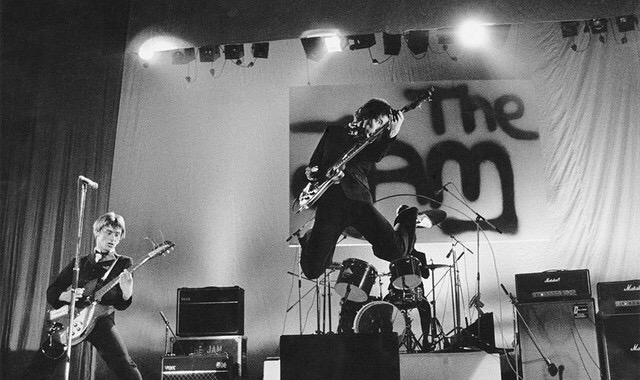
Nowadays, Papa’s Got A Brand New Pigbag is ubiquitous with over-zealous, celebratory football chants and montage soundtrackers who think they’re still making yoof programmes for the TV, thanks in no small part to Paul Oakenfold’s ‘monsta!’ souped-up makeover around 20 years ago, but Pigbag’s original version took 2 or 3 goes before it went chart-bound. The Jam, in particular their keen-eared, sticky-fingered bass player Bruce Foxton, must’ve been blushing slightly when it eventually started gaining airplay.

jam-selfie

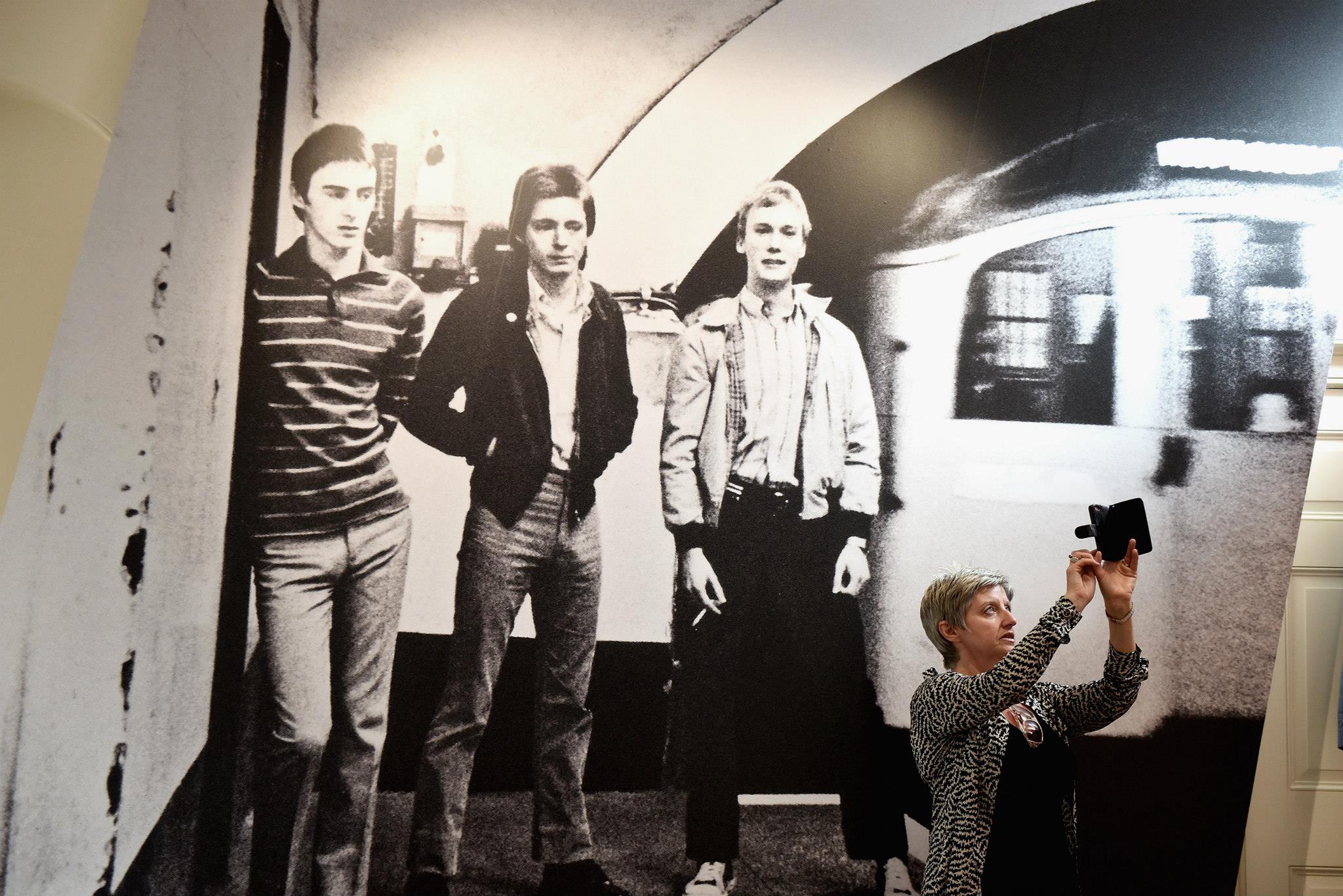
By this time their own Precious, out as a double a-side with A Town Called Malice was starting to get played on the radio and you couldn’t help but notice the (cough) similarity between the two tunes.

The JamPrecious (12″ version)

The Jam even went as far as naming their posthumous live album Dig The New Breed, a line from the James Brown tune that kicks off this post. Which just goes to show, what goes around comes around.