Alternative Version, Cover Versions, demo, Double Nugget, Dylanish, Get This!, Gone but not forgotten, Hard-to-find, Kraut-y, Most downloaded tracks, Sampled, Six Of The Best

We Are 9

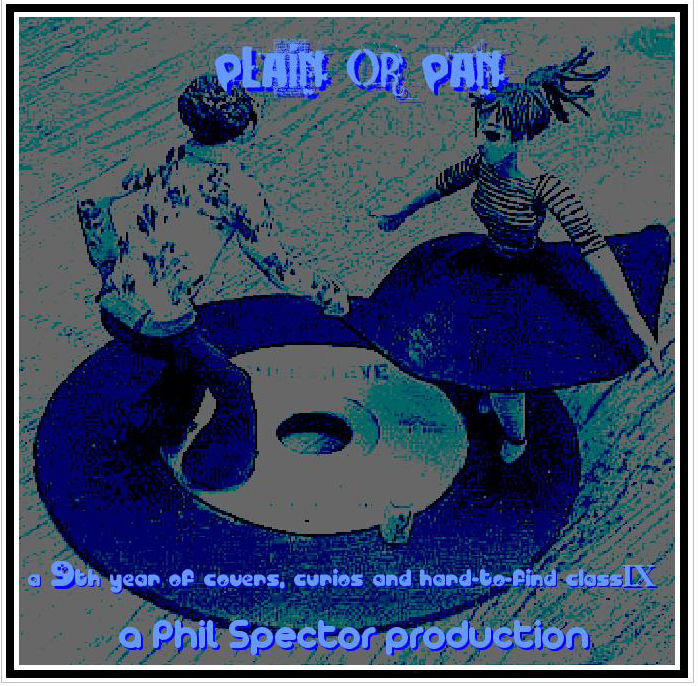
Somehow, some way, Plain Or Pan has turned 9. Or, to be more accurate, is just about to turn 9. But at this time of year, when you can never be entirely sure if it’s Sunday morning or Thursday night and inspiration goes out the window along with routine and work ethic, it’s tradition that I fill the gap between Christmas and Hogmany with a potted ‘Best Of‘ the year compilation, so I’ve always made this period in time the unofficial birthday for the blog.

i am nine

Not that anyone but myself should care really; blogs come and go with alarming regularity and I’ve steadfastly refused to move with the times (no new acts here, no cutting edge hep cats who’ll be tomorrow’s chip paper, just tried ‘n tested old stuff that you may or may not have heard before – Outdated Music For Outdated People, as the tagline goes.) But it’s something of a personal achievement that I continue to fire my wee articles of trivia and metaphorical mirth out into the ether, and even more remarkable that people from all corners of the globe take the time out to visit the blog and read them. From the bottom of my heart, I thank you, one and all.

Since starting Plain Or Pan in January 2007, the articles have become less frequent but more wordy – I may have fired out a million alliterative paragraphs in the first year, whereas nowadays I have less time to write stuff and when I do, it takes me three times as long to write it. To use an analogy, I used to be The Ramones, (1! 2! 3! 4! Go!) but I’ve gradually turned into Radiohead; (Hmmm, ehmm, scratch my arse…) Without intending it, there are longer gaps between ‘albums’ and I’ve become more serious about my ‘art’. Maybe it’s time to get back to writing the short, sharp stuff again. Maybe I’ll find the time. Probably I won’t.

The past 9 years have allowed me the chance to interview people who I never would’ve got close to without the flimsy excuse that I was writing a blog that attracted in excess of 1000 visitors a day (at one time it was, but I suspect Google’s analytics may well have been a bit iffy.) Nowadays, it’s nowhere near that, but I still enthusiastically trot out the same old line when trying to land a big name to feature. Through Plain Or Pan I’ve met (physically, electronically or both) all manner of interesting musical and literary favourites; Sandie Shaw, Johnny Marr, Ian Rankin, Gerry Love, the odd Super Furry Animal. Quite amazing when I stop to think about it. You should see the list of those who’ve said they’ll contribute then haven’t. I won’t name them, but there are one or two who would’ve made great Six Of the Best articles. I’m not Mojo, though, so what can I expect?
pop9

A quick trawl through my own analytics spat out the Top 24 downloaded/played tracks on the blog this year, two for each month:

  1. Michael MarraGreen Grow the Rashes
  2. Wallace CollectionDaydream
  3. Jacqueline TaiebSept Heures du Matin
  4. The TemptationsMessage From A Black Man
  5. New OrderTrue Faith
  6. Bobby ParkerWatch Your Step
  7. Jim FordI’m Gonna Make Her Love Me
  8. DorisYou Never Come Closer
  9. Ela OrleansDead Floor
  10. Mac De MarcoOde To Viceroy
  11. Teenage FanclubGod Knows It’s True
  12. Iggy PopNightclubbing
  13. George HarrisonWah Wah
  14. MagazineThank You Falletinme Be Mice Elf Again
  15. Future Sound Of LondonPapua New Guinea
  16. Bob DylanSad Eyed Lady Of the Lowlands (mono version)
  17. Richard BerryLouie Louie
  18. REMRadio Free Europe (HibTone version)
  19. The CribsWe Share The Same Skies
  20. Johnny MarrThe Messenger
  21. McAlmont & ButlerSpeed
  22. Talking HeadsI Zimbra (12″ version)
  23. Style CouncilSpeak Like A Child
  24. Darlene LoveJohnny (Please Come Home)

And there you have it – the regular mix of covers, curios and forgotten influential classics, the perfect potted version of what Plain Or Pan is all about. A good producer would’ve made the tracklist flow a bit better. I just took it as I came to them; two from January followed by two from February followed by two from etc etc blah blah blah. You can download it from here.

See you in the new year. First up, Rufus Wainwright. Cheers!


Alternative Version, Get This!, Hard-to-find

Mono-Lithic

mono

[mon-oh]
Adjective
monophonic sound; monophony, the favoured recording method pioneered in the 1960s by Phil Spector.

monolithic

[mon-uhlith-ik]
Adjective

characterised by massiveness, total uniformity, rigidity, invulnerability, etc.

darlene love phil spector

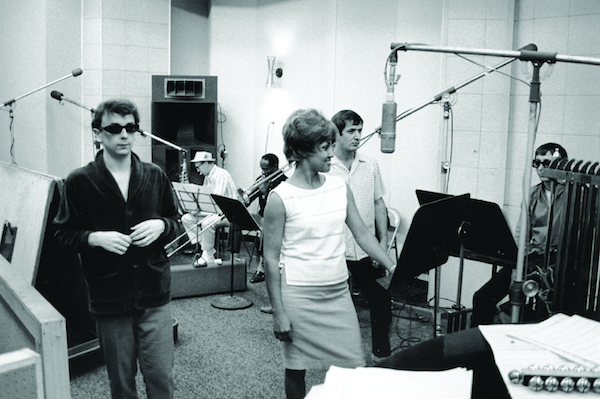
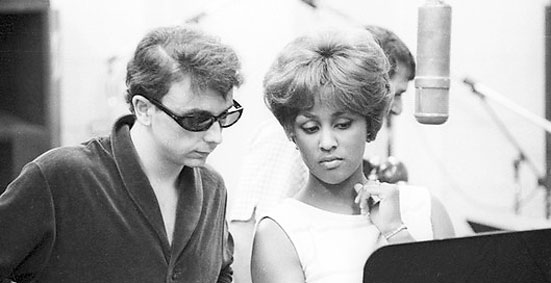
Darlene Love‘s Christmas (Baby Please Come Home) is massiveness incarnate. Invulnerable, invincible and right at the top of the Christmas tree when it comes to the best musical festive fare ever recorded. The only original track to appear on Phil Spector‘s A Christmas Gift For You LP, it’s a thumping major to minor rock ‘n roll tearjerker about lost love. Phil Spector originally put it together with the intention of having his wife Ronnie along with the other Ronettes record it. But after a few false starts and failed takes, he quickly realised she wasn’t singing it with the requisite oomph and instead drafted in Darlene Love.

Ronnie recalls her time in the studio with Specctor:

“Phil worked everybody so hard on the album and the days kind of blurred into each other, thinking about it now. But there was a real Christmas party atmosphere in the studio, even though it was the height of summer, and a lot of great musicians were involved. They weren’t that well-known at the time but so many of them went on to become famous in their own right, like Leon Russell. Sonny Bono and Cher were involved in a lot of the stuff too, so was Glen Campbell. We worked hard, though, some days we’d be in the studio for eight or nine hours just doing one verse of one song.”

Darlene was way down the pecking order with Spector. She’d sang lead on He’s A Rebel for The Crystals and had applied her Noo Yoik drawl to umpteen of Spector’s kitchen sink productions, but Christmas (Baby Please Come Home) was one of the first times she’d been allowed to fly solo and, as you’ll know if you’ve heard the record, she soars gloriously.

The song was released with high hopes ahead of Christmas 1963, but in a bizarre twist of fate found itself released on the very day JFK was assassinated in Dallas. Holiday spirit instantly ruined, the record failed to find airplay amongst the bulletins lamenting the President’s death and was quickly withdrawn from sale. What could’ve been the greatest Christmas number 1 of all time never came to be.

Darlene LoveChristmas (Please Come Home)

darlene love phil spector 2

Spector loved the finished version. So much in fact, (and no doubt stung by the record’s withdrawal), he felt the record had year-round appeal. Such a brilliant cacophony of sound shouldn’t be kept under lock and key and only let out for one month in twelve, so he asked Jeff Barry and Ellie Greenwich to re-write it as a ‘boyfriend song’. Minus a few sleigh bells but not much else, it still sounds brilliant, yet somehow not quite right. Years of associating it with Christmas makes it a bit of a strange one.

Darlene LoveJohnny (Please Come Home)

This version was hidden away on an obscure b-side and failed to live up to Spector’s wish. Indeed, not a lot of people know it even exists. There you have it.

Alternative Version, Cover Versions, Get This!, Hard-to-find, Sampled

The Steal Council

There were a few Whistle Test repeats on BBC4 last week, one of which jumped out at me. Nick Lowe was leading Brinsley Schwarz through a great, soulful version of Surrender To The Rhythm, a track from their 1972 ‘Nervous On The Road’ LP. I’d never knowingly heard Brinsley Schwarz before and I was getting into the song’s groove when it hit me: That wee occasional keyboard riff! The phrasing in Nick Lowe’s delivery! I’ve heard this song before!

Placed in time somewhere post glam and pre punk, Brinsley Schawrz were part of the pub-rock movement, a gritty, back-to-basics scene where ‘real’ musicians were more concerned with the make-up of their songs than the make-up on their face. Keen and earnest, the scene nonetheless spawned Kilburn & The High Roads, who would morph into the Blockheads, the 101ers (who featured a pre-Joe Strummer John Mellor on guitar) and Dr Feelgood, a major influence on the young, impressionable Paul Weller (to this day, Weller still plays From The Floorboards Up without a plectrum, choosing instead to adopt the open-handed Wilko strum whenever he plays it live).

Weller, as it turns out, is more brazen about stealing things than you maybe realise. He has form – not only a strumming pattern from Wilko Johnson but also a career-long vocal delivery cribbed from Steve Marriott, a haircut half-inched from everyone from Worzel Gummidge to Muriel Gray and, more blatantly than any of this, the riff for Changingman that he heartilyappropriated from ELO’s 10538 Overture, something I’ve pointed out before. But long before the heady days of Brit Awards and Stanley Road etc, he was borrowing the mood, the feel and sometimes the chords and melody from more obscure tracks and passing them off as his own work.

style council

Time has been kinder to the much maligned Style Council than the dissenters might have thought back in the day (C’mon! This might cause a row down in Slough, but some of those tracks are ace – pretentious, aye! Ludicrous, aye! But ace – check out Weller’s recent tour for unarguable proof!) They were a deliberate move away from the Jam’s laddism; cricket jumpers, cycling gear, blokes with arms draped around one another, Weller at the back, pastel sweater hanging off his shoulders like a C&A catalogue model. All reference points lay somewhere between Dusty In Memphis, Curtis in Chicago and tongue firmly in cheek, and you either got it or you harked back to a time when Eton Rifles was the only thing that mattered.

Their debut single Speak Like A Child (in itself the title of a Herbie Hancock LP on Blue Note) is to this day a high point in The Style Council’s back catalogue, even if (as if turns out) you really have heard it before. With its breathy vocal delivery and airy Hammond lead, it isn’t entirely a million miles away from Brinsley’s Surrender To The Rhythm. Contrast and compare:

Brinsley SchwarzSurrender To The Rhythm

The Style CouncilSpeak Like A Child


Not content with pilfering blatantly from the past for his more soulful numbers, Weller went on the rampage through the more obscure parts of sunshine pop, alighting at Harper & Rowe’s 1967 bossanova boogaloo The Dweller and stealing the best bits for Have You Ever Had It Blue? This track was a highlight of the recent tour, the band kicking out the jams to play their blue notes under blue lighting, an inward-looking circle of nodding, noodling jazz-heads, but how many of the appreciative audience knew they were in effect listening to a carefully restructured cover version?

I’ve always loved The Style Council’s track, with its Gil Evans-arranged trumpet motif, the non-rock time signature and wordless Dee C Lee doo-be-doo backing vocals. As a 16 year-old, I thought Weller was a bit of a genius for having ‘written’ something so finger clickingly jazz. Great tune ‘n all that, Paul, but really, how did you manage to get away with it?

Harper & Rowe – The Dweller

The Style Council – Have You Ever Had It Blue?

*Bonus Track!

Here‘s The Style Council‘s With Everything To Lose, essentially the first version of the above track. No brass, different words, carefree flute etc etc