Cover Versions

S’a Twin Axe Attack!

There’s a Trashcan Sinatras video clip from many years ago that at least one member of the group would like to make disappear, so in the interests of maintaining a healthy friendship I’ll refrain from uploading it here. Google and YouTube is your friend though. The video is filmed at Japan’s 2009 Fuji Rock festival and features Paul and John from the band being asked their ideal festival line-up. The pair of them have evidently been enjoying the relaxing qualities of every musicians’ favourite – the jazz cigarette – and, grinning pleasantly and enunciating in a subtitle-necessary Ayrshire brogue, they reel off a list of cool and not so cool bands that would make for the ideal festival. “We would have King Crimson. Super Furry Animals. Supertramp! Sex Pistols…Radiohead…The Fall. The Band! We would huv The Band! Bob Dylan! And us!” It’s a very funny minute or so and you should definitely go and seek it out. Your week will be better because of it.

Of all those bands listed, it was Supertramp who popped up in my social feed this week, bizarrely enough.

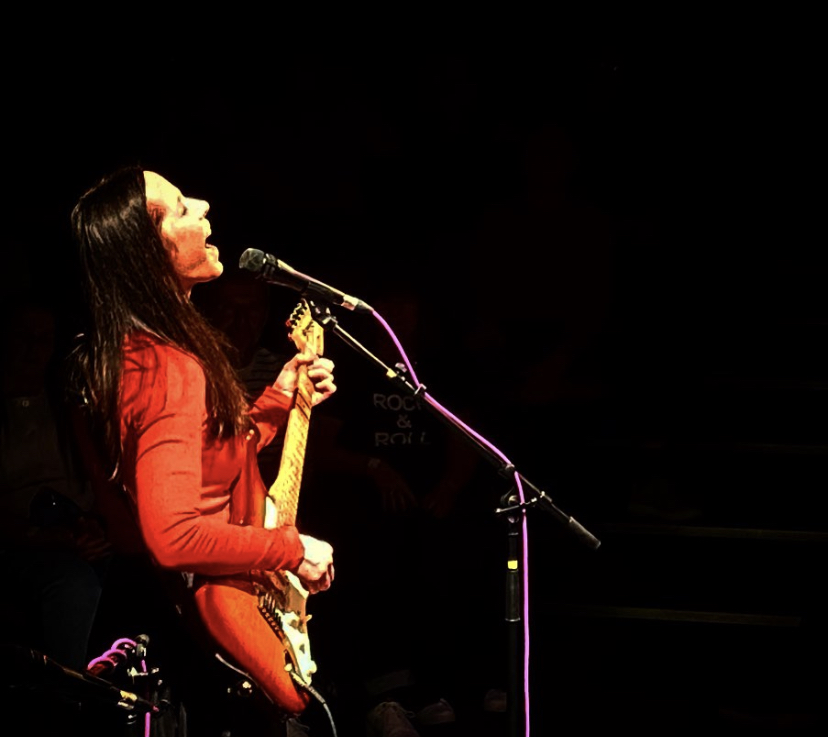
We’ve recently put on a gig with Nerina Pallot. You might remember Everybody’s Gone To War, her one bona fide Top 20 smash hit from 2006? Nerina regularly fills places like the London Palladium and certainly doesn’t need to be putting a band together to play one-off gigs for 100 people in Irvine, but there she was. Needless to say, she was devastatingly brilliant, switching from electric guitar to acoustic to keys and back again, the stories between the songs just as entertaining as the music she played. I watched one man in the audience sit gape-mouthed for the entirety of her show, pinching himself that he was 10 feet from his favourite-ever artist…in our living room-sized venue…in his home town. Quite a thrill for all of us.
But back to Supertramp.

Over the Easter weekend there, Nerina shared one of those multi-cam videos of her playing all the parts to Supertramp’s Take The Long Way Home. From first clanging gothic piano chord and tension-building strings via the sweeping, sighing melody and none-more-seventies FM rock guitar solo on the vintage SG to the whispered ending, it’s a terrific version of a song I’ve (shhhh!) long held affection for.

In a world of Smiths and Bunnymen (and even Hipsway and Love and Money), you just couldn’t admit to liking Supertramp. That Breakfast In America album, ubiquitous and airbrushed and gazillion-selling as it was was just far too polished for a quiff-topped bedroom guitar player who was far more concerned with the angle of the jangle than, y’know, the art of crafting a song. The singer’s helium-coated voice was plain weird and didn’t do much to convince anyone I knew to listen closely, and the proggy/AOR stylings of the group were the very antithesis if what it meant to be a teenager in the mid ’80s…yet there they were, hanging around the album charts, selling gazillions of records and getting globally successful. Though no one would admit to liking them.

You could take a chance on Supertramp via Irvine Library, and take a chance I did. I probably asked my mum to bring Breakfast In America home after work one night (she worked there) lest I be seen with something as unhip and middle of the road on the long walk home (long way home?) through Irvine Mall. Take The Long Way Home was the one that got me. Not The Logical Song. Not the title track. And not Dreamer or the irritating It’s Raining Again (not on the same album, I know, I know…) Take The Long Way Home just stuck. Swathed in melody and tuneage, it sounded like a heady marriage of solo Lennon and solo McCartney, getting together for one last hurrah, the song’s descending/ascending tour de force of melody and melancholy the equal of Abba at their peak. The verses are hopeful, the choruses resigned, the production supreme. To these ears, it is, like Gerry Rafferty’s Baker Street and Right Down The Line, a humbly accepted stone cold AOR/FM classic. (See also Rooms On Fire and Edge Of Seventeen by Stevie Nicks…Kim Carnes’ Bette Davis Eyes…Carly Simon’s You’re So Vain...AOR clearly has its moments.) The singer from Supertramp though. That voice just won’t do…

…which is why Nerina’s version is so goddam essential. She breathes new life into a song that’s lived inside of her since the days of mix tapes and spongey orange headphones attached to the Walkman and replicates the entire thing with the sort of elan that only she can muster; majestic piano, head-swirling Wurlitzer, mellifluous bass, gorgeous multi-stacked vocals…and a twin axe attack of sorts. I do believe you’ll like it.

Watch out too for Supertramp headlining when the Trashcans get to curate Meltdown.

Meltdown indeed.

Get This!, New! Now!

Tailoring Swift

18 years in and I’m going to have to change that tagline at the top. Outdated Music For Outdated People, it apologises, a phrase heavy in inference and suggestibility; if you’re an old and set in your ways sort who seeks comfort in the familiar, this might just be the place for you. If however, you came here to find the latest in box-fresh new sounds, you might leave disappointed.

Not today though.

In the words of the perennial Billy Sloan, I can exclusively reveal that Fellow Mortals have a debut album on the way…an album that for its originality and uniqueness, sonic qualities and unfurling melodies will quickly become one of your favourites of the year. And Plain Or Pan is the only place on this planet where you can hear it for now.

Fellow whit? Fellow who? Fellow huh?

Hang on, hang on. We’ll come to that in a minute.

Albums, as you well know, come in all varieties. There are those that are rush-released on the back of a surprise hit single, a hastily put-together studio version of the group’s live set then sold as the hot new thing. Yeah, Wet Leg, I’m looking at you (wherever you are these days).

There are those that arrive from nowhere, so fully realised and still perfect all these years down the line. Hello, The Stone Roses. Take a bow, Blue Lines.

There are those that come as complete packages, spinning, like life, with ebbs and flows and ups and downs, each play pulling the mask back and pulling the listener in. That’s you, OK Computer. And you too, Rumours. These are the albums that tend to stick. ‘Classic albums’, to use a well-worn phrase. With real depth and substance (and substance misuse in some cases), they have proper gravitas.

Then there are the albums that hang teasingly in the air, slow-burning beauties waiting to be discovered by generations of switched-on ears long after conception and release. Talk Talk’s The Colour Of Spring would be one of those records. John Grant’s Pale Green Ghosts another. Midlake’s Van Occupanther album… Ultramarine’s Every Man And Woman Is A Star… XTC’s Skylarking… brilliantly cohesive records from start to finish. Organic, proggy, and conceptual in vision and execution, these too are albums with depth, substance and gravitas; modern-day classics to all in the know.

Fellow Mortals take their cue from such records, as well they should. Conceived aeons ago before even lockdown was the year-zero thing by which we mark our lives, and tectonically jigsawed together through transatlantic file sharing, that forthcoming album of theirs, ‘Stella’s Birth-day‘, thrums with electronica, hums with melody and comes, like all the best albums before it, as a complete package (in every sense).

Born in the busy mind of Noonday Underground’s Simon Dine, Stella’s Birth-day takes its inspiration from a series of poems written by Jonathan Swift 300 years ago. The poems map out the relationship between the poet and Stella, his muse many years his junior – a loving relationship certainly, perhaps bordering on clandestine and romantic…or even marriage (it’s a grey area that’s kept Swiftly scholars debating for years). For seven years, from 1719 until her death in 1727, Swift would write Stella a poem and send it to her on her birthday. The album focuses on the final two poems.

Swift would write to Stella of her intellect and astuteness, her qualities as a human being. He confides his innermost thoughts and worries in her. And this he does with a sharp Anglo-Irish wit that’s prevalent, from Behan and Beckett to Wilde and Morrissey, in many corners of Irish-bred literature to this day. As he and Stella age, the tone of Swift’s writing changes. The poet looks back on times gone by, becoming more reflective with each passing stanza, one eye trained on the horizon and looking towards the inevitability of death.

Not your usual sort of source material for an album, then. You don’t need me to tell you that musicians have often drawn on literature for stimulus – there’s Wuthering Heights, for starters. Bowie’s 1984. Venus In Furs. Much of Morrissey, obviously. There’re plenty more when you stop and think about it (even more if you cheat and Google), but what sets Stella’s Birth-day apart is the way in which Swift’s poetry is used.

Focusing on those poems from 1725-1726, Swift’s words are sonically brought to life through the voice of Francis Reader, a long-term collaborator of Dine and most likely known to you as the vocalist in the Trashcan Sinatras. Reader has a terrific voice; part croon, part swoon, and he delivers his lines with total respect to Swift’s words. The poetry is lifted, line by line, stanza by stanza and tailored to form the songs’ verses and choruses. It’s quite the skill to twist and shape someone else’s ancient and studied words into new forms…and Fellow Mortals have done this brilliantly.

The album flows across 14 short ‘n sweet tracks; tracks that flash past in the time it takes you to read the poems, yet tracks that are rich in melody and idea and sheer scope. The voice and the words are centre stage, but all sorts of wizardry is happening in the background. There are nods, perhaps, to the string work on some of Scott Walker’s ’60s material. There are soft shoe waltz-time heartbreakers. There are rippling harps and fairground melodies and never-ending tapestries of rich instrumental backing. There are even electric guitar-furnished pop songs of the sort that would have your average Trashcans fan foaming at the mouth.

Indeed, released today, March 13th, (on what would’ve been Stella’s 344th birthday – how’s that for slick marketing?!), the first teaser for the album, A Better State, features Trashcan guitarist Paul Livingston to great effect. All shimmer ‘n twang, looping piano and synthetic, shuffling backbeat, it’s a very good signifier of what to expect from the album in full. I think you’ll like it.

Fellow MortalsA Better State


Another single will follow in May, by which time Stella’s Birth-day will be available for pre-order. As befits such a project, initial pressings will see a 10″ record bound by a book of the poetry. This, if you didn’t know, is the version you’ll want.

Arcane and archaic in source, yet modern and now in execution, the album package promises to be a sort of grown-up Disney read-while-you-listen page turner for the more discerning and cultured listener out there – Updated Poetry For Outdated People, even.

Get This!

Even The Odd One Out Is In With A Shout

It seems the Trashcan Sinatras will gatecrash the UK top Top 10 Album Chart at the end of this week. Their debut album Cake has been remastered and re-released by Last Night From Glasgow and, 33 years on from its original release on Go! Discs (peak chart placing number 74), it looks like landing at number 10. This decrees the Trashcans’ record to be not quite as popular as those by the Rolling Stones or Elton John, but marginally more so than a handful of Taylor Swift reissues. While the charts maybe don’t mean as much to anyone anymore, the group, you can imagine, is delighted.

Personally, I’m thrilled for them. Someone cleverer than I could probably make something of the serendipity of a 33-year old record taking 33 years to chart. That must be some sort of record (no pun intended), eh?

Back when the reissue was being put together it was suggested that I might write the liner notes to accompany the record’s release. A major honour and thrill, I got stuck right in about it. As I said here a few weeks ago, they were all ready to go, along with a new gatefold sleeve, a lyric sheet, unpublished photos…the full works when, at the final hurdle, the band – wanting to remain enigmatic and mysterious – decided to revert to the record’s original packaging; no lyrics, blurred photos, no liner notes.

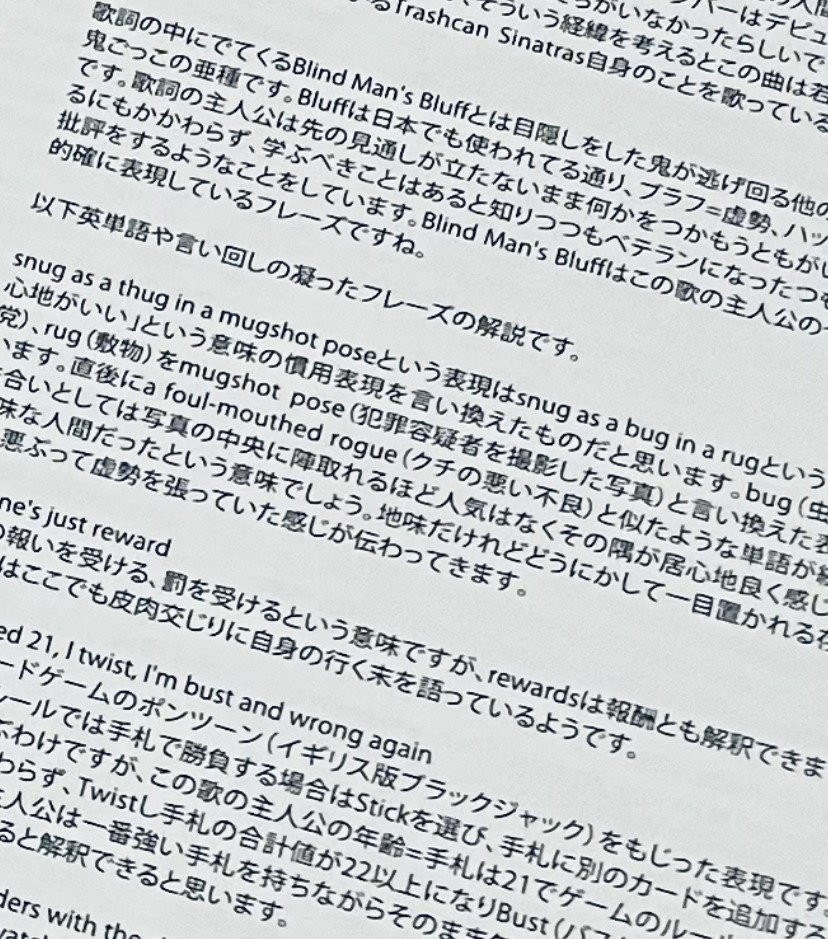
However, in an unexpected twist, the Japanese label got in touch. Such is the Japanese way with care and attention and detail, they wanted to use not only my Cake notes on the inner sleeve of the record, but also a translated explanation of what some of the lyrics and idioms on the debut single mean. Which was nice. I got stuck right into that too.

The Japanese market for LPs is extremely healthy and, as you know, it’s not uncommon at all for releases there to become collectible to fans worldwide on account of an extra track or two or other such addendum – liner notes, perhaps – to enhance the package. The Japanese Cake comes replete with exactly that.

I’m as thrilled about all of this as the group is at their chart placing, make no mistake. For as long as I can remember, I’ve been desperately keen to get my name on a record. My days of dreaming of windmilling through an encore at the Barrowlands have all but evaporated, but this writing gig has finally allowed me the opportunity of achieving this. On such a special album too. I wonder if the record will go Top 10 in Japan?

Trashcan Sinatras – Even The Odd

If the Trashcans are new to you, Even The Odd might make a good introduction; whimisical, melody-rich and coated in a fine shimmer of acoustic and electric guitars, it features skifflish, brushed drums, tasteful feedback and a noisy and reverby breakdown with some era-defining shouty nonsense before it gathers itself together again. Frank’s voice is young-sounding to the point of being helium-powered, perhaps a reason why it’s not a song that stuck long in the Trashcans’ live set-lists. Great track and great production though.

If you want to help the Trashcans shrug off the threat of Swift and overtake Jagger and Elton to make a late push for the top 5, you can do your bit by buying the album before Thursday. Best place to get it would be via Last Night From Glasgow. A host of versions are available from them.

And finally, a message to anyone buying and listening to Cake for the first time: Wait until you hear the next album…

Get This!

Knocks Opportunity #1

I was contacted recently by the folk responsible for the Japanese version of the remastered reissue of Cake, the Trashcan Sinatras‘ first album. They wanted to know if I could provide an accurate translation of the meaning behind the lyrics to their debut single, Obscurity Knocks.

What, for example, does ‘I’ve turned 21, I’ve twist, I’m bust and wrong again,’ mean? Witty and pun-filled, articulate and alliterative, Obscurity Knocks is a perfect distillation of all that’s good about the Trashcans’ wordplay, but sung in a rich Ayrshire brogue, many of its metaphorical subtleties were lost to the ether.

The Trashcans (wanting to appear enigmatic and mysterious, to Go! Discs continual exasperation) kept most of their words tightly under wraps back then (although they did include Obscurity Knocks‘ lyrics on the rear of the single’s UK cover) and, in the absence of printing them on Cake‘s inner sleeve like other bands might have done, it was left to fans – and often foreign fans at that – to scribble them down as heard and offer their best versions in the rudimentary chat rooms of the nascent world wide web. Gen, my new Japanese pal, has a grasp of English that truly puts my pidgin Japanese to shame and while his understanding of the lyric was fairly accurate, I offered to go directly to the band for an official set of lyrics. A couple of messages later, I had them to hand and Gen in Japan soon had what he needed.

Gen then suggested I write something for the reissue’s sleevenotes – a Plain Or Pan-style article on Obscurity Knocks itself. Now, while that was instantly appealing – and something I immediately set to work on – I suggested going one better. I’d actually written sleevenotes for the brand new UK reissue of the album. They were ready to go, along with a new gatefold sleeve, a lyric sheet, unpublished photos, the full works when, at the final hurdle, the band decided to revert to the record’s original packaging; no lyrics, blurred photos, no sleevenotes. Enigmatic and mysterious, remember?

All of this meant that I had a set of sleevenotes without a home. Would the Japanese label like to use them? After the go-ahead from the TCS themselves, the sleevenotes found a new home in the far east. The start of this week was spent explaining some of the idioms and turns of phrase that Gen had trouble putting into pure Japanese – ‘Muscled their instruments into the mix‘, ‘A welcoming world of non-competitive leg-ups‘, ‘Baw-deep in melody,‘ (I never wrote that last one, but you get the idea) –  and there now is, apparently, a set of sleevenotes written by my own fine hand and translated beautifully and lovingly by Gen into Japanese. I really can’t wait to see what they look like.

This now means that I am left with an article on the giddy rush of Obscurity Knocks. Not one to waste things, it forms the rest of this post beyond the track itself below…

Trashcan SinatrasObscurity Knocks

Thoughts on ‘Obscurity Knocks

It’s February 1990. The Trash Can Sinatras gatecrash a smattering of small, switched-on corners of the world with Obscurity Knocks, a bright ‘n breezy strumathon of major and minor 7ths that skirls and skelps and flies straight outta the traps like life itself depends on it – which it very much does. Obscurity Knocks might well be the band’s debut single, yet the Trashcans are already world-weary and wary of a music business that doesn’t quite fit their aesthetic. ‘I like your poetry but I hate your poems,’ they spit, a reference to the many rejections they had before Go! Discs came to their rescue and made them Irvine’s Most Likely To. ‘I’ve turned 21, I’ve twist, I’m bust and wrong again,’ they lament, the poker game a metaphor for their dealt hand in a life already decidedly bleak. ‘The calendar’s cluttered with days that are numbered,’ they complain, an existential crisis poetically stated in alliteration and pun. This band is something special, those words suggest, something articulate and funny and literate. Not since, oh, The Smiths maybe, has such a package come ready-made for the more discerning listener.

It helps too that Obscurity Knocks comes gift-wrapped in the greatest rush of guitars this side of The Clash and The Beatles, not in sound, clearly, but in total attitude and self-belief. That spring-fresh, hip-slung electric guitar and dusted-to-the-knuckles rattling acoustic fuse together perfectly like spit ‘n polished chrome to create a sound that can mellow a decent malt at five paces. A mesh of finger-twisting riffage at breakneck pace, they’re the springboard from which the song’s melody leaps and delights. That lightning-fast solo that pops up midway through? It brings to mind African high line and Roddy Frame and Richard Thompson and maybe even an unexpected hint of Octopus’s Garden, but it’s all over before you’ve even realised it.

Add in the tub-thumping glam stomp of a chorus, the call and response backing vocals, the drop out around the ‘Ba ba bleary eyes’ line, the zinging chords that accompany the final and decisive ‘but I hate your poems.’ Oh man! As far as stall-setting opening statements go, few bands have done better.

Some naysayers might point to Obscurity Knocks’ punning title and suggest it was a prescient fortune telling of what could have followed, but if you’re reading this, you’ll know that the Trashcan Sinatras (just the two words these days) are still very much in the business of writing and recording songs that foam to the brim with inventive guitar lines and clever wordplay. Knock on, Trashcans. Knock on.

Cake ‘n beer, Shabby Road 1991


Get This!

Sixteen

Old enough to get married, but not of the age to celebrate with a swift half down The Crown, Plain Or Pan turns 16 today.

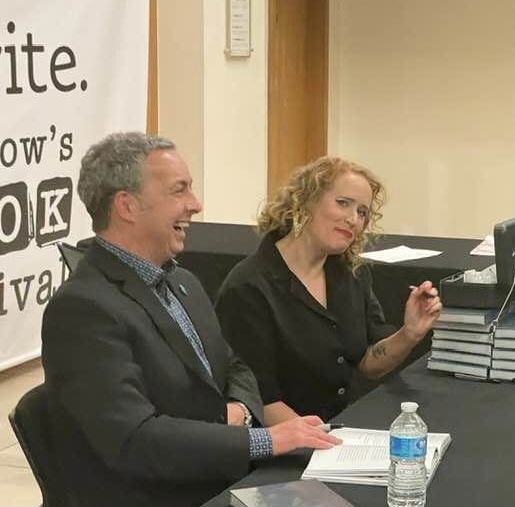
I wouldn’t have believed you this day back in 2007 if you’d told me these pages would lead to me getting to interview Sandie Shaw, half The Smiths and a smattering of my favourite musicians, but that’s the truth. I peaked during lockdown when I was tasked with writing a biography – The Perfect Reminder – about the Trashcan Sinatras‘ second album I’ve Seen Everything. The book subsequently found its way to all corners of the UK, the USA, Europe and Japan and eventually peaked at the respected Aye Write book festival in Glasgow, where myself and photographer Stephanie Gibson, alongside John from the TCS, were interviewed on stage by BBC 6 Music’s Gideon Coe. To top off what was Aye Write’s headlining slot (and perhaps the reason why a feart and running Bobby Gillespie postponed his appearance), John, Davy and a visiting Frank Reader appeared as the ThreeCS and played a half hour set of acoustic Trashcans’ numbers. But you knew all that already.

With the Trashcans’ third album – A Happy Pocket – being reissued by Last Night From Glasgow, I was once again called to action. This time round, things have been scaled back a bit. There’s no hard back book, there’s no bespoke photographs and I doubt there’ll be an Aye Write appearace, though you never know. What we do have is something – The Full Pocket – that’s akin to more than a fanzine but not quite a book. It’s A4. It’s set in the same font as the tracklisting on the album. It’s packed full of archival photographs and artefacts. And it features all 5 band members and the occasional outside influence talking about the album and its associated b-sides track by track, story by story. I might compare it to one of those Mojo or Uncut special editions – y’know, those ‘Complete Guide to Bob Dylan’ publications that they occasionally produce?

The Full Pocket is a goldmine of TCS factoids. Funny, informative and, may I say, indisepnsable if you’ve even half a passing interest in one of our greatest under-the-radar bands. Pre-orders went online last night and it was thrilling to see the response. If you’re a fence-sitter, or perhaps an eager pre-orderer and want a sneak peek, I’ve included a short extract below. I’ve intentionally kept it shorter than the same bit in the bookzine – the band quotes are longer and more detailed in there, and I’ve not included any of the photos that will appear either. Some things are worth waiting for.

(Screenshot)

The Genius I Was (Excerpt from The Full Pocket)

Trippy, fuggy, druggy, whacked out…The Genius I Was pummels along on a tidal wave of overlapping guitars and a sneaked-in metronomic Run To You riff, coloured by needles-in-the-red zinging interludes and Frank’s buzzing fly-in-a-jar line enderzzz. Davy’s bass, solid, melodic and thumping drives the whole stramash forwards. The guitars – about 8 tracks of them, I’d guess – are phased, flanged, panned left to right and back again. A six string acoustic scrubs out the choppy rhythm as an electric zaps out the hippy, spacey stuff. There’s a lot going on here, and repeated listens reward the keenest of ears.

I must’ve played The Genius I Was about a thousand times since first hearing it and I could happily play it over and over for the next hour and never tire of its proggy, sonic resonance. Until now, have you even noticed John coming in midway through the first verse to duet with Frank from thereon in? And have you ever noticed the heavenly choir near the end as the melodies tumble and the chorus unravels? I’m sure Stephen’s voice is somewhere high within the mix. There’s a lot to unpack in what is a well-constructed track. It may be buried deep within the album, but make no mistake, The Genius I Was is one of the Trashcans’ very best.

Trashcan SinatrasThe Genius I Was

Paul: This was one of Frank’s. We worked for a while on it. For a long time, it was faster and louder and a bit queasy with those chords. It happens a lot with Frank’s songs where you’re learning it but you’re thinking, ‘What is this?’ “It’s this chord…and then you go to this chord…and then you go to that chord…”, and you’re like, ‘what the fuck?!’…

Stephen: The verse chords for The Genius I Was were there long before the rest of the song and when rehearsing we used to play them continuously, really loud. I remember the song being a two chord instrumental for some time before this.

Frank: I was sitting around on my guitar, trying to learn something when I stumbled on this nice, slideable chord. I could move it up two frets and back again, which I did for a bit, and then I went to the fourth fret and back down again. Suddenly I had a riff and it sounded weird, kinda backwards, but interesting. I played it over and over, getting into it, dang-dang der-dang-dang, it was fast and driving. And then my hands got stuck in those fret positions. I’m not a good guitar player, and I’m thinking, what can I play to get out of this?

Davy: Frank had a set of weird chords and we could never get them into shape – augmented chords, maybe diminished, I dunno, but it had a good vibe to it and was worth working on. It was very post-punky, ‘Edinburgh’, as Frank would say. The east coast bands were almost always a bit more angular and jagged than their west coast compatriots.

John: This is one that’s made by the playing on it. Davy’s bass playing on it especially is spectacular. The way he plays steady while we’re all changing and he’s just ploughing through, it’s phenomenal. He creates a really good driving sound. It’s a hard one to play live, but it’s a total belter.

Frank: I did a demo of it in the middle of the night at Shabby Road with a really simple bassline, but enough to get it started. I had the melody and everything and when Paul came in from the Hunting Lodge and heard what I’d done, he loved it and really took it on.

Hugh Jones worked on it and helped take the recording up yet another notch in the mix. Dulcimer, again, was added and everything went stratospheric, Stephen and Davy kept a driving rhythm at the core of it, Davy sliding up and down the frets with ease. It sounded fast and zingy, spooky, a bit swingy even.

Stephen: This was a real ‘studio’ production as we pretty much arranged the song as we recorded it. What linked it all together was Davy’s inspired bass playing; it’s almost a lead bass part he’s playing. There’s also some fantastic playing from Paul, especially in the choruses.

Davy: We had the tune complete before we had the title, I think. ‘The Genius I Was’ was the title of a song without a tune that I’d started years before. Frank liked it and used it here.

Frank: Davy had a sheet of words. The title at the top said ‘THE GENIUS I WAS’, all in capital letters, double underlined. The only line I took from Davy’s lyrics was the title line.

John: We should’ve done two or three mixes of it. There’s some intricate acoustic picking which you can barely hear on the finished version.

Davy: Simon Dine (Go! Discs) really liked the finished song and thought it had hit potential.

Frank: We went as far as making a video for it, sent out promos too, but The Genius I Was never got the full single release treatment.

——


The full version of this article can be found in A Full Pocket – The Definitive Story of Trashcan Sinatras’ A Happy Pocket.

Pre-orders are available now via Last Night From Glasgow. Click the link and you’ll have the option to buy The Full Pocket (£8) and also a multibuy deal for The Full Pocket and The Perfect Reminder (£20).


Live!

Just One More Thing, Ma’am

The crumpled gumshoe Columbo would utter that phrase in the closing scenes of nearly every show, usually when snaring the perpetrator with undeniable evidence, his cleverly chosen way with words that followed, spoken smilingly and friendly, almost incidentally, triggering the draining of the colour from the face of the criminal as the realisation dawns that they’ve been caught.

The Trashcan Sinatras are all big Columbo fans and, in the spirit of Peter Falk and the weekend I’ve just had, it would be remis if I didn’t utter that famous phrase in relation to its own closing scenes. So, if I may…

…just one more thing.

Where to begin?!

I met Gideon Coe off his train in Glasgow and we walked across the city to Mono, a vegan cafe/bar/venue, attached to Stephen Pastel’s record shop. Gid (as I can now call him) was familiar with Glasgow, but I enjoyed my unofficial role as tour guide while we walked. “That’s the spot where Bob Dylan watches the pipe band in ‘Eat The Document’. This is the decaying yet still functional Panopticon theatre where, in the early 1900s, Stan Laurel performed for the first time. Over there by the Clyde was where Michael Stipe and Natalie Merchant performed a surprise show at Glasgow’s Big Day in 1990. Naturally, being oblivious to the Stipe show taking place, my pals and I went to see Wet Wet Wet and Sheena Easton instead.” And so on and so forth.

Gid is on first-name terms with all the Mono staff and happily shoots the breeze while I mooch about the racks and wish I had £500 to spend on records. We eat in the cafe. Grab a drink from the bar. “Are you having a drink drink?” Gideon asks conspiratorially, and the scene is set for the rest of the day and night ahead.

More unofficial tour guiding takes place on the walk to the hotel – it’s impossible to snag a taxi in Glasgow these days, especially when the cup final at Hampden has just reached its conclusion a couple of miles across the river – so we take in the sights. “That’s the BBC over there,” I point. “Yes, I’ve been known to work there,” replies Gideon with a knowing smile. Oh, aye. Duh.

We check in, change our shirts and are quickly back out again, walking now to the Mitchell Theatre for our Aye Write slot. We chat about the order of the show, the questions he’ll ask, the parts of the book that will make for good conversation… and it all starts to get very real. Stephanie, Ian from Last Night From Glasgow and assorted Trashcans are already there. Pre-match nerves are de-jangled through red wine and whisky. Bob the promoter has allowed the show to overrun, and wonderfully, the band now has a half-hour set to play. The figure of 300 tickets sold is banded about as we walk the long walk through the Mitchell’s marble and deco-rich halls and suddenly we’re backstage, the thrum of the expectant audience wafting through the curtains as we’re fitted up with those wee Howard Jones-type head mics. The seating plan is shared and agreed, Bob goes out to introduce us and we walk out into the void.

First thoughts? Folk are clapping. It’s roasting hot. This seat is comfy. The carpet is springy. I didn’t need to bring water. Is my shirt wrunkled at the waistband? I can’t see anyone in the audience, not even a silhouette. It’s dark out there, but there’re folk out there all right. They laugh at the right parts, clap Stephanie’s photos as if she’s just declared that petrol is now a pound a litre and fail to heckle at any opportune moment when one of us pauses to gather our thoughts before answering Gid’s questions or prompts.

John is a great spokesman for his band, sometimes contradicting the version of events in the book, always engaging and positive and with a neat way with words. “Irvine was a wee town that was in a huff with itself,” he says at one point. Ian hadn’t planned on being on stage beyond the first two minutes, but there he is, allowing the story to unfold around him and sharing the odd nugget of LNFG/TCS detail when the conversation heads that way. Stephanie talks of the record’s dude-like producer Ray Shulman and the clean eye of the book’s designer, Brooklynite Chris Dooley, and she and Gideon marvel at the real-life location of the fictitious Cakebrick Road in the lyric of Earlies.

And then, after what seems like only five downhill-without-the-brakes-on minutes, our part is over. We are ushered off stage, de-headsetted and, to a smattering of rippled applause, take our seats at the front for the Trashcans’ set.

And what a set they played.

Seven songs all in, six from the album in focus and an exquisite, jaw dropping version of The Safecracker from A Happy Pocket, the follow-up to I’ve Seen Everything that was so underpromoted by the record label that it never actually received an official release in the States. The ThreeCS are on fine form, Frank stage left, eyes closed, moving away from then stepping closer to the mic to allow the dynamics in his voice to shine. He lets loose an occasional wild and carefree emphasised final line, his jaw juts in and out to the acoustic groove of his guitar, his sticky-up hair looking backlit and electrified. John, stage right and grinning wildly at the thrill of playing these great songs again is the reliable heartbeat. And Davy, seated centre-stage on Aye Write’s bespoke table and looking like the Mount Rushmore of cult band bass players is nonchalant yet focused, the woody thunk of his remarkably right playing underpinning the lot.

Naturally, the crowd laps it up.

And then, we’re being ushered, Stephanie and I, to a Waterstones-sponsored table where multiple copies of our book (our book!) sit, being eyed up by a healthy queue that snakes its way around the table and back to the venue’s stairs. We sign books. Lots of them. Some for Trashcans fans, some for Aye Write regulars who hadn’t heard of the band, let alone their music, an hour ago. I get folk to sign my own copy of the book; contributors, many of whom I’d met only across cyberspace. Stephanie chuckles a lot at the absurdity of it all and I follow suit. I realise, after 30 or so signed books, that the ‘g’ I write in Craig is a bit rubbish, so I make it better for the copies that will sit on the Waterstones display underneath the ‘Signed By The Author‘ banner. That’s a picture I look forward to taking.

Signing over, and elder/younger family members safely dispatched back to Glasgow Central, we – a healthy mix of book folk and band folk, partners and pals – spill out into the still-light streets and make our way to the CCA, where we’ve a room booked upstairs but end up taking over the two floors in any case. We’re away from the riff raff and amongst hot company, as it seems much of the great and the good of the Scottish music scene is here. Drinks and shouted conversations are the order of the day, while Gideon and Davy corner the bar, deep in post-punk conversation.

By chucking out time though, our new 6Music pal has wandered off to find a taxi, not answering his phone or replying to texts. There’s an after party party going on Gid, and you’re meant to be there. Davy and I and our respective better halves load up on chips and pakora and follow my sister and Stephanie to the unsuspecting Air B’nB that will play host to our increasingly loud conversation, until 4am when Frank suggests a taxi. It comes eventually, but it’s not our booking. The driver takes us anyway then midway tells us he’ll go only to Byres Road. We get out and walk back to our hotel – a longer walk from here than from the flat we’d left. It was that kinda night.

Trashcan SinatrasWorked A Miracle

The Trashcans’ love of Columbo and board games is reflected in the lyric of Worked A Miracle… ‘My Reverend Green revolver…guessing game is over…nobody leaves this room! Nobody touches anything!” There’s a great bass line running through it, replicated in rich Ayrshire doo-wop – ‘dum-dum-dum-dum-dum‘, some sudden stops and a sinister undercurrent in the bridge. It’s something of an under-appreciated track that could well lend its title to the event we somehow found ourselves a central part of at the weekend.

Worked A Miracle indeed. I believe too, there are another five albums still to write about…

Get This!, Live!

Soothe Your Fear

If you want to find me this Saturday night (21st) I’ll be on stage at the Mitchell Theatre in Glasgow for The Perfect Reminder‘s slot at Aye Write. In a gentle nudge to the casual reader here who may already know about the book and subsequent event and might be intrigued enough to buy it, or be tempted even to come along, I’ve taken a little section of the book and included an edited version below. Regular readers here may well spot several Plain Or Pan trademarks; conversational tone, light…funny even, with alliteration lurking inside every stuttering sentence and long-winded similes wherever one or two words would work far better instead. If it gets you a gig at Aye Write – the prime time Saturday night slot, no less – I’ll happily continue fashioning my writing in the style I do.

The book is set into sections, with each song getting its own chapter that’s kickstarted by some writing and followed by a carefully woven tapestry of Trashcans’ thoughts, theories and half-truths about how each song came to be. The section below focuses on I’ve Seen Everything, the title track of the album under the microscope.

Trashcan SinatrasI’ve Seen Everything

The crumbling old remains of the Art Deco Ayrshire Central Hospital in Irvine. It’s pretty much seen everything, certainly every person born in Ayrshire up to a point.


I’ve Seen Everything

My wife, being both morbid and practical, regularly asks what songs I’d liked played at my funeral. I usually bat away any such questions with waffled words about such things not really mattering, when of course they totally, absolutely matter. With its world-weary sigh and joyful melancholy, I’d like to state here and now that if I pass before it’s expected of me, I’ve Seen Everything should be the tune that soundtracks the curtain drawing on my life. Here’s why.

I was in the fortunate position of being around the studio a lot when the album recording sessions were in full flow. I worked in Kilmarnock at the time and the band I played in – Sunday Drivers – had a rehearsal room at Shabby Road, so on the nights when we practised, I’d leave work and go to our room early rather than get the Number 11 bus home to Irvine to go back to Kilmarnock again. The kettle was always on (even if the chances of getting any milk, or at least milk in date, were slim) and you never quite knew who you might meet in the kitchen. It was around this time that Chas Smash once poured me a mug of proper builder’s tea. “Hey you!!!” he never said, “Don’t drink that, drink this!” No milk or sugar was offered and, overwhelmed at the idea that a bona fide popstar would make me a cuppa, I was too scared to ask. ‘This is Madness,’ I thought, as I drank a mug of undrinkable tea and plucked up the courage to tell him that Baggy Trousers was the first record I ever bought.

Shabby Road was a great place. The walls, damp as they may have been, thrummed with the dull thud of bass drums and murderous singing from the half a dozen rehearsal rooms within. The damp patches and flaking paint gradually disappeared with each and every Trashcans’ release. A huge Obscurity Knocks promo poster greeted you at the top of the stairs, Paul’s outstretched skateboarding arm hiding the worst of the offending urban decor. There was a real, tangible buzz whenever you were there. The office was filled with the ephemera of working band life – a stack of mail to be answered, a wee pile of Go! Discs artist CDs, an in tray and an out tray, two ashtrays; one dirty and full of the tell-tale signs of working band life, the other clean and full of wee badges –The Cliché Kills! I Hate Music! The formidable Nanette was in charge of things, behind her desk the framed and signed portrait of yer actual Sinatra, the chairman of the board, overseeing proceedings with his clear and beady ol’ blue eyes.

One time I was halfway up the stairs to be met by Stephen, dismantling and reassembling his drum kit in the hallway. “Better acoustics,” he smiled. 

I found myself in the control room when the band happened to be listening to a playback of I’m Immortal. I swivelled in the producer’s chair as Ray Shulman chatted with me about working with Bjork and The Sugarcubes, and the cello sound that was on the just-released debut record from PJ Harvey. He was pondering aloud about adding a similar see-sawing sound to I’m Immortal. I wonder if they ever tried it?

In our room below, we’d often hear the muffled sound of these new Trashcans tunes being twisted and turned into the masterpieces they became. I have a really vivid memory of sitting alone in our rehearsal room, waiting for the others to arrive, with a flaky sausage roll and an Irn-Bru as someone – Paul or John, but I’m thinking Paul – played a repeating guitar riff over and over and over again in the room directly above. No drums or bass or vocals, just a chiming electric guitar, pausing now and again before picking up where it had left off.

I came in one night to a cassette tape on top of my amp with a wee note from Paul. ‘Here’s some new tunes,’ he wrote. ‘The first track will likely be a single. Let me know what you think.’ When I played it back at home later on, I recognised that guitar riff, now fleshed out with happily ringing acoustics, a rootsy bass stomp and a terrific vocal, Frank seemingly duetting with himself about big mistakes and soothing your fears. By the second chorus, I felt like I’d known it all my life. By the time the trumpets parped their way down from heaven in that big, elongated outro, fighting for earspace with those ever-cascading and inter-weaving backing vocals and sounding as upliftingly melancholic as the Kilmarnock Concert Brass Band in full pomp outside the Burns Mall on Christmas Eve, I was punching the air in joy. That better be a single! I thought.

Frank: When we recorded I’ve Seen Everything we were going for that light and breezy sound. That’s quite an easy thing to capture in the studio. When it’s played live, it’s too hard to do it breezy, and our aggression and drive takes it to a whole new place.

John: Frank approached Ivor Cutler to play harmonium on the title track. He got a lovely reply from Ivor explaining why he couldn’t do it.

Frank: While we were at the Mill, I sent a note to Ivor c/o the BBC. We all love him, of course. Songs from his albums would always be coming on the van stereo, poetic relief from the rock music.

Iain Wilson: For maybe a year, we had the A5 glossy black and white promo pic of Ivor, his reply to Frank, stuck on the top of the dashboard facing the windscreen on the red van.

Frank: It was enough, really, getting a reply from him. I’m partly (actually mostly) glad that he didn’t come over to the studio, because I was so clueless then that I would have been daft enough to over-direct him and be generally overbearing. He’d have given me an Ivor tongue-lashing. There would’ve been tears.

You can catch ace photographer Stephanie Gibson and a couple of Trashcans talk about the book tomorrow afternoon around 3 on the Nicola Meighan show on BBC Radio Scotland.

You can read the full section in the book by buying it here. And you can book tickets for the Aye Write book show, featuring a TCS set at the end here.

Do it, eh?

Live!

Aye, Right!

Indulge me.

You might remember, back in September – (Hey! Poetry!) – the sound of a trumpet being blown from these pages as long and loud and rasping as Miles Davis in the middle of an asthma attack. The reason was the imminent publication of The Perfect Reminder, a book that I wrote about The Trashcan Sinatras, one of our greatest under-the-radar bands and one of their greatest (the greatest?) under-the-radar albums – I’ve Seen Everything. If this is all sudden news to you then fear not. You can read the story behind the book here.

Since a low-key Covid-affected launch night in October (picture above) and its eventual publication, the book has found its way beyond the locality of my family and friends who felt obliged to buy it and has made its wobbly way across the Atlantic to all corners of the States and further afield to Tokyo, Osaka and Yokohama where Trashcans fans – hundreds of them as it turns out – have happily bought, read and re-read the book, Tweeting about it, seeking me out as an online pal and generally being very decent about it all. Holy Fukuoka!

And now, next Saturday – the 21st May – the book will make an appearance at Glasgow’s prestigious Aye Write book festival. I’ve been telling anyone who’s still listening to me that Aye Write is the Glastonbury of book events, which, given our prime time Saturday night slot would make us the Nile Rodgers and Chic of literature. Good Times indeed.

I say ‘us’, as quite the bill has been assembled. Ian Smith, prime mover of indie label Last Night From Glasgow, whose idea it was to put together a “posh fanzine” and planted the creative seed in ma heid, will kick things off with a brief couple of minutes to explain how his simple idea ended up becoming a hard back book of 100,000 words.

The thinking man’s John Peel, the guv’nor, BBC 6 Music’s Gideon Coe will chair a panel featuring myself and photographer Stephanie Gibson. Between the pair of us, we’ll chat about how we turned our ideas into reality, the problems we faced when writing and photographing a book during lockdown, what makes the ideal Zoom background (Pete Paphides’ was particularly impressive, Chas Smash had the most exotic) and wax lyrical about the brilliance of the book’s subject matter. Gideon, as you’ll know if you’re a regular listener to his show, is no stranger to the works of the Trashcans and was super-keen to get on board, from the initial idea to what has become its crowning glory. It’s quite the thrill to have him as our anchor man for the event.

Trashcan SinatrasHayfever (acoustic live at Fez, NYC, Summer 2004)

In a lovely twist, the night will finish with a short acoustic set from three of the TCS – the ThreeCS as I’ll be calling them. Due to work some more on what may well become album number seven, Frank has actually timed a trip from his home in California to team up with John and Davy, a kinda two birds with one stone mission, where he’ll sing at Aye Write and use his time here to tweak the rough vocal tracks he put down a couple of months ago on a flying visit to Glasgow. Not, that I’d imagine, there’ll be much tweaking needed. ‘Rough vocals’ and ‘Frank Reader’ aren’t normal bedfellows.

The organisers have been keen to point out that the music bit is a bonus – “We’re a book festival, remember. It’s all about the books!” so in a weird twist of billing, the Trashcans will support us, albeit they’ll go on after us. And, as much as it might be ‘all about the books’, it’s not often we get a Trashcans show in Glasgow these days, let alone one in such unique circumstances. There should be a decent audience packed in, if only for the band’s involvement.

I’m a teacher, and recently I’ve been teaching the teachers, so I’m fairly used to tough audiences who’ll ask deliberately obtuse and difficult questions. And I’m no stranger to high-pressure gigs, albeit it they were many years ago. Any hopeful young guitar strangler will have felt that rush of excitement as show time nears and the nerves begin to jingle, but in keeping with the Glastonbury idea of it all, this is our Pyramid Stage. 400 tickets in Glasgow’s plush and culturally-rich Mitchell Theatre, but not yet a sell out. I had an anxiety-inducing dream the other night that I turned up on an empty stage, one bright light in my face, and, as I blinked into focus, there wasn’t a single person in the audience. Ah, Freak Out!

Tickets for The Perfect Reminder – The Story of Trashcan Sinatras’ I’ve Seen Everything can be bought here.

It’d be great to see you. All hecklers will, of course, be encouraged ejected.

Get This!, New! Now!

Readers And Writers

I wrote a book. A proper, hefty music biography that won’t look out of place between Ziggyology and Head-On and Beastie Boys Book and Songs That Saved Your Life and Revolution In The Head and any of those other essential reads that make up your book shelf.

The Perfect Reminder tells the story behind the songs on the Trashcan Sinatras‘ second album I’ve Seen Everything – a quietly-confident-but-knows-its-place cult book about a quietly-confident-but-knows-its-place cult act. Thanks to a small team that includes a fantastic photographer (Stephanie Gibson) and a Brooklyn-based creative director with an analytical approach to typesetting and design (Chris Dooley), the finished article turned out waaaay better than expected. We got to hold it, feel it, sniff it, on Tuesday night and it was quite the thrill. The book, tactile and glossy and heavy, is also almost three times longer than my initial (now-laughable) estimate of 35,000 words, and far-better for it.

To paraphrase David Byrne, how the fuckdiddilyuck did I get here?

With the long out-of-print I’ve Seen Everything being reissued by Last Night From Glasgow, I chanced my arm and asked if I could write the sleevenotes. I had clout, I suggested. Back in 1992, I’d been around the studio during the making of the record. I was pals with the band. I’d written articles on them for local and national press; my sleevenotes would surely be wonderfully entertaining.

Clout I may have had, but that particular gig had already been promised to crack music critic and life-long Trashcans fan Pete Paphides. You can’t argue with that, I told myself, while Ian from LNFG let me down gently by asking me if I’d like to put together a “small book-type thing, a posh fanzine perhaps” that told the stories of the songs through the eyes of the Trashcans’ loyal and steadfast fan base.

There’s a better story than that, I suggested after a minute’s thought, and reeled off plans where the five Trashcans would tell their own stories of how the songs came to be; from the underwhelming initial writing sessions that filled the band with self-doubt, through to the sparkling finished product, expertly steered and produced by the affable and dude-like Ray Shulman. Despite the band separated by the small matter of the Atlantic Ocean, it would read as if the five of them were sat round a table in The Crown, telling tales of how the album came to be, each interjecting the others with contradictory tales that, when taken as a whole, would tell a version of the truth behind the making of an album that is now considered something of a lost classic, a great Scottish album by one of our greatest bands.

Trashcan SinatrasHayfever

“People want to know how these fabulous songs came to be,” I wagered. “The lyrics – who wrote them, what the songs were about, who the songs were about, and the music, dripping in melody and finesse – what makes it so unattainably magic, how did they come up with that wobbly sound on Send For Henny, why is there no guitar on Hayfever…the important stuff, y’know? They’re not that bothered that Marko fae Motherwell first locked eyes with the love of his life while the clanging thunderstorm of One At A Time played furiously in the background, although we’ll make space for that too. A proper music biography must be written.”

And it was. A hundred thousand words and dozens of arty photographs and eye-catchingly beautiful font later, the book, The Book – definitely anything but small and most certainly booting into orbit the concept of ‘posh fanzine’ – whatever that is – rolled off a Polish printing press, negotiated Brexit-affected customs and landed, finally, in Glasgow. It is currently winging its way to the hundreds – that’s hundreds, Archie – of TCS fans around the globe who placed pre-orders.

It’ll eventually find its way to Waterstones, Mono and a handful of select retailers. The Perfect Reminder  – titled by John from the band before a word had been typed – is very much available for order right now via LNFG. I’d recommend you read it. But you knew that already.

Get This!, New! Now!

Homespun

Last year’s lockdown may have meant a temporary end to live music, but it enabled Trashcan Sinatras‘ songwriting bass player Davy Hughes to team up with his artist wife Maree to create a four track audio-visual EP, as pleasing on the ears as it is to the eyes. Part crowd-sourced and part-funded by Creative Scotland, the Homespun EP has just been released. It’s quirky, atmospheric and filmic, with multi-layered stop-frame animation videos featuring butterflies and birds, dragonflies and all of nature’s delights providing the visual wallpaper for the glossy sheen of music that plays in the background, or foreground (depending on where you sit on the audio or visual learner see-saw).

Part ambient filmscore for some imagined film and part pulsing melodic electro, at least two of the four tracks feature moonlighting Trashcans as well as Eddi Reader, her voice instantly recognisable despite the musical accompaniment sounding quite unlike the instrumentation that normally plays behind her.

Opener I Don’t Know What’s Going On (I Only Know It’s All Gone Wrong Again) is the greatest track Public Service Broadcasting hasn’t yet recorded. Carried by a plummy-voiced sample that repeats the title throughout, it glides on linear synth pulses and post-punk guitars, keyboard swells and tingaling percussion. The accompanying video features much of Maree’s signature art; felt people, leaves and flowers, fluttering creatures in flight… an audible and auditory trip.

It’s the middle two tracks that I reckon will appeal most to fans of the Trashcan Sinatras.

Sea Made is the missing link between Talk Talk and the Blue Nile that you never knew you were looking for. Ambient and gyroscopic, it eases itself in gently, wafted along by tinkling keys and the sampled autumnal breeze from Irvine harbour. Frank’s voice is sleepy and mellow, the perfect foil to Eddi’s octave-surfing harmonies. With a multi-coloured video featuring sea creatures, scooners and some backwards spelling, it’s quite the package.

Can You Hear Me? is all understated minimal techno; vibrating electro bass, sparse percussion, programmed and processed beats, on top of which the Trashcans’ Frank sleepwalks his way through a beauty of a duet with his ghostly-voiced sister, half hidden in the shadowy background.

Do.

You.

See Me?

Can.

You.

Hear Me?

Huge, wobbly, tremeloed guitars add dollops of colour to the proceedings, little arpeggios and long notes that burn off out into the ether bringing to mind the more ethereal moments in the Trashcans’ forever-underrated back catalogue. It’s a quiet, slow-building beauty that, after half a dozen plays, unravels and reveals itself to be a work of melodic, atmospheric genius. It’s music for space travel, Jim, but not as we know it.

Closer Made Up Story features a slightly sinister video, with reflected impish creatures giving the effect of multiple Rorschach inkblots that give way to a cut-out girl who seems to fall forever until the track’s end. Vocal-less, Made Up Story features a repeating bass riff and an airy high-up-the-keys hook that bring to mind any number of those old early ’90s electronic records. Papua New Guinea, Yeke Yeke, Chime… you get the idea, but unwinding, slowed down to flotation tank levels of urgency. 

As an EP and as a visual medium, Homespun urges you to slow down, take a breath, reset. It’s pretty great.

You can support the arts and buy the EP at the Homespun Bandcamp page here. All profits will go to Irvine-based music charity Freckfest.