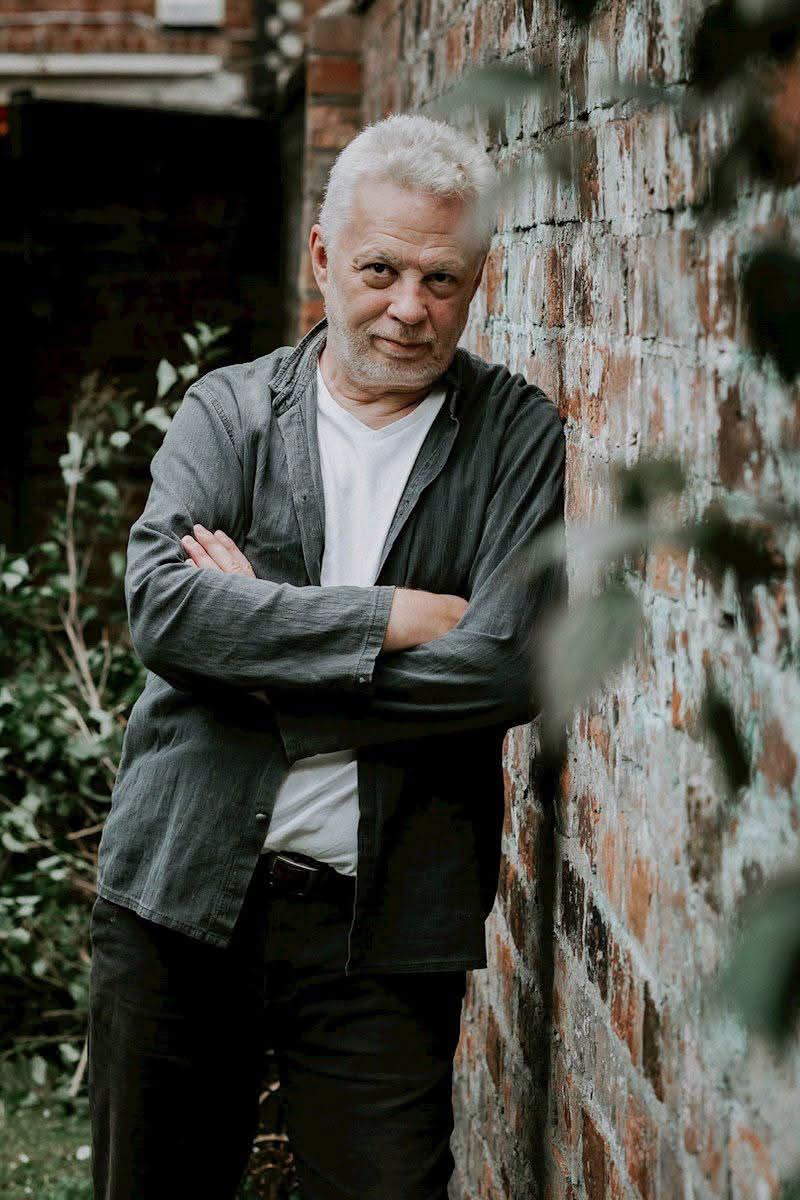
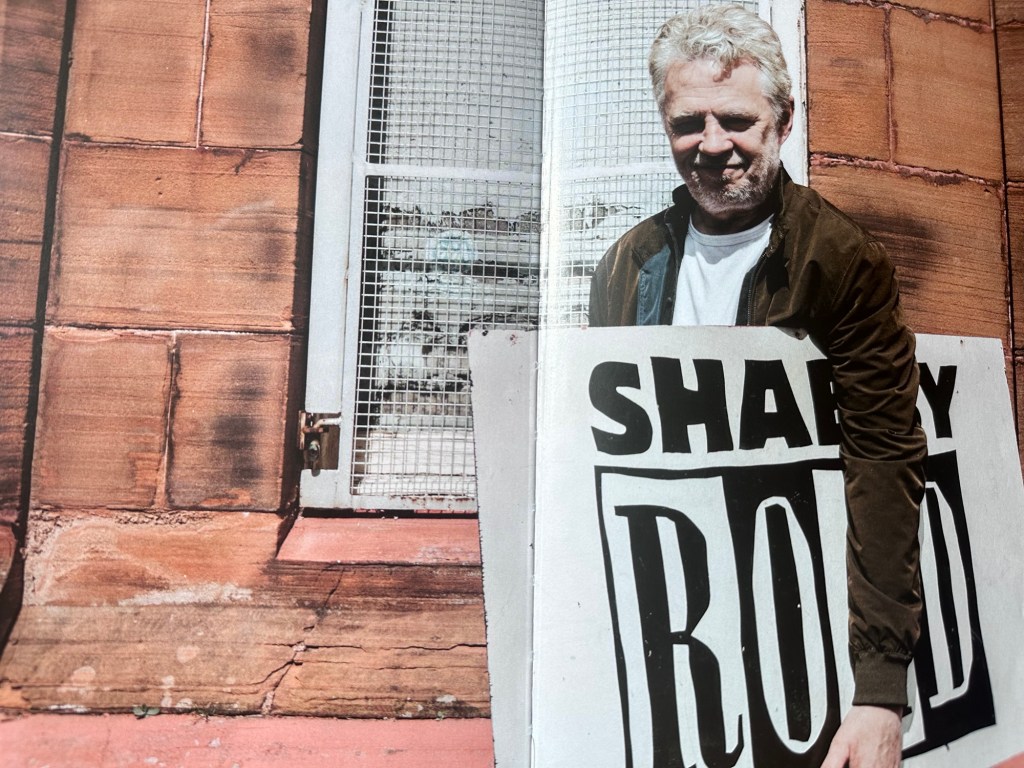
This piece was originally written a month, maybe even six weeks ago, but I was waiting on permission from various sides to post it. In the interim, the Trashcans suddenly, unexpectedly and shockingly lost John Douglas, their glue and calming balm, and so any queries for permission to use it were quite rightly forgotten. Lest I’m accused of saturation, It’ll very likely be the last TCS-related piece on here for a while, but with permission now granted, it’s a fine way to draw a line under the most intense period in the Trashcans’ forty years’ history. Read on or scroll on, I’m not offended.
There’s a new Trashcan Sinatras record out just now. Released on Friday 31st July, Ever The Optimist is the group’s first in ten years. If you were a lazy, cliched critic, you might call it a return to form, but that would suggest they had somehow lost their golden touch at some point. To their dedicated listenership, it zings and sings – like their six other albums – with unravelling melodies and subtly brilliant musicianship; a million, kaleidoscopic ideas packed into its 11 songs. Initial response has been very encouraging to the point of fevered hyperbole. ‘Their best album ever‘, sort of stuff. It’s certainly, without question, one of their best. But you knew that already.
I’ve been working most of the first half of this year on a project that’ll see the story of the new record being told in print. A couple of months ago, in a deadline-looming fit of panic, the group asked if I could pull some of our interview quotes and create a short song-by-song commentary on the album specifically for press in foreign territories. Cool! Over a midnight shift and crossed fingers, I pulled together an article that, I hoped, would cut the mustard.
Reading back again the whole article that I’d written, the record spinning in the background, it seemed too good, too informative, too important even, not to share more parochially, so with the go-ahead from all concerned, I’ve put it below. Think of it as a very, very, very abridged version of what will be published at some point down the line. An amuse-bouche, if y’like.
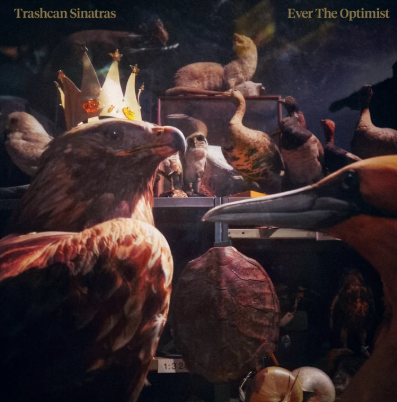
Trashcan Sinatras – ‘Ever The Optimist’
It’s been over a decade since the last Trashcan Sinatras album, but the group has been anything but idle. In the intervening years, the Trashcans have been quietly going about their business of writing and refining and finding ‘the ‘hing’ that will, as ever, make your heart swell and swoon like it did when you first heard Cake or I’ve Seen Everything or Weightlifting or any of their half dozen previous classic albums.
‘Ever The Optimist’ is a record that hums and thrums with the Trashcans’ signature melodic touch and unmatched gift for lyrical punch. It’s a collection of eleven songs (or a round dozen if you’re lucky to be in Japan), all of which will thrill the group’s dedicated, pan-global fanbase and should, if those algorithms play the game properly, garner a new set of devotees into the bargain.
‘Ever The Optimist’ is, as is the TCS way, a record comprised of songs stewed slowly and over time before being reshaped by the constituent members of the group and Trashcanified into the sort of ear-friendly shapes that have garnered critical acclaim for the entirety of the group’s thirty-five year career as recording artists. Songs that began life as woozy mountain cabin sketches. Songs that have their roots in late-night poker sessions. Songs that are born from walking the dog. They all coalesce into one ebbing and flowing labour of love that may just be one of 2026’s very best albums.
SIDE ONE
Ever The Optimist
Less careerist and more careering, the Trashcans find themselves contemplating their position in the world. ‘We’re all gambling, trying to hold it together,’ sings Francis, a reference to both the smoky poker nights of yore and life’s cruel optimism:loss ratio. Beginning life as a breezy acoustic tune, it was reworked into a stomping, piano-driven thumper and is a real clarion call to listeners of the long-player. Listen out for the Pop Art Poem-aping ‘mmmmaybee’ and ‘fii-iire!’ in the first verse and the great nagging guitar part around the 1.46 mark. Like its title itself, this song hints at a great set of songs to follow.
John: We used to go to poker nights, smoking and drinking. I wrote a song about it called ‘Gambling’ and the finished version of ‘Ever The Optimist’ came from that. Some of the characters that sat around the poker table ended up in the song.
Paul: The finished song arrived easily. It all came together, this sophisticated pop song, in no time at all. Nothing was over rehearsed, so it all sounds fresh.
Games For the ZX Spectrum
‘It doesn’t matter what I did before, I don’t know what I’m doing anymore.’
With its see-sawing melody and call and response chorus, this will be, we predict, an immediate favourite. Written right at the tail end of the album sessions – ‘contrary to appearances, we move pretty fast,’ points out Francis – it owes its idiosyncratic title to the small group of retrophiles who continue, even in 2026, to write games for the unfashionable ZX Spectrum, the Trashcans drawing clear parallels between those dedicated furrow-ploughers and themselves.
Paul: You know how you get these retrophile guys nowadays who write games for the outmoded ZX Spectrum because it reminds them of their youth?
I was trying to draw a line between those guys and us making a Trashcans album. You know, we’re also making a thing that’s just for kicks, and it’s filtered through the eyes of the past – it was fun when we were young, but nobody’s really interested anymore, except for maybe a very small group of dedicated people.
Francis: I like this a lot. We had the album finished, and I’d promised Paul Savage (producer) that that was all the songs, there’d be no more on the record, then Paul Livingston said, ‘Oh, here’s a tape.’
He’d called it Games For the ZX Spectrum but he could just as easily have called it ‘Chocolate Teapot’. What’s the relevance of my songwriting? Why am I doing this? For what reason? It was a really great song, so it made it onto the album.
Bad Husband
Featuring Camera Obscura’s Tracyanne Campbell on co-vocals, Bad Husband is an upbeat and fresh duet that belies the song’s subject matter, with two unique voices from Scot-pop’s outer fringes melding together quite beautifully. Tracyanne’s vocal dips and swoops around the melody as Frank sings about poor judgements, bad feelings and storms coming. ‘Hey! This isn’t working!’ they both admit far too joyfully. Never has separation sounded so upbeat – ‘like the best party in a 1970’s Castlepark living room,’ to quote fellow Irvine alumnus John Niven.
John: Bad Husband had been brewing for a while. Some of the rhythm was from an old musical vignette created by Simon Dine. He’s always sending us his musical collages; the same thing over and over for five minutes. It’s a sonic thing…a feel…a groove… and sometimes, like with Bad Husband, the little collage inspires something really great.
Francis: I had this idea that Tracyanne Campbell should duet on it. This would be our very own Islands In The Stream! Tracyanne’s vocal was instantly magic, you know. I sent it to the rest of the group; ‘Guys! What d’you think of THIS?!?’
Stephen: Tracyanne’s vocals are terrific. The track worked well before we had her on there, but her singing just elevated it above and beyond. Her and Frank’s vocals really blend and hit off one another. I like that she’s almost speaking at points and at other times she’s swooping around the melody. Terrific stuff.
The Bitter End
‘When you’re lost and lonely, you can phone me on the way home.’
Already a radio staple thanks to Billy Sloan’s enthusiastic rotation and curation on his late-night Radio Scotland show, The Bitter End is a proper foot-down-and-drive rush. From its first metallic guitar K.O. to the final cymbal splash, The Bitter End leaps from the speakers like a box-fresh band jam. It may surprise listeners to note that the track began life 20 years ago, the product of a fuggy and foggy wee hours recording session on an eight-track machine that Frank had somehow rehomed in his Glasgow flat. ‘Did I really get up in the middle of the night and record something?’ wondered Paul in the morning. ‘I pressed play and heard this Rockpile-ish rocker.’ With Frank finishing off most of the words, The Bitter End sat patiently in the drawer marked ‘someday’ and waited for its time to shine. Its time, evidently, is now.
Paul: In the run up to choosing songs to record for this album, we put together a playlist of about 40 demos, including things we’d written from years ago that we didn’t care about, everything we had really, and Davy put The Bitter End on it. And everybody was like, ‘Hey! Bitter End sounds great!’
Davy: With Paul Savage in Chem 19, we gave it a bash, pretty much replicating the original demo – even the lyrics stayed as they were, which is unusual for us – and it all kinda clicked. Everyone was into it, so we worked it up into the recorded version that became the taster for the record.
Stephen: There’s, like, ten million guitars on this track, loud and brash, it’s got a great bouncing riff, and it all sounds instant and fantastic.
A View From Nowhere
Long-time Trashcans fans will be delighted to hear the return of the major 7ths on this track, a Davy-birthed strumalong that tips its jaunty hat to the unspooling melodies of Bacharach and David as arranged by John Douglas. Davy returned with its completed lyric after an inspirational walk with the dog. A View From Nowhere features terrific vapour-trailing harmonies from Frank atop a fuzzy, sustained guitar/synth break midway through. Many lesser bands will simply throw in the towel when it dawns on them that they won’t ever be able to write a song as lush and poppy as this.
John: This was one of Davy’s that had a charm, a real nice mood about it. Everyone straight away said this should be in the frame for the record.
Davy: I can’t remember when I wrote this. It wasn’t that long ago, maybe five years ago. It was written fairly quickly, a wee three chord thing that I’d recorded on my phone.
Stephen: Paul Savage is a great producer and arranger. He helped shape this track. ‘Try the bass like this, Davy,’ ‘Play that instead, Stephen.’
I love the sleepy quality that Paul got from the bridge. The whole thing is almost soft rock, no harsh sounds. It’s all just muted and soft. It’s a great wee mellow pop song.
Hold On To Today
The evergreen Green Gartside, a septuagenarian, you may be surprised to learn, heard enough promise in our rough and crappy-sounding demo and was ‘keen to try some singing on your lovely, little song.’ The result is fairly astonishing. The centrepiece of the album, Hold On To Today is subtle and lightly pulsing, a ballad with the beating heart of Fleetwood Mac’s Albatross recast as a gentle Brian Wilson tearjerker. Tinkling music boxes, lightly picked acoustics, ping-ponging electrics, stacked harmonies, sudden stops, unexpected changes and an exquisite outro … Hold On To Today closes side one of the album and will leave you breathless, frozen in wonder and momentarily unable to flip the record. Music is a powerful thing.
John: When Davy initially played us this, it was far less arranged than it ended up. The structure of it was really different to how it now sounds. But it had something. Davy wasn’t quite yet there with it, but the rest of us knew there was enough there to persevere with.
Francis: I changed the key a wee bit, we all played around with the arrangement, John made it a bit spacier…and then Davy somehow got Green Gartside to sing on it.
Davy: We gave Green the freedom to sing what he wanted, and what he gave us was fantastic.
Paul: It’s a beauty, It’s a good wee song, that. And it has a false ending. It’s the perfect song to close side one of the record.

SIDE TWO
The Associated Funk
A post-punk thrash that brings to mind, in feeling rather if not sonics, A Happy Pocket’s ‘The Genius I Was’. The Associated Funk is linear, propulsive and purposeful, the soundtrack of a life unravelling messily to the regimented sound of sequencers and a motorik disco beat. TCS fans will immediately spot the lyrical lift from Wild Pendulum’s ‘Let Me Inside (Or Let Me Out)’, Paul recycling an old line to furnish his new song. ‘It was written in a mountain cabin and filmed for a Patreon vlog,’ explains the writer. ‘I was expecting something bucolic, folky and mountain cabin-y, not this A-ha/Tubeway Army stramash!’
Paul: ‘Okay, I’m gonnae book a cabin for three days, and I’m gonnae buy a bunch of weed, I’m gonnae take all my stuff up there and see if I can write and record a song from scratch.’
Davy: I liked Paul’s demo straightway. It was a total stramash, very chaotic and thrashy, but I got a New Order-y vibe from it. I knew it would work. In the group’s hands it didn’t really change much. The album version is pretty much a carbon copy of the demo that Paul had made.
Francis: Paul’s really good at finding new and interesting ways to write. And on The Associated Funk, with its synths and clangs and the electronic-ness of it all, there’s a great tune in there. It has a really bright melody.
Stephen: The riff is very good, it’s very metronomic.
Rome
Reggae James Bond. A dubby trip. A scraping, jangling, sixties TV theme with John Barry harpsichords, descending, twirling strings, bone-rattling percussion and the sticky, sonic fingerprints of Simon Dine all over its claustrophobic and eerie arrangement. John and Francis duet in the verses, double dare one another in the choruses and soar in the post guitar break, a wheezing and sliding, Gilmourish, Frippish racket. For clarity, it’s a song about friends who really shouldn’t hang out with each other. Also for clarity, it’s a beauty.
Paul: From Simon’s sound snippet, this one was instantly great. What the fuck was it? Weird-sounding reggae, in 3 / 4 time, that’s what it was. The descending strings were already there, the reggae bassline too, so I put chords on it. And made a chorus and a verse. And then I put some words to it.
Stephen: Frank and John do a great job, trading lines, coming in and out. It’s got a very good vocal on it. I love the chorus and the way it soars out of the verses.
John: It’s moody noir. I think the bass is brilliant on it. I think it’s got a vibe. And it’s kind of dictated by the bass and the kit. The star of the show here is the rhythm section.
Melodramatic
‘If you don’t leave it alone, it will never get better.’
With the band having just laid down The Bitter End and with the studio still set up for maximum guitars, bass and drums, Melodramatic was thrashed out in the time it takes to listen to. ‘Maybe it’s mind over matter’ goes the chorus, its stack of overlapping vocals and driving rhythm clearly on more than nodding terms with any number of those melody and tune-obsessed west of Scotland guitar bands you might mention in passing.
Paul: This is from about the same time as The Bitter End. I was playing about with this 4-track thing in my bedroom, and Frank was like, ‘I don’t know what you’re doing in there, but it sounds great!’ So I finished it off.
Davy: I like that, once the singing starts, it doesn’t really stop. Frank just keeps going verse after verse, chorus after chorus, from beginning to end.
Birds I Couldn’t Identify
‘If there’s one thing The White Album has taught me, it’s that you can write a song about anything!’
A great title with an allegorical aptness, Birds I Couldn’t Identify tells the story of Paul’s trip to Rishikesh, where he spent time meditating in the foothills of the Himalayas. ‘It was all quite beautiful and bizarre,’ recalls Paul. ‘We chanted a mantra for two hours every night and meditated in different places during the day, ate amazing food. I felt wonderful! Of course I went to the Beatles Ashram (in awe), then wrote this a couple of days later.’
Trashcans fans of old will delight in the climbing chord sequence and ad-libbed, high and breathy ‘yeahs’ that Francis does at the beginning. The melody that he wrings from Paul’s words is really quite something, long and floaty and, I suppose, meditative in its own way. It’d be interesting to poll listeners after they’ve lived with this album for a few months – I reckon Birds I Couldn’t Identify will be one of the favourites.
Paul: This song’s got a really natural melody that’s very good, a bit weird, but very good. I wrote the lyrics and stuff in India, in Rishikesh.
John: Straight away, when Paul played it to us, I was thinking, ‘This is a really good one.’ It was an instant hit. I fell in love with it straight away.
Stephen: This is a cracker. It’s fantastic.
Learning To Love Your Ghost
A shimmering, slow and stately album closer that builds to a tasteful crescendo of rifling drums and long-noted synths, Learning To Love Your Ghost is, as that old cliché goes, a bit of a grower. A handful of plays will have you fully appreciating its windswept drama and the way it’s carried along on the same sort of major to minor chord changes that make Wild Pendulum’s ‘Autumn’ so enduring. Learning To Love Your Ghost is, as the group cryptically puts it, about ‘inner orbits and outer space.’ As a welcome bonus, once it’s finished, it’ll have you reaching for the record to turn it over and start from side one again.
Davy: There’s an old demo I did years ago, just ideas really, not a song. And it had this bit and this bit and that bit, y’know, parts that the others might take inspiration from, maybe turn it into something, and I had the ‘Death Star split the atom’ line in there, and Paul jumped on that.
Paul: It was this two-minute epic that Davy had written that didn’t really make any sense musically or lyrically, and I just loved it. But it needed a verse.
John: I’d been through my illness, and I just wrote about that. My central station, my inner thing was invaded. We got a great song from a difficult situation.
‘Ever The Optimist’ is an album by the Trashcan Sinatras. Play it once, you’ll play it often.
If you don’t yet own it, you can find it easily in all good music retailers. Why not buy the ‘Goldfinch Gold Vinyl with hand Numbered Sleeve‘ direct from the group?
The Trashcan Sinatras are:
John Douglas
Stephen Douglas
Davy Hughes
Paul Livingston
Francis Reader
‘Ever The Optimist’ Personnel:
Simon Dine
Paul Savage
Iain Hutchison
Traceyanne Campbell
Green Gartside
(If you made it this far, thanks for hanging around.)