Turn off your mind, relax, float downstream. From Trump to the Trongate, the world right now seems hellbent on willful annihilation and pointless self-destruction. Instead of firing missiles into Iran or flares into the away end at Ibrox, we should be bombarding the antagonists with this;
Peace Piece by Bill Evans
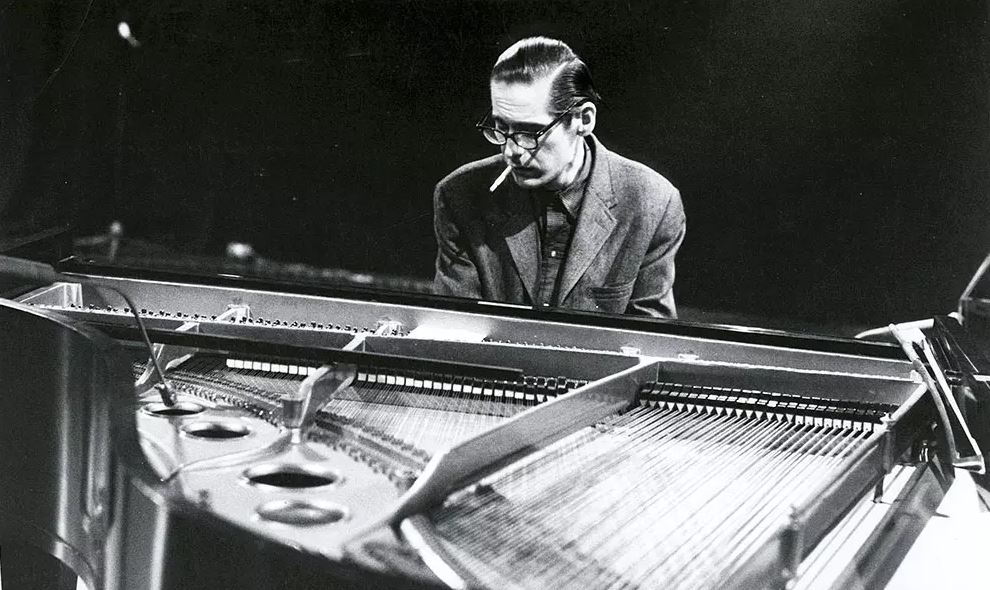
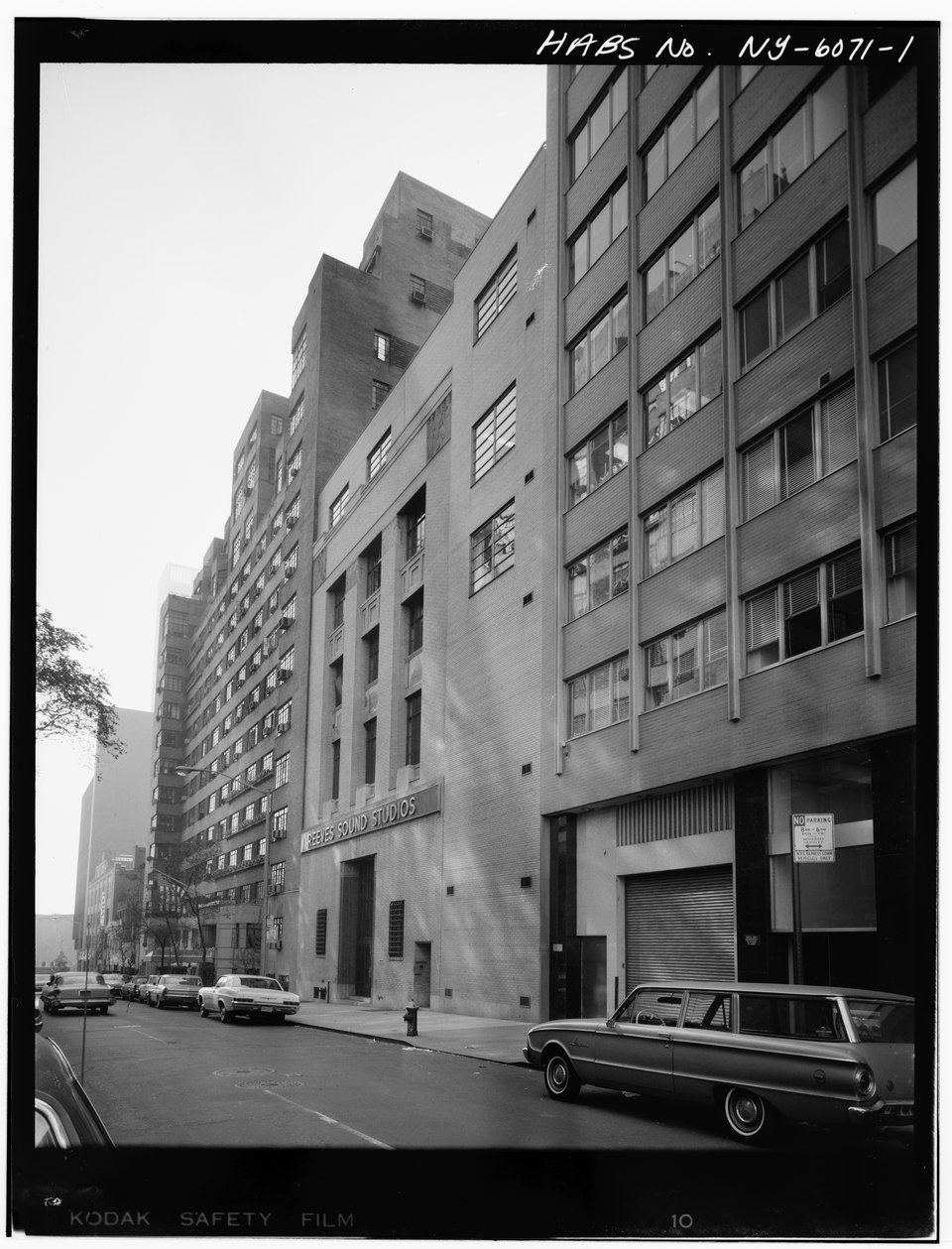
Recorded in December 1958 at Reeves Sound on New York’s East 44th Street – a coincidental hop, wop and skippity bop away from the hotel I stayed in the last time we were in the greatest city on the planet, daddy-o – it is the contemplative sound of Bill Evans winding down at the end of a recording session, under the impression that the engineer has stopped the tapes rolling on another day towards completion of Everybody Digs Bill Evans, the modestly-titled album that would cement his place in the pantheon of jazz greats.
Riffing around the sort of chord structure that Johnny Marr might make terrific use of – a Cmaj7 to G9sus4 and back again – (and sounding not unlike the opening notes on Gabriel Yared’s C’est le vent, Betty from the Betty Blue soundtrack), Peace Piece has the normally upbeat and innovative Evans in reflective, meditative, filmic mood. You can imagine the harsh New York winter outside, Christmas creeping up on the city, the sidewalks slow-moving with hatted men and hair-done women leaning into the cutting chill from the East River like doubled-up figures in an LS Lowry painting, goose feathers of snow falling from the gunmetal grey skies as the urban Manhattanites slip and slide their way about their business. And inside the studio, peace.
Evans, sleeves rolled back from the wrists, is hunched over the keyboard and letting his fingers go where they want and do what they will. A blue curl of smoke from a smouldering Chesterfield hanging at right angles from an over-flowing ashtray atop his piano vanishes into the yellow beam of the solitary studio light that washes the room in an ochre haze.
His bandmates have long packed up and are off for the night, and Evans, alone save the engineer and the red ‘recording’ light, stretches out beyond the two chords and trills suddenly at the top end of the piano, slightly discordant notes against the simple comfort of the left-handed melody. But he always comes back to the signature motif; calming, serene, a peace piece.
A long, low note fades out for a good twenty seconds at the end, the listener unsure on first listen if Evans will come back in. But no, he’s gone, and for six minutes at least, the world seems a better place.
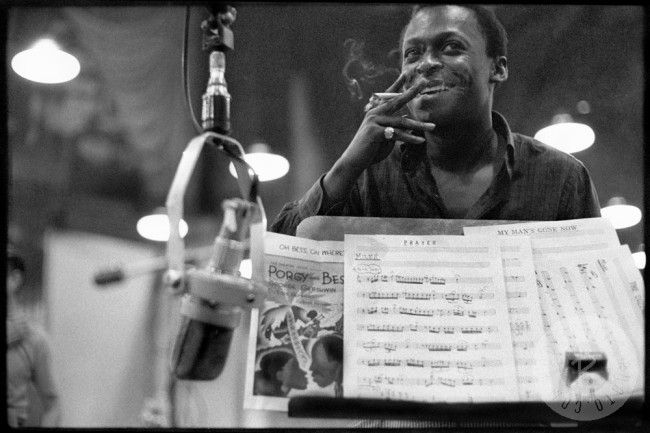
Believing that regular playing would reduce its impact, Evans would play Peace Piece only once in concert, before retiring it like your favourite European superteam’s number 9 shirt. Not even Miles Davis could convince Evans to make it a regular part of his set, although he did get him to reprise a section of it less than a year later for Kind Of Blue‘s Flamenco Sketches.
‘He plays the piano the way it should be played,’ said Miles Davis on the cover of Everybody Digs Bill Evans. He wasn’t wrong.
Or, There’s Always Been A Jazz Influence To My Writing. Not in the true ‘Beat’ sense, you understand. Not like Kerouac or Ginsberg or Burroughs who lived in it, lived through it, wrote from the eye of the howling storm and emerged many hundreds of pages later, daddio, with hardened personality traits and track marks and publishable manuscripts to show for it. Nah, that’s not me. In the months and years since lockdown, I’ve taken to soundtracking any and all working from home sessions with jazz; piano-led and in the background or with ear-splitting horns in the foreground, vocal-free and meditative or with a heavy bossa nova boogaloo breakdown, it doesn’t matter. I’ll never know the thrill of being waited upon in the smoky and claustrophobic environs of a late ’50s/early ’60s Village Vanguard or Birdland but I just might get to imagine it through the music that sustains. I’ve plenty of jazz records and CDs to pick from, and pick from I do.
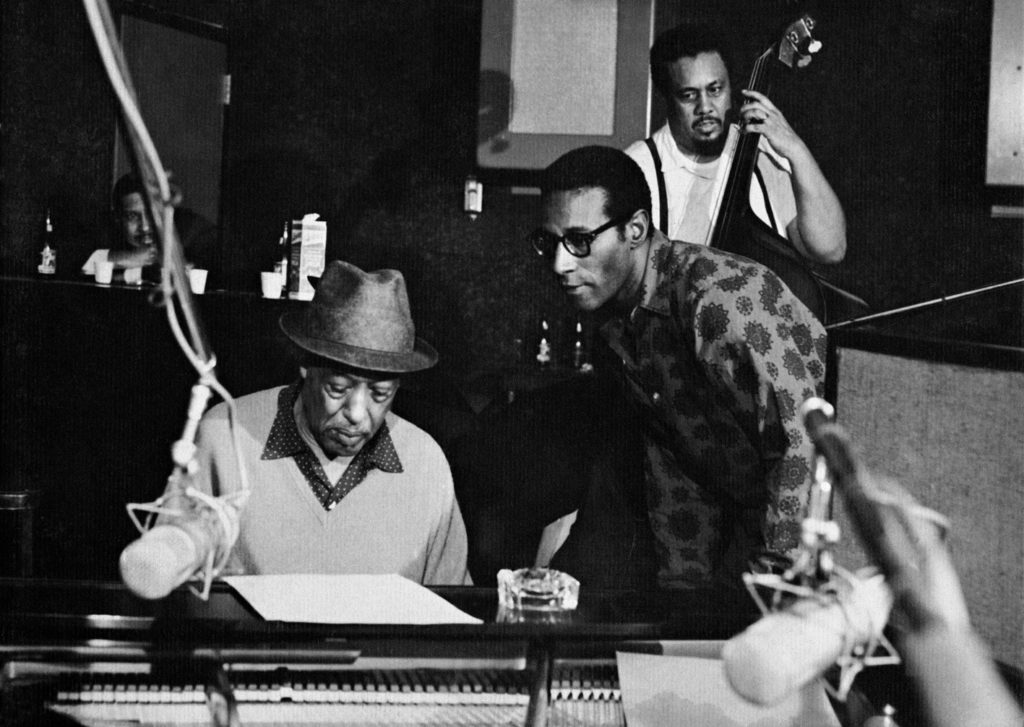
I’ve a soft spot for the accepted classics – A Love Supreme (uh-huh) and Getz/Gilberto (obvs) and Mingus Ah Um (of course) and Kind Of Blue (Come away in! – What took you so long?!) – but I’ve a growing appreciation of other artists and albums, many of which would very probably feature on a ‘Seriously?! 20 Obvious Jazz Albums‘ kinda list; Wayne Shorter’s meandering and highly sampleable Speak No Evil is a great ‘get your act’ together record. By the end of the first side, you should find yourself engrossed and focused on the task at hand. Cannonball Adderley’s Somethin’ Else is the ideal ‘take me to lunch’ but finish this bit off before we get there record. Sonny Clark’s Cool Struttin’ works best as a post-lunch kick-starter, all high brass and big band grooves – a proper afternoon slump destroyer. And if you find yourself against a tight deadline with tea time fast approaching and no-one to rustle it up but yourself, stick on Money Jungle, Duke Ellington’s bruising one take riffathon where tracks are played/improvised and recorded in the one go.
The story goes that the trio – Ellington, double bassist Charles Mingus and multi-limbed drummer Max Roach – were given freedom to play in whichever way they saw fit, so side one begins slowly as the trio eke out a style and pattern of play, then fall into a groove somewhere before the end of that side, continue in the same wildly original fashion on side two before eventually ending in an inevitable all out sonic assault – atonal notes, dissonant chords, drum fills that sound like the Eastenders’ theme being pushed off a cliff, basslines that sound like the annoying guy at the back of maths who’s twanging his ruler off the end of his desk while the teacher tries to explain a particularly challenging strain of calculus – because by this point in the session the three players had worked out that they didn’t particularly like one another and were communicating exactly that through their instruments. See yr Troggs tapes? Zilch in comparison.
If, like me you’re a sleevenotes ‘n credits reader, you’ll notice the same musicians cropping up on one another’s recordings all the time. John Coltrane and Cannonball Adderley add their blues-flecked signatures to Miles’ Kind Of Blue. Across his ouvre, Miles himself gives piano roles to Wayne Shorter, Gil Evans and Herbie Hancock. Cannonball’s Somethin’ Else allows Miles and drummer Art Blakey to step out of the shadows and stamp their not insignificant presence across the grooves.
You play on my album and I’ll play on yours would appear to be the mandate of jazz. When it works, like on Kind Of Blue, great. When it don’t, (Money Jungle, maybe) eurgh. In rock music terms, it’s a bit like having Alex Turner guest on a Bobby Gillespie album where St Vincent and Johnny Marr swap guitar riffs while Zak Starkey and Viv Albertine pin down the groove, their respective management thrashing out the publishing rights with the various labels involved. Art v’s publishing? It’s exactly why, unless you’re the Style Council, this sort of stuff doesn’t really happen in ‘rock’ very often. Weller, man, he really was influenced by the jazzers in more ways than you realise.
Someone who wishes he was influenced in the same way is the aforementioned Bobby Gillespie. A walkin’, talkin’, stick-thin cliché, you’re never far away from an achingly hip point of reference when his mouth starts spouting the same StonesWhoPistolsClashDubFunkPunkSkunk jive that he’s whiffled on about since 1990. Just what is it that you want to do, Bob? Smash the system? Or sell-out to the M&S advert makers? It’s your call, clearly. The kids’ school fees must be due. Loaded, indeed.
At the Ayr Pavilion in 1994, Gillespie was mid duet with Denise (it may have been during Give Out But Don’t Give Up) and, as the band took it down – “Take it down, Throb, take it down!” – see?, the cliché kills – he starts to scat: ‘A love supreme, a love supreme, a love supreme…‘ over and over, leading the band higher and faster and louder to the song’s conclusion. The guy next to me turns to his pal and says earnestly, “Davie! He’s daein a Will Dowling cover!” (Google it if you need to). Very funny. An appalled Bobby would’ve split his skanky leather breeks if he’d heard them.
John Coltrane – A Love Supreme, Pt. 1 (Acknowledgment)
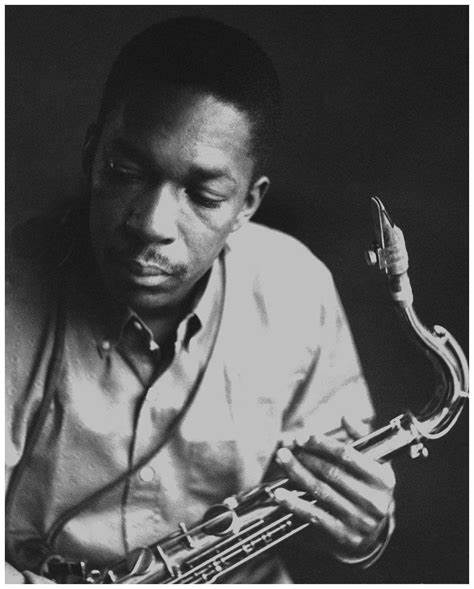
John Coltrane‘s A Love Supreme record is, cliché klaxon alert, meditative (honk!) and spiritual (Honk!) and contemplative (HONK!) and religious (HONKETY-HONK!), and it’s wonderful for it. Built around a core of four notes – dum, dum, dah-dum, and four syllables – A-Love-Su-Preme – Coltrane and the rest of his quartet fly far and wide, to Marrakesh, to Tangiers at times, Elvin Jones thrashing the hell out of his kit, McCoy Tyner hammering the ivories one moment, feather dusting them the next, Jimmy Garrison’s double bass walking the long road home at every opportunity. Coltrane and his tenor sax plays it all; hard boppin’, slow burnin’, furious riffin’, ee-long-gay-ted mood swings.
The quartet always comes back to the core though. Whether it’s Tyner on the keys or Garrison’s bass, or even Jones’ cymbal splashes, they always come back to the four note core. It’s premier league jazz, A Love Supreme, Haaland and Rashford and Trent and Billy Gilmour in a special meeting of minds when their four distinct personalities create something even greater than the sum of their parts, a record as essential as any other record you might care to offer up.
There were a few Whistle Test repeats on BBC4 last week, one of which jumped out at me. Nick Lowe was leading Brinsley Schwarz through a great, soulful version of Surrender To The Rhythm, a track from their 1972 ‘Nervous On The Road’ LP. I’d never knowingly heard Brinsley Schwarz before and I was getting into the song’s groove when it hit me: That wee occasional keyboard riff! The phrasing in Nick Lowe’s delivery! I’ve heard this song before!
Placed in time somewhere post glam and pre punk, Brinsley Schawrz were part of the pub-rock movement, a gritty, back-to-basics scene where ‘real’ musicians were more concerned with the make-up of their songs than the make-up on their face. Keen and earnest, the scene nonetheless spawned Kilburn & The High Roads, who would morph into the Blockheads, the 101ers (who featured a pre-Joe Strummer John Mellor on guitar) and Dr Feelgood, a major influence on the young, impressionable Paul Weller (to this day, Weller still plays From The Floorboards Up without a plectrum, choosing instead to adopt the open-handed Wilko strum whenever he plays it live).
Weller, as it turns out, is more brazen about stealing things than you maybe realise. He has form – not only a strumming pattern from Wilko Johnson but also a career-long vocal delivery cribbed from Steve Marriott, a haircut half-inched from everyone from Worzel Gummidge to Muriel Gray and, more blatantly than any of this, the riff for Changingman that he heartilyappropriated from ELO’s 10538 Overture, something I’ve pointed out before. But long before the heady days of Brit Awards and Stanley Road etc, he was borrowing the mood, the feel and sometimes the chords and melody from more obscure tracks and passing them off as his own work.
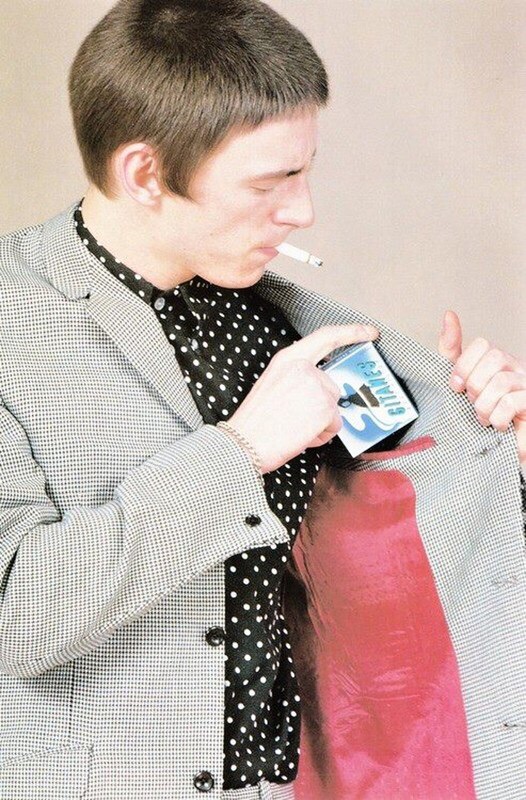
Time has been kinder to the much maligned Style Council than the dissenters might have thought back in the day (C’mon! This might cause a row down in Slough, but some of those tracks are ace – pretentious, aye! Ludicrous, aye! But ace – check out Weller’s recent tour for unarguable proof!) They were a deliberate move away from the Jam’s laddism; cricket jumpers, cycling gear, blokes with arms draped around one another, Weller at the back, pastel sweater hanging off his shoulders like a C&A catalogue model. All reference points lay somewhere between Dusty In Memphis, Curtis in Chicago and tongue firmly in cheek, and you either got it or you harked back to a time when Eton Rifles was the only thing that mattered.
Their debut single Speak Like A Child (in itself the title of a Herbie Hancock LP on Blue Note) is to this day a high point in The Style Council’s back catalogue, even if (as if turns out) you really have heard it before. With its breathy vocal delivery and airy Hammond lead, it isn’t entirely a million miles away from Brinsley’s Surrender To The Rhythm. Contrast and compare:
Brinsley Schwarz – Surrender To The Rhythm
The Style Council – Speak Like A Child
Not content with pilfering blatantly from the past for his more soulful numbers, Weller went on the rampage through the more obscure parts of sunshine pop, alighting at Harper & Rowe’s 1967 bossanova boogaloo The Dweller and stealing the best bits for Have You Ever Had It Blue? This track was a highlight of the recent tour, the band kicking out the jams to play their blue notes under blue lighting, an inward-looking circle of nodding, noodling jazz-heads, but how many of the appreciative audience knew they were in effect listening to a carefully restructured cover version?
I’ve always loved The Style Council’s track, with its Gil Evans-arranged trumpet motif, the non-rock time signature and wordless Dee C Lee doo-be-doo backing vocals. As a 16 year-old, I thought Weller was a bit of a genius for having ‘written’ something so finger clickingly jazz. Great tune ‘n all that, Paul, but really, how did you manage to get away with it?
Harper & Rowe – The Dweller
The Style Council – Have You Ever Had It Blue?
*Bonus Track!
Here‘s The Style Council‘s With Everything To Lose, essentially the first version of the above track. No brass, different words, carefree flute etc etc




 Plain Or Pan