
A trip to London, November 1989. We were there for the Stone Roses show at Alexandra Palace, the group’s biggest gig in a year that had seen their unstoppable rise from Manchester’s margins via Glasgow’s Rooftops to a room full of 8000 zeitgeist-surfing music fans. Such is the need nowadays to be seen – and be seen to be seen at these kind of shows – if the Stone Roses somehow reformed today, there’d be 100 times that number clogging up the internet’s superfast highways in search of a ticket. But back then, the audience was comprised solely of clued-in music fans. The ticket was easy to come by (one phone call, £8) and the overnight bus (even cheaper, if I remember) alongside a promised floor in a friend’s sister’s digs made for an inexpensive and unforgettable weekend.
We got straight off the bus at Kings Cross with five hours’ sleep between the three of us and did what most Scots abroad do. We went for a pint in the first decent-looking boozer, choked at the price and supped slowly, savouring the overpriced fizz as if it might be the last pint we ever drank.
We wandered west, our limited Scottish notes being hoovered straight from our pockets with every boozy stop-off (don’t believe that nonsense about ‘legal tender’ – they grabbed it all), to the city’s dazzling West End, the neon lighting of Piccadilly Circus washing London’s damp, dreich streets in primary watercolours. Green, red and blue. TDK. Coca-Cola and Philips. We wandered into Soho. Narrow buildings on narrow streets. Cobbles, maybe even. Olde London, with everything close together, the intervening years necessitating layers built on top of other layers. Brass plaques at the side of resolutely-closed doors. ‘Gentlemen’s Club.‘ ‘Private Member’s Club.’ ‘Luncheon Club.’
Raymond’s Revue Bar loomed large in front of us, its name splayed across the entire side of a chunk of ’60s Brutalist concrete, the neon letters yet to catch fire. It was still early, I guess. Sister Ray records, Grant holding up a tatty copy of More Specials. ‘Guess how much?!?’ Ronnie Scott’s. Bar Italia directly across the road. A blue plaque for John Logie Baird directly above that. Every other doorway contained references to Soho’s true purpose. ‘Girls wanted.’ ‘Boys wanted‘. ‘Diamond Associates Video Production.’
Solid-looking bouncers barred the way behind velvet ropes, the faint thump of electronic music wafting up to ground level. ‘Peep Show‘, ‘Freak Show‘, ‘Rooms by the hour.‘ Amongst the boggle-eyed packs of out-of-towners such as us, strange folk wandered between. Weird, thin, trampy guys who’d either avoid eye contact or stare you out should you catch their attention. Shaven-headed men in expensive suits underneath camel-coloured coats. Men who were in fact women. Women who were in fact men. Girls (?) who smiled as you walked towards one another on the pavement, pretty at first, then hard and stone-faced as you drew closer. Were these the same girls advertising their services on the cards and stickers plastered inside and outside the once-red phone boxes? ‘Scandinavian massage.’ ‘Miss Whiplash!‘ ‘Anything you want.’ We just wanted to soak it all in, thanks. And soak it in we did.
The streets were steeped in pop culture-references. Carnaby Street had maybe lost some of its sixties swing, but you could feel its historied past. Outside another closed door in a street nearby was the Acid Jazz office. Elsewhere, Old Compton Street. Greek Street. Gerrard Street. All places that had popped up in the things we’d read, the films we’d watched, the records we’d obsessed over. ”A’ Bomb In Wardour Street!‘ shouts Derek as we turn into it, the three of us singing loud and out of tune Weller approximations, giving not one foreign tourist jot about how we appeared. “Ay-pee-oh-see-ay-elle-why-pee-ess-ee APOCALYPSE!‘” What a laugh.
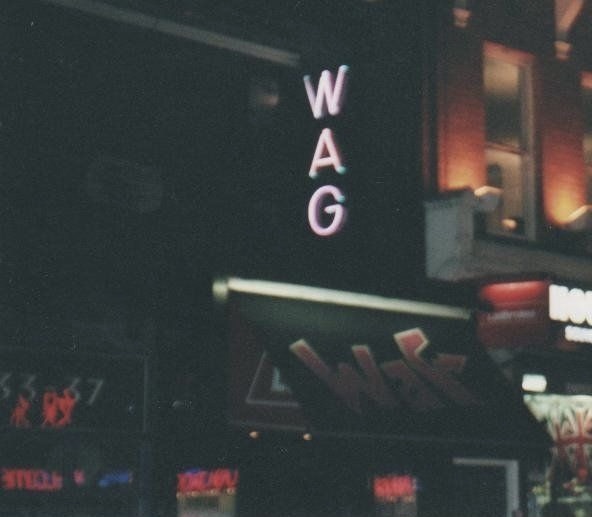
I spot the Wag Club, a simple sign sticking out from the wall and a canopy over a door announcing its existence. If it’s too early for strippers, it’s certainly too early for dancing, and so it’s presently closed, otherwise our beer-emboldened Scottish inquisitiveness may have lead us to have a wee peek inside. Instead, we reel off a list of the great and the good who’ve been associated with the place. Bowie. De Niro. Strummer. Grace Jones. Boy George. Madonna. We stand on the same pavements as these legends and pause for a moment’s reflection.
There’s a good 4-parter on BBC Sounds just now, with Shaun Keaveny interviewing the ubiquitous Johnny Marr. Johnny has a new album out and so is everywhere to talk about it. Johnny is almost as great a talker as he is a guitar player, so he’s good value. The shows are themed loosely around Johnny’s music and influences, so much of it will be familiar to you; Stooges, Velvets, ‘Noo’ Order, disco, Bert Jansch, yadda yadda yadda, but the odd nugget of new information and maybe even new music is worth hanging in there for.
One such thing was Johnny’s enthusiasm for this: Gina X‘s No G.D.M.
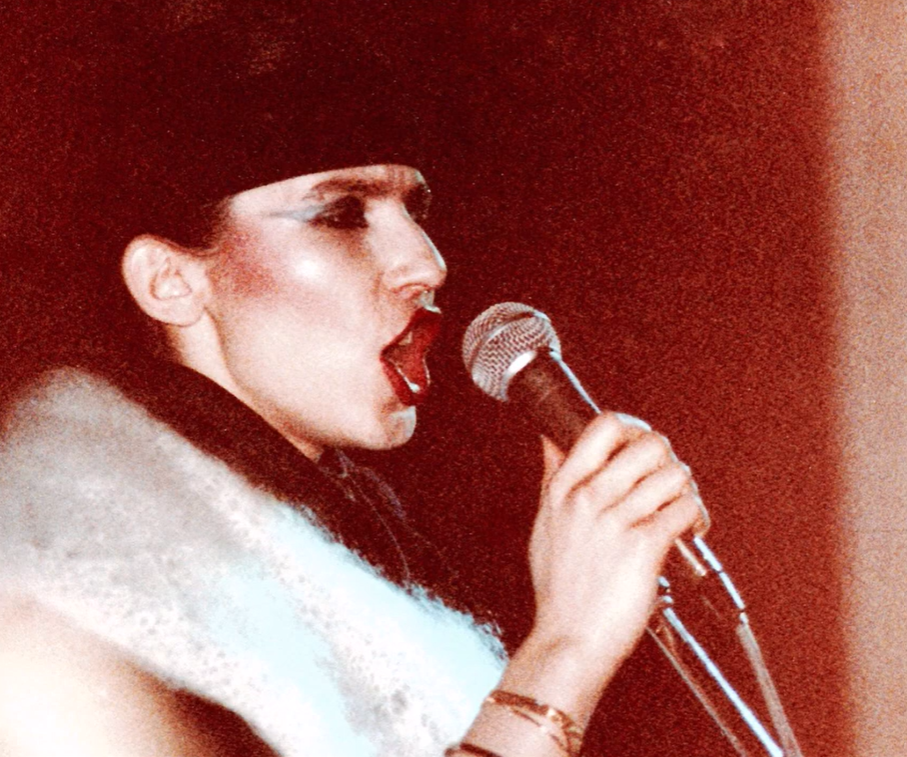
I never did get to the Wag Club, but I can imagine that No G.D.M., with its minor chord disco sleaze and goose-stepping, catwalk-strutting bassline might’ve been something of a regular floor filler in the place. Slow-chording, bubbling analogue synths, electric keys for accent, the odd vocoder and a detached, Teutonic sing-speak vocal that flirts between bold and bored keeps you interested and listening. By its third spin, you’ll be under the spell of its super-steady 110 BPM march. You might even find yourself absent-mindedly drawling ‘lez-beee-uhn‘ as you wash the dishes, drawing quizzical looks from your significant other. ‘You sound like Grace Jones,’ she might say, not that far off the target.
No G.D.M. takes its cue from a Quentin Crisp quote. A (wo)man who was no stranger to the Old Compton Street of 100 years ago, Crisp was one of Edwardian Soho’s more colourful characters; growing and dying their hair to appear more feminine, dressing in drag one day, a business suit the next, working as a life model one day, a rent boy the next…Crisp was a he/she/they openly gay icon at a point in history when it was significantly far more dangerous to be so. Once, in a pique of self-pity, Crisp lamented to a sympathetic writer that he’d never find the embodiment of sexual perfection, the perfect yet mythical ‘great dark man’. And somewhere down the line, Gina X’s antennae bristled with the promise of an underground club hit.
Next time I find myself in Soho, I’ll be sticking this on to soundtrack my wanderings. Scrape back the top layer of dirt from those pavements and you’ll smell the sleaze and debauchery of the recent past. It’s the perfect soundtrack, surely.

