Our youngest turns 20 on Monday, when the house will suddenly be teenager-free. Blink and you miss it, as they say. I was thinking back to when I was the same age, which, as many of you here will attest to, feels like only last week. I’m forever measuring things by years; I’ve been going to see Teenage Fanclub for 35 years…The Queen Is Dead was 40 years old this past summer…Station To Station is now half a century young…and talking of young, on the day I was born, Neil Young turned 24…last week he turned 81…will I make it to 81? For how long exactly will I run? This stuff traffic jams my brain on a daily basis.
The boy, I hope, will never think like this. He’s already packed more into his 20 years than I’d ever done by twice that age, and he shows no signs of easing up. He’s ran two marathons. He’s well on his way towards a joint Honours degree. He’s been in more States in America than I was in Irvine in 1989. He’s sussed and smart and can’t be told anything he doesn’t know already.
The Stone Roses – Fools Gold
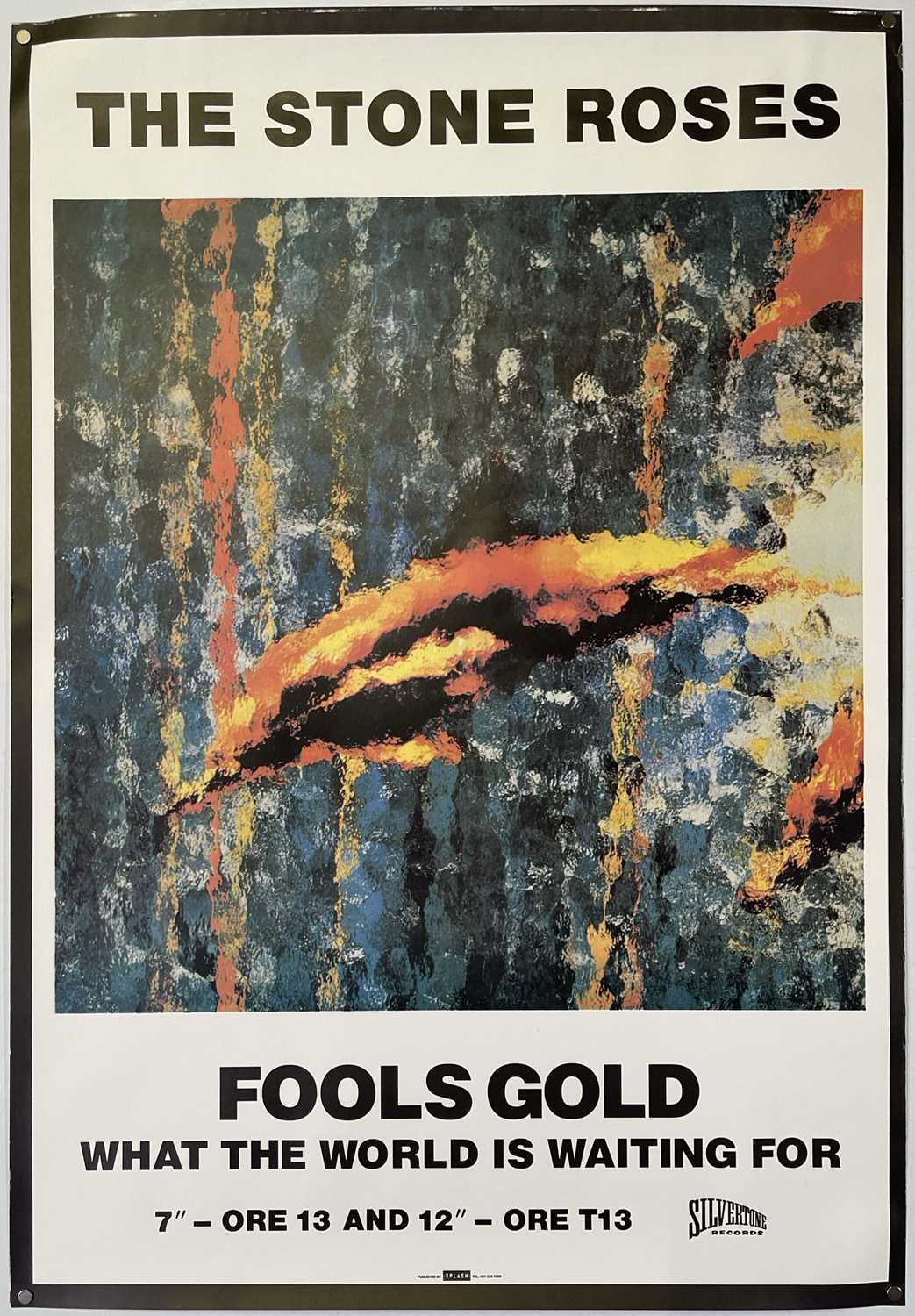
I mentioned to him that the day after I turned 20, The Stone Roses released Fools Gold. There it was, labelled the ‘A’ side on a 12″ with What The World Is Waiting For on the ‘AA’ side, housed in a cover with no mention at all of Fools Gold on the front, save a hastily slapped promo sticker when it was decided at short notice that, good as What The World Is Waiting For was, Fools Gold was where the real action was taking place. I’ve always had a soft spot for What The World…, with its references to wise men and donkeys and the faint festive whiff around its choppy, slashy chords and its insouciant, shrugging verses and choruses. If you’re being unkind, you might suggest it’s a bit ‘Roses by numbers’, which still makes it better than 99.99% of any other guitar-based music that was being released at the time, but once you’d turned that 12″ over to the other side and been bitten by its incessant grooviness, there’s no denying that whoever’s idea it was to make Fools Gold the lead track was very much on the money.
There’s a lazy myth that Fools Gold was built around James Brown’s famous ‘Funky Drummer’ sample, the slice of taut, tight, snare ‘n cymbal that was originally lifted from Bobby Byrd’s I Know You Got Soul and sellotaped to a million records since. Almost anywhere on the internet will tell you this. But I was never convinced. Listening to Clyde Stubblefield’s playing on the original, I could never work out which section of the break they chose to sample. Was it the first four bars at the very start? Nah. The vocal-free section near the end? Possibly…probably…but did the Stone Roses slow it down? Or add something on top of it? Or underneath it? For a record made on tape, the old-fashioned way, Fools Gold didn’t rely on ProTools and computer trickery for its sound. It was built on sheer hard graft and nimble-fingered skill. And it wasn’t built on a sample of Funky Drummer either.
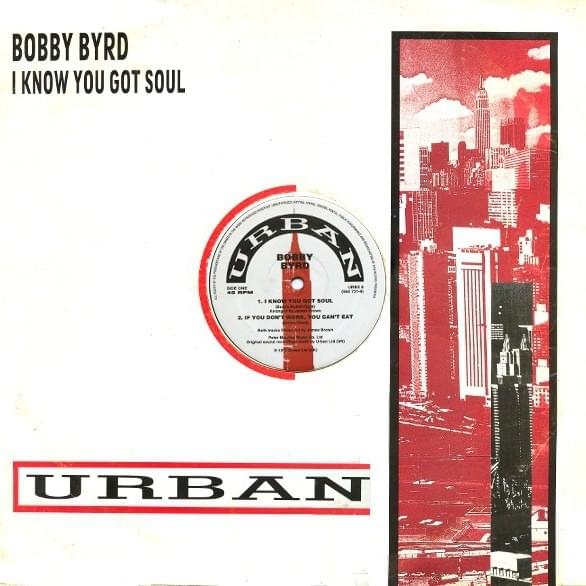
I’d read that, back in July ’89, the Stone Roses had been at Manchester’s Eastern Bloc records to sign copies of their just-released She Bangs the Drums single and, by way of thanks, the shop had let them pick some records from the racks. Three quarters of the group went straight to the US imports section, intent on hoovering up the latest house releases. But John Squire, the band’s designer and aesthetic fetishist instead went for a Bobby Byrd 12″ of, yes, I Know You Got Soul. Released on Urban Records and housed in a company sleeve, Squire was taken by the screen-printed collage of a cityscape down the right hand side.
Just as with What The World Is Waiting For, it was the single’s B-side that grabbed John’s attention, and when he played it to the rest of the group, Reni’s antennae tuned straight into its undeniable groove. Before it had finished, Reni had mapped out what he’d play on top of it. Taking it to John Leckie, retained in the producer’s hot seat following the success of the debut album, the group went about sampling not I Know You Got Soul, but the start of Byrd’s take on Hot Pants (Bonus Beats version). You’ll recognise it instantly:
Donald Byrd – Hot Pants (Bonus Beats)
Tampered with in the studio, the Bonus Beats mix on that B-side is intended for use by rappers and breakers; the vocals are sparse and repetitive, the horns turned down and muted, the bassline practically non-existent – perfect then for playing along to, which Reni apparently did with great enthusiasm, building his groove and perfecting his swagger with his head-bobbling, octopus-armed rat-a-tatting. You’ll find videos of Reni playing and playing and playing, lost in the moment, the concepts of ‘work’ and ‘play’ barely discernible notions to him. I imagine it was exactly like this during those sessions at Sawmill Studios.
Next in the mix, Mani happily confessed to coming up with the track’s lolloping bassline by playing along to and stealing from/adapting Young MC’s Know How, its street-tough rhythm custom-made for Mani’s appropriation of its buried-in-the-mix 4-string swagger. Between the pair of them, the rhythm section purloined/carved out a bedrock upon which the greatest Stone Roses track could be built.
Ian’s here. He sings a bit, about gold roads and clowns and not backing down, paraphrased it seems, from the Humphrey Bogart-starring black and white 1948 classic, Treasure of the Sierra Madre, but really, that’s all secondary to the heady pyrotechnic swirl that John Squire coaxes from his pink Strat. If I Am The Resurrection‘s breakdown sounded to you like the incidental music in an episode of Starsky And Hutch, here Squire goes a step further by daring to actually employ the wah-wah. Wocka-wocka-wocka it goes. Wocka-wocka-wocka. That faint noise you hear in the background is that of a gazillion bedroom Johnny Marrs throwing away their ham-fisted jangle in the rush to appropriate the sound of the ham-fisted Hendrix. Before long, every record ever released had to have the skippity-hippity drumbeat and a lazily rocking wah-wah. Hello Mock Turtles. Hello Milltown Brothers. Hello Airhead. Hello all you blinkered and uncreative bands who followed and were signed in the swash and backwash of Ian and John and Mani and Reni. I hope you can sleep at night.
John Leckie waited patiently as Squire went beyond the wah-wah and into outer space. He never experimented in the studio in these days. There was no, ‘let me try that a different way.’ Instead, Squire locked himself away, sometimes for days at a time, building the record in private, coming up for air only when he had a definitive part, which he’d then record with Leckie. In the second half of Fools Gold, his guitar is the treated sound of airstream and fluidity, the producer manipulating the sounds, panning them left and right, multilayering sections, slowing down cymbals to make them rushhhh, dropping everything out apart from Reni and the Hot Pants sample, allowing the bass to shudder and judder the fillings from your teeth, sprinkling bongo drums on top for added danceability. Before it’s even finished, you already can’t wait to stick it back on again. If you could capture feeling in a bottle, I’d love to re-experience the first time I sat down and listened uninterrupted to the full 9.53 version of Fools Gold. I wonder what record will come out the day after the boy’s 20th and have the same effect on him?
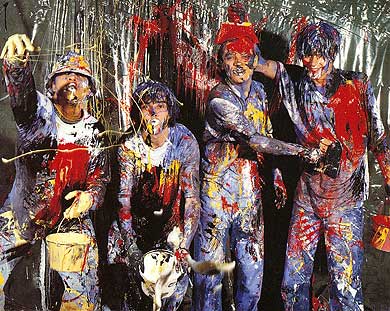
You can listen to the Stone Roses, but in truth, they’re totally multi sensory. As the records spin, you can see them too – Reni, bucket-hatted and visible only from the lips to the shoulders, tucked in behind his simple kit and driving the band with polyrhythmic gallusness, Mani schlepping back and forth, swinging his Pollocked Rickenbacker over the bowl-cut heads of the front row, John, self-conscious and head down at the side, firing off little technicolour sparks of modern psychedelia to a gobsmacked audience, Ian cocking his mic at an angle, bow-legged and whipping its lead in front of him, the king of the ring in a room the band own.
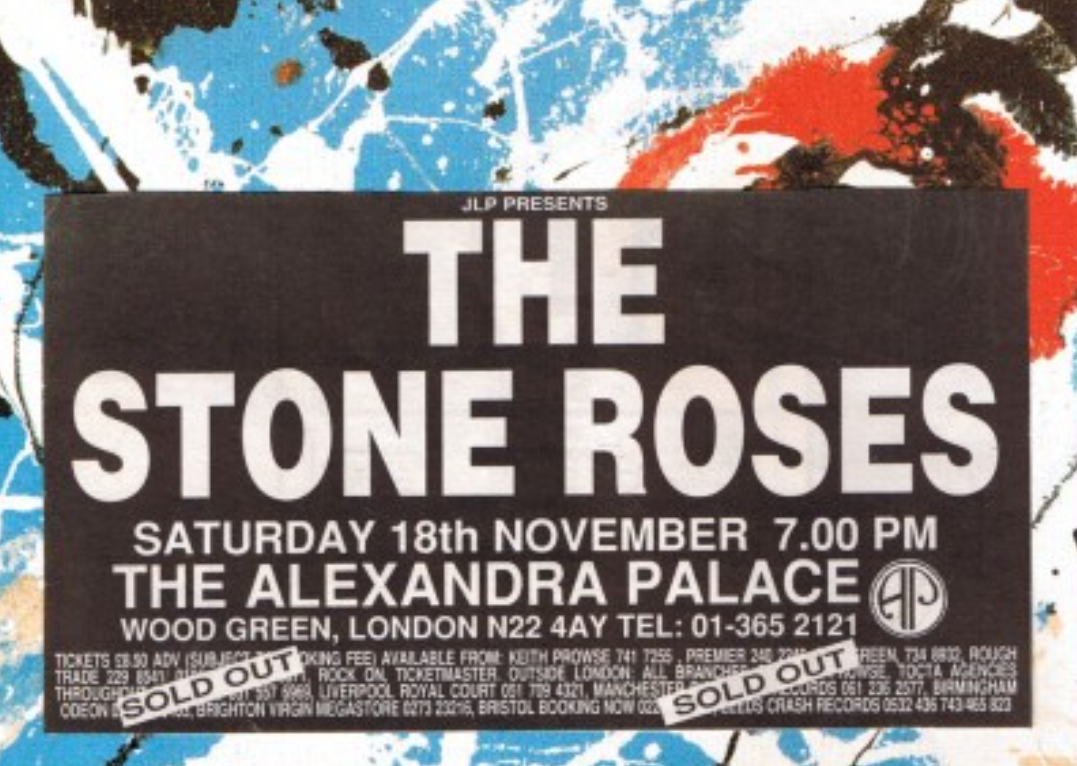
You can taste the Stone Roses too. Or, at least, I can. That week of the 13th November 1989 culminated in their show at Alexandra Palace, a stand-out gig of the year, memorable in a weekend packed full of memories; the boggle-eyed trip around Soho, the Italian pizza slices near Piccadilly Circus, the price of beer and records, and the chestnuts being sold on the wintery street corners. I’ve eaten chestnuts only once in my life, and that was that weekend. And every time I hear Fools Gold (as I just have), a Pavlovian taste of hot, roasted chestnuts wells up in my mouth. Weird, and not unpleasant, but totally true.