
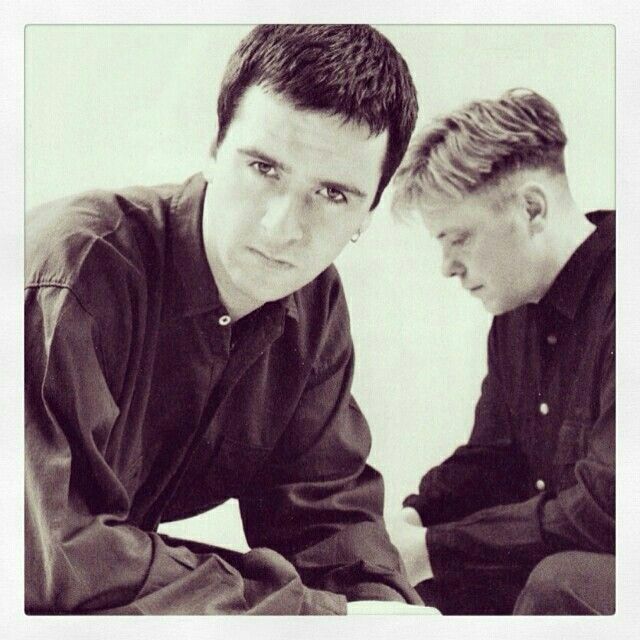
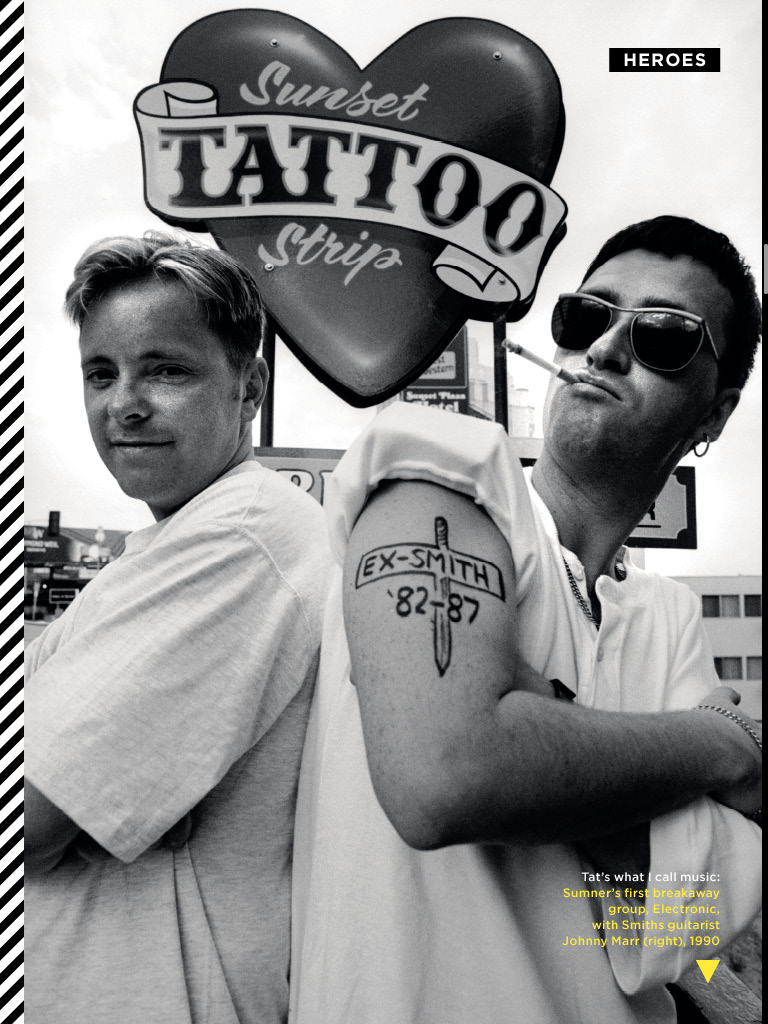
It’s an accepted truth that Electronic was very much a bit-part project, an occasional coming-together of alternative music royalty in the gaps of downtime between their respective day jobs; Bernard and New Order, Johnny and The The…and The Healers…and The Cribs… and whoever else was looking for a six-string gunslinger for hire. The reality is much different.
Although conceived by the duo of Sumner and Marr as a collaborative and ever-shifting line-up of guest musicians and vocalists, Electronic was an active and going concern for almost every year of the ’90s. The self-titled debut album was worked on quietly in the background for months at a time before seeing the light of day in 1991. The follow-up, Raise The Pressure, took two years to put together. 1999’s Twisted Tenderness, the third and presumably final album in Electronic’s discography took a similar time to conceive. Johnny has oft-debunked the notion that he and his pals reconvened for a couple of weeks now and again to throw an album together; a studio head since the earliest days of The Smiths, to him, being part of a group is a 24-hour thing. Bernard, with his patience and dedication to programming and getting the most out of ever-changing technology, is cut from a similarly dedicated cloth.
1996’s Raise The Pressure was written during interesting times. Conceived in 1994, it began life just as Noel Gallagher was borrowing guitars from Johnny to use on the first Oasis recordings (look on the cover of Supersonic and you’ll spot Johnny’s famous black and white Rickenbacker) and was released just as Noel’s band (and Johnny’s Les Paul) were getting ready to headline Knebworth. For one of these acts (and it ain’t Electronic), that’s quite a trajectory.
Raise The Pressure was a product of the last great fertile period for UK guitar bands, yet it never quite made its mark. Here’s an album recorded by two of music’s leading lights, one of whom at least, with his moddish hair and Clarks shoes – and uncanny ability to wring seven shades of melody from six strings – could be considered the uber-cool uncle of the entire movement…and no-one is all that bothered about it.
Lead single Forbidden City is a much under-appreciated track. Despite coming gift-wrapped in New Order melancholy and ever-evolving Marr riffage, it clunked its way to number 14 before vanishing for good. Just what was wrong with the record-buying public?!
Electronic – Forbidden City
The track runs the whole range of Johnny’s guitar styles; layers of sparkling electrics sprinkled across a bed of ringing acoustics…open chorded majors in the verse…barre chorded minors in the refrain…lovely complementary run downs between vocal lines in the third verse…the up the frets dazzling stuff during the choruses…the groaning, multi-layered (and sometimes backwards) feedback solo in the middle… Forbidden City really has it all. In an era of retro bores who were happily rehashing their way into the charts and getting folk to part with their money in Our Price seven days a week, thanks to their Who and Stones and freakin’ Herman’s Hermits rip-offs, (Hello Power! Hello Ashcroft! Hello Fowler ‘n Cradock!) Forbidden City deserved so much more.
Even an appearance on prime time telly couldn’t really help it.
On TFI Friday, Bernard ‘n Johnny are backed by Doves’ Jimi Goodwin on bass, with Black Grape’s Ged Lynch keeping Karl Bartos’ drum stool warm. Bernard is a ball of on the spot sprung energy, punching the air between lines, doing his trademark whoops when he needs to take a breath, gurning indiscriminately at an audience equally hopped up on the good vibes of the times. By the looks of it, Johnny hasn’t yet discovered running and is in the midst of his fat Elvis phase. Unruly hair, jawline as loose as the jeans he’s wearing and dressed in some sort of fleece/fur overcoat, he chews gum while stomping on and off his pedal board, giving, as he always does, good camera. There’s more than a whiff of chemical enhancement to the whole thing – it is the mid 90s after all – and it’s all rather fantastic.
A chart smash though? A definitive track of its era? A firm favourite amongst the masses? There’s not a hope, as the song goes.
 Plain Or Pan