Get This!, Hard-to-find, Kraut-y, New! Now!

Skeletal Family

Vini Reilly is the public face of The Durutti Column, the first signing to Tony Wilson’s nascent Factory Records way back in 1978. Forever pasty-faced and ill-looking, he’s as wiry and fragile as the high ‘e’ string on his guitar, and on the rare occasion when this Wythenshaw will o’ the wisp pops his head out in public, he’s quietly spoken and totally intense. Clearly, he prefers his music to do the talking.

The Durutti Column’s first album, The Return of the Durutti Column was produced by Factory in-house knob-twiddling hedonist Martin Hannett on clear instruction from Reilly that he didn’t want ‘the usual, horrible distorted guitar sound.‘ What followed was a heady mix of chiming beauty, pastoral fragility and neo-classical intensity. All instrumental, and almost all featuring only layers of Reilly guitar, with the odd rudimentary skittering drum machine or piano part, the music is almost as revolutionary as the Spanish Situationists from whence Tony Wilson christened Vini’s band’s name. The music isn’t ‘rock’ or ‘post-punk’ or ‘jazz’ or any other obvious genre. It would be a huge disservice to lump it as (gads) ‘chill-out music’, but to these ears, in the same way that you could categorise someone like the Cocteau Twins, that is essentially what the music of The Durutti Column is. In later years, Tony Wilson would tell anyone who listened that at the end of a night at the Hacienda, he’d spark up a large one and mellow the wee hours away with The Durutti Column playing in the background. Vini’s music is perfect for this.

In one of the first great Factory marketing moments, The Return of the Durutti Column came packaged in a sandpaper-covered outer sleeve, intentionally designed to destroy any record sleeves you might have been careless enough to file besides it. If you happen to have one of those original LPs you may be interested to know that it was the four members of Joy Division who stuck the sandpaper onto each and every cardboard sleeve. I’m sure any decent policeman worth his salt could do some sort of DNA test to it if you asked- you might be sitting on a Curtis there! Or a Hook. (No luck).

Reilly was asked to produce Happy Mondays’ Freaky Dancing single, a choice that may have made sense musically, but personality-wise was a disaster. As Shaun Ryder says in his autobiography, “We initially tried recording with Vini Reilly but that only lasted about two hours before he decided he couldn’t handle us. I like Vini, and he’s a great guitarist, but he’s a bit of a weird one and everyone knows he’s a bit fragile. He once told everyone that I’d spiked him at the Hacienda, and the next morning I got phone calls from Wilson and other people at Factory having a go at me, saying stuff like, ‘Why did you do that to poor Vini? You know what he’s like,’ when I hadn’t even fucking done anything. It was all in his mind.

To quote Reilly – “I simply couldn’t work with them.”

A real musicians’ musician, he’s perhaps best-known for filling the substantial (desert) boots of Johnny Marr when The Smiths imploded. For the briefest of very brief moments, The Smiths looked like carrying on, until Morrissey decided otherwise. He instead roped Reilly in to play guitar on Viva Hate and, by chanelling his inner Marr, helped Morrissey’s solo career off to a flying start. But that’s a story for another day.

Durutti ColumnSketch For Summer

Durutti ColumnSketch For Winter

MorrisseyMargaret on the Guillotine

This post was all ready to go and then…
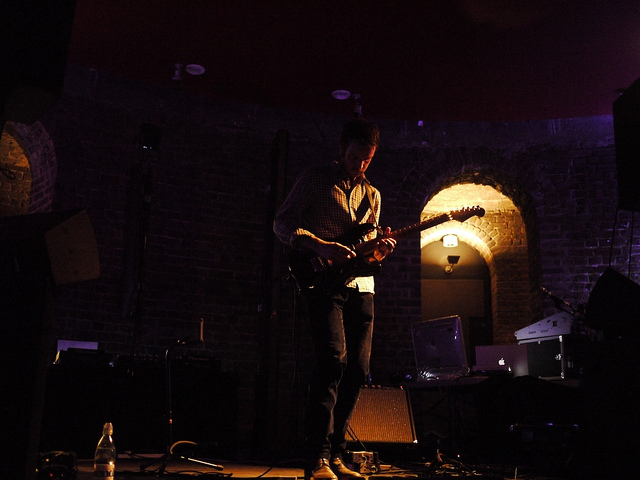
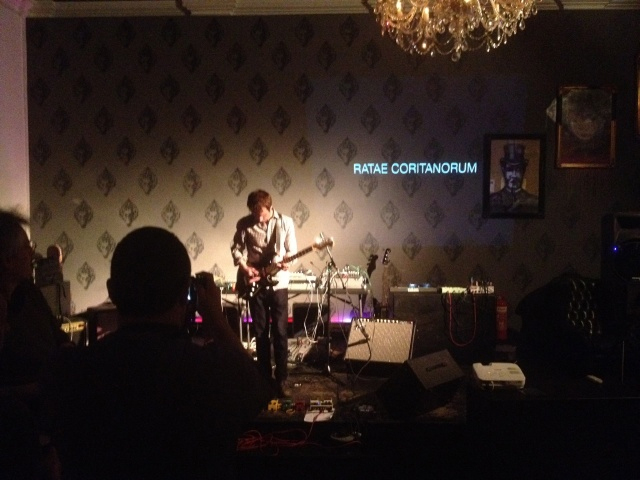
…my old pal DW put me onto Land Observations. “You’ll like them,” he said. “It’s just one guy and his guitar. No singing. It’s a bit motorik, a bit Krauty, with that sort of Michael Rother feel to it.” I quick listen on iTunes and I bought it….and I never buy anything from iTunes. But I had to have it there and then. And for the past week or so it’s been something of a constant onĀ  the iPod. Motorik, krauty and sort of Michael Rother-ish, just as I was told. (A Soundcloud player should appear below. Please let me know if it doesn’t. It’s been a major headache trying to install it for some reason.)

It’s a concept album of sorts (hippies! prog-rock!), but stick with it. Loosely based on the journeys made along the Roman Roads of Britain, it’s the companion piece to an EP released last year. Unbelievably, given my instant love of the LP, I’ve still to buy the EP, but I will. The album, Roman Roads IV – XI, reminds me greatly of The Durutti Column – one guy who lets his guitar do the talking, no fancy pants widdly solos, just layered, textured, skeletal music that you can listen to, that makes you want to listen to it. And it sounds great through headphones. It’s currently at Number 3 in my ‘Favourite LPs of the Year’ list and climbing. Land Observations, folks. You’ll like them.
Cover Versions, Get This!, Gone but not forgotten, Hard-to-find

This Is My Truth, Tell Me Yours

It’s the mid 90s and Everything Must Go has just been released by the Manic Street Preachers. An album full of Spectorish bombast and tunes for van drivers to whistle, it’s light years away from their previous album, the Richey Edwards-enhanced The Holy Bible, an album so difficult to digest in one sitting that Everything Must Go sounded like S Club 7 in comparison. And whilst the hardcore MSP fans point to The Holy Bible as ‘the one’, the million+ sales and ubiquity of Everything Must Go (despite half the songs featuring Edwards’ oblique lyrics) made chart stars (and millionaires) out of the Manics.

At this time, I was fighting in the trenches of the Britpop wars, working in music retail. Now, speak to anyone in retail and they’ll tell you unbelievable-but-true stories about the regulars who frequent their shops. Our shop was no different. We had a regular customer, an older guy with a cracking quiff, complete with an electric blue streak up the front, who wore the Elvis aviator shades in November and the ’68 Comeback leather jacket in July. He spoke in a hokey hillbilly American accent and gave his address as Dundonald whenever he ordered something. Dundonald, in case you need to ask, is about as near to America as Mars. People in Dundonald tend to speak in broad Ayrshire, though with a slightly posher accent, given that the village (?)/town (?) is located just inside the environs of the beautiful South of Ayrshire, and a couple of generous Colin Montgomerie drives from the fourth tee at Royal Troon. He always gave his name as Jesse Garon, which just so happens to be the name of Elvis’ twin brother who died at birth. “Je-huss-ay Gar’n, suh,” he’d drawl, without the slightest hint of irony. Local lunatic, eccentric and Elvis freak, I thought he was great. Jesse, it turned out, was highly thought of and sought-after in the world of tribute acts, and had a regular gig in Blackpool, doing a kinda Scottish McElvis tribute. Which is ironic really, given that off-stage he spoke cod-Elvis, yet on-stage he celebrated his Scottishness, wearing a white cape with a saltire emblazonned across the back and whatever else have you. Every Summer he’d head off for the season and do his well-polished Elvis act for the stags ‘n hens’ n’ steamers ‘n stoaters who stumbled into the music hall at the end of the pier. (If you’re an MSP fan, by now you may have worked out where this is going).

One day, Jesse popped in to order something. “Ahm lookin’ fur sumthin’ swampee. S’gotta be swampee. Y’know like when thu Deep South mists roll across them swamps? Ah need music ta soun’track that. S’for ma show, y’see. Intra music ta make tha folks sit up an notice that ol’ Elvis here is ’bout ta enter tha building.”Ā  A long while later, after having exhausted my general knowledge of all things swampy, he settled on a since-forgotten bit of Ry Cooder slide blues. This, he assured me, was just what he was after. And, with a wee Elvisy point of his index finger in my direction, and a tip of the gold-framed aviators, off he went.

I’ve hunted high and low and googled near and far for a qualifying quote to back me up here, but to no avail. So you’ll just have to believe the next bit. James Dean Bradfield, talking about the Everything Must Go album mentioned that opening track Elvis Impersonator, Blackpool Pier was written after him and Richey Edwards had watched an Elvis impersonator do his act at the end of Blackpool Pier. Bradfield mentioned that the impersonator was (and I’m paraphrasing here)Ā “crap and Scottish” – two things yer actual Elvis wasn’t. Now, I know there are approximately more Elvis impersonators than there are people in China, but when you add ‘crap’, ‘Scottish’ and ‘Blackpool’ into the mix, well, all the signs pointed to the one Elvis impersonator I knew. The next time Jesse was in the shop, probably about a year later, when preparing ‘intra music‘ for his next set of shows, I told himĀ about the Manic Street Preachers and their massive-selling album and about theĀ first track on it and how the band had written it after seeing a Scottish Elvis impersonator in BlackpoolĀ (though missed out the part about himĀ being crap) and let him hear the song. You could tell he was quietly pleased at the thought of someone writing a song about him, especially as it was the opening track on such a successful LP, even if he did think the song itself was “a crocka sheeeit, sonny! Crocka sheeeit!”, a phrase everyone and their mother heard as he bawled it across the counter whilst wearing the big headphones perched on top of his blue-streaked quiff.

During his fat Vegas years, ol’ Elvis Himselvis used to come on stage to this, Richard Strauss‘s Also Sprach Zarathustra. You might know it better as the theme to 2001: A Space Odyssey. My favourite version is Deodato‘s outrageously eeeeelongated funkified version, Fender Rhodes, clipped guitar ‘n all. Jazz funk? Funk jazz? Prog soul? Who knows, who cares? This is the sound of afros jammin’. Extraordinary!

For reasons I have never quite fathomed, Also Sprach Zarathustra also makes an appearance several times in the lyrics of The Fall‘s Free Range, where Mark E Smith battles over synthesized beats and too-low-in-the-mix guitars to sound like a demented steamer arguing with himself at a bus stop. I’ve got this on one of those supposedly limited 7″s, where the sleeve was spray painted by yer actual band. You probably have it too.

Get This!, Gone but not forgotten, Hard-to-find

Marvin Gaye In A Dirty Mac

I’ve written about Serge Gainsbourg before, after hearing Histoire de Melody Nelson and all its street walking, hip thrusting bass and funk guitar for the first time. A concept album about an older man’s relationship with a much younger woman girl, it could make for fairly uneasy listening. If you’re fluent in 1970s French street jive, it probably does. Since my French goes little further than Je suis allez au Magnum a la weekend, I’m none the wiser. But I still get the drift. Have a listen to Melody. You’ll get the drift too.

Here’s a wee film to help you along:

In France, Serge is considered something of a cultural and musical revolutionary, held in far greater esteem than any musicians really have the right to be. Over here, we’re proud of our artists and more than a wee big smug when considering the enormous contribution they’ve made to popular music. In France, Serge is right up there, above the clouds, above the stratosphere, above God. He is King. Say a bad word about him anywhere between Montparnasse and Montpellier and you’re liable to cause a good old fashionedĀ Ć©meute before the angry mob turns up at your door demanding your head on a stick. Oui, regardless of the sometimes dodgy subject matter, in France Serge can do no wrong.

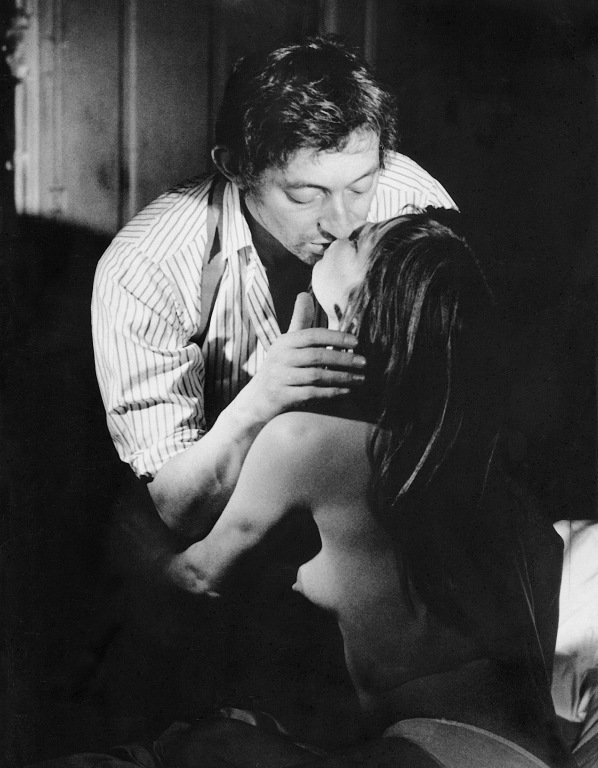
Oh, Serge! Mes vêtements semblent avoir diminué au très de vue que vous!

His music can be equal parts folky chanson, string-swept stripped-bare funk, spoken-word, Gaulois-rasping after-hours jazz and repetetive, hypnotic and practically hip-hop in nature. It’s no wonder the breakbeat community love him, as his funkier records are choc-full of material ripe for sampling. Have a listen to Breakdown Suite. Another track, Requiem Pour Un Con, was cut-up by lo-fi indie experimentalists The Folk Implosion and sampled and looped into a fantastic instrumental tribute to Gainsbourg named ā€˜Sergeā€˜. Amongst his best stuff, you’ll find such muse-driven objets d’art as Bonnie & Clyde or Melody Nelson’s L’Hotel Particulier and Cargo Culte or the super-Barryesque La Horse or Initials BB. Every one luscious, lascivious and chocolate fudge cake-rich in production. Big, booming mid-70s analogue treats. If you like these, do yourself a favour and track his stuff down. You won’t be disappointed.

Blur Fanclub Singles, demo, Hard-to-find, studio outtakes

B.L.U.R.D.E.M.O.

Have you got Beetlebum?”

No. It’s just the way I’m standin‘.”

The happiest job I ever had (and possibly ever will have) was when I worked behind the counter of a well-known High Street music retailer. A stop-gap job that somehow lasted 11 years, it took me all the way from Inverness to Leeds and back again via Ayrshire. Amongst the minority of planks, skanks and wanks in management that I was unfortunate enough to share a tea break with, I met a fair number of like-minded music obsessives, film obsessives and the odd stereotypically sulky sales assistant happy to hang off the counter and unsettle casual browsers looking for chart fodder. Like the one quoted above. He did actually say that, and it was funny.

Anyway. Down to business. I’m not about to get all high and mighty here, but I am about to show a shocking sense of double standards. I don’t really like illegal downloading. Rich, I know, from someone who’s happy to provide crappy mp3s of all and sundry to anyone who fancies them. But I’m not talking about harmless, out-of-print singles from 1973 and whatever else makes its way onto these pages. Is that really affecting anyone? What I don’t like is what I’d term mass-market illegal downloading. The recent BBC report that showed Manchester to be the worst offenders in the UK was quite interesting. Rihanna, Bruno Mars and Ed Sheeran are the big losers in the whole thing, as it seems that every school kid and upwards has illegally downloaded their music. It’s said that they’re the generation that understands music to be free, and I’d have to agree. Aye, some percentage or other of them may end up buying the album in the future, but that’s debatable. Anyway, here’s where my shocking double standards really kick in.

I like Blur. I like them a lot. I have done since She’s So High way back when. I’ve bought every single on or around the day of release. Even the shitey ones, and there’s been a fair few over the years. I’ve bought the albums on day of release. Even the shitey ones. Though, they’re all good in their own way, even if some have endured better than others. Leisure and The Great Escape are, to put it politely, ‘of their time’. Think Tank is by far the best, since you’re wondering. So. I have all the singles and all the albums, including Japanese imports and such like. I also have the 10th Anniversary Box Set, bought for a recession-friendly price in the Our Price sale. And there wasn’t even a recession at the time. I have the lot, as they say. Or, at least, I had the lot, until this summer when Blur 21 came out. All the albums. All the singles. All the remixes. Plus some demos and live stuff. At an eye-popping Ā£150, this was one purchase I’d find hard to justify. So, a bit of Googling here and there turned up a download. Low-fi and crappy, but it meant I got all the rarities I wouldn’t have otherwise. The live stuff you can keep, but in amongst the rarities are a few diamonds. Here’s some to chew over:

She’s So High (pre-Blur Seymour demo) Drum machine and studio chatter before some out-of-tune distorted guitar and even more distorted vocals. I can’t listen to the bassline without seeing the cheese-making fop with his floppy fringe mincing about stage right.

Popscene (1991 demo) Mad, noisy, toys-out-the-pram shout-fest. Excellent, as Monty Burns might say.

For Tomorrow (Mix 1 of an early demo). Mainly acoustic guitar and vocals, with the odd bit of shaker for percussion and some synthesised strings. Nice double-tracked la-la-la backing vocals. It’s hard to tell if it’s Damon or Graham who’s singing lead here.

Badhead (demo) The most under appreciated track from gazillion-selling Parklife. Round ‘ere it was all “Oi! get some exercise mate!” Meanwhile, Badhead, with its wistful melancholia and Syd-lite psychedelia was where the real music fans got their Parklife kicks.

Squeezebox (Alternative version of Music Is My Radar) Imagine if Talking Heads got up one morning and instead of micro-biotic, high fibre health food shit ate a big bowl of guitar effects pedals. This is what they’d sound like. Really!

Graham Coxon Fact 1: He favours Converse trainers on stage, as the white toe-cap helps him find the correct effects pedal on which to stomp.

Graham Coxon Fact 2: He told me that on Twitter.

Now. Off you go and buy Blur 21, there’s a good chap.

Hard-to-find, Kraut-y

Culture Club

Corner Shop
noun
British
  • a small shop selling groceries and general goods in a mainly residential area.
Cornershop
Proper noun
British Asian
  • a small , bona fide one-hit wonder pop group who release consistently brilliant Eastern-flavoured lo-fi indie-pop records with a side order of pakora and funk.

Cornershop have, believe it or not, been a going for concern for over 20 years. Formed by mainstays Tjinder Singh and Ben Ayers in 1991, they are a multi-cultural collective. This is reflected in the music they make – two-thirds Asian-fragranced and one-third steeped in Western indie rock convention.

I remember reading about them in Melody Maker when the band were pictured burning an image of Morrissey (bottom image), who at the time was flirting with the wrong side of the Right and as a result had everyone and anyone with half an ounce of decency calling him a racist. I bought their first single, In The Days Of Ford Cortina, pressed on 7 inches of beige, curry-coloured vinyl and was in truth disappointed in their seemingly rudderless and meandering grasp of melody and tunefulness. Things picked up with debut album Hold On It Hurts, and by the time they had recorded theĀ 6am Jullandar Shere single, well, the band had truly hit their stride.

If the Velvet Underground had travelled further than the Lower East Side, or Can stepped out beyond East Germany, they might’ve come up with something as one-chord groovy as. …Jullandar Shere. Droney and druggy and dipped in reverb, it‘s a cracker. Rather than the Velvets preferred method of ear-splitting feedbackĀ accompanied byĀ rudimentary drummer, or the meandering mumbled mumbo-jumbo that passes for a vocal track on many a Can record, CornershopĀ employ their own hotchpotch of tablas, tambours, sitars and guitarsĀ to create a monster that builds and builds and goes on and on for ever.Ā Noel Gallagher, no stranger himselfĀ to a bit of pop-psych and a whistleable tune, liked it so much he took Cornershop along on one of Oasis’ many troubled US Tours.

Creeping ever more into the mainstream, their big ker-ching moment came after Norman Cook remixed Brimful of Asha. The original single was taken from their most popular album, When I Was Born For The 7th Time (a big favourite round here when released). A mid-paced 3 chord strumalong, Brimful Of Asha is Tjinder’s ‘We Are Not Worthy‘ gesture to his musical heroes, specifically those of Asha Bhosle, an Indian ‘playback’ singer who sang the songs that many a Bollywood starlet would lip-synch to in the movies. If you listen closely, you’ll hear fellow playback superstars Lata Mangeshkar (Asha’s big sister) and Mohammad Rafi also being mentioned. Eagle-eared listeners might also spot references to Trojan Records and Marc Bolan. A terrific wee record, with its ‘everybody needs a bosom for a pillow‘ refrain, it barely scraped the charts and dropped into insignificance, until the Fatboy himself got involved.Ā  Norman Cook turned Asha into a brilliant big beat boutique of a record, all gargantuan drums, sped-up vocals and those incessant wee Fatboy keyboard stabs that you could argue are, by now, his trademark. This version of Brimful Of Asha went all the way to the toppermost of the poppermost, proof (if it was still needed) that in the mid 90s, everything Norman Cook touched turned to gold (literally, in Cornershop ‘s case – 400,000+ sales of Asha and counting).

Since then, Cornershop’s career has maintained a healthy, if marginal appeal. Favourite recent-ish track Double Decker Eyelashes reminds me somewhat bizzarely of the incidental music to Gregory’s Girl. It’s got that mid 70s jazzy, library music backing so beloved of Bill Forsyth in all of those brilliant films of his.Ā  And this year’s Urban Turban LP gathered together a series of low-key singles releases, including What Did The Hippy Have In His Bag?, a stupidly fruggable track that De La Soul might’ve done on another day. Flirting between Casio-flavoured hippity hoppity indie and 3 chord groovy shuffle-alongs, with a beat here and a bang(hra) there, theyĀ  come across like the Asian half-cousin of Gorillaz. Yer actual cornershop to Damon’s global-straddling Wal-Mart, if you will. Cornershop may never grace the charts again in quite the same manner as they once did. But then, what guitar bands do in this day and age of gurning, desperate idiots from the telly?

Singed by Singh

Dylanish, Hard-to-find, Most downloaded tracks

Yesterday’s Papers – The Cat In The Brand New Leopard Skin Pill Box Hat

Yesterday’s Papers is my way of infrequently getting new life out of carefully selected old posts. It’sĀ terrific that new readers seem to find Plain OrĀ Pan on a daily basis and often requestĀ particular pieces of musicĀ which, for one reason or another no longer have working links. There’s also some stuff on hereĀ that I, being vain and narcissistic,Ā still enjoy reading and, even though I would like to take an editor’s pen to the text andĀ re-write much of it, I think new and not so newĀ readers might enjoy reading it too.

Every Yesterday’s Papers post is presented exactly as it was written when it first appeared on Plain Or Pan, apart from the odd spelling mistake or grammatical error that escaped my editorial eye first time around. Oh, and the links to the music have all been updated too.

First appeared July 2, 2008

Got the new issue of Mojo through the letterbox today and amongst the usual excellent mix of articles, I spotted a wee nod to ā€˜Dylan Hears A Who’. This was a project that I stumbled across quite by accident about a year ago, where a couple of guys recreated Bob Dylanā€˜s golden mid-6os period with the most authentic-sounding band ever, playing songs who’s lyrics are made up entirely from words and phrases taken from the writing of Dr Seuss. It has to be heard to be believed, but trust me, the albumĀ is easily one of the Top 3 things I’ve ever downloaded. Even the artwork is beautifully pastiched…

According to Mojo,Ā mp3′s of ā€˜Dylan Hears A Who’ are hard to find. A bit of poking around on the internet shows this to be true. Dylan loved theĀ musicĀ  – there’s faithful pastiches of ā€˜Ballad Of A Thin Man’, ā€˜Tombstone Blues’, ā€˜Queen Jane Approximately’ and much more, but the dylanhearsawho website was shut down on the instructions of the Dr Seuss estate. Booooo! Pastiche fascists! So a year late, I’m posting it here.Ā Artwork is included!

The Cat in the Hat

There’s something happening here and you don’t know what it is? Try before you buy!Ā  Hereā€˜sĀ the aforementionedĀ splendid take on ā€˜Tombstone Blues’, entitled ā€˜Green Eggs & Ham’. See what I mean? Now go and download the whole lot. You won’t regret it.Ā ā€˜Too Many Daves’ sounds like one of those hotel room tape recordingsĀ that Bob fans go mental over. I’d forgotten quite how good Dylan Hears A Who actually is. Thanks, Mojo. Now.Ā WhatĀ are you waiting for?

Hard-to-find

Fairytale of New York

It happened. It had to happen eventually. Poor Andy Murray carried both the weight of the world on his shoulders, or at the very least, the heavy expectations of a nation terminally shite at sport upon them, and a monkey on his back that many thought he would never shake. Late last night/very early this morning, somewhere above the Arthur Ashe Stadium, high above the Manhattan skyline, the stars aligned, the Gods conspired and It happened. In a thrilling contest with individual rallies lasting longer than entire Ramones sets, and in five full sets featuring more ebbs and flows than the tide at Saltcoats beach, Andy Murray, our Andy Murray, bagged his first Grand Slam. But by now, you’ll know all that already.

How he did it is, I think, all down to psychology. Having had his early lead pegged back by an angry, fired-up opponent who’d suddenly awoken and found himself two sets down must’ve been agony. It was for me. With work in the morning, I was desperate for my bed, yet I had vowed I would watch the match to the end. “It’ll be over by midnight,” I told myself, unaware that one of the longest Grand Slams ever was about to unfurl. The 3rd set was a wash-out for Murray, and there can be no doubt that, by the 4th set, the match was Djokovic’s to lose. He had the momentum, and he was serving first in the final set. Get your nose in front and stay there, that’s the tennis players’ mantra.

But from somewhere, Murray dug deep. The spring in his heels that had so abandoned him along with his first serve in sets 3 and 4 returned. The fist pumping re-appeared. The crowd, sensing Murray’s positive mental mood-swing changed allegiance. Buzzing by this point, he went for the strictly unthinkable and the seemingly unplayable. He could’ve taken the easier option by ensuring he got the ball over the net, anywhere, just over, in the hope that Djokovic might be forced into a stupid error. But, no. In the eye of the storm, he pulled out all the hard shots and went for it.Ā  Long, deep, top-spin shots fizzed to within a hair’s breadth of the baseline. First to one corner, then the other. And back again. “East Coast to West Coast,” as my American commentator helpfully explained. “That’s how he’s gotta play it!” surmised his sidekick. “Make Novak work!” Murray chose to play them all. The back-hand slices. The cute drop-shots. The disguised cross-court passes. And they all came off, every one of them. Positive mental attitude. Self-belief. Call it what you will, but from somewhere, Murray found the charge. He broke the Djokovic serve. Then, after holding his own, he broke the Djokvic serve again. This was unbelievable. By the time he was serving for the match, I was shaking with excitement, playing every shot with him, right up until the end when a spent Djokovic returned the ball just on the wrong side of in and Andy finally cracked a smile.

Craig Levein, if you’re reading, go and speak to Murray. Get him to rub his white ‘fro onto your frightened,Ā  negative head and see if you can’t pick up some of his bristling positivity. Go out and play like you want to win. Play the hard shots and take chances. Play with a swagger. Play with belief.Ā  Play like you owe us, big time. Who knows, you might even get us back in to the Grand Slam that’ll be Rio 2014. Though, sadly, maybe that’s pushing it a wee bit.

The Music:

The Artist who cannot be named in the blogging community for fears of hefty DMCA notices and men in shades appearing at your door in the wee small hours has a song called Glam Slam. Here‘s the none-more-80s remix. To paraphrase: Glam Slam, thank you man. You really made my day.

Get This!, Hard-to-find

Lugton Calling To The Faraway Towns

So I’m looking over my 19 year-old shoulders, keepin’ the edgy with one eye whilst scanning for decent pallets of wood with the other. After a minute or so a criteria-matching pallet is duly found (“sturdy“, “wan ye could stamp oan an’ it widnae brek“), carefully dismantled (“shhh! Security guards, furfucksakes!“) and folded into the boot of my pal’s mum’s Mini Maestro before being sped out of Hysters at top speed and delivered to the back door of The Attic, venue for that night’s Nyah Fearties gig.

Nyah Fearties (pronounced Nyah Fearties) were a brilliant, brilliant 2-man folk/punk band from Lugton in Ayrshire, a place so small and insignificant that Google are still looking for it on one of their own maps, even if The Fearties did their best to put their wee toun there. They had a sound that had obvious reference points in The Pogues and The Men They Couldn’t Hang, but there was a rough and raggedyarsedness to their sound, more no-fi than lo-fi, that made MacGowan and co. sound like a slick jazz funk band from 1982 by comparison. The Fearties were very parochial. Not for them a Scottishness that reeked of purple heather and proud images of Edinburgh Castle, they sang of what they knew. Lugton Junction. Bible John. Sawney Bean. Red Kola. A Sair Erse.

At The Attic, the two Wiseman Brothers, Davy and Steven, thrashed the daylights out of their acoustic 6 strings and bass guitars, not so much playing them as wrestling with them as though they were man-eating pythons. They kicked the shit out of that freshly-borrowed pallet and by then end of the gig it was in pieces smaller than we’d made when trying to get it into the car. They sounded like the apocalypse. Wild-eyed and feral, they participated in an hour and a half of non-stop call and response cris de guerre, sweating like boxers in the final round yet still standing upright, as if held vertical by magic. And so were we. Fuelled on Ā£5 Bob Marleys – an ice bucket filled with a shot of every spirit and diluted to taste with fruit juice and so called because, as the barman helpfully pointed out, “you’ll wake up black and dead“, we thrashed about in the wee area in front of what loosely passed as the stage. Bang in the middle of this area was a spiral staircase. And bang! At one point or other I chicken-danced myself into it and split my head in two. Didn’t notice a thing until the next morning when I did indeed wake up black and dead and very hungover, just in time for the half 7 start in Safeway, dried blood crusted on my forehead and a splintered plank of wood from our pallet lying next to my bed. Really.

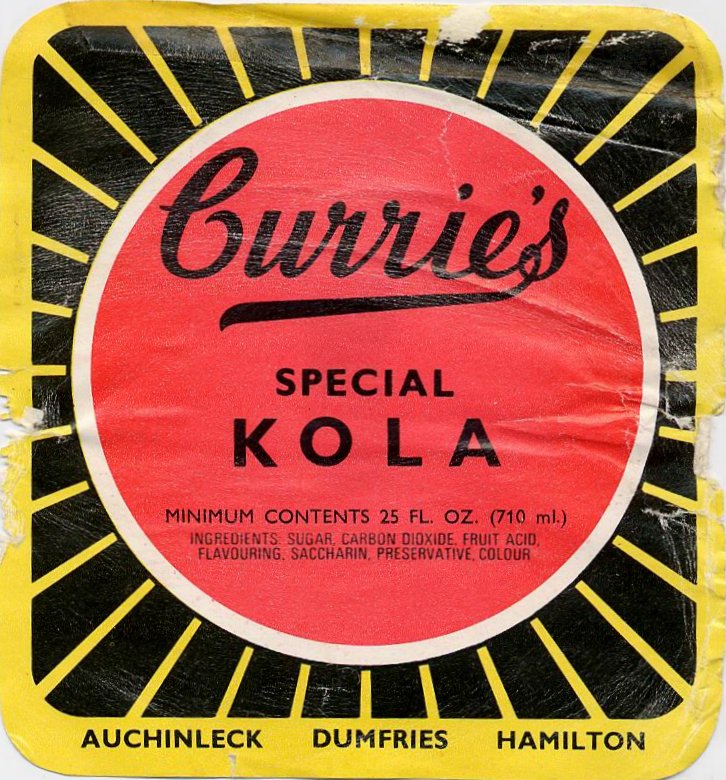
Red Kola (pronounced Rid Kola) is one of The Fearties best. Written as an anthem to Curries’ Special Kola (not brown, but red, and teeth-rottin’ tasty) as well as a tongue in cheek response to REM’s Orange Crush and as a metaphorical warning of the Americanisation of the UK, it’s a breathless, clatterin’ rant and a half:

Cop shows, burger bars and American Cream Soda

Take them oot an’ drown them in a sea of Pepsi Cola

They swallowed up oor land in the name o’ Geordie Bush

He couldnae keep his piggie little eyes aff oor skoosh!

Rid Kola! Rid Kola! Oor guts are dyed wi’ Rid Kola!

Lugton Junction (pronounced Lugton Junction) is a tirade against British Rail. From the opening scaffolding poles and found-sound bashing that apes the sound of ancient steamtrains passing at high speed, to the slide guitar as train whistle, to the we’re no’ standin’ fur this vocals, it’s what you could call one of The Fearties’ Greatest Hits;

There’s a train comin’, it’s no stoppin’ here

There’s a train comin’ doon the track, it’s no stoppin’ here,

There’s a train comin’ doon the track, it’s no stoppin’ here.

It husnae stopped here fur 20 bloody years!

Lugton Station, 1966

A year or so after The Attic gig and me and a pal are on the bus to Glasgow. It stops at Lugton and who gets on but none other than Davy Wisemen (he cannae get a train, remember?) “A’right boys!” He sits down and entertains us and everyone else on the bus (he has a rather volumatic burr to his voice) with stories about anything and everything. He draws us a map of Arran, showing us where The Fearties are playing in a week or so. Then we’re in Buchanan Street bus station and he’s off to who knows where with a genuinely cheery cheerio. “Did embdy ever chin you about that pallet?” No, Davy, but I couldnae explain to my mum how a broken plank of wood had ended up in my bedroom.

Get This!, Gone but not forgotten, Hard-to-find, Most downloaded tracks, Yesterday's Papers

Yesterday’s Papers – Coke After Coke After Coke After Coca Cola

Yesterday’s Papers is my way of infrequently getting new life out of carefully selected old posts. It’sĀ terrific that new readers seem to find Plain OrĀ Pan on a daily basis and often requestĀ particular pieces of musicĀ which, for one reason or another no longer have working links. There’s also some stuff on hereĀ that I, being vain and narcissistic,Ā still enjoy reading and, even though I would like to take an editor’s pen to the text andĀ re-write much of it, I think new and not so newĀ readers might enjoy reading it too.

Every Yesterday’s Papers post is presented exactly as it was written when it first appeared on Plain Or Pan, apart from the odd spelling mistake or grammatical error that escaped my editorial eye first time around. Oh, and the links to the music have all been updated too.

First appeared March 19, 2007

This slideshow requires JavaScript.

Hey! Get down! Dig it with the Vanilla Fudge and Coca Cola! My mum tells me that in the swinging 60s, most provincial teenagers never had access to, never mind actually try, the mind-bending drugs that were so obviously shaping music, fashion and the consciousness of society. Instead, theĀ hip, with-itĀ teenagers inĀ my wee corner of the west of ScotlandĀ would pop a couple of aspirins into their Coca Cola and swing the night away in aĀ tripped-out approximation of sixties bliss.

Coca Cola were well aware that things indeed go better with a Coca Cola, and their 60′s marketing team were so on the ball that they got the groups du jour to record Coke jingles for local radio and the likes. Most of these jingles are bloody magic. They are quite blatant pastiches of those artists’ current hit singles and fall into 3 distinct categories:

  • 1. The soul/r’n’b artist – Aretha Franklin, Marvin Gaye & Tammi Terrell, Carla Thomas, The Supremes, Otis Redding, Ray Charles etc etc
  • 2. The fuzzed-out, beat-driven, blues-influenced garage bands – The Who, Vanilla Fudge, Troggs, Box Tops, Dave Dee Dozy Beaky Mick & Titch (so that stretches it a bit, but you get the point)
  • 3. The pop stars/crooners – Bee Gees, Lulu, Roy Orbison, Petula Clark, Nancy Sinatra, etc.

Here are three examples of the above. The Who’s ā€˜Coke after Coke’, The Supremes pastiche of ā€˜Baby Love’ and Tom Jones’ rerun of ā€˜It’s Not Unusual’ that is quite fantastic, hilarious and hideous all at the same time. ā€œSay, I could do with a Coke right now.Ā Somebody get me one please?ā€ The big orange freak.

tom-jones.jpg

Did someone order a Tango?

I’ll put up more of these soon. Next up Otis Redding, Aretha Franklin, Nancy Sinatra, Vanilla Fudge, any requests…..

Cover Versions, Hard-to-find

My Whole World Is Falling Down Triple Whammy

When it comes to overlooked, it’s hard to see past William Bell (no pun intended). Precious little has been written about William and his contribution to soul music, but when you poke and prod beneath the grooves and squint at the small print on the records, you’ll discover that he was a key figure in the development of Stax Records’ punkish ying to Motown’s pop yang. All music fans like Motown. All music snobs prefer Stax. That’s just the way it is. And while the stories of Holland-Dozier-Holland, Marvin Gaye, Smokey Robinson et al are widely known, William Bell’s tale could do with a leg up.

Bell learned his chops playing in Rufus Thomas’ backing band. It couldn’t have been easy. Thomas has a voice like a rooster at the break of day and liked to dress up in the sort of costumes Elton John might have refused to wear on account of them being too outlandish. Tired of doing the Funky Chicken, the Funky Penguin, the Push And Pull, the Itch and Scratch and all manner of novelty nonsense,Ā  William made the decision to go it alone. A wise decision, as it turned out. With a series of self-penned, tear-soaked, southern soul-inflected heartbreakers, he firmly established himself alongside Isaac Hayes and David Porter as one of the go-to staff writers at Stax. You Don’t Miss Your Water. Born Under A Bad Sign. A Tribute To A King. I Forgot to Be Your Lover. All flowed effortlessly from his pen and into the R’nB charts alongside a handful of duets with Judy Clay.

Weller. On target.

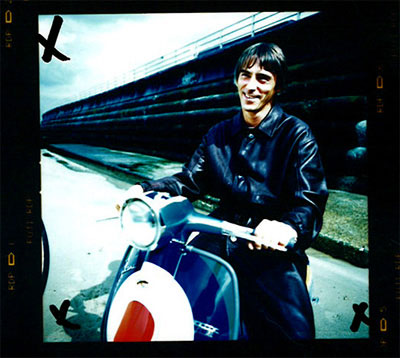
I first discovered William Bell via Paul Weller, who stuck a version of Bell‘s My Whole World Is Falling Down on his You Do Something To Me single. Weller plays a terrific high in the mix guitar riff (same as the original, only grittier, rougher and much more mod) and channels his best white man sings Otis vocal. But don’t let that put you off. It was 1995 and everyone was going mental for Ray Davies. Weller was just being contrary, for which I am eternally grateful as I now own a handful of William Bell LPs on the strength of his cover. Recorded for a Radio 1 session, it’s played live without overdubs and is a fine indication of just how tight and in-tune with one another Weller’s band was back then. Essential listening, as they say in some parts.

An interesting (and totally off the wall) cover is by Jamaican Ken Parker. His uptown uptempo version was recorded at Studio One by Coxsone Dodd and skanks in all the right places. The version I have is over 8 minutes long and goes kinda dubby in the middle before making its way back to the main song and melody. Me tinks da ‘erb might be involved. Jesus. I came over all Alan Partridge there. Sorry ’bout that. Anyway, heady stuff from the son of a preacher man, as they sing in some parts.

Three very different, excellent recordings straight outta three of the most famous studios in recording history – Stax, Maida Vale and Studio One. How’sabout that then, guys ‘n gals?