Get This!, Gone but not forgotten, Hard-to-find

The Madness of King Robert George

Robert George Meek was better known as Joe Meek. A maverick record constructor, sonic architect and visionary of what was possible from the seemingly impossible, he led a turbulent life, permanently perched on the line right between madness and genius. Many of the main protagonists in the Joe Meek story went onto bigger and more successful things (though not necessarily better), but equally, many of the characters who crossed paths with Meek during his quest for sonic perfection ended up troubled, broke (mentally, physically and financially) and even dead. By comparison, Joe Meek’s story makes Phil Spector’s look almost insignificant.
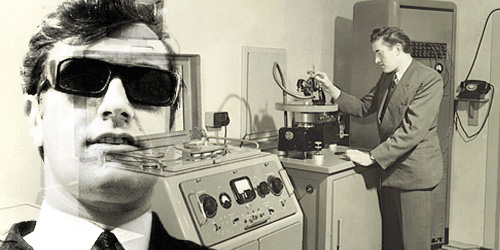
joe-meek

From his rented flat above a handbag shop on London’s Holloway Road (Number 304 – there’s now a wee unobtrusive plaque there for anyone with a keen eye and musical trainspottery tendencies), and with financial backing from a somewhat eccentric ex-army major who made his fortune from importing children’s toys, Joe crafted a selection of minor hits, major hits and million-sellers, all sewn together from an unlikely array of self-built echo chambers and a Health & Safety Officer’s wet dream of spaghettied electrical cables across landings and staircases via the bathroom and bedroom to the wee cupboard/control room where it all came together. Windows were covered up for sound-proofing. It could be the height of summer but no-one inside the ‘studio’, least of all Joe, could have known. To the piano keys Joe added drawing pins to give it a more sparkly sound. Vocals were nearly always recorded in the tiled bathroom, where there was a better, more natural reverb.

Joe couldn’t play a note of music, so he would hum and sing the tune he was wanting to the musicians, who would then be instructed to play it back note perfect. Often, in the search for perfection, they would be asked/encouraged to play the same tiny fragment of a song over and over again, way into the wee small hours if necessary, until they captured the essence of what Meek was hearing in his tortured head (sometimes even at gunpoint, when Joe’s demons got the better of him – more on them in a bit). It’s quite clear that Joe was not like any of the other 9 to 5 shirt-and-tied record producers of the day. Lee Mavers would’ve loved him.
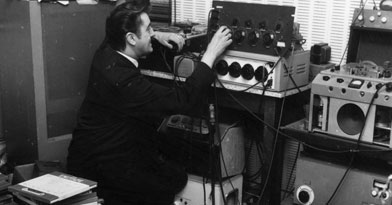
joe meek studio

Joe’s personal life was significant for two reasons. One: He had an interest in the spiritual world and the occult. He regularly channeled the spirits for guidance and inspiration. On meeting Buddy Holly, Joe told him he had foreseen his death. “February 3rd,” said Joe. “That’s today,” replied Buddy. A year later, on February 3rd 1959, Buddy Holly hopped on board a light aircraft in Iowa and died when the plane crashed.

Joe, like many people in the early 60s, had a huge interest in space travel and the possibility of civilisations on other planets. Watching the launch of the Telstar satellite and mesmerised by it’s capabilities for beaming live television and audio around the world, Joe began working on his most famous record. The music for Telstar came to Joe in a dream. Re-creating the drama of lift-off and the other-worldliness of outer space, Telstar was like nothing that had been before. A combination of twanging minor key surf guitar and distorted clavioline it has since had the dubious distinction of being known as Margaret Thatcher’s favourite record. But don’t let that put you off. Telstar was also one of the catalysts for Joe’s descent into madness. But more of that in a moment.

Have a listen to Telstar by The Tornadoes:

The other significant aspect of Joe’s life was that he was homosexual. Still illegal in early 60s Britain, Joe was forced to keep his true self under wraps. Surrounding himself in his studio with eager young boys, Joe was on a mission to find the next Billy Fury, a singer he nearly ‘got’ before showbiz giant Larry Parnes snapped him up, and who’s success Joe found hard to cope with. Joe began managing a young German-born hopeful called Heinz. Heinz had little talent and minimum appeal but Joe spent the major’s money on far too many promotional shoots in an attempt to hype him into the charts. He lavished clothes, cars and even a boat on him and began a very one-sided love affair that was doomed to failure from the start.

No hits were forthcoming and the major was starting to ask for a return on his money. So too was Joe’s landlady, a woman who put up with much and to a point had allowed Joe to defer payment on his rent. But Joe had no money to give them. Around this time, Joe was arrested, George Michael style, for soliciting an undercover policeman in a public toilet. Named and shamed in the newspapers, friends stopped calling and Joe slipped into a spiral of drugs and the unpredictable madman/genius behaviour he has since become known for – waving guns around the studio, sacking the session musicians who had played on all his tracks and constantly checking for hidden bugs around his studio/flat when he became wracked with paranoia thinking Decca Records and even Phil Spector were somehow stealing all his ideas.
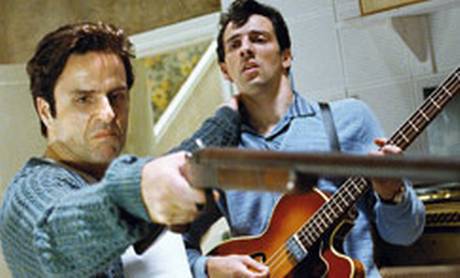
Still from the excellent 'Telstar' Joe Meek Biopic.
Still from the excellent ‘Telstar’ Joe Meek Biopic.

Hey Joe! Where you goin’ with that gun in your hand?

The success of Telstar should have eased the situation. It spent 5 weeks at Number 1 in the UK. It was the first British record to reach Number 1 in the USA. It won an Ivor Novello award. More importantly, it sold millions. It should’ve made Joe and everyone involved very comfortable. However, as the record grew in success, Jean Ledrut, a French composer decided that Joe had taken the melody for Telstar from his track La Marche d’Austerlitz.

Contrast and compare with Ledrut‘s tune:

Royalty payments were subsequently frozen and a lengthy courtroom case began. This deprived Joe of much-needed income. Perhaps, more significantly, along with the public toilet episode and the subsequent hushed-up blackmailing of him, it robbed Joe of any dignity he had left. Joe maintained his innocence, that the tune had come to him in a dream, but by now the people doubted his talent. Joe spiralled even further into madness. With his studio dismantled and possessions confiscated following a court order for non-payment of bills, he got into an argument with his landlady over his over-due rent. Pulling the gun on her, he shot her before turning the gun on himself. The date? February 3rd. Albeit 8 years apart, the same date as Buddy Holly’s death.
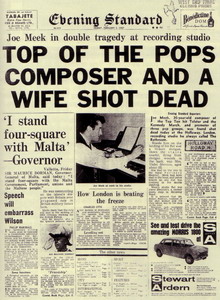
joe meek newspaper 2

The Music:

John LeytonJohnny Remember Me.

John Leyton was the original actor-turned-singer, long before Simon Cowell trawled the karaoke bars of Blackpool in search of the inspiration required in order to turn a couple of ugly actors into million-selling chart stars, and make himself a fortune in the process. Along with The Shangri-La’s Leader Of The Pack, Johnny Remember Me is all you really need for sides 1 and 2 of  Now That’s What I Call Melancholic Teen Angst. Like a spaghetti western theme, all galloping Spanish guitars and teen heart throb vocals, Meek’s trick is to add a gallon of reverb, a ghostly female wail and enough pathos to soften the collective hearts of every spiv, shyster and Kray Twin who flirted with the music business in the early 60s. Wee Alex Turner and Miles Kane, when doing their Last Shadow Puppets album had this on constant rotation, I’d bet.

The OutlawsSwingin’ Low.

A post-Shadows, pre-Beatles twang affair, this is neither rock nor roll. On account of all the wee bits where the musicians get to showcase their individual talents, it falls into the almost novelty record category – the sort of record Benny Hill might have sequenced one of his dolly bird chases to. The Outlaws were Meek’s backing band of choice and various combinations of them played on many of Joe’s sessions. Given the chaotic nature of Meek’s recording, and the sheer volume of un-labelled tapes in the Meek archive, no-one knows for sure exactly who played on what. Bass player Chas Hodges went onto greater fame in his own right as Chas from Chas ‘n Dave. Guitarist Richie Blackmore went on to join Deep Purple, form Rainbow and live more recently as a 17th century mandolin playing medieval minstrel. Occasional drummer Clem Cattini went on to do sessions for The Kinks, Tom Jones and played un-credited on any number of  1960s hit singles.

The HoneycombsHave I The Right.

Stealing the chorus from the Everly Brothers Walk Right Back, Have I The Right is yer classic stomping 60s smash. The stomp was created by banging brooms, boots and all manner of bangable things on the studio’s wooden floor, much to the annoyance of everyone in the handbag shop downstairs. It’s just my opinion, but I think the Sex Pistols based their jackboot stomp on this record when they recorded Holidays In The Sun.

The TornadoesTelstar.

Other-wordly, of its time, yet still contemporary sounding today, Telstar is Meek’s legacy. In an ironic post-script to the Joe Meek story, just 3 weeks after Meek’s death, a judge ruled in favour of Meek, citing the fact that Ledrut the Frenchman’s music hadn’t been played outside of France and that Meek could not possibly have heard it. Given that Meek spent every hour cooped up in his little flat/studio, he does have a point. Had the judge’s ruling been made earlier, perhaps Joe might still be with us today, kicking against the pricks and doing something interesting. We’ll never know.
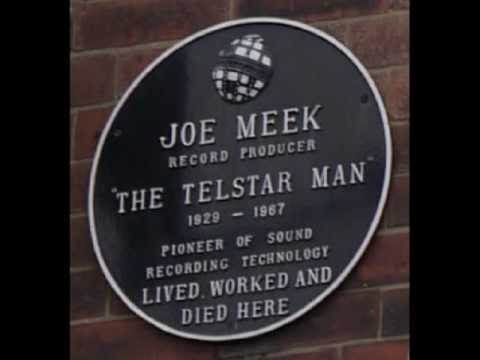
joe meek plaque

Cover Versions, Gone but not forgotten, Hard-to-find

Under The Covers With Sarah Cracknell

Cor! Eh? You beauty! (Nudge, Nudge). Knowotoimean? (Adopts Sid James cackly wheeze). I mean, ‘oo wouldn’t? Eh? Eh! Ow’s yer father? Eh? Eh? She’d get it! And no mistake! Let’s slip into sumfink more comfortable, shall we?

Yeah, let’s slip into something more comfortable. Like the honeyed tones of La Cracknell and her backing band of boffins and beard strokers tackling some of the finest moments in thinking man’s pop. With mixed results. Saint Etienne annoy me. Not in the way that wasps annoy me. Or paper rustlers in the cinema. Or blue-blooded ‘n bigoted Rangers fans. Or those paranoid green-tinted Cel’ic supporters and their uncouth manager after a decision goes against them. But Saint Etienne get my goat. I can’t put my finger on it or tell you exactly why. There’s no one reason. I’ve got tons of their stuff, vinyl and CD, bought in faithful chronological order as and when released, up to a point around How We Used To Live. I’ve always liked their way with a sixties-inspired piece of London pop and the sly wink of an eye towards the reference points therein. They’re a true ‘record collection’ band, that’s for sure, but with that comes a feeling that they’re just a wee bit too hip for their own good, just a shade too arch for those in the know and slightly smug in the knowledge that no-one is quite like them. Suffering from something of an identity crisis, they’re too ‘indie’ for pop when they themselves’d probably consider themselves too pop even for pop.

That said, they probably wet their collective knickers when asked to produce a version of Kylie covered Nothing Can Stop Us with a coolness that even Sarah would find difficult to cultivate. This was Kylie BH (Before Hot Pants), the Kylie of mid 90s hell, when only Nicky Wire and ironic students paid her any attention. And here she was, covering obscure, non-charting singles built around old Dusty Springfield samples. Of course. Great version, Kylie! Really!

Saint Etienne’s best known cover is surely Only Love Can Break Your Heart, a pre-Cracknell track where they dismantled whiny old Neil Young’s campfire strumalong of angst and re-tooled it as a Soul II Soul-styled shuffler for the dancefloor. But you knew that already. Dig deeper into the Saint Etienne ouvre and you’ll find all manner of cover versions. Available on the rare-as-can-be fanclub-only Boxette, you’ll find their version of David Bowie‘s Absolute Beginners. I saw them do this live, at the Mayfair in Glasgow, with a pre-fame Pulp supporting. I’ll need to dig out the ticket some time, as the band’s name is written as St Etiene, with one ‘n’. Anyway, their version was rubbish that night (no Bowie aping bap-bap-ba-ooos, surely the best bit?) and the studio version, despite the inclusion of the aforementioned bap-bap-ba-ooos, remains kinda rubbish to this day. Some shouty sampled bit or other by the boys whilst Sarah sounds like a Dalek on downers. Not their finest moment. Maybe they should’ve tackled The Jam track of the same name instead.

On the Deluxe Edition of So Tough, you’ll find them having a go at Teenage Fanclub‘s Everything Flows. A staple of TFC’s live set since their first gig, Fannies fans froth at the mouth for its meandering Neil Youngesque solos and melancholic ruminations on life. Saint Etienne, surely having a laugh at our expense, render it practically unlistenable. Now, some folks say that the best cover versions are when the band takes the song and makes it their own (see, for example, Only Love Can Break Your Heart), but when the heart and soul of the track (in this case the insistent, wailing guitars) are replaced by synth washes and a politely skittering drum machine so bland a yoga teacher would have trouble chilling out to them, well, you can imagine….

Going some way to redeem themselves, this year found Saint Etienne taking a shot at the holiest of holies, The Beach BoysWouldn’t It Be Nice. It‘s not bad – starting acapella before morphing into a soft focus mush of warm harmonies, ticking clocks and half-speed backing tapes, keen scholars of Wilson pop will easily spot the odd nod to the Smile-ear Barnyard amongst the mix. See – they’re too fucking smart for their own good, that Saint Etienne.

I love ’em really. Wrinkles ‘n all…

Get This!, Gone but not forgotten, Sampled

Rapped. Rapt.

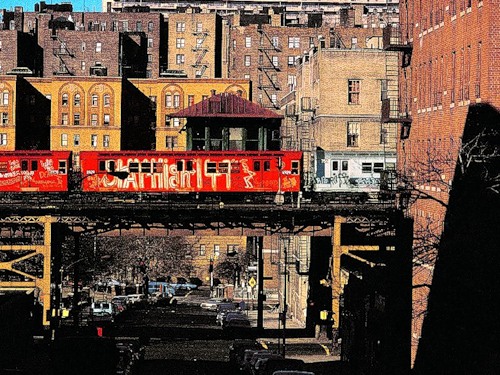
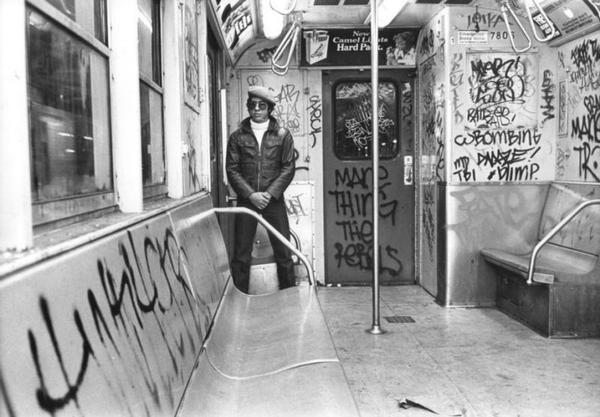
A fuggy haze hangs low over the East River between Manhattan’s Financial District and the brownstones of Brooklyn. Clattering like one of those wooden toy snakes across the Williamsburg Bridge weaves a long, low train, lazily rolling its way along the J line. Sprayed in a dulling array of  pinks, greens and primary colours, tagged to within an inch of illegibility to those over 35, its contents sit in silence, oblivious to the multi-coloured carnage in which they are cocooned. Inside is not much different. It looks violent. It feels violent. Doors, windows, seat coverings; every available surface space is thick with the same chunkily inked shout-outs to whoever is reading. Every passenger finds a point in front of themselves and focuses, daring not to lift their head and avert their gaze lest they happen to catch the eye of someone close by. Women clutch their bags and count the stops until they can get off. Men, the good ones, the ones who’d like to think of themselves as the have-a-go hero when something bad kicks off in here, try to look both non-threatening  yet tough. The bad ones just look threatening. And tough.

One of the good guys

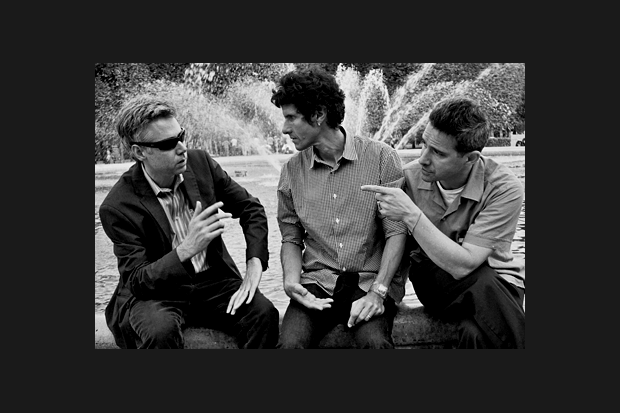
If this was the start of a movie, it’d be soundtracked by this, Shambala from The Beastie BoysIll Communication LP. Purveyors of the finest gravel-throated shouty hip hop since 1981, Beastie Boys also did a mean line in often-overlooked instrumentals. Shambala is spacey, droney and built upon a bed of Buddhist chants and brooding wah-wah. Kinda vegetarian funk, I suppose. There’s a nice drop out where the hi-hat does its best Theme From Shaft impersonation before the clipped wah-wah brings us back to the incidental music in a 1976 episode of Starsky And Hutch. That wee scratchy noise you can hear in the background isn’t authentic vinyl hiss – it’s the sound of the Stone Roses taking notes in preparation for their next set of ker-ching! comeback dates.

Also on Ill Communication is Bobo On The Corner, another fantastic slice of Beastie funk. More clipped wah-wah and droney bass, this time the sampled Stubblefield-aping shuffle beat comes from, presumably, one of those New York street musicians who can make 3 oil drums and an empty can of vegetable oil from Chinatown sound like a particularly funky octopus playing Give It Up, Turn It Loose. A bit like this guy…(maybe he’s the real Bobo on the corner. Or maybe not)….

“Gimmefidollahs!”

If you prefer yer Ad Rocks ‘n MCAs ‘n Mike Ds rrrrrrappin ‘n rrrrrrhymin’, ch-check this out- Ch-Check It Out from 1997’s Hello Nasty, devoid of loops, samples and other assorted musical flim-flam. Just the 3 voices a-riffin’ and a-goofin’ off one another, like Benny and the Top Cat gang recast as super-bratty teenagers. And, bringing us back to where we came from, a vocal-only Stop That Train. Hot cuppa cwawfee and the do’nuts are dunkin’, Friday night and Jamica Queen’s funkin’. Essential!

Ach. Y’know you’re gettin on a bit when Beastie Boys start dying round about you. Rap on, MCA!

Cover Versions, Gone but not forgotten, Hard-to-find

Turtle-y Magic

Field Music are a real enigma. Nominees for this year’s Mercury Music Prize, like most who appear on the list they occupy a strange place somewhere between cult band and the mainstream. A hotchpotch of clanging riffs with prog leanings, their music isn’t all that original. Their music isn’t all that groundbreaking either. Plenty of other artists have used similar instruments to similar effect. And their music, like plenty of artists before them, is not that well-known outwith those in the know (think this generation’s XTC). But their music is colossal. And tuneful. And therefore radio-friendly. And by rights they should be a whole lot more successful (whatever that is these days) than the latest hastily assembled ‘gang’ of skinny-jeaned, stupid-haired, stage school stooges armed with various combinations of the same tune and not much else. Despite the best efforts of those in positions of influence, such as 6 Music’s Marc Riley, who plays them and enthuses about them ALL THE TIME, Field Music aren’t so much under most folks’ radar as completely off it.

A few weeks ago they released a very limited (and now sold out) covers LP. Featuring their versions of Robert Wyatt, Pet Shop Boys, Roxy Music etc etc songs, it has the uncanny knack for a covers album of sounding like the band who made it, not the band who wrote it. Not for Field Music a faithful run through of Ringo’s plodding country ‘n western heartache ‘Don’t Pass Me By’. Instead, they turn what is undeniably a Beatles clunker into something that could sit happily on 2010’s Measure LP. Warm, metallic and with added Beatles riffs/references for those in the know.

Best track to these ears is their version of Syd Barrett‘s Terrapin. Barely recognisable from Syd’s whimsical off-kilter psychedelic sketch, Field Music add riff upon riff to doubletracked vocal upon doubletracked vocal. The outrageous falsetto breakdown in the middle reminds me of an old Beatles bootleg I have where you get to hear John and Paul working out the harmonies to Taxman. It really does sound terrific – incredibly well-produced, tight, taut and with perfectly-executed sudden stop silent bits – and normally I wouldn’t post something as box-fresh as this. However, given that the LP is already sold out and never to return, well…..

Syd, of course, is very much a musicians’ musician. The great and the good all dig Syd and for many The Pink Floyd of the mid 60s are far more credible than the stadium-hogging Floyd (Man) of the mid 70s. The Trashcan Sinatras created a luscious and bluesy 6 and a half minute paen to Syd, choc-full of nudge, nudge, wink, wink references to Syd and his music. Emily. The UFO Club. Painting. Hand in hand with The Eskimo. Even the title, Oranges & Apples is Syd-like and a play on The Pink Floyd’s Apples & Oranges. But you knew that already. Give it a listen. It’s one of the best things the Trashcans ever did. Quite something when you consider the embarrassment of riches in their back catalogue.

*Bonus Track!

Field Music‘s Them That Do Nothing from their Measure LP. The perfect introduction to the sound of Field Music, it‘s XTC-esque in its pastoralism, sonically-rich with its chiming guitars and tight-knit harmonies and unexpected left-turn wonky bits. Jeez. That’s a sentence I doubt I’ll ever write again.

Gone but not forgotten, Hard-to-find, Sampled

It’s Chic Co. Time

Jeez! Plain Or Pan used to be all about Beta Band outtakes and multiple versions of La’s demos, the odd foosty soul survivor and long-forgotten obscurios by long-forgotten oddballs. It still is, of course, but just not today.

I have a long-time love of disco. To these ears, it doesn’t matter that it’s considered kinda naff and uncool, which, when placed next to any amount of other musical bits n’ pieces, it may well be. In the mid-late 70s, when straddled by the ugly, oiky twin-headed monster of glam and punk, it was certainly the musical choice for the straight-laced amongst society. Folk who bought one single a year bought Saturday Night Fever. Folk who bought one single a week owned the entire back catalogues of The Sweet and Sham 69. What I like about disco is the musicality of it all. If the Floyd (man) and Can (man) are head music, disco is most definitely music designed for below the waist. Rock music is, they say, ‘proper’ music. But so is disco! Made on proper instruments and played as well as or even better than the patchouli-smelling long hairs in afghan coats from bygone eras, disco is all about a slick riff, a fluid bassline and a four-to-the-floor, hi-hat enhanced beat that never lets the lyrics get in the way of a good groove.

The difference between rock and disco is that rock music has the virtuosos, the soloists and the guitar heroes. Who’s Pink Floyd’s guitarist? Easy, eh? But if I asked you to tell me who played the slick riffs on Night Fever or Rock Your Baby, chances are you’d be struggling. You could probably have a good stab at naming half the members of Can. But asked to tell me who played the fluid basslines on Car Wash or Young Hearts Run Free and chances are you’d be asking the audience or phoning a friend who answers to the name of Mr Google. Disco, for one reason or other has been ridiculed and put in its place as someway unimportant. Of course there are exceptions to the rule.

Nile Rodgers was developing serious Class A substance abuse at the age most of us are just getting to grips with the technicalities of Eagle-Eyed Action Man. Passed back and forth at a young age from East Coast to West Coast on a succession of Greyhound buses between his drug-addicted prostitute mother and far-off, far-out aunts and uncles on the other side of America, it’s a wonder he thrived at all. But thrive he did. Playing in a variety of  covers acts, reputation enhanced by his ability to read music, fate lead him to Bernard Edwards and eventually Chic were born. It was watching an early Roxy Music show that gave Nile his band’s manifesto: The clothes were as important as the music. The women on the record sleeves would give the band glamourous identity. Chic would be a company. An organization. Singers would come and go, but the core of Rodgers and Edwards would remain the constant. They’d write songs for other artists. They’d discover knew ones. Like an East Coast Family Stone, in sharp suits rather than hippy garb, but fuelled by the same high grade white powders, Chic and their music would rule the world. You know the songs. You know the stories. You can read all about it in Nile’s excellent ‘Le Freak‘ autobiography.

It’s worth noting that the Nile Rodgers’ guitar sound has been appropriated by the musos that form white rock’s guitar untouchables. Edwyn Collins’ blatant homage to the sound can be heard all the way from the opening bars to the fade out of Orange Juice’s Rip It Up (perhaps even more so on the strangulated none-more-80s 12″ mix). Johnny Marr was so enraptured by Nile that he based his guitar line on the second verse of The Boy With The Thorn In His Side on those wee choppy rinky-dink Chicisms. Johnny turned up earlier on in the year playing Le Freak on stage with Nile. And just in case you missed the point, he even named his son Nile. Dance records over the past decade or so, proper dance records, made by machines and everything, often stray close to the Chic sound. Modjo’s Lady for one. Spiller’s Groovejet another. And Stardust’s The Music Sounds Better With You. Chicesque, the three of ’em. Even Da Funk by Daft Punk is built around that clipped guitar sound. Ubiquitous. Is that not what they say?

Here are some of the Chic Organization’s wonderful world-ruling results. Every one features Bernard’s ripe-for-sampling, slap-happy, fluid-as-mercury bassline and Nile’s trademark 3 string rinky-dink guitar, chattering away incessantly in the background like a couple of old ladies clacking their false teeth at one another down the Mecca on a Saturday night. It might just be my favourite sound in music.

ChicGood Times

Norma JeanSorcerer (12″ mix)

Diana RossUpside Down (original Chic mix)

Sister SledgeThinking Of You (Dimitri From Paris mix – officially sanctioned by Chic, it’s a cracker)

Carly SimonWhy (12″ mix)

And the influence of Good Times et al lives on, seemingly forever…

Hard-to-find, Peel Sessions

Keeping It Peel 2012

Keeping It Peel is the brainchild of Webbie, who writes the excellent and informative Football And Music blog.  An annual celebration of all things Peel, it’s purpose is to remind everyone just how crucial John Peel was to expanding and informing listening tastes up and down the country. Be it demo, flexi, 7″, 12″, LP, 10″ ep, 8 track cartridge, wax cylinder or reel to reel field recording, the great man famously listened to everything ever sent to him, and if it was in anyway decent he played it on his show. John Peel is the reason my musical tasted expanded beyond the left-field avant-garde edginess of Hipsway and Love And Money and the reason why my mum stopped singing her own version of whatever it was I was playing and started asking me to “turn that racket down” whenever she passed my teenage bedroom door. Thank you, John.

Long before iPlayers and listen again features and podcasts and illegal file sharing sights and camera phones and all that technological flim flam that clogs up the listening experience nowadays, back at the time catching a Peel Session was often a blink-and-you’ll-miss-it moment. Whole sub-cultures and cottage industries revolved around advertising copies of Peel Sessions in the inky sections at the back of the NME or Melody Maker. Quaint. That’s what they’d say today. I’d often find myself, fingers sweating over the ‘pause’ button as my C90 waited patiently to magnetise the latest session by the Wedding Present or The House Of Love or The Pixies or whoever. In between the African jit jive and dub reggae played at the wrong speed I would find myself bursting for the toilet, but afraid to go in case I missed the next In Session track. I’ve written this before, but it really was an art if you could start recording just as Peel stopped talking but before the music started. It was often a guessing game, but the more I did it the better I got at it. Nowadays, of course, I wish I’d been less careful with this – it would be great to hear the man’s voice again at the start of a track, or between back to back session tracks. When he does pop up on those old tapes, like on a House Of Love session “Hey man! The bongos are too loud!”, it’s like an aural comfort blanket that transports me back to my youth. I loved that a Peel session would regularly feature a new track, yet to be committed to vinyl, or an unexpected cover version you might never hear live. A Peel session was your favourite band’s way of saying, “What d’you think of this?” Peel tracks would often pop up on the band’s next LP, radically altered from the original Peel Version. For trainspotters like me, this was magic.

One such band was Inspiral Carpets. I taped their first session in 1988 roundabout the same time I saw them support the Wedding Present at the Barrowlands. Live, they were great. All bowl cuts and beads, they reminded me of a punkier, rougher version of The Teardrop Explodes. It was all simple stuff – straightforward basslines and basic open guitar chords behind a wall of what I would later realise to be Farfisa organ (and not Hammond as I’d assumed). The singer,  superglued to the microphone stand like a lampost and backlit in blue had a terrified thousand yard stare and the most enormous set of ears on anyone I’ve ever seen. Even then, you could tell that the guy behing the organ was their leader. On and off in 20 minutes, I’d eventually see them live about half a dozen times, each time the ned to bigger venue ratio increasing accordingly. But never have a band disappointed more – their early releases are terrific; steeped in Nuggetsy 60s garage band references and, for the late 80s, unlike anything around at the time (later on I’d find discover The Prisoners, so the Inspirals weren’t really all that unique), and they were essential. The first 2 or 3 EPs are far superior to anything off of the polished-up, chart bound Life LP and anything that followed after. But that’s a moan for another day.

My original Peel tape of that first Inspirals’ session is in the loft, but thanks to the wonders of illegal file sharing and the technological flim flam that clogs up the listening experience, I’ve managed to track down that 1988 session in listener-friendly lo-fi quality, complete with the odd burst of radio hiss and JP’s vocalised musings at the beginning and end of each track. It really is a wonderful session:

These tracks would all end up on future EP releases, but the spirit of those early Inspirals live shows can be heard in the youthful vigour in which they attack each song in the session. Personal favourite Greek Wedding Song, with it’s ‘never a frown with Golden Brown‘ stolen melody towards the end ended up on the rare Train Surfing EP, a record that really deserves it’s own post one day.
God bless you, John Peel, wherever you are. Thanks for getting me into the music.
Get This!, Hard-to-find, Kraut-y, New! Now!

Skeletal Family

Vini Reilly is the public face of The Durutti Column, the first signing to Tony Wilson’s nascent Factory Records way back in 1978. Forever pasty-faced and ill-looking, he’s as wiry and fragile as the high ‘e’ string on his guitar, and on the rare occasion when this Wythenshaw will o’ the wisp pops his head out in public, he’s quietly spoken and totally intense. Clearly, he prefers his music to do the talking.

The Durutti Column’s first album, The Return of the Durutti Column was produced by Factory in-house knob-twiddling hedonist Martin Hannett on clear instruction from Reilly that he didn’t want ‘the usual, horrible distorted guitar sound.‘ What followed was a heady mix of chiming beauty, pastoral fragility and neo-classical intensity. All instrumental, and almost all featuring only layers of Reilly guitar, with the odd rudimentary skittering drum machine or piano part, the music is almost as revolutionary as the Spanish Situationists from whence Tony Wilson christened Vini’s band’s name. The music isn’t ‘rock’ or ‘post-punk’ or ‘jazz’ or any other obvious genre. It would be a huge disservice to lump it as (gads) ‘chill-out music’, but to these ears, in the same way that you could categorise someone like the Cocteau Twins, that is essentially what the music of The Durutti Column is. In later years, Tony Wilson would tell anyone who listened that at the end of a night at the Hacienda, he’d spark up a large one and mellow the wee hours away with The Durutti Column playing in the background. Vini’s music is perfect for this.

In one of the first great Factory marketing moments, The Return of the Durutti Column came packaged in a sandpaper-covered outer sleeve, intentionally designed to destroy any record sleeves you might have been careless enough to file besides it. If you happen to have one of those original LPs you may be interested to know that it was the four members of Joy Division who stuck the sandpaper onto each and every cardboard sleeve. I’m sure any decent policeman worth his salt could do some sort of DNA test to it if you asked- you might be sitting on a Curtis there! Or a Hook. (No luck).

Reilly was asked to produce Happy Mondays’ Freaky Dancing single, a choice that may have made sense musically, but personality-wise was a disaster. As Shaun Ryder says in his autobiography, “We initially tried recording with Vini Reilly but that only lasted about two hours before he decided he couldn’t handle us. I like Vini, and he’s a great guitarist, but he’s a bit of a weird one and everyone knows he’s a bit fragile. He once told everyone that I’d spiked him at the Hacienda, and the next morning I got phone calls from Wilson and other people at Factory having a go at me, saying stuff like, ‘Why did you do that to poor Vini? You know what he’s like,’ when I hadn’t even fucking done anything. It was all in his mind.

To quote Reilly – “I simply couldn’t work with them.”

A real musicians’ musician, he’s perhaps best-known for filling the substantial (desert) boots of Johnny Marr when The Smiths imploded. For the briefest of very brief moments, The Smiths looked like carrying on, until Morrissey decided otherwise. He instead roped Reilly in to play guitar on Viva Hate and, by chanelling his inner Marr, helped Morrissey’s solo career off to a flying start. But that’s a story for another day.

Durutti ColumnSketch For Summer

Durutti ColumnSketch For Winter

MorrisseyMargaret on the Guillotine

This post was all ready to go and then…

…my old pal DW put me onto Land Observations. “You’ll like them,” he said. “It’s just one guy and his guitar. No singing. It’s a bit motorik, a bit Krauty, with that sort of Michael Rother feel to it.” I quick listen on iTunes and I bought it….and I never buy anything from iTunes. But I had to have it there and then. And for the past week or so it’s been something of a constant on  the iPod. Motorik, krauty and sort of Michael Rother-ish, just as I was told. (A Soundcloud player should appear below. Please let me know if it doesn’t. It’s been a major headache trying to install it for some reason.)

It’s a concept album of sorts (hippies! prog-rock!), but stick with it. Loosely based on the journeys made along the Roman Roads of Britain, it’s the companion piece to an EP released last year. Unbelievably, given my instant love of the LP, I’ve still to buy the EP, but I will. The album, Roman Roads IV – XI, reminds me greatly of The Durutti Column – one guy who lets his guitar do the talking, no fancy pants widdly solos, just layered, textured, skeletal music that you can listen to, that makes you want to listen to it. And it sounds great through headphones. It’s currently at Number 3 in my ‘Favourite LPs of the Year’ list and climbing. Land Observations, folks. You’ll like them.

Cover Versions, Get This!, Gone but not forgotten, Hard-to-find

This Is My Truth, Tell Me Yours

It’s the mid 90s and Everything Must Go has just been released by the Manic Street Preachers. An album full of Spectorish bombast and tunes for van drivers to whistle, it’s light years away from their previous album, the Richey Edwards-enhanced The Holy Bible, an album so difficult to digest in one sitting that Everything Must Go sounded like S Club 7 in comparison. And whilst the hardcore MSP fans point to The Holy Bible as ‘the one’, the million+ sales and ubiquity of Everything Must Go (despite half the songs featuring Edwards’ oblique lyrics) made chart stars (and millionaires) out of the Manics.

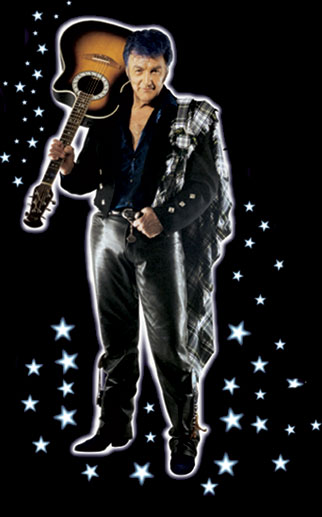
At this time, I was fighting in the trenches of the Britpop wars, working in music retail. Now, speak to anyone in retail and they’ll tell you unbelievable-but-true stories about the regulars who frequent their shops. Our shop was no different. We had a regular customer, an older guy with a cracking quiff, complete with an electric blue streak up the front, who wore the Elvis aviator shades in November and the ’68 Comeback leather jacket in July. He spoke in a hokey hillbilly American accent and gave his address as Dundonald whenever he ordered something. Dundonald, in case you need to ask, is about as near to America as Mars. People in Dundonald tend to speak in broad Ayrshire, though with a slightly posher accent, given that the village (?)/town (?) is located just inside the environs of the beautiful South of Ayrshire, and a couple of generous Colin Montgomerie drives from the fourth tee at Royal Troon. He always gave his name as Jesse Garon, which just so happens to be the name of Elvis’ twin brother who died at birth. “Je-huss-ay Gar’n, suh,” he’d drawl, without the slightest hint of irony. Local lunatic, eccentric and Elvis freak, I thought he was great. Jesse, it turned out, was highly thought of and sought-after in the world of tribute acts, and had a regular gig in Blackpool, doing a kinda Scottish McElvis tribute. Which is ironic really, given that off-stage he spoke cod-Elvis, yet on-stage he celebrated his Scottishness, wearing a white cape with a saltire emblazonned across the back and whatever else have you. Every Summer he’d head off for the season and do his well-polished Elvis act for the stags ‘n hens’ n’ steamers ‘n stoaters who stumbled into the music hall at the end of the pier. (If you’re an MSP fan, by now you may have worked out where this is going).

One day, Jesse popped in to order something. “Ahm lookin’ fur sumthin’ swampee. S’gotta be swampee. Y’know like when thu Deep South mists roll across them swamps? Ah need music ta soun’track that. S’for ma show, y’see. Intra music ta make tha folks sit up an notice that ol’ Elvis here is ’bout ta enter tha building.”  A long while later, after having exhausted my general knowledge of all things swampy, he settled on a since-forgotten bit of Ry Cooder slide blues. This, he assured me, was just what he was after. And, with a wee Elvisy point of his index finger in my direction, and a tip of the gold-framed aviators, off he went.

I’ve hunted high and low and googled near and far for a qualifying quote to back me up here, but to no avail. So you’ll just have to believe the next bit. James Dean Bradfield, talking about the Everything Must Go album mentioned that opening track Elvis Impersonator, Blackpool Pier was written after him and Richey Edwards had watched an Elvis impersonator do his act at the end of Blackpool Pier. Bradfield mentioned that the impersonator was (and I’m paraphrasing here) “crap and Scottish” – two things yer actual Elvis wasn’t. Now, I know there are approximately more Elvis impersonators than there are people in China, but when you add ‘crap’, ‘Scottish’ and ‘Blackpool’ into the mix, well, all the signs pointed to the one Elvis impersonator I knew. The next time Jesse was in the shop, probably about a year later, when preparing ‘intra music‘ for his next set of shows, I told him about the Manic Street Preachers and their massive-selling album and about the first track on it and how the band had written it after seeing a Scottish Elvis impersonator in Blackpool (though missed out the part about him being crap) and let him hear the song. You could tell he was quietly pleased at the thought of someone writing a song about him, especially as it was the opening track on such a successful LP, even if he did think the song itself was “a crocka sheeeit, sonny! Crocka sheeeit!”, a phrase everyone and their mother heard as he bawled it across the counter whilst wearing the big headphones perched on top of his blue-streaked quiff.

During his fat Vegas years, ol’ Elvis Himselvis used to come on stage to this, Richard Strauss‘s Also Sprach Zarathustra. You might know it better as the theme to 2001: A Space Odyssey. My favourite version is Deodato‘s outrageously eeeeelongated funkified version, Fender Rhodes, clipped guitar ‘n all. Jazz funk? Funk jazz? Prog soul? Who knows, who cares? This is the sound of afros jammin’. Extraordinary!

For reasons I have never quite fathomed, Also Sprach Zarathustra also makes an appearance several times in the lyrics of The Fall‘s Free Range, where Mark E Smith battles over synthesized beats and too-low-in-the-mix guitars to sound like a demented steamer arguing with himself at a bus stop. I’ve got this on one of those supposedly limited 7″s, where the sleeve was spray painted by yer actual band. You probably have it too.

Get This!, Gone but not forgotten, Hard-to-find

Marvin Gaye In A Dirty Mac

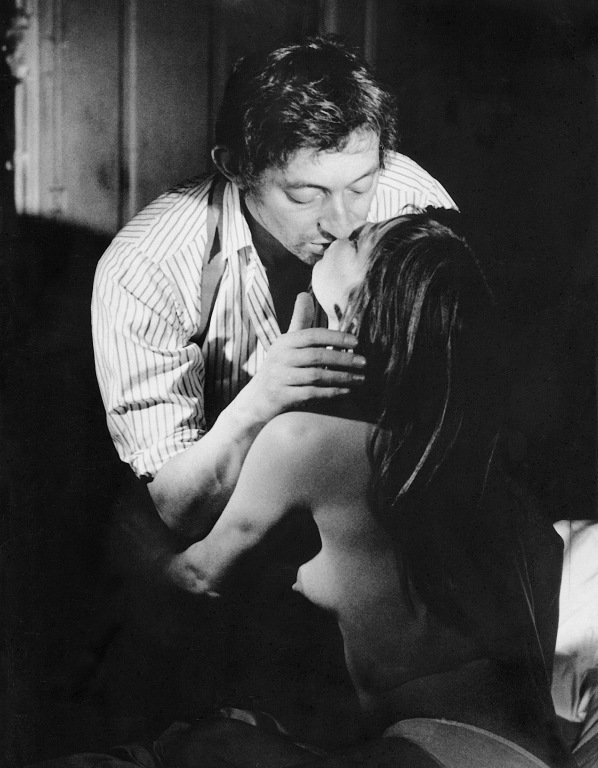
I’ve written about Serge Gainsbourg before, after hearing Histoire de Melody Nelson and all its street walking, hip thrusting bass and funk guitar for the first time. A concept album about an older man’s relationship with a much younger woman girl, it could make for fairly uneasy listening. If you’re fluent in 1970s French street jive, it probably does. Since my French goes little further than Je suis allez au Magnum a la weekend, I’m none the wiser. But I still get the drift. Have a listen to Melody. You’ll get the drift too.

Here’s a wee film to help you along:

In France, Serge is considered something of a cultural and musical revolutionary, held in far greater esteem than any musicians really have the right to be. Over here, we’re proud of our artists and more than a wee big smug when considering the enormous contribution they’ve made to popular music. In France, Serge is right up there, above the clouds, above the stratosphere, above God. He is King. Say a bad word about him anywhere between Montparnasse and Montpellier and you’re liable to cause a good old fashioned émeute before the angry mob turns up at your door demanding your head on a stick. Oui, regardless of the sometimes dodgy subject matter, in France Serge can do no wrong.

Oh, Serge! Mes vêtements semblent avoir diminué au très de vue que vous!

His music can be equal parts folky chanson, string-swept stripped-bare funk, spoken-word, Gaulois-rasping after-hours jazz and repetetive, hypnotic and practically hip-hop in nature. It’s no wonder the breakbeat community love him, as his funkier records are choc-full of material ripe for sampling. Have a listen to Breakdown Suite. Another track, Requiem Pour Un Con, was cut-up by lo-fi indie experimentalists The Folk Implosion and sampled and looped into a fantastic instrumental tribute to Gainsbourg named ‘Serge‘. Amongst his best stuff, you’ll find such muse-driven objets d’art as Bonnie & Clyde or Melody Nelson’s L’Hotel Particulier and Cargo Culte or the super-Barryesque La Horse or Initials BB. Every one luscious, lascivious and chocolate fudge cake-rich in production. Big, booming mid-70s analogue treats. If you like these, do yourself a favour and track his stuff down. You won’t be disappointed.

Blur Fanclub Singles, demo, Hard-to-find, studio outtakes

B.L.U.R.D.E.M.O.

Have you got Beetlebum?”

No. It’s just the way I’m standin‘.”

The happiest job I ever had (and possibly ever will have) was when I worked behind the counter of a well-known High Street music retailer. A stop-gap job that somehow lasted 11 years, it took me all the way from Inverness to Leeds and back again via Ayrshire. Amongst the minority of planks, skanks and wanks in management that I was unfortunate enough to share a tea break with, I met a fair number of like-minded music obsessives, film obsessives and the odd stereotypically sulky sales assistant happy to hang off the counter and unsettle casual browsers looking for chart fodder. Like the one quoted above. He did actually say that, and it was funny.

Anyway. Down to business. I’m not about to get all high and mighty here, but I am about to show a shocking sense of double standards. I don’t really like illegal downloading. Rich, I know, from someone who’s happy to provide crappy mp3s of all and sundry to anyone who fancies them. But I’m not talking about harmless, out-of-print singles from 1973 and whatever else makes its way onto these pages. Is that really affecting anyone? What I don’t like is what I’d term mass-market illegal downloading. The recent BBC report that showed Manchester to be the worst offenders in the UK was quite interesting. Rihanna, Bruno Mars and Ed Sheeran are the big losers in the whole thing, as it seems that every school kid and upwards has illegally downloaded their music. It’s said that they’re the generation that understands music to be free, and I’d have to agree. Aye, some percentage or other of them may end up buying the album in the future, but that’s debatable. Anyway, here’s where my shocking double standards really kick in.

I like Blur. I like them a lot. I have done since She’s So High way back when. I’ve bought every single on or around the day of release. Even the shitey ones, and there’s been a fair few over the years. I’ve bought the albums on day of release. Even the shitey ones. Though, they’re all good in their own way, even if some have endured better than others. Leisure and The Great Escape are, to put it politely, ‘of their time’. Think Tank is by far the best, since you’re wondering. So. I have all the singles and all the albums, including Japanese imports and such like. I also have the 10th Anniversary Box Set, bought for a recession-friendly price in the Our Price sale. And there wasn’t even a recession at the time. I have the lot, as they say. Or, at least, I had the lot, until this summer when Blur 21 came out. All the albums. All the singles. All the remixes. Plus some demos and live stuff. At an eye-popping £150, this was one purchase I’d find hard to justify. So, a bit of Googling here and there turned up a download. Low-fi and crappy, but it meant I got all the rarities I wouldn’t have otherwise. The live stuff you can keep, but in amongst the rarities are a few diamonds. Here’s some to chew over:

She’s So High (pre-Blur Seymour demo) Drum machine and studio chatter before some out-of-tune distorted guitar and even more distorted vocals. I can’t listen to the bassline without seeing the cheese-making fop with his floppy fringe mincing about stage right.

Popscene (1991 demo) Mad, noisy, toys-out-the-pram shout-fest. Excellent, as Monty Burns might say.

For Tomorrow (Mix 1 of an early demo). Mainly acoustic guitar and vocals, with the odd bit of shaker for percussion and some synthesised strings. Nice double-tracked la-la-la backing vocals. It’s hard to tell if it’s Damon or Graham who’s singing lead here.

Badhead (demo) The most under appreciated track from gazillion-selling Parklife. Round ‘ere it was all “Oi! get some exercise mate!” Meanwhile, Badhead, with its wistful melancholia and Syd-lite psychedelia was where the real music fans got their Parklife kicks.

Squeezebox (Alternative version of Music Is My Radar) Imagine if Talking Heads got up one morning and instead of micro-biotic, high fibre health food shit ate a big bowl of guitar effects pedals. This is what they’d sound like. Really!

Graham Coxon Fact 1: He favours Converse trainers on stage, as the white toe-cap helps him find the correct effects pedal on which to stomp.

Graham Coxon Fact 2: He told me that on Twitter.

Now. Off you go and buy Blur 21, there’s a good chap.