Gone but not forgotten

Jingle Jangle Mourning

There’s a great writer you may already be aware of and read and enjoy. If not, you must remedy that forthwith. Adam Turner blogs regularly at Bagging Area, a blog that’s been an internet sensation almost as long as Plain Or Pan. While the world twitches impatiently and slowly loses the ability to focus on something for longer than 3 seconds at a time, us elder statesmen and women of blogging (and there are a few of us scattered out there) fly the flag for words and a more genteel pace of online engagement. Adam’s blog contains the odd bit of crossover with the music that features here, but mainly Bagging Area is steeped in electronic music, new releases and remixes and things that bang and beat. There’s rarely a week goes by when I don’t find myself investigating further an artist that I’d previously been unaware of. Pay his blog a visit. Even if the music is not for you, I think you’d like it.

In the past 18 months, Adam has taken the brave – and clearly cathartic – decision to write about his son Isaac. In November 2021, Isaac lost his life due to complications brought on by Covid and Adam writes clearly and honestly about a life now steeped in grief; the anger, the rage, the black hole of helplessness, the sudden unexpected triggers of a Facebook memory or unanticipated postal delivery that brings it all to the fore again. Isaac’s death is an all-consuming thing, an ever-present in he and his family’s life – of course it is – and when Adam writes about his son, his words are nothing less than spectacular. Anyone who’s a parent will feel every nuance in the turns of phrase and dignity with which Adam writes, words that I’m not sure Adam would’ve thought himself capable of conjuring up a couple of years ago while writing enthusiastically about an Andrew Weatherall remix or another ACR Manchester show. I mean that as a compliment. Writing about frivolous stuff is one thing. Emoting plainly and matter-of-factly over the big stuff is quite another. Adam’s writing is unmissable.

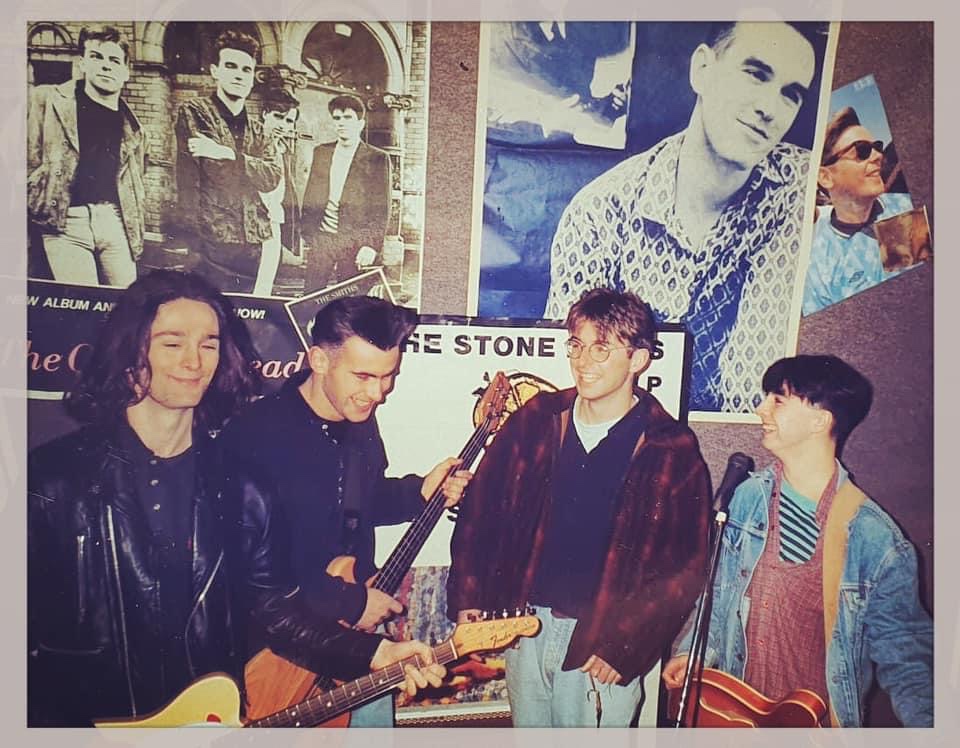
I’ve written not long ago about musical triggers; songs or lyrics or riffs that set off immediate Proustian rushes and have me scampering back to a time, place and people that made me who I am today. True Faith and Mark, Baker Street and my dad, Age of Consent and Derek. Not long after I’d read Adam’s latest blog, I was foutering about the house, REM‘s Reckoning album playing just that bit too loudly as I busied myself with the bins and the washing and what have ye. Don’t Go Back To Rockville started playing and, man, stone me if another one of those memories didn’t gatecrash my evening. As Peter Buck leans into his Rickenbacker, it’s suddenly and quite unexpectedly 1991 and Derek Reid and myself are in Grant’s dad’s living room. We’re in the process of putting together what will be the definitive line-up of Sunday Drivers, the greatest band that never was, and Derek and myself are sussing one another out, aiming for common ground and a base upon which to build our (cough) twin axe attack. He’s showing me the chords to Rockville and as we fall into it together, Grant stands disgusted behind Derek’s Jazz Chorus amp and scowls at us. He says nothing though, not even when Derek pulls off the flashy riff after the chorus – and as it plays tonight, I’m seeing Derek – goofy grin, Marti Pellow hair, ‘what d’ye think a that?‘ look on his face as it flies from his lovely yellowing Telecaster. It’s one of the songs that was played as the room filled up for his funeral and I saw him then too.

REMDon’t Go Back to Rockville

Right,” says Grant as we run out of steam. “Jist tae be clear – ah’m no’ singin’ in a fuckin’ country-rockin’ jingly jangly band, right? Yous can stop that pish right noo.”

We stopped that pish right there and then, found our fuzz pedals and the rest was(n’t) history.

I don’t go looking for musical triggers, but when they creep up on you and slap you clean on the face, it’s strangely comforting and somewhat brilliant.

Now, go and visit Adam at Bagging Area.

Hard-to-find

Hoovering To The Beatles

Those first two Ride EPs are, I’d imagine, a well-played pair of favourites amongst much of this readership. The red rosed and yellow daffodiled covers conceal the thrilling sounds of a band at egg-hatching stage, fresh outta the rehearsal room, their fringes and long-sleeved t-shirts just as studied as the music they are aiming for – a sound forged, so the legend goes, when Andy Bell’s mum began hoovering the living room while he listened to The Beatles. It’s fantastically evocative of time and place; loud, uncontrollable, thrashed and bashed, but with the whiff of a melody bubbling under the Panzer attack of effect-heavy twin Rickenbackers and careering, pummelling backline.

The twin vocal duties are steeped in heady Byrdsian/Beach Boys ambitions and sometimes even, like on Like A Daydream, they almost get there. Mainly though, Mark and Andy are guitar players…and don’t they know it. Heavy on the fuzz, generous with the compression and wholly feral with their whiplashed approach to the wah-wah, their tunes are scorched and scarred, dragged backwards through the edge and laid to rest on vinyl forever.

Live, Ride was an even more thrilling prospect. The rhythm section was suddenly fantastic. I mean, who knew?! Laurence the drummer played a fairly standard kit, but his cymbal splashes, his star-of-the-show scattergunning Moonisms and Bonham-ish thumps and thuds fairly shook loose the fillings. Steve – one of two Our Price alumni to play bass in a successful indie rock act – (a prize will be in the post for the first person to suggest the other) – was locked into the groove, eyes focused on his pedal board, huge slabs of thunk emanating forth.

Somewhere at the back of the room in the Glasgow Mayfair was Alan McGee, giving off full-on McLaren/Warhol vibes, his arms folded, admiring his charges, appreciating the huge Glasgow audience that had shown up so early in his band’s career, his ginger Dylan whitefro and Raybans setting off the biker jacket ‘n stripy tee-shirt combo perfectly. My abiding memory of the gig was just how rammed it was and that I had to watch most of the show by standing on one of the in-built velvet wall seats, seeing the stage and band reflected back to front, like a trippy pop promo, in one of the Mayfair’s many mirrors. Mark Gardener was playing his Rickenbacker and coaxing all manner of wild distortion and chiming echoes through a bog standard Peavey practice amp. There was hope for us all.

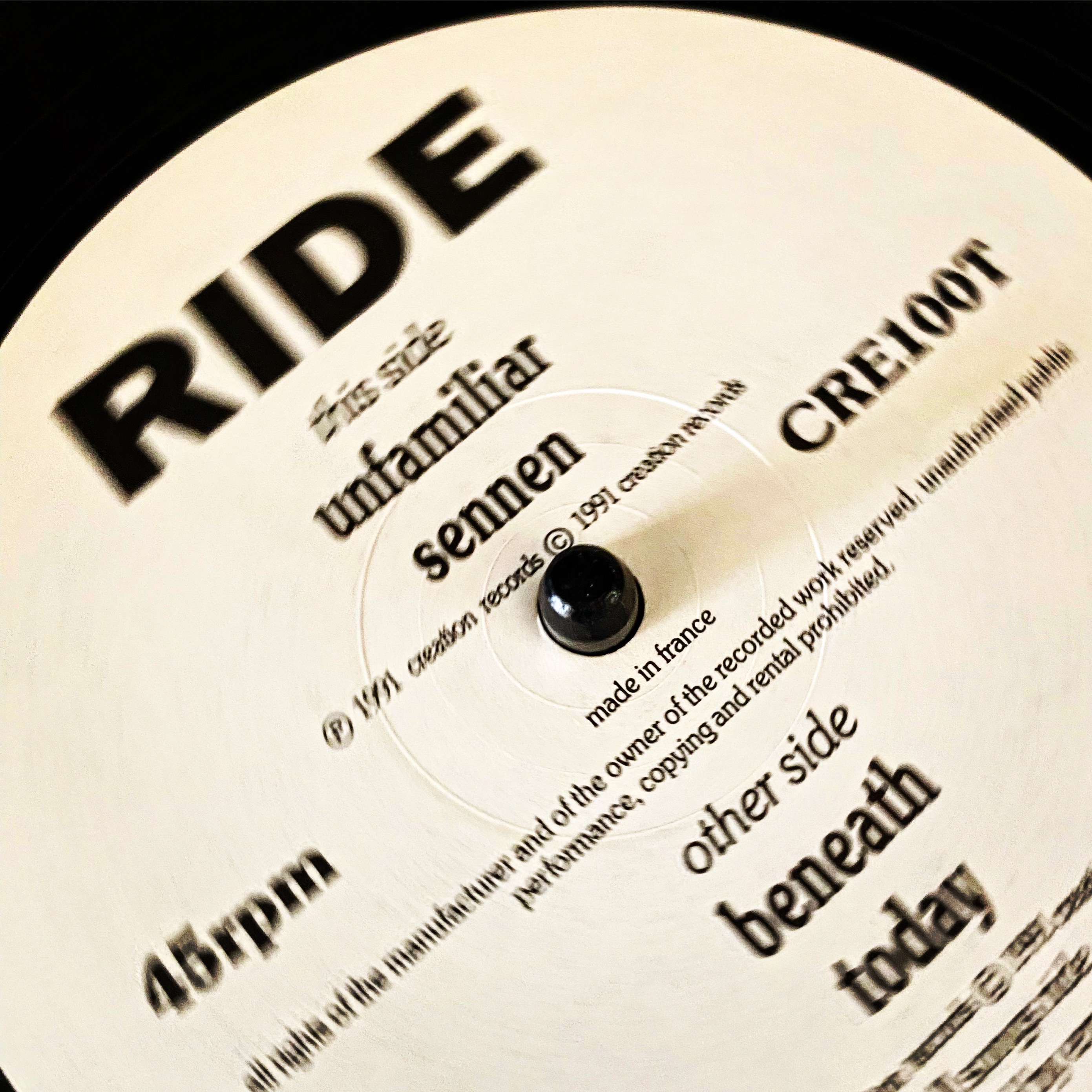
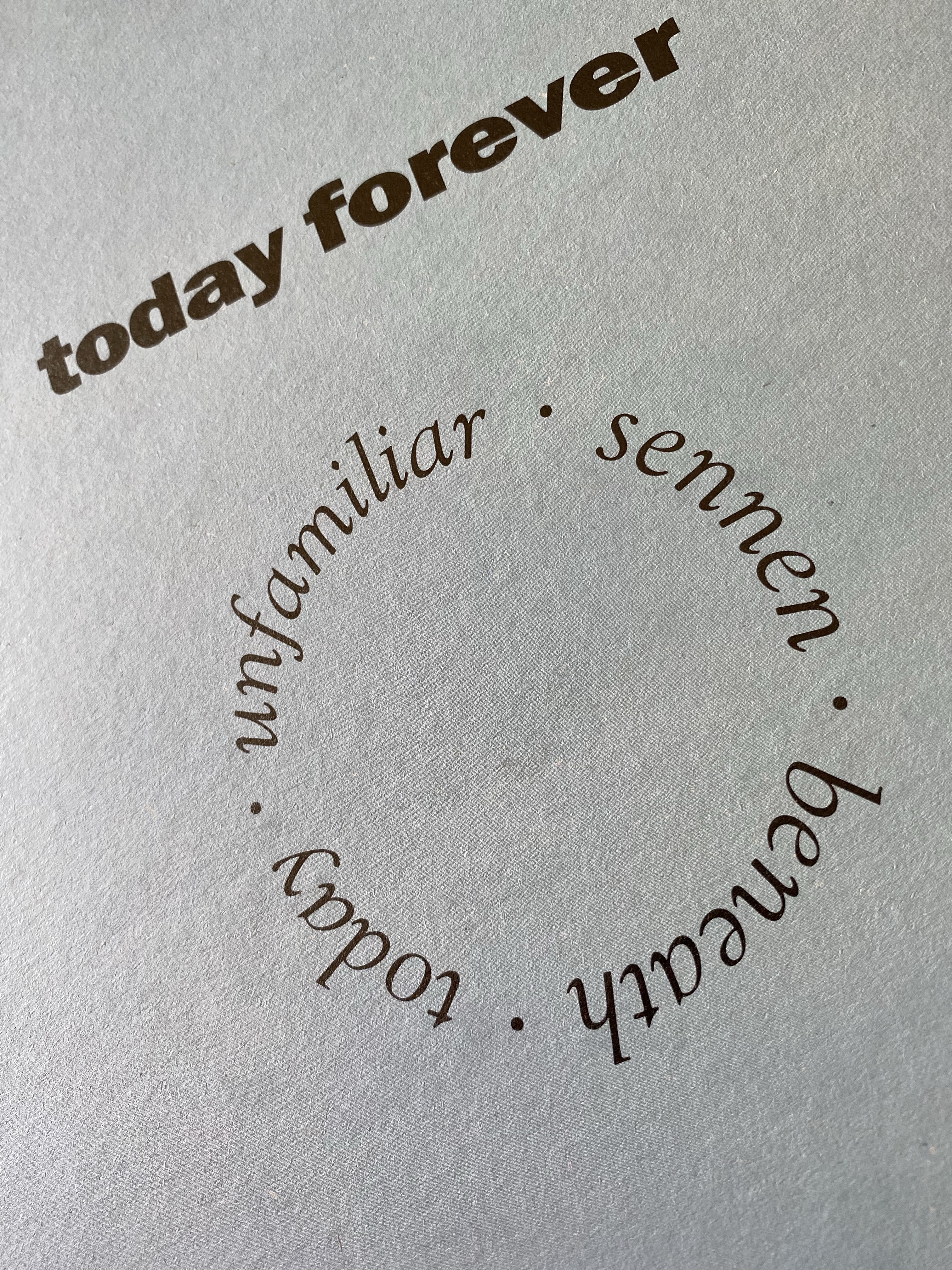
Despite the froth and Proustian rushes triggered by those first two EPs, it’s the band’s fourth EP that I’ve returned to over the years. Today Forever bridged the gap between the band’s first two albums and distils perfectly all that was great about the band at this time. If you were being generous, you might even consider this less of a single (or an EP) and more of a mini album. Less noisy (in places), certainly more refined and considered, it flirts with proggy undertones (their next single, Leave Them All Behind, was an all-out prog assault, but that’s for another time) and benefits from the band’s unshakeable confidence that everything they approached would be spectacularly great. Each track is unique in its own way. Each track is as essential as the last.

RideUnfamiliar

The lead track Unfamiliar fades in on a wave of controlled guitar and is carried along by one of their best basslines, underpinning heavily-treated guitars and more of Laurence’s unpredictable drums. There’s a great bit, just before the vocals come in, when the beat drops to half tempo and the guitars, whacked out and dubby, suddenly conjure up images of Lee Perry and Black Ark. And, just as that notion hits you, here comes the vocal, submerged in sadness and melancholy, two voices singing about who knows what – that’s not important, it’s how it sounds that matters – and man, this sounds great! Smart arses point to Chelsea Girl and Leave Them All Behind as the high points in the group’s back catalogue. Smarter arses known it to be Unfamiliar. Every time.

RideSennen

Just as you’re catching your breath from Unfamiliar‘s bruising and relentless yet ear-friendly assault, along comes Sennen. Named after Sennen Cove in Cornwall (and where the song’s video was filmed, I think) it’s built upon a lovely mesh of clean-chiming Cocteaus’ 12 strings and fuzzed-out riffage, topped off with more of those white boy indie rock vocals that make Home Counties girls called Emily and Rachel go weak at their stripy-tighted knees.

Sennen incorporates a lovely, subtle keyboard line that provides texture to the overload of overdubbed guitars. Since first hearing it, and on every play since, I’ve thought The Charlatans would do a great, Hammond-led version of this. There’s still time, Tim, there’s still time.

I heartily recommend pulling this record from your filing and giving it a fresh spin to what will be appreciative ears. It’s been playing an awful lot round here recently and so far no one has complained. In our house, that’s the mark of a good record, a very good record indeed.

Cover Versions, Get This!

Coronation Treat

As we hurtle downhill without the brakes on towards a weekend of jingoistic flag waving…and making Britain Great again…and wall-to-wall TV coverage…and stupid folk camping out, Blitz spirit style, to secure a spot on The Mall…and the same stupid folk participating in a mass swearing of allegiance to our newly minted monarch, my social media timelines have become increasingly filled with anti-Royal rhetoric. Much of it is eloquently put. Most of it is blunt in its dislike – hatred, even – of our Royal Family.

Privileged rich guy wearing a crown of stolen jewels parades through the austerity-hit streets in a golden carriage to wave at the less fortunate seems to be the cut of the anti-monarchists’ jib. And it’s a fair point.

Not many folk in my social circles, it seems, will be sitting down to view Saturday’s proceedings, and if they are, they’re keeping schtum about it.

There are over 6000 streets in Glasgow and not one has applied for a street party licence. Quite the turnaround from 1977 when the entire Scottish landscape was littered in wilting Union Jack bunting, brittle novelty crowns and broken pasting tables for months afterwards. It appears that the Royals, from the echo chamber of my Scottish social media feed at least, are antiquated and irrelevant, a relic from a bygone era that might only make some sort of sense on the pages of a history book.

I’m not a Royal hater as such – I’m a lover, not a fighter, as someone once said – but while I might sneak a peak at the plastic pomp and daft ceremony of it all (as I did when the Queen’s funeral was televised. History, innit?) I can’t really be doing with a figurehead who represents a family steeped in theft, crime, racism and bigotry, hush-ups, cover-ups, adultery and paedophilia, by both association and the inference suggested via multi-million pound pay-offs and the keeping of a low profile. That’s yr best of British, right there, ma’am. Imagine being born into all of that, and condoning it – benefitting from it, even – through a closing of Royal ranks and mouths.

I believe they do some good, somewhere (and so they should for the bulging purses and estates they receive for their pleasure) and by all accounts, Charles is a thoroughly decent bloke, ya, when it comes to small talk and pleasantries, but what use are they? Maybe Johnny Rotten was right when he pointed out that they need saving because, well, tourrrists are mu-neee. That would seem to be it.

Spare a thought for auld Charles though. That crown, rich in Empire-pilfered bijouterie is heavier than your last energy bill. Just as well he has the jug ears to keep it from slipping.

Here’s McCarthy with their shambling, jangling, rattling and rolling anti-Royal ranting Charles Windsor. I doubt Radio 2 have included this on their Coronation Celebration playlist. Or maybe they have, on account of its title alone. Some poor researcher might end up at the guillotine…

McCarthyCharles Windsor

And here’s Manic Street Preachers spitting punkish vitriol and bile in their (far superior) version. To tha guillo-tine! Chop chop chop off your head indeed.

Manic Street PreachersCharles Windsor

Alternative Version, demo, Hard-to-find

Paris In The Spring

In the UK, we meekly accept whatever our masters think is best for us. Rising cost of living? Fair enuff, guv. Can’t heat your house? I’ll just nip down to the local Warm Space, shall I? Dragged out of Europe? That’s democracy, mate. We’ll just need to get on wiv it. The French though – they know the score. Any time they feel hard done by, any time their world appears unjust, boom!, out come the Molotovs. Over a million French citizens took to les rues recently to protest the government’s planned raising of the pension age from 62 to 64. Pffft. Work-shy slacquers. It’s 66 in England, mate. 66! Bobby Moore, Nobby Stiles, Sir Geoffrey ‘Urst. Anyway, where woz I?

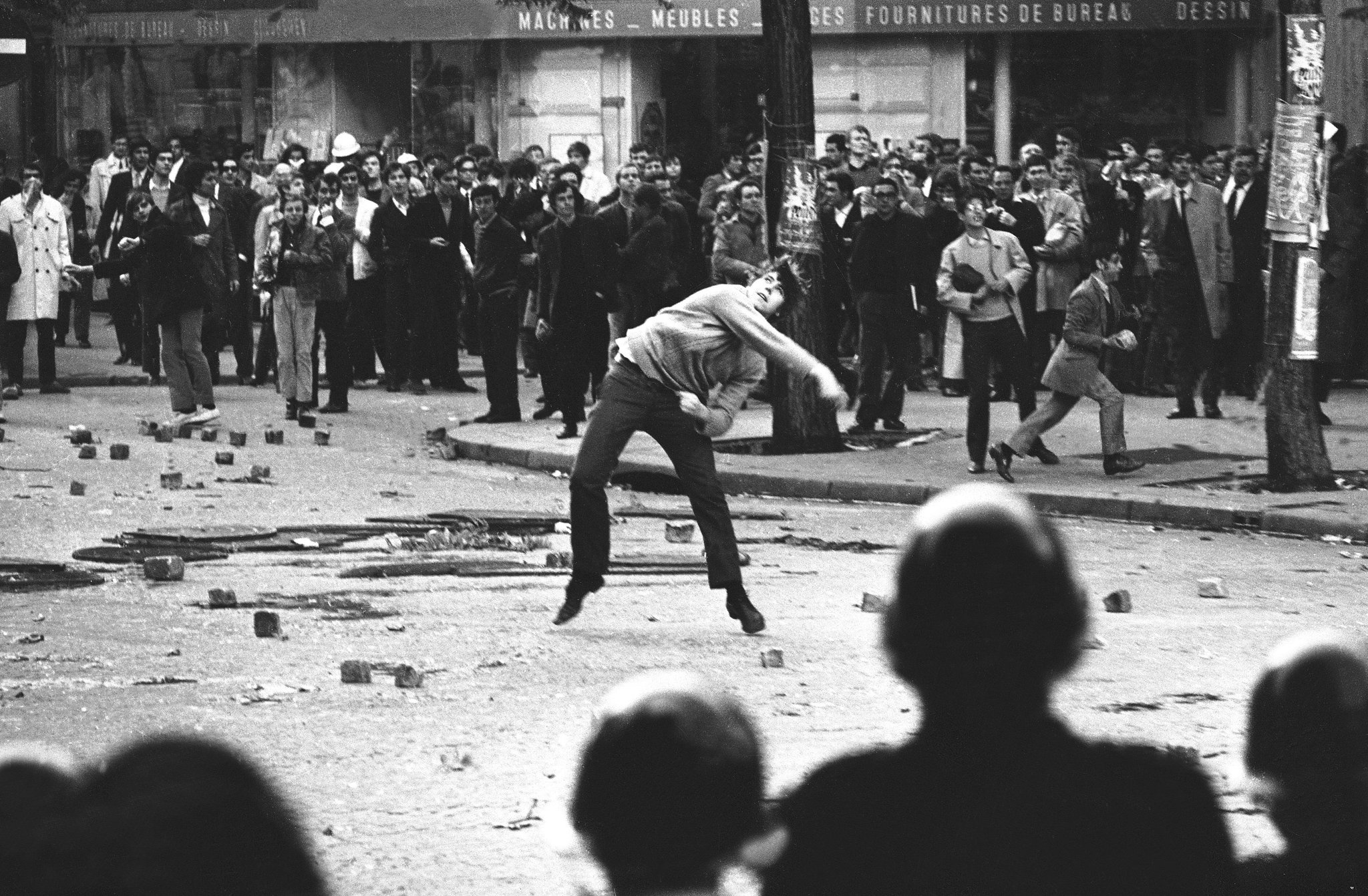
Decided without a vote and pushed through by the will of a persistent Macron, it was firmly decided. The workers were suitably enraged. In Paris, fireworks were thrown indiscriminately at hastily drawn police lines. In Bordeaux, the town hall was set ablaze. Tear gas was fired, hundreds were arrested, everyone lost their Gallic cool. The pension age would still be raised, but not without Macron and his ministers knowing exactly what their citizens thought of them. The one plus point to come from the dissenters’ actions was that the city of Paris would not now play host to the first state visit by the new King George, whose aides quickly kyboshed the idea. Parisienne republicans sniffed the air and shrugged with typical je ne sais quoi.

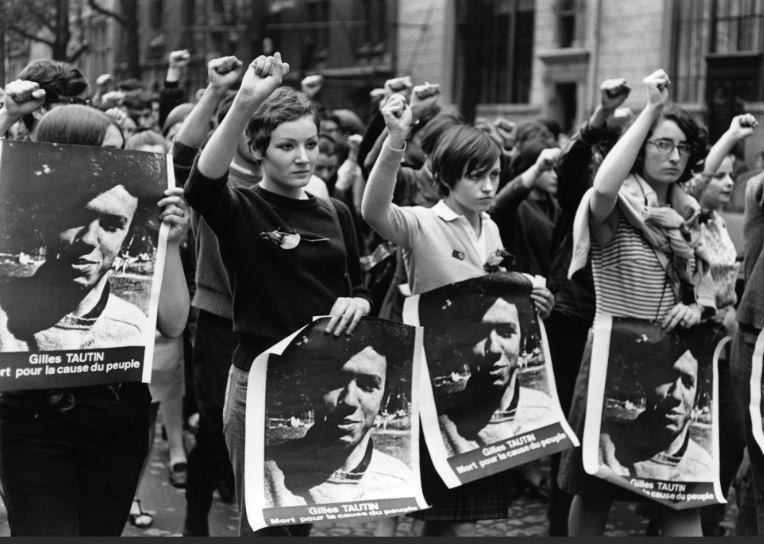
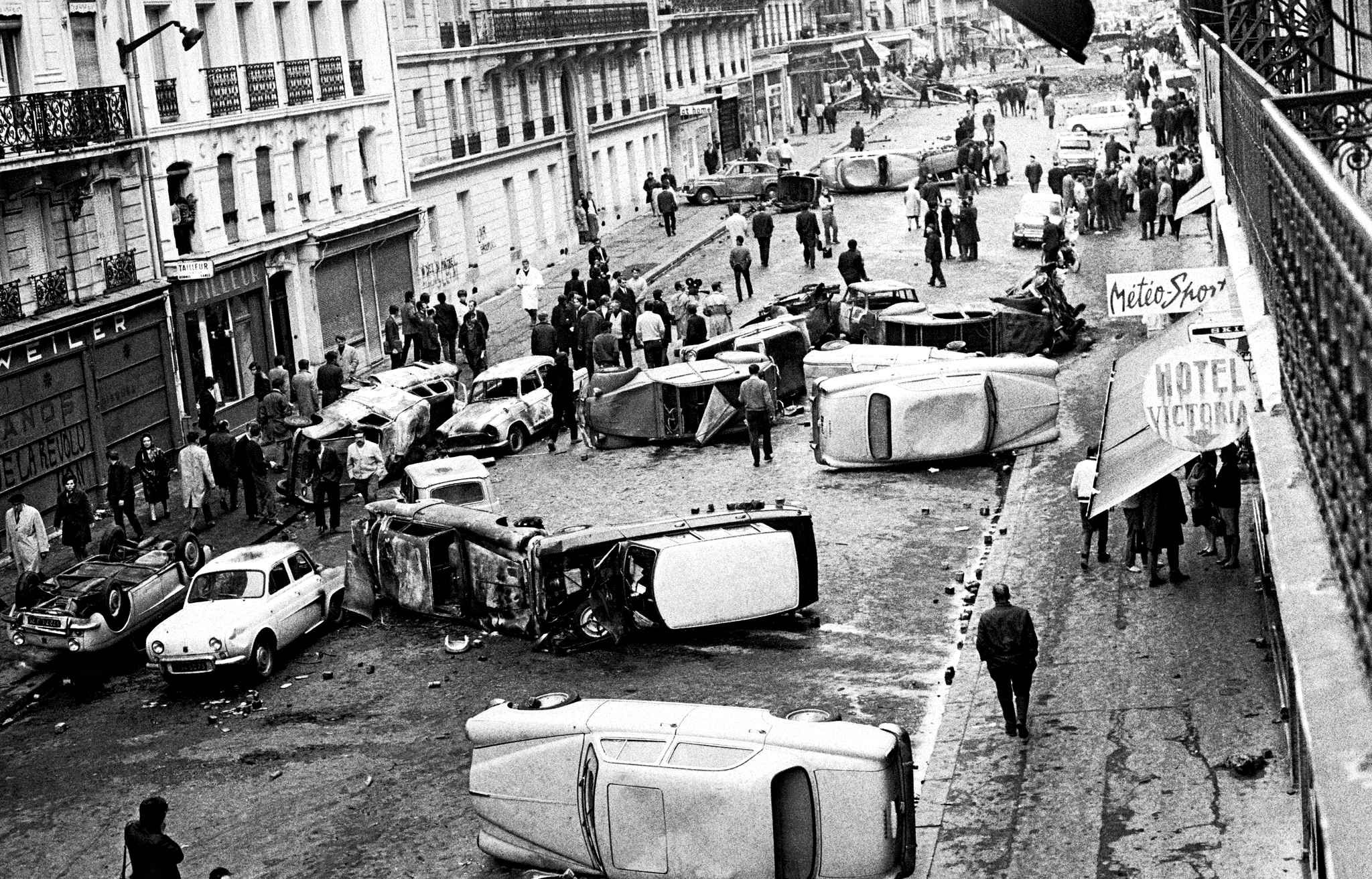
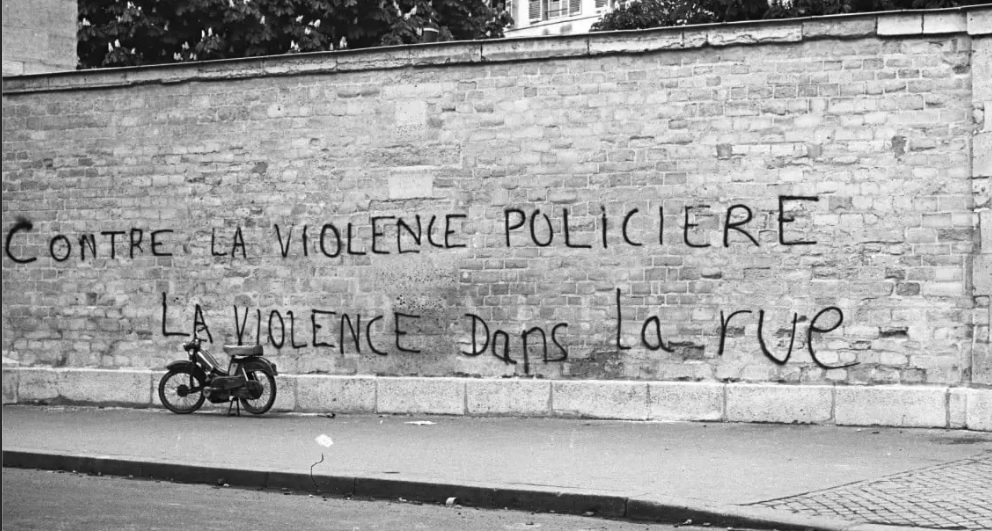
55 years ago, in May 1968, rioting in Paris became so severe there was a real threat of civil war. The city’s student population, liberal and left-leaning by definition, occupied the universities in protest at fellow students’ arrests following an anti Vietnam demonstration. The authorities were quick to react and a heavy-handed police operation resulted in skirmishes, baton-wielding beatings and more mass arrests. The conflict between the Parisienne students and police intensified. Barricades were put up and knocked down. Civil order descended into disorder. Police used batons. Students threw torn-up paving stones and Molotov cocktails. Two nights of stand-off on the Left Bank ended after police set fire to cars and they themselves used Molotovs to disperse crowds.

The trade unions, no fans of President de Gaulle or his policies, were moved to declare sympathy action. At the height of this action, most of France ground to a halt as 11 million French workers (almost a quarter of the working population) went on general strike. Despite talks between both sides, the strikes and the riots continued. The President ran off to Germany, worried that rioters would attack him in Elysee Palace. He would return at the end of the month, bolstered by a notion to dissolve his cabinet and reform his government in a way that would appease the strikers. But anyway…

In the early days of the Stone Roses, Ian Brown had hitch-hiked his way around Europe. On his travels, he’d met someone who’d been in Paris in 1968 and this man’s tale became the lyric to Bye Bye Badman. He told the story of how, during the riots, the activists learned to combat the effects of the tear gas being used to control their movements by sucking on lemons.

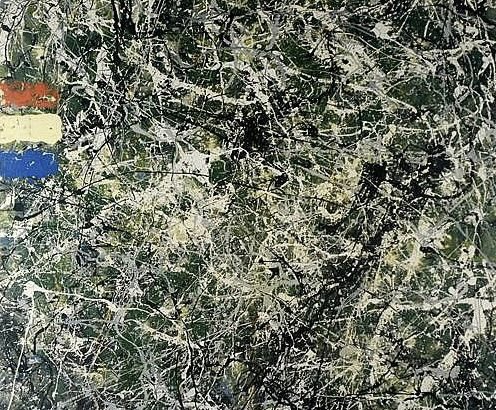
It’s no concidence at all that the artwork on Stone Roses’ debut album cover features an unobtrusive, brush-daubed tricolour and a couple of lemons (albeit added after John Squire had ‘completed’ his painting)… a piece of art he called Bye Bye Badman.

Smoke me, choke the air. In this citrus-sucking sunshine I don’t care.

Here he comes, got no question, got no love

I’m throwing stones at you, I want you black and blue

I’m gonna make you bleed, gonna bring you down to your knees…

It’s all in there.

Stone RosesBye Bye Badman

It’s a tune that belies it’s appearance. Lightweight and breezy, with skiffly, shuffling drums and a rich tapestry of interwoven guitars, it could well have floated off the grooves of a Mamas and Papas or 5th Dimension record.

The guitar runs throughout though, they mark it as something a bit special, a bit unique; the phased and chugging electric backing that allows the sun-dappled acoustic splashes to shimmer, the cleanly picked counter-riffs, the fluid and chattering fret runs at the end that bring to mind Michael Jackson’s Human Nature, all of it underpinned by expansive and expressive bass playing. It’s no real surprise that Stone Roses became the touchstone for enthusiastic amateur guitarists and wannabe hit bands everywhere.

And the melody. It’s sing-song and nursery rhyme-like…until you begin to decode the lyric. The title itself is seemingly a veiled reference to President de Gaulle and, as the song unfurls line by line, it’s apparent that this seemingly insignificant track (song 4, side 1) is in fact a pop art statement of political intent, revolution disguised as art. That it’s done so with lovely doubletracked Ian Brown vocals makes it all the sweeter. In the live arena, Brown can’t sing for toffee. Thank goodness John Leckie had the golden touch when it came to coaxing a tune from his vocal chords.

Here’s the demo that Stone Roses presented to Leckie. As you’ll hear, never underestimate the role of the producer in helping a group to realise their ambitions.

Stone RosesBye Bye Badman demo

I listened to Stone Roses’ debut album the other day and it still causes as many little rushes of uncontainable excitement as it did on first hearing it 34 years ago. Let it sink in that more time has passed since the day I bought it from Walker’s at Irvine Cross than the time between the riots in Paris ’68 and the Stone Roses writing a song about it.

Ian Brown famously pumped an arm aloft and bellowed, “This is ‘ist’ry!” from the Alexandra Palace stage in November 1989. No, Ian,  your band, their album, THIS is history. D’you feel old yet?

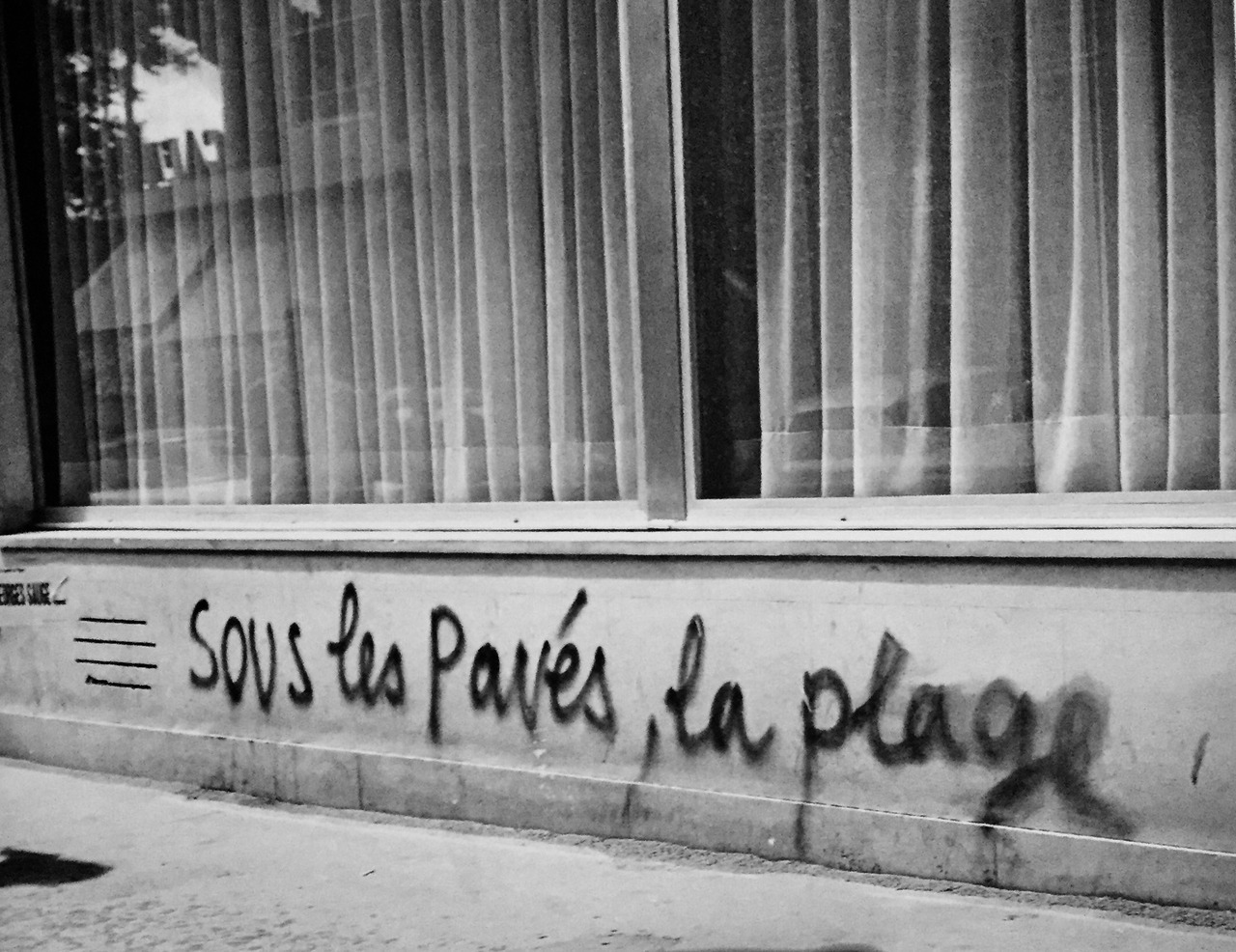
Niche Ian Brown reference in this graffiti for all of you trainspotters out there,
Get This!

Ear-a-tating

I like the name cuz it’s ear-a-tating. It’s a stupid name.

That’s Kim Deal, interviewed on Snub TV back in 1989, discussing her group just as their second album proper, Doolittle, was on the cusp of release.

I like it cuz it’s Pixies. “Like, oh wow, really rock n roll.” It’s better than, like, Lords Of Destruction or something.

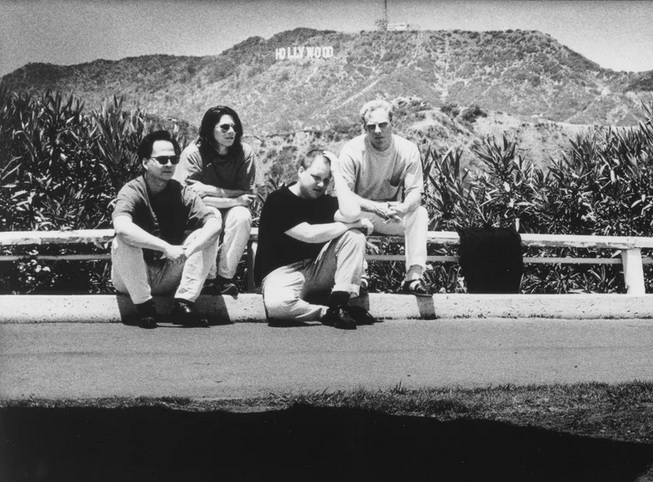
They were a weird wee band, Pixies. Four disparate characters that on appearance gave no indication at all about the sort of noise they’d create. Indiscriminately square. Dressed normally. Not a flamboyant haircut or intangible edge to any of them. Kim looked like an office secretary. David and Joey the groovy geography teachers who might play in a covers band at the weekend. Frank Black/Black Francis, out front in his lumberjack shirt and an equally-balanced love of The Beatles and Peter, Paul and Mary gave off no vibes at all about how his band might sound.

As an entity, Pixies were the very force of nature. Scrubbed to the knuckle, sandpapered acoustic guitars played in mind-melting triple chord sequences rubbed up against white-lightning guitar squalls, lung-shredding vocals and quiet/loud passages, often all within the first half minute of the song.

And the songs. You are the son of a muthur-fuckur. Losin’ my penis to a whore with disease. We’ll have our sons, they’ll be well hung. He bought me a soda and he tried to molest me in the parking lot. There was this boy who had two children with his sisters who were his daughters who were his favourite lovers. I mean, come on! Stop and listen. Really listen. It’s uncomfortable and uncompromising in equal measure. Thrilling too, though – as much as it seems wrong to say so.

So the songs are all sex and death and random swearing mainly, much of it a Hispanic mystery but, man, they totally, like, rock. They were exciting, Pixies. It didn’t matter that the song you were currently listening to wasn’t really your favourite because by the time you’d decided that, it was a short guitar twang and feedbacking space rocking blow-out away from the end.

It’s the early records that tend to be the first ones I’ll grab – Come On Pilgrim and, especially, Surfer Rosa and Doolittle – as good a one-two as any band before, then or since – but the next time you’re inclined to binge on Pixies, go straight to the albums that followed in their aftermath.

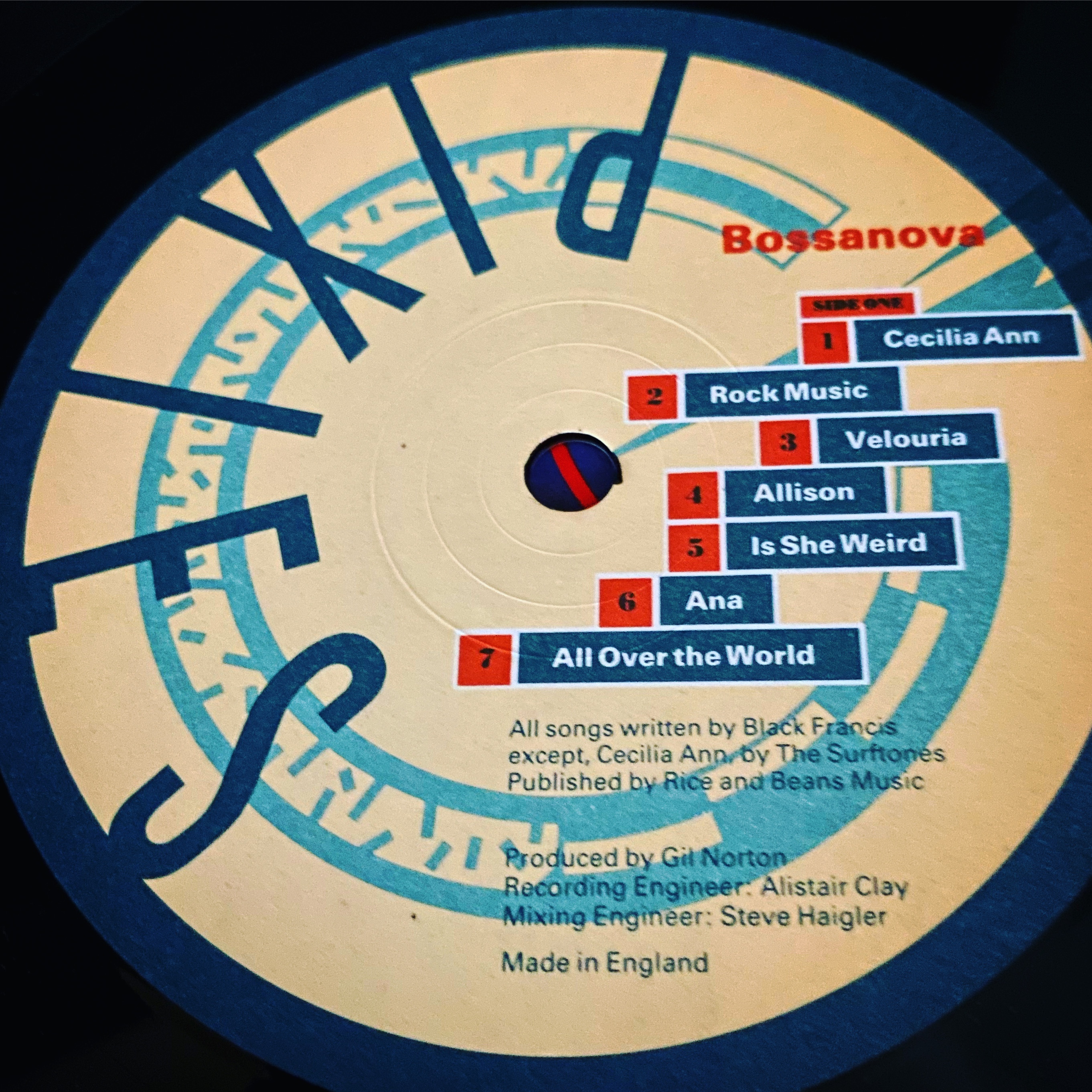
Bossanova‘s sci-fi surf still thrills. A well balanced mix of shouters and shufflers, its hard slamming riffs still rattle the brain, its weird lyrical content still surprises. With sudden endings and sudden beginnings, the tracks begin to blend as one, something Pixies did on the early records and continued to do. It can be disconcerting at times, wondering if you’re still listening to the same track you were a minute ago, but it makes for a thrilling listen. By the end of side 2 you’ll want to flip straight back over and jump in again…and it’s arguably Pixies’ weakest record in that initial run.

PixiesRock Music

Second track in is Rock Music, a self-explanatory stall-setter that rides in on a squiggle of wiggling feedback, air raid siren guitars and rat-a-tat drums, the tension before the release of Frank’s lung ripper of a nonsensical vocal, doing well to keep itself above the racket of gear-changing electric guitars and just about hanging in there. Suh-lag! is what he screeches for a full stop at the end, if y’didn’t know. Those folk who’ve complained today about not hearing that government-endorsed emergency warning test alert on their phones? They’ve been listening to this at 3pm, obviously.

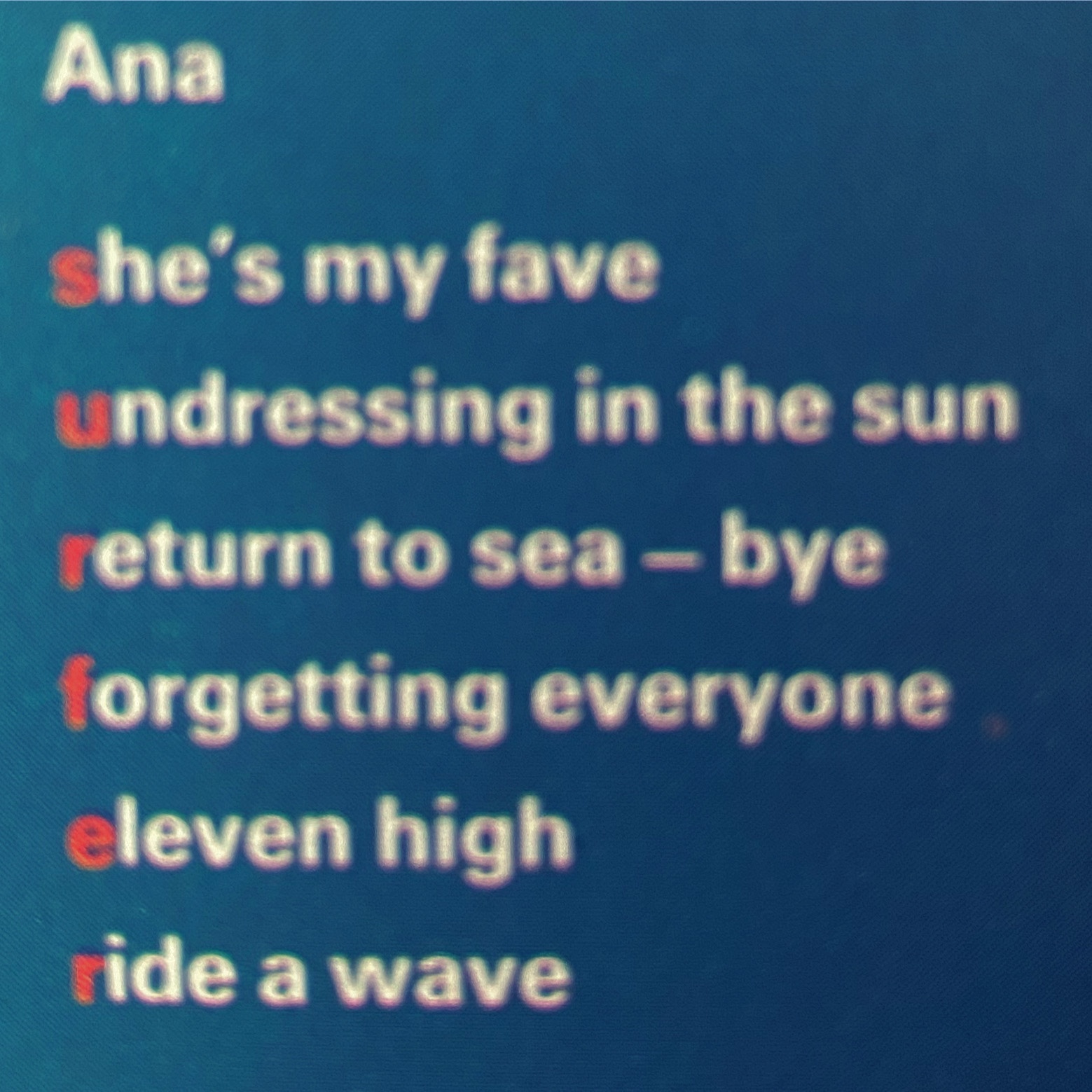
The unassuming best track on the record may well go to the acrostic Ana. It’s a slow burning two minutes of reverb, shimmer and twang that brilliantly surfs the effect pedal-rich zeitgeist of the times, slo-mo and self-assured, the brushed drums softening Pixies normally bruising approach. The lyrics, when laid out, show that the initial letter of each line spells out the word ‘SURFER’. Simple but smart-arsed. Not enough bands do this.

PixiesAna

I’ll tell you what. Lana Del Rey, with her bleached-out ’50s heartbreak and sulky torch song vibe would totally kill this track. Think about it as it plays. Her A&R person should see to it that it happens.


Alternative Version, Cover Versions, Peel Sessions

Book Makers

If ever there was a short-lived group with an ego overload as wide as the Mersey, it’d be The Crucial Three. Birthed in Liverpool, the not ironically-named at all trio was the fertile product of Julian Cope, Ian McCulloch and Pete Wylie, students in the city and punk rock foot soldiers with the battle scars from Eric’s and Probe Records to prove it. Destined to meet and create and disband in a whirl of uncontainable ideas, The Crucial Three lasted no longer than six weeks, burnt out on a combined love of New York punk and the inevitability that each group member couldn’t be boxed and compromised within its confines.

In his book Head On – essential reading, if y’didn’t know – Cope is both catty and complimentary towards McCulloch. He’s already been nicknamed Duke after Bowie’s Thin White persona by the time they meet, and the nickname provides Cope with much bitchy ammunition, but St Julian has nothing but praise for McCulloch once he dares to peek beyond the fringe and start to sing. Cope bands about McCulloch’s name in the same breath as Lou ‘n Iggy and he genuinely means it.

Amongst the nonsensical jams and Velvets rip-offs that constituted The Crucial Three’s flimsy ouvre –  one song about zits and one about drugs that was a great Cope-y title in need of an actual song (I’m Bloody Sure You’re On Dope), Cope and McCulloch (or ‘Duke McCool‘, as Julian has now christened him after mishearing the shortened McCull) dragged out an actual, bona fide post-punk classic.

Read It In Books surfs along on a cyclical riff very reminiscent of Patti Smith’s Dancing Barefoot, the product of one of the trio’s living room sessions where someone would stumble on a set of chords and the others would fall in and see if something stuck. If you’ve ever played in a shambling and under-rehearsed band, you’ll recognise this scenario immediately. In this instance something did indeed stick. Cope claims McCulloch was playing the chords to The Fall’s Stepping Out (it also has, in the main, two chords and is a bit shouty, but these ears can’t really find the similarity – which is good, I suppose), but by the time the band had reconvened for their next session, McCulloch had a set of lyrics to go with it – including a cheap steal from The Impressions – and before they knew it, The Crucial Three had a song of their own. People get ready, there’s a train a-comin’… and it’s a beauty.

Read It In Books was credited as a Cope/McCulloch co-write, and both artists would go on to record versions with the bands with whom they found success.

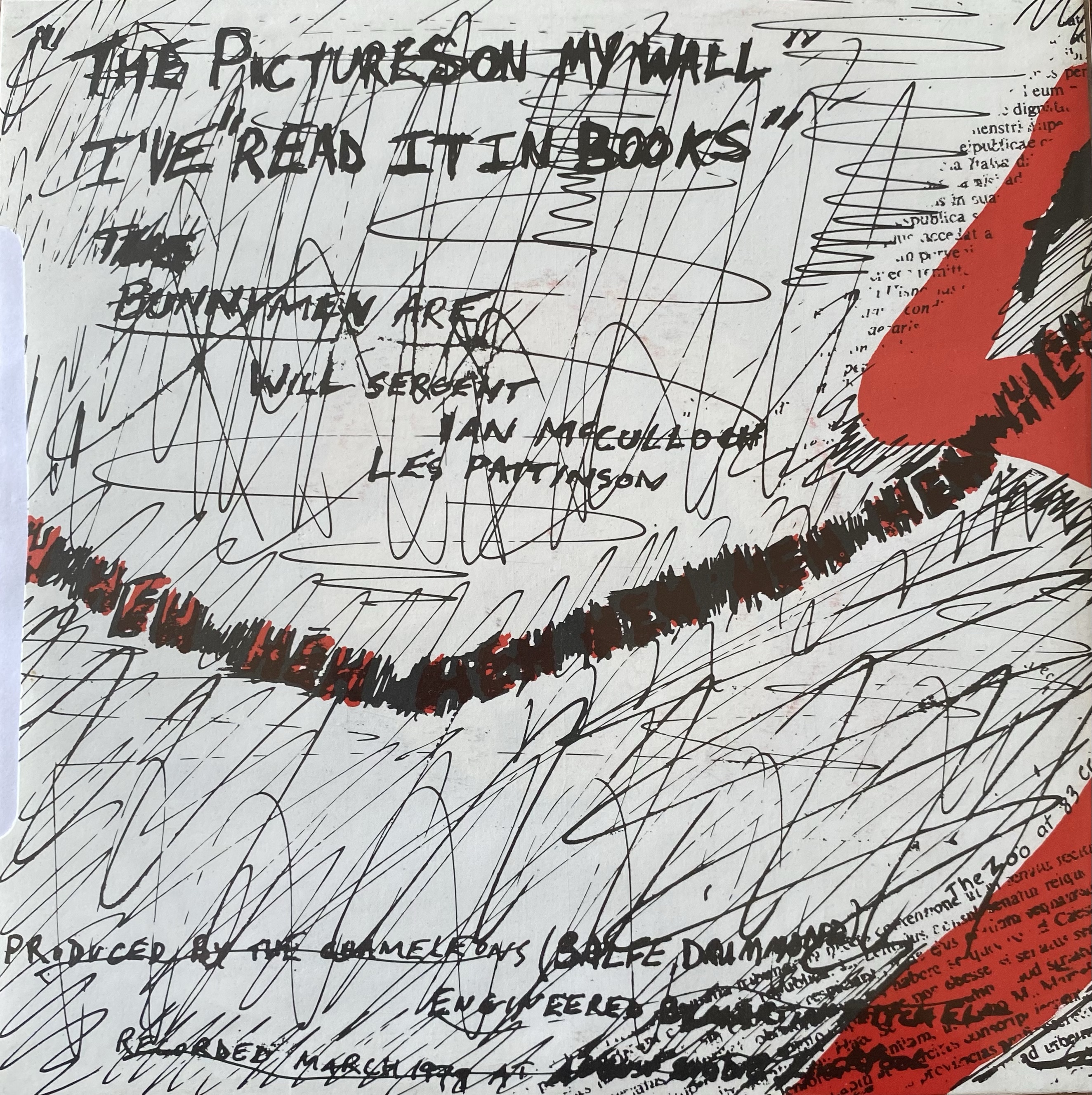
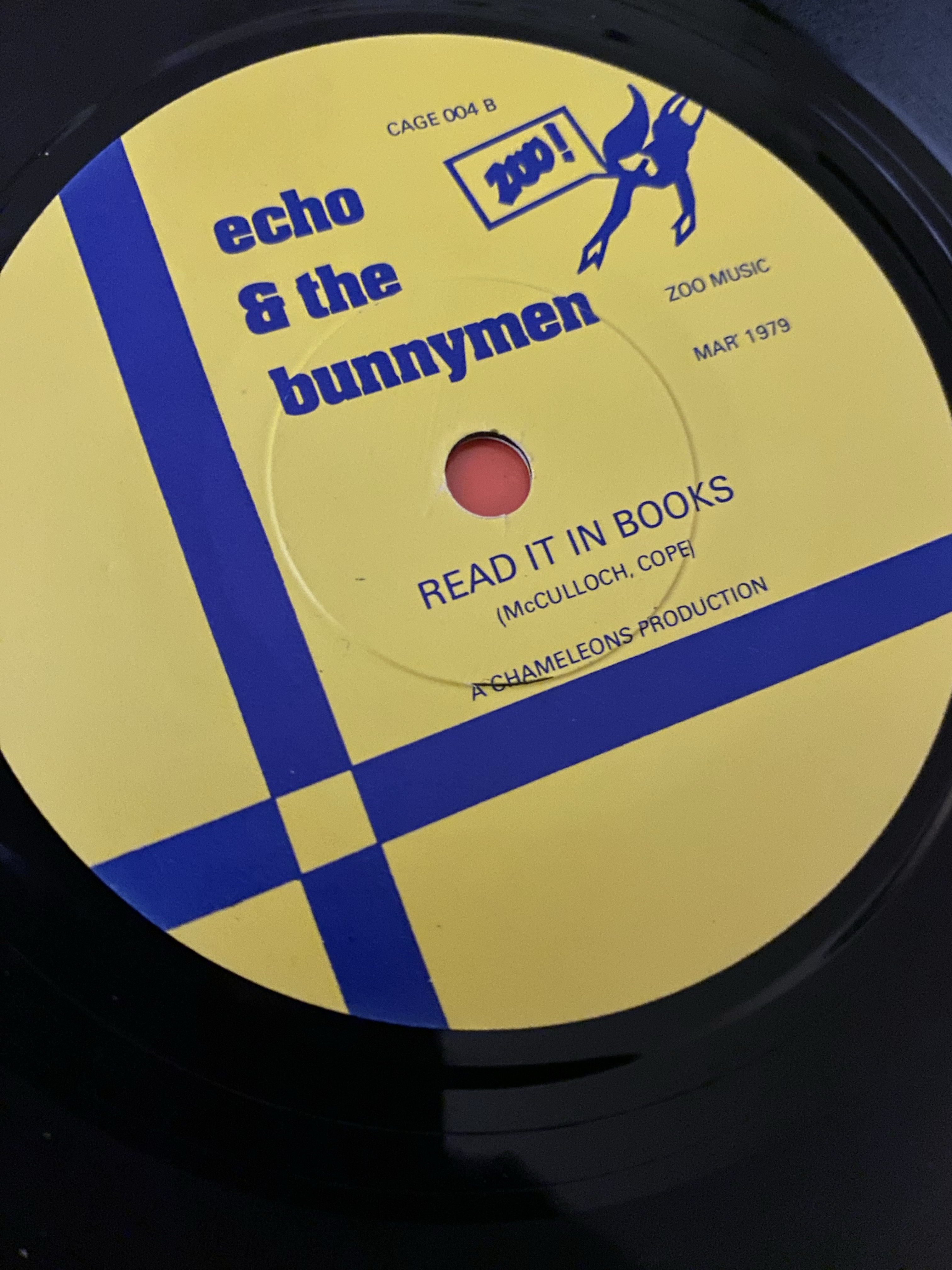
Echo & The Bunnymen‘s version appeared as the b-side to their debut single The Pictures On My Wall (credited to McCulloch, Cope, of course).

Echo & The BunnymenRead It In Books


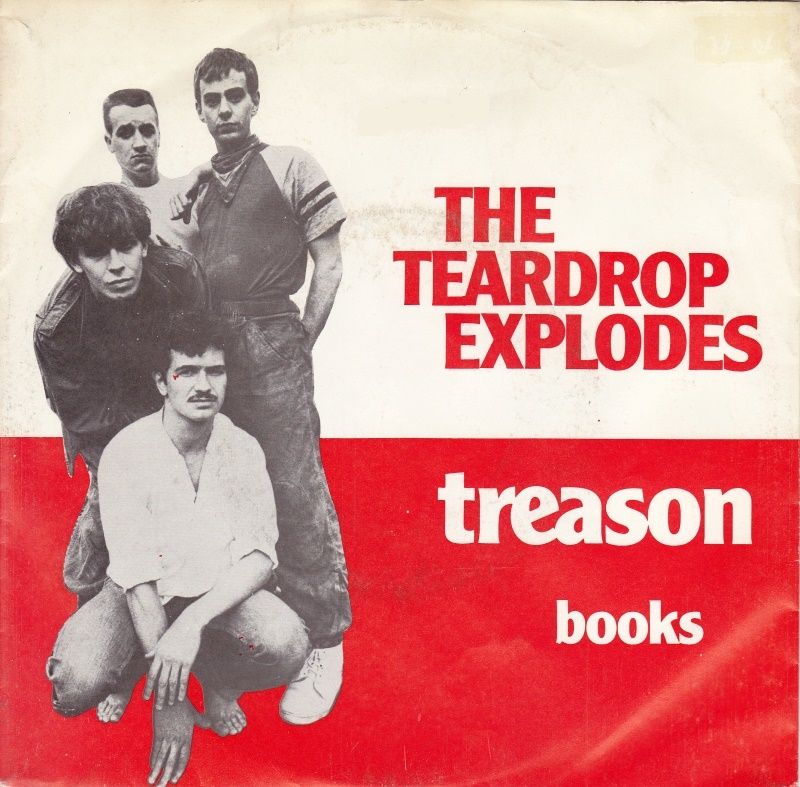
Cope’s Teardrop Explodes would record it for the b-side of their third single Treason.

You don’t need to dig too deep below the surface of the internet to find multiple versions of the song but, for me, the best version of all of them is the Bunnymen’s imperial take that they recorded for the John Peel show in 1979, watery guitar solos, incessant drum machine rhythm, McCulloch’s restrained croon ‘n all. Within a few years their sound would evolve, with skyscraping, effect-rich guitars and a towering symphonic backing adding gravitas and state to the McCulloch vocal, but that early Bunnymen sound – man, I’ll never tire of this.

Echo & The BunnymenRead It In Books (Peel Session 15th August 1979)

The Teardrops’ version is fairly similar, acknowledging that both writers created the structure and arrangement. Guitars clang, drums are pummelled, a stabbing organ shimmers in and out like the ghost of Ray Manzarek moonlighting in The Seeds and the whole thing rattles its way to garage band heaven. Add some sleigh bells to its nagging piano background and it could almost be The Stooges’ I Wanna Be Your Dog. Perhaps an obvious, leather-trousered step too far for the Iggy-headed Julian.

Teardrop Explodes – Read It In Books

This one is credited, naturally, to Cope, McCulloch.

The ego had well and truly landed.

Get This!, Sampled

Music, Make The People, Come Together

There’s a constant digging around here, an archaeological scraping and raiding of tombs, done purely for the purpose of highlighting the marginalised and forgotten, the nearly weres and never would bes that the decades have been less than kind to. Not for nothing is the tagline above ‘Outdated Music For Outdated People‘. You’ll be well aware of that if you’re a regular.

Sometimes, an old track comes flying back into the conscience, usually, although, as in this case, not always, on the back of radio play or an old film and you think, why continue to unearth the underheard when bangers – yes, bangers! – such as this exist.

Such is the case with Yarbrough & Peoples’ Don’t Stop The Music.

Yarbrough & Peoples – Don’t Stop The Music (12″ mix)

My ex-hospital radio station copy

From straight outta nowhere this afternoon, the track’s programmed electro bassline body popped its way into my head, slinky and sinuous, the half cousin of – sorry for this – Level 42’s Lessons In Love, but ten times as funky and a hundred times more listenable, despite the lack of human touch. It’s 43 years old and lost none of its mid-paced, head-nodding grooveability. Keyboards sizzle and fizz, hi hats hiss and clavinets play a top line that Stevie Wonder himself might’ve considered being on the verge of dangerously funky. Has Fatboy Slim sampled it yet? I can only assume he has – those keyboards have a total S.O.S. Band feel to them, and he’s sampled them, as well you know, although a quick Google proves inconclusive.

I can sing the refrain if y’like; monotoned white man doo-wop, flat and out of tune but entirely soulful and heartfelt. Dawn’t yew stap it, dawn’t yew stap, stap tha moozic. Even to rhythmically-challenged Ayrshiremen of a certain age, the track has an unputdownable swagger.

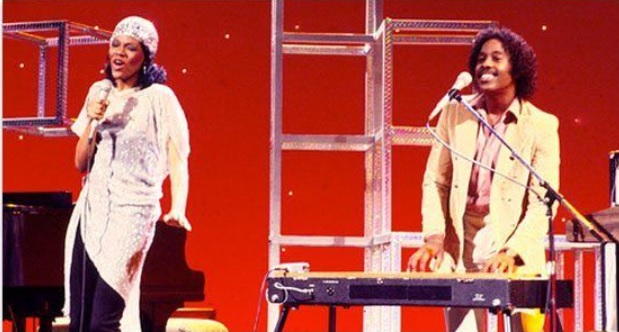
Formed in Dallas from the same musical sphere that birthed the Gap Band – the Fatboy sampled them too, Calvin Yarbrough and Alisa Peoples found ubiquity with the track, its comically sped-up backing vocals and gospelish refrain sending it to number one on the Billboard R&B chart for over a month. Remember when there were multiple charts? Remember charts at all? The duo’s story is one of church choirs and pick-up bands until one night in 1977 when Peoples joined Yarbrough’s band on stage for a number and the stars aligned to cast their magic.

Yarbrough & Peoples would continue as a duo for far longer than they were welcome, with ever-decreasing returns and increasingly shallow chart positions, but that’s almost irrelevant considering how timeless, how great their big hit single was. If you’re not still playing the track a week after you’ve read this, questions will be asked.

Cover Versions, Gone but not forgotten, Hard-to-find

Sisters

It’s not the first time Chris Bell‘s I Am The Cosmos has been mentioned round here, but it’s the first time (surely not!) that I’ve shone the spotlight on the single’s flip side, You And Your Sister.

The only solo material released in his lifetime, the 7″ is the perfect distillation of Bell’s loose and melancholic approach to his music. On one side, the imperial I Am The Cosmos, a sky scraping anthem dressed to kill in revved up ringing guitars and double tracked harmonies. You don’t need me to point out that it would prove to be something of a lightning rod for many ambitious bands around the Glasgow area.

Chris BellI Am The Cosmos

On the other side, the naked and raw You And Your Sister, teenage angst set against highly strung and gently picked acoustics, sighing cellos and voice-cracked harmonies. Sadness in a bottle and sold back to the heartbroken with a keen ear to the musical underground.

Chris BellYou And Your Sister

If this is your kinda thing – hi, Norman! Hi Gerry! Hi Raymond! – you could do worse than track down I Am The Cosmos, the album that was pieced together posthumously from Bell’s scattered demos and rough recordings. Most of I Am The Cosmos is frazzled and low-slung, packed full of beaten riffs played on beaten guitars and very much in the acoustic/electric vein of the single…or indeed Bell’s previous band, Big Star, a teasing glimpse into what coulda/shoulda been had the artist not crashed his car and died.

I’ve been playing the record a lot recently, coming to it on the back of This Mortal Coil‘s contentiously superior version, a track that jumped back into my conscience after a misheard acoustic guitar strum on an advert had me convinced the advertisers had borrowed it. They hadn’t, thankfully.

This Mortal CoilYou And Your Sister

With knee-weakening vocals from Kim Deal and Tanya Donnelly, This Mortal Coil’s take is something of a breathy cry from the heart and fairly leaps out against the arty, Euro-goth torch songs that make up much of Blood, the album from which it is taken.

With intertwined voices and fingerpicked acoustics blending into one stop-for-a-moment recording, it’s plaintive and pastoral and pretty much the definitve version. Sung from the female perspective, the ‘your sister says that I’m no good‘ line takes on a whole new slightly sinsiter perspective when you hear it. I’m sure there are whole Guardian pieces on such things. For now though, enjoy a great version of a great song.

Football, Gone but not forgotten

Triggers

In the build-up to Scotland’s historic win over Spain the other night, I caught myself watching old YouTube clips of the same fixture from 1984. Grainy but preserved digitally forever, they opened a portal to a phase when, as history has proven, the Scottish team was in the middle of a golden phase in football. Leighton, Miller, McLeish, Davie Cooper, Souness and, of course, Kenny Dalglish were all in that match’s starting line-up. As too was the contentious Maurice Johnston. Watching the first of his two mullet-powered headers cross the line, a full-length diving effort from around the six yard box, I was immediately back at the game.

Fourteen years old, my feet never once touched Hampden’s West Stand asphalt and my dad kept a tight grip of my elbow right from kick-off as the packed crowd swelled and swirled up and down and across the terracing. Thrilling and terrifying all at once, when that first goal went in at our end, right in front of us, I was lifted into orbit, metaphorically and literally. The only thing stopping me taking off properly was my dad pulling on my jacket, anchoring me to him and he to me.

Near half time, Jim Bett broke free of the Spanish defence down the right hand side, and even before he had crossed the ball I felt my dad’s arm grab me tightly around the waist. He had just about pulled me in to him when Maurice Johnston leapt high above the static defence and connected his golden mullet to the ball once again, aiming the ball past the goalie and into the corner of the net. Two-nil. Scenes. The crowd pulled us apart. I was five, six, maybe seven rows below where I had stood seconds before. In the split instant before the swell of the crowd once again changed direction, whisky-breathed men kissed me on the head and lifted me further up. “Yaaas, wee man!” I’ve no idea where my dad was, yet somehow as the Spanish spotted the ball and kicked off again, the settle of the crowd brought us back together. We were a good few yards to the right of where we’d been and a stanchion kindly appeared for us to lean on and catch our breath and one another.

“‘scuse me,” says my dad to a group of men. “You’re standing on my boy’s flag.” I hadn’t brought a flag, but by half time I was the owner of a dirty yellow Lion Rampant covered in bootprints and beer. Too big to hold and minus the pole to wave it with, I put it on like a wrap-around skirt for the remainder of the game. I had it for years after. Not sure where it ended up.

The best was yet to come though. Spain pulled a goal back in the second half but riotous and free-flowing Scotland simply moved up a gear. Spain might’ve been thrown a cheap lifeline, but there was no way this Scottish team would let them back in. In the 71st minute, Glasgow’s wintery night sky was again punctuated by the Hampden roar as Kenny Dalglish put the game to bed with what will always be my favourite Scotland goal.

A throw in near the corner flag on the right-hand side finds Davie Cooper deep inside the box and, tightly marked, he lays it off to Dalglish who twists and turns his way past one, two, three defenders and takes one, two, three steps before letting fly with his left foot. Even as I type, I don’t need YouTube to see the delicious arc of the ball as it bends outwards and upwards and downwards into the top corner and, through a tangled forest of West Stand bottles and beards and limbs and Glengarries, Kenny Dalglish, arms aloft and turning towards Jock Stein on the touchline to celebrate. I’ve seen plenty of great goals, many of them scored by a Scotland player, but no goal was ever sweeter than that.

A funny thing happened as I watched those highlights. Despite the Spanish commentary and the near-40 intervening years, I found myself crying. Big, proper, from out of nowhere tears. My dad is no longer with us and somehow, suddenly, the emotion of seeing that Kenny goal again was a trigger for all sorts of happy memories. I couldn’t stop, but I’m not sure I really wanted to. There’s something comforting about a good cry now and again. I had just about pulled myself together by the time my wife and daughter returned home.

What’s wrong with you?” asked my wife. “You look like you’re in a bad mood.

Not at all,” I said. And promptly burst into tears once more as I told her what had happened. Football, bloody hell, as the quote goes.

And then…

The next morning.

I was running myself and daughter to our respective places of work. Lauren Laverne’s BBC 6 music show, as always, was playing. Deee-Lite‘s Groove Is In The Heart comes on and immediately – immediately – my mind is flooded with a memory of dear Derek Reid, with his stupid grin and dimples and stubble, and he’s dancing his finger pointy dance to the song in the Attic. We’re on the cramped dancefloor and he’s in double denim, but that’s OK because we all were, and his hair, long by this point, is over the shoulder of his jacket, giving him the appearance of some hipster Francis Rossi and he’s doing the ‘ah-ah-ah-ah‘ bit – ‘Groove is in the hea-art, ah-ah-ah-ah!‘ and flicking his hair and we’re laughing and living and off our heads with the thrill of being carefree and young and alive. And once again it sets me off.

Deee-liteGroove Is In The Heart

I’m in the Attic and it’s 1990,” I say to my daughter as my voice cracks. I can’t look at her. “Derek Reid’s dancing. I can see him right now.” And then I can say no more. I drive through thickly glazed eyes. The chills that you spill up my back, keep me filled. Sad. Happy. Emotional. Pondering on what the future holds.

Bloody music and its bloody triggers. It wasn’t the first time and it won’t be the last. Thank God Lauren didn’t follow it up by playing True Faith. I’ve told that story before though.

Get This!, Gone but not forgotten

Well Well Well

Just as there are two Pink Floyds – the Syd-era Pink Floyd and the Syd-less, stadium straddlin’ “Floyd, man”, there are two Fleetwood Macs.

Before their ‘70s metamorphosis into a coke-dusted, partner-swapping omnipresent global phenomenon with Rumours repeatedly rotating across much of the planet on an hourly basis, ‘The Mac’ was a blues-infused single-sex beat combo more used to the claustrophobic stage of the Marquee in London’s West End than the widescreen enormodomes of the American Midwest. Lead by the soulful playing of Peter Green, their inward-looking 12 bar jams are a gazillion miles and a gazillion sales away from what they would become…and in many ways, far more exciting for it.

I’ve always had a thing for the battered and feral Oh Well.

Fleetwood MacOh Well

I know it’s an almost hackneyed and cliched tune nowadays, all blazing Les Pauls and up the frets fireworks, but I love it. Low-slung and slinky, it’s a proper groove of a tune, helped in no small way by the loose and funky acoustic riff, the cowbell punctuation marks and the Bo Diddley-isms of the off-beat maracas. 

The electric guitar on top, playing the same riff as the acoustic, with occasional forays into harmonies – Thin Lizzy must’ve loved Oh Well – is, well, electrifying. With fingers as long as his corkscrew hair, Peter Green curls his digits into the six strings, teases lightning rods of hot-wired blooze from the fretboard and lets fly. He would later call the riff ‘throwaway‘. Pffft. Yeah. 

This version from 1969’s Monster Music Mash on the BBC is where it’s at.

There’s no hierarchical posing here, no shunting of the drummer to obscurity behind the lead singer. Just four guys, equal status, equally responsible for the sound to be made. The toms are a riot of pre-Pollocked home design and are justly tubthumped into the ground. There are three guitarists, none of whom is playing bass, one of whom ignores the gorgeous tobacco-coloured Strat around his neck in favour of being Brian Jones on the maracas for a couple of minutes, and another who is clearly so into the intricacies of playing The Riff, a blur of fringe and guitar face, he’s lost in the heady racket that his band mates are cooking up.

I bet Lee Mavers used this clip when planning out The La’s particular mode of sonic attack. I bet they’d have done justice to a version of Oh Well too. I doubt we’ll ever find out. Mavers, as Peter Green was, is, as you well-know, one of music’s enigmas.