New! Now! is Fontaines DC‘s fantastically idiosyncratic take on Nick Drake’s wispy and ethereal ‘Cello Song. The Dubliners (DC = Dublin City, see?) grab Nick Drake’s original by its sullen, woollen coattails and pour a bucketful of distortion over a pounding, punishing backbeat and reimagine the song as a shit-kicking gutterpunk bruiser of a tune. It’s quite fantastic; unique, original and exactly how every band should approach attempting to cover the uncoverable.
Fontaines DC – ‘Cello Song
A lone cello creeps in, sounding like a ghost ship’s foghorn out in some woebegone ocean or other, clattering percussion rustles and rattles its way into an unforgiving hucklebuck beat, a caterwauling string section drags its heels across the soundscape and haunting/haunted aah-ah-ah vocals entwine themselves around the call and response guitar riffs to magic up an unholy and thrilling racket. Nick Drake does this bit too, but whereas his is otherworldly and mysterious, Fontaines DC give off seriously heavy don’t-look-’em-in-the-eyes vibes. Truly terrifying.
The vocals proper arrive, Grian’s Irish brogue undiluted and unforgiving and all the more powerful for it. The guitars, sounding like up-the-dial radio static turned up to 10, whip up a frenzy of controlled feedback and electric twang, menacing and panther-like, somewhere between the electrified slink of Hendrix’s Third Stone From The Sun and gentle sleep of Kevin Shields at his woozy, somnambulistic best; head music and just as effective as a mood-altering stimulant. Throughout it all, the titular cello. Those jarring, jagged strings scratch and scrape at scabrous skin, John Cale in the Velvets, if the Velvets had been born in Dublin 30 years later to Nick Drake-loving parents.
Taken from The Endless Coloured Ways, a forthcoming reimagining of Nick Drake’s back catalogue by all manner of contemporary artists (Philip Selway, Craig Armstrong & Self Esteem, Karine Polwart & Kris Drever) Fontaines DC’s thrilling cover has set the mark by which all other cover versions – Drake’s or otherwise – will now be measured.
‘Ignore the original recording of Nick’s, and reinvent the song in your own unique style,’ the bands were briefed. Fontaines DC have passed the test with flying colours. Turn the volume up and stick it on repeat.
Here’s Nick Drake’s original. Kinda meh now, isn’t it?!
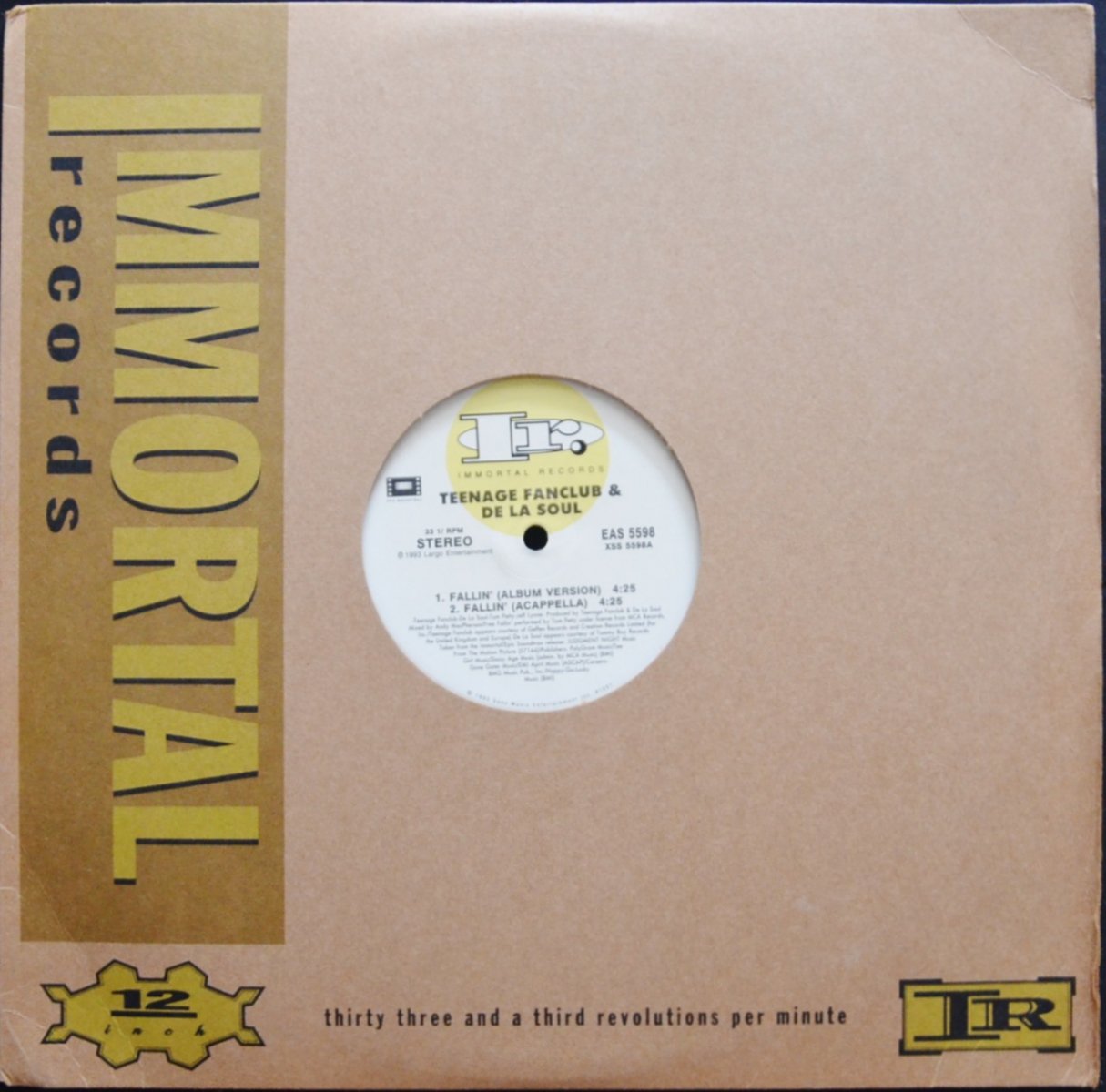
That’s the stall-setting opening gambit on Fallin’, the unlikely yet inspired collaboration between De La Soul and Teenage Fanclub, a marriage made in heaven that was strictly at odds with the hell of the rap/rock crossover that soundtracked 1993’s Judgement Night movie. Amidst a hotchpotch of hideousness – Helmet & House Of Pain, Biohazard & Onyx, Slayer & Ice T – and the odd briefly inspired moment – Dinosaur Jnr & Del The Funky Homosapien’s choppy and groovy Missing Link, Sonic Youth & Cypress Hill’s dark and, er, dope hymn to smoking (I Love You Mary Jane), De La Soul’s daisy age hip hop beats melded with TFC’s Bellshill beat and created the album’s best track that, 30 years later (!!!) sounds fresher than ever.
With De La Soul being in the news this week on the back of the death of Dave Jolicoeur (Trugoy the Dove), I’ve taken to playing many of the group’s early sample-savvy singles and debut album at a decent volume. The track I keep returning to though is Fallin’. It’s been played at every available opportunity; in the car, doing the dishes, sorting the washing, brushing my teeth, boiling the kettle, texting my pals… it’s a real beauty of a track. Stick a microphone in front of me and I reckon I could bust out a pretty faithful recreation of the opening verse’s rap. But don’t. I’m a white guy from the west of Scotland and we’re not known for our flowability skills on the mic.
Teenage Fanclub & De La Soul – Fallin’
Teenage Fanclub are, as you are well aware, four white guys from the west of Scotland too and, while they wisely left the rapping to the masters of the art, they do contribute some soulful ‘doo-doo-do-do‘ adlibs in the background – possibly aping, or just plain stolen from Biz Markie or the Steve Miller Band, as you might spot later.
The track is built around a sample of Tom Petty’s Free Fallin’, a widescreen open road of a record, as American as truckstops and Telecasters, with references to Elvis, Jesus, Ventura Boulevard, Mulholland Drive and endless freeways, sung in Fanclubesque multi-harmony atop a bed of rich acoustic and clean chimin’ electric guitars. There’s a rumour, unsubstantiated, that it plays at maximum volume whenever white American men of a certain age cash in their one-way ticket for that final trip along life’s highway and park the Cadillac outside the pearly gates. I guess I’ll never know.
It’s something of a surprise, then, to find out that the idea for building the track came, not from the four guitar-crazy Scottish musos who may well have played along to a Tom Petty record or two in their time, but from the magpie mind of De La Soul’s Posdnuos. More of that in a bit though. Firstly, how on earth did this heaven-sent collaboration come to be?
Gerry Love, bass player with Teenage Fanclub at the time, alongside Brendan O’Hare, former TFC drummer and inspired catchphrase merchant very kindly offered to cast their surprisingly clear minds back three decades and reminisce exclusively for Plain Or Pan.
Gerry: De La Soul came over to Cheadle Hulme, Cheshire – we were mixing Thirteen at Revolution Studios in the town. Originally we were approached via our American label DGC (Geffen) to ask if we fancied collaborating with PM Dawn. As we were weighing up the offer we were updated with the news than PM Dawn couldn’t make it after all and would we like to work with De La Soul? It took us less than a second to say yes. Like most people of our generation we were big fans of their work. Three Feet High and Rising was a massively important record.
Brendan: De La Soul (and their weed…and their preconceived ideas of us) came over to the studio. I think they thought we were Tom Petty, which we weren’t. They were hilarious once they realised we were equally hilarious.
Speaking to LA Weekly in 2009, De La Soul’s Posdnuos explained further.
Posdnuos: They (the Judgement Night people) started pairing up different artists. We could’ve been paired up with familiar names, but we didn’t know who Teenage Fanclub were at the time, so we picked them.
Brendan: The track sorta happened when they muscled a drumbeat out of our Alesis SR16.
Gerry: I remember the session started with a drum beat programmed by Maseo. I put down a bass line, Raymond put down a guitar line and then Posdnous and Trugoy started working on the lyric while at the same time going through a box of records they had brought looking for something to sample. It was really impressive to see how they worked. In a matter of hours they had recorded the vocal. We all put down some harmony vocals.
Posdnuos: We were taking a break from brainstorming ideas. We happened to be sitting in a little reception area outside the studio, and Tom Petty’s Free Fallin’ video came on. I’ve always been the person in the group, who when he hears certain words, I take them and apply them to a certain thing. It started as a joke – ‘Hey, let’s make a song based off a Tom Petty video!’ Then Dave (Trugoy The Dove) said, ‘let’s spin it about us falling off as a rappers.’ So we went to the store, bought the Tom Petty CD, and based it around the song.
Then we got a bassline from (Biz Markie’s) Nobody Beats The Biz, the Steve Miller sample (listen carefully and you might spot a morsel of more ‘doo-doo-do-dos’ from Fly Like An Eagle), and a snippet of Petty’s voice and it came together pretty fast.”
Gerry: I saw that Posdnous say that they got the bass from a sample. That’s complete nonsense! For the record: it’s my part, I came up with it. The bass line doesn’t feature anywhere on that Biz Markie track.
They did add the Tom Petty sample at the end though, and then that was it – all done and dusted in a few days.
Spot the samples…
Tom Petty & The Heartbreakers – Free Fallin’
Biz Markie – Nobody Beats The Biz
Steve Miller Band – Fly Like An Eagle
What began as something of a throwaway track to fill space on a compilation album ended up a fully fledged De La Soul track, so much so that Tommy Boy, De La Soul’s label, wanted to include it on Buhloone Mindstate. The band nixed that idea though, and so the group’s third album’s loss was most definitely Judgement Night‘s gain.
Gerry; A few months later we flew out to Chicago to make a promo video with them.
Brendan: The recording of the video is one of my favourite memories.
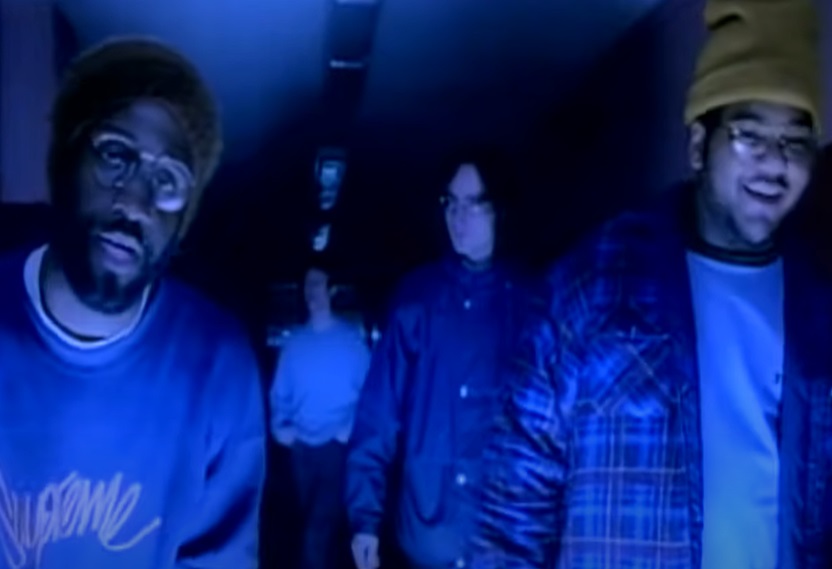
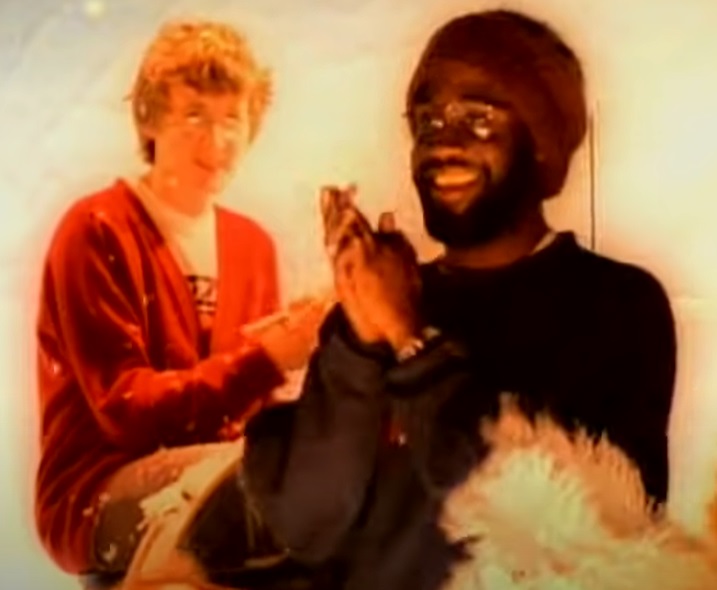
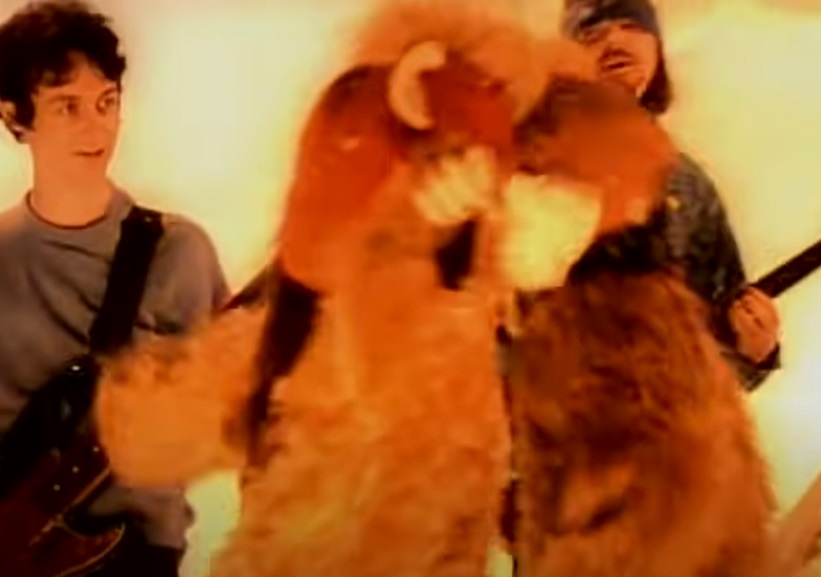
The video is great, both groups coming together to goof around in an American high school classroom. De La Soul are the academics, TFC the class goons. Gerry spends his time sleeping in the back row alongside a bored Brendan, with an equally bored-looking Norman in front of him. Swotty goody two shoes Raymond sits up straight at the front with Maseo and Posdnuos the ‘teacher’.
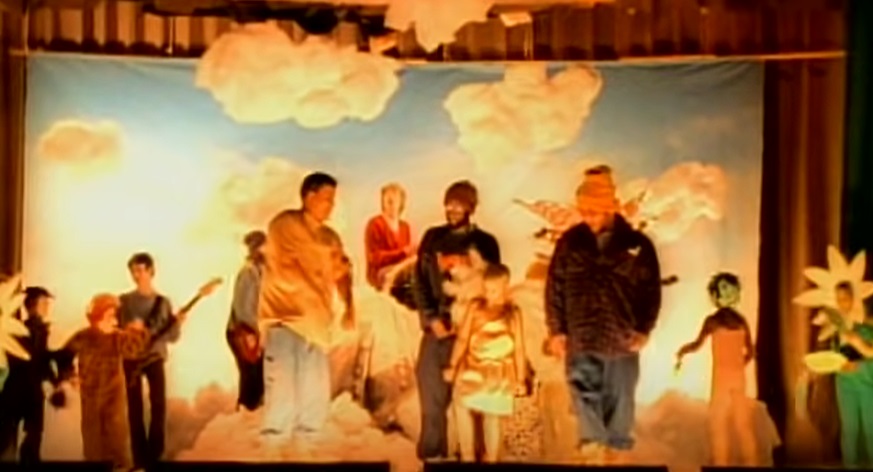
When the video cuts to a school drama production, we see the two acts sharing the stage, De La Soul rapping in triplicate as a clearly tickled Teenage Fanclub play out the tune, a collection of acting kids weaving in and out of the happy stew.
Gerry: De La Soul were just really friendly guys. The whole thing was one of the most unexpected things that ever happened in my time in Teenage Fanclub and one of the most rewarding. As a track, I think it still sounds pretty good.
Brendan: It was sad news about Trugoy. He was lovely and keen on yoghurt.
There was a brief period at the tail end of the ’80s when two music cultures collided to create an exciting new sub-genre. Partly brought on by Happy Mondays’ in-print enthusing of Detroit techno and partly by the Stone Roses’ approach of playing dance music before they took to the stage, a movement of youth who’d lapped up their own Stones and Beatles dared to cross the divide between guitars and grooves and, arms aloft and flying high, wholeheartedly embraced the best of both scenes. In Irvine’s Attic, you could dance yourself dizzy to Pacific State and State Of The Nation in the same thrilling ten minute sequenced spell, our own Saturday night fever soundtrack that was absolutely replicated in provincial towns up and down the country.
The bands that sprung up around this ideal took the cross-pollination of clashing cultures and ran with it, for as long as the record companies were happy to throw their money northwards in the vain hope they’d land themselves another Mondays or Roses. Some of the acts – The Charlatans, obviously, broke out in their own right. Some of the others had one or two good songs, one great song, even – The High’s Box Set Go, Mock Turtles’ Can You Dig It – and some of the acts might even have managed to squeeze out a decent album – World Of Twist’s kaleidoscopic and swirling Quality Street springs to mind, but many of them burned briefly then fizzled out, shrinking back to the suburbs as the dirty exhaust fumes of American grunge spewed forth in Nirvana’s Converse-trod trail. ‘Baggy’ or ‘Madchester’ (eugh) or ‘Indie Dance’ was, then, a placeholder in time…but those great songs live on.
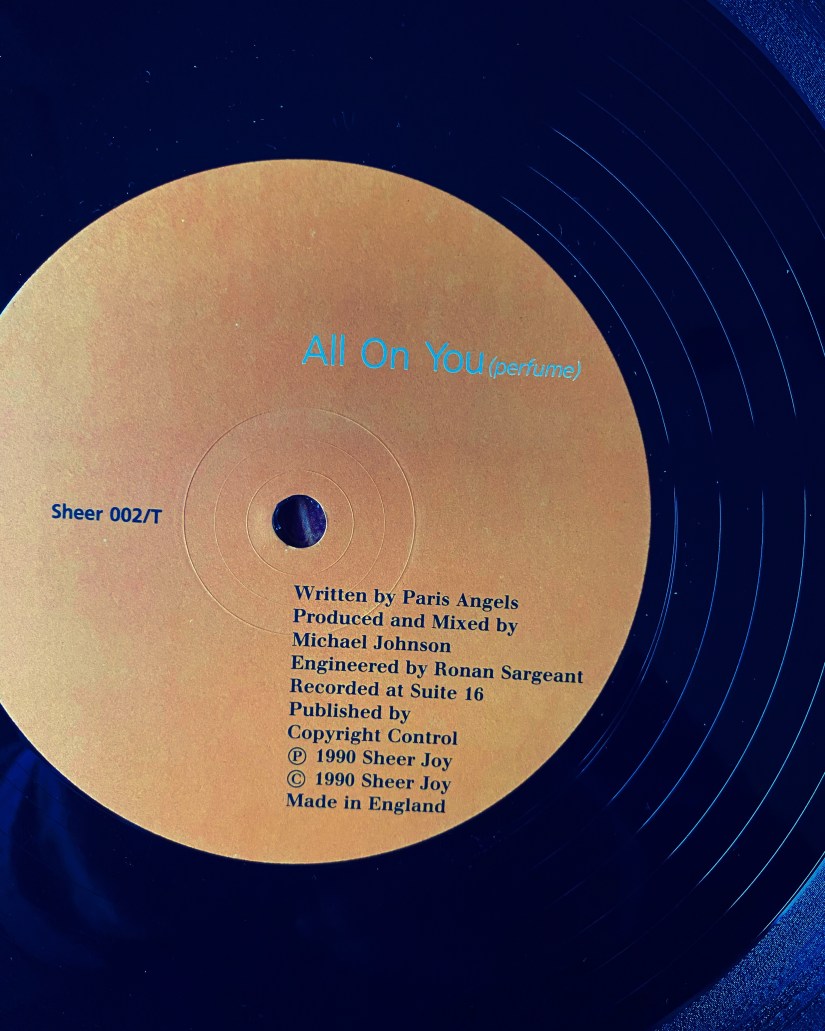
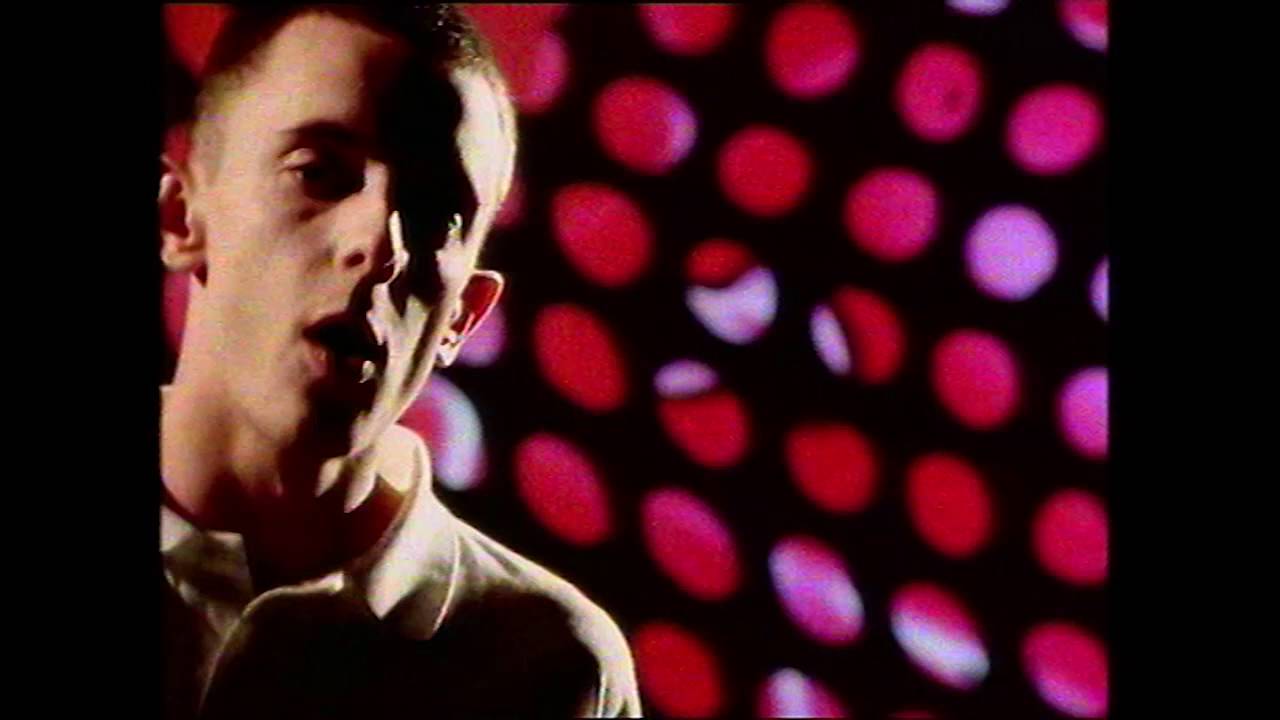
The best of all is arguably Paris Angels‘ All On You (perfume). A track, I think, rather than a song, it magpies the best of everything into one era-defining single that still thrills over 30 years later. Take a monochromed Curtis-ish vocal and team it with the sort of girlish adlib that’s floated straight off an anonymous house stomper. Stick them atop some chiming, Marr-esque guitars. Throw some sequenced acidy squelches across it and then polish the whole thing to a see-your-face-in-it brilliance; All On You (perfume) is a proper rush.
Paris Angels – All On You (perfume) – with added John Peel at the end.
Quite how they managed to sow the shiny seeds of All On You from the unholy clatter that represented the band’s sound at the time must be down to the producer, so kudos to Michael Johnson (engineer on no less than Blue Monday) for coaxing such an airbrushed sound from the band’s grizzled indie.
The band’s roots are easy to identify from the swirling slab of industrial Mancunian twist and shout below. Very of its time, it rattles and ricochets like a stretching out ACR or Happy Mondays at their esoteric best. Dark, dense and serious, with the tentacles of the baggy beat and a wandering electric guitar – all bent 3rd strings and chorus pedal – creeping through its cracks, it’s a signpost of where they’d come from and where they’d briefly be going…
Paris Angels – Stay (Peel Session)
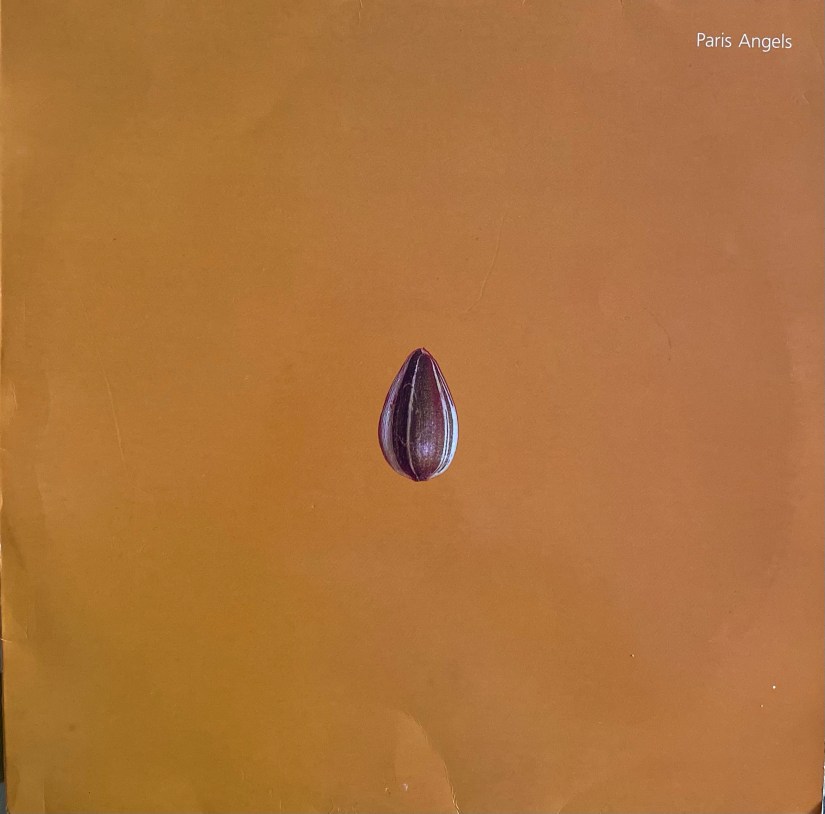
Should such things matter to you (and of course they do), it’ll have you double-checking the label on the record for a Factory logo or catalogue number that isn’t there. Yes, despite all necessary Factory ingredients being present; a clattering, enthusiastic rhythm, hot-wired chicken scratch guitar, a shouty Mancunian frontman oozing oodles of effort over ability – all housed in a subtle and arty sleeve, considered typeface ‘n all – Perfume was released on the perfectly-named Sheer Joy label. All bands have one great song to their name. Perfume (All On You) was Paris Angels’.
On my trip to New York last year, I was dead set on returning with a specific record. A modern repress was no good – you can get them anywhere after all – it had to be an original ‘70s pressing of an album recorded in the city, by a group from the city, with the grime and grind of lower Manhattan embedded deep within its grooves for added, authentic punkish effect. A ‘pre-loved’ and battered sleeve could only add to the funk of it all and I wouldn’t rest until I had tracked one down.
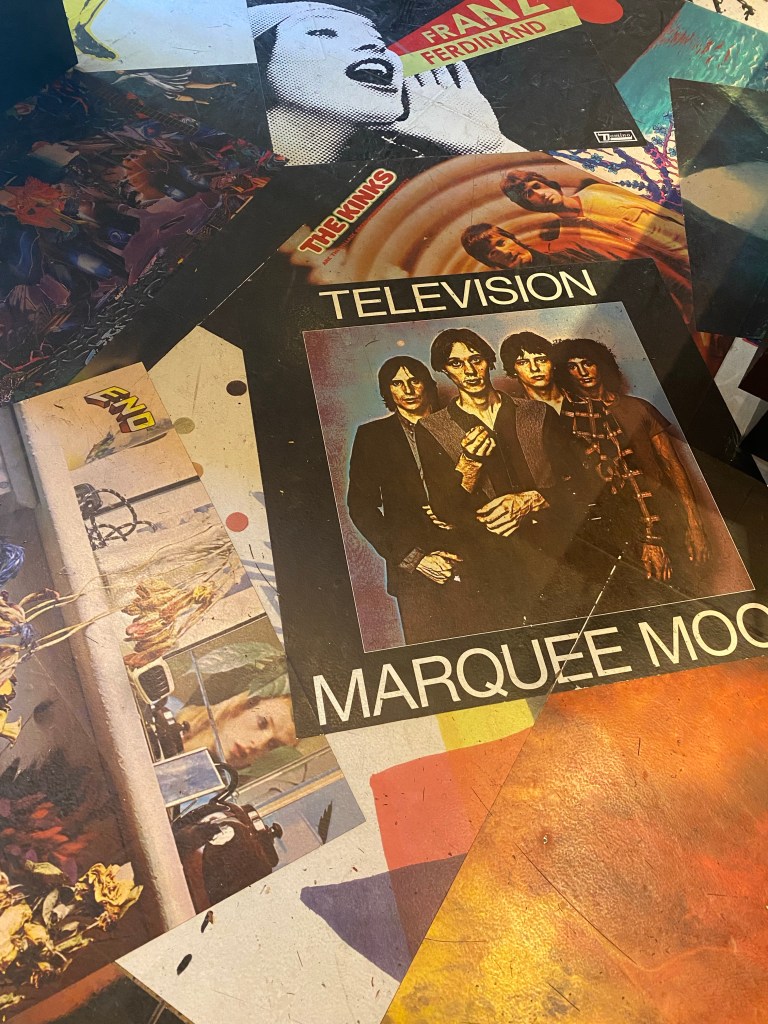
D’you know how hard it turned out to be, to find a decent record shop in Manhattan, let alone find one that had that one copy of Television’s Marquee Moon sitting idly and unloved at the back of its racks, waiting for the day when I’d show up with twenty bucks to rescue it from forgotten-ness for ever?
Dead hard to impossible, that’s how hard.
At the bottom of the High Line near the entrance to Chelsea Food Market was a wee artisan boutique where various local artists sold their wares. And right in the corner was an old disinterested guy selling records. They were packed in torn and ripped cardboard boxes, handwritten labels denoting the music genres within. Damn! Two guys were digging deep in the ‘Punk/Noo Wave’ box. And they weren’t moving anytime soon. I ignored the ‘Rawk/Hard Rawk’ selection, found the ‘Funk/Soul/Disco/‘70s Shit’ box and, with one eye on the two guys who, I was convinced, would unearth a Rocket To Russia or Plastic Letters or, no!, a Marquee Moon any second now, began rifling through a box of records that had seen better days.
I pulled loose a copy of Isaac Hayes’ Hot Buttered Soul, horrified first at the price – $50 – and then at the state of the thing. A well-worn sleeve suggests a life well-lived, the untold stories of get downs and skin-ups that were soundtracked by the record within. I don’t mind a tatty sleeve at all – you should see the state of the mouse-nibbled copy of Sandinista! I found in Liverpool a few years ago – but this record…all these records here…were wrecked to the point of uselessness. If I’d found this copy for £1 in the British Heart Foundation shop at Irvine Cross, I’d have swithered over the pros and cons of parting with my money. Fifty bucks?! Get real! Those two guys making their way through the box I really wanted to explore weren’t going anywhere fast, and by now the family had caught up with me, eager to move on. I’ll never know what was in that box, or what New York prices were being asked…but it still eats away at me that I’ll never find out.
We weren’t in New York, Craig, to spend hours looking for and then browsing through record shops, but I managed to syphon off some me time to spend scouring the Rough Trade that’s next to Radio City. Right at the back was a second-hand section. No Marquee Moon here either, but in amongst the overpriced jazz reissues and (bizarrely) Gerry Rafferty’s back catalogue, I fell upon an original ‘76 press of Dylan’s Desire, replete with its original 1970s price sticker, for a mere $8. Re-sult, as the crate diggers say.
On the way to the counter was a display of ‘Classic NYC Albums’ – I’ll let you work out which records were displayed – and, in an impulsive move, emboldened by the original Dylan and happy that I’d finally found a New York-ish record that met my stringent criteria, I picked up a minty fresh and shrink wrapped copy of Marquee Moon to complete my purchase.
“Cool rekkid,” said the counter girl through her dyed black fringe and piercings. “Great guitar playin’ awl ovah it.”
“I know,” I smiled. “When in New York…”
“You gotta,” she finished for me, giving nary an acknowledgment to the Bob record she was ringing up. “Have a great day!”
I was delighted. Not particularly with the Marquee Moon which I’d had forever anyway – it was one of the first CDs I bought, but with the Dylan record which, after a quick Google while sitting on the wall opposite Rough Trade, I discovered was originally sold in Jordan Marsh, an NYC chainstore with its own record department. Not the New York record I had my heart set on, but a New York record all the same.
Unfortunately then, my vinyl copy of Marquee Moon comes not with the essence of the Bowery engrained in it, nor the mucky fingerprints of some speed-damaged old punk rocker across it, but still with the greatest free-form guitar playing that sets it out as the most individualised trailblazing record in an era chock-full of individualised trailblazers.
The band Television first entered my teenage orbit on the back of The Family Cat’s forever support-band sounding ‘Tom Verlaine’. Who was the titular Tom that had this loud and caterwauling indie rock track named after him? I soon found out.
The sound Television made was, especially when you consider the mid ‘70s, the sound of the future. Think how many of your favourite bands have replicated Tom Verlaine’s guitar playing since; spidery thin then creamy thick, loose and ragged then fat-free but flashy all at once. Will Sergeant… John McGeoch… the entire alumni of Scots’ post-punk six string alchemists… you can perhaps trace a direct line from the hot wired fretboard of Verlaine’s Fender Jaguar or Jazzmaster to any number of single coiled, solid bodied fetishists the world over, but you won’t find any other examples of the guitarist’s initials mirroring the band in which he plays. A happy accident, for TV and Television for sure.
Television – Friction
I’ve always loved Tom Verlaine’s playing on Television’s Friction; the jerky riffing, the unexpected notes in the solos that are always strictly non-blues, but especially the little electrified sound effects he coaxes from the wound strings as the, ‘my eyes are like telescopes’ line creeps out. You can ‘see’ those eyes, pirouetting out on little stalks as the music matches the vocal.
‘EFF, ARR, EYE, SEE, T-I-O-ENN!’ it goes, wired and paranoid, a thousand bedroom guitar players tuning in intently. Not all guitar players would match Verlaine – few ever will – but that free-flowing metallic sound will ring forever, whether it’s from an old and battered copy of Marquee Moon or a bog standard original that’s straight from an Eastern European pressing plant. Great rekkid, with great guitar playin’ awl ovah it. Shine on, Tom Verlaine.
This record will be 50 years old this year…half a century young and still sounding like nothing that’s been before or since. Well, to a point…
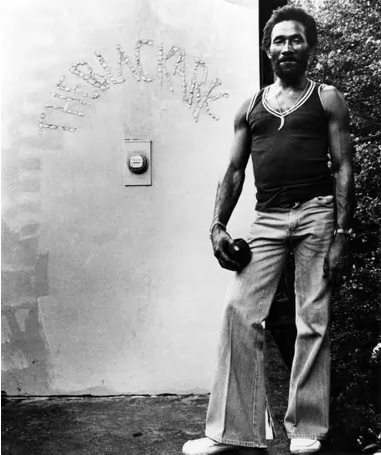
Lee Perry‘s Jungle Lion is vintage Perry, from the stoned, lion roaring madman-isms at the beginning to the sun-baked skank as the record’s groove kicks in, to the echoing brass refrain that lifts the recording up and out to the moon and back, the hook that keeps the whole acid-fried masterpiece from falling apart.
Lee Perry – Jungle Lion (7″ mix)
The production on Jungle Lion is insane. The band is locked in and tight, bass and drums laying the groundwork, that wet slap of chicka-chicka guitar adding the scratchy colour like a toddler with a crayon dragged across a piece of paper; messy, unique and creative. Perry toasts over the top in his own freeform fashion, the needles of the mixing desk accelerating far to the right and stuck in the red as he ‘Ughs’ and ‘Aows’ and ‘ch-ch-chs’ his way across the top. ‘Dan-dee-layon! Jung-gal layon! Fay-ah!‘ It’s funk, Jah, but not as we know it.
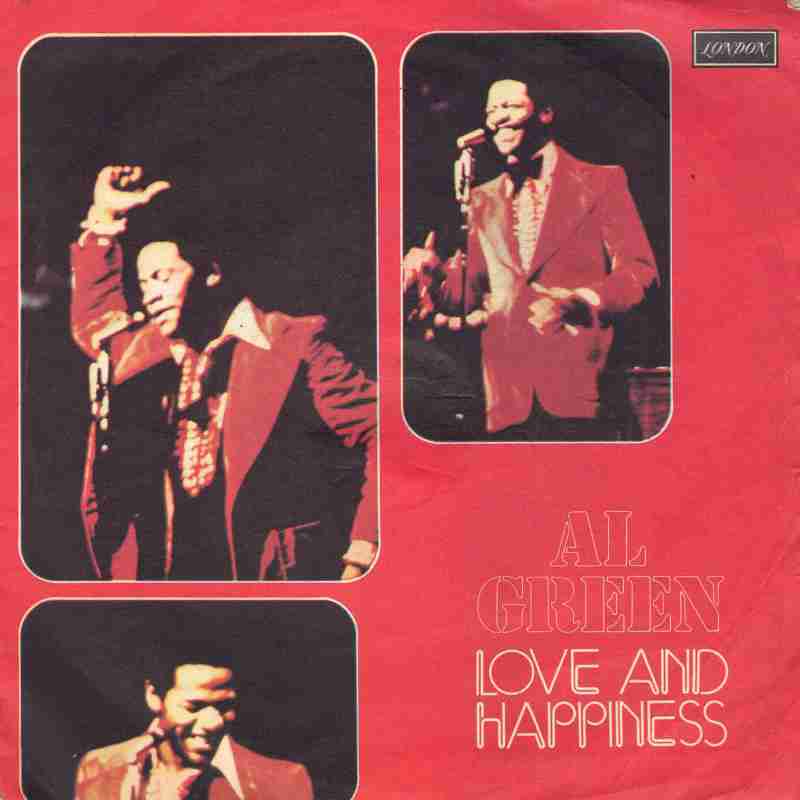
That brass refrain. The hook. You’ll definitely have heard that elsewhere. The keener scholars around these parts will point to Al Green‘s Love And Happiness and take the bonus round for 15 points, please, Jeremy.
Al Green – Love And Happiness
Now, I don’t know quite what wizardry The Upsetter was capable of manifesting inside Black Ark, but it seems to me – and I may be well off the mark here – that Perry sampled, yet didn’t sample, the horn refrain from Al Green. What I mean is, the refrain on Perry’s track is the same music, not merely a version played by Perry’s horn section, but sampling wasn’t a thing in 1973…or was it? Exactly what technology was available to maverick studio heads with no boundaries and serious creativity overload?
My thinking is that Perry simply played Al Green’s track and, using a studio microphone set up next to the speaker where Love And Happiness blasted forth, recorded what came out. Remember how, back in the days before ghetto blasters with in-built radios, you used to tape the charts? Yeah, exactly like that.
So Perry takes Green’s track – the delicious guitar riff in the intro as well as the horn refrain – and builds his own warped and inventive take on a soul classic. Nothing new in this of course – most reggae tracks began life as sun-baked covers of the soul music that crackled and crept across the US services airwaves and onto the Caribbean – but Lee Perry’s masterstroke is in the direct lifting rather than the direct copying that his peers would do.
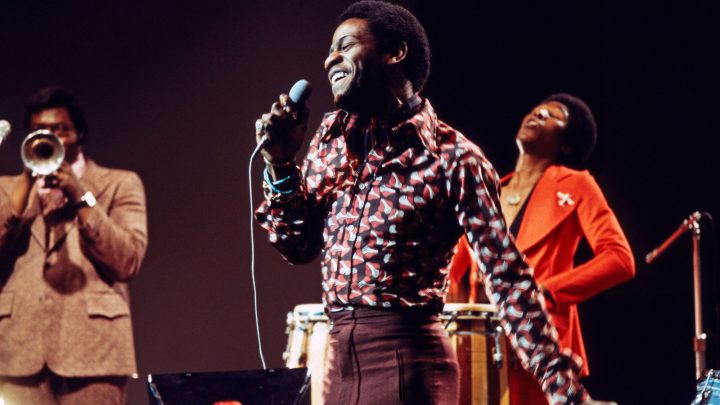
Al Green’s original is such a great track. Stately yet understated, quietly assured and coasting on a slow fever bed of warm hammond and honeyed brass, the perfect foil for the Reverend’s measured, restrained vocal.
He always surrounded himself with great musicians, did Al, from the Rhodes sisters on backing vocals, to the slow ‘n steady Al Jackson Jnr on drums and Leroy Hodges on bass, to his guitar player and sometime-co-writer (and brother of Leroy) Teenie Hodges. I’ve written about Teenie before, a relative unknown in the guitar world but, for me, a guitarist whio appeals to me far more than some of the usual names who appear on those ‘Best Guitarists Ever’ lists. He’s such a fluid player, Hodges, clean and clear, with the most delicate of touches. Those fingers can hover an inch above the frets and his guitar will sing, clean and chiming, bluesy and soulful. No wonder Lee Perry was keen to employ him in whichever manner he could get away with.
The Specials were one of the very first groups I truly loved. Later life would open my eyes and ears to their stance, but as a 10 year old I had no idea they were in any way political, or that by even lining up in that defiantly multicultural manner they were flicking a two-fingered salute to the dangerous undercurrent of right-wing extremism that was simmering just below the surface of Thatcher’s Britain. Friendly antagonists, they fought back through well chosen words and haircuts and clothes. Me? I just liked jumping around Mark Richmond’s room to Do The Dog and Rat Race, Nite Klub and his single of Too Much Too Young. “Ain’t you heard of con-tra-cep-shun!” we’d shout, oblivious to what that actually was, our tasselled loafers ripping our heels to bits as we clacked the segs off his mum’s kitchen floor. Far too young for the 2 Tone tour of ’79 when it made its final stop in the rundown seaside town of Ayr, just down the coast from my house, it wouldn’t be until The Specials reformed in the early 2010s that I’d finally catch them in full flight. I’m glad I did. They were dynamite from start to finish.
Terry Hall, Barrowland Ballroom 2013
Terry Hall was the unlikeliest of frontmen. Despite being the King of the suedeheads, he never seemed like he was very much into it. He always looked fed up, disinterested at times, perhaps depressed at others. Hangdog and emotionless, he’d hang from his mic stand like Eeyore, down in the mouth, staring at the floor, as his bandmates whipped up a not-so-quiet riot around him. Of course he was into it though. The music would occasionally spark a jolt of electricity through him and he’d pull himself tight, knuckles whitened around the mic, shoulders up and into his ears and he’d fly off in a whirl of suit-jacketed skanking, turning to face Neville or Lynval to lose himself in the punkish ramalama before the brief musical interlude ended and he was pulled magnetically back to his real job as downbeat frontman in one of our greatest and most accurately-named groups.
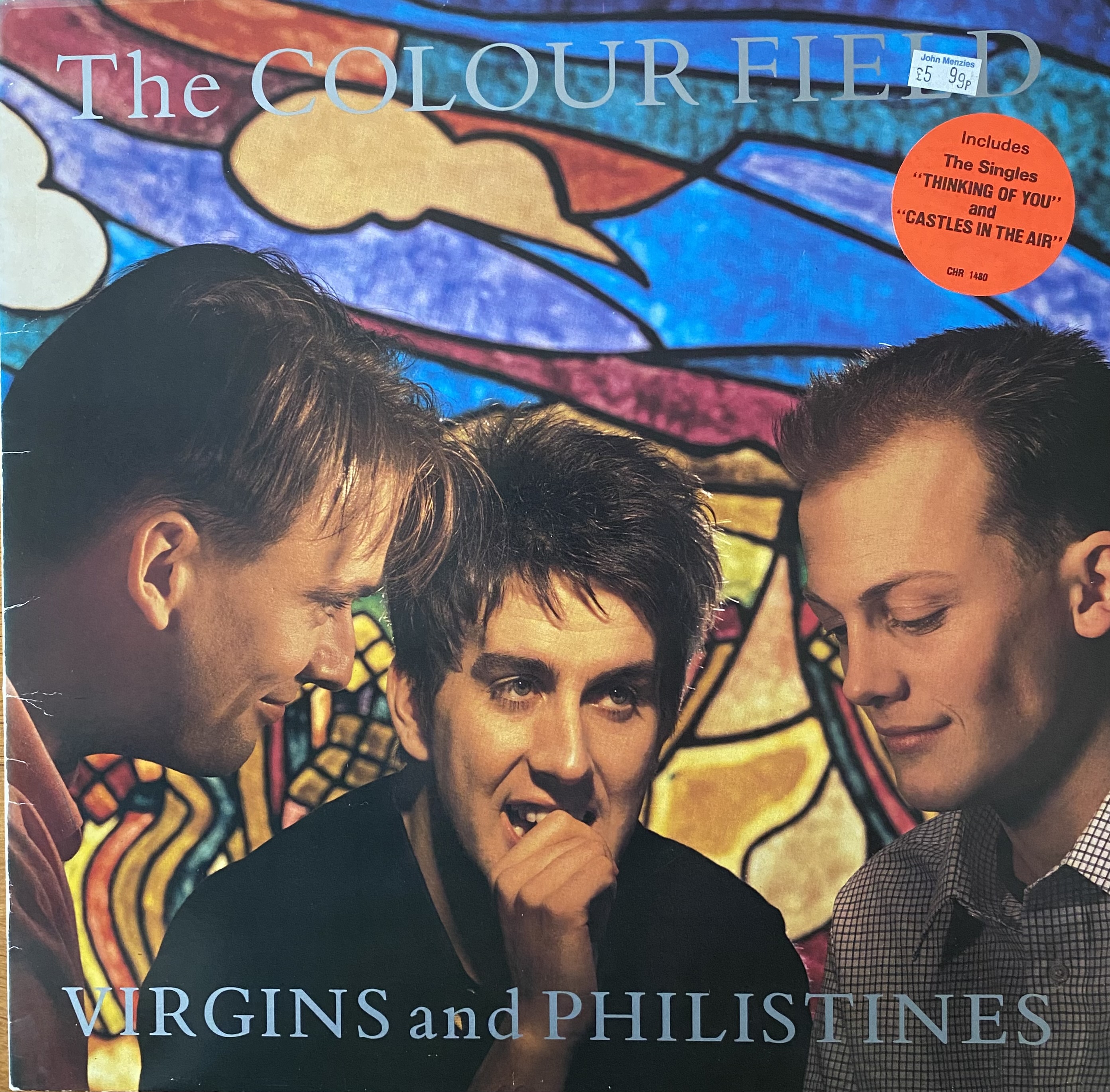
The news of Terry Hall’s sudden death has hit me far harder than I could have anticipated. I’m working from home just now, putting together stuff that should be turned in before Friday, but I can’t properly concentrate. I’m listening, not to The Specials – they’re night-time music – but to Virgins and Philistines, the album he made with/as The Colourfield in the mid ’80s. It’s rich and inventive and packed full of unravelling melodies, as well as bona fide classics; it opens with Thinking Of You, and its rich mix of Spanish guitars, plucked strings and groovy acoustic bass runs has almost set me off, its upbeat melancholy taking on a whole new meaning. Powerful thing, music. I’m not sure I can handle Forever J just now. I’ll save that particular beauty for tomorrow, maybe.
The Colourfield – Thinking Of You
A funny thing happens when popstars die. You don’t know them…and yet, you do. They pop round far more often than yr old Auntie Margaret, for starters. You know them, and they know you far better than anyone else. They get you. They instantly uplift. Immediately heal and soothe. Always in tune with your feelings, they never disappoint (well…Morrissey, but…) Pull them out of that alphabetised collection of yours and they’re right with you in the room, familiar old friends reigniting old memories of the past, shooting to the surface like lava from a volcano and spilling out in unstoppable order.
As my own years roll on, and friends and heroes die, I find myself getting increasingly nostalgic for a past that surely couldn’t have been as idyllic as I remember. One whiff of Gangsters and I’m right back in Mark’s mum’s kitchen, an orange rolling from the top of the fruit bowl and onto the floor as our uncoordinated earth-quaking and enthusiastic skank tips first the fruit and then his mum over the edge. Mark is also no longer with us, so the music of Terry Hall, and especially The Specials, has all sort of meaning suddenly attached to it.
I’m back in the living room of our old house as my mum pulls out the catalogue and asks if I want peg legs or flares for school trousers. Thank you, whoever you might be up there, who prompted me to ask for peg legs just as 2 Tone was filtering its way to Bank Street Primary School. I’m back in the playground, half a dozen of us shooting bright yellow sparks from our segs.
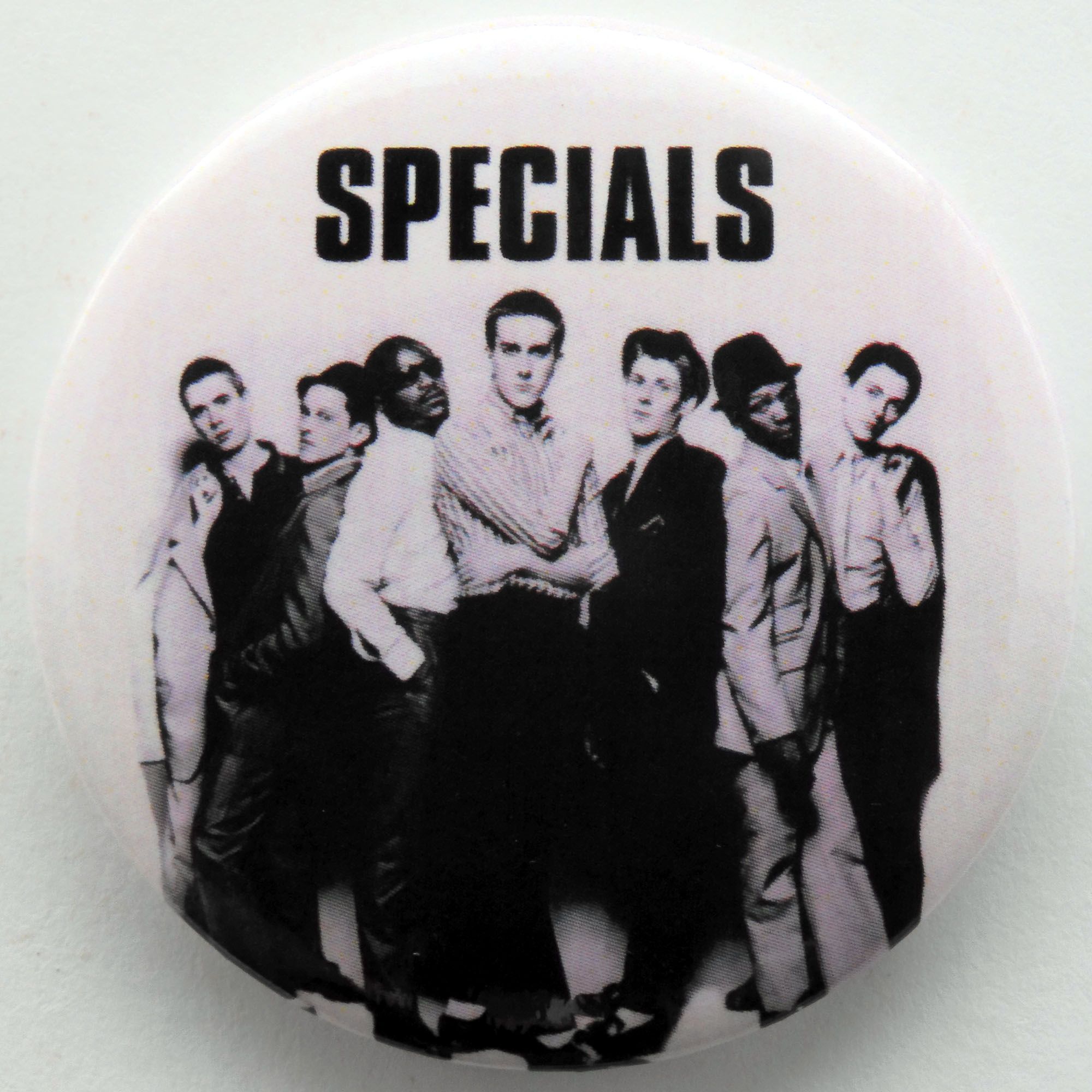
And I’m in the wee shop in Irvine High Street agonising over which of the badges my 15p will go on this time. A Specials badge, the group scowling in miniature? A Madness logo? My original one was lost somewhere in or near the Magnum and I’m still annoyed about that. That spray-painted Jam logo, maybe? Nah. I’ll go for The Police this time. Just, as always, on the wrong side of cool. When you’re that age, music is just music. Leaving aside the Y cardigans and the burgundy Sta-Prest and those painfully cutting loafers, tribal identity wasn’t so important at primary school. So there the badges were; The Beat, The Selecter, Adam and the Ants, The Police. And Status Quo. Fight me.
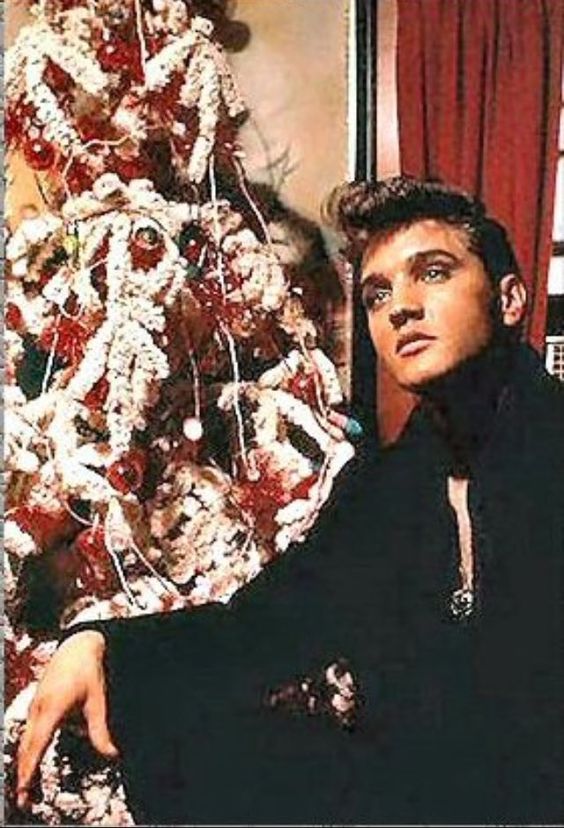
I read this thing about Elvis a few months ago – around the time of the Baz Luhrmann biopic coming out, as it happened – that suggested that the market for Elvis memorabilia had crashed to the point of irrelevence; the collectors, it pointed out, were all dying off and the younger generations just didn’t identify with Elvis in the same way.
The King of Rock ‘n Roll? From a Gen Zeder’s perspective, that’s a sad (as in embarrassing) label to tag anyone with. Get hip, daddy-o, Elvis is dead, in every sense of the word. He rocks in his box and in his box only. Unlike the timeless appeal of say, The Beatles or Queen – young kids love Queen – or AC/DC or Fleetwood Mac, artists whose music soundtracks films, appears on catch-all streaming playlists, is referenced by the pop stars of today and therefore is still culturally relevant, to young folk, Elvis is just a tragic fat guy in a white suit who died on the toilet. His records, antiquated artefacts of a sepia-tinted bygone world at best, middle of the road karaoke fodder at worst, will never be streamed, let alone spun, by anyone under 40. The King is dead, man. The King is dead…
But, but, but…let me tell you, you in the Balenciaga and you in the Yeezy Boost, Elvis could sing…he could swing…and for a while, he mattered.
The purists might point to the Vegas years; if you can, see past the bloated excess of an Elvis deep in all sorts of personal trouble, you’ll revel in his sensitive treatment of the standards. And there are definitely gems to be found amidst his army ‘n movie years of the ’60s. But to these ears, his ’50s output is easily his most exciting period. If you’re a doubter, a naysayer, a cloth-eared fool, then his version of Santa Claus Is Back In Town won’t go any way to swaying your opinion, but as far as rough ‘n ready Christmas rockers go, it’s right up at the top of the tree.
Elvis Presley – Santa Claus Is Back In Town
Beginning with a mesh of close-harmonied vocals from The Jordanaires – “Christttmass, Christtmas!” – and some searching, tentative piano, the track kicks into gear immediately once Elvis takes an Olympic athlete’s run-up to that first, ‘Weeeeeell‘, his arm windmilling in time to his seesawing pelvis as he uncurls his bee-stung lips and finally lets his vocal go. “Well, it’s Christmas time pwitty bay-bee, and the snow is fallin’ h’on the ground...”
His singing, almost a parody of an actual Elvis impersonator, is full-on fun. He sings from the creped soles of his shoes in the low parts, straight off the toppa the ducktail in the high sections, the voice lightly sandpapered and soulful enough to convince the uninitiated that it belongs to a black bluesman from the Mississippi delta. There are parts where the band drops out and it’s just Elvis and his air of dangerous mystery filling the spaces. He rhymes ‘sack on my back‘ with ‘big black Cadillac‘. He breaks into a guttural laugh in the instrumental breakdown. He sings the title as one word. ‘San’aclawzizbagintaah‘. Elvis’s whole vocal schtick, in fact, can be heard in just this one tune.
There are bits on the record where everyone and the kitchen sink is getting in on the hot seasonal action. The drums, swinging like ol’ Bing Crosby on the 14th tee at Palm Springs, bash and crash like Benny and Choo-Choo’s trash cans tumbling down Top Cat’s alley. The piano plays its own unique, slurred honky tonk, soaked in Christmas spirit and half an egg nog too many. Low rasping sax fleshes out the bottom end as a swing-time jazz double-bass walks its way carefully between the notes, a drunk man on an icy pavement trying to look sober on the return home. The whole thing is over and out in less than two and a half rockin’ (yes!) and rollin’ (yes!!) minutes. It’s a daft record, but totally essentially at this time of year.
There was a terrible version of You’ve Got The Love a few years ago, a windswept and earnest cover that was drama school in delivery and hive-inducing in reception. Florence & The Machine had chosen to close their festival slots with it and there were enough enthralled and taste-free people giving thumbs up around the band that their record company rush-released a version. It was all over the radio like a rash in need of antihistamine, its Asda-priced Kate Bushisms making me almost crash the car more than once. Sting. King.
The source (aye!) of Florence’s version was the deep throb of The Source‘s track, recorded with finger clickin’ soul survivor Candi Staton on vocals.
The Source feat. Candi Staton – You’ve Got The Love
Taking her vocal line from the motivating commentary on a keep fit video – ‘sometimes I feel like throwing my hands up in the air…sometimes it feels the going is just too rough…I know I can count on you‘ – Staton’s delivery ensured something of classic cut status for the track.
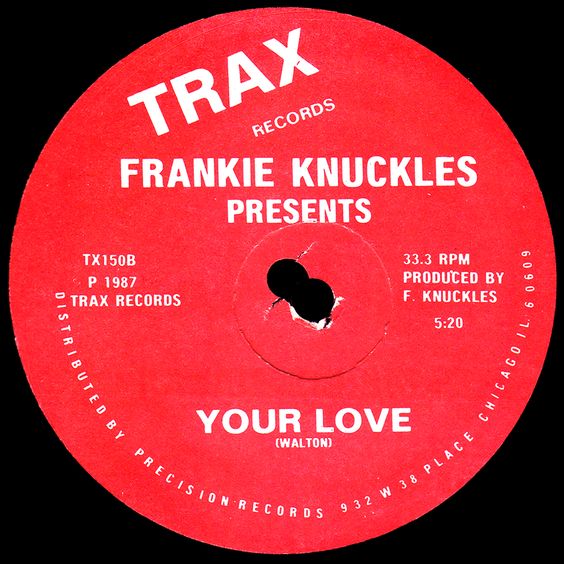
Many people wouldn’t have realised the record was essentially a cover. Indeed, for most chart music-buying folks, the record’s 5-note bassline and viralish, ear-worming keyboard motif would be their first unknown introduction to Frankie Knuckles.
Waaaay back in the years when house music was first thumping and throbbing its way from the sweaty basements of Chicago to the switched-on fringes of the mainstream, New Yorker Knuckles teamed up with Chicago soul singer Jamie Principle and hotwired his original soulful vocal to a tune that was at once progressive, deep, emotional and zeitgeist-riding.
In an era when (Stateside especially) hair metal was the mainstream’s thing, when The Smiths were putting out The Queen Is Dead and every other guitar band in the country was hanging on to their jangling coat tails, Knuckles was busy programming sequencers and drum machines – MC80s, 303s, 707s and 808s – to create a record that still resonates today. If How Soon Is Now is, as was said, the indie Stairway To Heaven, Frankie Knuckles’ Your Love is dance music’s She Loves You.
Frankie Knuckles – Your Love
The record kicked doors down. It gatecrashed the notion of what ‘dance music’ was, and what it was not. It wasn’t a hundred mile an hour electro pogo. It wasn’t base and derivative. It wasn’t (always) an anonymous guy hiding behind a rack of technology while a lip-synching beauty mimed her way atop the caterwaulings of a session singer. This particular brand of dance music was forward-thinking, cerebral and deeply soulful. As it turned out, it was pretty much timeless too.
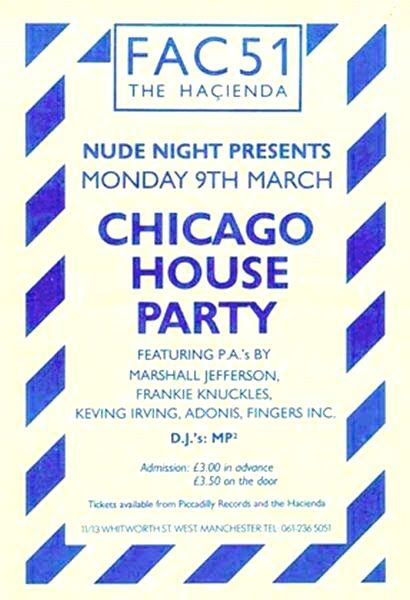
Your Love‘s rattling, reverberating snare must’ve sounded wonderful clattering off the walls of the Hacienda, even on a half-empty Wednesday night in February. Me? I wouldn’t know. I was too busy twisting my fingers into Smiths riffs and worrying about the length of the sleeves on my cardigan. I caught up in time though.
The sequenced keyboard line that formed the melodic hook of The Source’s cover is, at source (ha, again) hypnotising and trance-inducing, the Jungle Book’s Kaa and his spiralling snake eyes set to music. Its bassline is massive; instantly recognisable and capable of inducing Proustian rushes in even the most pasty-faced of guitar band-lovers when heard unexpectedly. It builds beautifully, from sparse electro through keyboard swells and man/woman gospelish harmonising to deep-breathing backing vocals, tasteful foreplay to the wham-bam of Lil’ Louis’ French Kiss, if you will.
‘I can’t let go’, sings Principle, as the song builds to its steamy-windowed climax, a notion that I wholeheartedly subscribe to. Your Love is a great record, propulsive and soulful house in the vein of Promised Land, both Joe Smooth’s original and the Style Council’s faithful reworking. I can’t let go indeed.
“…and he was buh-leeding awl ovah the apartment…I dunno, John, it cawsts a lotta dough…Then he jumped on the window display and pretended to be a mannequin! Hur hur hur!!!…I can do dat forya, shoo-wa…It’s like, 40 degrees in they-ur…Whadda fuggin’ joke…Is everyone in the West Village ho-mo-sex-you-al nowadays?!…”
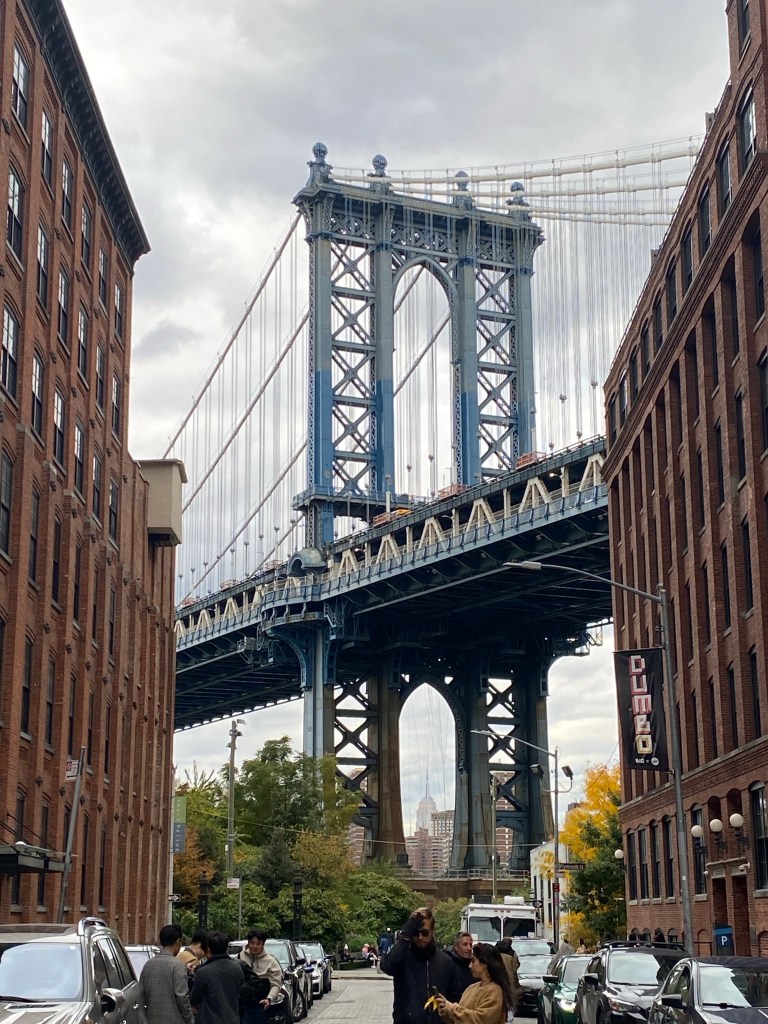
You can spend fortunes going up tall buildings and sailing down the Hudson, eating in or dining out, but in New York the streets give you all the free entertainment you need.
New Yorkers slalom through crowds with an impatient arrogance that borders on Olympic levels of skill. They gots ta be somewhere and they gots ta be there fast. I think that’s maybe why the bankers and wankers of Wall Street pair their expensive suits with pristine white sports shoes. They conduct their telephone business as they zip around, shouting, mostly, into the ether as their wee white ear buds transmit the conversation to their recipient…and everyone else within two blocks of earshot.
“…they was nuthin’ like THESE rats, though…All I want is to be successful and live in a nice apartment in TriBeCa…The Yankees last night! Huh? Huh!!…I can give it to ya straight or I can suga’coat it in a little bullshit if you’d prefe-uh…Way da go, Amir…Have you noticed those shoes he we-uhs?…Fuck you, asshole…”
It makes for great entertainment. Stand with your back to the sandstone wall of a fancy department store or a graffitied bodega or a tacky Times Square tourist trap and watch and listen. Tune in and you’ll hear languages from all corners of the globe; hand-gesturing rat-a-tat-tatting South Americans, vowel-spitting Italian tourists, slow talkin’ African-Americans. Even in the jammed aisles of Macy’s, the odd Scottish tourist’s voice will cut through the stew.
“Yer da’ telt me tae try them oan, bit ah thought they wir bogging’, bit they’re actually no’.”
God knows what those whispering Japanese make of it all. A half-heard snippet here and a half-heard snippet there makes for interesting listening.
“…extra bacon? Fo’ a tip?…She’s playin’ the long game, man…I was like, I DON’T THINK SO…y’only tell me y’love me when y’fuggin’ me…I used t’be afraid of the Bronx…I heard chow chows are adorable…My social life is a gawd-damned diz-ass-tuh…”
Every one of them could be an opening line from a movie; a voiceover perhaps, or maybe the main character in conversation with their co-star.
They tell you that New York looks like a movie set, but believe me, it sounds like one too.
“…can you buh-lieve it? Can you?!…Nah. They-ur bagels taste shitty. You-uh bettuh awf going ta…The Nets? Ugh. Dead to me…I’m kinda fed up wit dat place…I dunno, Joe. Whadda YOU think?…They-ah was a lotta laughin’ and A LOTTA flirtin’, y’know?……Dis city is fuckin’ alive, man. Alive!”
Beastie Boys – An Open Letter To NYC
If this Beastie Boys video doesn’t make you want to visit NYC post haste, there’s clearly sumthin’ wrong witchu. Fast cut, metaphorically fast-paced and full of the sights the five boroughs has to offer, it’s almost got me misty-eyed for a city I’m still very much wandering around in. Kennedy Airport can wait a couple more hours.
An Open Letter To NYC is the Beasties’ post-9/11 love letter to their city of birth, and its ‘Brooklyn, Bronx, Queens and Staten, from the Battery to the top of Manhattan…’ refrain has been playing in a continual internal (and occasional external) loop as I’ve walked the hard miles this past week. At some point or other, the boy has picked up on it too. I’ve caught him rapping it with unselfconscious gusto when he’s unaware anyone is listening. It has a great lyrical message running through it, and with every othuh WORD! being empha-SIZED!, it’s SHOUTY! and OBNOXIOUS! and AmericanIZED! – just like those snippets of conversation that have also worked their way into the internal hard drive the last few days.
To have been even a peripheral cog in that late ’60s/early ’70s Laurel Canyon songwriting wheel would have been quite something, I’d imagine. In houses tucked deep into the lush Californian flora and fauna, bands shared players and partners – of both the writin’ and romantic kind – and created a stoned immaculate co-operative of epoch-defining music.
The beautiful and not so (hi, David Crosby) plucked all manner of floaty harmonies straight out of the west coast ether and entangled them in gently strummed 12 strings and carefully picked alternatively-tuned Martin guitars and, with the help of a passing drummer or two – Buffalo Springfield’s Dewey Martin perhaps, or maybe crack sessioner Eddie Hoh, or, if he was looking for a quick gig in-between sessions, Hal Blaine (the drummers’ drummer) – commited to vinyl tracks that still ring and resonate half a century and more later.
Crosby’s If I Could Only Remember My Name album – check it out! – reads like a Wikipedia who’s who of the era’s Californian singer/songwriter scene. Graham Nash, Neil Young, Joni Mitchell and assorted Grateful Deads and Jefferson Airplanes show up to add their lightly toasted harmonies and frazzled, sloppy guitar playing to the record. The result is something of a one-off, recorded spontaneously (mostly) and sent to the pressing plant before anyone had the bright idea of tinkering with it. As rough ‘n ready albums go, it’s hard to beat.
I’m a sucker for the meandering and hippy Laughing, a track written in memory of the time Crosby met George Harrison at the height of Beatlemania and they bonded over Eastern philosophy and Ravi Shankar. It’s a tapestry of highly strung guitars, weeping pedal steel and overlapping, multi-stacked harmonies and it just might soothe your troubled post-millenial soul.
David Crosby – Laughing
Recorded while Crosby was in the heavy depths of grief following his girlfriend’s death in a car crash, those in attendance would often find the singer curled up on the studio floor, overcome to the point of uselessness. Yet, when he made it to the mic, you’d never have known.
With a voice coated thick in heavy drugs and alcohol, he sang his melody-rich songs; some entirely wordless, their meaning conveyed by multi-stacked Eastern-tinged vocal-less harmonies, others thinly disguised accounts of life as a free lovin’, easy ridin’ Laurel Canyon troubadour.
Cowboy Movie, for example, is the sprawling musical story of the end of Crosby, Stills, Nash and Young, with Young himself riffing on a loose ‘n funky guitar duel with Jerry Garcia. It’s Down By The River by way of Cowgirl In The Sand, while Crosby outlines (via lyrical aliases) how Rita Coolidge came between he and Graham Nash, to the detriment of their band. You should seek it out.
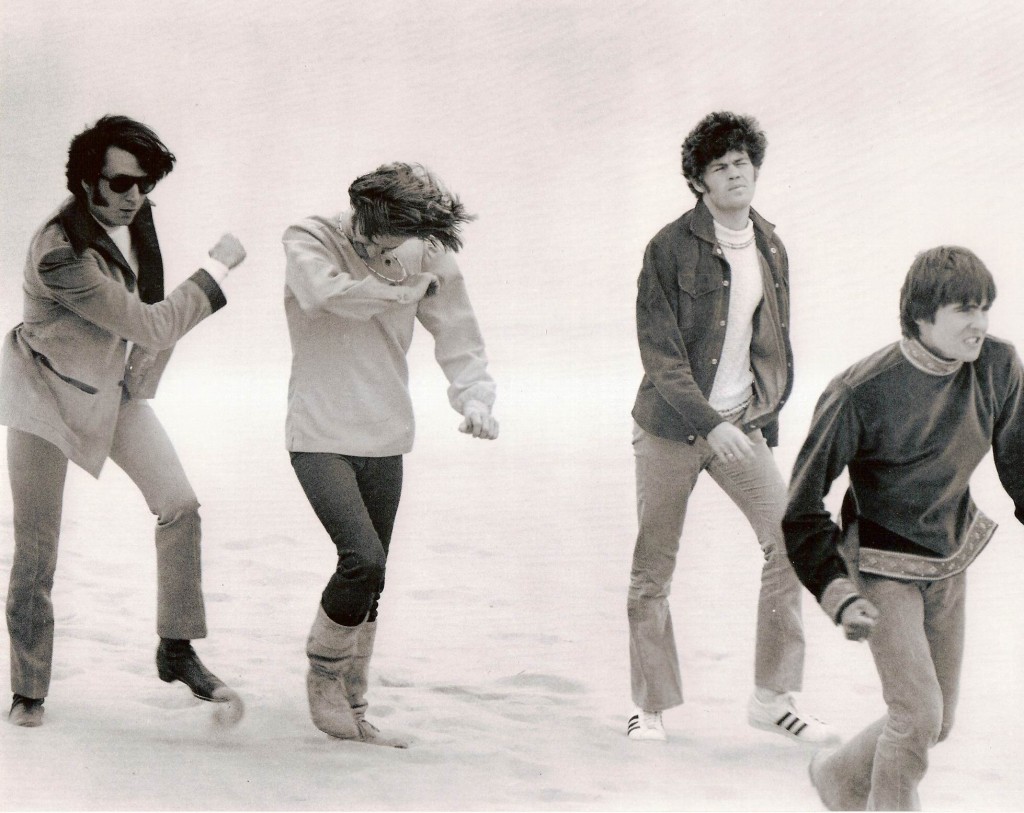
Just out of the eye of the storm, and slightly more peripheral to the machinations of the scene were The Monkees. Desperate to be seen as credible and serious, they employed the best writers, the best sessioneers and called in the best favours to ensure their records sparkled and soared like the best of ’em. Dig beneath the hits – and there are plenty – and you’ll discover a catalogue rich in introspective melancholy and sef-deprecating balladeering.
The Stone Roses, yesterday.
Written by Carole King and sung by Micky Dolenz, As We Go Along first appeared in the film Head and then crept out on the b-side of the movie’s lead single, the trippy and non-hit Porpoise Song – a track that probably requires a blog all of its own at some point.
The Monkees – As We Go Along
As We Go Along is so un-Monkees. There’s no obvious poppy hook. It’s downbeat, languid and loosely strummed, a raggle-taggle Rod and The Faces soundalike played on gently scrubbed acoustic guitars and thunking, woody bass. Carole King’s embeded melody eventually finds its way to the fore between the skirling acoustic strings and flutes, electric guitars riffing off into the Laurel Canyon sunset. You’ll want to play it again and again. It’s a beauty.

















 Plain Or Pan