Gone but not forgotten

A Change Of Plans

Plain Or Pan turns 18 this weekend. An adult. Already a veteran of blind-eye pubs and blinding hangovers, it’s time for the blog to move on out, move on up and enrol in a college course that’ll stave off the threat of actual work for the next few years. The world’s your oyster at 18. Plain Or Pan is no different. It’s invincible. It can do whatever it likes. The 18 years’ worth of writing spread across these pages is diary-like, kinda autobiographical and extremely therapeutic in process. It is, as Van Morrison once remarked, too late to stop now. Not that I want to.

I’ve written before about my hometown of Irvine and its characters; the creatives and thinkers and drinkers who, through art and literature and music, put our wee speck of a town on the world map. I’d like to write now about the environment – or more specifically, the planned environment – in which these schemes and dreams were allowed to play out.

Irvine in the early 1970s was like any other wee town. It had shops and green spaces and transport links to bigger places. It was separated by the River Irvine, the areas of the town either side of the river linked by an old arched bridge. Toy shops and pubs and shoe shops and pubs and hardware shops and pubs and men’s and women’s outfitters and pubs dangled their tempting wares to those crossing the bridge from either side of the town. It was, in a world not yet bloated by megastores and Amazon, a busy, vibrant and thriving place to live. 

The town had two football teams. West of the river, towards the harbour, was the industrial Fullarton area where Irvine Victoria huffed, puffed, scuffed and occasionally scored. Across the river and located in the residential area of what your true parochial local might call ‘real Irvine’ was the more well-known and successful Irvine Meadow. They had Scottish Cups and a grandstand to prove it. Where you lived and were brought up dictated which team you followed, and that was it set in stone for life. To this day, whenever the Vics and Meadow clash, a healthy partisan crowd of good natured locals is drawn together, the spoils of bragging rights in the pub afterwards the ultimate prize.

When, in 1966 Irvine was designated to be Scotland’s fifth and final New Town, grand plans were drawn up. Eventually published in 1971 as ‘Irvine New Town Plan’, the plans heralded in a brave new futuristic town of modernism, opportunity and progression. Irvine was an old industrial town. It was ripe for redevelopment and rehousing. It would be a family-focused satellite town for Glasgow, offering clean air and the seaside to any Glaswegians keen (or forced through regeneration schemes) to uproot and start anew. Brand new areas would be developed for housing, modern functional living set amidst landscaped estates. Castlepark. Bourteehill. Broomlands. Pennyburn. You’ve seen Gregory’s Girl? Filmed in the New Town of Cumbernauld, that’s a fair signifier of what these areas would come to look like once built and populated. 

Within half a decade, the old bridge and its neighbouring commerce had been knocked down and swept aside, replaced by a state-of-the-art shopping centre spanning the River Irvine. The planners called it the Rivergate Centre, but to any Irvinite, it’ll be forever referred to as ‘The Mall’ (to rhyme with ‘pal’, rather than ‘ball’, Americanisms not yet being a thing.) The Mall was to be the focal point of the town, stretching from the old Irvine Cross all the way to the scrub of grassland near the beach that would soon be landscaped and adorned with a boating pond, a pitch and putt course and a ‘trim track’ and rebranded as The Beach Park. But we’re getting ahead of ourselves here.

At the top end of the Mall, at the old town centre end, was a sub level pub (The Argyle) and below that again, in the guts of the Mall, a disco. Amanda’s was like any other provincial discotheque of the time. It played chart music only, it tolerated underagers and the air was thick with Brut and Old Spice, Anais Anais and Charlie, sexual tension and the never far away threat of a punch on the nose. Until you found your own tribe and a place where your own sort of music was not only tolerated but blasted at ear-splitting volume (hello, The Attic), Amanda’s was a necessary rite of passage. Once, when our band Sunday Drivers was playing one of Amanda’s Sunday afternoon live band slots, I shamelessly pilfered a white label 12” of Electronic’s Getting Away With It from the space laughingly referred to as a dressing room. “They’re never gonnae play this anyway,” came my reasoned argument for its liberation. I still play it to this day. That wee 12” got lucky, I tell you.

Forty or fifty shop lengths away at the other end of the Mall was its centrepiece. (I know it was this many shops away because I worked for several years in Our Price and we were number 25 and midway down the Mall.) Down there, where out of town shoppers gained access to the multi-story car park, a huge pair of rotating water wheels were placed outside Boots the Chemist, the first occupants of the Mall. Boots got in there quick. Phase 1 of the Mall’s development saw to it that this would be the prime location. On the corner and across from the big water feature was to be the epicentre from where the Mall’s intended future expansions would converge and spread; Phase 2 promised more undercover shops all the way to the train station, where you might catch a handy monorail to the beach, with its theme park, ski slope and gigantic leisure centre.

At some point, the water wheels stopped turning. Then they were taken away altogether. A metaphor for a stalled idea, finances and politics and what not decreed that there’d be no Phase 2 of development. Or, at least, there was a very reduced version of Phase 2. The Beach Park became a thing, a place to go and run and golf and boat, maybe even fly a kite. The leisure centre, the famous and world-renowned Magnum arrived. You’d get wet though, walking there, or going for a train. There would be no covered walk to the station. Ski slope? Forget about it, Klaus. Boots is still there today, at the arse end of a Mall that promised so much to so many.

This slideshow requires JavaScript.

I first saw the Irvine New Town Plan lying around at home at some point in the late ’70s. I remember it lying on the dining table beside a pile of buff coloured folders from my dad’s work. My dad was a surveyor, so it makes perfect sense that he’d be interested in this plan – an actual hard back book, with groovy blue and green lines on its cover (blue sky, blue water, ample green spaces – psychology, innit?) and terrific architectural plans inside. In the last few years, and increasingly so since my dad died, I’d become a wee bit obsessed with finding the book. It’s very likely still in my mum’s house somewhere, but no amount of raking at the back of cupboards has uncovered it. Finding teasing samples of it online only increased my obsession, to the point where I set up an eBay notification. 

And guess what!

The images you see here are all taken from the book. A month or so ago, an architect was selling off a load of books and the Irvine book happened to be amongst his things for sale. Up it popped in my notifications and, with a hefty thud, in it dropped through my letter box.

It’s a portal to a time when anything seemed possible. In print, the future Irvine looks sensational, full of hope and promise and desirability. Gone is the black and white industry of old. In is a Mediterranean bright and white town of the future, right here, new and now. The town planners reckoned on the town’s population quadrupling in size to 120,000 by the mid ’80s. Alongside our showcase Mall and leisure centre – the biggest in Europe at the time of opening – there’d be a proper transport infrastructure, hotels to house the tourists, a boating marina, myriad leisure pursuits, even a University out in the green fields beyond Perceton. Who wouldn’t want to live in a groovy, fashionable place like this? 

None of that arrived, of course. You can finger point in all the right directions, but it’s a sad fact of life, as this 18-year old is beginning to learn, that economics will always win out over ambition.

Despite this, Irvine was a fine place to grow up. Great, even, at times. Don’t let anyone persuade you differently. Maybe, with its massive Asda and massive Tesco and massive Sainsbury’s and empty town centre with charity shops and vacant units and never ending variety of fast food outlets, it still is for some. Not so long ago though, we had cinemas. We had world-famous touring bands rolling into town every other week. We had youth organisations and sports teams, decent shops, decent restaurants and decent pubs, places to cycle and fish and lark around in. But we also had unemployment and neglect, shutters pulled down and rusted tight forever, a metal and steel curtain drawn in on a town full of decent people and lofty ambition.

Here’s The Jam – just one of many world-famous bands who played Irvine – with, given the subject matter of this article, a proper, eh, Gift of a track; steel drums, aural sunshine and a strange, helium-strangulated Weller vocal. Town Called Malice this ain’t.

The JamThe Planner’s Dream Goes Wrong


Billy Connolly – one of those megastars who appeared in Irvine more than once – makes that joke about Partick – “‘or Partick nil,’ as they’re known in England.” Many people, thanks to The Proclaimers, know of Irvine as “Irvine no more.” When the Reid brothers sang in ‘Letter from America‘ of Scotland’s industrial decline and our population’s emigration to foreign lands of opportunity, they were putting Irvine on the map for all the wrong reasons.


Irvine no more, Craig ‘n Charlie? Irvine, what could’ve been, I’d counter.  


demo, Gone but not forgotten

Go Figure

I was flicking through Discogs, as you do, checking out the current resale values of some of the records in my collection. Not cos I’m selling them. I just wanted to feel good about having records that currently sit for sale at silly, over-inflated prices.

Husker Du’s Flip Your Wig at almost £40? Man! A first press Surfer Rosa now nudging £50?! Oh my golly, as the song goes. Live At The Witch Trials? That’s £60 all day long. It makes the £5 I paid for it all the more jammy. That first press of Definitely Maybe that Alan McGee later signed for me? That’ll be £250, thank you very much. Go figure. What a mad, record-buying world we currently live in.

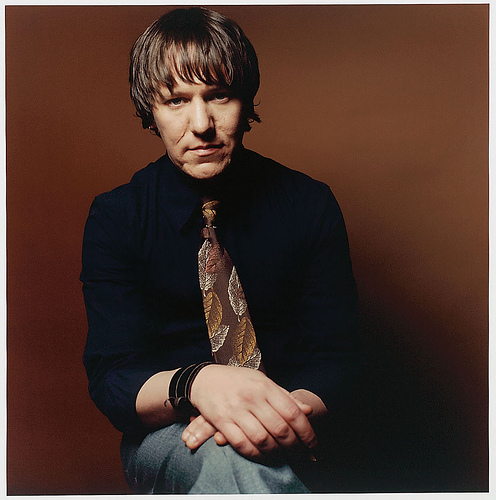
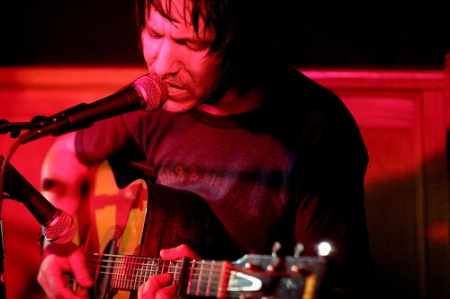
The reissue of Elliott Smith‘s Either/Or album is a near £70 record these days. Released in 2017 for the album’s twentieth anniversary, it came beautifully packaged with extensive sleeve-notes, a Japanese-style obi strip (who doesn’t love an obi strip?) and a second LP of era-specific live cuts, demos and unreleased stuff. Normally the unreleased stuff on these sort of reissues was originally unreleased for very good reasons, but Elliott Smith could seemingly throw out incredible song after incredible song on a daily basis, far quicker than he could properly record them and commit them to release. His vault, as it has become clear, lies stuffed with stone cold, major to minor tearjerkers, coated in Beatles melodies and wistful melancholy, the likes of which I can’t seem to get enough of.

The Either/Or reissue contains two such beauties. I Don’t Think I’m Ever Gonna Figure It Out skiffs along on a Dylanish finger-picking pattern, a hundred miles an hour blur of first, second and third fingers coaxing a folky melody from the six strings below them, Elliott sounding (as always) like he’s playing two guitars at once, his voice close-miked and whispered then double tracked on the titular refrain. It’s lo-fi, campfire indie and all the more magic for it. You should seek it out.

The real treasure is what follows.

I Figured You Out arrives on a snippet of studio chatter before a mournful harmonium accompanies Elliott’s acoustic guitar, scratching out a very Elliott chord progression as a rhythm section falls in and an electric guitar picks out the melodic hooks. Elliott’s gossamer-light voice sounds sad and resigned, delicate and fragile throughout…but utterly incredible. His tone, his control, his ability to make you tear up when he harmonises with himself…he’s terrific. I’ve always been a sucker for a recorded vocal where you can hear the singer draw breath. I Figured You Out is full of that. There’s a wee bridge when he cheers up a bit, goes a bit pop, even, with some subtle whammy bar action, before he falls back into the main song again.

Elliott was a singer who didn’t need to look far to find his demons or subject matter and on I Figured You Out, he seems to be lamenting success-hungry fame hounds.

You’re every kind of collar
There ain’t nothing that you won’t claim
Your ambition and promise
And your addiction to fame

A ‘stupid pop song that I wrote in about a minute‘ (oh man!) Elliott oft compared I Figured You Out to something The Eagles might have recorded – the ultimate self-inflicted insult – and so gave it to his friend Mary Lou Lord to record and release instead. Elliott’s version though remains the definitive version, whether he lived to realise that or not. I could listen to it all day long.

Get This!, Gone but not forgotten

The Story Is Old, I Know

But it goes on.

It begins, most unSmiths-like, with a near-two minute piano prologue; a doom-laden, melodramatic affair of dark, clanging minor chords and suspenseful apprehension, Johnny’s delicately elfin fingers stretching out for notes he hasn’t yet found and ghostly, wafty sighs from a far-off Morrissey with one keen eye already on a solo career, the intro’s violent and disconcerting soundbed – striking miners clashing with police – creating the perfect tension before the release of that crashing E minor and the new dawn shining light on what would be the group’s swan song. All great bands need to go out in style and grandeur, and with Last Night I Dreamt That Somebody Loved Me, The Smiths constructed the finest curtain closer and epilogue on a recording career that lasted barely five years.

The SmithsLast Night I Dreamt That Somebody Loved Me

From its title in, Last Night I Dreamt That Somebody Loved Me is nothing other than sensational.  It’s a very Morrissey title and the singer delivers a terrific, detractor-baiting vocal line; he gives in to no hysterics that such a title might demand, but instead delivers a slow and measured soul baring over Johnny’s repeating chord sequence before, as the strings rise and swell, he eases himself into a howl at the moon falsetto. The Smiths never ever played this in concert, but had they, a sated and spent Morrissey would’ve been bent backwards over the stage monitors as the front row tore strips from his shirt, you can guarantee that.

Just about the last track recorded for Strangeways, the song originated in the back of the band’s tour van after a show five months previously in Carlisle. Johnny arrived on the song’s chord sequence, “ecstatic…I couldn’t work out how my fingers were playing it…holding my breath in case I lost it,” and by the following Thursday evening, the three instrument-playing Smiths had forged it into a dark and brooding Gothic masterpiece. Johnny, a hundred and seventeen guitar overdubs later, shifted his attention to the Emulator, last used on There Is A Light, and gave birth to the song’s sweeping string motif. Nowadays, any indie band with a bit of clout will call in a symphony orchestra to do the heavy lifting for them. The Smiths, being both insular and skint, chose to do it themselves.

The track’s heaviness is due, in no small part, to the rhythm section. Mike Joyce attacks it from start to finish, punctuating the end of each measure with scattergun abandon, playing the verses with solidity yet swing. In  keeping with the track and its status, this may well be Joyce’s finest performance across The Smiths’ canon.

Dependable Andy weighs in with a trademark wandering yet low-key and rumbling bass line, filling any gaps in the proceedings with little octave jumping runs, always anchoring the song with root notes. Just before the second verse, he plays a lovely and subtle bass line that hints at Morrissey’s melody to come, minutae the likes of which many of you here will know of already or appreciate all the more once you spot it.

Last Night I Dreamt That Somebody Loved Me is perfect Smiths. From Johnny’s not forgotten chord sequence in the back of a van to Morrissey’s one-take vocal in Somerset’s Wool Hall Studios a few months later, the stars aligned…and then some. Mike Joyce himself said on these very pages a few years ago, with some understatement, that it was ‘pretty good‘. Both Morrissey and Marr are on record as saying it’s their favourite Smiths track. Even recording stars as disparate as David Bowie and Andre 3000 held/still hold it in equally high esteem.

Not so the record-buying public. Despite it being billed as ‘The Last Single’, it fell into the charts at number 34, limped its way to number 30 the following week and, seven days later dropped straight back out of existence. What the fuck were people buying instead? If you can’t have drama and existential angst in early December, when can you have it?

Gone but not forgotten, Hard-to-find

Ennio Where You Go

In the Venn Diagram of melodic rock, the circles formed by Fleetwood Mac, Teenage Fanclub and maybe even the Beautiful South (or Paul Heaton as they’re called these days) intersect at the point of Crowded House. Seemingly perennially unhip, Crowded House have the casual knack of crafting ear-friendly songs that spool out like unravelling McCartney melodies; wistful, super-melodic and always with an unexpected yet beautiful chord change to dazzle and tug at your heart. But you knew that already.

They played Glasgow’s Hydro last night, a metal and multicoloured goldfish bowl of an arena designed, seemingly, to suck both the money out of your pocket and the soul out of the music you’re there to hear. As a concert venue I hate it. I watched from the second tier as the audience on the floor had the time of their life dancing to Prince doing his freaky greatest hits-heavy thang. I watched from the very back row – nothing behind me but breezeblock and Govan sky – as the snow fell below us during Paul McCartney’s festive set addition. I watched, invited, from a VIP box – happy in the haze of a drunken hour or two – as Travis rattled out a decent set of their greatest hits, but as four static dots half a mile away. My best Hydro experience was for Paul Weller; standing, near the front and with a bristling Weller on fine, back cat-trawling form. Looking back in that dead space before the encores, you could see the dreaded curtained sections rising behind the first tier of seating. I’m sure PW noticed the blackout curtains too, for he’s never been back. One night in a vacuum-packed Hydro vs two nights in the Barrowlands? No competition really.

It would take someone really special to coax me back, and the price of those Crowded House tickets wasn’t doing much to sway me, but with the date looming I did what any self-respecting tight arse would do and headed for the resale sites. Refresh. Refresh. Refresh. At lunchtime yesterday, about 5 hours before doors opening time, Twickets turned up trumps. Section 2, y’say? Row U? That’s almost McCartney-levels of nose bleedingness. I’ll take ’em!

Taking away the horrible venue and last-minute seating, you can’t fail to be impressed by Crowded House. Despite also suffering from lower than expected sales – it’s packed, but two large blacked-out areas and a closed tier 3 would suggest that (kinda ironic for a band called Crowded House), they play the hits, they dive into their extensive back catalogue and they bring out buried beauties to give them their rightful place. They can rattle off a jingling, jangling and Byrdsyian Weather With You straight from the kick off, first number in, because the strength of what will follow is just as great. Even Don’t Dream It’s Over is played before the half hour mark. Two stone cold classics that would round off most bands’ sets gifted early, the inference being that there are even better things around the corner. And there are.

A wonderfully woozy Private Universe, all ambient guitar and dubby percussion proves to be the fulcrum upon which the set rocks and rolls. A delicately brushed Fall At Your Feet…a skiffly Four Seasons In One Day…a roof-raising It’s Only Natural which gives way to the rockin’ liquid gold of Distant SunNeil Finn has quite the gift. Sure, you can split hairs about what’s missing – there’s no Nails In My Feet, for example (boo!), no brooding Into Temptation or swooning Not The Girl You Think You Are, but when, in the encore, you’re gifted Some Greater Plan, a mini masterpiece that will eventually be considered the equal of any of Finn’s greatest work, no one will complain. Tell me I’m wrong.

Crowded HouseSome Greater Plan (For Claire)

What’s really great about the Crowded House live experience is that, even though it’s a heavily-produced arena show, there’s room in the setlist for spontaneity. Most bands of this stature nowadays play identical sets night after night, sets programmed to ebb and flow and match the light show that accompanies it. Crowded House change their sets up. You don’t really know what you’ll get from night to night. I’m not sure the band does either. The group like to take the piss out of one another at every opportunity. There’s humour aplenty. Neil Finn makes up songs on the spot. He busks an unplanned There Goes God purely for a fan in the front row who’d requested it. And he singles out all of us who are up there in the back rows, turning the lights on us and asking if we’re OK. As a thousand mobile phones light up, he rattles off another impromptu song about the place being filled with fireflies. We’re maybe in a different postcode to the drum riser, but the band make sure we know they know we’re there. They’re good eggs, are Crowded House.

The best bit?

That may well have been the intro. Bowie’s Five Years marches to a close, the lights go down and a brilliantly-atmospheric Ennio Morricone track fills the venue. It’s Romanza Quartiere, Morricone’s theme score for Quartiere, a late ’80s film that I must confess to never having seen, but if the film is anything like its soundtrack, I’ll be rectifying that soon.

Ennio MorriconeRomanza Quartiere

Morricone’s theme is classic Ennio. Big, elongated strings that weep and sweep, a recurring motif that is melancholic in extremis, tastefully and exquisitely played from shimmering start to stately finish. It’s a remarkable piece of music. Coupled with the instant pop rush of Weather With You, it makes for an electrifying one-two.

Frustratingly, the version played immediately before Crowded House entered also featured a clanging dulcimer – the ghost of John Barry running with a set of skeleton keys – and some tasteful Mediterranean bouzouki that replicated Morricone’s motif. I’ve searched the internet from corner to corner and can’t seem to turn this version up. There’s a chance, I’ve read, that Crowded House have taken the original and overdubbed it with these other percussive and melodic instruments of their own. If so, more power to their talented elbows. I’d LOVE to hear a studio version.

Gone but not forgotten

Sound Track

Some songs just fit on car journeys. Queens Of The Stone Age’s No One Knows and a midnight stretch of the relatively new ring road that by-passes the south side of Glasgow sounds awesome at 70 mph. Hall And Oates I Can’t Go For That goes nicely with cruise control on the Sunshine State’s Interstate 4. Radiohead’s There There at national speed limit-defying pace on the M4 north in an unseasonally quiet mid-July heatwave. Tindersticks’ Tiny Tears on a rain-soaked October Isle of Arran. Underworld’s Dark And Long… Stevie Wonder’s Boogie On Reggae Woman… freakin’ Band On The Run….Orbital’s Chime and the badly-needing-an-upgrade Barrhead – Irvine road fit together like hand in glove. Talking of which, the giddy acoustic rush of Bigmouth Strikes Again sounds just right driving up a deserted Dumbarton Road at two in the morning. Favourite car soundtracks. We’ve all got them.

Which takes me to the Highlands, 1993. We’re on some sort of road trip, the wee Ford Fiesta packed to the gunnels with waterproofs and Goretex and umbrellas and cagoules and all the usual things you’d take to the north of Scotland at the height of summer. We’ve a radio that simply refuses to tune to anything either side of Radio 1 and half a dozen tapes, carefully curated home-made jobs that the temperamental in-car tape player has already tried to devour before breaking north of Dunbartonshire.

At one point deep in the Highlands, heading somewhere towards the standing stones at Clava Cairns, Radio 1 drops out to intermittent static. We need to gamble on the willingness of the tape machine to play ball…and play tapes. Thankfully on this occasion it does…and it leaves me with a memory burned to the hard drive of the music section in my brain.

World Party‘s All I Gave is sandwiched mid-side, placed somewhere between Somewhere In My Heart and Groove Is In The Heart and it provides the ideal soundtrack for a jaw-dropping run through Scotland’s rich countryside. There are purple/grey peaks on the horizon, snow-flecked even in summer, with clear winding rivers far below that shimmer like chrome, old guys waist deep and fly-fishing them dry, surrounded by patchworks of untouched green fields bordered by stately pines and firs… an entire shortbread tin image of Scotland in real life, right in front of us in widescreen technicolour.

World Party All I Gave

We like World Party. Their Bang! album is a current constant in our lives and All I Gave is our favourite song on it. Karl Wallinger has clearly been kissed on both cheeks by the Beatles’ gene, his George Harrisonisms never more to the fore than on this track. His vocals, joyful and soaring and full of his toothy sunshine smile do the sha-la-la in all the right places and tug at the strings of the heart whenever the minor chords come round. Woozy mellotronish psychedelia shares a bed with wheezing, asthmatic slide guitar, playing on top of unexpected chord changes and a melodic bassline that you really hope is played on an attention-to-detail Hohner violin bass. We rewind the track plenty and often and we never tire of it.

I will always love you,” we sing aloud, unselfconsciously and out of tune, and the wee car with its questionable suspension bounces us up and over the brow of another single track hill. A stag – “A stag!!” – watches nonplussed as we clatter past. An eagle – “An eagle!!” – spirals in the sky to our left. The fisherman casts his fly one more time. We don’t see if the river has given up any more of its load as we’re now heading through the pines and onto Clava Cairns and its Bronze Age standing stones where, spookily, Radio 1 crackles back into life and ruins everything.

That moment with All I Gave though. That’ll last forever.

Sail on, Karl Wallinger. You were great.

Get This!, Gone but not forgotten

In The Buff

My old pal Derek was mad on coffee, in both senses of the phrase. He drank it the way a fish might presumably drink water, or the way Shane MacGowan evaporated his pints of gin, y’know; one regularly after the other, repeated non stop until bedtime. One too many and he’d be a gibbering, gum rattling freak, speeding away quite happily on a perfectly legal drug. In this state he could carpenter an intricate dado rail around your hall in the time it took the kettle to boil. A solid wood floor could routinely be laid in under an hour. The 60 Minute Make-Over? Our Derek was doing that while Claire Sweeney was still Lindsey Corkhill, mate.

Way back around 1997 Derek bought a satisfyingly chunky Italian percolator and would enjoy the ritual of preparing an espresso for you. Then another. And another. And one more before leaving. We’d be playing guitars and with each passing espresso the strumming got that little bit more ragged and loose-threaded at the ends until we were murdering the classics with Java and Illy and Lavazza running rampant through our systems. I remember rattling like a Scotrail diesel train on the walks back from his house, jerking from heel to toe at a hundred miles an hour, shaky and ill and continually needing to pee, then unable to sleep way past the midnight hour. Have you ever watched an Alex Higgins 100+ break? That. Can you miss the feeling of being totally wired? When your pals are no longer here to share it with you, of course you can.

We were at Songs Ya Bass in Glasgow’s Buff Club at the weekend. An idea that grew out of music nights in Rik and Nell’s house, for 11 strong years SYB has filled a quarterly slot in one of the city’s mankiest upstairs clubs. The premise is simple. Message Rik and Nell with 3 songs you’d want to dance/jump around to and they’ll create a playlist from everyone’s requests then play them at a decent volume until 11pm, when the Buff Club proper opens its doors and the oldies and goldies and grey hairs and nae hairs retreat down the sticky carpeted stairs and make their way to Glasgow Central for the last train home.

It was midway through Dog Eat Dog, or maybe Voodoo Ray on Saturday night, when I realised the Red Stripe was taking me well on my way to pished. The video screen slideshow that never repeats itself all night – a labour of love for Rik – had rotated from Joe Strummer to Run DMC to One Flew Over The Cuckoo’s Nest‘s Nurse Ratched and the upstairs balcony and mobbed dancefloor were both a blurry haze of arms aloft folk not giving two hoots about what any onlooker might’ve thought of their dancing styles. Faces loomed in, grinning. The legs loosened to elastic. The sprung wooden floor (sacrilegiously laid on top of a Jim Lambie work of art, they say) became bouncy castle like. The slideshow faded from Lee Perry to Peter Cook and Dudley Moore to Muhammed Ali to The Cramps to Pele to Wilko Johnson to all the other greats. The music jarred unexpectedly from Gerald’s ‘hey oh, a-ha, a, uh-oh-ah‘ to Wham’s Young Guns to The Clash to New Order to…! Hey!…

thump-thump-thumpa-thump… ‘I’m Totally Wired! I’m Totally Wired!…I drank a jar of coffee and then I took some of these…. and I’m TOTALLY WIRED!‘ Magic!

The FallTotally Wired

The guitars, cheesegrater thin, cut through like tinfoil to a filling. Clang…scree…tcchhhskkkk…; relentless, repetitive and rickety, but really, really great! Steve Hanley, Mark E Smith’s long-time lieutenant plays looping, thumping bass. It worms its way into yr skull and stays there, uninvited but very welcome, the empathetic drums pounding away in the background and hammering you into submission. On top of it all, Mark Smith yelps and barks and screeches like the nails down the blackboard of popular music that he was, abrasive ADHD in the form of verse and chorus.

This – Totally Wired – is the exact jittery, nerve-shredding, anxiety-inducing sound of too much coffee (and other things, if that’s yr bag). It’s also, as it happens, the unofficial soundtrack to those frantic and fidgety walks home from Derek’s, senses jangling into the wee small hours. T-T-T-Totally Wired!!!

Gone but not forgotten

Limping On

Late era New Order, where the quality control diminishes with each passing year but the golden era reissues get pumped out at increasingly inflated prices are still a living, breathing entity only because of the music that’s gone before. The live shows nowadays – great as I’m told they are – are in vast, soulless places, sometimes even outdoors, with tickets sold at premium prices and no more than three quarters of the original band on show. The fall-outs have been well-documented on both sides and neither looks good for it. Hook continues to stubbornly tour his Peter Hook & The Light project while the rest of New Order and a sundry supporting cast limp on. Name me an essential New Order record released this century and I’ll show you a grasping optimist.

And yet…and yet…Music Complete, released in 2015 has a couple of shining moments. Not, let’s get this clear, the hideous and plodding Iggy Pop-‘enhanced’ Stray Dog…or Now I Wanna Be Your Dog’s Dinner, as I’d have named my remix if I’d been one of the 427 remixers involved across the album’s lifespan. Nor the washed-out synth wash of Superheated with (ha!) Brandon Flowers throwing vocal shapes across its poppy, autotuned, a-ha without a heartbeat chorus. Eugh. They might as well have called the album ‘Music? Completed It.‘ because they’d clearly run out of ideas by this point. This is the band that released Power, Corruption & Lies and Low-Life and Technique and a handful of magic stand-alone singles. Except, well, it’s clearly not, is it Bernard?

New Order was always an impenetrable, mysterious force. An enigma that conjured up propulsive and forward-thinking magic from the thin Mancunian air. And here they are in 2015, giving cameos to the era’s spotlight-hoggers. Ah! Maybe that’s it. Maybe in reality it’s New Order that needs the spotlight. Maybe that’s why, besides Iggy and Brandon, they also aligned themselves with minor hit maker La Roux (or Elly Jackson, as she’s known on other folk’s records).

She sings on Tutti Frutti and it’s pretty good. Not Bizarre Love Triangle good. Or The Perfect Kiss good. Not even Shellshock good. But comparatively pretty good. It’s the one chink of light in a dark era for a band that a sympathetic vet might’ve put down by now.

New OrderTutti Frutti

Yeah, so it’s Smalltown Boy filtered through a thumping dance/pop prism, a mid-paced pulse of Bernard melancholy and uplifting chorus, but what makes it great are those Hook-ish Too-tee-Froo-tee growling vocals at the start and end. Remember ‘You got luuurve technique?’ That. It has you almost misty-eyed for an era not long gone by, yet seeming centuries away, where the four key members of New Order were pals and creatives and untouchable.

The best New Orderish, non New Order single of recent years? That’d be Gorillaz Aries, with Hook’s fluid signature bassline lapping its way up and down the neck as Albarn’s sad vocal surfs atop a jolting, crashing rhythm. There’s even another growly vocal at the start. ‘Ayr-eaze‘ goes Hooky, and you’re instantly pining for a band that’ll never be in the same room again.

GorillazAries

*Next year, Music Complete will be 10 years old. Look out for the triple vinyl anniversary box set with added Iggy ‘n Brandon ‘n Elly for extra cash-grabbing effect.

Gone but not forgotten, Sampled

Dub Club

Adam over at Bagging Area has long been a champion of things that bang and beat in interesting ways. He’s a particular standard bearer for Andrew Weatherall (and anything that bears his hallmark) and, thrillingly, he’s found himself falling into a role as co-curator of a Weatherall-inspired compilation album, Sounds From The Flightpath Estate Volume 1. Born from ‘wouldn’t it be great if…’ chat after a DJ slot at Todmorden’s Golden Lion, in a move that apes Weatherall’s own ‘fail we may, sail we must’ manifesto, the record – already sold out on pre-orders alone – is this week’s Compilation Of The Week on Lauren Laverne’s BBC 6 Music show. Based on that fact alone, the record must surely be fast-footing its way to a repress; the charts being what they are these days, time it nicely and the possibility of real chart action isn’t unlikely. What a thrill it must be to create something out of nothing, especially one that carries the inference of something further to come.

I’ll ‘Volume 1′ you, m’lad!

Let’s hear it for the instigators, agitators and originators of this fine new release. Virtual fist bumps all round.

This past week, coincidentally, sees four years since Andrew Weatherall’s passing and on the back of Adam and co’s album announcement, I’ve been scouring the forgotten b-sides of my old 12″ singles to eke out any of his remixes. That Petrol Emotion, Flowered Up, James and Sinead O’Connor all leapt up and out at the mere mention of his name, spinning themselves into the wee hours last weekend. All have been bent, buckled and battered out of all recognisable shape by Weatherall, not always for the better, if yr asking me, but they make for interesting and usually long-form listening – ideal in that post-midnight fug.

Weatherall’s own collective, Sabres Of Paradise crept up on me only after time. Other than the ubiquitous twin collossuses Theme and Smokebelch, the albums were lost on me as I gave myself over to the more popular/shallower end of ’90s music. I’d have heard Sabresonic from behind the Our Price counter, but I daresay it would have been shunted aside for the latest Suede release or Steps or something similar. Similarly Haunted Dancehall, with its striking open-razored cover and dark beats on the inside. Classics of course nowadays, but it took me a quarter of a century to appreciate that. Given that I absolutely loved Underworld’s Dubnobasswithmyheadman – and hindsight shows us that that record may well be the greatest album of the ’90s – I’m not sure how I never picked up on Sabres Of Paradise at the time, but there y’go. You can’t surf the zeitgeist all of the time. It’ll wear you out, man. Those folk that were into everything – absolutely everything – first? Bollocks they were.

Weatherall’s Sabres’ material, made with Jagz Kooner and Gary Burns, is often relentless, head-nodding, dub-infused techno, played at a slow and steady BPM. It can be claustrophobic and anxiety-inducing yet euphoric and rush-and-release magic within the same groove.

Sabres Of ParadiseWilmot

Wilmot builds itself around a 90-year-old horn sample from a crackly calypso record by the fantastically-named Wilmoth Houdini. Pitch-shifted down a gear or two, the horns allow space for all manner of wizardry to clash and clatter around it; skanking, off-beat guitars, filling-loosening Simonon-ish bass, electronic whooshes, big beats, high in the mix percussion, ech-ech-ech-ech-echoing refrains, trumpets heralding the arrival of the Great God Pan himself. If you’re sitting half-cut on your sofa at an hour way past your normal bedtime, it may just be the record you need to hear. I bet it’d sound great just sitting on the London underground, whizzing below the city with no idea where you are.

As you may already know, Fatboy Slim would later use the same sample on his Mighty Dub Katz Son Of Wilmot release. Given that record’s title, I’d wager that Norman Cook was possibly more familiar with the Sabres Of Paradise track than the ancient original that provided the hook for Weatherall and the other Sabres. But anyway…

CenturasCrisis

Released on Junior Boys Own, Crisis by Centuras is Weatherall in spirit if not in presence. Another long-form, chopped up dub cut, Crisis is stretched out, messed up reggae. A squeaky keyboard elbows the warped electronics out to the margins, making way f-f-for another f-f-fan-faring horn sample. Similar yet different. Or exactly the same sample as above? Who can tell?  The beat rolls ever forward, propulsive yet glitchy. Figments of spliced vocal lines ghost in and out and a rhythm that brings to mind Primal Scream at their most creative…and Weatherall-affected carries it for 5 or so chin-stroking minutes.

It’s dance music, Jim, but I’d like t’see y’try.

Unexpectedly, I found this 12″ in a charity shop in Saltcoats. The track above is worth alone the 50p I risked on it. Re-sult, as the grate diggers refrain goes.

Gone but not forgotten, Hard-to-find, Sampled

A Week Of Saturday Nights

Lowrell Simon was a Chicago-based soul singer. After being in a succession of hopeful groups, slogging around on the circuit and briefly grazing the lower reaches of the US R&B charts, he was, by the mid ’70s, a staff writer at Curtom (Curtis Mayfield’s label) writing and producing soundtrack material of little consequence. Nothing truly spectacular really materialised from his writer’s pen until the end of the decade. By then, Lowrell was back recording as a solo artist, his experiences with Curtom better equipping him for the making of glossy, groove-driven soul music.

He struck gold with the very Mayfield-titled and timeless Mellow Mellow Right On.

Lowrell SimonMellow Mellow Right On

Anyone who’s heard Massive Attack’s Blue Lines – and that’s everyone here, right? – will recognise instantly its marching heartbeat of a bassline, used to great effect on that album’s Lately; stately, steady and never wavering, driving that track to its soulful and melancholic conclusion.

On the original, things are a bit more upbeat. That flare of unresolved strings at the start, all tension and no release, coupled with the wet slap of funk guitar and precise drum beat promises much and delivers exactly what you hope for. A choir pops up, “Mellow, mellow, right on!” they chant…and then Lowrell himself slopes in, all spoken word and chocolate-wrapped vocals – “Ladies, I’d like to take this time out just to say…”  his easy vocal easing up, out and into Marvin Gaye territory.

Behind him, his disciplined band never drops the beat. They groove and smoove their way through ten metronomic minutes and more of pure discofied funk, the sound of flapping trouser legs, jumbo-winged collars and powder blue suits, of oversized hair and oversized heels. In an era much maligned and swept aside by the snotty arrival of punk, Mellow Mellow Right On glistens like the studio lighting refracting from the mirrored lens of a pair of aviator shades and serves as a reminder that the best disco was just as valid as any other music. Fight me.

You’d get no argument on that front from Edwyn Collins. Scrolling through a Postcard Records group on Facebook recently, that old Mojo article (above) jumped right out at me, and not just because of EC’s unmatching shirt ‘n trousers combination.

Edwyn, forever on the money, whether it comes to guitars or clothes or hair, is once again correct in his assessment of Mellow Mellow Right On. Sung especially for the ladies and wrapped in a bad-ass but glossy production (the wee electronic shooms that fire off now and again, the oil slick thick guitar, the tease and timbre of the strings) – it’d be easy to imagine Dr Dre getting behind the desk to work his G-Funk magic with this as the bedrock.

I bet Edwyn’s still grooving to it now. I know I am.

Get This!, Gone but not forgotten

Replacement Service

That politely twanging guitar that heralds the start of the track is, by the angle of its jangle, pure early era R.E.M. Or maybe the Go-Betweens. Maybe even the Hoodoo Gurus. There’s certainly enough blend of country rockin’ low notes and clean chiming chords to suggest it. As it falls into its mid-paced, head nodding plod and the vocal appears, all gargled gravel and forced out phlegm, you could be forgiven for thinking you’ve landed feet-first in some mid-west bar, the overpowering sight of wall-to-wall plaid shirts and faded denim just about drowning out the the clack of balls on the pool table as the singer strains above it all to deliver lines worthy of a low-budget Hollywood movie. ‘Jesus rides beside me, he never buys any smokes,‘ he goes, all resigned and stretching himself above the free-roaming lead guitarist with his hot shot fancy pants riffs just below him in the mix.

As if this isn’t enough, the honeyed tones of the Memphis Horns – yr actual Stax house band, responsible for those hooks and riffs on all those great Otis records…and Al Green’s Let’s Stay Together…and Elvis’s Suspicious Minds – comes breezing in like the warm and rasping ghost of Exile On Main Street to stamp its brassy rash all over the proceedings.

And then you discover that the guitar player is none other than Alex Chilton, himself the titular subject of a track on the very same album where this track resides. A Replacement service indeed. It don’t get much better than that.

Yes, you’re listening to Can’t Hardly Wait by The Replacements – maybe even as it shuffles up randomly while you pound your sorry state around January’s unforgiving streets – and the world is alright.

The Replacements – Can’t Hardly Wait 

I was never that sure about The Replacements. I’m still not, to be honest. To me, I think they’re viewed over here the way a band like Teenage Fanclub might be viewed in the States. They’ll have an enthusiastic, fervent fanbase who can’t see past them and everything they do, but the more you move away from the parochial appeal, the less they’ll matter. Unlike, say, Tom Petty, whose widescreen jangling Americana has universal appeal, and certainly not like R.E.M., who changed course and conquered the world, The Replacements just seem like you have to be American to fully appreciate them. They bring to mind teenagers driving noisy gas-guzzler first cars, hopped up high school kids chugging beer, college sophomores getting blasted at frat parties, all that sort of cliched Hollywood America.

Can’t Hardly Wait though. Great players + great points of reference = grrreat track. No arguments here.