Get This!, New! Now!

Only With The Falling Of Dusk

I was out the back door a few nights ago. We’d given the shrubbery a festive, twinkly make-over and the remote control to turn the lights off had stopped working from the lazy comfort of inside the house, meaning I had to move closer to them and, y’know, actually go outside to turn them off…half cut…at 2am…wearing pink Crocs (not mine). As I moved closer to the lights, a sudden and loud flapping noise – total Attenborough nature documentary in sound – broke the still Ayrshire silence. I froze. Almost immediately, from the big tree behind my fence, an owl began hooting.

How great!

We’re not country dwellers by any means, the Glasgow train line runs behind us, down the hill behind that big tree, but we’re right on the fringes of the town where it meets its ever-shrinking green belt and we’re clearly close enough for unexpected wildlife. It’s not been back since, but I’ll be listening out for that owl any time I happen to be awake in the small hours. Or wee hours, given how regularly I make the broken sleep stagger to the bathroom these nights.

The one owl I can I hear any time I like is this – the most interesting, most unique and unarguably the greatest track that’s graced these ears this past year.

The TenementalsThe Owl of Minerva:

Early in the 19th century, the German philosopher G.W.F. Hegel wrote that “The owl of Minerva spreads its wings only with the falling of dusk.” It’s a line that suggests that true historical understanding only comes with hindsight – a phrase that could very much apply to Glasgow’s foundations in slavery and clashing religious intolerance; a reawakened city, perhaps, but one that’s still in conflict with itself.

Both inspirational and educational, The Owl of Minerva is delivered in a rich, actorly, Glaswegian brogue atop a clatter of guitars, like an electric shocked Public Service Broadcasting riding on the sort of sludgy, serrated, repetitive riff that Iggy Pop might be inclined to drop his trousers for. A fly-past of Glasgow’s streets and their history, it’s terrific. And immediate. And supremely poetic.

Mungo’s children lie in slumber, in ballrooms of pleasure and Bars of L, silent forges of production… The cantilevered roost of the Finnieston Cran(e)…  Red Road in ruin…  Broken bricks of Utopia…  Carnivals in Castlemilk conjuring a constellation…  Hills of Hag…  The rapids of revolution…  The highway of historical time…  Beyond the Black Hills…  Proddy John…  Commie John…  Bible John…  Poppers John…  Bengal/Donegal…  Gorbals teens/Glasgow Greens…  New futures/New presents/New pasts…  And still the river flows.

This is not the soft focused, rain-soaked Glasgow of the Blue Nile. Nor is it Simple Minds’ idea of the Clyde’s majestic past writ large in Waterfront‘s filling-loosening bassline. Nor is it Alex Harvey’s sense of menace and theatre. Or Hue and Cry’s shoulder padded and reverential Mother Glasgow. It’s all of this and more, a Glasgow song that’s scuffed at the knees yet literate and informative and vital for the 21st century. And it’s seemingly arrived straight outta the blue, an unexpected blazing comet for our times.

The Tenementals crept onto my social media feeds at some point late October/early November and the by the time I’d wandered off piste and hauf pissed to properly check them out, I had, typically, missed their Oran Mor album launch show by one night – a free entry gig too, where you had the chance to buy the album and it’s thrilling lead track.

If they don’t look like yr average group of skinny jeaned, facially haired, too cool for school gang of guitar stranglers, that’s because The Tenementals aren’t really any of this. Lead vocalist David Archibald is Professor of Political Cinema at Glasgow University. They’ve collaborated with Union man and political agitator Mick Lynch. Their record label is called Strength In Numbers. Socialists to the core, their self-given job is to enlighten their listeners to the plight of the suffragettes, the beauty of La Pasionaria and the warped, cruel and beautiful history that forged the place from where they sprung.

The rest of the album is equally as thrilling, by the way. See them become more prominent in 2025.

Get This!, Gone but not forgotten

The Story Is Old, I Know

But it goes on.

It begins, most unSmiths-like, with a near-two minute piano prologue; a doom-laden, melodramatic affair of dark, clanging minor chords and suspenseful apprehension, Johnny’s delicately elfin fingers stretching out for notes he hasn’t yet found and ghostly, wafty sighs from a far-off Morrissey with one keen eye already on a solo career, the intro’s violent and disconcerting soundbed – striking miners clashing with police – creating the perfect tension before the release of that crashing E minor and the new dawn shining light on what would be the group’s swan song. All great bands need to go out in style and grandeur, and with Last Night I Dreamt That Somebody Loved Me, The Smiths constructed the finest curtain closer and epilogue on a recording career that lasted barely five years.

The SmithsLast Night I Dreamt That Somebody Loved Me

From its title in, Last Night I Dreamt That Somebody Loved Me is nothing other than sensational.  It’s a very Morrissey title and the singer delivers a terrific, detractor-baiting vocal line; he gives in to no hysterics that such a title might demand, but instead delivers a slow and measured soul baring over Johnny’s repeating chord sequence before, as the strings rise and swell, he eases himself into a howl at the moon falsetto. The Smiths never ever played this in concert, but had they, a sated and spent Morrissey would’ve been bent backwards over the stage monitors as the front row tore strips from his shirt, you can guarantee that.

Just about the last track recorded for Strangeways, the song originated in the back of the band’s tour van after a show five months previously in Carlisle. Johnny arrived on the song’s chord sequence, “ecstatic…I couldn’t work out how my fingers were playing it…holding my breath in case I lost it,” and by the following Thursday evening, the three instrument-playing Smiths had forged it into a dark and brooding Gothic masterpiece. Johnny, a hundred and seventeen guitar overdubs later, shifted his attention to the Emulator, last used on There Is A Light, and gave birth to the song’s sweeping string motif. Nowadays, any indie band with a bit of clout will call in a symphony orchestra to do the heavy lifting for them. The Smiths, being both insular and skint, chose to do it themselves.

The track’s heaviness is due, in no small part, to the rhythm section. Mike Joyce attacks it from start to finish, punctuating the end of each measure with scattergun abandon, playing the verses with solidity yet swing. In  keeping with the track and its status, this may well be Joyce’s finest performance across The Smiths’ canon.

Dependable Andy weighs in with a trademark wandering yet low-key and rumbling bass line, filling any gaps in the proceedings with little octave jumping runs, always anchoring the song with root notes. Just before the second verse, he plays a lovely and subtle bass line that hints at Morrissey’s melody to come, minutae the likes of which many of you here will know of already or appreciate all the more once you spot it.

Last Night I Dreamt That Somebody Loved Me is perfect Smiths. From Johnny’s not forgotten chord sequence in the back of a van to Morrissey’s one-take vocal in Somerset’s Wool Hall Studios a few months later, the stars aligned…and then some. Mike Joyce himself said on these very pages a few years ago, with some understatement, that it was ‘pretty good‘. Both Morrissey and Marr are on record as saying it’s their favourite Smiths track. Even recording stars as disparate as David Bowie and Andre 3000 held/still hold it in equally high esteem.

Not so the record-buying public. Despite it being billed as ‘The Last Single’, it fell into the charts at number 34, limped its way to number 30 the following week and, seven days later dropped straight back out of existence. What the fuck were people buying instead? If you can’t have drama and existential angst in early December, when can you have it?

Get This!, Hard-to-find

D Lux

You’ll love this. You might be familiar with it already, but I’d be surprised. It’s not new, it’s not that old either, and the chances are that if you missed it when it first peeked out from behind 2021’s curtain of noise (100,000 Spotify uploads a day and rising) then it’ll have completely passed you by.

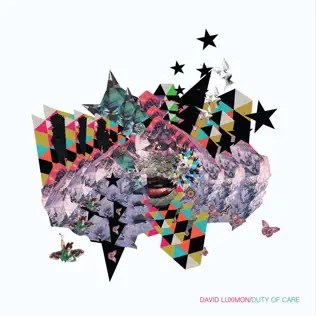
It’s called Duty Of Care by the impressively posh-sounding David Luximon-Herbert. Dropping the second half of his double barrelled surname has done little to shoot David’s name into the collective conscience of the music listening public…and that’s a real pity.

Crashing waves cede to crashing chords. Orchestral strings fight for ear space with cacophonous timpani. An earwormy woo-oo-ooh vocal centres the attention, fuzz guitar climbs the frets…then the drop out. The vocal comes in. Something about arrival and survival. More woo-oo-oohs and then a lovely spoken word section, Luximon’s properly Scottish burr well to the fore. “It’s not a manifesto or a benediction,” he goes, and, in a wave of bah-bah-bahs, the guitar takes us skywards again. The track rises and falls for five spellbinding, world-stopping minutes and you find yourself diving back in, time and time again, to bathe in its golden magic.

Luximon clearly put this all together with meticulous care, the way you or I might if we’ve a head full of radical ideas and been offered only one recording session in our entire lives in which to capture it. Duty Of Care is lush, full and perfectly realised, in the same way McAlmont & Butler’s Yes and Pet Shop Boys/Dusty Springfield’s What Have I Done To Deserve This? are lush, full and perfectly realised.

It’s no fluke.

Duty Of Care‘s parent album ebbs and flows beautifully, a wholly (holy) realised amalgam of fantastic orchestration melded to stinging electric guitars, rippling jazz piano and terrifically skittering and booming Axelrod-ish drums. Shimmering Hammond gives way to proggy synths, which drop out to allow slide guitar solos to wheeze themselves out into the thin air. Tremelo-heavy tracks weave their way into one another, no beginnings and no endings. Was that some bird song appearing in the gap there? Burbling water between the finger scrapes on acoustic strings? It’s so all that, this record.

The album in full is stunning. Part Virgin Prunes, part pastoral folk, totally immersive, Duty Of Care‘s tracklist reads like the titles of projected Coen Brothers’ films still to be made; Nothing Ever Good Happened Down By The River, The Town That Dreaded Sundown, Datsun Cherry. It’s super-produced by Olly Betts, long-time drummer in melodic noise-smiths The Duke Spirit and requires a proper listening session. No telly on in the background. No inane social media scrolling. No household chores while it spins. Just you, an armchair and a receptive pair of ears. Play it once and you’ll find yourself returning to it daily until you’re familiar with every nook and cranny of its perfectly nuanced sound. I think you’ll like it. A lot.

Listening to Luximon may well have you reassessing the boundaries of what good music actually is. This is great – like What’s Going On and Pet Sounds levels of great. How many other artists amongst those 100,000 other noise makers are making music as considered and vital as this? We’ll never know.

David Luximon‘s Duty Of Care is easily one of the finest records to grace the Last Night From Glasgow imprint. You can buy it here.

Bonus Track

There’s also a pretty great Max Harris Project/Ashley Lockdown remix of Care Of Duty out there. Track 2 above, it features added helicopter noises, stripped back Orb-y ambience and, quite possibly, the quiet sound of Richard Ashcroft weeping at where it all went wrong. Ol’ twiggy Ricky, he of the Axelrod pretensions and delusions of grandeur, would quite gladly forego his comfy Oasis support slots for an ounce of Luximon’s skill and gravitas. A bittersweet symphony indeed.

The remix was released as a ‘pay-what-you-want’ single, all proceeds going to Age UK/Age Scotland during the Covid crisis. Remember that?

Get This!

With Or Without ‘U’

Around the turn of the year, I bought a pair of white Puma trainers. I’m not, nor ever have been, a white trainers kinda guy, but I spotted a pair online that were reduced to a price point commensurate with my budget and spontaneously bought them. Just the thing, I thought, to complete my (cough) look for Spring/Summer ’24.

When I put them on, my kids slagged me mercilessly. My wife looked affronted, mumbled something about golf shoes then pretended not to have noticed them. These things were white. White. Like, absolutely spotless and Persil white. Crease-free and box-fresh, they were almost mirror-like in their pure patina. Even Kanye might have thought twice about styling an outfit around them. There was no suede trim to soften the harshness, no flash of colour other than a tiny gold Puma logo on the side and a khaki green tab on the heel. The uppers were white. The laces were white. The Puma stripe was white. They were the whitest trainers of all time.

I wear them, of course. A guy like me can easily carry them off.

Much more appealing than white Pumas ’round here is Black Pumas. Or Black Pyoomaz, as we’d say in the west of Scotland. Or Black Poomas, as they themselves say.

2019’s self-titled debut should be your first port of call if you’re in any way unfamiliar or curious about them. Self-styled Texan psychedelic soul, Black Pumas crackles with all the ingredients needed in a recipe for soul; vibrato-heavy guitar, watertight pistol-crack drums, flab-free horns, free-form Hammond, oohing and cooing female backing singers and an easy-going vocalist who, you’ll understand from the first line sung, has a honey-coated voice the equal of any of the greats who nestle snugly in that decent record collection of yours.

Black PumasColors

Snaking in on a skeletal and ever-looping acoustic guitar riff, Colors is Black Pumas in microcosm. A ripple of barroom piano undercuts the earworm riff. Super-tight snare and air-spray hi-hat rimshot and hiss between the spaces. Electric guitar chords ripple outwards as we near the chorus. A suitably low-key yet funk-inflected bass line joins in. A sashay of females replicate the vocal lines and we’re properly off and running.

Oh yeah, the vocals. Head Puma Eric Burton honed his voice in the church, and you’ll hear that in his phrasing and adlibbing pleasantries – Yes, sir… yes, ma’am – as easy-going and soulful a delivery as you could possibly want to hear. He can do gritty and he can do tear-soaked, but what he really enjoys is letting loose and soaring off into a far-flung falsetto in the choruses. Colors is peppered with great, voice-cracking upper register spontaneity… yeah, he’s got it all.

He’s joined by slow-elbowed strings, a jazzy and unscripted electric piano solo that could’ve danced itself off of any of those old Billy Preston recordings of the ’70s and an arrangement that quietens and stirs, ebbs and flows like a golden hour Al Green. That wee ‘wooh-hoo, wooh-hoo, ooh-hoo, hoo‘ call and response section in the middle, where Burton’s vocals bounce off some plucked strings and the girls’ voices behind him is the sweetest of sweet spots.

I’ve listened to Colors many times in the last 5 years and always presumed it was a metaphorical reference to skin colour and racism. Last week I stumbled across a Song Exploder podcast episode where Black Pumas described the process behind the song and its meaning. It turns out it was written by Burton on his guitar as he sat on a rooftop watching the New Mexico sunrise alight on a brand new day. No metaphor, no hidden meaning, just a great, simplistic song about God’s creation of the natural world.

It’s a good day to be,” suggests Burton, and with records like this on repeat, and trainers (trainurz) as funky as the ones on my not-in-the-least-affronted feet, it sure is. Black Pumas would refer to them as sneakers though. Not that I’m able to do much sneaking in a pair of shoes that look like a pair of Russian oligarch’s yachts moored proudly in an exclusive Mediterranean coastal resort.

Get This!

Rhythm ‘n Wooze

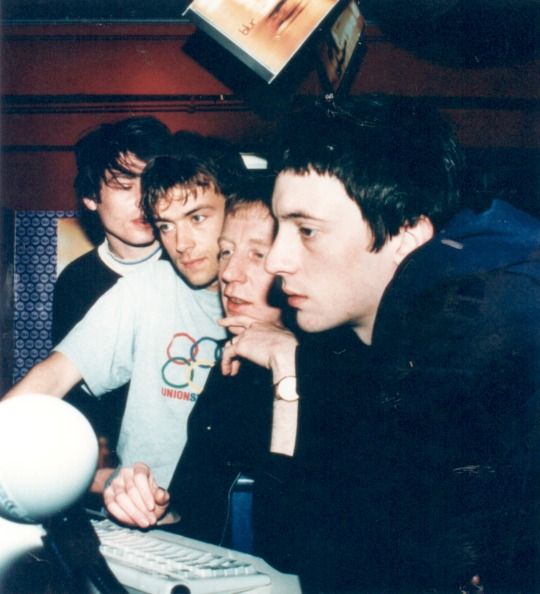
Clever band, Blur. They hit the zeitgeist with Parklife, followed it up with The Great Escape (more of the same, but written to prescription) then, when the wheels started coming loose on the Britpop bus, aimed for the ditch last navigated by Neil Young and released an album that couldn’t be further in sound from the ones that put them in the charts, on the evening news and onto teenagers’ bedroom walls. This approach – wilful and stubborn and intent on freshening things up – means that they continue to release records well into this century, playing massive, celebratory shows while remaining arty and interesting at the same time. They have, as Depeche Mode once advised, got the balance right.

Gone are the fresh faces and considered haircuts. Gone are the forced grins. Gone is the joy of popstardom. Five albums in and Blur look slightly less box-fresh than The Beatles do on that great, bleary-eyed sleeve that houses Beatles For Sale. Blur, the group’s lazily/eponymously-titled offering to their fans made little sense to many of them at the time, but as history has proven, it’s just one in a long list of albums in a year which seemed to have a properly great, must have album released every other week.

Had those queuing at midnight for the latest, bloated Oasis release (Be Here Now) swatted the grease from their shitty mod cuts and looked elsewhere, they might’ve seen what they were missing out on; Mogwai Young Team, Elliott Smith’s Either Or, Homework by Daft Punk, In It For The Money by Supergrass, Portishead’s self-titled second, Homogenic by Bjork, Tellin’ Stories by The Charlatans, Super Furry Animals’ Radiator, Primal Scream’s Vanishing Point, Dylan’s Time Out Of MindOK ComputerUrban HymnsHeavy SoulDig Your Own HoleThe Fat Of The LandLadies And Gentlemen We Are Floating In Space…. Ladies and gentlemen, we were spoiled for choice.

Blur tips its cocked and wonky hat to America. Graham Coxon breathes a welcome sigh of relief and dusts down his pair of Rat distortion pedals, for the most part mothballed for the last couple of albums. They’re all over Song 2‘s hairdryer-in-a-cement-mixer ramalama, and sports stadiums Stateside subsequently went apeshit for it. Netted a 3-pointer? Woo-hoo! Smacked a home run? Woo-hoo! Steamrollered an opponent on the gridiron? Woo-hoo! Oh yeah. Gone are the rinky dink Kinksisms and cor blimey guvnor knees ups. Blur is scuffed and scarred, and listeners who’ve stuck by its insular ambience will know how terrific it sounds even to this day.

The lead single, Beetlebum, was – in a nod to the heroin of its subject matter, a heavy-eyed and down-tempo slow-burner. Hard drugs had entered the orbit of the band and their periphery – Elastica, mainly – and it seems that Blur’s lead singer wasn’t immune to their temptation. Beetlebum is intentionally woozy, the come up from heroin’s knock down and drifts in, enveloped in pathos, regret and cotton-woolled vocals.

Get nothing done, Beetlebum. Just get numb, Beetlebum

And when she lets me slip away, she turns me on then all my violence is gone,

I just slip away and I am gone

BlurBeetlebum

Some reviewer at the time said that Blur had taken all of what made the White Album so great and boiled it down (or cooked it up) into a four minute pop song, and, man, whoever said it was kinda right. The vocals in the chorus waft in on a breath of Beatlesish harmonies, overlapping and intermingled, Damon sounding like Graham and Graham sounding like Damon, the whole band sounding pleasantly horizontal. Happiness Is A Warm Gun sung to Revolution‘s fuzzed guitars and Birthday‘s compressed drums – that smart-arsed critic was astute.

The record’s real beauty lies in the chunky rhythm fired up by Coxon’s guitar playing in the verses. His opening riff sounds like a zip tearing through sandpaper – derr dur-dur-dur, derr dur-dur-dur – before opening up on a properly clanging, open-chorded chorus. The trick to Coxon’s playing here is in not just one, but both of his hands. His left plays an unexpected chord sequence while his right intentionally scuffs it up with discordant, ringing open strings and idiosyncratic flashy parts. If it’s unique and interesting guitar players yr after, look no further.

Blur could have easily fallen into the trap marked ‘formulaic’, but with Coxon continually doing his damndest to put a metaphorical hole in the knee of their collective strides, you have the perfect push and pull that makes all the great bands tick.

Poster for a show that I’m fairly certain never happened.
Get This!

No Way To Control It

Automatic by the Pointer Sisters is primo ’80s skeletal synth-funk; as slinky as Prince at his grubbiest but as pop as it comes at the same time. Built around pitter-pattering drum machines and a gulping, rubberised bassline that bulges and bounces in all the right places, it hinges itself on its 5 note synth refrain, an instant earworm from the 5th bar and regularly ever after.

Pointer SistersAutomatic

That repetition of the hook-line in the intro is a much-borrowed idea, an old Motown trick that Berry Gordy would always insist on. By the first chorus, he noticed, listeners knew the tune and could sing it. And that, as his bank manager would point out, is yr instant hit single appeal right there.

The writers of Automatic weren’t shy in their appropriation of a great idea. They were by no means alone. Stock, Aitken and Waterman would come to rip the arse out of the idea in the short years afterwards. Whitney Houston’s writers would too. Even the Human League were partial to a bit of it. Listen out for the chorus-melody-as-intro the next time you find yourself landing on Heart 80s when you finally acknowledge 6 Music is losing its daily appeal. Automatic, like all great pop music, makes sure you know the chorus the minute it’s slapped you firmly between the ears. Take that, Mary Anne Hobbs.

Google tells me that lead Pointer Ruth’s coffee and caramel vocal is a contralto. The lowest of all female singing voices, it starts somewhere south of her ankles and snakes its way up her body as the verses make way for the familiar chorus. Sisters Anita and June add the high parts, harmonising like a puzzled Supremes relocated to some terrible mid ’80s chrome and neon video bar. You don’t need to see the video to know the trio sashay in tight dresses and back-lit hard-lacquered hair in time to the song’s sheath-like melody. Big ol’ vintage synths fizz and spark behind them, futuristic and space age even now. A rinky-dink guitar plays the melody high up the frets, like James Brown (but easier chords), Prince (again) with less flash ‘n sass, the briefest of six-string interludes in what is primarily machine-based funk music.

“Au!-Toe!-Mah!-Rhic!” go Anita and June, stretching out in simpatico, harmonies locked tighter than those dresses they’ll pour themselves into for the video.

“Automatic,” goes Ruth, sullenly dragging the words up from her solar plexus to put the full stop on things.

It’s a great record, Automatic. One that could easily have sloped off the first side of the new Janelle Monae record forty minutes ago, let alone the Pointer Sisters’ 10th album, all of forty years ago.


Get This!

Everything’s Gone Green

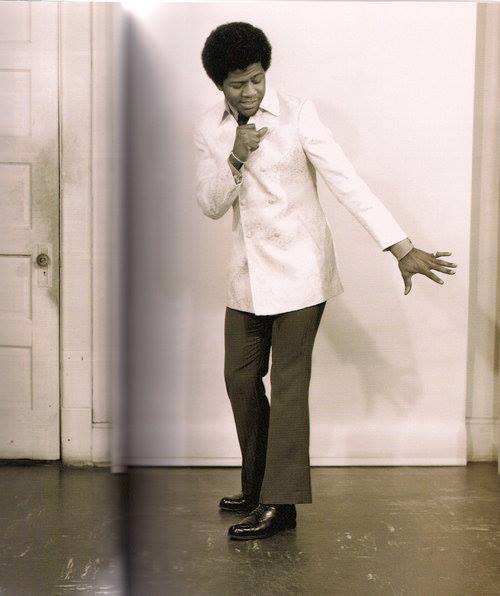
This is late night music. Not upbeat, party starting music, but post-midnight meditation, meant for those wee hours that fall somewhere in the slither of space that exists just before the crack of dawn. Spun finely from ether-borne gold and slowly spooled into seamless being, the singer’s voice aches and breaks and cracks, his hot-shot band playing slow and steady, majestically understated so that the song is best served. It’s not, perhaps, the first track you’ll think of when Al Green is mentioned, but it may well come to be one of your favourites. A random shuffling of it on the iPod yesterday had me scrambling about for my battered old copy of I’m Still In Love With You, the Al album it appears on, and since then, he’s been soundtracking the weekend. Everything’s gone Green, you might say.

Al GreenSimply Beautiful

It isn’t, by any standard of imagination, what you’d call an in-your-face soul track. There’s no stomping beat, no rasping brass section, no hysterical lead vocalist hollering tears of pain down the microphone. A lot of that has to do with Green’s controlled delivery – close-miked and delivered straight from the heart – but much of the track’s introspective feel is due to Al Green’s secret weapon; the Hodges brothers.

Stax had that crack in-house band with Steve Cropper, Duck Dunn and co driving the label’s sound. Motown grooved to the four to the floor beat of the Funk Brothers. Hi Records had the Hodges Brothers. Never doubt that they’re just as influential, just as essential to the development of soul music.

The record’s producer Willie Mitchell could’ve been forgiven for flying in a female gospel trio to flesh out the song’s hook lines. He may even have thought to employ a tenor sax and a couple of trumpets to replicate that descending four note signature riff that helps anchor the song, but with the Hodges brothers on board, none of that was necessary.

Teenie Hodges

I’ve written about Teenie Hodges before. The guitarists’ guitarist and then some, Teenie is an integral part of the Al Green sound. Never brash or flashy, Teenie’s range of finely-picked arpeggios and jazz chords are the perfect foil for his vocalist’s voice. Hodges doesn’t ever get in the road of things. On Simply Beautiful, he plays very little, but what he plays – Robert Johnson-ish acoustic blues licks, cascading nylon-stringed ripples of melody and gently sliding chords – is supremely considered and tasteful and, as is the way of his playing across Al Green’s catalogue, damn-near perfect.

His brother Leroy on bass is equally economical here. Shaking himself into thudding a doe-eyed root note that lands on the same beat as the kick drum, his playing is languid to the point of being horizontally laid back. Brother Charlie on drums and/or keys (the album credits aren’t too clear) is no different. The drum pattern begins with some metronomic hi-hat and kick drum…and stays there for the duration of the track. There’s no doubt at all that Charlie (and Leroy, for that matter) could play the absolute shit out of their instruments should it be called for, but Simply Beautiful is all about The Song and they masterfully serve it.

Behind Green’s exquisitely lithe delivery you’ll hear some lovely warm Hammond, underscoring the sort of shimmering string section that made Portishead’s Dummy such a unique listen. On Simply Beautiful, the strings are equally as subtle, perfectly-placed in the background and a gazillion miles away from any of those string-driven soul stompers that you might routinely shake yr tailfeather to. This’ll allow you to listen closely between the song’s plentiful spaces where you’ll hear the overdubs of Al interjecting with himself; a spoken word here, a gravelly moan there, a high sliding falsetto to complement the main vocal. The whole thing is a masterclass in understatement, the trio of Hodges playing in simpatico to let the song breathe naturally. Simply Beautiful indeed.

Listen on repeat for maximum effect, of course.


Get This!

Some Mothers Do ‘Ave ‘Em

In what might be a discarded Only Connect question, as a starter for 10 can you tell me who links Paul Weller, Sylvester and Joe Satriani?

Anyone?

A clue: he’s the same guy who links Whitney Houston, Starship and the odd Disney soundtrack or two.

No?

Bongo Bob is your answer. Bongo Bob.

A Latin Jazz aficionada, Bob worked out of San Francisco’s Bay Area in the ’80s and beyond and was the percussionist of choice for anyone needing a polyrhythmic smattering of exotica across their music. But don’t let the nickname fool you, for Bob was also the go-to guy when it came to programming computers once studios began moving from analogue to digital. One Step Ahead Bob, that’s what they shoulda called him.

That’s Bob’s computerised percussion smoothly rattling away in a none-more-’80s fashion behind Whitney as she glides through the octaves getting “so emoshunal, baybee.” His programming is all over much of Joe Satriani’s output, the sympathetic and understated backing that allows Joe to flow to his ear-bleeding max. There he is too on Starship’s perennial ‘Nothing’s Gonna Stop Us Now‘, his fairground ride sequencing giving the track its signature feel. Forgotten what it sounds like? Stick on Heart ’80s or Greatest Hits Radio and it’ll be with you very shortly.

Check out Bob’s extensive CV and see for yourself. If all you ever listen to is oldies radio, retro FM-blasting non-stop hits and/or classic AOR rock, there’s a chance you’ve heard Bob’s work far more than you realise.

You though – yeah, you. You don’t listen to oldies radio. Not all the time anyway. And you wouldn’t be seen dead with a Satriani album. Sylvester? Yeah, you like his stuff. Well, the early stuff, obvs. You Make Me Feel Mighty Real, really. And (trainspotters ahoy!) his groovy cover of Southern Man, but not the subsequently under-appreciated records that Bob added requisite danceability to. Never even knew about them, mate. (Sniff).

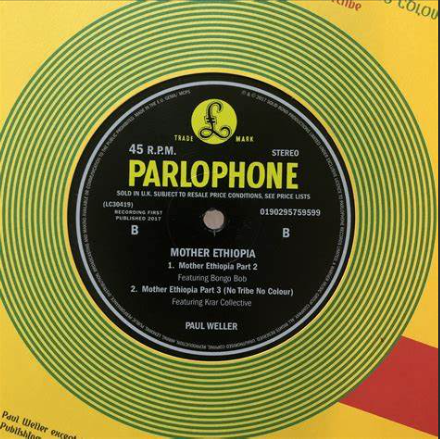
Imagine, then, that Paul Weller gets together with the Stone Foundation and at one point asks Bongo Bob along for the ride. How these planets collided is anyone’s guess, but there they are. PW and the Stone Foundation are no strangers to one another. Weller has played guitar with them on stage, laid down guitar parts on their recordings and generally elevated the status of the soul collective whenever they need it. Bongo Bob though? Weller is no slacker when it comes to collaboration. (There’s another good Only Connect question: who connects Amy Winehouse, Graham Coxon and Suggs?) But Bongo Bob? He travels a lot, does Paul, musically as well as globally. I can only think his studious knowledge of music in all its various genres somehow led him to the Californian bongo maestro and they took it from there.

A strange pairing, perhaps, but one which produced a minor Weller instrumental stomper.

Paul WellerMother Ethiopia (Part 2)

Perhaps in no small part to a lifelong love of the fluid riffing of Frame and Marr, I love my African music when the guitar splashes all over it like an uncontrollable fountain of joy. Mother Ethiopia is Weller’s contribution to Ethiopique Series, a long running (est ’97) thing which shines a spotlight on the music of Ethiopia. As the 30+ releases in the series will attest, lots of Ethiopian music is mainly all rhythm and horns. A very heavy thing at times. And very groovy too.

Weller’s track (particularly its part 2, above) conjures up the dusty spirit of an Addis Ababa taxi driver’s cab at peak rush hour, its tinny radio blasting warm sounds into your sweaty face. Bluesy desert guitar gives way to that great African rhythm, Bongo Bob palm slapping his instrument and fighting for ear space with an ancient wobbly synth line. There’s chanting of some sort, more sand-blown guitar, more synth, now twisting itself into weird African scales…and then the horns. They’re on the one, half James Brown, half Fela Kuti and lead a brief and funky charge. A sinewy slither of sax and trumpet weaves and winds its way between Weller’s loafered foot stomps and clipped, staccato guitar and, blown by the prevailing Westerly winds, vanishes in a dust cloud of Afrobeat. Or is it Afrojazz? The incessant rhythm only just about lets up. Magic stuff.

It’s not Changingman. It’s not Broken Stones. It’s niche Paul Weller. Worth a proper listen in your own time.

Get This!

Beaucoup Beats

If it’s mind-expanding, widescreen electronica yr after, you need look no further than Underworld.

Not necessarily the dark and longform tracks that make up the album and associated singles around Dubnobasswithmyheadman, although everything surrounding that particular release is out of this world. Nor the airbrushed and spacious ambience that wraps itself tightly around that record’s follow-up, Second Toughest In The Infants, even if such a record would see you alright for a good few months of non-stop spinning and reappraising. And not even the fantastic, Donna Summer-filtering King Of Snake; a relentless headbanger in anyone’s urban dictionary, and then some.

In recent weeks I’ve found myself returning to and wearing down the groove on an already-worn b-side, golden plunder plucked from the racks of an Irvine charity shop, a rare feat these days when anything black, round, lacquer-cut and decent – that’s the key – has been snaffled by switched-on staff or overpriced to oblivion and left to grow tatty in the subsequent months.

For exactly £2, I picked up a well-spun copy of Bruce Lee, the fifth and final single released to promote third album (their fifth, really, if you’re being picky) Beaucoup Fish. Releasing a fifth single from an 11-track record seems a wee bit desperate, so it’s not surprising to note that the single – even in its remixed form – didn’t actually chart. How many copies were pressed is anyone’s guess. Not as many as Born Slippy or Rez, that’s for sure, but for anyone who invested at the time, they were rewarded not only with the glitchy, twitchy and in-your-face, filling-loosening Micronauts remix of Bruce Lee, but also, on the record’s b-side, the groovy and propulsive (and bit of a mouthful) Salt City Orchestra remix of album opener Cups.

Underworld Cups (Salt City Orchestra’s Vertical Bacon Vocal)

Oh man! This is where the record’s real action is. It’s light and airy, audible sunshine compared to the electrical storm brewing on the a-side, properly forward-pushing and jet-streamed pre/post-club music that would sound equally tremendous in an amber-lit West End bar as it would soundtracking an August sunrise in San Antonio.

It’s the bassline that hits first. A walking and pulsing half-cousin of Beat It with better manners. Then it’s the synth washes and faint hit of saxophone that grab you. Or is it a girl’s voice? It’s hard to say, it doesn’t really hang around. And it’s the hi-hat action, spraying away like a can of Ellnette in the seventies, never ending and hypnotic, your head bobbing and limbs loosening in subconscious time to its airy spritz. It’s also the pinging electro squiggles sprinkled on top, a marker of loads of late ’90s electronic music, but far more tastefully administered here. It’s also the way everything drops out towards the end and the potential of a whole other tune appears teasingly before the fade-out. Most of all though, it’s those trademark stream of conscious vocodered vocals, half-whispered lyrics, that, as it turns out, are wholly suggestible and full of eyebrow-raising double-entendres whenever you can make them out. Worth a Google in their own right, if that’s your sorta thing.

Underworld, as they continually prove to be, are somewhat timeless. Expand yr mind.


Get This!, Live!

I Lost My Sharpie To A BMX Bandit


We’ve a book for gigs and in it bands sign

It’s falling apart and it’s split at the spine

Every show we do it’s filled with a scribble

And plectrums and set lists and other such drivel

It was BMX Bandits on Saturday there

With Duglas T Stewart and coordinated stage wear

Their set filled with favourites and new ones just out

And bananas and grapes and kazoo solos throughout.


At the end of the night we’re tittling and tattling

As the stage crew get on with the art of dismantling

Will you sign the book?” I ask to Duglas reclining

And turn to a new page in prep for its signing.


My sharpie’s deployed and after Duglas I hand it

To guitar, drums and bass, the three other Bandits

They think and they scribble, add kisses at the bottom

Then pass the book back…but someone’s forgotten

To return back my pen, my only black sharpie

And I eyeball all four of the band hierarchy.


The pen’s gone for good, I’m pissed off but accept it

But it irks me, it bothers me and I can’t quite forget it

It’s only a sharpie but you’ve gotta hand it

To the nominative determinism of that BMX Bandit

Yes, it’s only a sharpie but you’ve gotta hand it

To the nominative determinism of that BMX Bandit

I said it’s only a sharpie and it’s not how I planned it

To forego a pen to the BMX Bandits


(As I wrote this I heard the voice of John Cooper Clarke. Maybe you won’t.)


Here’s Serious Drugs. Electric guitars weeping the tiny tears of George Harrison in ’68. Acoustic 12 strings jangling away like the rain-soaked ghost of Alex Chilton in ’72. Sighing backing vocals that do uplifting melancholy like no-one since Teenage Fanclub took that particular idea and ran with it in their desert boots all the way to the charts. Excellent Joe McAlinden sax solo too. Serious Drugs has got the lot. Quite possibly the group’s finest moment.

BMX BanditsSerious Drugs