Cover Versions, demo, Get This!

Page-Turners

I’m re-reading Haruki Murakimi’s The Wind-Up Bird Chronicle just now. Along with Stephen King’s The Stand, it’s become something of a summer holiday tradition; long novels that require patience and time are best left for the days when you can neglect all other duties and fall freely into the pages. The weekend just gone was, as you know, pooled in fantastic sunshine and properly Mediterranean temperatures – perfect reading weather, as it goes. For reasons we’ll come to, no reading was done on Saturday, but I awoke early on Sunday – with more than a shade of a hangover – and plonked myself at a decent spot in the garden and, neglecting all household and husbandry duties, continued with where I’d left off in The Wind-Up Bird Chronicle. If you don’t know the story, it’s set in early ’90s Japan and follows the existential ups and downs of a lawyer’s assistant, Toru Okada. There are lost cats, missing wives, mysterious women, strange dreams and uber-violent flashbacks to the Japanese army in WWII. Told in 3 parts, I’m currently about a third of the way through, in the middle of Part 2, and although I know how the story goes, I’m enjoying re-reading Murakimi’s poetic and slow-paced way with words. Less than five minutes reading and you’ll find yourself sucked straight into the storyline – and that’s the secret to a good book.

At some point, my eyelids grew heavy and I put the Kindle to the side to ‘rest my eyes’, as my dad said before me. The toils of the previous day had caught up with me and I was soon in a deep and unflattering sleep, slouched awkwardly on the garden furniture by the back wall in full view of any neighbours who might have been looking. I’ve no idea how long I was out for (ten minutes? Half an hour? An hour or more, even?) but the only reason I woke up was because a fat dollop of rain had slapped me square on the forehead. Initially I thought it might’ve been a bird (gads), then maybe a drip from the leaf of a plant above my head, but no…it really had started raining. It was still warm, but in the time I’d fallen asleep, the sky had turned from spotless Azurian blue to dappled slate grey. Against the backdrop of the dulling sky, five midges hovered crazily at a forty-five degree angle from my resting head. I watched as they bashed wildly into one another, scattered rapidly then regrouped again, like a tiny (but no less deadly) squadron of Apocalypse Now helicopters. Just as I’m thinking that they’re sizing up both me and my alcohol sweats, from outta nowhere, a wasp streaked towards the midges. Zzzzeee-owww! Like a zip opening up the sky it flew rapidly to the centre of the five insects. Immediately they scattered, and when they regrouped there were just four of them, back in formation, hovering crazily and back to bashing into one another. Then! Zzzzeee-owww! The wasp again! Scatter…regroup…three midges left. It’s the circle of life, playing out right above my head. As I get up to begin packing away the cushions and things I don’t want getting wet, the three remaining midges scatter somewhere into a tree, a Mexican stand-off between wasp, human and midges temporarily averted.  I start to wonder – does this sort of stuff play out above our heads regularly? An insect Star Wars saga that can only be seen if you stop, look up and pay attention? Maybe it does. Maybe I have too much time to think. Or maybe I was still half-cut from the Saturday night.
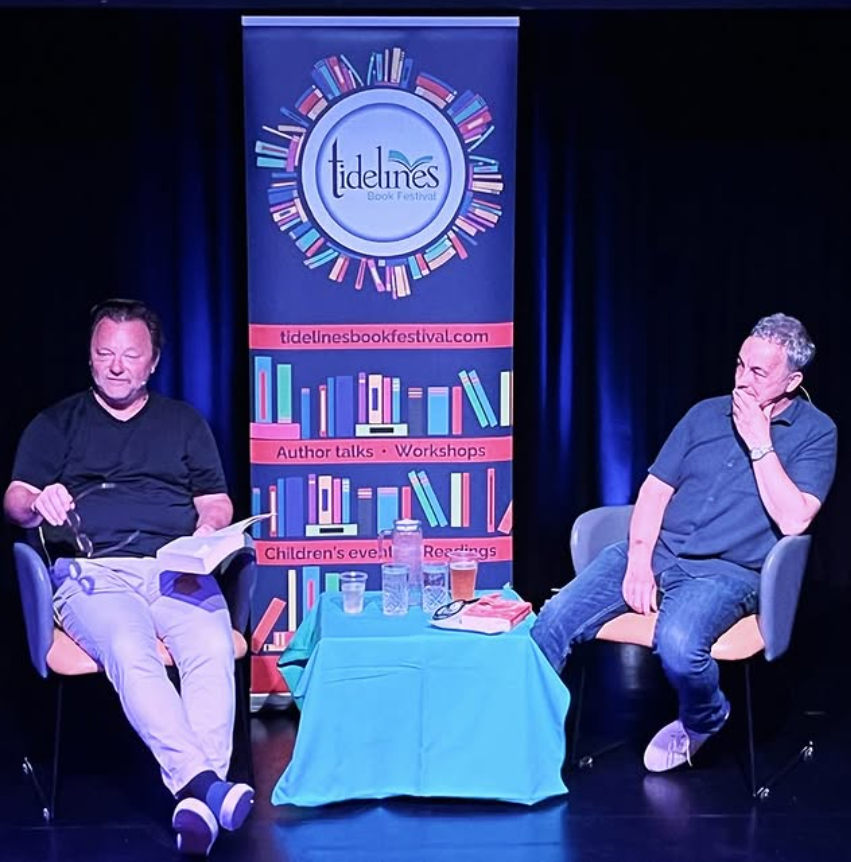
Ah yes, the Saturday night.

Writer, bon vivant and quick-witted antagonist John Niven was back in his home town of Irvine. Booked as part of the town’s Tidelines Book Festival, it was to be the opening night of a book tour to promote his new novel, The Fathers and he’d asked me if I’d chair the event. “You’ll be great,” he said. “It’ll just be us, talking about my book and shit. S’easy.” A proof copy of the novel duly arrived and armed with a highlighter pen and a stack of post-it notes, I jumped right in.

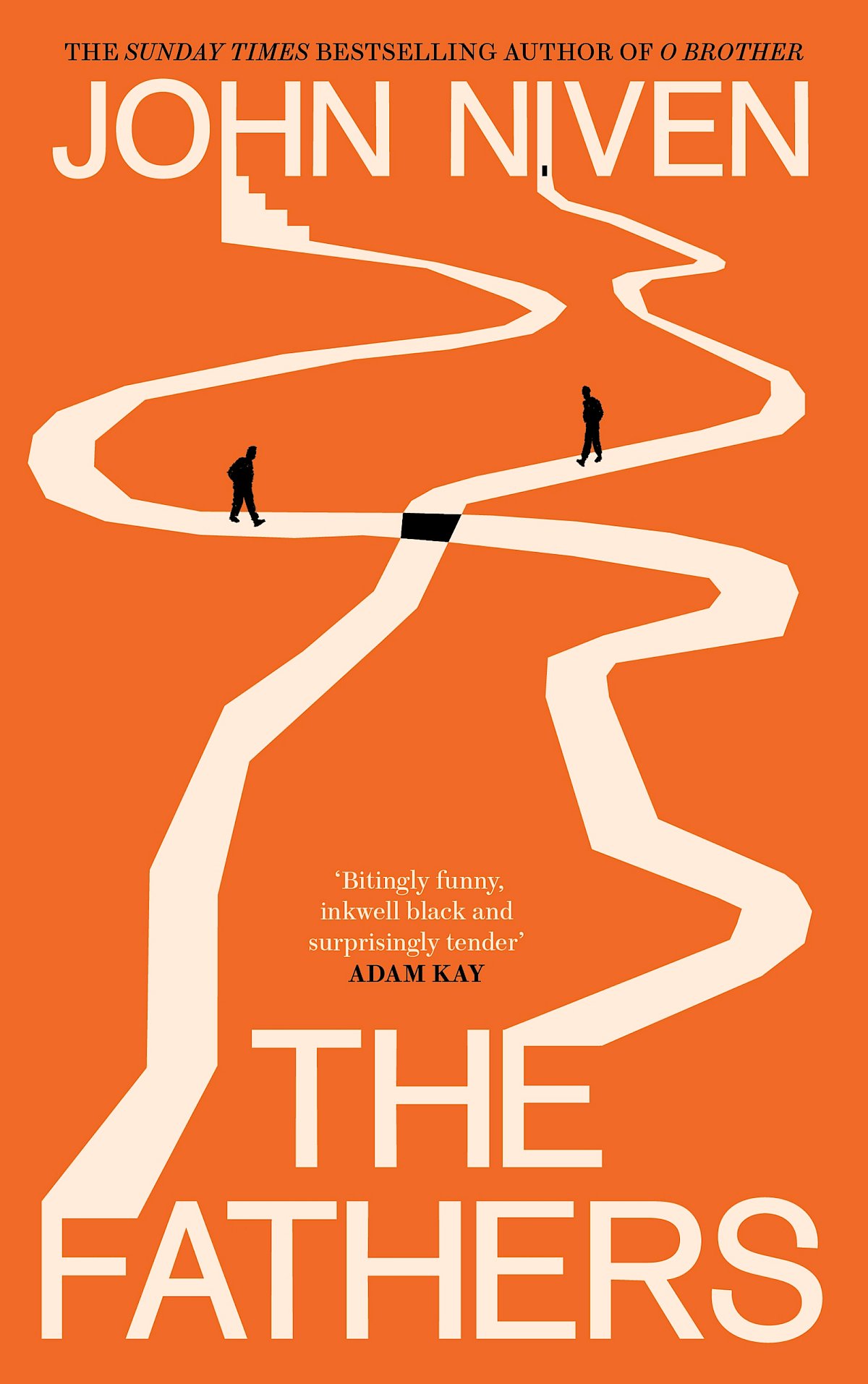
The Fathers tells the story of two dads who meet outside the maternity hospital as their respective partners give birth to two sons. One dad (Dan) is affluent, socially-conscious and successful (if bored) in his job. The other (Jada) is a ned, a bam, a ne’er-do-well with one eye permanently scanning for opportunity, the other forever looking over his shoulder for trouble. The two protagonists’ paths cross, the story takes a (very) dark turn (we’re reading a John Niven novel, after all) and things begin unravelling from every direction for all concerned. It’s a real page turner, as it turns out. It’d be ideal material for a three or four part TV series, something that is already being discussed, John tells us.

Very quickly I was highlighting and bookmarking words and phrases, whole paragraphs, entire pages of perfectly-scribed text. It struck me immediately how brilliantly evocative the writing in it is.

The air so fresh and cold that all you could do was sip at it.

A mouthful of ruined dentistry, of mixed nuts and raisins wreathed in blue smoke. 

If you’re a parent you’ll recognise the terror Dan feels when first putting baby and car seat into the car for the drive home from the hospital, a moment in time perfectly captured in measured prose. Or the moment when Jada bonds with his son, ‘his wee rabbit heart‘ beating fast against his chest. When writing from the perspective of Jada, Niven’s writing is laced with acerbic Scottishness.

‘Hey, some cun-‘ he remembered the baby, ‘some bastard’s goat tae pay fur aw this!’

‘Still, wi’ a wee boy, you’ve only the wan cock tae worry aboot, eh?’

If you’re from these parts, you’ll absolutely recognise the people who deliver those zingers.

Given John’s background in the music business, you’ll maybe spot one or two hidden references to groups or songs. A Teenage Fanclub lyric leapt off the pages at me. Likewise a Grant McLennan line. There’s even a nod to Status Quo at one point. The proper, loud ‘n heavy ’70s Quo, of course. You wouldn’t clog up a brilliant piece of writing with a reference to Francis ‘n Rick’s parody years, would you?

And it’s all written from experience. Dan lives in an area of Glasgow familiar to both author and reader. He uses his Notes app on his phone whenever Jada says a line that Dan might be able to crowbar into the script of the TV show he works on. As John says on Saturday night, a writer is always writin’…the reason too why this piece you’re reading has seen the light of day. How can I write about that? I was thinking afterwards. And here it is.

John Niven is a very funny guy to have at an event. He can hold court unbroken for an hour, easily. I had planned to structure our chat around some of the points above, but, of course, when John Niven is in the room, there are no plans. My notes were left untouched as Niven rightly remained the centre of attention, reading aloud sections of rib-tickling prose from the book, the audience groaning and gasping at the appropriate parts. My mum – the same mum who’d complained about every second word in Bob Mortimer’s novel being the ‘f’ word (her copy is now in Irvine’s Cancer Resarch charity shop) – queued happily for a signed copy of The Fathers at the end. Quite what she’ll make of ‘gobble’ and ‘dung funnel’ is your guess as good as mine.

The Fathers is a terrific, contemporary – and very Scottish – novel. Like The Stand it too is long enough to fill out a week or more in the sun. And like The Wind-Up Bird Chronicle, it too is set in three parts. I reckon I’ll be returning to The Fathers on an annual basis. I hope that hoped-for TV adaptation does it justice.

The Fathers is published this Thursday (17th July) by Canongate. You must read it.

Token Music:

Echo & the BunnymenRead It In Books

The Teardrop Explodes – Read It In Books

Two versions of the same song, co-written by Ian McCulloch and Julian Cope then recorded by their respective groups after the pair of them stopped working together. It’s like a post-punk Drifters. Which one’s the real deal?! They’re both great; the Bunnymen’s version is circular, nagging and insistent, an updated Dancing Barefoot for the switched-on, the Teardrops’ take swirly and Nuggetsy and garagey, an updated Iggy/Stooges for mushroom connoisseurs. Essential, obviously…just like The Fathers.

Check John Niven’s socials for details of his book tour, coming to a town near you right now!
 

demo, Gone but not forgotten, Hard-to-find

You’re Breaking My Heart

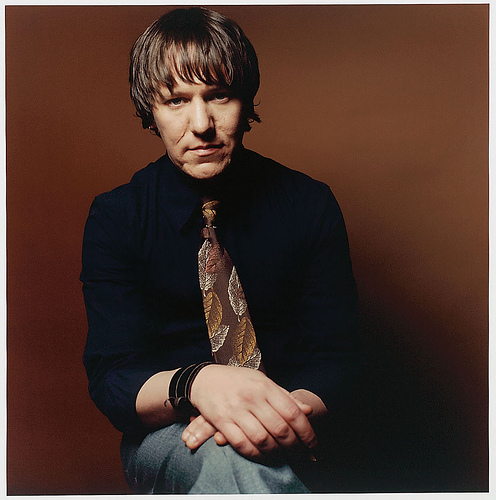
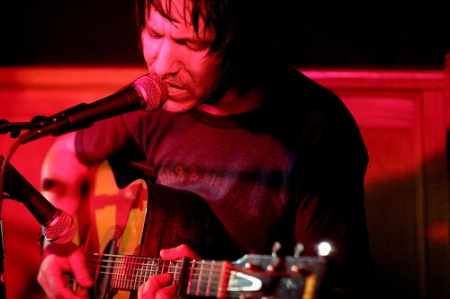
When Elliott Smith was making records, his output shot off in a rapid and upward curve of brilliance. From lo-fi scratchy beginnings to Beatles-great, full bhoona productions, his six albums in five years dazzle with deft fingerpicking and unusual chords, unravelling melodies and unwavering lyricism, every one of his great, great songs double-tracked and knee deep in melancholy and, often, total and utter sadness. And sad music is, as you know already, the best kind of music.

The posthumous world of Elliott Smith though? Bar a couple of noise-for-noise’s-sake thrashers and half-arsed unfinished sketches, it’s a proper treasure chest of rarely-heard/never intended to be heard nuggets. Often these are the equal of, and sometimes even better than, the songs released during Elliott’s lifetime.

The couple of official post-death releases in his discography have uncovered some real gems; New Moon‘s Looking Over My Shoulder and Whatever (Folk Song In ‘C’) are the picks in a ragbag full of alt versions and unreleased session tracks from across his earlier years. From A Basement On A Hill collates material from his later era major label recordings; better recorded, better produced, often overdubbed with multiple guitars, a rhythm section and, as has been said already, Beatles-level vocal arrangements. Twilight. Let’s Get Lost. A Fond Farewell. Look them up…but wallow first in the depths of Pretty (Ugly Before). It’s a real beauty.

Elliott SmithPretty (Ugly Before)

It begins with a wobbly keyboard droning the song’s melody behind a chiming, inverted Gmaj7 chord, it’s openness hinting at widescreen Elliott rather than introverted Elliott…

Sunshine. Keeping me up for days, sings Elliott in that breathy, gossamer-light voice of his.

Ah shite,” you realise. “Elliott is back on the heroin. This can’t end well.” Yep. References to getting high, destruction, no nighttime – only a passing phase, confirm what you think.

The song unfolds with a gentle drum roll into a piano-backed mid-paced ballad, all chugging electrics and deft bass runs, unexpected chord changes and piano trills. By the end of the second chorus, Elliott has found the key to unlocking the track’s true potential. There’s a minor chord, a tightly jangling and country twangin’ 12 string that mimics his vocal melody (how very George), some politely slashing chords, a splash of cymbals and, on the turn of a 7th chord, the resolve. In the angle of Elliott’s exquisite jangle we have lift-off. When his singing returns, he’s double-tracked (how very John) and harmonising with himself, stretching out some very John and Paul backing vocals – ‘Ug-lee-bee-fore‘ – until the song fades its way into the sunset on a squiggle of backwards tape and wonky noise. How very brilliant. And how very Beatles. Such a great tune for a ballad about being a helpless junkie.

There is, far deeper down the Elliott rabbit hole, a bootleg album called From A White Basement On The Hill (Beatleish nod ahoy!) A reimagined fan-compiled album, its setlist is culled from poring over interviews with Elliott, discussions on fan forums, interactions with Elliott’s closest musical collaborators… a real and honest labour of love by all concerned. Dancing On The Highway. Memory Lane. Strung Out Again. Look them up…but wallow first in the depths of Cecilia-Amanda. Like Pretty (Ugly Before) above, it too is a real beauty.

Elliott SmithCecilia-Amanda

It’s another drug song, inevitably, with a heart-breaking pay-off in the final verse.

Elliott plays a great liquid mercury acoustic guitar riff at the start – grab a cheapish guitar, tune down half a step and replicate it if you can – the snare rat-a-tats the group into action and from outta nowhere comes the greatest lurching and woozy keyboard motif this side of the seventies. Unexpected and totally hooky, it sounds like drugs. The wrong kinda drugs though.

Black and blue from passing around…I don’t want to see you like you got before…dancing on a permanent scratch…. Elliott, man . Why d’you have to get involved with all of that? What a waste.

Elliott eases into the bridge, his voice reaches for the high notes, his snare drummer rattling him along. Big bassy piano notes anchor it all together before Elliott brings forth that great acoustic riff (and that woozy, lysergic keyboard) and he leads us into the final verse’s heartbreaking line;

You got a little baby, I don’t want to see you round here no more.”

Elliott’s mastery of his voice and his instrument, his arrangement and his ear for a tune are never more apparent than on songs like the two featured above. If you’re new to Elliott, start somewhere in the middle – Either/Or was the album where he became less lo-fi and more produced, XO the album after was his major label debut and a spectacular one at that. There’s a lifetime of great songs just a-waitin’ to be discovered.

demo, Gone but not forgotten

Go Figure

I was flicking through Discogs, as you do, checking out the current resale values of some of the records in my collection. Not cos I’m selling them. I just wanted to feel good about having records that currently sit for sale at silly, over-inflated prices.

Husker Du’s Flip Your Wig at almost £40? Man! A first press Surfer Rosa now nudging £50?! Oh my golly, as the song goes. Live At The Witch Trials? That’s £60 all day long. It makes the £5 I paid for it all the more jammy. That first press of Definitely Maybe that Alan McGee later signed for me? That’ll be £250, thank you very much. Go figure. What a mad, record-buying world we currently live in.

The reissue of Elliott Smith‘s Either/Or album is a near £70 record these days. Released in 2017 for the album’s twentieth anniversary, it came beautifully packaged with extensive sleeve-notes, a Japanese-style obi strip (who doesn’t love an obi strip?) and a second LP of era-specific live cuts, demos and unreleased stuff. Normally the unreleased stuff on these sort of reissues was originally unreleased for very good reasons, but Elliott Smith could seemingly throw out incredible song after incredible song on a daily basis, far quicker than he could properly record them and commit them to release. His vault, as it has become clear, lies stuffed with stone cold, major to minor tearjerkers, coated in Beatles melodies and wistful melancholy, the likes of which I can’t seem to get enough of.

The Either/Or reissue contains two such beauties. I Don’t Think I’m Ever Gonna Figure It Out skiffs along on a Dylanish finger-picking pattern, a hundred miles an hour blur of first, second and third fingers coaxing a folky melody from the six strings below them, Elliott sounding (as always) like he’s playing two guitars at once, his voice close-miked and whispered then double tracked on the titular refrain. It’s lo-fi, campfire indie and all the more magic for it. You should seek it out.

The real treasure is what follows.

I Figured You Out arrives on a snippet of studio chatter before a mournful harmonium accompanies Elliott’s acoustic guitar, scratching out a very Elliott chord progression as a rhythm section falls in and an electric guitar picks out the melodic hooks. Elliott’s gossamer-light voice sounds sad and resigned, delicate and fragile throughout…but utterly incredible. His tone, his control, his ability to make you tear up when he harmonises with himself…he’s terrific. I’ve always been a sucker for a recorded vocal where you can hear the singer draw breath. I Figured You Out is full of that. There’s a wee bridge when he cheers up a bit, goes a bit pop, even, with some subtle whammy bar action, before he falls back into the main song again.

Elliott was a singer who didn’t need to look far to find his demons or subject matter and on I Figured You Out, he seems to be lamenting success-hungry fame hounds.

You’re every kind of collar
There ain’t nothing that you won’t claim
Your ambition and promise
And your addiction to fame

A ‘stupid pop song that I wrote in about a minute‘ (oh man!) Elliott oft compared I Figured You Out to something The Eagles might have recorded – the ultimate self-inflicted insult – and so gave it to his friend Mary Lou Lord to record and release instead. Elliott’s version though remains the definitive version, whether he lived to realise that or not. I could listen to it all day long.

demo

The Queen Is Dead Annoyed At Johnny

We’re night four into a two week Vegas residency. An option for a third week has been pencilled in, but not yet committed to. The audio-visual wonderland that is The Sphere was mentioned from the outset, but by opening night we’re in the Colosseum inside Caesar’s Palace, its stage decked out in the most ostentatious floral display that can be mustered in a city not known for the understatement. 4000 hopped-up Anglophiles in cardigans and suit jackets stand on its velvet seats in a vulgar display of phoney rebellion, the turn-ups on their jeans almost as brazen as the bare-faced front of the singer they’re here to idolise.

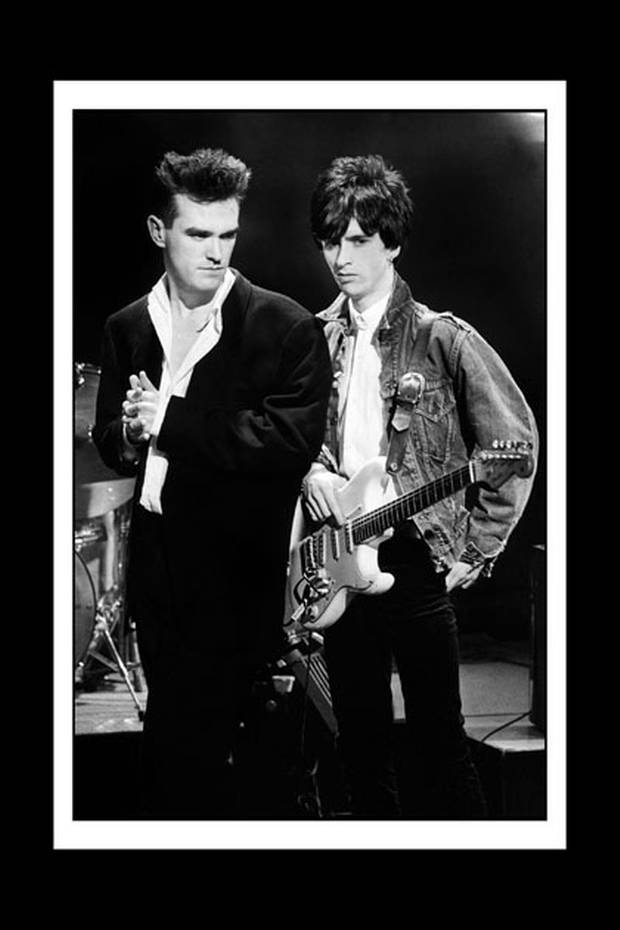
Early reviews have been mixed, and that’s being kind. ‘Lumpen drums’, a bass player ‘devoid of the original’s flair and fluidity’ and, most damning of all, guitars that are ‘far more darkle than sparkle’. The singer too is getting it tight. His once collapsing quiff has collapsed to the point of thinning. He has a noticeable paunch, tucked into the high waistband of a shit pair of parallel jeans and his voice is gone gone gone. ‘Miserable Lie‘, a brave addition to nights’ one and two’s setlists has been swiftly dropped for the easier to reach ‘Jeane‘, but the guitar player – a hired LA rock guy and most definitely not Johnny Marr – can’t resist soloing between Morrissey’s lines. The knives are out and being sharpened by the encore. Johnny watches from across the Atlantic and shakes his head, his Ron Wood mod crop flopping in frustration. This is The ‘Smiths’ reunion and it stinks.

Back in his 2016 autobiography, Johnny Marr mentioned that he and Morrissey had met up and, over a pint or two, tip-toed delicately around the idea of a Smiths reunion. It was Johnny’s idea seemingly, and while Morrissey was initially on board, Morrissey being Morrissey then broke contact. Ghosted Johnny, as the young folk say these days.

If you’ve even half an eye on music, you’ll know that in the near-decade since, Johnny has built quite the profile. His live shows are sold out and celebratory, he pops up with a near Grohl-esque regularity – can we still mention him? – on the stages of his peers (James, Pearl Jam, The Pretenders, The Killers et al) and he’s collated a coffee table book featuring well-chosen words and arty shots of his arsenal of guitars. He’s often on hand to lend a quote on a matter of cultural or political importance. He even popped up on one particularly memorable edition of Would I Lie To You?

Johnny, should you need confirmation, is a Good Guy.

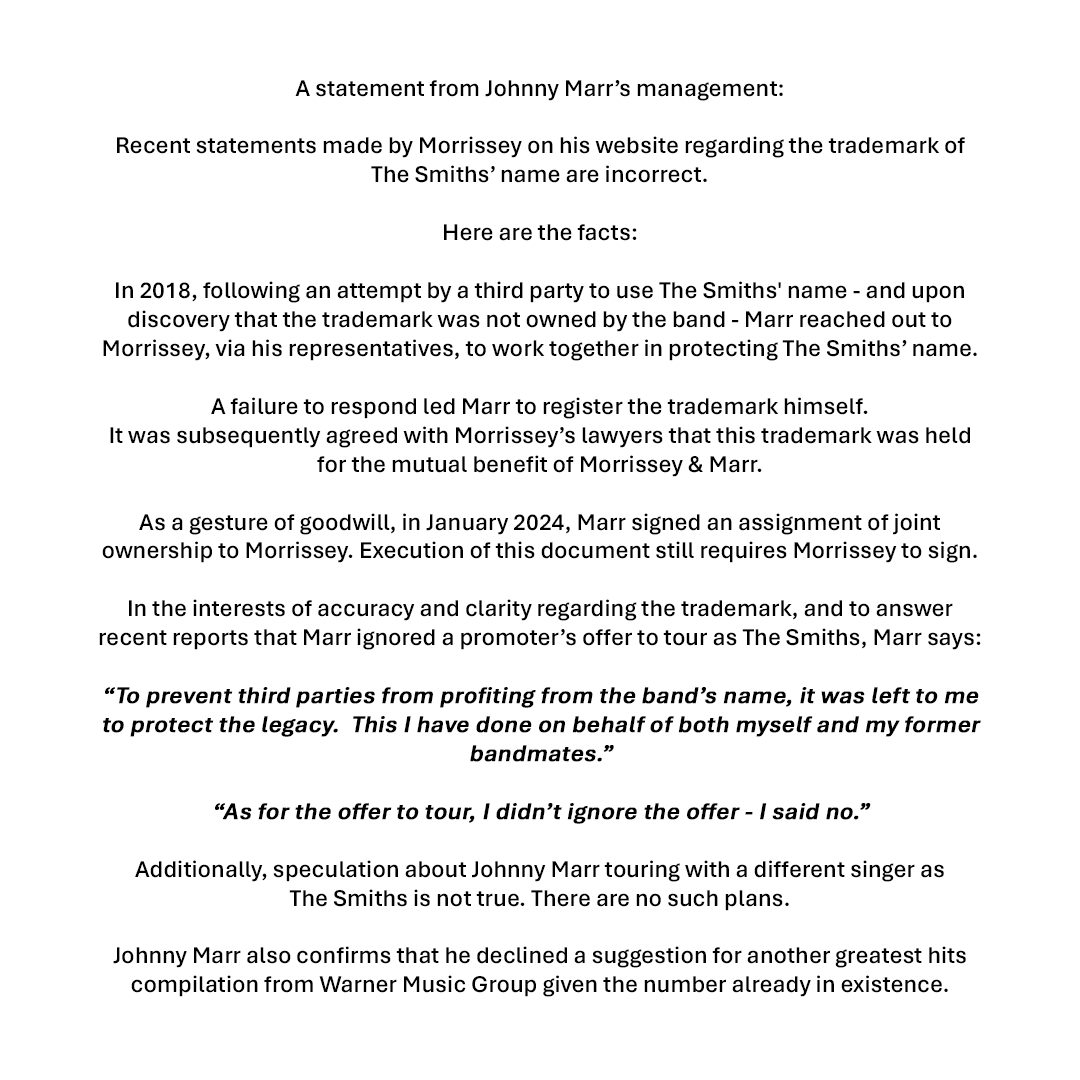
It seems that in far more recent times – in June just gone – Morrissey returned to his old sparring partner, suggesting that their previously-discussed Smiths reunion might in fact be (ker-ching!) not a bad idea after all. Corporate behemoth AEG, an umbrella company that owns multiple sports teams, the Coachella brand and many arenas across the globe had put an offer of a 2025 Smiths World Tour to Morrissey and Marr, and ol’ Moz, he of the ever-decreasing record sales and ever-increasing right wing tendencies, was quite keen on the idea.

It turns out that Johnny was somewhat less than enthused. It’s not for nothing that when asked by a fan on Twitter if he’d consider doing an Oasis and get The Smiths back together, Johnny simply Tweeted a shot of Nigel Farage. Matter closed.

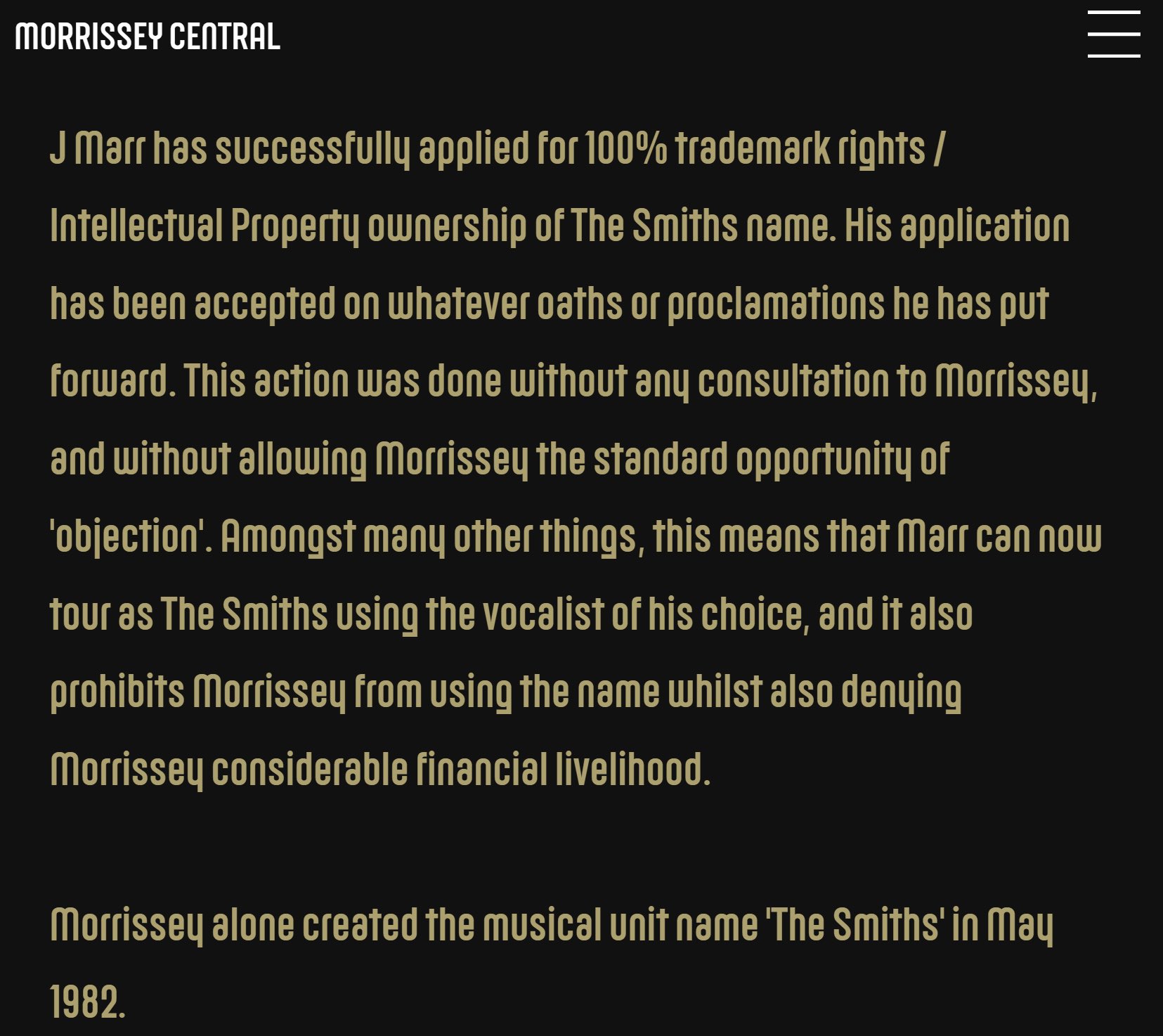
Cue pissed off Morrissey and a statement.

And cue retaliatory statement from Johnny.

Until Johnny’s management released these words, the internet had been in a daft panic over the thought of a Johnny-fronted Smiths heading out on tour. Complete nonsense of course. That just wouldn’t ever happen. We both know that no Johnny or Morrissey = no Smiths. And there’s already no Andy. Mike? I’m not sure which horse he’d back in this one horse race. There’s no doubt at all that Johnny Marr had got wind of the possibility of Morrissey rounding up any old gang of bequiffed janglers and goose-stepping them across Europe and the States next year to celebrate the return of ‘The Smiths’.  Johnny, wisely, has made moves to ensure this never happens.

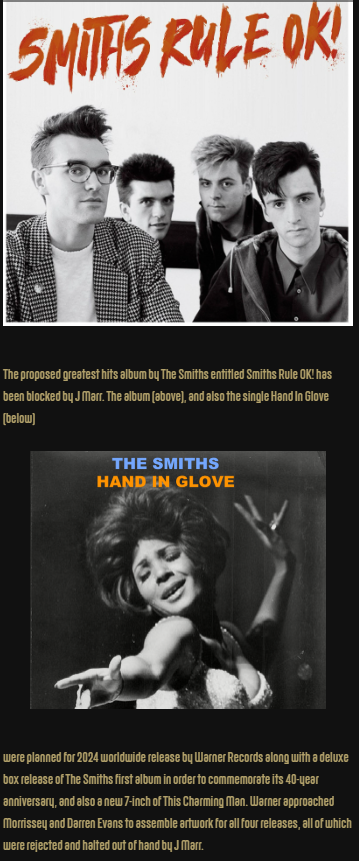
The tour would have come on the back of a box set and Shirley Bassey-housed Hand In Glove reissue celebrating The Smiths debut album plus that crappily-titled ‘Smiths Rule OK‘ compilation, and Johnny, as the statement goes, has put his foot down at that idea too. How many Smiths compilations does one household need anyway? (Bizarre fact – there are more Greatest Hits compilations of boy band Blue than there are studio albums by them. Reissue, revalue, repackage ‘n all that jazz.)

Look at any Smiths record, be it 7″, 12″ or LP, and you’ll recognise it as a work of art in its own right. Old movie stars tinted in turquoise and gilded in greens, heroes and heroines presented in burnt umbers and off-yellows. The fonts stately and bold, the back sleeves always listing the principle Smiths and what they’ve played on it. Never mind what they sound like, that Smiths catalogue is one of the most iconic-looking collections in guitar-driven pop.

The SmithsThis Night Has Opened My Eyes (June ’84 demo, unreleased)

In any case, the artwork for the intended new Best Of is, by any stretch of the imagination, a disaster. It just wouldn’t do. How Morrissey, with such an eye for detail and the importance of the seemingly small stuff that folk like us obsess over could give the green light to a proposed sleeve that looks like a ten minute rush job at the end of a long Friday is anyone’s guess. It’s just as well Johnny is switched on and still cares about his band’s legacy.

This might come at a cost though. With one key Smith keen to improve his already-handsome income and the other happy to ensure his group’s back catalogue isn’t tainted, that debut album box set looks set to be shelved. For obsessives that’s a bit of a disaster. The Troy Tate tapes in fabulous hi-fi. That Cookies’ cover. An early live show with the young feral Smiths stamping their mark on guitar-driven pop. Whatever was lined up for the box set may now be confined to the dusty library shelves of the archives.

That reunion idea though. Absolutely vile, as the song goes.

One last thing before I go. That third party in 2018. The one who tried to take control of The Smiths name. Who was it?

Cover Versions, demo, Gone but not forgotten

Moz ‘n Rockers

The Hand The Rocks The Cradle was the first track Morrissey and Marr composed together, not long after Johnny “with my hair like a loaf of French bread” knocked on Morrissey’s door and suggested they try and write some songs. What the legend doesn’t say is that Johnny was accompanied by a pal to keep him company on his walk across Stretford, but three’s a crowd in romantic stories, and so Johnny’s pal was quickly written out of the fairy tale.

Anyway.

Johnny presented Morrissey with a looping instrumental motif with shaky origins in Patti Smith’s Kimberly and the singer surprised the guitarist by producing a set of fully formed lyrics and mumbling quietly to himself while the mercurial Marr sketched out the basis of what would become one of the key tracks on The Smiths’ debut album, still a twinkle in its fathers’ eyes and a good 17 months from its February ’84 release. Those words of Morrissey’s had been written a couple of years previously, biding their time until fate intervened and a delighted Morrissey twisted his initial melody to fit Johnny’s guitar part – a move that would prove to be something of a feature throughout The Smiths.

The version of the track which closes the first side of that debut album sparkles with woven multilayers of spring rain guitar and overdubbed acoustics, the track chrome-polished, light and airy and at odds with the heaviness of the lyric. The version you really want to hear though is this early John Porter mix from October 1983.

The SmithsThe Hand The Rocks The Cradle (John Porter monitor mix, 1983)

It’s dense and atmospheric, Marr’s 12 string Rickenbacker rarely straying from the 5th fret, his arpeggiated A chord and ringing open-strings splashing occasional light on the otherwise gothic ambience. Andy Rourke, playing foil on the bass guitar, has the space to move the root notes through the chords with typical melodic aplomb, playing his trademark hiccupping half notes between the beat yet keeping the groove steady and in time to Mike Joyce’s heavily reverbed snare drum. It takes real discipline to keep this up for nearly five minutes and resist the urge to break out a solo or rest for a bar to change the dynamics. On this track, the three musicians are locked in and playing tightly for one another, an early signpost of how great The Smiths would become.

The first thing you notice about the John Porter version above though is, unlike 99% of The Smiths’ catalogue, not the usual dazzling array of guitars but the voice. Lone and mournful yet confidently soulful, it’s the sound of Morrissey coming out of his shell with a sympathetic producer on coaxing duties. He’s great here, is Morrissey. There’s no chorus, no melodic hook, no repeated refrain, yet he draws you in, has you zooming in on those words he carefully sculpted as a teenage bedroom hermit, the group almost (almost) not mattering for the moment. Heavy on poetic cadence and alliteration – ‘a piano plays in an empty room‘, ‘ceiling shadows shimmy by‘, ‘tease, torment, tantalize‘ – the song’s title was the initial working name for the debut LP, dropped possibly only after the song’s message of protective fatherhood and adult/child relationship was open to skewed accusations of paedophilia. All nonsense of course. Much has been said of Morrissey in recent times, but not even he is capable of such horrific ideas.

*Bonus Track

Sinead O’ConnorThe Hand The Rocks The Cradle (venue, date unknown)

As this piece went to (cough) press, the death of Sinead O’Connor began to filter through. In the aftermath of The Smiths, Rourke and Joyce provided Sinead with a rhythm section for a handful of shows, where they played a nice arrangement of The Hand The Rocks The Cradle in the encores, closing the show with Sinead’s favourite Smiths track. Typically, I can’t track down a version with Rourke and Joyce backing Sinead, but I did find this solo version, Sinead playing straightforward open chords to give the whole thing the feel of some ancient Irish folk song, something I imagine The Smiths, with strong familial roots in Ireland, would approve of.

demo, Get This!

Dress Rehearsal

PJ Harvey has a new album just out. Other than one or two tracks from the radio, I’ve not yet heard it, but as I have done with all her records to date, I’ll get to it properly at some point and listen to it from start to finish, uninterrupted by onion chopping or the taxiing of kids, just as PJ would hope for. Ten albums in and Harvey shows no sign of compromise or lack of ideas – the mark of a true original.

She has a whole catalogue worth diving into. From the Patti Smithish Stories From The City to the metallic blooze of Uh Huh Her and the jangling olde worlde and sepia-tinted Let England Shake, Harvey’s output is nothing short of spectacular. Not perhaps instant, not necessarily chart-friendly, not ever the sort of music that’s worried itself with the fads and fashions of the day…and all the more urgent for it.

I’ve always really liked Dry, her debut album. Now 31 years old, it still thrills, its low-slung channelling of the blues sounding primal and sultry, combative and self-assured. Biblical references rub shoulders with filthy thoughts, gothic and strange and unexpected. The whole record is life laid bare, PJ’s life laid bare, to be more accurate. Harvey flung herself into the recording of it, convinced that it would be her one chance at making an album, and man!, it shows. Her first single, Dress, is a foreshadow of what would come on Dry.

PJ HarveyDress

A lone creeping guitar scratches out a rhythm. A snare drum (or possibly a *biscuit tin) dictates the beat. A silvery tambourine rattles haphazardly and the instruments fall into line. A scraping viola tears itself straight outta the grooves of The Velvet Underground And Nico and rips a metre-wide hole in the melody.

PJ sings despairingly about the pitfalls of wearing too-tight dresses, of trying to please the object of her desire even though it’s clear he couldn’t give two hoots about what she’s wearing. A Fall-ish/Pixies-ish one string guitar solo leads us into PJ’s falsetto – there’s not many Harvey tracks where she doesn’t slide up the octaves for dramatic effect – and the whole track now sounds more pressing, more insistent, the viola sawing away at the edges, the jackhammer beat of the rudimentary drum kit pummelling away like Mo Tucker on steroids.

It sounds live, like 3 or 4 musicians playing right in front of you, no fancy Dan production, no vogueish effects, just PJ and her band letting rip before the game is up and she’s ushered out of the studio to make way for another more palatable and chart-friendly artist. Harvey’s longevity would suggest that, thankfully, they knew they were onto something when they let her loose in the studio.

*Bonus Track

Dress Rehearsal!

Here’s the demo of Dress. Just a close-miked Polly and her pheromones, an acoustic guitar for company, occasionally filled out by that same scraping viola and a rough-hewn electric guitar that quite clearly fell off the back of Kurt Cobain’s pick-up truck. Wonderful stuff.

PJ HarveyDress (demo)

* that ‘biscuit tin’ comment was a bit unfair. Rob Ellis, PJ’s drummer of choice at the time, is a fantastic polyrhythmic percussionist and his complex patterns belie the simple structures of those early tunes. There’s not a group who wouldn’t be better if Rob was driving them from the back and that’s the truth.

demo, Get This!

And Now, A Word From Our Sponsors

What follows is the result of a blatant and barefaced attempt at getting something cool for free…and succeeding.

I’d noticed on Instagram that one or two musicians I follow seemed to endorse G7th Capos (the finest capos around, dontchaknow) so I speculatively suggested to the good folks who make them that if I were perhaps to reveal the finer details of the capo trick I showed to yr actual Johnny Marr a few years ago, I too might be worthy of such endorsement. Johnny himself is a G7th Capo user – he favours the Gen 1 model – and was genuinely tickled with my capo trick, so it stands to reason that I should be in receipt of a spanking new G7th Performance 3 capo should I share the secret.

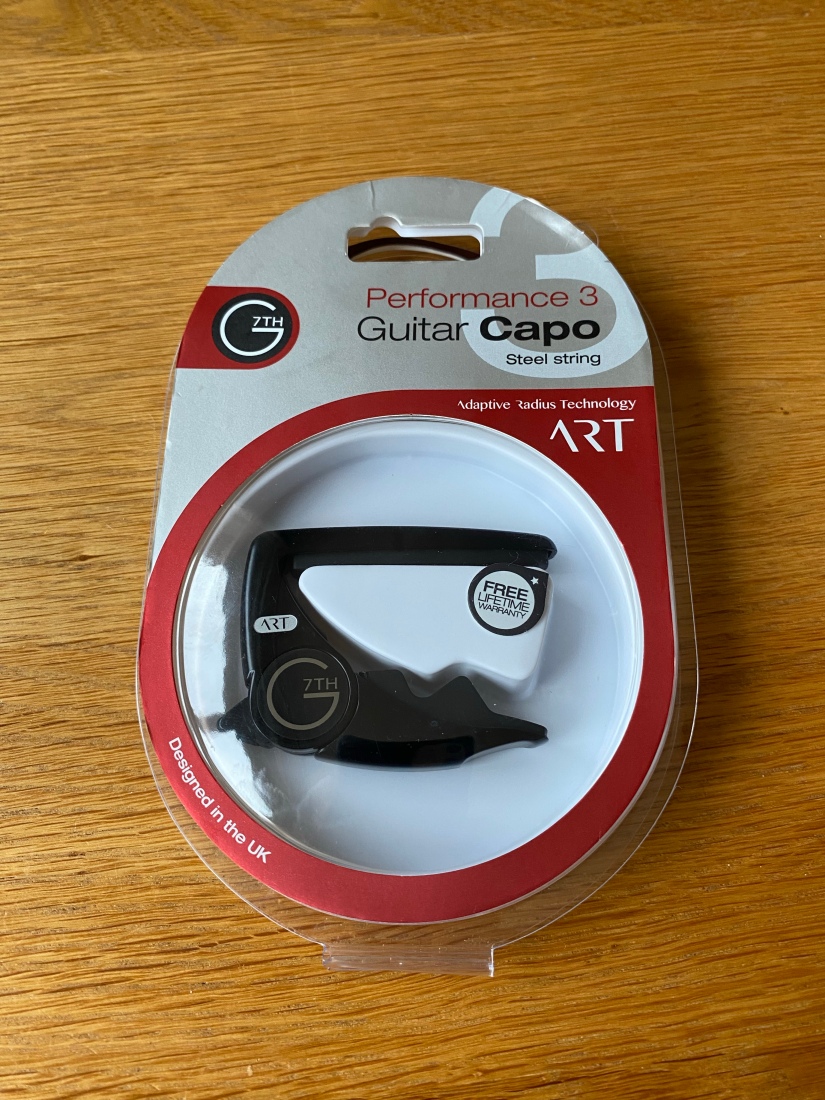
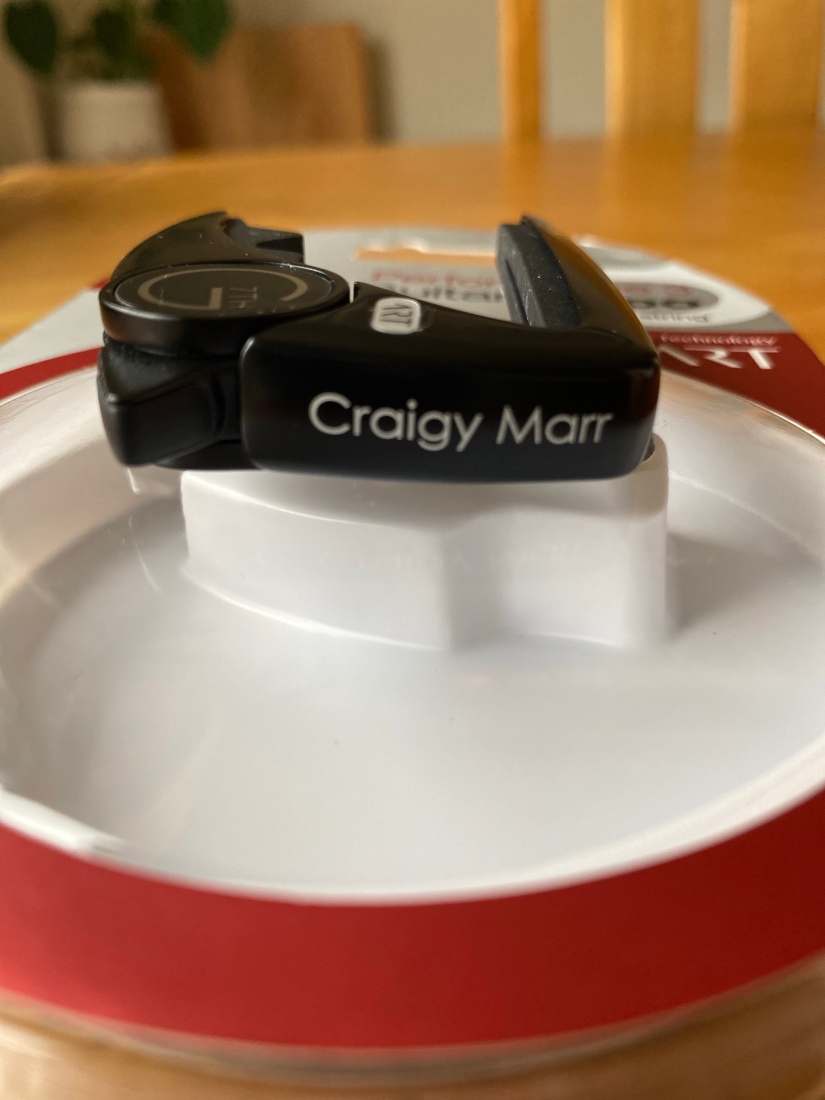
The good people at G7th Capos not only concurred with the idea, they went as far as personalising a sleek satin black capo, just for me.

Magic!

The capo itself is solid and chunky yet light enough that you won’t even notice its weight when you’ve attached it to your guitar (acoustic or electric, it will work on either). Due to its unique Adaptive Radius Technology, there’s none of the string buzz or muted notes you might get from your current capo. You’ll not need to fine tune any of the strings. It’s designed to ensure fidgeting with it is kept to an absolute minimum – there are no screws to turn and adjust at the back. Through research and wizardry, the rubber pad cleverly distributes even pressure across all strings. Basically, clip it on, play immediately and you’ll sound clean, clear and in tune. That tapping you might hear in the background is the sound of sexy people at your window wanting to see who’s playing this beautiful capo’d music. Really, every guitar player should have one.

The G7th Performance 3 features a super-cool mechanism that allows the capo to be slid single-handedly by the player, even mid-song should the need arise. If you’ve ever seen Teenage Fanclub perform I Don’t Want Control Of You in concert, you’ll notice that Norman Blake performs a similar sleight of hand with his capo when the song’s key change kicks in. Years of playing the song live has enabled Norman to do this smoothly and almost unnoticed, unless, like me, you’re a geek for this sort of thing. So, yeah, I’m sure after a couple of hours experimenting with it, a G7th Capo should let you do this effortlessly too.

I wish I’d had one all those years ago when I stumbled upon the move – my signature move, if I may be so bold – while I was playing around with different tunings and looking for interesting open notes and how they rung out.

Here’s the trick. Make sure your guitar is in standard tuning then grab yr capo – a G7th Capo is clearly the preferred capo of choice – and do as follows:

Attach the capo to the 4th fret, but…

…attach it only across the bottom 5 strings so that the top E (the thinnest string) is still open. If you’re not a lucky G7th Performance 3 owner, sorry, but you may need to put your old capo on upside down and fidget about with the screw to make it fit better.

Next, play a standard C chord, but also place your pinky on the relative 3rd fret of the top string. Practise between pinky on and pinky off. It’s got a nice ring to it, hasn’t it? That’ll be due to the open E string playing alongside the ‘C’ chord which, when played at the 4th fret is technically an E chord. But enough of the hokey theory…you knew that already;

Mastered the pinky on/off strumming pattern with the C shape? Course you have. Now replicate that pattern, 3rd fret pinky included, by playing an A minor instead of the C. Once you’ve got the hang of that, begin playing a pattern between the 2 chords. Sounding good so far?

Let’s change it up a bit. Go to a standard open G chord. Strum it, then intersperse those strums by moving your finger (possibly your pinky, maybe your ring finger, depending on how you play a G) from top string, 3rd fret to 2nd string, 3rd fret. That open top E you’ll get when you remove your pinky now rings out loud and clear, the finger on the 3rd fret of the 2nd string helping to add a previously hard to get pleasing harmonic chime to the riffage.

Resolve your chord sequence by going back to the C chord, still with pinky on top string, 3rd fret.

At this point in our telephone conversation, yr actual Johnny Marr said, “Oh! Right! Run that past me again…C chord with pinky? A minor? G plus open E? I’m off to try that. Bigmouth and There Is A Light are played in that position. That trick might add something to them. Cheers!

I suggested to Johnny that he throw in the odd D minor or E minor for extra colour. “You’ll get a good tune out of all of that,” I ventured. He said he’d have a play around with it, and for the moment, that was the end of that.

You can imagine the thrill, then, when a month or so later, we’re standing side by side having a chat after a triumphant show at Kilmarnock’s Grand Hall. By this point, Johnny’s met the fans, heard the stories, signed whatever’s been put in front of him, packed the tour bus and is in the process of saying goodbye. “Bye guys! Great show!” And off he goes. Then he turns, looks at me and with a glint in his eye says, “Oh yeah – neat capo trick, by the way! I’m gonna use that on something!

And now you should too. Get yourself a G7th Capo and change your playing for the better.

Here’s Johnny’s demo of Some Girls Are Bigger Than Others. No capo required, unless you’re playing along to the live version from Brixton Academy. Same picking pattern, only you’ll need your capo on  the 4th fret for that version.

The SmithsSome Girls Are Bigger Then Others (demo)


G7th Capos can be found here.

The Performance 3 Capo can be found here.

Check out their socials in all the usual places.

Check out Hope For Justice, the charity supported by Gth Capos.

Cover Versions, demo, Hard-to-find

How Come I Love Them More?

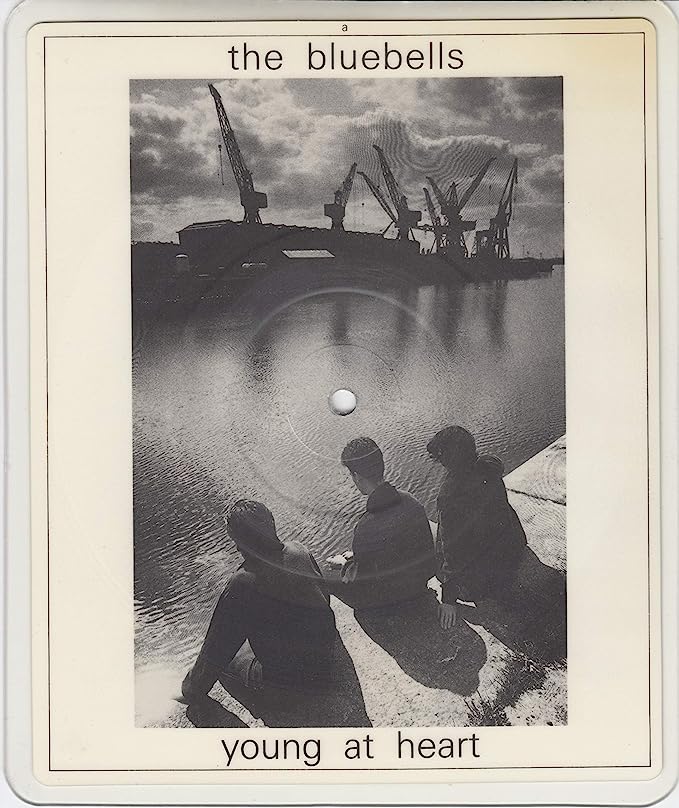
Some songs are just there, like staircases and steering wheels and stainless steel sinks, as much a part of the fabric of life as to be ubiquitous and ever-present, unnoticed or unthought of and maybe even taken for granted. Blue Monday might be one. Come On Eileen certainly is. To this list I’d add The Bluebells’ Young At Heart.

The Bluebells  – Young At Heart

You’ve heard Young At Heart, what, a hundred and seventeen times? A thousand and twenty four times? Seventeen million times in your life already? It’s just always been there, playing on an endless 40 year loop across the airwaves, a ‘hits station’ producer’s golden gift from the musical gods. Show in a slump and needing a toe-tapping lift? Reach for Young At Heart and its melancholic countrified hoedown will retain the listenership and have them baking tin bashing or dashboard beating all the way to the news and travel.

Young At Heart might seem overplayed to you. Or even stale. And you, yeah you, ya cloth-eared weirdo, you might never have liked it in the first place. You might never want to hear it ever again. But trust me though. You do.

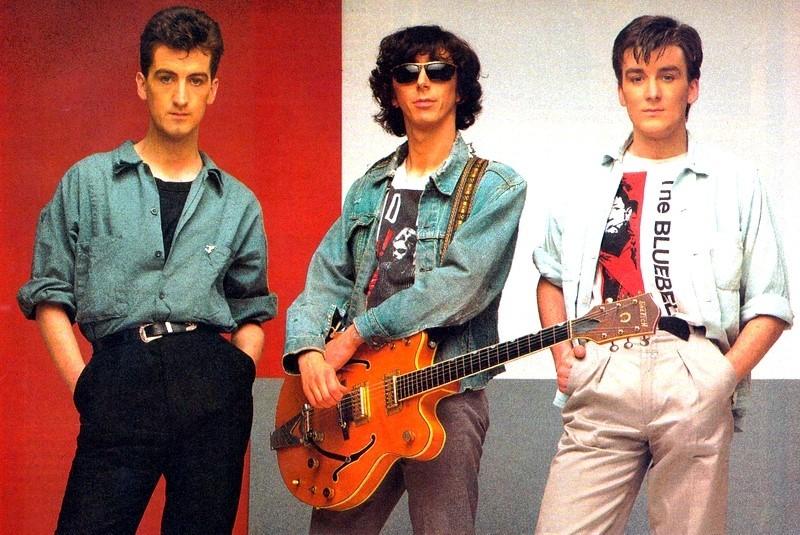
I’ve been floating since Sunday night when, at St Luke’s in Glasgow, The Bluebells encored their album launch show with it. Well, of course they did. We may all have been there to hear the bulk of The Bluebells In The 21st Century played out live, with an extended Bluebells featuring the cream of Scottish musicianship – Mick Slaven! Douglas McIntyre! Campbell Owens! John McCusker! – but there was no way Bobby or the McLuskey brothers were going to deny their audience an airing of Young At Heart. Or I’m Falling. Or Everybody’s Somebody’s Fool. Or a soul-stirring Cath. That ‘Cath/You led me up the garden path‘ line has thrilled me since it first leapt from the grooves of the well-thumbed copy of Sisters I borrowed from Irvine library sometime in the mid ’80s and I was waiting expectantly for it to be delivered on Sunday night. It didn’t disappoint.

Young At Heart though. Ken, David and Bobby acknowledge its place in their history. With the band’s name spoken on the airwaves with every passing play and still in the collective conscience of an increasingly attention-span ravaged nation, it’s perhaps the reason The Bluebells are even still making records.

Young At Heart is a song that’s been very kind to its writers. Maybe not ‘Sting owns a vineyard in Italy’-levels of kindness, but I’d wager that Bobby Bluebell and Bananarama’s Siobhan Fahey, London Records’ golden couple at the time of its writing (and latterly Bobby Valentino, the player who provides the song’s signature violin motif and whose session fee was substantially upgraded years later to a writing credit) have done fairly well from it’s continual presence.

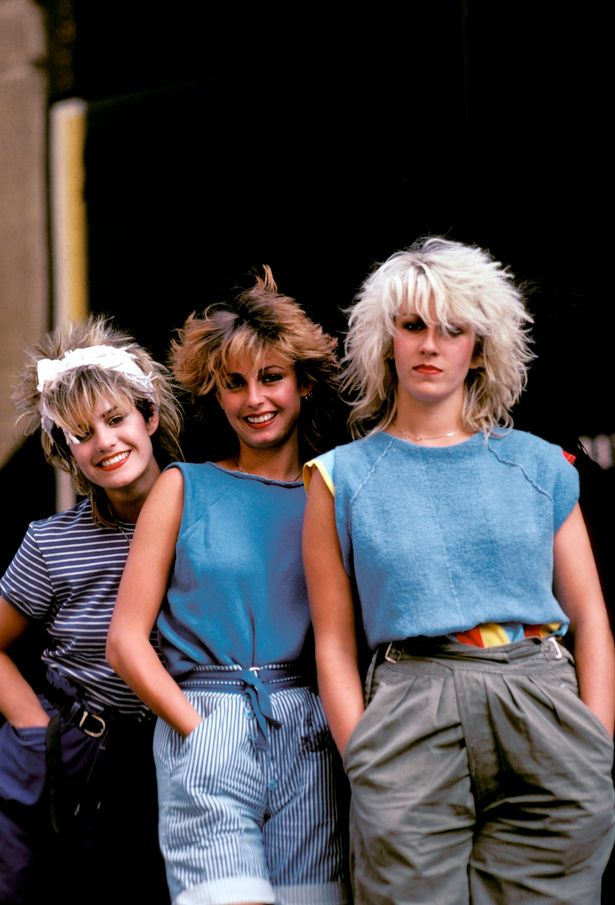
Bananarama  – Young At Heart

Bananarama’s version was the first to be released, a deep cut in the parlance of nowadays, and one that you’ll find on their debut album Deep Sea Skiving. It follows the blueprint of the original Bluebells’ demo; slightly reserved chorus, one dimensional verse, a bit flatly produced even, but whereas Bananarama half-heartedly do their best Supremes’ impression and don’t really know where to go with it, The Bluebells original version is a totally realised slice of pop/soul – and, as it turns out, a bit of an undiscovered beauty.

The Bluebells  – Young At Heart (demo)

It’s got that talc-dusted northern backbeat. Soaking wet slapback funk guitars. There are squelches of Rip It Up electro-synth woven between the words. Live, it was sometimes performed (like many bands of the time) with a stabbing brassy rash of Jam Trans Global Express horns. The whole thing is speed-freak Dexys hacked into the Wigan Casino’s electrical circuit and spat out in Glasgow’s West End. Essential listening, it goes without saying, and almost as thrilling as the masterpiece they eventually released.

Imagine writing a song that still resonates with anyone who hears it over 40 years later. Imagine! There’s not a songwriter on the planet who wouldn’t kill for a song like Young At Heart. Cherish it.


Alternative Version, demo, Hard-to-find

Paris In The Spring

In the UK, we meekly accept whatever our masters think is best for us. Rising cost of living? Fair enuff, guv. Can’t heat your house? I’ll just nip down to the local Warm Space, shall I? Dragged out of Europe? That’s democracy, mate. We’ll just need to get on wiv it. The French though – they know the score. Any time they feel hard done by, any time their world appears unjust, boom!, out come the Molotovs. Over a million French citizens took to les rues recently to protest the government’s planned raising of the pension age from 62 to 64. Pffft. Work-shy slacquers. It’s 66 in England, mate. 66! Bobby Moore, Nobby Stiles, Sir Geoffrey ‘Urst. Anyway, where woz I?

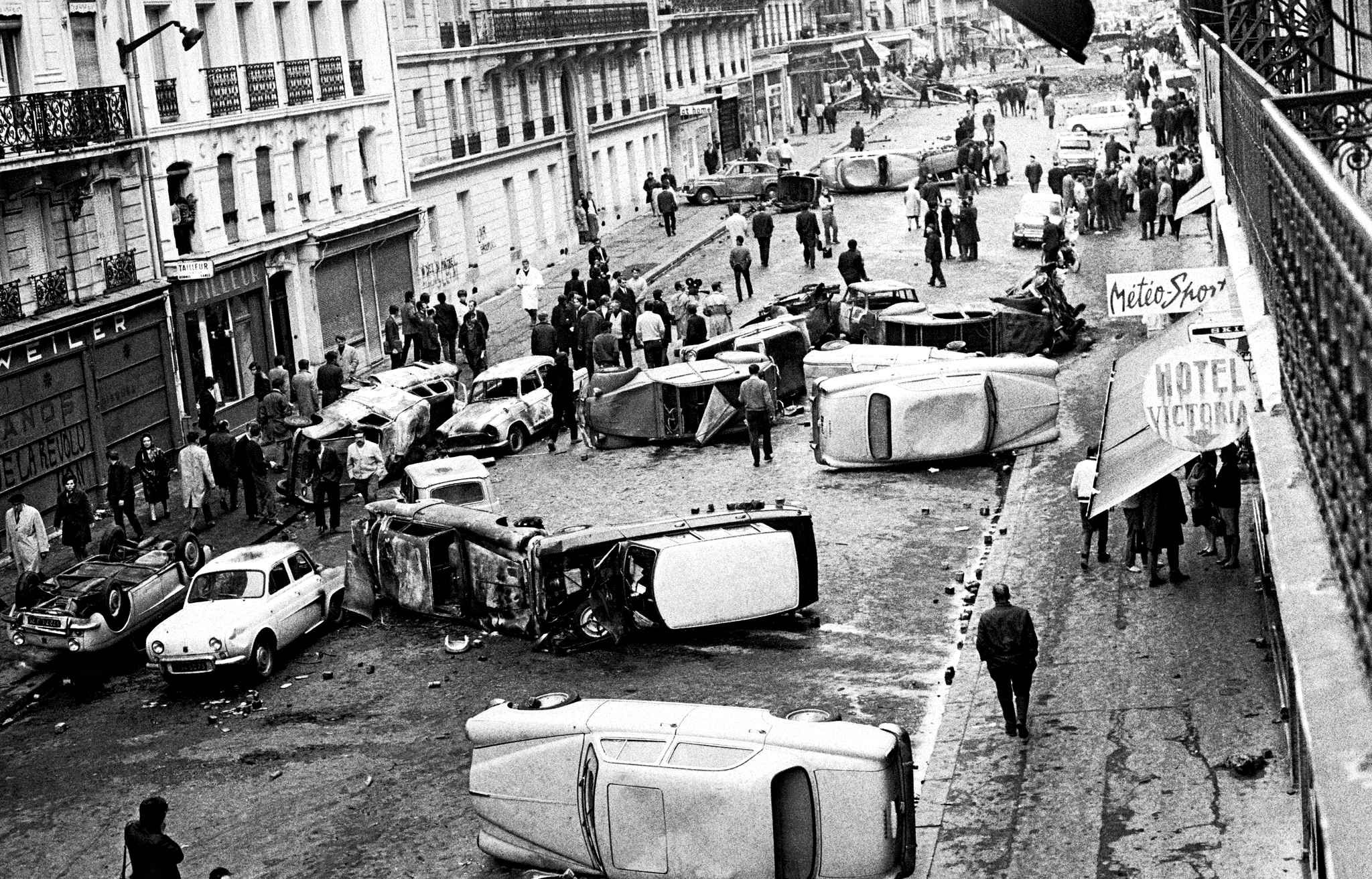
Decided without a vote and pushed through by the will of a persistent Macron, it was firmly decided. The workers were suitably enraged. In Paris, fireworks were thrown indiscriminately at hastily drawn police lines. In Bordeaux, the town hall was set ablaze. Tear gas was fired, hundreds were arrested, everyone lost their Gallic cool. The pension age would still be raised, but not without Macron and his ministers knowing exactly what their citizens thought of them. The one plus point to come from the dissenters’ actions was that the city of Paris would not now play host to the first state visit by the new King George, whose aides quickly kyboshed the idea. Parisienne republicans sniffed the air and shrugged with typical je ne sais quoi.

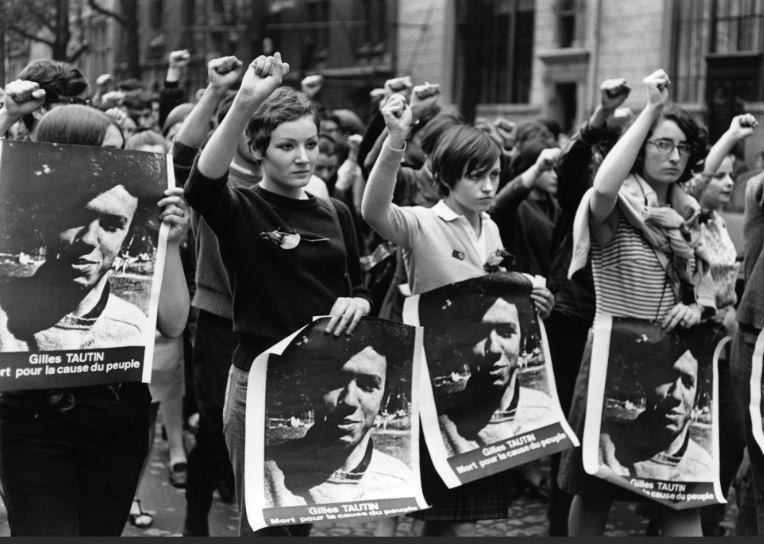
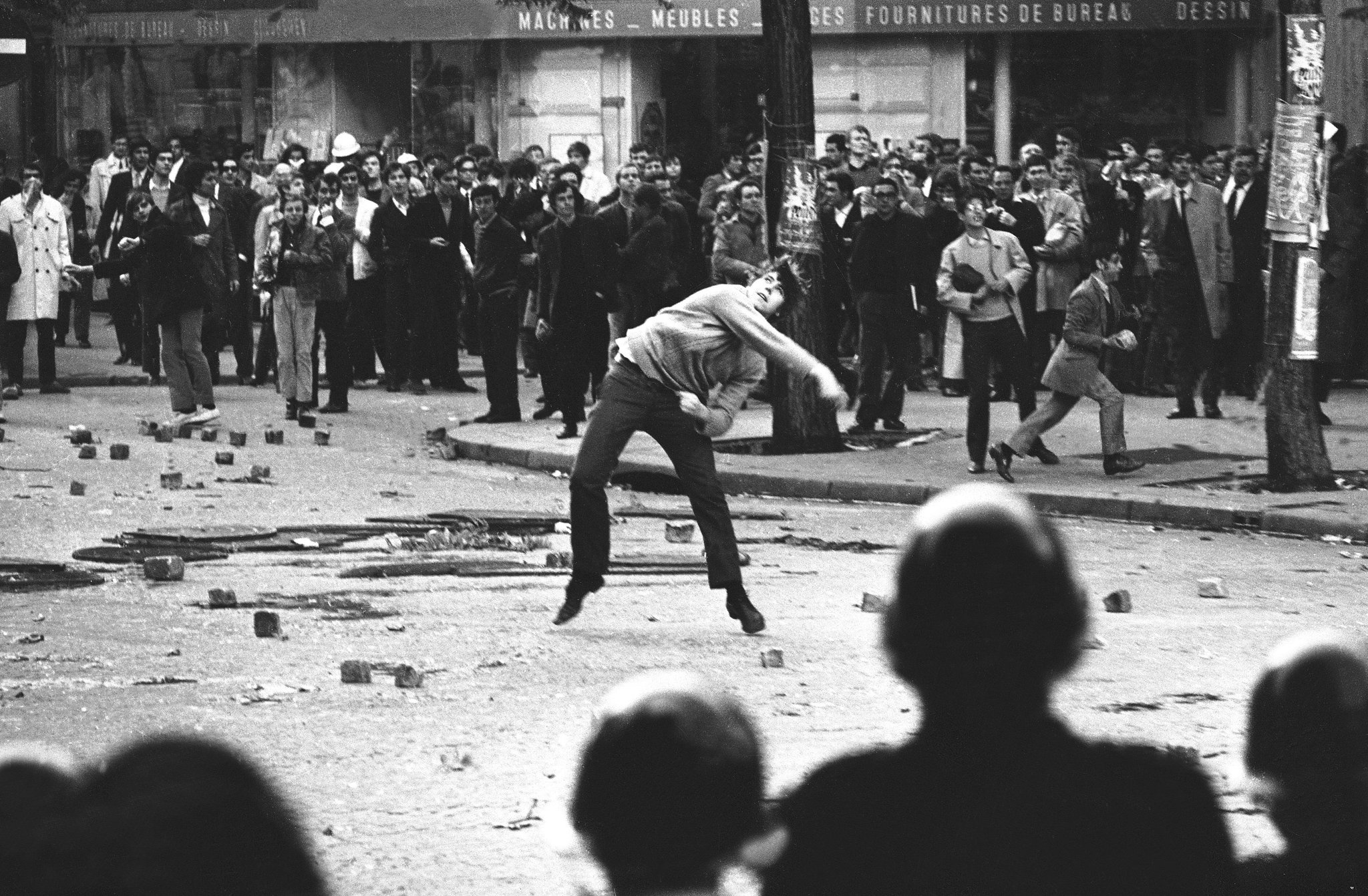
55 years ago, in May 1968, rioting in Paris became so severe there was a real threat of civil war. The city’s student population, liberal and left-leaning by definition, occupied the universities in protest at fellow students’ arrests following an anti Vietnam demonstration. The authorities were quick to react and a heavy-handed police operation resulted in skirmishes, baton-wielding beatings and more mass arrests. The conflict between the Parisienne students and police intensified. Barricades were put up and knocked down. Civil order descended into disorder. Police used batons. Students threw torn-up paving stones and Molotov cocktails. Two nights of stand-off on the Left Bank ended after police set fire to cars and they themselves used Molotovs to disperse crowds.

The trade unions, no fans of President de Gaulle or his policies, were moved to declare sympathy action. At the height of this action, most of France ground to a halt as 11 million French workers (almost a quarter of the working population) went on general strike. Despite talks between both sides, the strikes and the riots continued. The President ran off to Germany, worried that rioters would attack him in Elysee Palace. He would return at the end of the month, bolstered by a notion to dissolve his cabinet and reform his government in a way that would appease the strikers. But anyway…

In the early days of the Stone Roses, Ian Brown had hitch-hiked his way around Europe. On his travels, he’d met someone who’d been in Paris in 1968 and this man’s tale became the lyric to Bye Bye Badman. He told the story of how, during the riots, the activists learned to combat the effects of the tear gas being used to control their movements by sucking on lemons.

It’s no concidence at all that the artwork on Stone Roses’ debut album cover features an unobtrusive, brush-daubed tricolour and a couple of lemons (albeit added after John Squire had ‘completed’ his painting)… a piece of art he called Bye Bye Badman.

Smoke me, choke the air. In this citrus-sucking sunshine I don’t care.

Here he comes, got no question, got no love

I’m throwing stones at you, I want you black and blue

I’m gonna make you bleed, gonna bring you down to your knees…

It’s all in there.

Stone RosesBye Bye Badman

It’s a tune that belies it’s appearance. Lightweight and breezy, with skiffly, shuffling drums and a rich tapestry of interwoven guitars, it could well have floated off the grooves of a Mamas and Papas or 5th Dimension record.

The guitar runs throughout though, they mark it as something a bit special, a bit unique; the phased and chugging electric backing that allows the sun-dappled acoustic splashes to shimmer, the cleanly picked counter-riffs, the fluid and chattering fret runs at the end that bring to mind Michael Jackson’s Human Nature, all of it underpinned by expansive and expressive bass playing. It’s no real surprise that Stone Roses became the touchstone for enthusiastic amateur guitarists and wannabe hit bands everywhere.

And the melody. It’s sing-song and nursery rhyme-like…until you begin to decode the lyric. The title itself is seemingly a veiled reference to President de Gaulle and, as the song unfurls line by line, it’s apparent that this seemingly insignificant track (song 4, side 1) is in fact a pop art statement of political intent, revolution disguised as art. That it’s done so with lovely doubletracked Ian Brown vocals makes it all the sweeter. In the live arena, Brown can’t sing for toffee. Thank goodness John Leckie had the golden touch when it came to coaxing a tune from his vocal chords.

Here’s the demo that Stone Roses presented to Leckie. As you’ll hear, never underestimate the role of the producer in helping a group to realise their ambitions.

Stone RosesBye Bye Badman demo

I listened to Stone Roses’ debut album the other day and it still causes as many little rushes of uncontainable excitement as it did on first hearing it 34 years ago. Let it sink in that more time has passed since the day I bought it from Walker’s at Irvine Cross than the time between the riots in Paris ’68 and the Stone Roses writing a song about it.

Ian Brown famously pumped an arm aloft and bellowed, “This is ‘ist’ry!” from the Alexandra Palace stage in November 1989. No, Ian,  your band, their album, THIS is history. D’you feel old yet?

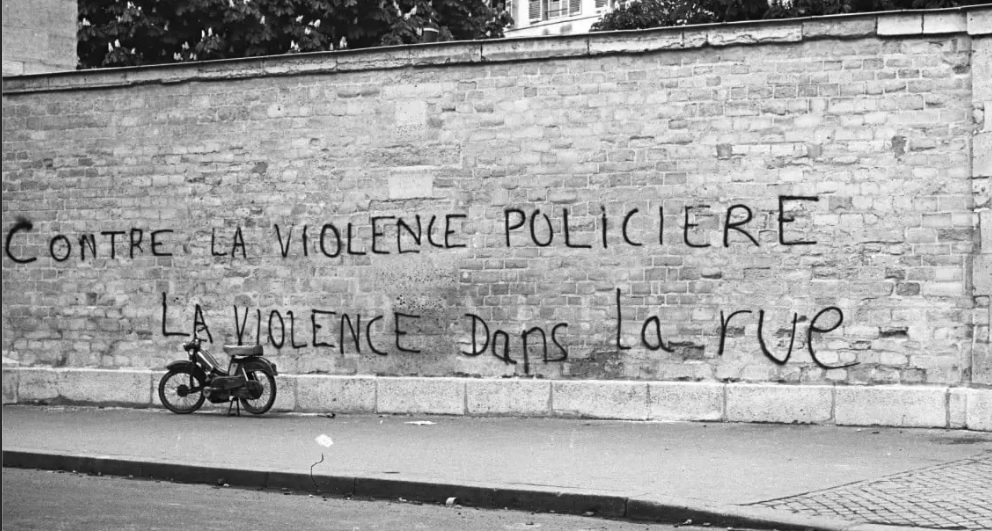
Niche Ian Brown reference in this graffiti for all of you trainspotters out there,
Alternative Version, demo, Hard-to-find

Christmas Rapping

This was timed to go out a couple of days ago, then hastily postponed to make way for the Terry Hall stuff. By comparison it seems trivial now, but I can’t save it for the new year, so on with the show, as they say.

Yule dig this…

Remember Flexipop!? Back at the start of the ’80s, when the freshest of music was borne from a creative and punkish, DIY attitude, a couple of disillusioned Record Mirror writers started Flexipop! magazine. Adopting a maverick approach to publishing that was similar to the bands of the music it would feature, Flexipop! flouted the rules of their game and, in a blaze of cut ‘n paste ‘n Letraset ‘n day-glo fonts gave Smash Hits, Number 1 and even the hallowed trio of inkies a run for their money. Their star would burn briefly – 37 issues (one issue a month for three years) – but brightly.

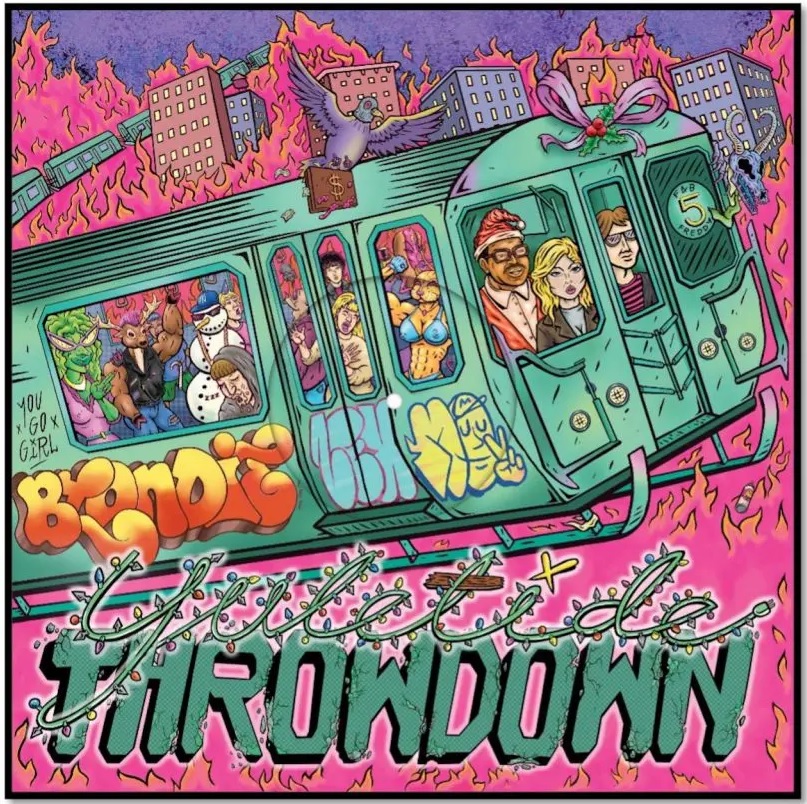
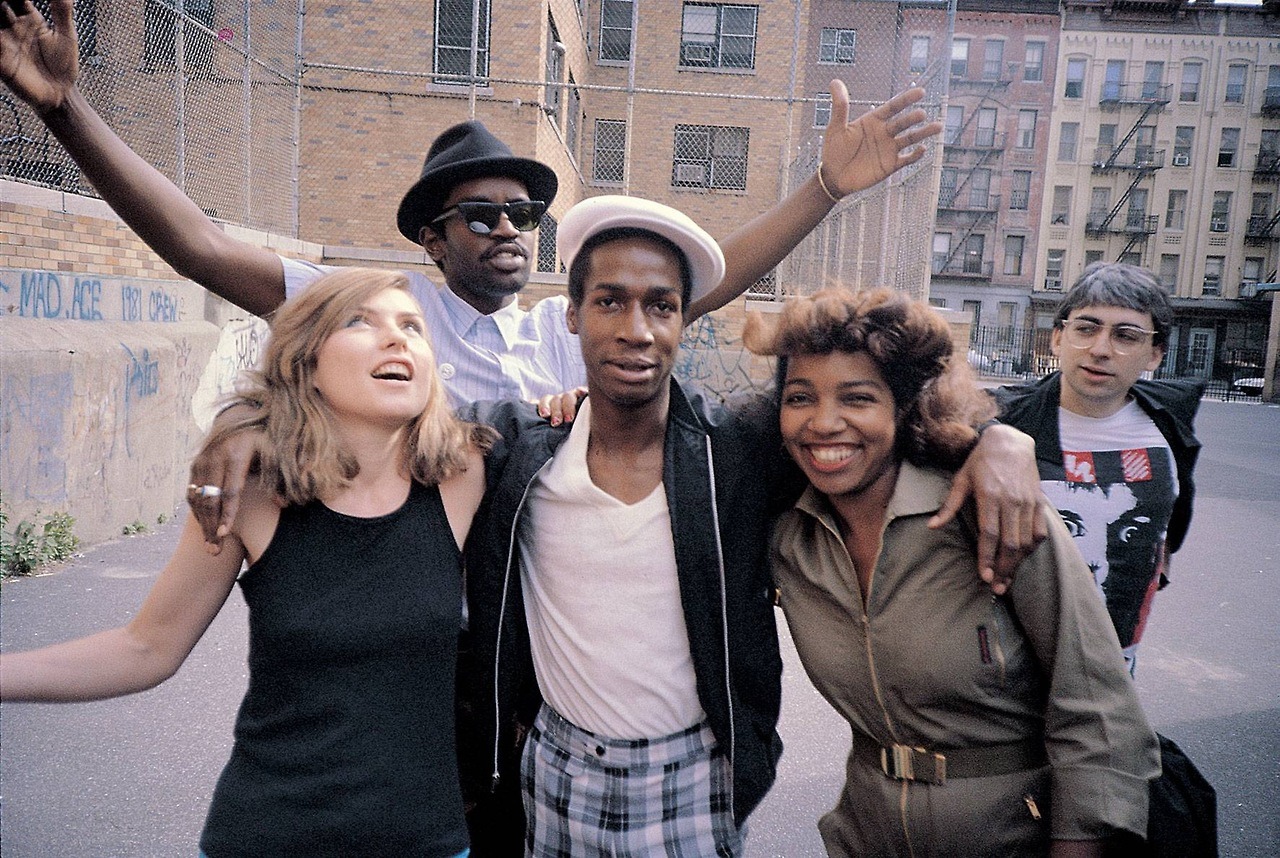
Their USP? Every issue of Flexipop had a free 7″ flexidisc stuck to the cover. Sometimes single-sided, sometimes double, and sometimes even a 4-track EP, each flexi contained a unique, can’t-be-found anywhere else recording of that issue’s cover star; The Jam‘s Pop Art Poem on see-through yellow plastic, for example, or a luminous, Fanta-orange pressing of The Pretenders Stop Your Sobbin‘ (demo, of course), even a 23 second recording of Altered Images wishing you a happy new year, and this… Blondie and Fab 5 Freddy riffing and rapping, some of it loosely Christmas-related, across the top of the demo to Rapture.

Blondie & Fab 5 FreddyYuletide Throwdown

Ice-cool Debbie: Hey – you don’ look like Santa t’me. I never saw a Santa  Claus wearin’ sunglasses!

Freddy: Cool out, without a doubt!

Ice-cool Debbie: Merry Christmas, ho ho ho!

And off they go, Freddy telling the listener where he grew up, Debbie pre-empting Run DMC and the Beastie Boys by double tracking him on the line ends, referencing guns, disco and ‘the nicest snow’ – which is possibly not a reference to the inclement weather. 

Debbie Harry, Fab 5 Freddy, Grandmaster Flash, Tracy Wormworth (bass, The Waitresses), Chris Stein

Christmas duets come in all shapes and sizes; Bowie ‘n Bing, Shane ‘n Kirsty and now Debbie ‘n Freddy. Lost to the archives, Blondie re-discovered Yuletide Throwdown a year ago while pulling together the material that would make up their catch-all box set.

It’s an interesting peek into their creative process, the version here replete with those descending chimes and rinky-dink funk guitar, the horn motif and Debbie’s ‘Ra-ah-pt-yoor!‘ refrain, yet sluggish and sludgy…and pretty good as a result. I don’t know why they chose to speed it up before release.

“When we first recorded Rapture, it was slower. This was the first version,” Stein said. “We decided to make it faster. The slower tape was just bass, drums and guitar doubling the bass, I don’t think much else. I took the tape to my home studio and added stuff, then Debbie and Fred did their vocals.”

I’m a sucker for a demo or an alt. version, and this version of Rapture certainly falls into that category. Play once, and once only at this time of year, file it in the section of your brain that’ll serve you well come the toughest of music quizzes and then forget all about it until next December.

*Interestingly, the b-side of the Blondie/Fab 5 Freddy single sounds like it might be totally magic. Credited to mystery band The Brattles, it turns out they were a band of pre-pubescent punk rockers aged between 8 and 12: Werner, 12 (Guitar), Dagin, 8 (Drums), Jason, 9 (Vocals), Emerson, 9 (Bass) and Branch, 10 (keyboard). Makes Musical Youth look like the Grateful Dead.

The record shows that The Brattles opened for the Clash twice, shared a rehearsal room with the New York Dolls and we were produced by Chris Stein of Blondie. Ah, so there’s the connection. I suspect Bartholomew Carruthers, if he’s reading, will be able to give me the full rundown. Until then, must investigate…