Gone but not forgotten

Lines That Rhyme

I once found myself in deep conversation

With a songwriter who’s known not so much through the nation

But whose songs will be known to everyone here

And the more interesting parts of the world’s blogosphere

Sitting just chatting and shooting the breeze

Their setlist half-written, their guitar at my knees

Tell me a story…drop me a name..

…give me an insight ‘to your wee world of fame

Spare me no details…spare me them none,

but what’s the most rock ‘n roll thing that you’ve done?


They thought for an instant then immediately said,

I can tell you this story because the subject is dead.

I was somewhere on tour, in a van, not a plane

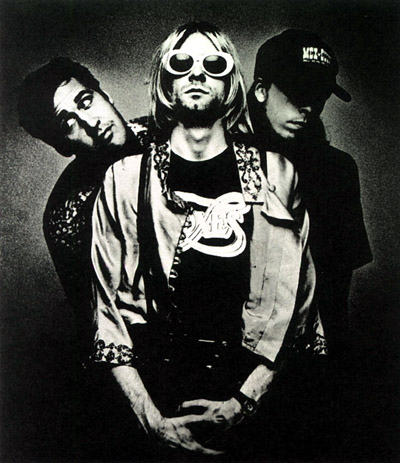
And I found myself sitting beside Kurt Cobain

One thing led to another, there’s no-one to blame

But I found myself doing cocaine with Cobain

Yes, I found myself doing cocaine with Cobain.”


NirvanaDumb

I’ve always loved ‘Dumb‘ from In Utero. The full album is, for many, Nirvana’s masterpiece; raw, ragged, expertly captured on tape by the royalty-waiving Steve Albini. The band is on top form. Slabs of floor-shaking, earth-quaking bass guitar, anvil-heavy drumming that sounds live and in the room, shards of abrasive, metallic, blowtorch guitar surfing violently across the rhythm section, the band’s loud/quiet/loud template caustically Brillo Padded out of all recognition by Albini’s crucial touch.

Thirty years ago it * sounded quite brilliant. Now, I need to be in a particular mood to indulge myself in it…and I ain’t been in a stinking mood like that since about 1994. It’s too screamy, too raw for me nowadays. If I want screamy I’ll take Surfer Rosa‘s more visceral moments. Raw? Gimme Flip Your Wig, thanks very much. (* you can apply this take to the Manics’ Holy Bible album also).

But Dumb is still box-fresh magic, the polite wee brother of Nevermind‘s Lithium. Where Lithium roars, Dumb whispers. Where Lithium soars (and by God, it soars), Dumb remains grounded. Discipline is required for this. Any gang of itchy-fingered musicians will, given half a chance, thrash and roar their way to the finish line. Nirvana could do that in spades. On Dumb though, they applied a different approach.

Clean strummed electric guitar that’s a happy pill away from breaking into Shocking Blue’s Venus, a resigned and slowly sighing cello, Krist’s choppy and thunking bassline and Dave’s steady head-nodding beat carrying it forward. Great cymbals. No fuzz. No Big Muff. No pedals at all. The dynamics are all in the playing and arrangement and it kills. Kurt’s vocals crack in parts, but considering the issues he was going through at the time, he’s in remarkably fine voice. His vocal is fantastic, in fact; controlled, measured, tuneful. Really sensational. There’s a great double-tracked vocal (1 min 09s) where he harmonises with both himself and the cello in that eerie and strange way he does, creating a ghostly third note and elevating the track instantly to one of Nirvana’s best.

The lyric? You can interpret that how you like. Some folk will (naturally) say it’s about Cobain’s addictions. Me? I think it’s saying that if you could really see how messed up the world is, you’d never be happy. Only dumb people are happy because they don’t have the capacity for deep thought. It’s a lyric that, if interpreted this way, rings true to this day and quite possibly forever more.

I bet you’d forgotten how great Dumb was. And still is. The real deal.


Get This!, New! Now!

Warp Records

I love this. It’s been playing on the more discerning radio shows in recent days and has me hankering for the day when I can buy it – something that doesn’t tend to happen as much as I’d like.

It’s called Pharaoh, by Modern Nature.

Steady paced and understated, it’s a lovely unfolding slice of pastoral indie guitar music, the same sort of thing that Teenage Fanclub have politely gone about writing and recording in their Gerry-free autumnal years… only (sorry, Norman) better. Much better.

The vocals might lack TFC’s honeyed harmonic suss, but they’re equally as warm. Close-miked and musing philosophically, snippets of phrases leap out. ‘hedgerow…granite…leaves….mountains…coastal miles…heavy choices…‘ Andrew Weatherall, having played early Modern Nature material on his NTS radio show, was seemingly a big influence on the writing of the track, his ‘fail we may, sail we must’ mantra pushing group leader Jack Cooper to dizzy new heights. Cooper has said that the track is about the people who inspire us to think differently.

It’s the heady combination of voices and guitars that had me from the off.

The two guitar players on Pharaoh mesh and meld, knit and weave, never tying themselves in knots, always creating space for the other player to play in and around. With the combination of woody, humbuckered semi-acoustic and single-coiled Telecaster, there’s a hint of Television in the way the players freeform and switch between fret climbing and chord deconstructing. That’ll be the jazz influence, perhaps.

Pharaoh is, you gotta think, a reference to the spiritual, rule-breakin’/rule-makin’, free-jazz saxophonist Pharaoh Sanders. Inspirational people, remember. But where TV’s Lloyd and Verlaine – also undoubtedly inspirational – slash and tear at their machines like there’s no tomorrow, Modern Nature’s guitars bubble away like a mountain stream on a spring day. A choppy major chord here, an arpeggiated minor there, an insistent and unfaltering signature riff between them, everything clear and ringing like steel drums in the summer sunshine. If you’re like me, it’ll take just one play before the track wends and winds its way quietly into your subconscious.

Modern Nature is a new name to me. It’s always great to find a group that you can work backwards on before going forward with each subsequent record.

Pharaoh is from Modern Nature‘s new album The Heat Warps, released by Bella Union at the end of August. I’ll be ordering it via the band’s Bandcamp page here.  Some of you here will, I predict, do likewise.

Get This!, Gone but not forgotten

God Vibrations

There are by now tons of pages and hundreds of thousands of words out there in tribute to the just-passed Brian Wilson, leader of the Beach Boys and conduit of some of the greatest creative pop music we will ever be blessed with. Many of those words, having been written by people who are far more qualified than me, will carry gravitas and authenticity, grandiloquence and authority. I’m on hat-tipping terms with a couple of lucky folk who interviewed him at various points in time, both of whom have proper Wilson-related stories that they’ve shared in recent days. Me, I’m just a fan with a typewriter.

Wilson’s compositions have affected me since first hearing them; safe and politely rockin’ hot rod and surfing anthems, love songs to unattainable caramel-skinned girls on sandy beaches, the actual sound of a summer that’s strangely alien to any Ayrshireman, set out in giddy four-part harmony to a rock ‘n roll back beat. The Beach Boys could make California seem like the promised land, and in that formative era when the most exciting TV was American (Starsky & Hutch, the Six Million Dollar Man, Dallas even), it all fed into the idea of an ideal world.

At some point I alighted on Pet Sounds, the album which was painstakingly made by Wilson in the midst of a full-on marijuana and LSD awakening. Like many of you here, I went properly nuts for it. The box set, the original mono vinyl, multiple tickets for the various Pet Sounds tours in the early ’00s. There’s not a bad track on it and every play throws up – cliche alert – new things still. It’s the record that proves – to use another well-worn cliche – Brian Wilson’s genius.

Genius. It’s thrown around a lot these days. And here’s me doing it too. What does the word even mean? If you look at the dictionary, it defines it as ‘exceptional intellectual or creative power or other natural ability.’

So, yeah, with his natural grasp of melodic structure and chord progressions and multi-layered harmonies and interesting musicality and fantastic arranging abilities and creative production techniques and ability to carve a heart-stopping melody from outta nowhere, Brian Wilson is an undisputed genius. Was an undisputed genius. Man, he’s in the past tense now.

Pet Sounds is the critics’ choice, the easy pick in many ways, but to these ears it’s where the Beach Boys (or Brian Wilson really, as by now he was the undisputed architect of the group’s sound) broke free of traditional pop music structures (verse/chorus/verse) and conventions (electric guitars, four to the floor drums, sax breaks) and ushered in a brave new sound that was created as much to get one up on The Beatles as it was to challenge himself and his audience.

There’s a run of Beach Boys albums at the end of the ’60s into the ’70s that’s the equal of any of those ‘classic’ album runs you read about in the usual places. Wild Honey – Friends – 20/20 – Sunflower – Surf’s Up – Carl and the Passions – Holland (plus the long-delayed Smile project at the start of it all). There’s not a bad album amongst them. Sure, there are occasional clunkers within the tracklistings (Surf’s Up‘s absolutely honking Student Demonstration Time for one, Wild Honey‘s How She Boogalooed It, the sore thumb in an album that’s otherwise soulful and considered being another – both bog standard 12 bar blues tracks, as it goes), but there’s not a record collection on the planet that wouldn’t be enhanced by the addition of any one of these records.

Off the top of my head:

Surf’s Up‘s Feel Flows, Disney Girls and Til I Die. Oh, and Long Promised Road‘s mid-section. And the title track. It’s a work of art, that album.

Sunflower‘s All I Wanna Do and Forever.

Friends’ Little Bird

20/20’s Never Learn Not To Love

Holland’s Sail On Sailor and Funky Pretty

Wild Honey’s Darlin’ and Let The Wind Blow

Carl and the Passions’ Marcella and You Need A Mess Of Help To Stand Alone

The entirety of Smile (Heroes & Villains…Cabinessence…Vege-Tables…Child Is The Father Of The Man…Good Vibrations)

You get the drift.

Not everything was written by Brian. As the band fell into more comfortable clothes, grew out their hair and turned beardy and weirdy, all members stepped up a gear to keep pace with their leader’s unblinkered vision. But everything came stamped with Wilson’s kite mark of quality – the arrangements, the incidental music, the high floatin’, gravity-defyin’ harmonies; a singular vision achieved with the help of willing participants, even if his group members didn’t always immediately ‘get’ Brian’s grand ideas.

The Beach BoysTil I Die

Til I Die‘s wafty and woozy vocal is perfect. Is it autobiographical?

I’m a cork on the ocean…how deep is the ocean…I lost my way…

It most certainly is, Brian pondering his insignificance in an ever-evolving musical landscape, the musicians behind him tinkling tastefully and respectfully until the world catches up. The slowly unspooling and overlapping stacked vocals, the major 7ths, the glockenspiels and chimes, the Fender bass that roots it all… it’s the sound of complete contentment and the perfect summation of Brian Wilson as a composer.

Musical fashions change like the Scottish weather. Hair, clothes, guitars, synths, the in, the out. Brian Wilson cared for none of that. The world at large didn’t always appreciate his vast talents, but you and I and countless others did. What a loss.

Live!

Funny? Clever? Entertaining? Mozz Def

Them Smiths burned brightly. Five years in and out. 17 singles, 4 studio albums, a trio of compilations, a live album and then gone. One of our most influential groups over and out in the time it takes other bands to harvest the data on their Tik-Tok accounts. Morrissey as a solo artist initially followed the same blueprint; high watermark of quality on the singles’ b-sides, an early years grab-all Hatful-style compilation, fervent live shows, studio albums that were inventive and funny and unique and occasionally really rockin’ and then…the downward spiral. A musical shift in the nation’s listening tastes coincided with a poor album (Southpaw Grammar) and the decline of Morrissey was in full effect.

It’s not hard to see why Smiths fans might’ve eventually if reluctantly looked elsewhere for thrills; weak albums recorded by a curmudgeon in shitty parallel jeans, the ever-revolving cast of record companies (un)willing to work with him, the shelving of albums, the contempt he shows for his fans – the merch stands at the gigs with Patti ‘n Lou ‘n Bowie records – and more recently, his own – signed by yr man at eye watering prices (£250 for a signed Suedehead?!!), the sudden, abrupt halts to shows (hecklers, the smell of meat, the cold, anything really, all cited as reasons), the last minute cancellations of gigs when, very late in the day, he just can’t be bothered to play….and not least the increasingly right wing politics, the hanging out with Russell Brand, the Brexit-posturing, the For Britain schtick and the siding with Farage, the draping of himself in the flag of Israel, for fuck’s sake. How exactly did the voice of the marginalised, the disenfranchised and the downright downtrodden find himself on the right (ie, the wrong) side of the political spectrum, a venture capitalist with a narrow and bigoted view of the world? The boy with the house in the Hollywood hills has quietly gone about forgetting where he comes from. I gave up on him a long time ago. You maybe did too.

But…

That back catalogue. I stopped listening to any of his ‘new’ stuff after 1997’s Maladjusted. I’d long held the notion that Morrissey was something of a genius at creating song titles for songs that failed to live up to their expectation – Life Is A Pigsty, To Me You Are A Work Of Art, When You Open Your Legs, Something Is Squeezing My Skull, Munich Air Disaster 1958, Mama Lay Softly On The Riverbed, I Am Not A Dog On A Chain, The Edges Are No Longer Parallel (written about a new pair of skinny fit Levi’s, I’m told), I Have Forgiven Jesus, The World Is Full Of Crashing Bores, All The Lazy Dykes, Neal Cassady Drops Dead, The Bullfighter Dies, Kick The Bride Down The Aisle…. If they thought they could get away with it, there are writers out there who would give their eye teeth to come up with song titles as inventive and witty as some of those above.

As it turns out, some of these songs are the equal of their titles. That back catalogue that I’ve been stubbornly ignoring for nigh on 30 years? It has some properly stellar tracks just waiting to be plucked from obscurity, compiled into a Spotify playlist and re-evaluated – or evaluated, in my case. This is suddenly important.

Morrissey is back over here for a handful of shows. The tickets aren’t cheap and at the time of going on sale, I’m not that fussed. But I read the reviews from Dublin last weekend. Despite the setlist being heavy on late-era Moz, no-one has a bad word to say. A creeping fear of missing out – FOMO, as your kids might say – begins to linger and intensify. By Tuesday, I’m trawling Twickets looking for a bargain. And I find one for Thursday night’s show in Glasgow. That Spotify playlist of songs played on the unfolding 2025 tour becomes essential listening for two days. I soak in the brooding and majestic Life Is A Pigsty, the slow menace of Jack The Ripper, the me! me! me! egomania of All You Need Is Me. But I skip the Charming Man-lite Rebels Without Applause, the Charming Man-even lighter I Ex-Love You (another great title) and the mess that is the unappealing Scandinavia and hope for the best.

He’s been doing Speedway, one of the best tracks on his last truly great album (Vauxhall And I). And he’s been doing You’re The One For Me Fatty, a throwaway pop song, but one that, since the subject matter himself (Chas Smash) told me it was about him, has lasted well to these cynical ears. He’s teased audiences too with a handful of Smiths songs, of course, so the good song/bad song ratio  must be stacked in my favour, mustn’t it? I can’t legislate for any Israel-defending or England for the English-type posturing. I can’t do anything if he walks off at the first whiff of a Gregg’s sausage roll…or doesn’t turn up at all. I can’t deny that that thought hasn’t crossed my mind. Yet, in a shame-faced display of backtracking and wilful contradiction – but proudly wearing my ‘Morrissey Sucks’ t-shirt (a Billy Bragg one-off that my sister managed to come by for my birthday a few years ago) off I go. Sorry Johnny, if I’ve let you down.
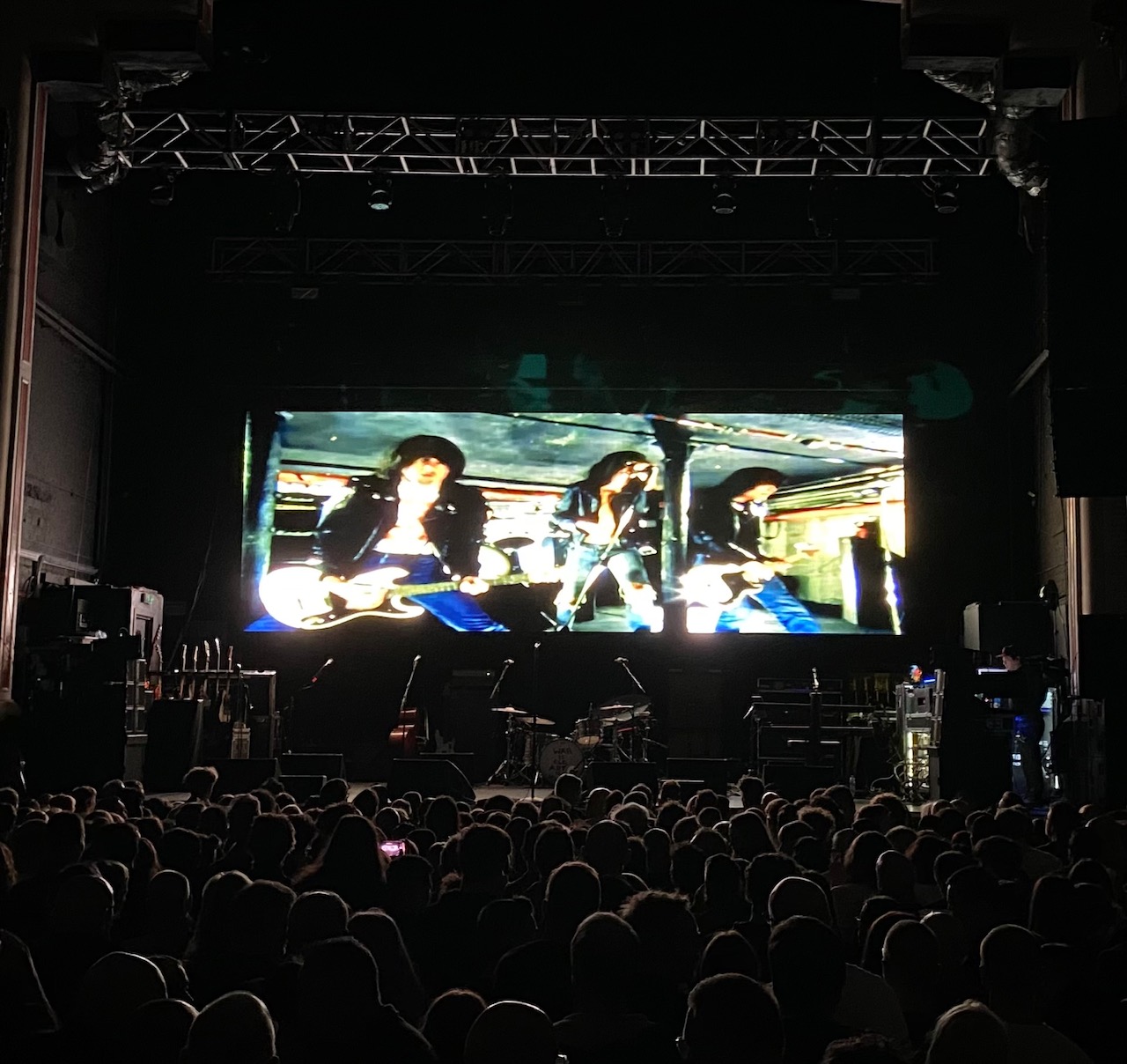
I find a great spot in the VIP section. Easy. I wander into it and no-on asks me to leave, so there I am, directly facing centre stage, an uninterrupted sight line, finding myself deep in conversation with two guys from Brighton who’ve been following the tour. The Academy is quickly rammed. There’s that tangible feeling you get at certain gigs where you know before a note has even been played that you’re in the right place.

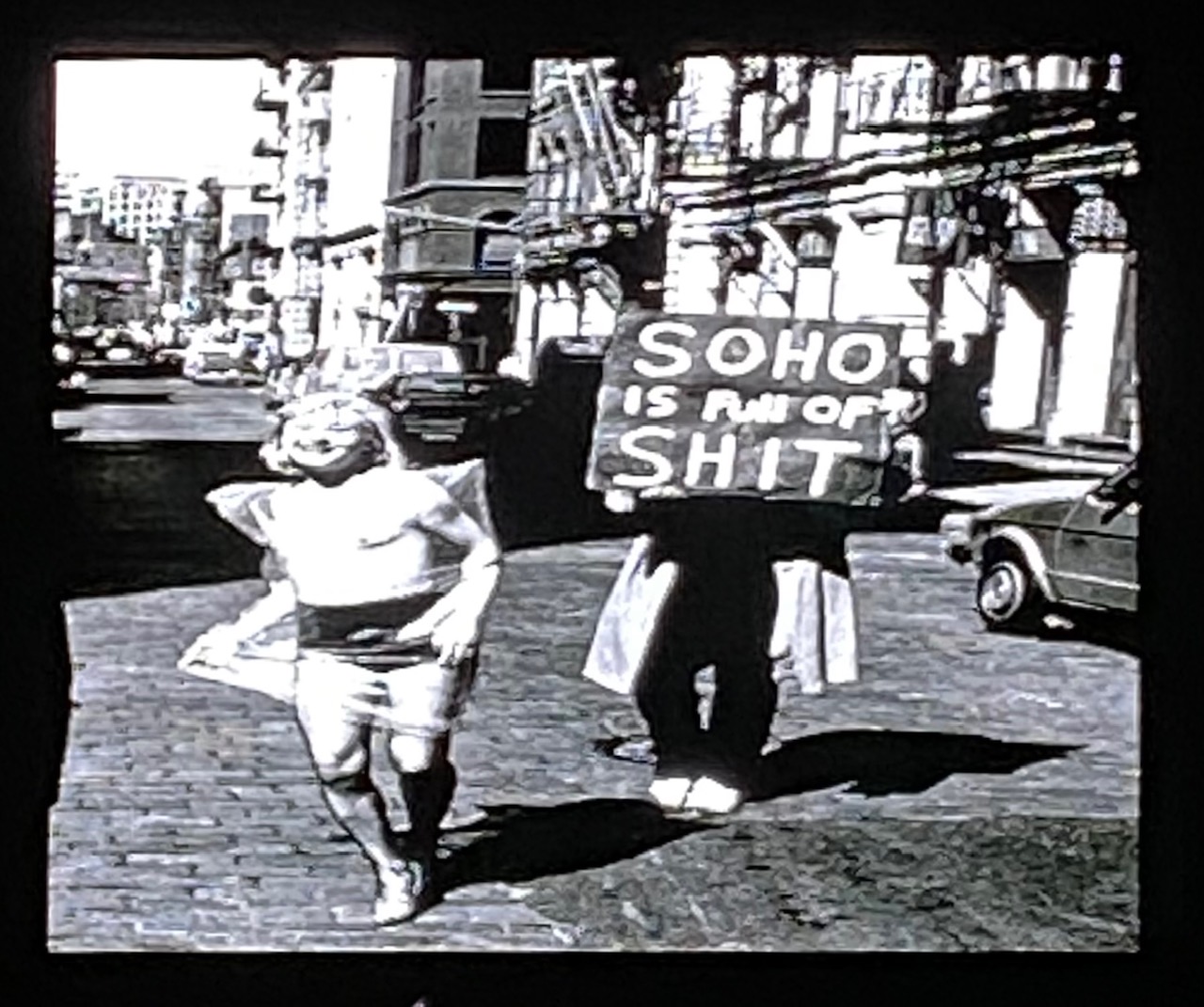
The pre-show film plays in lieu of a support band. It’s great. A jigsawing of Morrissey references, it throws out a feral Ramones at CBGBs, a trashy New York Dolls, a camp Bowie…but also Benny Hill, some trashy and campy early ’70s Eurovision, Divine, Sigue Sigue Sputnik, superb footage of cabaret singers in working men’s clubs…(there’s a theme developing here)…and, of course, black and white stills and clips from Hollywood’s golden era. There’s a handsome and moustache-free Burt Reynolds There’s Alain Delon, slowly unfolding himself from a chair and onto the floor where he dies a slow death as seen on the cover of The Queen Is Dead. There’s Billy Fury, cover star of The Smiths’ greatest single. Steven Patrick will have had great fun putting all of this together, a trainspotter’s reference guide to the mind of Morrissey.

And then we’re off.

It’s thrilling.

Morrissey is funny, quick witted, whip-smart with the crowd and in fine voice. He sings great. There’s a very strong opening; All You Need Is Me – You’re The One For Me Fatty – a mesmerising Speedway (yes!) into a juddering How Soon Is Now? (note: Johnny’s band plays this better). He has us where he wants us….and so dives deeper into that strange, unfamiliar back catalogue. I’m on board with it though, although the backdrop that changes with each song keeps the attention when sometimes the music finds it wandering.

Then, mid-set, salvation.

Without fanfare or introduction, Morrissey begins to sing I Know It’s Over. His band, for so long unable to cope with the delicacies and intricacies of the Smiths tunes, does a fantastic job. They are light of touch, sympathetic to the song’s heavy veil of pathos and regret and carry the singer like it’s 1986 at the London Palladium once more. Morrissey’s voice is superb, keening and aching those familiar words, stretching out one of the Smiths’ greatest torch songs into the here and now of 2025. It’s almost worth the admission price alone.
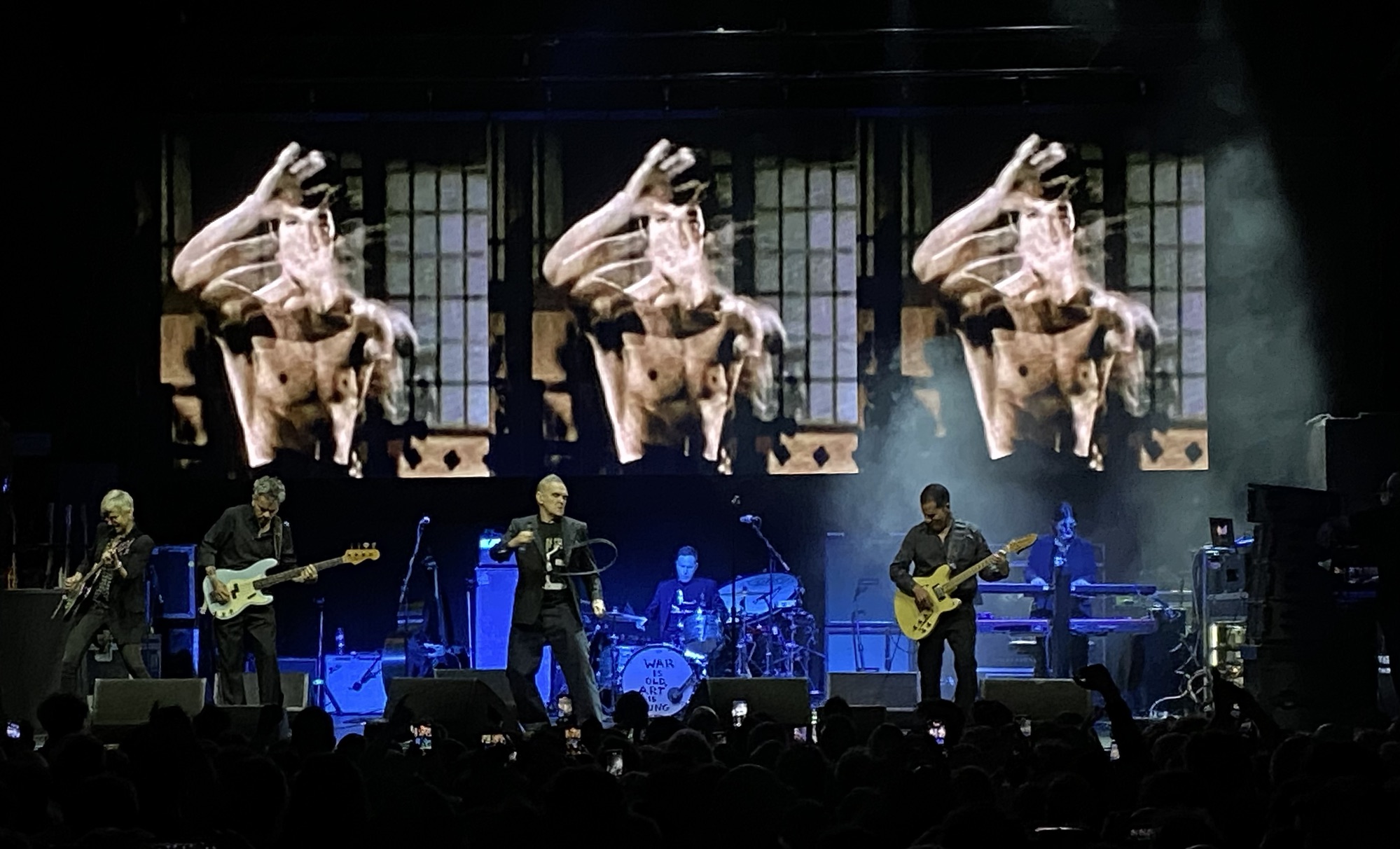
I Know It’s Over is followed by a thundering, joyful Every Day Is Like Sunday. Mass celebration, arms aloft in the chorus, arms around your partner’s shoulder – type stuff. Properly magic. At the part in the lyric where he sings, ‘A strange dust lands on your hand and on your face,’ the house lights go up on ‘face’ and I swear, I swear!, Morrissey sticks his tongue out at me. Right at me! Then the lights go down and I’m left to ponder it.

There’s more! Every Day Is Like Sunday gives way to a properly rockin’ and crashin’ Shoplifters Of The World, the elfin Italian guitar player stage left replicating perfectly Johnny’s harmonic solo.

It’s a proper wham! bam! slam! and I am spent.
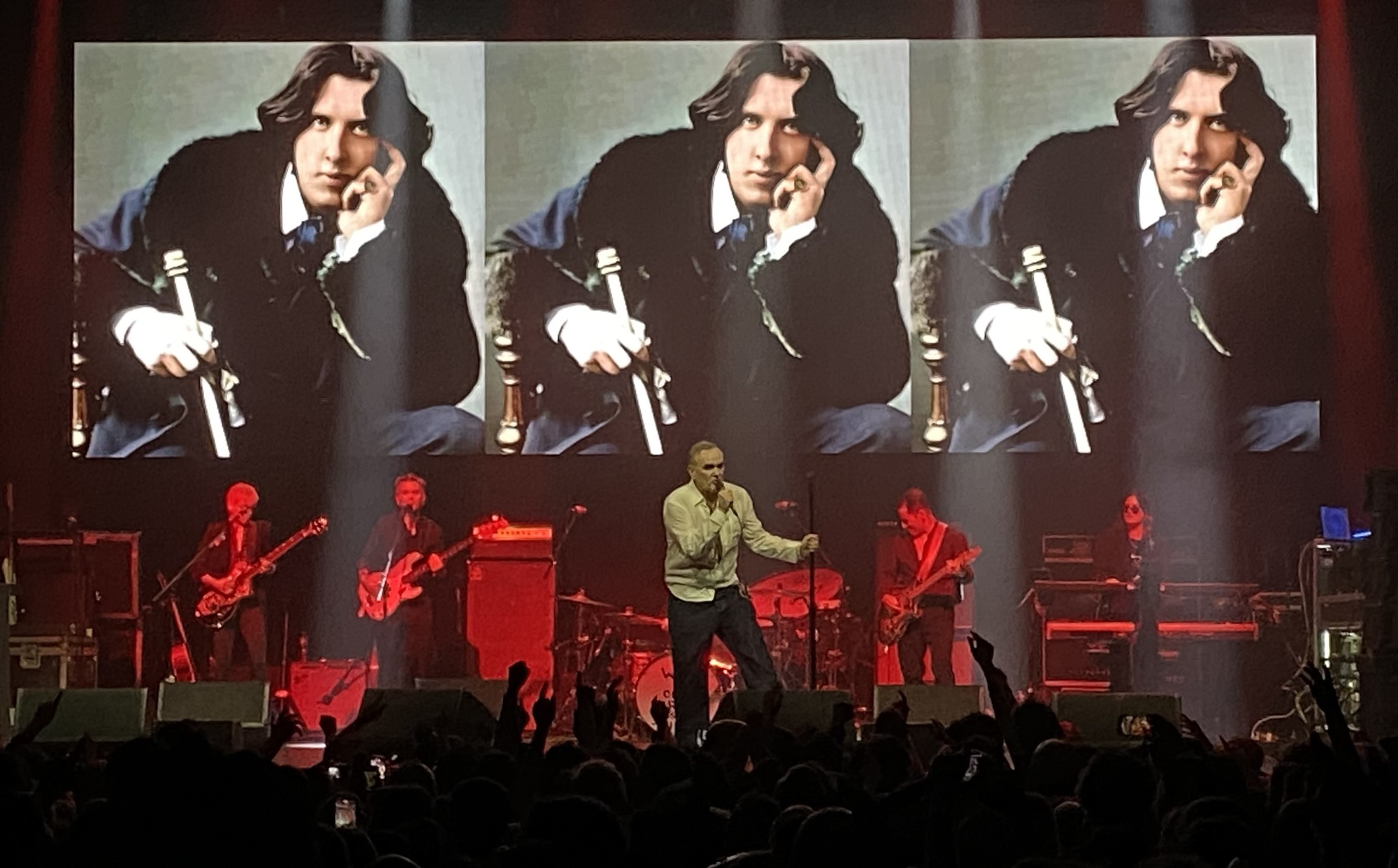
But there’s more still! Life Is A Pigsty (my new favourite ‘new’ Morrissey tune)…a fantastically theatrical Jack The Ripper, Morrissey swinging his jacket and whipping his microphone lead through plumes of red smoke…the supreme gothic pop of Last Night I Dreamt That Somebody Loved Me and, finally, a spitting Irish Blood, English Heart, the full stop on a quite brilliant 90-odd minutes.

My first Morrissey show since 1997 (?) I think, but on this form, maybe, possibly, probably not my last. Agh, the conflict. I feel a wee bit grubby. Elated, but grubby.(Go and see him if you can.)
 

Cover Versions, Hard-to-find, Studio master tapes

House Champion

There’s a decent case to be argued for Paul Weller being England’s equivalent to Neil Young. Both started young and both found instant success with their first real bands – Buffalo Springfield in Young’s case and The Jam in Weller’s (like you didn’t know already). Both these bands released era-defining tracks and tapped in to the consciousness of youth. And just as Young left Buffalo Springfield to forge a solo career packed full of instantly-regarded classic albums, side steps peppered with choice collaborations and sudden left turns towards new and unexpected musical directions (the ‘Ditch Trilogy‘, Trans), Weller too defiantly broke new ground, alienating some fans, richly rewarding others, side stepping his exquisitely-shod feet through the decades with interesting and quirky one-off collaborations and the odd soundtrack thrown in for good measure. Weller, like Young, lives, breathes and drinks music. He creates seemingly every day, tours regularly and (unlike Young nowadays) releases albums with a high quality control and impressive frequency that suggests if he doesn’t get them all out of his system as and when they’re ripe for recording, he’ll wither and die. Prolific? Paul Weller is the very definition of the word.

In 1989, the Style Council was coming to an end. The law of diminishing returns coupled with a changing musical climate saw to it that only Weller’s most enthusiastic fans were still with him. The pop charts may have been filled mainly with total rubbish (Jive Bunny, New Kids On The Block, Jason Donovan) but the underground was bubbling up nicely. Happy Mondays and Stone Roses were a Joe Bloggs flare flap away from ubiquity. Effect-heavy guitar bands were filling a post-Smiths void. Acid house and electronic dance music was soundtracking sweatboxes and switched-on clubs, yet still to be sanitised for the mainstream.

Weller, ever willing to embrace the new and the now, and with a perma-finger totally on the pulse of the zeitgeist, was heavily into Chicago house music. He’d heard and loved Joe Smooth’s Promised Land and recorded a faithful reworking of it before even Joe Smooth’s original had a UK release date (eventually releasing it on the same day). A song of unity and hope, it’s no different in sentiment to, say, Walls Come Tumbling Down, but whereas that was a Hammond heavy gatecrashing crie de guerre, Promised Land rode the crest of an E-kissed rolling and tumbling 808 wave. Blind loyalty pushed it to number 27 in the charts, but beyond that it failed to grasp the imagination. Hindsight of course has shown it to be a terrific mark in time.

Style CouncilPromised Land

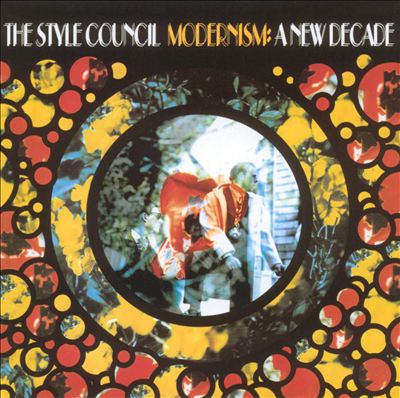
It was almost inevitable that when the Style Council presented Modernism: A New Decade to Polydor, the label would baulk at its hit-free content. There was no angry and spitting politico Weller, no Euro-continental jazz to soften the edges, none of the classic songwriting they’d come to expect from their talented young charge (Weller being just 30 at this point). Modernism: A New Decade was a pure house album, filtered through English notions and sensibilities, but a pure house album all the same. It favoured programmed rhythms and sequenced electro basslines over, y’know, actual bass and drums. It flung the guitars away and replaced them with weaving and shimmering synth lines. It was long and meandering with chants and shouts in place of a more traditional approach. Toundly rejected by Polydor, it would remain in the vaults for 20 years, only seeing the light of day when the all-encompassing, warts ‘n all Style Council Box Set was released at the end of the millennium.

And yet…

Modernism: A New Decade has its moments. Hindsight will show that its creator was frustratingly ahead of his time, that eventually Joe Public could and would groove to machine-driven, guitar-free music. Hindsight will show too that he really meant it, maaan. Just as he’d tackled the spiky Funeral Pyre with bile and aggression beforehand, and just as he’d go on to knock seven shades of shit from his guitar on Peacock Suit, Weller approached Modernism with nothing less than 100% of his cock-sure conviction.

Love Of The World‘s morse code intro and gospelish diva on backing duties…Sure Is Sure with its Italo house piano and Rotary Connection stacked vocals…a nascent That Spiritual Feeling, a track Weller would re-record as a solo artist – and a track that still finds a place in his live set to this day, usually as a refrain to the whacked-out and slightly psychedelic version of Into Tomorrow that normally closes his set, the proof – if it were needed – that its writer holds the material in high regard and that we, the listener, just need more time to appreciate it all.

The World Must Come Together is the perfect example.

Style CouncilThe World Must Come Together 

Its message of unity and hope could’ve been written specifically for the times we currently live in, and Weller’s high and soulful vocal goes a long way to conveying its idea. Channelling his inner Marvin Gaye, he chants the title in the chorus, slipping into falsetto in the verses. Synthesised strings sweep across its clattering and steam-powered rhythm. Electro hand claps punctuate the end of lines. Sampled spoken word pops up in the gaps. A jangling Roy Ayers-ish vibraphone provides the break, but we’re soon back to the titular refrain, a parping, recurring hookline coming and going as the textured cadence of the beat rolls ever forward. It’s a bit of a slow burner, but I’d suggest that, if this were to appear as a new track on a Weller solo album next week, it would be roundly applauded.