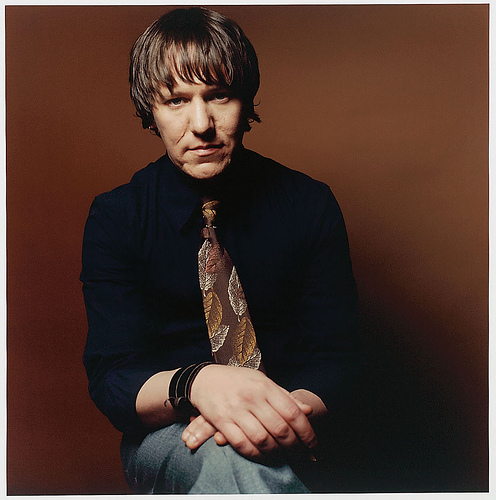
When Elliott Smith was making records, his output shot off in a rapid and upward curve of brilliance. From lo-fi scratchy beginnings to Beatles-great, full bhoona productions, his six albums in five years dazzle with deft fingerpicking and unusual chords, unravelling melodies and unwavering lyricism, every one of his great, great songs double-tracked and knee deep in melancholy and, often, total and utter sadness. And sad music is, as you know already, the best kind of music.
The posthumous world of Elliott Smith though? Bar a couple of noise-for-noise’s-sake thrashers and half-arsed unfinished sketches, it’s a proper treasure chest of rarely-heard/never intended to be heard nuggets. Often these are the equal of, and sometimes even better than, the songs released during Elliott’s lifetime.
The couple of official post-death releases in his discography have uncovered some real gems; New Moon‘s Looking Over My Shoulder and Whatever (Folk Song In ‘C’) are the picks in a ragbag full of alt versions and unreleased session tracks from across his earlier years. From A Basement On A Hill collates material from his later era major label recordings; better recorded, better produced, often overdubbed with multiple guitars, a rhythm section and, as has been said already, Beatles-level vocal arrangements. Twilight. Let’s Get Lost. A Fond Farewell. Look them up…but wallow first in the depths of Pretty (Ugly Before). It’s a real beauty.
Elliott Smith – Pretty (Ugly Before)
It begins with a wobbly keyboard droning the song’s melody behind a chiming, inverted Gmaj7 chord, it’s openness hinting at widescreen Elliott rather than introverted Elliott…
Sunshine. Keeping me up for days, sings Elliott in that breathy, gossamer-light voice of his.
“Ah shite,” you realise. “Elliott is back on the heroin. This can’t end well.” Yep. References to getting high, destruction, no nighttime – only a passing phase, confirm what you think.
The song unfolds with a gentle drum roll into a piano-backed mid-paced ballad, all chugging electrics and deft bass runs, unexpected chord changes and piano trills. By the end of the second chorus, Elliott has found the key to unlocking the track’s true potential. There’s a minor chord, a tightly jangling and country twangin’ 12 string that mimics his vocal melody (how very George), some politely slashing chords, a splash of cymbals and, on the turn of a 7th chord, the resolve. In the angle of Elliott’s exquisite jangle we have lift-off. When his singing returns, he’s double-tracked (how very John) and harmonising with himself, stretching out some very John and Paul backing vocals – ‘Ug-lee-bee-fore‘ – until the song fades its way into the sunset on a squiggle of backwards tape and wonky noise. How very brilliant. And how very Beatles. Such a great tune for a ballad about being a helpless junkie.
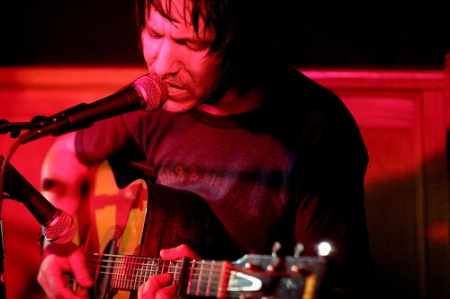
There is, far deeper down the Elliott rabbit hole, a bootleg album called From A White Basement On The Hill (Beatleish nod ahoy!) A reimagined fan-compiled album, its setlist is culled from poring over interviews with Elliott, discussions on fan forums, interactions with Elliott’s closest musical collaborators… a real and honest labour of love by all concerned. Dancing On The Highway. Memory Lane. Strung Out Again. Look them up…but wallow first in the depths of Cecilia-Amanda. Like Pretty (Ugly Before) above, it too is a real beauty.
Elliott Smith – Cecilia-Amanda
It’s another drug song, inevitably, with a heart-breaking pay-off in the final verse.
Elliott plays a great liquid mercury acoustic guitar riff at the start – grab a cheapish guitar, tune down half a step and replicate it if you can – the snare rat-a-tats the group into action and from outta nowhere comes the greatest lurching and woozy keyboard motif this side of the seventies. Unexpected and totally hooky, it sounds like drugs. The wrong kinda drugs though.
Black and blue from passing around…I don’t want to see you like you got before…dancing on a permanent scratch…. Elliott, man . Why d’you have to get involved with all of that? What a waste.
Elliott eases into the bridge, his voice reaches for the high notes, his snare drummer rattling him along. Big bassy piano notes anchor it all together before Elliott brings forth that great acoustic riff (and that woozy, lysergic keyboard) and he leads us into the final verse’s heartbreaking line;
“You got a little baby, I don’t want to see you round here no more.”
Elliott’s mastery of his voice and his instrument, his arrangement and his ear for a tune are never more apparent than on songs like the two featured above. If you’re new to Elliott, start somewhere in the middle – Either/Or was the album where he became less lo-fi and more produced, XO the album after was his major label debut and a spectacular one at that. There’s a lifetime of great songs just a-waitin’ to be discovered.
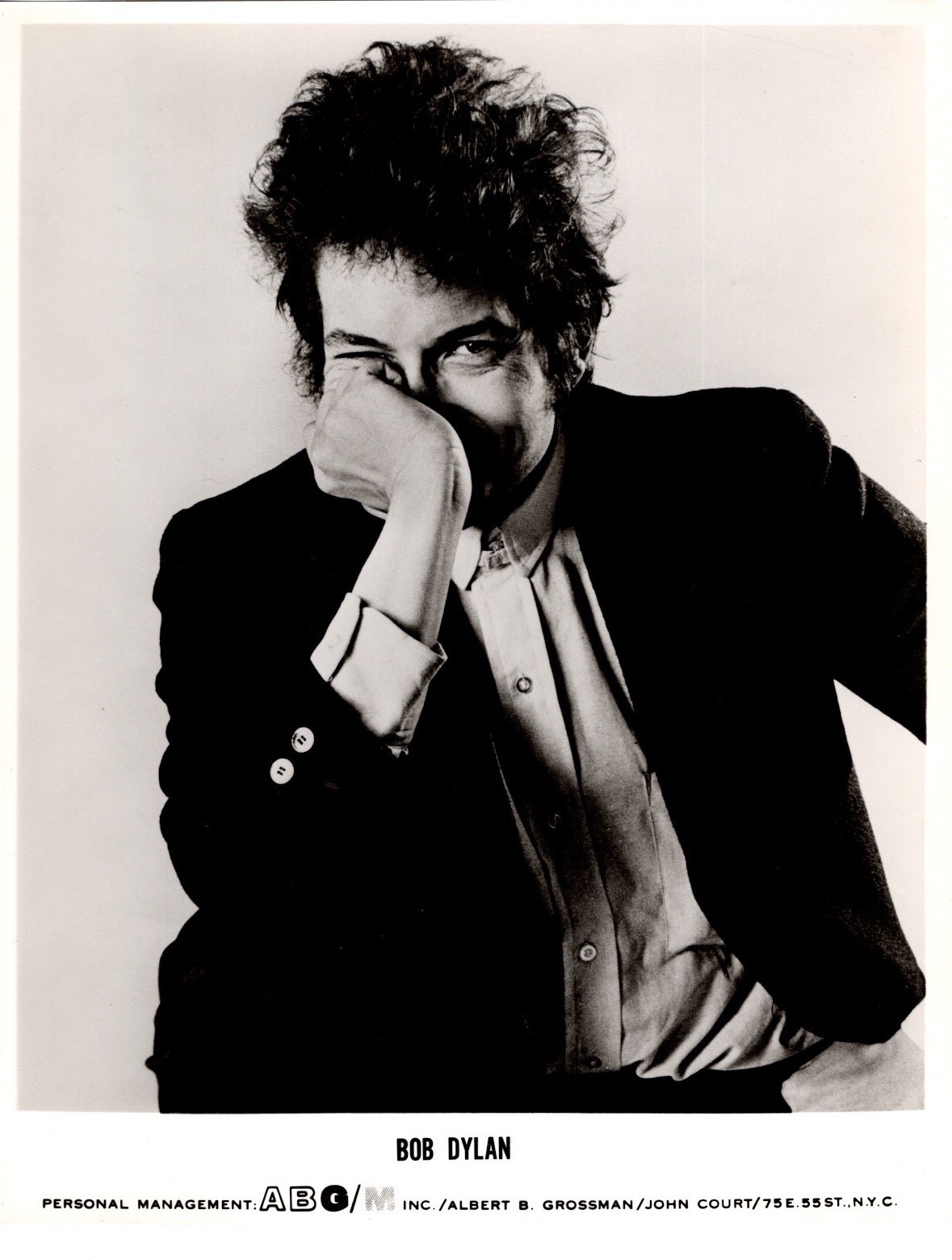
Speed freak. Triumph motorcycle. And speed freak. In shades. Daytime, night time, anytime. Suede. Corduroy. Button down shirts. Striped pants. Boots of Spanish leather. That hair.
Triumph on record. A surrealist and a cynic with added sneer. Beat group intense. Irk the purists. Fender. Electricity. Volume. A cavalcade of words. A trip and a rush, cascading forth. Get set. Get well. Try hard. Get fired. Coded. Cryptic. Crucial. Maggie, fleet foot. Face full o’ black soot. Plants in the bed. Phone tapped. Look out kid! Candles, sandals, vandals, handles.
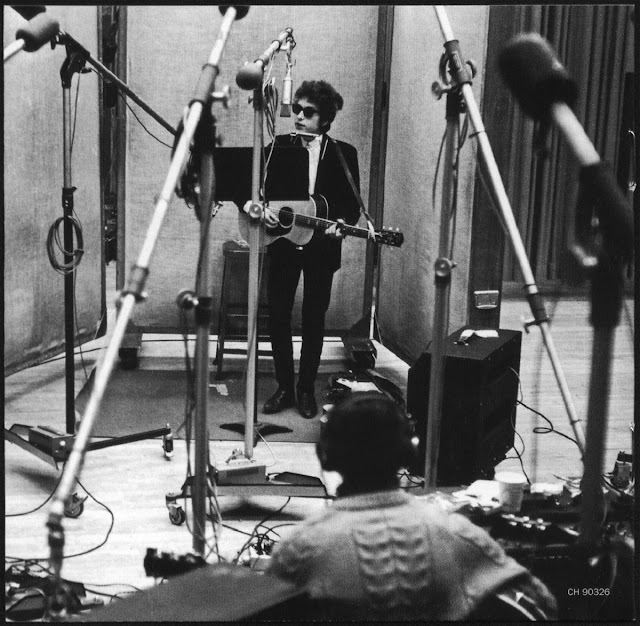
Ol’ Bob has many faces and many aces up his sleeve, but right now, this week, after seeing A Complete Unknown, it’s mid ’60s Bob that’s doin’ it…and doin’ it good. The garage band backing, all thunking bass and rattling snare and white hot, screaming blues licks on Telecaster that ride the coattails of Bob’s scuffed acoustic and sandpapery vocal is possibly the most thrilling sound in rock ‘n roll. Sixty years will pass this year since Bob thwacked us with the insane one-two of Bringing It All Back Home (April) and Highway 61 Revisited (August – 4 months later); a pair of records that most other acts would be happy to hang an entire career on. Don’t look back, instructed Bob around then, but, man, LOOK BACK! Stop and listen to what’s on these records.
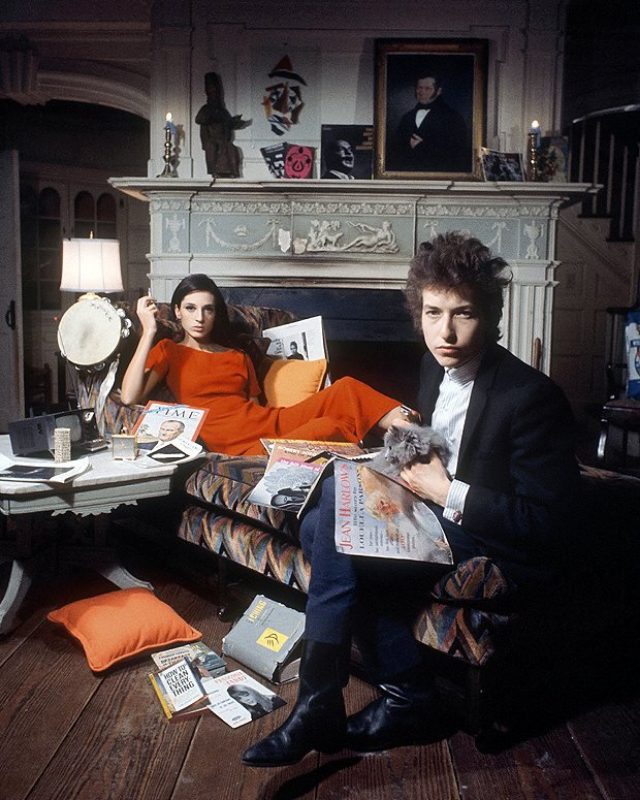
Bringing It All Back Home is my favourite of the two. Gun to my head, it’s probably my favourite Bob album of the lot, tied up as it is in childhood memories and time and place. I now own my dad’s copy, given to him by my mum not long after they met, stolen by me about 20 years later, then handed over after my dad asked me straight out of the blue one day, sometime around 2006, where it was, before it made its way back to me after my dad died. If I count it up, I think I’ve probably had it in my possession more than my dad ever did.
Bob Dylan –Subterranean Homesick Blues Take 3
It’s a record of two distinct sides. Side one is the irk the purists side: Bob’s Chuck Berry by way of Dada schtick, nonsensical and bubble gum and extremely thrilling. Subterranean Homesick Blues’ machine gunned outpouring of alliteration, rhyme and imagery; Maggie’s Farm and its gutterpunk two-step blues; the sneering and caustic head bop that is Outlaw Blues; the unexpected thrill of Bob Dylan’s 115th Dream‘s false start, hearing Dylan’s maniacal laugh as the engineer counts in Take 2… absolutely knocked me sideways as a 15 year old, that did. The Smiths and Lloyd Cole didn’t goof around on their records. Theirs were serious mood pieces. This Dylan guy? He’s off his head. He was funny though…a proper comedian. It still thrills me no less as a 55 year old too. Even the slow songs on side 1 had a backing band. She Belongs To Me‘s delicate electric runs; Love Minus Zero‘s four to the floor tambourine and woody bass.
Side 1 is Dylan’s fuck you to the folk scene and all who gate kept it, but it was the (mainly) acoustic songs on side 2 that pulled supporters like Pete Seeger back from the brink. Mr Tambourine Man, a thread-pulling and unravelling 6 minute masterpiece. Gates Of Eden, Dylan sneering about war and peace, finger pointing long into the night air, his acoustic guitar bashed into submission, his harmonica wheezing to a conclusion. It’s Alright Ma (I’m Only Bleeding), with its descending drop D blues riff and complex, fantastical imagery; Money doesn’t talk, it swears…He not busy being born is busy dying…Even the President of the United States sometimes must have to stand naked. Until fairly recently, Bob was still playing this in his set and, surprise surprise, every one of his audience recognised it immediately. Don’t listen to those lazy reviewers who tell you they only found out what songs Bob played by checking online afterwards. He’s slowed down and kept things fairly standard in setlists in recent times, but it wasn’t that long ago that a night with Bob would include three or four Bringing It All Back Home gems in his set. And a couple of Highway 61 Revisited highlights. And a trio of Blonde On Blonde essentials. But stop. We’re ahead of ourselves.
Bringing It All Back Home ends, perfectly, on It’s All Over Now, Baby Blue. Just Bob, his harmonica and a gooseberrying bass guitar. It’s a song of sentiment, of a chapter closing, of the need to look to the future. The perfect metaphor, in other words, for Dylan’s continual forward propulsion, the lightning rod and conduit for songs – long, cerebral, tied in imagery and intelligence – that he couldn’t get out from inside his head quickly enough.
Two albums and one world tour in ’65. A world tour and a double album in ’66. He not busy being born is busy dying, after all.
I know nothing about Chappell Roan. I doubt I’m slap bang in the middle of her? their? demographic anyway…but I do know the one big song. It was ubiquitous for a bit there and there’s no way you haven’t heard it and fallen for its hooky charm either. Pure pop and catchier than that flu that’s been doing the rounds recently, it hangs its hookline on its spelt out titular refrain. ‘Aitch Oh Tee-Tee Oh Gee Oh-oh, You can take me Hot To Go-oh!’ It was the first great example of spelling in a pop song since Gwen Stefani Hollabacked to tell us that, indeed, that shit was bananas, Bee-Ee-En-Ae-En-Ae-Ess, back in 2025.
It’s nothing new, spelling in songs. Otis and Aretha, of course. And The Kinks. And plenty of others. From Van’s gruff Northern Irish burr wrapping its way around Gloria (“Gee-Ell-Oh-Are-Aye-Ae“) to Patti’s wired and speeding East Village take on it; From Weller’s angry young punk spitting of “Ae-Pee-Oh-Cee-Ae-El-Wy-Pee-Ess-Ee-APOCALYPSE!” at the end of ‘A’ Bomb On Wardour Street to Faith No More’s long-shorted and muscular ‘Be Aggressive! Bee-Ee! Aggressive! Bee-Eee-Ae-Gee-Gee, Are-Ee-Ess-Ess-Eye-Vee-Ee!‘; from Al (then Edwyn) serenading us with ‘Ell-Oh-Vee-Ee Love‘ via little Johnny Thunders’ drawling nod to The Shangri-Las, ‘When I say I’m in love you best believe I’m in love, Ell-Yoo-Vee!” to Hall ‘n Oates’ blue-eyed ‘M-E-T-H-O-D-O-F-L-O-V-E‘, a bit of spelling goes a long way to providing the hook. Hot Chip employed the technique on Over And Over. Len’s Steal My Sunshine includes the line, ‘L-A-T-E-R that week.’ None other than the cryptic and idiosyncratic Mark E Smith sang about a ‘C-R-E-E-P’ when the song demanded it. Even our greatest writers are under the, eh, spell.
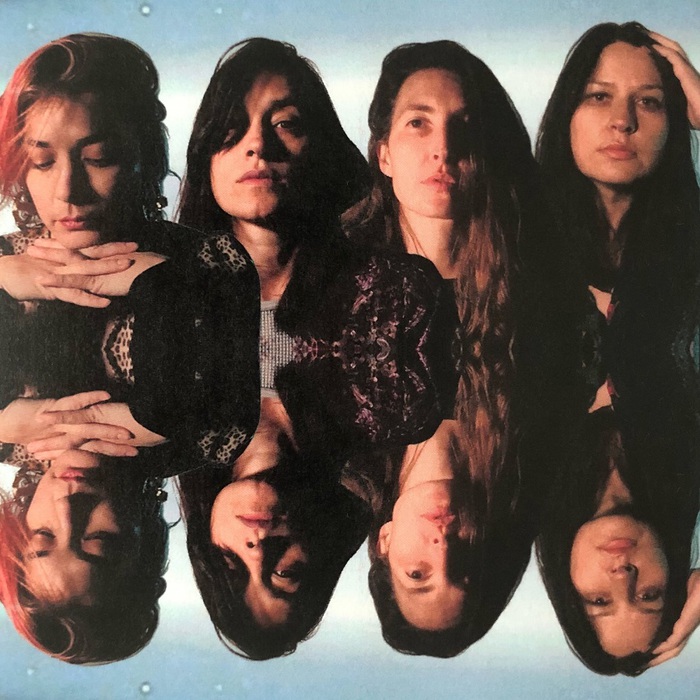
Which brings us to Warpaint.
The oil-on-water, slow dissolve approach they take to their own Billie Holiday is supreme.
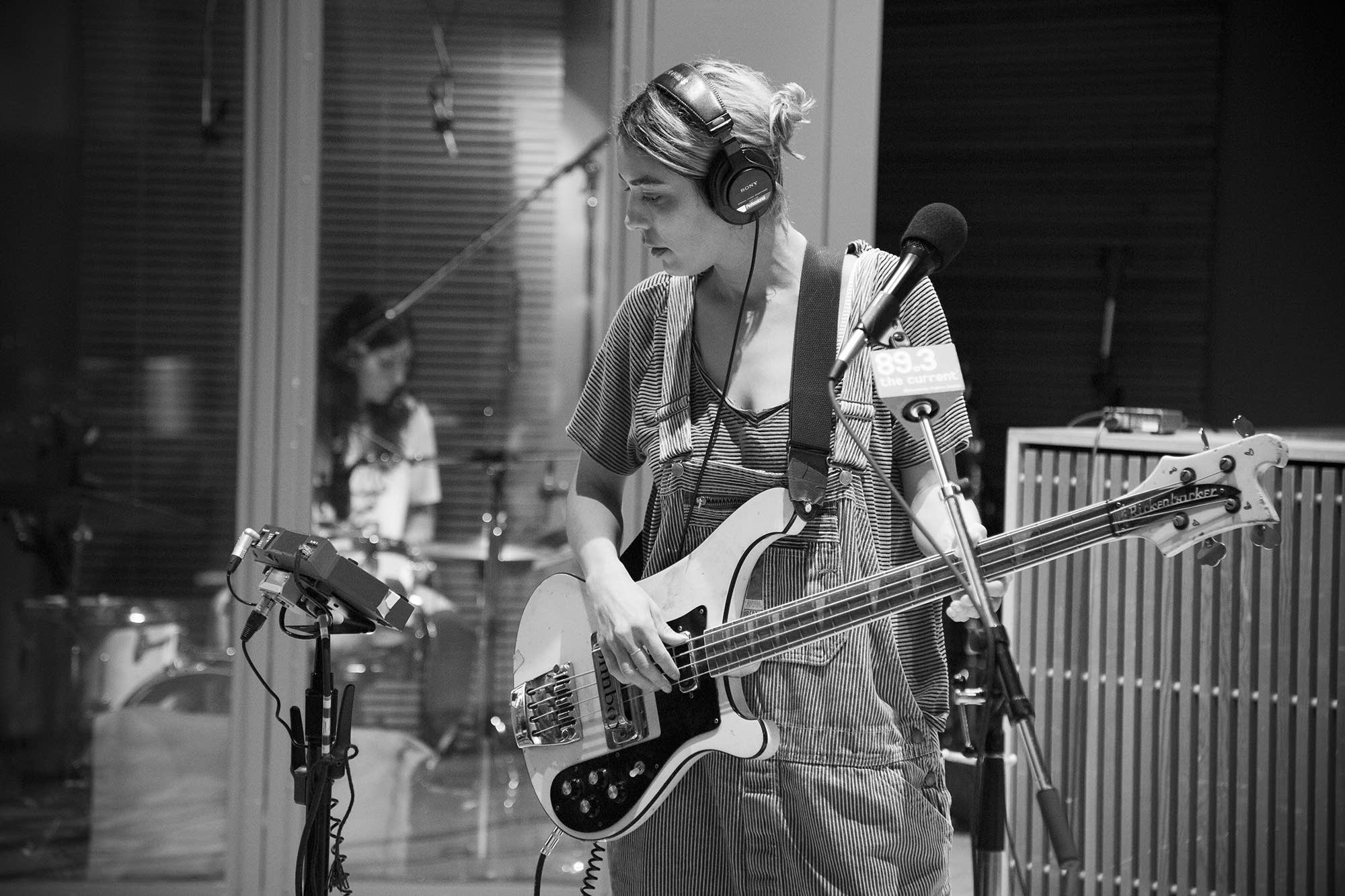
It’s a sparse track. Cleanly picked guitars, some ambient, soft-touch bass, understated keyboards, a gentle snowfall of toms and cymbals, the overlapping vocals stirring the dusky, twilight air around it. That’s the work of a moonlighting John Frusciante, manning the desk and capturing the band exactly as they’d hoped.
When the singing starts on the verses proper, you – as a pop scholar with an A+ in every one of your pop scholarly exams – will have immediately noticed they’re singing the verses to Mary Wells’ My Guy. But whereas Mary’s original is all frothing teenage effervescence, rattling along on excitable handclaps and giddy, upwardly climbing girl group vocals, Warpaint take the opposite approach. Theirs is languid and soporific, breathy and downbeat. Nothing you can say can tear me away from my guy, they exhale, with all the enthusiasm of the downtrodden and disenfranchised. If someone were to tell you this was a thinly disguised plea for help in a domestically abusive situation, you wouldn’t be that surprised. Nothin’ you could do cos I’m stuck like glue to my guy. Jeez.
In comes the refrain again, four voices melded as one, the group inching the song ever forward. Unspooling and unwinding in slo-mo, it stretches for over six sleepy and bleary-eyed minutes, voices drowning in reverb, guitars swimming in chorus and phase, the percussion being tackled with a little more muscle but no less finesse. Disciplined and majestic to the false ending and beyond.
Why Billie Holiday?
Apparently, the lyric was a place holder, the five syllable phrase borrowed from a poster in the band’s rehearsal space and utilised in song until a better set of words was arrived at. Couple that with the appropriation of My Guy and you have the notion of a fledgling band landing on their sound and trying quickly to find their feet. Great record, eh?
I’m sitting at my formica desk. I’m ‘studying’. My red, white and grey zig-zag wallpaper is hurting my eyes. The backwards clock above my portable telly shows no sign of moving forward. In fact, such is my enthusiasm for learning, it might actually really be moving backwards. The physics textbook in front of me remains uncracked. Physics! What the fuck was I thinking? Radio Clyde hisses and spits from my music centre, the wire that’s laughingly referred to as an aerial in the handbook stretched to a drawing pin that holds up the Marilyn skirt-blowing picture that I really should’ve removed by now. If I hold my hand up, the reception improves. I alternate hands as Tiger Tim spins this week’s hot hits.
My ears prick as something magic is squeezed through the static. It’s new but it’s instantly my kinda thing.
It begins with an engine rev of bass and baritone sax; a knee-buckling nod to the ’50s, of doo wop, of freedom and the cult of the teenager. Bomp-bomp-ba-ooh…Bomp-bomp-bah-ooh. The drop in chords. Bomp-bomp-ba-ooh…Bomp-bomp-bah-ooh.
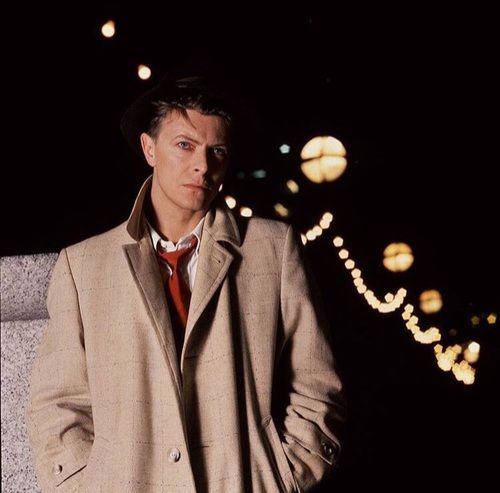
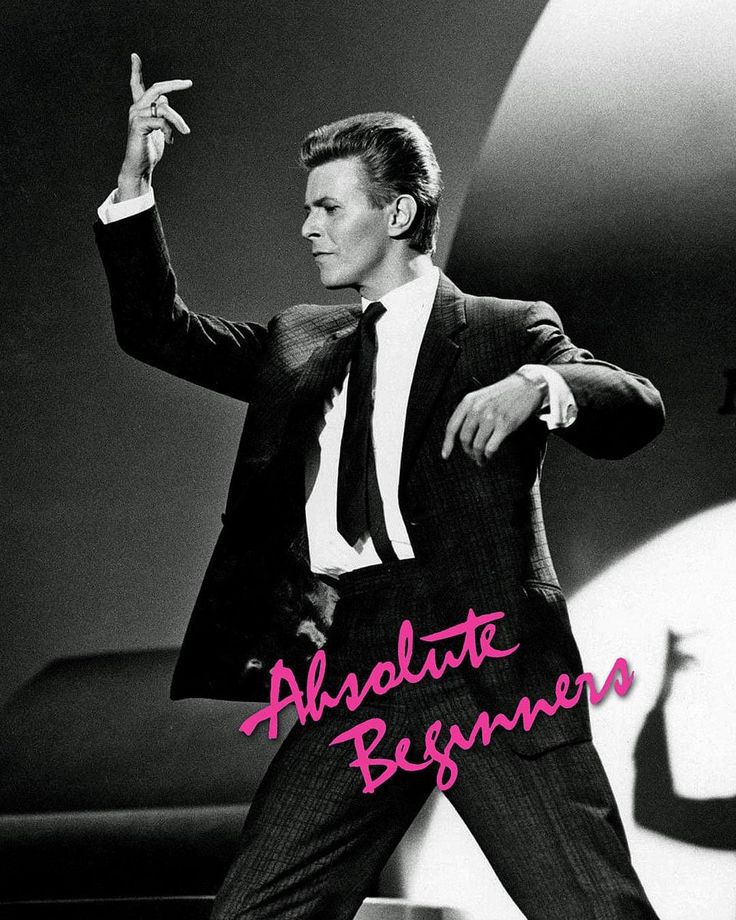
The verse. Understated, but serious. I’ve nothing much to offer. I’ve nothing much to take. A casually frugging, popping bassline under a moody piano chord. Big, Spectorish drums. A scrape of the guitar strings. Funny chords that seem to rise yet fall simultaneously. Augmented? Diminished? I dunno, but who cares. An acoustic guitar doing that cliched hammer on with the pinky as you play a D chord. Absolute beginners, eh? The singer, his voice linear and stately, half-spoken and half to himself. There are voices either side of him. As long as we’re together. The rest can go to hell. One is deep, one is falsetto. As a trio, they’re sensational. I absolutely love you. The key line. Women, men, anyone with half an ounce of emotion in their wilting heart can’t fail to feel it. I’m only 16 and trying to make sense of my world, David, but in an absolute instant I absolutely love you too.
Now the chorus. Soaring into orbit, carried along on thermal winds of melody and hope, star crossed lovers against the world. Fly over mountains…laugh at the oceans…just like the films. It’s absolutely true.
Christ. I wish someone would make me feel like that. Bomp-bomp-ba-ooh.
The second verse has more of the same. The vocals are still measured and steadfast, the musicians still doing their best to keep up with their vocalist’s high standards. Nothing much can happen. Nothing we can’t shake. Steve Nieve’s spindly piano, the high notes jarring and trebly and rattlin’ your bones. Some synth washes from Rick Wakemen, not heard on a Bowie record for a good decade or more and very welcome back. Nieve, threatened perhaps, raises both his game and his talented fingers and dances across the ivories like a fleet footed musical sprite, the most delicate of touches with a classicism rarely heard in popular music. Nieve knows every key on that piano intimately and he coaxes pure melody from every one of them. In lieu of the doo-wop vocals, the sax blows a subtle bomp-bomp-bah-ooh melody as Wakemen’s synths swell towards another chorus. You can feel it, you know it’s coming. But if my love is your love, we’re certain to succeed.
And here it is.
Mountains and heartaches and films and reason and hard times and hard lines. Absolutely true. Aw jeez.
The singer bows out. The group plays on, holding the searing, white-hot chorus. Strings slide atop the melody. A tenor sax blows a jazzy yet sympathetic signature solo. Across his catalogue, Bowie would prove he loved a sax solo and Absolute Beginners is just one of a score or more that get you. Right. Where. It. Matters.
Tiger Tim shouts across the end of it. “David Bowie there!” (Up here in Scotland, Bowie rhymes with TOWIE) “Absolute Beginners! An absolute cracker!”
I absolutely agree. The physics text book remains unopened. I hot foot it to Walker’s and return with the 7″. I play it and play it and play it and play it. My first Bowie record and definitely not my last. It’s still playing the best part of 40 years later. That’s absolutely true.
Plain Or Pan turns 18 this weekend. An adult. Already a veteran of blind-eye pubs and blinding hangovers, it’s time for the blog to move on out, move on up and enrol in a college course that’ll stave off the threat of actual work for the next few years. The world’s your oyster at 18. Plain Or Pan is no different. It’s invincible. It can do whatever it likes. The 18 years’ worth of writing spread across these pages is diary-like, kinda autobiographical and extremely therapeutic in process. It is, as Van Morrison once remarked, too late to stop now. Not that I want to.
I’ve written before about my hometown of Irvine and its characters; the creatives and thinkers and drinkers who, through art and literature and music, put our wee speck of a town on the world map. I’d like to write now about the environment – or more specifically, the planned environment – in which these schemes and dreams were allowed to play out.
Irvine in the early 1970s was like any other wee town. It had shops and green spaces and transport links to bigger places. It was separated by the River Irvine, the areas of the town either side of the river linked by an old arched bridge. Toy shops and pubs and shoe shops and pubs and hardware shops and pubs and men’s and women’s outfitters and pubs dangled their tempting wares to those crossing the bridge from either side of the town. It was, in a world not yet bloated by megastores and Amazon, a busy, vibrant and thriving place to live.
The town had two football teams. West of the river, towards the harbour, was the industrial Fullarton area where Irvine Victoria huffed, puffed, scuffed and occasionally scored. Across the river and located in the residential area of what your true parochial local might call ‘real Irvine’ was the more well-known and successful Irvine Meadow. They had Scottish Cups and a grandstand to prove it. Where you lived and were brought up dictated which team you followed, and that was it set in stone for life. To this day, whenever the Vics and Meadow clash, a healthy partisan crowd of good natured locals is drawn together, the spoils of bragging rights in the pub afterwards the ultimate prize.
When, in 1966 Irvine was designated to be Scotland’s fifth and final New Town, grand plans were drawn up. Eventually published in 1971 as ‘Irvine New Town Plan’, the plans heralded in a brave new futuristic town of modernism, opportunity and progression. Irvine was an old industrial town. It was ripe for redevelopment and rehousing. It would be a family-focused satellite town for Glasgow, offering clean air and the seaside to any Glaswegians keen (or forced through regeneration schemes) to uproot and start anew. Brand new areas would be developed for housing, modern functional living set amidst landscaped estates. Castlepark. Bourteehill. Broomlands. Pennyburn. You’ve seen Gregory’s Girl? Filmed in the New Town of Cumbernauld, that’s a fair signifier of what these areas would come to look like once built and populated.
Within half a decade, the old bridge and its neighbouring commerce had been knocked down and swept aside, replaced by a state-of-the-art shopping centre spanning the River Irvine. The planners called it the Rivergate Centre, but to any Irvinite, it’ll be forever referred to as ‘The Mall’ (to rhyme with ‘pal’, rather than ‘ball’, Americanisms not yet being a thing.) The Mall was to be the focal point of the town, stretching from the old Irvine Cross all the way to the scrub of grassland near the beach that would soon be landscaped and adorned with a boating pond, a pitch and putt course and a ‘trim track’ and rebranded as The Beach Park. But we’re getting ahead of ourselves here.
At the top end of the Mall, at the old town centre end, was a sub level pub (The Argyle) and below that again, in the guts of the Mall, a disco. Amanda’s was like any other provincial discotheque of the time. It played chart music only, it tolerated underagers and the air was thick with Brut and Old Spice, Anais Anais and Charlie, sexual tension and the never far away threat of a punch on the nose. Until you found your own tribe and a place where your own sort of music was not only tolerated but blasted at ear-splitting volume (hello, The Attic), Amanda’s was a necessary rite of passage. Once, when our band Sunday Drivers was playing one of Amanda’s Sunday afternoon live band slots, I shamelessly pilfered a white label 12” of Electronic’s Getting Away With It from the space laughingly referred to as a dressing room. “They’re never gonnae play this anyway,” came my reasoned argument for its liberation. I still play it to this day. That wee 12” got lucky, I tell you.
Forty or fifty shop lengths away at the other end of the Mall was its centrepiece. (I know it was this many shops away because I worked for several years in Our Price and we were number 25 and midway down the Mall.) Down there, where out of town shoppers gained access to the multi-story car park, a huge pair of rotating water wheels were placed outside Boots the Chemist, the first occupants of the Mall. Boots got in there quick. Phase 1 of the Mall’s development saw to it that this would be the prime location. On the corner and across from the big water feature was to be the epicentre from where the Mall’s intended future expansions would converge and spread; Phase 2 promised more undercover shops all the way to the train station, where you might catch a handy monorail to the beach, with its theme park, ski slope and gigantic leisure centre.
At some point, the water wheels stopped turning. Then they were taken away altogether. A metaphor for a stalled idea, finances and politics and what not decreed that there’d be no Phase 2 of development. Or, at least, there was a very reduced version of Phase 2. The Beach Park became a thing, a place to go and run and golf and boat, maybe even fly a kite. The leisure centre, the famous and world-renowned Magnum arrived. You’d get wet though, walking there, or going for a train. There would be no covered walk to the station. Ski slope? Forget about it, Klaus. Boots is still there today, at the arse end of a Mall that promised so much to so many.
This slideshow requires JavaScript.
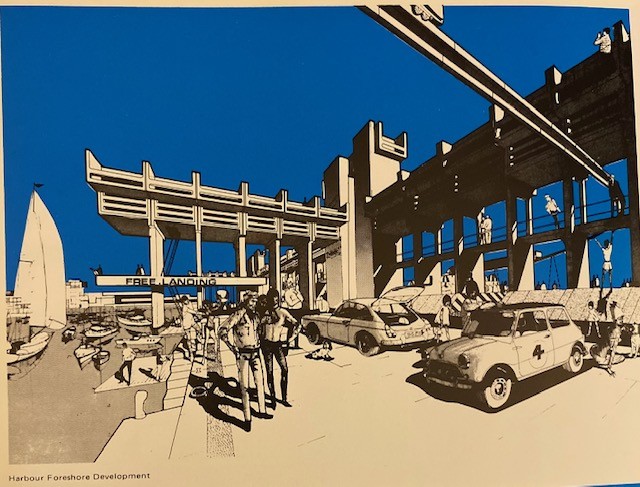
I first saw the Irvine New Town Plan lying around at home at some point in the late ’70s. I remember it lying on the dining table beside a pile of buff coloured folders from my dad’s work. My dad was a surveyor, so it makes perfect sense that he’d be interested in this plan – an actual hard back book, with groovy blue and green lines on its cover (blue sky, blue water, ample green spaces – psychology, innit?) and terrific architectural plans inside. In the last few years, and increasingly so since my dad died, I’d become a wee bit obsessed with finding the book. It’s very likely still in my mum’s house somewhere, but no amount of raking at the back of cupboards has uncovered it. Finding teasing samples of it online only increased my obsession, to the point where I set up an eBay notification.
And guess what!
The images you see here are all taken from the book. A month or so ago, an architect was selling off a load of books and the Irvine book happened to be amongst his things for sale. Up it popped in my notifications and, with a hefty thud, in it dropped through my letter box.
It’s a portal to a time when anything seemed possible. In print, the future Irvine looks sensational, full of hope and promise and desirability. Gone is the black and white industry of old. In is a Mediterranean bright and white town of the future, right here, new and now. The town planners reckoned on the town’s population quadrupling in size to 120,000 by the mid ’80s. Alongside our showcase Mall and leisure centre – the biggest in Europe at the time of opening – there’d be a proper transport infrastructure, hotels to house the tourists, a boating marina, myriad leisure pursuits, even a University out in the green fields beyond Perceton. Who wouldn’t want to live in a groovy, fashionable place like this?
None of that arrived, of course. You can finger point in all the right directions, but it’s a sad fact of life, as this 18-year old is beginning to learn, that economics will always win out over ambition.
Despite this, Irvine was a fine place to grow up. Great, even, at times. Don’t let anyone persuade you differently. Maybe, with its massive Asda and massive Tesco and massive Sainsbury’s and empty town centre with charity shops and vacant units and never ending variety of fast food outlets, it still is for some. Not so long ago though, we had cinemas. We had world-famous touring bands rolling into town every other week. We had youth organisations and sports teams, decent shops, decent restaurants and decent pubs, places to cycle and fish and lark around in. But we also had unemployment and neglect, shutters pulled down and rusted tight forever, a metal and steel curtain drawn in on a town full of decent people and lofty ambition.
Here’s The Jam – just one of many world-famous bands who played Irvine – with, given the subject matter of this article, a proper, eh, Gift of a track; steel drums, aural sunshine and a strange, helium-strangulated Weller vocal. Town Called Malice this ain’t.
The Jam – The Planner’s Dream Goes Wrong
Billy Connolly – one of those megastars who appeared in Irvine more than once – makes that joke about Partick – “‘or Partick nil,’ as they’re known in England.” Many people, thanks to The Proclaimers, know of Irvine as “Irvine no more.” When the Reid brothers sang in ‘Letter from America‘ of Scotland’s industrial decline and our population’s emigration to foreign lands of opportunity, they were putting Irvine on the map for all the wrong reasons.
Irvine no more, Craig ‘n Charlie? Irvine, what could’ve been, I’d counter.




 Plain Or Pan