Get This!

Even The Odd One Out Is In With A Shout

It seems the Trashcan Sinatras will gatecrash the UK top Top 10 Album Chart at the end of this week. Their debut album Cake has been remastered and re-released by Last Night From Glasgow and, 33 years on from its original release on Go! Discs (peak chart placing number 74), it looks like landing at number 10. This decrees the Trashcans’ record to be not quite as popular as those by the Rolling Stones or Elton John, but marginally more so than a handful of Taylor Swift reissues. While the charts maybe don’t mean as much to anyone anymore, the group, you can imagine, is delighted.

Personally, I’m thrilled for them. Someone cleverer than I could probably make something of the serendipity of a 33-year old record taking 33 years to chart. That must be some sort of record (no pun intended), eh?

Back when the reissue was being put together it was suggested that I might write the liner notes to accompany the record’s release. A major honour and thrill, I got stuck right in about it. As I said here a few weeks ago, they were all ready to go, along with a new gatefold sleeve, a lyric sheet, unpublished photos…the full works when, at the final hurdle, the band – wanting to remain enigmatic and mysterious – decided to revert to the record’s original packaging; no lyrics, blurred photos, no liner notes.

However, in an unexpected twist, the Japanese label got in touch. Such is the Japanese way with care and attention and detail, they wanted to use not only my Cake notes on the inner sleeve of the record, but also a translated explanation of what some of the lyrics and idioms on the debut single mean. Which was nice. I got stuck right into that too.

The Japanese market for LPs is extremely healthy and, as you know, it’s not uncommon at all for releases there to become collectible to fans worldwide on account of an extra track or two or other such addendum – liner notes, perhaps – to enhance the package. The Japanese Cake comes replete with exactly that.
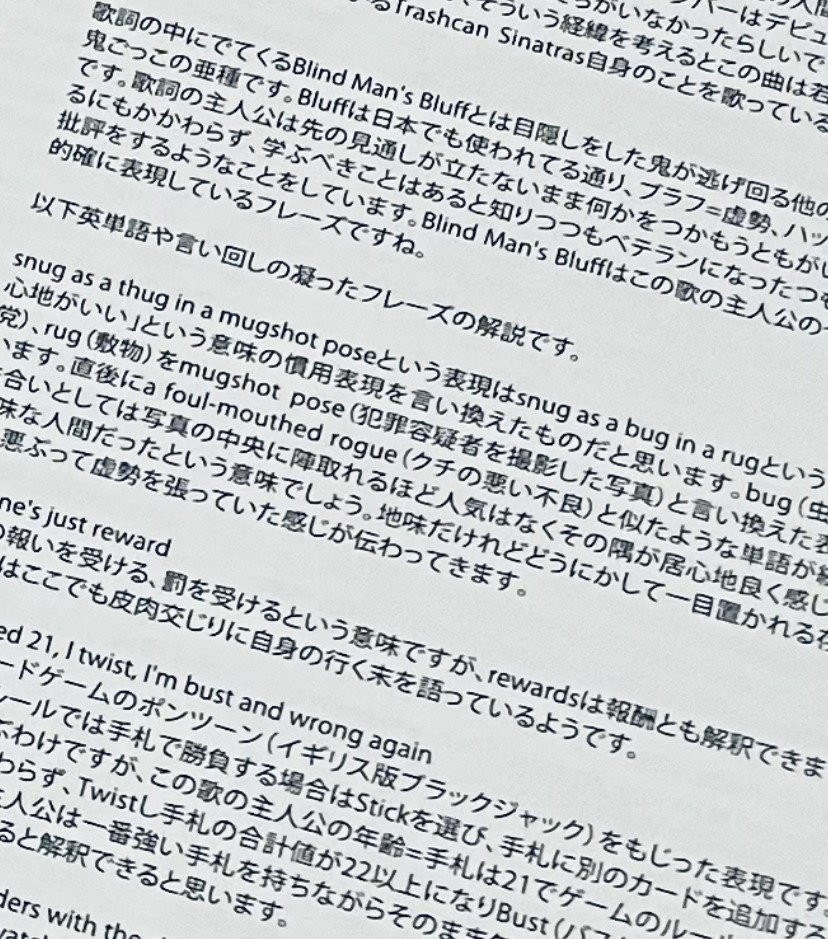
I’m as thrilled about all of this as the group is at their chart placing, make no mistake. For as long as I can remember, I’ve been desperately keen to get my name on a record. My days of dreaming of windmilling through an encore at the Barrowlands have all but evaporated, but this writing gig has finally allowed me the opportunity of achieving this. On such a special album too. I wonder if the record will go Top 10 in Japan?

Trashcan Sinatras – Even The Odd

If the Trashcans are new to you, Even The Odd might make a good introduction; whimisical, melody-rich and coated in a fine shimmer of acoustic and electric guitars, it features skifflish, brushed drums, tasteful feedback and a noisy and reverby breakdown with some era-defining shouty nonsense before it gathers itself together again. Frank’s voice is young-sounding to the point of being helium-powered, perhaps a reason why it’s not a song that stuck long in the Trashcans’ live set-lists. Great track and great production though.

If you want to help the Trashcans shrug off the threat of Swift and overtake Jagger and Elton to make a late push for the top 5, you can do your bit by buying the album before Thursday. Best place to get it would be via Last Night From Glasgow. A host of versions are available from them.

And finally, a message to anyone buying and listening to Cake for the first time: Wait until you hear the next album…
Get This!, Live!, Sampled

Hidden In The Back Seat Of My Head

That triptyich of ’90s solo albums which spawned the rebirth of Paul Weller deserves to be looked at again. 1992’s self-titled debut was the result of the artist being given free reign to reinvent himself, with no great expectations from a record company (Go! Discs) simply keen to offer one of our greatest songwriters the platform on which to start afresh. By 1995’s Stanley Road, Weller had entered his third imperial phase; once again a regular botherer of the charts and the elder statesmen to whom the leading lights of the day looked for validation and support. The record in the middle, 1993’s Wild Wood, is perhaps the most interesting – and best – of those three releases.

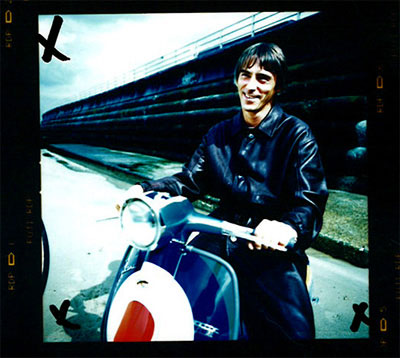
Having ‘done’ inner city angry young man and broadminded European mod, Weller looked to the English countryside for inspiration. Still unsure of who his ’90s audience was, the singer decamped to the Manor, a residential studio in the leafy Home Counties and, surrounded by trustworthy people and a handful of his favourite records, holed up to hang out, play, write and record the tracks that would become the Wild Wood album. The inner sleeve photos on the record suggest the perfect scenario for making a classic record; family and kids on the lawn, footballs, a grinning Weller astride a scooter, a home-from-home environment where inspiration flourished.

Much has been made of Weller’s listening habits during the making of the album, and the acoustic influence of Traffic and Nick Drake has oft been quoted as a source of influence, but I’d consider Wild Wood to be Weller’s Neil Young album. Loud in-the-mix acoustics ring throughout the record, attacked by Weller’s uncompromised strumming and finger picking. He might be playing a Martin, but he’s attacking it with all the fervour he normally reserves for his Casino. This is apparent on Foot Of The Mountain, its minor chord balladry giving way to an ebbing and flowing, sprawling and ragged electric outro, the rest of the band riding his coat tails for dear life. The Young influence is there too in Country‘s close-miked pastoral picking and whispered vocal. ‘Where only love can heal your heart,’ he sings, one eyebrow arched in a knowing nod to whiny old Neil as a woozy Mellotron adds a Fabbish, late sixties hue to the mix.

Wild Wood is an album that, augmented by subtle Hammond, delicate woodwind and thunking great gospel piano, showcases the best of Paul Weller. It’s there in the ferocious riffing of Sunflower and The Weaver‘s thrilling hammer-ons, the pastoral campfire soft shoe shuffle and two note dubby bass of the title track (it’s no wonder Portishead highlighted it as something to twist and turn and send into orbit), to the handclapping and roof-raising Can You Heal Us (Holy Man) and the jazz inflections of album closer Moon On Your Pyjamas.

My absolute favourite from the era though isn’t actually on the initial album release.

Paul WellerHung Up

As is his forever forward-thinking way, Weller had barely finished the record when he embarked upon another lap of writing. Too late for the album, Hung Up was released as a stand alone single. All the best bands, as you well know, release magnificent stand alone singles and Hung Up is undoubtedly Paul Weller’s addition to that list (even if, at some point, it was clunkily tacked on at the end of the record when Weller’s popularity began to soar.) It’s a fantastic single, Weller self-assured and riding in on a great chord sequence (C – Fm – Am – Fmaj7) before the band joins him on a chugging, descending Beatlesy progression, crisply distorted and fluidly played. The pace, the playing; perfection.

It’s the song’s bridge though that elevates the track from merely great to simply outstanding. It’s a real cracker, all loose piano and finger-squeezed guitar couplets – pure Small Faces mod-gospel with the vamping ghost of a PP Arnold-alike oozing in on the second line, her sky-surfing vocal lifting the track into orbit. Then we’re into the guitar solo. No fancy pants pedal boards here, it’s simply vintage guitar into vintage amp and the strangulation of a nimbly-rifled solo that’s halfway between Marriot (Steve) and May (Brian – really). And there’s still time for Steve White – there’s always time for Steve White – Wild Wood‘s secret, unsung hero to rattle seven shades of Gene Krupa from his kit with the mother of all drum fills, before it all ends with the singer and his acoustic guitar once again, wrung out, hung out and Hung Up in under three thrilling minutes.

*Bonus tracks!

Paul Weller Hung Up (Live at the BBC)

Lovely wee bit of studio chatter on this version.

Paul WellerWild Wood (Portishead Remix)

Pistol crack snare, clacking, clipped guitar, murky dub. The drunk wasp guitar riff is a beauty. Weller had some great remixes around this period and this is one of the best. Never ever outstays its welcome.


Get This!, Gone but not forgotten

Not Dodgy

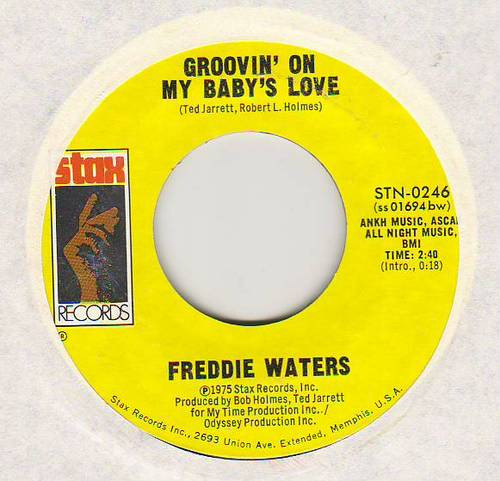
I spent some time in the company of Dodgy’s Nigel Clark at the end of last week. He was up doing a one-man show – all the Dodgy hits, a few of his own solo songs, a smattering of carefully-chosen covers (Tom Waits, Frankie Valli, a spontaneous run-through of the new Beatles single), all interspersed with off-kilter chat and rueful observations on life in 21st century Britain. He’s a massive soul music fan – that would explain the cover of ‘The Night‘ that he ended with, and the various soul covers that constitute those early Dodgy b-sides – and thrillingly, he played a version of a fantastic Stax track from 1975 that was totally new to me. The song found a home in my ear and, after many YouTube plays and before I’d gone to bed in the wee hours of Saturday morning, I’d found a copy of the 7″ online and bought it. I think you’ll like it…

Freddie WatersGroovin’ On My Baby’s Love

Tinkling Fender Rhodes, descending chords playing against up-sweeping strings, a slow ‘n steady groove of snare ‘n kick drum, a cooing female backing vocalist going against the grain of Waters’ gravelly soul man voice in the chorus…there’s no chicken-scratch guitar or tasteful Cropper-esque blue notes, nor nary a whiff of honeyed brass, yet it has all the necessary ingredients, as Ray Charles one said, in a recipe for soul.

The bridge –‘some people worry ’bout simple things‘ – is pure grits ‘n gravy Memphis soul. In the hands of an Otis Redding or a William Bell or a, yes! Al Green, Groovin’ On My Baby’s Love might’ve bothered the pop charts. And maybe it did, but apparently, very little has been written about either Freddie Waters or Groovin’ On My Baby’s Love so I don’t know about that. I’m certain some switched-on soul brother or sister here will keep me right though. Typically, the track alone should have both singer and song held in far higher regard than the world seems to afford them.

There will, of course, be hundreds of songs like this, floating out in the ether, waiting for the record collector’s butterfly net to catch them as they flutter past. By way of payment, I sent a suitably gobsmacked Nigel a link to Darondo‘s Didn’t I. Featured here a few years back on the recommendation of Gerry Love – another soul-loving beat group employee, as it goes – it deserves another shining of the Plain Or Pan spotlight.

DarondoDidn’t I

Obscure-ish mid ’70s soul recommendations most welcome. Add them in the comments below.

New! Now!

Bathe In This

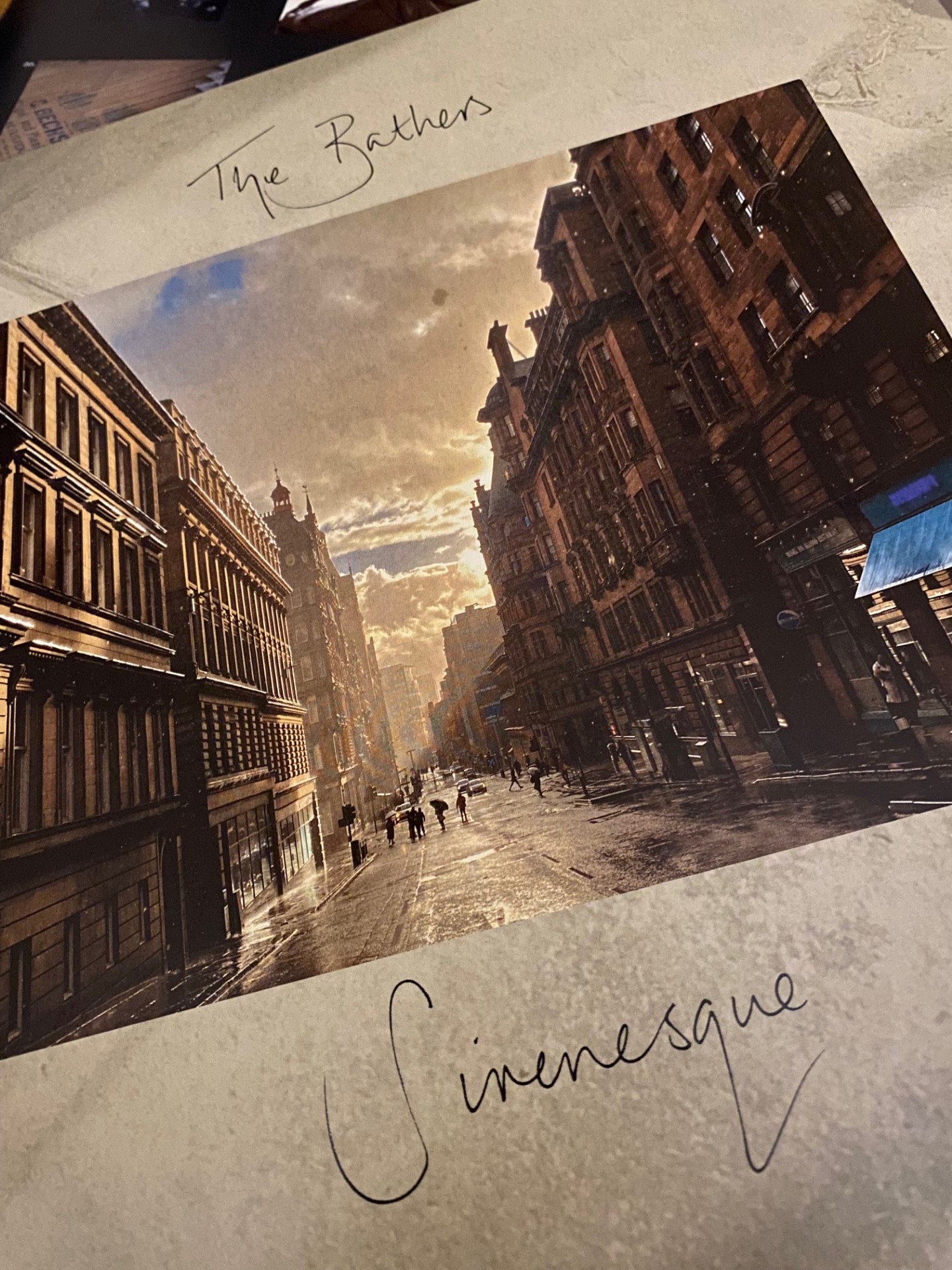
The Bathers, Chris Thomson’s vehicle of unravelling melodies and swooning arrangements, moves at such a stately, tectonic pace that those other west coast hummers and hawers the Blue Nile and the Trashcan Sinatras might consider themselves in Allan Wells territory by comparison. Like a Michelin star chef marinating his secret ingredients overnight for extra devastating effect, Chris has waited 20 years and more between new studio releases before letting Sirenesque out and into the ears of anyone still tuned to his particular station. Entire bands, entire musical careers, at least 72 UK Prime Ministers at the last count, have come and gone since then. And now Thomson, with his ancient, withered, weathered, leathery vocal has crept out of the shadows bringing with him a heavy dose of pathos and regret to remind us what we’d almost forgotten about. Let it be said: Sirenesque is the finest, most autumnal – and most adult – listen you’ll have this year

The Bathers Lost Bravado

From concept to realisation, it’s a grand album in every sense of the word; magnificent…awe-inspiring…important…all of this. Concert pianos, delicate and gossamer and bassy and rich, their notes captured suspended in solid air, form the basis of the record. From here, all manner of instrumentation pours forth. Clean twanging electric slide guitar, gently plucked nylon-stringed acoustics and fantasy land harps, subtle muted brass that might well be the ghostly breath of Chet Baker himself, chirping birdsong, the sweeping weep of the Scottish Session Orchestra’s strings, the Prague Philharmonic’s chamber arrangements, filmic and fragile and Tindersticks-tender, a coming-and-going, eerie and vampish female vocalist pitched halfway between wonky Disney and Mercury Rev’s Deserter’s Songs… it’s an album packed with ideas and invention and, crucially, control and discipline. There’s not a wasted couplet or jarring note across the record’s dozen tracks. It might’ve taken 20 years to get here, but every nuance of the record’s structure has been expertly thought out.

At its core is Chris Thomson, his close-miked ethereal whisper vocalising a very particular Glasgow; the Glasgow of high corniced ceilings and Kelvingrove and University Avenue and understated Harris Tweed and Mother India and Royal Exchange Square and croissants and coffee and 20-year old malts in the Old Toll Bar. And the words are sung in a voice of the greats, of Scott Walker, of Tom Waits, of David Bowie…very Bowie, as I’ve come to consider it. That thought struck me midway through side 2’s Welcome To Bellevue and the opening phrasing on the track that follows (She Rose Through The Isles) and has stayed with me through every subsequent spin ever since then.

I now can’t not listen to the record without filtering it through Bowie ears. It’s all there in the considered arrangements and unexpected phrasings and the time-stopping production of it all. Sirenesque is almost a companion piece to Blackstar. Seriously. And while that record’s underlying theme of death couldn’t be further from Sirenesque‘s observations on life, this new record hits almost as hard, unravelling more of its secrets and majesty with each subsequent play. In this live fast, move on, next! next! next! world that we live in, you could do worse than downpace to the thrum of Sirenesque. It’s great – Bowie great. The best kind of great.

Dive in: Last Night From Glasgow     Bandcamp

Get This!

Knocks Opportunity #1

I was contacted recently by the folk responsible for the Japanese version of the remastered reissue of Cake, the Trashcan Sinatras‘ first album. They wanted to know if I could provide an accurate translation of the meaning behind the lyrics to their debut single, Obscurity Knocks.

What, for example, does ‘I’ve turned 21, I’ve twist, I’m bust and wrong again,’ mean? Witty and pun-filled, articulate and alliterative, Obscurity Knocks is a perfect distillation of all that’s good about the Trashcans’ wordplay, but sung in a rich Ayrshire brogue, many of its metaphorical subtleties were lost to the ether.

The Trashcans (wanting to appear enigmatic and mysterious, to Go! Discs continual exasperation) kept most of their words tightly under wraps back then (although they did include Obscurity Knocks‘ lyrics on the rear of the single’s UK cover) and, in the absence of printing them on Cake‘s inner sleeve like other bands might have done, it was left to fans – and often foreign fans at that – to scribble them down as heard and offer their best versions in the rudimentary chat rooms of the nascent world wide web. Gen, my new Japanese pal, has a grasp of English that truly puts my pidgin Japanese to shame and while his understanding of the lyric was fairly accurate, I offered to go directly to the band for an official set of lyrics. A couple of messages later, I had them to hand and Gen in Japan soon had what he needed.

Gen then suggested I write something for the reissue’s sleevenotes – a Plain Or Pan-style article on Obscurity Knocks itself. Now, while that was instantly appealing – and something I immediately set to work on – I suggested going one better. I’d actually written sleevenotes for the brand new UK reissue of the album. They were ready to go, along with a new gatefold sleeve, a lyric sheet, unpublished photos, the full works when, at the final hurdle, the band decided to revert to the record’s original packaging; no lyrics, blurred photos, no sleevenotes. Enigmatic and mysterious, remember?

All of this meant that I had a set of sleevenotes without a home. Would the Japanese label like to use them? After the go-ahead from the TCS themselves, the sleevenotes found a new home in the far east. The start of this week was spent explaining some of the idioms and turns of phrase that Gen had trouble putting into pure Japanese – ‘Muscled their instruments into the mix‘, ‘A welcoming world of non-competitive leg-ups‘, ‘Baw-deep in melody,‘ (I never wrote that last one, but you get the idea) –  and there now is, apparently, a set of sleevenotes written by my own fine hand and translated beautifully and lovingly by Gen into Japanese. I really can’t wait to see what they look like.

This now means that I am left with an article on the giddy rush of Obscurity Knocks. Not one to waste things, it forms the rest of this post beyond the track itself below…

Trashcan SinatrasObscurity Knocks

Thoughts on ‘Obscurity Knocks

It’s February 1990. The Trash Can Sinatras gatecrash a smattering of small, switched-on corners of the world with Obscurity Knocks, a bright ‘n breezy strumathon of major and minor 7ths that skirls and skelps and flies straight outta the traps like life itself depends on it – which it very much does. Obscurity Knocks might well be the band’s debut single, yet the Trashcans are already world-weary and wary of a music business that doesn’t quite fit their aesthetic. ‘I like your poetry but I hate your poems,’ they spit, a reference to the many rejections they had before Go! Discs came to their rescue and made them Irvine’s Most Likely To. ‘I’ve turned 21, I’ve twist, I’m bust and wrong again,’ they lament, the poker game a metaphor for their dealt hand in a life already decidedly bleak. ‘The calendar’s cluttered with days that are numbered,’ they complain, an existential crisis poetically stated in alliteration and pun. This band is something special, those words suggest, something articulate and funny and literate. Not since, oh, The Smiths maybe, has such a package come ready-made for the more discerning listener.

It helps too that Obscurity Knocks comes gift-wrapped in the greatest rush of guitars this side of The Clash and The Beatles, not in sound, clearly, but in total attitude and self-belief. That spring-fresh, hip-slung electric guitar and dusted-to-the-knuckles rattling acoustic fuse together perfectly like spit ‘n polished chrome to create a sound that can mellow a decent malt at five paces. A mesh of finger-twisting riffage at breakneck pace, they’re the springboard from which the song’s melody leaps and delights. That lightning-fast solo that pops up midway through? It brings to mind African high line and Roddy Frame and Richard Thompson and maybe even an unexpected hint of Octopus’s Garden, but it’s all over before you’ve even realised it.

Add in the tub-thumping glam stomp of a chorus, the call and response backing vocals, the drop out around the ‘Ba ba bleary eyes’ line, the zinging chords that accompany the final and decisive ‘but I hate your poems.’ Oh man! As far as stall-setting opening statements go, few bands have done better.

Some naysayers might point to Obscurity Knocks’ punning title and suggest it was a prescient fortune telling of what could have followed, but if you’re reading this, you’ll know that the Trashcan Sinatras (just the two words these days) are still very much in the business of writing and recording songs that foam to the brim with inventive guitar lines and clever wordplay. Knock on, Trashcans. Knock on.

Cake ‘n beer, Shabby Road 1991