Cover Versions, Hard-to-find, Sampled

Cavernous

Housed in a sleeve that suggests free movement, fluidity and motion; the gentle, undulating swirls, the band name written on two contrasting axes, Liquid Liquid‘s Optimo EP is a product of New York’s imperial post-punk phase, a fertile, ‘anything goes’ period that encouraged – demanded, even – individualism and originality. For extra homework, you might want to check out ESG, The Contortions or Bush Tetras. For now though, find your feet with Liquid Liquid.

With its pots ‘n pans poly tempo, the lead track Optimo borrows the feel of its window-rattling rhythm from Booker T’s Soul Limbo, before firing off in brave new directions; jittery, staccato lead vocals, bass-as-lead-instument, the piston pattern of steaming hi-hats, the sum of its mish-mash of musical styles old and yet to come making something that’s altogether inherently brand new. It’s no coincidence that the multi-genre embracing ’90s club night at Glasgow’s Sub Club was named after the track.

Liquid LiquidOptimo

The EP is most interesting and celebrated, perhaps, for the track Cavern. It’s the bass line, obviously, that pricks the ears. It leaps, flying off the record to skelp you round the chops with a ‘wherehaveyouheardmebefore,eh?‘ smack of familiarity. A chrome-covered aerodynamic pulse, its cave-like sound, moving-ever forward and flowing was, for all I know, an influence on both the band’s name and their best-known track. It was certainly an influence on hip-hop, that bassline, although more of that later.

Liquid LiquidCavern *

The drums, shuffling, sparse and fat-free, showed that the most powerful music doesn’t always need an earthquake of percussion to propel it forwards. There’s some lovely shaker action all the way through, keeping it less rock and just on the right side of funky. I’d imagine Reni of the Stone Roses would enjoy playing along to this. The vocals, sparse and infrequent, almost an afterthought to the groove, throw up little melodic phrases and half-lines that, funny this!, were also an influence on the hip-hop community. Indeed, if you can’t hear the recognisable melodies and key words (and musical interludes and tempo and general vibe) that form the vocal for Grandmaster Flash‘s White Lines, where have you been all this time?

Yes, not content with copying – not sampling – the bassline, Flash took a liberal dose of the vocal’s style and phrasing and – ooh-whu-ite – created a version of Crystal that was far more reaching than anyone could ever have anticipated.

Initially, Liquid Liquid were flattered. Hearing White Lines adopt their bassline (and vocal inflections…and melodic interludes…) and have it boom from the subway-shocking soundsytems in Manhattan’s clubs – higher baby! – hearing their vocals aped and added to – higher baby!! – hearing their track get an epoch-defining makeover, replete with a boxfresh rap and more hooks than an Ali 15-rounder – higher baby!!! – was quite the thrill, until – don’t ever come down! – the thorny issue of copyright and plagiarism reared its dollar-happy head. Slip in and out of phenomena, indeed.

Grandmaster FlashWhite Lines

There’s only ever one winner in this type of fight, and it tends not to be the creators who benefit, Both Liquid Liquid and Sugarhill Records, the label who’d issued White Lines, were ordered to pay legal costs that ultimately led to both parties winding down, citing lack of funds as the reason.

Full Time from the City of New York:

Finance 2 – 0 Culture


* there are two versions of Cavern on this one sound file. I’ve no idea how I did this or how to fix it. So enjoy Cavern Cavern by Liquid Liquid Liquid Liquid.
Football

Outside Looking In

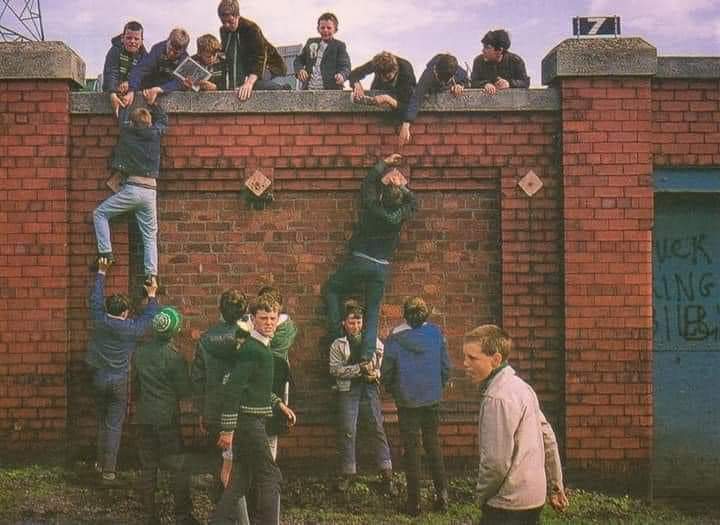
North of Hadrian’s Wall we’re looking on enviously as another World Cup without Scotland gets underway. It’s a common occurrence these days to find the Scots tiptoed on wooden crates, peering over metaphorical stadium walls and into the machinations of a glamourous tournament that we find ourselves excluded from. Not even the sainted Steve Clarke couldn’t get us there, his team choking in the Hampden sunshine against a Ukrainian team that the rest of the world was delighted to see win. Even the Welsh are there this time around, and they never make the World Cup finals. Panto villains they may be, for daring to beat Ukraine in the final qualifying match, but it’s a slanderous title that anyone in a Jimmy hat and the ability to boogie would happily take. Or maybe not.

Qatar mate? No thanks. It’s a World Cup tainted with bribery and scandal, terrible abuses of human rights… and no beer in stadiums. For many (most?) fans, football and beer go hand in hand. You can look on rightly aghast at the Qataris’ appalling crimes against their fellow men and women, but no beer at the game? Forget that! A dry Tartan Army is nothing short of an oxymoron. It’s just as well we didnae qualify.

I was talking to my son about the World Cup, about how Scotland was always there when I was his age, how it was a given that we’d turn up every time and crash out on goal difference. Indeed, it wasn’t uncommon to find Scotland the only home nation side at the finals, something that millennials might find hard to believe.

Me and my pals, hopped up on Top Deck and Wotsits and laterally real beer and whatnots cheered the highs; the Narey toe poke against Brazil, Strachan’s opener v Germany, Mo Johnston’s winner from the penalty spot against the Swedes, John Collin’s opener v Brazil of course, and bemoaned the lows; the own goal in the same game, the Nicol miss v Uruguay, Costa Rica, the calamity of Miller and Hansen as they contrived to let the Russians in and send us out.

There’s been plenty of disappointment when you consider the phrase ‘Scotland at the World Cup’ but none more so than Argentina ’78. In a tournament featuring just 16 countries – stick that in yer smug pipes, England and Cymru – Ally McLeod had us believe we’d come back as champions, music to this football daft 8-year old’s ears.

A thumping to Peru and their beautifully expressive banana-bent free kicks saw the nails being lined up against the coffin. A draw against lowly Iran brought the first hammer down. Archie Gemmill might’ve scored one of the greatest ever World Cup goals against the swaggering Dutch and momentarily halted the flow of the hammer, but Johnny Rep’s long-distance goal – reducing the deficit in the match to just one goal in Scotland’s favour – would ultimately see to it that we’d be back at Prestwick Airport after just three matches.

Fun fact: ‘Out on goal difference’ is written in Latin on Scottish £5 notes.

1978 was my favourite World Cup. The final was late on the Sunday night, but even with school in the morning, I was allowed to stay up and watch it. I can see it all now as I type. It was the snow of tickertape that turned the pitch a litter of green and white. It was the crowd, free-standing and ever-morphing, a shape-shifting human organism rather than the regimented rows of hand clappers and horn blowers we’ll see on our TVs over this month. It was the way the nets hung loosely from the goals, the way the photographers sat untidily behind the goals, almost on the field of play. It was all about Kempes and Passarella and that iconic Argentinian strip; silky, stripy and with a badge as big as a baby’s head sewn on. An awakening to the greatest show on earth, not the money-obsessed horrorshow it’s become today.

The players looked different then too, even the Scottish ones in their identikit bubble perms and impressive moustaches. These days, all the players look the same; ripped, buff, toned ‘n tanned. Back then, they were individuals with swagger and character, socks at ankle length, shirts outside the shorts and with a maverick approach to dribbling.

Plus, they were as hard as nails. Tackles were as brutal as their haircuts and never shirked. No quarter was given. They got, as you’ll hear them shout from the sidelines at boys’ football on any given Sunday, stuck in. Souness. Wark. Kenny Burns. Hard men with hard stares who played for the shirt – a trio familiar with the sculpted art of the bandito moustache, as it goes.There was none of that rolling around you’ll see at any match you might choose to watch in the next month. With VAR but a twinkle in some mischievous fun prevention officer’s eye, a lot of the dirty stuff was got away with, and all in exactly 90 minutes too, not the 100 or so that’ll routinely see this World Cup stretch to.

Back in ’78, ‘sports’ and ‘science’ were two words that never sat together in the same sentence, let alone the one phrase. Half the players smoked – John Robertson on the wing for Scotland was powered by 20 Benson & Hedges a day, the Brazilian Socrates similarly so. The Scottish ethos of work hard and play harder was forged as much through Tennent’s as training. Once we’re back to that, maybe then we’ll be on the inside again, at the greatest football tournament of them all, counting down the matches until goal difference sends us homewards tae think again. I watch on enviously.

MachineThere But For The Grace Of God Go I

Anthemic, socially inclusive disco. Are you listening, Qatar?


Cover Versions, demo

Flow Motion

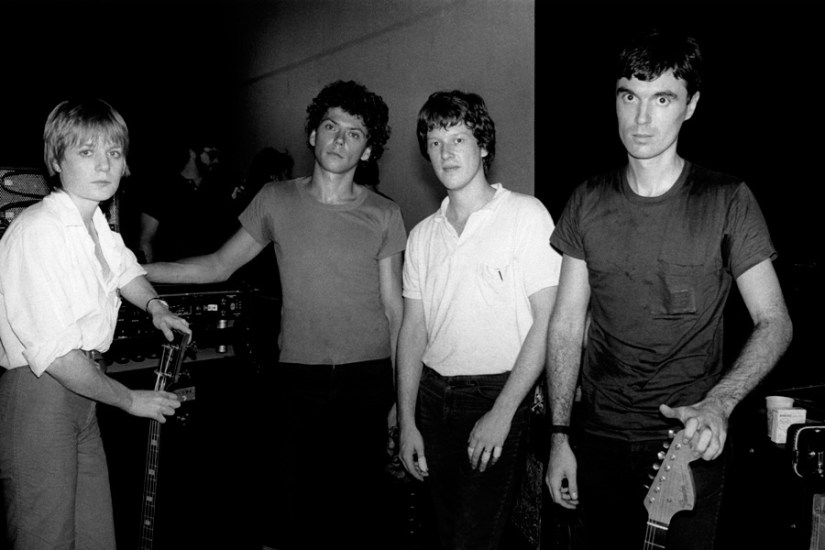
What’s not to like about this! It’s A Certain Ratio, covering Talking Heads, on a track intended for Grace Jones, that features a guide vocal from the band’s Jez Kerr that ended up being on the released version. Mined from the band’s archives a couple of years ago and represented in new light on their all-encompassing 40-year anniversary box set, Houses In Motion bears all the hallmarks of classic ACR.

A Certain RatioHouses In Motion

(Mute Records/Kevin Cummins)

It’s the bassline that hits you first. A fluid and chrome monster, it falls halfway between the mercurial slink of the O’Jays’ For The Love Of Money and an on-the-one makeover of the theme to Cheggers Plays Pop. The vocal, deadpan and spoken, apes David Byrne’s original, a hollowed-out shell of existential pondering and angst. Caught in the eye of his own storm, Kerr seems nonplussed as his band knock several shades of post-punk funk from the track.

(Mute Records/Kevin Cummins)

Rattling, metronomic, beatbox percussion keeps the beat slow and steady before the guitars, scratchy and metallic, creep their way into the mix, dropping out and in again at the end of the lines, filling in the vocal-free sections. Echoing trumpets, heavily filtered through the mixing desk help to date the track – think Pigbag and Teardrop Explodes, even the Jam… any band from the era that saw out the ’70s and saw in the ’80s with an ‘anything goes’ approach to instrumentation. Off it flies, the brass section heralding the intent to take the track upwards and skywards. I’m glad ACR discovered they had it during that archival archaeological dig of theirs.

Talking Heads‘ original is, of course, also a beauty.

Talking HeadsHouses In Motion

It’s total claustrophobic funk that, with its bubbling bass and car horn keyboards, brings to mind Prince’s ridiculously pervy Lady Cab Driver. It’s more out there in places than ACR’s cover – those scatter-gunning, free-flowing trumpets, for example – and Byrne’s call-and-response vocals that almost fall into Slippery People‘s ‘Whats a-matter witchu?‘ hook; no bad thing, clearly…like the rest of Remain In Light, the track’s parent album. But you knew that already.

Cover Versions, Gone but not forgotten, Sampled

Knuckles Rapped

There was a terrible version of You’ve Got The Love a few years ago, a windswept and earnest cover that was drama school in delivery and hive-inducing in reception. Florence & The Machine had chosen to close their festival slots with it and there were enough enthralled and taste-free people giving thumbs up around the band that their record company rush-released a version. It was all over the radio like a rash in need of antihistamine, its Asda-priced Kate Bushisms making me almost crash the car more than once. Sting. King.

The source (aye!) of Florence’s version was the deep throb of The Source‘s track, recorded with finger clickin’ soul survivor Candi Staton on vocals.

The Source feat. Candi StatonYou’ve Got The Love

Taking her vocal line from the motivating commentary on a keep fit video – ‘sometimes I feel like throwing my hands up in the air…sometimes it feels the going is just too rough…I know I can count on you‘ – Staton’s delivery ensured something of classic cut status for the track.

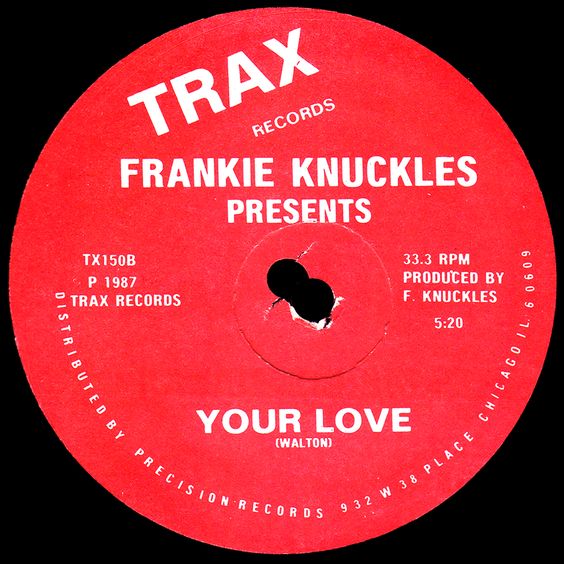
Many people wouldn’t have realised the record was essentially a cover. Indeed, for most chart music-buying folks, the record’s 5-note bassline and viralish, ear-worming keyboard motif would be their first unknown introduction to Frankie Knuckles.

Waaaay back in the years when house music was first thumping and throbbing its way from the sweaty basements of Chicago to the switched-on fringes of the mainstream, New Yorker Knuckles teamed up with Chicago soul singer Jamie Principle and hotwired his original soulful vocal to a tune that was at once progressive, deep, emotional and zeitgeist-riding.

In an era when (Stateside especially) hair metal was the mainstream’s thing, when The Smiths were putting out The Queen Is Dead and every other guitar band in the country was hanging on to their jangling coat tails, Knuckles was busy programming sequencers and drum machines – MC80s, 303s, 707s and 808s – to create a record that still resonates today. If How Soon Is Now is, as was said, the indie Stairway To Heaven, Frankie Knuckles’ Your Love is dance music’s She Loves You.

Frankie KnucklesYour Love

The record kicked doors down. It gatecrashed the notion of what ‘dance music’ was, and what it was not. It wasn’t a hundred mile an hour electro pogo. It wasn’t base and derivative. It wasn’t (always) an anonymous guy hiding behind a rack of technology while a lip-synching beauty mimed her way atop the caterwaulings of a session singer. This particular brand of dance music was forward-thinking, cerebral and deeply soulful. As it turned out, it was pretty much timeless too.

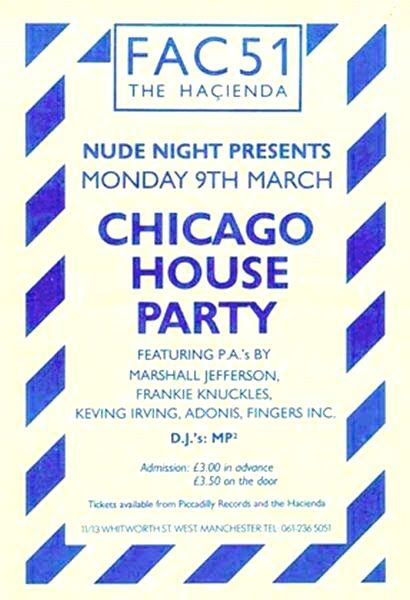
Your Love‘s rattling, reverberating snare must’ve sounded wonderful clattering off the walls of the Hacienda, even on a half-empty Wednesday night in February. Me? I wouldn’t know. I was too busy twisting my fingers into Smiths riffs and worrying about the length of the sleeves on my cardigan. I caught up in time though.

The sequenced keyboard line that formed the melodic hook of The Source’s cover is, at source (ha, again) hypnotising and trance-inducing, the Jungle Book’s Kaa and his spiralling snake eyes set to music. Its bassline is massive; instantly recognisable and capable of inducing Proustian rushes in even the most pasty-faced of guitar band-lovers when heard unexpectedly. It builds beautifully, from sparse electro through keyboard swells and man/woman gospelish harmonising to deep-breathing backing vocals, tasteful foreplay to the wham-bam of Lil’ Louis’ French Kiss, if you will.

I can’t let go’, sings Principle, as the song builds to its steamy-windowed climax, a notion that I wholeheartedly subscribe to. Your Love is a great record, propulsive and soulful house in the vein of Promised Land, both Joe Smooth’s original and the Style Council’s faithful reworking. I can’t let go indeed.