Cover Versions

Prophet vs Profit

Paul Weller gives nary a thought to what others think of him and his music. Splitting The Jam at the height of their success for the political, pastel posturing of the Style Council ruffled more than a few feathercuts. Time and hindsight has been far kinder on his second band than you’d have believed back in 1985 though, and you can’t argue with the stellar run of singles they released during their 5 albums in 5 years lifespan. Indeed, if all he’d been known for was the music he recorded with the Style Council, Weller would these days be something of a cult hero. For every bizarre collaboration with Lenny Henry there’s a Gil Evans Blue Note arrangement to sate yourself with, and despite the Parisian pretentions, Marriott moustaches and C&A catalogue poses, there’s a strong body of work to be (re)discovered.

There are a lot of parallels to be drawn between the careers of Neil Young and Paul Weller. Both left successful bands twice before going it alone. Both have defied the critics to release solo albums that are the equal of and better than the material in their supposed golden years. Both stubbornly plough their own musical furrow and fans follow on or fall by the wayside as a result. And both have fallen foul of their record company when they’ve taken an unexpected turn in the road and delivered an album like none before it. Neil Young has done this more than once. On the Kratftwerk-inspired Trans he adopted analogue synths over guitars, a concept album of sorts that highlighted the day to day issues experienced by his disabled son. When Young presented David Geffen with the limp rockabilly of Everybody’s Rockin’ just 12 months later (how’s that for a change in direction?!), his label boss famously sued him for offering up an album that was “deliberately uncommercial and unrepresentative of Neil Young.”

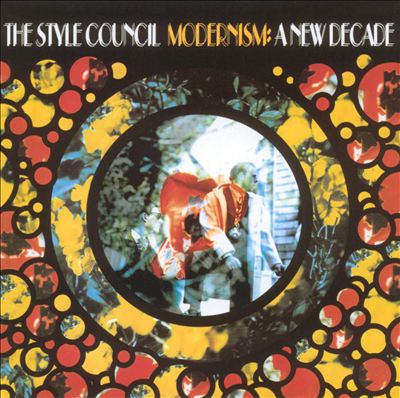
Weller’s seeming faux pas was to offer up in 1989 a 6th Style Council album that was unlike anything he’d recorded previously. Synths replaced Hammonds. Machines replaced drummers. Blissed-out love replaced anger and fury. You could forget the guitars too – there was nary a jazz chord or fuzzed-up Isley Brothers cop off within earshot. This was Deep House music; clean and linear yet soulful and emotive. With the Stone Roses on the verge of indie guitar ubiquity, Weller had seemingly pulled a dud. “We don’t have to take this crap,” thought Polydor. The album – the presciently-titled Modernism: A New Decade – was shelved.

Had the record company been more switched on they’d have been aware of the house scene that had been bubbling nicely underground for a couple of years. Weller was drawn to house music for the same reasons he liked the mod scene. Here were groups of people getting off on soulful American records and, much in the way he’d paid homage to the first wave of US soul by recording versions of Heatwave and Big Bird, he set about recording his own faithful version of one of the era’s anthems, Joe Smooth‘s Promised Land.

Style CouncilPromised Land (Full Length Version)

Promised Land grooves on a bed of rattling drum machines and rolling, tumbling piano, bluesy and upbeat. Setting yer actual house ablaze, electro bleeps and keyboard stabs herald in a whole new chapter in Weller’s career. Flutes flutter in and out of the mix, a keyboard motif joins it all together and Weller duets with DC Lee in a series of gospel-tinged “oh yeahs” before the pair of them hit the verse. It’s great.

Brothers, Sisters
One day we’ll all be free
From fighting, violence, people crying in the streets
When the angels from above
Fall down and spread their wings like doves
We’ll walk hand and hand,
Sisters, Brothers
We’ll make it to the promised land

A spiritual anthem for unity and hope (and the consumption of MDMA), it resonated with those for whom the house scene was everything. Me? I wasn’t at all into house music but I did really like the new Style Council single. I had no idea it was cover. I came to it via the radio and, with no long-standing relationship with Weller (I had Funeral Pyre on 7″ but I was barely out of short trousers when The Jam were number one) I could listen to it without the appreciation of what came before. That’s the reason I still rate Bowie’s Tonight album far higher than I’ve any right to (I bought it aged 14 on the strength of Blue Jean and played the album to death), but unless you’ve grown up with the artist, you’ll find a fondness for your point of entry that perhaps doesn’t match the accepted version of what’s hot and what is not. As I think about it, the Style Council’s version of Promised Land (alongside the Stone Roses pre-gig playlists) was the reason I looked at house music from a different perspective. Maybe it wasn’t all generic rubbish after all.

Joe SmoothPromised Land

Despite the relatively decent placing of Promised Land (number 27), Polydor got cold feet and decided against releasing Modernism. Ever obtuse, Weller had kept it off the album at any rate. Modernism eventually found its way onto the Style Council’s all-encompassing ‘Adventures Of....’ box set and in more recent times has benefited from a vinyl reissue – haven’t they all – and it remains an interesting product of its times.

A couple of years later, Weller would re-use the album’s That Spiritual Feeling for the b-side of his Into Tomorrow single, the track that truly kickstarted the next phase of his career. “Guitar music is on the way out,” a Decca executive famously told The Beatles at the start of the 60s. I wonder if Polydor regret being so dismissive of Paul Weller as he told them the same in 1989? If only they’d stuck by him. Re-strapping his guitar certainly paid dividends for the ever-restless Weller. What record company wouldn’t want a slice of those profits?

 

Alternative Version, Get This!, Live!, New! Now!

Sunshine From Leith

Ross Wilson has had a colourful life, growing up in difficult surroundings on a Leith housing estate, opting out of school from a very early age – “abandoning my education, I’m embarrassed to say,” – and finding himself in situations that none of us would wish to be in. Despite (or because of) this, he’s quiet, unassuming and completely humble.

His song ‘Grateful’ that opens Blue Rose Code’s 2016 album ‘And Lo! The Bird Is On The Wing’ distils perfectly his life so far.

When I wake in the morning now, I try to be thankful,” he sings, in an effortless East Coast croon. “Did you know that I almost died? I’ll never be cool….I’ll never be good looking….I’ll never be rich, but Lord I am grateful.” It’s a simple song; short, direct and enhanced at the very end by a terrific gospel-tinged choir that competes with the Staple Singers for uplifting joyfulness.

Ross’s audience is grateful too. I watched him perform live over two extraordinary evenings in Irvine’s Harbour Arts Centre last weekend. A super-intimate venue that holds just 100 folk, the HAC is possibly our country’s greatest hidden secret. Audiences and performers alike have really taken to its ‘gig-in-your-living-room’ feel. The front row is a decent arm’s stretch from the headliners’ fretboards, the back row closer to the action than the front of all other ‘intimate’ venues and the performers there really respond to the cosiness of it all.

Blue Rose Code is Ross Wilson. Depending on the gig, he can have 3, 4, 5 or indeed, as when he’s fronting his amazing Caledonian Soul project, dozens of musicians on stage with him. He’s been in the HAC before as a 3 piece. On Friday and Saturday his band appeared as a duo, the sum of the parts a fraction of the greatness on display. Playing two different sets, Ross took us by the collective hand and led us through the whole gamut of human emotions. Accompanied by the fabulous Andy Lucas on keys, the duo whipped up a quiet storm of intensity.

Wilson doesn’t so much play his guitar as attack it; pinged harmonics zing across the room while back of the hand percussive beats provide rudimentary four to the floor rhythm. Listening to him play, it’s as if a tap has been turned on, a slow drip at first before gushing and overflowing, unable to be held back. Melodies cascade and tumble from his fingers, complicated arpeggios formed from open-tuned guitars and a handspan as wide as the Clyde. Jazz chords give way to ancient folk melodies that in turn part their way for minor key melancholy. It’s rhythmic, tuneful and breathtaking.

When he sings, it goes up a whole other level. Anyone can sing, but no-one can sing like Ross Wilson. It’s all in the phrasing, y’see. He stretches words beyond all recognition, he st-st-st-stops suddenly, breaking into spontaneous scatting, he barks, yelps and laughs off-mike and he takes these brilliant long run ups from the back stage to the microphone, using the dynamics of an amped-up voice like no-one I’ve ever seen. Any singers in the room over the weekend must’ve gone home with a few pointers on how to get the best from their voice in the live setting.

Behind him, strapped in for the ride of his life, Andy Lucas riffs behind the guitar on his keys; piano one minute, Fender Rhodes the next, forever on a mission to incorporate a lost blue note or a major 7th flourish. It’s a beautiful sound, incredibly nuanced yet totally spontaneous. On Friday the duo sound-checked with recent new track Red Kites. By the time it appeared in the show, it was twice as long, Andy had added a second vocal and Ross was off on some freeform guitar odyssey. For the entire weekend, Lucas never takes his eyes from Wilson’s fretboard. He knows when to cut in, when to take over and when to play softer, allowing the spotlight to shine on Wilson’s unique talent. It’s incredible stuff.

Blue Rose CodeBluebell

The music on offer is superb. Recorded, it’s quite the thing, the perfect soundtrack for a Saturday night in or a Sunday morning sudoku. In the live setting though, the songs soar, a scorching cross-pollination of Chet Baker’s stoned jazz, the voodoo folk-blues of John Martyn and the meandering twilight ambience of the Blue Nile. You really should investigate if these reference points are your kinda thing. It’s led to Ross being offered tours of Canada, the west coast of America and Australia. With 4 studio albums to his name alongside a handful of live albums and non-album EP releases, Ross Wilson has quietly built a mightily impressive back catalogue. A cottage industry with no financial help from anyone other than his supporters, it deserves a wider audience and greater recognition. He’s easily one of Scotland’s greatest talents, a real hidden gem of a songwriter and a peerless performer.

All photographs courtesy of Chris Colvin

Alternative Version, demo, Hard-to-find

In Search Of The La’s

In 2003, MW Macefield wrote a book called ‘In Search Of The La’s‘. Subtitled A Secret Liverpool, the author donned his best Inspector Clouseau raincoat, popped an oversized magnifying glass into the top pocket and hopped on the train to Lime Street in the hope of tracking down Lee Mavers, the wayward genius responsible for steering the good ship La’s aground. Despite reforming for a short, badly-received tour a couple of years after the book hit the shelves, and an even less successful venture a few years after that, I’ve now come to accept that The La’s are back residing in the ‘where are they now?’ category.

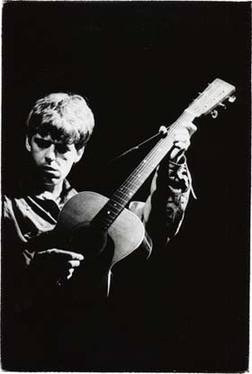
A good La’s detective will tell you that this promo pic of the band does not relate to the line-up that played on the tunes below.

Mavers’ legend continues to grow by the day and in the smallest corners of the internet he’s regarded as our generation’s version of Syd Barrett or Peter Green; the band leader with (way) out there ideas that were too far gone for even the most open and creative of minds in his band.

Lee tuned his guitars to the hum of his fridge.

In order to baptise his recordings with the relevant credentials, he demanded the Abbey Road desks he’d procured remain covered in their original 60s dust.

Despite at least a dozen goes of recording an album, he said nothing came close to the demo they’d recorded themselves of non-album b-side Over. Over, as you may well know, was recorded live. To 4 track. In a stable. There’s a Jesus pun to be had here, but Mavers is not the messiah, he’s just a very haughty boy.

The small but (im)perfect body of work he’s given us rattles and rolls and chimes and chirps with effervescent Scouse enthusiasm and a scrubbed, scuffed, skirl. Alongside the actual album, you’ll find all manner of demos and outtakes if you look hard enough. The La’s album was given the Deluxe treatment about a decade ago and the inclusion of the extra tracks shone a light on just how many producers they worked with in their vain search to nail the perfect version. The 4 CD box set that appeared afterwards only goes to confirm this. Dig deep and you’ll uncover new things in old tracks. My sister a few weeks ago gave me a copy of the BBC Sessions album. Playing the record is much more La’s than sticking on a CD as you go about your business, and I’ve been re-listening with open ears and open mouth. Some of these session tracks knock the released album versions for six.

One of the oldest La’s songs, the version of Doledrum from the band’s 1987 Janice Long session is the perfect example;

The La’sDoledrum (Janice Long session, 2.9.87)

Those percussive Magic Bus off-beats are magic! Maver’s vocal is strong, his rhythm playing an excellent counterpoint to the skifflish back-beat. Paul Hemmings sprightly solo in the middle is mightily whistleable. but it’s John Power’s high falsetto backing vocal that’s the song’s secret weapon, carrying the whole thing to the perfect multi-vocalled end. Like so much of The La’s material, there’s so much going on in such a simple song. Listen to it. Listen again. And again. I guarantee you’ll spot something new each time.

Possibly even more upbeat is the long-shelved version recorded with John Leckie;

The La’sDoledrum (John Leckie version)

Faster and with less emphasis on the percussive off-beats, the Leckie version features elongated Mavers’ harmonies and a lovely, subtle Power aah-aah-aah sigh where the solo should be. Mavers would probably tell you that this version is unfinished, or is lacking the requisite magic or doesn’t have enough 60s dust sprinkled atop. For what it’s worth, it would have been a worthy addition to that one and only album. The version that made the final cut is positively lethargic by comparison. Indeed, visit the forum on thelas.org and you’ll find plenty of discussion around the tracklist of the perfect La’s album; the Leckie mix here, the Bob Harris mix there, the Mike Hedges mix for this, the John Porter take for that. It’s a happy minefield when you get going.

I’m off to Liverpool this coming week with an itinerary packed full of Beatle-ish activities, Tate visits and a trip to Anfield. While I’ll forever be in search of The La’s, or at least Mavers, I’ll most definitely not find the proud Evertonian anywhere near the home of Liverpool FC, and I can’t imagine he’ll be propping up the bar in the darkest corner of The Cavern Club, but, y’know, y’never know. I like to think that I’ll pass him on Matthew Street, that he’ll recognise me (we were holiday pals for a week in 1993) and he’ll punch me playfully on the arm before we step into the nearest pub for a chinwag and a gin pomade, “kiddo.”


Live!

Youth Club

Teenage Fanclub played at Kelvingrove Bandstand last week. It was notable for being their first ‘homecoming’ show since the departure of founding member Gerry Love. Not only was Gerry a fluid bass player and an essential cog in a three-part harmony, he was also the writer of one third of the band’s material. From early highlights such as December and Star Sign, to Radio, Sparky’s Dream and Going Places, Ain’t That Enough and Take The Long Way Round, I Need Direction, Near You and Born Under A Good Sign, as well as Sometimes I Don’t Need To Believe In Anything right through to Thin Air on most-recent album Here, Gerry’s songs are kingpins in any Teenage Fanclub set.

Arguably, of the band’s three writers, he’s the best. The band’s set on Tuesday was notable for a very large Gerry-sized hole in it and although they’ve chosen to staunchly move forward with the welcome addition of Euros Childs on keys and backing vocals and long-time collaborator Dave McGowan on bass duties, it remains to be seen how things pan out.

Normally I’m flying for a week after a Teenage Fanclub show. I’ve seen them enough times to know a good show when I’ve seen it – the Grand Ole Opry show in 93/94, any number of those early King Tuts shows, the Motherwell show when they started with a new one then threw away the evergreen Everything Flows by playing it second song in, the three Barrowlands gigs late last year – and at will I can replay the best of the set in my mind’s eye. Right now I’m replaying Norman doing the Barry Norman ‘Film…’ theme on the piano at the side of the Ole Opry’s stage while Raymond fiddles in vain with an effect pedal. Since last Tuesday’s Bandstand show though, I’ve felt….nothing. Indeed, I woke up on Wednesday and my first thought wasn’t about the gig the previous night. Until now, that’s never happened and I’m afraid it might be a sign of what’s to come.

If they release a killer album, all will be forgotten. If they rely too much on Raymond’s material, it may well signal the decline of one of our best and most-loved bands.

It’ll also be interesting to see how things go with Gerry. Quietly writing and recording at his own tectonic pace, we may well yet get to hear some of those great old Love songs at one of his shows, where they’d sit perfectly between the choicest of cuts from his Lightships project from a few years back. Imagine the scenario of the Loveless Fanclub going on tour at the same time as a solo Gerry, like splintered factions of an indie Drifters. ‘Norman Blake’s Teenage Fanclub‘ versus ‘Gerry Love Plays Your Favourite Fanclub Tracks‘. It doesn’t bare thinking about.

Pre-Kelvingrove, we were showered with full-force, biblical rain. Real 40 days and 40 nights stuff, it threatened to ruin the gig before we’d even left our shelter under one of the big old oak trees that line the walkway up to the Bandstand. When it lessened to a torrent, we made for the venue where we caught almost all of Nile Marr’s set (very good) and pointed out the superstars of Glasgow’s music scene that littered the audience like a hip double page in a Where’s Wally book while we grooved moistly to the DJ’s tunes that blasted from the PA. I hadn’t heard Sonic Youth‘s Teenage Riot in ages – perhaps last at a TFC show from a few years back, now that I think about it, and in the moment it sounded terrific.

Sonic YouthTeenage Riot

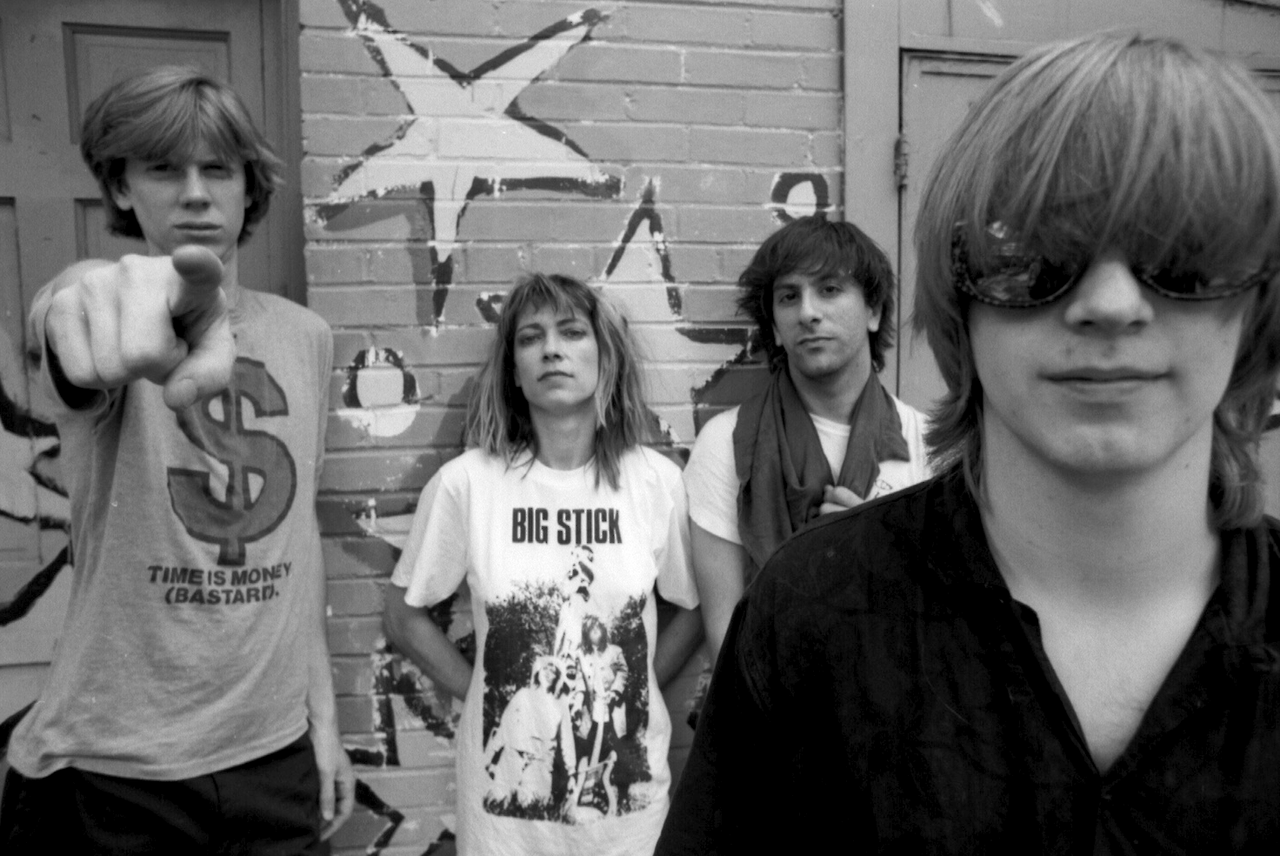
Teenage Riot has that thing where the beginning is all detuned metallic ambience, liquid mercury that’s longer than Thurston’s ubiquitous fringe and with more holes in the backbeat than on the knees of Lee’s vintage 501s. Played loud it really kicks, Kim’s whisper vying for attention with the occasional click of Steve’s sticks. When it eventually gives way to the ragged chuggalugga signature riff it really gets going. Thurston drawls on about Marshall stacks and needing a teenage riot to get him out of bed, like, now, and those twin Fenders clatter away with wonky chorded cool, arch, knowing and slightly smug but ultimately rockin’. It was the perfect tune to play before the ‘Fanclub hit the stage – a Teenage Riot indeed.

Way back around 1990 Teenage Fanclub supported Sonic Youth at the Barrowlands. I remember little of Sonic Youth’s show other than I blame it for the onset of tinnitus I now have, but I remember it fondly for TFC playing an octane-hopped version of God Knows It’s True, a maelstrom of wild guitars and wild hair, wild drummers and mild-mannered men in control. The version they played last week though – second song in, funnily enough – I’ve forgotten already.