Alternative Version, Cover Versions

Maker’s Marc

Like most of you who visit here (my demographic stats tell no lies), I was the perfect age for 80’s pop. At the time I kinda took it for granted that the charts would always be filled with million-selling hit singles with shelf lives longer than the queue for a fake ‘Frankie Says…’ t-shirt at Saltcoats Market.

I spent the decade convincing myself that the era was rubbish for music – with the odd obvious exception, a million-selling single was no guarantee that it was any good. Living in the 80s just wasn’t fair.  My parents watched wide-eyed as the 60s unfolded right in front of them (unbelievably, much of it unfolded while they were in a pub stubbornly listening to or playing folk music. Yeah, yeah, yeah), and cool folk from school with groovy uncles or elder brothers and sisters had a gateway into the eclecticism of the 70s, but what did I have that was exclusively mine? Spandau Ballet? Amazulu? The Art Company? Living in the eye of the norm, it was all bland rubbish really, but when you cast a misty-eyed look backwards nowadays, it’s plain to see the 80’s might not have been half as bad as we convinced ourselves they were. Granted, the music soundtracked a depressing time in which to be a teenager; Thatcher’s self-prophesising comment that ‘there’s no such thing as society anymore’ was splitting the country into haves and have nots, and with mass unemployment, little prospect for school leavers and inner city unrest (thankfully, this never made it to the mean streets of Irvine) for the millions of have nots, it was truly a shite time to be alive. But the circumstances led to some of the greatest ever music – ‘our’ generation’s music; The Specials, The Smiths, you know them all….

soft cell 2

Soft Cell‘s 1981 take on Tainted Love remains just one reminder of how decent the 80s actually were for music. At the time, Tainted Love was nothing more than a non-political catchy single, something that Bruno Brookes played between Swords Of A Thousand Men and Kim Wilde’s Cambodia, something that Steve Wright played before Mr Angry, something that Kid Jensen played immediately after the latest Teardrop Explodes session. You might want to cross-reference artists and release dates here, but I’m sure you catch my drift. Tainted Love was everywhere. Minimalist electro-lite and bouncy, with mysterious gassy hisses every now and again, it was infectious and catchy and even now as I type, it was clearly instantly memorable. Did I as an 11 year old spot the mild whiff of submissive, dangerous, homo-erotic je ne sais quoi emanating from Marc Almond. Of course not! Marc Almond was a pop star. It was his job to dress funny, jaunty leather joy-boy cap or not. Just ask Adam Ant, a man who’s make-up-caked face plastered my bedroom wall, much to my dad’s unease. I doubt he’d ever heard those Marc Almond stomach-pumping rumours, given the enthusiasm by which he cheerily battered the dashboard of our Ford Cortina – “Sometimes I feel I’ve got to (thump thump!!) run away!” – whenever Tainted Love parped it’s way out of the tinny AM radio.

Here‘s the super-extended 12″ version, where Tainted Love breaks down into the band’s skeletal yet soulful take on The Supremes’ Where Did Our Love Go?

Soft CellTainted Love (12″ version)

soft cell

I suspect I wasn’t alone in thinking Soft Cell’s version of Tainted Love was the original. It would be a few years later before I discovered the truth (mid 60’s brass-led stirring soul stomper, Gloria Jones, Marc Bolan, etc etc) and when I did, wow!, a whole new world opened up for me. Why couldn’t my mum and dad have been listening to this instead of Hamish Imlach in 1964? Eh? EH?!?

gloria jones

Gloria JonesTainted Love

Here‘s Inspiral Carpets‘ version. Unfairly relegated to 2nd Division Madchester also-rans, early Inspirals were a riot of bowl cuts, bass players called Bungle and badly-rhymed beat-driven garage punk. Easily identifiable by Clint Boon’s skirling Farfisa, many of those early tunes still endure to this day, in my house at least. A proper Plain Or Pan piece must surely be in the offing (I was supposed to be interviewing Tom Hingley recently, but that’s a whole story in itself), but until then, here’s their menacing attempt on Tainted Love, recorded to celebrate 40 years of the NME, a mag (free nowadays) that’s somehow in its 64th year. That’s a pension and a gold watch in old money is it not?

Inspiral CarpetsTainted Love

inspirals

Alternative Version, Hard-to-find

Rimbaud 3

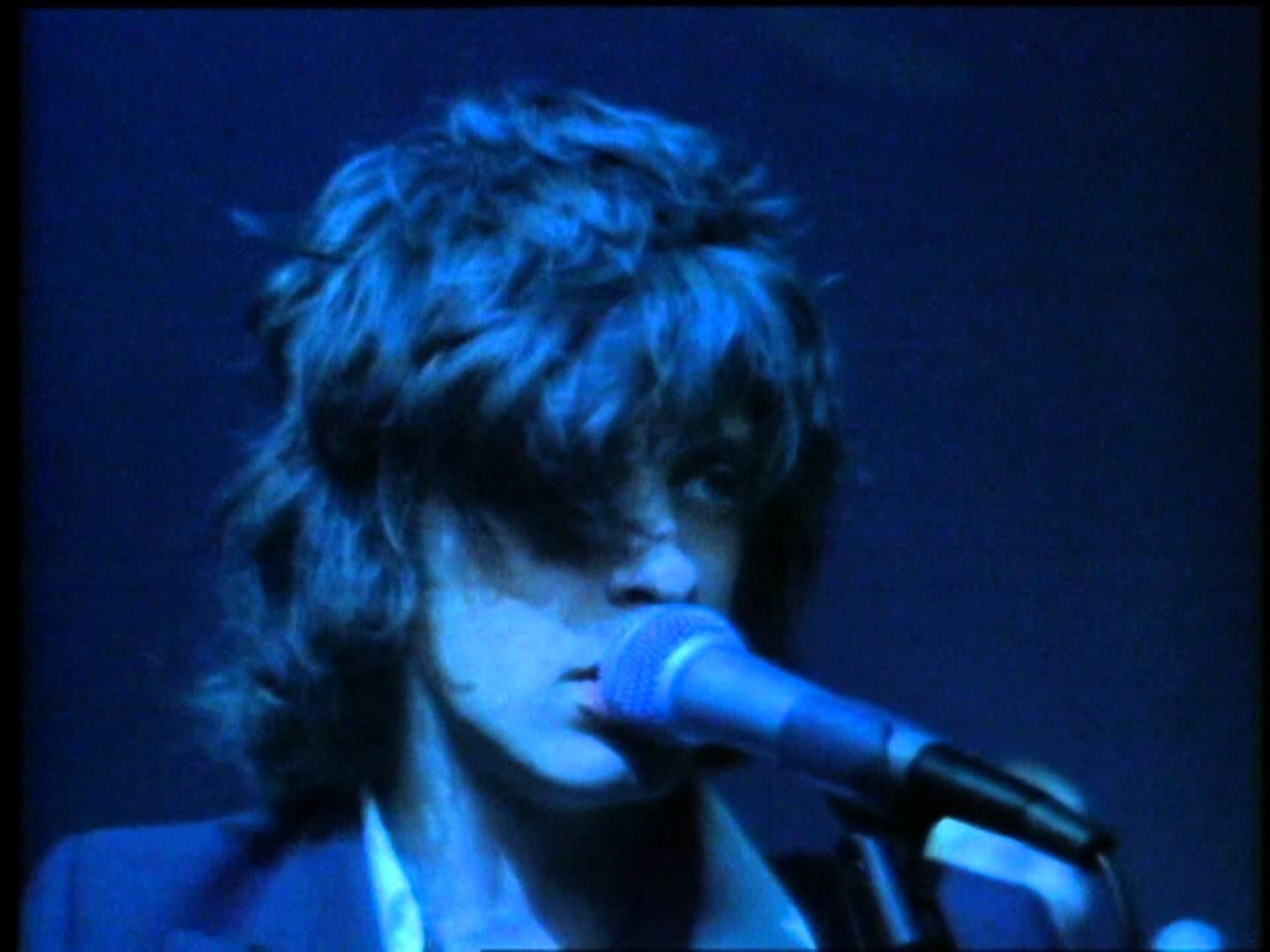
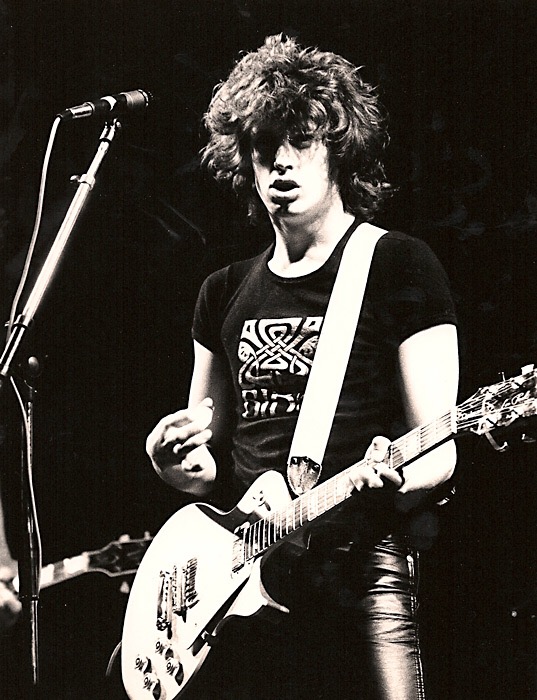
There’s a clip that’s been doing the rounds recently of The Waterboys in session for Chris Evans on Radio 2. They’re tearing their way through a terrific version of Purple Rain, Mike Scott competing for centre stage with an electric violin that thankfully sounds more Hendrix than Nigel Kennedy. If you’ve not seen it you should head off to the usual places forthwith. You can thank me later.


Mike Scott is quite a complex character. From Ayr in south-west Scotland, just down the road from Plain Or Pan Towers, he’s done well to maintain the image of the scruffy-heided beatnik poet hippy who’s the androgynous offspring of Mick Jones and Patti Smith, both in look and musical/poetic vision.


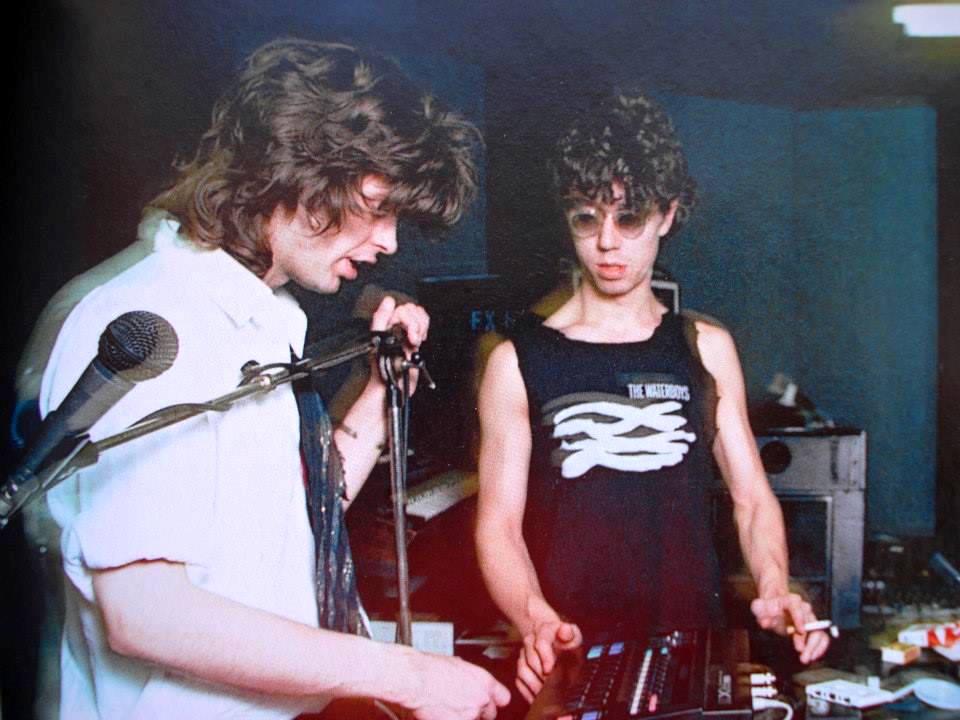
In reality, he’s quite a switched-on guy; arguably more Rambo than Rimbaud. Stories abound that he’s  a sound engineer’s nightmare (“A little less reverb on the snare, thanks, more flange on the subwoofer and can we keep the room temperature to a steady 18 degrees?“) and a promoter’s worst headache (only the very best hotels, with a room as far away as possible in all directions – up and down and either side – from select members of whoever constitute The Waterboys on that particular tour, a strict macrobioticveganwheatfreeglutenfreewhatever diet and a propensity to change the goalposts at the last notice). A perfectionist, then. Or difficult to deal with, you might say.

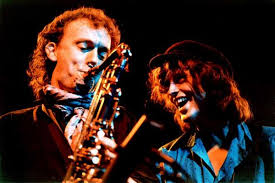
1985’s This Is The Sea is the real deal though, and any and all of his quirks and imperfections can just about be excused because of it. Full of literal references to the Great God Pan, the healing powers of spiritualism, a kinship with socialism and liberally sprinkled with poetic references alongside the odd Beatles line, it comes bolted onto a steel girders-massive production that Scott himself tagged ‘The Big Sound’. The album is truly epic on a widescreen scale; a heady mix of acoustic and electric guitars, keys, strings and a liberal dollop of Celtic Clarens Clemons-ish saxophone.

waterboys 85

The big hit from the album was of course The Whole Of The Moon, but, essential as The Hit is, there’s far more to the album than that.

Be My Enemy fairly rattles along in double-quick cow punk time, a skifflish, raggle-taffle distant cousin of Dylan’s Maggie’s Farm and most of The Clash’s early back catalogue.

The WaterboysBe My Enemy

Scott is on scorching form, smoothing his ‘rs‘ as he spits as angrily as a posh boy from South Ayrshire can about mainframes shaking, cellars full of snakes and nazis on his telephone. The whole thing kicks like a particularly angry mule and is essential listening. Terrific stuff.

Medicine Bow is a howling storm-warning for some near-future apocalyptic event or other, electric guitars clashing with discordant violins and an out of control piano player.

On the album, it faded to a whisper, but a few years ago a warts ‘n all version of This Is The Sea was released, with the rage in excelsis, full-length version of Medicine Bow included.
The WaterboysMedicine Bow (Full-Length Version)


waterboys studio 85

…and here’s The Pan Within. Over 6 minutes of cosmic folk/rock spiritualism. Come with me on a journey beneath the skin, indeed.

The WaterboysThe Pan Within

Gone but not forgotten, Hard-to-find, Live!

A Religious Experience

1985. 15 years old. Too young for pubs (I looked about 12) and too old for weans’ stuff like skating and swimming at the Magnum, it was the worst of times. My pals and I started going to a youth club every Sunday night at the church. There was table tennis and pool and a cheap tuck shop. Nice-looking girls went and everything. Now and again you’d have a hormone-filled and hormone-fueled shaky game of pool with a lassie you had absolutely no chance of getting anywhere with, but it certainly brightened the times.

There was one stipulation to attending Youth Fellowship: once a year you had to represent the church in the area Bible quiz. For 50 weeks of the year you got cheap Cola and stilted access to fanciable girls as long as you agreed to mug up on the finer points of the Good Book and answer questions in front of an audience. My one and only participation in this was a truly enlightening moment, though probably not for the reasons the church would have liked.


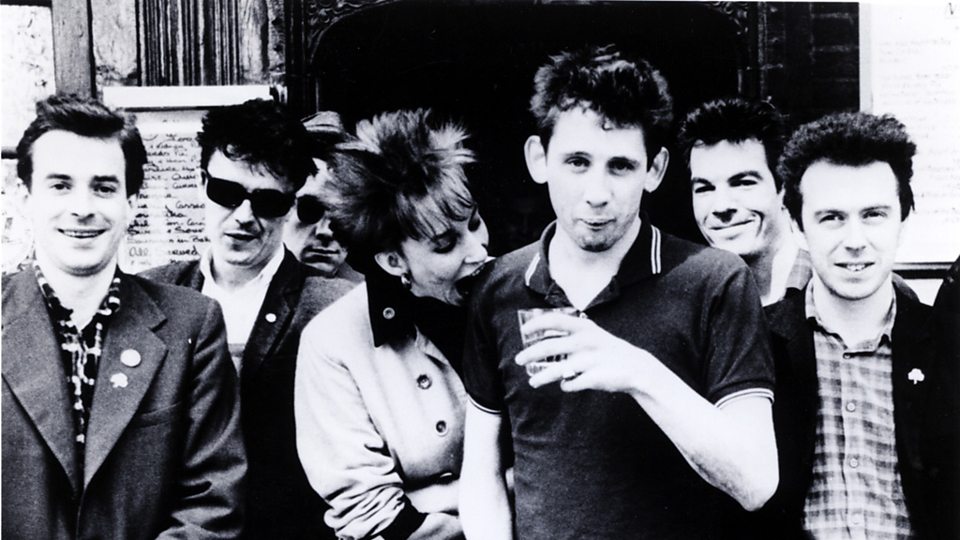
The Pogues with Shane MacGowan, Jem Finer, Darryl Hunt, Spider, James Fearnley, James McNally.

The quiz always took place in one of the ante-rooms or small halls upstairs above the Grand Hall in Kilmarnock. This particular year, the quiz took place the same night as The Pogues were playing downstairs. I had never heard of The Pogues, didn’t know they were playing until we arrived in the church mini bus, but when I saw the queue snaking round the corner, I knew where I’d rather be going. All manner of youth tribes were there; pasty-faced, back-combed goths (I recognised one girl from school who looked nothing like she did on an ordinary day. The guy she was with looked at least 17 years old and she pretended not to see me. Pfffft), old punks with daft-looking triple-pronged mohicans and bondage trousers, a couple of teddy boys and a whole army of Docs ‘n leather and denim jackets, interspersed with the odd Celtic top. I had no idea why folk would wear a football top to a gig, but it wouldn’t be long until I made the connection between the green and white hoops with MacGowan and co.

Anyway, we shambled upstairs into the stuffy confines of the small hall where we’d be quizzing that night. After a few formal introductions from a tweedy man who looked as old as the Bible itself, we got underway. It was all fairly straightforward to begin with; “Who cut Samson’s hair and deprived him of strength?“, “Which Sea did Moses part?“, “What occupation did St Andrew have?“, all that sort of stuff. Then, as the wheat began to separate from the chaff and the questions got tougher, The Pogues took the stage.

In which Book of the Bible….”

S’calledstreamsofwhiskeyanditgoeslikethis…

…did Daniel….

“Kscscscscshhh..thump thump thump….”

(Raising his voice a little) “…meet the Lion?

“stampstompstamp…YOU BASTARD!

(cue nervous giggling and shuffling of feet).

pogues bw

This Pogues lot sounded like just the thing I’d been looking for. The rest of the quiz was punctuated by a whole host of punky, rootsy, rebel shouting, banshee wailing and liberal swearing coming from the floor below, slightly dulled and muffled, but clear enough for all of an offended nature to hear. It was this event that led me to believe in the power of live music. So, thank you Youth Fellowship, for making sure I never missed out.

A year or so later I found myself browsing in Walker’s Record Shop at Irvine Cross. It was the best wee record shop bar none. The two elderly ladies who worked there had an extensive knowledge of music and knew exactly where to find what you were looking for. Years later, when I worked at Our Price and had a good understanding of the mechanics of ordering and returning stock, I realised that Walker’s was so good because they never returned any un-sold stock, so over time the shop had become an Aladdin’s Cave of waiting-to-be-discovered classics. Flicking through the racks one day I chanced upon The Pogues ‘Poguetry In Motion‘ EP. With memories of the previous year’s Bible quiz/Pogues swear fest still fresh in my mind I bought it. My first Pogues record, but certainly not my last.

pogues poguetry promo press

It’s a tremendous EP, a Pogues in miniature for the short-of-attention.

Side 1 kicks off with London Girl, the ‘poppy’ one, all skirling accordion and battered snare, a chicken dance for those folk in Docs ‘n denim I’d seen in the queue the year before, MacGowan growling his way through the London A-Z with youthful abandon.

The PoguesLondon Girl

This is swiftly followed by A Rainy Night In Soho, another London-referencing song, one I didn’t immediately take to (it was too slow for this hopped-up teenager) but in time I’ve come to accept it as the classic it now is.

The PoguesA Rainy Night In Soho

A romantic, (aye, romantic! That drunk ‘singer’ could fair write a love song, eh?) lilting, waltzing gem of a song, it’s the equal of anything Tom Waits might have written had he been an Irish immigrant in London rather than a Californian who lived on the Mexican border. It always annoyed me how MacGowan sings the “now this song is nearly over” line twice, once mid-way and one when it is in fact nearly over, but I like to think his lyrics on the recorded version were a work in progress that he never quite got around to changing. We’ll maybe never know.

shane teeth

Flip the record over and it starts with a thrilling rush of double-speed playing, penny whistles competing with a snarl of shouting and swearing and a tumble of military drums. There’s a great story in the lyrics and the juvenile in me regresses to that night at the Bible quiz every time I hear it. Who knows if it was played that night in the Grand Hall, but I’d bet it was. For its sheer ramshackle stomp, The Body Of An American remains my favourite ever Pogues track.

The PoguesThe Body Of An American

The last track on it is an instrumental two-fingered salute to the Irish traditional musician Noel Hill. He famously called The Pogues music ‘a terrible abortion to Irish music’. ‘Planxty’ is an old Irish pub shout, said the way we say ‘Cheers!’ nowadays. So, the band were saying Cheers! Noel Hill, ironic, like, before launching into a breakneck instrumental with wheezing accordions and marching band drums punctuated by the occasional war cry. Wake up, garandad, they (literally) say. This is where Irish music is at nowadays!

The PoguesPlanxty Noel Hill

It might surprise you to know that the first version of Fairytale Of New York was recorded at these sessions. Producer Elvis Costello had clearly caught The Pogues in a rich vein of form. You may also be surprised to know that Costello and MacGowan had a long-running argument over the arrangement of A Rainy Night In Soho. Shane eventually won, with his choice of flugelhorn solo taking precedence over Costello’s favoured oboe solo. Spinal Tap, eh? Pogues completists amongst you will also be aware that the Costello mix of A Rainy Night In Soho went on the American version instead.

Perhaps the biggest surprise though in all of this is that, in a year where our greatest living musical heroes are no longer actually living, Shane still walks among us, an advert for a debauched way of life that even Keith Richards would balk at.

Pogues completists will also be aware of this….Shane MacGowan having his own religious experience, just in front of Mick Jones as The Clash rage on stage:

macgowan clash

Cover Versions, Gone but not forgotten, Hard-to-find

You Scratch My Back Catalogue, I’ll Scratch Yours

In the early 90s, there was no finer sight in music than when the three frontmen from Teenage Fanclub stepped up to the mic as one and filled the room with honey-coated harmonies that surfed across the top of their ramshackle fuzz. Lest we forget, in the year that saw both REM’s Out Of Time and Nirvana’s Nevermind released and racking up gazillions of sales, Teenage Fanclub’s Bandwagonesque sat proudly at the top of Spin Magazine’s ‘Albums Of The Year‘ list. And rightly so. Bandwagonesque is classic Fanclub; a welding together of God-sent melodies with a clanging calamity of sweet-sounding guitars. To achieve the overdriven sound that defines much of the album, the band had the amps turned up as loud as they would go, put behind a closed cupboard door and close mic’d up. The effect is a cobweb-dusting thing of beauty, but you knew that already.

tfc 90s

On account of their ability to conjure a slightly wobbly three-part harmony out of thin air, fans of the band renamed them The Bellshill Beach Boys. Lazy writers at the time were less generous, waxing lyrical about the band’s obvious debt to the three Bs – The Beatles, The Byrds and Big Star.

This was the first time I (and I suspect many others) had ever encountered the names ‘Big Star‘ or ‘Alex Chilton‘ and the hastily re-released #1 Record/Radio City twofer that followed on the heels of Bandwagonesque confirmed that Teenage Fanclub had indeed tipped their hat in the particular direction of their 70s idols. Other bands are guilty as charged when it comes to blatant sticky-fingered plagiarism, but Teenage Fanclub were clever enough not to steal whole songs, lock, stock and barrel from Big Star. The overall mood though of Bandwagonesque, from the mid-paced strumming and guitar sound to the uplifting melancholy that sticks itself to many of the tracks (The Concept is essentially a sad song, but it’s sky-scrapingly magnificent. Likewise, December and Guiding Star) is very Big Star. Nowt wrong with that of course.

bandwagonesque reviewPatronising idiot.

Bandwagonesque remains an early high point in a discography embarrassingly rich in high points. Will the new album ‘Here‘, released in just over a month, have the same impact? Going on the strength of the lead single I’m In Love, with its trademark harmonies, fancy chords and Thin Lizzy-ish guitar solo, the early indications are good, but let’s remember that Bandwagonesque was released a quarter of a century ago. That Teenage Fanclub are still releasing records to an always-appreciative audience is fine in its own right.

Alex Chilton and Teenage Fanclub would play a few shows together. They also released a limited single via the NME, where Alex was backed by TFC on one side, and TFC were backed by Alex (kinda) on the other. At some point or other, (I’d like to imagine it was during the sessions for the NME single, though we’ll maybe never really know), Alex and TFC ran through a gloriously ragged live take of Bandwagonesque‘s Alcoholiday.

alex chilton bwAlex ChiltonAlcoholiday

The track is credited purely to Chilton, but if you listen carefully between the clanging chords and underneath Alex’s world-weary, 30-a-day Marlboro-coated voice, you’ll be able to make out Norman Blake’s ooing and aahing backing vocals. It’s a beautiful thing. Perhaps even more beautiful than the original….

Teenage FanclubAlcoholiday

tfc and alex c

Teenage Fanclub have also dipped more than a toe into the extensive Chilton back catalogue. An early US-only single from around the time of Bandwagonesque saw them zip through a brilliant version of Free Again, replete with a kazoo solo, a key change and seemingly, the kitchen sink.

Teenage FanclubFree Again

Free Again is a post Box Tops Chilton three chord boogie that would first see the light of day on 1977’s The Singer Not The Song EP, from a period in time when no-one seemingly gave a damn about Alex. Given the shambolic mess that made up the EP, this was also a period in Chilton’s life when he seemingly didn’t give a damn about folk either, but that’s another article for another day.

Alex ChiltonFree Again

tfc  badges