Cover Versions, Double Nugget, Gone but not forgotten

If You Like To Gamble I Tell You I’m Your Man…

You win some, lose some (it’s all the same to me)……………I don’t share your greed, the only card I need is the Ace Of Spades the Jack Of Diamonds. Or depending where you are and who you’re listening to, the Jack O’ Diamonds.

Jack O’ Diamonds is a classic of its kind. A song about cards, gambling and losing. Which is one and the same I suppose. It was often sung as a lament on the lost highways, biways and plantations of the southern states whenever one unlucky gambler lost his lot playing Coon Can, an arguably politically incorrectly named version of a card game that we nowadays would call Rummy. Like most songs of its ilk, it has ancient roots, some stretching back to the Highlands of Scotland, others stretching less far back to the American Civil War. In 1926, Blind Lemon Jefferson was the first to cut a recording of it. You may never have heard it before, but you’ll know exactly how it sounds – deep southern blues with a petted lip and rudimentary knife-as-slide guitar, coated in what sounds like a thousand eggs frying outside Aldo’s chip shop on a Friday night. It’s quite possibly the oldest record I’ll ever put on here. It’s amazing that it exists at all, a fact highlighted by the eerie, ghostly state in which it is preserved.

Since 1926, it’s taken on a life of its own. Jack O’ Diamonds has been recorded a gazillion times by every two-bit country bluegrass and blues singer that ever lived. And the rest. Lonnie Donegan, the King Of Skiffle, released his version in 1957. A heady mix of hiccuping vocals, frantically scrubbed acoustic guitars and some fine Scotty Moore a-like electric pickin’, it sows the seeds for all future DIY punk aesthetists everywhere. Old tea chest and string as upright bass guitar. Washboard as rhythm section. School choir harmonies. It’s terrific! Without Lonnie Donegan, The Beatles might never have happened, Western pop music as we know it would be very different and we’d all be listening to Mongolian jazz. Probably. But you knew that already. Anyway, if you have the time, you might want to read this.
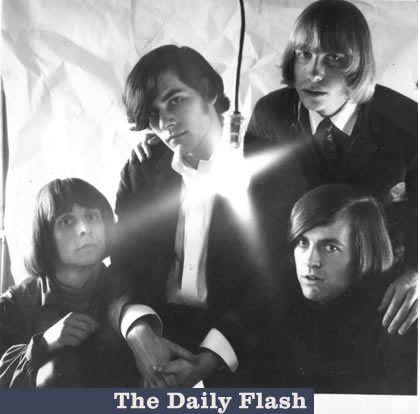
The best version of Jack O’ Diamonds is, to these ears, the 1966 version by The Daily Flash. Little-known outside of Seattle, The Daily Flash were a fantastic garage-punk band. All wailing harmonicas, fuzz bass and obligatory ear-bleeding guitar solo, their version sounds nothing like the other two. The rhythm underpinning it all brings to mind the rattle and roll rumble of the coal-laden Hunterston Power Station train as it thunders past my house in the wee small hours most nights. Terrifying, yes. Noisy, yes. And guaranteed to keep you awake just the same as that bloody train.

Cover Versions, Get This!

Real Moody Blues

Or Under The Covers with Mick Jagger. Now there’s a thought ladies. He’d be all hips, lips ‘n finger slips. Gads!

In the mid 70s, the Rolling Stones released Metamorphosis, a long-delayed compilation of demos, outtakes and Decca-era odds ‘n sods. Although subsequent releases would include a few of the tracks, Metamorphosis didn’t stay in print very long, becoming something of a Stones’ collectable (until recently, that is, when it was made available on SACD). It’s rumoured that some of the demo tracks (eg Heart Of Stone and Out Of Time) featured uncredited appearances from seasoned sessioneers Jimmy Page and Big Jim Sullivan and that Mick Jagger was in fact the only actual Rolling Stone on some of these tracks. Included amongst the flotsam and jetsom of discarded Stones nuggets was I Don’t Know Why, a cover of Stevie Wonder’s I Don’t Know Why (I Love You). Recorded the very night that Brian Jones died/drowned/was done in (July 3rd 1969), it finds the Stones in fine form, with the newly recruited Mick Taylor contributing a fine slide guitar solo to the proceedings. Loose and funky, with its Gimme Shelter guitars, brass section and keys courtesy of the ugly Stone, Ian Stewart, it’s the real moody blues, all descending atmospherics and impending sense of doom. Shame on Jimmy Miller who in his wisdom decided to fade it out just as the band were beginning to sizzle and things were getting interesting.

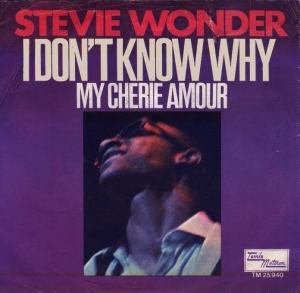
The original Stevie Wonder version was released alongside My Cherie Amour and found its way onto either the a-side or the b-side, depending on which ‘territory’ (to use horrible record company speak) you were in, creating what must surely be the strangest pairing of Stevie tracks on the one slab of vinyl – the sugar coated lovey dovey one side coupled with the fuggy paranoia of the other side. I know which side I prefer.

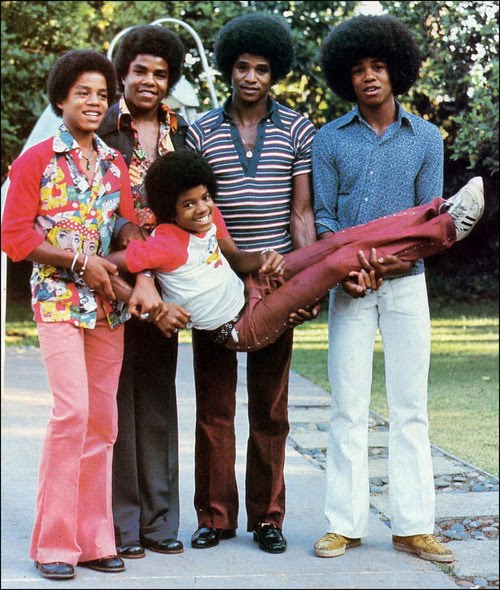
And talking of saccharine-sweet, even the Jackson 5 got in on the act.  Their version is from their second LP (ABC) released in 1970 and is full of little Michael’s trademark whoops, yelps and heart-stopping helium high vocals. It builds and builds on a crescendo of strings and the pistol-crack of the Motown snare, the Jackson brothers allowing Michael to take centre stage as if his life depended on it (which, of course given the reputation of Father Jackson, it kinda did).  He nails it, of course. It’s pretty bloody fantastic if truth be told.

He ain’t heavy, He’s my brother.

*Bonus Track! Saving the best for last…..

Stevie Wonder is a musical genius, there is no debate over this. Child prodigy, autocratic studio pioneer, groundbreaking, etc etc (you know all this already). By 1974 he was on his 17th album, the unfashionable and often overlooked Fulfillingness First Finale. Coming towards the end of a phenomenal run of albums – 1971’s Music Of My Mind, 1972’s Talking Book, 1973’s Innervisions, 1976’s Songs In The Key Of Life. What was lazy-arsed Stevie up to in 1975, eh? Well, given that Songs In The Key Of Life is a double, you could still argue that he was making an album a year. That’s an album a year, Thom Yorke. And everyone a bona fide stone cold classic. Food for thought, eh? Anyway, Fulfillingness First Finale is equal parts dancefloor Stevie and socio-political pop Stevie. You Haven’t Done Nothin’ is, rather thrillingly, Son of Superstition, right down to the funky clavinet, horn breakdown and hi-hat heavy drums. What’s particularly impressive is that except for the bass guitar part, Stevie plays everything on this record. Everything! He even ropes in our old friends the Jackson 5 to sing the ‘doo doo wop‘ backing vocals. And he took it all the way to Number 1.

If this doesn’t have you doing the white man ain’t got no rhythm but digs it anyway dance, there’s no way back for you. If you only download one thing from Plain Or Pan this year….etc etc….blah blah blah……..

Get This!, Hard-to-find, Kraut-y, Sampled

Vorsprung Durch Technik

Vor 30 Jahren Kraftwerk schafften es auf Platz 1 mit ‘Das Modell’, möglicherweise der unwahrscheinlichste Rekord, solche hohen Status zu erreichen, und eine, die immer dem Aufzeigen würden die vier Düsseldorfians fest in der ‘One Hit Wonder ” listen. Natürlich können Sie und ich wissen es besser.

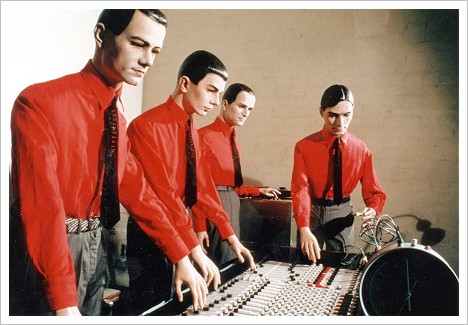
Elegant gekleidete junge Männer und Pioniere der elektronischen Musik in einer Zeit, die westliche Welt ging ga-ga für lange Haare, Leder und Les Pauls, sie waren für viele der Ying zu den Beatles Yang. Einige können sogar so weit gehen zu sagen, sie waren die einflussreichste Band aller Zeiten. Nicht ich, aber dann habe ich immer eine Strat zu einem Synth bevorzugt. Pionier der Elektro Hip-Hop-Haus (ist, dass selbst ein Genre?) Afrika Bambaataa würde wahrscheinlich mit mir nicht einverstanden. Er wurde sicher von minimalistischen Techno Kraftwerks inflenced, Kneifen große Teile des Trans Europ Express für seine eigene höchst einflussreiche und bahnbrechende Planet Rock. Ohne Bambaataa keine Detroit House-Szene und alles andere, dass inspirierte (Happy Mondays für ein, wenn Du sitzt dort denken: “Ach. Wer über Tanzmusik cares?” Joy Division, mit ihrer eisigen Soul-Rhythmen und weniger repetitive Riffs waren klar große Fans. und ohne Joy Division, New Order und nicht alles, was von ihnen folgten. Bowie war so beeindruckt von Kraftwerk (und die deutsche Szene im Allgemeinen), die er nach Berlin ging und nahm seine berühmte Berlin-Trilogie von LPs als Hommage verliebt. Aber dann, so tat U2. Und armen Mannes U2, (C**dplay), abgetastet großen Teilen der Computer Liebe für diesen “, wenn Sie ein Bild zu machen” Lied von ihnen. also, Kraftwerk. Einflussreiche in allen möglichen Weisen. der Musik toll. Robotic, sich wiederholende und reif für eine Neubewertung …

Das Modell

Autobahn

Die Roboter

Computer Liebe

All above tracks are in German, if you haven’t guessed already. I selfishly included Die Roboter as my kids think it’s great. “We are stinky robots!” they happily sing along. It fits too! Have a listen!

Having trouble reading my attempt at Google Translate-enhanced schoolboy German? Click here and copy ‘n paste the above text.

Tschüs!

*Useless Trivia…

Daniel Miller, head honcho at Mute Records (and therefore someone who owes Kraftwerk a huge debt) owns the vocoder that produced the wonderful vocals on Autobahn, amongst many others in the early career of Kraftwerk. “It’s like owning Hendrix’s guitar,” he mused on BBC4’s ‘Synth Britannia‘ a year or so back.

Get This!, Hard-to-find, Live!

Flesh Of My Flesh Of My Flesh Of My Flesh

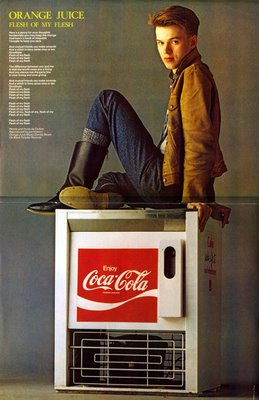
Not the most well-known Orange Juice track, although it is on the self-same Rip It Up album as The Hit. And was released as the follow-up to that self-same number 8 smash hit, peaking at a slightly less chart-troubling number 41. Fame fame fickle fame, to paraphrase one of our other pop treasures. And not the coolest Orange Juice track either. That would be Blue Boy if you were wondering. And certainly not the best Orange Juice track, although there’s something about Flesh Of My Flesh that brings me back time and time again.

Maybe it’s the acid-tongued Collins’ bittersweet vocal, “Here’s a penny for your thoughts (incidentally you may keep the change)“. It’s a good one, but, nah. Most of the time the lyrics are incidental (there’s that word again). It’s the overall sound that reels me in. Always has been, even with Dylan. Orange Juice knew their onions, as they say, and the reference points, however fashionable or otherwise they may have been in 1982, are there for anyone with even half a scholarly outlook on pop music to spot. Maybe it’s the Chic-esque rinky-dink guitars and I Want Your Love descending chimes. Talent borrows and genius steals, after all. Maybe it’s the wee burst of ba-ba-ba-Bacharaque brass every now and again, recalling Dionne Warwick at her easiest of easy listening. Or maybe it’s just the sting of distorted vintage guitar riffing in and out whenever Edwyn thinks the track veers too close to pipe ‘n slippers pastiche. Maybe even it’s the Philly soul guitar break that pops up here and there on both single versions (it is a belter of a riff, if you want to know). Or maybe (though less likely) it’s the none-more-80s-sounding 12″ version, with it’s extended breaks, congas and bongos, ting-a-ling percussion and of-it’s-time super-slick st-st-st-stoodio production.  Whichever way you look at it, Flesh Of My Flesh by Orange Juice is a perfect wee record.

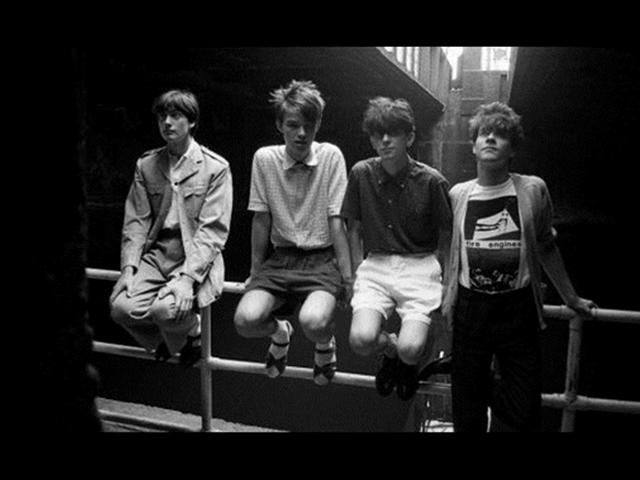
Jesus! Sandals! With Socks!

I’d love to tell you that after buying this in Rough Trade I ran up the road to play this to death in 1983, but I’m just not that cool. I would’ve been running up the road to play records to death by this point in my life, but in 1983 I was most probably running up the road with Electric Avenue or Down Under (look them up if you need to) swinging in the wind, John Menzies poly bag tearing into my newly teenaged wrists while I sprinted at full lung bursting pelt to get home tout de suite in order to perform the spiritual ritual of placing needle on vinyl. Eddy Grant and Men At Work. That was my 1983. It would be a few more years before Orange Juice made themselves known to me, but I’m glad they eventually found me.

The Music:

Flesh Of My Flesh (album version)

Flesh Of My Flesh (7″ version)

Flesh Of My Flesh (12″ version)

Flesh Of My Flesh (from a bootleg, live in London 83, probably the Lyceum in March)

All tracks are very different. The album version is, for want of a better word, smooth. The two single versions are spikier, more abbrasive, rawer, whatever you want to call them, and are better for it. The 12″ version features all of the production gimmickery mentioned before. Perhaps a slightly dated affair, I love it, for what that’s worth. The live version manages to be both punkish and funkish, with cringe-inducing out of tune keyboards replicating the brass parts. Haircut 100 this is not. Take from that what you will.