Hard-to-find

Bangers

Son of a gun is an ancient turn of phrase that can be applied in both the positive and negative. “Why, you old son of a gun, you!” they’ll say in Westerns and Hollywood golden-era classics, a phrase of surprise to indicate that one of the protagonists has gosh darned gone and done it, whatever that may be. “You son of a gun,” one character might snarl to another, an indication that they’ve really said, “son of a bitch,” but the writer or vocaliser (or studio) has thought this too crass to say aloud. Centuries ago, in nineteen hundred and eighty-six, I can remember using that self same phrase in my Higher English exam, stopping short of using the word ‘bitch’ but hopeful that whoever was marking it would read between the lines. I got an A, so I’m thinking they did.

It’s a phrase that dates back 300 years and more, to the time of sea-faring clippers and naval gunships, to an era when it was standard practice to allow married couples to be together at sea. When the women invariably fell pregnant, they’d be forced to give birth in the space between the cannons on the ship, the widest space available. Being in this space allowed the naval men to go about their business of firing at the enemy or hauling away or scrubbing the deck without the unnecessary distraction of falling in or sliding around afterbirth. Subsequently, boys born in this manner were known as sons of guns. I’m assuming they drowned the girls, or had them working in the galley by the time they could walk. Happy to be proven otherwise though.

Son Of A Gun opens The La’s only album. A record that isn’t anything as shite as Lee Mavers would have you believe, it nonetheless would’ve benefited from the inclusion of some of the multiples of session tracks that have subsequently crept out, rather than the odd flat take or two that made up the official tracklisting. To get The La’s, Jim, you’ve got to magnetise them in the first take or two. That’s where the magic happens, when the song is still cooking and the band is still feeling their way around the melody and vibe of it all.

The La’sSon Of A Gun (Take 2)

Their second recorded take of Son Of A Gun is proof. Long before Steve Lillywhite was drafted in to jigsaw Mavers’ abandoned album together, Jeremy Allom was tasked with manning those ’60s dust-covered faders. The group responds, rattling out a skifflish and rootsy version, full of air and life and that mystical, non-descript ingredient that makes The La’s unique.

The downtuned guitar picks out a clip-clopping rhythm, all bite in the high notes and snapping twang in the low. Mavers’ sing-songy voice floats across the melody, his sidekick John Power harmonising those ‘run rabbit run‘ lines in the chorus. A lovely wee guitar run plays behind the chorus, up and down the scales and back out of consciousness by the time Mavers has begun harmonising with himself. That’ll be double-tracking, Lee. We’ll not be having much more of that nonsense.

Anyway.

The sun is currently out here in North Ayrshire and, as is tradition in this house when that happens, the Trojan reggae gets blasted. Presently Trojan’s Tighten Up Volume 2 is making the heavily scarred wooden flooring vibrate, causing ripple effects in my daughter’s mug of tea and thudding its easy skanking bass off and out through the patio doors and into the back garden, maybe even entertaining the neighbours as it floats its way across the railway tracks to be vapourised by the ball of fire in the sky.

Rudy MillsJohn Jones

What I know about Rudy Mills would easily fit into the 1 cm run out groove of this late 60s beauty, and the internet can’t tell me much more. What I can tell you is that John Jones is a fine example of rocksteady.

A mid-paced groover, it has all necessary ingredients for a rockin’ good time; squeaky organ, repeating four chord riddim, slightly wobbly backing vocals and a soulful, honest delivery that leaves you in doubt of its authenticity as a bona fide roots reggae classic. Not as well known, perhaps, as other tunes and artists from the era, it’s one that belongs in your ears, for today at least. Oh yeah – and it features a ‘son of a gun‘ lyric too, as it should for a song about a low down, lying, woman-stealing ne’erdowell.

Get down on it.


Get This!, Gone but not forgotten

Sustain-ability

There’s the clip in Spinal Tap when Nigel Tufnel, all Jeff Beck hair and street punk gum snap, is showing off his collection of vintage guitars. He holds up a Les Paul (of course) – “s’a ’59” (of course) – and, as the interviewer asks him the value of the guitar (of course), Tufnel butts in and implores the interviewer to be quiet and listen to the sustain of his unplugged guitar.

Just listen…the sustayn…just listen to it…it’s faymous for its sustayn…eeaaaaaaahh…

It’s ridiculous and smart and very funny, with Christopher Guest playing it straight and just on the right side of dumb but rich Londoner, and with much of Spinal Tap being cribbed from stories involving real-life musicians, you wouldn’t bet against this being a true story too.

Is it a myth that old guitars sound better? Apparently not. Or maybe that should be apparently knot. Old guitars sing with the release of being played again. It’s a fact. Scientific too.

The science of it all (usually a subject that has me passed out and horizontal in under a minute) decrees that as wood ages, the sap in the wood dries out. So the more the guitar is played, the more the wood vibrates, y’see, and it’s those vibrations that help to speed up the drying out process. It stands to reason that an old guitar that’s been well played – a ’59 Les Paul, say, or my own ’78 Telecaster (most definitely well played rather than played well) – will indeed have a more cultured and refined tone than one that’s just straight from the luthier’s workshop.

Acoustic guitars tend to have a more noticeable improvement with age. There’s no pick-ups for starters, so the sound is made at the source rather than via amplification, and the instrument’s hollow body helps that sound to resonate. The wood the guitar is made from (and that could be alder, mahogany, ash, elder, a combination of some or all…) and the tension of strings used and how regularly it’s been played will all affect its overall tone.

When my dad passed away I inherited his Lag acoustic guitar. It wasn’t a particularly expensive guitar and it wasn’t that old when I fell heir to it, ten years maybe, but the old folkie (and that’s a story in itself) had treated it well and played it regularly enough (at gigs – I told you there was a story) that playing it is a proper joy. The action is low and smooth. There is no fret buzz. The bass notes are rich and reverberating. It handles the capo at the highest of frets, happily stays in tune and it responds really well to Keith Richards open G tuning. Best of all, what I’ve found if I tune it a whole step down, is that it sounds bassy and bluesy and bendy and exactly the sort of pitch and frequency that might have someone like Lee Mavers getting a whole set of songs from.

I’ve kept it in this tuning for over a year and there’s rarely a night when I don’t pick it up for a bit – anything from a few minutes to a few hours – and play it, the dusty ghosts of my dad’s fingers, just below my own, spidering up and down the fretboard and dancing across its six strings as I get to grips with a tricky Johnny Marr passage or a pastoral McCartney number or, this week, The La’s Son Of A Gun. Down-tuned and loose and funky, there’s enough give on the strings to give it soul, enough open strings in the picked verses to ring out naturally between the rhythmic off beats played by the right hand’s finger nails on the scratchplate and enough bass to make the strummed chorus full of fat and full of flavour. Unsurprisingly, The La’s version is also played in this tuning; the tuning of humming fridges and ’60s dust and the Merseyssippi and single bloody mindedness. Look long enough around this blog and you’ll probably find it.

Another guitarist more known for his skewed Telecaster playing than anything else is Blur’s Graham Coxon. He’s a great player too, happily chopping out punkish riffs and wiry leads and art-pop, rule-breaking bridges, employing two Rat distortion boxes simultaneously to devastating effect. What’s perhaps less-well known is that he’s also a fantastically accomplished acoustic player.

Graham CoxonSorrow’s Army

Sorrow’s Army from his 2009 Spinning Top solo album conjures up the spirit of Davy Graham and rattles its way out of the traps like Mrs Robinson on speed, strings snapping tautly – he favours skinny ones, a 9 gauge after some advice from Bert Jansch, every finger on his right hand employed in blurry syncopation, left hand shifting through 7ths and minors with dextrous ease, the squeaks and scrapes of flesh and nail against the strings adding fireside warmth. It’s not Girls & Boys or Popscene or Beetlebum, but when the song’s clattering Magic Bus rhythm announces itself around the minute mark, it all falls into place. The accompanying album is worth investigating too, should this be your kinda thing.

Old guitars, handed down, played forever. Now there’s your sustain-ability. Just listen.


Alternative Version, demo, Hard-to-find

In Search Of The La’s

In 2003, MW Macefield wrote a book called ‘In Search Of The La’s‘. Subtitled A Secret Liverpool, the author donned his best Inspector Clouseau raincoat, popped an oversized magnifying glass into the top pocket and hopped on the train to Lime Street in the hope of tracking down Lee Mavers, the wayward genius responsible for steering the good ship La’s aground. Despite reforming for a short, badly-received tour a couple of years after the book hit the shelves, and an even less successful venture a few years after that, I’ve now come to accept that The La’s are back residing in the ‘where are they now?’ category.

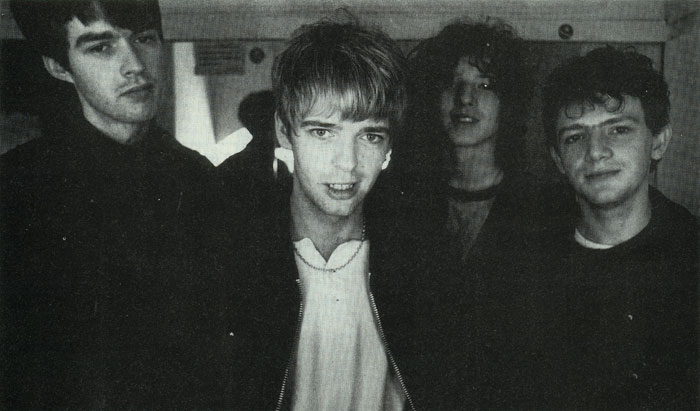
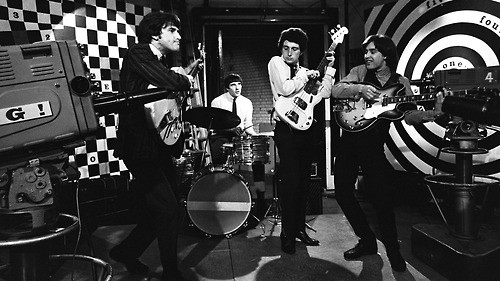
A good La’s detective will tell you that this promo pic of the band does not relate to the line-up that played on the tunes below.

Mavers’ legend continues to grow by the day and in the smallest corners of the internet he’s regarded as our generation’s version of Syd Barrett or Peter Green; the band leader with (way) out there ideas that were too far gone for even the most open and creative of minds in his band.

Lee tuned his guitars to the hum of his fridge.

In order to baptise his recordings with the relevant credentials, he demanded the Abbey Road desks he’d procured remain covered in their original 60s dust.

Despite at least a dozen goes of recording an album, he said nothing came close to the demo they’d recorded themselves of non-album b-side Over. Over, as you may well know, was recorded live. To 4 track. In a stable. There’s a Jesus pun to be had here, but Mavers is not the messiah, he’s just a very haughty boy.

The small but (im)perfect body of work he’s given us rattles and rolls and chimes and chirps with effervescent Scouse enthusiasm and a scrubbed, scuffed, skirl. Alongside the actual album, you’ll find all manner of demos and outtakes if you look hard enough. The La’s album was given the Deluxe treatment about a decade ago and the inclusion of the extra tracks shone a light on just how many producers they worked with in their vain search to nail the perfect version. The 4 CD box set that appeared afterwards only goes to confirm this. Dig deep and you’ll uncover new things in old tracks. My sister a few weeks ago gave me a copy of the BBC Sessions album. Playing the record is much more La’s than sticking on a CD as you go about your business, and I’ve been re-listening with open ears and open mouth. Some of these session tracks knock the released album versions for six.

One of the oldest La’s songs, the version of Doledrum from the band’s 1987 Janice Long session is the perfect example;

The La’sDoledrum (Janice Long session, 2.9.87)

Those percussive Magic Bus off-beats are magic! Maver’s vocal is strong, his rhythm playing an excellent counterpoint to the skifflish back-beat. Paul Hemmings sprightly solo in the middle is mightily whistleable. but it’s John Power’s high falsetto backing vocal that’s the song’s secret weapon, carrying the whole thing to the perfect multi-vocalled end. Like so much of The La’s material, there’s so much going on in such a simple song. Listen to it. Listen again. And again. I guarantee you’ll spot something new each time.

Possibly even more upbeat is the long-shelved version recorded with John Leckie;

The La’sDoledrum (John Leckie version)

Faster and with less emphasis on the percussive off-beats, the Leckie version features elongated Mavers’ harmonies and a lovely, subtle Power aah-aah-aah sigh where the solo should be. Mavers would probably tell you that this version is unfinished, or is lacking the requisite magic or doesn’t have enough 60s dust sprinkled atop. For what it’s worth, it would have been a worthy addition to that one and only album. The version that made the final cut is positively lethargic by comparison. Indeed, visit the forum on thelas.org and you’ll find plenty of discussion around the tracklist of the perfect La’s album; the Leckie mix here, the Bob Harris mix there, the Mike Hedges mix for this, the John Porter take for that. It’s a happy minefield when you get going.

I’m off to Liverpool this coming week with an itinerary packed full of Beatle-ish activities, Tate visits and a trip to Anfield. While I’ll forever be in search of The La’s, or at least Mavers, I’ll most definitely not find the proud Evertonian anywhere near the home of Liverpool FC, and I can’t imagine he’ll be propping up the bar in the darkest corner of The Cavern Club, but, y’know, y’never know. I like to think that I’ll pass him on Matthew Street, that he’ll recognise me (we were holiday pals for a week in 1993) and he’ll punch me playfully on the arm before we step into the nearest pub for a chinwag and a gin pomade, “kiddo.”


Hard-to-find

Sole Music

Who Knows by The La‘s is the track that time forgot. Their one perfectly imperfect album, famously overcooked by a succession of well-intentioned producers, prodders and preservatists, and, despite John Leckie rounding up an actual Abbey Road mixing desk that had channelled yer actual Beatles and a Lennon solo session, devoid of the requisite amount of authentic 60s dust to sate Lee Maver’s unsatisfied and unsatisfiable mind nonetheless contains a dozen short ‘n snappy, frantically scrubbed belters; Way Out, Doledrum, I.O.U, I Can’t Sleep, There She Goes – I really should just list them all – clatter, clang and chime like the best of the band’s undeniable influences.

Mavers, and therefore by default, the band, hated the finished album so much they immediately disowned it. Everyone else though was enthralled by its lo-fi urgency and keening need to drag ‘indie’ music, at the time populated by greasy-fringed posh boys from the Home Counties who played their tunes through banks of overcooked effects pedals, back to a classic songwriting mentality. Too late for the golden era of 60s pop and too early for what would become (gads) Britpop, The La’s ploughed a lone, stubborn furrow for roughly the length of time it took their visionary leader to smoke a six foot spliff to the roach before vanishing in a fragrant puff of smoke.

With each passing year their legend grows. Aborted sessions with young Liverpool musicians too young to have appreciated The La’s first time around, sporadic, erratic live appearances including a short, unpublicised tour 7 or 8 years ago (drums played by the fella who cut Lee’s grass) and a rare spotting of Lee in a Liverpool local banging the bongos at an open-mic acoustic night have all gone a way to helping maintain the myth with a much-resigned and decreasing fanbase.

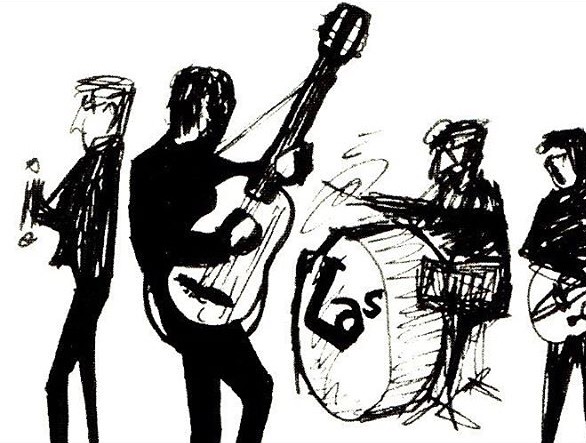
That sketch above appeared online a couple of weeks ago. Purportedly scribbled by Mavers himself, it’s another reason to hang in there. What else lies in drawers, in cupboards, in studios, long-forgotten?

Will we ever hear new La’s material again? Don’t be daft. Of course not. Thanks to the world wide web, there are a multitude of La’s demos, sessions and alternate versions to gorge yourself upon. Despite this though, two things remain tantalisingly conspicuous by their absence;

1. Lee Mavers has absolutely no online presence at all. He is a 21st century hermit. A recluse happy to live off the not insubstantial royalties that pour monthly through his letter box on the back of There She Goes‘ enduring appeal.

2. You can search and search. You can ask Siri. You might even still be able to Ask Jeeves, but you’ll never find more than one version of Who Knows, The La’s track that time forgot.

The La’sWho Knows

Who Knows is fantastic. Going by its non-appearance on any of the La’s demos or live shows that circulate, it was seemingly recorded once and once only, commited to tape and preserved forever as a one-off recording. Featuring a simple, cyclical acoustic riff and a fragile, voice in the dark vocal, it floats across the ether on a vapour trail of morse-code guitar transmissions, radio static and a heavy reverb that swallows the whole track up at the end. Someone should see that it soundtracks the shipping forecast and it would be the best thing ever.

Who knows what tomorrow knows? Who knows what the future holds? Who knows?

That’s it in a nutshell. Lee. In a room. Playing for no-one but himself. Thank goodness someone (Bob Andrews, since you’re here) magnetised it all to tape. It made its only appearance on the b-side of the original There She Goes single. The cosmic, slightlydelic yin to the shiny, radio-friendly yang. Those in the know should’ve put it on the album at the expense of Liberty Ship. It would’ve made the perfect Side 1 closer. Why didn’t they? Who knows indeed.

Mavers. 2017.

Alternative Version, demo, Hard-to-find

EverLa’s-ing Love

There’s a scene in Roddy Doyle’s Commitments when Joey ‘The Lips’ Fagan is talking to band manager Jimmy Rabbitte’s dad about his time spent working with Elvis. A picture of Mr Rabbitte’s favourite singer hangs above the mantlepiece, noticeably just above a picture of the Pope.

Tell me Joey,” Jimmy’s dad asks with pleading eyes. “Did ye ever see him take drugs?

No, Mr Rabbitte. Never.” As he fixes him in the eye, Joey replies with a genuine plausibility, but given that most of his stories are taller than the quiff atop The King’s head, even Mr Rabbitte must’ve taken it with more than a little pinch of salt.

Likewise The La’s. To clarify, Lee Mavers grinning, gurning, mop-topped Mersey head doesn’t take pride of place on my living room wall, nor do any leaders of world religion, but in this house he holds God-like status. A nutty, 60’s dust-covered, guitar-tuned-to-the-humming-of-the-fridge God-like status, up there with all the greats. One album in and then nothing. The odd low-key comeback where he was hellbent on sabotaging affairs should be quietly forgotten about. But not the tunes. They live on, immortal. The one bona fide rhyming, chiming hit on his hands allows him to live in relative luxury forever. If you want to hear Lee singing live, these days you’re more likely to do so on the terraces of Goodison Park.


See that song There She Goes? It’s about mainlining heroin, so it is….

That’s a common concensus and it fair pisses me off.

Now, I once spent a week on Minorca with Lee Mavers and AT NO TIME did I see him mainline heroin. No, Mr Rabbitte. Never. This is a true story – I was on holiday with my missus, so was he. We were holiday pals. One night in his company chatting about The Who and The Kinks and The Beatles – favourite Beatles song? “She Loves You, man!“, said as if it was the most obvious answer in the world, was good enough for me. ‘I’ll leave him in peace,’ I told the future Mrs Pan. ‘I can’t be pestering him for the next week.’ Unbelievably, thrillingly, it was he who pestered me for the next week. ‘Don’t look now,’ said the missus over a midday breakfast the following day, ‘but your pal’s coming over.’ With an ‘Alright kiddo?!?‘ and a punch on the arm, he sat down to join us and we were new best friends.

Over the next few nights he’d beat me at pool, introduce me to gin pommades and sing, SING! La’s songs across the table to me.

I love ‘Man, I’m Only Human’ I told him one night. “D’you know all the words?” he asked, and before I could reply that I didn’t, he sang them to me, right there at the table, with the same high, floaty voice he’d used a few months before in the Mayfair in Glasgow. Putting extra emphasis on the ‘Man, I’m only wo-man‘ line, he sat back, arms folded as if to say, ‘What d’you make of that, then la?‘ The bar was full of folk oblivious to who was in their presence and it was magic.

He told me about the 2nd La’s album, due for release in “one nine nine four“. It’d be called Cocktail and would be the defining album of the era. It would knock ‘the Stoned Poses‘ off their perch and restore The La’s in their rightful position at the top of the musical tree. Lee envisaged a mountain with the sides littered with all the bands of the day climbing to the top (but not quite getting all the way there), drawn by a flashing blue light. “Callin’ All, la. Callin’ All. And who’s at the top, above them all?” he asked rhetorically.

Now, at no time did I see my new best pal mainline heroin. No, Mr Rabbitte. Never. But he did have a fondness for disappearing into the trees and returning a short while later with a certain sparkle. If Jimmy ‘The Lips’ Fagan told tall stories, Lee’s stories were perhaps taller. Higher, even.

The La’s.

A band with more line ups than Lulu roon’ the back o’ the Barras

Here’s The La’s when they were a skiffly, Beatlish, band from the Merseyssippi, full of promise, mysticism and tunes to die for. April 1987 – 3 whole decades ago! – found them working with Mick Moss on one (just one) of the sessions for their ill-fated, beatifully flawed one and only LP.

The La’sCallin’ All

The La’s were seemingly never happy with any recordings of Callin All’, ever. It’s one of the few La’s tracks not to have seen an official studio release. La’s trainspotters have multiple versions, of course, from the rootsy, acoustic version above to full on sultry Stones We Love You-era inspired takes. Each one a classic, every one a lost gem in the small but perfect La’s back catalogue.

The La’sCome In, Come Out

Come In, Come Out exists in better form, on the b-side of There She Goes and on ‘Lost Tapes‘, a long-forgotten download-only release from the embryonic days of the first legal downloads. The Mick Moss version is missing the percussive back beat on those two versions, but skips along with frantically scrubbed acoustics and a full-on ‘n funky bassline. Not for nothing did The La’s tag ‘Rattle ‘n Roll’ onto their record label. I know someone who knows someone who knows John Leckie quite well and he told me (so it must be true) that Mavers often strapped a box of Swan Vestas round his strumming hand for this one in order to achieve a more rhythmical effect. Can’t hear it on this version, but I believe it to be fact, Mr Rabbitte. Fact.

The La’sWay Out

The debut single. A brilliant lilting, waltzing introduction to the band. Some weak vocals on this take, possibly as the band run through it for the first (or hundred and first) time. Who knows? Lee’s vocals provide the blueprint from which all future versions are hatched, John Power listening with a keen ear to appropriate the backing vocals.

The La’sDoledrum

Unlike the previous track, here’s a fully-formed take; skiffly guitars, walking bass, harmonising backing vocals, the whole shebang. Really great rhythm playing. It swings with a certain confidence, knowing it’s a great song.

Mavers can fair pluck the melodies and the tunes out of the air with ease. If only he’d done so a bit more regularly.


*all pictures used are in black & white for authentic analogue retro appeal

Get This!, Hard-to-find, Yesterday's Papers

Kinks, Konkers and Kids in Kasualty (slight return)

Slightly recycled from Plain Or Pan’s back pages, this article is adapted from one that first appeared 5 years ago…

Autumn. The nights are drawing in and the curtains are drawing shut. The heating comes on a bit earlier than normal and stays on that wee bit longer. You can smell winter coming in the air. The leaves are turning red and yellow. Conkers are on the ground and in the playground. Kids are off to the medical room for a good dose of TCP and a telling off.

kinks rsg

It’s round about now that I like to dig out ‘Autumn Almanac’ by The Kinks, a song that so perfectly sums up this time of year. You don’t even have to be quintessentially English to appreciate lines such as, “I like my football on a Saturday, roast beef on Sundays, alright! I go to Blackpool for my holidays, sit in the open sunlight.”

No doubt about it, it’s one of my all-time top 5 favourite songs ever. Just ahead of ‘Ally’s Tartan Army’  by Scotland’s 1978 World Cup Squad, though just behind ‘There She Goes’  by The La’s.

Lee Mavers once lectured me on the brilliance of Autumn Almanac  for a good 10 minutes. “From the dew-soaked hedge creeps a crawly caterpill-ah!” he offered, in his sing-song Mersey twang. “How good a line is that, La!?! ‘Friday evening, people get together…hiding from the weather…’ The chords, the feel, the melancholy…….it’s not as good as Waterloo Sunset, though, is it?”

kinks autumn almanac ad

The single version of Autumn Almanac was recorded in September 67 and released 3 weeks later. No great strategic marketing campaign with focus groups, target audiences and avoidance of any other big act’s single being released at the same time. Get in the studio, cut the record, release the record. Times being simpler then, Autumn Almanac climbed to either number 3 or number 5 on the charts, depending on which music paper you were reading.

Recorded for Top Gear just a few weeks after, on October 25th 1967 at the BBC’s Maida Vale Studio 4 and broadcast 4 days later, the above track is taken from a well-known Kinks bootleg* called ‘The Songs We Sang For Auntie’, a 3 CD set that compiles most of (or all?) the unreleased BBC session stuff from 1964-1994. A must-have for any fan of a band who were matched surely only by The Beatles in terms of high quality output.

Ask anyone to name 3 Kinks singles and they’ll give you all the usual suspects, but I bet it’d be unlikely Autumn Almanac would feature in too many lists. It’s an under appreciated classic, that’s for certain. Just ask Lee Mavers.

*Since writing this article, there’s been an official Kinks BBC release. But you probably knew that already.

Yes, yes, yes! It’s my Autumn Almanyac!

demo, Hard-to-find

A plea for Lee and GOLAS3

Hoy! Mavers! C’mere til I gie you a smack roon’ the heid. And make it quick, before that Pete Doherty gie’s you a different kinda smack roon’ the heid. In two weeks time, a bastardised version of The La’s will play a free festival in Sheffield. The band will consist of Lee Mavers (of course) along with selected Babyshambles personnel and Pete Doherty hingers oan. Not good. I asked Mavers if I could be in The La’s once. True story, but I’ll save it for another day. He told me I could never be in The La’s because I wasn’t a Scouser. Nowadays, anyone with the right haircut, Cuban heeled boots and fondness for illegal substances can seemingly fit right in. This new version of The La’s promises to be a car crash of even greater proportions than the 2005 version. And that’s really saying something. Bop bop shoobedoowop.

Don’t do it Lee. Stay at home, dig out the back catalogue and reminisce. That’s what most La’s fans have had to do for long enough anyway. It’s what I’ve been doing this week. Someone contacted me from Chile (!) and asked me to write a piece on The La’s for a cultural South American website. It’s being translated into Spanish as I type. I dug out my old La’s bootlegs and session material and buried myself in the stuff. It’s been magic. I have all The La’s small but perfect back catalogue apart from this…

timeless melody ad

The unreleased version of Timeless Melody, GOLAS3 (or GOLAS312 for the 12″). Almost 20 years to the day, 500 copies were pressed up and promoed to the music weeklies very briefly. GOLAS3 subsequently became the most sought after item in The La’s canon. It was withdrawn very quickly after Mavers decided he no longer liked the mix. But you knew that already. After hearing tape after tape of La’s sessions I’ve come to the conclusion that I don’t think even Mavers knew what he was really listening for some of the time. GOLAS3 is a fantastic release. I’d imagine you’ll all be familiar with Timeless Melody, but the withdrawn version is something else entirely. It has a full-fat mono-sounding thunk that is obviously missing from the watered down, more well known album version. “Almost an anti production!” raved St Etienne’s Bob Stanley, reviewing the singles in that week’s Melody Maker. The withdrawn version of Timeless Melody is The Beatles in Hamburg’s Reeperbahn, Jeff Beck in The Yardbirds and Bummer In The Summer-era Love rolled into one. ‘Wild’ Billy Childish must’ve cried into his impeccably imperialistic droopy moustache if he was ever fortunate enough to hear it. There’s even more to follow…

GOLAS_312-Melody_Maker-May_27-1989

Skip past the more familiar sounding Clean Prophet and you’ll get to Ride Yer Camel, a 7 minute lo-fi homage to the Delta Blues, recorded late one night in one of The La’s umpteen guitarist’s flats. Beefheart, Bo Diddley and the blues. I’ve written about it before (canny be arsed linking to it to be honest) but have a listen. You won’t believe your sanitised in-ear speaker system 21st century ears.

Timeless Melody

Clean Prophet

Ride Yer Camel

My mp3’s come courtesy of a very kind and decent Irishman. He made my day about 4 years ago. If you happen to have a copy of GOLAS3 or GOLAS312 lying around gathering dust in your collection, drop me a line and I’ll take it off your hands forever. You could make my day today. I’ll even give you some money for it. Everyone’s a winner baby, that’s no lie.