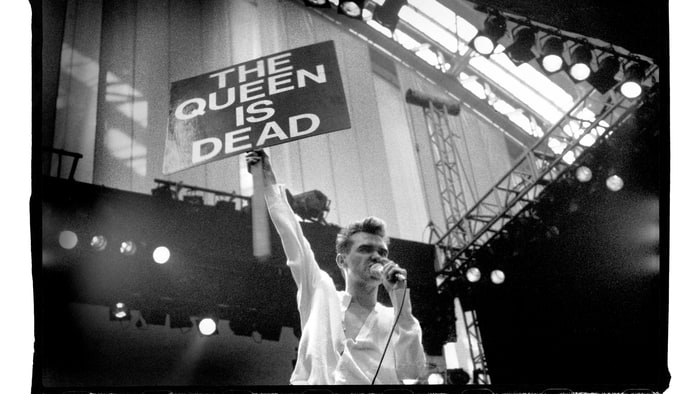
Live!

Funny? Clever? Entertaining? Mozz Def

Them Smiths burned brightly. Five years in and out. 17 singles, 4 studio albums, a trio of compilations, a live album and then gone. One of our most influential groups over and out in the time it takes other bands to harvest the data on their Tik-Tok accounts. Morrissey as a solo artist initially followed the same blueprint; high watermark of quality on the singles’ b-sides, an early years grab-all Hatful-style compilation, fervent live shows, studio albums that were inventive and funny and unique and occasionally really rockin’ and then…the downward spiral. A musical shift in the nation’s listening tastes coincided with a poor album (Southpaw Grammar) and the decline of Morrissey was in full effect.

It’s not hard to see why Smiths fans might’ve eventually if reluctantly looked elsewhere for thrills; weak albums recorded by a curmudgeon in shitty parallel jeans, the ever-revolving cast of record companies (un)willing to work with him, the shelving of albums, the contempt he shows for his fans – the merch stands at the gigs with Patti ‘n Lou ‘n Bowie records – and more recently, his own – signed by yr man at eye watering prices (£250 for a signed Suedehead?!!), the sudden, abrupt halts to shows (hecklers, the smell of meat, the cold, anything really, all cited as reasons), the last minute cancellations of gigs when, very late in the day, he just can’t be bothered to play….and not least the increasingly right wing politics, the hanging out with Russell Brand, the Brexit-posturing, the For Britain schtick and the siding with Farage, the draping of himself in the flag of Israel, for fuck’s sake. How exactly did the voice of the marginalised, the disenfranchised and the downright downtrodden find himself on the right (ie, the wrong) side of the political spectrum, a venture capitalist with a narrow and bigoted view of the world? The boy with the house in the Hollywood hills has quietly gone about forgetting where he comes from. I gave up on him a long time ago. You maybe did too.

But…

That back catalogue. I stopped listening to any of his ‘new’ stuff after 1997’s Maladjusted. I’d long held the notion that Morrissey was something of a genius at creating song titles for songs that failed to live up to their expectation – Life Is A Pigsty, To Me You Are A Work Of Art, When You Open Your Legs, Something Is Squeezing My Skull, Munich Air Disaster 1958Mama Lay Softly On The Riverbed, I Am Not A Dog On A Chain, The Edges Are No Longer Parallel (written about a new pair of skinny fit Levi’s, I’m told), I Have Forgiven Jesus, The World Is Full Of Crashing Bores, All The Lazy Dykes, Neal Cassady Drops Dead, The Bullfighter Dies, Kick The Bride Down The Aisle…. If they thought they could get away with it, there are writers out there who would give their eye teeth to come up with song titles as inventive and witty as some of those above.

As it turns out, some of these songs are the equal of their titles. That back catalogue that I’ve been stubbornly ignoring for nigh on 30 years? It has some properly stellar tracks just waiting to be plucked from obscurity, compiled into a Spotify playlist and re-evaluated – or evaluated, in my case. This is suddenly important.

Morrissey is back over here for a handful of shows. The tickets aren’t cheap and at the time of going on sale, I’m not that fussed. But I read the reviews from Dublin last weekend. Despite the setlist being heavy on late-era Moz, no-one has a bad word to say. A creeping fear of missing out – FOMO, as your kids might say – begins to linger and intensify. By Tuesday, I’m trawling Twickets looking for a bargain. And I find one for Thursday night’s show in Glasgow. That Spotify playlist of songs played on the unfolding 2025 tour becomes essential listening for two days. I soak in the brooding and majestic Life Is A Pigsty, the slow menace of Jack The Ripper, the me! me! me! egomania of All You Need Is Me. But I skip the Charming Man-lite Rebels Without Applause, the Charming Man-even lighter I Ex-Love You (another great title) and the mess that is the unappealing Scandinavia and hope for the best.

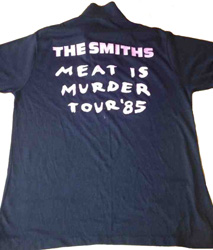
He’s been doing Speedway, one of the best tracks on his last truly great album (Vauxhall And I). And he’s been doing You’re The One For Me Fatty, a throwaway pop song, but one that, since the subject matter himself (Chas Smash) told me it was about him, has lasted well to these cynical ears. He’s teased audiences too with a handful of Smiths songs, of course, so the good song/bad song ratio  must be stacked in my favour, mustn’t it? I can’t legislate for any Israel-defending or England for the English-type posturing. I can’t do anything if he walks off at the first whiff of a Gregg’s sausage roll…or doesn’t turn up at all. I can’t deny that that thought hasn’t crossed my mind. Yet, in a shame-faced display of backtracking and wilful contradiction – but proudly wearing my ‘Morrissey Sucks’ t-shirt (a Billy Bragg one-off that my sister managed to come by for my birthday a few years ago) off I go. Sorry Johnny, if I’ve let you down.
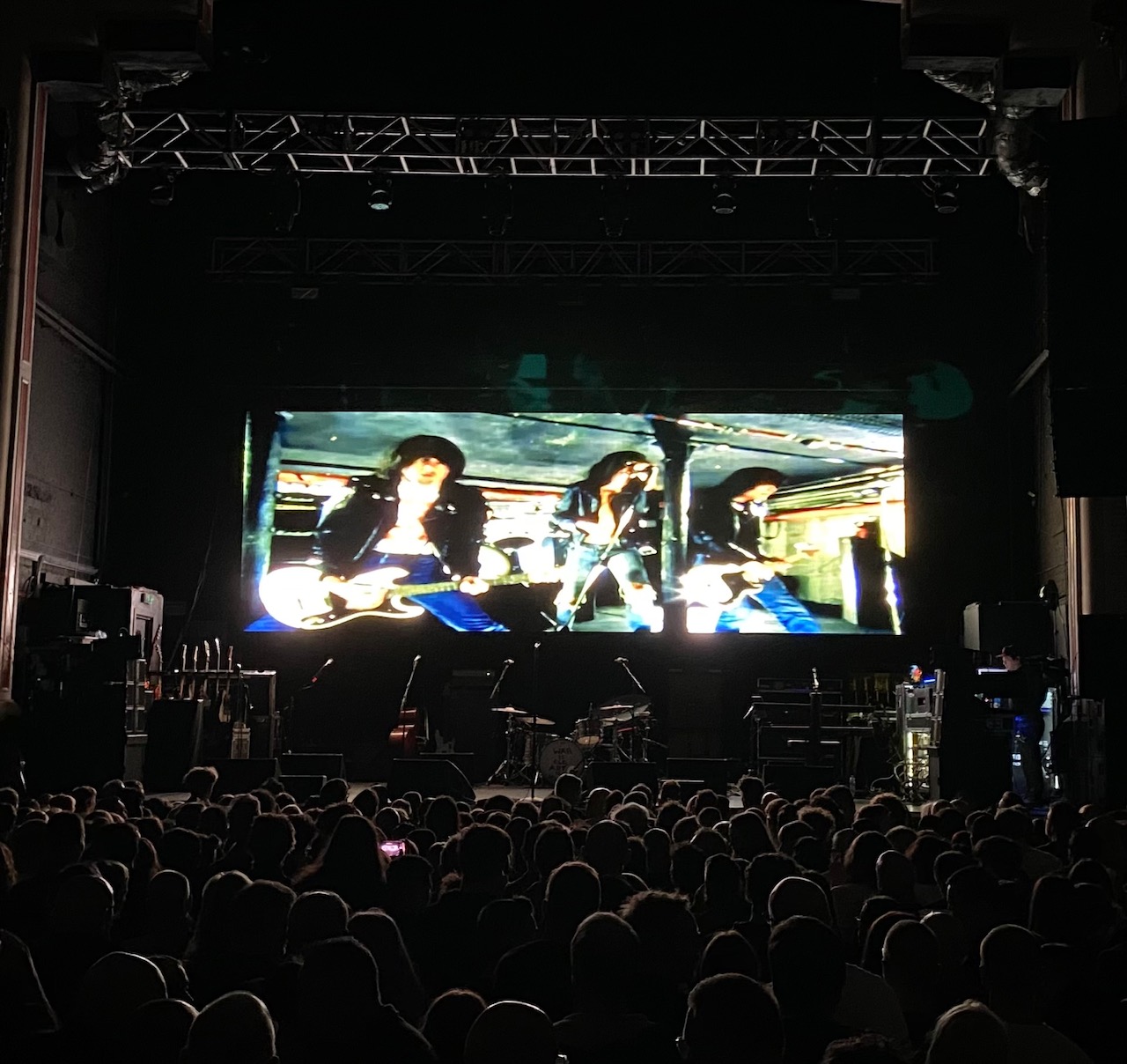
I find a great spot in the VIP section. Easy. I wander into it and no-on asks me to leave, so there I am, directly facing centre stage, an uninterrupted sight line, finding myself deep in conversation with two guys from Brighton who’ve been following the tour. The Academy is quickly rammed. There’s that tangible feeling you get at certain gigs where you know before a note has even been played that you’re in the right place.

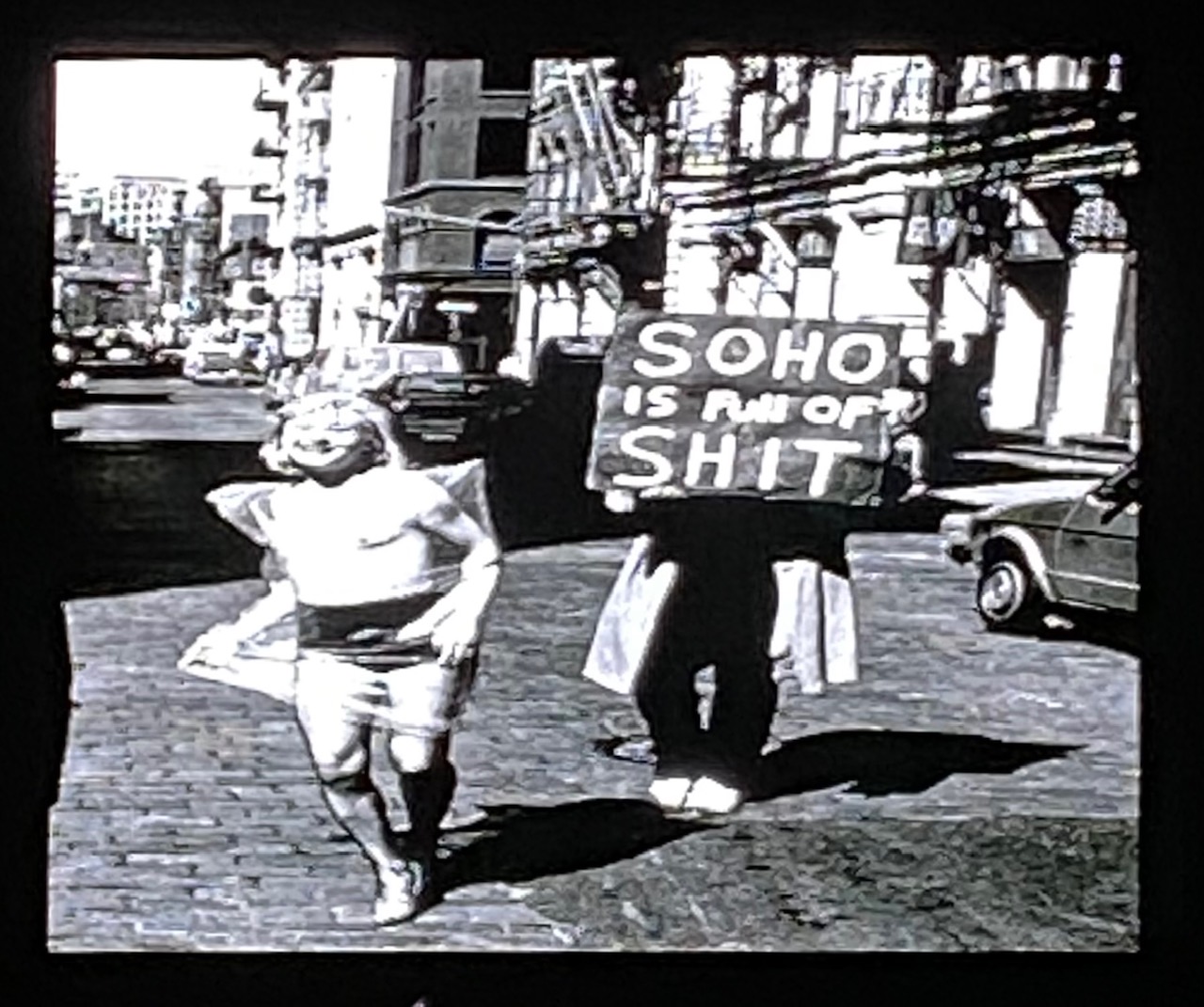
The pre-show film plays in lieu of a support band. It’s great. A jigsawing of Morrissey references, it throws out a feral Ramones at CBGBs, a trashy New York Dolls, a camp Bowie…but also Benny Hill, some trashy and campy early ’70s Eurovision, Divine, Sigue Sigue Sputnik, superb footage of cabaret singers in working men’s clubs…(there’s a theme developing here)…and, of course, black and white stills and clips from Hollywood’s golden era. There’s a handsome and moustache-free Burt Reynolds There’s Alain Delon, slowly unfolding himself from a chair and onto the floor where he dies a slow death as seen on the cover of The Queen Is Dead. There’s Billy Fury, cover star of The Smiths’ greatest single. Steven Patrick will have had great fun putting all of this together, a trainspotter’s reference guide to the mind of Morrissey.

And then we’re off.
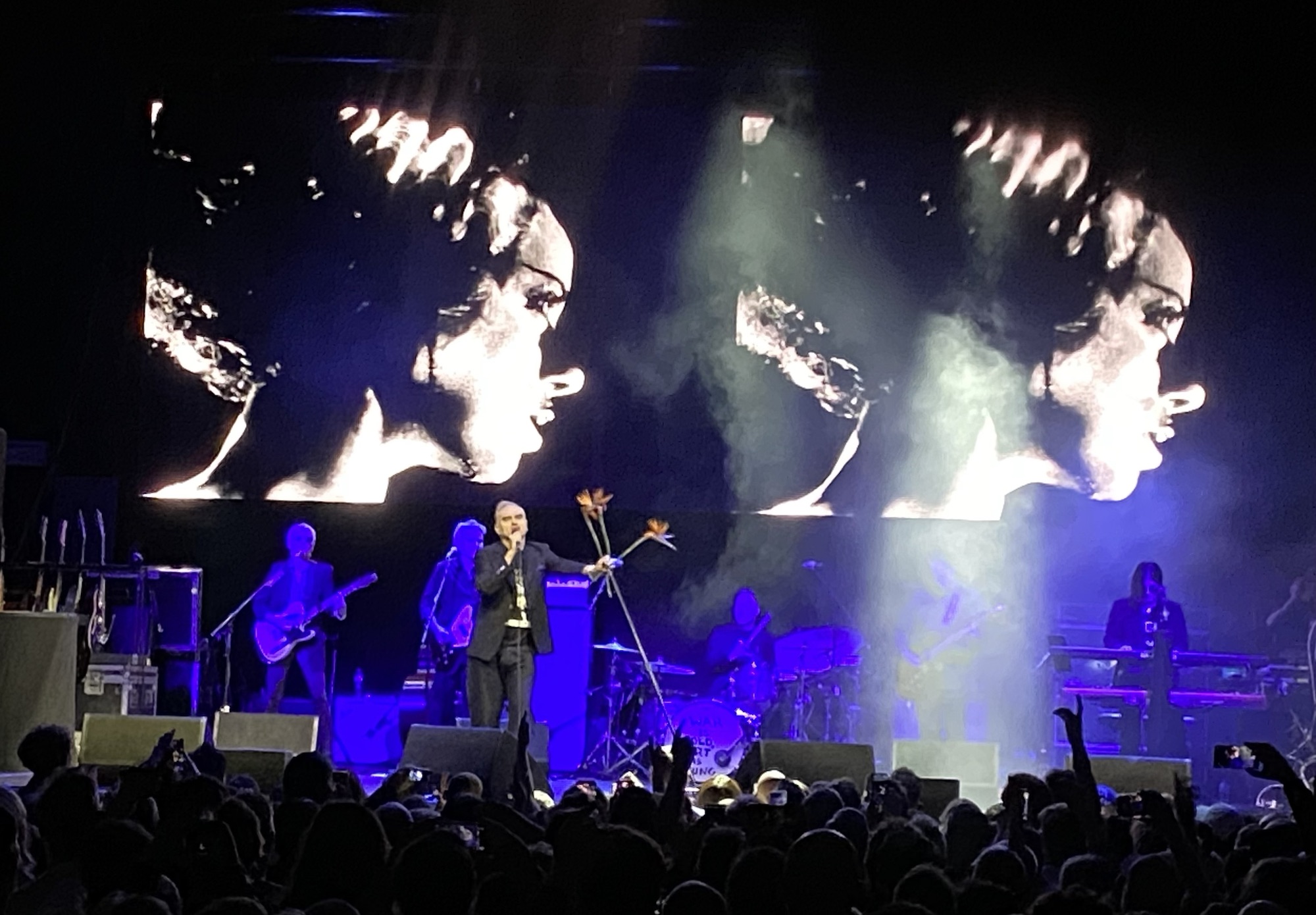
It’s thrilling.

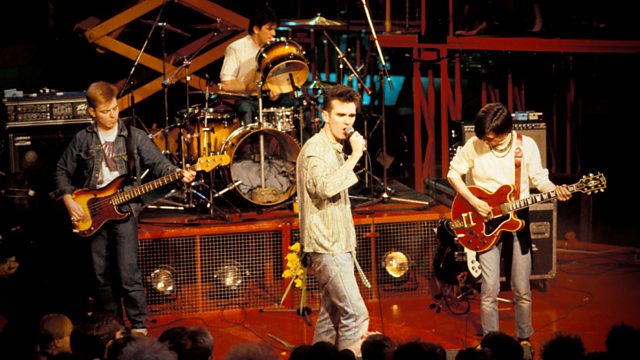
Morrissey is funny, quick witted, whip-smart with the crowd and in fine voice. He sings great. There’s a very strong opening; All You Need Is Me – You’re The One For Me Fatty – a mesmerising Speedway (yes!) into a juddering How Soon Is Now? (note: Johnny’s band plays this better). He has us where he wants us….and so dives deeper into that strange, unfamiliar back catalogue. I’m on board with it though, although the backdrop that changes with each song keeps the attention when sometimes the music finds it wandering.

Then, mid-set, salvation.

Without fanfare or introduction, Morrissey begins to sing I Know It’s Over. His band, for so long unable to cope with the delicacies and intricacies of the Smiths tunes, does a fantastic job. They are light of touch, sympathetic to the song’s heavy veil of pathos and regret and carry the singer like it’s 1986 at the London Palladium once more. Morrissey’s voice is superb, keening and aching those familiar words, stretching out one of the Smiths’ greatest torch songs into the here and now of 2025. It’s almost worth the admission price alone.
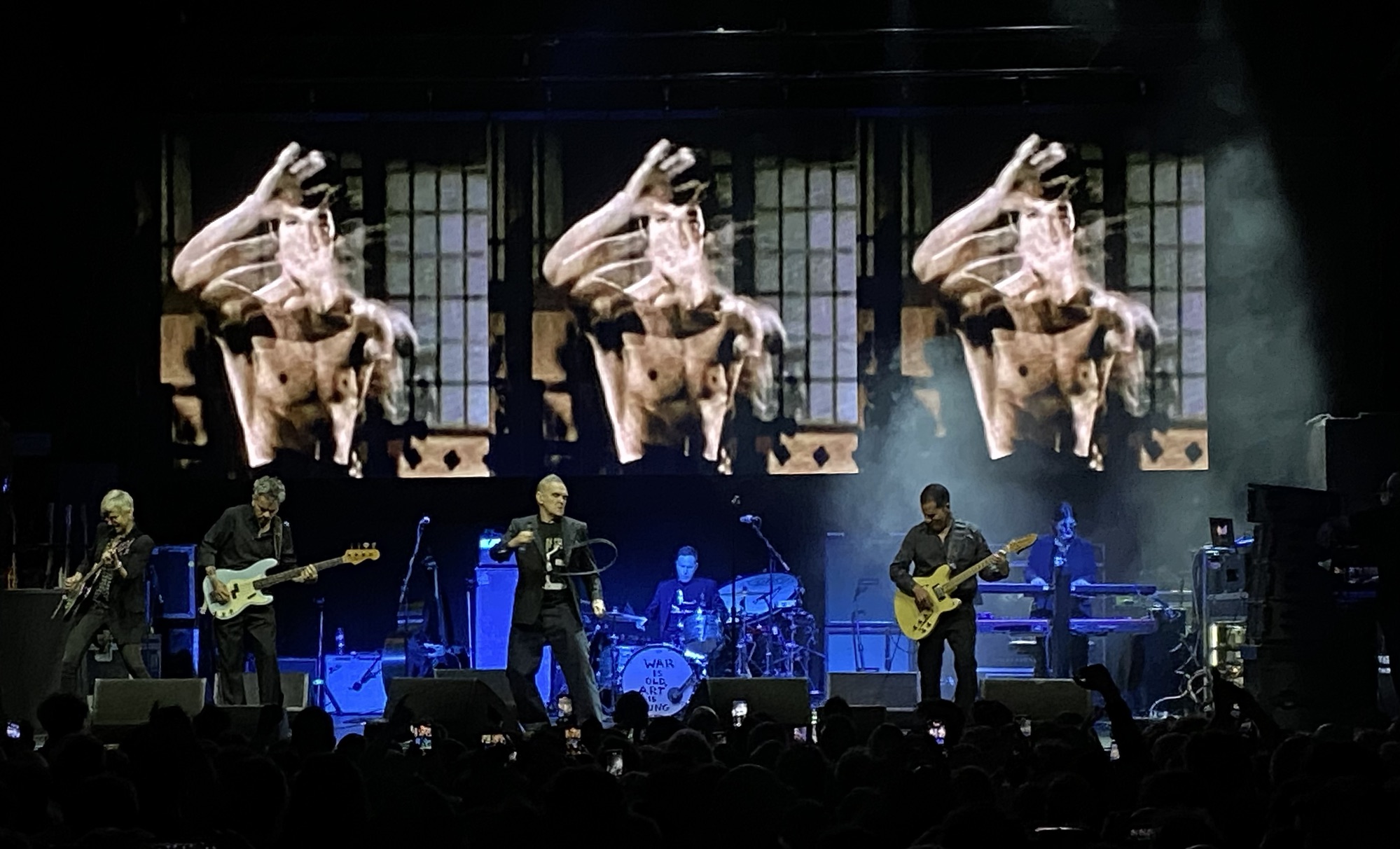
I Know It’s Over is followed by a thundering, joyful Every Day Is Like Sunday. Mass celebration, arms aloft in the chorus, arms around your partner’s shoulder – type stuff. Properly magic. At the part in the lyric where he sings, ‘A strange dust lands on your hand and on your face,’ the house lights go up on ‘face’ and I swear, I swear!, Morrissey sticks his tongue out at me. Right at me! Then the lights go down and I’m left to ponder it.

There’s more! Every Day Is Like Sunday gives way to a properly rockin’ and crashin’ Shoplifters Of The World, the elfin Italian guitar player stage left replicating perfectly Johnny’s harmonic solo.

It’s a proper wham! bam! slam! and I am spent.
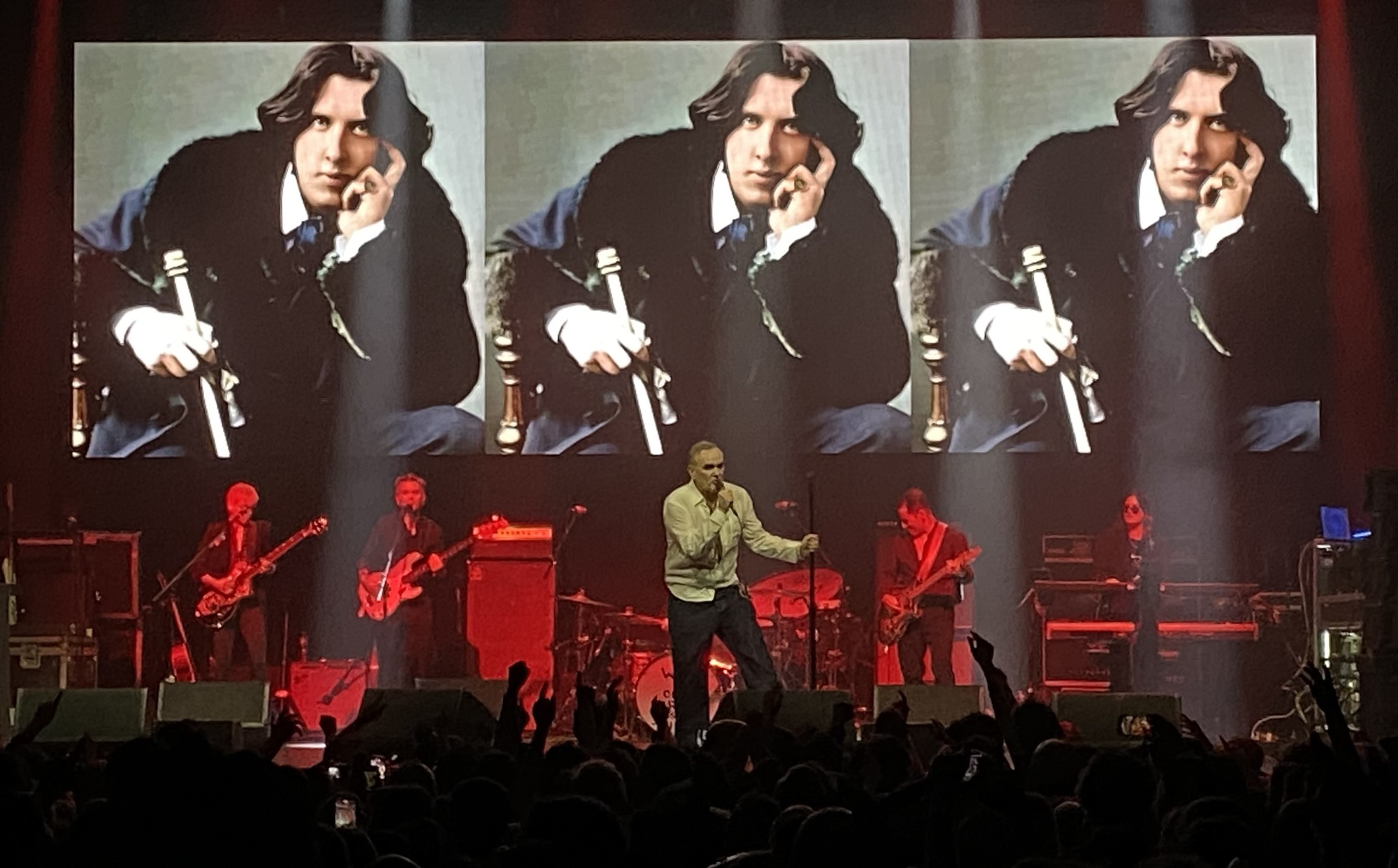
But there’s more still! Life Is A Pigsty (my new favourite ‘new’ Morrissey tune)…a fantastically theatrical Jack The Ripper, Morrissey swinging his jacket and whipping his microphone lead through plumes of red smoke…the supreme gothic pop of Last Night I Dreamt That Somebody Loved Me and, finally, a spitting Irish Blood, English Heart, the full stop on a quite brilliant 90-odd minutes.

My first Morrissey show since 1997 (?) I think, but on this form, maybe, possibly, probably not my last. Agh, the conflict. I feel a wee bit grubby. Elated, but grubby.(Go and see him if you can.)
 

demo

The Queen Is Dead Annoyed At Johnny

We’re night four into a two week Vegas residency. An option for a third week has been pencilled in, but not yet committed to. The audio-visual wonderland that is The Sphere was mentioned from the outset, but by opening night we’re in the Colosseum inside Caesar’s Palace, its stage decked out in the most ostentatious floral display that can be mustered in a city not known for the understatement. 4000 hopped-up Anglophiles in cardigans and suit jackets stand on its velvet seats in a vulgar display of phoney rebellion, the turn-ups on their jeans almost as brazen as the bare-faced front of the singer they’re here to idolise.

Early reviews have been mixed, and that’s being kind. ‘Lumpen drums’, a bass player ‘devoid of the original’s flair and fluidity’ and, most damning of all, guitars that are ‘far more darkle than sparkle’. The singer too is getting it tight. His once collapsing quiff has collapsed to the point of thinning. He has a noticeable paunch, tucked into the high waistband of a shit pair of parallel jeans and his voice is gone gone gone. ‘Miserable Lie‘, a brave addition to nights’ one and two’s setlists has been swiftly dropped for the easier to reach ‘Jeane‘, but the guitar player – a hired LA rock guy and most definitely not Johnny Marr – can’t resist soloing between Morrissey’s lines. The knives are out and being sharpened by the encore. Johnny watches from across the Atlantic and shakes his head, his Ron Wood mod crop flopping in frustration. This is The ‘Smiths’ reunion and it stinks.

Back in his 2016 autobiography, Johnny Marr mentioned that he and Morrissey had met up and, over a pint or two, tip-toed delicately around the idea of a Smiths reunion. It was Johnny’s idea seemingly, and while Morrissey was initially on board, Morrissey being Morrissey then broke contact. Ghosted Johnny, as the young folk say these days.

If you’ve even half an eye on music, you’ll know that in the near-decade since, Johnny has built quite the profile. His live shows are sold out and celebratory, he pops up with a near Grohl-esque regularity – can we still mention him? – on the stages of his peers (James, Pearl Jam, The Pretenders, The Killers et al) and he’s collated a coffee table book featuring well-chosen words and arty shots of his arsenal of guitars. He’s often on hand to lend a quote on a matter of cultural or political importance. He even popped up on one particularly memorable edition of Would I Lie To You?

Johnny, should you need confirmation, is a Good Guy.

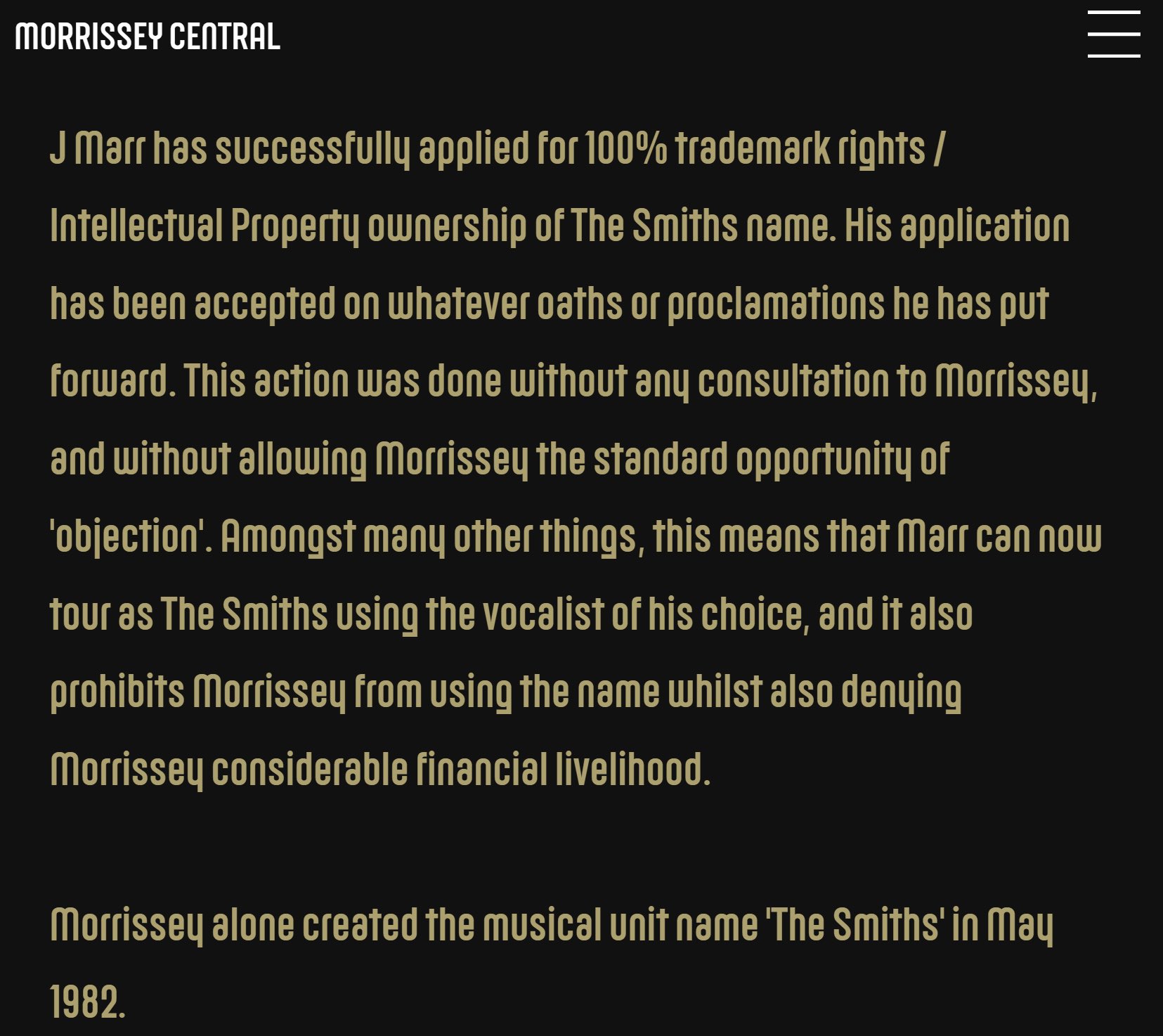
It seems that in far more recent times – in June just gone – Morrissey returned to his old sparring partner, suggesting that their previously-discussed Smiths reunion might in fact be (ker-ching!) not a bad idea after all. Corporate behemoth AEG, an umbrella company that owns multiple sports teams, the Coachella brand and many arenas across the globe had put an offer of a 2025 Smiths World Tour to Morrissey and Marr, and ol’ Moz, he of the ever-decreasing record sales and ever-increasing right wing tendencies, was quite keen on the idea.

It turns out that Johnny was somewhat less than enthused. It’s not for nothing that when asked by a fan on Twitter if he’d consider doing an Oasis and get The Smiths back together, Johnny simply Tweeted a shot of Nigel Farage. Matter closed.

Cue pissed off Morrissey and a statement.

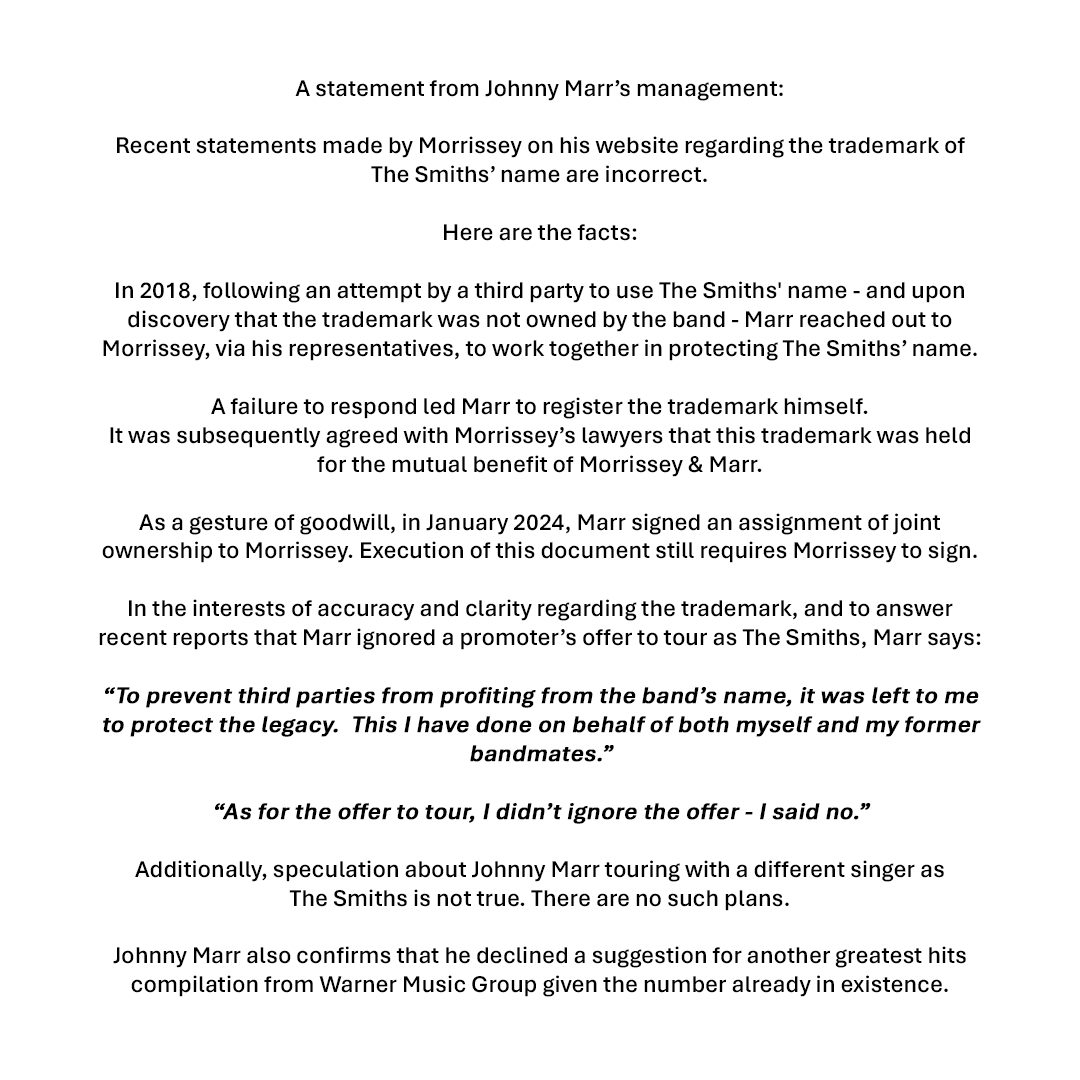
And cue retaliatory statement from Johnny.

Until Johnny’s management released these words, the internet had been in a daft panic over the thought of a Johnny-fronted Smiths heading out on tour. Complete nonsense of course. That just wouldn’t ever happen. We both know that no Johnny or Morrissey = no Smiths. And there’s already no Andy. Mike? I’m not sure which horse he’d back in this one horse race. There’s no doubt at all that Johnny Marr had got wind of the possibility of Morrissey rounding up any old gang of bequiffed janglers and goose-stepping them across Europe and the States next year to celebrate the return of ‘The Smiths’.  Johnny, wisely, has made moves to ensure this never happens.

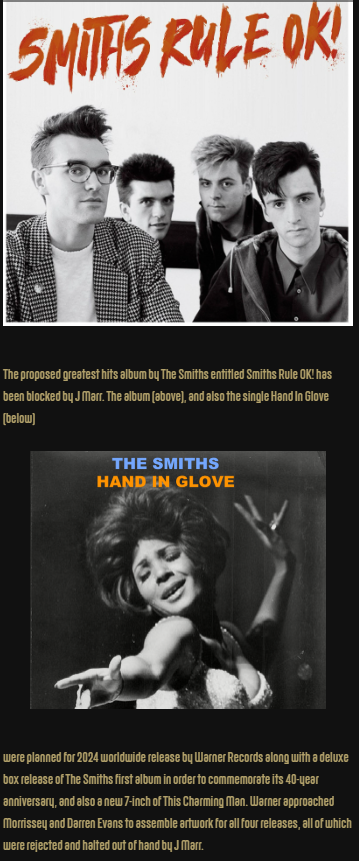
The tour would have come on the back of a box set and Shirley Bassey-housed Hand In Glove reissue celebrating The Smiths debut album plus that crappily-titled ‘Smiths Rule OK‘ compilation, and Johnny, as the statement goes, has put his foot down at that idea too. How many Smiths compilations does one household need anyway? (Bizarre fact – there are more Greatest Hits compilations of boy band Blue than there are studio albums by them. Reissue, revalue, repackage ‘n all that jazz.)
Look at any Smiths record, be it 7″, 12″ or LP, and you’ll recognise it as a work of art in its own right. Old movie stars tinted in turquoise and gilded in greens, heroes and heroines presented in burnt umbers and off-yellows. The fonts stately and bold, the back sleeves always listing the principle Smiths and what they’ve played on it. Never mind what they sound like, that Smiths catalogue is one of the most iconic-looking collections in guitar-driven pop.

The SmithsThis Night Has Opened My Eyes (June ’84 demo, unreleased)
In any case, the artwork for the intended new Best Of is, by any stretch of the imagination, a disaster. It just wouldn’t do. How Morrissey, with such an eye for detail and the importance of the seemingly small stuff that folk like us obsess over could give the green light to a proposed sleeve that looks like a ten minute rush job at the end of a long Friday is anyone’s guess. It’s just as well Johnny is switched on and still cares about his band’s legacy.

This might come at a cost though. With one key Smith keen to improve his already-handsome income and the other happy to ensure his group’s back catalogue isn’t tainted, that debut album box set looks set to be shelved. For obsessives that’s a bit of a disaster. The Troy Tate tapes in fabulous hi-fi. That Cookies’ cover. An early live show with the young feral Smiths stamping their mark on guitar-driven pop. Whatever was lined up for the box set may now be confined to the dusty library shelves of the archives.

That reunion idea though. Absolutely vile, as the song goes.

One last thing before I go. That third party in 2018. The one who tried to take control of The Smiths name. Who was it?

Get This!, Sampled

And They Catch Him And They Say He’s Mental

Spring-Heeled Jack was a Victorian character of folklore; a leaping, springing, impish and devilish figure with gentlemanly characteristics that might tear you in two with his clawed fingers or simply stare you half to death with his fireball-red eyes. He was able to leap high across the sooty rooftops of old London town and vanish quickly into the thick and murderous night. I’m sure he must pop up (and pop off again) in some Sherlock Holmes story or other, but I’m no Conan-Doyle expert. If he doesn’t, then that’s a perfect opportunity wasted, Arthur. It truly is.

Spring-Heeled Jim is a track off of Morrissey‘s last great solo record, Vauxhall And I. Still dressed in decent jeans and with great hair, Morrissey takes the idea of Spring-Heeled Jack and turns the Victorian villain into a post-War East End gangster – pwopah salt of the earf, loves his mother, makes sure old Mrs Jones’ milk and paper is on her doorstep each and every morning…you gotta look after one annuva, aintcha? The sort of a figure that’s part Ronnie and Reggie Kray and part Jack-the-lad, just don’t you dare cross him. I’m sure you get the idea.

MorrisseySpring-Heeled Jim

The track creeps in on a highly atmospheric guitar track, all stealth and menace and ominous foreboding. It rolls slowly and stately like a pea souper curling from the Thames, a mixture of high in the mix plucked acoustics and a wash of reverb and sustain that would probably be more at home in Kevin Shields’ home studio but in the surroundings of a Morrissey record sounds exotic and perfectly-placed as track two’s wrong-footing mood setter. There’s sampled film dialogue playing in the background and, just as you’re trying to place it (it’s very Morrissey), the chords change and Morrissey makes himself known.

Spring-Heeled Jim winks an eye

He’ll ‘do’… he’ll never be ‘done to’

He’ll take on whoever flew through

It’s the normal thing to do

There’s scene-setting and then there’s Scene-Setting and Spring-Heeled Jim sets out its – his – stall very clearly.

So many women his head should be spinning…Spring-Heeled Jim slurs the words…once always in for the kill, now it’s too cold.

He’s an old soak, is Jim. Happy to sit in his armchair, French brandy by his side, Daily Mirror lying open at the racing pages, ready to share his stories with his many visitors – he still demands respect, after all. He’s a one-time womaniser who’d cut you from ear to ear (from ‘ere to ‘ere) should you as much as look at his female companion, although that’s probably all for show anyway, as Morrissey has pegged him as a mixed-up individual with latent homosexual tendencies that just won’t cut it in the world Jim has chosen for himself. (That’s just my opinion, your honour.)

That film dialogue that runs through the track until the last, “…and they catch ‘im and they say ‘e’s mentuhl” is from We Are The Lambeth Boys, a late ’50s documentary that follows a gang of young south London teddy boys, aiming to disepl the myth that they’re violent and delinquent youths.

When the plummy, clipped accent of the presenter isn’t spoiling things, the Lambeth Boys ride in an open top truck singing “We are the Lambeth Boys!” and shouting “‘allo darlin’” at every female they pass. They sing cockney knees-up ditties. They go to the dancing and eye up the girls (or boys) on the opposite side. They sidle up to prospective partners and with a cool nod of the head, lead them on a quickstepping jitterbug around the floor of the dusty dancehall while Lonnie Donegan’s ‘putting on the agony, putting on the style‘ skiffles its way to its conclusion. They care very much about their hair and their two-piece suits and ties. They also smoke like the London of the industrial revolution. As far as social history documentaries go, it’s a must watch.

Give yourself 50 minutes and watch the full thing here. You’d love it.

It’s an obvious Morrissey go-to, We Are The Lambeth Boys. There’s the us-against-them gang mentality that he instilled in The Smiths and every other group he’s formed around him since. There’s the rock ‘n roll reference points. The haircuts. The clothes. The attitudes. The good-looking male protagonists. Any still from the film could have been a piece of Smiths cover art.I can’t emphasise just how essential a watch it is!

For being fiercely Mancunian, Morrissey seemed to form a special bond with London in the early ’90s. That train heaved on to Euston and before you knew it he was referencing Battersea and Bethnal Green, Arsenal and West Ham, East End boxing clubs, Piccadilly and Dagenham and Ronnie and Reggie and having his picture taken outside the Grave Maurice pub, a favourite watering hole of those same Krays. Creating characters that were so clearly unfluenced by and based upon the unsavoury players of old London was the natural conclusion to this, and Spring-Heeled Jim endures as one of Morrissey’s best tracks on one of his greatest albums.

Cover Versions, demo, Gone but not forgotten

Moz ‘n Rockers

The Hand The Rocks The Cradle was the first track Morrissey and Marr composed together, not long after Johnny “with my hair like a loaf of French bread” knocked on Morrissey’s door and suggested they try and write some songs. What the legend doesn’t say is that Johnny was accompanied by a pal to keep him company on his walk across Stretford, but three’s a crowd in romantic stories, and so Johnny’s pal was quickly written out of the fairy tale.

Anyway.

Johnny presented Morrissey with a looping instrumental motif with shaky origins in Patti Smith’s Kimberly and the singer surprised the guitarist by producing a set of fully formed lyrics and mumbling quietly to himself while the mercurial Marr sketched out the basis of what would become one of the key tracks on The Smiths’ debut album, still a twinkle in its fathers’ eyes and a good 17 months from its February ’84 release. Those words of Morrissey’s had been written a couple of years previously, biding their time until fate intervened and a delighted Morrissey twisted his initial melody to fit Johnny’s guitar part – a move that would prove to be something of a feature throughout The Smiths.

The version of the track which closes the first side of that debut album sparkles with woven multilayers of spring rain guitar and overdubbed acoustics, the track chrome-polished, light and airy and at odds with the heaviness of the lyric. The version you really want to hear though is this early John Porter mix from October 1983.

The SmithsThe Hand The Rocks The Cradle (John Porter monitor mix, 1983)

It’s dense and atmospheric, Marr’s 12 string Rickenbacker rarely straying from the 5th fret, his arpeggiated A chord and ringing open-strings splashing occasional light on the otherwise gothic ambience. Andy Rourke, playing foil on the bass guitar, has the space to move the root notes through the chords with typical melodic aplomb, playing his trademark hiccupping half notes between the beat yet keeping the groove steady and in time to Mike Joyce’s heavily reverbed snare drum. It takes real discipline to keep this up for nearly five minutes and resist the urge to break out a solo or rest for a bar to change the dynamics. On this track, the three musicians are locked in and playing tightly for one another, an early signpost of how great The Smiths would become.

The first thing you notice about the John Porter version above though is, unlike 99% of The Smiths’ catalogue, not the usual dazzling array of guitars but the voice. Lone and mournful yet confidently soulful, it’s the sound of Morrissey coming out of his shell with a sympathetic producer on coaxing duties. He’s great here, is Morrissey. There’s no chorus, no melodic hook, no repeated refrain, yet he draws you in, has you zooming in on those words he carefully sculpted as a teenage bedroom hermit, the group almost (almost) not mattering for the moment. Heavy on poetic cadence and alliteration – ‘a piano plays in an empty room‘, ‘ceiling shadows shimmy by‘, ‘tease, torment, tantalize‘ – the song’s title was the initial working name for the debut LP, dropped possibly only after the song’s message of protective fatherhood and adult/child relationship was open to skewed accusations of paedophilia. All nonsense of course. Much has been said of Morrissey in recent times, but not even he is capable of such horrific ideas.

*Bonus Track

Sinead O’ConnorThe Hand The Rocks The Cradle (venue, date unknown)

As this piece went to (cough) press, the death of Sinead O’Connor began to filter through. In the aftermath of The Smiths, Rourke and Joyce provided Sinead with a rhythm section for a handful of shows, where they played a nice arrangement of The Hand The Rocks The Cradle in the encores, closing the show with Sinead’s favourite Smiths track. Typically, I can’t track down a version with Rourke and Joyce backing Sinead, but I did find this solo version, Sinead playing straightforward open chords to give the whole thing the feel of some ancient Irish folk song, something I imagine The Smiths, with strong familial roots in Ireland, would approve of.

Alternative Version, Get This!, Hard-to-find, Peel Sessions

Murderous Thoughts

Let’s call it here and now: Meat Is Murder is The Smiths best album.

It’s certainly not the debut, the band’s unsatisfactory attempt to chase a sound worthy of the songs. Compared to the Brasso-bright, spit ‘n polish, ring-a-ding-ding of those early Peel versions, the debut album weighs heavy; lumpen, and one-dimensional. The drums sound leaden and lifeless. The guitars – it’s always about the guitars with The Smiths – sound as if someone has taken a fat thumb to their edges and rubbed the sparkle clean off. Flat and uninspiring, the production doesn’t do those fabulous riffs any justice at all. Unique, extraordinary songs, but assembled badly.

Don’t even consider The Queen Is Dead. Those songs…man, great, great songs…but whoever signed off the running order needs their head examined. The title track aside, every other song is misplaced. Side one collapses from the music hall titter of Frankly, Mr Shankly into the death doublet of I Know It’s Over/Never Had No One Ever – undeniably serious mood music pieces, yes, but totally misplaced. Stick I Know It’s Over at the end of side 1 instead and you’ve got a great closing track. Never Had No One Ever? That’s totally ripe for the graveyard slot of second last track on side 2. Pick any ten records from your collection and look at the running order and then tell me that the second-to-last track isn’t the weakest on the album. It’s certainly not where There Is A Light That Never Goes Out should be hiding. That should be sitting up front with Bigmouth… and the big boys, or maybe even afforded the honour of being the big statement closing track. Good as Some Girls Are Bigger Than Others is – and it’s one of their very best – go out on a romantic, swaying high, Smiths. Don’t relegate your best songs to the twilight zone.

Yeah, and the smart money (even Johnny’s, they say) might be on Strangeways Here We Come, but for every crashing gothic masterpiece (Last Night I Dreamt...) there’s The Smiths-by-numbers (Stop Me If You Think…), for every barely-disguised love letter from singer to guitarist (I Won’t Share You) there’s the instantly skippable Death At One’s Elbow. It’s a good album, Strangeways, probably even great, but it isn’t their greatest. That honour goes to Meat Is Murder. Here are half a dozen reasons why.

Reason 1. Little elfin Johnny, in his blown-up Keith Richards hair-do and diamante clutter, is on fire across every bit of Meat Is Murder. He runs the whole gamut of his nimble-fingered arsenal; alternative tuning on the title track…alternative tuning and Nashville tuning on the cosmic and zinging Headmaster Ritual…that fine, layered coating of acoustic liquid mercury across Well I Wonder…the Stooges Metallic KO of What She Said, the rockabilly knee-tremble of Rusholme Ruffians…the proud Chic-isms that give way to those great, ringing discordant jazz chords near the end of Barbarism Begins At Home…the clattering chatter he conjures up across Nowhere Fast‘s multiple overlapping tracks and kaleidoscope of chords…

Johnny came up with them all. On Meat Is Murder he is barely 22 and he’s not yet reached a peak that his peers, never mind his guitar-strangling lessers in bedrooms up and down the country, can only dream of.

Reason 2. Morrissey. Separating the art of the 26 year-old singer from the 63 year-old artist is necessary here. Look, not at what he’s become, but at what he was once capable of. With every lyric on the album, he’s extremely funny and articulate and political and opinionated and principled and, above all else, loveable. ‘I’d like to drop my trousers to the Queen,’ ‘heifer whines could be human cries,’ ‘belligerent ghouls run Manchester schools, spineless bastards all,’ ‘What she read, all heady books, she’d sit and prophesise, it took a tattooed boy from Birkenhead to really, really open her eyes.’

Even if he pinched large chunks of Rusholme Ruffians from Victoria Wood, no one was crowbarring lyrics like this into pop songs in 1985. Arguably, no one has crowbarred stuff as unique and searing and insightful and right-on since.

Reason 3. That Joke Isn’t Funny Anymore is one of The Smiths’ finest torch songs. From its bright-as-brass-buttons opening to its layered and textured false ending, it’s a beauty. It’s the perfect marriage of Morrissey’s moping introspection and Marr’s guitarchestra, the singer identifying with those who are kicked when they are down, the guitarist going to town with studio effects and multi-layered riffs.

The SmithsThat Joke Isn’t Funny Anymore

Those little echoing triplets that fall from his fingers to create rippling pools on still pond water still tingle the back of my neck when they come in (around the minute mark at first, then forever after) – an ear-opening epiphany in 1985 when I realised that guitar players enhanced their electric sound with gizmos and wizardry to create the sounds they imagined in their heads. The haunting (and haunted) backwards effects he weaves through the ‘happening in mine‘ section before the fade out are ace.

Johnny has since said (OK, he told me, right?) that The Smiths never quite managed to do it justice live, but with the technology available today, That Joke Isn’t Funny Anymore would have undoubtedly been the centrepeice of The Smiths live experience. We’ll never know.

Reason 4. The Smiths changed lives. Saved lives, even. Like, literally. The title track is responsible for a whole swathe of impressionable teenagers – and at least two Smiths besides Morrissey – to forego eating meat and adopt vegatariansim as a way of life.

“As soon as we had recorded this song, I became a vegetarian,” Mike Joyce told me in 2017. “Morrissey’s argument was rock solid. I couldn’t even be that bullish to say, ‘…but I like meat.’ The cruelty involved is reason enough. You wouldn’t eat your cat or your dog, so why eat a sheep or a pig? Whatever Morrissey argued, you could only reply with, “You’re right, you’re right.” There was no counteract to it. It should be illegal, there’s just no argument for it. ‘Meat Is Murder’ is a sheer political statement. It shaped my life and my kids’ too, who’ve all been brought up vegetarian.

Accompanying the lyric, all sorts of magic is going on. Suitably doomy and disconcerting for the words being sung, Johnny plays around on an open D riff, cyclical and repetitive, hynpotic and ethereal.

The Smiths Meat Is Murder

It’s matched by a jangling piano – not noticeable on first listen, buried as it is underneath the abattoir grinding and cattle cries, but it’s there, tinkling along like springtime Manchester rain while studio-treated guitars echo and scrape and scratch their way through the murk, Andy’s bass as elastic and stretchy as tendons.

Reason 5. Ah. Andy’s bass. The unsung hero of the band, the thinking man’s favourite Smith, Andy Rourke can play the fuck out of that thing. While Johnny gets all the spotlight, Andy quietly goes about creating tunes within tunes, fret-surfing melodic runs that could easily stand on their own two feet (or four strings).

The SmithsNowhere Fast (Peel Session, 1984)

The trampolining rubber bandisms that carry the aforementioned Rusholme Ruffians…the counterparts he plays to Johnny’s guitar in The Headmaster Ritual…the driving force in Nowhere Fast that allows Johnny to fly off-piste and back again…Andy is a key ingredient here.

The rather-too obvious track to highlight is the extreme funkability of Barbarism Begins At Home, all slap ‘n thunk, an old tune of his and Johnny’s from pre-Smiths days that wouldn’t have worked on that debut album, but here, on Meat Is Murder‘s inclusive, catholic patina, it shines brightly.

Reason 6. The Headmaster Ritual. Rusholme Ruffians. I Want The One I Can’t Have. What She Said. That Joke Isn’t Funny Anymore. Nowhere Fast. Well I Wonder. Barbarism Begins At Home. Meat Is Murder.

Perfectly sequenced, perfectly pitched, it is, rare for the era, an album of few single releases; Headmaster and Barbarism in foreign countries only, That Joke in the UK (a chart-busting number 49 with a bullet). The Americans couldn’t handle an album with no hit singles though, so they crassly wedged How Soon Is Now? right before Nowhere Fast at the start of side 2. They have form for spoiling perfectly perfect albums, the Americans – look at what they did to some of The Beatles’ catalogue for proof – and while How Soon Is Now? is an undoubted Smiths classic, it should remain standing alone as the greatest 3-track Smiths single ever. But that’s an argument for another time.

I welcome your misguided outrage in the comments…


Alternative Version, Gone but not forgotten, Live!, Peel Sessions

Eye Opening

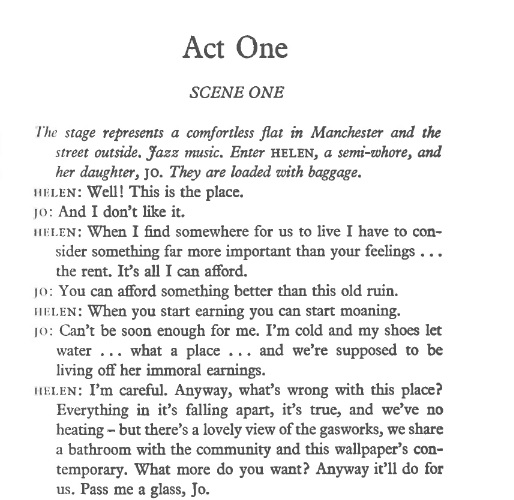
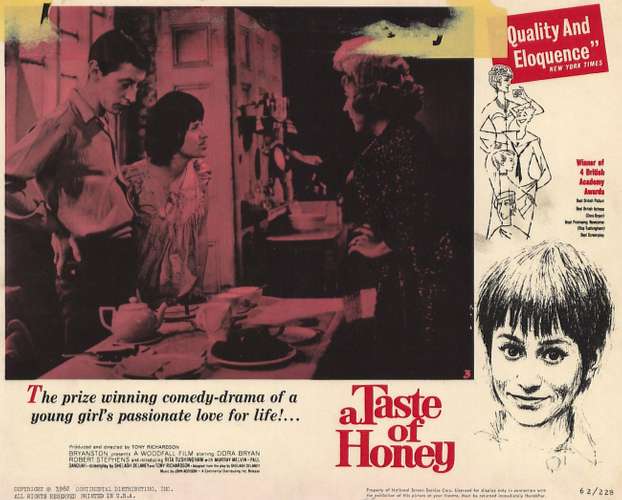
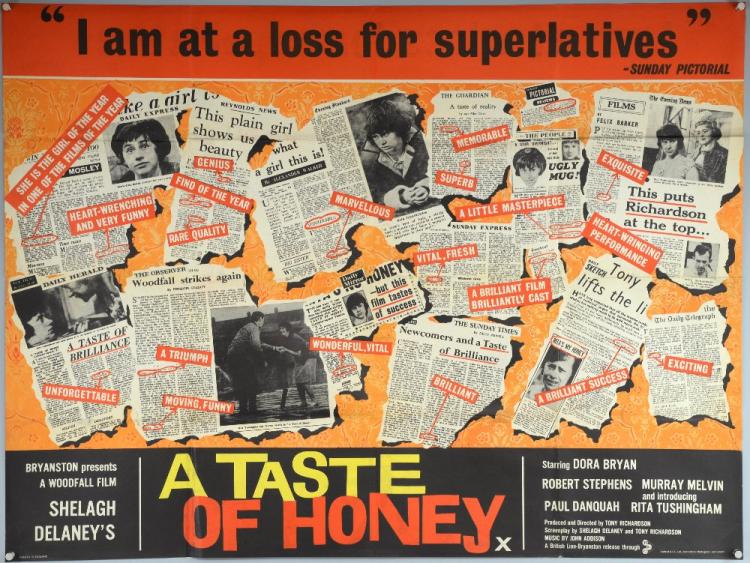
A Taste Of Honey was written by playwright Shelagh Delaney when she was just 19. Set in Salford in the mid 50s, it tells the story of a 17 year-old girl, Jo, and her mum, Helen – ‘a semi-whore‘ – who leaves her daughter to go and live with a younger, richer man. Jo begins a short-lived relationship with a black sailor. She gets pregnant but he is sent to sea, oblivious to the situation he has created. The girl takes in a lodger to help pay the way. The lodger, a gay man, cares for her and looks after her – “you’re just like a big sister to me!”  – and promises to be there for her at the birth of the child, until Helen storms back into Jo’s life and he is forced to take a step back.

As openers go, it doesn’t get much more scene-setting than that. The whole play is a brilliantly-written kitchen sink drama that zings along with unpretentious Northern honesty and questions class, single-parenthood, ethnicity, misogyny and sexuality. Choosing not to sweep the irregularities and complexities of life under the carpet, but to highlight that such things are in fact normal, I can only imagine that for the times it was fairly groundbreaking.

Born in Salford in the 50s, Morrissey was naturally drawn to the writings of Shelagh Delaney.

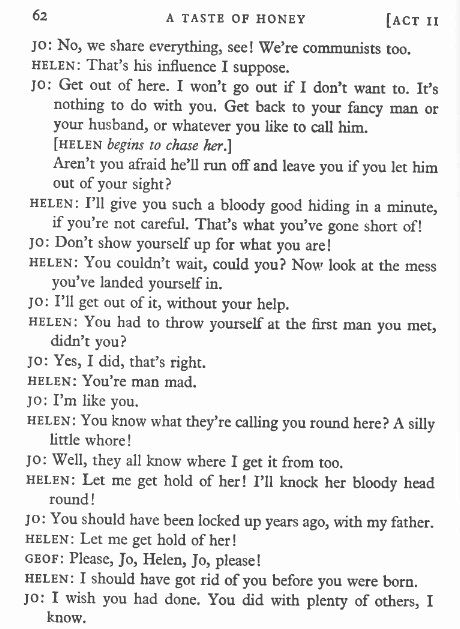
You told me not to trust men calling themselves Smith,’ says Jo to Helen at one point in A Taste Of Honey, and, like a flying bullet, the words leap of the page.

Seed planted firmly under the quiff, when the time came to name their band, the singer presented the group with the perfect, Delaney-influenced moniker. In an era of forward-thinking acts with multisyllabic names and the latest in musical equipment, The Smiths had defiantly set out their stall.

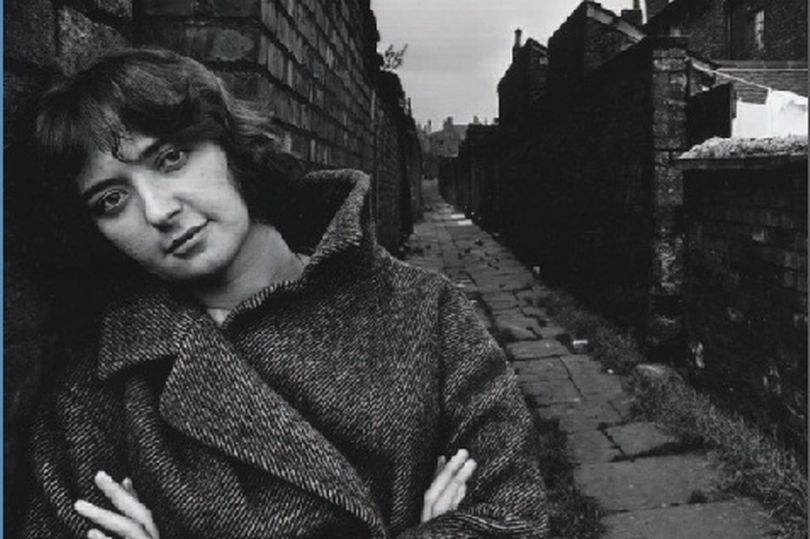
Morrissey would use Delaney’s image on a couple of Smiths sleeves – that’s her on the Louder Than Bombs compilation and the cover of the Girlfriend In A Coma single – and in reshaped form in the title of Sheila Take A Bow – and in the early days, the moping magpie wasn’t shy of stealing a line or two (or more) to help flesh out the narrative in his songs.

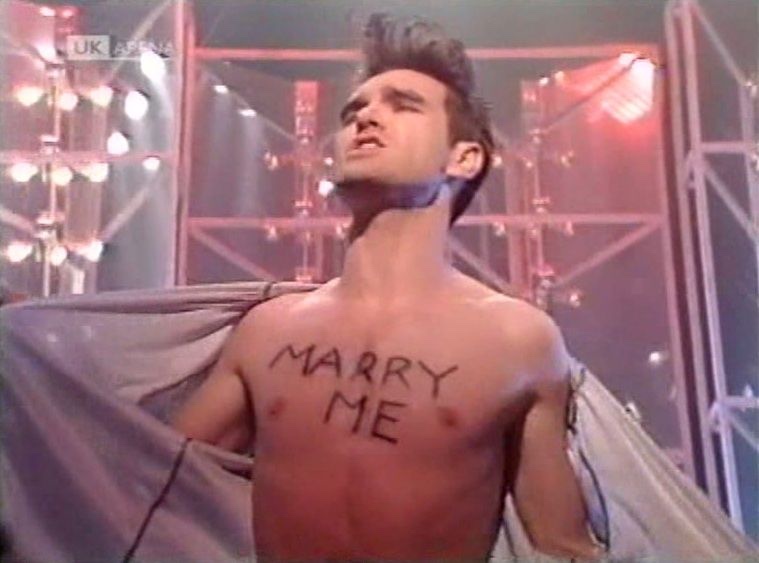
Reel Around The Fountain‘s “I dreamt about you last night and I fell out of bed twice,” for example is taken straight from A Taste Of Honey. And the phrase ‘Marry Me!‘ – scrawled on Morrissey’s skinny torso and revealed in heart crushing fashion midway through a Top Of The Pops performance for William It Was Really Nothing is a recurring phrase in the play.

Then there are key lines such as ‘six months is a long time,’ ‘I’ll probably never see you again,’ ‘I’m not happy and I’m not sad‘ and ‘the dream has gone but the baby’s real‘ – the line around which he based the entire plot for The Smiths’ This Night Has Opened My Eyes.

A Taste Of Honey, it’s fair to say, provided a rich seam of lyrical plunder for Steven Patrick.

The SmithsThis Night Has Opened My Eyes (Peel Session, Sept 83)

In a river the colour of lead‘, it goes, again a straight steal from A Taste Of Honey, ‘immerse the baby’s head.’ (also a reference to a line near the end of the play.) Hot on the heels of the Suffer Little Children/Moors Murderers scandal, this line caused many a management bristle when it was first heard. ‘Wrap her up in a News of The World, dump her on a doorstep, girl.’

The song is basically A Taste of Honey set to the perfect musical acccompaniment; downbeat, introspective, black and white in epoch yet technicolour in ambition. It features a prime slice of brooding, counter-melody Andy Rourke bass. Johnny’s dual lead and rhythm guitar playing is soulful and considered, mercurial and slinky yet choppy and jazzy, a zillion miles away from what most other 20-year old guitar players with a Stooges fascination might conjure up. It’s a great example of the early Smiths in action.

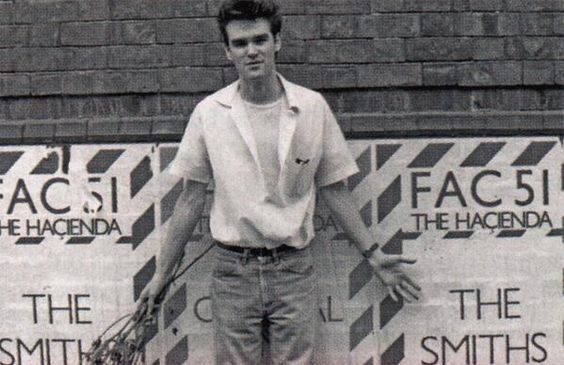
The SmithsThis Night Has Opened My Eyes (Hacienda, 24.11.83)

This Night Has Opened My Eyes is a bit of a mongrel within The Smiths small but perfect, imperial catalogue. An early staple of live shows, its melancholic and delicate undertones were considered a bit too fragile for the debut album. It was first magnetised to tape at the band’s second Peel Session in September 1983, just a month or two after the aborted Troy Tate sessions that largely failed in capturing The Smiths electrifying live sound.

A year later, just as the group was recording another version with John Porter, the Peel Session version appeared on Hatful Of Hollow. It remains the only recorded version of the track to be officially released.

Quickly dropped from live shows as setlists changed to keep up with the rapid, prodigious writing talents of the prinicpal Smiths, This Night Has Opened My Eyes wasn’t played live again until, serendipitously, at The Smiths final show in 1986 – “There was a sense of resolve and closure,” relates Johnny Marr, “which is why we played that song that night. I remember when we made the decision to do ‘This Night Has Opened My Eyes’ feeling a strong sense of awareness of our own history.

The SmithsThis Night Has Opened My Eyes (Brixton, 12.12.86)

Had they been happy with the John Porter-produced version – faster, sparkling with effervescence and slighty jauntier than the Peel Session take from the year previously (although that may just be pitch issues with the bootleg tape from whence this version was borne), it remains to be seen where This Night Has Opened My Eyes would’ve fitted into The Smiths discography.

The SmithsThis Night Has Opened My Eyes (John Porter, June 1984)

Certainly, it wouldn’t have been out of place on the debut album at all, but the next 12 months were ridiculously productive. With classic singles being frisbeed out on an almost bi-monthly basis, by the time of Meat Is Murder, Morrissey and Marr had proven themselves to be in a unique world of their own.

Perhaps, like so many of the best Smiths tracks, it would’ve been the ideal stand alone single. Maybe released between the feral and stinging What Difference Does It Make and the stellar Heaven Knows I’m Miserable Now, a soulful interlude amongst a peerless run of releases.

It remains though a curio that has aged well through lack of over-familiarity. Whatever, I wonder, became of the young, handsome, literate, funny, unique, quirky, lovable and worshipped Morrissey? The dream has gone but the baby’s real, you might say.

Cover Versions

It Is Indeed Over

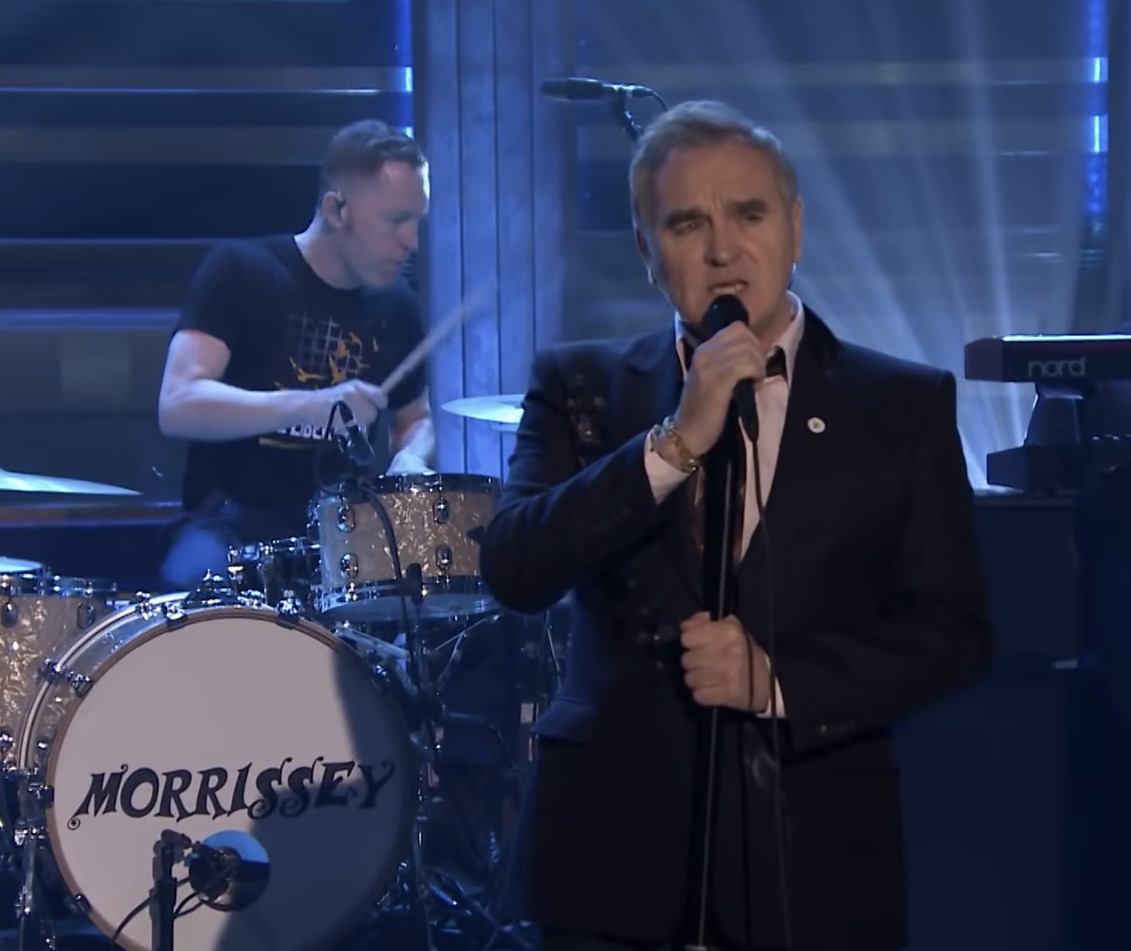
If someone had told you back in 1985 that it would’ve been Elton John, or at a push Freddie Mercury who’d be the hip name to drop 30+ years in the future, while yer man of the moment Morrissey had slowly and painfully morphed into a paunchy, shitty-quiffed racist in bad jeans, you’d have struggled to believe them. As Elton’s position at the top table of pop is affirmatively reassessed via the Rocket Man movie and the resultant positive press, so too is old Stephen Patrick’s. The nadir, for this week at least, is Morrissey’s (at best) misguided and (at worst) dangerous decision to sport a For Britain badge on his lapel. To put this into context, even Nigel Farage considers the politics of For Britain a bit too extreme and right wing for his liking. It’s there in the paparazzi photos as he steps out of the car at the studio for an appearance on the Fallon TV show. It’s still there when he performs. And it’s still there a few days later when he’s snapped on some random Beverly Hills sidewalk or other. For all you know, it’s probably still there right now, a defiant and misguided symbol of knuckleheaded nationalism.

It’s a statement that’s led to Billy Bragg questioning the motives of the one-time king of the marginalised, disenfranchised and waifs and strays, referring to him as the Oswald Moseley of pop. As a result, we’ve also seen adverts for Morrissey’s brand new California Son album being ceremoniously ripped from the walls of Merseyrail train stations. The resultant fall out might’ve caused a lesser deity to back down somewhat and offer a hastily cobbled-together press release aimed at clearing up a ‘misunderstanding’, but, no. Seemingly, from his high horse in his house high in the Hollywood Hills, Morrissey has decided that For Britain is the political party for him and he wants everyone to know it.

Had he not had a new album to promote, it’s arguable whether we’d even be talking about the growing insignificance of Morrissey, although his continual shift to the far right will forever gurantee him a public profile somewhere in the corner of the internet marked ‘racist uncle’, so you could argue that the singer has played the press at their own game and won; new album released + controversial statement = increased profile + greater sales.

I’ve not properly listened to a Morrissey album since You Are The Quarry, these days considered a high point of his solo career (although back then I’d have placed it closer to the bottom of that particular list – it’s no Vauxhall And I, that’s for sure. And it’s certainly no Your Arsenal either) and I had no real inclination to hear his present-day take on a variety of off-the-beaten-track cover versions, even with the added ‘bonus’ of having one of Green Day duet with him on some old track or other.

An interview with Morrissey published last week – I still like to read what he has to say – had him reveal that his vocal delivery on his version of Roy Orbison’s It’s Over was “absolutely, hands down the best vocal delivery I have ever done.” Wow. Let that sink in. The man who’s very essence was etched into the grooves of some of the most heart-breaking records to escape the soul – Well I Wonder and I Know It’s Over, to name but two, considers his performance on It’s Over to be the very pinnacle of his singing career. Now, given that on those two Smiths’ tracks and many others (Vauxhall And I‘s Now My Heart Is Full, for example), Morrissey laid his life on the line, his very raison d’etre, like his beautiful, towering quiff, forever on the verge of collapse, I had to hear it.

It’s certainly dramatic. Harking back to the days of Ann Coats on Bigmouth Strikes Again, it begins with a comical sped-up Morrissey vocal. There’s nothing funny about the subject matter though. “Your baby doesn’t love you any-more,” he goes, as the band march out a funereal ra-ta-tat-tat. Strings sweep, bells toll, guitars crash. It rises, falls and rises again, a great wave of melodramatic emotion – “When she says to you, there’s somebody new, we’re through, we’re through!….it’s over!” As it reaches its climax, dogs for miles around begin to howl as the high-pitched warbling vocal in the background (Moz again, with the help from studio trickery?) threatens to take over. We’re at peak crescendo now, and then, suddenly, silence.

It’s Over.

It’s OK, I s’pose, a decent enough sign-off on a singing career that, for me, is now well and truly finished.

Now, off you run, Morrissey. And take your stupid political notions with you. We’ll always have Meat Is Murder, I guess.

It’s not a patch on the original, of course. For reverb ‘n twang and melodrama bathed in pathos and regret, Roy Orbison‘s tremulous voice cannot, will not, ever be matched. The end.

Roy Orbsion – It’s Over


Cover Versions, Get This!, Gone but not forgotten

She And Him

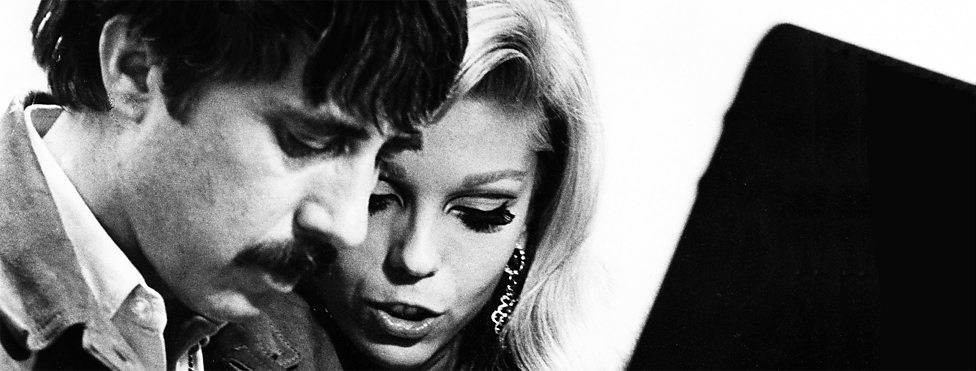
In the early days of Plain Or Pan I penned under the nom de plume of Phil Spector. I suppose it was a combination of being embarrassed to put my real name to anything that might read like a 3 year old’s best efforts and the fact that I didn’t really want anyone to know I had a sideline in writing about old music that kept me from using my own actual name. Things came to the fore when my daft pseudonym cost me the chance of an interview with Nancy Sinatra. “Why on earth would I want Phil Spector to interview me?” she growled, not quite getting the fact that it wasn’t yer actual Phil Spector who’d been in touch. “He was a strange, strange, man and I want nothing to do with him.” At the time, Nancy had been working with a still-hip Morrissey, and I was hoping to base our interview around the recordings they’d been making. Alas, it never happened.

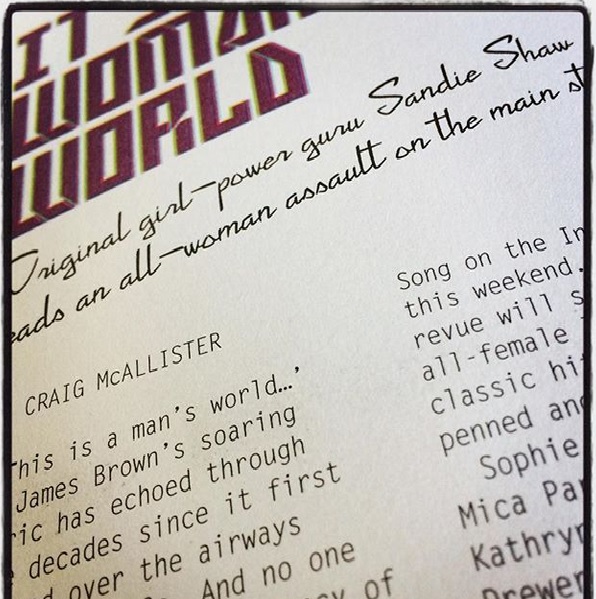
Shortly afterwards I was contacted by someone who wanted me to interview Sandie Shaw. By coincidence, another iconic singer with connections to Morrissey, this was too good an opportunity to pass up. There and then I dropped the pretence and proudly added my own name to the by-line in every article I’d written here. The subsequent interview and article with Sandie (where she name-dropped Morrissey, Debbie Harry and Siouxsie Sioux within the first 5 minutes) became the first piece of paid writing work I’d ever done.

Anyway, back to Nancy S. I’ve had her Greatest Hits rotating recently, a scratchy, crackly 11-track best of that I picked up for 50p (!) in a wee junk shop just off of Glasgow’s Byres Road. Much of it is kitsch nonsense, the sort of stuff that, had she not been the daughter of an icon, may well never had been afforded the attention it got.

The material she recorded with Lee Hazlewood though is fantastic, a heady combination of female/male, light/shade, sweet/sour on record. Sinatra’s voice is cutesy-cute, all light and airy melodies blown in from Hit Factory central. Hazlewood rumbles in like a gothic cowboy, with a voice deeper than a well and twice as dark. Together, they make the sound of milk chocolate and dark chocolate on vinyl.

Some Velvet Morning is the one for me.

Nancy Sinatra & Lee HazlewoodSome Velvet Morning

Druggy, fuggy and full of sexual innuendo, it’s a psychedelic pop masterpiece, miles away from the light and airy country pop that defines many of their duets.

Hazlewood takes the lead, gliding in on a bed of Barry-esque strings with a baritone that could rattle the lids on the coffins of the dead. He gives way to Nancy, fluttering in like a waltz-time muse. “Sing like a 14 year old who fucks truck drivers,” he instructed, with the blessing of ol’ blue eyes himself. Can you imagine anyone getting away with that nowadays?!?

The whole thing see-saws back and forth, a call-and-response danse macabre. Had it popped up soundtracking The Wickerman or a crucial scene in a Tarantino movie you wouldn’t have been surprised. Quentin T. may yet find a use for it in the future, I feel. Musically, the record is very rich. With instrumentation by the famed Wrecking Crew, it’s lush yet louche, wonky and weird and wonderful.

The other high point of their collaborations is Summer Wine, a track that has all the makings of a great lost Bond theme. There’s the innocent female vocal, parping brass and a not-so-subtle nod to all things Bond with the addition of John Barry’s ubiquitous 5 note signature theme midway through.

Nancy Sinatra & Lee HazlewoodSummer Wine

The Lee/Nancy thing was done to great effect by Mark Lanegan and Isobel Campbell a few years ago. A post in the near future for sure….

As a bonus for now, here’s Lee’s version of Nancy’s signature theme. It’s a cracker.

Lee HazlewoodThese Boots Are Made For Walking

And here’s Let Me Kiss You, Nancy’s take on the Morrissey track that led them to find one another, the song I never got to ask her about. Hey ho. Morrissey has quite rightly come in for a lot of stick in recent times, and whether he still holds a place in your heart or not, you can’t deny that his performance in the background of this record is vintage Stephen.

Nancy SinatraLet Me Kiss You

Peel Sessions, Six Of The Best

Six Of The Best – Mike Joyce

Six Of The Best is a semi-regular feature that pokes, prods and persuades your favourite bands, bards and barometers of hip opinion to tell us six of the best tracks they’ve ever heard. The tracks could be mainstream million-sellers or they could be obfuscatingly obscure, it doesn’t matter. The only criteria set is that, aye, they must be Six of the Best. Think of it like a mini, groovier version of Desert Island Discs…

Number 25 in a series:

mike-joyce

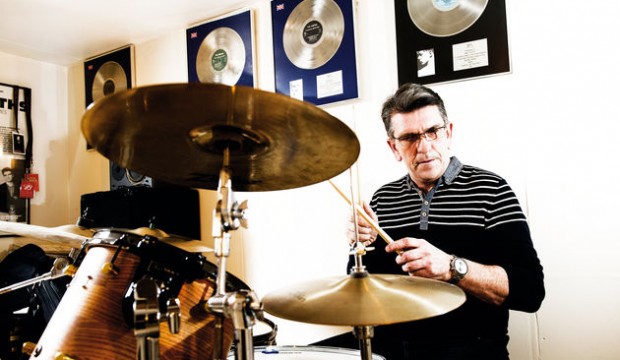
Mike Joyce is best-known for his time as the drummer in The Smiths. In six short years he provided the uncluttered back beat upon which Johnny Marr’s ringing melodies rang and Morrissey’s unique vocals hiccuped and hollered and swooped and swooned. Between 1982 and 1987 he was part of The Only Band That Mattered, helping to produce a perfect discography that, in this house at least, has been pored over, scrutinised and played back-to-front, upside down and inside-out. I know all The Smiths’ stuff to trainspotter levels of obsession. And I’m far from alone.

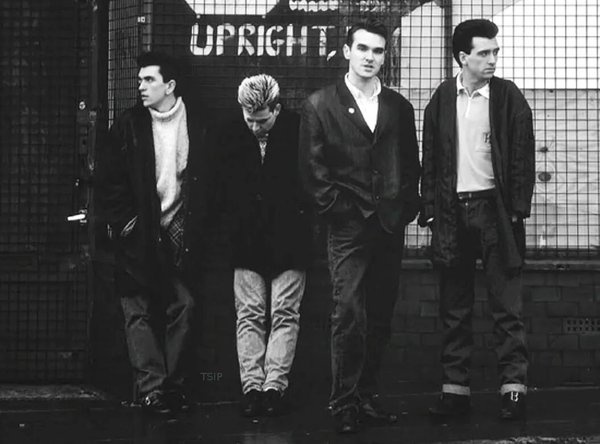
Mike’s old band are possibly even more revered nowadays than they were during that brief spell 30 or so years ago. They burned briefly but brightly, blazing a trail for ‘indie’ music and all that followed in its wake. Other bands may have had bigger chart success, or benefited from being on a major label, or had the suss and swagger to look to the future and plan a long-term career, but by the time The Smiths had bowed out with Strangeways, Here We Come, the musical world as I and many others knew it had changed for ever. That they’re still a ‘thing’, that people still walk around in Smiths t-shirts, that RIGHT NOW you could walk into a supermarket and pick up a copy of The Queen Is Dead is testament to their legacy. They’re still, for a growing gang of disciples, The Only Band That Mattered.

smiths-live

Along with Andy Rourke, Mike created a rhythm section that gave Johnny and Morrissey the space to shine. There’s not one Smiths’ recording where Mike succumbs to any scattergun windmilling Moonisms. He has his moments – there’s the metallic clatter of ‘What She Said’, of course, and there’s a particularly frantic take of ‘London‘ from a Peel Session that can be found online fairly easily, and on the Rank live album, Mike’s drums add a mighty muscle to a band at their peak of live performance. On This Charming Man, Mike and Andy provided a four-to-the-floor Motown backbeat upon which Johnny’s sparkling guitars dazzle, and on some of the early Smiths recordings, Mike’s technical shortcomings are made up for in sheer punk-like enthusiastic energy. Mainly though, Mike’s playing was sympathetic, understated and the perfect framework for his twin foils out front. He was exactly the sort of drummer The Smiths needed. “If Elvis had had Mike Joyce and Andy Rourke in his band,”  Johnny Marr once claimed, “he would have been an even bigger name.”

Like all great bands, in the intervening years there’s been a well-publicised and damaging court case, guest appearances on his former singer’s solo material and a smattering of live performance with his old sparring partner on the bass guitar. Since then, Mike’s played, recorded and toured with a fantastic selection of bands and artists; Sinead O’Connor, Buzzcocks, Julian Cope, Public Image Ltd, PP Arnold and Pete Wylie to name but a few. If I stuck my iPod on shuffle there’s a good chance it would throw up a Mike-related track.

Mike’s also carved out a career for himself as a DJ for hire, either as a stand-in on BBC 6 Music whenever a regular presenter goes on holiday, or on his East Village internet radio show, or in his monthly residency in The Drawing Room in the Didsbury area of Manchester. On March 4th, he’ll be spinning the wheels of steel at The Record Factory on Glasgow’s Byres Road as part of a night that features up-and-coming new bands. If you’re local you should probably go.

It is The Smiths though that everyone really wants to know about. Mike knows it too, and it’s clear after just 20 seconds of conversation with him that Mike is the biggest Smiths fan of all. You can see that in many of the promo shots taken at the time – Mike is rarely snapped without wearing some Smiths t-shirt or other. He talks passionately and fondly about the music, referring to everything the band did as ‘we‘ rather than ‘I‘ . He’s no different to any other Smiths obsessive the world over, except for the four words that appear on the back of every single Smiths record. Mike Joyce – The Drums. It’s undeniable. He was the drummer in The Smiths, The Only Band That Mattered.

I asked Mike about his time in The Smiths and we focused on the six tracks he’s most proud of having played on. Potentially, a Sophie’s Choice Six Of The Best, but here we are…

smiths-84

Right. I’ve given this serious thought and, y’know, it’s an absolutely ridiculous task. I have 3 kids….it’s like asking me to pick my favourite one. I just can’t narrow it down to six. Can I have seven instead?

I’m gonna do this in reverse order. Drum roll, please!

At 6, it’s I Don’t Owe You Anything. I remember playing this at one of our really early gigs, 1983 in Dingwalls. It was a sweltering hot summer’s night. As we played it I began to cry. This had never happened before, or since, but something in Johnny’s playing and Morrissey’s singing- it just sounded so beautiful. I remember thinking, ‘Everything’s coming together.’

The SmithsI Don’t Owe You Anything

Before The Smiths I’d been into punk; The Pistols, Angelic Upstarts, Generation X, early Adam & the Ants, Buzzcocks, of course, so to be playing a song like this or ‘Reel Around The Fountain’ took me right out of my comfort zone. Up until then I had three speeds I played at – fast, faster and fastest, so on this song I learned to really properly play. It was great watching people’s reactions to it. It wasn’t normal for a band like us to play music like this. At gigs, people would clap after songs, sometimes because they were obliged to, or just out of courtesy, but that night in Dingwalls, for the first time people were saying ‘What. The. Fuck. Is. This. ?’

smiths-87

At 5. Death Of A Disco Dancer. The ‘Strangeways’ album was our Sgt Pepper, written in the studio and jam-inspired. When we first played ‘…Disco Dancer’ as a group, it got heavier and heavier. (At this point, not for the last time during our conversation, Mike ‘sings’ the outro down the phone to me.) There was a great spontaneity and communication between us that only comes from playing together. It’s all on ‘Death Of A Disco Dancer’.

The SmithsDeath Of A Disco Dancer

smiths-86-qid

4. I Know It’s Over. It was unusual for Morrissey to show us any lyrics beforehand. When we heard Smiths’ tracks being played back in the studio, we usually heard them just as you would have heard them for the first time. Morrissey’s vocal performance on I Know It’s Over is perfect. An emotional delivery, he really bared his soul on it.

The SmithsI Know It’s Over

As a lot of singers prefer, the lights were turned off when it came time to record Morrissey’s vocals.  When he was finished, Morrissey came back into the control room. “Well, what do you think?” he asked. There were lots of tears, big swallows, “I’ll be alright in a minute!” kinda stuff. Then lots of hugging. We were our own biggest fans. To create a track like this out of thin air, there’s nothing better. Being in that control room when Morrissey laid down his vocal was like, I dunno, being in the control room when Elvis did his vocals. Seriously! It was that big!

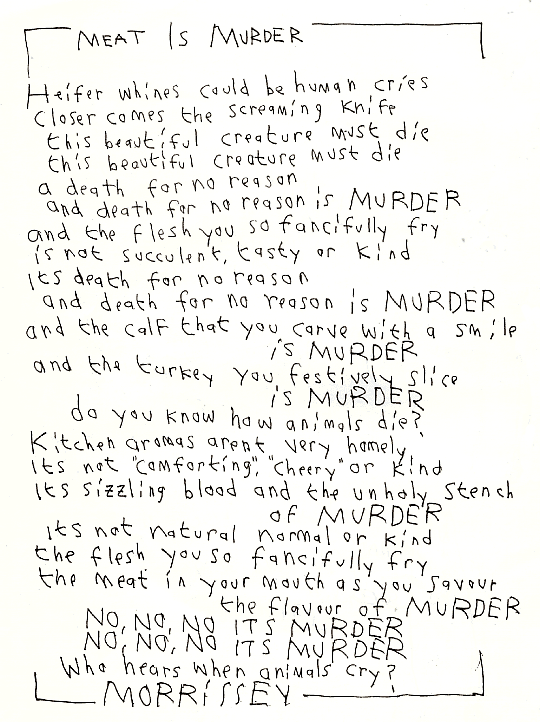
meat-is-murder-lyrics

At 3, it has to be Meat Is Murder. As soon as we had recorded this song, I became a vegetarian. Morrissey’s argument was rock solid. I couldn’t even be that bullish to say, ‘…but I like meat.’ The cruelty involved is reason enough. You wouldn’t eat your cat or your dog, so why eat a sheep or a pig? Whatever Morrissey argued, you could only reply with, “You’re right, you’re right.” There was no counteract to it. It should be illegal, there’s just no argument for it.

The SmithsMeat Is Murder

I really appreciated his conviction with this song. Its emotive. Sincere. Incisive. There’s a moral responsibility for anyone in the public eye to stand up and say it like it is, but it doesn’t happen very often. Meat Is Murder is a sheer political statement. It shaped my life and my kids’ too, who’ve all been brought up vegetarian.

smiths-mike-moz

Next up, How Soon Is Now?

(increduously) Because……….?!? Just fucking listen to it!!

The SmithsHow Soon Is Now?

It’s got such a distinct style. I mean, what style even is it? Listen to any band – UB40 or Jamiroquai or Spandau Ballet or Anti Nowhere League or The Exploited. They all have a sound. They rarely vary from it. They might stick a slow one on the album or whatever, but it’s still their sound that you’ll hear.

When we recorded ‘How Soon Is Now?’ we’d had a few spliffs. We took the bulbs out of the lights and replaced them with red ones. It felt like a darkroom. It felt trippy. It felt like it had never been done before. And the song, woah! We stuck it on the B-side. Geoff Travis said to Johnny, “Stop writing A-sides!”

Playing it live gave us such a buzz. It was a big, big track. I knew that nightly, the crowd were getting right off on it.

smiths-wool-hall

Right. I have one choice left but I have two tracks that must be included here. First equal is Last Night I Dreamt That Somebody Loved Me. About 8 years ago, we had friends round, Tina and I. We’ve got a CD jukebox in the house and Tina convinced me to put Strangeways… on it. It’s not really the done thing, putting your own music in your jukebox, but anyway, there it was. During dinner the jukebox was playing on random and Last Night… came on. “Is this The Smiths?” asked my friend. We were all listening to it and the atmosphere changed. It was probably the first time I’d actually sat down and listened to it since we’d recorded it. “That’s pretty good!” seemed to be the general concensus.

The SmithsLast Night I Dreamt That Somebody Loved Me

Johnny really was the Brian Jones of the band, not just because of the haircut, or the fact he had a teardrop guitar in the early days, but because he could pick up anything and get a tune out of it. There was a zither that sat on the windowsill of the studio during the Strangeways… sessions. He picked it up one time and played a tune on it, just like that. (That tune was I Won’t Share You, but you knew that already).

We couldn’t afford real strings on the recording so we used an emulator synth. Watching Johnny play the string parts on it was like watching a genius at work. He didn’t seem to learn it anywhere. The music just appeared. He heard things other people couldn’t hear and put it down. No trial and error. He always got it first time. The layering and production on Last Night… is fantastic. There’s some really odd, wonky piano. It’s all out of time. Johnny broke the rules and created a masterpiece.

smiths-hig-promo

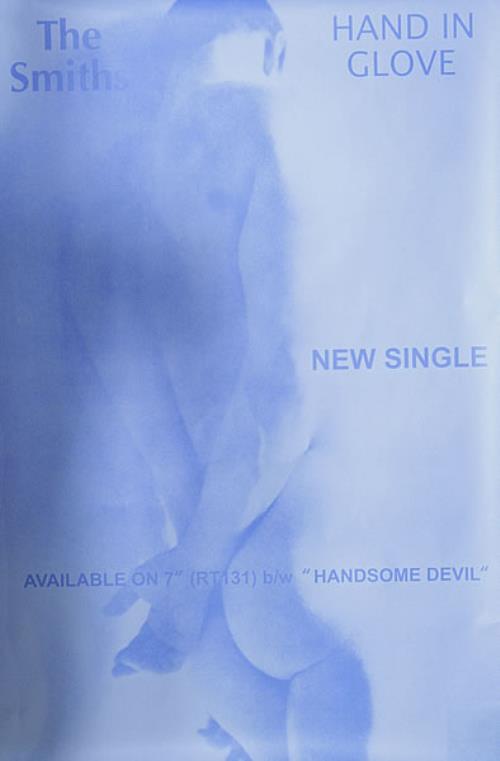
And finally, back to the start. I couldn’t discuss my favourite Smiths tracks without mentioning Hand In Glove. This was where it all began. The life-changer. It’s my favourite Smiths track. Certainly the most powerful. Until we’d recorded we’d never properly heard ourselves. I’d only ever heard us from behind the kit in our rehearsal room; over the top of my drums I’d get a bit of Johnny’s guitar, some of Andy’s bass – I was always locked into Johnny ‘cos Andy played tunes within the tunes – and Morrissey’s vocals. I could hear him most of all, but I had no idea what we really sounded like.

The Smiths  – Hand In Glove

When I first heard this back, with the sound balance and the extra guitars, it was truly shocking. I really mean that. I knew we sounded good, but this record was absolutely massive! The importance of it, the effect it had, it was the beginning of everything…..

the-smiths

So there you have it. Mike Joyce’s Six Of The Best. Or should that be Mike’s Magnificent Seven? He’s an engaging chap, is Mike. For someone who rarely does interviews these days – “I’m always being asked to give a quote on the date of some Smiths’ anniversary or other, but really, it’s not me,” he’s full of chat about his time with the band. And for me, from one Smiths fan to another, I’m very grateful.


Alternative Version, Cover Versions, Live!

Alf Ramsey’s Revenge

‘You Just Haven’t Earned It Yet, Baby’ is the sound of The Smiths at their chiming, ha-ha-ho-ho-hollering, twin guitar attack peak. Written, as the band usually did, quickly and as part of a triptych that also included ‘London’ and ‘Half A Person’, it was considered as the follow-up single to ‘Ask’ before being passed over at the last minute in favour of ‘Shoplifters Of the World Unite’, a move regarded as travesty by many Smiths devotees at the time.

The ‘Shoplifters…’ single included both ‘London’ and ‘Half A Person’, the tracks on the b-side connected through the subject matter of moving to London, with the former a noisy glam racket that sticks two fingers up to those who are too spineless to leave and make something of themselves, and the latter a brilliantly put-together melancholic rumination of how just a move can go so wrong – “I went to London and I booked myself in at the YWCA…” The noisy and the melodic, the tragi-comedy of The Smiths on the same record.

  smiths morrissey marr rough trade store room Marr & Morrissey, Rough Trade stockroom, 1983

But the best of the three tracks written in that early October session, ‘You Just Haven’t Earned It Yet, Baby’ was left alone on the shelf marked ‘Great Smiths Tracks That Would’ve Made Great Smiths Singles’. The band had high quality control values – theirs is a perfectly-formed 4 studio album and 17 single discography, untarnished by stop-gap filler material or substandard releases; the perfect group. Not that there’s anything wrong with ‘Shoplifters…’ – I’m particularly partial to Johnny’s open-wah rockist guitar solo – but better single material than ‘You Just Haven’t Earned It Yet, Baby’? Nah. They got that one wrong, I think. Even if, as it turns out, Johnny thinks ‘Shoplifters…’ is the better song.

The SmithsYou Just Haven’t Earned It Yet, Baby (The World Won’t Listen mix)

Keen eagle-eared Smiths enthusiasts at sadly-departed Smiths treasure trove Smiths Recycled spotted that the mix on The World Won’t Listen ran a touch too fast, so with the aid of modern technology and whatnot re-pitched the track at the speed it would’ve been playing at when The Smiths recorded it. clever fellas, those guys. Spot the difference…

The SmithsYou Just Haven’t Earned It Yet, Baby (The World Won’t Listen mix – Repitched Version)

The track eventually saw the light of day on ‘The World Won’t Listen’ compilation, the catch-all, semi follow-up to ‘Hatful Of Hollow’ that gathered together all the odds ‘n sods ‘n ‘As ‘n Bs from the 2nd half of The Smiths career. It also appeared in slightly different form (if you turn up the EQ on your Morrissey-endorsed NHS hearing aid, subtle nuances in the mixing can be heard, if you’re that way inclined) on the American compilation ‘Louder Than Bombs’.

The SmithsYou Just Haven’t Earned It Yet, Baby (Louder Than Bombs mix)

Those same Smiths enthusiasts at Smiths Recycled also corrected the pitch on this too…

The SmithsYou Just Haven’t Earned It Yet, Baby (Louder Than Bombs mix – Repitched Version)

smiths gannon 86

The song itself was borne out of in-band fighting and the politics that would eventually lead to Johnny leaving the band. Booked for 5 days in London’s Mayfair Studios, Morrissey was keen for the band to work with upcoming wunderkid producer Stephen Street. Johnny preferred the tried and tested John Porter and in the end a compromise of sorts was agreed – Street would work the first day and Porter would do the other four. To add complication to the mix, 5th Smith Craig Gannon, who’d accompanied the band on their recent US tour but had never really been fully accepted into the group , was only just hanging on to his status in The Smiths by the finest hair on his bequiffed head. History shows that the Porter sessions would be the last time Gannon would work with the band.

Johnny’s tune is a classic Marr composition, tumbling in on a breath of fresh air, packed full of double and triple-tracked guitars as clear and ringing as Edinburgh Crystal, chiming, capo’d and open-stringed arpeggios and stinging counter-melodies, wrapped up and driven by a trampolining bass line and a stomping, Glitter band thud of drums in the chorus. That Johnny still plays it live in concert to this day, something The Smiths themselves never did, is testament to the longevity and beauty of the song.

The title and lyrical refrain is attributed to Rough Trade supremo Geoff Travis who uttered the words at Morrissey after the singer asked him why he wouldn’t treat The Smiths with the importance that their status deserved.  Morrissey had a point – The Smiths almost single-handedly allowed Rough Trade to flourish as a label. All money made from the band went back into other artists, many of whom would never have had a record deal and subsequent success without Rough Trade’s money – the money that came directly from the healthy sales of Smiths’ product. Morrissey was clearly still feeling aggrieved a few months later when he recycled the title as a lyric in ‘Paint A Vulgar Picture’, The Smiths’ scathing deconstruction of the music business. It’s possible that, after hearing ‘You Just Haven’t Earned It Yet, Baby’, and stung by its lyrical content, Travis overruled the band’s decision to release it as a single.

Obviously Geoff was staunchly against it,” said Morrissey, in highly dramatic fashion when quoted in Simon Goddard’s essential ‘Songs That Saved Your Life’. “Because he thought it was a personal letter addressed to him.

A couple of years later, Marr would play on Kirtsy MacColl’s faithful remake of ‘You Just Haven’t Earned It Yet, Baby’, the original’s multi-tracked guitars replaced by a choir of Kirsties; airy, whispering, cooing and making it something of her own.

Kirsty MacCollYou Just Haven’t Earned It Yet, Baby

It’s all slightly plodding, truth be told, a stodgy, sticky pudding compared to the floating on air joie de vivre that carries the original. That’s by far the best version, of course.