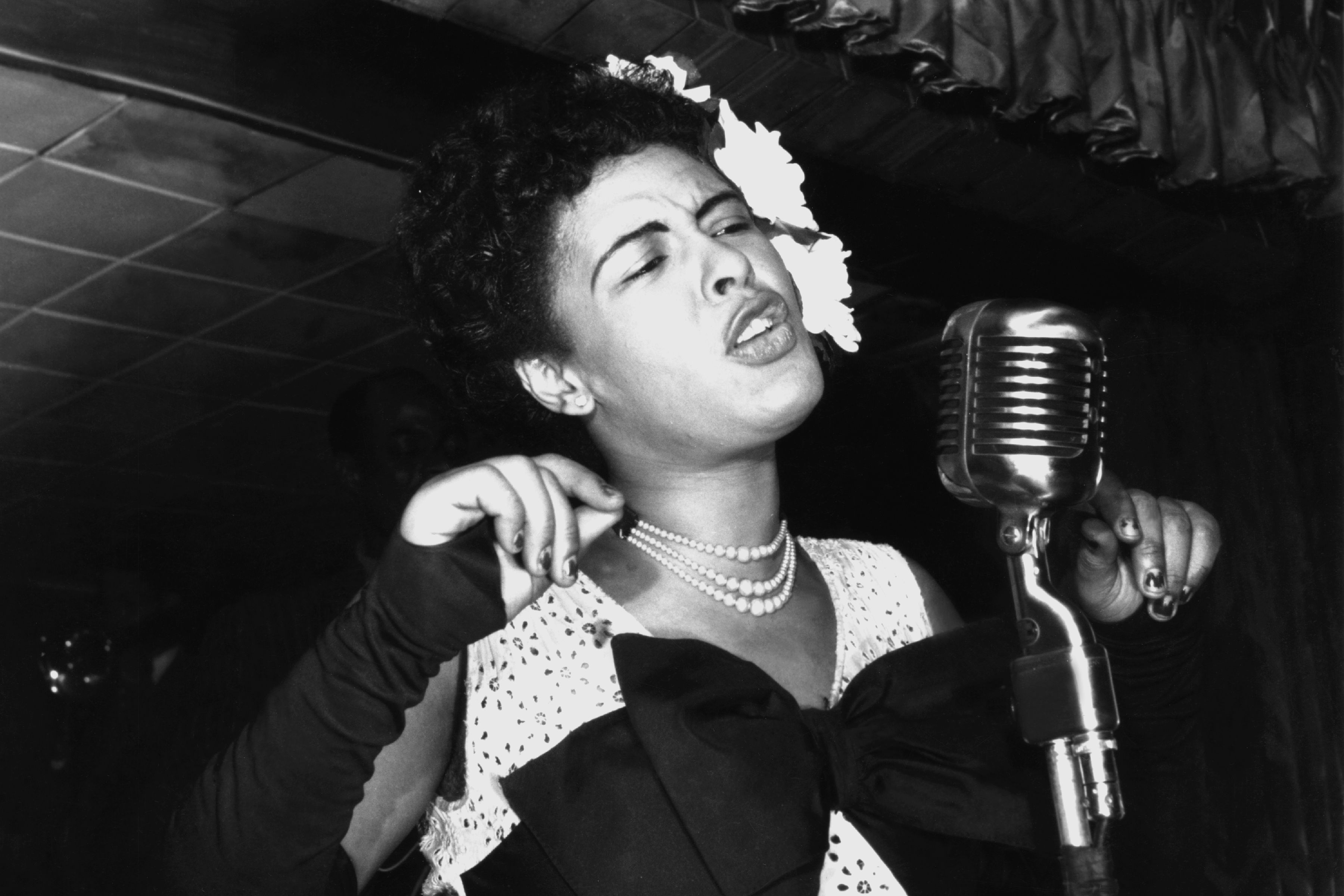
Cover Versions, Get This!

I Put A Spell On You

I know nothing about Chappell Roan. I doubt I’m slap bang in the middle of her? their? demographic anyway…but I do know the one big song. It was ubiquitous for a bit there and there’s no way you haven’t heard it and fallen for its hooky charm either. Pure pop and catchier than that flu that’s been doing the rounds recently, it hangs its hookline on its spelt out titular refrain. ‘Aitch Oh Tee-Tee Oh Gee Oh-oh, You can take me Hot To Go-oh!’ It was the first great example of spelling in a pop song since Gwen Stefani Hollabacked to tell us that, indeed, that shit was bananas, Bee-Ee-En-Ae-En-Ae-Ess, back in 2025.

It’s nothing new, spelling in songs. Otis and Aretha, of course. And The Kinks. And plenty of others. From Van’s gruff Northern Irish burr wrapping its way around Gloria (“Gee-Ell-Oh-Are-Aye-Ae“) to Patti’s wired and speeding East Village take on it; From Weller’s angry young punk spitting of “Ae-Pee-Oh-Cee-Ae-El-Wy-Pee-Ess-Ee-APOCALYPSE!” at the end of ‘A’ Bomb On Wardour Street to Faith No More’s long-shorted and muscular ‘Be Aggressive! Bee-Ee! Aggressive! Bee-Eee-Ae-Gee-Gee, Are-Ee-Ess-Ess-Eye-Vee-Ee!‘; from Al (then Edwyn) serenading us with ‘Ell-Oh-Vee-Ee Love‘ via little Johnny Thunders’ drawling nod to The Shangri-Las, ‘When I say I’m in love you best believe I’m in love, Ell-Yoo-Vee!” to Hall ‘n Oates’ blue-eyed ‘M-E-T-H-O-D-O-F-L-O-V-E‘, a bit of spelling goes a long way to providing the hook. Hot Chip employed the technique on Over And Over. Len’s Steal My Sunshine includes the line, ‘L-A-T-E-R that week.’  None other than the cryptic and idiosyncratic Mark E Smith sang about a ‘C-R-E-E-P’ when the song demanded it. Even our greatest writers are under the, eh, spell.

Which brings us to Warpaint.

The oil-on-water, slow dissolve approach they take to their own Billie Holiday is supreme.
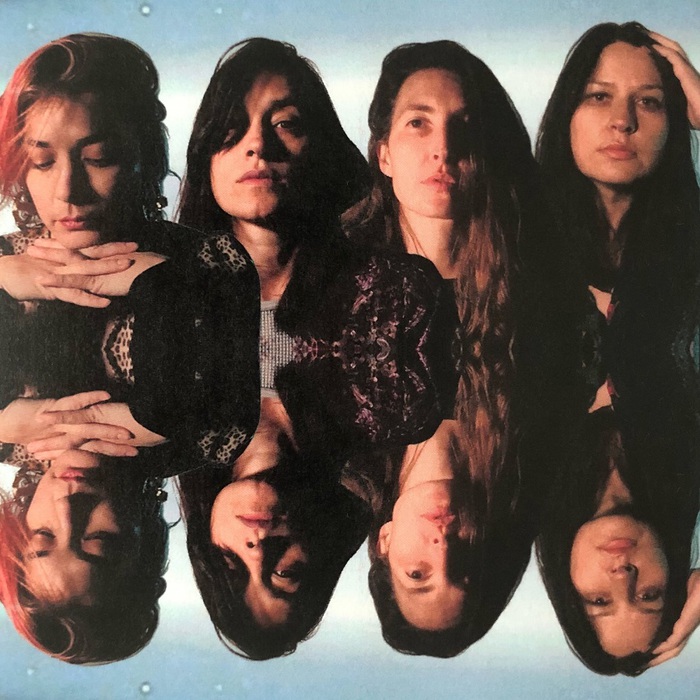
Bee-Eye-Ell-Ell-Eye-Eeh-Aitch-Oh-Ell-Eye-Dee-Ae-Wah-ay.

It’s a sparse track. Cleanly picked guitars, some ambient, soft-touch bass, understated keyboards, a gentle snowfall of toms and cymbals, the overlapping vocals stirring the dusky, twilight air around it. That’s the work of a moonlighting John Frusciante, manning the desk and capturing the band exactly as they’d hoped. 

When the singing starts on the verses proper, you – as a pop scholar with an A+ in every one of your pop scholarly exams – will have immediately noticed they’re singing the verses to Mary Wells’ My Guy. But whereas Mary’s original is all frothing teenage effervescence, rattling along on excitable handclaps and giddy, upwardly climbing girl group vocals, Warpaint take the opposite approach. Theirs is languid and soporific, breathy and downbeat. Nothing you can say can tear me away from my guy, they exhale, with all the enthusiasm of the downtrodden and disenfranchised. If someone were to tell you this was a thinly disguised plea for help in a domestically abusive situation, you wouldn’t be that surprised. Nothin’ you could do cos I’m stuck like glue to my guy. Jeez.

Surely not.
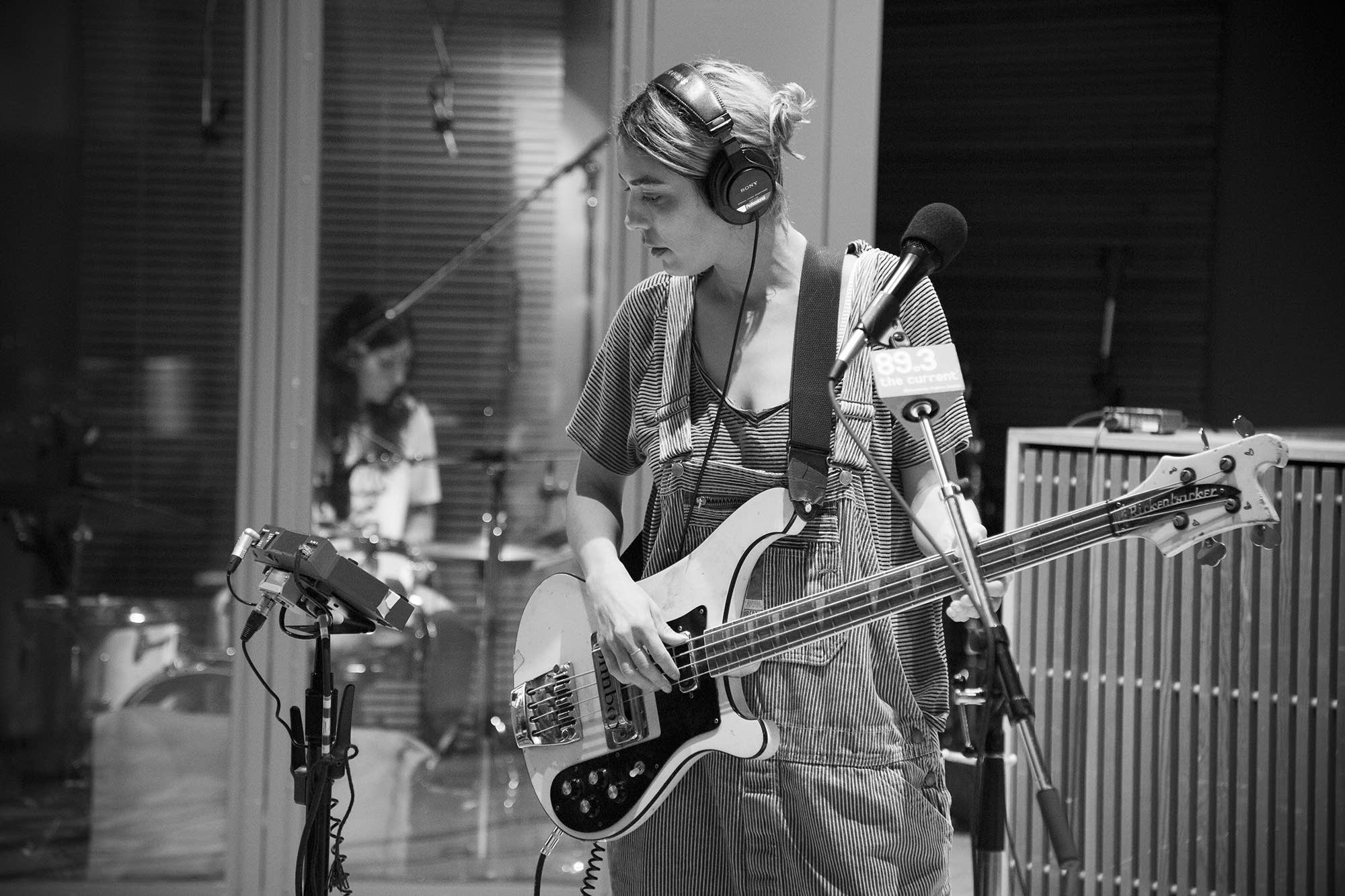
Bee-Eye-Ell-Ell-Eye-Eeh-Aitch-Oh-Ell-Eye-Dee-Ae-Wah-ay.

In comes the refrain again, four voices melded as one, the group inching the song ever forward. Unspooling and unwinding in slo-mo, it stretches for over six sleepy and bleary-eyed minutes, voices drowning in reverb, guitars swimming in chorus and phase, the percussion being tackled with a little more muscle but no less finesse. Disciplined and majestic to the false ending and beyond.

Why Billie Holiday?

Apparently, the lyric was a place holder, the five syllable phrase borrowed from a poster in the band’s rehearsal space and utilised in song until a better set of words was arrived at. Couple that with the appropriation of My Guy and you have the notion of a fledgling band landing on their sound and trying quickly to find their feet. Great record, eh?
Get This!, Gone but not forgotten

Poplar Music

I was delivering a series of lessons recently on Rosa Parks, the black American who in 1955 refused to give up her seat to a white woman on the bus; an action that began the stirrings of the black community to seek, demand and fight for equal rights. I say ‘community’ as if there were ‘only’ a few thousand affected people here. By the mid 1950s, America had a population of around 150 million people, 15 million of which was black. So, 10% of the population was denied the right to sit where they wanted on the bus, go to their preferred church, drink in a bar, use a public toilet, sit in the doctor’s waiting room and naturally go about their daily lives as they would have liked to.

The learners in my class were switched on and interested in this. Despite being typical west of Scotland young people living in an area with little diversity, they knew the rights and wrongs of it. Someone pointed out the parallels between Rosa’s story and that of the refugees coming into Britain by boat only to be deported to Rwanda, how they were denied their basic rights and were treated differently. This led to a conversation about Ukrainian and Syrian refugees, some of whom are in the local school community. Regardless of the complexities of these issues, the kids recognised one thing – no one should be treated differently because of where they’re from or due to they way they look, act or talk. In my experience, young folk are quick to speak up on unfairness. They’ll quickly recognise when something is unjust and often be very vocal about it. Their stance on racism and tolerance of others was a small beacon of light in a United Kingdom that is becoming hideously right wing and intolerant, (mis)lead and governed by a party that is verging on the fascistic. These young learners might just offer us a way out.

I really wanted to point my learners towards Billie Holiday‘s Strange Fruit, but I had reservations about the song’s subject matter. Usually when your conscience speaks to you as a teacher, you listen to it. Experience has taught me that the last thing you want or need is an angry parent demanding to know why their 10 year old brought up the subject of mass race lynchings over the dinner table. So, as much as I wanted to, I didn’t.

Billie Holiday Strange Fruit

Strange Fruit is a powerful song, grotesque even once you know the subject matter. The lyrics, drawn from a 1937 poem (Bitter Fruit by Abel Meeropol), are a juxtaposition of the natural heaven and the human horrors of the Deep South; the pastoral scenes and bodies swinging in the breeze, the intoxicating smell of magnolia and the bulging eyes and twisted mouths of the lynching victims.

Can you imagine hearing it for the first time, those lines about the bulging eyes and burning flesh jumping out of the grooves and smacking you square on the cheek? Fruit for the crows to pluck? For the sun to rot? Oh! So she’s not singing about normal fruit? Jeez. There’s no way I could’ve played this to primary school children, no matter how mature and switched on they may have been.

Holiday’s eerie and otherworldly voice squeezes its way through the smoky ether of muted trumpet and vampish piano, a night club voice bereft of its usual sass or swing. Her delivery, unsurprisingly, is stately and precise yet understated and ghostly, full of restrained rage at the world in which she lives. Nowadays, it sounds like an ancient artefact beamed in from history, from the time of monochrome and gramophone, of prohibition and inhibition. That hollow-bodied jazz guitar that makes itself known right at the end adds perfect period definition to create a powerful piece of American art.

Holiday was scared to sing it initially. Afraid of what might happen when it was performed, she drew power from the death of her own father (he died of mustard gas poisoning at the end of the first World War, refused treatment due to being black). ‘I have to keep singing it,’ she wrote in her autobiography. ‘Not only because people ask for it, but because twenty years after Pop died the things that killed him are still happening in the South.’

The power of the song was such that during live performances, waiter service was halted at the tables and the room was set in darkness, save one solitary spotlight on Holiday as she sang. It was always her last song of the night. Sometimes the end of the song was met with rapturous applause. At other times, Holiday would be verbally abused for daring to sing it. Some audience members would walk out in protest mid song. What did they have to protest about? Holiday holding a mirror up to society? Promoters asked her not to sing it. Billie’s contract stated that she had the final say on that. Her label, Columbia, wouldn’t handle it. They deemed the song too controversial to release. Unperturbed, Holiday’s manager took it to a small independent label, Commodore, who pressed it and released the song. It garnered little to no airplay, ending up on the blacklist. Blacklisted. There’s some sort of irony there, yet here we are, 84 years later, still discussing its power.

Strange Fruit has lost none of its weight or ability to shock. It’s arguably the first in a rich lineage of protest songs that runs from the pre-rock ‘n roll jazz era to the dust bowl socialism of Woody Guthrie, past Bob Dylan in the ’60s and Stevie Wonder’s socio-political discourse of the ’70s and through Public Enemy to contemporary groups like Sault who are equally as angry about the world in which they live. Always vocal, never silent, calling out unfairness when it arises. Just like those young kids at school.


Southern trees bear a strange fruit
Blood on the leaves and blood at the root
Black bodies swingin’ in the Southern breeze
Strange fruit hangin’ from the poplar trees

Pastoral scene of the gallant South
The bulgin’ eyes and the twisted mouth
Scent of magnolias sweet and fresh
Then the sudden smell of burnin’ flesh

Here is a fruit for the crows to pluck
For the rain to gather
For the wind to suck
For the sun to rot
For the tree to drop
Here is a strange and bitter crop