Hard-to-find

Bjorn To Boogie

Where popular music leads, others quickly follow. After Oasis came galloping into existence like the twin-headed horse of the apocalypse, labels quickly snapped up any old ham-fisted cock-sure oiks with a couple of Adidas tracksuit tops and a recently-purchased copy of The Beatles’ Blue album between them, stuck them in a studio, created a scene and flung the tepid results out for the gullible to swallow. TFI Friday was awash with one word groups grabbing hold of the Gallagher’s corduroy coat tails and seizing the opportunity before the world woke up to the fact that, beyond one and a half albums, they weren’t any good. It’s always been this way; Elvis then Cliff. The Beatles then The Hollies. Zeppelin/Sabbath/Purple. Happy Mondays/Flowered Up. Imitation is the greatest form of flattery, etc, etc, etc. It still goes on today with Yard Act/Deadletter, Idles/Shame and a million others, all of whom stole something – an idea, a shouty vocal line, a guitar tone – from someone further back on the timeline and managed to find some sort of success of their own.

Baccara  – Yes Sir, I Can Boogie
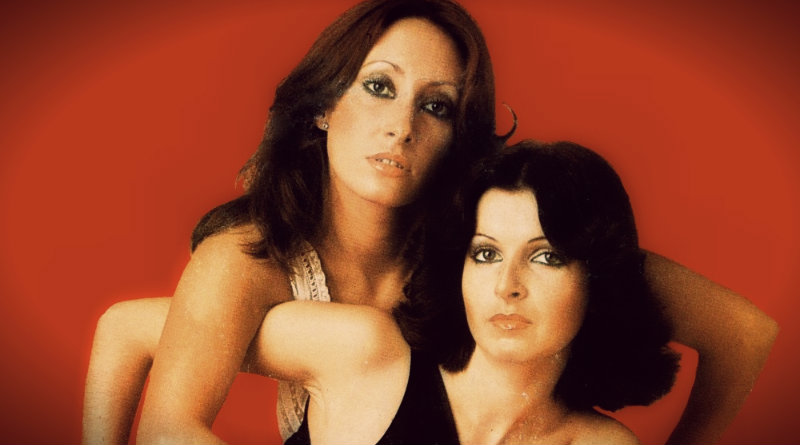
Yes Sir, I Can Boogie is nowadays a Tartan Army party tune, propelled into a collective Caledonian consciousness thanks to dressing room footage of the Scottish football team celebrating qualifying for the last Euros in 2020 (played in ’21, as it would turn out) by congaing their daft selves into a giddy and hysteric state as it rattled its tinny rapture through an iPhone. It’s belted out on trains, murdered in foreign fountains, sung in mass communion following Hampden wins. We’re now at the stage where the song is ubiquitous and synonymous with the Scottish football team. It wasn’t always thus.

The tune came out in 1977 when the Eurovision demographic was mad for Abba and you can hear, in its twin female vocal and string swept disco beat, that its writers took the Swedish blueprint and ran with it like a set of DIY flatpack instructions from Ikea all the way to Fuerteventura to kidnap a couple of local flamenco dancers before bundling them into the nearest recording studio, doors locked until they had a hit in the can.

That sultry, whispered and very European verse line, all hand on hip wiggle and sensuous promise of what might follow – “Mee-ster, your eyes are full of hezi-tay-zhun” – is pure Agnetha and Anni-Frid. That hi-hat, all discofied aerosol shine and four to the floor groove is George McCrae’s Rock Your Baby times ten, itself the key to the beating heart, admit Bjorn and Benny, of Abba’s mighty Dancing Queen. The chorus, when its double-tracked vocal soars out of the verse in direct proportion to the climbing string section is uplifting melancholy and deliriously magic and Abba to the max. It’s fairly easy to understand the correlation between the euphoria of a three goal victory and the song’s super soaraway chorus. That it’s also defiant in defeat is quite handy if you’re a Scottish football supporter these days.

Then there’s the breakdown where the girls ooh and coo and a clavinet line squiggles away like a mid 70s Stevie Wonder himself. And the guitar, especially at the start, which shoots wee lightning bolts of disco funk out into the ether. And a bassline that bubbles away like Bernard Edwards with a bottle of Matey in each hand. There’s a lot going on in Yes Sir..., and although in recent years it’s been kinda cool in an ironic way to like Baccara’s one big hit, I’m transported back to more innocent times whenever I hear it, when Abba, and by association Baccara, soundtracked my childhood with no pretence or embarrassment whatsoever.

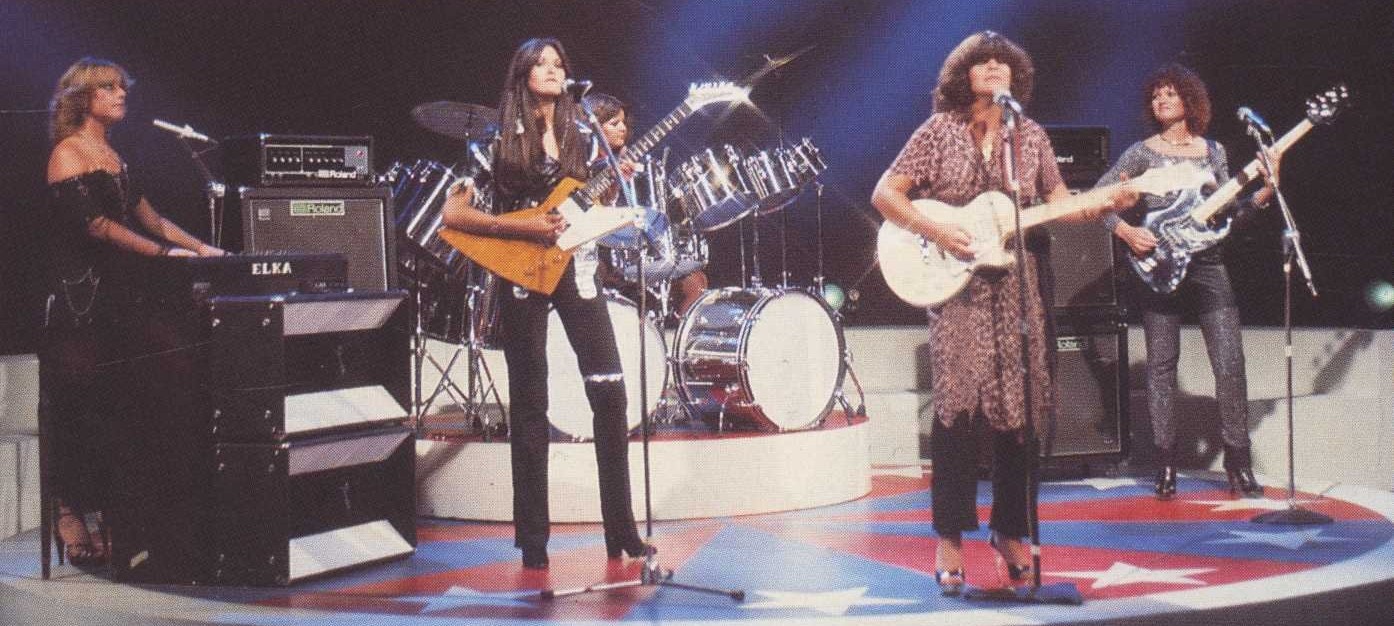
Another track heavily influenced by Abba would be 1978’s Substitute by all-girl South Africans Clout.

All the ingredients are there; the understated verse with low-key vocals, the restrained hysterics that you, the listener, know are going to slide up and out into the stratosphere very shortly…

CloutSubstitute

…and there they go. From pre-chorus into chorus, backed by brilliantly produced drums and piano trills, the vocals move through the gears with overlapping Beatles harmonies – “If she doesn’t come back…if she doesn’t come BACK!” – a wee falsetto woah-woah hook between chorus lines for good measure… Substitute is pure Abba and another unashamed favourite from my past.

It was only years later that I discovered, interestingly, that Substitute was a radically-altered cover of an old Righteous Brothers ballad, written by none other than Willie Nelson. What?! Yeah! What, right? Listen here:

The Righteous Brothers sound like they’re wading through ten feet of treacle by comparison, a 45 at 33 rpm, but amongst the slo-mo despair you can hear Wille Nelson, there in spirit through the Brothers’ (but not brothers) countrified phrased twang in their arrangement. Not a patch on Clout’s full-on, late ’70s Abba approximation though. No Substitute, in fact.
Get This!

Reunion City Blues

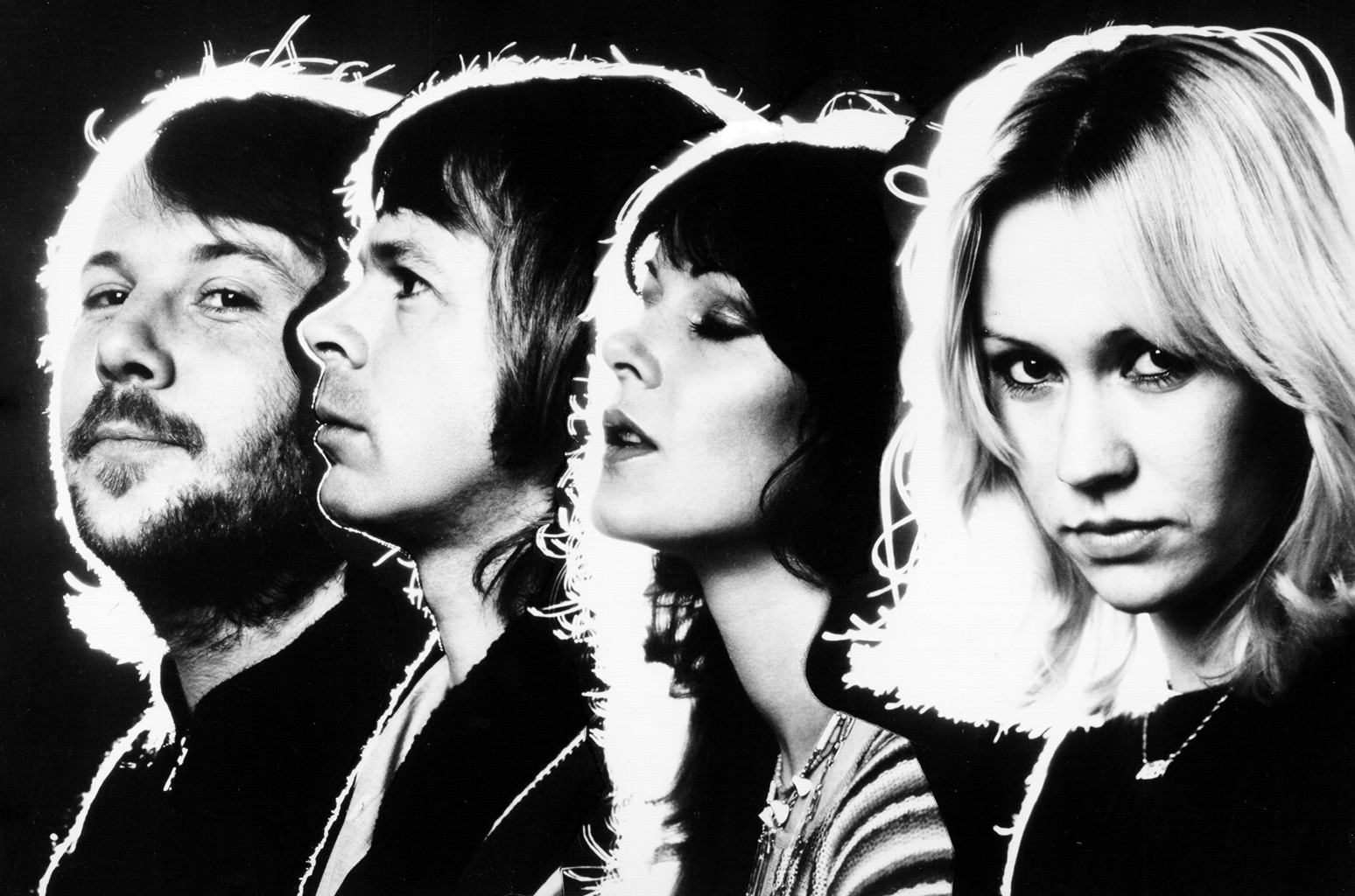
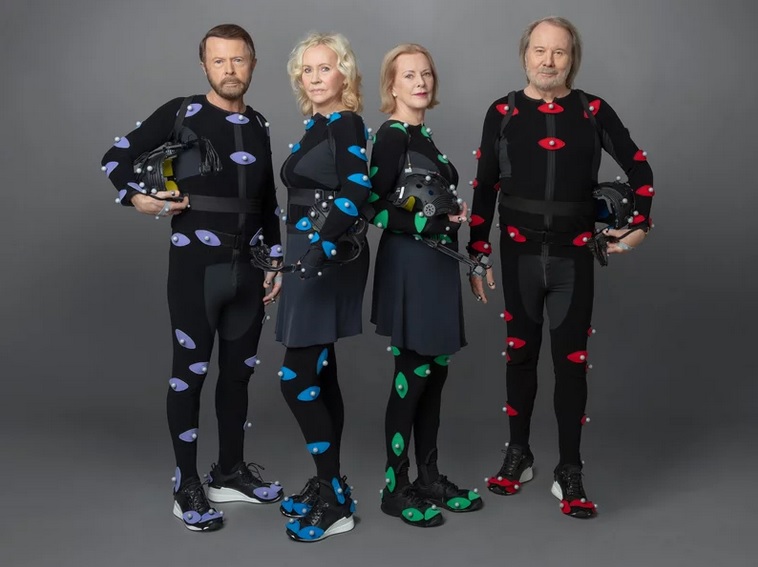
I blame Daft Punk. They self-delete and before the dust has properly settled, ABBA are busy raking Thomas and Guy-Manuel’s desktop dustbins for a hip new techy idea to steal and a weird costume to squeeze self-consciously into. The news that ABBA have reformed (of sorts – they haven’t really, have they? Have they?) fills me with the fear. They’re just about the last of those big heritage acts with all original members still alive and if they had any semblance of dignity remaining, they wouldn’t do it. Judging by the press photo though, it may already be too late. Bjorn again? Even poor Benny knows it.

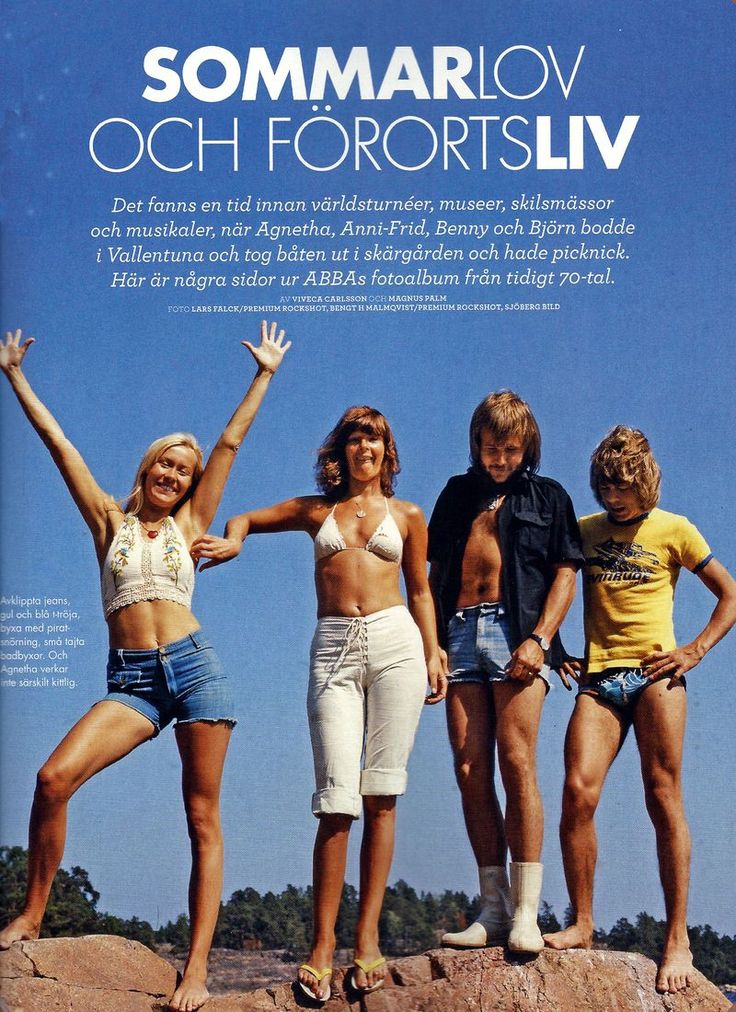
In this house, ABBA was synonymous with growing up in the ’70s. At family get-togethers and especially at New Year, they were inescapable. ABBA is the sound of droopy moustaches, of child-friendly glasses of wine diluted with water, of asthma brought on by feather pillows and playing with dogs (and child-friendly glasses of wine diluted with water), of folk song singalongs, of Hammer House of Horror on the wrong side of midnight, of itchy jumpers, too-wide trousers and no telly in the daytime. The music of ABBA is as much a part of my DNA as my inherited grey hair and family jowls.

I first became aware of them as they played on my uncle’s proper old stereo equipment, a turntable that nowadays would likely cost you a good few months’ salary and quite possibly your marriage.

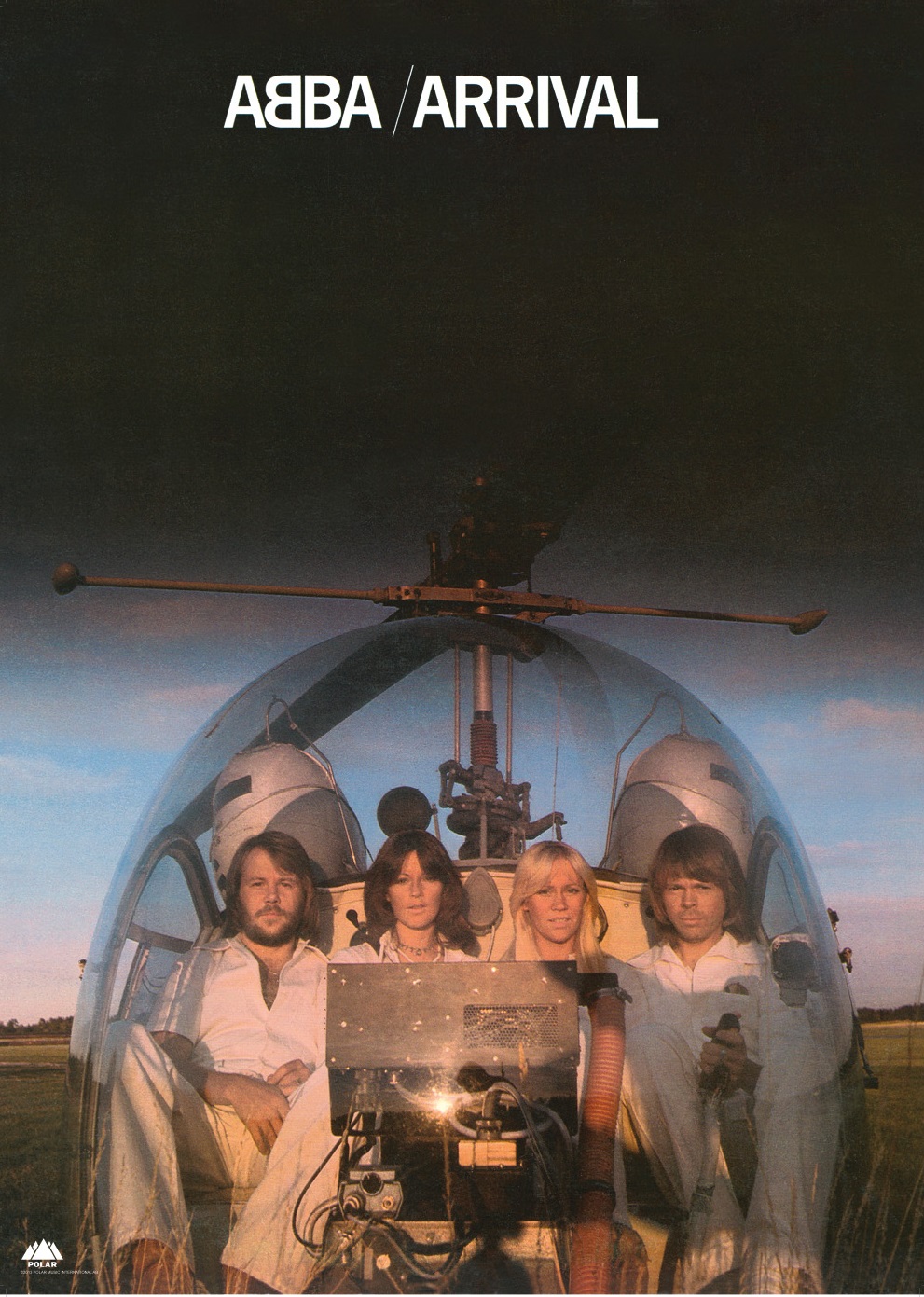
Turned up so loud that the rush of audiophile air from the floor-standing speakers rippled the skin on the back of my hand, the music of ABBA was at once foreign and icy strange yet flawless and instantly familiar. The Arrival album rinsed the room with thumping string-swept disco and ringing twelve string guitars. There were sections where the music dropped out, giving space for the girls’ locked-in harmonies to hang suspended in time before being swallowed up by the masterful ’70s production, singable instrumental hooklines at every turn and melodies on top of melodies on top of even more tumbling melodies; songs so adult in performance and presentation it would take me years to fully comprehend their depth and ambition.

There was undeniable European glamour in ABBA, and this was before I’d even clapped eyes on the visionary Agnetha, airbrushed into a shapely jumpsuit or other, her gap-toothed, soft-focused faraway half-smile and blow-dried Charlie’s Angels hair awakening something in me and zapping electrically-charged hormones around my insides like the dodgems at the moor on Marymass Saturday.

You don’t need a copy of ABBA Gold to know that every ABBA track stands up for two reasons; the timeless production and the hook-laden arrangements. They always got a great natural drum sound, did ABBA. It’s the sound of expensive, pine-clad Scandinavian studios and the best sessioneer (Ola Brunkert) that ABBA’s considerable fortunes could buy. If I was making music today, I’d be looking to ape the sound and feel of ABBA’s drums on every track I recorded.

Those detached, ice-dusted vocals and the endless earworms they continue to create will always be centre-stage, but the supporting instrumentation is never anything less than inspired. The bass line and electric guitar pay-off on The Name Of The Game…the studied, sparse monotony of The Day Before You Game…that piano trill and bass pulse that sets Money Money Money on edge (and not to mention Anni-Frid’s guttural ‘I bet he wouldn’t fancy me‘ line)… Knowing Me, Knowing You, a-haaa. Even TV comedy can’t ruin that one, not when the track has a brilliantly placed guitar and drum colouring the sound, tension and release, just below the titular hook. Listen out for it. Once heard, never forgotten. Every ABBA track, every single one of them, is memorable in one way or another.

They have better songs than Eagle, perhaps, but released on 1977’s ABBA: The Album, it’s the band’s sound in miniature.

ABBAEagle

First off, it’s stately and steady, far slower than it has any right to be. In most hands, the restrained pace of Eagle would be a problem and would have turned to curdled milk long before the end. This was 1977 remember – most bands would’ve been tempted even subconsciously to crank up the speed a little, get it moving to the finish line. Not ABBA. In their hands, it’s a glacial paced and elegant minor key masterpiece, quietly gliding, windswept and widescreen, as self-assured and soaring as its subject matter. The way the vocal ends on a new chord leaves it hanging, the aural equivalent of the eagle itself banking off into the distance.

The girls sing in unison. They sound sad, somehow. They always do. ABBA do melancholy like no other. Low in the verses, high in the choruses, backed by a symphony of synths and multi-tracked counter-vocals that provide the catchy parts, Agnetha and Anni-Frid’s voices melt into one. They sing the fuck out of Eagle. As I listen now, I can see Agnetha’s lined forehead, her crescent-mooned eyebrows and faraway eyes lost in song, her lipgloss catching some TV studio light or other as the camera pans across and around her.

“Hiiiyee-uh high! What a feeling to fly…” That wee vocal half-pause they fling in around three minutes and then again near the end is the particular masterstroke on Eagle. Every part of it has been painstakingly mapped out beforehand. Nothing is left to chance on an ABBA record. And not just the chorus and key lines, but the preludes, the bridges, the ‘ad-libs’ in the outro… and the guitar parts, the keyboard motifs, the bass lines. Perfect. Even their logo, with its mirrored backwards ‘B’ has been subject to committee and discussion. And it’s all there on Eagle. I’m sure Phil Oakey had that hook playing on a loop somewhere underneath that lopsided fringe of his when the Human League were writing Don’t You Want Me.

In more recent years, ABBA has become the soundtrack to hen parties and Christmas nights out and drunken office shenanigans, their music reduced to karaoke and tribute acts and pop party music. Then there was the awful musical, a vehicle that dared to knit together bad cover versions with a flimsy storyline. Rotten stuff.

And now this. Whatever this is. A holographic, pseudo-live performance that will undoubtedly leave you little change from a few hundred quid and will sell out before tickets are properly on sale? I mean. come on! Stop! And new songs? Two of them. I had no intention of listening to them until YouTube spat one out at me…

…and it was all there; the understated, piano-led start, the ‘Do I have it in me?‘ hookline, the strings providing the counter-melody, a skyscraping chorus (I’m not sold on the drum sound though) and a none-more mid ’70s soft rock guitar, the sound of The Carpenters produced by Barry Gibb, all gift-wrapped for authenticity in that overpowering feeling of melancholy that they can seemingly do in their sleep. Damn you, ABBA. Why did you go and do this?