Gone but not forgotten, Sampled

Phrasing

Hey! You! Put aside the dog-eared copy of Absolute Beginners that you’re currently re-reading for the 5th (6th?) time. Lift the needle from the freely-spinning Cafe Bleu on the old Dansette. Brew yourself a fresh cappuccino, or even an espresso forte, and sit back and read this.

Jazz is America’s first music, a liberation from daily struggle, the artist given the freedom to play and sing however they choose. Those jazz cats used the music as a platform for cultural expression, whether that be Billie Holiday’s heart-stopping vocal on Strange Fruit or John Coltrane’s faith meditation on A Love Supreme, Miles Davis’s exotic inroads on the voodoo funk of Miles In The Sky or Louis Armstrong’s rasping love song to the Wonderful World he found himself living in. Oppression, worship, love, death…jazz is life itself. Folk that say they don’t like jazz just haven’t yet found the strand of the genre that will resonate with them.

Jazz, though? Soul – that’s obvious. Blues? That’s obvious too. But jazz? Why jazz?

Way back a hundred or so years ago, ‘jazz’ was a slang word used to describe liveliness and spirited behaviour; ‘She’s so jazz!’, ‘This dance is wildly jazz!’, ‘That baseball team is totally jazz!’ etc. So, in the time it took Louis Armstrong to parp out a trumpet triad, ‘this music is totally jazz!’ went from adjective to noun. Interestingly (or otherwise) the word ‘jazz’ itself originated from the word ‘jism’, in that if you were lively and spirited between the sheets with the person of your fancy, well…you know what tends to happen. So, the next time you hear the word ‘jazz’, ponder on that for a bit.

“Hey boy, bring me ma drink,” Hey boy, play me anutha toon,” “Hey boy, don’cha quit playin’ until you been told to quit playin’.” In the jazz clubs during the good old days of white supremacy and inherent, unfiltered racism (which could be either last century or last week), American black men took to calling one another ‘man’ – a required and regular reminder of respect between the oppressed that their fellow brother should be just as valid and just as valued as any other man in the place.

“Hey, man. You doin’ okay?”

Nowadays, folk like myself use the word without thinking of its true origins. It’s worth reflecting the next time you drop the word into conversation.

Those black me and women could trace their collective blood line back to slavery. Of the many thousands of Africans who were shipped to the Americas, the ethnicity of a large percentage of the people was rooted in the Wolof tribe. As with all indigenous people, the Wolofs kept their history alive through song, passing down stories and traditions from the elders through music and oral storytelling. Hence the phrase ‘folk music’.

The Wolof word for ‘music’ is ‘katt’, and it’s thought this is the origin of the phrase ‘jazz cat’.

Me, I’m a fair weather jazz fan. My list of favourite jazz albums would look as obvious and lightweight as one you might find published in the arts section of the Guardian or in the near-the-back pages of Mojo. Miles…Coltrane…Nina… bore off, pretentious jazz wanker. With the sun blazing a hole in the sky and the last week of the summer holiday slowly fizzling to a close, it’s Jimmy Smith‘s Back At The Chicken Shack that’s been doing it for me these past few days.

Here’s something to ponder – why is it that the soul and blues players kept their Sunday name – James Brown, James Carr, but the jazz cats adopted the more street variation – Jimmy McGriff, Jimmy Smith?

Anyway. Jimmy Smith. He’s the link between jazz and soul, his shimmering and colossal Hammond organ sound driving his group with a grit and right-on funkiness that’s impossible to dislike. Like all the best jazzers, his group was fluid and ever changing, evolving its sound as each musician passed through on their way to wherever it was they were going.

Jimmy SmithBack At The Chicken Shack

On Back At The Chicken Shack‘s title track, Smith trades call and response organ phrases with the omnipresent Kenny Burrell on guitar and the ubiquitous Stanley Turrentine on tenor sax, his regular drummer Donald ‘Duck’ Bailey keeping the beat just on the right side of slow but progressive.

Burrell is all over the Blue Note catalogue, both as band leader and sideman, and his Gibson 400 CES ripples patterns of woody eloquence at every opportunity. On Back At The Chicken Shack he’s content to play understated augmented chords beneath Jimmy Smith’s expressive playing in the first and last sections, but in the middle, after his bandleader has given him the nod, he’s off and flying, fingers cleanly picking tight and taut melodies across the strings and frets with a speedy ease that’s both mesmerising (as a listener) and frustrating (as a hamfisted guitar player). His phrasing, the spaces he leaves between the notes, is perfect. Off-the-cuff-playing like this doesn’t come easy, as easy as it sounds.

Turrentine is no stranger to the Blue Note discography either and his forceful yet soothing sax playing swoops and soars in all the right places. The band falls in step behind him as he freeforms and riffs across the top of the steady groove being cooked up. If yr head ain’t nodding and yr foot ain’t tapping by this point, maybe you need to give your ears a wee clean out. Imagine hearing this live in a sweaty Village basement club, or even being spun by a hip DJ in the Flamingo in 1963, all the ace faces dancing in studied concentration. It’s enough to pop the buttons on yr tonic suit.

Back At The Chicken Shack – seek it out, man.

Gone but not forgotten, Live!

There Is No Culture Is My Brag*

There’s no gig goer on the planet whose live music experience isn’t enhanced by the headline act using a piece of classical music to herald their entrance to the stage.

Back at a Cult show in 1987, the Barrowlands lights went down and instantly Wagner’s Ride Of The Valkyries played at deafening volume. Strobes flashed, silhouettes of road crew and band members were frozen in position momentarily on-stage and the crowd, already at fever pitch, swirled and heaved as one giant organism to the booming classical music while the flickering group members strapped on their instruments and took their spots. The unmistakable outline of Astbury-as-Morrison leaned into the mic. The backline lights swept upwards to bathe the room in technicolour. Valkyries ended and the drummer (one of a series of revolving Cult sticksmen of the era) twirled his sticks as Billy Duffy, shrouded in dry ice and adopting a leather-trousered legs apart rock pose, picked the opening riff to Nirvana. It’s even louder than the intro music, it’s theatre and it works. Apocalpyse now!

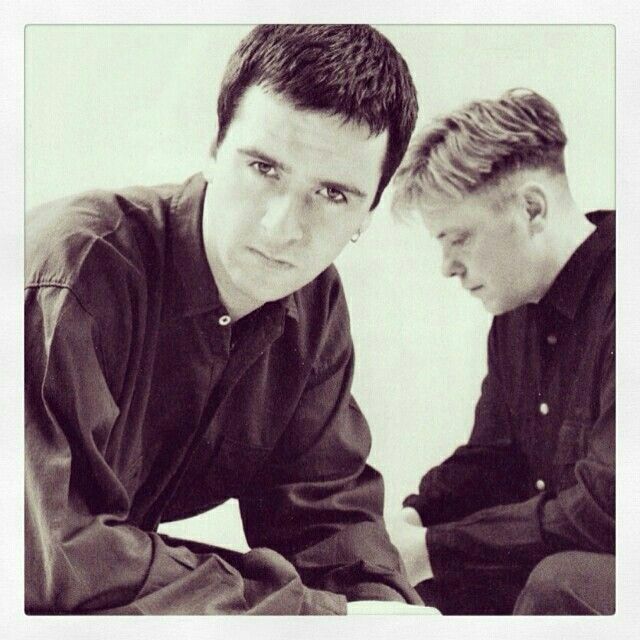
From their September 1984 tour of the UK onwards, The Smiths famously took to the stage to the high drama of Prokofiev’s March of the Capulets, the signature piece from the Ukrainian composer’s score that would accompany the ballet of Shakespeare’s Romeo and Juliet.

The SmithsIntro Music, Irvine Magnum Centre 22.9.85

You’ll be more than familiar with old Sergei’s tune these days, Smiths fan or otherwise, due maybe to its inclusion in the Roman orgy-fuelled Caligula (another tenuous Smiths reference there), but certainly to its ubiquity on The Apprentice, where it soundtracks Alan Sugar’s every arrival in the boardroom. The piece of music’s sense of foreboding and knives-out tension is perfect for a pre-sacking amuse-bouche. It’s over-played these days to the point of pantomime, but back in 1984, to hear this booming out of The Smiths PA must have been genuinely thrilling. The increasing tension of Prokofiev’s score giving way to the euphoria that accompanied Morrissey’s rasping “hallo!” – it’s this that upsets me most about missing The Smiths in concert. Not the songs they’d play. Not the sense of communion. It’s that sense of anticipation of what is to come, and it’s Prokofiev’s music that does this.

A good musicologist would point to the semitones involved in the music’s refraining opening bars (dum-dah, dum-dah – see also ‘Jaws’) and the heady combination of dynamics and dissonance, of hellraising brass and high sweeping strings that simultaneously jangle the nerves and set the heart a-flutter, but to these ears it’s just a perfect piece of dramatic music, the ideal fanfare for a band steeped in spectacle and highbrow culture.

There’s a lighter section, all butterfly flutters on delicate strings and a suggestion, perhaps, of respite or even just a glimmer of hope on the horizon, before the brass blows its wicked way in again and the whole thing tramples all over you. In Romeo and Juliet, there’s no doubt that those Capulets are truly marching and totally unstoppable, and you fairly get the sense of this in Prokofiev’s attention-grabbing score.

In an interview I did with him a few years back, Mike Joyce told me that, even now when he hears it, the hairs on his arms stand to attention.

“…and I still know the exact part of the music when we’d turn to one another, nod and begin our walk onto the stage. The roar of the crowd as their anticipation is realised, becoming deafening as I take my seat and then Morrissey’s opening line before it all kicked off. Doing that every night never got boring, let me tell you.”

Smiths trainspotters can no doubt point to the exact version of March Of The Capulets used by The Smiths. That’d be the Philadelphia Orchestra recording from 1982, as conducted by Riccardo Muti, of course. Rake long and patiently and you’ll maybe find it at the back of a box of classical records in your local British Heart Foundation shop. That’s where I found mine.

Suite No. 2 from Romeo and Juliet, Op. 64ter: I. The Montagues and Capulets

Philadelphia Orchestra cond. by Riccardo Muti

Smiths trainspotters can also undoubtedly point to the group’s show in Gloucester on the 24th September 1984 as the first time their group would enter the stage in such giddy fashion. In keeping with his persona of the time, Morrissey welcomed everyone with a  ‘hello, you little scallywags‘ before Johnny led the others into Hand In Glove.

Now, that’s how you start a show!

*That headline? The Classical, innit. If y’know, y’know. And I know you do.

Cover Versions

A Date With Elvis

One of the side effects, if you like, of the current Oasis revival has been the reshining of the spotlight on the music of 30 or so years ago. Even at the time, it was clear that there were only two or three decent bands on the go. The rest of the (gads) scene was made up of skinny-jeaned, Adidas-clad chancers who’d alighted at Camden Town and grabbed hold of the corduroy coattails of the movement and ran with it. Bands with one word, two syllable names littered the gig listings, the narrower columns of the music press and, with a depressing regularity, the shelves of your local Our Price.

Sleeper. Bluetones. Dodgy. Menswear. Embrace. Oh man! That guy couldnae sing! A couple of bowlcut brothers dressed in everyman denim while continually rewriting Let It Be? Call y’rself Embra-sis and be done with it, boys. It’s all the fault of the record companies. See what people like and replicate, dilute, repeat to ever-diminishing returns, until the whole thing swallows itself up.

Those groups above are maybe even considered the ‘best’ of the lot too. Lest we forget S*M*A*S*H. These Animal Men. The Subways. My Life Story. Rialto. Gay Dad. Heavy Stereo. Marion. Longpigs. Northern Uproar. It’s an endless list, and I haven’t had to Google any of it. Those groups have all had more front covers than I’ll ever have, so really, who am I to comment? Dare I suggest each of them has a decent tune (or two?) hiding amongst whatever passed for a song in the setlists and demos that saw them signed in the first place? Full confession: I have a soft spot for Dodgy. Great players, great songwriters, great way with a harmony and a melody. See Lovebirds for full effect.

In John Niven’s Kill Your Friends, he writes an entire page or more filled only and entirely with the names of Gallagher slipstream-riding bands, most of whom never got beyond third on the bill at the Camden Falcon and demo stage, yet; ‘bands that, for a brief, tiny window, were surely going to be bigger than The Beatles. Now, when I handle these neglected, dusty objects, I sometimes feel that I am handling nothing less than the atrophied, fossilised remains of someone’s dreams’.

Ouch.

So, yeah, Oasis have gate-crashed the contemporary and millions of folk are either reliving their teens or, like my own teenage son, blagging their way into the stage-front standing area, Pep to the left, Kamara to the right, and fulfilling their dreams by seeing them live for the first time. Good luck to ’em all. I can’t wait for the next generation of Noel-inspired songwriters to start seeping their way onto Spotify.

Sleeper but.

There was a music press-coined term used to describe the anonymous males who played behind their more photogenic – and female – lead singers. Sleeperbloke. Skinny-jeaned, Adidas clad, some Fred Perry on display, maybe a Fila track suit too. The drummer was usually pretty watchable, in a Clem Burke sort of way. One of them would have a really great haircut, the sort that you’d look at in the street and think, ‘he’s in a band’.  One of them presented an image so beige they should’ve been dumped by the rest of the group at the first opportunity (but his dad owned the van though, so, y’know…). He was quite possibly the lead singer’s boyfriend and there he was on TFI Friday, barre chording grimly while the cameras shot his short-skirted girlfriend from the ankles up, watching on helplessly as she entered a whole new orbit of hipper boyfriends and short-lived fame.

SleeperWhat Do I Do Now?

Sleeper came and went and passed me by. Nnnahh. Blondie-lite and inoffensive, I had no need for them. But a good song is a good song is a good song, and What Do I Do Now? might well be their greatest (only great) moment. Sure, it has terribly breathy vocals – you can see Louise Wener and her big, brown, doe eyes giving you the come-on as you listen – and it’s got a burbling guitar break that sounds as if it’s playing at the bottom of the North Sea, but it’s a proper story song, of a relationship breaking down and how the two protagonists deal with it.

None other than Elvis Costello thought highly enough of it that he recorded his own, pared-down version. He turns it from a fizzing and clattering indie-rock track into a waltz-time acoustic ballad, his voice close-miked and enunciating perfectly the vocals that the song’s original singer wasn’t quite able to do. His vocals, reedy and high, gulping and low, perfectly toned and pitched, are brilliant on this.

Elvis CostelloWhat Do I Do Now?

Tore up all your photos, didn’t feel too clever

Spent the whole of Sunday, sticking you together

Now I’d like to call, but I feel too awkward

Some things need explaining, no-one told me it was raining.

Good lyric, that.


Coming never: Elvis Costello Sings The Greatest Hits of Britpop.


Get This!, Gone but not forgotten

Homo Superior In My Interior

It’s 1981. Buzzcocks come together to begin working on their fourth album, Martin Rushent in the producer’s chair. The band is broke, both financially and creatively. Pete Shelley, stuck in a deep rut of writer’s block, brings a handful of half-finished songs left over from his pre-Buzzcocks days. The others bring nothing much at all.  With the sessions quickly collapsing, Rushent suggests to the group that Buzzcocks take a break. The producer and singer though, they alight in Rushent’s state-of-the-art studio to work on some of Pete’s tracks.

Pete Shelley’s resultant *debut album Homosapien might’ve spun with the same spiky frothiness as the act he’s most associated with, but it was glossed in a sheen of Rushent-powered machinery; synths, drum machines and programmed sequencers that were very much in keeping with the musical landscape of 1981. The cover tells the story – a careful placement of arcane artefacts and cutting edge technology that dates it somewhere in a near future where Kraftwerk might meet Blake’s Seven around the boardroom table for a healthy discussion on the merits of analogue vs digital. The result, if we’re being honest, was a bit of a mixed bag. The eponymous lead single though? That’s a stone cold cracker.

Homosapien judders and jars its way in on the same motorised rhythm as Buzzcocks’ Something’s Gone Wrong Again, all mid-paced bounce, effect-heavy 12 string acoustic guitars, their swirling chords slashed and stabbed. It makes for a great sound. It even finds space to add an undercurrent of I Wanna Be Your Dog-giness in the verses…verses that borrow heavily from the sequenced bassline that throbs its way through Abba’s Does Your Mother Know? Play them back to back yourself and tell me I’m wrong. I bet Rushent knew exactly what he was doing here. Why wouldn’t a producer keen for a hit want to borrow a hint of DNA from pop music’s greatest contemporary hit makers?!

For all the producer’s sprinkling of magic though, it’s the singer who’s the real star of the show here. Shelley’s delivery is, as ever, terrifically sneery and archly camp, double tracked at the end of lines and even more so all over the chorus, adlibbing up and up the scales as the record fades out. It’s once you focus on the words being sung that the gravity of the record becomes crystal clear.

‘Shy boy, coy boy, cruisers, losers’.

‘Homo superior in my interior

I don’t wanna classify you like an animal in the zoo‘.

‘I just hope and pray that the day of our love is at hand‘.

You and I, me and you, will be one from two, understand?

Adding such a transparent lyric was for sure a real, eh, ballsy move by Shelley, but once it had found the ear of a jobsworth radio researcher, the record was promptly banned by the BBC. The organisation who beamed Larry Grayson into millions of living rooms every Saturday night was aghast at the record’s ‘overt references to homosexuality‘.

Exhibit A, m’lud: ‘Homo superior in my interior‘.

What a zinger of a line but.

With the era of diversity and acceptance still just a formative if growing movement on the horizon, Homosapien is perhaps the first pop song to use non-coded lyrics to get its message across. It’s brave stuff to be writing, singing, recording and releasing in 1981.

No Homosapien, no Smalltown Boy perhaps. No Smalltown Boy, no open discussions around the living room telly during Top of the Pops as its video plays for the umpteenth time. In its own small way, Homosapien is a groundbreaking record. It’s almost a bonus that it sounds utterly fantastic, and more so 40+ years later.


*We’re not counting Pete’s pre-Buzzcocks 1974’s experimental, instrumental album Sky Yen, are we? Are we?

Get This!, Gone but not forgotten

This Ain’t Livin’

I was punishing myself on the cross-trainer of death the other morning, slick rivers of sweat pooling in my hair and under my double chin, a dark, damp South America-shaped land mass of perspiration creeping slowly down my t-shirt, the ear buds on my ancient iPod slippy with wetness and falling continually out of my ears, when this came on.

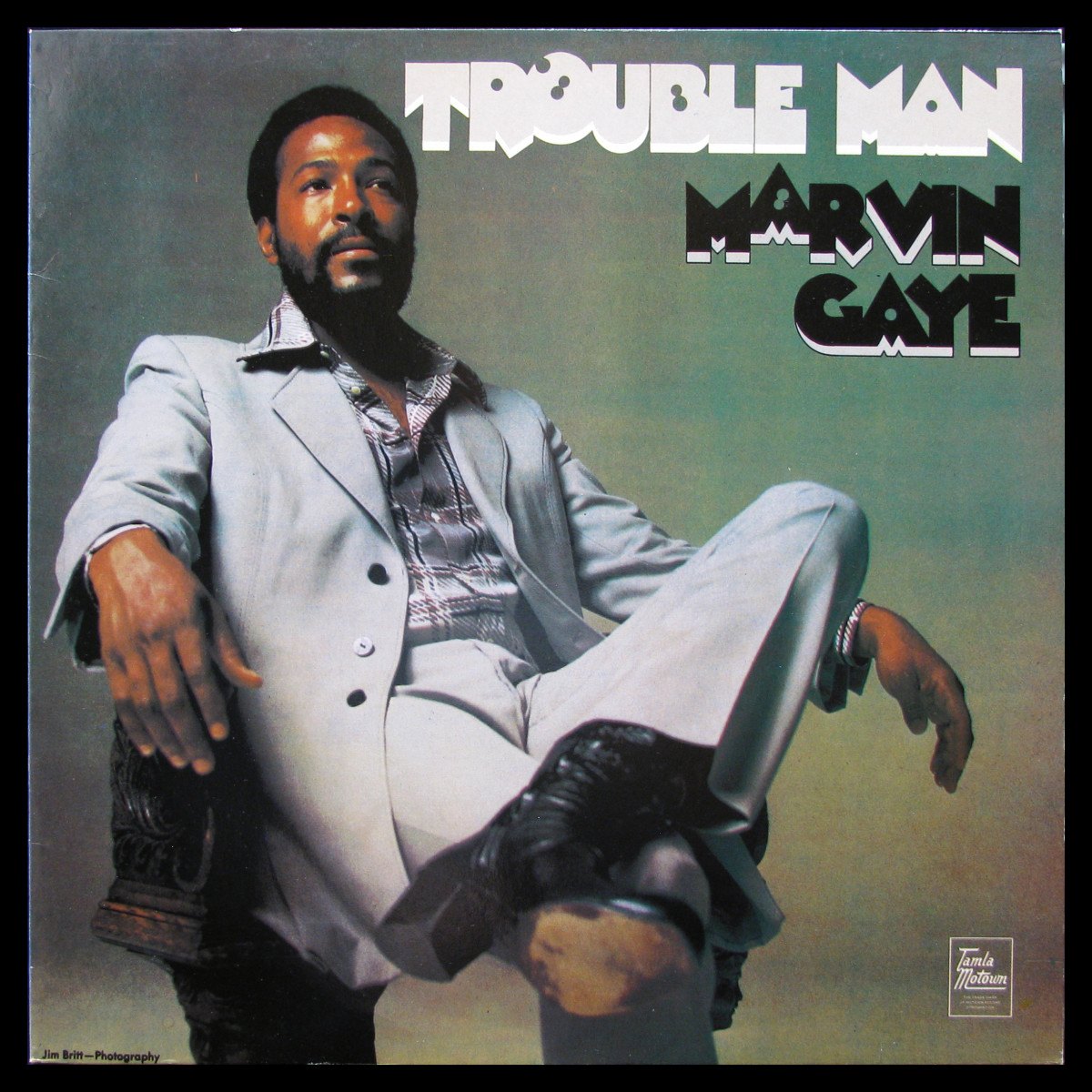
Marvin GayeInner City Blues (Make Me Wanna Holler)

Its perfectness stopped me dead in my tracks.

Resting, I listened through gulped breaths of fresh air as it spun its golden sound from those stupid wee plastic things in my earholes, into my brain and down into my hands and vocal chords, where wee finger snaps were joined by spontaneous, harmonised ‘daddle-ah-dah-dahs’ from my own fair voice. It’s just as well for all concerned that I was the sole occupant of the gym at the time.

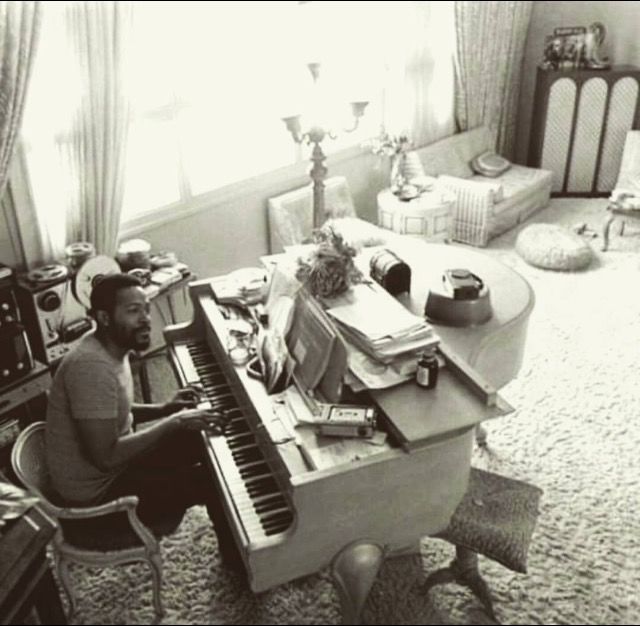
As far as socially-conscious music goes – and such fury stretches the decades from Billie Holiday to Kneecap – nothing comes close to Marvin Gaye‘s flawless 1971 masterpiece What’s Going On. Perhaps its greatest moment is the album closer Inner City Blues (Make Me Wanna Holler).

Since that rare moment in the gym (and you can take that in more than one way), I’ve listened to the track on repeat – properly, as Marvin intended, continually dropping the needle on a record spinning on a loudly-amped turntable – swimming in its headspin of lyricism and musicality, soaking in its every nuance and never once tiring of it.

It begins with the original clanging chimes of doom, four reverberating E flat minor 7th piano chords, stately and symphonic and setting you up for what follows. Nigel from Spinal Tap once claimed that there’s no sadder key than E minor. Nige, mate, try E flat minor. Then pair it with Marvin’s finger pointing lyric of despair; beat poetry set to fantastic music, its message addressing the frivolousness of the space race, the pointlessness of young men dying in war, race riots, increasing taxes and decreasing standards of living. Half a decade earlier, its author was too busy thinking ’bout his baby. Suddenly, he’d grown a beard and grown up.

Rockets?!? Moon shots?!? he asks incredulously.

Spend it on the have-nots!

And we’re off, congas and ting-a-ling percussion adding light to the shade of those piano chords.

Money. We make it.

Before we see it, you take it.

Oh, make me wanna holler, the way they do my life. 

This ain’t livin’.

Question: D’you zoom in on the lyric first, or is your attention grabbed by the lush orchestration of funk that oozes from every note?

Answer: You take in both, simultaneously, (it’s called multi-tasking and even men can do this) but this requires repeated plays to allow the whole stew to sink properly in.

Inflation. No chance

to increase finance.

Bills pile up, sky high

Send that boy off to die

Oh, make me wanna holler, the way they do my life. 

It’s the bassline that does it for me. A looping, call and response five note exercise in restrained and understated funk, it’s the bedrock upon which the whole thing swings. By this point in the track, muted brass is punctuating Marvin’s key words, a shimmer of strings has subtly turned up the ante and a sashay of bah-bah-bah-backing vocals is smoothing the edge from the words that continue to rain down. Imagine being in the room when this was being created. Imagine!

Hang ups. Let downs.

Bad breaks. Set backs.

Natural fact is

I can’t pay my taxes

Oh, make me wanna holler, throw up both my hands. 

The way Marvin harmonises with himself, one voice rich and low, the other pure and high, his wee adlibbed yows delivering the requisite soul…it’s all tremendous stuff. (As if you need me to tell you that.)

Violence increasin’

Trigger-happy policin’

Panic is spreadin’

God knows where we’re headin’.

A key change. That’s where we’re headin’.

Perfectly-placed within the track, it’s heady stuff and it elevates the listener further still. Flutes waft their way in like Gil Scott-Heron’s groovy cousin and the track takes a turn into new, yet familiar territory, as it refrains the mother mother lines from the album’s title track, a jazz trumpet winding in the melody as it all fades out, the perfect bookend on the perfect album.

What’s Going On? Is it a question to the listener or is it a statement to the world, a marker of the times? In Marvin’s case, it was a definite statement piece, an artistic declaration that’s become a key document of the times in which it was made.

For a pop label like Motown to allow – or rather cede – to its artist’s wishes of producing a whole concept of socio-political funk when it would rather have been churning out two and a half minute pop/love songs, is amazing. That they let Marvin do this paved the way for Stevie Wonder to take auteurship of his catalogue from then on in…and we all know how fantastic that particular run of albums would be.


Cover Versions, demo, Get This!

Page-Turners

I’m re-reading Haruki Murakimi’s The Wind-Up Bird Chronicle just now. Along with Stephen King’s The Stand, it’s become something of a summer holiday tradition; long novels that require patience and time are best left for the days when you can neglect all other duties and fall freely into the pages. The weekend just gone was, as you know, pooled in fantastic sunshine and properly Mediterranean temperatures – perfect reading weather, as it goes. For reasons we’ll come to, no reading was done on Saturday, but I awoke early on Sunday – with more than a shade of a hangover – and plonked myself at a decent spot in the garden and, neglecting all household and husbandry duties, continued with where I’d left off in The Wind-Up Bird Chronicle. If you don’t know the story, it’s set in early ’90s Japan and follows the existential ups and downs of a lawyer’s assistant, Toru Okada. There are lost cats, missing wives, mysterious women, strange dreams and uber-violent flashbacks to the Japanese army in WWII. Told in 3 parts, I’m currently about a third of the way through, in the middle of Part 2, and although I know how the story goes, I’m enjoying re-reading Murakimi’s poetic and slow-paced way with words. Less than five minutes reading and you’ll find yourself sucked straight into the storyline – and that’s the secret to a good book.

At some point, my eyelids grew heavy and I put the Kindle to the side to ‘rest my eyes’, as my dad said before me. The toils of the previous day had caught up with me and I was soon in a deep and unflattering sleep, slouched awkwardly on the garden furniture by the back wall in full view of any neighbours who might have been looking. I’ve no idea how long I was out for (ten minutes? Half an hour? An hour or more, even?) but the only reason I woke up was because a fat dollop of rain had slapped me square on the forehead. Initially I thought it might’ve been a bird (gads), then maybe a drip from the leaf of a plant above my head, but no…it really had started raining. It was still warm, but in the time I’d fallen asleep, the sky had turned from spotless Azurian blue to dappled slate grey. Against the backdrop of the dulling sky, five midges hovered crazily at a forty-five degree angle from my resting head. I watched as they bashed wildly into one another, scattered rapidly then regrouped again, like a tiny (but no less deadly) squadron of Apocalypse Now helicopters. Just as I’m thinking that they’re sizing up both me and my alcohol sweats, from outta nowhere, a wasp streaked towards the midges. Zzzzeee-owww! Like a zip opening up the sky it flew rapidly to the centre of the five insects. Immediately they scattered, and when they regrouped there were just four of them, back in formation, hovering crazily and back to bashing into one another. Then! Zzzzeee-owww! The wasp again! Scatter…regroup…three midges left. It’s the circle of life, playing out right above my head. As I get up to begin packing away the cushions and things I don’t want getting wet, the three remaining midges scatter somewhere into a tree, a Mexican stand-off between wasp, human and midges temporarily averted.  I start to wonder – does this sort of stuff play out above our heads regularly? An insect Star Wars saga that can only be seen if you stop, look up and pay attention? Maybe it does. Maybe I have too much time to think. Or maybe I was still half-cut from the Saturday night.

Ah yes, the Saturday night.

Writer, bon vivant and quick-witted antagonist John Niven was back in his home town of Irvine. Booked as part of the town’s Tidelines Book Festival, it was to be the opening night of a book tour to promote his new novel, The Fathers and he’d asked me if I’d chair the event. “You’ll be great,” he said. “It’ll just be us, talking about my book and shit. S’easy.” A proof copy of the novel duly arrived and armed with a highlighter pen and a stack of post-it notes, I jumped right in.

The Fathers tells the story of two dads who meet outside the maternity hospital as their respective partners give birth to two sons. One dad (Dan) is affluent, socially-conscious and successful (if bored) in his job. The other (Jada) is a ned, a bam, a ne’er-do-well with one eye permanently scanning for opportunity, the other forever looking over his shoulder for trouble. The two protagonists’ paths cross, the story takes a (very) dark turn (we’re reading a John Niven novel, after all) and things begin unravelling from every direction for all concerned. It’s a real page turner, as it turns out. It’d be ideal material for a three or four part TV series, something that is already being discussed, John tells us.

Very quickly I was highlighting and bookmarking words and phrases, whole paragraphs, entire pages of perfectly-scribed text. It struck me immediately how brilliantly evocative the writing in it is.

The air so fresh and cold that all you could do was sip at it.

A mouthful of ruined dentistry, of mixed nuts and raisins wreathed in blue smoke. 

If you’re a parent you’ll recognise the terror Dan feels when first putting baby and car seat into the car for the drive home from the hospital, a moment in time perfectly captured in measured prose. Or the moment when Jada bonds with his son, ‘his wee rabbit heart‘ beating fast against his chest. When writing from the perspective of Jada, Niven’s writing is laced with acerbic Scottishness.

‘Hey, some cun-‘ he remembered the baby, ‘some bastard’s goat tae pay fur aw this!’

‘Still, wi’ a wee boy, you’ve only the wan cock tae worry aboot, eh?’

If you’re from these parts, you’ll absolutely recognise the people who deliver those zingers.

Given John’s background in the music business, you’ll maybe spot one or two hidden references to groups or songs. A Teenage Fanclub lyric leapt off the pages at me. Likewise a Grant McLennan line. There’s even a nod to Status Quo at one point. The proper, loud ‘n heavy ’70s Quo, of course. You wouldn’t clog up a brilliant piece of writing with a reference to Francis ‘n Rick’s parody years, would you?

And it’s all written from experience. Dan lives in an area of Glasgow familiar to both author and reader. He uses his Notes app on his phone whenever Jada says a line that Dan might be able to crowbar into the script of the TV show he works on. As John says on Saturday night, a writer is always writin’…the reason too why this piece you’re reading has seen the light of day. How can I write about that? I was thinking afterwards. And here it is.

John Niven is a very funny guy to have at an event. He can hold court unbroken for an hour, easily. I had planned to structure our chat around some of the points above, but, of course, when John Niven is in the room, there are no plans. My notes were left untouched as Niven rightly remained the centre of attention, reading aloud sections of rib-tickling prose from the book, the audience groaning and gasping at the appropriate parts. My mum – the same mum who’d complained about every second word in Bob Mortimer’s novel being the ‘f’ word (her copy is now in Irvine’s Cancer Resarch charity shop) – queued happily for a signed copy of The Fathers at the end. Quite what she’ll make of ‘gobble’ and ‘dung funnel’ is your guess as good as mine.

The Fathers is a terrific, contemporary – and very Scottish – novel. Like The Stand it too is long enough to fill out a week or more in the sun. And like The Wind-Up Bird Chronicle, it too is set in three parts. I reckon I’ll be returning to The Fathers on an annual basis. I hope that hoped-for TV adaptation does it justice.

The Fathers is published this Thursday (17th July) by Canongate. You must read it.

Token Music:

Echo & the BunnymenRead It In Books

The Teardrop Explodes – Read It In Books

Two versions of the same song, co-written by Ian McCulloch and Julian Cope then recorded by their respective groups after the pair of them stopped working together. It’s like a post-punk Drifters. Which one’s the real deal?! They’re both great; the Bunnymen’s version is circular, nagging and insistent, an updated Dancing Barefoot for the switched-on, the Teardrops’ take swirly and Nuggetsy and garagey, an updated Iggy/Stooges for mushroom connoisseurs. Essential, obviously…just like The Fathers.

Check John Niven’s socials for details of his book tour, coming to a town near you right now!


Hard-to-find

Hopelessly Devoted

I was chatting to big Greg a couple of months ago about the lasting legacy of Paul Weller, the pair of us soft shoe shuffling to Shout To The Top as it blasted at ear-pleasing volume in Glasgow’s Buff Club. One of these shores’ greatest-ever songwriters, the shouted (to the top), garbled consensus we arrived at seemed to confirm that PW has undeniably earned his place at the top table with that other Paul (McCartney)…and possibly, contentiously, seated at a table set just for two. Drink had been taken in the lead-up to this conversation, but I ask you – who else has had the craft, the clout and, indeed, the cojones to form not one, but two celebrated – idolised – groups whilst ploughing a distinct and unique solo career with added sideways steps? Take a minute to ponder and add your silly suggestions in the comments below. You’ll be wrong though*.

Musical Magpie

The great thing about Paul Weller’s back catalogue is that, unless you’re a buy-everything-on-day-of-release fiend for his stuff (and that may well be you – I was up until a point), you’ll occasionally come across a previously unheard track the likes of which drives home that notion, that theory, of PW’s mega-greatness. Last summer I came into a small fortune and so naturally bought some new (ie not second hand) records, including Will Of The People, his 3-album companion set to Fly On The Wall (his triple-plattered gathering of assorted b-sides from the first few albums) and steeped myself in its heady pot pourri of odds and sods; Pet Shop Boys remixes, reworkings of album tracks, way-out excursions in African-inflected dub-laden psychedelia…it’s all there and available to slowly digest as an album (rather than a collection of b-sides) in its own right. It’s a right great listen.

It was the pastoral and sprightly Devotion that, for a long time, was my go-to Weller tune.

Paul WellerDevotion

A planned co-write with Richard Hawley that never happened, Devotion seems to arrive and land in the time it takes its writer to put hand to chord, pen to paper. It skips its way across the verses sounding like the very thing McCartney might’ve written when he was recording Ram, just Weller and an acoustic guitar strummed brightly and with purpose…but augmented in the studio with oohing and aahing backing vocalists, unexpected whistling and synthesised strings that soar in direct correlation to the heart as you listen.

There’s some lovely, rootsy Ronnie Lane bass and enough going on in the background to suggest that, throwaway the track may be, its writer spent a bit of time arranging it into a perfect stand alone song. See those folk that only know Weller from You Do Something To Me and (uh) ‘Pebbles On A Beach‘… they’d love this song, so they would.

Songs are open to all sorts of interpretation, but Devotion could almost be a Weller pep-talk to himself where he outlines the reasons he’s still driven to produce great and interesting music.

Devotion is the key to the lock that holds your dreams…

Devotion gets you up on those mornings in the dark…

There you go, with your headful of ideas

It shows there’s a purpose in your feet 

And you know, that you better get it right

It shows there’s a purpose, day and night

It’s no Shout To The Top. It’s no Town Called Malice. It’s nowhere close to Hung Up‘s power and glory, but Devotion is another in a very long line of great Weller songs. If it’s a new one to you, I hope you get from it the same thrill and need to repeat that first enveloped these ears when they first heard it. I’ve listened to it a dozen times since beginning to write this piece. It never tires.

*Yeah, yeah. Bowie. I hear ya.

Gone but not forgotten

Jam Session

I’ve a songwriter friend who once found themselves at a songwriters’ retreat somewhere in Ireland. Above the room where the musicians shared their songs and swapped ideas, someone who was connected to Sinead O’Connor listened intently to the tunes as they filtered up and through the floorboards.

The next morning, this person sought out my pal. “Can you play that song for me?” he asked. “I think Sinead would really like it and I can help you get it to her.”

A few days later they were in Sinead’s house.

She’s sleeping just now, but when she comes down, you can’t mention the song. It must be her idea to record it. If she thinks I or you had the idea, it’ll never happen. She knows who you are, so if you’re patient the talk will get around to song writing anyway.”

By all accounts Sinead was normal and homely and chatty, a partner and a mum who just happened to be dynamite at the job she was best-known for. She and my pal went bramble picking in the hedgerows around her house. When they returned, the songwriter watched as Sinead emptied their spoils from two Mace plastic bags, boiled the gathered fruits and made them into jam. There was, and never would be, any talk about Sinead recording a version of my pal’s (brilliant, as it happens) song. C’est la vie etc etc.

I’ve long-loved Sinead’s vocal contribution to Jah Wobble‘s Visions Of You.

Jah Wobble’s Invaders of the HeartVisions Of You

It’s Wobble’s bass of course that captures the ear first. A tune within a tune, it’s an elasticated and twangy groovy rumble that plays high up the frets. Indeed, it sounds like it might’ve wafted itself straight offa the grooves of the Dub Symphony version of Higher Than The Sun on Screamadelica – y’know, the album that, with more than a little help from their friends, took Primal Scream from an Asda-priced Guns ‘n Roses tribute act to the lysergically-kissed Mercury-winning last gang in town. Need a dubby, ever-playing and never-ending bassline to expand the senses? Want it to unravel for at least eight mind-melting minutes? Would you like it lightly toasted and mantra-inducing, sir? Forged by punk and steeped in roots reggae, Jah Wobble’s yr man.

Sinead O’Connor’s vocals are ace. Crystalline, calming and as clear as her emerald green eyes, they’re wafty and ethereal, her adlibbing ‘ah-uhs’ throughout it taking the track further east and further out there.

Jah Wobble’s Invaders of the HeartVisions Of You (The Secret Love Child Of Hank And Johnny mix)

Eastern sounding minor chords. Highly strung one chord strums. Snaking melodies. Tablas and twang. Sitars and psychedelics. Dub-inflected desert blues. Sinead adlibbing somewhere in the background as the melody unspools. A cat dancing willy nilly across the keys of a hot to trot hammond organ and then, with a military shuffle of the snare, the drop.

And the bass.

The lovely bass.

Noodling and hypnotic and utterly magic.

Oh yeah.

On the single cut, Wobble’s vocals are cowboy-like (hence that appropriately-named Weatherall remix above), a pub singer whose real talent lies between his fingers and those four thick strings, a voice out of place yet perfect for the track’s multi-cultural ethos and vibe. On the stretched out Weatherall reworking, Wobble’s vocals are almost non existent, replaced instead by all manner of instrumentation, random movie samples, ricocheting drum breaks and fancy augmentation. It’s a beauty, obviously.

I want visions of you…L-S-D.

Has there ever been a better misheard lyric?! I thought for years that Sinead O’Connor was singing about acid, about expanding the mind, opening up the possibilities of the cosmos and all that jazz. It’s a lyric that’s arguably more fitting and better than the one Sinead employed (she sings ‘end-less-ly‘). My misheard line would’ve slotted nicely into the track’s trippy, dubby ambience and stratospheric cosmicness.

A jam of a whole different kind, Visions Of You still has the power to thrill and surprise in equal measure.


Gone but not forgotten

Lines That Rhyme

I once found myself in deep conversation

With a songwriter who’s known not so much through the nation

But whose songs will be known to everyone here

And the more interesting parts of the world’s blogosphere

Sitting just chatting and shooting the breeze

Their setlist half-written, their guitar at my knees

Tell me a story…drop me a name..

…give me an insight ‘to your wee world of fame

Spare me no details…spare me them none,

but what’s the most rock ‘n roll thing that you’ve done?


They thought for an instant then immediately said,

I can tell you this story because the subject is dead.

I was somewhere on tour, in a van, not a plane

And I found myself sitting beside Kurt Cobain

One thing led to another, there’s no-one to blame

But I found myself doing cocaine with Cobain

Yes, I found myself doing cocaine with Cobain.”


NirvanaDumb

I’ve always loved ‘Dumb‘ from In Utero. The full album is, for many, Nirvana’s masterpiece; raw, ragged, expertly captured on tape by the royalty-waiving Steve Albini. The band is on top form. Slabs of floor-shaking, earth-quaking bass guitar, anvil-heavy drumming that sounds live and in the room, shards of abrasive, metallic, blowtorch guitar surfing violently across the rhythm section, the band’s loud/quiet/loud template caustically Brillo Padded out of all recognition by Albini’s crucial touch.

Thirty years ago it * sounded quite brilliant. Now, I need to be in a particular mood to indulge myself in it…and I ain’t been in a stinking mood like that since about 1994. It’s too screamy, too raw for me nowadays. If I want screamy I’ll take Surfer Rosa‘s more visceral moments. Raw? Gimme Flip Your Wig, thanks very much. (* you can apply this take to the Manics’ Holy Bible album also).

But Dumb is still box-fresh magic, the polite wee brother of Nevermind‘s Lithium. Where Lithium roars, Dumb whispers. Where Lithium soars (and by God, it soars), Dumb remains grounded. Discipline is required for this. Any gang of itchy-fingered musicians will, given half a chance, thrash and roar their way to the finish line. Nirvana could do that in spades. On Dumb though, they applied a different approach.

Clean strummed electric guitar that’s a happy pill away from breaking into Shocking Blue’s Venus, a resigned and slowly sighing cello, Krist’s choppy and thunking bassline and Dave’s steady head-nodding beat carrying it forward. Great cymbals. No fuzz. No Big Muff. No pedals at all. The dynamics are all in the playing and arrangement and it kills. Kurt’s vocals crack in parts, but considering the issues he was going through at the time, he’s in remarkably fine voice. His vocal is fantastic, in fact; controlled, measured, tuneful. Really sensational. There’s a great double-tracked vocal (1 min 09s) where he harmonises with both himself and the cello in that eerie and strange way he does, creating a ghostly third note and elevating the track instantly to one of Nirvana’s best.

The lyric? You can interpret that how you like. Some folk will (naturally) say it’s about Cobain’s addictions. Me? I think it’s saying that if you could really see how messed up the world is, you’d never be happy. Only dumb people are happy because they don’t have the capacity for deep thought. It’s a lyric that, if interpreted this way, rings true to this day and quite possibly forever more.

I bet you’d forgotten how great Dumb was. And still is. The real deal.


Get This!, New! Now!

Warp Records

I love this. It’s been playing on the more discerning radio shows in recent days and has me hankering for the day when I can buy it – something that doesn’t tend to happen as much as I’d like.

It’s called Pharaoh, by Modern Nature.

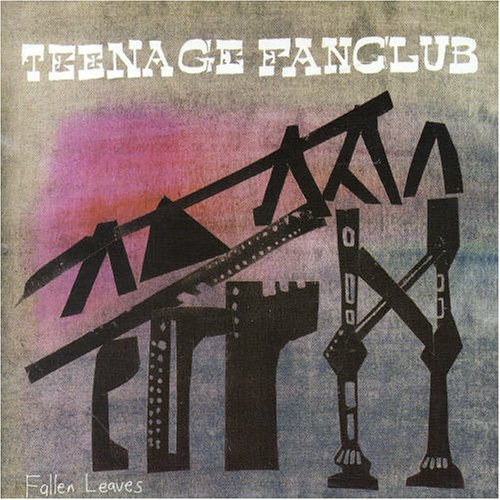
Steady paced and understated, it’s a lovely unfolding slice of pastoral indie guitar music, the same sort of thing that Teenage Fanclub have politely gone about writing and recording in their Gerry-free autumnal years… only (sorry, Norman) better. Much better.

The vocals might lack TFC’s honeyed harmonic suss, but they’re equally as warm. Close-miked and musing philosophically, snippets of phrases leap out. ‘hedgerow…granite…leaves….mountains…coastal miles…heavy choices…‘ Andrew Weatherall, having played early Modern Nature material on his NTS radio show, was seemingly a big influence on the writing of the track, his ‘fail we may, sail we must’ mantra pushing group leader Jack Cooper to dizzy new heights. Cooper has said that the track is about the people who inspire us to think differently.

It’s the heady combination of voices and guitars that had me from the off.

The two guitar players on Pharaoh mesh and meld, knit and weave, never tying themselves in knots, always creating space for the other player to play in and around. With the combination of woody, humbuckered semi-acoustic and single-coiled Telecaster, there’s a hint of Television in the way the players freeform and switch between fret climbing and chord deconstructing. That’ll be the jazz influence, perhaps.

Pharaoh is, you gotta think, a reference to the spiritual, rule-breakin’/rule-makin’, free-jazz saxophonist Pharaoh Sanders. Inspirational people, remember. But where TV’s Lloyd and Verlaine – also undoubtedly inspirational – slash and tear at their machines like there’s no tomorrow, Modern Nature’s guitars bubble away like a mountain stream on a spring day. A choppy major chord here, an arpeggiated minor there, an insistent and unfaltering signature riff between them, everything clear and ringing like steel drums in the summer sunshine. If you’re like me, it’ll take just one play before the track wends and winds its way quietly into your subconscious.

Modern Nature is a new name to me. It’s always great to find a group that you can work backwards on before going forward with each subsequent record.

Pharaoh is from Modern Nature‘s new album The Heat Warps, released by Bella Union at the end of August. I’ll be ordering it via the band’s Bandcamp page here.  Some of you here will, I predict, do likewise.