There was a brief period at the tail end of the ’80s when two music cultures collided to create an exciting new sub-genre. Partly brought on by Happy Mondays’ in-print enthusing of Detroit techno and partly by the Stone Roses’ approach of playing dance music before they took to the stage, a movement of youth who’d lapped up their own Stones and Beatles dared to cross the divide between guitars and grooves and, arms aloft and flying high, wholeheartedly embraced the best of both scenes. In Irvine’s Attic, you could dance yourself dizzy to Pacific State and State Of The Nation in the same thrilling ten minute sequenced spell, our own Saturday night fever soundtrack that was absolutely replicated in provincial towns up and down the country.
The bands that sprung up around this ideal took the cross-pollination of clashing cultures and ran with it, for as long as the record companies were happy to throw their money northwards in the vain hope they’d land themselves another Mondays or Roses. Some of the acts – The Charlatans, obviously, broke out in their own right. Some of the others had one or two good songs, one great song, even – The High’s Box Set Go, Mock Turtles’ Can You Dig It – and some of the acts might even have managed to squeeze out a decent album – World Of Twist’s kaleidoscopic and swirling Quality Street springs to mind, but many of them burned briefly then fizzled out, shrinking back to the suburbs as the dirty exhaust fumes of American grunge spewed forth in Nirvana’s Converse-trod trail. ‘Baggy’ or ‘Madchester’ (eugh) or ‘Indie Dance’ was, then, a placeholder in time…but those great songs live on.
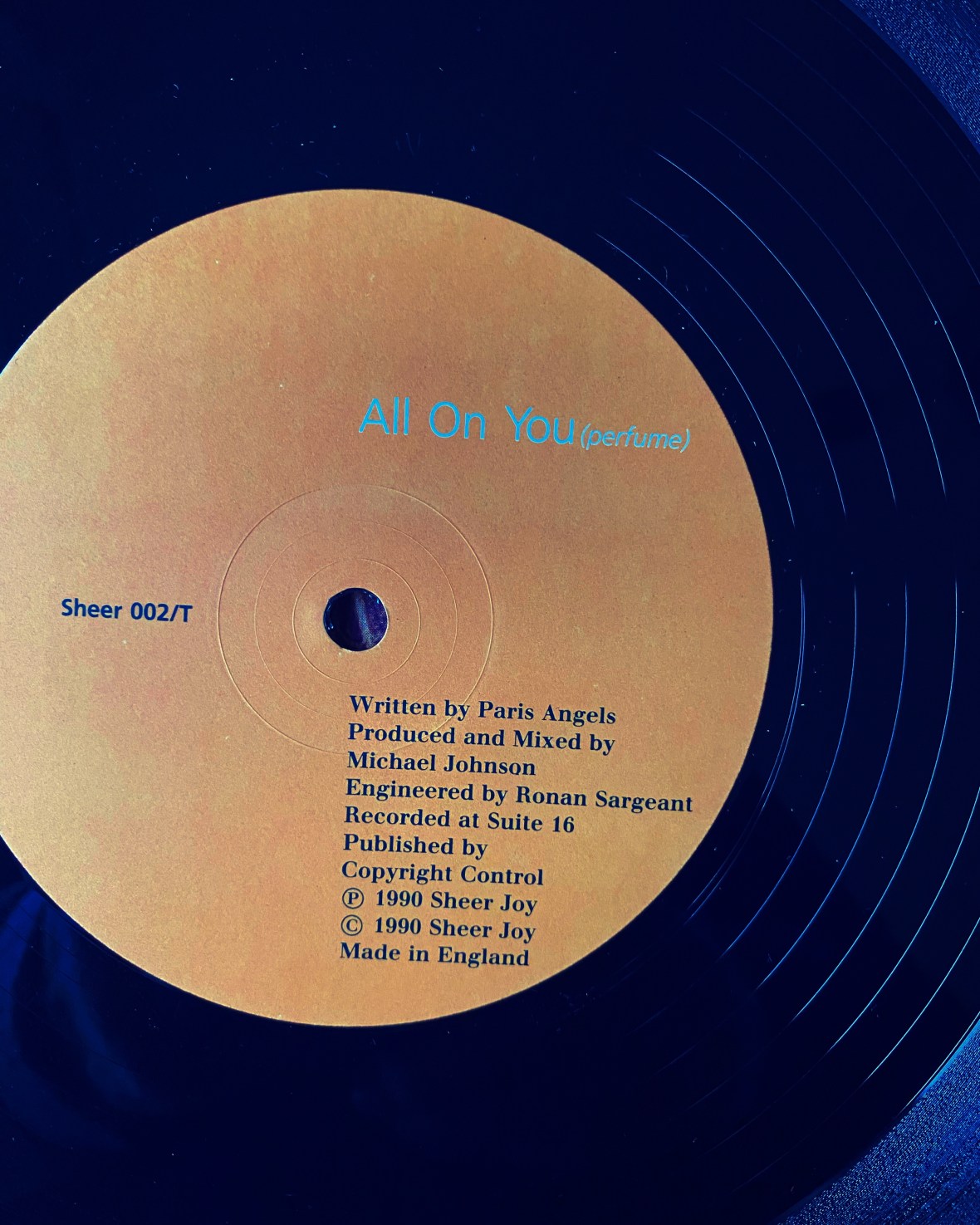
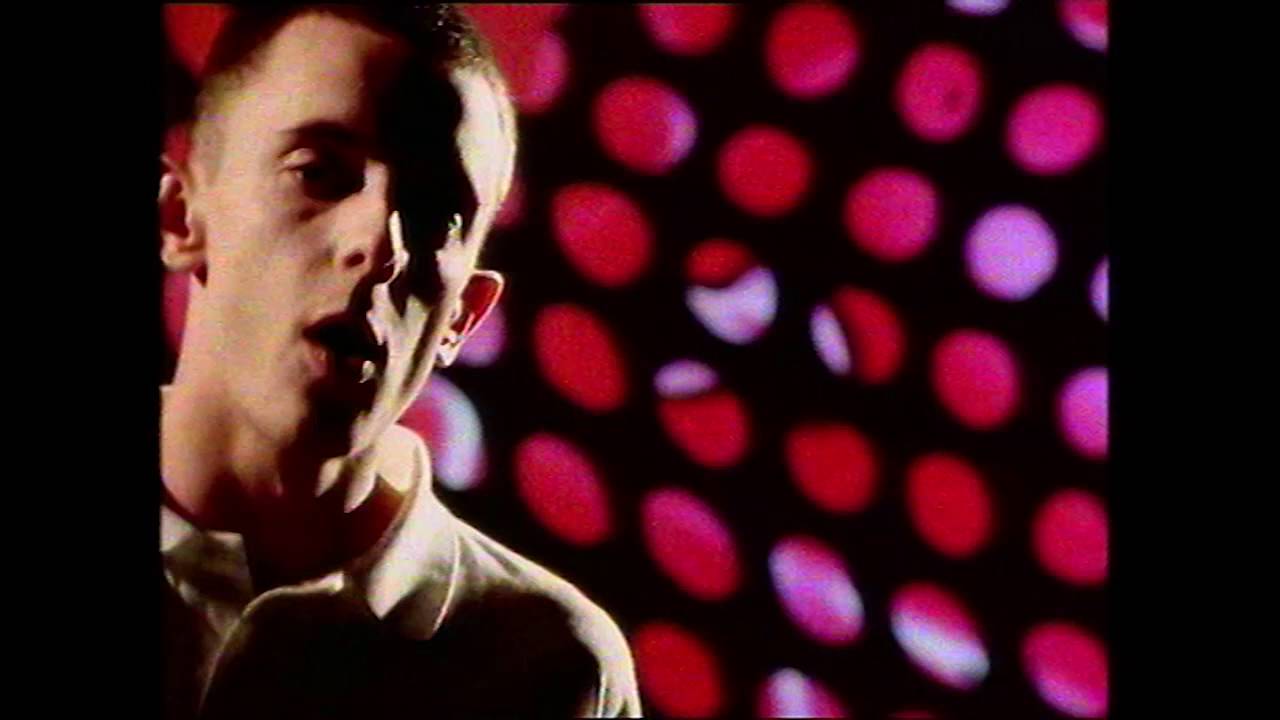
The best of all is arguably Paris Angels‘ All On You (perfume). A track, I think, rather than a song, it magpies the best of everything into one era-defining single that still thrills over 30 years later. Take a monochromed Curtis-ish vocal and team it with the sort of girlish adlib that’s floated straight off an anonymous house stomper. Stick them atop some chiming, Marr-esque guitars. Throw some sequenced acidy squelches across it and then polish the whole thing to a see-your-face-in-it brilliance; All On You (perfume) is a proper rush.
Paris Angels – All On You (perfume) – with added John Peel at the end.
Quite how they managed to sow the shiny seeds of All On You from the unholy clatter that represented the band’s sound at the time must be down to the producer, so kudos to Michael Johnson (engineer on no less than Blue Monday) for coaxing such an airbrushed sound from the band’s grizzled indie.
The band’s roots are easy to identify from the swirling slab of industrial Mancunian twist and shout below. Very of its time, it rattles and ricochets like a stretching out ACR or Happy Mondays at their esoteric best. Dark, dense and serious, with the tentacles of the baggy beat and a wandering electric guitar – all bent 3rd strings and chorus pedal – creeping through its cracks, it’s a signpost of where they’d come from and where they’d briefly be going…
Paris Angels – Stay (Peel Session)
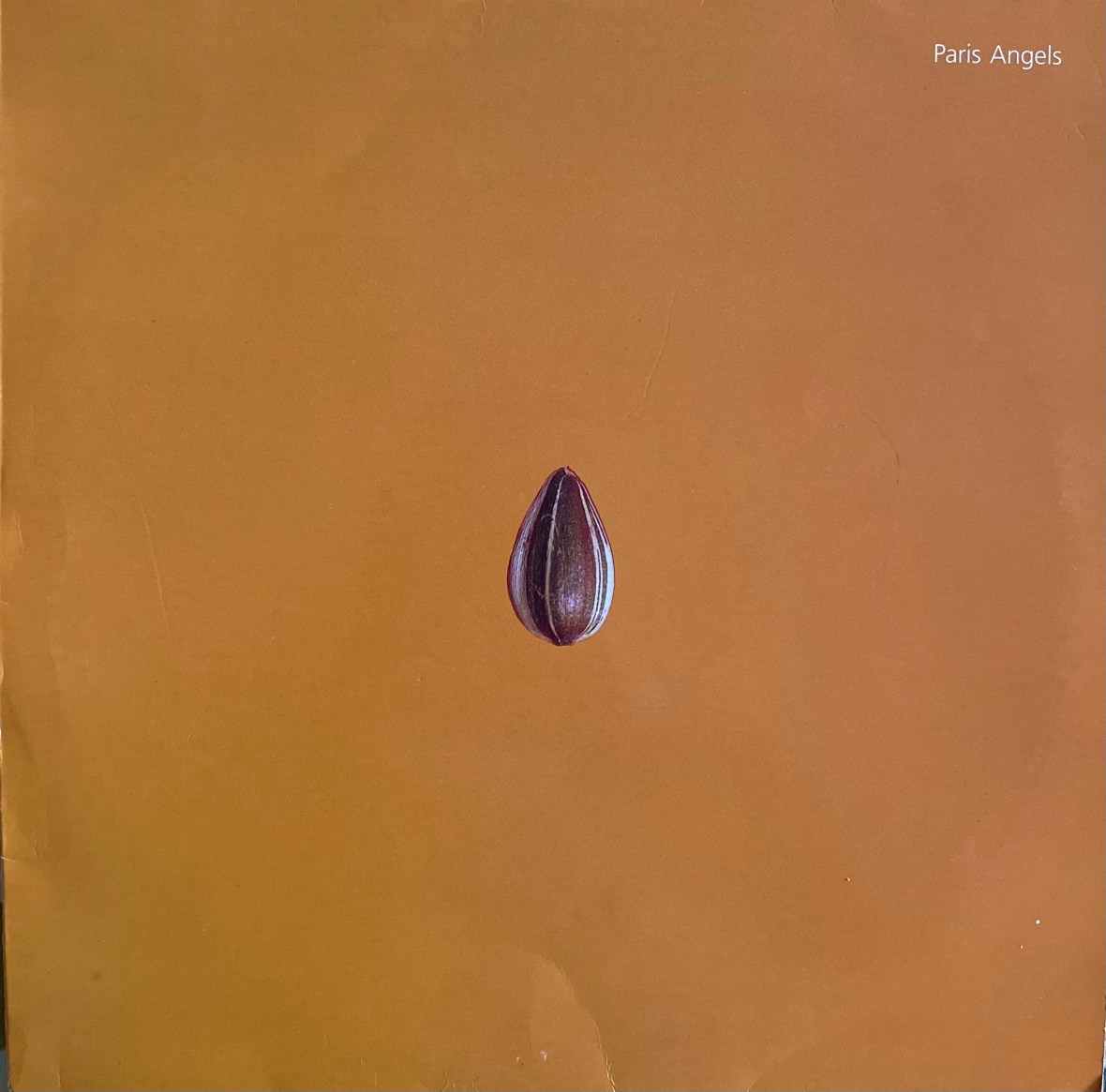
Should such things matter to you (and of course they do), it’ll have you double-checking the label on the record for a Factory logo or catalogue number that isn’t there. Yes, despite all necessary Factory ingredients being present; a clattering, enthusiastic rhythm, hot-wired chicken scratch guitar, a shouty Mancunian frontman oozing oodles of effort over ability – all housed in a subtle and arty sleeve, considered typeface ‘n all – Perfume was released on the perfectly-named Sheer Joy label. All bands have one great song to their name. Perfume (All On You) was Paris Angels’.
At the start of the ‘90s, Postcard Records put out The Heather’s On Fire, an essential collection of early Orange Juice material, much of which was presented in a form far more ragged than the better-known versions. Two words on the rear of the sleeve are key markers.
‘Buffalo Underground’ they say, stamped unobtrusively in the corner, but a pair of words, a phrase, which will have even the most amateur of sleuths making sense of the reference.
Those post-punk bands of the late ‘70s and early ‘80s – the Postcard, Pop Aural and Fast Product groups particularly, hopped up on pure self belief following the barrier-breaking Clash shows at the Glasgow Apollo and Edinburgh Playhouse – looked far beyond the obvious draw of mop-topped Liverpool and drew their entire influence (style and song) from America. No Elvis, Beatles or the Rolling Stones in 1977, remember?
Buffalo Springfield encouraged, demanded even, ringing guitar lines played on fat, semi acoustic guitars, held chest high by musicians in checked shirts, fringed suede and worn-in denim, boot-lace ties ‘n all. The young Roddy Frame took keen notes.
The Velvet Underground offered up chic style, unrivalled attitude and an innocence masked as aloofness. Take three chords, fall in together and keep going without stopping until the song is over. Look like you mean it and folk’ll believe you. There’s the ethos of Postcard in a nutshell. No pun intended.
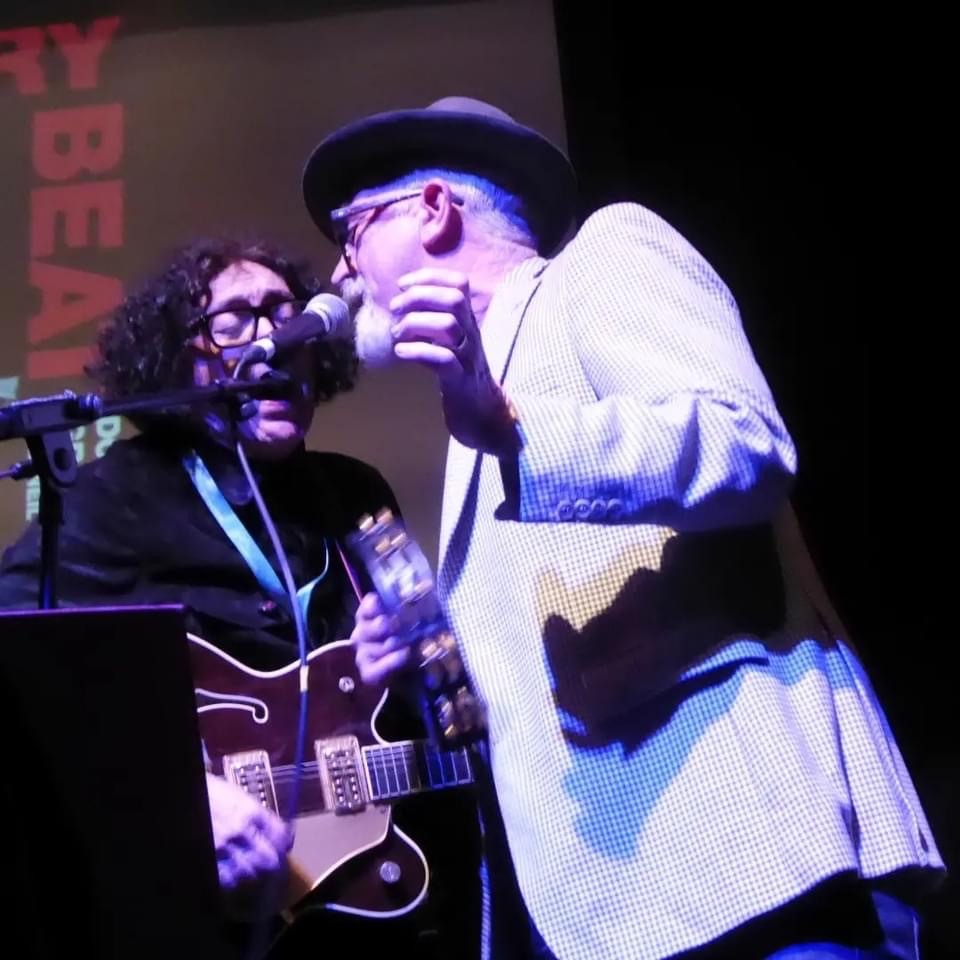
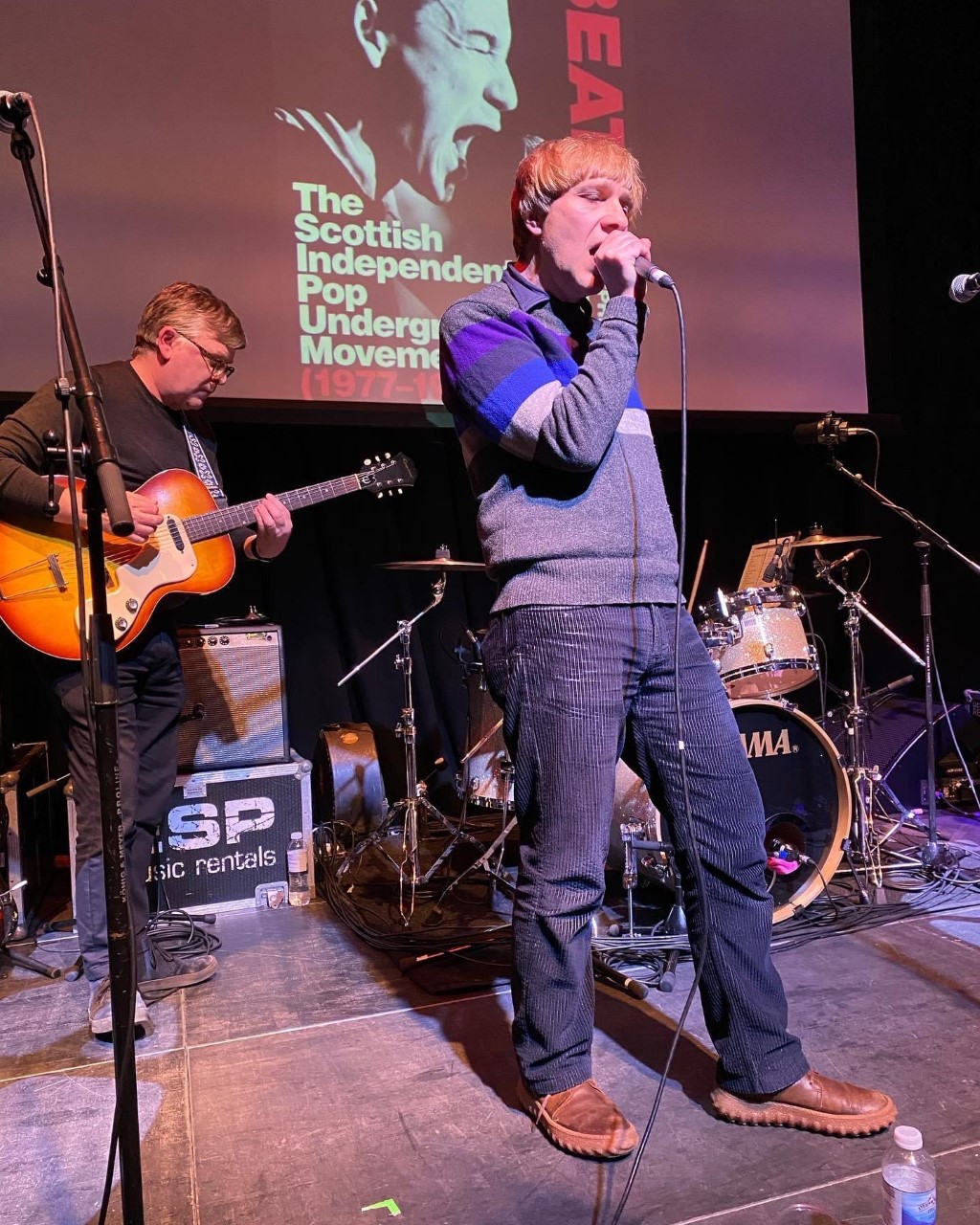
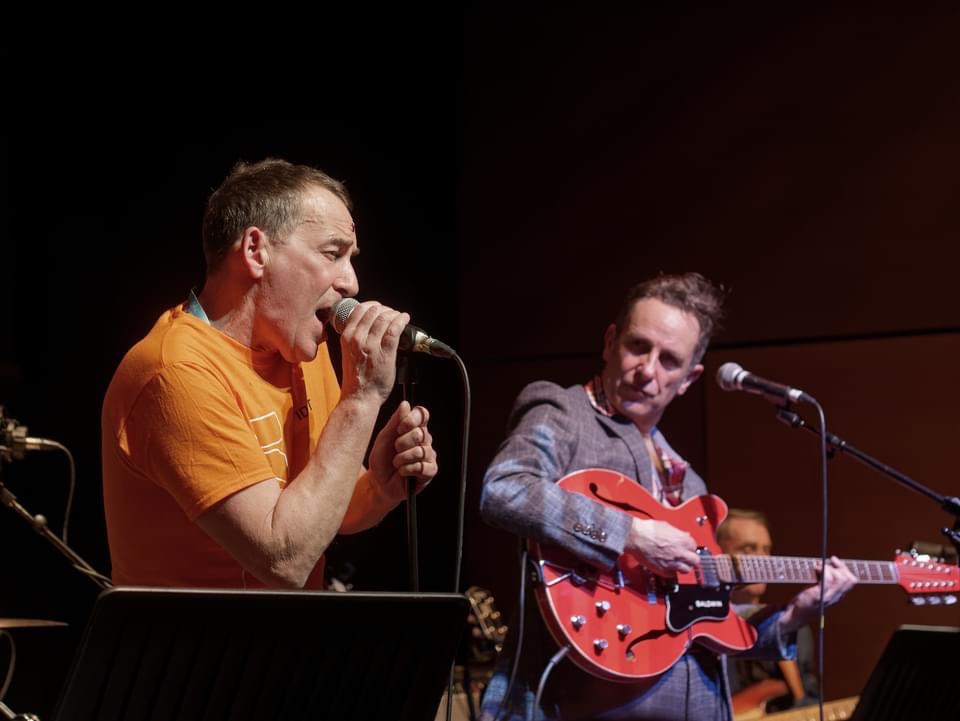
The entirety of the Scottish post-punk music scene was in thrall to the Velvet Underground especially, and most of the acts – Orange Juice and Aztec Camera, obviously (“it’s ob-vious”), but also Scars, The Fire Engines, Josef K, James King and The Lone Wolves, even Bourgie Bourgie and Jazzateers, achieved just about their 15 mins of fame. This became totally apparent at Saturday night’s Hungry Beat event at the CCA in Glasgow, a mammoth 5 hour-long music ‘n chat extravaganza, put together by the people responsible for the era-defining book of the same name.
The main driver is Douglas MacIntyre, guitar totin’ scenester, label boss (Creeping Bent) and owner of the hippest address book in the land. Draw one of those Pete Frame family trees with his name at the centre and you’ll finish with a messy and jigsawed who’s who of 20th Century Scot-pop.
James T Kirk. Malcom Ross. Davy Henderson. Campbell Owens. Bobby Bluebell. Mick Slaven. Ken McCluskey. Tam Dean Burn. James King. Monica Queen. Norman Blake. Grahame Skinner. Katy Lironi and others all branch out in interconnected ways. Some of the musicians shared groups or rehearsal rooms or labels or bills, and all of them did exactly this at the weekend when they joined forces for two 70+ minute sets that played out like one gigantic, rolling encore, The Last Waltz for the children of the Velvets, each section registering one notch higher on the thrill-o-meter than the previous. In the future, suggested Warhol, everyone will be famous for 15 minutes. For the bands and songs who have stayed under the radar all these years, Saturday night was their night.
This slideshow requires JavaScript.
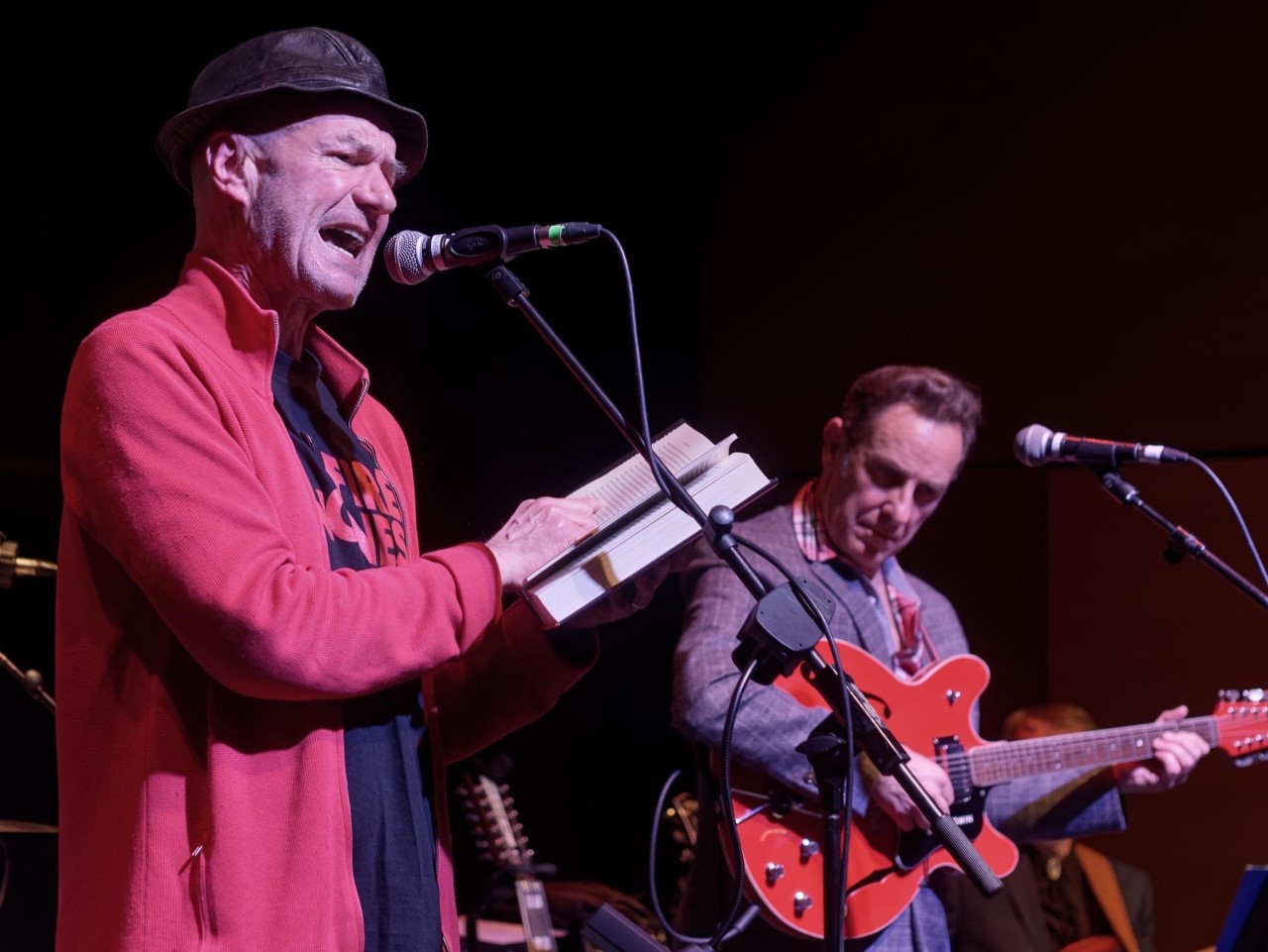
Douglas, playing mainly cool, clean 12 string jangle on a vintage Burns (of course) guitar led a band made up of Mick Slaven and/or Malcolm Ross on sparkling, searing lead, Campbell Owens on bass and Stuart Kerr on drums. With each guest vocalist or guitarist (or both), the big hitters and back catalogues of all those wonky, individual and inventive groups of yore were played out to a wholly appreciative (and minor celeb-studded) crowd.
Was that Eddi Reader pogoing down the front as the assembled group jerked their way through a rubberised take on Gang Of Four’s Damaged Goods? Yes. Yes, it was. As backing vocalist on Gang Of Four’s live shows, perhaps she should’ve been up there with them. Not that there was much space for pogoing on the CCA’s busy stage. “There wisane enough women up there,” she complained later.
Monica Queen is a highlight, stomping and prowling as she takes control of Altered Images’ Dead Popstars. A lilting, countryish run through of Strawberry Switchblade’s Trees And Flowers segues without ceremony into a rich ‘n twanging version of, yes!, the aforementioned Velvet Underground’s Sunday Morning. It’s a beauty.
Ken McCluskey and Bobby Bluebell play their own Everybody’s Somebody’s Fool, the song they created after Alan Horne at Postcard challenged them to write a song as good as The Monkees’ Last Train To Clarksville.
Fay Fife owns the stage for two sharp blasts of Rezillos, with the frantic, hundred mile an hour racket of Can’t Stand My Baby just pipping Top Of The Pops to the post.
James King pulls low a pair of VU Ray-Bans and delivers a marvellous, Byrdsy Fly Away. High on jangle, reverb and twang, it’s one of the era’s great forgotten singles. Sensational stuff.
Norman Blake joins on guitar as the forever hangdog Stephen Pastel turns back the years with a couple of Pastels songs, a chugging, disciplined, and Krauty Baby Honey raising an already high bar. “Alan Horne suggested we be a synth pop group,” says a smiling Pastel to a tickled crowd.
Norman will be back later, unusually guitarless, to take vocals on two deep and emotional Josef K tracks. Downbeat but intense, Norman provides a real show stealer.
But back to the big hitters. Roddy’s Oblivious flies past in a blur of Malcom Ross fretboard wizardry, the lightning quick runs of the original flying tightly from his frets. Orange Juice’s Felicity rattles past in a giddy rush of whoa-whoas and well-rehearsed endings. Rip It Up, played by both Malcolm Ross and James T Kirk is slinky and chrome, its Chic-isms causing heads to bob and hips to sway.
Fire Engines’ Candyskin produces more shambling Velvetisms before Davy Henderson himself joins proceedings for a giddy You’ve Got The Power and a superstar karaoke blast of Iggy/Bowie’s Success. “Here comes success!” the group shout/sing in unison, a marker for how the evening has gone.
The ‘encore’ – no one has left the stage but we’re well over time and many an anxious ticket holder has begun the quick march for the last train home – is, as Bobby Bluebell describes by way of introduction, ‘the best single ever written and recorded in Scotland.’
Orange Juice – Blue Boy
A rattling, galloping run through of Blue Boy follows. Orange Juice’s original perfectly straddles that sound of the ‘Buffalo Underground’- clean and jangling and melodic, with a needles-in-the-red, cheese-grater guitar solo to sharpen the senses. Yer actual James T Kirk is on hand to kick out the jams, coaxing the ear-piercing main offender from his fingers – the kind of solo that electrifies the fillings in your teeth and leaves you wanting more, more, more.
*My photos were rubbish, so most photos here are ‘borrowed’ from the social media feeds of Lauren Bacall, Iain Wilson, Andrew Thomas, Trevor Pake and Vivienne Wilson. I hope you don’t mind, and thanks in advance
We get fairly drawn into those BBC4 Top of the Pops repeats every Friday night. Proustian rushes flood back with every hammered hook-line and high falsetto harmony; a gym hall full of pre-teen boys, drainpipes and white socks, comparing tasseled loafers as The Beat’s Tears Of A Clown rattles its hundred mile an hour skank to its brassy end. Bananarama’s Cruel Summer reimagined by three breathy and off-key girls at the back of Geography, Impulse deodorant cans redeployed as skinny microphones. A trio of girls (again!) ‘woah-ah-woah-ing‘ their way through Baltimora’s Tarzan Boy as they cut across me, arms interlinked, side pony tails a-swishing, to get to Mr ‘Shaky’ Stevens’ second year chemistry class. A trio of Bs, coincidentally, that teleport straight back to a place and time. I’m sure you’ll have your own examples.
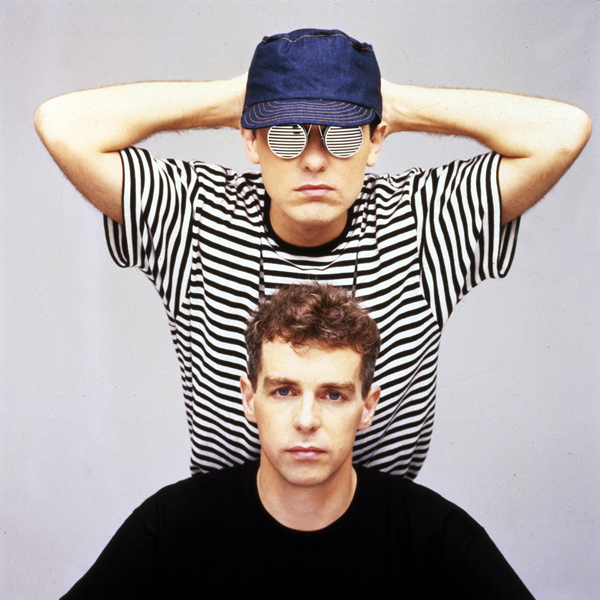
Baltimora, but. Neil Tennant enjoyed a good hook as much as the next pop scholar and saw the value in the one hit wonder’s ‘woah-ah-woah-ing‘ choral refrain. Not content with pilfering the Supremes-ish ‘ooh-ooh-ee-ooh‘ hook to the Human League’s Mirror Man for his own Love Comes Quickly, Tennant took inspiration from the singability of Tarzan Boy when writing Pet Shop Boys‘ Paninaro.
‘Paninaro-oh-oh-oh!‘
See?
Paninaro is prime Pet Shop Boys. Moody European orchestral synth dressed up as sophisto pop, cerebral, arch and knowing. Jammed full of era-defining Fairlight crashes and Juno modulations, its glacial synth lines glide through the verses as slowly as tectonic plates. the stately yin to the repetitive pulsing yang of its sequenced bassline.
Pet Shop Boys – Paninaro
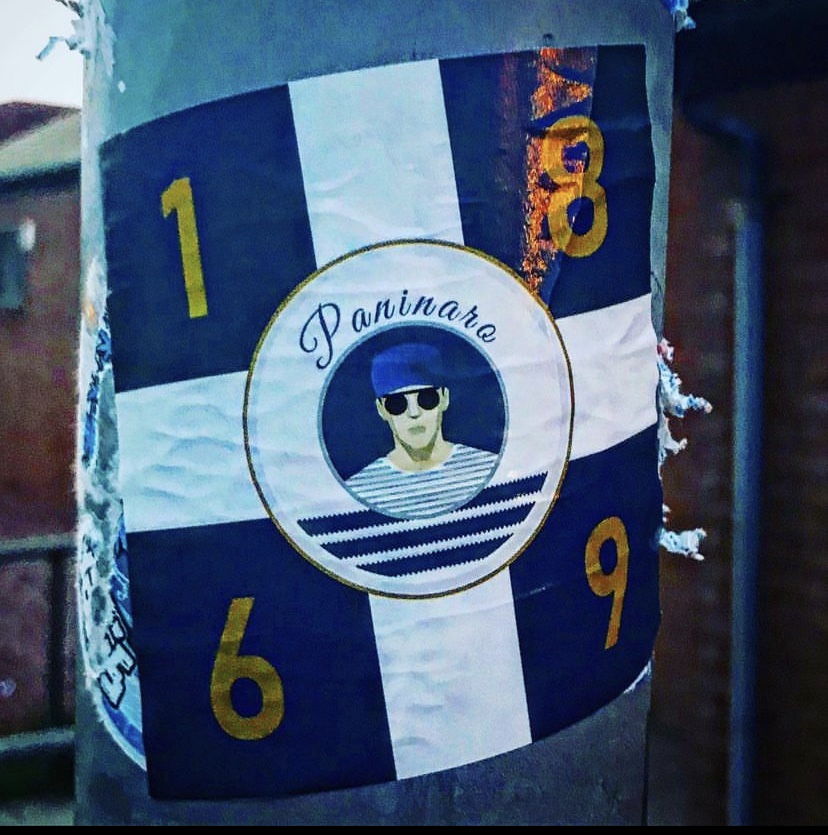
Its name has given rise to a small faction of my team’s supporters. This group of Killie fans, in their Stone Island and box-fresh trainers and labelled and logoed expenso-wear named themselves Paninaro as a tenuous way of aligning themselves to their ’80s Milanese counterparts’ high sense of style and fashion.
But whereas those Italians had the scooters and haircuts and effortless chic mod-ability, these Ayrshire equivalents don’t. The youth of Milan hung out in coffee bars and sandwich shops – Paninaro comes from the word panini, meaning sandwich – and the Killie lot hang around The Coffee Club and Greggs the bakers, a tribute act a best.
The song though. Pet Shop Boys have always had their finger on the pulse of the zeitgeist and Paninaro is a great example of marrying youth culture to dance music. PSB revelled in the notion that the Milanese youth lived for Wham and Spandau and the non-stop flood of music from the UK while their elders sniffed their noses at what they considered a movement as shallow, vacuous and as temporary as the fashionable clothes the teenagers coveted. Fast fashion and fast food – that’s basically the mission statement of the Paninaro.
Neil Tennant appears only on the titular refrain, the bulk of the vocals delivered deadpan by Chris Lowe who, for once, has stepped out of the shadows to take centre stage.
The words are thrown out, as soulless as Teletext vidiprinter text, as arty and sloganeering as a Bartle Bogle Hegarty advertising campaign from the same era.
The spoken-word section in the middle is taken from a recording of an interview of Lowe in a 1986 US TV interview, perfectly bleak and perfect for the Pet Shop Boys’ art and ethos.
I don’t like country and western I don’t like rock music I don’t like rockabilly or rock ‘n’ roll particularly Don’t like much really, do I? But what I do like I love passionately…
It’s a great tune, one that is nearly always overlooked in favour of all those other great Pet Shop Boys tracks. Like all the best bands, Paninaro first appeared as a b-side (to Suburbia) but has since become a track the equal of any of their a-sides. I suspect you know-oh-oh that already.
On my trip to New York last year, I was dead set on returning with a specific record. A modern repress was no good – you can get them anywhere after all – it had to be an original ‘70s pressing of an album recorded in the city, by a group from the city, with the grime and grind of lower Manhattan embedded deep within its grooves for added, authentic punkish effect. A ‘pre-loved’ and battered sleeve could only add to the funk of it all and I wouldn’t rest until I had tracked one down.
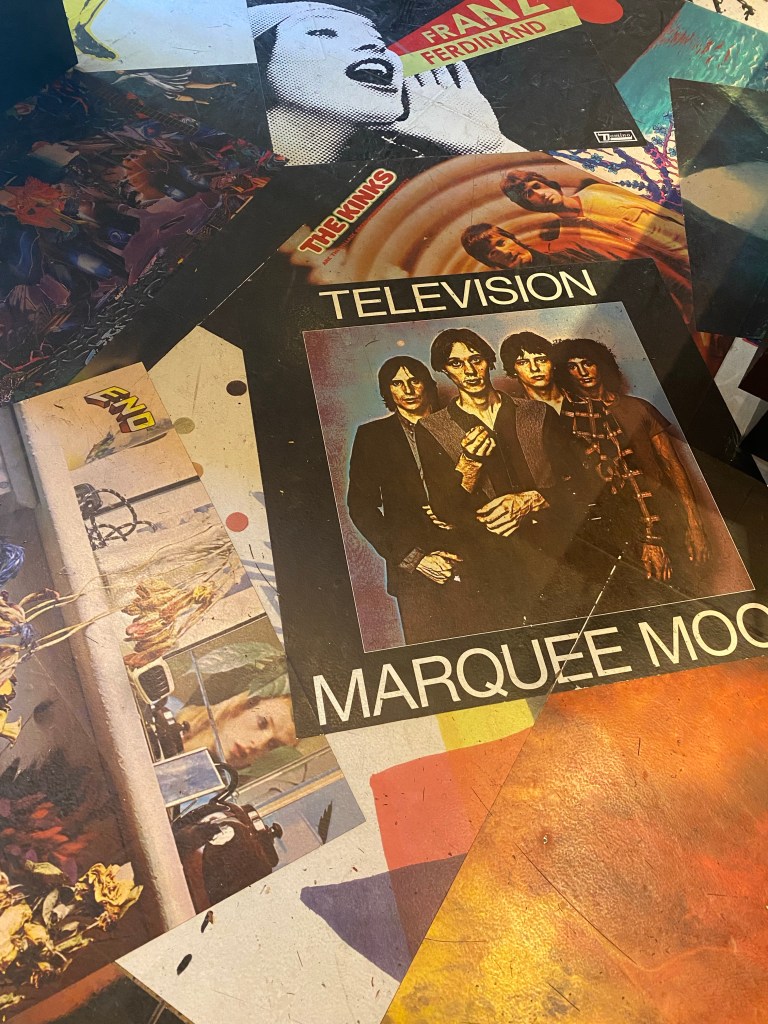
D’you know how hard it turned out to be, to find a decent record shop in Manhattan, let alone find one that had that one copy of Television’s Marquee Moon sitting idly and unloved at the back of its racks, waiting for the day when I’d show up with twenty bucks to rescue it from forgotten-ness for ever?
Dead hard to impossible, that’s how hard.
At the bottom of the High Line near the entrance to Chelsea Food Market was a wee artisan boutique where various local artists sold their wares. And right in the corner was an old disinterested guy selling records. They were packed in torn and ripped cardboard boxes, handwritten labels denoting the music genres within. Damn! Two guys were digging deep in the ‘Punk/Noo Wave’ box. And they weren’t moving anytime soon. I ignored the ‘Rawk/Hard Rawk’ selection, found the ‘Funk/Soul/Disco/‘70s Shit’ box and, with one eye on the two guys who, I was convinced, would unearth a Rocket To Russia or Plastic Letters or, no!, a Marquee Moon any second now, began rifling through a box of records that had seen better days.
I pulled loose a copy of Isaac Hayes’ Hot Buttered Soul, horrified first at the price – $50 – and then at the state of the thing. A well-worn sleeve suggests a life well-lived, the untold stories of get downs and skin-ups that were soundtracked by the record within. I don’t mind a tatty sleeve at all – you should see the state of the mouse-nibbled copy of Sandinista! I found in Liverpool a few years ago – but this record…all these records here…were wrecked to the point of uselessness. If I’d found this copy for £1 in the British Heart Foundation shop at Irvine Cross, I’d have swithered over the pros and cons of parting with my money. Fifty bucks?! Get real! Those two guys making their way through the box I really wanted to explore weren’t going anywhere fast, and by now the family had caught up with me, eager to move on. I’ll never know what was in that box, or what New York prices were being asked…but it still eats away at me that I’ll never find out.
We weren’t in New York, Craig, to spend hours looking for and then browsing through record shops, but I managed to syphon off some me time to spend scouring the Rough Trade that’s next to Radio City. Right at the back was a second-hand section. No Marquee Moon here either, but in amongst the overpriced jazz reissues and (bizarrely) Gerry Rafferty’s back catalogue, I fell upon an original ‘76 press of Dylan’s Desire, replete with its original 1970s price sticker, for a mere $8. Re-sult, as the crate diggers say.
On the way to the counter was a display of ‘Classic NYC Albums’ – I’ll let you work out which records were displayed – and, in an impulsive move, emboldened by the original Dylan and happy that I’d finally found a New York-ish record that met my stringent criteria, I picked up a minty fresh and shrink wrapped copy of Marquee Moon to complete my purchase.
“Cool rekkid,” said the counter girl through her dyed black fringe and piercings. “Great guitar playin’ awl ovah it.”
“I know,” I smiled. “When in New York…”
“You gotta,” she finished for me, giving nary an acknowledgment to the Bob record she was ringing up. “Have a great day!”
I was delighted. Not particularly with the Marquee Moon which I’d had forever anyway – it was one of the first CDs I bought, but with the Dylan record which, after a quick Google while sitting on the wall opposite Rough Trade, I discovered was originally sold in Jordan Marsh, an NYC chainstore with its own record department. Not the New York record I had my heart set on, but a New York record all the same.
Unfortunately then, my vinyl copy of Marquee Moon comes not with the essence of the Bowery engrained in it, nor the mucky fingerprints of some speed-damaged old punk rocker across it, but still with the greatest free-form guitar playing that sets it out as the most individualised trailblazing record in an era chock-full of individualised trailblazers.
The band Television first entered my teenage orbit on the back of The Family Cat’s forever support-band sounding ‘Tom Verlaine’. Who was the titular Tom that had this loud and caterwauling indie rock track named after him? I soon found out.
The sound Television made was, especially when you consider the mid ‘70s, the sound of the future. Think how many of your favourite bands have replicated Tom Verlaine’s guitar playing since; spidery thin then creamy thick, loose and ragged then fat-free but flashy all at once. Will Sergeant… John McGeoch… the entire alumni of Scots’ post-punk six string alchemists… you can perhaps trace a direct line from the hot wired fretboard of Verlaine’s Fender Jaguar or Jazzmaster to any number of single coiled, solid bodied fetishists the world over, but you won’t find any other examples of the guitarist’s initials mirroring the band in which he plays. A happy accident, for TV and Television for sure.
Television – Friction
I’ve always loved Tom Verlaine’s playing on Television’s Friction; the jerky riffing, the unexpected notes in the solos that are always strictly non-blues, but especially the little electrified sound effects he coaxes from the wound strings as the, ‘my eyes are like telescopes’ line creeps out. You can ‘see’ those eyes, pirouetting out on little stalks as the music matches the vocal.
‘EFF, ARR, EYE, SEE, T-I-O-ENN!’ it goes, wired and paranoid, a thousand bedroom guitar players tuning in intently. Not all guitar players would match Verlaine – few ever will – but that free-flowing metallic sound will ring forever, whether it’s from an old and battered copy of Marquee Moon or a bog standard original that’s straight from an Eastern European pressing plant. Great rekkid, with great guitar playin’ awl ovah it. Shine on, Tom Verlaine.
As far as new(ish) guitar bands with hot potential go, you could do worse than look towards The Bug Club as saviours of all things rough, ready and rabble-ish. With songs – short, in length, deep in content – pouring effortlessly from the trio as freely as the spring water in the Monmouthshire valleys from whence they come, and further vindication, should it be required, from the hip oracle of foresight that is Marc Riley, their time really is NOW!
Those constant rotations on Marc Riley’s nighttime show on BBC 6 Music became daytime earworms throughout last year and were eventually the catalyst for Freckfest, the wee music promotions team I’m involved with, to book them to play the Harbour Arts Centre in Irvine. Last night, then, was The Bug Club’s opening night of a short tour of Scotland and the south, a tour they started in Irvine…and started in style.
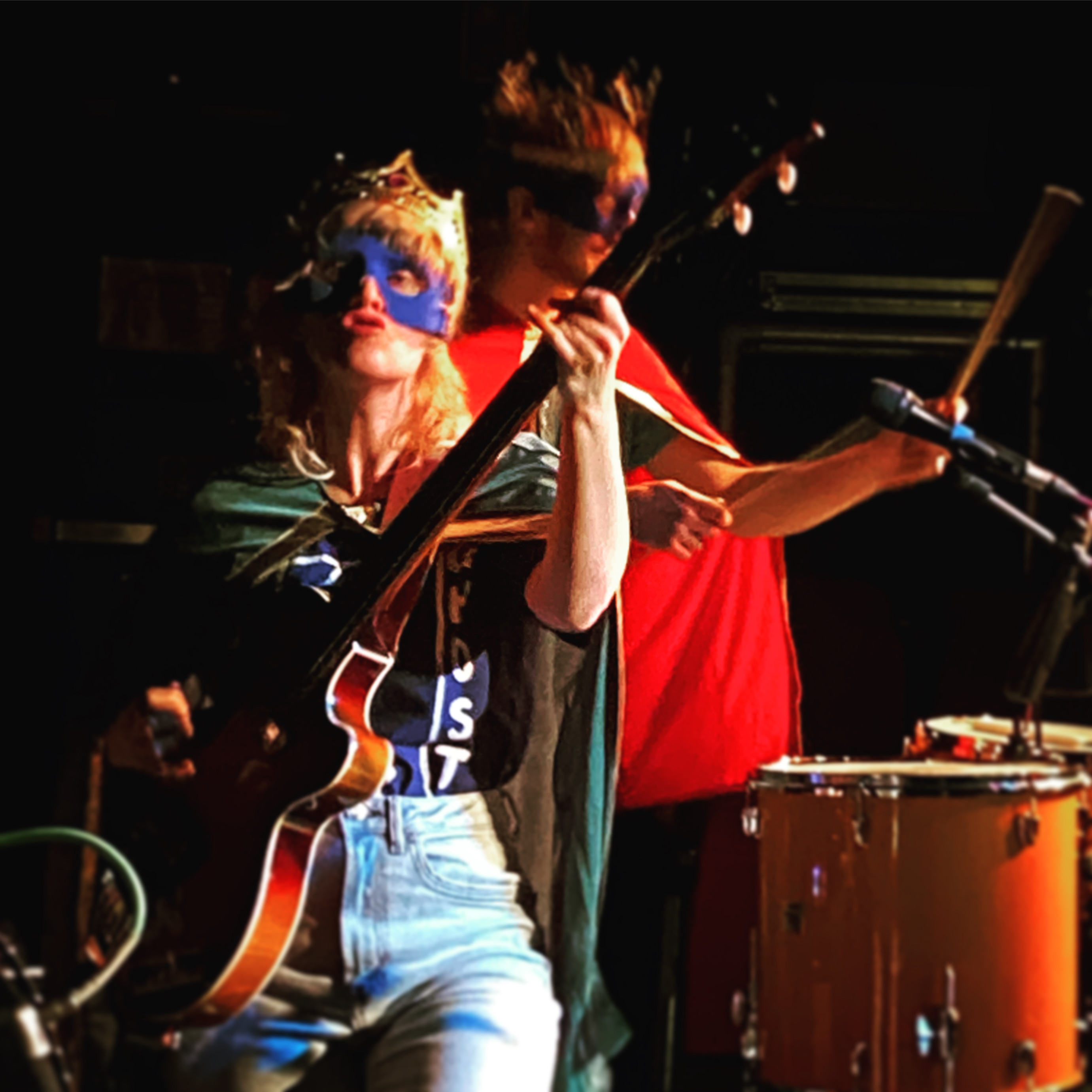
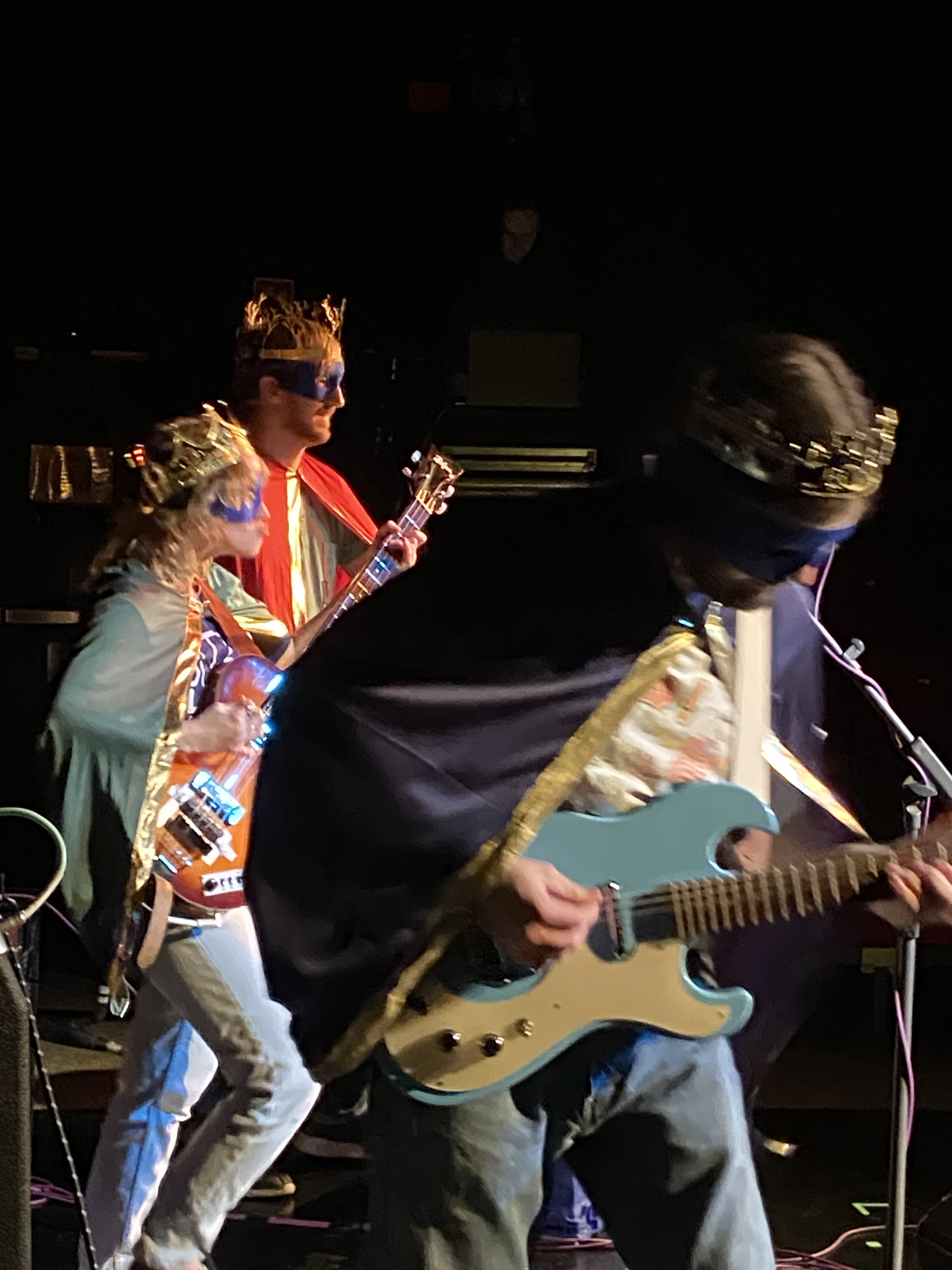
Having more songs than they know what to do with, the band hit upon the idea of supporting themselves as an outlet for airing a whole set of new material that’ll form the basis of their next album. Much like The Wedding Present, who did a similar thing at the tail end of the ’80s when they’d turn up unnanounced and run-through their not-yet-released Bizarro album (watching as the pre-social media audience grew to capacity after half a dozen or so songs), The Bug Club absolutely wanted to keep it low-key and under wraps. Their soundman pressed play on a pre-recorded intro message on one of those old, flat tape recorders and, to a room of no more than 20 people, Mr Anyway’s Holey Spirits sauntered onto the ‘stage’, ‘disguised’ in masks, plastic crowns and cheap silky capes and proceeded to blow the walls in.
Man! What a sound! They’ve two styles of songs, The Bug Club. One is Modern Lovers/Velvet Underground-rich; repetitive, clean and scraping guitars, the occasional Jonathan sunshine melody or Lou mumble on vocals, a slinky bassline, steady Tucker-ish drumming…you know how it goes. Being Welsh, they’ve even nailed the John Cale spoken-word sections with nary an effort. I’m jumping the gun here, but the last song they played in this set was a 10 minute headspin of male/female spoken word vocals and pulsing Velvets groove that possibly won’t be bettered in the whole of 2023. Totally great.
Their other style is tight ‘n raucous Nuggets-y garage punk, whippet thin blasts of hairdryer blooze with short, sharp interjections of Yardbirds-rich guitar licks, the spectral fingers of Page ‘n Beck slippin’ and slidin’ up the frets and back again, a lightning fast blur of high frettery that leads to a bottom end sludge fest.
The Bug Club – Checkmate
It never quite gets full on Zep, mind you. And just as well. The Bug Club know exactly when to pull back and fall back into that Velvety grind. And talking of Jeff Beck, Sam Willmett, The Bug Club’s guitar-playing singer also eschews all form of effect pedal. He’s old school, and in a world populated by musicians who mask and disguise their limited playing with spaceship-sized chrome and steel stomp boxes, it’s totally refreshing. If I was a guitar player, I’d have thrown away all of that excess flab this morning and rethought the entire process. Or perhaps given up. With just an old Telecaster and a curly lead – there’s yr secret weapon right there – Sam coaxes all manner of tone and control from his six strings with nothing more than a snappily toggled pick-up switch or a pinky-flicked volume knob on his vintage amp for colour. I watched closely, less than two metres away from him at the side of the stage and I’m not quite sure what form of wizardry I paid witness to.
Of course, with the walls vibrating to the thrilling noise of just three people, ticket holders still in the bar begin picking up on the muffled thunk permeating their chat – “I think that’s them on!” – and gradually the room fills. By the time they’ve ended their near-hour warm-up set with that aforementioned 10 minute epic by unplugging, wandering off and singing the vocal refrain in the dressing room behind the stage, they’ve an entire audience on their feet in giddy appreciation. Not bad for a ‘support act’.
Soundcheck shot
A quick interlude – Ivor Cutler, Gorky’s, Them – again, the best points of reference – and The Bug Club proper are back. The capes, masks and crowns may be gone but the relentless tuneage continues. Did they just play three songs in a row there without breaking for breath? I dunno, but it’s a thrill. Tilly on bass, nice, mild-mannered Tilly, is transformed into Suzi Quatro doing Angus Young at Hallowe’en. She struts, she stomps, she pulls excellent bass face. She is a total thrill to watch. Sam, meek and humble, squeezes out an apologietic thanks with a nod of the head before letting loose welders’ sparks of metallic chaos from the Telecaster. At the back, tubthumping Dan keeps it all together, fringe whipping his face as he sings along, mic’less but still there, the third spoke in an almighty wheel.
The Bug Club – It’s Art
Never anything less than can’t-take-your-eyes-off-them exhilarating, they must’ve played 40 songs over two one hour sets. Fast songs. Faster songs. Rockin’. Rowdy’. Quirky. Quaint. You can find them all at the band’s Bandcamp page. If you can, you should make a point of going to see them if they’re anywhere near you, anytime soon.
Yard Act and Wet Leg were the breakthrough bands of last year. This year belongs to The Bug Club. Hopefully we’ll get them back to Irvine before the rest of the world catches on. You, though. You should catch up. And catch up fast.
This is brand new for 2023 and absolutely magic. It’s lovely, so off-kilter and out of step with the fads ‘n fashions of the day, a bloody-minded and non-conformist ideal that will see it marginalised indefinitely yet should, were the ears of the world more open, see it canonised forever.
The Lemon Twigs – Corner Of My Eye
If you’re looking for pigeonholes and labels you could probably file it under ‘sunshine pop’ or ‘soft rock’ or even ‘easy listening’, but really, it’s all of those things and none. It’s Wrecking Crew-good, just so expertly thought-out, played and put together. The production is the pure ’70s California of analogue desks, coke on the faders and Persian rugs for your bare feet to rest upon, the presentation that of grass-toking multi-instrumentalists with a thing for luscious hair and the Age of Aquarius. And who wouldn’t get behind that?
It’s the voices. Up front, choirboy clear and unashamed. A high falsetto makes itself known immediately and when the counter harmony breezes in, its a pure mesh of soft-focus, golden era Simon and Garfunkel, effortless and highly tuneful. If you’re going to sing it, sing it clear and pure. There’s high art in Lemon Twigs’ craft.
Nylon stringed guitars deliver tumbling and cascading pastoral backing, gently picked, in-the-wee-small-hours quiet, intricate melodies atop a myriad of chords – listen out for the descending, sliding barre chords that carry the song to its ending, just one of the signifiers that this wee tune hasn’t been flung together with nary a thought for the arrangement. The stand up bass that wanders its way through the rich tapestry of melody while the Village Vanguard-evoking brushed drums ease the whole thing to its softly sighing close only reinforces the notion of careful curation. Corner Of My Eye has been slow-marinaded and allowed to gestate before being eased out into the world.
“We recorded this track in the winter of 2021 in our old rehearsal studio in Midtown, NYC. We laid down the vocals late that night once the traffic outside had died down. We’ve had the song for a while now, so we’re excited to share it with fans who may have heard it live over the years.”
The Lemon Twigs, as you may well be aware, have form for this. No strangers to a double tracked guitar solo or a Randy Newmanistic trill on the piano, a Beach Boys-influenced McCartney Rickenbackered bassline or an octave-defying, multivocal harmony, they’ve taken the best parts of all the bands they love and distilled it into their own sound. Less Hanna Barbera than, say, Jellyfish, there’s nothing contrived in their schtick. They play well-crafted and joyous songs really well – just the two of them, mainly, musical brothers and so young with it – wearing their multiple influences on their tank-top sleeves and running with them, the talented bastards.
The teetering pile of books on the bedside table has been slowly reducing since it first took on Jenga-like proportions around my birthday in the middle of November before growing a couple more spines in height at Christmas. Amongst others, the much-maligned Philosophy of Modern Song, Bob Dylan‘s multi-genre critique of music through the ages has been dipped in and out of and, despite the rising consensus that it’s misogynistic, plagiarised and not worth the lovely, thick recycled paper (mmm, the smell of it!) that it’s printed on, I really like it, even if I can’t be certain I’m reading Bob’s own words or not. It does read like a printed version of his scripted Theme Time Radio Hour shows, and perhaps the credited thanks to ‘fishing buddy’ Eddie Gorodetsky – coincidentally the producer of those radio shows – tells you all you need to know with regards to just how much input Bob may or may not have had. The scamp. Thankfully, no one shelled out on a ‘signed’ copy for me. That’s a whole other can o’ worms. But you knew that already.
Nige Tassell‘s Whatever Happened To The C86 Kids? will have to wait a wee bit longer, as I’m about to dive deep into Douglas MacIntyre‘s Hungry Beat, a tome that celebrates an era – The Scottish Independent Pop Underground Movement (1977 – 1984) – that I was born just too late to appreciate first time around, but a book that will no doubt have me scrambling and scratching around for the appropriate soundtrack as I read. So, expect a raft of niche Scots’ post-punk to start drip-feeding on these pages once I’ve properly digested Douglas’s book, probably sometime around the start of March.
I’ve a whole stash of Stephen King on my Kindle, and I periodically select one I haven’t read. I ploughed my way through 11/22/63, wanting to give up at times but making myself finish it. It wasn’t a bad story – the concept is great; man discovers portal, goes back in time to stop Lee Harvey Oswald killing JFK and suffers the consequences of changing history, but man, it was just so damn long. The love scenes (of which there were more than enough) were toe-curlingly excrutiating too.
The other book I’ve recently read where history is intertwined with fiction was so much better…
I’ve just finished David Ross‘s multi-faceted Dashboard Elvis Is Dead, a proper page turner that I read over four nights last week. A quick disclaimer: David is a friend and very kindly gave me a copy in return for a review, so it was a relief to reach the final line, brain a-whirring, and not feel worried about having to contrive a few paragraphs of praise.
Dashboard Elvis Is Dead is a right good read, a Forrest Gumpish run through the people and events of the ’80s to the 2000s – the Scottish Independence referendum, 9/11, high school shootings – intertwined with fictional characters including a mixed-race American photojournalist eager to find comfort in her murky roots and a Scots indie band (The Hyptones) who self-implode almost as soon as their one great song starts making ripples on the music scene. The song, or rather, its origins, are the cause of much soul-seeking and anguish to the band’s guitar player, as you discover as the story unravels. And what a story it is.
There are two seemingly separate threads running through the book – one featuring Jude the photographer, the other following Jamie, The Hyptones’ hot-shot guitarist, but of course, they are interlinked. For a while, the novel’s early themes (love and belonging, travel, violence) run in parallel; at one point Jude finds herself embroiled in a ripe-for-Tarantino road trip and the star-crossed lovers she falls in with drag her life in a new direction while, travelling the same roads, The Hyptones zig-zag across the States in a converted van, the drummer lamping the singer who thumps the guitar player while the bass player sleeps through it all, before the crowd of rednecks and punks who mix like oil and water at the band’s showcase gig cause it to end in predictably time-honoured Longhorn Ballroom fashion…
Dashboard Elvis Is Dead reads like the wordy equivalent of a well-considered album; fast paced and attention-grabbing at the start, the serious stuff in the middle, the reflective and philosophical stuff towards the end before the big closer at the finish. A four-parter that can, and should, be read in four sittings.
Indeed, if this was a record, the pages where the two characters come face to face would be the big, noisy, side-closer; London’s Burning, perhaps, or Problems, more likely… something to draw a line under what you’ve just listened to (read) before you flip over and dive back in again.
The nightspots of New York City give way to Glasgow’s Red Row flats. Arty advertising agencies are succeeded by Glasgow School of Art. The movers and shakers of NYC’s cultural scene – Seymour Stein, Madonna – are replaced by the movers and shakers of Scottish politics and the Glasgow underworld. Characters that you meet in one section invariably pop up in key roles in another. The trick, which Ross does well, is in getting from one to the other without contrivance or over-reaching.
Bonus points too, Mr Ross, for naming the bass player ‘McAllister’. I’m sure it’s entirely coincidental, but that earns you a Plain Or Pan rating of nine and a half out of ten. (A half point off for not calling her ‘Craig’).
You can get Dashboard Elvis Is Dead in all good book retailers, digital as well as print. You should seek it out. I think you’d like it.
This record will be 50 years old this year…half a century young and still sounding like nothing that’s been before or since. Well, to a point…
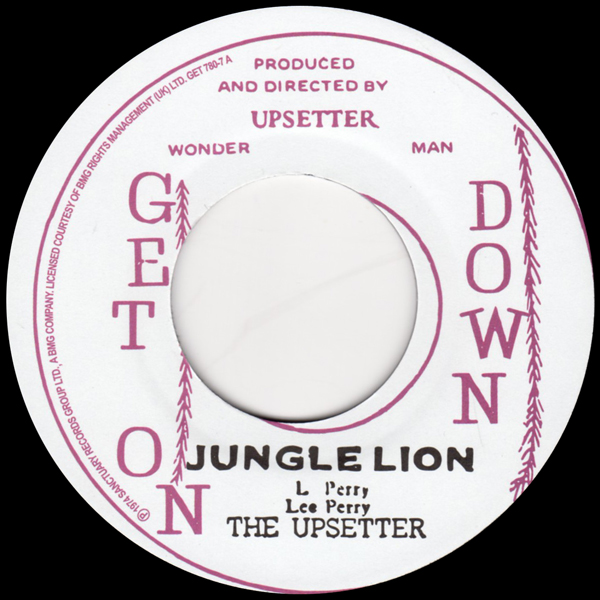
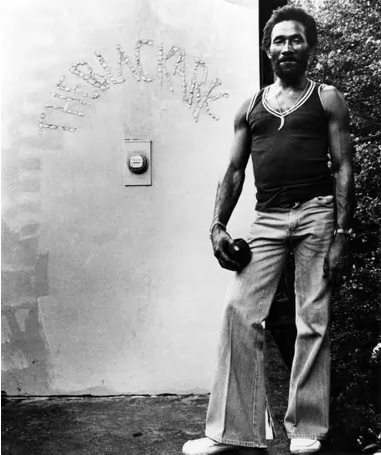
Lee Perry‘s Jungle Lion is vintage Perry, from the stoned, lion roaring madman-isms at the beginning to the sun-baked skank as the record’s groove kicks in, to the echoing brass refrain that lifts the recording up and out to the moon and back, the hook that keeps the whole acid-fried masterpiece from falling apart.
Lee Perry – Jungle Lion (7″ mix)
The production on Jungle Lion is insane. The band is locked in and tight, bass and drums laying the groundwork, that wet slap of chicka-chicka guitar adding the scratchy colour like a toddler with a crayon dragged across a piece of paper; messy, unique and creative. Perry toasts over the top in his own freeform fashion, the needles of the mixing desk accelerating far to the right and stuck in the red as he ‘Ughs’ and ‘Aows’ and ‘ch-ch-chs’ his way across the top. ‘Dan-dee-layon! Jung-gal layon! Fay-ah!‘ It’s funk, Jah, but not as we know it.
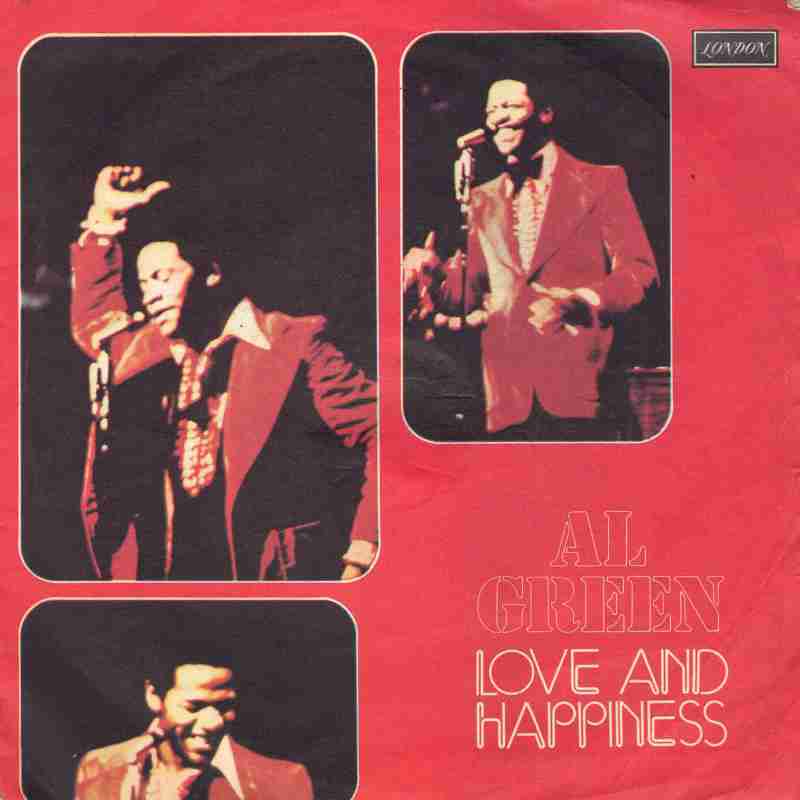
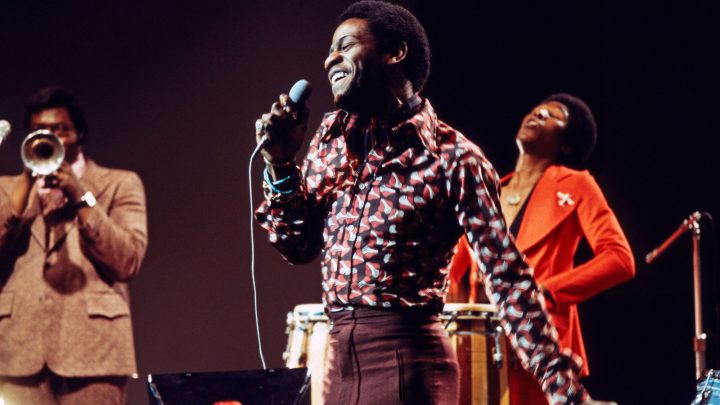
That brass refrain. The hook. You’ll definitely have heard that elsewhere. The keener scholars around these parts will point to Al Green‘s Love And Happiness and take the bonus round for 15 points, please, Jeremy.
Al Green – Love And Happiness
Now, I don’t know quite what wizardry The Upsetter was capable of manifesting inside Black Ark, but it seems to me – and I may be well off the mark here – that Perry sampled, yet didn’t sample, the horn refrain from Al Green. What I mean is, the refrain on Perry’s track is the same music, not merely a version played by Perry’s horn section, but sampling wasn’t a thing in 1973…or was it? Exactly what technology was available to maverick studio heads with no boundaries and serious creativity overload?
My thinking is that Perry simply played Al Green’s track and, using a studio microphone set up next to the speaker where Love And Happiness blasted forth, recorded what came out. Remember how, back in the days before ghetto blasters with in-built radios, you used to tape the charts? Yeah, exactly like that.
So Perry takes Green’s track – the delicious guitar riff in the intro as well as the horn refrain – and builds his own warped and inventive take on a soul classic. Nothing new in this of course – most reggae tracks began life as sun-baked covers of the soul music that crackled and crept across the US services airwaves and onto the Caribbean – but Lee Perry’s masterstroke is in the direct lifting rather than the direct copying that his peers would do.
Al Green’s original is such a great track. Stately yet understated, quietly assured and coasting on a slow fever bed of warm hammond and honeyed brass, the perfect foil for the Reverend’s measured, restrained vocal.
He always surrounded himself with great musicians, did Al, from the Rhodes sisters on backing vocals, to the slow ‘n steady Al Jackson Jnr on drums and Leroy Hodges on bass, to his guitar player and sometime-co-writer (and brother of Leroy) Teenie Hodges. I’ve written about Teenie before, a relative unknown in the guitar world but, for me, a guitarist whio appeals to me far more than some of the usual names who appear on those ‘Best Guitarists Ever’ lists. He’s such a fluid player, Hodges, clean and clear, with the most delicate of touches. Those fingers can hover an inch above the frets and his guitar will sing, clean and chiming, bluesy and soulful. No wonder Lee Perry was keen to employ him in whichever manner he could get away with.
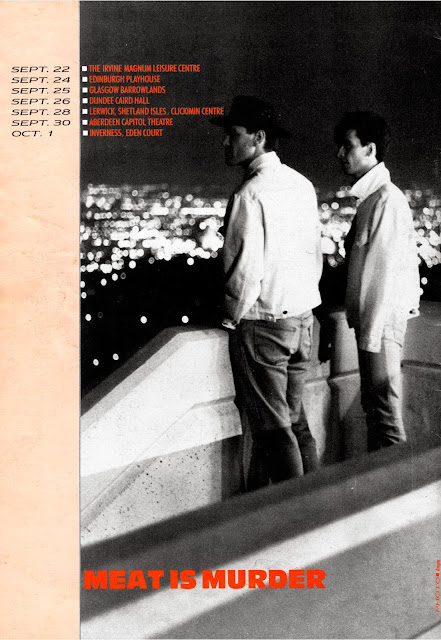
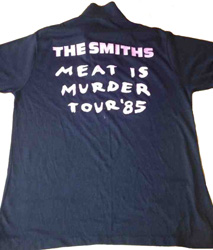
Let’s call it here and now: Meat Is Murder is The Smiths best album.
It’s certainly not the debut, the band’s unsatisfactory attempt to chase a sound worthy of the songs. Compared to the Brasso-bright, spit ‘n polish, ring-a-ding-ding of those early Peel versions, the debut album weighs heavy; lumpen, and one-dimensional. The drums sound leaden and lifeless. The guitars – it’s always about the guitars with The Smiths – sound as if someone has taken a fat thumb to their edges and rubbed the sparkle clean off. Flat and uninspiring, the production doesn’t do those fabulous riffs any justice at all. Unique, extraordinary songs, but assembled badly.
Don’t even consider The Queen Is Dead. Those songs…man, great, great songs…but whoever signed off the running order needs their head examined. The title track aside, every other song is misplaced. Side one collapses from the music hall titter of Frankly, Mr Shankly into the death doublet of I Know It’s Over/Never Had No One Ever – undeniably serious mood music pieces, yes, but totally misplaced. Stick I Know It’s Over at the end of side 1 instead and you’ve got a great closing track. Never Had No One Ever? That’s totally ripe for the graveyard slot of second last track on side 2. Pick any ten records from your collection and look at the running order and then tell me that the second-to-last track isn’t the weakest on the album. It’s certainly not where There Is A Light That Never Goes Out should be hiding. That should be sitting up front with Bigmouth… and the big boys, or maybe even afforded the honour of being the big statement closing track. Good as Some Girls Are Bigger Than Others is – and it’s one of their very best – go out on a romantic, swaying high, Smiths. Don’t relegate your best songs to the twilight zone.
Yeah, and the smart money (even Johnny’s, they say) might be on Strangeways Here We Come, but for every crashing gothic masterpiece (Last Night I Dreamt...) there’s The Smiths-by-numbers (Stop Me If You Think…), for every barely-disguised love letter from singer to guitarist (I Won’t Share You) there’s the instantly skippable Death At One’s Elbow. It’s a good album, Strangeways, probably even great, but it isn’t their greatest. That honour goes to Meat Is Murder. Here are half a dozen reasons why.
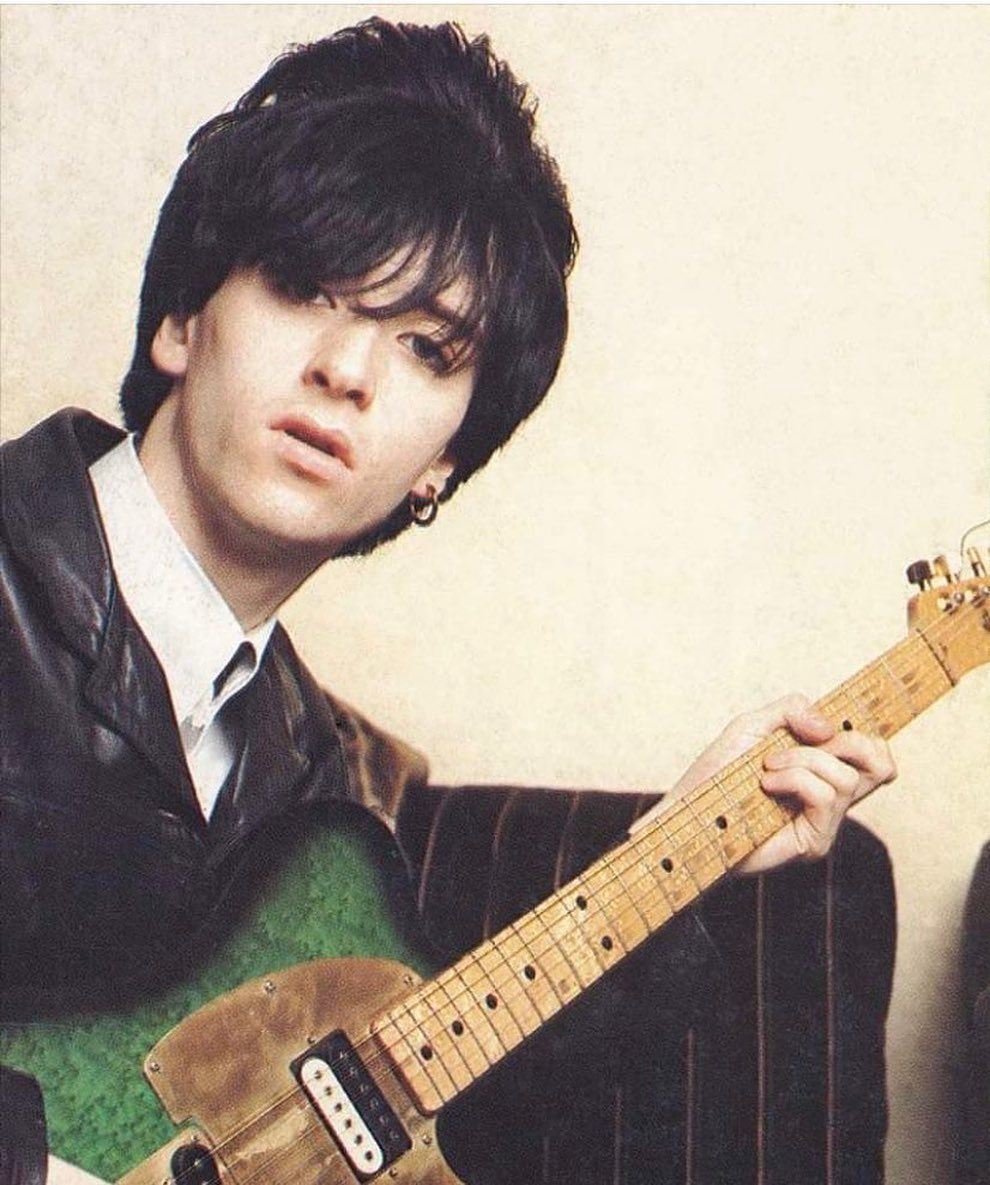
Reason 1. Little elfin Johnny, in his blown-up Keith Richards hair-do and diamante clutter, is on fire across every bit of Meat Is Murder. He runs the whole gamut of his nimble-fingered arsenal; alternative tuning on the title track…alternative tuning and Nashville tuning on the cosmic and zinging Headmaster Ritual…that fine, layered coating of acoustic liquid mercury across Well I Wonder…the Stooges Metallic KO of What She Said, the rockabilly knee-tremble of Rusholme Ruffians…the proud Chic-isms that give way to those great, ringing discordant jazz chords near the end of Barbarism Begins At Home…the clattering chatter he conjures up across Nowhere Fast‘s multiple overlapping tracks and kaleidoscope of chords…
Johnny came up with them all. On Meat Is Murder he is barely 22 and he’s not yet reached a peak that his peers, never mind his guitar-strangling lessers in bedrooms up and down the country, can only dream of.
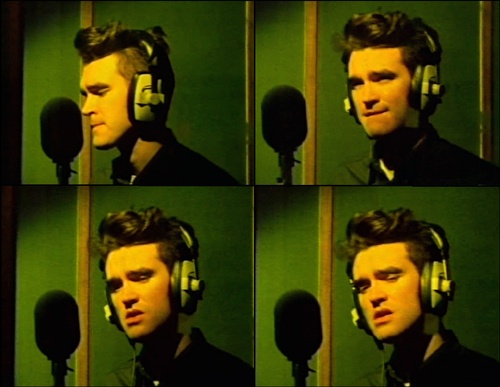
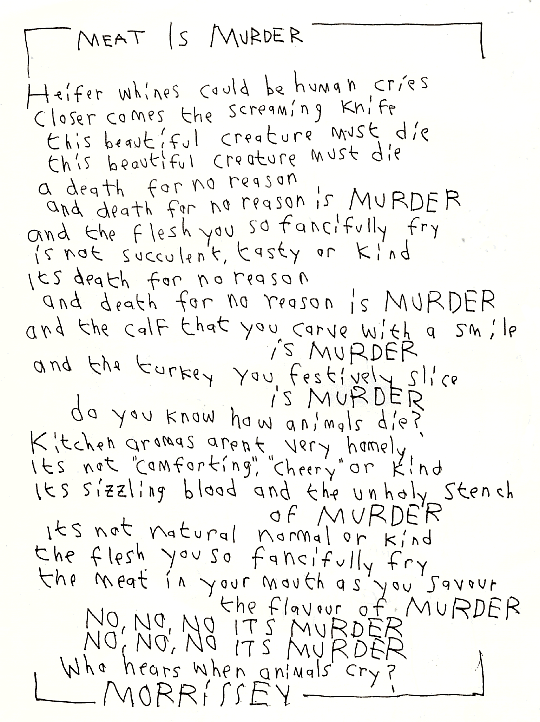
Reason 2. Morrissey. Separating the art of the 26 year-old singer from the 63 year-old artist is necessary here. Look, not at what he’s become, but at what he was once capable of. With every lyric on the album, he’s extremely funny and articulate and political and opinionated and principled and, above all else, loveable. ‘I’d like to drop my trousers to the Queen,’ ‘heifer whines could be human cries,’ ‘belligerent ghouls run Manchester schools, spineless bastards all,’ ‘What she read, all heady books, she’d sit and prophesise, it took a tattooed boy from Birkenhead to really, really open her eyes.’
Even if he pinched large chunks of Rusholme Ruffians from Victoria Wood, no one was crowbarring lyrics like this into pop songs in 1985. Arguably, no one has crowbarred stuff as unique and searing and insightful and right-on since.
Reason 3. That Joke Isn’t Funny Anymore is one of The Smiths’ finest torch songs. From its bright-as-brass-buttons opening to its layered and textured false ending, it’s a beauty. It’s the perfect marriage of Morrissey’s moping introspection and Marr’s guitarchestra, the singer identifying with those who are kicked when they are down, the guitarist going to town with studio effects and multi-layered riffs.
The Smiths – That Joke Isn’t Funny Anymore
Those little echoing triplets that fall from his fingers to create rippling pools on still pond water still tingle the back of my neck when they come in (around the minute mark at first, then forever after) – an ear-opening epiphany in 1985 when I realised that guitar players enhanced their electric sound with gizmos and wizardry to create the sounds they imagined in their heads. The haunting (and haunted) backwards effects he weaves through the ‘happening in mine‘ section before the fade out are ace.
Johnny has since said (OK, he told me, right?) that The Smiths never quite managed to do it justice live, but with the technology available today, That Joke Isn’t Funny Anymore would have undoubtedly been the centrepeice of The Smiths live experience. We’ll never know.
Reason 4. The Smiths changed lives. Saved lives, even. Like, literally. The title track is responsible for a whole swathe of impressionable teenagers – and at least two Smiths besides Morrissey – to forego eating meat and adopt vegatariansim as a way of life.
“As soon as we had recorded this song, I became a vegetarian,” Mike Joyce told me in 2017. “Morrissey’s argument was rock solid. I couldn’t even be that bullish to say, ‘…but I like meat.’ The cruelty involved is reason enough. You wouldn’t eat your cat or your dog, so why eat a sheep or a pig? Whatever Morrissey argued, you could only reply with, “You’re right, you’re right.” There was no counteract to it. It should be illegal, there’s just no argument for it. ‘Meat Is Murder’ is a sheer political statement. It shaped my life and my kids’ too, who’ve all been brought up vegetarian.
Accompanying the lyric, all sorts of magic is going on. Suitably doomy and disconcerting for the words being sung, Johnny plays around on an open D riff, cyclical and repetitive, hynpotic and ethereal.
The Smiths – Meat Is Murder
It’s matched by a jangling piano – not noticeable on first listen, buried as it is underneath the abattoir grinding and cattle cries, but it’s there, tinkling along like springtime Manchester rain while studio-treated guitars echo and scrape and scratch their way through the murk, Andy’s bass as elastic and stretchy as tendons.
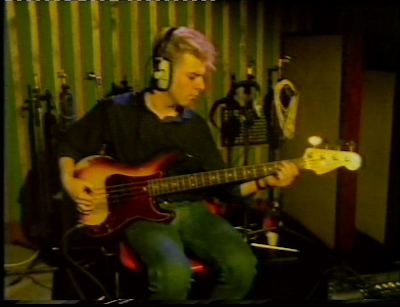
Reason 5. Ah. Andy’s bass. The unsung hero of the band, the thinking man’s favourite Smith, Andy Rourke can play the fuck out of that thing. While Johnny gets all the spotlight, Andy quietly goes about creating tunes within tunes, fret-surfing melodic runs that could easily stand on their own two feet (or four strings).
The Smiths – Nowhere Fast (Peel Session, 1984)
The trampolining rubber bandisms that carry the aforementioned Rusholme Ruffians…the counterparts he plays to Johnny’s guitar in The Headmaster Ritual…the driving force in Nowhere Fast that allows Johnny to fly off-piste and back again…Andy is a key ingredient here.
The rather-too obvious track to highlight is the extreme funkability of Barbarism Begins At Home, all slap ‘n thunk, an old tune of his and Johnny’s from pre-Smiths days that wouldn’t have worked on that debut album, but here, on Meat Is Murder‘s inclusive, catholic patina, it shines brightly.
Reason 6.The Headmaster Ritual. Rusholme Ruffians. I Want The One I Can’t Have. What She Said. That Joke Isn’t Funny Anymore. Nowhere Fast. Well I Wonder. Barbarism Begins At Home. Meat Is Murder.
Perfectly sequenced, perfectly pitched, it is, rare for the era, an album of few single releases; Headmaster and Barbarism in foreign countries only, That Joke in the UK (a chart-busting number 49 with a bullet). The Americans couldn’t handle an album with no hit singles though, so they crassly wedged How Soon Is Now? right before Nowhere Fast at the start of side 2. They have form for spoiling perfectly perfect albums, the Americans – look at what they did to some of The Beatles’ catalogue for proof – and while How Soon Is Now? is an undoubted Smiths classic, it should remain standing alone as the greatest 3-track Smiths single ever. But that’s an argument for another time.
Old enough to get married, but not of the age to celebrate with a swift half down The Crown, Plain Or Pan turns 16 today.
I wouldn’t have believed you this day back in 2007 if you’d told me these pages would lead to me getting to interview Sandie Shaw, half The Smiths and a smattering of my favourite musicians, but that’s the truth. I peaked during lockdown when I was tasked with writing a biography – The Perfect Reminder – about the Trashcan Sinatras‘ second album I’ve Seen Everything. The book subsequently found its way to all corners of the UK, the USA, Europe and Japan and eventually peaked at the respected Aye Write book festival in Glasgow, where myself and photographer Stephanie Gibson, alongside John from the TCS, were interviewed on stage by BBC 6 Music’s Gideon Coe. To top off what was Aye Write’s headlining slot (and perhaps the reason why a feart and running Bobby Gillespie postponed his appearance), John, Davy and a visiting Frank Reader appeared as the ThreeCS and played a half hour set of acoustic Trashcans’ numbers. But you knew all that already.
With the Trashcans’ third album – A Happy Pocket – being reissued by Last Night From Glasgow, I was once again called to action. This time round, things have been scaled back a bit. There’s no hard back book, there’s no bespoke photographs and I doubt there’ll be an Aye Write appearace, though you never know. What we do have is something – The Full Pocket – that’s akin to more than a fanzine but not quite a book. It’s A4. It’s set in the same font as the tracklisting on the album. It’s packed full of archival photographs and artefacts. And it features all 5 band members and the occasional outside influence talking about the album and its associated b-sides track by track, story by story. I might compare it to one of those Mojo or Uncut special editions – y’know, those ‘Complete Guide to Bob Dylan’ publications that they occasionally produce?
The Full Pocket is a goldmine of TCS factoids. Funny, informative and, may I say, indisepnsable if you’ve even half a passing interest in one of our greatest under-the-radar bands. Pre-orders went online last night and it was thrilling to see the response. If you’re a fence-sitter, or perhaps an eager pre-orderer and want a sneak peek, I’ve included a short extract below. I’ve intentionally kept it shorter than the same bit in the bookzine – the band quotes are longer and more detailed in there, and I’ve not included any of the photos that will appear either. Some things are worth waiting for.
(Screenshot)
The Genius I Was (Excerpt from The Full Pocket)
Trippy, fuggy, druggy, whacked out…The Genius I Was pummels along on a tidal wave of overlapping guitars and a sneaked-in metronomic Run To You riff, coloured by needles-in-the-red zinging interludes and Frank’s buzzing fly-in-a-jar line enderzzz. Davy’s bass, solid, melodic and thumping drives the whole stramash forwards. The guitars – about 8 tracks of them, I’d guess – are phased, flanged, panned left to right and back again. A six string acoustic scrubs out the choppy rhythm as an electric zaps out the hippy, spacey stuff. There’s a lot going on here, and repeated listens reward the keenest of ears.
I must’ve played The Genius I Was about a thousand times since first hearing it and I could happily play it over and over for the next hour and never tire of its proggy, sonic resonance. Until now, have you even noticed John coming in midway through the first verse to duet with Frank from thereon in? And have you ever noticed the heavenly choir near the end as the melodies tumble and the chorus unravels? I’m sure Stephen’s voice is somewhere high within the mix. There’s a lot to unpack in what is a well-constructed track. It may be buried deep within the album, but make no mistake, The Genius I Was is one of the Trashcans’ very best.
Trashcan Sinatras – The Genius I Was
Paul: This was one of Frank’s. We worked for a while on it. For a long time, it was faster and louder and a bit queasy with those chords. It happens a lot with Frank’s songs where you’re learning it but you’re thinking, ‘What is this?’ “It’s this chord…and then you go to this chord…and then you go to that chord…”, and you’re like, ‘what the fuck?!’…
Stephen: The verse chords for The Genius I Was were there long before the rest of the song and when rehearsing we used to play them continuously, really loud. I remember the song being a two chord instrumental for some time before this.
Frank: I was sitting around on my guitar, trying to learn something when I stumbled on this nice, slideable chord. I could move it up two frets and back again, which I did for a bit, and then I went to the fourth fret and back down again. Suddenly I had a riff and it sounded weird, kinda backwards, but interesting. I played it over and over, getting into it, dang-dang der-dang-dang, it was fast and driving. And then my hands got stuck in those fret positions. I’m not a good guitar player, and I’m thinking, what can I play to get out of this?
Davy: Frank had a set of weird chords and we could never get them into shape – augmented chords, maybe diminished, I dunno, but it had a good vibe to it and was worth working on. It was very post-punky, ‘Edinburgh’, as Frank would say. The east coast bands were almost always a bit more angular and jagged than their west coast compatriots.
John: This is one that’s made by the playing on it. Davy’s bass playing on it especially is spectacular. The way he plays steady while we’re all changing and he’s just ploughing through, it’s phenomenal. He creates a really good driving sound. It’s a hard one to play live, but it’s a total belter.
Frank: I did a demo of it in the middle of the night at Shabby Road with a really simple bassline, but enough to get it started. I had the melody and everything and when Paul came in from the Hunting Lodge and heard what I’d done, he loved it and really took it on.
Hugh Jones worked on it and helped take the recording up yet another notch in the mix. Dulcimer, again, was added and everything went stratospheric, Stephen and Davy kept a driving rhythm at the core of it, Davy sliding up and down the frets with ease. It sounded fast and zingy, spooky, a bit swingy even.
Stephen: This was a real ‘studio’ production as we pretty much arranged the song as we recorded it. What linked it all together was Davy’s inspired bass playing; it’s almost a lead bass part he’s playing. There’s also some fantastic playing from Paul, especially in the choruses.
Davy: We had the tune complete before we had the title, I think. ‘The Genius I Was’ was the title of a song without a tune that I’d started years before. Frank liked it and used it here.
Frank: Davy had a sheet of words. The title at the top said ‘THE GENIUS I WAS’, all in capital letters, double underlined. The only line I took from Davy’s lyrics was the title line.
John: We should’ve done two or three mixes of it. There’s some intricate acoustic picking which you can barely hear on the finished version.
Davy: Simon Dine (Go! Discs) really liked the finished song and thought it had hit potential.
Frank: We went as far as making a video for it, sent out promos too, but The Genius I Was never got the full single release treatment.
——
The full version of this article can be found in A Full Pocket – The Definitive Story of Trashcan Sinatras’ A Happy Pocket.
Pre-orders are available now via Last Night From Glasgow. Click the link and you’ll have the option to buy The Full Pocket (£8) and also a multibuy deal for The Full Pocket and The Perfect Reminder (£20).















 Plain Or Pan