Hard-to-find

Mirror, Man!

When Steve Clarke was manager at Kilmarnock I’d often see him as we both made the daily commute from north to east Ayrshire. His pristine, glossy black Porsche Cayenne would ghost up behind me in the fast lane and I’d pull back into the slow lane, deferring to the superiority of both his mode of transport and his effortless man-management skills, skills that would see my team finish 3rd in the league while regularly beating both big Glasgow teams in the process. I was always desperate to catch his eye, give him a wee thumbs up by way of thanks from all Killie supporters who’d had little to cheer about since winning the League Cup in 2012. The closest I got to this was at the end of the bypass one morning, at the Moorfield roundabout on the outskirts of Kilmarnock. I’d pulled into the left hand lane and he’d pulled into the right, the turn-off you take for Rugby Park, the home of the Killie. Glancing right to check for traffic, I realised we were side by side. The thing was, he was also looking right for oncoming traffic and all I could see of him was the back of his tactically astute head. With no chance of catching his eye, my chance was gone. I never did get to show my appreciation, until

…a week or so ago. I’m driving back home from Kilmarnock this time. I’m in the process of overtaking an artic lorry near the crematorium when a large car appears out of the flood of late summer sunshine behind me, clearly on a mission to break whatever speed limit is in place, clearly with no time for any car in front of it. I look more closely in my mirror, ready to stare out the arrogance of the big car driver behind me, when I spot the wrinkled, perma-angry scowl of Steve Clarke. Even behind his mirrored sunglasses, I knew it was him. The deep and cavernous brow lines that curved above the sunglasses like a topographic map and the salt ‘n pepper beard set in a face of stone cast no doubt on the matter. As soon as there was a safe distance between myself and the lorry, I pulled back in, heart a-pounding. You don’t get in the road of the Scotland manager. Especially the best Scotland manager we’re maybe ever likely to have. As he pulled past me, I glanced to my right. His stoic face was looking straight ahead. Damn! He’s got a new car, but the personal licence plate confirmed the identity. An opportunity lost again. And this time I’d planned to offer up a double, McCartney thumbs aloft too, one for Killie and one for Scotland. It was not to be though, until…

…I reached the Morrisons roundabout a couple of miles up the road. Unbelievably, he was just in front of me! And, oh man! He was pulling into the straight ahead lane, just as I was filtering into the right hand lane. This time, he’d be looking in my direction! And, as we waited for the cars to clear, he did! He looked right at me. My mind a-scatter, I forgot all about the pre-planned double thumbs acknowledgment and instead I did what any self-respecting Killie//Scotland fan would’ve done. I gave him a proper left hand fist-pump, acknowledging his greatness with each exaggerated, shaken pump. Clarke looked away, looked back, stared at me. I was still fist pumping like a maniac when it dawned on me that the scowling Sir Steve thought I was shaking an angry, road-rage fist at him. Or maybe even, (oh no!) a wanker sign. As his squealing tyres moved onto a space in the roundabout that wasn’t really there, he sped off aggressively towards Saltcoats, no doubt wondering who the angry driver in the Vauxhall was.

Gutted.

I was double gutted a few days later when I stupidly reversed into my neighbour’s car. Parked awkwardly at the end of my drive, I was sure I could turn without much bother.

Bang.

It turns out I couldn’t.

An expensive lesson, as it’s proving to be, in having good spacial awareness.

It gets better.

A few days after that, with the bump in the hands of the insurance companies, I was sitting in the car in the hospital car park, early for a routine appointment and in the process of actually replying to the guy whose car I had reversed into. Suddenly there’s a thud and my car lurches forward. I look in the mirror. It’s not Steve Clarke this time. It’s an old lady reversing into me…and right into the exact spot that’s already a mess of ragged plastic and foreign paint.

I get out and signal to her. She rolls down her window.

You’ve just reversed into me.”

Naw ah didnae son.”

Eh…you did.”

She gets out and looks.
I didnae dae that!

You didn’t do all of it, but you’ve made it worse than it was.”

But I didnae dae onyhin’

You did! You reversed into me!

We look at her car. Not a mark on it. Not one.

See. I didnae hit you.”

You did though.”

You’ll need to speak to my husband.”

Forget it, I said. Don’t worry about it. You couldn’t make it up. You really couldn’t.

Adam & The Ants – Cartrouble

Here’s Adam & The Ants Cartrouble. I’m not so certain it’s anything much to do with bumps and breakdowns and more a metaphorical musing on the lack of bedroom activity, but it’s a great single. Not yet blessed with the Burundi beat, the Ants jerk away like a knock-kneed XTC, all crisp guitar lines and fluid hooks, in itself a metaphor for the crisp and fluid passing game that Steve Clarke has instilled in the Scotland national team this last wee while.

Anyway, check your mirrors. You never know who’s behind you…


Get This!, Live!

Good Golly Mr Molley

Jazz. Mention the word to a certain demographic and they”ll say one of two things; “Jazz? I don’t like it,” or “Jaaazz! Nnnice!” The more positive reaction is nearly always delivered mock-whispered and accompanied with a hand gesture, the index finger curling to pinch invisible air with the tip of the thumb, John Thompson Fast Show fashion. “Nnnice!” Pffft. The cliché kills.

Freckfest had a jazz gig the other night there, in the HAC in Irvine – the Brian Molley Quartet. One of Scotland’s leading saxophonists, Molley has played all over, from the Edinburgh Fringe to India to the jazz clubs of New York’s Greenwich Village. He’s involved with the Hacienda Classical thing. He’s an in-demand sessioneer for many of your favourite acts looking for sympathetic sax or flute on a recording. To have him in the HAC, a terrific wee 100-seater venue that has living room intimacy and a seriously great vibe was fantastic.

Firstly, I must paraphrase another well-worn cliché. I don’t know about jazz, but I know whatta like. Years behind the Our Price counter broadened my liking for and appreciation of its many strains, seeking out first the obvious artists, then the stuff name-checked by the groups I listened to, before finding my own way with it. I wrote about this recently, so I won’t repeat myself here. Suffice to say, jazz is just fine in my house. To say you don’t like it? That’s like saying you don’t like music itself. Jazz comes in many guises and sizes, from bebop to hard bop to post-bop, swing to modern to trad, modal, vocal, gypsy and fusion… Just because you don’t like Metallica doesn’t mean you won’t love the Human League or Laura Marling or Yard Act, so saying you don’t like jazz is a bit daft, if y’ask me.

The Molley Quartet played two sets, Espirito do Brasil, both built around the Brazilian jazz of Jobim and Gilberto and Getz. Lazy, summery and entirely accessible, it was the ideal gig for popping the live jazz cherry. The Quartet set up in typical jazz fashion; suited up, their leader out front, the other three curved in a semi-circle behind him, the keys to Molley’s right, the bass and drums of the rhythm section to his left. They’ve got their charts in front of them – the basic chords by which they hold the bones of the tune, looped and repeated to allow the individual players to stretch out and express themselves, playing by feel and intuition and, Molley assures me later, without repetition.

It was immediate that we were in the presence of seriously great players. The leader would count them in and from nowhere the most luxurious sound would unwind. The sax, rasping and honeyed, led the way. I was standing just off the stage, close enough to watch the little fountains of spit spray from the instrument as Molley worked his magic with the keys beneath his fingers. By the end of the Quartet’s second selection, I’d slunk down the wall and I was sitting on the floor, my legs stretched out, a week of hard work in the real job already far behind me. Molley ran wild and free, up the scales and down again, detouring with dexterity and imagination, leading the ears to new places but always bringing them back to the tune’s melody. With a nod so subtle the majority of the audience might’ve missed it, he’d reign himself in, step aside and, with the polite ripple of applause from the aficionados in the audience tailing off, allow the piano player (Alan Benzie) to stretch out and express himself.

Fingers a blur, Benzie was off and finding new melodies within the structure, uncovering the blue notes in each passage, stabbing at his keys then caressing them, firing off little triplets in the high octaves, the bass low and brooding through his left hand. Once or twice he even mistakingly played two side-by-side keys instead of the one, happening almost so fast as to be unnoticed, but adding to the heightened drama of jazz being played live and in the moment, right in front of you. Again, the keyboard player knew when to step back to allow the rhythm section to showcase their playing, and following another appreciative clap from the audience, double bass player Brodie Jarvie would take the lead.

Booming and twanging, his thick fingers worked the four strings like an archer restringing his bow, bending them up and out with his right hand, holding them fast and steady on the fretless neck with the left. Ba-dow! it went. Ba-dow! Ba-dunk! Ba-Der! Fantastic and thrilling and right there in front of you. Live jazz – who knew it could be so essential?

And perhaps the best was still to come. The remarkably-named Max Popp on drums has a languid American accent and a Chet Baker quiff that never droops, despite the heat of the band and the room, despite the intensity of the Quartet. His top button is loosened at one point, the only signifier that he is feeling anything other than the flow of music.

He rifles off rim shots, rides the splash with off-beat tingaling ease, rattles a small cymbal so violently it sounds just like breaking glass. At one point the other three musicans have stopped and it’s just him. He unfurls into the purest, most astonishing polyrhythmic hip hop beat not yet sampled on record. Molley stands off to the side, a wry smile creeping across his face. Jarvie wipes down his instrument in time to the bass ‘n snare ‘n whatever else Popp is employing to make this perfect storm. As he whips up the sound of the charge of the Light Brigade riding head-first into a thunder storm, Benzie on keys is head-nodding in enthusiastic appreciation. It’s wild and rockin’ and easily the equal of any of the drum passages on the just-won-the-Mercury Ezra Collective’s album. Seriously, that great. This is the Harbour Arts Centre in Irvine though. We’re a million miles and a million record sales from Ronnie Scott’s. But fuck that sniffy scene. This is where it’s at.

Despite not one player relying upon electricty for their instrument’s individual sound, the gig was exactly this: electric. Smokin’ hot yet simultaneously ice cool, the Brian Molley Quartet gained at least one new fan on Friday night. Don’t like jazz, mate? Go and see it live. It’ll change your mind forever.


Get This!, Gone but not forgotten

Sustain-ability

There’s the clip in Spinal Tap when Nigel Tufnel, all Jeff Beck hair and street punk gum snap, is showing off his collection of vintage guitars. He holds up a Les Paul (of course) – “s’a ’59” (of course) – and, as the interviewer asks him the value of the guitar (of course), Tufnel butts in and implores the interviewer to be quiet and listen to the sustain of his unplugged guitar.

Just listen…the sustayn…just listen to it…it’s faymous for its sustayn…eeaaaaaaahh…

It’s ridiculous and smart and very funny, with Christopher Guest playing it straight and just on the right side of dumb but rich Londoner, and with much of Spinal Tap being cribbed from stories involving real-life musicians, you wouldn’t bet against this being a true story too.

Is it a myth that old guitars sound better? Apparently not. Or maybe that should be apparently knot. Old guitars sing with the release of being played again. It’s a fact. Scientific too.

The science of it all (usually a subject that has me passed out and horizontal in under a minute) decrees that as wood ages, the sap in the wood dries out. So the more the guitar is played, the more the wood vibrates, y’see, and it’s those vibrations that help to speed up the drying out process. It stands to reason that an old guitar that’s been well played – a ’59 Les Paul, say, or my own ’78 Telecaster (most definitely well played rather than played well) – will indeed have a more cultured and refined tone than one that’s just straight from the luthier’s workshop.

Acoustic guitars tend to have a more noticeable improvement with age. There’s no pick-ups for starters, so the sound is made at the source rather than via amplification, and the instrument’s hollow body helps that sound to resonate. The wood the guitar is made from (and that could be alder, mahogany, ash, elder, a combination of some or all…) and the tension of strings used and how regularly it’s been played will all affect its overall tone.

When my dad passed away I inherited his Lag acoustic guitar. It wasn’t a particularly expensive guitar and it wasn’t that old when I fell heir to it, ten years maybe, but the old folkie (and that’s a story in itself) had treated it well and played it regularly enough (at gigs – I told you there was a story) that playing it is a proper joy. The action is low and smooth. There is no fret buzz. The bass notes are rich and reverberating. It handles the capo at the highest of frets, happily stays in tune and it responds really well to Keith Richards open G tuning. Best of all, what I’ve found if I tune it a whole step down, is that it sounds bassy and bluesy and bendy and exactly the sort of pitch and frequency that might have someone like Lee Mavers getting a whole set of songs from.

I’ve kept it in this tuning for over a year and there’s rarely a night when I don’t pick it up for a bit – anything from a few minutes to a few hours – and play it, the dusty ghosts of my dad’s fingers, just below my own, spidering up and down the fretboard and dancing across its six strings as I get to grips with a tricky Johnny Marr passage or a pastoral McCartney number or, this week, The La’s Son Of A Gun. Down-tuned and loose and funky, there’s enough give on the strings to give it soul, enough open strings in the picked verses to ring out naturally between the rhythmic off beats played by the right hand’s finger nails on the scratchplate and enough bass to make the strummed chorus full of fat and full of flavour. Unsurprisingly, The La’s version is also played in this tuning; the tuning of humming fridges and ’60s dust and the Merseyssippi and single bloody mindedness. Look long enough around this blog and you’ll probably find it.

Another guitarist more known for his skewed Telecaster playing than anything else is Blur’s Graham Coxon. He’s a great player too, happily chopping out punkish riffs and wiry leads and art-pop, rule-breaking bridges, employing two Rat distortion boxes simultaneously to devastating effect. What’s perhaps less-well known is that he’s also a fantastically accomplished acoustic player.

Graham CoxonSorrow’s Army

Sorrow’s Army from his 2009 Spinning Top solo album conjures up the spirit of Davy Graham and rattles its way out of the traps like Mrs Robinson on speed, strings snapping tautly – he favours skinny ones, a 9 gauge after some advice from Bert Jansch, every finger on his right hand employed in blurry syncopation, left hand shifting through 7ths and minors with dextrous ease, the squeaks and scrapes of flesh and nail against the strings adding fireside warmth. It’s not Girls & Boys or Popscene or Beetlebum, but when the song’s clattering Magic Bus rhythm announces itself around the minute mark, it all falls into place. The accompanying album is worth investigating too, should this be your kinda thing.

Old guitars, handed down, played forever. Now there’s your sustain-ability. Just listen.


Get This!

Thinking About Duran Duran

I’ve been thinking a lot about Duran Duran. Don’t ask me why.

I’ve been thinking about the electrified telegraph wire that helicopters its way in at the start of Planet Earth, and its synth hook and its bubbling bass breakdown and its flat, robotic lead vocal and its air-punching bah bah-bah pop refrain and I’ve been thinking that it’s a truly great track that I could never admit to liking at school. Or anytime even really until now.

Duran DuranPlanet Earth

I’ve been thinking about the band name. Duran Duran. It’s good. Runs off the tongue like a little slip of alliterative poetry in a ‘so good we named ourselves twice’ manner. It was cribbed, as you well know, from a character in a comic book series that became a cult movie, just like the literary/cinematic influences of (The) Heaven 17 and Fine Young Cannibals and The Tyrell Corporation, all bands who came after the pioneering Duran Duran.

I’ve been thinking how Duran Duran properly learned their chops and paid their playing dues in the swill circuit of toilet pubs around the Midlands, Bowie obsessives who admired a good cut of suit as much as a good riff, and as such should be correctly thought of in the same way as The Smiths or Dexys or The Specials. You might logically include early Spandau Ballet in the same way, of course, but personally, I…just…can’t…bring…myself…to…admit…this.

I’ve been thinking about how they made the most of their celebrity and their status, flicking casually yet eagerly through catalogues of supermodels in the upmarket agencies of early ’80s London, ordering girls like takeaway food to appear in their glossy, expensive videos and maybe even something more at the post-shoot pool party.

I’ve been thinking about effete Nick Rhodes, a very smart man in his lipstick and his blusher and his exaggerated cheek bones and his highlit Lady Diana blow-dry and his…woah!…totally gorgeous wife. Some guys have all the luck, as the song goes. Maybe he picked her out of one of those catalogues and the after-party went particularly swimmingly.

I’ve been thinking about that ridiculous BBC4 documentary from a couple of years ago where they drive around Birmingham in an old Citroen and discuss their career in those self-assured and rounded Mid Atlan’ic accents they’ve acquired through years of international jet set travel, le Bon’s aloofness and self-importance as inflated as his jowly, hungry-like-the-wolf face (no matter how hard he lemon sucks that affected pout), yet still is always overshadowed by effortless John Taylor and his cheekbones and his hair and his rockstar-on-a-day-off choice of wardrobe.

I’ve been thinking about those terrible, laughable, rich-guys-being-cool versions of 911 Is A Joke and White Lines that they released in the mid ’90s, the world turning to the bow-legged beat of Manchester while Duran Duran try to claim relevance with rap/rock abominations that even the Red Hot Chili Peppers would steer clear of. Don’t Do It, indeed.

I’ve been thinking also that I might need to reappraise that tatty copy of the Rio album that I found in a charity shop, £1, no bag, and me leaving with a face blushing the colour of the album cover itself. It’s filed there, spine-on and untouched since the day it was shamefully saved from the skip, just between Dr Feelgood’s Private Practice and Ian Dury’s New Boots And Panties!, an anomaly of airbrushed designer pop amongst the grit and grime of ‘real’ music.

Duran Duran on this blog? Makes you think, doesn’t it?


Get This!

Whassamatta Witchu Bhoy?

Underneath a handful of PWL singles and some battered old Decca 45s that looked like someone had been trying out a Torvill & Dean routine on both A and B sides, I uncovered a dusty but cleanable copy of The Rolling Stones Miss You in an Irvine charity shop a couple of weeks ago.

Record’s: Big one’s, various price’s. Wee one’s 49p.’

I paid a pound. “But ye kin get twa fur that,” came the reply after me as I left skipping out the door.

Miss You is the Stones at their grooviest, campest, louchest best. From Charlie’s hi hat ‘n four-to-the-floor disco beat, Richards’ slashing, fluid A minors and Wyman’s propulsive, trampolining, head-nodder of a bassline to Jagger’s praw-traahck-tayed delivery, it never outstays its welcome. Folk will point to Gimme Shelter and Tumbling Dice and Paint It, Black and Sympathy For The Devil and We Love You and She’s A Rainbow and Wild Horses and Street Fighting Man and (add your own here ______) but, for me, it’s Miss You‘s Sucking In The Seventies swagger that finds itself at the top of the tree when it comes to listing favourite Stones’ tracks.

Rolling StonesMiss You

Jagger’s vocal on Miss You is borderline ridiculous, a mish-mash of wrongly pronounced vowels held in place by a random selection of unnecessary consonants. His approach to vowels is similar to that of a spin bowler taking a long, slow run up to his delivery at the wicket, with neither the receiving batsman nor, in Jagger’s case, the listener, knowing exactly what twisting and turning pitch they’re about to receive.

Ah’ve bin hangin’ aaat saw laang, ah’ve bin slaypin’ awl alahn, lawd ah miss yeeoow… Wit sum Poo-Ert-Oh-Reekin gihls who jist daaa-yn ta meetcha… And yet, and yet..he somehow finds a fantastically soulful vein during the song’s bridge; Ooh, baby, why you wait so long? Come awn! Come hawm!

Then he goes for some whispered pillow talk, eases his way into the song’s hooky ad-libbed falsetto and comes back to the coda with the same loose approach to vowels as he had at the start. It’s a masterclass in the many faces of Jagger, almost cliche and the blueprint for a hundred tired TV impressionists. Such is Mick’s personality, you can see him act it all out as you listen, the real deal in tiny-waisted satin pants and lemon blouson.

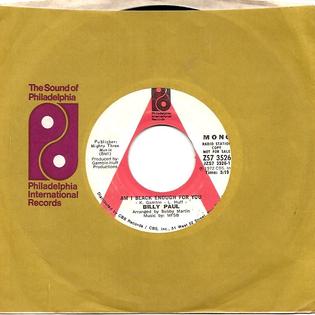
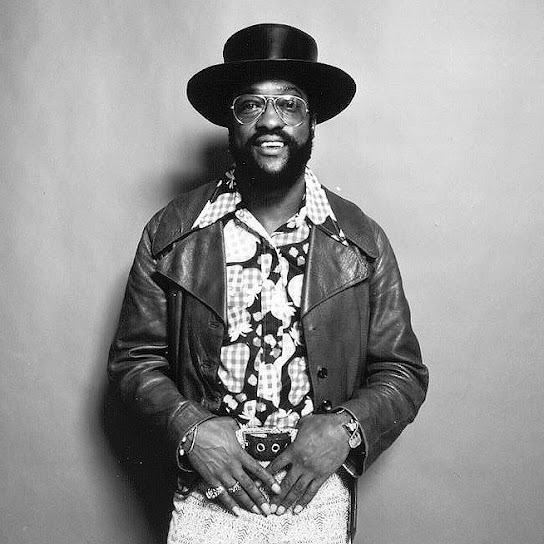
But it’s Wyman though who steals the show here. He’s on a whole other level of playing, conjuring up his greatest fret-spanning bassline on the back of a particularly funky seam of notes that Billy Preston, the Stones’ live keyboardist of the time, had pulled from the ether during rehearsals for some low-key Stones shows in 1977. Wyman aped Preston’s riff and out, it seemed, popped Miss You‘s elastic backbone. The bedrock of the record, yet, such is the way of the Stones, it’s neither credited to Wyman nor his source.

Every Rolling Stones’ track is a Jagger/Richards composition, regardless of how the song came to be. You could argue that Miss You‘s understated, tickled electric Wurlitzer piano track is pretty much indispensable to the record too, hearing the way it unobtrusively winds its way between Richards’ and Ronnie Woods tapestry of freeform guitars, but other than the small print on the credits of the song’s parent album (Some Girls), you’d never know this was the work of The Faces’ Ian McLagan. It would appear that playing on a Stones record is payment enough for anyone who finds themself in the studio with Mick ‘n Keef. And maybe for some it is. And maybe too, that’s why some key members have left through the years.


Cover Versions, Get This!, Hard-to-find

Born Skanky

Them targetted ads, man. You don’t get nuthin’ for free. While you’re scrolling obliviously through social media, Zuckerberg’s and Musk’s analytics monkeys are harvesting your data; your likes and dislikes, the length of time you interact with something, the speed you scroll past, whether or not you click a follow-on link. It’s happening right now as you read – or don’t read – this. It’s all fed into the system and the next thing y’know, your timeline is full of desirables. You knew that already though. Mention car insurance to your significant other and sure as 4th gear follows 3rd, you’ll start to notice car insurance ads on your socials. I was tasked with booking Taylor Swift tickets a month or so ago and almost immediately I was being bombarded with ads for ‘the last remaining’ hotel rooms in Edinburgh. Turns out they were too.

I’m a sucker for well-placed social media marketing. In fact, the moment an eye-catching ad makes itself known, my PayPal account will be engaged before I’m fully aware of what I’m doing. The past couple of months has seen me buy a cord ‘shacket’, trainers, a sweat shirt, a 7″ EP with 4 reggaefied versions of James Brown’s Night Train and (imminently) this…

Sokabe Keiichi & Inokasira RangersBorn Slippy

Yes! It’s a cover of Underworld’s relentless clattering techno thumper, used to great effect in Trainspotting and as such, the sound of 1996. You didn’t know you needed a cover of this, did you? Like all the best cover versions, it takes the original’s blueprint, throws it away and recasts the track in totally new light. This particular Born Slippy is slowed down, reworked and reborn as a laidback lilting rocksteady reggae cut from the sunbaked beaches of, eh, Tokyo-by-way-of-Kagawaken. It’s great, of course.

Off-beat organ, chicka-boom drums and scratch guitar, all reggae staples present and correct, but topped off with Keiichi Sokabe’s amazingly cod-Anglified vocals. “She was a lipstick boy, she was a beautiful boyLet your feelings slip, boy, but never your mask, boyLook at me, mum, squatting pissed in a tube hole on the Tottenham Court RoadLager, lager, lager, shouting…” There’s a great wee slide guitar part that wheezes itself off and out in to the ether to introduce the “She smiled at you, booooy!” line, the Edge recast as a dreadlocked Japanese roots rocker. Listen out for it.

Turns out this was a track first released in 2017. The internet being the massive pool of never-ending music it is means that it may well have passed you by in the ensuing 6 years since. Luckily for all, Parktone Japan has just reissued it on 7″. It’s limited, so be quick.

In his day job, Keiichi Sokabe is vocalist in cult Japanese act Sunny Day Service, a band that’s never far from a 12 string jangle or well-worked harmony, and nothing like the track above. It turns out it’s the Inokasira Rangers who are the skank heads here. Back in 2016, the 4-piece ‘Rangers dispensed with a vocalist to play fantastic instrumental versions of the punk/new wave catalogue as authentic as The Upsetters at Black Ark with Lee Perry at the controls. The tracks coulda been straight out of 1972 or 2022, such is the Japanese approach to authenticity. A curio perhaps, but one worth further investigation. Want to hear Geno or Neat Neat Neat or What Do I Get? given similar treatment to Born Slippy above? Of course you do. The internet is your friend…


Gone but not forgotten

pUNk’s DeAd

You can hear sound in pictures, can’t you? The slick, spitting whoosh of a car’s tyres on a wet road, the rush of wind in the ears as a hawk circles the sky. I can hear sound and music when I look at art. A far-off accordion on a Parisian arrondissement when I look at Van Gogh’s Starry Night. The gentle chirping, breezy sound of the Italian countryside in the background of the Mona Lisa. Low level muttered chatter, barely audible, when studying Hopper’s Nighthawks. Even if the current Banksy exhibition in Glasgow wasn’t soundtracked by background beats, I’d expect to hear fragmented hip hop, cut-up DJ Shadow-type rhythms as I observed Banksy’s highly intelligent mish-mash of politically-charged street art.

Jamie Reid’s art that went hand in hand with punk screams loudly at you. Ransom notes cut out from newspapers, laid off line with no regard for placement of capital letters was the perfect encapsulation of a scene at odds with the conventions of society. The ultimate statement – sticking a safety pin through the top lip of the Queen during Jubilee year – was perhaps his – and punk’s – defining moment.

If you’ve never heard a Sex Pistols’ record, I can imagine that Jamie Reid’s art tells you all you need to know about the noise that’ll fly off the grooves. Loud, in your face, unconventional, provocative, new, exciting…all these things relate to both the Pistols’ output and the artwork that it came wrapped in.

Sex PistolsGod Save The Queen

Other artists and labels have formed perfect marriages of visual to audio – the Factory Records catalogue, that run of unmatchable Smiths singles, Vaughan Oliver’s metaphorical interpretations of Pixies’ unholy racket, but without Jamie Reid’s redefining of what sleeve art could be, these bands’ and labels’ releases might have looked very different. Other than Prog, which had Hypgnosis and Roger Dean creating grand, sweeping and highly stylised visions of far-off lands and fantastical creatures that mirrored the widescreen and grandiose ideas of the music within, much music up until punk came wrapped in company sleeves or bog-standard band photos. I’m not sure, pre punk, bands had such things as logos. No band since punk would be seen without one.

With Malcolm McLaren dead and, more recently, Vivienne Westwood, Jamie Reid’s death has seen the end of punk’s holy triumvirate, its trio of agitators and prrrovocateurs now gone forever. Their art, their style, their influence lives on. No future? I don’t think so.


Cover Versions, Dylanish, Gone but not forgotten, Live!

Everyone Wants A Pop Star But I Am A Protest Singer

I feel that having a No. 1 record derailed my career. It seems to me that being a pop star is almost like being in a type of prison. You have to be a good girl. The media was making me out to be crazy because I wasn’t acting like a pop star was supposed to act.

My tearing the photo put me back on the right track.”

I thought about not posting this. There’s been a flood of Sinéad O’Connor posts since the middle of last week, and the internet probably doesn’t need another one. But her sudden death had me scrambling back to Rememberings, her fascinating and brilliantly-written autobiography, and, by association, to some of her greatest music; the time-stopping Thank You For Hearing Me, the Thatcher-baiting Black Boys On Mopeds, the dubby majesty of her collaboration with Jah Wobble on Visions Of You. Social media threw up many others – deep cuts, as they say nowadays – that shone new light on under-appreciated songs sung by an under-appreciated artist. Morrissey, so often the bigmouth who strikes again, seemingly got it right with the statement he released the following day. I could have picked any of those tunes and pulled together a decent blog post, but the book had me scurrying around for unforgotten yet buried video footage that, coupled with Sinead’s written account of the events became the only thing worthy of my words.

As she notes in Rememberings, there were two Sinéad O’Connors. The almond-eyed suedehead who cried real-time tears in the video for her definitive version of Prince’s Nothing Compares 2 U and the one who came after that; the misunderstood protestor who fought a tough war against the wrongs of the world and was condemned to hell for it.

It’s 1992 and down near the Bowery, where New York’s Avenue A meets St Mark’s Place, O’Connor frequents a ‘juice bar’ and has befriended its Rasta owner. Over time they become close enough friends that the night before Sinéad will be filming for an appearance on Saturday Night Live, he confides in her that his life will end abruptly and soon. He’s been running guns and drugs, using school kids as mules and moved his young couriers into a rival’s patch. Sinéad is horrified. “The fucking treacherous bastard,” she seethes. She draws parallels with Pope John Paul II, a far more prominenent figurehead than her Rasta pal, but one who also appears to condone the abuse of children. She thinks back to Bob Geldof ripping the poster of John Travolta and Olivia Newton-John live on Top of the Pops when the Boomtown Rats finally topple their reign with Rat Trap, and how she has always intended carrying out the same act with her mother’s photo of the pope, a photo that’s hung in the family home since John Paul’s visit to Ireland in 1982.

“(The photo) represented lies and liars and abuse. The type of people who keep these things were devils like my mother. I never knew when or where I would destroy it, but destroy it I would when the right moment came.”

For her Saturday Night Live performance, she’s wearing a dress that once belonged to Sade. It hangs ladylike, “a dress for women to behave badly in.” She hasn’t told anyone, but she’s going to change the words to Bob Marley’s War, dropping some of the lines – taken from a United Nations speech given by Haile Selassie – and replacing them with some lines of her own.

It would be a declaration of war against child abuse. Because I’m pissed at Terry (her Rasta friend) for what he told me last night. I’m pissed he’s been using kids to run drugs. And I’m pissed he’s gonna be dead on Monday. I’m also pissed that I’ve been finding brief articles buried in the back pages of Irish newspapers about children being ravaged by priests but whose stories are not believed by the police or the bishops their parents report it to. So I’ve been thinking even more of destroying my mother’s photo of John Paul II.

And I decide tonight is the night. I bring the photo to the NBC studio and hide it in the dressing room. At the rehearsal, when I finish singing ‘War’, I hold up a photo of a Brazilian street kid who was killed by cops. I ask the cameraman to zoom in on the photo during the actual show. I don’t tell him what I have in mind for later on. Everyone’s happy. A dead child far away is no one’s problem.”

Maybe now you can appreciate what was firing through her mind in the run up to the show. Clever and calculated and willfully confrontational, this wasn’t a spontaneous act. This was years of built-up rage – rage at the Catholic church, at her own mother, at authority who ignored the cold truth – and she was using her status to highlight it.

I know if I do this there’ll be war. But I don’t care.”

Afterwards: “Total stunned silence in the audience. And when I walk backstage, literally not a human being is in sight. All doors have closed. Everyone has vanished. Including my own manager, who locks himself in his room for three days and unplugs his phone. Everyone wants a pop star, see? But I am a protest singer.”

Two weeks later, Sinéad is booked to appear at New York’s Madison Square Garden, just one singer in a dazzling array of stars who will be gathered to celebrate her hero Bob Dylan’s 30 years in music. This time, she’s wearing a dress that she hates (‘bouffant, shoulder pads, Dynasty…I look ridiculous and underweight.‘) Introduced by Kris Kristofferson, the crowd turns an ugly shade of redneck, booing her from the moment her name is announced.

I actually think it’s the outfit, because in my excitement at being part of the show, I’ve forgotten about the pope-photo incident on SNL.

Then the other half of the audience begins cheering to fight off the booers. And there ensues a noise the likes of which I have never heard and can’t describe other than to say it’s like a thunderclap that never ends. The loudest noise I’ve ever heard. Like a sonic riot, as if the sky is ripping apart. It makes me feel nauseous and almost bursts my eardrums. And for a minute or two I’m not sure the audience members aren’t going to actually riot. They’re clashing so badly already with their voices. How do I know what else might happen?

She’d planned to sing an arrangement of Dylan’s I Believe In You – a song that means the world to her and on more than one occasion, her band (assorted Booker T/MGs) attempts to strike up the opening notes and lead her into it, but the ferocity of the ugly crowd in front of her has forced Sinéad to stare them out defiantly instead, arms by her side, doe eyes blinking into the vast arena, a waif-like David against the ugly Goliath of the Garden masses.

I look at Booker T’s beautiful face. He’s mouthing the words ‘Sing the song’, but I don’t. I pace awhile onstage. I realise that if I start the song, I’m fucked, because the vocal is so whispered, both sides of the audience’s battle are going to drown me out. And I can’t afford not to be heard; the booers will take it as victory.

Kris Kristofferson arrives by her side. He’s been told to get her off the stage, but looking at the film of it, you wouldn’t know. “I don’t need a man to rescue me, thanks.” As he returns empty handed, Sinéad gets her instruction instead from God. With her voice wavering then settling into something strong and powerful, she yanks out her in-ear monitors and rages once again – “the biggest rage I can muster“- into an aggressive and impassioned version of War, emphasising her own fingerpointing lines about child abuse.

She leaves, only after the briefest of defiant, eyeballing glances at the audience, her sharp exit a metaphor for what would follow, Stateside at least. It’s an astonishing, powerful, uncomfortable event, captured forever on this outtake from the official film of the concert. Outtake? There was no way this was going on the official release.

Afterwards, her father (he’d been in the audience) suggests she rethink her career prospects as she’s just destroyed the one she has. And she feels let down by Dylan. It should have been him, not Kristofferson, she reasons, who came out and told the audience to let her sing. So she gives Bob the evil eye as he sits in the wings. Bob stares back, baffled and handsome. Sinéad calls it ‘the weirdest thirty seconds of my life.’ Quite the claim in a life packed with incidents and accidents, rage and regret.

Now go and read the book. It’s fantastic.

Sinéad O’Connor. A true one-off.

Cover Versions, demo, Gone but not forgotten

Moz ‘n Rockers

The Hand The Rocks The Cradle was the first track Morrissey and Marr composed together, not long after Johnny “with my hair like a loaf of French bread” knocked on Morrissey’s door and suggested they try and write some songs. What the legend doesn’t say is that Johnny was accompanied by a pal to keep him company on his walk across Stretford, but three’s a crowd in romantic stories, and so Johnny’s pal was quickly written out of the fairy tale.

Anyway.

Johnny presented Morrissey with a looping instrumental motif with shaky origins in Patti Smith’s Kimberly and the singer surprised the guitarist by producing a set of fully formed lyrics and mumbling quietly to himself while the mercurial Marr sketched out the basis of what would become one of the key tracks on The Smiths’ debut album, still a twinkle in its fathers’ eyes and a good 17 months from its February ’84 release. Those words of Morrissey’s had been written a couple of years previously, biding their time until fate intervened and a delighted Morrissey twisted his initial melody to fit Johnny’s guitar part – a move that would prove to be something of a feature throughout The Smiths.

The version of the track which closes the first side of that debut album sparkles with woven multilayers of spring rain guitar and overdubbed acoustics, the track chrome-polished, light and airy and at odds with the heaviness of the lyric. The version you really want to hear though is this early John Porter mix from October 1983.

The SmithsThe Hand The Rocks The Cradle (John Porter monitor mix, 1983)

It’s dense and atmospheric, Marr’s 12 string Rickenbacker rarely straying from the 5th fret, his arpeggiated A chord and ringing open-strings splashing occasional light on the otherwise gothic ambience. Andy Rourke, playing foil on the bass guitar, has the space to move the root notes through the chords with typical melodic aplomb, playing his trademark hiccupping half notes between the beat yet keeping the groove steady and in time to Mike Joyce’s heavily reverbed snare drum. It takes real discipline to keep this up for nearly five minutes and resist the urge to break out a solo or rest for a bar to change the dynamics. On this track, the three musicians are locked in and playing tightly for one another, an early signpost of how great The Smiths would become.

The first thing you notice about the John Porter version above though is, unlike 99% of The Smiths’ catalogue, not the usual dazzling array of guitars but the voice. Lone and mournful yet confidently soulful, it’s the sound of Morrissey coming out of his shell with a sympathetic producer on coaxing duties. He’s great here, is Morrissey. There’s no chorus, no melodic hook, no repeated refrain, yet he draws you in, has you zooming in on those words he carefully sculpted as a teenage bedroom hermit, the group almost (almost) not mattering for the moment. Heavy on poetic cadence and alliteration – ‘a piano plays in an empty room‘, ‘ceiling shadows shimmy by‘, ‘tease, torment, tantalize‘ – the song’s title was the initial working name for the debut LP, dropped possibly only after the song’s message of protective fatherhood and adult/child relationship was open to skewed accusations of paedophilia. All nonsense of course. Much has been said of Morrissey in recent times, but not even he is capable of such horrific ideas.

*Bonus Track

Sinead O’ConnorThe Hand The Rocks The Cradle (venue, date unknown)

As this piece went to (cough) press, the death of Sinead O’Connor began to filter through. In the aftermath of The Smiths, Rourke and Joyce provided Sinead with a rhythm section for a handful of shows, where they played a nice arrangement of The Hand The Rocks The Cradle in the encores, closing the show with Sinead’s favourite Smiths track. Typically, I can’t track down a version with Rourke and Joyce backing Sinead, but I did find this solo version, Sinead playing straightforward open chords to give the whole thing the feel of some ancient Irish folk song, something I imagine The Smiths, with strong familial roots in Ireland, would approve of.

Cover Versions, Live!

McAlooney Tunes

Interview with Martin McAloon, 14th July 2023

The birds aren’t too loud for you, are they?Martin McAloon, bass guitarist in Prefab Sprout and brother of Paddy, the band’s lauded writer and leader, is sitting in his garden pondering the notion of taking the Prefab Sprout catalogue the length and breadth of the UK in a one-man tour.

It’s nice out here. It’s peaceful. Gives me time to think. To ponder and contemplate. Like, what am I doing? Whose mad idea was it to take these songs – great, great songs with complex chords and clever arrangements and present them in a one-man acoustic show? I said to my brother, ‘I’m thinking of going on tour with our songs.’ And he said, ‘…but who’s going to sing them?’ ‘Well, I am!’, I said…I’ve got big balls, y’see.”

Those cojones are needed. Since Prefab Sprout ceased touring 23 years ago due to Paddy’s ongoing battles with Ménière’s disease – an incurable illness that has left him with vertigo, constant tinnitus and loss of hearing, the Sprout catalogue has lain pretty much untouched. Loved by many but boxed up and out of the limelight, it was destined to play only via the grooves of the records and never again in front of an audience. Ever since a burst of spontaneity at a friend’s art gallery in Hexham though, where Martin played a couple of Prefabs’ songs on an acoustic guitar, he’s had the burning itch to pack his van – “I’m great at logistics and I’m my own road crew!” – and get back out there and play the songs once more. Songs that many fans thought they might never hear performed live again will now be given an unexpected but very welcome reprise.

“I haven’t played live since 2000. Back then I was merely the bass player and had very little in the way of concerns. Keeping an eye on Neil the drummer’s foot pedal was about the height of it. Making sure the shirt I was wearing was clean. But now it’s completely different. I’ve never been in the spotlight before.

No one really knows that I play guitar, but that’s how I learnt all the songs in the first place. Paddy would present them to us fully formed. He’d be away, working in the garage and eventually come back with a new song. The first thing I’d do would be to sit there and watch his hands. I’d then copy what he was playing on an acoustic guitar, giving him a foil to go off and do solos or work on harmonies. They were usually all awkward chords. And we didn’t know the names of them. We just knew what they looked like. Even to this day, I know chords due to their shape rather than their name.

I don’t listen to our records. I don’t need to. I’ve got all the root material lodged in my brain. When I want to hear the songs, I don’t need to stick on a Prefab Sprout album – they play in my head, sounding exactly as they were when Paddy showed me them in the garage all those years ago. I started playing guitar in 1969 when I was seven and Paddy started writing songs shortly after that. I’ve been playing those songs ever since. That’s really all I’ve known. While people were learning Jimmy Page chops on the guitar, I was learning Paddy’s Prefab Sprout songs.”

Prefab SproutWhen Love Breaks Down

“It was the time of Fairlights and synths and the Pet Shop Boys and what have ye…”

“There are a lot of songs to go through and you can never second guess the audience. There’ll be the obvious ones that I’m expected to play and there’ll maybe be one or two unexpected additions. There might be songs that people don’t like. Those that grew up on Swoon perhaps don’t like the later records so much. Steve McQueen fans are particularly keen on the first side of that record, but I like playing Blueberry Pies. It’s buried away on the second side and perhaps doesn’t get the attention it deserves, yet it’s one of my favourite lyrical and musical compositions. Underneath the structure of the lush production lies a really great song. They’re all really great songs though. And with 10 albums to pick from, there’ll be people coming to the shows who’ll be hoping for some of the more underrepresented ones.

To gauge reaction, I’ve played a few songs for friends in my rehearsal studio. The effect these songs have had on people’s lives – it’s quite shocking to see their reactions. They can’t quite grasp it, in a way. It’s amazing, the thrill you get being the catalyst that transports people back to a time and place. I can’t wait to get out there to the venues and have that same effect on a larger audience.

It’s not like I’m scrambling around for material to pad out my show. I’ve rehearsed probably 50 songs for a 25-song set, so I’m still in discussions with myself over which of them to leave out. I keep changing my mind. It’s a nice dilemma to have. It’s like being the manager of a football team and trying to pick the starting eleven, knowing there’ll be players left disappointed on the bench. If you don’t give them a run out, they’ll eventually fall out with you. I can imagine the set being quite changeable as the tour progresses.”

Prefab SproutCars And Girls

Hey Bruce, there’s more to life than cars ‘n girls

“It’s all I think about, this tour. It’s in my head every day as soon as I wake up. Setlists. Additions. Changes. New things to try. A song I might have discounted yesterday will appear again today and I’ll need to add it in. Then I’ll think, ‘Could I do it like that? The best version of If You Don’t Love Me is not our version, it’s Kylie’s cover. She turned it into a great, sparse piano and vocal version and that’s the way I’ll be doing it. If she fancies turning up at some point on the tour, she could jump right in and sing it.”

KylieIf You Don’t Love Me

“Songs I never thought I’d be interested in playing – things that I’ve vowed I’d never play – I’ve started to imagine them played differently and then I think, ‘That’ll be great in the set.’ Could I do a waltz version of Johnny Johnny? I’m certainly tempted to try it. Maybe I’ll keep that for the next tour.”

Martin McAloon’s tour begins in Irvine on 28th July. Check feliksculpa.com for details.