Alternative Version, Gone but not forgotten, Hard-to-find, Live!, Sampled

Introducing The Band

A few months ago I posted about the burst of classical music that The Smiths used to signify they were taking the stage. Walk-on music, when used as effectively as The Smiths did it, is an integral part of the live experience. Those in front of the stage have their senses heightened…quicksilver adrenaline courses through the collective mass… eagerness is fit to burst and, as one, they peak when their heroes take the stage. In the article linked above, Mike Joyce talks about the prickling of the hairs on his arms as Sergei Prokofiev’s music reaches its climax and the group emerge from the shadows and onto the stage. Intro music is pure theatre and high drama, powerful in its effect for audience and band alike.

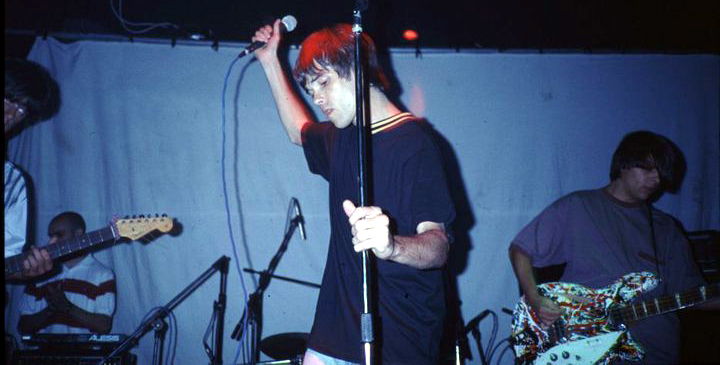
The recent death of Mani had me revisiting the Stone Roses catalogue and reminiscing about the Stone Roses gigs I’d been at. I say gigs, but Stone Roses shows were more of an event than a mere gig. The minute the group began to pick up traction, they eschewed the usual circuit of venues and instead put on ambitious landmark concerts.

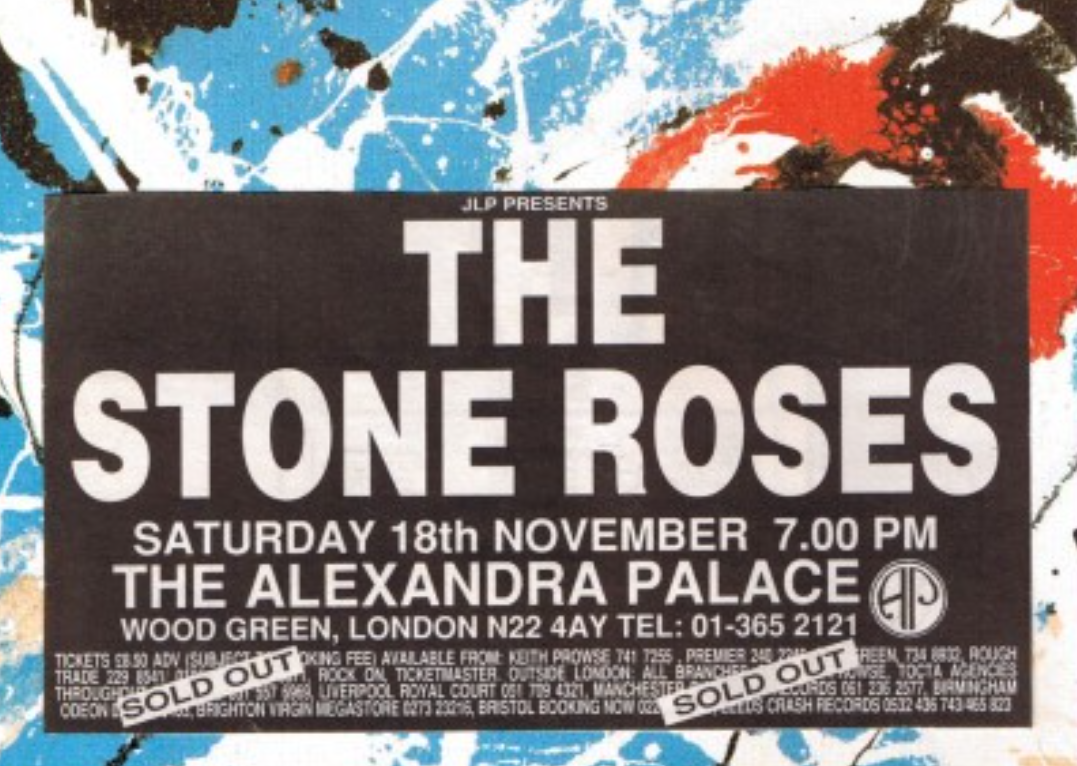
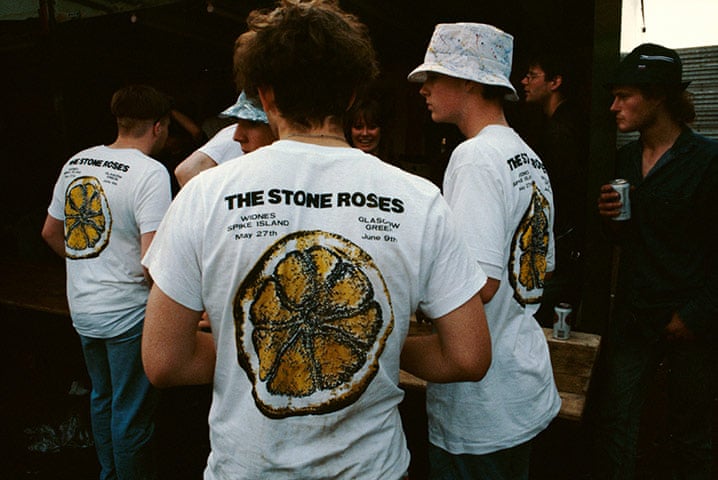
In the space of five rapid months in 1989, Stone Roses went from Glasgow Rooftops (above) – part of the touring circuit for bands of a certain size – to the Blackpool Tower Ballroom to a November show for 7000 rockers and ravers in London’s Alexandra Palace, at the time known as the broadcasting birthplace of the BBC and scene of some of those trippy 24-hour Pink Floyd and Soft Machine ‘happenings’ of the late ’60s, but certainly not the usual venue any bands might think to try and fill. Nowadays of course, any two-bit act with a bit of a following can add a date or two in the airy north London glasshouse, but in 1989 the Stone Roses’ choice of venue was genuinely inspired.

Fast forward another six months and the group would set up stall on Spike Island, a windswept and chemically-polluted estuary of the Mersey. Two months later they’d play their final show (for then, anyway) in a huge tent on Glasgow Green, 10,000 rockers, ravers and by now bucket-hatted bampots witnessing the band at the peak of their powers. The travelling tent idea is also now fairly standard practice for bands of a certain size these days. (Spike Island less so.)

As the band’s popularity grew, they went from the standard idea of support act plus half an hour of playlisted music to an actual rave culture-inspired show, the group just one element of a spectacle that would involve guest DJs dropping crashing house beats and hip hop on the P.A., lasers and strobes on the lighting rig, mass E communion in the audience and generally good vibes all round. These shows were a million miles from watching Gaye Bykers On Acid from a cider-soaked corner of Glasgow Tech or the Wedding Present at the QMU or any other touring guitar band of the era you care to mention. Yes, even you, Primal Scream. In 1989, Bobby was still looking for the key that would start up their particular bandwagon. (It was somewhere down the back of his Guns ‘n Roses leather trousers, I’m led to believe.)

All of those shows mentioned above (I was at three of them) began with I Wanna Be Adored. Since writing the song, or at least since the release of that debut album, has there ever been a Stone Roses show that didn’t start with it? I don’t think so. I Wanna Be Adored is, in its own way, a senses-heightener, a quicksilver surge of electricity, an early peak in a set full of peaks, but in the live arena, it too would come rumbling from out of the corners, fading in as an intro tape heralded the group’s imminent arrival.

Stone Roses intro music:

I’ve spent 35 years convinced that this music was made by the Stone Roses themselves, an abstract piece of art thrown away in the same vein as those backwards experiments they put onto b-sides, played for fun, recorded then used sparingly but appropriately. Certainly, the thunking, woody bassline is pure Mani. The hip-hop beat pure Reni. The sirens a clear extension of John Squire’s clarion call at the start of Elephant Stone.

Hearing this from Ally Pally’s carpeted floor minutes after Sympathy For The Devil is still strong in the memory. Hearing it again in the sweat-raining big top on Glasgow Green, many there unaware that this was not mere incidental rave music but Stone Roses’ call to arms (but we knew, oh yes, we knew, and excitement was immediately at fever pitch) still provokes a conditioned response in 2025.

It wasn’t made by Stone Roses though. Turns out it’s a piece of obscure-ish hip hop from 1987, looped, tweaked and added to by the Stone Roses team. The original – Small Time Hustler by The Dismasters – is immediately recognisable from that Stone Roses intro. Really, all the Stone Roses did was stick a few sirens on top of it…but combine that with Ally Pally’s echoing rave whistles and Glasgow Green’s surge of euphoria and it makes for high drama.

I wonder how many folk knew – truly knew – the source of that Stone Roses intro tape back in 1989?

Gone but not forgotten, Sampled

Trouble Funk

Isaac Hayes created plenty of great music. The Black Moses album…Ike’s Rap…his reinterpretations of By The Time I Get To Phoenix and Never Can Say Goodbye to name just some, but his signature tune is undeniably Theme From Shaft, 1971’s hi-hat ‘n high groove exercise in funk. Damn right it is.

It’s generally accepted too that Curtis Mayfield’s Superfly is one of his greatest albums. A groovy stew of stabbing brass, skulking street panther bass and wah-soaked guitar lines that add musicality and danceability to hard-hitting socio-political lyrics, it followed hot on the strutting cuban heels of Shaft and reset the bar for musicians soundtracking films.

And then came Marvin Gaye.

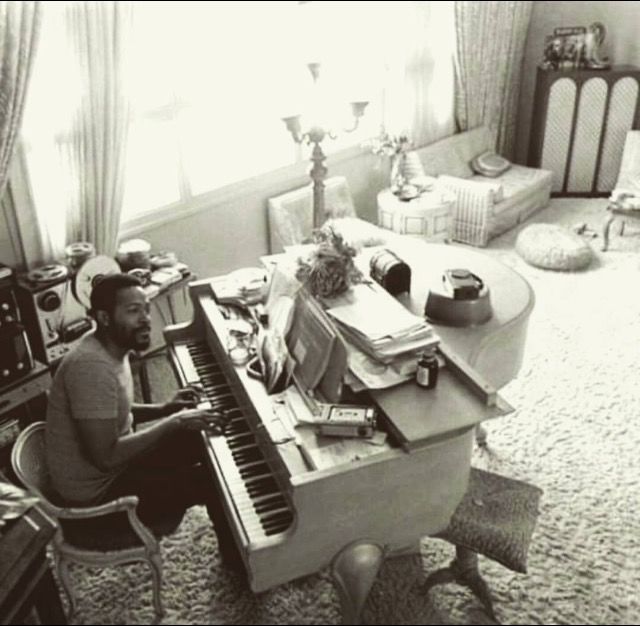
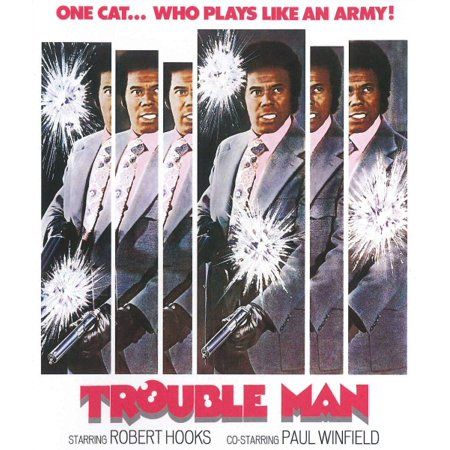
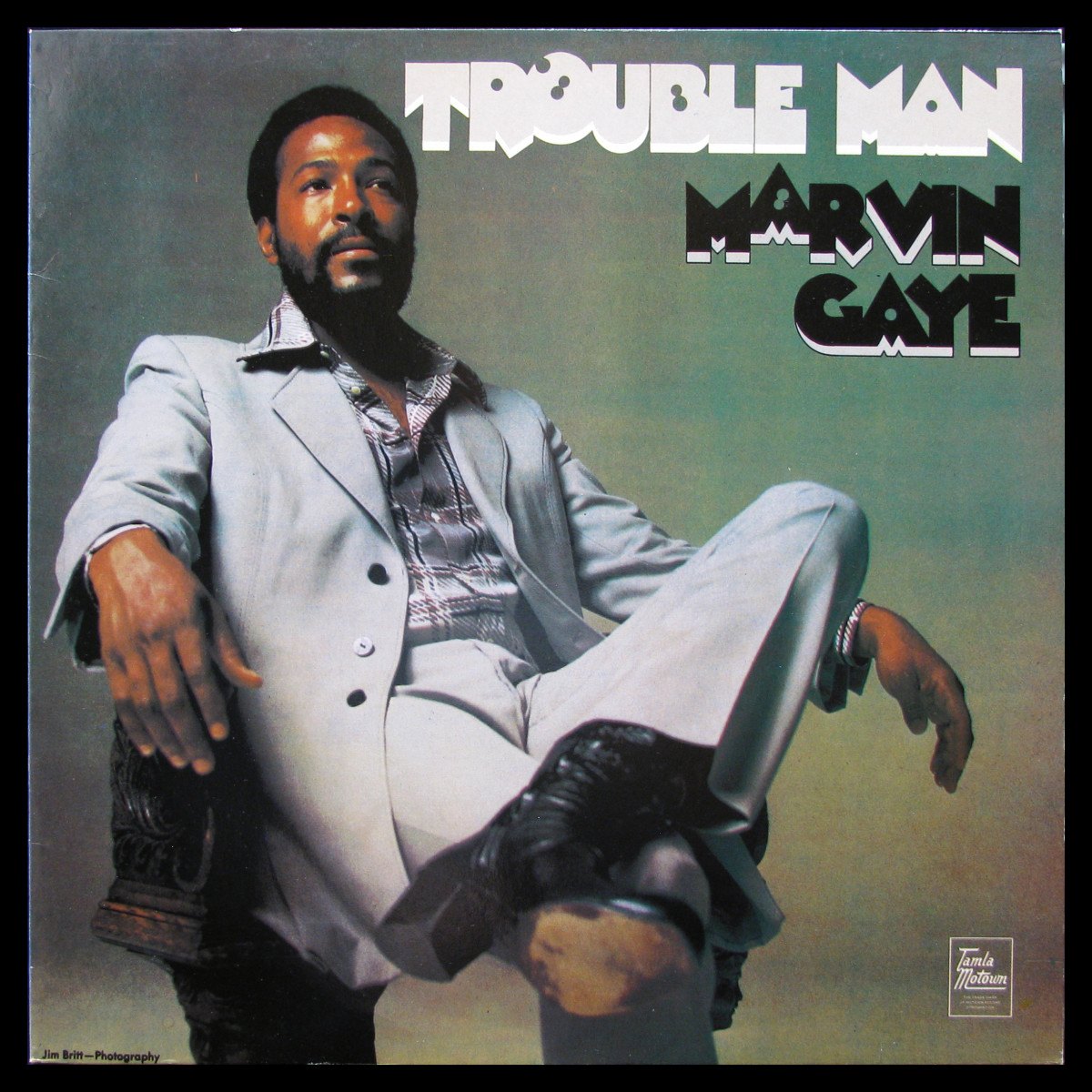
Emerging from the success of What’s Going On, with credit in the bank and a new Motown contract offering him complete editorial control over his work, he was offered the opportunity of scoring blaxploitation flick Trouble Man. The producers had been quick to spot the pros of hitching a movie’s soundtrack to a respected musician and Marvin was equally as excited at the prospect of making exactly the sort of record he wanted to make.

His score for Trouble Man not only builds on his contemporaries’ fantastical funk ‘n soul infused soundtrack work, it also has its own personality, veering left to take itself down interesting roads in jazz-inflected atmospherics. Gaye, with his new-found artistic control, hired the Funk Brothers, Motown’s in-house band and augmented them with the cream of L.A.’s jazz scene. The result was a jigsawing of slick soul guitar riffing and solid ‘n steady on-the-one basslines to whip-smart polyrhythmic drums, nerve jangling piano and rasping brass. Underscoring all of it is hotshot film score arranger Gene Page’s sublimely shimmering string lines. A soundtrack it may be, but it works well as an album in its own right.

Is it a soul album? A funk album? A jazz album? Yes, yes and yes. And, just as Isaac and Curtis had done before him, Marvin rewrites the rule book for scoring films in the 1970s. Would Bernard Herrmann’s exquisitely anxiety-inducing Taxi Driver score be just as jarring, just as dramatic without him having Trouble Man as a reference point? That’s debatable.

Trouble Man – movie trailer voiceover

Trouble Man (the title track) popped up on Guy Garvey’s 6 Music show a week or so ago and, like all the best music, had me replaying and reappraising it for more than a few days.

Marvin GayeTrouble Man

It’s a beauty, isn’t it?!

That drum sound! So crisp, so exact. That’s the sound of Stix Hooper (possibly not his real name). The whole track hangs on his airy dynamic clatter… that, and the ominous register of strings… and the clanging piano’s chords of doom…and the anticipatory brass…and ubiquitous vibraphone. And especially Marvin’s killer vocal. You know that cliche about singing the phonebook? Yeah, well Marvin could sing the entire contents of Berry Gordy’s Rolodex and you’d never tire of listening to him.

I come up hard, bay-bee, but now I’m cool
I didn’t make it, sugar, playin’ by the rules.

Marvin is double-tracked for much of the song, one vocal in low register, the other offering the high and floaty falsetto that adds lightness to the heaviness of the music. Coupled with the swing of the drums, it creates real finger clickin’ hipness in the verses and high drama in between.

The guitar – played by Ray Parker Jr – mirrors the piano line and grooves on a smooth and sliding repetitive E minor riff. Sure, young Ray could very probably break out a slick jazz break or an augmented chord progression without breaking so much as a bead of sweat, but he’s here to serve the song, not to kill it in unnecessary noodling fluff. He stays well within his lane and the song is better for it.

At the chord changes, muted trumpets get on board, creating tension and dissonance that mirror Marvin’s lyric.

There’s only three things, that’s for sure:
Taxes, death and trouble

The trumpets freeform through the heady stew. The strings ramp up the anticipation and the anxiety and then, just as release always follows tension, Marvin’s high and carefree ‘Ye-eah!‘ breaks the spell and we’re back to the groove.

The track swings on.

Marvin breaks into a proto rap:

I know some places
And I see some faces
I got good connections
They dig my directions
What people say, that’s okay
They don’t bother me.

Stix Hooper continues to do his own thing; a cymbal splash here, a snare fill there, a full kit paradiddle in the funky gaps. The strings and brass continue to induce anxiety. The vibes serve as an aural lightbulb moment, the ‘ah! everything’s ok again!’ moment. The bass playing slides up a notch. The whole thing grooves. Trouble never sounded so goddam danceable and airy and exciting.

And Marvin, cool, street-smart and determinedly ploughing his own unique furrow, brings it all back to a sweet-vocalised close. Astonishing music.


Gone but not forgotten, Sampled

Phrasing

Hey! You! Put aside the dog-eared copy of Absolute Beginners that you’re currently re-reading for the 5th (6th?) time. Lift the needle from the freely-spinning Cafe Bleu on the old Dansette. Brew yourself a fresh cappuccino, or even an espresso forte, and sit back and read this.

Jazz is America’s first music, a liberation from daily struggle, the artist given the freedom to play and sing however they choose. Those jazz cats used the music as a platform for cultural expression, whether that be Billie Holiday’s heart-stopping vocal on Strange Fruit or John Coltrane’s faith meditation on A Love Supreme, Miles Davis’s exotic inroads on the voodoo funk of Miles In The Sky or Louis Armstrong’s rasping love song to the Wonderful World he found himself living in. Oppression, worship, love, death…jazz is life itself. Folk that say they don’t like jazz just haven’t yet found the strand of the genre that will resonate with them.

Jazz, though? Soul – that’s obvious. Blues? That’s obvious too. But jazz? Why jazz?

Way back a hundred or so years ago, ‘jazz’ was a slang word used to describe liveliness and spirited behaviour; ‘She’s so jazz!’, ‘This dance is wildly jazz!’, ‘That baseball team is totally jazz!’ etc. So, in the time it took Louis Armstrong to parp out a trumpet triad, ‘this music is totally jazz!’ went from adjective to noun. Interestingly (or otherwise) the word ‘jazz’ itself originated from the word ‘jism’, in that if you were lively and spirited between the sheets with the person of your fancy, well…you know what tends to happen. So, the next time you hear the word ‘jazz’, ponder on that for a bit.

“Hey boy, bring me ma drink,” Hey boy, play me anutha toon,” “Hey boy, don’cha quit playin’ until you been told to quit playin’.” In the jazz clubs during the good old days of white supremacy and inherent, unfiltered racism (which could be either last century or last week), American black men took to calling one another ‘man’ – a required and regular reminder of respect between the oppressed that their fellow brother should be just as valid and just as valued as any other man in the place.

“Hey, man. You doin’ okay?”

Nowadays, folk like myself use the word without thinking of its true origins. It’s worth reflecting the next time you drop the word into conversation.

Those black me and women could trace their collective blood line back to slavery. Of the many thousands of Africans who were shipped to the Americas, the ethnicity of a large percentage of the people was rooted in the Wolof tribe. As with all indigenous people, the Wolofs kept their history alive through song, passing down stories and traditions from the elders through music and oral storytelling. Hence the phrase ‘folk music’.

The Wolof word for ‘music’ is ‘katt’, and it’s thought this is the origin of the phrase ‘jazz cat’.

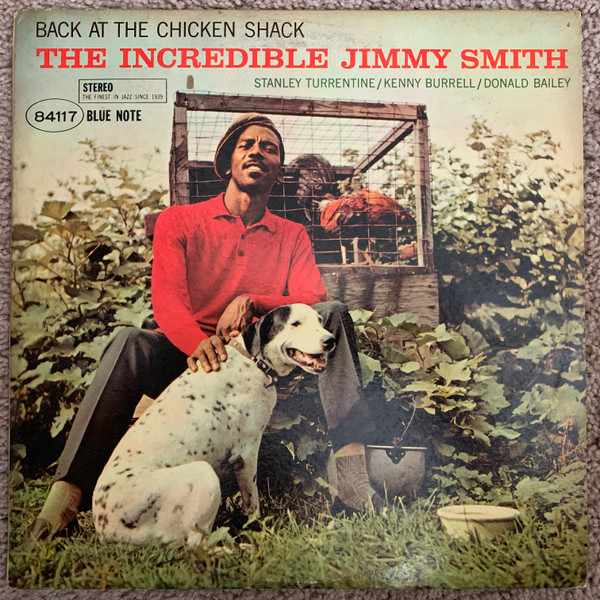
Me, I’m a fair weather jazz fan. My list of favourite jazz albums would look as obvious and lightweight as one you might find published in the arts section of the Guardian or in the near-the-back pages of Mojo. Miles…Coltrane…Nina… bore off, pretentious jazz wanker. With the sun blazing a hole in the sky and the last week of the summer holiday slowly fizzling to a close, it’s Jimmy Smith‘s Back At The Chicken Shack that’s been doing it for me these past few days.

Here’s something to ponder – why is it that the soul and blues players kept their Sunday name – James Brown, James Carr, but the jazz cats adopted the more street variation – Jimmy McGriff, Jimmy Smith?

Anyway. Jimmy Smith. He’s the link between jazz and soul, his shimmering and colossal Hammond organ sound driving his group with a grit and right-on funkiness that’s impossible to dislike. Like all the best jazzers, his group was fluid and ever changing, evolving its sound as each musician passed through on their way to wherever it was they were going.

Jimmy SmithBack At The Chicken Shack

On Back At The Chicken Shack‘s title track, Smith trades call and response organ phrases with the omnipresent Kenny Burrell on guitar and the ubiquitous Stanley Turrentine on tenor sax, his regular drummer Donald ‘Duck’ Bailey keeping the beat just on the right side of slow but progressive.

Burrell is all over the Blue Note catalogue, both as band leader and sideman, and his Gibson 400 CES ripples patterns of woody eloquence at every opportunity. On Back At The Chicken Shack he’s content to play understated augmented chords beneath Jimmy Smith’s expressive playing in the first and last sections, but in the middle, after his bandleader has given him the nod, he’s off and flying, fingers cleanly picking tight and taut melodies across the strings and frets with a speedy ease that’s both mesmerising (as a listener) and frustrating (as a hamfisted guitar player). His phrasing, the spaces he leaves between the notes, is perfect. Off-the-cuff-playing like this doesn’t come easy, as easy as it sounds.

Turrentine is no stranger to the Blue Note discography either and his forceful yet soothing sax playing swoops and soars in all the right places. The band falls in step behind him as he freeforms and riffs across the top of the steady groove being cooked up. If yr head ain’t nodding and yr foot ain’t tapping by this point, maybe you need to give your ears a wee clean out. Imagine hearing this live in a sweaty Village basement club, or even being spun by a hip DJ in the Flamingo in 1963, all the ace faces dancing in studied concentration. It’s enough to pop the buttons on yr tonic suit.

Back At The Chicken Shack – seek it out, man.

Gone but not forgotten, Sampled

Dub Club

Adam over at Bagging Area has long been a champion of things that bang and beat in interesting ways. He’s a particular standard bearer for Andrew Weatherall (and anything that bears his hallmark) and, thrillingly, he’s found himself falling into a role as co-curator of a Weatherall-inspired compilation album, Sounds From The Flightpath Estate Volume 1. Born from ‘wouldn’t it be great if…’ chat after a DJ slot at Todmorden’s Golden Lion, in a move that apes Weatherall’s own ‘fail we may, sail we must’ manifesto, the record – already sold out on pre-orders alone – is this week’s Compilation Of The Week on Lauren Laverne’s BBC 6 Music show. Based on that fact alone, the record must surely be fast-footing its way to a repress; the charts being what they are these days, time it nicely and the possibility of real chart action isn’t unlikely. What a thrill it must be to create something out of nothing, especially one that carries the inference of something further to come.

I’ll ‘Volume 1′ you, m’lad!

Let’s hear it for the instigators, agitators and originators of this fine new release. Virtual fist bumps all round.

This past week, coincidentally, sees four years since Andrew Weatherall’s passing and on the back of Adam and co’s album announcement, I’ve been scouring the forgotten b-sides of my old 12″ singles to eke out any of his remixes. That Petrol Emotion, Flowered Up, James and Sinead O’Connor all leapt up and out at the mere mention of his name, spinning themselves into the wee hours last weekend. All have been bent, buckled and battered out of all recognisable shape by Weatherall, not always for the better, if yr asking me, but they make for interesting and usually long-form listening – ideal in that post-midnight fug.

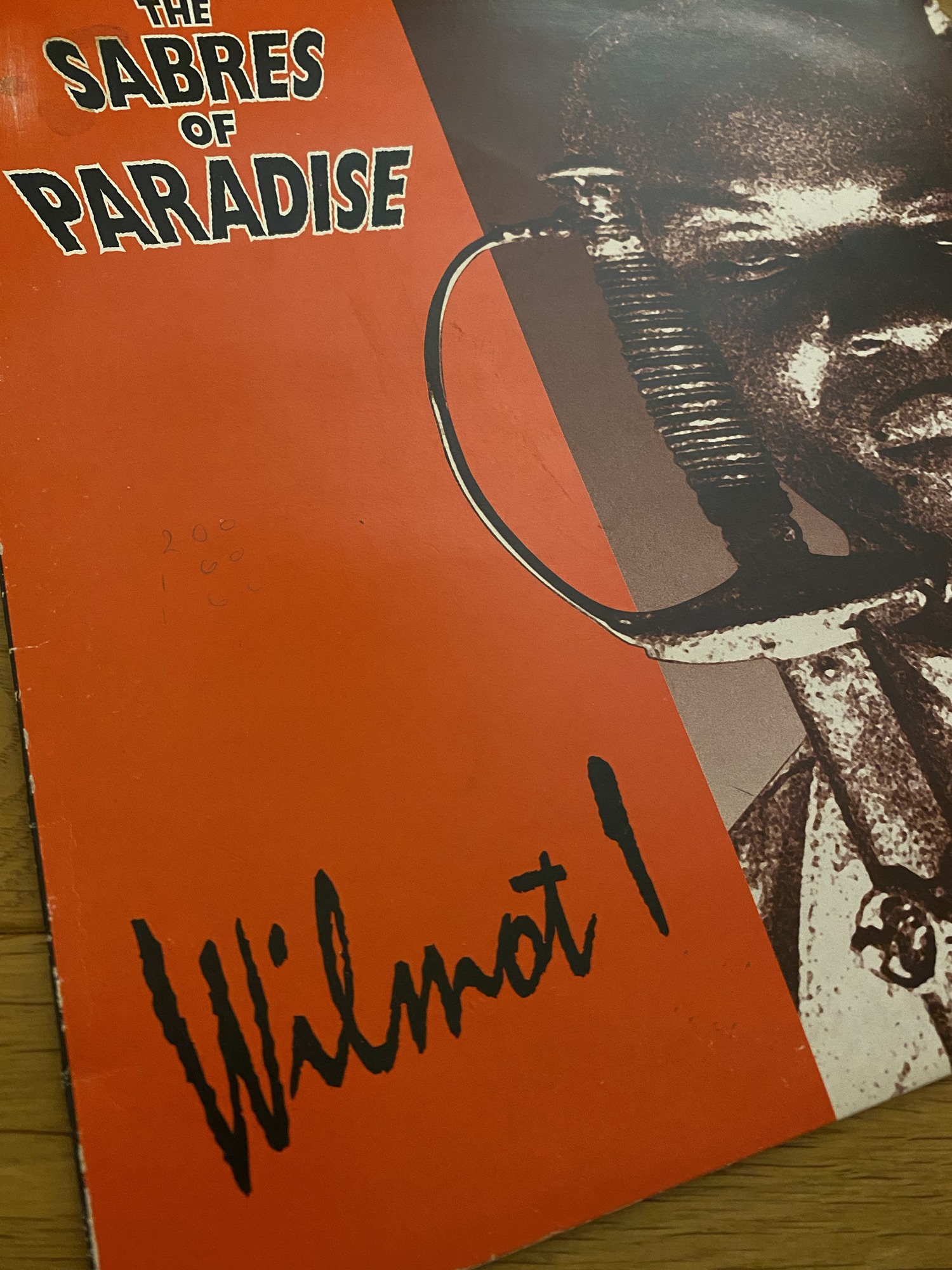
Weatherall’s own collective, Sabres Of Paradise crept up on me only after time. Other than the ubiquitous twin collossuses Theme and Smokebelch, the albums were lost on me as I gave myself over to the more popular/shallower end of ’90s music. I’d have heard Sabresonic from behind the Our Price counter, but I daresay it would have been shunted aside for the latest Suede release or Steps or something similar. Similarly Haunted Dancehall, with its striking open-razored cover and dark beats on the inside. Classics of course nowadays, but it took me a quarter of a century to appreciate that. Given that I absolutely loved Underworld’s Dubnobasswithmyheadman – and hindsight shows us that that record may well be the greatest album of the ’90s – I’m not sure how I never picked up on Sabres Of Paradise at the time, but there y’go. You can’t surf the zeitgeist all of the time. It’ll wear you out, man. Those folk that were into everything – absolutely everything – first? Bollocks they were.

Weatherall’s Sabres’ material, made with Jagz Kooner and Gary Burns, is often relentless, head-nodding, dub-infused techno, played at a slow and steady BPM. It can be claustrophobic and anxiety-inducing yet euphoric and rush-and-release magic within the same groove.

Sabres Of ParadiseWilmot

Wilmot builds itself around a 90-year-old horn sample from a crackly calypso record by the fantastically-named Wilmoth Houdini. Pitch-shifted down a gear or two, the horns allow space for all manner of wizardry to clash and clatter around it; skanking, off-beat guitars, filling-loosening Simonon-ish bass, electronic whooshes, big beats, high in the mix percussion, ech-ech-ech-ech-echoing refrains, trumpets heralding the arrival of the Great God Pan himself. If you’re sitting half-cut on your sofa at an hour way past your normal bedtime, it may just be the record you need to hear. I bet it’d sound great just sitting on the London underground, whizzing below the city with no idea where you are.

As you may already know, Fatboy Slim would later use the same sample on his Mighty Dub Katz Son Of Wilmot release. Given that record’s title, I’d wager that Norman Cook was possibly more familiar with the Sabres Of Paradise track than the ancient original that provided the hook for Weatherall and the other Sabres. But anyway…

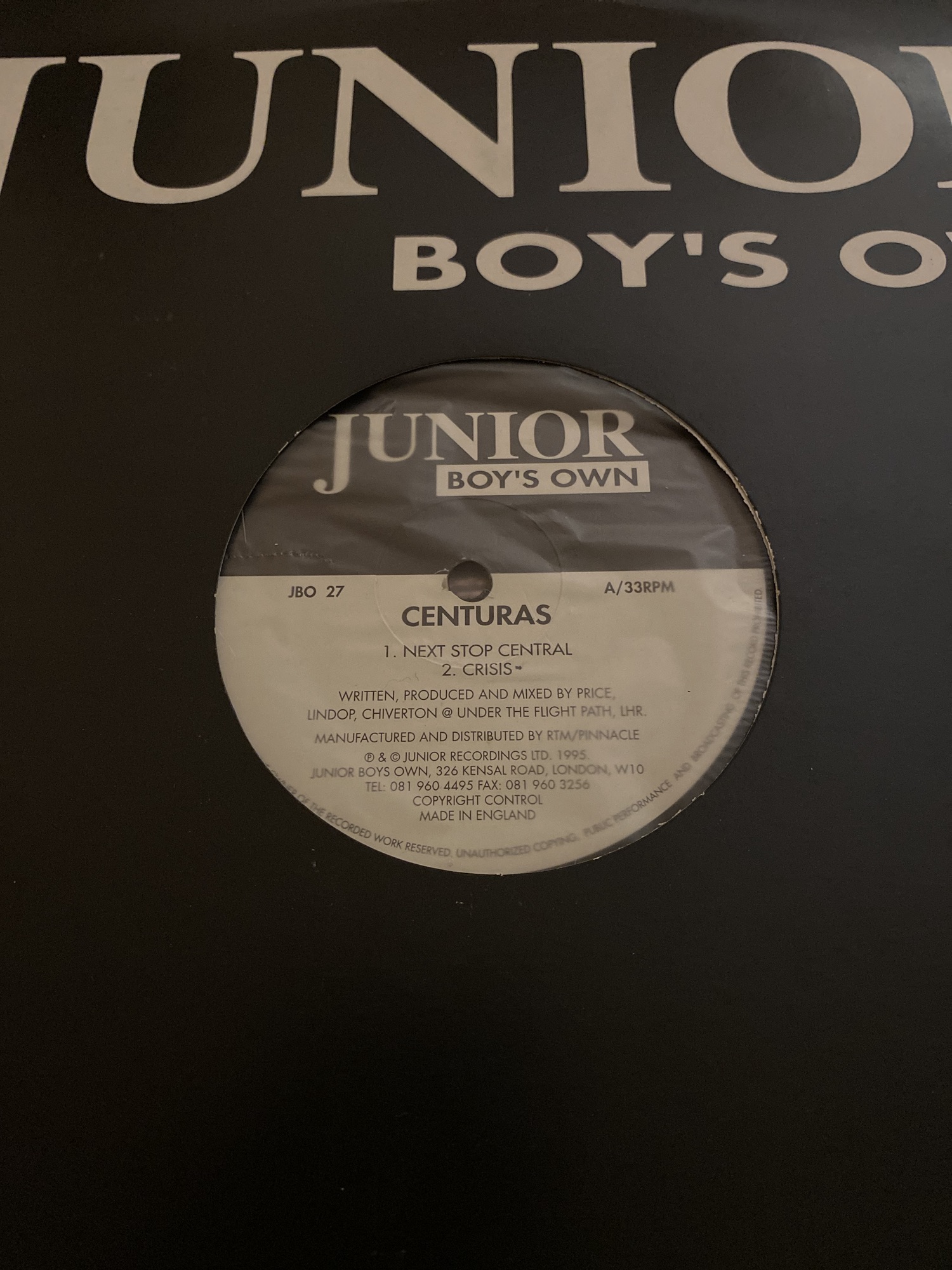
CenturasCrisis

Released on Junior Boys Own, Crisis by Centuras is Weatherall in spirit if not in presence. Another long-form, chopped up dub cut, Crisis is stretched out, messed up reggae. A squeaky keyboard elbows the warped electronics out to the margins, making way f-f-for another f-f-fan-faring horn sample. Similar yet different. Or exactly the same sample as above? Who can tell?  The beat rolls ever forward, propulsive yet glitchy. Figments of spliced vocal lines ghost in and out and a rhythm that brings to mind Primal Scream at their most creative…and Weatherall-affected carries it for 5 or so chin-stroking minutes.

It’s dance music, Jim, but I’d like t’see y’try.

Unexpectedly, I found this 12″ in a charity shop in Saltcoats. The track above is worth alone the 50p I risked on it. Re-sult, as the grate diggers refrain goes.

Gone but not forgotten, Hard-to-find, Sampled

A Week Of Saturday Nights

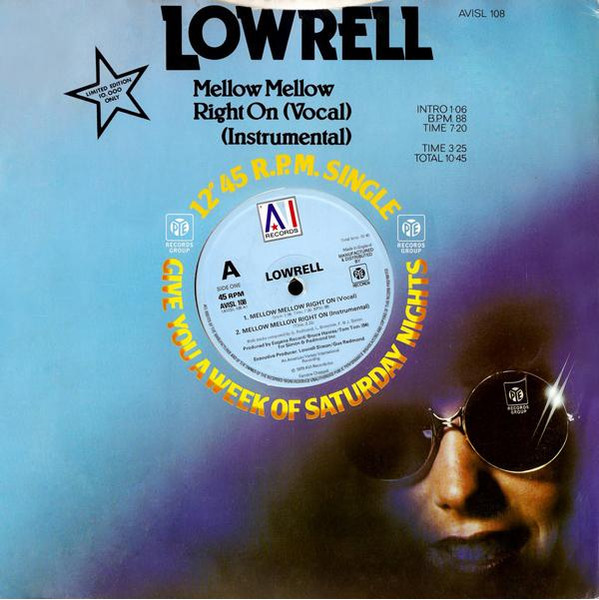
Lowrell Simon was a Chicago-based soul singer. After being in a succession of hopeful groups, slogging around on the circuit and briefly grazing the lower reaches of the US R&B charts, he was, by the mid ’70s, a staff writer at Curtom (Curtis Mayfield’s label) writing and producing soundtrack material of little consequence. Nothing truly spectacular really materialised from his writer’s pen until the end of the decade. By then, Lowrell was back recording as a solo artist, his experiences with Curtom better equipping him for the making of glossy, groove-driven soul music.

He struck gold with the very Mayfield-titled and timeless Mellow Mellow Right On.

Lowrell SimonMellow Mellow Right On

Anyone who’s heard Massive Attack’s Blue Lines – and that’s everyone here, right? – will recognise instantly its marching heartbeat of a bassline, used to great effect on that album’s Lately; stately, steady and never wavering, driving that track to its soulful and melancholic conclusion.

On the original, things are a bit more upbeat. That flare of unresolved strings at the start, all tension and no release, coupled with the wet slap of funk guitar and precise drum beat promises much and delivers exactly what you hope for. A choir pops up, “Mellow, mellow, right on!” they chant…and then Lowrell himself slopes in, all spoken word and chocolate-wrapped vocals – “Ladies, I’d like to take this time out just to say…”  his easy vocal easing up, out and into Marvin Gaye territory.

Behind him, his disciplined band never drops the beat. They groove and smoove their way through ten metronomic minutes and more of pure discofied funk, the sound of flapping trouser legs, jumbo-winged collars and powder blue suits, of oversized hair and oversized heels. In an era much maligned and swept aside by the snotty arrival of punk, Mellow Mellow Right On glistens like the studio lighting refracting from the mirrored lens of a pair of aviator shades and serves as a reminder that the best disco was just as valid as any other music. Fight me.

You’d get no argument on that front from Edwyn Collins. Scrolling through a Postcard Records group on Facebook recently, that old Mojo article (above) jumped right out at me, and not just because of EC’s unmatching shirt ‘n trousers combination.

Edwyn, forever on the money, whether it comes to guitars or clothes or hair, is once again correct in his assessment of Mellow Mellow Right On. Sung especially for the ladies and wrapped in a bad-ass but glossy production (the wee electronic shooms that fire off now and again, the oil slick thick guitar, the tease and timbre of the strings) – it’d be easy to imagine Dr Dre getting behind the desk to work his G-Funk magic with this as the bedrock.

I bet Edwyn’s still grooving to it now. I know I am.

Get This!, Live!, Sampled

Hidden In The Back Seat Of My Head

That triptyich of ’90s solo albums which spawned the rebirth of Paul Weller deserves to be looked at again. 1992’s self-titled debut was the result of the artist being given free reign to reinvent himself, with no great expectations from a record company (Go! Discs) simply keen to offer one of our greatest songwriters the platform on which to start afresh. By 1995’s Stanley Road, Weller had entered his third imperial phase; once again a regular botherer of the charts and the elder statesmen to whom the leading lights of the day looked for validation and support. The record in the middle, 1993’s Wild Wood, is perhaps the most interesting – and best – of those three releases.

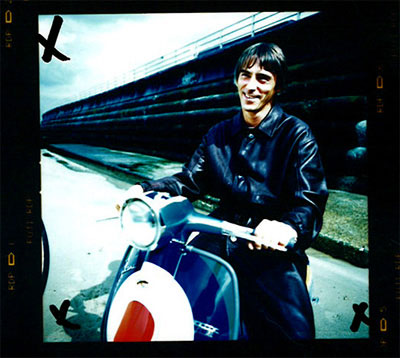
Having ‘done’ inner city angry young man and broadminded European mod, Weller looked to the English countryside for inspiration. Still unsure of who his ’90s audience was, the singer decamped to the Manor, a residential studio in the leafy Home Counties and, surrounded by trustworthy people and a handful of his favourite records, holed up to hang out, play, write and record the tracks that would become the Wild Wood album. The inner sleeve photos on the record suggest the perfect scenario for making a classic record; family and kids on the lawn, footballs, a grinning Weller astride a scooter, a home-from-home environment where inspiration flourished.

Much has been made of Weller’s listening habits during the making of the album, and the acoustic influence of Traffic and Nick Drake has oft been quoted as a source of influence, but I’d consider Wild Wood to be Weller’s Neil Young album. Loud in-the-mix acoustics ring throughout the record, attacked by Weller’s uncompromised strumming and finger picking. He might be playing a Martin, but he’s attacking it with all the fervour he normally reserves for his Casino. This is apparent on Foot Of The Mountain, its minor chord balladry giving way to an ebbing and flowing, sprawling and ragged electric outro, the rest of the band riding his coat tails for dear life. The Young influence is there too in Country‘s close-miked pastoral picking and whispered vocal. ‘Where only love can heal your heart,’ he sings, one eyebrow arched in a knowing nod to whiny old Neil as a woozy Mellotron adds a Fabbish, late sixties hue to the mix.

Wild Wood is an album that, augmented by subtle Hammond, delicate woodwind and thunking great gospel piano, showcases the best of Paul Weller. It’s there in the ferocious riffing of Sunflower and The Weaver‘s thrilling hammer-ons, the pastoral campfire soft shoe shuffle and two note dubby bass of the title track (it’s no wonder Portishead highlighted it as something to twist and turn and send into orbit), to the handclapping and roof-raising Can You Heal Us (Holy Man) and the jazz inflections of album closer Moon On Your Pyjamas.

My absolute favourite from the era though isn’t actually on the initial album release.

Paul WellerHung Up

As is his forever forward-thinking way, Weller had barely finished the record when he embarked upon another lap of writing. Too late for the album, Hung Up was released as a stand alone single. All the best bands, as you well know, release magnificent stand alone singles and Hung Up is undoubtedly Paul Weller’s addition to that list (even if, at some point, it was clunkily tacked on at the end of the record when Weller’s popularity began to soar.) It’s a fantastic single, Weller self-assured and riding in on a great chord sequence (C – Fm – Am – Fmaj7) before the band joins him on a chugging, descending Beatlesy progression, crisply distorted and fluidly played. The pace, the playing; perfection.

It’s the song’s bridge though that elevates the track from merely great to simply outstanding. It’s a real cracker, all loose piano and finger-squeezed guitar couplets – pure Small Faces mod-gospel with the vamping ghost of a PP Arnold-alike oozing in on the second line, her sky-surfing vocal lifting the track into orbit. Then we’re into the guitar solo. No fancy pants pedal boards here, it’s simply vintage guitar into vintage amp and the strangulation of a nimbly-rifled solo that’s halfway between Marriot (Steve) and May (Brian – really). And there’s still time for Steve White – there’s always time for Steve White – Wild Wood‘s secret, unsung hero to rattle seven shades of Gene Krupa from his kit with the mother of all drum fills, before it all ends with the singer and his acoustic guitar once again, wrung out, hung out and Hung Up in under three thrilling minutes.

*Bonus tracks!

Paul Weller Hung Up (Live at the BBC)

Lovely wee bit of studio chatter on this version.

Paul WellerWild Wood (Portishead Remix)

Pistol crack snare, clacking, clipped guitar, murky dub. The drunk wasp guitar riff is a beauty. Weller had some great remixes around this period and this is one of the best. Never ever outstays its welcome.


Get This!, Sampled

And They Catch Him And They Say He’s Mental

Spring-Heeled Jack was a Victorian character of folklore; a leaping, springing, impish and devilish figure with gentlemanly characteristics that might tear you in two with his clawed fingers or simply stare you half to death with his fireball-red eyes. He was able to leap high across the sooty rooftops of old London town and vanish quickly into the thick and murderous night. I’m sure he must pop up (and pop off again) in some Sherlock Holmes story or other, but I’m no Conan-Doyle expert. If he doesn’t, then that’s a perfect opportunity wasted, Arthur. It truly is.

Spring-Heeled Jim is a track off of Morrissey‘s last great solo record, Vauxhall And I. Still dressed in decent jeans and with great hair, Morrissey takes the idea of Spring-Heeled Jack and turns the Victorian villain into a post-War East End gangster – pwopah salt of the earf, loves his mother, makes sure old Mrs Jones’ milk and paper is on her doorstep each and every morning…you gotta look after one annuva, aintcha? The sort of a figure that’s part Ronnie and Reggie Kray and part Jack-the-lad, just don’t you dare cross him. I’m sure you get the idea.

MorrisseySpring-Heeled Jim

The track creeps in on a highly atmospheric guitar track, all stealth and menace and ominous foreboding. It rolls slowly and stately like a pea souper curling from the Thames, a mixture of high in the mix plucked acoustics and a wash of reverb and sustain that would probably be more at home in Kevin Shields’ home studio but in the surroundings of a Morrissey record sounds exotic and perfectly-placed as track two’s wrong-footing mood setter. There’s sampled film dialogue playing in the background and, just as you’re trying to place it (it’s very Morrissey), the chords change and Morrissey makes himself known.

Spring-Heeled Jim winks an eye

He’ll ‘do’… he’ll never be ‘done to’

He’ll take on whoever flew through

It’s the normal thing to do

There’s scene-setting and then there’s Scene-Setting and Spring-Heeled Jim sets out its – his – stall very clearly.

So many women his head should be spinning…Spring-Heeled Jim slurs the words…once always in for the kill, now it’s too cold.

He’s an old soak, is Jim. Happy to sit in his armchair, French brandy by his side, Daily Mirror lying open at the racing pages, ready to share his stories with his many visitors – he still demands respect, after all. He’s a one-time womaniser who’d cut you from ear to ear (from ‘ere to ‘ere) should you as much as look at his female companion, although that’s probably all for show anyway, as Morrissey has pegged him as a mixed-up individual with latent homosexual tendencies that just won’t cut it in the world Jim has chosen for himself. (That’s just my opinion, your honour.)

That film dialogue that runs through the track until the last, “…and they catch ‘im and they say ‘e’s mentuhl” is from We Are The Lambeth Boys, a late ’50s documentary that follows a gang of young south London teddy boys, aiming to disepl the myth that they’re violent and delinquent youths.

When the plummy, clipped accent of the presenter isn’t spoiling things, the Lambeth Boys ride in an open top truck singing “We are the Lambeth Boys!” and shouting “‘allo darlin’” at every female they pass. They sing cockney knees-up ditties. They go to the dancing and eye up the girls (or boys) on the opposite side. They sidle up to prospective partners and with a cool nod of the head, lead them on a quickstepping jitterbug around the floor of the dusty dancehall while Lonnie Donegan’s ‘putting on the agony, putting on the style‘ skiffles its way to its conclusion. They care very much about their hair and their two-piece suits and ties. They also smoke like the London of the industrial revolution. As far as social history documentaries go, it’s a must watch.

Give yourself 50 minutes and watch the full thing here. You’d love it.

It’s an obvious Morrissey go-to, We Are The Lambeth Boys. There’s the us-against-them gang mentality that he instilled in The Smiths and every other group he’s formed around him since. There’s the rock ‘n roll reference points. The haircuts. The clothes. The attitudes. The good-looking male protagonists. Any still from the film could have been a piece of Smiths cover art.I can’t emphasise just how essential a watch it is!

For being fiercely Mancunian, Morrissey seemed to form a special bond with London in the early ’90s. That train heaved on to Euston and before you knew it he was referencing Battersea and Bethnal Green, Arsenal and West Ham, East End boxing clubs, Piccadilly and Dagenham and Ronnie and Reggie and having his picture taken outside the Grave Maurice pub, a favourite watering hole of those same Krays. Creating characters that were so clearly unfluenced by and based upon the unsavoury players of old London was the natural conclusion to this, and Spring-Heeled Jim endures as one of Morrissey’s best tracks on one of his greatest albums.

Get This!, Sampled

Music, Make The People, Come Together

There’s a constant digging around here, an archaeological scraping and raiding of tombs, done purely for the purpose of highlighting the marginalised and forgotten, the nearly weres and never would bes that the decades have been less than kind to. Not for nothing is the tagline above ‘Outdated Music For Outdated People‘. You’ll be well aware of that if you’re a regular.

Sometimes, an old track comes flying back into the conscience, usually, although, as in this case, not always, on the back of radio play or an old film and you think, why continue to unearth the underheard when bangers – yes, bangers! – such as this exist.

Such is the case with Yarbrough & Peoples’ Don’t Stop The Music.

Yarbrough & Peoples – Don’t Stop The Music (12″ mix)

My ex-hospital radio station copy

From straight outta nowhere this afternoon, the track’s programmed electro bassline body popped its way into my head, slinky and sinuous, the half cousin of – sorry for this – Level 42’s Lessons In Love, but ten times as funky and a hundred times more listenable, despite the lack of human touch. It’s 43 years old and lost none of its mid-paced, head-nodding grooveability. Keyboards sizzle and fizz, hi hats hiss and clavinets play a top line that Stevie Wonder himself might’ve considered being on the verge of dangerously funky. Has Fatboy Slim sampled it yet? I can only assume he has – those keyboards have a total S.O.S. Band feel to them, and he’s sampled them, as well you know, although a quick Google proves inconclusive.

I can sing the refrain if y’like; monotoned white man doo-wop, flat and out of tune but entirely soulful and heartfelt. Dawn’t yew stap it, dawn’t yew stap, stap tha moozic. Even to rhythmically-challenged Ayrshiremen of a certain age, the track has an unputdownable swagger.

Formed in Dallas from the same musical sphere that birthed the Gap Band – the Fatboy sampled them too, Calvin Yarbrough and Alisa Peoples found ubiquity with the track, its comically sped-up backing vocals and gospelish refrain sending it to number one on the Billboard R&B chart for over a month. Remember when there were multiple charts? Remember charts at all? The duo’s story is one of church choirs and pick-up bands until one night in 1977 when Peoples joined Yarbrough’s band on stage for a number and the stars aligned to cast their magic.

Yarbrough & Peoples would continue as a duo for far longer than they were welcome, with ever-decreasing returns and increasingly shallow chart positions, but that’s almost irrelevant considering how timeless, how great their big hit single was. If you’re not still playing the track a week after you’ve read this, questions will be asked.

Cover Versions, Gone but not forgotten, Sampled

Travellin’…

at the speed of love.

That’s the stall-setting opening gambit on Fallin’, the unlikely yet inspired collaboration between De La Soul and Teenage Fanclub, a marriage made in heaven that was strictly at odds with the hell of the rap/rock crossover that soundtracked 1993’s Judgement Night movie. Amidst a hotchpotch of hideousness – Helmet & House Of Pain, Biohazard & Onyx, Slayer & Ice T – and the odd briefly inspired moment – Dinosaur Jnr & Del The Funky Homosapien’s choppy and groovy Missing Link, Sonic Youth & Cypress Hill’s dark and, er, dope hymn to smoking (I Love You Mary Jane), De La Soul’s daisy age hip hop beats melded with TFC’s Bellshill beat and created the album’s best track that, 30 years later (!!!) sounds fresher than ever.

With De La Soul being in the news this week on the back of the death of Dave Jolicoeur (Trugoy the Dove), I’ve taken to playing many of the group’s early sample-savvy singles and debut album at a decent volume. The track I keep returning to though is Fallin’. It’s been played at every available opportunity; in the car, doing the dishes, sorting the washing, brushing my teeth, boiling the kettle, texting my pals… it’s a real beauty of a track. Stick a microphone in front of me and I reckon I could bust out a pretty faithful recreation of the opening verse’s rap. But don’t. I’m a white guy from the west of Scotland and we’re not known for our flowability skills on the mic.

Teenage Fanclub & De La SoulFallin’

Teenage Fanclub are, as you are well aware, four white guys from the west of Scotland too and, while they wisely left the rapping to the masters of the art, they do contribute some soulful ‘doo-doo-do-do‘ adlibs in the background – possibly aping, or just plain stolen from Biz Markie or the Steve Miller Band, as you might spot later.

The track is built around a sample of Tom Petty’s Free Fallin’, a widescreen open road of a record, as American as truckstops and Telecasters, with references to Elvis, Jesus, Ventura Boulevard, Mulholland Drive and endless freeways, sung in Fanclubesque multi-harmony atop a bed of rich acoustic and clean chimin’ electric guitars. There’s a rumour, unsubstantiated, that it plays at maximum volume whenever white American men of a certain age cash in their one-way ticket for that final trip along life’s highway and park the Cadillac outside the pearly gates. I guess I’ll never know.

It’s something of a surprise, then, to find out that the idea for building the track came, not from the four guitar-crazy Scottish musos who may well have played along to a Tom Petty record or two in their time, but from the magpie mind of De La Soul’s Posdnuos. More of that in a bit though. Firstly, how on earth did this heaven-sent collaboration come to be?

Gerry Love, bass player with Teenage Fanclub at the time, alongside Brendan O’Hare, former TFC drummer and inspired catchphrase merchant very kindly offered to cast their surprisingly clear minds back three decades and reminisce exclusively for Plain Or Pan.

Gerry: De La Soul came over to Cheadle Hulme, Cheshire – we were mixing Thirteen at Revolution Studios in the town. Originally we were approached via our American label DGC (Geffen) to ask if we fancied collaborating with PM Dawn. As we were weighing up the offer we were updated with the news than PM Dawn couldn’t make it after all and would we like to work with De La Soul? It took us less than a second to say yes. Like most people of our generation we were big fans of their work. Three Feet High and Rising was a massively important record.

Brendan: De La Soul (and their weed…and their preconceived ideas of us) came over to the studio. I think they thought we were Tom Petty, which we weren’t. They were hilarious once they realised we were equally hilarious.

Speaking to LA Weekly in 2009, De La Soul’s Posdnuos explained further.

Posdnuos: They (the Judgement Night people) started pairing up different artists. We could’ve been paired up with familiar names, but we didn’t know who Teenage Fanclub were at the time, so we picked them.

Brendan: The track sorta happened when they muscled a drumbeat out of our Alesis SR16.

Gerry: I remember the session started with a drum beat programmed by Maseo. I put down a bass line, Raymond put down a guitar line and then Posdnous and Trugoy started working on the lyric while at the same time going through a box of records they had brought looking for something to sample. It was really impressive to see how they worked. In a matter of hours they had recorded the vocal. We all put down some harmony vocals.

Posdnuos: We were taking a break from brainstorming ideas. We happened to be sitting in a little reception area outside the studio, and Tom Petty’s Free Fallin’ video came on. I’ve always been the person in the group, who when he hears certain words, I take them and apply them to a certain thing. It started as a joke – ‘Hey, let’s make a song based off a Tom Petty video!’ Then Dave (Trugoy The Dove) said, ‘let’s spin it about us falling off as a rappers.’ So we went to the store, bought the Tom Petty CD, and based it around the song.

Then we got a bassline from (Biz Markie’s) Nobody Beats The Biz, the Steve Miller sample (listen carefully and you might spot a morsel of more ‘doo-doo-do-dos’ from Fly Like An Eagle), and a snippet of Petty’s voice and it came together pretty fast.”

Gerry: I saw that Posdnous say that they got the bass from a sample. That’s complete nonsense! For the record: it’s my part, I came up with it. The bass line doesn’t feature anywhere on that Biz Markie track.

They did add the Tom Petty sample at the end though, and then that was it – all done and dusted in a few days.

Spot the samples…

Tom Petty & The HeartbreakersFree Fallin’

Biz Markie Nobody Beats The Biz

Steve Miller BandFly Like An Eagle

What began as something of a throwaway track to fill space on a compilation album ended up a fully fledged De La Soul track, so much so that Tommy Boy, De La Soul’s label, wanted to include it on Buhloone Mindstate. The band nixed that idea though, and so the group’s third album’s loss was most definitely Judgement Night‘s gain.

Gerry; A few months later we flew out to Chicago to make a promo video with them.

Brendan: The recording of the video is one of my favourite memories.

The video is great, both groups coming together to goof around in an American high school classroom. De La Soul are the academics, TFC the class goons. Gerry spends his time sleeping in the back row alongside a bored Brendan, with an equally bored-looking Norman in front of him. Swotty goody two shoes Raymond sits up straight at the front with Maseo and Posdnuos the ‘teacher’.

When the video cuts to a school drama production, we see the two acts sharing the stage, De La Soul rapping in triplicate as a clearly tickled Teenage Fanclub play out the tune, a collection of acting kids weaving in and out of the happy stew.

Gerry: De La Soul were just really friendly guys. The whole thing was one of the most unexpected things that ever happened in my time in Teenage Fanclub and one of the most rewarding. As a track, I think it still sounds pretty good.

Brendan: It was sad news about Trugoy. He was lovely and keen on yoghurt.


Cover Versions, Gone but not forgotten, Sampled

It’s Funk, Jah, But Not As We Know It

This record will be 50 years old this year…half a century young and still sounding like nothing that’s been before or since. Well, to a point…

Lee Perry‘s Jungle Lion is vintage Perry, from the stoned, lion roaring madman-isms at the beginning to the sun-baked skank as the record’s groove kicks in, to the echoing brass refrain that lifts the recording up and out to the moon and back, the hook that keeps the whole acid-fried masterpiece from falling apart.

Lee PerryJungle Lion (7″ mix)

The production on Jungle Lion is insane. The band is locked in and tight, bass and drums laying the groundwork, that wet slap of chicka-chicka guitar adding the scratchy colour like a toddler with a crayon dragged across a piece of paper; messy, unique and creative. Perry toasts over the top in his own freeform fashion, the needles of the mixing desk accelerating far to the right and stuck in the red as he ‘Ughs’ and ‘Aows’ and ‘ch-ch-chs’ his way across the top. ‘Dan-dee-layon! Jung-gal layon! Fay-ah!‘ It’s funk, Jah, but not as we know it.

That brass refrain. The hook. You’ll definitely have heard that elsewhere. The keener scholars around these parts will point to Al Green‘s Love And Happiness and take the bonus round for 15 points, please, Jeremy.

Al GreenLove And Happiness

Now, I don’t know quite what wizardry The Upsetter was capable of manifesting inside Black Ark, but it seems to me – and I may be well off the mark here – that Perry sampled, yet didn’t sample, the horn refrain from Al Green. What I mean is, the refrain on Perry’s track is the same music, not merely a version played by Perry’s horn section, but sampling wasn’t a thing in 1973…or was it? Exactly what technology was available to maverick studio heads with no boundaries and serious creativity overload?

My thinking is that Perry simply played Al Green’s track and, using a studio microphone set up next to the speaker where Love And Happiness blasted forth, recorded what came out. Remember how, back in the days before ghetto blasters with in-built radios, you used to tape the charts? Yeah, exactly like that.

So Perry takes Green’s track – the delicious guitar riff in the intro as well as the horn refrain – and builds his own warped and inventive take on a soul classic. Nothing new in this of course – most reggae tracks began life as sun-baked covers of the soul music that crackled and crept across the US services airwaves and onto the Caribbean – but Lee Perry’s masterstroke is in the direct lifting rather than the direct copying that his peers would do.

Al Green’s original is such a great track. Stately yet understated, quietly assured and coasting on a slow fever bed of warm hammond and honeyed brass, the perfect foil for the Reverend’s measured, restrained vocal.

He always surrounded himself with great musicians, did Al, from the Rhodes sisters on backing vocals, to the slow ‘n steady Al Jackson Jnr on drums and Leroy Hodges on bass, to his guitar player and sometime-co-writer (and brother of Leroy) Teenie Hodges. I’ve written about Teenie before, a relative unknown in the guitar world but, for me, a guitarist whio appeals to me far more than some of the usual names who appear on those ‘Best Guitarists Ever’ lists. He’s such a fluid player, Hodges, clean and clear, with the most delicate of touches. Those fingers can hover an inch above the frets and his guitar will sing, clean and chiming, bluesy and soulful. No wonder Lee Perry was keen to employ him in whichever manner he could get away with.

One great horn refrain, two outstanding records.