New! Now!

Wynderful

I’ve been following Nia Wyn on the various social media platforms for most of this year and just last week she’s gone and released the track that I can confidently predict will sit unchallenged at the top of the pile of my favourite singles of 2025. Given that this blog, and by association me, myself and I, is supremely influential on a global scale, you can expect that everyone and their talc-dusted granny will have joined the bandwagon before the middle of January, proclaiming the greatness of the track to anyone who’ll listen. For the record: you read it here first.

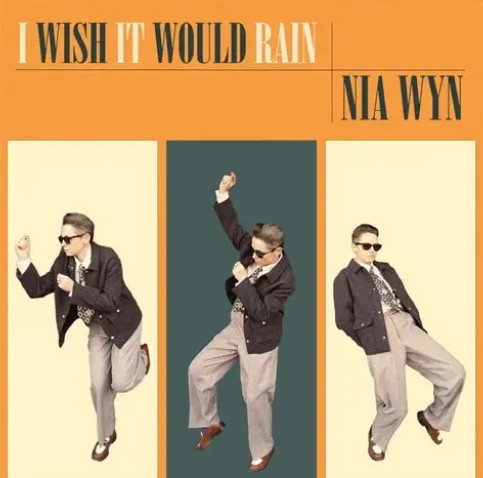
Nia WynI Wish It Would Rain

The cynical here (and I know who you are) might point to the obvious reference points – Amy, Duffy, (Alabama Shakes, even) – on a record that’s a perfectly pitched amalgam of old gold and nu soul… and they wouldn’t be wrong – but that’s not the point.

I Wish It Would Rain is flawless in its quest for authenticity, and if you have even an ounce of soul in that tired and flabby middle-aged body of yours (yeah, I know my readership), then you’ll know that it’s simply undeniable. A warm record for cold nights, I Wish It Would Rain will be played long and often on repeat in the more perceptive households up and down the country….maybe even yours.

Rasping brass stabs, shuffling pistol crack snare, shimmering Hammond, tasteful guitar licks…and the ghostly vamping of a certain P. Weller esq will ensure this record reaches a far wider audience than it might otherwise have done, Plain Or Pan endorsement notwithstanding.

With a brilliant sandpapery voice that falls somewhere between Macy Gray and Marge Simpson, Nia Wyn has spent the past couple of years refining a style that is ripe for crossover success. In moving from Llandudno to London, Nia has left behind the anarcho-punk, shaved-at-the-sides and centre-parted hair. Gone too is the angular fringe that was part suedehead and part Bananarama. In is a shortish new blow-dried crop, as sharp and smart as the tailoring she presents herself in. In too is a welcome friendship with Paul Weller, which can’t do any harm at all you’d have to think. What has remained – and is now stronger than ever – is a commitment to mining the best ideas from soul music, be that Motown, Philly, Stax or northern, and re-presenting them for these genre-blurring modern times.

Nia Wyn has the look to go with the tunes (seek out Can’t Get No Love Round Here for further evidence) and is poised, I dare say, for real commercial success in 2026. Don’t miss the boat.

*If anyone close to Nia is reading – I Wish It Would Rain would really benefit from having its own 7″ release. Go on! You’d be daft not to.


Get This!, New! Now!

Down On The West Side, Away From Sunlight

As autumn snaps itself sharply into winter and the early curtains of dusk draw their way across the gun metal grey skies on the commute home, the music being listened to in the car becomes equally as insular, wrapped tightly around itself for protection from the cold being blasted in by the westerly winds. As the windscreen wipers bump and squeak to the scraping of a Nick Drake cello or a Talk Talk bass glissando, as the indicators’ gentle ticking matches Sufjan Stevens’ gentle picking, as the sudden splash of a puddle matches the subtle crash of a jazz/folk paradiddle, it dawns on me that my music taste is seasonal.

Ska is for that first hint of summer, when it’s still technically early spring but folk are already waist deep in the filthy Firth of Clyde at Irvine beach. The reggae is reserved for the summer proper, although occasionally they clash by happy accident as playlists collide mid-barbecue. Dub? It sounds best on those rare days when even the sun can’t be arsed doing anything other than sit there and sweat. The twin colossuses (colossusi?) of Teenage Fanclub and Trashcan Sinatras work best in autumn, two groups who’ve travelled more than a few miles around the sun and, while being still recording and infrequently gigging concerns, are themselves in their autumnal years, with more miles in the rear-view mirror than what may still stretch ahead of them. Now there’s a sobering thought.

The new artists? They’re best kept for January when you can kid yourself on that this year will be the year when you embrace the new and unheard, before cracking mid-March for your annual Beatles/Clash/Smiths/Dylan/Bowie/Radiohead intake and the inevitable ‘why even bother with anyone else?’ thoughts. The yearly rotation of groups and songs and favourite albums is, to paraphrase Elton, the (song) circle of life. And I’m just fine with that, by the way.

I’m getting serious late-autumn Elliott Smith vibes from this – When The Sky Darkens Down by White Magic For Lovers. I think you’ll really like it.

White Magic For LoversWhen The Sky Darkens Down

It’s windswept, mystical, close-miked and deftly picked. The finger scrapes on metal, the tumbling and ringing arpeggios that fall from six strings, the creeping chord changes and the whispered, late night vocal delivery all point to the church of Elliott. It’s uber melodic, steeped in melancholy and, with those low-in-the-mix syncopated bleeps and bloops that caterpillar their way through the background, something you’ll want to stick on repeat until the long, dark nights begin stretching free again. Lovely stuff.

Listeners of Guy Garvey’s BBC 6 Music show will be no strangers to White Magic For Lovers. He’s played them frequently for the past year or so, when tracks from When The Sky Darkens‘ parent album ‘Book Of Lies‘ first crept out. With musical roots stretching as far back as the Electric Soft Parade, the duo have decent pedigree…and a lovely way with an unravelling melody. You could do worse than investigate them. Start with Book Of Lies and its looping and somnolent lead track Axelrod, maybe, and work your way back from there. It’s a rewarding journey.

Get This!, New! Now!

Warp Records

I love this. It’s been playing on the more discerning radio shows in recent days and has me hankering for the day when I can buy it – something that doesn’t tend to happen as much as I’d like.

It’s called Pharaoh, by Modern Nature.

Steady paced and understated, it’s a lovely unfolding slice of pastoral indie guitar music, the same sort of thing that Teenage Fanclub have politely gone about writing and recording in their Gerry-free autumnal years… only (sorry, Norman) better. Much better.

The vocals might lack TFC’s honeyed harmonic suss, but they’re equally as warm. Close-miked and musing philosophically, snippets of phrases leap out. ‘hedgerow…granite…leaves….mountains…coastal miles…heavy choices…‘ Andrew Weatherall, having played early Modern Nature material on his NTS radio show, was seemingly a big influence on the writing of the track, his ‘fail we may, sail we must’ mantra pushing group leader Jack Cooper to dizzy new heights. Cooper has said that the track is about the people who inspire us to think differently.

It’s the heady combination of voices and guitars that had me from the off.

The two guitar players on Pharaoh mesh and meld, knit and weave, never tying themselves in knots, always creating space for the other player to play in and around. With the combination of woody, humbuckered semi-acoustic and single-coiled Telecaster, there’s a hint of Television in the way the players freeform and switch between fret climbing and chord deconstructing. That’ll be the jazz influence, perhaps.

Pharaoh is, you gotta think, a reference to the spiritual, rule-breakin’/rule-makin’, free-jazz saxophonist Pharaoh Sanders. Inspirational people, remember. But where TV’s Lloyd and Verlaine – also undoubtedly inspirational – slash and tear at their machines like there’s no tomorrow, Modern Nature’s guitars bubble away like a mountain stream on a spring day. A choppy major chord here, an arpeggiated minor there, an insistent and unfaltering signature riff between them, everything clear and ringing like steel drums in the summer sunshine. If you’re like me, it’ll take just one play before the track wends and winds its way quietly into your subconscious.

Modern Nature is a new name to me. It’s always great to find a group that you can work backwards on before going forward with each subsequent record.

Pharaoh is from Modern Nature‘s new album The Heat Warps, released by Bella Union at the end of August. I’ll be ordering it via the band’s Bandcamp page here.  Some of you here will, I predict, do likewise.

Get This!, New! Now!

Tailoring Swift

18 years in and I’m going to have to change that tagline at the top. Outdated Music For Outdated People, it apologises, a phrase heavy in inference and suggestibility; if you’re an old and set in your ways sort who seeks comfort in the familiar, this might just be the place for you. If however, you came here to find the latest in box-fresh new sounds, you might leave disappointed.

Not today though.

In the words of the perennial Billy Sloan, I can exclusively reveal that Fellow Mortals have a debut album on the way…an album that for its originality and uniqueness, sonic qualities and unfurling melodies will quickly become one of your favourites of the year. And Plain Or Pan is the only place on this planet where you can hear it for now.

Fellow whit? Fellow who? Fellow huh?

Hang on, hang on. We’ll come to that in a minute.

Albums, as you well know, come in all varieties. There are those that are rush-released on the back of a surprise hit single, a hastily put-together studio version of the group’s live set then sold as the hot new thing. Yeah, Wet Leg, I’m looking at you (wherever you are these days).

There are those that arrive from nowhere, so fully realised and still perfect all these years down the line. Hello, The Stone Roses. Take a bow, Blue Lines.

There are those that come as complete packages, spinning, like life, with ebbs and flows and ups and downs, each play pulling the mask back and pulling the listener in. That’s you, OK Computer. And you too, Rumours. These are the albums that tend to stick. ‘Classic albums’, to use a well-worn phrase. With real depth and substance (and substance misuse in some cases), they have proper gravitas.

Then there are the albums that hang teasingly in the air, slow-burning beauties waiting to be discovered by generations of switched-on ears long after conception and release. Talk Talk’s The Colour Of Spring would be one of those records. John Grant’s Pale Green Ghosts another. Midlake’s Van Occupanther album… Ultramarine’s Every Man And Woman Is A Star… XTC’s Skylarking… brilliantly cohesive records from start to finish. Organic, proggy, and conceptual in vision and execution, these too are albums with depth, substance and gravitas; modern-day classics to all in the know.

Fellow Mortals take their cue from such records, as well they should. Conceived aeons ago before even lockdown was the year-zero thing by which we mark our lives, and tectonically jigsawed together through transatlantic file sharing, that forthcoming album of theirs, ‘Stella’s Birth-day‘, thrums with electronica, hums with melody and comes, like all the best albums before it, as a complete package (in every sense).

Born in the busy mind of Noonday Underground’s Simon Dine, Stella’s Birth-day takes its inspiration from a series of poems written by Jonathan Swift 300 years ago. The poems map out the relationship between the poet and Stella, his muse many years his junior – a loving relationship certainly, perhaps bordering on clandestine and romantic…or even marriage (it’s a grey area that’s kept Swiftly scholars debating for years). For seven years, from 1719 until her death in 1727, Swift would write Stella a poem and send it to her on her birthday. The album focuses on the final two poems.

Swift would write to Stella of her intellect and astuteness, her qualities as a human being. He confides his innermost thoughts and worries in her. And this he does with a sharp Anglo-Irish wit that’s prevalent, from Behan and Beckett to Wilde and Morrissey, in many corners of Irish-bred literature to this day. As he and Stella age, the tone of Swift’s writing changes. The poet looks back on times gone by, becoming more reflective with each passing stanza, one eye trained on the horizon and looking towards the inevitability of death.

Not your usual sort of source material for an album, then. You don’t need me to tell you that musicians have often drawn on literature for stimulus – there’s Wuthering Heights, for starters. Bowie’s 1984. Venus In Furs. Much of Morrissey, obviously. There’re plenty more when you stop and think about it (even more if you cheat and Google), but what sets Stella’s Birth-day apart is the way in which Swift’s poetry is used.

Focusing on those poems from 1725-1726, Swift’s words are sonically brought to life through the voice of Francis Reader, a long-term collaborator of Dine and most likely known to you as the vocalist in the Trashcan Sinatras. Reader has a terrific voice; part croon, part swoon, and he delivers his lines with total respect to Swift’s words. The poetry is lifted, line by line, stanza by stanza and tailored to form the songs’ verses and choruses. It’s quite the skill to twist and shape someone else’s ancient and studied words into new forms…and Fellow Mortals have done this brilliantly.

The album flows across 14 short ‘n sweet tracks; tracks that flash past in the time it takes you to read the poems, yet tracks that are rich in melody and idea and sheer scope. The voice and the words are centre stage, but all sorts of wizardry is happening in the background. There are nods, perhaps, to the string work on some of Scott Walker’s ’60s material. There are soft shoe waltz-time heartbreakers. There are rippling harps and fairground melodies and never-ending tapestries of rich instrumental backing. There are even electric guitar-furnished pop songs of the sort that would have your average Trashcans fan foaming at the mouth.

Indeed, released today, March 13th, (on what would’ve been Stella’s 344th birthday – how’s that for slick marketing?!), the first teaser for the album, A Better State, features Trashcan guitarist Paul Livingston to great effect. All shimmer ‘n twang, looping piano and synthetic, shuffling backbeat, it’s a very good signifier of what to expect from the album in full. I think you’ll like it.

Fellow MortalsA Better State


Another single will follow in May, by which time Stella’s Birth-day will be available for pre-order. As befits such a project, initial pressings will see a 10″ record bound by a book of the poetry. This, if you didn’t know, is the version you’ll want.

Arcane and archaic in source, yet modern and now in execution, the album package promises to be a sort of grown-up Disney read-while-you-listen page turner for the more discerning and cultured listener out there – Updated Poetry For Outdated People, even.

Get This!, New! Now!

Lists Schmists. Missed.

Lists are everywhere at this time of year. I’m never that fussed by the music ones. They mainly serve to remind me just how out of touch I’ve become with the musical landscape of the day, or how underwhelming I find the best albums of the year to be. Beyoncé one of the best five albums of the year? Really, NME? Really, Guardian? Sabrina Carpenter? Gimme a break. Where’s Making Tapes for Girls by The Pearlfishers? Where’s A Dream Is All We Know by The Lemon Twigs? Where, even, is Paul Weller’s 66? This definitely says more about me than them. I’ll freely admit to never knowingly have heard so much as a note of Charli XCX’s Brat. It’s been universally lauded as the very best album of the year in almost every list going, so I can only be missing out. Watch me rave about it in 2027…

Very occasionally the lists confirm that, despite my advancing years and stubborn ears, I’ve still got a lukewarm finger on the pulse of whatever beats the nation’s collective heart.

Bill Ryder-Jones Iechyd Da was in amongst it in all the lists that matter. Released way back in January, it announced itself as an early contender for Album of the Year and hung on in there, month after month until the close of the year. With its sad melodies and wraparound blanket of melancholy, it was, despite the heaviness of its subject matter, a thrilling listen; well played, well produced, little pocket symphonies of sorrow and grief that hit you right where Ryder-Jones wanted them to land. It’s a terrific album.

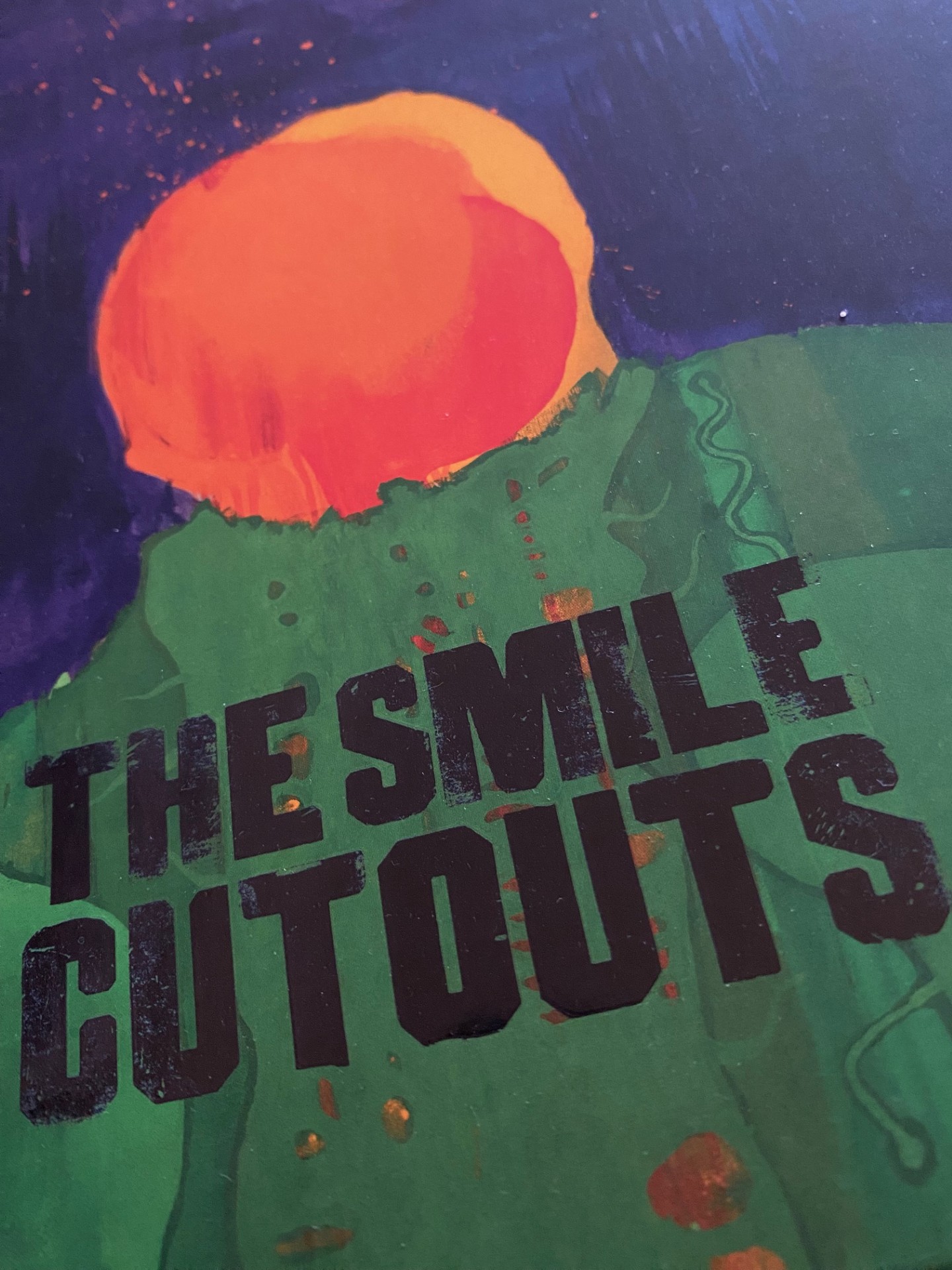
It’s a terrific album, yes, but it’s second only to Cutouts by The Smile.

Scanning the lists, I was amazed to see little love for it. It’s a pretty fantastic record and, if this blog carried any clout at all, all forthcoming issues of the record would come with a hype sticker letting the world know that it’s Plain Or Pan’s album of 2024. “Album of 2024!” (Plain Or Pan) It’s pretty fantastic! Love it or your money back! 

Cutouts was, after Wall Of Eyes (also notable by its absence from many lists), The Smile’s second album of the year. It is to that album what Radiohead’s Amnesiac is to Kid A – the leftovers, the cutouts if you will, from the sessions that spawned the earlier album, reorganised and whipped into a genre defying ten track cracker. It’s orchestral and rockin’, claustrophobic yet dizzy, propulsive and loud, slow and stately and quiet; super-textured, in other words, with each play revealing new layers of unspooling melodies and dazzling musicianship.

Jonny Greenwood dresses his guitars in sheets of Andy Summers chorus. Thom Yorke plays finger-bothering groovy bass. Tom Skinner rattles and rolls crazy time signatures from his polyrhythmic kit. Strings scratch and scrape and shimmer their sheen on nearly every track. Vintage synths parp and fizz their minor chords across the top, archaic and arcane, phantasmal and utterly fantastic.

The SmileZero Sum

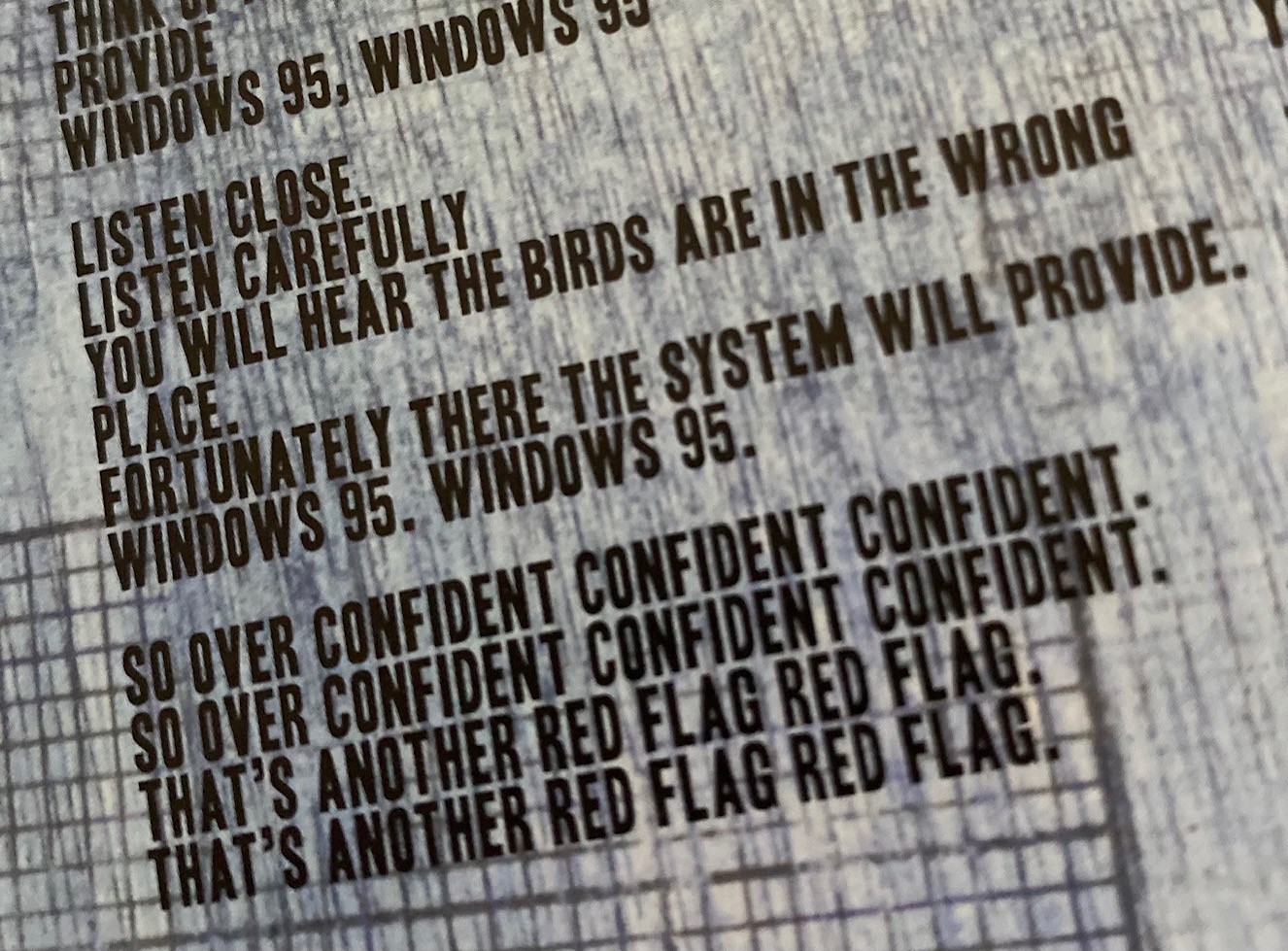
It’s those unspooling melodies that dazzle most, though. It’s only after the third? Twenty-third? play that you truly begin to hear them for what they are. Zero Sum, with its jerky “Windows 95” vocal and frantic, skittering morse code guitar lines. Instant Psalm‘s funereal, majestic splendour. No Word‘s bullet train propulsion. The creeping spy theme of Don’t Get Me Started… If this record had ‘Radiohead’ printed prominently on the cover rather than ‘The Smile’, the list makers and taste shapers would’ve been falling over themselves to make it album of the year.

Plain Or Pan knows though.

Album of 2024!” (Plain Or Pan) It’s pretty fantastic! Love it or your money back! 

Get This!, New! Now!

Only With The Falling Of Dusk

I was out the back door a few nights ago. We’d given the shrubbery a festive, twinkly make-over and the remote control to turn the lights off had stopped working from the lazy comfort of inside the house, meaning I had to move closer to them and, y’know, actually go outside to turn them off…half cut…at 2am…wearing pink Crocs (not mine). As I moved closer to the lights, a sudden and loud flapping noise – total Attenborough nature documentary in sound – broke the still Ayrshire silence. I froze. Almost immediately, from the big tree behind my fence, an owl began hooting.

How great!

We’re not country dwellers by any means, the Glasgow train line runs behind us, down the hill behind that big tree, but we’re right on the fringes of the town where it meets its ever-shrinking green belt and we’re clearly close enough for unexpected wildlife. It’s not been back since, but I’ll be listening out for that owl any time I happen to be awake in the small hours. Or wee hours, given how regularly I make the broken sleep stagger to the bathroom these nights.

The one owl I can I hear any time I like is this – the most interesting, most unique and unarguably the greatest track that’s graced these ears this past year.

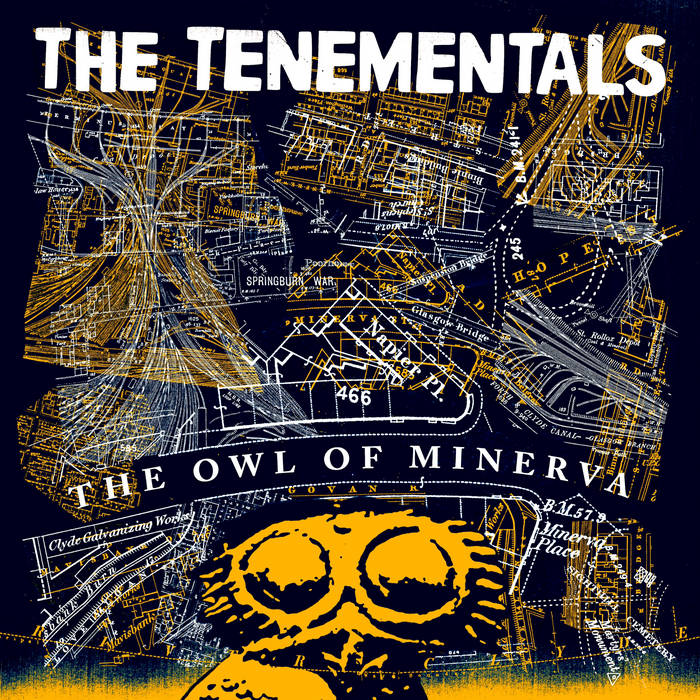
The TenementalsThe Owl of Minerva:

Early in the 19th century, the German philosopher G.W.F. Hegel wrote that “The owl of Minerva spreads its wings only with the falling of dusk.” It’s a line that suggests that true historical understanding only comes with hindsight – a phrase that could very much apply to Glasgow’s foundations in slavery and clashing religious intolerance; a reawakened city, perhaps, but one that’s still in conflict with itself.

Both inspirational and educational, The Owl of Minerva is delivered in a rich, actorly, Glaswegian brogue atop a clatter of guitars, like an electric shocked Public Service Broadcasting riding on the sort of sludgy, serrated, repetitive riff that Iggy Pop might be inclined to drop his trousers for. A fly-past of Glasgow’s streets and their history, it’s terrific. And immediate. And supremely poetic.

Mungo’s children lie in slumber, in ballrooms of pleasure and Bars of L, silent forges of production… The cantilevered roost of the Finnieston Cran(e)…  Red Road in ruin…  Broken bricks of Utopia…  Carnivals in Castlemilk conjuring a constellation…  Hills of Hag…  The rapids of revolution…  The highway of historical time…  Beyond the Black Hills…  Proddy John…  Commie John…  Bible John…  Poppers John…  Bengal/Donegal…  Gorbals teens/Glasgow Greens…  New futures/New presents/New pasts…  And still the river flows.

This is not the soft focused, rain-soaked Glasgow of the Blue Nile. Nor is it Simple Minds’ idea of the Clyde’s majestic past writ large in Waterfront‘s filling-loosening bassline. Nor is it Alex Harvey’s sense of menace and theatre. Or Hue and Cry’s shoulder padded and reverential Mother Glasgow. It’s all of this and more, a Glasgow song that’s scuffed at the knees yet literate and informative and vital for the 21st century. And it’s seemingly arrived straight outta the blue, an unexpected blazing comet for our times.

The Tenementals crept onto my social media feeds at some point late October/early November and the by the time I’d wandered off piste and hauf pissed to properly check them out, I had, typically, missed their Oran Mor album launch show by one night – a free entry gig too, where you had the chance to buy the album and it’s thrilling lead track.

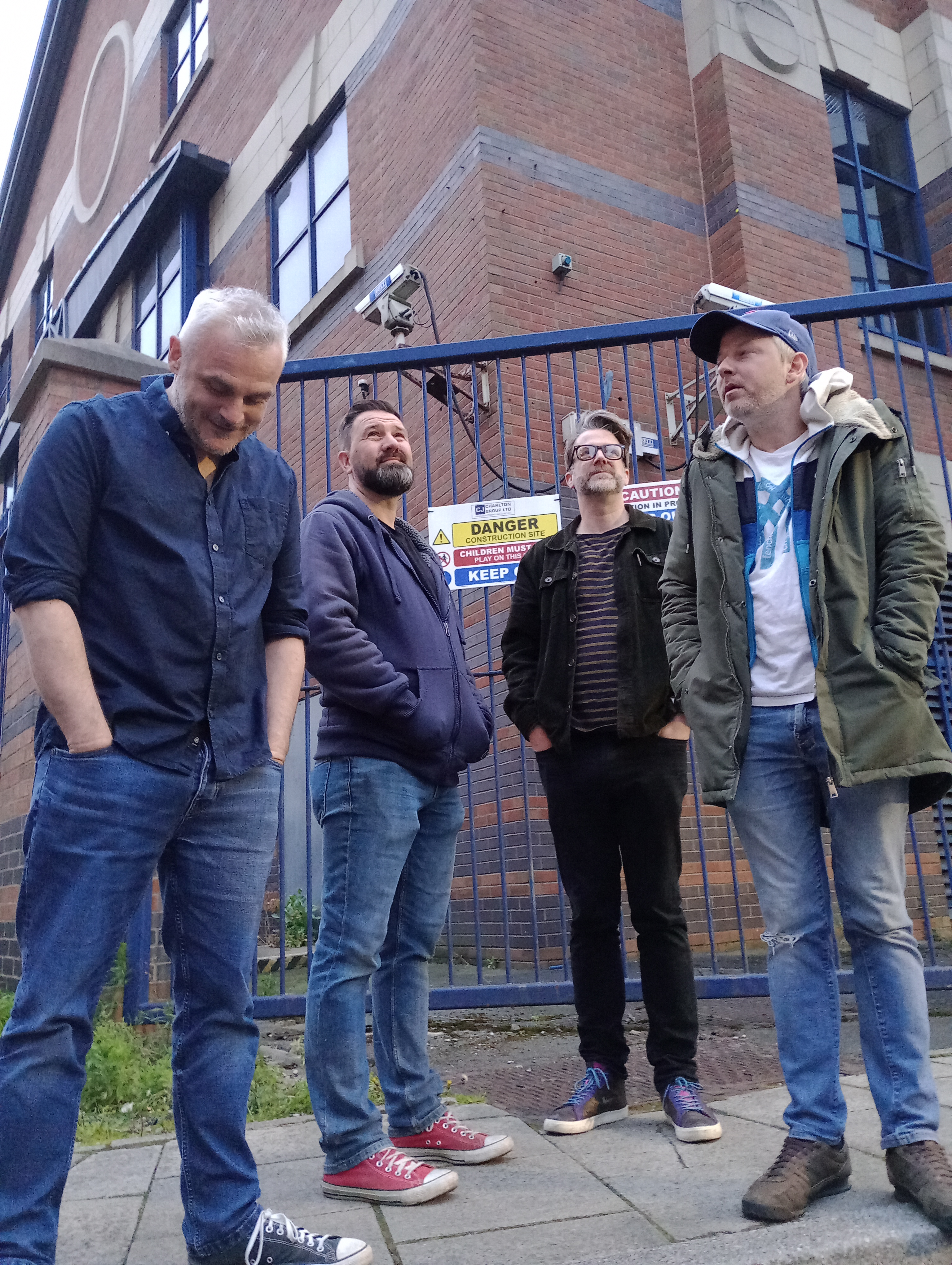
If they don’t look like yr average group of skinny jeaned, facially haired, too cool for school gang of guitar stranglers, that’s because The Tenementals aren’t really any of this. Lead vocalist David Archibald is Professor of Political Cinema at Glasgow University. They’ve collaborated with Union man and political agitator Mick Lynch. Their record label is called Strength In Numbers. Socialists to the core, their self-given job is to enlighten their listeners to the plight of the suffragettes, the beauty of La Pasionaria and the warped, cruel and beautiful history that forged the place from where they sprung.

The rest of the album is equally as thrilling, by the way. See them become more prominent in 2025.

New! Now!

This Ain’t No Wind-up

This is new. This is now. This is right up yr street.

Did your teacher ever stare blankly whenever you opened your mouth? This is The Wind-up Birds
Is it hard to get served at the bar? This is The Wind-up Birds
Do you get confused in heavy traffic? This is The Wind-up Birds
Do people invade your personal space every minute of the day? This is The Wind-up Birds

Any press release from a band called The Wind-up Birds that starts thus is going to grab your attention, right? The Wind-up Bird, as the cultured among us know, is a novel by Haruki Murakami; a time-shifting page turner that features lost cats, a man trapped down a well (that’s lost bloody cats for you), a flashback to the Japanese army and a man skinned alive. All the best bands have literate minds, of course, so The Wind-up Birds had me before I’d knowingly heard a single note.

Their penchant for well-written words is all over that press release, that’s for sure (although – sorry ’bout this – but these days I’m quite often the teacher who stares blankly at what comes out of some folks’ mouths. Not all the time, mind.) The band’s words continue in stellar, stall-setting fashion.

The Wind-up Birds are from Leeds.

The Wind-up Birds are not from Leeds (as in, United, Harvey Nics and Moyles).

The Wind-up Birds are from Leeds (as in, David Peace, Alan Bennett, Jake Thackray, The Wedding Present and Gang of Four).

They’re named after a book by Haruki Murakami. (Told you!) They write songs about car parks, and songs about pubs, and songs about work, and songs about escape.

In an era where you wonder if you’ll ever again find a band with something to say, the kind of insight, perception and wit that The Wind-up Birds toss our way is almost embarrassing. Their song titles say it all: Ignore the Summer, Long Term Sick, That’s Us Told, There Will Be No Departures From This Stand, Families of the Disappeared, Slow Reader – like all great bands, The Wind-up Birds reflect and transcend the mundanities of the times they exist in. Vocalist/lyricist Paul Ackroyd has the scathing satirical bite of Mark E Smith, the warmth and pathos of Alan Bennett, the forensic observations of Jarvis Cocker, the kitchen-sink emotional clout of Morrissey; it’s all there, set to a cathartic post-punk racket that’s as unflinchingly messy and beautifully ugly as life itself.

So. In gnarly guitar music and existential Japanese literature, The Wind-up Birds have all the right reference points covered. On record they sound extraordinary; scorching and caustic, Cribs-y guitars (what is it about Yorkshire?), a band banging on and hanging on for dear life – together (always together) – as their singer vocalises about moral panic and telling good guys from bad, shouting in all the right places but knowing when he needs to take it back.

The Wind-up BirdsGuards

Guards, their new single/focus track (gads) sounds like the sort of thing I might’ve unwittingly taped off of the John Peel Show while letting the tape run on after capturing the latest Inspiral Carpets session, a track that I’d then spend the next 35 years trawling the corners of the internet in the vain hope of finding out more about. No need to spend half a lifetime wondering what that great new track was – these days it’s always Guards by The Wind-up Birds. Not out until mid-November, you can play it repeatedly here. Listen out for it on the more discerning radio shows of your choice. And watch them go. Fly, even.


New! Now!

Vwls? W Dn’t Nd N Stnkng Vwls!

ccsnlly smthng wll rrv n my nbx tht rlly pqs my ntrst. rlr ths lst wk  ws snt ths. t’s trrfc.


t’s by bdrmm, th Hll-bsd pst-rck qrtet, sgnd t Mgw’s Rck ctn lbl nd nw httng thr strd s shgzy pdl stmprs fr  gnrtn nt fmlr wth the flppy-frngd bnds f yr. Whr Rde cm t y lk  fll-n Pnzr ttck, bdrmm crp p slwly bhnd y. Whr My Bldy Vlntn ctd thr tns n  rpplng hz f wtr clrs, bdrmm stck t sbtl pstls. Whr Slwdv srd nd tmbld, bdrmm tmbl nd sr.

Ths nw trck, Standard Tuning, s  n-ff rls tht’ll mk ts wy n 10″ t yr mr dscrnng rcod rtlrs rnd pril, by whch tme ‘ll hv lstnd t t rghly 368 tms, fndng ne thngs yt n ts mlodc hz.

t’s lsh, thr-wrldly nd hypntc. Th gtrs snd lke vntge synths. The synths snd lk vntg gtrs. Th vcls r brthy, ctd n shmmr nd hze, ts lyrc f lss nd pssng stbly fttng. Thr’s  prprly Blrc prcssv bdrck t th whl thng; mtr ngns gntly tckng vr, clckng nd clttrng synthtc bts gng qtly pll-mll,  whtwsh f swllng synths, lpd, strtchd nd twstd smpls, drp-ts, fde-ns nd, somwhr n the bckgrnd, sm srt f flt tht, n th wrng hnds (ny’s prhps) mght’v cm crss s tw nd nw-gy.

t ll flts ff n  hz of pcflly chmng nd chng gtrs tht l smwhr btwn Th Cr nd DV (wh, concdntlly, bdrmm wll be spprtng nxt mnth) nd wll hv  rchng fr th rpt bttn s sn s ts lst rcchtng nts hv snt y int  shgaz-ndcd cm. Trrfc stff.

* In the interests of art, I removed all the vowels to see how this might look. Daft, isn’t it?

C’mon bdrrmm. Don’t let your music down with a stupid name. 

New! Now!

GOODGOODNOTBAD

We’re barely into February and already the superfly Canadian instrumentalists/producers BADBADNOTGOOD have an eye on the warmer weather. Being Canadian ‘n all, I’d imagine this time of year is particularly grim up north, but one spin of this hot-off-the-pressing-plant new release will warm even the chilliest of North American hearts and have you – yeah you! – looking ahead to the first buds of spring with eager anticipation. Take What’s Given ticks all sorts of groovy boxes.

BADBADNOTGOODTake What’s Given feat. reggie

Swaggering like a refreshed, sun-drenched drifter going toe to toe with Sly Stone at his most insouciant, it’s a real beauty. I mean, it’s cowboy chords welded to You’re The One That I Want. It’s We Love To Boogie. It’s Bontempi basslines at the cabaret down the Legion. It’s nuthin’ you aint ever heard before and it’s maybe the best thing you’ll hear this year. It’s certainly the most unpretentious and downright goddam joyful thing that’ll fill your ears in the coming months, that’s a fact.

It rolls sweetly on a bed of crisply played snare, gently caressed shimmering Hammond and a brass section that might’ve blown their way straight from a Muscle Shoals session. With the ghosts of Al Green and Anne Peebles stuck fast to the horns and eager to escape, it’s left to BBNG’s guest vocalist reggie to bring it home as one.

What he lacks in basic punctuation, he more than makes up for in a vocal delivery that apes good ol’ Sylvester Stewart like the best of ’em. He’s got Sly’s yawny drawl schtick going on perfectly, stretched and vocalised vowels in place of actual words in places – “Aaaaeeeeiiiiooouuuh” – a vintage, cracked baritone in others, a lovely understated harmony with himself on occasional lines, a happy choir coming in to join him halfway through. There are subtle 7th chords when they think no-one’s looking, free-flowing trumpets, getting away with it at the tail end of lines when you’re distracted by the warm hug of the singers, and enough hooks to have you playing it on repeat until the winter thaws and the daffodils come back around.

Not bad for a track made up on the spot while the principal players set up for the actual session. If this is the throwaway stuff, I can’t wait to hear the stuff they spent the real time on.

New! Now!

Bathe In This

The Bathers, Chris Thomson’s vehicle of unravelling melodies and swooning arrangements, moves at such a stately, tectonic pace that those other west coast hummers and hawers the Blue Nile and the Trashcan Sinatras might consider themselves in Allan Wells territory by comparison. Like a Michelin star chef marinating his secret ingredients overnight for extra devastating effect, Chris has waited 20 years and more between new studio releases before letting Sirenesque out and into the ears of anyone still tuned to his particular station. Entire bands, entire musical careers, at least 72 UK Prime Ministers at the last count, have come and gone since then. And now Thomson, with his ancient, withered, weathered, leathery vocal has crept out of the shadows bringing with him a heavy dose of pathos and regret to remind us what we’d almost forgotten about. Let it be said: Sirenesque is the finest, most autumnal – and most adult – listen you’ll have this year

The Bathers Lost Bravado

From concept to realisation, it’s a grand album in every sense of the word; magnificent…awe-inspiring…important…all of this. Concert pianos, delicate and gossamer and bassy and rich, their notes captured suspended in solid air, form the basis of the record. From here, all manner of instrumentation pours forth. Clean twanging electric slide guitar, gently plucked nylon-stringed acoustics and fantasy land harps, subtle muted brass that might well be the ghostly breath of Chet Baker himself, chirping birdsong, the sweeping weep of the Scottish Session Orchestra’s strings, the Prague Philharmonic’s chamber arrangements, filmic and fragile and Tindersticks-tender, a coming-and-going, eerie and vampish female vocalist pitched halfway between wonky Disney and Mercury Rev’s Deserter’s Songs… it’s an album packed with ideas and invention and, crucially, control and discipline. There’s not a wasted couplet or jarring note across the record’s dozen tracks. It might’ve taken 20 years to get here, but every nuance of the record’s structure has been expertly thought out.

At its core is Chris Thomson, his close-miked ethereal whisper vocalising a very particular Glasgow; the Glasgow of high corniced ceilings and Kelvingrove and University Avenue and understated Harris Tweed and Mother India and Royal Exchange Square and croissants and coffee and 20-year old malts in the Old Toll Bar. And the words are sung in a voice of the greats, of Scott Walker, of Tom Waits, of David Bowie…very Bowie, as I’ve come to consider it. That thought struck me midway through side 2’s Welcome To Bellevue and the opening phrasing on the track that follows (She Rose Through The Isles) and has stayed with me through every subsequent spin ever since then.

I now can’t not listen to the record without filtering it through Bowie ears. It’s all there in the considered arrangements and unexpected phrasings and the time-stopping production of it all. Sirenesque is almost a companion piece to Blackstar. Seriously. And while that record’s underlying theme of death couldn’t be further from Sirenesque‘s observations on life, this new record hits almost as hard, unravelling more of its secrets and majesty with each subsequent play. In this live fast, move on, next! next! next! world that we live in, you could do worse than downpace to the thrum of Sirenesque. It’s great – Bowie great. The best kind of great.

Dive in: Last Night From Glasgow     Bandcamp