Get This!, Live!

I Lost My Sharpie To A BMX Bandit


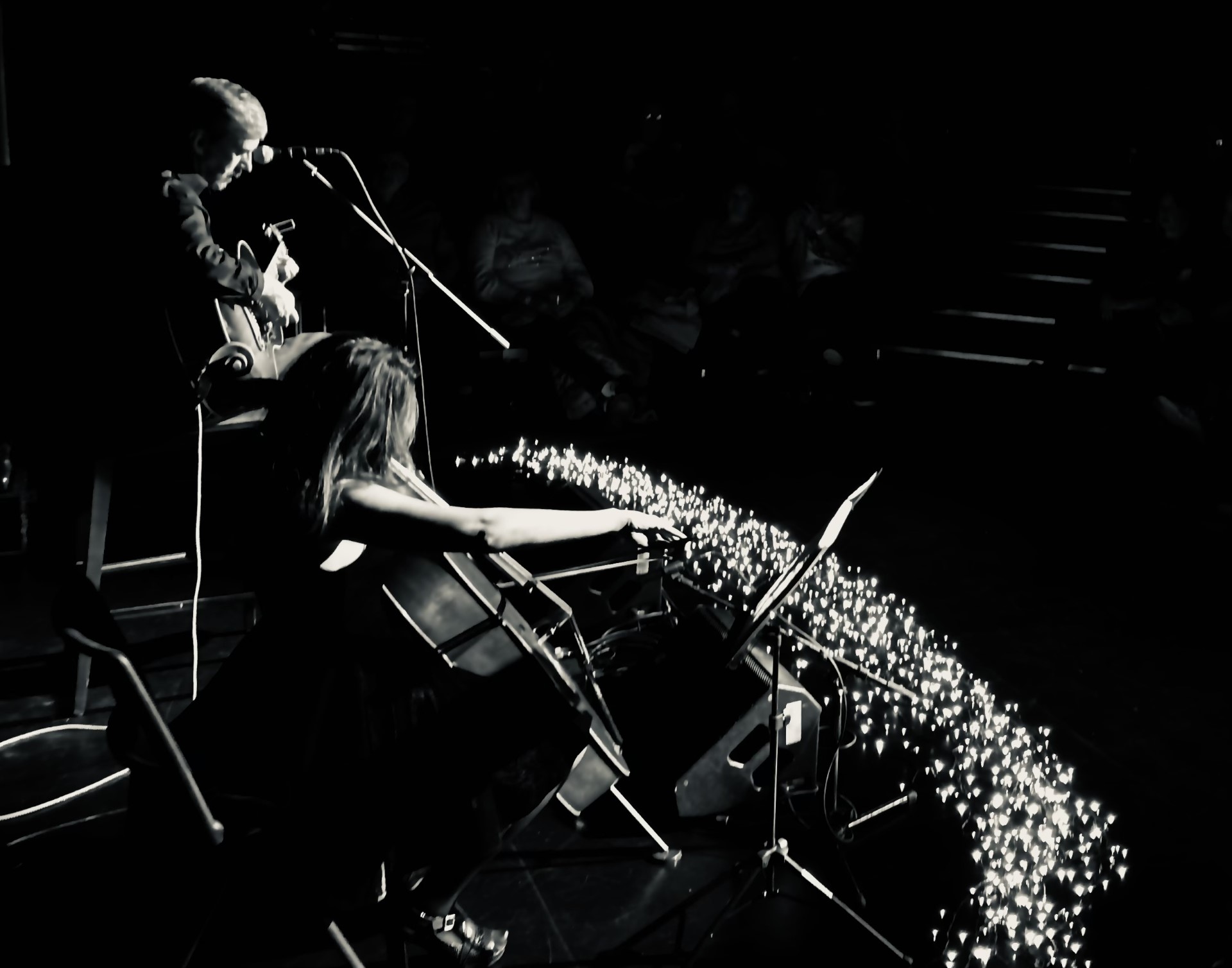
We’ve a book for gigs and in it bands sign

It’s falling apart and it’s split at the spine

Every show we do it’s filled with a scribble

And plectrums and set lists and other such drivel

It was BMX Bandits on Saturday there

With Duglas T Stewart and coordinated stage wear

Their set filled with favourites and new ones just out

And bananas and grapes and kazoo solos throughout.


At the end of the night we’re tittling and tattling

As the stage crew get on with the art of dismantling

Will you sign the book?” I ask to Duglas reclining

And turn to a new page in prep for its signing.


My sharpie’s deployed and after Duglas I hand it

To guitar, drums and bass, the three other Bandits

They think and they scribble, add kisses at the bottom

Then pass the book back…but someone’s forgotten

To return back my pen, my only black sharpie

And I eyeball all four of the band hierarchy.


The pen’s gone for good, I’m pissed off but accept it

But it irks me, it bothers me and I can’t quite forget it

It’s only a sharpie but you’ve gotta hand it

To the nominative determinism of that BMX Bandit

Yes, it’s only a sharpie but you’ve gotta hand it

To the nominative determinism of that BMX Bandit

I said it’s only a sharpie and it’s not how I planned it

To forego a pen to the BMX Bandits


(As I wrote this I heard the voice of John Cooper Clarke. Maybe you won’t.)


Here’s Serious Drugs. Electric guitars weeping the tiny tears of George Harrison in ’68. Acoustic 12 strings jangling away like the rain-soaked ghost of Alex Chilton in ’72. Sighing backing vocals that do uplifting melancholy like no-one since Teenage Fanclub took that particular idea and ran with it in their desert boots all the way to the charts. Excellent Joe McAlinden sax solo too. Serious Drugs has got the lot. Quite possibly the group’s finest moment.

BMX BanditsSerious Drugs


Live!

Ghostdancing

Roaming Roots Revue 2024

Barrowland Ballroon, Glasgow, 20.1.24

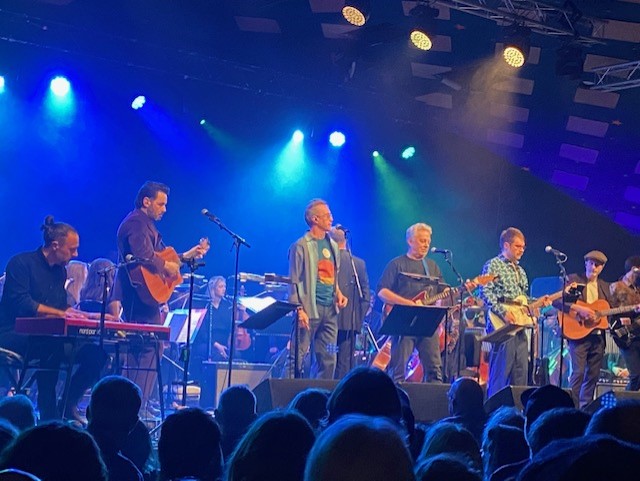
The Barrowland Ballroom is full of ghosts. The next time you’re there, let your mind wander mid-set, look vaguely into the middle distance and they’ll come to you; a transparent, milky-white film of Shane ‘n Kirsty perhaps, slow waltzing as Eddi Reader, profiled in jawline and gladrags, reaches for the highest notes in an atmospheric take on King Creosote’s Something To Believe In. A static flicker of Joe Strummer maybe, his left leg a-pumping to the furious beat of The Pogues harum scarum demolition of London Calling at that same show, exactly in the spot where Hamish Hawk is now leading the Lonesome Fire plus 50-piece orchestra through a celebratory version of his own Google-friendly The Mauritian Badminton Doubles Champion, 1973. You’ll possibly spot Joey Ramone, flickering in from the past, legs akimbo and hanging off the microphone stand like a hairy anglepoise lamp while Emma Pollock places herself in the middle of a swirling orchestral storm, her fantastic take on Gerry Rafferty’s Night Owl wowing the capacity crowd. There’s Bob Dylan on his keyboard, sweat dripping from the brim of his hat…here’s a skirling dervish Morrissey whipping his microphone lead with all the dexterity of a Billy Smart ringmaster…Michael Stipe…Lux Interior…Terry Hall stage centre and static as the other Specials flail and skank as if there’s no tomorrow…PJ Harvey in pink feather boa and not much else… The Barrowland Ballroom is full of ghosts, imprinted on the memory and ready for recall at any opportunity.

But what exactly is going on? The Roaming Roots Revue is now a staple of the Celtic Connections festival. The brainchild of Roddy Hart, he, along with his 5-piece backing band The Lonesome Fire, has assembled a 50-piece orchestra and invited along a host of his pals to celebrate (this year) the great Scottish songbook. The premise is that each act plays one of their own songs and then a cover of an accepted modern Scottish classic pop hit, all accompanied by Roddy and his band and the orchestra. And that’s what we get.

A tambourine-totin’ Tracyanne Campbell does a stomping French Navy. Eddi Reader pops back on and does an intense version of In A Big Country and there’s no one, artist or audience, who isn’t grinning widely. Admiral Fallow do a beautiful Dead Against Smoking – it sounds fantastic with live strings and brass and wood and what have ye – “you’re like gas-o-line, you’re like the wil-low tree” – before struggling a wee bit with Party Fears Two. It’s a brave person who attempts to sing like Billy Mackenzie and while they may be, eh, Admirable Fellows for having a go, they’re no substitute for the real thing.

As it all plays out, something hits me. It’s not just the groups that are ghosts. It turns out their songs are too. I can ‘see’ Stuart Adamson in his wee pilot boots and high waisted trousers cranking out those bagpipe riffs on his Yamaha electric, right there where Eddi is singing about lovers voices firing the mountainsides right now. And look! We’re now back in an encore in 1988 and here’s a floppy haired Roddy Frame being worn expertly by his oversized Gibson ES 295. He’s handsome and cool and leading a mass, communal Somewhere In My Heart, front and centre and total focal point, just where the young upstart Brownbear is currently doing that self same thing 36 years later. And talking of mass communion (and redemption), Admiral Fallow do their damndest to bring the famous old house down with their reverential – and utterly fantastic – Scottish gospel approach (“In the key of G major“) to Sunshine On Leith. Show me someone who says they don’t like that song and I’ll show you a liar. It has, as you well know, been known to make even a Hearts fan with a glass eye shed a tear. A modern Scottish classic if ever there was one.

The other highlights? It’s hard to see past a staring, beady eyed Hamish Hawk and his nervous, twitchy Ian Curtisisms, punching the steam-powered mechanical beat to Franz Ferdinand’s Take Me Out like it was he who wrote it, before he bravely and unexpectedly launches with gusto into Frightened Rabbit’s dirty and sweary Keep Yourself Warm. He means it, man. The guy has star quality written all over him and you really must check him out. The reliable Roddy and Rod from Idlewild do a great You Held The World In Your Arms, all crashing chords and sweeping orchestral flourishes. In the absence of yr actual Paul Buchanan, Roddy Hart and his band do a sterling and faithful reworking of Tinseltown In The Rain, all scratch guitars and moody ambience. Justin Currie dispenses his shonky, temperamental acoustic for a brooding and menacing dive into Del Amitri’s uncharted (quite literally) back catalogue, one leg up on the monitor, dripping his luscious, conditioned fringe over his crowd at the front. The last time I saw Justin in here, he did that whole Spinal Tap, foot on the monitor thing during one of the band’s more boogie-orientated numbers and I couldn’t help but notice the extent to which his dark jeans had frayed to a threadbare grey/white at the crotch. I wasn’t close enough to see if he’d since invested in a new pair of Levis, but I’m hoping, for the sake of those poor front row souls, he has.

But it’s Frank and John from the Trashcans that I’m looking forward to the most and they don’t disappoint. Taking liberties with the notion of what constitutes a ‘modern’ Scottish classic, they and the assembled masses fall into the near 50-year old Year Of The Cat, Al Stewart’s long and winding tale of exotic, on the road romance. It’s a very Trashcans song, you realise, its Patti Smith by way of Harvest For The World opening giving way to a lovely unravelling chord progression, all major to minor to major 7ths and back again. A mid paced groover, it rolls along for 8 exquisite minutes and more, gentle on the mind and just as gentle on the feet. The Trashcans’ own Weightlifting gets the full orchestral treatment, slow and stately from its Elis & Tom bossanova opening to the heavenly horns in the swirling coda. I’ve heard Weightlifting done by the Trashcans countless times, more recently stripped back to its acoustic core by a solo John on more than one occasion, and now with the muscle of the orchestra behind it. It doesn’t matter how it’s presented. Serve the song and it’ll serve you well.

To send us home, we get a full-on Live Aid style encore of Whole Of The Moon, half a dozen or so of tonight’s big hitters taking turns to sing the lines, shoulder to shoulder with some of the finest talent our country has produced, a Last Waltz for the 50-somethings of the west of Scotland. An incredible show.

Live!

James Sit Down

James Grant, Harbour Arts Centre, Irvine. Saturday 9th December.

James Grant has a dry, wry sense of humour, punctuated flawlessly by pin-perfect comic timing. “D’you know where that cover shot was taken?” he asked me a few years ago as I offered him my copy of Love And Money’s debut LP to sign. “We were in the Mojave desert. It’s sunset and I’m standing on top of a railroad train. The orange glow of the setting sun has captured perfectly the silhouette of me and my guitar and my out-to-here quiff.” He gestures the impressive length of quiffage as he signs the cover, hands back my sharpie and, lip curling into a self-conscious smile of pain, looks me in the eye. “What a fanny I was.”

He’s a brilliant live act, is James. From the jangling-clever Friends Again through the west coast soul (Scotland, not California) of Love And Money, to his solo records – records that ring with skilfully-picked acoustic guitars accompanied by a rich, caramel voice that has aged like a decent malt, James has the songs, years and years of them.

And he has the stage presence. He’s languid, perched cross-legged on a bar stool, his always sartorial self folded around his acoustic guitar, elbows and knees jutting out like a particularly stylish Scandinavian angle-poised lamp. He speaks in a slow and rich Glasgow burr, quietly, and his audience goes respectfully silent in his presence.

He begins both of his sets on Saturday with a lovely, understated take on Friends Again’s State Of Art. Where the original is all gated drums and rattling, jangling, downhill-without-the-brakes-on semi-acoustics that will be forever-tied to the ’80s – and magic for it, let it be said – the 2023 version has relaxed a bit, stretched its legs and grown more into itself. The words (sung originally by Chris Thomson) are enunciated clearer, the chords are strummed slower, the rich melodies pulled from the six strings like an alchemist teasing liquid gold from cold metal. A state of art indeed.

What an opener and stall-setter. For an hour and a half, James treats the audience to faithful and expertly-played takes on songs that run the whole gamut of life, the double weights of death and existential angst being seemingly particular favourites. My Father’s Coat, Lips Like Ether, Hallelujah Man, Whisky Dream, Winter (“the closest you’ll get to a Christmas song from me“), brush past naked and true, their modesty covered in low-bowed and heavy, sympathetic cello, played superbly by cellist-about-town Maya Burman-Roy.

Now and again, James will take the edge off the downbeat nature of the performance and lighten the mood by dropping in a funny story or two. Stories about his dad make regular appearances. As do tales of life in a chart-chasing pop group in an era when the business was awash with cash. Sometimes the subject matter combines. His dad would end up being in the video for Love And Money’s Jocelyn Square, immortalised on celluloid with his permanent nasal drip captured forever in monochrome. “Who’s paying for all this pish?” inquires his dad on-set, eyeing up the machinations of the industry. “Eh, I am, dad,” says James sheepishly.

As funny as his stories are – and James has some real rippers – it’s the music that endures. James is a fantastic guitar player, often sounding like three guitars at once, his combination of augmented chords and rippling, tumbling lead fairly giddy and awe-inspiring when seen up close. It dawns on me mid-set that James is one of my favourite guitar players. He can pick the fuck out of six strings, but where many acoustic players use Travis picking or a similar pattern of finger playing, James very much favours the plectrum. And not just any plectrum either. I notice, on his bar stool at the close of the show, that he’s been playing the set with a Bowie Aladdin Sane pick. Even heroes have heroes. Watch that man!

Get This!, Live!, Sampled

Hidden In The Back Seat Of My Head

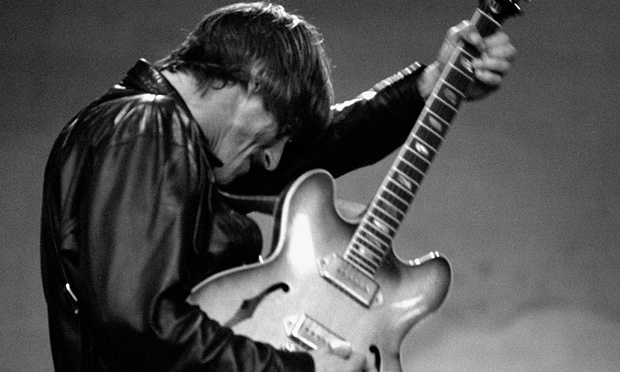
That triptyich of ’90s solo albums which spawned the rebirth of Paul Weller deserves to be looked at again. 1992’s self-titled debut was the result of the artist being given free reign to reinvent himself, with no great expectations from a record company (Go! Discs) simply keen to offer one of our greatest songwriters the platform on which to start afresh. By 1995’s Stanley Road, Weller had entered his third imperial phase; once again a regular botherer of the charts and the elder statesmen to whom the leading lights of the day looked for validation and support. The record in the middle, 1993’s Wild Wood, is perhaps the most interesting – and best – of those three releases.

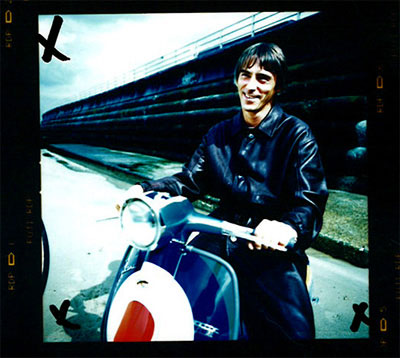
Having ‘done’ inner city angry young man and broadminded European mod, Weller looked to the English countryside for inspiration. Still unsure of who his ’90s audience was, the singer decamped to the Manor, a residential studio in the leafy Home Counties and, surrounded by trustworthy people and a handful of his favourite records, holed up to hang out, play, write and record the tracks that would become the Wild Wood album. The inner sleeve photos on the record suggest the perfect scenario for making a classic record; family and kids on the lawn, footballs, a grinning Weller astride a scooter, a home-from-home environment where inspiration flourished.

Much has been made of Weller’s listening habits during the making of the album, and the acoustic influence of Traffic and Nick Drake has oft been quoted as a source of influence, but I’d consider Wild Wood to be Weller’s Neil Young album. Loud in-the-mix acoustics ring throughout the record, attacked by Weller’s uncompromised strumming and finger picking. He might be playing a Martin, but he’s attacking it with all the fervour he normally reserves for his Casino. This is apparent on Foot Of The Mountain, its minor chord balladry giving way to an ebbing and flowing, sprawling and ragged electric outro, the rest of the band riding his coat tails for dear life. The Young influence is there too in Country‘s close-miked pastoral picking and whispered vocal. ‘Where only love can heal your heart,’ he sings, one eyebrow arched in a knowing nod to whiny old Neil as a woozy Mellotron adds a Fabbish, late sixties hue to the mix.

Wild Wood is an album that, augmented by subtle Hammond, delicate woodwind and thunking great gospel piano, showcases the best of Paul Weller. It’s there in the ferocious riffing of Sunflower and The Weaver‘s thrilling hammer-ons, the pastoral campfire soft shoe shuffle and two note dubby bass of the title track (it’s no wonder Portishead highlighted it as something to twist and turn and send into orbit), to the handclapping and roof-raising Can You Heal Us (Holy Man) and the jazz inflections of album closer Moon On Your Pyjamas.

My absolute favourite from the era though isn’t actually on the initial album release.

Paul WellerHung Up

As is his forever forward-thinking way, Weller had barely finished the record when he embarked upon another lap of writing. Too late for the album, Hung Up was released as a stand alone single. All the best bands, as you well know, release magnificent stand alone singles and Hung Up is undoubtedly Paul Weller’s addition to that list (even if, at some point, it was clunkily tacked on at the end of the record when Weller’s popularity began to soar.) It’s a fantastic single, Weller self-assured and riding in on a great chord sequence (C – Fm – Am – Fmaj7) before the band joins him on a chugging, descending Beatlesy progression, crisply distorted and fluidly played. The pace, the playing; perfection.

It’s the song’s bridge though that elevates the track from merely great to simply outstanding. It’s a real cracker, all loose piano and finger-squeezed guitar couplets – pure Small Faces mod-gospel with the vamping ghost of a PP Arnold-alike oozing in on the second line, her sky-surfing vocal lifting the track into orbit. Then we’re into the guitar solo. No fancy pants pedal boards here, it’s simply vintage guitar into vintage amp and the strangulation of a nimbly-rifled solo that’s halfway between Marriot (Steve) and May (Brian – really). And there’s still time for Steve White – there’s always time for Steve White – Wild Wood‘s secret, unsung hero to rattle seven shades of Gene Krupa from his kit with the mother of all drum fills, before it all ends with the singer and his acoustic guitar once again, wrung out, hung out and Hung Up in under three thrilling minutes.

*Bonus tracks!

Paul Weller Hung Up (Live at the BBC)

Lovely wee bit of studio chatter on this version.

Paul WellerWild Wood (Portishead Remix)

Pistol crack snare, clacking, clipped guitar, murky dub. The drunk wasp guitar riff is a beauty. Weller had some great remixes around this period and this is one of the best. Never ever outstays its welcome.


Live!

Great Scott! I Saw Brigadoon!

In the mid ’80s there was a wee gang of rockabilly-ish Kilmarnock buskers who used to play rock ‘n roll covers outside Woolworths on King Street. With battered Levis turned up to lick the shins and towering quiffs teetering on Johnny Dangerously levels of gravity defiance, they’d play Gene Vincent and Buddy Holly and Brand New Cadillac and very probably a Redskins song or two, although I wasn’t yet versed in Kick Over The Statues or the rest of their catalogue. I was still hanging onto my ’60s phase and one Saturday morning after buying an Old Gold copy of Shout by Lulu and the Luvvers (who knew there was a backing group?!), I left Woolworth’s to the sound of the buskers battering merry hell out of a track I’d become totally obsessed with after hearing it on a record I’d borrowed from Irvine library. The WaterboysBe My Enemy was being given a right good working over, the guitarists’ rapidly scrubbed acoustics and singing voices carried far and loud by King Street’s natural reverb and making the song’s frantic cowpunk all the more essential. Until now, buskers were old guys in crumpled suits singing American Pie. These buskers were not that much older than me and dressed a more outlandish version of me and could play contemporary stuff far better than me. This was the first time that I’d hear a Waterboys song live – my favourite Waterboys song back then too – but it wouldn’t be the last.

Until last night, I’d last seen The Waterboys 36 years ago. Back once more in the Barrowlands, where chief Waterboy himself Mike Scott cheerfully declares this to be the band’s 16th appearance at the iconic venue, I’m a bit apprehensive about how the show might unfold. I’ve lost my way somewhat with the band’s output in the intervening three and a bit decades and while This Is The Sea remains a firm favourite, played still and played regularly, I had no idea how the band might pitch their set. The pre-gig music  – The Beatles’ I Want You, the Stones’ Monkey Man, but stripped of their vocals to ensure you focused on the groove and swagger of the music – was a welcome portent of what would follow. So too was the Les Paul leaning against the drum riser. I’d said to Fraser that I was really hoping they’d do Be My Enemy or at least Medicine Bow, so to have them both pop up in a back-to-back, buy one, get one free deal was unexpected and magic. Indeed, as the 5 piece Waterboys thrashed their way through Be My Enemy with a vigour and fury that belies the greying hair and maturing years of the band’s focal point, I’m suddenly back on Kilmarnock’s King Street, watching which chords the buskers are using to play the tune, the confirmation that they were indeed spot on by watching the real deal dishing it out with a sped-up Subterranean Homesick groove on the stage in front of me almost 40 years later.

There’s a! gun at my back (chugga-chugga) And a! blade at my throat (chugga-chugga), I keep on findin’ hate mail in the pockets of my coat…I realise too that I still know all the words. All of them, even Mike Scott’s adlibs and woohoos. Music, eh?! What a trigger.

The current Waterboys are absolutely electrifying. The show – in two halves – ran the gamut of their rich and varied back catalogue, an illicitly stilled stew of Bob and Van and Patti and poetry and punk and folk and Kerouac ‘n roll, where their wholly obvious influences blow through the songs like the whistling winds of the west. Scott’s heavy riffing and one note soloing on his Les Paul whips up a Crazy Horse storm within the band, the Hammond organ, barroom piano and non-ironic key-tar adding colour and dimension to the material. At times he’s posturing and riffing like Strummer, left leg pumping up and down, kicking out in spasmic twitches. At other times he’s a balladeering hippy minstrel, leading communal singing on a roof-raising Fisherman’s Blues. It was around the time of that record that the band started to lose me, their hoedown raggle taggle coming a straight second best to the distortion and melody of the Creation Records roster, but last night it hit me that the power of the song endures and will usually outstrip the posture of the week’s big thing.

The WaterboysThe Pan Within

The whole set pivots on a searingly intense The Pan Within, in itself expertly fulcrumed by Scott and his hot-wired guitar around a faithful reworking of Patti Smith’s Because The Night. It’s epic on record and, as it turns out, it’s even more so in concert, a heady swirl of existentialism set to a thumping beat, that stupid key-tar replicating perfectly the recorded version’s orchestrated backing, Scott coaxing slivers of feedback and melody from his fretboard. As the song reaches its finale, the two keyboard players face off and take battle. Turn-by-turn they up the ante, outdoing one another with each subsequent flourish of the keys until, exhausted and with nowhere else to musically go, one turns and plants his backside flat on the ivories. Clang! In a night of incredible playing, it proved to be the only bum note. As the discord rings out, the band veers left and eases back into Because The Night, louder this time, more assured, aggressive, even. Take me now, take me now, take me now…. My ears are still ringing as I type this.

Oh yeah, the sound! Motorhead-loud yet crystal clear, every nuance of Scott’s refined Ayrshire burr is pitch perfect above the storm of the insruments. Credit must go out to the sound engineers for coaxing such a sweet sound from the maelstrom. It’s there on the stabbing London Callingisms of Ladbroke Grove, the jangling and Madnessish Girl Called Johnny, the snowglobe swirl of This Is the Sea, the rootin’, tootin’ Bang On the Ear and, of course, thrillingly, on a stomping Whole Of The Moon, replete with blazing comet sound effects and mass hysteria. If y’write just the one song, The Whole Of The Moon is quite the song to have written.

There’s only one song you can play after The Whole Of The Moon,” says a breathless and grinning Scott, and he leads the band into an outrageously on the money take of Purple Rain that stretches to 10 minutes and counting. The audience, already swinging from the Barrowlands’ white ceiling tiles are fired into orbit. Spent, saturated, saved. Epic stuff.


Get This!, Live!

Good Golly Mr Molley

Jazz. Mention the word to a certain demographic and they”ll say one of two things; “Jazz? I don’t like it,” or “Jaaazz! Nnnice!” The more positive reaction is nearly always delivered mock-whispered and accompanied with a hand gesture, the index finger curling to pinch invisible air with the tip of the thumb, John Thompson Fast Show fashion. “Nnnice!” Pffft. The cliché kills.

Freckfest had a jazz gig the other night there, in the HAC in Irvine – the Brian Molley Quartet. One of Scotland’s leading saxophonists, Molley has played all over, from the Edinburgh Fringe to India to the jazz clubs of New York’s Greenwich Village. He’s involved with the Hacienda Classical thing. He’s an in-demand sessioneer for many of your favourite acts looking for sympathetic sax or flute on a recording. To have him in the HAC, a terrific wee 100-seater venue that has living room intimacy and a seriously great vibe was fantastic.

Firstly, I must paraphrase another well-worn cliché. I don’t know about jazz, but I know whatta like. Years behind the Our Price counter broadened my liking for and appreciation of its many strains, seeking out first the obvious artists, then the stuff name-checked by the groups I listened to, before finding my own way with it. I wrote about this recently, so I won’t repeat myself here. Suffice to say, jazz is just fine in my house. To say you don’t like it? That’s like saying you don’t like music itself. Jazz comes in many guises and sizes, from bebop to hard bop to post-bop, swing to modern to trad, modal, vocal, gypsy and fusion… Just because you don’t like Metallica doesn’t mean you won’t love the Human League or Laura Marling or Yard Act, so saying you don’t like jazz is a bit daft, if y’ask me.

The Molley Quartet played two sets, Espirito do Brasil, both built around the Brazilian jazz of Jobim and Gilberto and Getz. Lazy, summery and entirely accessible, it was the ideal gig for popping the live jazz cherry. The Quartet set up in typical jazz fashion; suited up, their leader out front, the other three curved in a semi-circle behind him, the keys to Molley’s right, the bass and drums of the rhythm section to his left. They’ve got their charts in front of them – the basic chords by which they hold the bones of the tune, looped and repeated to allow the individual players to stretch out and express themselves, playing by feel and intuition and, Molley assures me later, without repetition.

It was immediate that we were in the presence of seriously great players. The leader would count them in and from nowhere the most luxurious sound would unwind. The sax, rasping and honeyed, led the way. I was standing just off the stage, close enough to watch the little fountains of spit spray from the instrument as Molley worked his magic with the keys beneath his fingers. By the end of the Quartet’s second selection, I’d slunk down the wall and I was sitting on the floor, my legs stretched out, a week of hard work in the real job already far behind me. Molley ran wild and free, up the scales and down again, detouring with dexterity and imagination, leading the ears to new places but always bringing them back to the tune’s melody. With a nod so subtle the majority of the audience might’ve missed it, he’d reign himself in, step aside and, with the polite ripple of applause from the aficionados in the audience tailing off, allow the piano player (Alan Benzie) to stretch out and express himself.

Fingers a blur, Benzie was off and finding new melodies within the structure, uncovering the blue notes in each passage, stabbing at his keys then caressing them, firing off little triplets in the high octaves, the bass low and brooding through his left hand. Once or twice he even mistakingly played two side-by-side keys instead of the one, happening almost so fast as to be unnoticed, but adding to the heightened drama of jazz being played live and in the moment, right in front of you. Again, the keyboard player knew when to step back to allow the rhythm section to showcase their playing, and following another appreciative clap from the audience, double bass player Brodie Jarvie would take the lead.

Booming and twanging, his thick fingers worked the four strings like an archer restringing his bow, bending them up and out with his right hand, holding them fast and steady on the fretless neck with the left. Ba-dow! it went. Ba-dow! Ba-dunk! Ba-Der! Fantastic and thrilling and right there in front of you. Live jazz – who knew it could be so essential?

And perhaps the best was still to come. The remarkably-named Max Popp on drums has a languid American accent and a Chet Baker quiff that never droops, despite the heat of the band and the room, despite the intensity of the Quartet. His top button is loosened at one point, the only signifier that he is feeling anything other than the flow of music.

He rifles off rim shots, rides the splash with off-beat tingaling ease, rattles a small cymbal so violently it sounds just like breaking glass. At one point the other three musicans have stopped and it’s just him. He unfurls into the purest, most astonishing polyrhythmic hip hop beat not yet sampled on record. Molley stands off to the side, a wry smile creeping across his face. Jarvie wipes down his instrument in time to the bass ‘n snare ‘n whatever else Popp is employing to make this perfect storm. As he whips up the sound of the charge of the Light Brigade riding head-first into a thunder storm, Benzie on keys is head-nodding in enthusiastic appreciation. It’s wild and rockin’ and easily the equal of any of the drum passages on the just-won-the-Mercury Ezra Collective’s album. Seriously, that great. This is the Harbour Arts Centre in Irvine though. We’re a million miles and a million record sales from Ronnie Scott’s. But fuck that sniffy scene. This is where it’s at.

Despite not one player relying upon electricty for their instrument’s individual sound, the gig was exactly this: electric. Smokin’ hot yet simultaneously ice cool, the Brian Molley Quartet gained at least one new fan on Friday night. Don’t like jazz, mate? Go and see it live. It’ll change your mind forever.


Cover Versions, Dylanish, Gone but not forgotten, Live!

Everyone Wants A Pop Star But I Am A Protest Singer

I feel that having a No. 1 record derailed my career. It seems to me that being a pop star is almost like being in a type of prison. You have to be a good girl. The media was making me out to be crazy because I wasn’t acting like a pop star was supposed to act.

My tearing the photo put me back on the right track.”

I thought about not posting this. There’s been a flood of Sinéad O’Connor posts since the middle of last week, and the internet probably doesn’t need another one. But her sudden death had me scrambling back to Rememberings, her fascinating and brilliantly-written autobiography, and, by association, to some of her greatest music; the time-stopping Thank You For Hearing Me, the Thatcher-baiting Black Boys On Mopeds, the dubby majesty of her collaboration with Jah Wobble on Visions Of You. Social media threw up many others – deep cuts, as they say nowadays – that shone new light on under-appreciated songs sung by an under-appreciated artist. Morrissey, so often the bigmouth who strikes again, seemingly got it right with the statement he released the following day. I could have picked any of those tunes and pulled together a decent blog post, but the book had me scurrying around for unforgotten yet buried video footage that, coupled with Sinead’s written account of the events became the only thing worthy of my words.

As she notes in Rememberings, there were two Sinéad O’Connors. The almond-eyed suedehead who cried real-time tears in the video for her definitive version of Prince’s Nothing Compares 2 U and the one who came after that; the misunderstood protestor who fought a tough war against the wrongs of the world and was condemned to hell for it.

It’s 1992 and down near the Bowery, where New York’s Avenue A meets St Mark’s Place, O’Connor frequents a ‘juice bar’ and has befriended its Rasta owner. Over time they become close enough friends that the night before Sinéad will be filming for an appearance on Saturday Night Live, he confides in her that his life will end abruptly and soon. He’s been running guns and drugs, using school kids as mules and moved his young couriers into a rival’s patch. Sinéad is horrified. “The fucking treacherous bastard,” she seethes. She draws parallels with Pope John Paul II, a far more prominenent figurehead than her Rasta pal, but one who also appears to condone the abuse of children. She thinks back to Bob Geldof ripping the poster of John Travolta and Olivia Newton-John live on Top of the Pops when the Boomtown Rats finally topple their reign with Rat Trap, and how she has always intended carrying out the same act with her mother’s photo of the pope, a photo that’s hung in the family home since John Paul’s visit to Ireland in 1982.

“(The photo) represented lies and liars and abuse. The type of people who keep these things were devils like my mother. I never knew when or where I would destroy it, but destroy it I would when the right moment came.”

For her Saturday Night Live performance, she’s wearing a dress that once belonged to Sade. It hangs ladylike, “a dress for women to behave badly in.” She hasn’t told anyone, but she’s going to change the words to Bob Marley’s War, dropping some of the lines – taken from a United Nations speech given by Haile Selassie – and replacing them with some lines of her own.

It would be a declaration of war against child abuse. Because I’m pissed at Terry (her Rasta friend) for what he told me last night. I’m pissed he’s been using kids to run drugs. And I’m pissed he’s gonna be dead on Monday. I’m also pissed that I’ve been finding brief articles buried in the back pages of Irish newspapers about children being ravaged by priests but whose stories are not believed by the police or the bishops their parents report it to. So I’ve been thinking even more of destroying my mother’s photo of John Paul II.

And I decide tonight is the night. I bring the photo to the NBC studio and hide it in the dressing room. At the rehearsal, when I finish singing ‘War’, I hold up a photo of a Brazilian street kid who was killed by cops. I ask the cameraman to zoom in on the photo during the actual show. I don’t tell him what I have in mind for later on. Everyone’s happy. A dead child far away is no one’s problem.”

Maybe now you can appreciate what was firing through her mind in the run up to the show. Clever and calculated and willfully confrontational, this wasn’t a spontaneous act. This was years of built-up rage – rage at the Catholic church, at her own mother, at authority who ignored the cold truth – and she was using her status to highlight it.

I know if I do this there’ll be war. But I don’t care.”

Afterwards: “Total stunned silence in the audience. And when I walk backstage, literally not a human being is in sight. All doors have closed. Everyone has vanished. Including my own manager, who locks himself in his room for three days and unplugs his phone. Everyone wants a pop star, see? But I am a protest singer.”

Two weeks later, Sinéad is booked to appear at New York’s Madison Square Garden, just one singer in a dazzling array of stars who will be gathered to celebrate her hero Bob Dylan’s 30 years in music. This time, she’s wearing a dress that she hates (‘bouffant, shoulder pads, Dynasty…I look ridiculous and underweight.‘) Introduced by Kris Kristofferson, the crowd turns an ugly shade of redneck, booing her from the moment her name is announced.

I actually think it’s the outfit, because in my excitement at being part of the show, I’ve forgotten about the pope-photo incident on SNL.

Then the other half of the audience begins cheering to fight off the booers. And there ensues a noise the likes of which I have never heard and can’t describe other than to say it’s like a thunderclap that never ends. The loudest noise I’ve ever heard. Like a sonic riot, as if the sky is ripping apart. It makes me feel nauseous and almost bursts my eardrums. And for a minute or two I’m not sure the audience members aren’t going to actually riot. They’re clashing so badly already with their voices. How do I know what else might happen?

She’d planned to sing an arrangement of Dylan’s I Believe In You – a song that means the world to her and on more than one occasion, her band (assorted Booker T/MGs) attempts to strike up the opening notes and lead her into it, but the ferocity of the ugly crowd in front of her has forced Sinéad to stare them out defiantly instead, arms by her side, doe eyes blinking into the vast arena, a waif-like David against the ugly Goliath of the Garden masses.

I look at Booker T’s beautiful face. He’s mouthing the words ‘Sing the song’, but I don’t. I pace awhile onstage. I realise that if I start the song, I’m fucked, because the vocal is so whispered, both sides of the audience’s battle are going to drown me out. And I can’t afford not to be heard; the booers will take it as victory.

Kris Kristofferson arrives by her side. He’s been told to get her off the stage, but looking at the film of it, you wouldn’t know. “I don’t need a man to rescue me, thanks.” As he returns empty handed, Sinéad gets her instruction instead from God. With her voice wavering then settling into something strong and powerful, she yanks out her in-ear monitors and rages once again – “the biggest rage I can muster“- into an aggressive and impassioned version of War, emphasising her own fingerpointing lines about child abuse.

She leaves, only after the briefest of defiant, eyeballing glances at the audience, her sharp exit a metaphor for what would follow, Stateside at least. It’s an astonishing, powerful, uncomfortable event, captured forever on this outtake from the official film of the concert. Outtake? There was no way this was going on the official release.

Afterwards, her father (he’d been in the audience) suggests she rethink her career prospects as she’s just destroyed the one she has. And she feels let down by Dylan. It should have been him, not Kristofferson, she reasons, who came out and told the audience to let her sing. So she gives Bob the evil eye as he sits in the wings. Bob stares back, baffled and handsome. Sinéad calls it ‘the weirdest thirty seconds of my life.’ Quite the claim in a life packed with incidents and accidents, rage and regret.

Now go and read the book. It’s fantastic.

Sinéad O’Connor. A true one-off.

Cover Versions, Live!

McAlooney Tunes

Interview with Martin McAloon, 14th July 2023

The birds aren’t too loud for you, are they?Martin McAloon, bass guitarist in Prefab Sprout and brother of Paddy, the band’s lauded writer and leader, is sitting in his garden pondering the notion of taking the Prefab Sprout catalogue the length and breadth of the UK in a one-man tour.

It’s nice out here. It’s peaceful. Gives me time to think. To ponder and contemplate. Like, what am I doing? Whose mad idea was it to take these songs – great, great songs with complex chords and clever arrangements and present them in a one-man acoustic show? I said to my brother, ‘I’m thinking of going on tour with our songs.’ And he said, ‘…but who’s going to sing them?’ ‘Well, I am!’, I said…I’ve got big balls, y’see.”

Those cojones are needed. Since Prefab Sprout ceased touring 23 years ago due to Paddy’s ongoing battles with Ménière’s disease – an incurable illness that has left him with vertigo, constant tinnitus and loss of hearing, the Sprout catalogue has lain pretty much untouched. Loved by many but boxed up and out of the limelight, it was destined to play only via the grooves of the records and never again in front of an audience. Ever since a burst of spontaneity at a friend’s art gallery in Hexham though, where Martin played a couple of Prefabs’ songs on an acoustic guitar, he’s had the burning itch to pack his van – “I’m great at logistics and I’m my own road crew!” – and get back out there and play the songs once more. Songs that many fans thought they might never hear performed live again will now be given an unexpected but very welcome reprise.

“I haven’t played live since 2000. Back then I was merely the bass player and had very little in the way of concerns. Keeping an eye on Neil the drummer’s foot pedal was about the height of it. Making sure the shirt I was wearing was clean. But now it’s completely different. I’ve never been in the spotlight before.

No one really knows that I play guitar, but that’s how I learnt all the songs in the first place. Paddy would present them to us fully formed. He’d be away, working in the garage and eventually come back with a new song. The first thing I’d do would be to sit there and watch his hands. I’d then copy what he was playing on an acoustic guitar, giving him a foil to go off and do solos or work on harmonies. They were usually all awkward chords. And we didn’t know the names of them. We just knew what they looked like. Even to this day, I know chords due to their shape rather than their name.

I don’t listen to our records. I don’t need to. I’ve got all the root material lodged in my brain. When I want to hear the songs, I don’t need to stick on a Prefab Sprout album – they play in my head, sounding exactly as they were when Paddy showed me them in the garage all those years ago. I started playing guitar in 1969 when I was seven and Paddy started writing songs shortly after that. I’ve been playing those songs ever since. That’s really all I’ve known. While people were learning Jimmy Page chops on the guitar, I was learning Paddy’s Prefab Sprout songs.”

Prefab SproutWhen Love Breaks Down

“It was the time of Fairlights and synths and the Pet Shop Boys and what have ye…”

“There are a lot of songs to go through and you can never second guess the audience. There’ll be the obvious ones that I’m expected to play and there’ll maybe be one or two unexpected additions. There might be songs that people don’t like. Those that grew up on Swoon perhaps don’t like the later records so much. Steve McQueen fans are particularly keen on the first side of that record, but I like playing Blueberry Pies. It’s buried away on the second side and perhaps doesn’t get the attention it deserves, yet it’s one of my favourite lyrical and musical compositions. Underneath the structure of the lush production lies a really great song. They’re all really great songs though. And with 10 albums to pick from, there’ll be people coming to the shows who’ll be hoping for some of the more underrepresented ones.

To gauge reaction, I’ve played a few songs for friends in my rehearsal studio. The effect these songs have had on people’s lives – it’s quite shocking to see their reactions. They can’t quite grasp it, in a way. It’s amazing, the thrill you get being the catalyst that transports people back to a time and place. I can’t wait to get out there to the venues and have that same effect on a larger audience.

It’s not like I’m scrambling around for material to pad out my show. I’ve rehearsed probably 50 songs for a 25-song set, so I’m still in discussions with myself over which of them to leave out. I keep changing my mind. It’s a nice dilemma to have. It’s like being the manager of a football team and trying to pick the starting eleven, knowing there’ll be players left disappointed on the bench. If you don’t give them a run out, they’ll eventually fall out with you. I can imagine the set being quite changeable as the tour progresses.”

Prefab SproutCars And Girls

Hey Bruce, there’s more to life than cars ‘n girls

“It’s all I think about, this tour. It’s in my head every day as soon as I wake up. Setlists. Additions. Changes. New things to try. A song I might have discounted yesterday will appear again today and I’ll need to add it in. Then I’ll think, ‘Could I do it like that? The best version of If You Don’t Love Me is not our version, it’s Kylie’s cover. She turned it into a great, sparse piano and vocal version and that’s the way I’ll be doing it. If she fancies turning up at some point on the tour, she could jump right in and sing it.”

KylieIf You Don’t Love Me

“Songs I never thought I’d be interested in playing – things that I’ve vowed I’d never play – I’ve started to imagine them played differently and then I think, ‘That’ll be great in the set.’ Could I do a waltz version of Johnny Johnny? I’m certainly tempted to try it. Maybe I’ll keep that for the next tour.”

Martin McAloon’s tour begins in Irvine on 28th July. Check feliksculpa.com for details.

Gone but not forgotten, Live!

Gabba Gold

Wunchewfreefo’! I listened to my 38 year old copy of RamonesIt’s Alive today and it reminded me just how much of a force the live Ramones were. From the first wunchewfreefo’! onwards, they blast forth from the stage a tidal wave of lightning-quick chord changes and precision drum breaks and concrete slabs of bass, the strange and unique voice of Joey – kinda strangled in some parts, grizzled in others, Queens-heavy accent ever-present – riding the musical surf and hanging on to its leather-jacketed coattails for dear life. To face Ramones in full flight was akin to standing in front of the biggest, loudest hairdryer in existence and letting it blast you full on. It’s Alive captures this over four sides of loud-cut vinyl that should be required listening at least once a year.

Wunchewfreefo’! Recorded in London’s Rainbow Theatre as 1977 rolled into 1978 (with crowd noise flown in from the Glasgow Apollo show 12 days earlier) it captures the group at a very early peak. Still just a band and not yet a brand, It’s Alive gathers the songs – all of them, I think…every last one – from their opening trilogy of albums (Ramones, Leave Home, Rocket To Russia) and adds a handful of Ramonesified ’60s radio standards to take the set closer to the hour and a half mark they were expected to play.

Wunchewfreefo’! Punk’s strike quick before anyone notices attitude saw to it that Ramones would release their first three records in a heady 20 month spell between April ’76 and November ’77. That’s a strike rate of one album every 27 weeks…and every one a greatly influential record at that. By the time they were touring the UK in December ’77, Ramones knew those songs better than they knew the backstreets of the Bowery and had honed a live set that was loud and fast, breathless and relentless, yet as choreographed – in hair and costume as much as movement – as anything Legs ‘n Co might’ve put together for Top of the Pops.

Wunchewfreefo’! Johnny and Dee Dee step forward in the verse, right foot first. Step back in the chorus, left foot first. Crossover here. Head-down boogie there. And they never miss a beat or drop a note or fluff it up. Ah, they say, but that’s cos what they’re playing is easy. Simple. Dumb. Dumb songs with dumb chords and dumb delivery. Anyone can do that.

Wunchewfreefo’! No they can’t. It’s hard being dumb in music, trust me. If you’ve ever played in bands you’ll know what I mean. Even the worst of bands can’t sound dumb. There’s always one flash Harry in the group who wants to be heard that wee bit longer, that wee bit louder than the others. Spoiler alert: it’s usually the guitar player. Any guitarist knows their way round a couple of barre chords, but no guitarist is happy churning out barre chords on stage for half an hour. Even Bonehead felt the need to fling in a teeny tiny wee widdly bit somewhere, and he got nosebleeds whenever he ventured beyond the bottom three strings. Ramones were genius. Bass plays this part, guitar plays the same. The exact same. Disciplined and regimented, they come at you like a denim and leather tank. Brutal and unforgiving. For every song. It’s Alive is the perfect distillation of all that was great about them.

RamonesSurfin’ Bird

Weeeelll! Ev’rybudyzHurdAbatThaBurd’! I’m a total sucker for Ramones’ take on The Trashmen’s Surfin’ Bird. A bona fide garage band classic, Ramones take the bucket punk of the original and hotwire it with a blowtorch scorch, a pummelling A chord hammered relentlessly to the face of the listener with nary a change in the song’s first minute. Thunka-thunka-thunka-thunka-thunka-thunka-thunka-thunka. Ba-ba-bird, bird iz tha wurd, ba-ba-bird, bird iz tha wurd. Over and over and over and over. Until the breakdown.

Sur-fin-baaaard! A ba-ba-ba-ba-ba-ba-ba-ba-ba-ba...A mam-mam, ba-ba…mam-a-mam.

Terrifically goofy stuff.

Wunchewfreefo’! Now do yourself a favour and block off half an hour of your time to watch the surviving footage of the Rainbow gig. As much a social history document as a film of a gig, look out for parka-wearing schoolboys in the front row, balding proggers in cheesecloth and beards and clenched-fist pumping bucket-hat-wearing pogoers…all youth tribes present and correct and getting off on the uncontrollable electricity flying from the stage. Not many girls, you’ll note.

Get This!, Live!

Monkey Business

Imagine the music. Skittering, pistol shot Axelrod drum breaks. Staccato Fender bass. Thelonious Monk piano trills. Elegant woodwind and sweeping strings that swoop to an unresolved Bacharach chord and hang motionless in expectant dead air.

Now picture a scene sound-tracked by the music above. A private jet at high altitude. Only two passengers and a pilot. One of the passengers is greying at the temples. His sandpaper stubble is silvery against his Mediterranean complexion. He has a laptop open and is logged in to an official-looking government intranet. His much younger companion leans in to take a closer look at the data on the screen, perhaps even to afford him a peck on the cheek. In one swift move – and as the music moves up a subtle gear – she injects him with a poison, sees that he’s immediately dead and copies the laptop’s information onto a memory stick. Before the pilot knows what’s happened, she’s kicked open the jet’s emergency exit and – as that Bacharach chord hovers around the emptiness – jumped, her parachute billowing out high above a sparkling ocean and a waiting yacht far below. As a pair of tripleted musical stabs jar the senses, the camera cuts back to the inside of the jet, first to the passenger, a trickle of blood coursing thinly from his mouth and around a dimple on his square jaw, then to the pilot caught in the terror of knowing he has a dead VIP and no door on the side of his jet.

The music levels out and the singing begins.

Don’t get emotional, that ain’t like you…”

The camera is back on the female assassin, now on board the yacht, shaking her hair free and embracing another man – similar age, similar ethnic origin to the man she’s just murdered – as the jet lazily spirals out of the background sky and straight into the ocean, a discarded silken parachute the only sign that anything might be amiss.

Back in the mid ’90s, at the height of the easy listening fad, any group who could name you two Andy Williams’ numbers was busy lobbying the Bond franchise in the hope that they’d be asked to provide the next Bond theme. Pulp, St Etienne and Blur were just three of the acts of the time who embraced strings, clever arrangements and space for the brass to breathe and recorded Bond-esque songs, clearly with an eye on the prize. The tracks though would ultimately end up on b-sides, the none-less-Bondish Sheryl Crow coming up on the outside as the rank outsider to take the spoils. Now, I don’t know if someone has tipped Arctic Monkeys the nod that the Bond people might be looking for submissions, but you’ve got to think that Alex Turner and co had Bond (and Bowie – a lot of Bowie) on their collective minds when Arctic Monkeys recorded There’d Better Be A Mirrorball and released it as the, eh, trailer for their current album The Car.

Here, listen again…

Arctic MonkeysThere’d Better Be A Mirrorball

You’re getting cynical and that won’t do…

Arctic Monkeys took a whole load of flack over the weekend for having the nerve to fill most of their Glastonbury headline set with music from their two most recent records, records oozing with melodies that spool slowly outwards from the backing music as freely as the loose threads on the designer suits they’ve taken to wearing nowadays. Records jam-packed with AOR sophistication and adult arrangements, nuance and nods to grown-up influence: Bowie’s Station To Station, Serge Gainsbourg, Scott Walker, the aforementioned David Axelrod. Records that will still provide fresh listening experience a year, three years, ten years from now. But records nonetheless that have outgrown the thrashed out rock riffs and knee-trembling rhythms married to rapid-fire observational lyrics of the band of yore.

Brilliant as those records and that band was, Arctic Monkeys have gone and grown up, and many of their fans – the casual fans, you’d have to say, the ones who like the debut album and a couple of singles and were looking forward to seeing them for the first time – just didn’t get it. And nor did some of the ‘real music fans’ online who only the day previously had been applauding brave Peter Gabriel for filling half of his current live set with brand new material. You can debate the ‘correct’ way to headline Glastonbury but I for one am delighted that Arctic Monkeys have chosen to self-indulgently plough their own rich furrow with nary a thought for their doubters. Where to next?