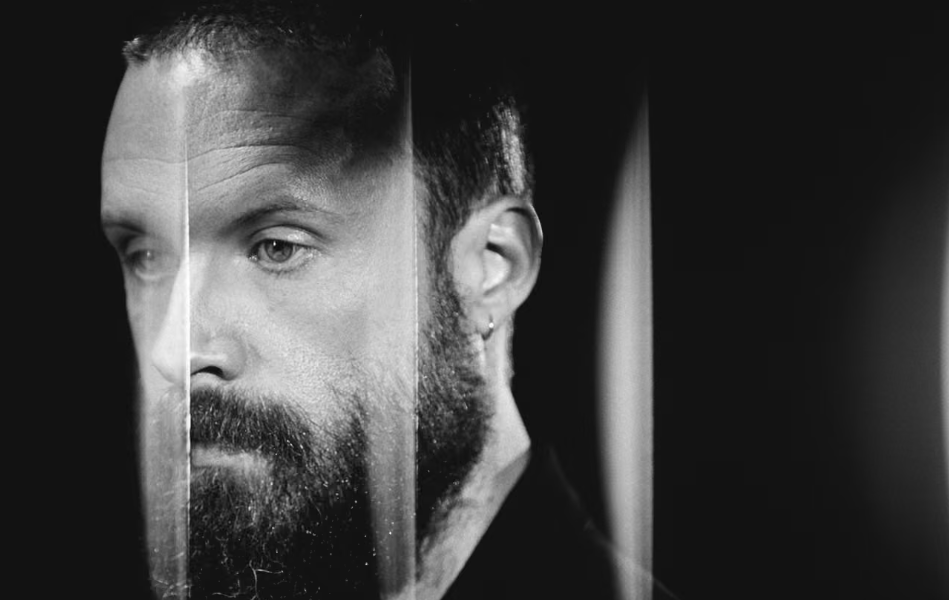
Buddy’s Rendezvous is the name of a diner, the place where the character in Father John Misty‘s song meets up with his estranged daughter after a spell in jail.
It’s an entire movie in song, FJM proud at how pretty his daughter has turned out, lying to the old soaks in the bars about what a great job he did bringing her up, she noticing that he’s wearing the same coat he had on when he was sent down and telling him she’s going to be a singer, he telling her not to try and please everyone all the time and to ‘forget that leftie shit your mom drilled in your mind…whatever happened to the girl I knew?‘ It’s a brilliant song, evocative and filmic, that in its arrangement alone stirs up notions of Hollywood’s golden age of Art Deco and smooth-rolling, shiny-spoked Lincoln Continentals.
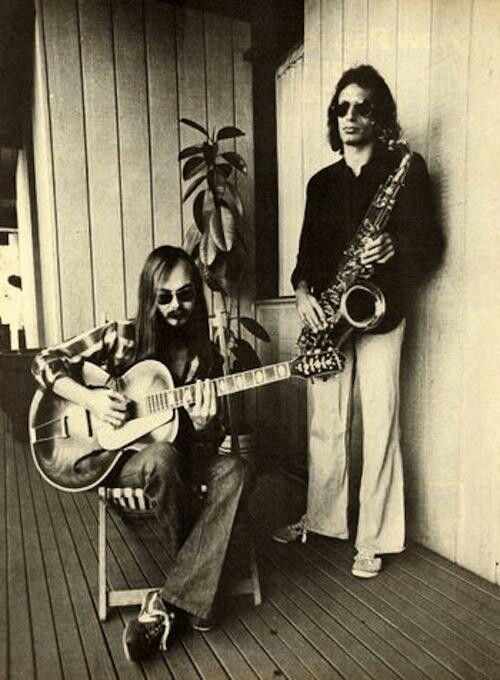
It begins with a film noiresque saxophone bleating out the bluest of notes, climbing out of a smoky nightclub fug into the dark L.A. night, a loose, doo-wopish backing track accompanying it, the strings rising like smoke from a disgarded cigarette holder at a cocktail table. If Misty and producer Jonathan Wilson were aiming for ‘atmosphere’, you might say they nailed it.
Buddy’s Rendezvous and its parent album, Chloë and the Next 20th Century is a bit of an outlier in the FJM catalogue. For the most part, gone are the songs of syphilis and sexual proclivities, in are big sweeping Hollywood ballads, deft and ambitious in arrangement and played with an entirely straight face by a guy who’s normally happy to come across like a southern-fried Nick Cave. It wasn’t an album I immediately took to, but like much of FJM’s output, repeated plays reward the listener. Think of it as A Little Touch Of Schmilsson In The Night for Gen-Xrs and you’ll get on just fine with it too.
Released on Sub Pop, the record was presented to look like the sort of old time jazz record you might routinely shuffle past in your search for charity shop gold. The gatefold sleeve is thick and shiny, the labels on the records feature a fictitious label name and, occasionally annoyingly, fictitious song titles (and song times too). Even the publishing credits are made up. It’s a concept as grand as Misty’s musical vision and has, over time, become a real favourite.
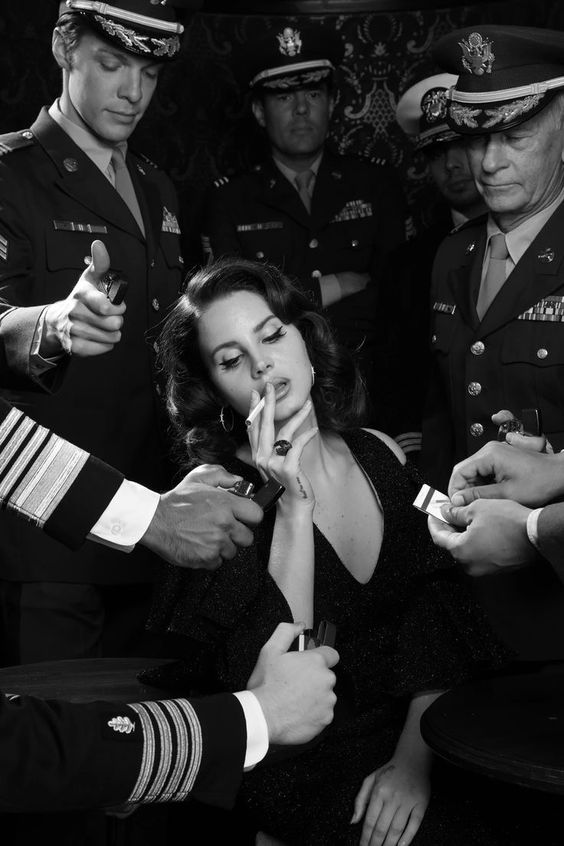
It stands to reason then that Lana Del Rey should do a cover of Buddy’s Rendezvous. Stately Hollywood glamour? Small hours and noirish? Slo-motion melodies unravelling like shook-free curls at midnight? Her version, of course, totally flips the perspective and that’s a big part of the appeal. Released as a one-off 7″ as part of the deluxe version of Chloë, it remains a sought after element of Del Rey’s expansive and exquisite catalogue.
I’m not sure of the officialness of the track below, but some enterprising and technically-minded public servant has produced a version with both Misty and Del Rey duetting on it. It seems to take FJM’s original backing track, leads off with Lana’s breathy vocal and by the end of the first verse has brought two idiosyncratic vocalists onto the one record. It’s clever and smart-arsed, but more than anything, just sounds terrific.
Buddy’s Rendezvous – Lana Del Rey and Father John Misty
*For the record, as much as I love the quirkiness of this ‘duet’, I think FJM’s original is the superior version. You should check it – him – out forthwith.
As autumn snaps itself sharply into winter and the early curtains of dusk draw their way across the gun metal grey skies on the commute home, the music being listened to in the car becomes equally as insular, wrapped tightly around itself for protection from the cold being blasted in by the westerly winds. As the windscreen wipers bump and squeak to the scraping of a Nick Drake cello or a Talk Talk bass glissando, as the indicators’ gentle ticking matches Sufjan Stevens’ gentle picking, as the sudden splash of a puddle matches the subtle crash of a jazz/folk paradiddle, it dawns on me that my music taste is seasonal.
Ska is for that first hint of summer, when it’s still technically early spring but folk are already waist deep in the filthy Firth of Clyde at Irvine beach. The reggae is reserved for the summer proper, although occasionally they clash by happy accident as playlists collide mid-barbecue. Dub? It sounds best on those rare days when even the sun can’t be arsed doing anything other than sit there and sweat. The twin colossuses (colossusi?) of Teenage Fanclub and Trashcan Sinatras work best in autumn, two groups who’ve travelled more than a few miles around the sun and, while being still recording and infrequently gigging concerns, are themselves in their autumnal years, with more miles in the rear-view mirror than what may still stretch ahead of them. Now there’s a sobering thought.
The new artists? They’re best kept for January when you can kid yourself on that this year will be the year when you embrace the new and unheard, before cracking mid-March for your annual Beatles/Clash/Smiths/Dylan/Bowie/Radiohead intake and the inevitable ‘why even bother with anyone else?’ thoughts. The yearly rotation of groups and songs and favourite albums is, to paraphrase Elton, the (song) circle of life. And I’m just fine with that, by the way.
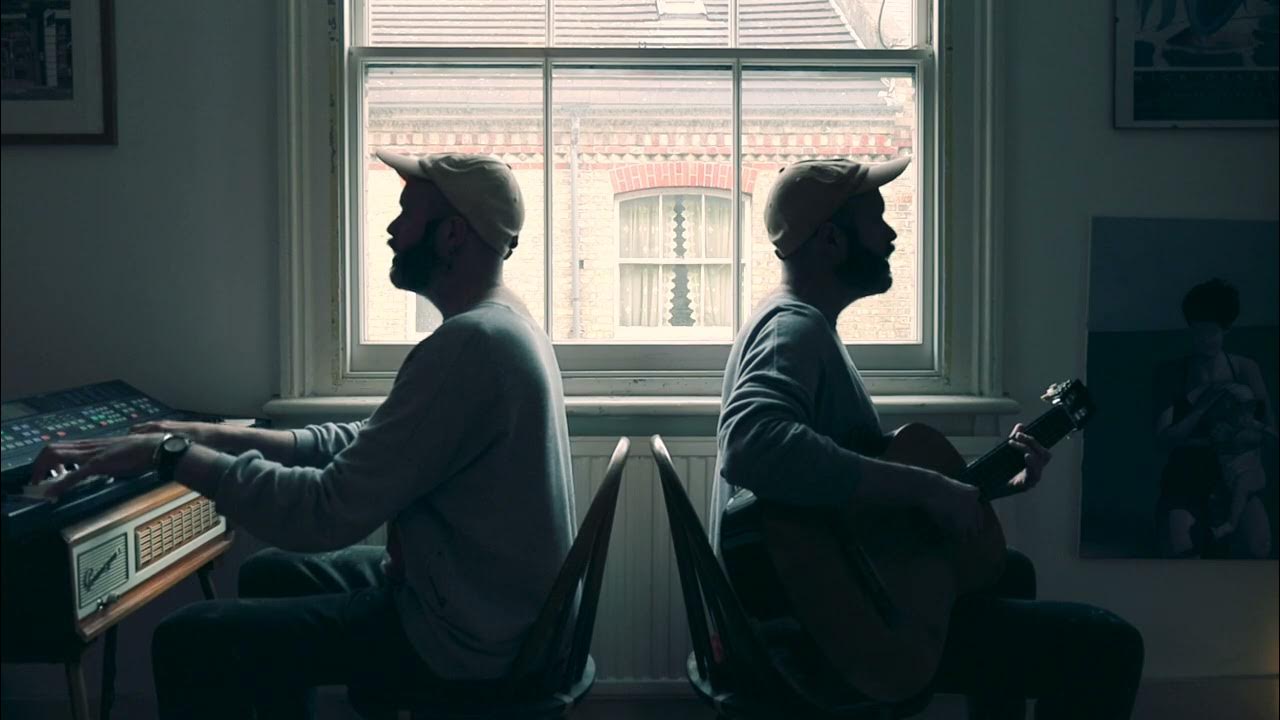
I’m getting serious late-autumn Elliott Smith vibes from this – When The Sky Darkens Down by White Magic For Lovers. I think you’ll really like it.
White Magic For Lovers – When The Sky Darkens Down
It’s windswept, mystical, close-miked and deftly picked. The finger scrapes on metal, the tumbling and ringing arpeggios that fall from six strings, the creeping chord changes and the whispered, late night vocal delivery all point to the church of Elliott. It’s uber melodic, steeped in melancholy and, with those low-in-the-mix syncopated bleeps and bloops that caterpillar their way through the background, something you’ll want to stick on repeat until the long, dark nights begin stretching free again. Lovely stuff.
Listeners of Guy Garvey’s BBC 6 Music show will be no strangers to White Magic For Lovers. He’s played them frequently for the past year or so, when tracks from When The Sky Darkens‘ parent album ‘Book Of Lies‘ first crept out. With musical roots stretching as far back as the Electric Soft Parade, the duo have decent pedigree…and a lovely way with an unravelling melody. You could do worse than investigate them. Start with Book Of Lies and its looping and somnolent lead track Axelrod, maybe, and work your way back from there. It’s a rewarding journey.
I’m a sucker for a music biography (heck, I’ve written at least one) and so found myself at the Mike Joyce book event in Glasgow last week. The most bizarre thing happened before it had even started.
A couple of guys came in and sat in the empty seats beside me. With nothing happening on the stage as yet, they did as we all do – they took out their phones and began scrolling through social media. Five minutes later, the guy next to me started Googling ‘Mike Joyce’ (I wasn’t really being nosy; being of a certain vintage, the text on his screen was massive – there’s a guy who sits about three rows in front of me at the football and half the crowd can read the texts his wife sends at full-time too – it’s clearly a common thing if you fall within a certain demographic.)
Very soon my neighbour alighted on the interview I did with Mike eight or so years ago, where I asked him to chat about his favourite Smiths tracks. I watched side-eye as the stranger beside me read the lot, desperate to say something to him, but too timid to acknowledge it. I then did as any self-respecting ‘like’-hungry social media user would do, and stealthily updated my Facebook status with my phone held very close to my still-thumping chest as I typed. Weird and strange, but pretty cool.
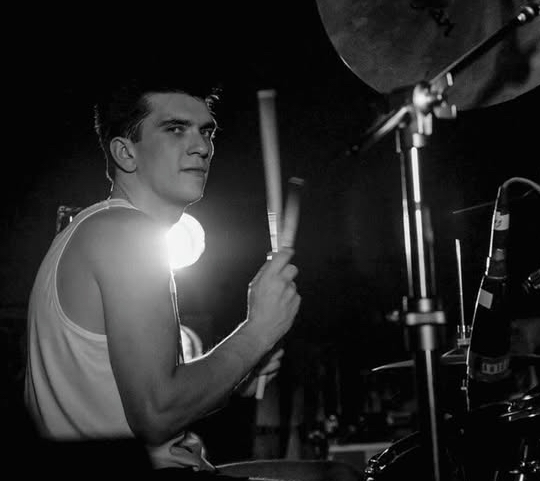
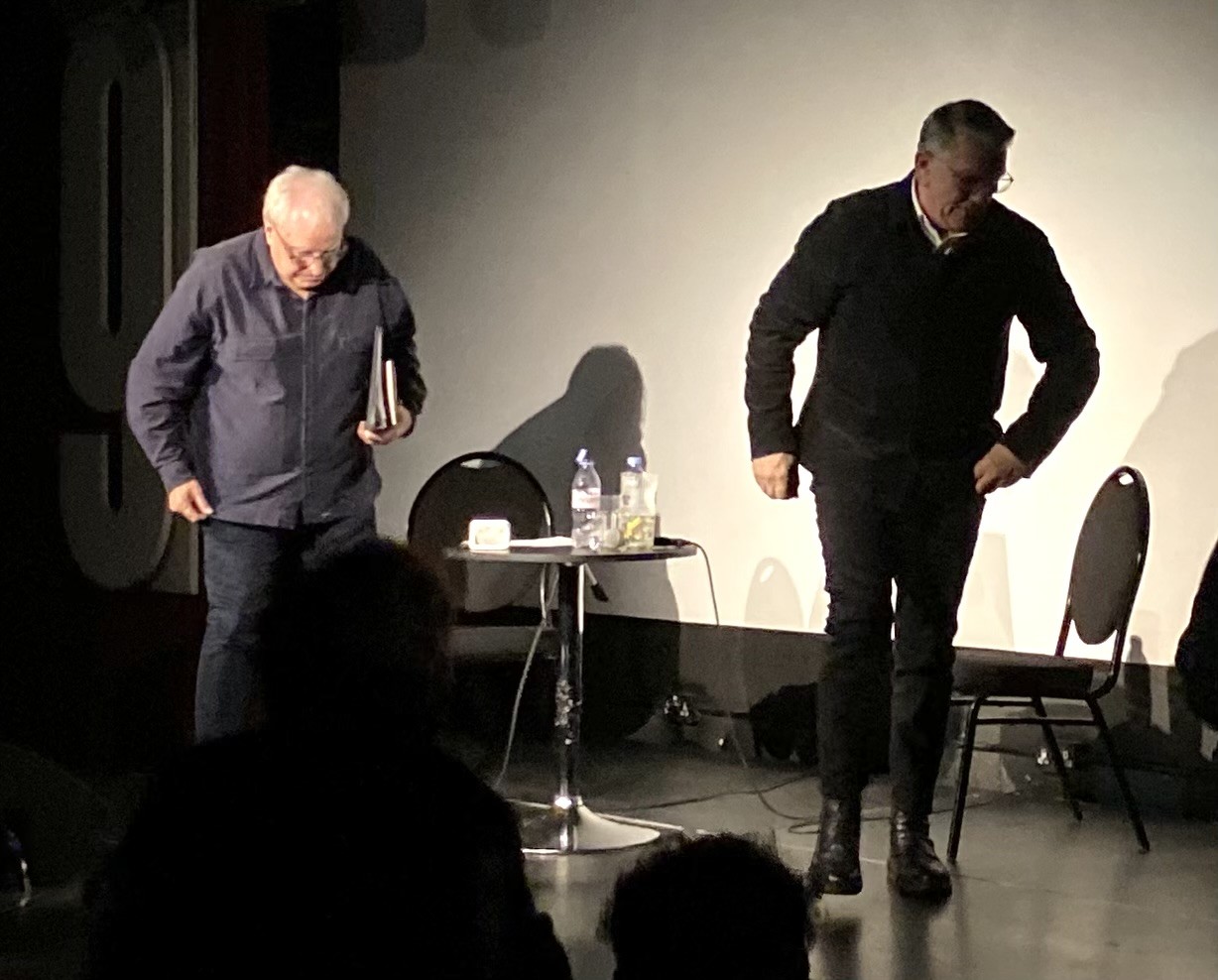
Held in the Glee Club, the event was, as it turned out, the perfect fit for a venue more in tune with comedy events than music or literature. Interviewed onstage by Scottish radio legend Billy Sloan, Mike Joyce was funny, engaging and extremely lucid, singing drum parts and guitar riffs and offering up tasty morsels of Smithsian trivia – direct despatches from a constituent part who’d fought the good fight from those unique and idiosyncratic trenches.
With a mixture of significant and less consequential events from the pop landscape of 40 and more years ago pouring rapidly and freely from the affable drummer, many being told for the first time, he offered a unique insight into the deft workings of the Morrissey and Marr song-machine. Over two halves of a night, he had a quietly rapt audience, and even when the questions from the floor at the end turned serious – he weeps softly when talking about Andy Rourke – and then tediously obvious – ‘Will The Smiths ever reform?‘ (puh-lease?) – he answered them all with gracious dignity and a sense of humour that stopped it all getting a bit silly.
Mike, as it turns out, is the biggest Smiths fan of them all. ‘What’s it like selling out the Albert Hall?’ he asks himself in the intro to his story. ‘It’s unfathomable’, he answers simply. He can’t quite believe the things that happened to him, from hearing the first mind-blowing Smiths recordings, to playing Top of the Pops, to having Mick Jagger dancing side-stage in New York, he and Johnny mid-song and gape-mouthed at the ridiculousness of it all. Mike’s Smiths years were a blur of ‘pinch me’ moments that, even nowadays, he can scarcely fathom. He spent little more than half a decade in The Smiths, yet Mike’s entire life since has been defined by those years. And now, it seems, is the time to tell his story.
Joyce, as you may know, divides opinion in the Smiths community. On the one hand, he’s a quarter of one of our most individual and exciting groups. On the other, he’s the bandmate who refused to settle for ten percent, the traitor who took the group’s principal members to court for a greater share of what he felt he was owed. It’s all a bit murky and eugh, really.
But yet, while he briefly/bravely refers to this, Mike prefers instead to focus on what made The Smiths so great; the ridiculously high watermark of consistent quality across their catalogue, the riotous gigs, the in-band humour and the tight-knit ‘us v them’ stance that got them through it all. The Drums, he says, should be approached as a celebration of the times rather than a warts ‘n all story. It is. I’m halfway through and it’s a very easy and rapid read. I think you’d like it.
To bookend the show, something else happens.
At the show’s mid-point, Billy Sloan had spotted me from the side of the stage and had come over. ‘Don’t leave at the end,’ he implored. ‘Wait here.’ (I know Billy a wee bit, it’s not as if he has a habit of picking random strangers out of a healthy crowd). At the end, he’s back over. ‘Did you buy a book? D’you want it signed? You’re not waiting in that queue – look at the length of it…‘ and he points to a couple of hundred folk snaking their way up the side of the venue and up to the mezzanine where the signing table is set up. ‘Follow me. Quick!‘
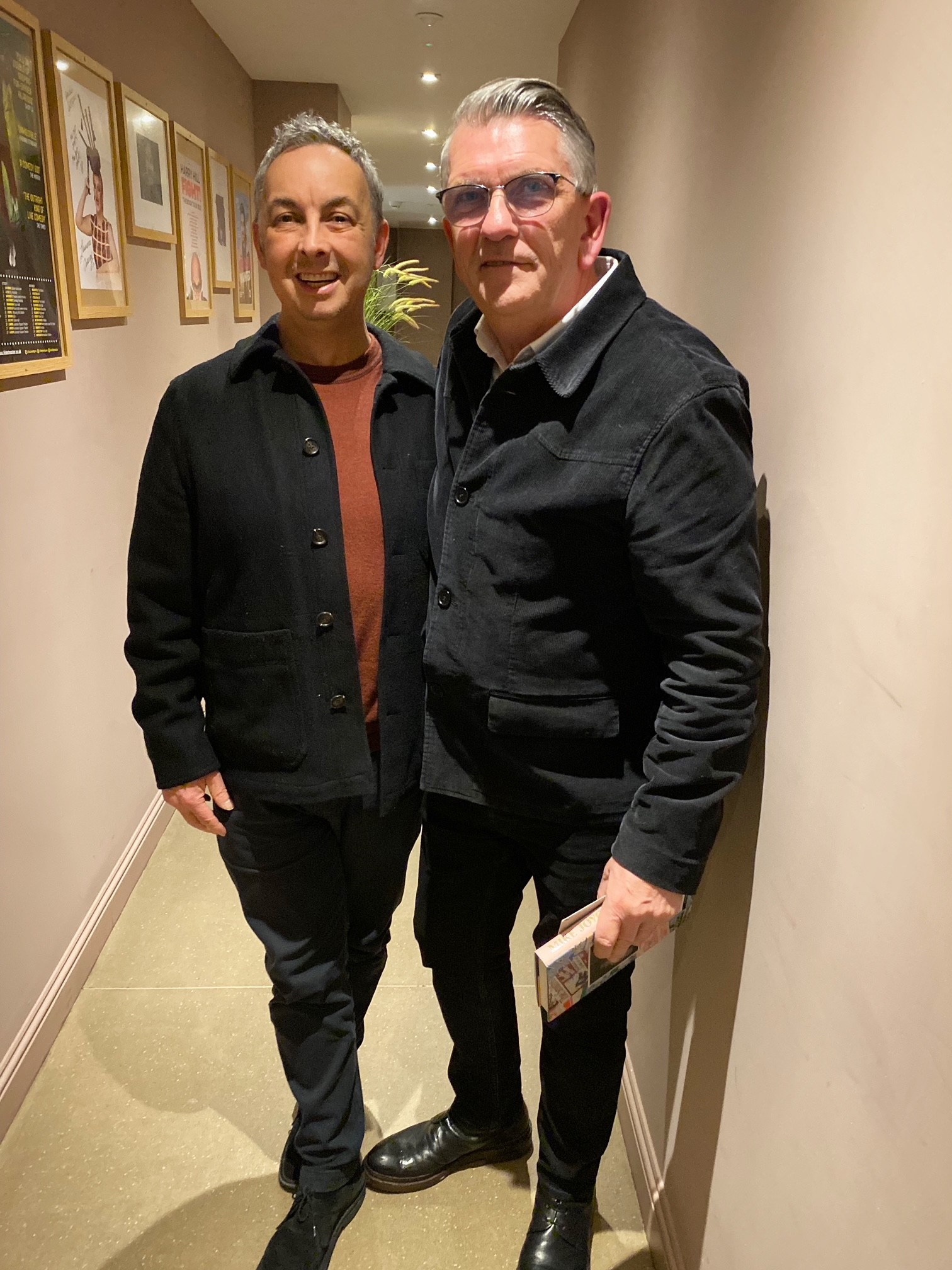
We’re backstage, Billy fussing over my bag. ‘Get your book ready, take the record out of its sleeve, d’you have a pen?‘ And then… a classic Sloanism. ‘Mike! This is my good personal friend, Craig, He’s a great writer and you should meet him.’ And Mike Joyce is there. He’s easy to chat to, but all the things you might want to say, he’s heard them all a thousand times. I don’t even think to mention I’d interviewed him in the past (and I actually think that interview played a small part in this book being birthed.) Instead, I play it cool.
“Thanks for the music, Mike. It’ll play forever.”
“I know it will,” he winks.
He signs my book, he signs my 7″ of Hand In Glove, drawing a wee snare drum above the place where Johnny signed it a decade ago and we chat, of all things, about how shite it is to lose musical allies and friends to cruel and unforgiving illnesses.
Not yr average Wednesday night.
The Smiths – This Night Has Opened My Eyes (demo)
Mike Joyce ‘The Drums‘ is published by New Modern and is out now.
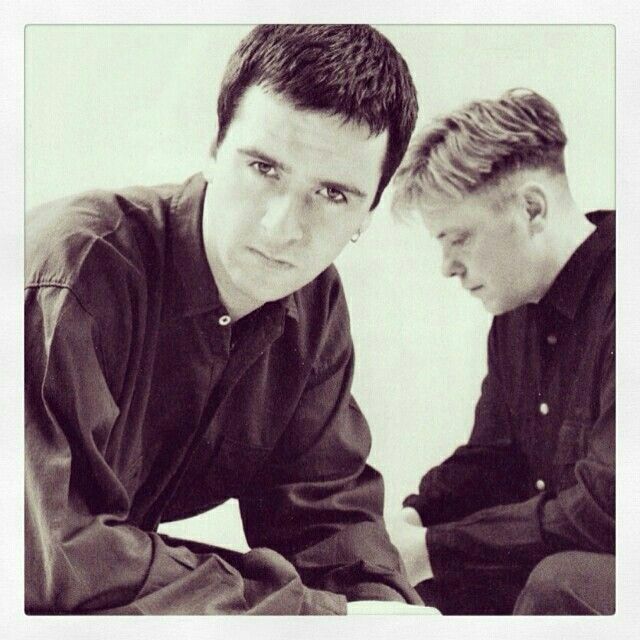
It’s an accepted truth that Electronic was very much a bit-part project, an occasional coming-together of alternative music royalty in the gaps of downtime between their respective day jobs; Bernard and New Order, Johnny and The The…and The Healers…and The Cribs… and whoever else was looking for a six-string gunslinger for hire. The reality is much different.
Although conceived by the duo of Sumner and Marr as a collaborative and ever-shifting line-up of guest musicians and vocalists, Electronic was an active and going concern for almost every year of the ’90s. The self-titled debut album was worked on quietly in the background for months at a time before seeing the light of day in 1991. The follow-up, Raise The Pressure, took two years to put together. 1999’s Twisted Tenderness, the third and presumably final album in Electronic’s discography took a similar time to conceive. Johnny has oft-debunked the notion that he and his pals reconvened for a couple of weeks now and again to throw an album together; a studio head since the earliest days of The Smiths, to him, being part of a group is a 24-hour thing. Bernard, with his patience and dedication to programming and getting the most out of ever-changing technology, is cut from a similarly dedicated cloth.
1996’s Raise The Pressure was written during interesting times. Conceived in 1994, it began life just as Noel Gallagher was borrowing guitars from Johnny to use on the first Oasis recordings (look on the cover of Supersonic and you’ll spot Johnny’s famous black and white Rickenbacker) and was released just as Noel’s band (and Johnny’s Les Paul) were getting ready to headline Knebworth. For one of these acts (and it ain’t Electronic), that’s quite a trajectory.
Raise The Pressure was a product of the last great fertile period for UK guitar bands, yet it never quite made its mark. Here’s an album recorded by two of music’s leading lights, one of whom at least, with his moddish hair and Clarks shoes – and uncanny ability to wring seven shades of melody from six strings – could be considered the uber-cool uncle of the entire movement…and no-one is all that bothered about it.
Lead single Forbidden City is a much under-appreciated track. Despite coming gift-wrapped in New Order melancholy and ever-evolving Marr riffage, it clunked its way to number 14 before vanishing for good. Just what was wrong with the record-buying public?!
Electronic – Forbidden City
The track runs the whole range of Johnny’s guitar styles; layers of sparkling electrics sprinkled across a bed of ringing acoustics…open chorded majors in the verse…barre chorded minors in the refrain…lovely complementary run downs between vocal lines in the third verse…the up the frets dazzling stuff during the choruses…the groaning, multi-layered (and sometimes backwards) feedback solo in the middle… Forbidden City really has it all. In an era of retro bores who were happily rehashing their way into the charts and getting folk to part with their money in Our Price seven days a week, thanks to their Who and Stones and freakin’ Herman’s Hermits rip-offs, (Hello Power! Hello Ashcroft! Hello Fowler ‘n Cradock!) Forbidden City deserved so much more.
Even an appearance on prime time telly couldn’t really help it.
On TFI Friday, Bernard ‘n Johnny are backed by Doves’ Jimi Goodwin on bass, with Black Grape’s Ged Lynch keeping Karl Bartos’ drum stool warm. Bernard is a ball of on the spot sprung energy, punching the air between lines, doing his trademark whoops when he needs to take a breath, gurning indiscriminately at an audience equally hopped up on the good vibes of the times. By the looks of it, Johnny hasn’t yet discovered running and is in the midst of his fat Elvis phase. Unruly hair, jawline as loose as the jeans he’s wearing and dressed in some sort of fleece/fur overcoat, he chews gum while stomping on and off his pedal board, giving, as he always does, good camera. There’s more than a whiff of chemical enhancement to the whole thing – it is the mid 90s after all – and it’s all rather fantastic.
A chart smash though? A definitive track of its era? A firm favourite amongst the masses? There’s not a hope, as the song goes.
Almost a couple of years ago I met with a publisher with a view to getting the best of Plain Or Pan onto the printed page, which is, as you well know, the only print that really matters. You don’t need to ask a musician if they prefer mp3 to vinyl. It’s no different for folk who spend time agonising over words and rhythm and metre. There’s vindication in seeing your words in physical print. It means someone else has thought them worthy of sharing with others. Anyone can pick them up, flick through them, go back and forth, even highlight parts if they happen to be some sort of book masochist, but until they’re printed, the digital word lacks gravitas and acceptance. Any idiot with a keyboard and access to the internet can do this – the idiot writing this, for example – so, for me, the printed word is king.
Our meeting went well, I thought, and at the end it was agreed that I’d select the best of Plain Or Pan’s hundreds of articles and compile them into a book with a cohesively-running theme. I’d do some fact checking, tweak a few words here and there, have it proofread and have it all ready for publication. I set to work immediately.
I trawled the blog from the early days to the most recent, discounting articles on account of being too short, too similar, not good enough, just plain embarrassing – as a writer it’s really not hard to find fault in your choice of words. But a good many of the articles still held up. I’d tell you I was surprised at this, if only not to sound like a raving egomaniac, but I knew I had a way with words and phrases, so when long-forgotten articles were re-read in the cold light of a decade and more later, it was thrilling to find many of them were genuinely still exciting. “I’d forgotten about that!” “What a turn of phrase!” “An unexpectedly perfect metaphor!” Shucks, reader, I positively glowed with pride!
I knew I had a decent book in the making. It’d be split into three distinct sections; Life, Death and Music and could be read from page 1 to the end or dipped in and out of as the reader saw fit.
I secured permission from Roddy Doyle and Happy Mondays to use their words/lyrics in a couple of articles. Wayne Coyne from yr actual Flaming Lips, when asked if I could use Do You Realize? as the central theme to an article, took one read of it and said, “Go right ahead, brother!” It was game on. All the best articles would be in there.
After much detective work, I secured permission from a German exchange student to use an image they’d shot in my hometown of Irvine some 40 years previously for the book’s cover. I had everything I needed; it really was game on.
Once compiled, I used slightly hooky ‘found’ software to transfer the whole thing to my Kindle and I read chunks of it every night, making notes where changes had to be made. There weren’t many changes, in all honesty; everything that I’d selected flowed with a rhythm and pace that would make the whole book a page-turner and unputdownable object of desire.
The final job was the proofreading, a thankless task, and something my sister gamefully tackled with eagle-eyed enthusiasm. After tidying up a few stray words, lost commas and the occasional typo, it was ‘bound’ together in Word; the German exchange student’s eye-catching and very apt cover, an actual (and beautiful) foreword from a well-known writer pal of mine, a contents page and the three big sections. Watch out world, ‘POP Record‘ is coming.
It was sent to the publisher.
‘Yeah…I’m having second thoughts here…sales potential…publishing is struggling at the moment…I’ve other books ahead of yours in the queue…‘
It was one muttered and mumbled excuse after another.
It was not to be.
The whole thing currently rests in a folder on my computer. It just needs a publisher who’ll take a chance on it. Believe me, I’ve tried. And tried. And tried. It’s good to go, man. Just press print and it’ll be ready. You think it’d be easy, huh? I mean, I could go the whole self-publishing route, but that strikes me as kinda phoney. I’ve not totally dismissed the idea, but, a bit like musicians, anyone can release a home-grown CD…it’s another thing entirely to have someone release it for you. There’s that vindication word again.
I was telling this to author Andrew O’Hagan last night. He was in Glasgow promoting ‘On Friendship’, a collection of his essays on, eh, friendship and he’d asked me afterwards if I was working on any writing at the moment. *Two things, I said, and opened with the Plain Or Pan story above.
“Fuck ’em,” came Andrew’s succinct reply. “It deserves to be out there and you deserve a publisher that’ll treat it accordingly. I wonder if I can help?”
It turns out though that he needs some help of his own.
Andrew O’Hagan, the writer who at the age of 24 received a letter from Norman Mailer praising his writing style, the writer who spent time with William Burroughs, who travelled Ireland and Scotland with Seamus Heaney, who sat on the steps of the building opposite Fred and Rose West’s house and documented the whole grisly tale, who was editor-in-chief at the London Review of Books, who worked closely with Julian Assange and the WikiLeaks team to expose a corrupt world, the ambassador for UNICEF who wrote the modern classic Mayflies and watched on as it made the leap from page to screen must also, it appears, kick against the pricks.
Currently, he’s locked in discussion with Netflix over the $50 million production of his most-recent novel Caledonian Road. Should it be three seasons or five? Should he be involved in adapting his novel for the screen, or is that the job of Netflix’s screenwriting team? Not for Andrew the goal of having his wee blog posts published on recycled paper for posterity, but – here’s the thing! – writers at every level still face opposition, friction and rejection.
You can be a blogger firing out pop-culture missives to a few thousand folk a week or a best-selling and highly respected author, but we’re both just well-oiled yet different-sized cogs in the same gritty machine. And I can draw some sort of comfort from that.
Here’s Fairport Convention‘s suitably melancholic and sepia-tinted Book Song. Waltz time and folky, it’s a song about what might have beens and features a terrific electric guitar part (Richard Thompson, I’m assuming) and a lovely duetting male/female vocal (Iain Matthews/Sandy Denny). It’s from What We Did On Our Holidays which is very much an album you should strive to hear if you never have.
Fairport Convention – Book Song
*The other thing I’m working on?
“I’d LOVE to read that!” enthused O’Hagan. Vindication, again. So while ‘POP Record‘ languishes in the ‘what mighta been’ pile, my attentions will turn to something entirely different.
Drop in again in a year or so when I’ll be back to bemoan the difficulties I face in securing that particular sure-fire Sunday Times best seller.
What is it with bands who need to look across the Atlantic for belonging and acceptance? That clattering Velvety/Stoogey feedback ‘n twang racket that the Jesus And Mary Chain committed to tape in 1988 wasn’t called Sidewalking for nuthin’. The out of step and forever out of tune Californian slacker rock collective formed by Stephen Malkmus a year later wasn’t called Pavement for nuthin’ either. A Scottish band in thrall to the United States…an American band who held their Anglophile obsession sky high for all to see (especially with regards to The Fall – themselves a northern English group named after the American term for Autumn (maybe if Mark had named them The Autumn purely for the American market, The Fall would’ve been huge…). The other side of the world always seems more glamorous, I guess.
Loads of great songs and lines have been written about this time of year. There’s something about summer’s long and warm days shrinking in the rear-view mirror while the slow-creeping twilight and morning frost arrives head-on that prompts a melancholic pastoral and reflective creativity in our favourite songwriters. Ray Davies’ Autumn Almanac may well be the pinnacle of this, but discount Steve Marriott’s Autumn Stone and the Trashcan Sinatras’ widescreen and windswept Autumn at your peril. Add in Bill Evan’s highly evocative Autumn Leaves and Nick Drake’s Pink Moon and you have yourself a playlist to listen to as you stack your newly-chopped logs beside the woodburning stove that is soon to be the bane of your neighbours’ lives.
History may yet prove that Man Made, Teenage Fanclub’s 9th album, ushered in the group’s autumnal years. One of the last to feature the holy triumvirate of Blake, McGinley and Love on writing duties, it’s an album that comes dusted in reflective lyrics (Cells, Flowing), uplifting melancholy (Time Stops) and at least one blazing Love-authored and Love (the band)-inspired stomper (Born Under A Good Sign). It also features this slow-cooking, Gerry-created Fanclub classic:
Teenage Fanclub – Fallen Leaves
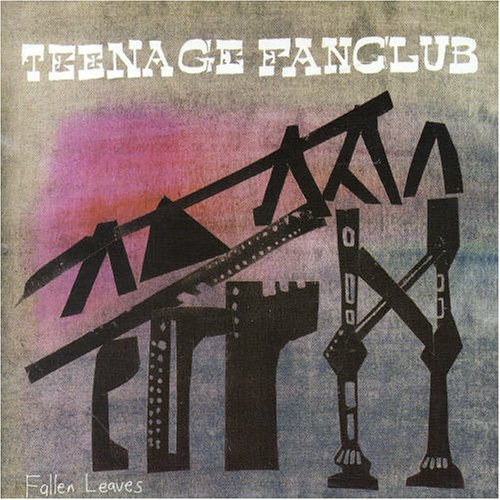
Although written in the biting cold of a Chicago winter (Chicago L Train-inspired artwork above), Fallen Leaves’ imagery of ‘empty train carriages, sinking suns, sparks and flames, useless dust‘ makes it a perfect addition to that canon of autumnal songs that sound perfect when the trees begin to shed their clothes and settle in for the winter. Play it repeatedly through a pair of headphones as you crunch and kick the leaves across Kelvingrove Park in this week’s October break and it’ll make more sense than it ever did before.
It’s a wistful, Love-only vocal. Gerry sighs and longs in the verses, and although he double tracks himself for a bit here and there, there’s none of that throw open the windows wide aural sunshine you’d get if the others joined in on the chorus harmonies. Stubbornly autumnal from title down, the song is something of a Fanclub outlier, and possibly better for it.
Gerry has a brilliant way with an arrangement – the fizzing guitars that repeat the song’s hooky refrain, the echoing and churchy ’60s-flavoured keyboard, the whammy bar action on the high chords, the froth of vintage synth that accompanies it all…it’s a really well put together pop song; simple and hooky and interesting…and something that the Love-free TFC has struggled to do since. But we’ll leave that there.
When the Stone Roses went from midnight telly to ubiquity in that couple of short months over the summer of 1989, they could do no wrong. By mid-July, they’d gone from underground to overground, the nation’s t-shirts were getting looser and everyone’s trouser legs were getting subtly wider, creeping downwards and outwards in direct proportion to the decaying dead ends of the Smiths quiffs their owners had stubbornly held onto until the next important band came along. And here they were, Bloggsed up and baggy, bandy-legged and cocksure with the tunes to match, an aural golden sunrise and then some.
She Bangs The Drums was released on July 17th and there on side 2 (and also side 1 if you have one of the many mis-pressed copies) was the track that we’d been desperate to find since first hearing it a month beforehand when the group played Rooftops in Glasgow. That setlist that Grant Canyon swiped from the edge of the stage, written, as it turned out, in John Squire’s own elegant hand, had it called ‘Standing’, but on record it was given its Sunday name: Standing Here.
Stone Roses – Standing Here
Beea-woo!
That first guitar bend has you sitting straight up.
Bee-ah-ee-ah-ee-aaaoooww!
When that sixth note cracks and breaks into controlled feedback, the hairs on the back of your hands prickle. Spidey senses tingle. This is gonnae be a good one.
Standing Here is peak Stone Roses. It is at once rockin’ and rhythmic, swirling and psychedelic, a proto blast of Hendrixian histrionics deftly played across six strings yet somehow replete with the wobble-headed shuffle beat and groovy, elasticated, tight-but-loose bassline that quickly came to define the group.
A 7th chord crashes, the snare shuffles and Ian Brown, a singer who’s currently on top of the world, sings about standing on a hilltop and surveying what he sees. What he really sees is the prize; best band in the country by a mile. He’s drifting through the city, he’s swinging through the trees, he’s looking through your window, he’s everywhere…and he really is in the summer of 1989. John Squire freeforms his frazzled blues on top of the sugar-coated groove and we’re properly off and running. By the second verse he’s firing off riffs you can whistle, even 35 years later when the song pops randomly into your head.
By the second verse too, there are lovely, low in the mix ‘woo-ooh‘ backing vocals, not noticed back in the day when I was cranking my own ham-fisted version of the lead guitar track atop the heavenly choir, but a vocal line that emerged one day from the heady stew and presented itself like a gift from above, Stone Roses still surprising all these years later.
I don’t think you think like I do, goes Ian, and the group bounces around him before John leans into a guitar break, bluesy and bendy and just on the right side of rockist for all the purists who worship at the altar of indie. Throughout the track, the group instinctively knows when to drop out, when to allow the vocal to shine, or to highlight a stut-stut-stuttering bass part or yet another supreme guitar hook. And throughout it all, Reni shuffles ambidextrously, the head-down, piston-powered engine of the band, the funkiest drummer of them all, elevating his band above all peers with each successive paradiddle or technicolour cymbal splash. He’s the difference. Every time.
Then the ending. There’s not a Stone Roses bootleg on the planet that can make Ian Brown sound passable as a singer, especially over the quieter, contemplative parts, but on record he’s the consummate angel, God’s choirboy taking us home as the band ebbs and flows its way to a gentle end, waves crashing on the sand as they lullaby us back to a regular, standing heartbeat. John Leckie did an awful lot of the heavy lifting in that studio.
All the best bands have great b-sides. Standing Here might not even be the Stone Roses’ best b-side, but it’s quite the b-side all the same. Put the needle back to the start just one more time, will ye?
A couple of weeks ago we had a weekend in Edinburgh. We tend to go every year around Festival time, usually as a family, always just for a day and always when the madness of the Festival is in full flight. The last time we did this though was a bit of a disaster; the four of us had very different ideas of how our day might look and none of us saw our unvoiced visions come true. I fancied a walk round the Old Town, just to take in the vibe, y’know, maybe even a casual jaunt out to Stockbridge, purely for the purpose of discovering new record shops, dreaming of pausing for a well-deserved IPA on the way. Daughter had her mind set on eating vegan croissants in Instagramable, pastel-toned, artisan bakeries. The boy had trainers money burning a hole in the deep pockets of his slim-fit combats and wanted to go to those hot beds of Edinburgh tourism JD Sports and Sports Direct. Only Mrs Pan was happy to fall into the heavy flow of human traffic on the Grassmarket, avoid the massed silent disco and take her chances to see where it all took her/us. We all fell out, we vowed never to return as a bickering four-piece, and we stuck to our word.
At Christmas the kids presented us with a pair of tickets for the Military Tattoo – the reasons for which stretch back to another family disagreement – and so Mrs Pan and myself booked a hotel and had a fairly civilised yet cultured weekend away. To be honest, the Tattoo, with its brass and buttons and ten gun salutes wasn’t really my kinda thing, but we had great seats, the evening weather was balmy (even up at the normally baltic Castle) and the whole thing passed by in an impressive blur of noise, colour, and military barking. The chieftain/military guy who compered and linked the whole thing together was a walking, talking, cliched shortbread tin of rugged Scottishness. Planting his legs firmly like the Barony ‘A’ Frame and looking like the artwork on a box of porridge oats, he swept his hand theatrically across the darkening skies while bellowing out the tourist-friendly guide to auld Caledonia.
‘Scotland! Will ye luk et hurrrr! Take a moment tae savourrr the scene. Wae hurrr bonnie hills and purrrrple mountains, rrrrrivers and glens, she’s stood firrrrm and majestic for centurrries, thrrrrough warrrrtime, peacetime, the best and worrrrst o’ times. Can ye hearrrr? The pipes and drrrrrums o’ the Rrroyal Higland Fyoozzileerrrrz! It’s a rrrare, stirrring thing o’ beauty!‘
And, with military precision, a massed band of pipes and drums floods the arena to the gasps of the significant number of ex-pats in the crowd. It’s a slick event, 75 years young and sold out every night a year in advance, so who am I to turn my tartan-averse nose up at it? Mrs Pan loved it. Luvved it, aye.
It’s the peripheral stuff – the fringe stuff, or Fringe stuff, even, that I enjoy the most. Super-smart magicians pull £20 notes clean outta the Royal Mile’s fresh air. Street piano players in evening wear rattle through the classics with all the elan of an Usher Hall headliner. An atom-sized human cannonball does death-defying stunts just because he can. And a troupe of young Asian men in tights and flesh-coloured codpieces (and nothing else) do graceful and bendy yoga/silent ballet to a confused but appreciative gathering crowd.
Welcome to Edinburgh in August.
The streets are packed, the busiest I’ve ever seen the capital’s cobbles, a noisy mixture of plodding tourists, annoyed locals and a never-ending gauntlet of flyer-thrusting young hopefuls keen for you, for anyone, to take a punt on their show. There are a lot of shows to pick from; comedians and clowns compete with free tequila slammers and Oxbridge am-drammers for your time and attention. One-woman reviews on the gender politics of Taylor Swift, one-man live art installations, “one-legged bicycles”, to quote Liam Gallagher a few days later. It’s all going on.
We threw our lot in with the comedians; the fast-rising Stuart Mitchell, the dry and droll Ian Stone, the superb Takashi Wakasugi and Australian Aidan Jones – whose whole show revolves around deconstructing the musical puzzle that is Chopin’s Nocturne in E flat major – being the pick of what was a high watermark of good quality comedy at sensible prices. 2.6 million ticket sales were recorded at the Festival and Fringe this year. Add to that the quarter of a million bucket-hatted mad-fer-its who rolled into town for the Oasis shows and you can begin to get a sense of the bonanza that the hotels and pubs and restaurants look forward to. Capital gains indeed.
It’s now a tradition that when in Edinburgh I stand self-consciously in Cockburn Street below the entrance to Craig’s Close while Mrs Pan waits for a gap in the tidal wave of tourists to take a quick picture. I must have half a dozen and more snaps from this location, from black hair to grey, 30″ waist to 34″. My pal Scott aped the very same pose just this week – get yr own close, McLuckie! My dear old work colleague Sharon even went so far as to sketch me from one of the pictures in recent years. I’m building up quite the portfolio.
Another pal (and Fall fanatic), Iain, pointed out a year or two ago that Mark E Smith and the rest of The Fall had poured out of the opposite end of Craig’s Close in one of The Fall’s videos. A quick bit of research shows that this occurs in – of course – the promo film for Edinburgh Man.
The Fall – Edinburgh Man
Edinburgh Man might be the closest Mark E Smith got his group to soul music. They were no strangers to soul covers over the year, but Edinburgh Man has none of the caustic and off-kilter backing or ranty vocalising that characterises most of The Fall’s discography. Sure, the guitars are kinda jittery and twangy and could break into a hundred mile an hour sprint with little encouragement required, but mainly they remain understated. There’s a high cooing backing vocal that wafts in and out like the haar from the Forth. There’s an understated keyboard line. And atop it all? Well, you might be inclined to say that Mark croons his way through it. It’s certainly heart-felt.
As I sit and stare at all of England’s souls
I tell you something –
I wish I was in Edinburgh
I don’t mind being by myself
Don’t wanna be anywhere else
Just wanna be in Edinburgh
They say you project yourself
But I’m an Edinburgh man myself
Smith moved to Edinburgh in the late 80s. He’d split with Brix, was finding Manchester too druggy and wanted a fresh place to start again. If we’re splitting hairs here, MES actually moved to Leith which, as anyone knows is to Edinburgh as Salford is to Manchester – certainly something that Mark Edward should’ve known. Still, the year or so he spent in ‘the real Edinburgh‘ as he called it, gave the world Edinburgh Man. Thanks for that, Mark.
1978. At the time when Saturday Night Fever and Grease stubbornly refuse to budge from the top two positions on the album chart, just as the whole of Scotland is hypnotised by Archie Gemmell turning Dutch defences inside out down there in South America, right about the point when the ahead of the curve Swedes were banning aerosol sprays on account of their ozone-damaging properties (good luck being a Stockholm-based glue-sniffing, hair-dying punk rocker), Joy Division were releasing their An Ideal For Living EP.
If 1976 is punk’s Year Zero – and common consensus decrees it is – then the two-full-years into the future that is 1978 signifies the musical movement’s transition into post-punk. The unforgiving world of now! sound moves fast, and unless you’re one of those opportunistic phlegmy-trailed third rate, third wave cartoon punk bands who came along in the scabby wake of punk’s outgrown dead ends, the scene’s key movers and shakers were now very much in their imperial post-punk phase.
An Ideal For Living and its writers may have been a product of the punk scene, but see past the Hitler Youth drum-beating boy on the cover and the band’s name with it’s links to the very worst of contemporaneous modern history and you’ll conclude that, in attitude and outlook, Joy Division and their debut record was nothing less than post-punk.
It’s the breathing space that’s given to the instruments that does it.
Joy Division – No Love Lost
It’s low-budget, high concept, ambitious cinematic rock and then some. Just three instruments and a vocal line; linear, separated and identifiable, crystal clear and with all the fat trimmed off at the source. Peter Hook’s clang of bass and four string metronomic pulse, Kraftwerk by way of Salford, Bernard’s conservative use of slashing and scraping feral guitar, fed through an ear-bending phaser pedal for additional disorientation, the sheer dynamics of the drop ins and drop outs as the bass and drums dictate proceedings… this is all high drama travelogue played out by serious young men.
Where the worst of punk sounds like it’s recorded on sandpaper inside a cardboard box, the best of post-punk sounds futuristic and other-worldly.
It’s the drums on No Love Lost that separates it from the other guitar-driven records of the era.
Stephen Morris really wants his drums to sound like the expansive steam-powered hissing and spitting that gives Bowie’s Be My Wife such a coating of propulsive Victorian workhouse modernism, and although the group has yet to orbit Martin Hannett’s wild and idiosyncratic solar system, the production on No Love Lost hints at the very out there-ness they’d soon discover with Factory’s maverick desk controller. Morris’s drums are electronically treated; the snares refract and ricochet at the edges, the toms beat a heady and reverbed tribal thunk, the hi-hat sticks two fingers up to Sweden and sprays a tsk-tsk-tsk ton of ozone-damaging aerosol into the Tropsphere, the ride cymbal splashes a silvery sheen across the top of it all… it’s not a million miles away from Low-era Bowie at all.
The vocals don’t appear until the three minute mark, a long intro – almost prog – by any fat-free group’s standards in 1978, and when they do arrive they’re both shouty and wordy. Ian Curtis flits between a mouthy punk rocker where the tune is less important than the attitude and the sort of arty and enigmatic spoken word delivery that you might find on a Velvet Underground record. As with the drums, the edges of his vocals are treated in echo and delay and all manner of mystery-enhancing effect-ect-ects. Did they ever better this? Of course they did…but as first releases go, No Love Lost is a real stall-setter.
Yeah. When Travolta was omni-present, when Gemmell was achieving God-like status, when Sweden was leading the way in planet-saving eco-friendliness, Joy Division was sowing the very serious seeds of post-punk. Essential stuff, I’m sure you’ll agree.
It’s 1981. Buzzcocks come together to begin working on their fourth album, Martin Rushent in the producer’s chair. The band is broke, both financially and creatively. Pete Shelley, stuck in a deep rut of writer’s block, brings a handful of half-finished songs left over from his pre-Buzzcocks days. The others bring nothing much at all. With the sessions quickly collapsing, Rushent suggests to the group that Buzzcocks take a break. The producer and singer though, they alight in Rushent’s state-of-the-art studio to work on some of Pete’s tracks.
Pete Shelley’s resultant *debut album Homosapien might’ve spun with the same spiky frothiness as the act he’s most associated with, but it was glossed in a sheen of Rushent-powered machinery; synths, drum machines and programmed sequencers that were very much in keeping with the musical landscape of 1981. The cover tells the story – a careful placement of arcane artefacts and cutting edge technology that dates it somewhere in a near future where Kraftwerk might meet Blake’s Seven around the boardroom table for a healthy discussion on the merits of analogue vs digital. The result, if we’re being honest, was a bit of a mixed bag. The eponymous lead single though? That’s a stone cold cracker.
Homosapien judders and jars its way in on the same motorised rhythm as Buzzcocks’ Something’s Gone Wrong Again, all mid-paced bounce, effect-heavy 12 string acoustic guitars, their swirling chords slashed and stabbed. It makes for a great sound. It even finds space to add an undercurrent of I Wanna Be Your Dog-giness in the verses…verses that borrow heavily from the sequenced bassline that throbs its way through Abba’s Does Your Mother Know? Play them back to back yourself and tell me I’m wrong. I bet Rushent knew exactly what he was doing here. Why wouldn’t a producer keen for a hit want to borrow a hint of DNA from pop music’s greatest contemporary hit makers?!
For all the producer’s sprinkling of magic though, it’s the singer who’s the real star of the show here. Shelley’s delivery is, as ever, terrifically sneery and archly camp, double tracked at the end of lines and even more so all over the chorus, adlibbing up and up the scales as the record fades out. It’s once you focus on the words being sung that the gravity of the record becomes crystal clear.
‘Shy boy, coy boy, cruisers, losers’.
‘Homo superior in my interior‘
‘I don’t wanna classify you like an animal in the zoo‘.
‘I just hope and pray that the day of our love is at hand‘.
‘You and I, me and you, will be one from two, understand?‘
Adding such a transparent lyric was for sure a real, eh, ballsy move by Shelley, but once it had found the ear of a jobsworth radio researcher, the record was promptly banned by the BBC. The organisation who beamed Larry Grayson into millions of living rooms every Saturday night was aghast at the record’s ‘overt references to homosexuality‘.
Exhibit A, m’lud: ‘Homo superior in my interior‘.
What a zinger of a line but.
With the era of diversity and acceptance still just a formative if growing movement on the horizon, Homosapien is perhaps the first pop song to use non-coded lyrics to get its message across. It’s brave stuff to be writing, singing, recording and releasing in 1981.
No Homosapien, no Smalltown Boy perhaps. No Smalltown Boy, no open discussions around the living room telly during Top of the Pops as its video plays for the umpteenth time. In its own small way, Homosapien is a groundbreaking record. It’s almost a bonus that it sounds utterly fantastic, and more so 40+ years later.
*We’re not counting Pete’s pre-Buzzcocks 1974’s experimental, instrumental album Sky Yen, are we? Are we?