Alternative Version, Gone but not forgotten, Hard-to-find, Live!, Sampled

Introducing The Band

A few months ago I posted about the burst of classical music that The Smiths used to signify they were taking the stage. Walk-on music, when used as effectively as The Smiths did it, is an integral part of the live experience. Those in front of the stage have their senses heightened…quicksilver adrenaline courses through the collective mass… eagerness is fit to burst and, as one, they peak when their heroes take the stage. In the article linked above, Mike Joyce talks about the prickling of the hairs on his arms as Sergei Prokofiev’s music reaches its climax and the group emerge from the shadows and onto the stage. Intro music is pure theatre and high drama, powerful in its effect for audience and band alike.

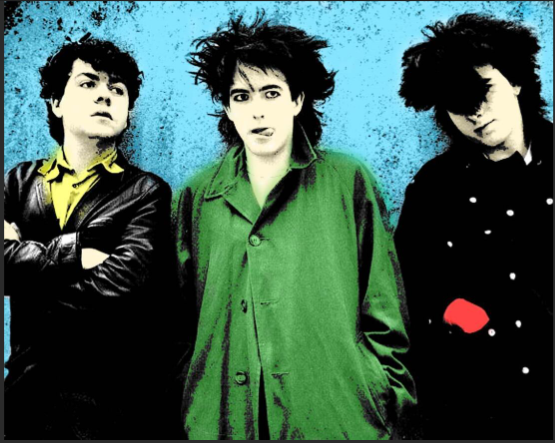
The recent death of Mani had me revisiting the Stone Roses catalogue and reminiscing about the Stone Roses gigs I’d been at. I say gigs, but Stone Roses shows were more of an event than a mere gig. The minute the group began to pick up traction, they eschewed the usual circuit of venues and instead put on ambitious landmark concerts.

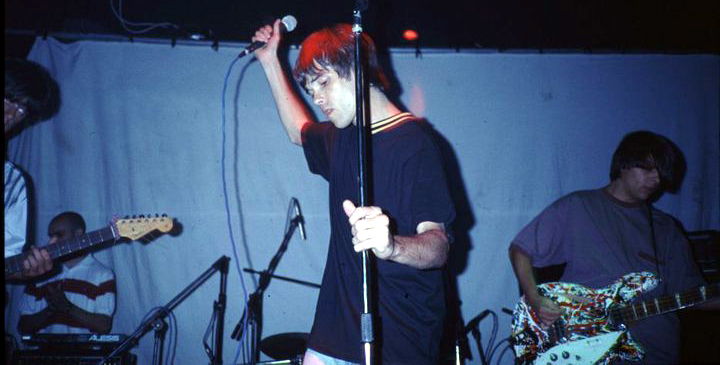
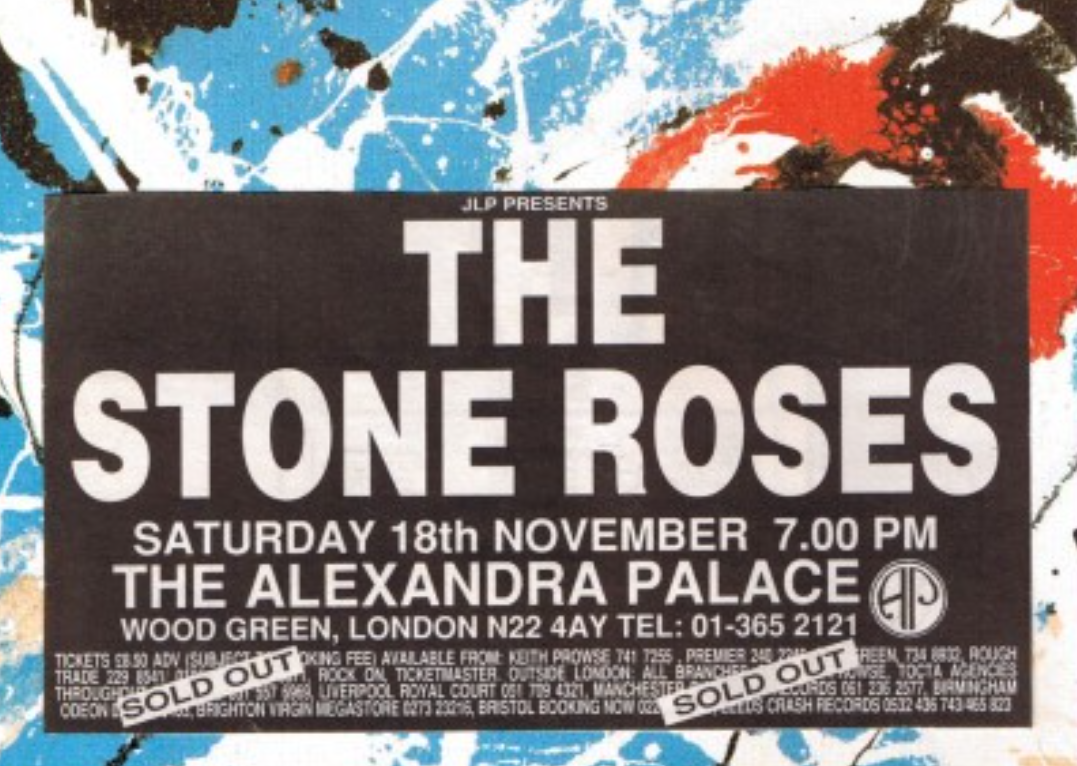
In the space of five rapid months in 1989, Stone Roses went from Glasgow Rooftops (above) – part of the touring circuit for bands of a certain size – to the Blackpool Tower Ballroom to a November show for 7000 rockers and ravers in London’s Alexandra Palace, at the time known as the broadcasting birthplace of the BBC and scene of some of those trippy 24-hour Pink Floyd and Soft Machine ‘happenings’ of the late ’60s, but certainly not the usual venue any bands might think to try and fill. Nowadays of course, any two-bit act with a bit of a following can add a date or two in the airy north London glasshouse, but in 1989 the Stone Roses’ choice of venue was genuinely inspired.

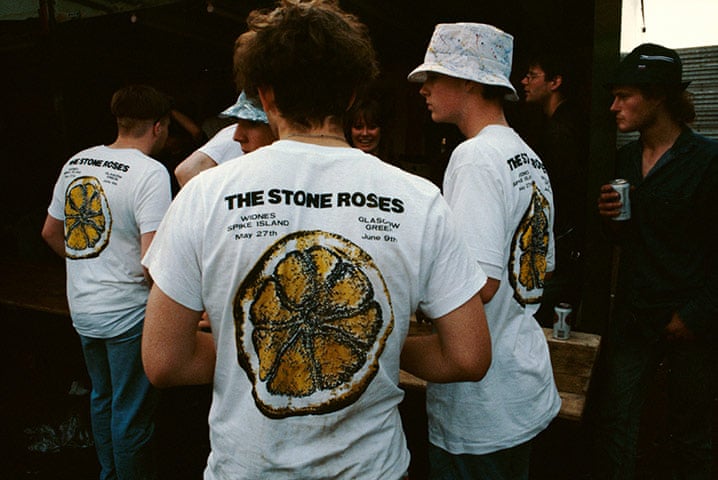
Fast forward another six months and the group would set up stall on Spike Island, a windswept and chemically-polluted estuary of the Mersey. Two months later they’d play their final show (for then, anyway) in a huge tent on Glasgow Green, 10,000 rockers, ravers and by now bucket-hatted bampots witnessing the band at the peak of their powers. The travelling tent idea is also now fairly standard practice for bands of a certain size these days. (Spike Island less so.)

As the band’s popularity grew, they went from the standard idea of support act plus half an hour of playlisted music to an actual rave culture-inspired show, the group just one element of a spectacle that would involve guest DJs dropping crashing house beats and hip hop on the P.A., lasers and strobes on the lighting rig, mass E communion in the audience and generally good vibes all round. These shows were a million miles from watching Gaye Bykers On Acid from a cider-soaked corner of Glasgow Tech or the Wedding Present at the QMU or any other touring guitar band of the era you care to mention. Yes, even you, Primal Scream. In 1989, Bobby was still looking for the key that would start up their particular bandwagon. (It was somewhere down the back of his Guns ‘n Roses leather trousers, I’m led to believe.)

All of those shows mentioned above (I was at three of them) began with I Wanna Be Adored. Since writing the song, or at least since the release of that debut album, has there ever been a Stone Roses show that didn’t start with it? I don’t think so. I Wanna Be Adored is, in its own way, a senses-heightener, a quicksilver surge of electricity, an early peak in a set full of peaks, but in the live arena, it too would come rumbling from out of the corners, fading in as an intro tape heralded the group’s imminent arrival.

Stone Roses intro music:

I’ve spent 35 years convinced that this music was made by the Stone Roses themselves, an abstract piece of art thrown away in the same vein as those backwards experiments they put onto b-sides, played for fun, recorded then used sparingly but appropriately. Certainly, the thunking, woody bassline is pure Mani. The hip-hop beat pure Reni. The sirens a clear extension of John Squire’s clarion call at the start of Elephant Stone.

Hearing this from Ally Pally’s carpeted floor minutes after Sympathy For The Devil is still strong in the memory. Hearing it again in the sweat-raining big top on Glasgow Green, many there unaware that this was not mere incidental rave music but Stone Roses’ call to arms (but we knew, oh yes, we knew, and excitement was immediately at fever pitch) still provokes a conditioned response in 2025.

It wasn’t made by Stone Roses though. Turns out it’s a piece of obscure-ish hip hop from 1987, looped, tweaked and added to by the Stone Roses team. The original – Small Time Hustler by The Dismasters – is immediately recognisable from that Stone Roses intro. Really, all the Stone Roses did was stick a few sirens on top of it…but combine that with Ally Pally’s echoing rave whistles and Glasgow Green’s surge of euphoria and it makes for high drama.

I wonder how many folk knew – truly knew – the source of that Stone Roses intro tape back in 1989?

Alternative Version, Live!

Is Not Was

Now not then.

Are not were.

Is not was.

It seems that Radiohead is back, to be spoken of in the present tense once again. Since their last shows a million years ago in 2017, there have been solo albums, side projects, film scores, even, thanks to The Bear‘s use of Let Down in a key scene, tunes trending for the millennials on Tik Tok. Significantly though, there has been no new Radiohead music since A Moon Shaped Pool. But out of the blue, they’re here again. The fanfare-free announcement a week or so ago of a series of live shows across selected European capital cities created high excitement and mild panic amongst their army of fans, and a scurrying for tickets – or for the right to queue for tickets (sheesh) – began, a sort of Oasis-lite feeding frenzy for the No Logo generation…and, as it turns out, their children.

My two made us all sign up for the presale registration, desperate as they were to see the band that their old dad regularly has playing around the house. I was ambivalent about it all. I despise, I mean totally hate, the trend for any and all pre-registration schemes that let the lucky ones elbow others out of the road and out of the queue so that they can maybe, maybe, buy a ticket for a show. I appreciate it’s to minimise touting and all of that, but still. Get back to the days of lining up outside Virgin Argyle Street in the pouring autumn rain, that’s what I say.

And of all the shows they are playing, and that includes Berlin and Copenhagen and what have ye, there’s only one date that I can fit in around work – the Saturday night in London, which is surely the most popular date in the run of shows. So the chances of securing a ticket, let alone 3 or 4, is gotta be slim you’d think.

And I’ve seen Radiohead a handful of times before anyway.

Besides, they’re bound to pencil in more shows for next year, maybe to support a new record that has very possibly been recorded already. Y’never know with Radiohead. It’s quite something in the rumour milling scrolling news feed of the modern age for a band to maintain an element of mystique, yet Radiohead has consistently done so.

But the boy, already coasting through 2025 like a king, gets The Code (of course he does) and so, come the pre-sale date, he and his sister log on while I’m at work, muttering quietly to myself about dynamic pricing and the percentage likelihood of snagging the briefs. They don’t get them, of course. They had them. Four of the little gold dust blighters. They were in the basket, £85 seated tickets inexplicably ramped up to £125 a pop (there’s yr dynamic pricing) and in the split second it took the kids to press ‘Buy’, the website had kicked them out on account of them being bots. This happened three, four, eighteen times until they gave up and admitted defeat. A quick trawl through the Radiohead forums later on unearthed dozens and hundreds of stories exactly the same. It seems the touts and dynamic pricing won the day after all, and now I’m pissed off that I won’t be going to a show that a) I didn’t expect to be at in the first place and 2) would grudge paying over the odds for anyway and 3) would’ve meant me paying Saturday night in London hotel prices for a family of four (2 rooms, thanks) the month before Christmas.

Let Down or Lucky? I dunno.

I’ll wait in keen anticipation for further, and more local, dates in 2026.

Present Tense is one of A Moon Shaped Pool‘s highlights. Ghostly and spectral, it carries itself on a deftly-picked minor key guitar pattern and unusual time signature.

RadioheadPresent Tense

There’s some lovely shuffling percussion in the background, a sandpaper rubbed against guitar strings and looped kinda effect and Thom’s voice harmonises against itself spectacularly. It’s all so intense and pretty, the climbing strings, wordless backing vocals and understated synthetic symphony carrying it gently to its pseudo bossa nova conclusion.

Sandwiched between the sprawling Talk Talk-isms of The Numbers and Tinker Tailor Soldier Sailor etc etc‘s glitchy ambient techno (all the tracks on A Moon Shaped Pool are sequenced alphabetically – but you knew that already), Present Tense might have benefited from being closer to the front of the album. Shoulda called it Aardvark, Radiohead. An opportunity missed, I think. But then, all the best bands have, to use modern parlance, deep cuts that require digging out to be held up like prize root vegetables for an unsuspecting public, and Present Tense is one of Radiohead’s very best.

The late-dusk, campfire version that Thom and Johnny filmed in the Californian desert a few years back is The One. Two men, one in a vest, two guitars, both played with the lightest of touch, a pitter-pattering drum machine and a host of fantastic interplay makes for a great listen, the outcome far greater than the sum of its parts. Treat yr ears to this:

Alternative Version

You Better Grab It Fast

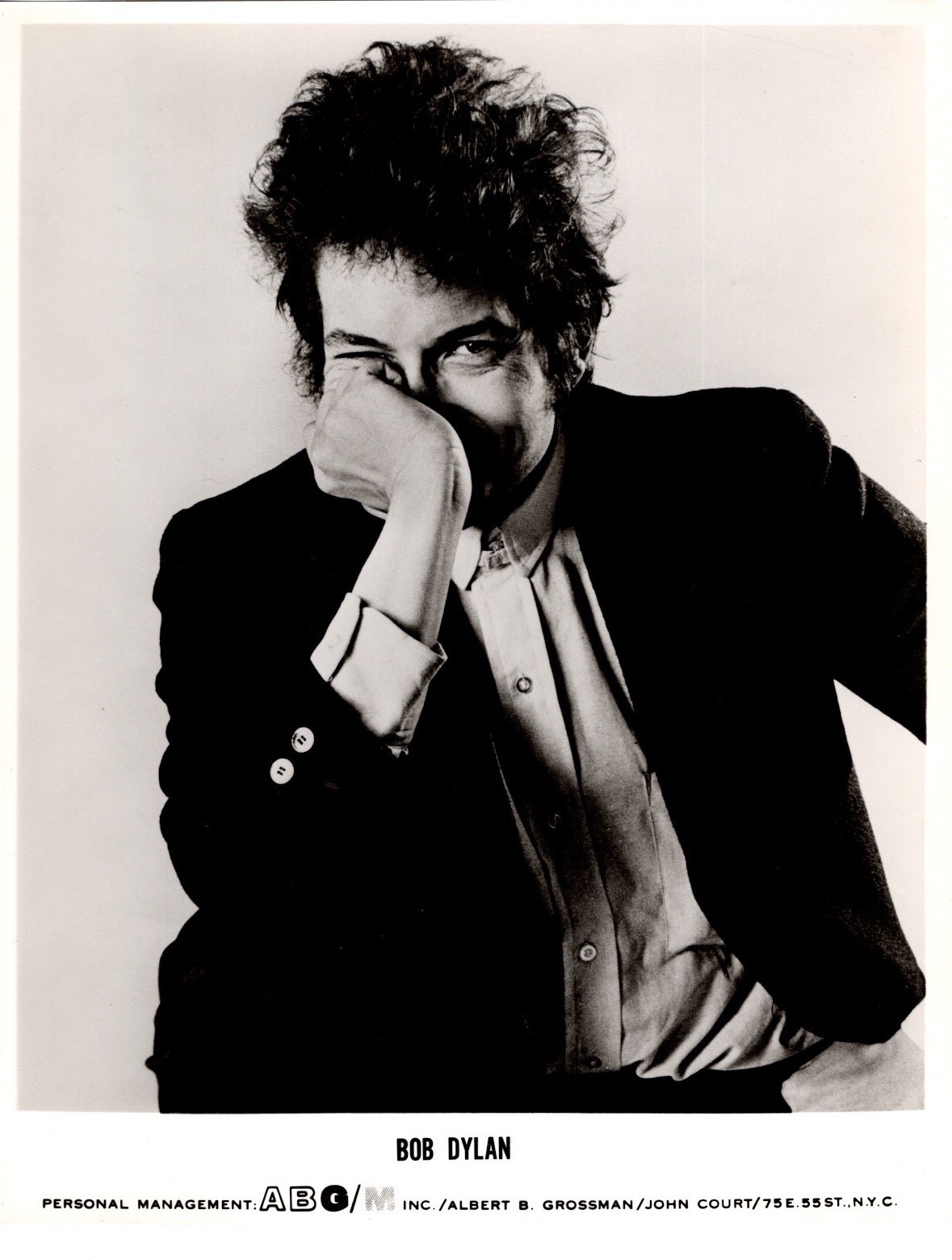
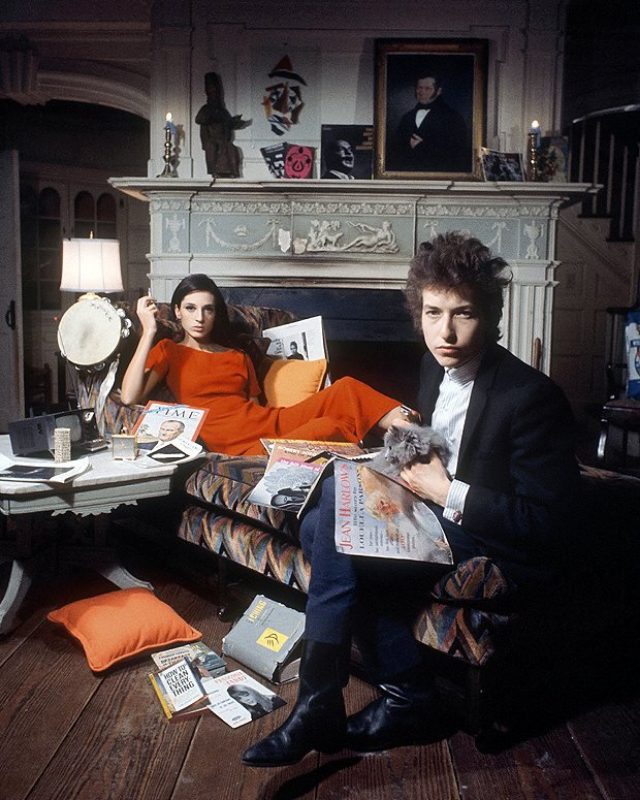
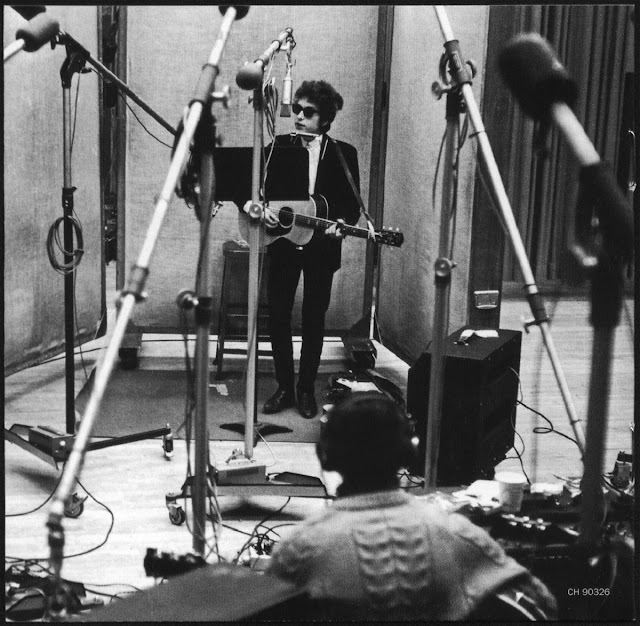
Dylan ’65.

Speed freak. Triumph motorcycle. And speed freak. In shades. Daytime, night time, anytime. Suede. Corduroy. Button down shirts. Striped pants. Boots of Spanish leather. That hair.

Triumph on record. A surrealist and a cynic with added sneer. Beat group intense. Irk the purists. Fender. Electricity. Volume. A cavalcade of words. A trip and a rush, cascading forth. Get set. Get well. Try hard. Get fired. Coded. Cryptic. Crucial. Maggie, fleet foot. Face full o’ black soot. Plants in the bed. Phone tapped. Look out kid! Candles, sandals, vandals, handles.

Ol’ Bob has many faces and many aces up his sleeve, but right now, this week, after seeing A Complete Unknown, it’s mid ’60s Bob that’s doin’ it…and doin’ it good. The garage band backing, all thunking bass and rattling snare and white hot, screaming blues licks on Telecaster that ride the coattails of Bob’s scuffed acoustic and sandpapery vocal is possibly the most thrilling sound in rock ‘n roll. Sixty years will pass this year since Bob thwacked us with the insane one-two of Bringing It All Back Home (April) and Highway 61 Revisited (August – 4 months later); a pair of records that most other acts would be happy to hang an entire career on. Don’t look back, instructed Bob around then, but, man, LOOK BACK! Stop and listen to what’s on these records.

Bringing It All Back Home is my favourite of the two. Gun to my head, it’s probably my favourite Bob album of the lot, tied up as it is in childhood memories and time and place. I now own my dad’s copy, given to him by my mum not long after they met, stolen by me about 20 years later, then handed over after my dad asked me straight out of the blue one day, sometime around 2006, where it was, before it made its way back to me after my dad died. If I count it up, I think I’ve probably had it in my possession more than my dad ever did.

Bob DylanSubterranean Homesick Blues Take 3

It’s a record of two distinct sides. Side one is the irk the purists side: Bob’s Chuck Berry by way of Dada schtick, nonsensical and bubble gum and extremely thrilling. Subterranean Homesick Blues’ machine gunned outpouring of alliteration, rhyme and imagery; Maggie’s Farm and its gutterpunk two-step blues; the sneering and caustic head bop that is Outlaw Blues; the unexpected thrill of Bob Dylan’s 115th Dream‘s false start, hearing Dylan’s maniacal laugh as the engineer counts in Take 2… absolutely knocked me sideways as a 15 year old, that did. The Smiths and Lloyd Cole didn’t goof around on their records. Theirs were serious mood pieces. This Dylan guy? He’s off his head. He was funny though…a proper comedian. It still thrills me no less as a 55 year old too. Even the slow songs on side 1 had a backing band. She Belongs To Me‘s delicate electric runs; Love Minus Zero‘s four to the floor tambourine and woody bass.

Side 1 is Dylan’s fuck you to the folk scene and all who gate kept it, but it was the (mainly) acoustic songs on side 2 that pulled supporters like Pete Seeger back from the brink. Mr Tambourine Man, a thread-pulling and unravelling 6 minute masterpiece. Gates Of Eden, Dylan sneering about war and peace, finger pointing long into the night air, his acoustic guitar bashed into submission, his harmonica wheezing to a conclusion. It’s Alright Ma (I’m Only Bleeding), with its descending drop D blues riff and complex, fantastical imagery; Money doesn’t talk, it swears…He not busy being born is busy dying…Even the President of the United States sometimes must have to stand naked. Until fairly recently, Bob was still playing this in his set and, surprise surprise, every one of his audience recognised it immediately. Don’t listen to those lazy reviewers who tell you they only found out what songs Bob played by checking online afterwards. He’s slowed down and kept things fairly standard in setlists in recent times, but it wasn’t that long ago that a night with Bob would include three or four Bringing It All Back Home gems in his set. And a couple of Highway 61 Revisited highlights. And a trio of Blonde On Blonde essentials. But stop. We’re ahead of ourselves.

Bringing It All Back Home ends, perfectly, on It’s All Over Now, Baby Blue. Just Bob, his harmonica and a gooseberrying bass guitar. It’s a song of sentiment, of a chapter closing, of the need to look to the future. The perfect metaphor, in other words, for Dylan’s continual forward propulsion, the lightning rod and conduit for songs – long, cerebral, tied in imagery and intelligence – that he couldn’t get out from inside his head quickly enough.

Two albums and one world tour in ’65. A world tour and a double album in ’66. He not busy being born is busy dying, after all.

Alternative Version

PL A.I. N OR PAN

I don’t quite know how I feel about this. It’d be interesting to hear your thoughts and opinions. The creative in me says it’s the worst thing ever; anodyne and beige, a wee bit dead behind the eyes. The luddite in me goes wow! How on earth is this even possible?!

My pal Supersonic Mark works in marketing – Supersonic Marketing – and is deeply involved in the world of podcasting. He chats all things food and drink to all sorts of interesting people – Roger Daltrey, Fatboy Slim and, this week, Michel Roux – and his podcasts regularly make the lists of the best things to listen to that week. He’s long said I should do a podcast version of Plain Or Pan, but, y’know… time, desirability, the fact that I definitely don’t sound like Richard Burton whenever I bark the nonsense that passes for pop trivia from my gub. I’ve been on the radio. I’ve guested on other people’s podcasts. I know exactly how unpodcast-like I sound. Clearly, these are all good enough reasons to maintain the typing over talking approach that has served this place well for 17 and a half years.

Recently, Mark was shown how a fairly basic version of AI can turn text into spoken word, and he trialled the approach on one of my blog posts. I woke up last week to a version of the Crowded House post I’d written, presented as a podcast between two chummy American chat show hosts. It was, frankly, mindblowing in the way it’d taken my original post, summed up the gist of it and spat it back at me as a two-way conversation in third person. By the time I’d arrived at work, I’d listened to it half a dozen times, my mind racing with the good, the bad and the ugly of it all. Would this replace the blog as I currently present it? Would it write long-winded pieces on old music for me? Could I monetise it?

Plain Or PanAI version of the Crowded House post.

Hey, AI, make me a picture of Neil Finn from Crowded House checking out the Plain Or Pan review of his Glasgow show whilst he strums his guitar in his living room.

Weird, eh?

Interesting? Annoying? The future of everthing or just plain wrong?

The things I like about it: it’s novel, it’s quirky and it’s a nice, concise, five minute snapshot of my 1000+ words.

The things I don’t like about it: The voices. I’m sure that can be changed. I’d rather have Scarlett Johansson read my words to you (and me), thanks very much. And it presents some of my opinion (the Paul Weller section, for example) as fact. For anyone listening who hasn’t read the article first, they’d leave being mis-informed.

Overall though, I kinda like it, I think, but in answer to those three questions from earlier:

No, it won’t replace Plain Or Pan in its current form. I might follow-up future blog posts with the odd ‘podcast’ though, if I can convince an AI Scarlett Johansson to take the mic.

I could never use it to do the writing for me. That’s the bit I enjoy. I like to think I have a style that no amount of fancy pants AI could recreate. I’m probably wrong about that though.

Can I monetise it? I’m an artist, baby. Money is so crass.

What d’you think of it all?

Alternative Version, Peel Sessions

Primary Education

I’ve got a strained relationship with The Cure. They are, unarguably, one of our greatest singles bands; poppy, hooky and melodic yet strange and idiosyncratic, a band out of step with everything around them, stubbornly unique and brilliant because of it. Just Like Heaven…Hot Hot Hot!!!…Caterpillar…Close To Me…Lovecats…In Between Days…Lullaby…Why Can’t I Be You?… Friday I’m In Love…The Walk…Pictures Of You…A Forest…there’s a perfect playlist right there.

It’s the albums I struggle with. If the singles are 10 second hundred metre sprints, the albums are triathlon levels of endurance by comparison. Meandering, dark, twisty, self-indulgent – all the things I like, as it goes – I find it’s too much of an effort to properly enjoy a Cure album. There’s nothing light and airy about them, and I say that as someone who’ll listen to Radiohead until the day I die. I just slowly detach and find myself drifting off. ‘Is this nearly finished?’ I’ll ask myself as Robert and co sleepwalk their way, treacle-like, into into only the third track. It makes the thought of a live show almost too much. Even Springsteen, I bet, would find himself yawning at the two hour mid-point. My loss, I dare say.

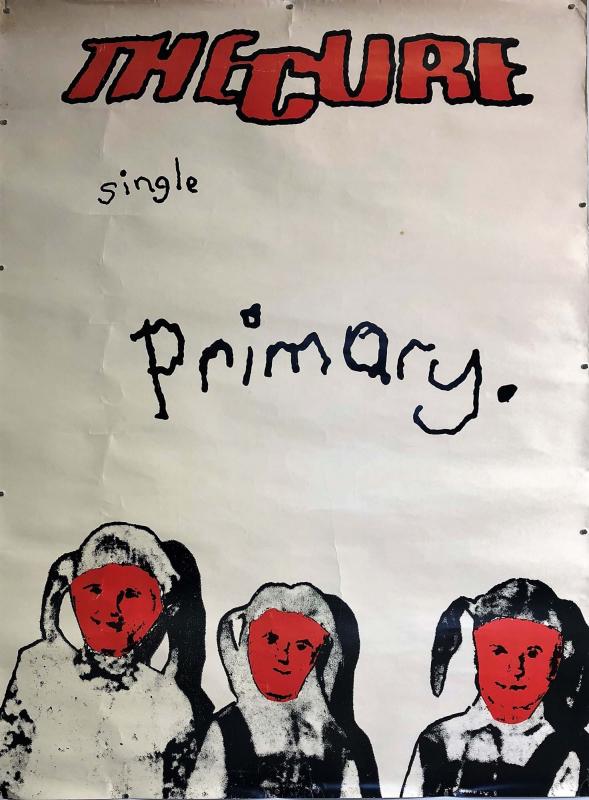
Primary though. There’s a great track. The sole single release from 1981’s Faith album, Primary starts with a rattling, ear-splitting snare drum, played with all the finesse of a ham-fisted one-armed man. Bash! Bash! Bash! Bash! Bash! Bash! Bash! Ker-bash! If you can separate the individual instruments and voices on the record, you’ll hear that from first bash to last, the drummer never wavers from his incessant 8-bar beat.

The CurePrimary

Backing firmly in place, Robert makes excellent use of his chorus and phase pedals, coating the track in a thick metallic swamp of rapid, scraping downstrokes and swirling chunky notes. It might sound just like his National guitar set to stun, but on this track Smith actually plays bass. As does Simon Gallup. Being unique and idiosyncratic sorts, two bass guitars on the one record is perfectly normal. While Smith maintains the song’s rhythm and muscle, Gallup wanders up and down the frets like Peter Hook in eyeliner. Perhaps surprisingly, there are no guitars on Primary at all.

It’s an intense sound, Primary. Shouty, swirly and relentlessly clattering, it finds The Cure out of step with their peers, and not for the last time. 1981 was the year when the synth became the de facto pop instrument of choice. End of year lists were populated by the Human League and Soft Cell. OMD were making inroads towards household name status. Ultravox’s Vienna was ubiquitous. Kim Wilde was doing her English version of Blondie while Clem Burke jumped drum stool to moonlight with Eurythmics. Esoteric and different, The Cure stick out as stubbornly as the Dennis the Menace haircuts they employed at the time.

The CurePrimary (Peel Session)

Two bass guitars, one snare drum, a double-tracked voice and a whole load of imagination across three minutes – or six if you can track down the elusive 12″-only mix. Primary is a weird wee single, not afforded the status of anything in that stellar list in the opening paragraph above, but something that’s just as deserving of a place at The Cure’s top table.


Alternative Version, demo, Hard-to-find

Paris In The Spring

In the UK, we meekly accept whatever our masters think is best for us. Rising cost of living? Fair enuff, guv. Can’t heat your house? I’ll just nip down to the local Warm Space, shall I? Dragged out of Europe? That’s democracy, mate. We’ll just need to get on wiv it. The French though – they know the score. Any time they feel hard done by, any time their world appears unjust, boom!, out come the Molotovs. Over a million French citizens took to les rues recently to protest the government’s planned raising of the pension age from 62 to 64. Pffft. Work-shy slacquers. It’s 66 in England, mate. 66! Bobby Moore, Nobby Stiles, Sir Geoffrey ‘Urst. Anyway, where woz I?

Decided without a vote and pushed through by the will of a persistent Macron, it was firmly decided. The workers were suitably enraged. In Paris, fireworks were thrown indiscriminately at hastily drawn police lines. In Bordeaux, the town hall was set ablaze. Tear gas was fired, hundreds were arrested, everyone lost their Gallic cool. The pension age would still be raised, but not without Macron and his ministers knowing exactly what their citizens thought of them. The one plus point to come from the dissenters’ actions was that the city of Paris would not now play host to the first state visit by the new King George, whose aides quickly kyboshed the idea. Parisienne republicans sniffed the air and shrugged with typical je ne sais quoi.

55 years ago, in May 1968, rioting in Paris became so severe there was a real threat of civil war. The city’s student population, liberal and left-leaning by definition, occupied the universities in protest at fellow students’ arrests following an anti Vietnam demonstration. The authorities were quick to react and a heavy-handed police operation resulted in skirmishes, baton-wielding beatings and more mass arrests. The conflict between the Parisienne students and police intensified. Barricades were put up and knocked down. Civil order descended into disorder. Police used batons. Students threw torn-up paving stones and Molotov cocktails. Two nights of stand-off on the Left Bank ended after police set fire to cars and they themselves used Molotovs to disperse crowds.

The trade unions, no fans of President de Gaulle or his policies, were moved to declare sympathy action. At the height of this action, most of France ground to a halt as 11 million French workers (almost a quarter of the working population) went on general strike. Despite talks between both sides, the strikes and the riots continued. The President ran off to Germany, worried that rioters would attack him in Elysee Palace. He would return at the end of the month, bolstered by a notion to dissolve his cabinet and reform his government in a way that would appease the strikers. But anyway…

In the early days of the Stone Roses, Ian Brown had hitch-hiked his way around Europe. On his travels, he’d met someone who’d been in Paris in 1968 and this man’s tale became the lyric to Bye Bye Badman. He told the story of how, during the riots, the activists learned to combat the effects of the tear gas being used to control their movements by sucking on lemons.

It’s no concidence at all that the artwork on Stone Roses’ debut album cover features an unobtrusive, brush-daubed tricolour and a couple of lemons (albeit added after John Squire had ‘completed’ his painting)… a piece of art he called Bye Bye Badman.

Smoke me, choke the air. In this citrus-sucking sunshine I don’t care.

Here he comes, got no question, got no love

I’m throwing stones at you, I want you black and blue

I’m gonna make you bleed, gonna bring you down to your knees…

It’s all in there.

Stone RosesBye Bye Badman

It’s a tune that belies it’s appearance. Lightweight and breezy, with skiffly, shuffling drums and a rich tapestry of interwoven guitars, it could well have floated off the grooves of a Mamas and Papas or 5th Dimension record.

The guitar runs throughout though, they mark it as something a bit special, a bit unique; the phased and chugging electric backing that allows the sun-dappled acoustic splashes to shimmer, the cleanly picked counter-riffs, the fluid and chattering fret runs at the end that bring to mind Michael Jackson’s Human Nature, all of it underpinned by expansive and expressive bass playing. It’s no real surprise that Stone Roses became the touchstone for enthusiastic amateur guitarists and wannabe hit bands everywhere.

And the melody. It’s sing-song and nursery rhyme-like…until you begin to decode the lyric. The title itself is seemingly a veiled reference to President de Gaulle and, as the song unfurls line by line, it’s apparent that this seemingly insignificant track (song 4, side 1) is in fact a pop art statement of political intent, revolution disguised as art. That it’s done so with lovely doubletracked Ian Brown vocals makes it all the sweeter. In the live arena, Brown can’t sing for toffee. Thank goodness John Leckie had the golden touch when it came to coaxing a tune from his vocal chords.

Here’s the demo that Stone Roses presented to Leckie. As you’ll hear, never underestimate the role of the producer in helping a group to realise their ambitions.

Stone RosesBye Bye Badman demo

I listened to Stone Roses’ debut album the other day and it still causes as many little rushes of uncontainable excitement as it did on first hearing it 34 years ago. Let it sink in that more time has passed since the day I bought it from Walker’s at Irvine Cross than the time between the riots in Paris ’68 and the Stone Roses writing a song about it.

Ian Brown famously pumped an arm aloft and bellowed, “This is ‘ist’ry!” from the Alexandra Palace stage in November 1989. No, Ian,  your band, their album, THIS is history. D’you feel old yet?

Niche Ian Brown reference in this graffiti for all of you trainspotters out there,
Alternative Version, Cover Versions, Peel Sessions

Book Makers

If ever there was a short-lived group with an ego overload as wide as the Mersey, it’d be The Crucial Three. Birthed in Liverpool, the not ironically-named at all trio was the fertile product of Julian Cope, Ian McCulloch and Pete Wylie, students in the city and punk rock foot soldiers with the battle scars from Eric’s and Probe Records to prove it. Destined to meet and create and disband in a whirl of uncontainable ideas, The Crucial Three lasted no longer than six weeks, burnt out on a combined love of New York punk and the inevitability that each group member couldn’t be boxed and compromised within its confines.

In his book Head On – essential reading, if y’didn’t know – Cope is both catty and complimentary towards McCulloch. He’s already been nicknamed Duke after Bowie’s Thin White persona by the time they meet, and the nickname provides Cope with much bitchy ammunition, but St Julian has nothing but praise for McCulloch once he dares to peek beyond the fringe and start to sing. Cope bands about McCulloch’s name in the same breath as Lou ‘n Iggy and he genuinely means it.

Amongst the nonsensical jams and Velvets rip-offs that constituted The Crucial Three’s flimsy ouvre –  one song about zits and one about drugs that was a great Cope-y title in need of an actual song (I’m Bloody Sure You’re On Dope), Cope and McCulloch (or ‘Duke McCool‘, as Julian has now christened him after mishearing the shortened McCull) dragged out an actual, bona fide post-punk classic.

Read It In Books surfs along on a cyclical riff very reminiscent of Patti Smith’s Dancing Barefoot, the product of one of the trio’s living room sessions where someone would stumble on a set of chords and the others would fall in and see if something stuck. If you’ve ever played in a shambling and under-rehearsed band, you’ll recognise this scenario immediately. In this instance something did indeed stick. Cope claims McCulloch was playing the chords to The Fall’s Stepping Out (it also has, in the main, two chords and is a bit shouty, but these ears can’t really find the similarity – which is good, I suppose), but by the time the band had reconvened for their next session, McCulloch had a set of lyrics to go with it – including a cheap steal from The Impressions – and before they knew it, The Crucial Three had a song of their own. People get ready, there’s a train a-comin’… and it’s a beauty.

Read It In Books was credited as a Cope/McCulloch co-write, and both artists would go on to record versions with the bands with whom they found success.

Echo & The Bunnymen‘s version appeared as the b-side to their debut single The Pictures On My Wall (credited to McCulloch, Cope, of course).

Echo & The BunnymenRead It In Books


Cope’s Teardrop Explodes would record it for the b-side of their third single Treason.

You don’t need to dig too deep below the surface of the internet to find multiple versions of the song but, for me, the best version of all of them is the Bunnymen’s imperial take that they recorded for the John Peel show in 1979, watery guitar solos, incessant drum machine rhythm, McCulloch’s restrained croon ‘n all. Within a few years their sound would evolve, with skyscraping, effect-rich guitars and a towering symphonic backing adding gravitas and state to the McCulloch vocal, but that early Bunnymen sound – man, I’ll never tire of this.

Echo & The BunnymenRead It In Books (Peel Session 15th August 1979)

The Teardrops’ version is fairly similar, acknowledging that both writers created the structure and arrangement. Guitars clang, drums are pummelled, a stabbing organ shimmers in and out like the ghost of Ray Manzarek moonlighting in The Seeds and the whole thing rattles its way to garage band heaven. Add some sleigh bells to its nagging piano background and it could almost be The Stooges’ I Wanna Be Your Dog. Perhaps an obvious, leather-trousered step too far for the Iggy-headed Julian.

Teardrop Explodes – Read It In Books

This one is credited, naturally, to Cope, McCulloch.

The ego had well and truly landed.

Alternative Version, Get This!, Hard-to-find, Peel Sessions

Murderous Thoughts

Let’s call it here and now: Meat Is Murder is The Smiths best album.

It’s certainly not the debut, the band’s unsatisfactory attempt to chase a sound worthy of the songs. Compared to the Brasso-bright, spit ‘n polish, ring-a-ding-ding of those early Peel versions, the debut album weighs heavy; lumpen, and one-dimensional. The drums sound leaden and lifeless. The guitars – it’s always about the guitars with The Smiths – sound as if someone has taken a fat thumb to their edges and rubbed the sparkle clean off. Flat and uninspiring, the production doesn’t do those fabulous riffs any justice at all. Unique, extraordinary songs, but assembled badly.

Don’t even consider The Queen Is Dead. Those songs…man, great, great songs…but whoever signed off the running order needs their head examined. The title track aside, every other song is misplaced. Side one collapses from the music hall titter of Frankly, Mr Shankly into the death doublet of I Know It’s Over/Never Had No One Ever – undeniably serious mood music pieces, yes, but totally misplaced. Stick I Know It’s Over at the end of side 1 instead and you’ve got a great closing track. Never Had No One Ever? That’s totally ripe for the graveyard slot of second last track on side 2. Pick any ten records from your collection and look at the running order and then tell me that the second-to-last track isn’t the weakest on the album. It’s certainly not where There Is A Light That Never Goes Out should be hiding. That should be sitting up front with Bigmouth… and the big boys, or maybe even afforded the honour of being the big statement closing track. Good as Some Girls Are Bigger Than Others is – and it’s one of their very best – go out on a romantic, swaying high, Smiths. Don’t relegate your best songs to the twilight zone.

Yeah, and the smart money (even Johnny’s, they say) might be on Strangeways Here We Come, but for every crashing gothic masterpiece (Last Night I Dreamt...) there’s The Smiths-by-numbers (Stop Me If You Think…), for every barely-disguised love letter from singer to guitarist (I Won’t Share You) there’s the instantly skippable Death At One’s Elbow. It’s a good album, Strangeways, probably even great, but it isn’t their greatest. That honour goes to Meat Is Murder. Here are half a dozen reasons why.

Reason 1. Little elfin Johnny, in his blown-up Keith Richards hair-do and diamante clutter, is on fire across every bit of Meat Is Murder. He runs the whole gamut of his nimble-fingered arsenal; alternative tuning on the title track…alternative tuning and Nashville tuning on the cosmic and zinging Headmaster Ritual…that fine, layered coating of acoustic liquid mercury across Well I Wonder…the Stooges Metallic KO of What She Said, the rockabilly knee-tremble of Rusholme Ruffians…the proud Chic-isms that give way to those great, ringing discordant jazz chords near the end of Barbarism Begins At Home…the clattering chatter he conjures up across Nowhere Fast‘s multiple overlapping tracks and kaleidoscope of chords…

Johnny came up with them all. On Meat Is Murder he is barely 22 and he’s not yet reached a peak that his peers, never mind his guitar-strangling lessers in bedrooms up and down the country, can only dream of.

Reason 2. Morrissey. Separating the art of the 26 year-old singer from the 63 year-old artist is necessary here. Look, not at what he’s become, but at what he was once capable of. With every lyric on the album, he’s extremely funny and articulate and political and opinionated and principled and, above all else, loveable. ‘I’d like to drop my trousers to the Queen,’ ‘heifer whines could be human cries,’ ‘belligerent ghouls run Manchester schools, spineless bastards all,’ ‘What she read, all heady books, she’d sit and prophesise, it took a tattooed boy from Birkenhead to really, really open her eyes.’

Even if he pinched large chunks of Rusholme Ruffians from Victoria Wood, no one was crowbarring lyrics like this into pop songs in 1985. Arguably, no one has crowbarred stuff as unique and searing and insightful and right-on since.

Reason 3. That Joke Isn’t Funny Anymore is one of The Smiths’ finest torch songs. From its bright-as-brass-buttons opening to its layered and textured false ending, it’s a beauty. It’s the perfect marriage of Morrissey’s moping introspection and Marr’s guitarchestra, the singer identifying with those who are kicked when they are down, the guitarist going to town with studio effects and multi-layered riffs.

The SmithsThat Joke Isn’t Funny Anymore

Those little echoing triplets that fall from his fingers to create rippling pools on still pond water still tingle the back of my neck when they come in (around the minute mark at first, then forever after) – an ear-opening epiphany in 1985 when I realised that guitar players enhanced their electric sound with gizmos and wizardry to create the sounds they imagined in their heads. The haunting (and haunted) backwards effects he weaves through the ‘happening in mine‘ section before the fade out are ace.

Johnny has since said (OK, he told me, right?) that The Smiths never quite managed to do it justice live, but with the technology available today, That Joke Isn’t Funny Anymore would have undoubtedly been the centrepeice of The Smiths live experience. We’ll never know.

Reason 4. The Smiths changed lives. Saved lives, even. Like, literally. The title track is responsible for a whole swathe of impressionable teenagers – and at least two Smiths besides Morrissey – to forego eating meat and adopt vegatariansim as a way of life.

“As soon as we had recorded this song, I became a vegetarian,” Mike Joyce told me in 2017. “Morrissey’s argument was rock solid. I couldn’t even be that bullish to say, ‘…but I like meat.’ The cruelty involved is reason enough. You wouldn’t eat your cat or your dog, so why eat a sheep or a pig? Whatever Morrissey argued, you could only reply with, “You’re right, you’re right.” There was no counteract to it. It should be illegal, there’s just no argument for it. ‘Meat Is Murder’ is a sheer political statement. It shaped my life and my kids’ too, who’ve all been brought up vegetarian.

Accompanying the lyric, all sorts of magic is going on. Suitably doomy and disconcerting for the words being sung, Johnny plays around on an open D riff, cyclical and repetitive, hynpotic and ethereal.

The Smiths Meat Is Murder

It’s matched by a jangling piano – not noticeable on first listen, buried as it is underneath the abattoir grinding and cattle cries, but it’s there, tinkling along like springtime Manchester rain while studio-treated guitars echo and scrape and scratch their way through the murk, Andy’s bass as elastic and stretchy as tendons.

Reason 5. Ah. Andy’s bass. The unsung hero of the band, the thinking man’s favourite Smith, Andy Rourke can play the fuck out of that thing. While Johnny gets all the spotlight, Andy quietly goes about creating tunes within tunes, fret-surfing melodic runs that could easily stand on their own two feet (or four strings).

The SmithsNowhere Fast (Peel Session, 1984)

The trampolining rubber bandisms that carry the aforementioned Rusholme Ruffians…the counterparts he plays to Johnny’s guitar in The Headmaster Ritual…the driving force in Nowhere Fast that allows Johnny to fly off-piste and back again…Andy is a key ingredient here.

The rather-too obvious track to highlight is the extreme funkability of Barbarism Begins At Home, all slap ‘n thunk, an old tune of his and Johnny’s from pre-Smiths days that wouldn’t have worked on that debut album, but here, on Meat Is Murder‘s inclusive, catholic patina, it shines brightly.

Reason 6. The Headmaster Ritual. Rusholme Ruffians. I Want The One I Can’t Have. What She Said. That Joke Isn’t Funny Anymore. Nowhere Fast. Well I Wonder. Barbarism Begins At Home. Meat Is Murder.

Perfectly sequenced, perfectly pitched, it is, rare for the era, an album of few single releases; Headmaster and Barbarism in foreign countries only, That Joke in the UK (a chart-busting number 49 with a bullet). The Americans couldn’t handle an album with no hit singles though, so they crassly wedged How Soon Is Now? right before Nowhere Fast at the start of side 2. They have form for spoiling perfectly perfect albums, the Americans – look at what they did to some of The Beatles’ catalogue for proof – and while How Soon Is Now? is an undoubted Smiths classic, it should remain standing alone as the greatest 3-track Smiths single ever. But that’s an argument for another time.

I welcome your misguided outrage in the comments…


Alternative Version, demo, Hard-to-find

Christmas Rapping

This was timed to go out a couple of days ago, then hastily postponed to make way for the Terry Hall stuff. By comparison it seems trivial now, but I can’t save it for the new year, so on with the show, as they say.

Yule dig this…

Remember Flexipop!? Back at the start of the ’80s, when the freshest of music was borne from a creative and punkish, DIY attitude, a couple of disillusioned Record Mirror writers started Flexipop! magazine. Adopting a maverick approach to publishing that was similar to the bands of the music it would feature, Flexipop! flouted the rules of their game and, in a blaze of cut ‘n paste ‘n Letraset ‘n day-glo fonts gave Smash Hits, Number 1 and even the hallowed trio of inkies a run for their money. Their star would burn briefly – 37 issues (one issue a month for three years) – but brightly.

Their USP? Every issue of Flexipop had a free 7″ flexidisc stuck to the cover. Sometimes single-sided, sometimes double, and sometimes even a 4-track EP, each flexi contained a unique, can’t-be-found anywhere else recording of that issue’s cover star; The Jam‘s Pop Art Poem on see-through yellow plastic, for example, or a luminous, Fanta-orange pressing of The Pretenders Stop Your Sobbin‘ (demo, of course), even a 23 second recording of Altered Images wishing you a happy new year, and this… Blondie and Fab 5 Freddy riffing and rapping, some of it loosely Christmas-related, across the top of the demo to Rapture.

Blondie & Fab 5 FreddyYuletide Throwdown

Ice-cool Debbie: Hey – you don’ look like Santa t’me. I never saw a Santa  Claus wearin’ sunglasses!

Freddy: Cool out, without a doubt!

Ice-cool Debbie: Merry Christmas, ho ho ho!

And off they go, Freddy telling the listener where he grew up, Debbie pre-empting Run DMC and the Beastie Boys by double tracking him on the line ends, referencing guns, disco and ‘the nicest snow’ – which is possibly not a reference to the inclement weather. 

Debbie Harry, Fab 5 Freddy, Grandmaster Flash, Tracy Wormworth (bass, The Waitresses), Chris Stein

Christmas duets come in all shapes and sizes; Bowie ‘n Bing, Shane ‘n Kirsty and now Debbie ‘n Freddy. Lost to the archives, Blondie re-discovered Yuletide Throwdown a year ago while pulling together the material that would make up their catch-all box set.

It’s an interesting peek into their creative process, the version here replete with those descending chimes and rinky-dink funk guitar, the horn motif and Debbie’s ‘Ra-ah-pt-yoor!‘ refrain, yet sluggish and sludgy…and pretty good as a result. I don’t know why they chose to speed it up before release.

“When we first recorded Rapture, it was slower. This was the first version,” Stein said. “We decided to make it faster. The slower tape was just bass, drums and guitar doubling the bass, I don’t think much else. I took the tape to my home studio and added stuff, then Debbie and Fred did their vocals.”

I’m a sucker for a demo or an alt. version, and this version of Rapture certainly falls into that category. Play once, and once only at this time of year, file it in the section of your brain that’ll serve you well come the toughest of music quizzes and then forget all about it until next December.

*Interestingly, the b-side of the Blondie/Fab 5 Freddy single sounds like it might be totally magic. Credited to mystery band The Brattles, it turns out they were a band of pre-pubescent punk rockers aged between 8 and 12: Werner, 12 (Guitar), Dagin, 8 (Drums), Jason, 9 (Vocals), Emerson, 9 (Bass) and Branch, 10 (keyboard). Makes Musical Youth look like the Grateful Dead.

The record shows that The Brattles opened for the Clash twice, shared a rehearsal room with the New York Dolls and we were produced by Chris Stein of Blondie. Ah, so there’s the connection. I suspect Bartholomew Carruthers, if he’s reading, will be able to give me the full rundown. Until then, must investigate…


Alternative Version, Hard-to-find

Johnny Cash And I Spent Some Time In The Joint Together.

It’s the time of the year when the world falls into two camps: those who like to dress up in fright wigs, cake their face in plaster of Paris and smudge some tomato sauce around their dad’s old ripped shirt to wander the street for sweets from strangers…and those who think it’s all a load of nonsense.

I’m firmly in the second camp. I hated Hallowe’en as a child and I hate it just as much as a parent. Our kids are older now and they wouldn’t be seen dead (no pun intended) in a skeleton costume or a zombie outfit, yet we still persevere with entertaining doorsteppers and (euch!) ‘trick or treaters’ – like Hallowe’en itself, an Americanism too far- because, as my selfless wife points out, our kids benefited from the neighbours when they were younger, whether those neighbours had young children or not. Fair enough, I suppose.

Someone who loved dressing up, who made a whole 40+ year career of it, was David Bowie. After he died, everyone I know went on some sort of back catalogue pilgrimage, reappraising the seemingly ‘weak’ records and finding previously disgarded or misunderstood gems within their grooves. One such album was Scary Monsters (And Super Creeps). One step on from his holy ‘Berlin’ trilogy, Scary Monsters… found the magpie-ish Bowie stepping into the ’80s and embracing the nascent New Romantic scene, taking the most interesting parts and presenting them as his own. Everything on the record, from the clown costume on the front cover to the synthetic squall and squeal of Robert Fripps’s wandering guitar parts deals in artifice and pretence.

David BowieScary Monsters

Interestingly, the title track got its name from the blurb on a Corn Flakes advert. ‘Scary Monsters and Super Heroes‘ were the novelty toys of the time and the singer, forever switched on, adapted it for his own needs. It’s a beauty, Bowie in full-on Anthony Newley, his cockernee vocalisms cutting through the racket of the band, hellbent on bashing out their own take on post-punk and sounding not a million miles away from some of those more straightforward Joy Division records. The drums, repetitive, clattering and full of interesting fills, sound like they could’ve been played by Stephen Morris himself. And the pedal-stomping Fripp is all over the track like a free-riffing rash; outrageous and discordant, the grit in the groove. Violent, aggressive, and straight-up avant garde rock, I doubt the track would’ve been half as colourful or interesting without him.

You can compare it to this 1996 bootleg version, recorded in Atlanta.

David BowieScary Monsters (acoustic)

Stripped back and acoustic, it’s presented in a no-frills blues arrangement, Bowie introducing it with very tall tales of his time spent with Johnny Cash, a subtle nod to Rick Rubin perhaps, to get in touch and make Bowie his next unplugged vanity project. Mere speculation, of course. And something we’ll never know.