Over two million visitors since Jan 07. The material on Plain Or Pan has been downloaded, digested and discussed by every knowing hipster throughout Europe, North America, South America, Australia, Asia and Africa - truly Plain Or Pan-Global! One and a half million thanks to each and every one of you!
It seems the Trashcan Sinatras will gatecrash the UK top Top 10 Album Chart at the end of this week. Their debut album Cake has been remastered and re-released by Last Night From Glasgow and, 33 years on from its original release on Go! Discs (peak chart placing number 74), it looks like landing at number 10. This decrees the Trashcans’ record to be not quite as popular as those by the Rolling Stones or Elton John, but marginally more so than a handful of Taylor Swift reissues. While the charts maybe don’t mean as much to anyone anymore, the group, you can imagine, is delighted.
Personally, I’m thrilled for them. Someone cleverer than I could probably make something of the serendipity of a 33-year old record taking 33 years to chart. That must be some sort of record (no pun intended), eh?
Back when the reissue was being put together it was suggested that I might write the liner notes to accompany the record’s release. A major honour and thrill, I got stuck right in about it. As I said here a few weeks ago, they were all ready to go, along with a new gatefold sleeve, a lyric sheet, unpublished photos…the full works when, at the final hurdle, the band – wanting to remain enigmatic and mysterious – decided to revert to the record’s original packaging; no lyrics, blurred photos, no liner notes.
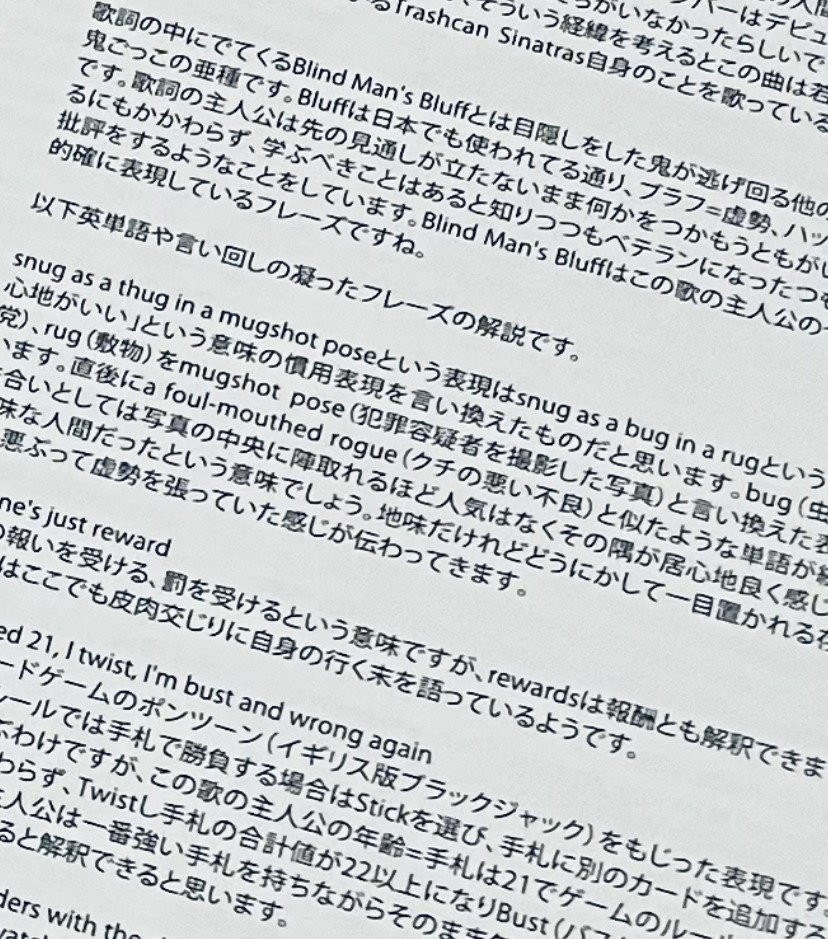
However, in an unexpected twist, the Japanese label got in touch. Such is the Japanese way with care and attention and detail, they wanted to use not only my Cake notes on the inner sleeve of the record, but also a translated explanation of what some of the lyrics and idioms on the debut single mean. Which was nice. I got stuck right into that too.
The Japanese market for LPs is extremely healthy and, as you know, it’s not uncommon at all for releases there to become collectible to fans worldwide on account of an extra track or two or other such addendum – liner notes, perhaps – to enhance the package. The Japanese Cake comes replete with exactly that.
I’m as thrilled about all of this as the group is at their chart placing, make no mistake. For as long as I can remember, I’ve been desperately keen to get my name on a record. My days of dreaming of windmilling through an encore at the Barrowlands have all but evaporated, but this writing gig has finally allowed me the opportunity of achieving this. On such a special album too. I wonder if the record will go Top 10 in Japan?
Trashcan Sinatras – Even The Odd
If the Trashcans are new to you, Even The Odd might make a good introduction; whimisical, melody-rich and coated in a fine shimmer of acoustic and electric guitars, it features skifflish, brushed drums, tasteful feedback and a noisy and reverby breakdown with some era-defining shouty nonsense before it gathers itself together again. Frank’s voice is young-sounding to the point of being helium-powered, perhaps a reason why it’s not a song that stuck long in the Trashcans’ live set-lists. Great track and great production though.
If you want to help the Trashcans shrug off the threat of Swift and overtake Jagger and Elton to make a late push for the top 5, you can do your bit by buying the album before Thursday. Best place to get it would be via Last Night From Glasgow. A host of versions are available from them.
And finally, a message to anyone buying and listening to Cake for the first time: Wait until you hear the next album…
That triptyich of ’90s solo albums which spawned the rebirth of Paul Weller deserves to be looked at again. 1992’s self-titled debut was the result of the artist being given free reign to reinvent himself, with no great expectations from a record company (Go! Discs) simply keen to offer one of our greatest songwriters the platform on which to start afresh. By 1995’s Stanley Road, Weller had entered his third imperial phase; once again a regular botherer of the charts and the elder statesmen to whom the leading lights of the day looked for validation and support. The record in the middle, 1993’s Wild Wood, is perhaps the most interesting – and best – of those three releases.
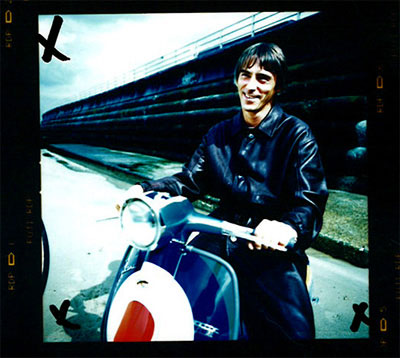
Having ‘done’ inner city angry young man and broadminded European mod, Weller looked to the English countryside for inspiration. Still unsure of who his ’90s audience was, the singer decamped to the Manor, a residential studio in the leafy Home Counties and, surrounded by trustworthy people and a handful of his favourite records, holed up to hang out, play, write and record the tracks that would become the Wild Wood album. The inner sleeve photos on the record suggest the perfect scenario for making a classic record; family and kids on the lawn, footballs, a grinning Weller astride a scooter, a home-from-home environment where inspiration flourished.
Much has been made of Weller’s listening habits during the making of the album, and the acoustic influence of Traffic and Nick Drake has oft been quoted as a source of influence, but I’d consider Wild Wood to be Weller’s Neil Young album. Loud in-the-mix acoustics ring throughout the record, attacked by Weller’s uncompromised strumming and finger picking. He might be playing a Martin, but he’s attacking it with all the fervour he normally reserves for his Casino. This is apparent on Foot Of The Mountain, its minor chord balladry giving way to an ebbing and flowing, sprawling and ragged electric outro, the rest of the band riding his coat tails for dear life. The Young influence is there too in Country‘s close-miked pastoral picking and whispered vocal. ‘Where only love can heal your heart,’ he sings, one eyebrow arched in a knowing nod to whiny old Neil as a woozy Mellotron adds a Fabbish, late sixties hue to the mix.
Wild Wood is an album that, augmented by subtle Hammond, delicate woodwind and thunking great gospel piano, showcases the best of Paul Weller. It’s there in the ferocious riffing of Sunflower and The Weaver‘s thrilling hammer-ons, the pastoral campfire soft shoe shuffle and two note dubby bass of the title track (it’s no wonder Portishead highlighted it as something to twist and turn and send into orbit), to the handclapping and roof-raising Can You Heal Us (Holy Man) and the jazz inflections of album closer Moon On Your Pyjamas.
My absolute favourite from the era though isn’t actually on the initial album release.
Paul Weller – Hung Up
As is his forever forward-thinking way, Weller had barely finished the record when he embarked upon another lap of writing. Too late for the album, Hung Up was released as a stand alone single. All the best bands, as you well know, release magnificent stand alone singles and Hung Up is undoubtedly Paul Weller’s addition to that list (even if, at some point, it was clunkily tacked on at the end of the record when Weller’s popularity began to soar.) It’s a fantastic single, Weller self-assured and riding in on a great chord sequence (C – Fm – Am – Fmaj7) before the band joins him on a chugging, descending Beatlesy progression, crisply distorted and fluidly played. The pace, the playing; perfection.
It’s the song’s bridge though that elevates the track from merely great to simply outstanding. It’s a real cracker, all loose piano and finger-squeezed guitar couplets – pure Small Faces mod-gospel with the vamping ghost of a PP Arnold-alike oozing in on the second line, her sky-surfing vocal lifting the track into orbit. Then we’re into the guitar solo. No fancy pants pedal boards here, it’s simply vintage guitar into vintage amp and the strangulation of a nimbly-rifled solo that’s halfway between Marriot (Steve) and May (Brian – really). And there’s still time for Steve White – there’s always time for Steve White – Wild Wood‘s secret, unsung hero to rattle seven shades of Gene Krupa from his kit with the mother of all drum fills, before it all ends with the singer and his acoustic guitar once again, wrung out, hung out and Hung Up in under three thrilling minutes.
*Bonus tracks!
Paul Weller – Hung Up (Live at the BBC)
Lovely wee bit of studio chatter on this version.
Paul Weller – Wild Wood (Portishead Remix)
Pistol crack snare, clacking, clipped guitar, murky dub. The drunk wasp guitar riff is a beauty. Weller had some great remixes around this period and this is one of the best. Never ever outstays its welcome.
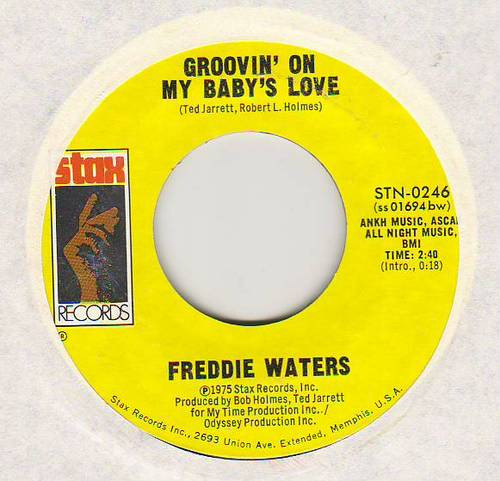
I spent some time in the company of Dodgy’s Nigel Clark at the end of last week. He was up doing a one-man show – all the Dodgy hits, a few of his own solo songs, a smattering of carefully-chosen covers (Tom Waits, Frankie Valli, a spontaneous run-through of the new Beatles single), all interspersed with off-kilter chat and rueful observations on life in 21st century Britain. He’s a massive soul music fan – that would explain the cover of ‘The Night‘ that he ended with, and the various soul covers that constitute those early Dodgy b-sides – and thrillingly, he played a version of a fantastic Stax track from 1975 that was totally new to me. The song found a home in my ear and, after many YouTube plays and before I’d gone to bed in the wee hours of Saturday morning, I’d found a copy of the 7″ online and bought it. I think you’ll like it…
Freddie Waters – Groovin’ On My Baby’s Love
Tinkling Fender Rhodes, descending chords playing against up-sweeping strings, a slow ‘n steady groove of snare ‘n kick drum, a cooing female backing vocalist going against the grain of Waters’ gravelly soul man voice in the chorus…there’s no chicken-scratch guitar or tasteful Cropper-esque blue notes, nor nary a whiff of honeyed brass, yet it has all the necessary ingredients, as Ray Charles one said, in a recipe for soul.
The bridge –‘some people worry ’bout simple things‘ – is pure grits ‘n gravy Memphis soul. In the hands of an Otis Redding or a William Bell or a, yes! Al Green, Groovin’ On My Baby’s Love might’ve bothered the pop charts. And maybe it did, but apparently, very little has been written about either Freddie Waters or Groovin’ On My Baby’s Love so I don’t know about that. I’m certain some switched-on soul brother or sister here will keep me right though. Typically, the track alone should have both singer and song held in far higher regard than the world seems to afford them.
There will, of course, be hundreds of songs like this, floating out in the ether, waiting for the record collector’s butterfly net to catch them as they flutter past. By way of payment, I sent a suitably gobsmacked Nigel a link to Darondo‘s Didn’t I. Featured here a few years back on the recommendation of Gerry Love – another soul-loving beat group employee, as it goes – it deserves another shining of the Plain Or Pan spotlight.
Darondo – Didn’t I
Obscure-ish mid ’70s soul recommendations most welcome. Add them in the comments below.
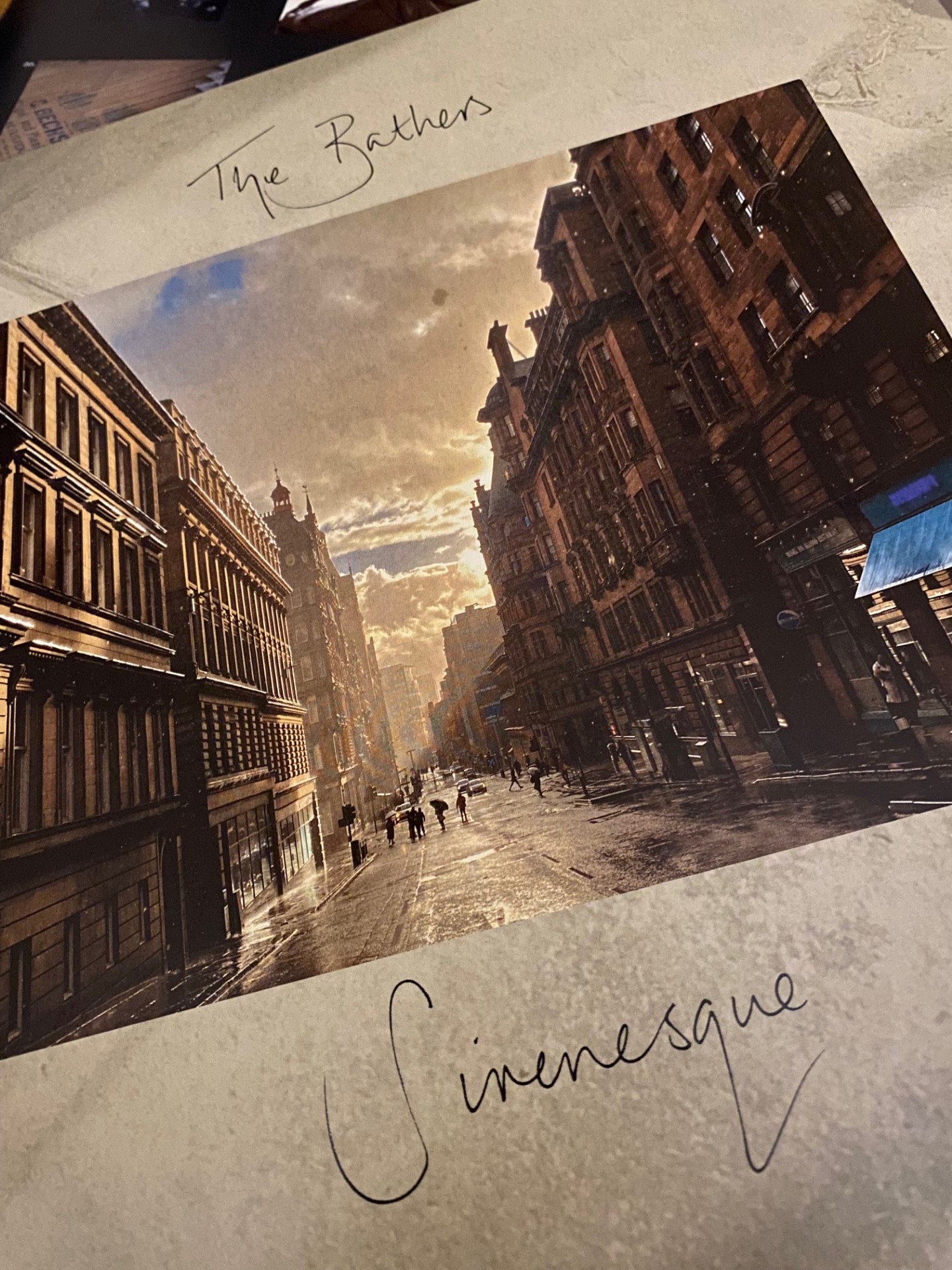
The Bathers, Chris Thomson’s vehicle of unravelling melodies and swooning arrangements, moves at such a stately, tectonic pace that those other west coast hummers and hawers the Blue Nile and the Trashcan Sinatras might consider themselves in Allan Wells territory by comparison. Like a Michelin star chef marinating his secret ingredients overnight for extra devastating effect, Chris has waited 20 years and more between new studio releases before letting Sirenesque out and into the ears of anyone still tuned to his particular station. Entire bands, entire musical careers, at least 72 UK Prime Ministers at the last count, have come and gone since then. And now Thomson, with his ancient, withered, weathered, leathery vocal has crept out of the shadows bringing with him a heavy dose of pathos and regret to remind us what we’d almost forgotten about. Let it be said: Sirenesque is the finest, most autumnal – and most adult – listen you’ll have this year
The Bathers – Lost Bravado
From concept to realisation, it’s a grand album in every sense of the word; magnificent…awe-inspiring…important…all of this. Concert pianos, delicate and gossamer and bassy and rich, their notes captured suspended in solid air, form the basis of the record. From here, all manner of instrumentation pours forth. Clean twanging electric slide guitar, gently plucked nylon-stringed acoustics and fantasy land harps, subtle muted brass that might well be the ghostly breath of Chet Baker himself, chirping birdsong, the sweeping weep of the Scottish Session Orchestra’s strings, the Prague Philharmonic’s chamber arrangements, filmic and fragile and Tindersticks-tender, a coming-and-going, eerie and vampish female vocalist pitched halfway between wonky Disney and Mercury Rev’s Deserter’s Songs… it’s an album packed with ideas and invention and, crucially, control and discipline. There’s not a wasted couplet or jarring note across the record’s dozen tracks. It might’ve taken 20 years to get here, but every nuance of the record’s structure has been expertly thought out.
At its core is Chris Thomson, his close-miked ethereal whisper vocalising a very particular Glasgow; the Glasgow of high corniced ceilings and Kelvingrove and University Avenue and understated Harris Tweed and Mother India and Royal Exchange Square and croissants and coffee and 20-year old malts in the Old Toll Bar. And the words are sung in a voice of the greats, of Scott Walker, of Tom Waits, of David Bowie…very Bowie, as I’ve come to consider it. That thought struck me midway through side 2’s Welcome To Bellevue and the opening phrasing on the track that follows (She Rose Through The Isles) and has stayed with me through every subsequent spin ever since then.
I now can’t not listen to the record without filtering it through Bowie ears. It’s all there in the considered arrangements and unexpected phrasings and the time-stopping production of it all. Sirenesque is almost a companion piece to Blackstar. Seriously. And while that record’s underlying theme of death couldn’t be further from Sirenesque‘s observations on life, this new record hits almost as hard, unravelling more of its secrets and majesty with each subsequent play. In this live fast, move on, next! next! next! world that we live in, you could do worse than downpace to the thrum of Sirenesque. It’s great – Bowie great. The best kind of great.
I was contacted recently by the folk responsible for the Japanese version of the remastered reissue of Cake, the Trashcan Sinatras‘ first album. They wanted to know if I could provide an accurate translation of the meaning behind the lyrics to their debut single, Obscurity Knocks.
What, for example, does ‘I’ve turned 21, I’ve twist, I’m bust and wrong again,’ mean? Witty and pun-filled, articulate and alliterative, Obscurity Knocks is a perfect distillation of all that’s good about the Trashcans’ wordplay, but sung in a rich Ayrshire brogue, many of its metaphorical subtleties were lost to the ether.
The Trashcans (wanting to appear enigmatic and mysterious, to Go! Discs continual exasperation) kept most of their words tightly under wraps back then (although they did include Obscurity Knocks‘ lyrics on the rear of the single’s UK cover) and, in the absence of printing them on Cake‘s inner sleeve like other bands might have done, it was left to fans – and often foreign fans at that – to scribble them down as heard and offer their best versions in the rudimentary chat rooms of the nascent world wide web. Gen, my new Japanese pal, has a grasp of English that truly puts my pidgin Japanese to shame and while his understanding of the lyric was fairly accurate, I offered to go directly to the band for an official set of lyrics. A couple of messages later, I had them to hand and Gen in Japan soon had what he needed.
Gen then suggested I write something for the reissue’s sleevenotes – a Plain Or Pan-style article on Obscurity Knocks itself. Now, while that was instantly appealing – and something I immediately set to work on – I suggested going one better. I’d actually written sleevenotes for the brand new UK reissue of the album. They were ready to go, along with a new gatefold sleeve, a lyric sheet, unpublished photos, the full works when, at the final hurdle, the band decided to revert to the record’s original packaging; no lyrics, blurred photos, no sleevenotes. Enigmatic and mysterious, remember?
All of this meant that I had a set of sleevenotes without a home. Would the Japanese label like to use them? After the go-ahead from the TCS themselves, the sleevenotes found a new home in the far east. The start of this week was spent explaining some of the idioms and turns of phrase that Gen had trouble putting into pure Japanese – ‘Muscled their instruments into the mix‘, ‘A welcoming world of non-competitive leg-ups‘, ‘Baw-deep in melody,‘ (I never wrote that last one, but you get the idea) – and there now is, apparently, a set of sleevenotes written by my own fine hand and translated beautifully and lovingly by Gen into Japanese. I really can’t wait to see what they look like.
This now means that I am left with an article on the giddy rush of Obscurity Knocks. Not one to waste things, it forms the rest of this post beyond the track itself below…
Trashcan Sinatras – Obscurity Knocks
Thoughts on ‘Obscurity Knocks’
It’s February 1990. The Trash Can Sinatras gatecrash a smattering of small, switched-on corners of the world with Obscurity Knocks, a bright ‘n breezy strumathon of major and minor 7ths that skirls and skelps and flies straight outta the traps like life itself depends on it – which it very much does. Obscurity Knocks might well be the band’s debut single, yet the Trashcans are already world-weary and wary of a music business that doesn’t quite fit their aesthetic. ‘I like your poetry but I hate your poems,’ they spit, a reference to the many rejections they had before Go! Discs came to their rescue and made them Irvine’s Most Likely To. ‘I’ve turned 21, I’ve twist, I’m bust and wrong again,’ they lament, the poker game a metaphor for their dealt hand in a life already decidedly bleak. ‘The calendar’s cluttered with days that are numbered,’ they complain, an existential crisis poetically stated in alliteration and pun. This band is something special, those words suggest, something articulate and funny and literate. Not since, oh, The Smiths maybe, has such a package come ready-made for the more discerning listener.
It helps too that Obscurity Knocks comes gift-wrapped in the greatest rush of guitars this side of The Clash and The Beatles, not in sound, clearly, but in total attitude and self-belief. That spring-fresh, hip-slung electric guitar and dusted-to-the-knuckles rattling acoustic fuse together perfectly like spit ‘n polished chrome to create a sound that can mellow a decent malt at five paces. A mesh of finger-twisting riffage at breakneck pace, they’re the springboard from which the song’s melody leaps and delights. That lightning-fast solo that pops up midway through? It brings to mind African high line and Roddy Frame and Richard Thompson and maybe even an unexpected hint of Octopus’s Garden, but it’s all over before you’ve even realised it.
Add in the tub-thumping glam stomp of a chorus, the call and response backing vocals, the drop out around the ‘Ba ba bleary eyes’ line, the zinging chords that accompany the final and decisive ‘but I hate your poems.’ Oh man! As far as stall-setting opening statements go, few bands have done better.
Some naysayers might point to Obscurity Knocks’ punning title and suggest it was a prescient fortune telling of what could have followed, but if you’re reading this, you’ll know that the Trashcan Sinatras (just the two words these days) are still very much in the business of writing and recording songs that foam to the brim with inventive guitar lines and clever wordplay. Knock on, Trashcans. Knock on.
Spring-Heeled Jack was a Victorian character of folklore; a leaping, springing, impish and devilish figure with gentlemanly characteristics that might tear you in two with his clawed fingers or simply stare you half to death with his fireball-red eyes. He was able to leap high across the sooty rooftops of old London town and vanish quickly into the thick and murderous night. I’m sure he must pop up (and pop off again) in some Sherlock Holmes story or other, but I’m no Conan-Doyle expert. If he doesn’t, then that’s a perfect opportunity wasted, Arthur. It truly is.
Spring-Heeled Jim is a track off of Morrissey‘s last great solo record, Vauxhall And I. Still dressed in decent jeans and with great hair, Morrissey takes the idea of Spring-Heeled Jack and turns the Victorian villain into a post-War East End gangster – pwopah salt of the earf, loves his mother, makes sure old Mrs Jones’ milk and paper is on her doorstep each and every morning…you gotta look after one annuva, aintcha? The sort of a figure that’s part Ronnie and Reggie Kray and part Jack-the-lad, just don’t you dare cross him. I’m sure you get the idea.
Morrissey – Spring-Heeled Jim
The track creeps in on a highly atmospheric guitar track, all stealth and menace and ominous foreboding. It rolls slowly and stately like a pea souper curling from the Thames, a mixture of high in the mix plucked acoustics and a wash of reverb and sustain that would probably be more at home in Kevin Shields’ home studio but in the surroundings of a Morrissey record sounds exotic and perfectly-placed as track two’s wrong-footing mood setter. There’s sampled film dialogue playing in the background and, just as you’re trying to place it (it’s very Morrissey), the chords change and Morrissey makes himself known.
Spring-Heeled Jim winks an eye
He’ll ‘do’… he’ll never be ‘done to’
He’ll take on whoever flew through
It’s the normal thing to do
There’s scene-setting and then there’s Scene-Setting and Spring-Heeled Jim sets out its – his – stall very clearly.
So many women his head should be spinning…Spring-Heeled Jim slurs the words…once always in for the kill, now it’s too cold.
He’s an old soak, is Jim. Happy to sit in his armchair, French brandy by his side, Daily Mirror lying open at the racing pages, ready to share his stories with his many visitors – he still demands respect, after all. He’s a one-time womaniser who’d cut you from ear to ear (from ‘ere to ‘ere) should you as much as look at his female companion, although that’s probably all for show anyway, as Morrissey has pegged him as a mixed-up individual with latent homosexual tendencies that just won’t cut it in the world Jim has chosen for himself. (That’s just my opinion, your honour.)
That film dialogue that runs through the track until the last, “…and they catch ‘im and they say ‘e’s mentuhl” is from We Are The Lambeth Boys, a late ’50s documentary that follows a gang of young south London teddy boys, aiming to disepl the myth that they’re violent and delinquent youths.
When the plummy, clipped accent of the presenter isn’t spoiling things, the Lambeth Boys ride in an open top truck singing “We are the Lambeth Boys!” and shouting “‘allo darlin’” at every female they pass. They sing cockney knees-up ditties. They go to the dancing and eye up the girls (or boys) on the opposite side. They sidle up to prospective partners and with a cool nod of the head, lead them on a quickstepping jitterbug around the floor of the dusty dancehall while Lonnie Donegan’s ‘putting on the agony, putting on the style‘ skiffles its way to its conclusion. They care very much about their hair and their two-piece suits and ties. They also smoke like the London of the industrial revolution. As far as social history documentaries go, it’s a must watch.
Give yourself 50 minutes and watch the full thing here. You’d love it.
It’s an obvious Morrissey go-to, We Are The Lambeth Boys. There’s the us-against-them gang mentality that he instilled in The Smiths and every other group he’s formed around him since. There’s the rock ‘n roll reference points. The haircuts. The clothes. The attitudes. The good-looking male protagonists. Any still from the film could have been a piece of Smiths cover art.I can’t emphasise just how essential a watch it is!
For being fiercely Mancunian, Morrissey seemed to form a special bond with London in the early ’90s. That train heaved on to Euston and before you knew it he was referencing Battersea and Bethnal Green, Arsenal and West Ham, East End boxing clubs, Piccadilly and Dagenham and Ronnie and Reggie and having his picture taken outside the Grave Maurice pub, a favourite watering hole of those same Krays. Creating characters that were so clearly unfluenced by and based upon the unsavoury players of old London was the natural conclusion to this, and Spring-Heeled Jim endures as one of Morrissey’s best tracks on one of his greatest albums.
It’s been a year since I was last in New York City.
52 weeks since I last allowed myself to be happily ripped off in an off-Times Square pizza joint – “Seventy bucks for four slices of greasy, cheesy pizza and four cans of Coke? Tip that up to eighty and take my money ma man.”
365 days since I last had a stiff neck from looking up, down, all around at the buildings and bridges and people and possibilities of the greatest city on the planet, listening surreptitiously to the natives as they passed, deep in loud conversation, loud in deep conversation. “I used t’be afraid of the Bronx…I heard chow chows are adorable…My social life is a gawd-damned diz-ass-tuh…and he was buh-leeding awl ovah the apartment…I dunno, John, it cawsts a lotta dough…Then he jumped on the window display and pretended to be a mannequin! Hur hur hur!!!…”
That’ll be 8760 hours since I last walked upwards of 35,000 steps each day in search of musical reference points the length and breadth of Manhattan, got passively high in Times Square, rode the subway from 42nd Street, listened to a great, soulful Beatles busker at the Lennon memorial spot in Central Park, admired the art deco wonder that is the Chrysler Building, got an hour to myself to shop for records, recreated Bob Dylan’s Freewheelin’ album cover in the wrong freakin’ street, looked into tiny but expensive apartment windows and took arty photographs atop the High Line, internally sang songs at every other street sign (Lexington Avenue, 10th Avenue etc etc), imagined seeing the singer Beck near the Empire State Building, jumped at the unexpected wail of a cop car siren, drank Brooklyn Pilsner and ate the greatest pizza in Juliana’s, sat on a brownstone stoop (should’ve broken into some doo-woo – missed opportunity) and generally had the most fulfilling experience possible.
I’m absolutely not kidding when I say that, outside of regular thoughts about family and work and what we’ll have for dinner that night and can I squeeze in a wheezy run while the boy is at the football training, the city of New York is an ever-present, permanent fixture in my head. Analytics being what they are, it’s there too in every other post in my social media feeds, and I ain’t complaining. Until I return – whenever the cost-of-living crisis hell that may be – it’s just about the next best thing.
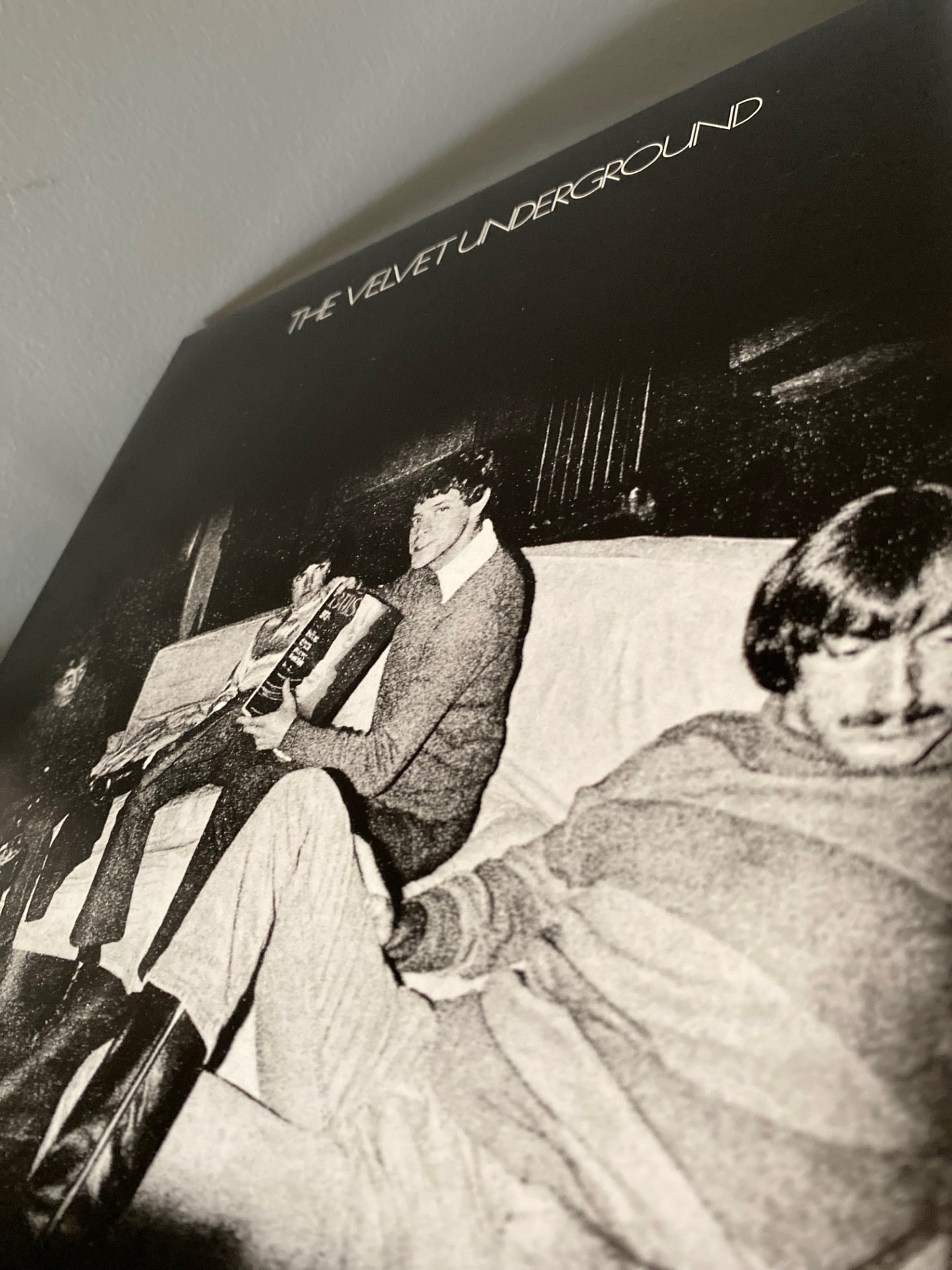
That most New York of bands, The Velvet Underground, decamped to L.A. for their third album, 1969’s eponymously-titled release. Following the white-hot, white light/white heat abrasiveness of its predecessor, the third album is gentle, rich in melody and only occasionally rips into cacophonous rackets of the knuckle bleeding overstrumming that’s come to define them (maybe just side 2’s Murder Mystery – and that’s pushing it.) The gossamer-light Candy Says sets the scene. The soporific Pale Blue Eyes, with its woozy, almost out of tune guitar lines and Moe Tucker’s steady tambourine rattle closes side 1 perfectly. Beginning To See The Light‘s chugging acoustic guitars and ‘here we go again‘ breakdown continues the mood into side 2, before the whole thing closes perfectly on After Hours, Moe Tucker’s surprising and wobbly lead vocal sending the whole thing off to bed.
The story – the legend- goes that the band had a whole bundle of gear stolen at some point in its journey through JFK Airport, hence the lack of distortion and discord, but Lou Reed has since debunked that by saying he simply wanted to play more melodically. Not having John Cale in the band by this point might have helped too.
I’ve been obsessing this week over Some Kind Of Love, all double twang and asthmatic slide, hypnotic and groovy and never-ending. It’s really great.
Some Kind Of Love – The Velvet Underground
The lyrics are ambiguous but, naturellement, saucy, salacious and just a little perverse. “I don’t know just what it’s all about, but just, uh, put on your red pyjamas and find out,” croons ol’ Lou at the end, smiling at his smutty little self as he does so. They tell me that New York is somewhat cleaned up these days. Lou’s mind, seemingly, was as filthy as the streets that birthed his band. Lucky for us.
Johnny Marr sat in on a two-week residency on BBC 6 Music recently. I tried to catch all eight (ten?) shows, either at the time or via catch up, as Johnny is, as you know, a genial conversationalist and someone worth listening to. He’s a music enthusiast as much as you or I, infectious, with stories to tell about the records he’s playing and the ability to have you instantly seeking out more about some of the artists he’s chosen.
Thomas Leer was one such artist. I wasn’t familiar with him at all but before the track in question had even played out, I had been on eBay and elsewhere to locate a copy of it.
Thomas Leer – Don’t
Cliché merchants will tell you it’s one of those tracks that could’ve been recorded and released yesterday…or 2001…or 1979…or indeed any time in the past 40-odd years (and the shot of Thomas above might well back up that theory) but come on – it’s so post-punk, so anything goes, so experimentally Sylvian and so early ’80s (1982) it’s absolutely of its time…and brilliantly so.
Repetitive and murky, hypnotic and other-worldly, it has bendy, slinky, Talk Talk-ish bass, weird and wired, tightly-strung electric guitar and a synthetic ambience that might find it sitting comfortably between the quirks and cracks in Talking Heads’ Remain In Light, Can’s Tago Mago and The The’s Soul Mining. Pretty great company, then.
There are no traditional verses and choruses, no whistleable melodies, no obvious hooks…until it dawns on you that the hook is in the arrangement and production; harmonic pings, rudimentary drum machine and huge swathes of reverbed electronics that give it a swampy, wee small hours creeping to the dawn vibe. It’s bedsit Brian Eno, warmly claustrophobic and flotation tank funk, edging up on you tightly wrapped in Leer’s own sinuous and serpentine vocal yet simultaneously widescreen and spatial and vast.
I love the half-sung, half-spoken vocal – Don’t make excuses about where you were last night. Don’t. – and the seedy yet sophisticated, meandering pull of the track. It could play for three hours straight and I doubt I’d notice. It’s not an in your face track, but it’ll certainly find its way into your ears. Its creator would, in a year or two, find a level of success playing in Act with ex-Propaganda vocalist Claudia Brücken, but that solo track above is the absolute equal of anything of his that’s better-known.
In the mid ’80s there was a wee gang of rockabilly-ish Kilmarnock buskers who used to play rock ‘n roll covers outside Woolworths on King Street. With battered Levis turned up to lick the shins and towering quiffs teetering on Johnny Dangerously levels of gravity defiance, they’d play Gene Vincent and Buddy Holly and Brand New Cadillac and very probably a Redskins song or two, although I wasn’t yet versed in Kick Over The Statues or the rest of their catalogue. I was still hanging onto my ’60s phase and one Saturday morning after buying an Old Gold copy of Shout by Lulu and the Luvvers (who knew there was a backing group?!), I left Woolworth’s to the sound of the buskers battering merry hell out of a track I’d become totally obsessed with after hearing it on a record I’d borrowed from Irvine library. The Waterboys‘ Be My Enemy was being given a right good working over, the guitarists’ rapidly scrubbed acoustics and singing voices carried far and loud by King Street’s natural reverb and making the song’s frantic cowpunk all the more essential. Until now, buskers were old guys in crumpled suits singing American Pie. These buskers were not that much older than me and dressed a more outlandish version of me and could play contemporary stuff far better than me. This was the first time that I’d hear a Waterboys song live – my favourite Waterboys song back then too – but it wouldn’t be the last.
Until last night, I’d last seen The Waterboys 36 years ago. Back once more in the Barrowlands, where chief Waterboy himself Mike Scott cheerfully declares this to be the band’s 16th appearance at the iconic venue, I’m a bit apprehensive about how the show might unfold. I’ve lost my way somewhat with the band’s output in the intervening three and a bit decades and while This Is The Sea remains a firm favourite, played still and played regularly, I had no idea how the band might pitch their set. The pre-gig music – The Beatles’ I Want You, the Stones’ Monkey Man, but stripped of their vocals to ensure you focused on the groove and swagger of the music – was a welcome portent of what would follow. So too was the Les Paul leaning against the drum riser. I’d said to Fraser that I was really hoping they’d do Be My Enemy or at least Medicine Bow, so to have them both pop up in a back-to-back, buy one, get one free deal was unexpected and magic. Indeed, as the 5 piece Waterboys thrashed their way through Be My Enemy with a vigour and fury that belies the greying hair and maturing years of the band’s focal point, I’m suddenly back on Kilmarnock’s King Street, watching which chords the buskers are using to play the tune, the confirmation that they were indeed spot on by watching the real deal dishing it out with a sped-up Subterranean Homesick groove on the stage in front of me almost 40 years later.
There’s a! gun at my back (chugga-chugga) And a! blade at my throat (chugga-chugga), I keep on findin’ hate mail in the pockets of my coat…I realise too that I still know all the words. All of them, even Mike Scott’s adlibs and woohoos. Music, eh?! What a trigger.
The current Waterboys are absolutely electrifying. The show – in two halves – ran the gamut of their rich and varied back catalogue, an illicitly stilled stew of Bob and Van and Patti and poetry and punk and folk and Kerouac ‘n roll, where their wholly obvious influences blow through the songs like the whistling winds of the west. Scott’s heavy riffing and one note soloing on his Les Paul whips up a Crazy Horse storm within the band, the Hammond organ, barroom piano and non-ironic key-tar adding colour and dimension to the material. At times he’s posturing and riffing like Strummer, left leg pumping up and down, kicking out in spasmic twitches. At other times he’s a balladeering hippy minstrel, leading communal singing on a roof-raising Fisherman’s Blues. It was around the time of that record that the band started to lose me, their hoedown raggle taggle coming a straight second best to the distortion and melody of the Creation Records roster, but last night it hit me that the power of the song endures and will usually outstrip the posture of the week’s big thing.
The Waterboys – The Pan Within
The whole set pivots on a searingly intense The Pan Within, in itself expertly fulcrumed by Scott and his hot-wired guitar around a faithful reworking of Patti Smith’s Because The Night. It’s epic on record and, as it turns out, it’s even more so in concert, a heady swirl of existentialism set to a thumping beat, that stupid key-tar replicating perfectly the recorded version’s orchestrated backing, Scott coaxing slivers of feedback and melody from his fretboard. As the song reaches its finale, the two keyboard players face off and take battle. Turn-by-turn they up the ante, outdoing one another with each subsequent flourish of the keys until, exhausted and with nowhere else to musically go, one turns and plants his backside flat on the ivories. Clang! In a night of incredible playing, it proved to be the only bum note. As the discord rings out, the band veers left and eases back into Because The Night, louder this time, more assured, aggressive, even. Take me now, take me now, take me now…. My ears are still ringing as I type this.
Oh yeah, the sound! Motorhead-loud yet crystal clear, every nuance of Scott’s refined Ayrshire burr is pitch perfect above the storm of the insruments. Credit must go out to the sound engineers for coaxing such a sweet sound from the maelstrom. It’s there on the stabbing London Callingisms of Ladbroke Grove, the jangling and Madnessish Girl Called Johnny, the snowglobe swirl of This Is the Sea, the rootin’, tootin’ Bang On the Ear and, of course, thrillingly, on a stomping Whole Of The Moon, replete with blazing comet sound effects and mass hysteria. If y’write just the one song, The Whole Of The Moon is quite the song to have written.
“There’s only one song you can play after The Whole Of The Moon,” says a breathless and grinning Scott, and he leads the band into an outrageously on the money take of Purple Rain that stretches to 10 minutes and counting. The audience, already swinging from the Barrowlands’ white ceiling tiles are fired into orbit. Spent, saturated, saved. Epic stuff.
Sunday morning coming down. I was thinking about War Memorials; how every town and city the length and breadth of the country has one and that each name on every monument has a story to tell. The greatest thing I’ve ever done in my day job was enabling a class of young learners to research the local war memorial as a way of uncovering the stories behind the names chiselled into the sandstone and marble. The kids cracked open a wide seam of local social and historical significance. Underage conscripts, entire families of infantrymen who failed to return from France and Belgium, a soldier that had – incredibly! – once lived in the same house as one of the pupils, entire streets and streets and streets in the town named after its fallen sons… At the project’s conclusion I was invited to chat to various community and church groups to talk about what we’d uncovered. I’d always end my talk with the line that this was just one wee war memorial in one wee town – lest we forget that every town in the county had their own war memorials, no doubt containing similar as yet undiscovered stories just below the surface of brass and stone, waiting for the nosy and curious of the town to scratch beneath the surface one day to expose them.
I’d used the war memorials story as an analogy to a pal on Saturday night. We were out in Irvine, my hometown, to hear local boy made good, the writer Andrew O’Hagan chat to local girl made good, former First Minister Nicola Sturgeon about Mayflies, the novel that has propelled Andrew from the relative margins to the slap-bang-in-the-middle mainstream, with TV adaptations and translations into over 30 languages cementing just how good, just how essential the novel is. Modern classic? I’d say so. There won’t be many here who haven’t read it. Those who as yet haven’t will want to rectify that.
Andrew O’Hagan is a great speaker; educated, philosophical, funny, self-deprecating and eloquent. “Eloquent as fuck!” as I quipped later on. He’s been all around the globe at all manner of high fallutin’ literary events, but back in Irvine he slips easily into the Ayrshire dialect of his youth, talking about how we in the west of Scotland use the ‘f’ word as punctuation and how some of the actors casting for the TV adaptation didn’t quite get the proper handle on the emphasis of the book’s incidental swearing.
Nicola Sturgeon has spent a lifetime in politics and as such can talk on any given subject. Indeed, she too is funny, self-deprecating and eloquent. Back in her hometown, she also slips back into a local dialect that has never really abandoned her, aligning her teenage years to that of Andrew’s through shared experiences at political meetings in the Volunteer Rooms (different parties, different rooms, but a shared loathing for the Conservative government) and in the Magnum, the oasis of the Irvine teenager in those awkward pre-pub days. She has real presence and charisma and when the talk inevitably turns political (the book’s background is political, after all), she speaks not in political soundbites but in plain and common, non-patronising terms. I liked her already, but I like her even more after this. As a duo, O’Hagan and Sturgeon would brighten the sofas of any chat show looking for fresh ideas.
Nicola Sturgeon with a book about an Irvine band by another Irvine writer
Mayflies, as the clued-in amongst you know, centres around the friendship between a group of politically-charged, music-obsessed teenagers in 1980s Irvine, growing up against a backdrop of mass local unemployment, the Thatcher government’s relentless decimation of dignity in the working class and their determination to break free of the pre-determined mould that their lives seem cast in. The pages zing with brilliantly chosen words, viciously delicious conversational patter and multiple references to The Smiths and New Order and The Fall and The Shop Assistants, until the real crux of the story is revealed; one of the group, Tully, is terminally ill and wants his best pal Noodles to help him in his final months and weeks.
Mayflies is purely autobiographical. O’Hagan is Noodles. Tully is Keith Martin. And Keith, like Tully in the book, had cancer. In his dying days he asked Andrew to write about him, write about them; their strong friendship, the stuff and nonsense they got up to with their gang of like-minded, socially-conscious music nuts. The gigs, the girls, the gang mentality of a group still tight-knit to this day.
Everyone in Irvine knew Martian. Everyone. He was funny, kind, inquisitive, interested in you and what you had to offer, yet with a ferocious rapier wit that you didn’t want to be on the wrong end of.
At the bar in the snug of The Turf one night, Keith made a beeline for where the 17-year old me was standing. I pretended not to see him while he mentally sized up the double denim I’d dared to dress myself in. “Shift up, Shaky, and let me in,” he said as he elbowed his way into the bar. Hardly harsh by Martian’s standards, but a first-hand experience of his pop culture-referencing sense of humour. For the next few months, an unfortunate but accurate nickname came my way. Keith would never pass without an, “Awright, Shaky?”
I watched from a safe periphery as O’Hagan and Martian and their gang held court, a rabble of loud opinions, leather jackets and, to use a line that I believe Andrew appropriated from a previous post on these very pages, a riot of considered hair. Sculpted, Brylcreemed Simonon quiffs, elegant and pop starrish and effortlessly just right. I didn’t yet know anyone that might play in a band, but these guys exuded exactly that.
The Big Gun – Heard About Love
Keith and co did indeed constitute a band, the Peel-spun Big Gun. The handsome Keith was the group’s guitar-playing, lead singing focal point. This being the ’80s, O’Hagan was the band’s crucial tambourine player. Effervescent in a Buzzcocks meets Orange Juice fashion, The Big Gun promised much in an era when guitar bands were where it was at. The fantastic Heard About Love single would prove to be their lasting legacy though, a fizzing, climbing chord progression with a neat, nagging hook line – exactly the sort of track that should have seen the band become more well known beyond late night radio and the jukebox in The Turf.
That noisy group of agitators in The Turf contained not only apprentice popstars from multiple original and exciting bands. There were painters and artists and textile students and designers too. Real creative sorts that would go on to carve out interesting lines of paid employment. Andrew O’Hagan would soon swap the rattle of the tambourine for the rattle of the typewriter, decamped outside Fred and Rose West’s house to report on every gruesome going on, prolific and punchy with his prose, alternating easily between fact and fiction for each subsequent essay or article or novel. The acerbic John Niven, himself no stranger to the business end of an electric guitar, would weave his way through the music business of the early 90s before he too picked up a pen to put his outlandish and hedonistic experiences down on paper. If you’ve read Mayflies and you’re looking for a companion piece, John’s latest novel, ‘O Brother‘ and its memory triggers for life growing up in Irvine can’t come recommended highly enough.
Something was in the air of that pub. Or maybe it was in the beer. But for a small town, Irvine had a high proportion of creative minds, eager to make their mark by producing great work from straight outta the thin and clear seaside air.
History shows that this is nothing new. The political novelist John Galt was born in Irvine in 1779, his words ringing the wrongs of the Industrial Revolution. Two years after Galt’s birth, Robert Burns found himself a job in (and setting fire to) the town’s heckling shop. It was his friendship with local sea captain Richard Brown that stopped Burns from giving up a career in writing. Brown encouraged Burns to keep at it, and a National Bard was born. That particular story is told in song in I Hung My Harp Upon The Willows by, yes, the Irvine band Trashcan Sinatras. Even Edgar Allan Poe’s 19th century gothic horror has roots in the town, his The Pit And The Pendulum inspired, they say, by the grand old clock that kept time in Irvine Royal Academy’s main hall. Irvine, it seems, has always been – and always will be – a hotbed of unique creativity.
I like to think that the scene that unfolded every Friday and Saturday night in that 1980s Turf was every bit as fertile as the Beat scene in New York, with Kerouac, Ginsberg and Burroughs holding court in the bars around Columbia University, or ‘20s Paris, with Dali, Matisse and Picasso the universe around which all Parisienne creativity orbited. But I also wonder if every wee provincial town, close to the city, but not so close as to be consumed by it, had the same creative noise as Irvine. Was there a pub in Elgin that was the equivalent? Or Hamilton? Or Stranraer, Kirkcaldy or Denny? Is it just that no-one has thought to join the dots of the goings-on in these places? Am I making too much of the Irvine scene, or is it that I’m the only person who’s chosen to shout about it? We Scots aren’t known for bullishness and self-promotion after all. Just as every town has a war memorial, does every town also have a Keith and Andrew, a Tully and Noodles, and a whirlwind of artistic possibility ricocheting around them like a jittery Alex Higgins break? I’m not so sure. Irvine, as it turns out, seems to have been quite the remarkable wee town in this respect.












 Plain Or Pan