Cover Versions, Gone but not forgotten

Sly Dunbar

It’s a long way from Scotland to Jamaica – about four and a half thousand miles at the last Google search – but the two small nations are inextricably linked. Thanks to mercenary tobacco merchants who set sale from Scotland’s second city a couple and more centuries ago, Glasgow has visual reminders of its links to the tobacco and slave trade slap bang in the middle of the city centre.

Road users enter and circumnavigate the city via the Kingston Bridge. The Sub Club, the world’s longest-running underground dance club, can be found on Jamaica Street. The streets that surround the city centre form an area known as the Merchants City, the street signs hung in long-standing tribute to the men who brought tobacco, wealth and dubious social values (and lung cancer) to the west of Scotland; Buchanan, Ingram and Glassford, to name but three, made fortunes trading in people and tobacco, using their dirty gains to build impressive townhouses that still stand today. One of them, William Cunninghame’s majestic Roman-columned mansion – Saturday afternoon hang-out for every subculture since the teddy boys – has operated for almost 30 years as the Gallery of Modern Art. You might recognise it as the building behind the statue of the guy on horseback with a traffic cone permanently skewed on his head. I dunno what a complex man such as the Duke of Wellington would make of Glasgow’s involvement in slavery, but there he stands, a traffic-coned and shat on guardian of one of the city’s finest architectural triumphs.

Go to Jamaica and you’ll be surrounded by signs of Scottish influence. The Scotch Bonnet pepper is a national delicacy, for goodness sake. Travel the island and you’ll drive through Culloden, Dundee, Aberdeen, Elgin, Kilmarnoch (with an ‘h’), even Glasgow again…albeit in undeniably better weather. There are, believe it or not, around 300 towns in Jamaica with names rooted in Scotland.

The planters, merchants and even enslaved people who worked the tobacco fields adopted – or were forced to adopt – Scottish surnames. A quick flick through Kingston’s telephone book will throw up all sorts of unlikely yet true surnames; McKenzie, McIntosh, Anderson, Campbell, Archibald. Sounds like the warmers who littered the Partick Thistle bench last weekend, doesn’t it? Every one is a common Jamaican surname. FACT: the most common surname in Jamaica is Campbell. Even Usain Bolt is named in relation to the Scots word for running extremely quickly. Or maybe he isn’t.
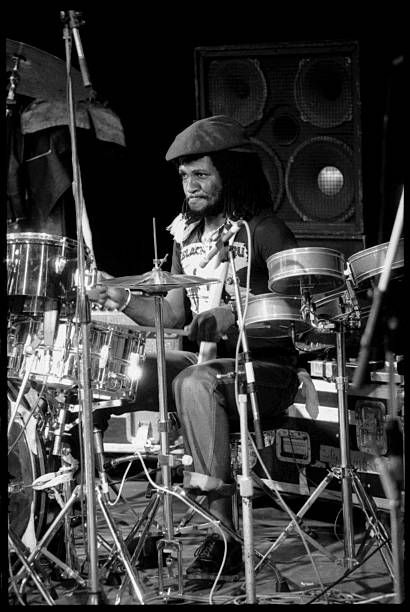
Anyway. This brings us to Sly Dunbar.

That surname has always intrigued me. How did a right-on roots rocker from Kingston end up with a random east of Scotland town for a surname?

The answer might be found in the history books. I may be adding two and two together here and getting five, but give this some thought.

We need to go back to 1650 and Oliver Cromwell’s march on Scotland to rid Charles II from the Scottish throne. Seen as a direct threat to his plans for an English Commonwealth, Cromwell and his army marched on Edinburgh. Forced back from there, they fought and quickly defeated the Scots in the nearby town of Dunbar. Around 3000 Scots were killed in the battle, with a further 10,000 marched as prisoners of war to Durham in the north of England. Of these 10,000, many died through disease and malnutrition. The survivors were thrown on a boat and sent to the colonies to work as tobacco plantation labourers. Eventually, they settled, formed relationships with the locals and had families. Which is where, I’d think, Sly Dunbar’s roots lie. It’s certainly a plausible theory.

Sly Dunbar played drums on literally thousands of tracks. A quick flick through your own collection, or even a random lucky dip, will quite possibly reveal something he drove the rhythm on. From Bob Marley to Bob Dylan, Serge Gainsbourg to Britney Spears, Sinead O’Connor to Yoko Ono, nothing was off-limits for him. Often in partnership with his bass playing sidekick Robbie Shakespeare (now, there’s another interesting surname), Dunbar provided nothing less than a killer rhythm. He could be thunderous, as he was when laying down the echoing patterns that ricocheted around Lee Perry’s many productions. He could be metronomically rickity-tickity, as he was when rattling out a hi-hat pattern on a roots reggae deep dive. He could be subtle and feather-like when required, like he was on the slow and steady Roots Train from Junior Murvin’s Police And Thieves album. Dylan’s Jokerman. Dury’s Girls Watching. Herbie Hancock’s Future Shock. Sympathetic to the song and what was required of him, he was never the star, but he was never not noticed.

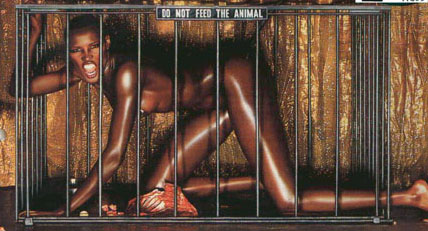
His work with Grace Jones remains a high point. Their high, skanking take on The Pretenders’ Private Life is a proper room shaker that requires, undoubtedly, immediate attention if previously unheard. The tripped out and dubby atsmosphere he and Robbie cook up on Jones’ version of Joy Division’s She’s Lost Control is insanely great, Manchester’s greyest of rainy day anthems transported bouncily to the sunny climes of the Caribbean. The nudge-nudge innuendo they play to in Pull Up To The Bumper‘s reggae disco groove, long black limousines ‘n all, is fantastic.

Grace JonesWarm Leatherette (long version)

I’m a sucker for the long version of Warm Leatherette, Grace’s take on Daniel Miller’s debut release for Mute Records, in itself an interesting and skronky piece of early electro experimentalism, but with Sly on the drum stool, a track that’s now drawn out into a cold and detached slice of post-punk. You know those scenes in 1980s American movies, when a shoulder-padded cop stakes out the leather blouson’d bad guy in a neon-lit multi-tiered club? This track would’ve been perfect for the soundtrack.

Waaarrrmmm!” Grace purrs. “Leather-ette!” Keyboards tooting like traffic jams, bass prowling and popping like Jones herself in a roomful of young guys, the car and its features a metaphor for the singer’s carnal desires.

Rock(steady) on, Sly.
Get This!, Sampled

Damn The ‘Dan

There’s a well-worn meme that does the rounds, a life truth centred on the idea that the music you listened to between teens and twenties is the stuff that comes to define you in your later years. I don’t disagree with this notion at all; the same old guitar-based shit that once rattled my bedroom windows now rattles the wine glasses hanging upside down in the area at the back end of the living room that we only half-jokingly refer to as ‘the bar’ (and clogs up many of the pages in this here influential and on-point blog), but I dispute the idea that you can’t allow for a little flexibility when it comes to making way for ‘new’ old music that you’d previously have sneered at.

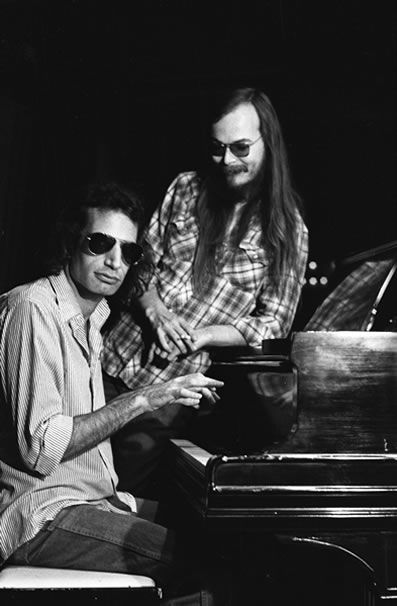
Which brings us to Steely Dan.

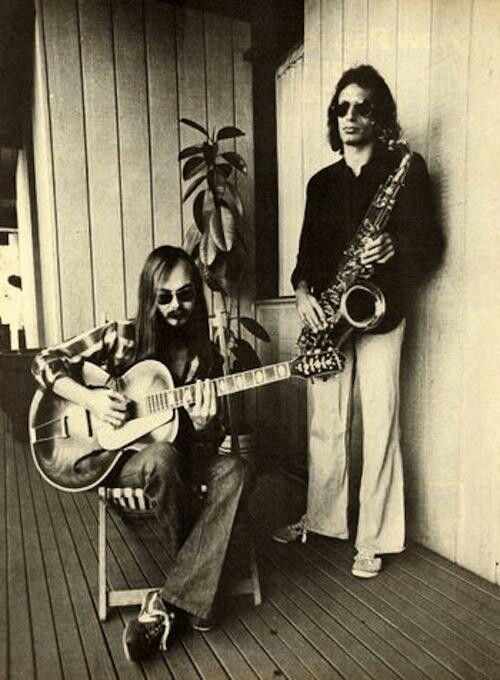
They’re there, they exist, surely, purely, to be sneered at; the sunglasses after dark, the feathered shags, the totally superior halo of recreational cocaine abuse that hovers around them like the glow in a Ready Brek advert. The flares, the platforms, the shirts unbuttoned two buttons too many, the creeping facial foliage as sculpted and considered as the tasteful sax solos they weave between the augmented chords and tickled Rhodes keys. If only for the state of the hair alone, furchrissakes! They’re a cynic’s dream they are.

Grown up on a diet of punkish three chord bluster? Do four chords in the one song make that act, in your misanthropic view, far more prog than punk? Is your favourite group’s debut album comfortably under thirty minutes long? You’ll maybe struggle somewhat with Becker and Fagen. The duo behind the ‘Dan are the very definition of the word ‘muso’. Carefully placed background vocals? Check. Subtle drum fills and percussive fancies? You betcha! Soft focus vocals, half sung, half spoken, but always in tune, and with a range that would terrify both Hall AND Oates (remind me to return to them at some point), Steely Dan records are meticulously arranged; intricate and cerebral and clever, and often, it would seem, just for the hell of it. A group that can write? And arrange? And really play? Gabba Gabba Hey, No Way!

Even on De La Soul’s say-so, I tried and failed. And tried. And failed again. They were just too clinical and clean-sounding. Later on, Super Furry Animals had me returning to Showbiz Kids on the home-made and illegally downloaded version of the ‘Dan’s Ultimate Collection that sat unloved in a folder deep in my iTunes. But ultimately, collectively, they were just (yaawwwn) too boring, baby.

But yet.

One day, some misplaced presenter on 6 Music who was clearly on the wind-up played Reelin’ In The Years. And I found myself tapping out the drums’ tasteful rhythm on the steering wheel straight from the off. As the verse (“Is this Thin Lizzy?) gave way to the super-soft vocal harmonies in the chorus (“Ah, shit, this is Steely Dan!”), I had to admit it had me. There’s a guitar break that sounds (again) like polite Thin Lizzy, another verse where Becker? Fagen? trips over his sing/talk tongue as he fits all those carefully-considered lyrics into the length of the bar before it’s too late. And – again – a Lizzy-like guitar break then (tastefully) a fade-out before the five minute mark. Steely Dan! Who knew they could be so compact and poppy and politely rockin’? Had I been driving a Mondeo, I might’ve broken out in a rash of Partridge proportions, but no. I drove on, now unsure of my stance on this old thing called Steely Dan.

And then – get this – you go home and, when you have the house to yourself, you reassess their old, familiar standard Do It Again at wine glass-rattling volume and you have to admit to yourself that it is in fact a bit of a banger, as the kids hopefully have never said.

Steely DanDo It Again

It’s got it all. The lazy, sun-kissed backbeat, the shimmering Fender Rhodes, some sort of sitar freakoutery, the heat haze guitars that play both fancy chords and lightning-quick solos that spark like welders’ torches in a blue collar mid-west industrial one horse town. Drop outs and build ups, a G-funk key break a good twenty years early, a gentle beast of a song snaking its way into the sunset on a bed of smug, half-paced and energy-free vocals.

Damn the ‘Dan. Are you supposed to like them? Sometimes it’s really hard not to.

Alternative Version, Peel Sessions

Acutely Obtuse

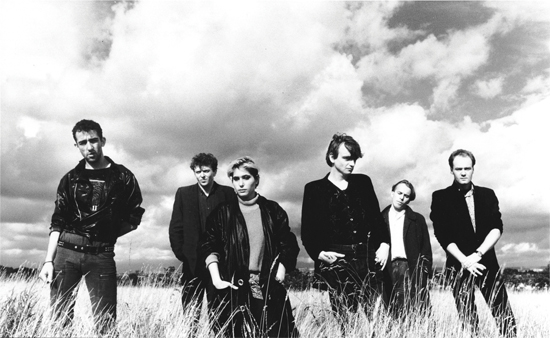
In this house at least, it’s very probably I Am Kurious Orange, but This Nation’s Saving Grace is often universally acknowledged as The Fall‘s greatest album. It is simultaneously accessible yet acutely obtuse in its weirdness; the concrete bass slam that drives Bombast into yr skull and the bone-shaking shouty skitter of Spoilt Victorian Child (surely the greatest Fall song title of all)…Couldn’t Get Ahead‘s skewed rockabilly and Gut Of The Quantifier‘s proto rap…My New House’s off-kilter poppish sheen…Paintwork‘s wonky balladeering…I Am Damo Suzuki‘s claustrophobic and descending head music…something for all tastes, you might say.

Released in 1985, it is, in a year of Brothers In Arms‘ (and even Psychocandy‘s and Meat Is Murder‘s) ubiquity, very much an outlier. Much like a decent measure of ancient malt, the first taste might leave you unsure, the residual after taste unpleasant even, but the ability to stick with it will slowly but surely establish it as a go-to when the moment calls. It is very much a rich and varied listen.

The Fall – L.A.

I’ve been playing L.A. a lot recently. From its helicoptering bass riff in, it’s a bruising and repetitive soundscape that defies you not to listen more than once. Listen and repeat…listen and repeat. That’s been me the past week.

The Fall rhythm section, earthquake-proof and chiseled from the same bedrock as the track’s titular city, keeps everything solidly four to the floor. Mark barks, yelps and sing-speaks the song’s title in the background. Brix oohs and coos, the Californian Cher to his Salford Sunny, the additional leverage that comes from being the boss’s missus affording her the space to dust the whole thing in the abrasive yet hooky circular guitar riff that settles in your brain from first bar to last. The pop fly in the group’s gritty ointment, Brix was ably supported by producer John Leckie, mixing desk manipulator who rode that fine line between art and accessibility and helped make This Nation’s Saving Grace one of The Fall’s very best.

Perhaps even better is the session version The Fall recorded for John Peel, worth it especially for the added dose of Mark’s uncalled for abrasion in the intro where he declares that “Lloyd Cole’s brain and face is made out of cowpatwe all know that!

Are you ready to be heartbroken, Lloyd? Listen on:

The FallL.A. (Peel Session)

Alternative Version, Live!

Out Of Step/Out Of Time

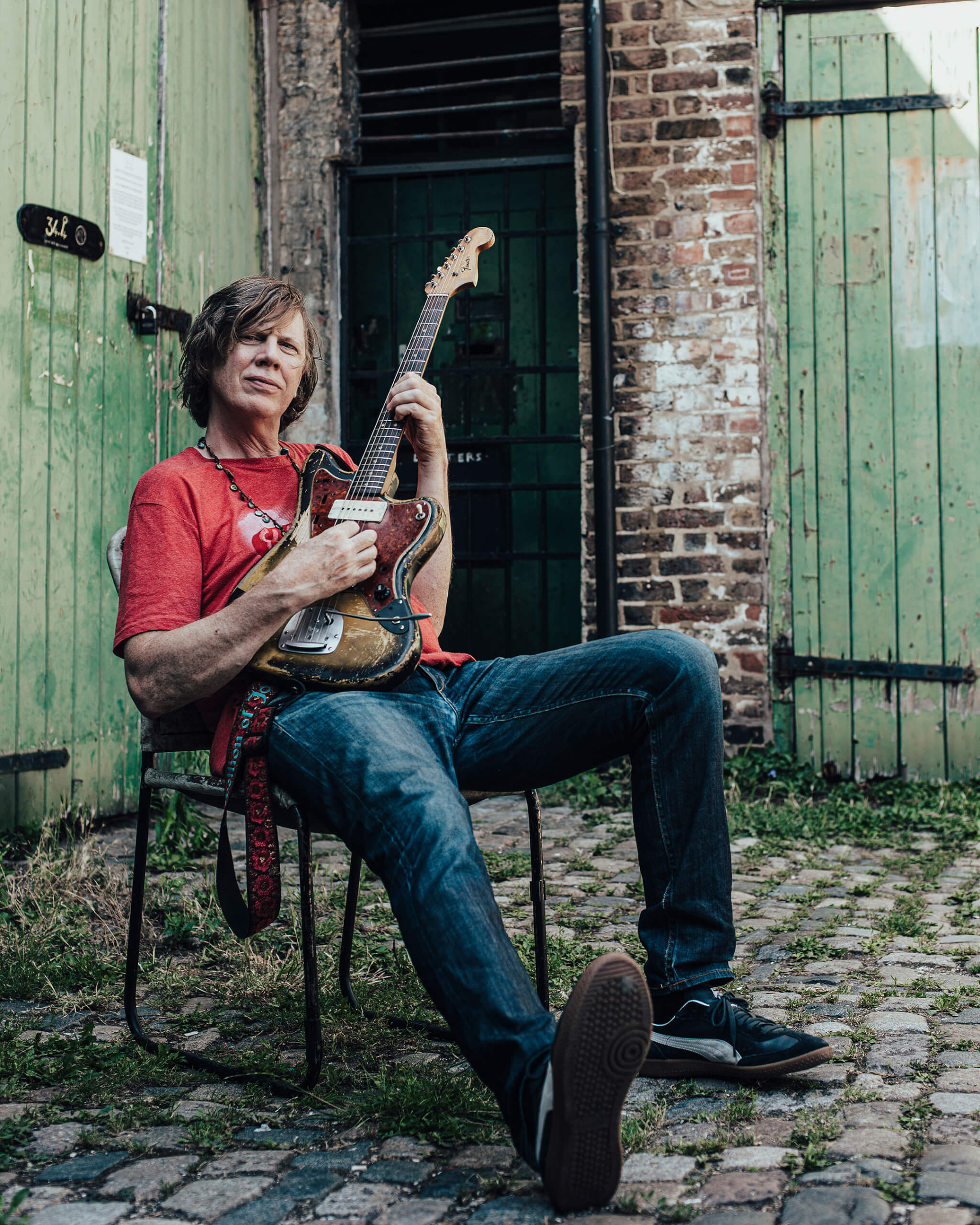
I scanned this totally preposterous list on Substack over the festive period, where Thurston Moore lists his 350 Best Records of 2025. Yeah! – there’s no typo in there – that really does say 350, and Thurston really did list ’em all.

A totally pretentious concept, he goes, of course, for the willfully obscure and impossible to track down; cassette-only releases, band-made CDRs of live shows that 23 people were at, a Lana Del Rey (hey! I known her!) CDR single (ie promo-only release), a Sun Ra lathe-cut 10″, a Lou Barlow lathe-cut 7″, and so on and so on…

That coveted number one slot of Thurston’s was occupied by Laura De Jongh‘s Fundus. De Jongh is a harpist from Antwerp with a lovely, textured, ambient feel for soundscaping, great late night/early morning chill out stuff if that’s your kinda thing, but by the time of the list’s publication, her record – another 10″ (2025’s undisputed underground format of choice) was already long out of print.

Who has time to listen to – and properly critique – that much new stuff…and then whittle it down to a shortlist of three and a half hundred?!? The album buyer for Rough Trade East won’t have managed that. Not even the counter staff at Mono in Glasgow will have managed that combined. I get that Thurston has used the opportunity to shed light on some of his lesser-known friends’ essential, if outre, work, but c’mon, man! Three hundred and fifty records! What nonsense!

Now, had this been 1997, Thurston might’ve opted for a more mainstream approach. Possibly the last great year for album releases, it seemed the year threw up a now-considered classic every other week. OK Computer and The Fat Of The Land, In It For The Money and Radiator, Dig Your Own Hole, Homogenic and Urban Hymns, Homework, Earthling, Blur and Tellin’ Stories, Heavy Soul, Vanishing Point, Maverick A Strike, Songs From Northern Britain, Mogwai Young Team, Brighten The Corners, Being ThereLadies And Gentlemen, We Are Floating In Space…ladies and gentlemen, we were spoiled for choice.

It’s quite possible too that a Tokyo collective of long-fringed shoegaze revivalists had cooked up quite the Jazzmastered storm on a limited to 50 copies CDR, wrapped in rice paper and designed to erase itself after half a dozen plays, but y’know, who knows? Maybe Thurston does. He probably has 2 copies.

Even further back, 1991 was a similarly stellar year. Spin Magazine, the US equivalent to the UK’s NME (ie, it focused on metal-free, guitar-based music plus the odd slab of interesting hip-hop) went as far as declaring Teenage Fanclub’s Bandwagonesque its Album of the Year. Considering 1991 also threw up Nevermind and Loveless, Out Of Time and Screamadelica, Trompe le Monde, Blue Lines and De La Soul Is Dead, Weld, Achtung Baby, OG Original Gangster, Peggy Suicide and Foxbase Alpha, that’s quite the feat. Maybe it had something to do with ex-Orange Juice drummer Steven Daly being Spin’s contributing editor at the time…or maybe it was just the simple fact that Bandwagonesque was (and still undeniably is) a great record.

I listened to Out Of Time today, start to finish, twice. I can confirm that it’s lost none of its buzz – indeed, time has been very kind to it, and a record I’d heard a dozen times a day from the counter of Our Price is, in 2026, possibly even more appealing. REM’s real crossover album (Green may have brought them peeking from the margins, but Out Of Time went overground in a totally unprecedented way), even tracks like the much overplayed Losing My Religion and the much maligned Shiny Happy People sparkled boxfresh and urgent.

The high points, of which there are many, go some way to explaining why people despair at the drop-off in quality of REM’s output in the years that followed. Low, with Michael Stipe’s voice in a, eh, low register is a slow-boiling beauty, possibly the second-best track on the record. The none-more Beach Boys-y Endgame is still sublime. I could play this at one point, learned by ear and note-perfect on an acoustic guitar. (I must get my chops back.) Belong‘s soaring wordless chorus, first heard and sung three years previously during 1989’s Green tour at the Barrowlands. Half A World AwayTexarkana‘s choppy riffing, Me In Honey‘s soaring and sparring dual vocals… Out Of Time is a properly fantastic album. You should make a point of playing it this week.

The pinnacle though? That’s easy. The gothic, country blues of Country Feedback is, quite clearly, the greatest song on the record, and quite clearly the greatest song Neil Young never wrote. Michael takes centrestage, the band slow and stately, totally in control of the song’s unwavering steadiness with Stipe’s unspooling vocal throwing in the odd, unexpected sweary word amongst its gorgeous melody. I could listen to this all day long and never tire of it. If I’m making a Thurston-type list for the end of ’26, Country Feedback may well be at the upper echelons of it. The 10″, lathe-cut, US promo-only white label, of course.

Here’s REM doing a grand version on Jools Holland’s Later in 1998.

REMCountry Feedback (Live on Later)

It’s quite easy to imagine a Neil Young version on Everybody Knows This Is Nowhere, his ramshackle and feedbacking guitar replacing the weeping pedal steel. If only.

REM and Neil YoungCountry Feedback (Shoreline Amphitheatre, October 1998)

The closest yet is from 1998, when ol’ Nel himself grabbed an acoustic guitar and joined REM for an encore at the Shoreline Amphitheater in California. Michael says at the start that it’s his favourite REM song, and who can blame him?

Alternative Version, Cover Versions, Gone but not forgotten, Hard-to-find

Nineteen

Plain Or Pan turns 19 today. One blink, and already, it’s into its final year of being a teenager, somehow mid-way through second year at University and making its own considered path in life. It’s very much its own thing these days, with its own mind and opinions and world view. Unlike its curator, gone is the need to be on it all weekend…unless by ‘on it’ you mean gym equipment. It’s protein, not pints for this one, and it looks good for it. Will it wish it had done more reckless things in its late teenage years? I doubt it. So far, it seems quite happy in its own skin. Let’s see how it fares in its 20th year – all things considered, it’s not bad going for a wee music blog steadfastly stuck mainly in the past.

Talking of which…

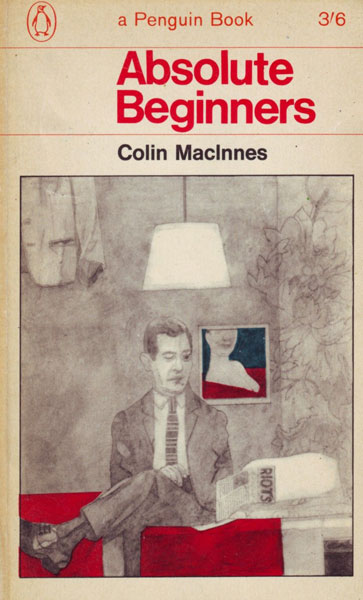
I’ve been reading Colin MacInnes’s Absolute Beginners the past week. On Paul Weller’s say-so, I’d tried it years ago, more than once, but couldn’t get with it so sat it aside and let it gather decades of dust. I’m glad the urge took me to pick it up again. Something clicked. It hooked me and I read it in three nights flat. It is, as it turns out, a terrific book; fast of pace, meaty in subject matter and, when the protagonists are in scene, written in a sort of secretive teen-speak that could give Anthony Burgess’s nadsat argot in A Clockwork Orange a decent run for its money. I suspect you knew this already though.

Set in 1958 (and published hot off the press in 1959), it tells the story of a 19-year old west London teen, moved out already and living in a run down yet vibrant multi-cultural area. His neighbours are prostitutes…druggies…violent Teddy boys…beautiful people of all sexualities; it all makes for an obscene melting pot of edgy living. A hustling freelance photographer, we never find out his name – as he comes in and out of contact with the other key characters, he is referred to as ‘Blitz Baby’, ‘the kid’, ‘teen’, and so on – and we follow him as he falls out with his mother, takes a trip with his dying father and tries to convince his once girlfriend – ‘Crepe Suzette’ – not to settle for a marriage of convenience with a much older gay man. Race issues boil over – a result of a campaign of hate by the Daily Mail (or Mrs Dale, as the young folk refer to it) and our photographer is caught up in the melee of the Notting Hill riot, his head clobbered, his Vespa stolen, an easy target on account of his friendship with the Indian and Jamaican communities.

Jazz speak falls from every page, in-the-know references made to late-night Soho establishments where modern jazz is the new thing, where style-obsessed teens pop pills and seek thrills, the first generation post-war to grow up in a technicolour world where hope, ambition and aspiration are the key factors in eking out a life as far removed from your parents’ as possible. Nineteen, with a bit of cash in your pocket? And an attitude? And a way of speaking that is alien to the generation that came before you? You’re an absolute beginner.

The 1986 film adaptation of the novel has, since its release, come in for a fair bit of well-deserved and sometimes misguided stick. Even David Bowie’s majestic theme song – and one of his very best – can’t quite save it entirely, nor the sight of him turning up as slick advertising exec Vendice Partners in the sort of suit (if not accent) he might’ve adopted as stage wear towards the end of the decade. Like most adaptations, the book is far better (the film feels the need to name our absolute beginner ‘Colin’ – in memory of the novel’s deceased author, you have to think) but in the montage below there’s some great film-only dialogue, between the vibraphones and shuffling snares, brightly-coloured sets and hammy accents, that’s worth bending your ear towards.

*One point for every cast member you can name in the clip.


‘Aren’t you a little too old for her?’

‘I’m only thirty-seven…’

‘Thir’y seven?! Arahnd the waist, maybe..!’

(Also – doesn’t the Bowie track that plays at the end owe more than a little to Madonna’s Material Girl? A tongue-in-cheek reference maybe, given the subject matter of the scene being soundtracked?)

Paul Weller called Absolute Beginners ‘a book of inspiration’, so much so that he ‘took’ it with him as his only source of reading material when he was banished by Kirsty Young on Desert Island Discs. If you are an impressionable teenager looking to find yourself and choose a path in life, the novel, with its themes of socialism and left-wing politics married to a decent soundtrack is a fine place to start. Weller would, of course, name a Jam track after the novel and later in the Style Council would create a tune called Mr Cool’s Dream, a reference, I’m assuming, to the character of the same name in MacInnes’s novel.

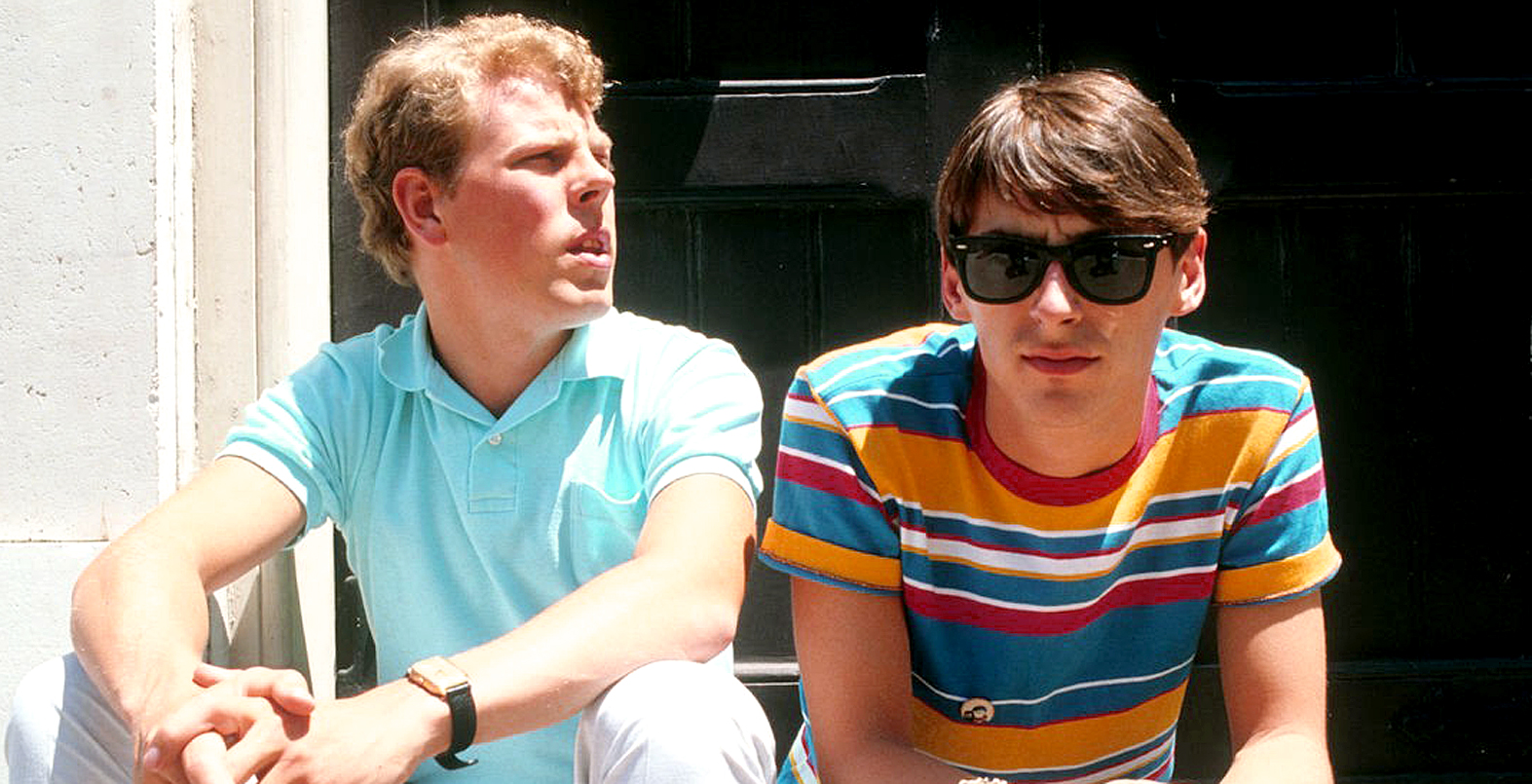
Weller was called upon to provide music for the film and so, drawing on his love of Blue Note and off-kilter time signatures, he came up with the bossanova boogaloo of Have You Ever Had It Blue?, a track that still has a comfy place in his setlist even to this day. And why not?

The Style CouncilHave You Ever Had It Blue?

And here’s Our Favourite Shop‘s With Everything To Lose, the, eh, *blueprint for the above track.


Footnote:

Have You Ever Had It Blue?, as groovy and finger clickin’ as it undeniably is, *owes more than a passing resemblance to the horizontally laid-back sunshine soft pop of Harper & Rowe‘s 1967 non-charting (and therefore obscurish) The Dweller. It’s certainly the best Style Council track that Paul Weller didn’t write. Perhaps, for this track, Weller should’ve renamed his group The Steal Council and come clean about it.

Harper & Rowe The Dweller


*in the clip:

As well as the obvious; Ray Davies, Alan Fluff Freeman, Patsy Kensit, Ed Tudor Pole, Lionel Blair, Edward ‘father of Lawrence’ Fox, Sade, Stephen Berkoff, Slim Gaillard, Smiley Culture, Bruno ‘Strictly’ Tonioli, Robbie Coltrane, Sandie Shaw, Mandy Rice-Davies…quite the cast, eh?

**maybe not all in the clip (!)