Get This!, New! Now!

Lists Schmists. Missed.

Lists are everywhere at this time of year. I’m never that fussed by the music ones. They mainly serve to remind me just how out of touch I’ve become with the musical landscape of the day, or how underwhelming I find the best albums of the year to be. Beyoncé one of the best five albums of the year? Really, NME? Really, Guardian? Sabrina Carpenter? Gimme a break. Where’s Making Tapes for Girls by The Pearlfishers? Where’s A Dream Is All We Know by The Lemon Twigs? Where, even, is Paul Weller’s 66? This definitely says more about me than them. I’ll freely admit to never knowingly have heard so much as a note of Charli XCX’s Brat. It’s been universally lauded as the very best album of the year in almost every list going, so I can only be missing out. Watch me rave about it in 2027…

Very occasionally the lists confirm that, despite my advancing years and stubborn ears, I’ve still got a lukewarm finger on the pulse of whatever beats the nation’s collective heart.

Bill Ryder-Jones Iechyd Da was in amongst it in all the lists that matter. Released way back in January, it announced itself as an early contender for Album of the Year and hung on in there, month after month until the close of the year. With its sad melodies and wraparound blanket of melancholy, it was, despite the heaviness of its subject matter, a thrilling listen; well played, well produced, little pocket symphonies of sorrow and grief that hit you right where Ryder-Jones wanted them to land. It’s a terrific album.

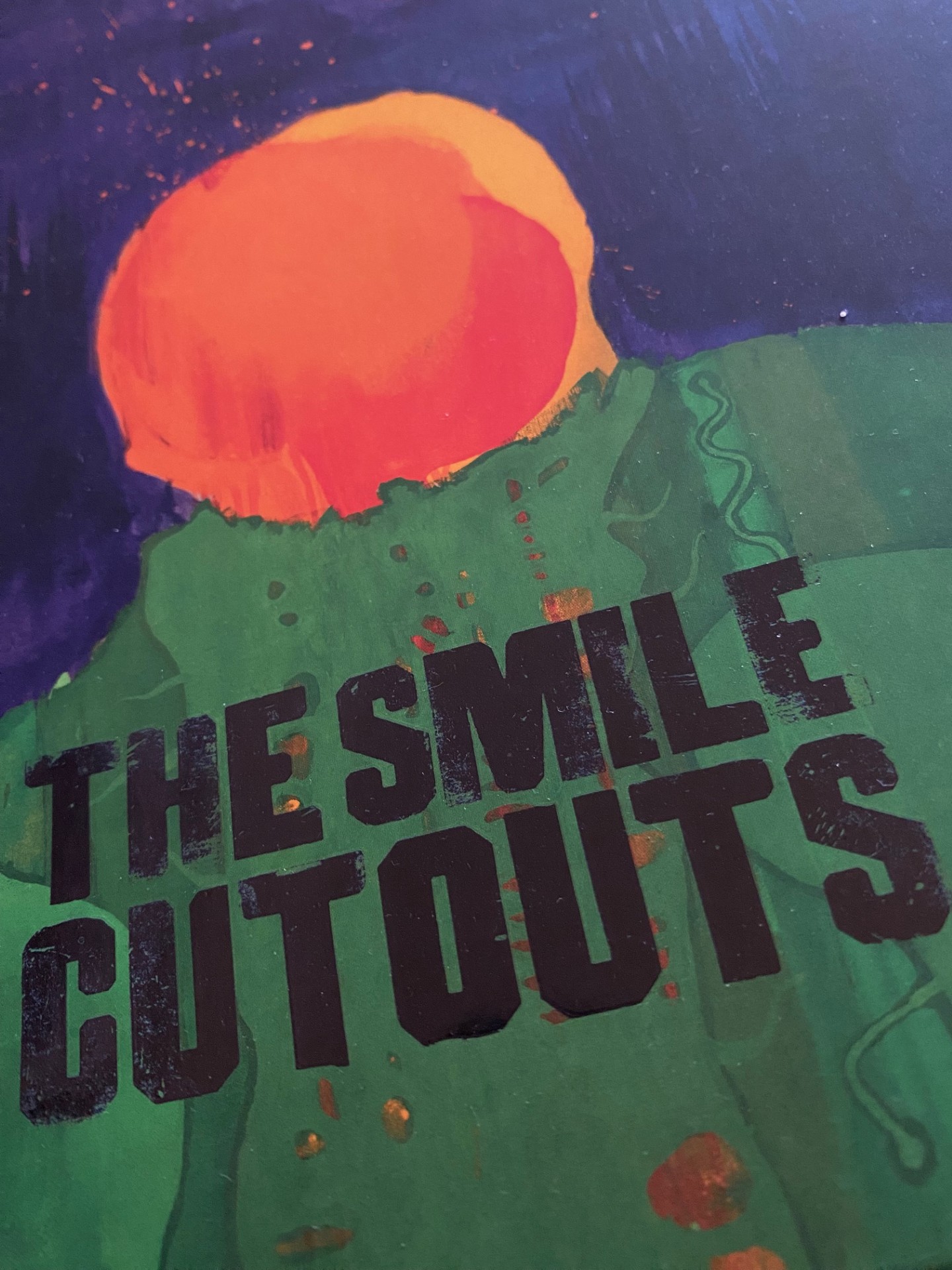
It’s a terrific album, yes, but it’s second only to Cutouts by The Smile.

Scanning the lists, I was amazed to see little love for it. It’s a pretty fantastic record and, if this blog carried any clout at all, all forthcoming issues of the record would come with a hype sticker letting the world know that it’s Plain Or Pan’s album of 2024. “Album of 2024!” (Plain Or Pan) It’s pretty fantastic! Love it or your money back! 

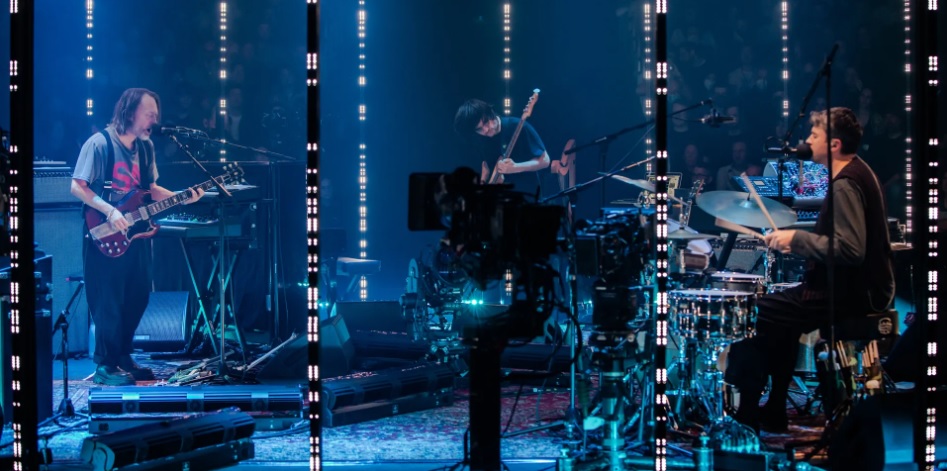
Cutouts was, after Wall Of Eyes (also notable by its absence from many lists), The Smile’s second album of the year. It is to that album what Radiohead’s Amnesiac is to Kid A – the leftovers, the cutouts if you will, from the sessions that spawned the earlier album, reorganised and whipped into a genre defying ten track cracker. It’s orchestral and rockin’, claustrophobic yet dizzy, propulsive and loud, slow and stately and quiet; super-textured, in other words, with each play revealing new layers of unspooling melodies and dazzling musicianship.

Jonny Greenwood dresses his guitars in sheets of Andy Summers chorus. Thom Yorke plays finger-bothering groovy bass. Tom Skinner rattles and rolls crazy time signatures from his polyrhythmic kit. Strings scratch and scrape and shimmer their sheen on nearly every track. Vintage synths parp and fizz their minor chords across the top, archaic and arcane, phantasmal and utterly fantastic.

The SmileZero Sum

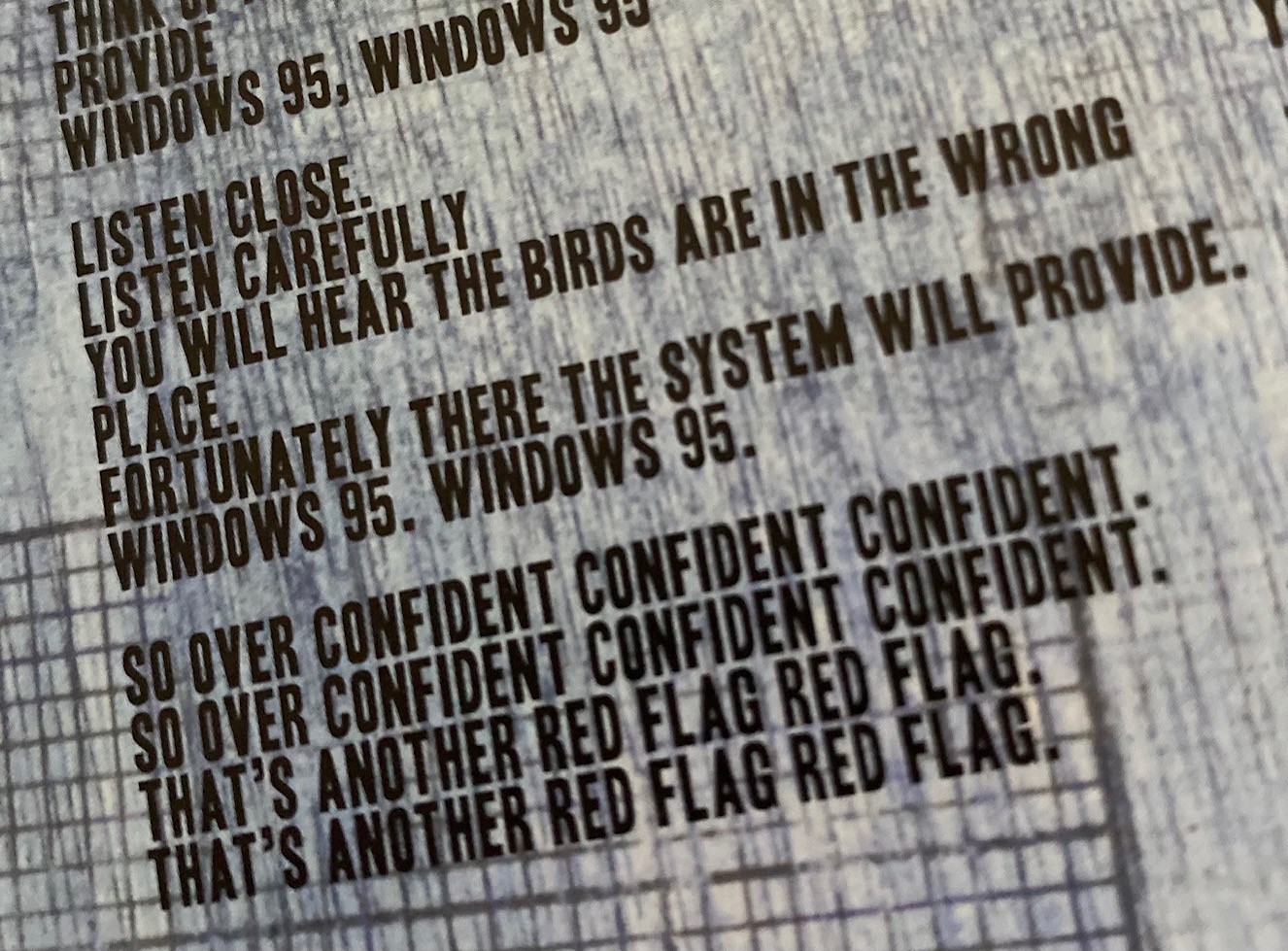
It’s those unspooling melodies that dazzle most, though. It’s only after the third? Twenty-third? play that you truly begin to hear them for what they are. Zero Sum, with its jerky “Windows 95” vocal and frantic, skittering morse code guitar lines. Instant Psalm‘s funereal, majestic splendour. No Word‘s bullet train propulsion. The creeping spy theme of Don’t Get Me Started… If this record had ‘Radiohead’ printed prominently on the cover rather than ‘The Smile’, the list makers and taste shapers would’ve been falling over themselves to make it album of the year.

Plain Or Pan knows though.

Album of 2024!” (Plain Or Pan) It’s pretty fantastic! Love it or your money back! 

Get This!, New! Now!

Only With The Falling Of Dusk

I was out the back door a few nights ago. We’d given the shrubbery a festive, twinkly make-over and the remote control to turn the lights off had stopped working from the lazy comfort of inside the house, meaning I had to move closer to them and, y’know, actually go outside to turn them off…half cut…at 2am…wearing pink Crocs (not mine). As I moved closer to the lights, a sudden and loud flapping noise – total Attenborough nature documentary in sound – broke the still Ayrshire silence. I froze. Almost immediately, from the big tree behind my fence, an owl began hooting.

How great!

We’re not country dwellers by any means, the Glasgow train line runs behind us, down the hill behind that big tree, but we’re right on the fringes of the town where it meets its ever-shrinking green belt and we’re clearly close enough for unexpected wildlife. It’s not been back since, but I’ll be listening out for that owl any time I happen to be awake in the small hours. Or wee hours, given how regularly I make the broken sleep stagger to the bathroom these nights.

The one owl I can I hear any time I like is this – the most interesting, most unique and unarguably the greatest track that’s graced these ears this past year.

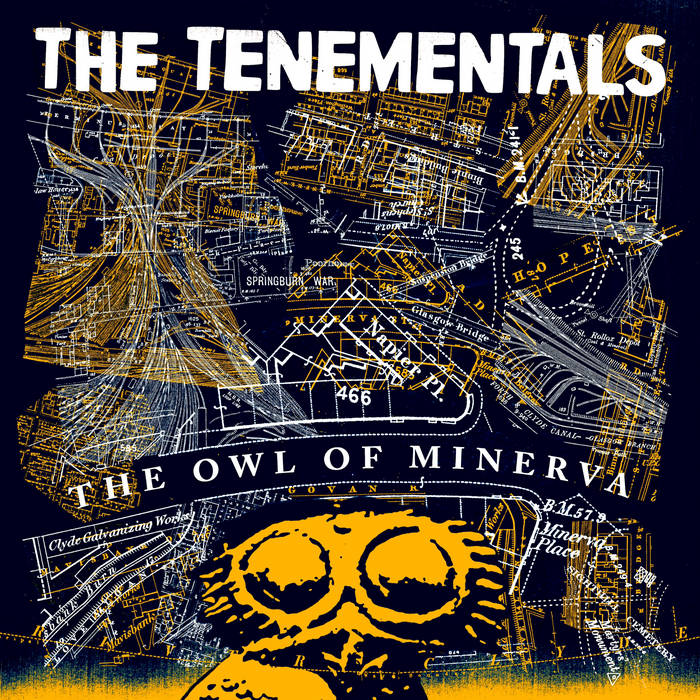
The TenementalsThe Owl of Minerva:

Early in the 19th century, the German philosopher G.W.F. Hegel wrote that “The owl of Minerva spreads its wings only with the falling of dusk.” It’s a line that suggests that true historical understanding only comes with hindsight – a phrase that could very much apply to Glasgow’s foundations in slavery and clashing religious intolerance; a reawakened city, perhaps, but one that’s still in conflict with itself.

Both inspirational and educational, The Owl of Minerva is delivered in a rich, actorly, Glaswegian brogue atop a clatter of guitars, like an electric shocked Public Service Broadcasting riding on the sort of sludgy, serrated, repetitive riff that Iggy Pop might be inclined to drop his trousers for. A fly-past of Glasgow’s streets and their history, it’s terrific. And immediate. And supremely poetic.

Mungo’s children lie in slumber, in ballrooms of pleasure and Bars of L, silent forges of production… The cantilevered roost of the Finnieston Cran(e)…  Red Road in ruin…  Broken bricks of Utopia…  Carnivals in Castlemilk conjuring a constellation…  Hills of Hag…  The rapids of revolution…  The highway of historical time…  Beyond the Black Hills…  Proddy John…  Commie John…  Bible John…  Poppers John…  Bengal/Donegal…  Gorbals teens/Glasgow Greens…  New futures/New presents/New pasts…  And still the river flows.

This is not the soft focused, rain-soaked Glasgow of the Blue Nile. Nor is it Simple Minds’ idea of the Clyde’s majestic past writ large in Waterfront‘s filling-loosening bassline. Nor is it Alex Harvey’s sense of menace and theatre. Or Hue and Cry’s shoulder padded and reverential Mother Glasgow. It’s all of this and more, a Glasgow song that’s scuffed at the knees yet literate and informative and vital for the 21st century. And it’s seemingly arrived straight outta the blue, an unexpected blazing comet for our times.

The Tenementals crept onto my social media feeds at some point late October/early November and the by the time I’d wandered off piste and hauf pissed to properly check them out, I had, typically, missed their Oran Mor album launch show by one night – a free entry gig too, where you had the chance to buy the album and it’s thrilling lead track.

If they don’t look like yr average group of skinny jeaned, facially haired, too cool for school gang of guitar stranglers, that’s because The Tenementals aren’t really any of this. Lead vocalist David Archibald is Professor of Political Cinema at Glasgow University. They’ve collaborated with Union man and political agitator Mick Lynch. Their record label is called Strength In Numbers. Socialists to the core, their self-given job is to enlighten their listeners to the plight of the suffragettes, the beauty of La Pasionaria and the warped, cruel and beautiful history that forged the place from where they sprung.

The rest of the album is equally as thrilling, by the way. See them become more prominent in 2025.

Cover Versions

Take It To The Bridge(rs)

At this time of year I feel kinda duty bound to uphold the seasonal theme of Christmas songs, but decent ones that remain underplayed and under appreciated are as thin on the ground as a field full of living turkeys two days before Santa arrives. Who needs the anxiety of trying to appear switched-on and smart-arsed enough in a barely-read blog post when there are floors still to wash, shops still to tackle and dining tables still to be extended?

Me, clearly.

Phoebe Bridgers has made it tradition since 2017 to release a cover of a Winter/Christmas-themed song in the run up to the big day. Released primarily for charitable causes, Bridgers does a neat line in shining a light on – yeah! – the underplayed and under appreciated songs that celebrate Christmas time (or the holiday season, as she more likely calls it.) Now, what I know about Phoebe Bridgers wouldn’t fit on the back of a £1.65 first class Christmas stamp (One pound sixty five!) but I do know that she is a member of Boygenius who played a terrific Beatles-inspired set on prime time US telly a year or so ago. I also know that she’s collaborated with artists as disparate as Taylor Swift and Ryan Adams. And I do know too that she has a voice that can melt even the coldest of hearts in wintertime; honeyed, pure, American. I should really investigate more.

Phoebe Bridgers  – Christmas Song

Bridgers’ Christmas 2018’s offering was this really great take on Christmas Song by McCarthy Trenching (a band from Omaha, not an implausibly named FBI agent who doubles as a front porch strummer from the Blue Ridge Mountains of Virginia). I know even less about McCarthy Trenching than I do about Phoebe Bridgers, but I do know Christmas Song is a cracking wee country heartbreaker, jerky and waltztime, with bar room piano and brushed snare, delicate female backing vocals and an undertow of regret running through it like an electric current. “It’s Christmas, and no-one can fix it,” goes the singer at the end as you sigh into your coffee. It’s a million miles (and several gazillion sales) from Slade and Wizzard…and all the better for it.

Bridgers adds steel drums – or a guitar that sounds like steel drums – to her version; gentle and pulsing and ringing, like a perfect Hollywood snowfall; subtly Christmassy, y’know? Her voice is tender and whispered in the verses, the way the world sounds when snow is falling outside and there’s no one in the street to spoil it. It’s skyscrapingly melodic and rich in the chorus, where she’s joined by a duetting Jackson Browne. Timpanis creep in, aided and abetted by gentle strings, almost apologetic sleigh bells and something approaching a multistacked choir, yet it never goes full blown Christmas. Like the original, it’s all the better for it. If you’re new to this song, I think you’ll like it.


Christmas bonus:

If you’ve never seen it, that Boygenius Saturday Night Live/Beatles-inspired performance is here:

Cover Versions

With My Mancheran

There was a smaller cousin of Raleigh’s Chopper bike called a Comanche. Being the cutting edge suburban youngster I was in the 1970s, I was sure I’d had one, but Googling a picture of it now, I’m not so sure I did. Maybe it belonged to my brother. Or Stuart Douglas. I dunno. There was also a third family member in the Raleigh clan; another native American-inspired bike called a Tomahawk. It too had all the features of its cousins – the long seat, the raised handlebars, big wheel at the back, smaller one at the front, a chain guarded sturdily against unwanted flare flappery, all welded to a frame heavier than Geoff Capes’ morning ablutions, the third bike in a trio of iconically-shaped ’70s must-haves.

Yeah.

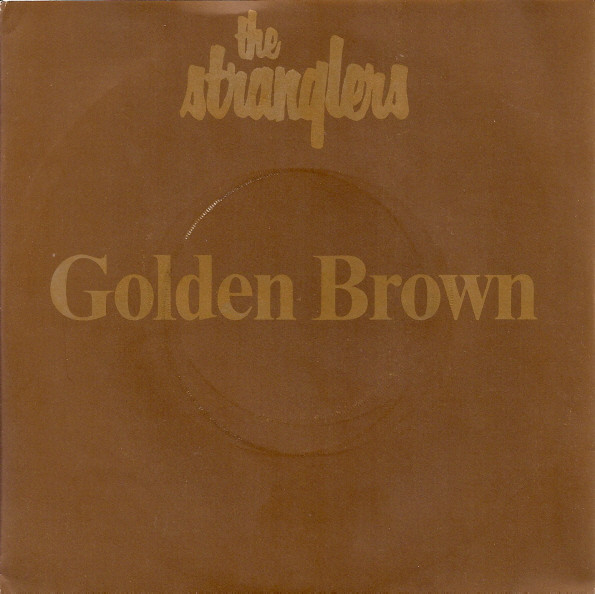
The StranglersGolden Brown

I was always dazzled by The StranglersGolden Brown. It wasn’t just the zinging harpsichord rattling out at a weird time interval that did it. It wasn’t just that sudden and unexpected nylon stringed guitar solo, perfect in every way, with the singer adlibbing the melodic refrain as it played out like angels on a rare night off. It wasn’t just the song’s outro, with its closely knitted ‘ne-ver a…never a frown…‘ overlapping vocals – a neat trick that not many bands attempted back then or since.

And it wasn’t just the video, playing out on the Top of the Pops Christmas 1982 episode, where the band played in some exotic, ceiling-fanned, art deco-inspired place known as Radio Cairo, the harpsichord player stiff of back, his hands stabbing at the keys like a marionette puppet being worked from above, the bass player, louche and cool and leaning into his double bass like a dickie-bowed member of the Stray Cats, the drummer, as ancient as Egypt even then, his kick drum adorned with palm trees (I’m doing all this from memory, by the way, just in case the fact police are close by), or the singer, hands in pockets and bored, barely trying to sing, his Egyptian tan a handy shade of, eh, golden brown and lending his face the look of a kiss-curled Hollywood matinee idol while a caravan of camels mooches in silhouette past the Pyramids that did it.

Nope. The reason the song resonated then (and still) was due to its second line.

Golden Brown, texture like sun,

Lays me down, with my Mancheran

Mancheran. Mancheran? What were they singing about? Was this another bike –  the fourth – in the Chopper family? Another addition to Raleigh’s native-American inspired names for kids’ bikes? How didn’t I know? For 40+ years (count ’em) I’ve ran with the notion that Hugh Cornwell was singing about a fucking bike, until Sunday past when Guy Garvey played the song during his radio show. I turned it up. Loud and clear came the words:

Golden Brown, texture like sun,

Lays me down, with my mind she runs

Oh!

There’s never a frown when you finally grasp the lyric. With my mind she runs. Now it makes sense! Imagine spending most of your life thinking they’re singing about a bike. What do you mean it’s about heroin?

That’ll be the reason the song became a chart mainstay.

Keen to show a different side to their usual grizzled prog/punk output, The Stranglers convinced an uncooperative record company that Golden Brown should be the single that would prove their versatile chops to the world. Relenting, it was flung into existence amidst the rush of singles released for Christmas. A slow burner, by early January it was Radio 2’s Single of the Week and began steadily climbing the charts. As traction gained, JJ Burnel let slip that the song’s subject matter was perhaps darker than anyone thought and it swiftly disappeared from the playlists.

Banned records do what banned records will always do in this situation though, and Golden Brown continued to climb; Number 4 by the third week in January. Number 3 the week later, sandwiched awkwardly between Shakin’ Stevens’ Oh Julie and Bucks Fizz’s Land Of Make Believe. It would peak the following week, swapping places with Shaky but missing out on the top spot due to The Jam’s A Town Called Malice gatecrashing the party. It stayed at Number 2 for a second week. By the start of March it was still in the Top 30. Not bad for a quietly banned record.

A perennial cracker, it’s not a Christmas song by any stretch of the imagination, but plonk me in front of an old episode of Top of the Pops and I’ll always be reminded of that Christmas end of year appearance, marionette harpsichordists, ancient drummers, misheard lyrics ‘n all.

Here, made by clever folk on the internet, is Golden Brown cleverly mashed with that other popular wonky time-signatured chart hit Take Five. It’s quite the groove.

Dave BrubeckGolden Brown


Cover Versions

Keep The Yuletide Gaye

’tis the season to flop on the sofa and self-loathe your way through a Hallmark film or three. Or four. You know the sort; good looking guy, jaw like a wedge of iron, neat hair perfectly shed and shined, turns up in small town America and falls for the attractive local schoolteacher, still living at home since her mum’s premature death, unable to leave her elderly and extremely rich father who just won’t cope without her. Somewhere in the storyline there’ll be charity work, siblings at war and log chopping in fake snow, our quiet yet self assured hero wearing a white t-shirt covered by a sleeveless body warmer, box fresh brand new Timberland boots on his manly feet, his soon-to-be love interest watching from the window as she hangs a particularly sentimental bauble on the perfectly-shaped Christmas tree (that the hunk-o-dude helped pick out and carry to his flat bed truck only yesterday). He flashes her a smile of dazzling white as his final chop splinters an exceptionally gnarly log clean in half and she sighs contentedly, knowing that her mother, dear mother, would have loved him too.

It’s something of a thing in our house to fly through the channels to the way high numbers until a Hallmark Christmas film is found. First to pick the plot apart and predict the outcome is the winner. It’s not difficult, and in the absence of anything better being on the telly, it’s good seasonal fun.

We were hanging our own tree at the weekend and I started ‘doing a Hallmark’ with each of the baubles, mid west American accent ‘n all;

“Aw, look! This is the one you made at nursery. How cute you were! And this is the one you painted at the dining room table when you were three. Remember you got green paint on it and it never came out?! Every bauble tells a story! And here’s the star! It’s still got the badly-printed picture of Dad blu-tacked to it – remember the Christmas he had Covid and couldn’t join us for dinner so we stuck him at the top of the tree to bring him closer to us? Aw! Every bauble tells a story! And look! Oh, look! Here’s the bauble we bought in Macy’s in New York a coupla years back…remember? How could you forget?! They were quite expensive but they had a 20% sale on, so we thought, what they hey, let’s get a bauble for everyone…and when we went to the counter the lady rang them up and when we queried the discount like the stoopid tourists we were she said they were priced at the discounted price already and the reason the amount was even higher than their combined price was because we had to pay tax on them – you gotsta pay tax on everything in America – and, oh how we laughed…except for your dad who was having convulsions at the total cost. Cute bauble, eh? Every bauble tells a story!

If I was writing a Hallmark film, that’d be my plot; pick out the tree (they always pick out the tree), gather the family into the large, conservative living area and decorate it gaudily, each bauble picked causing the camera to fade to history, as the story of the bauble – and by association – the story of the film’s characters is told in flashback.

“And that’s how ma’ ended up with a broken back….and that’s why ol’ Gramps had ta sell the farm…and that’s why you were adopted, Michael. I was adopted?! etc etc.” It’s got legs, I tells ye.

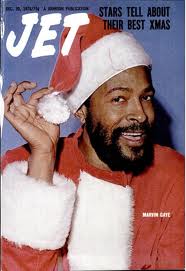
Apropos of nothing connecting the music below to the words above, here’s Marvin Gaye doing Purple Snowflakes.

Marvin GayePurple Snowflakes

A tinkling, light on its feet soul crooner, as delicate and gentle as a fresh Montana snow fall, Purple Snowflakes is Marvin’s own 1965 Tamla hit Pretty Little Baby, rewritten (some might say cynically) for the Christmas market. Nothing new in that, of course. Your favourite Christmas song and mine, Darlene Love’s Christmas (Please Come Home) was originally an anti-Vietnam r’n’b thumper called Johnny (Please Come Home). Lose the edgy war hero schtick, add some sleigh bells and a lyric about snow on the ground and voila! A holiday hit forever. You knew that already though.

Hard-to-find

True. And Gold.

Fly on the wall telly is nothing new, but the brilliance of those Beatles documentaries of recent years has had any old half-baked documentarian with an eye on the prize rooting around behind the sofa for forgotten scraps of footage from yesteryear. Currently on the iPlayer is a near four decades-old film of the day Band Aid‘s Feed the World was recorded. Why it’s never been seen in its entirety until now is anyone’s guess, but it’s good that it’s out there. Why? Because forty years later it makes for really great telly.

Feed the world, let them know it’s Christmas time.’ These days you can virtue signal the song’s lyric and you’ll not find too many folk in a 70% non-Christian world disagreeing. Bono’s big ‘tonight thank God it’s them instead of you‘ line always sounded wrong, even to my slowly awakening 15 year old ears. The sentiment of the song was honest and well-meant though, even if a quick root around online turns up all manner of suggestion that the majority of the money made from the record and the following summer’s big gig never quite made it to the intended recipients. No one knew that though when Midge ‘n Bob – very much a tag team, even if the legend has marginalised wee Midge whilst elevating Saintly Bob’s role in it all – were sitting in a tiny home studio welding Geldof’s sombre verses to Ure’s hooky chorus.
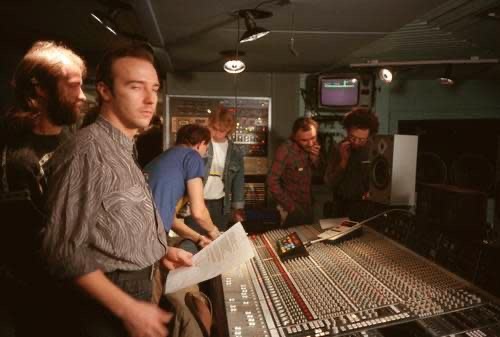
The documentary begins with the pair of them sketching out the demo, Midge’s guide vocal a necessary placeholder in absence of the stars who’d come to adorn it. They’re not long in turning up. Simon and John from Duran Duran (and their bouffants) bounce out of a surrounded car, each sporting three outrageous haircuts in one, Le Bon’s suit jacket sleeves rolled up to Don Johnson levels of rad, Taylor casually chic in a Duran Duran chunky knit tour sweater. Somewhere in the background are the three other Duranies, but being less good looking or important, they’re shoved straight out of the road of the camera lens, never to reappear until the big group shot at the end.

Tony Hadley arrives, blown in on a waft of silk blouse and pure self belief. There’s a squeal and a scream from the waiting fans – nowadays, social media would see to it that several thousand screamers would turn up and block the street – as Hadley and his pirate-legged leather trousers sprint to the safety of Sarm Studios.

A bored Bananarama spill out of their taxi, a heart-stopping riot of fags and frowns and misshapen, hole-ridden jumpers, straight outta bed (or up off a friend’s couch), the three of them each sporting a different third of John Taylor’s ozone-threatening do. Paul Weller with his slick back Euro mod hair style walks unselfconsciously to the studio. He’s caught on camera, stylishly as ever, in selvedge denim, ankle length Crombie…and a walking cane. They weren’t called (snigger) the Style Council for nuffin’.

Midge and a permanently flat cap-sporting engineer commandeer the desk, Bob chips in with unhelpful suggestions and the whole thing slowly comes to life. Hadley is one of the first up, his nostrils flaring, his eyebrows dipping, his eyes squeezed shut with one hand to the can on his ear to reinforce his emotive and real soul credentials. He cannae sing for toffee. This is both True and Gold, as, naked and on tape, his flaws and flat voice are laid bare for all. ‘Let’s maybe try the chorus now, Tony‘ sighs Midge in exasperation. It’s looking like a long day ahead.
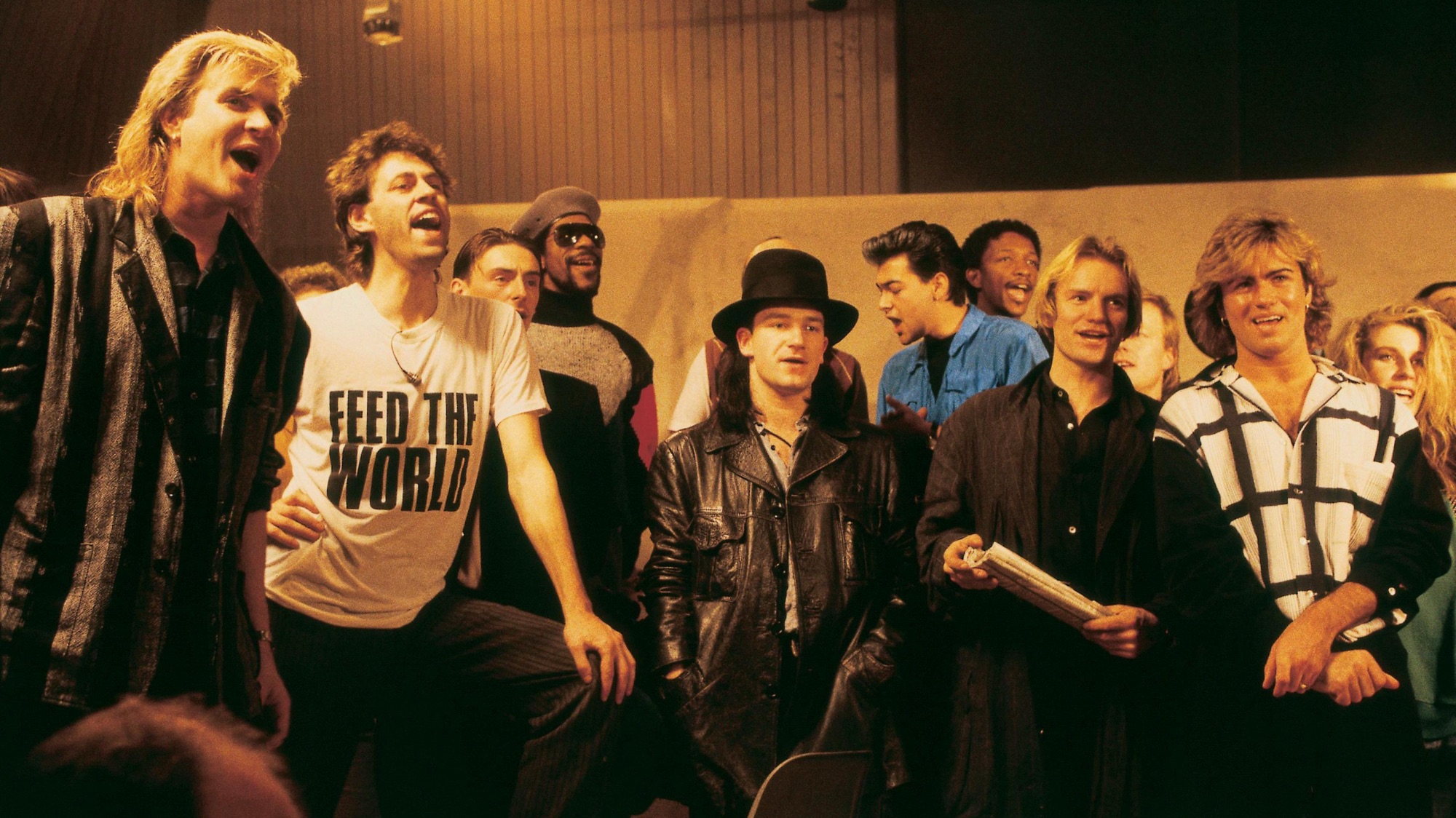
Wee Bono and his hat appear, but not the kidney-infected Edge, and we have our first unlikely quartet gathered around a microphone. The U2 man, seven months shy of total ubiquity, stands aside a proper singer in Paul Young, hapless Hadley the seven foot haddie, and George Michael. Done up in full Lady Di blow dry and silently miffed that he’s recording the song that will deprive Wham their coveted Christmas number one, George is nonetheless just about the humblest in the room. There’s no ego there at all. He runs through the lines a couple of times and listens as Headmaster Geldof offers his advice.

Make it quite an emotional thing, George. Really emphasise the fact that there’s no snow – NO SNOW! – in Africa. NO SNOW! That’s the most important line, George.” George looks on, emotionless. Midge slides a fader. They go again.

I’m struggling to sing this part powerfully, Midge,” admits George at one point. “If you wouldn’t mind changing the musical notation slightly, I can start up here (raises flat hand) rather than down here (lowers palm).”

Sure, go for it, George,” encourages Midge, and both his and Geldof’s eyes light up when, first time, George nails the song’s bridge. “But say a prayer…and pray for the other ones...” It’s instantly recognisable as the take used in the final version, a great moment captured on film as it’s being born.

That other great George, the Boy, turns up fashionably late but put him in front of the microphone and he’s as terrific and dazzling as his self-fashioned make-up. “Just turn it up in the headphones and I’ll sing it,” he demands, exasperated at a faffing Midge at the desk…and turns in an astonishing vocal that’s soulful, gritty and note-perfect. He plucks that famous ‘woah-oh oh!’ ad-lib straight outta the pop star-heavy air and vanishes to hang at the back with Marilyn.
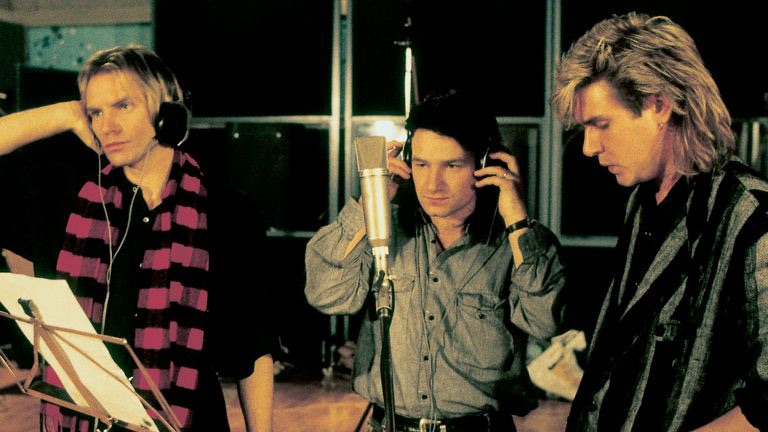
You’re coming in too early, Tony,” interrupts Midge from the control room, “And you’re marginally late, Sting.” The Police man gives the opinionated Bob a cold, deathly stare as the production team focus their attention on Phil Collins’ drum part. He nails it in one, sweat lashing from under his Fair Isle tank top as his steady, tribal beat rolls on. Sting stares at Geldof, coldly. Calculating.

Hadley? He shuffles uncomfortably in his blouse and leather pantaloons and slopes off to ponder a new career in pirate-themed pantomime.

Elsewhere, Status Quo and their unintentional Spinal Tapisms try and fail to add any vocals of note to the song. Maybe it’s the lack of the Quo boogie in the backing track, maybe it’s because they’re surrounded by the great and the good of the day, maybe it’s simply because they’ve clearly got half the GDP of Columbia stuffed up their beaks, but Rick ‘n Francis are rotten singers.

Listen closely to the record the next time you happen to hear it. Just in the background, around one and a half minutes, there’s a slow and steady leathery crrrrreaaaakkk. It’s underneath one of those clanging chimes of doom lines, not obvious at first, but it’s there. It’s not, would you believe, the Quo duo. It’s Hadley, doubling back on his intended early exit, the leather trousers creaking at the sudden turn of events as Mr Spandau realises he’s no longer the worst thing about the record. Both True, and Gold, as they say.

It’s around this point in the film when you start thinking, ‘where are all the women?‘ Even Glenn Gregory is in on the action, visibly wondering how the fuck it was he got here as he gets down to microphone business alongside Bono, Paul Young and fabulous George Michael.

It’s a men’s club, this Band Aid thing. Male producer, male writers, male movers and shakers, male voice choirs, a bossy and opinionated Trevor Horn. And Tony Hadley. Bananarama haven’t been seen since they arrived, not required apparently, until the grand finale. The ladies are everywhere though. Look beyond the mixing desk. Between the cameras. Behind Geldof’s ego and there they are. Being the ’80s, they’re in the background; Mrs Sting, Paula Yates, Mrs Trevor Horn, holding the babies, running after the children, doing what women did back then. Leave it to the lads, girls, thanks very much.

You should make it your business to watch this documentary as soon as possible. Despite the presence of Sting. And Bono. And Hadley. There’s no need to be afraid. You’ll love it.

demo, Gone but not forgotten

Go Figure

I was flicking through Discogs, as you do, checking out the current resale values of some of the records in my collection. Not cos I’m selling them. I just wanted to feel good about having records that currently sit for sale at silly, over-inflated prices.

Husker Du’s Flip Your Wig at almost £40? Man! A first press Surfer Rosa now nudging £50?! Oh my golly, as the song goes. Live At The Witch Trials? That’s £60 all day long. It makes the £5 I paid for it all the more jammy. That first press of Definitely Maybe that Alan McGee later signed for me? That’ll be £250, thank you very much. Go figure. What a mad, record-buying world we currently live in.

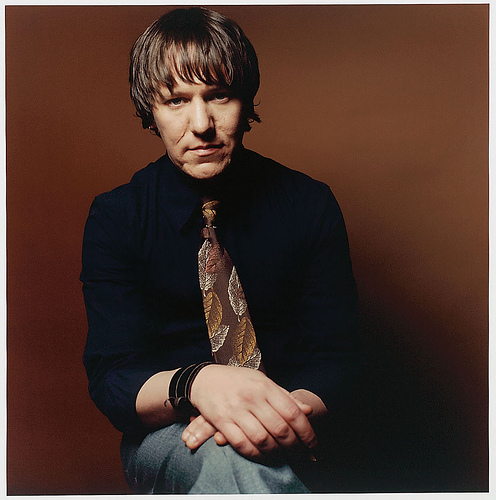
The reissue of Elliott Smith‘s Either/Or album is a near £70 record these days. Released in 2017 for the album’s twentieth anniversary, it came beautifully packaged with extensive sleeve-notes, a Japanese-style obi strip (who doesn’t love an obi strip?) and a second LP of era-specific live cuts, demos and unreleased stuff. Normally the unreleased stuff on these sort of reissues was originally unreleased for very good reasons, but Elliott Smith could seemingly throw out incredible song after incredible song on a daily basis, far quicker than he could properly record them and commit them to release. His vault, as it has become clear, lies stuffed with stone cold, major to minor tearjerkers, coated in Beatles melodies and wistful melancholy, the likes of which I can’t seem to get enough of.

The Either/Or reissue contains two such beauties. I Don’t Think I’m Ever Gonna Figure It Out skiffs along on a Dylanish finger-picking pattern, a hundred miles an hour blur of first, second and third fingers coaxing a folky melody from the six strings below them, Elliott sounding (as always) like he’s playing two guitars at once, his voice close-miked and whispered then double tracked on the titular refrain. It’s lo-fi, campfire indie and all the more magic for it. You should seek it out.

The real treasure is what follows.

I Figured You Out arrives on a snippet of studio chatter before a mournful harmonium accompanies Elliott’s acoustic guitar, scratching out a very Elliott chord progression as a rhythm section falls in and an electric guitar picks out the melodic hooks. Elliott’s gossamer-light voice sounds sad and resigned, delicate and fragile throughout…but utterly incredible. His tone, his control, his ability to make you tear up when he harmonises with himself…he’s terrific. I’ve always been a sucker for a recorded vocal where you can hear the singer draw breath. I Figured You Out is full of that. There’s a wee bridge when he cheers up a bit, goes a bit pop, even, with some subtle whammy bar action, before he falls back into the main song again.

Elliott was a singer who didn’t need to look far to find his demons or subject matter and on I Figured You Out, he seems to be lamenting success-hungry fame hounds.

You’re every kind of collar
There ain’t nothing that you won’t claim
Your ambition and promise
And your addiction to fame

A ‘stupid pop song that I wrote in about a minute‘ (oh man!) Elliott oft compared I Figured You Out to something The Eagles might have recorded – the ultimate self-inflicted insult – and so gave it to his friend Mary Lou Lord to record and release instead. Elliott’s version though remains the definitive version, whether he lived to realise that or not. I could listen to it all day long.