Hard-to-find

Set A Course

There’s an elephant in the room. Not in everyone’s room though. Your neighbour who’s out washing and polishing his car every weekend won’t have seen it. Your afternoon telly and Ben Shephard-loving mum won’t have seen it, and it’ll never step into the eyeline of your line manager with their WhatsApp groups and casual hot desk racism, but if you’re of a certain vintage, with a penchant for guitar bands in thrall to a certain vintage, now that I mention it, it’s likely blocking your view of the Euros this very minute. You can’t miss it, with its trunk and ears and denim jacket, goofy stoned smile painted on its face, the gift of melody enveloping its body like an invisible comfort blanket. Stare at it for long enough and it’ll confirm the truth that you’ve never wanted to hear spoken aloud. “Teenage Fanclub,” it trumpets ruefully (in three-part harmony), ‘have kinda lost it.’

It’s been diminishing returns since Gerry departed. I know that, you know that, heck, even they probably know that. There are good recent tunes to be found ‘n all, but not great tunes. Tunes that are on good albums…but not great albums. Albums that I might not have invested in had it not been for my only-recently wavering loyalty to one of the very best groups. Albums that just never grabbed me by the short ‘n curlies the way Bandwagonesque and Grand Prix and Songs From Northern Britain and even Thirteen and even, even Man Made grabbed me. All bands, especially ones with the longevity of Teenage Fanclub change and adapt and what not, and that’s absolutely hunky dory, but post-Love (and it’s been, what? six years now?) an essential ingredient has been found lacking. It’s unlikely, on recent evidence, to return. That’s the undeniable truth. Just ask the elephant.

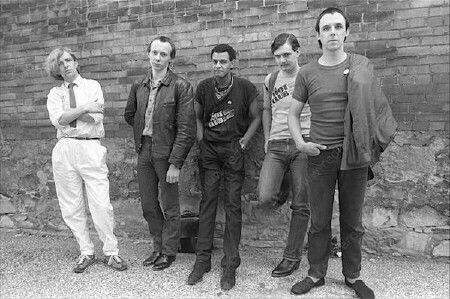
For me, Teenage Fanclub came to prominence in the very early ’90s on the back of a support slot on a Soup Dragons tour. They were funny and sloppy and carried a definite identity; denim, long hair, great guitars, battered Converse and desert boots. Man, they were everything I wanted my own band to be. They looked and played with a raggedy-arsed approach. Songs would collapse in the intro and require restarting. Songs would spool out in the ending with no-one knowing quite how to stop them. In funtime Brendan, they had a lead drummer, but they didn’t have a lead singer. They had three alternating vocalists who’d take turns at singing lead while the other two (and occasionally the drummer as well) provided harmonies that got neater and sweeter with each release, coaxed out of them from under their Bandwagonesque fringes by a smart-thinking Don Fleming to enable Teenage Fanclub as we know and love them to begin their true ascent. They were, as you know already, a fantastic band.

Teenage FanclubEverything Flows

O Brendan, Brendan! Wherefore art thou Brendan?

Those essential ingredients aren’t quite all there yet on Everything Flows, but from its woozy lurch into the opening chords and onwards, the group’s debut release is a stall-setting melting pot of the band’s influences blended through the principle players’ collective filter and thrown back to an audience that yawned and woke slowly to its charms. The mid-paced chugging major to minor chords that evoke the spirit of Crazy Horse…the wailing signature riff that rips Dinosaur Jr-shaped holes in yr heart…the ‘I’ll never know which way to flow, set a course that I don’t know‘ chorus refrain that springs to mind the existential poetry of John Lennon…Everything Flows is a cracker.

Norman takes the lead vocal, low, possibly in the wrong key for him, a somewhat shy and self-conscious version of the voice that handled the tender Cells and towering Neil Jung – to name but two of a gazillion other gilt-edged Blake beautieswith far more self-assured aplomb a few years down the line. There is no obvious vocal backing from the band, but I dare say they’re in there somewhere, buried below the meshing interplay of Gibson (Norman) v Fender (Raymond and Gerry), nimble fingers fret-travelling groovily. Not fast, not flash, just right. There’s bit in the extended outro, after the last chorus, when Norman does this wee run that starts on the low bass strings before being strangled and mangled on the third string somewhere around the twelfth fret. Trainspotters will no doubt point out that, as free-from and spontaneous as that outro appears, Norman still plays that same razzle-dazzle note-by-note riff today. Don’t meddle with near-perfection. There’s a reason the band – yeah, even the Gerry-free version – finish every set* with it.

*Apart from Motherwell in 2008 when it appeared 4th song in. Unbelievably, I had acquired a set list before the band took the stage and I was this close – this close – to shouting out for the songs in advance of them playing them.
Hard-to-find

Bjorn To Boogie

Where popular music leads, others quickly follow. After Oasis came galloping into existence like the twin-headed horse of the apocalypse, labels quickly snapped up any old ham-fisted cock-sure oiks with a couple of Adidas tracksuit tops and a recently-purchased copy of The Beatles’ Blue album between them, stuck them in a studio, created a scene and flung the tepid results out for the gullible to swallow. TFI Friday was awash with one word groups grabbing hold of the Gallagher’s corduroy coat tails and seizing the opportunity before the world woke up to the fact that, beyond one and a half albums, they weren’t any good. It’s always been this way; Elvis then Cliff. The Beatles then The Hollies. Zeppelin/Sabbath/Purple. Happy Mondays/Flowered Up. Imitation is the greatest form of flattery, etc, etc, etc. It still goes on today with Yard Act/Deadletter, Idles/Shame and a million others, all of whom stole something – an idea, a shouty vocal line, a guitar tone – from someone further back on the timeline and managed to find some sort of success of their own.

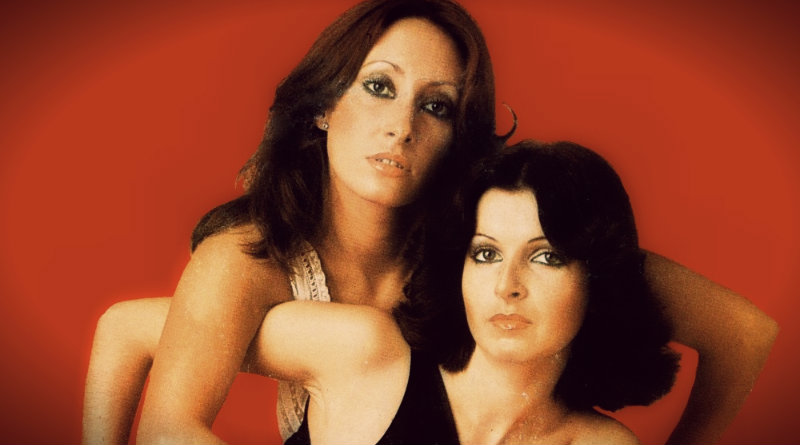
Baccara  – Yes Sir, I Can Boogie

Yes Sir, I Can Boogie is nowadays a Tartan Army party tune, propelled into a collective Caledonian consciousness thanks to dressing room footage of the Scottish football team celebrating qualifying for the last Euros in 2020 (played in ’21, as it would turn out) by congaing their daft selves into a giddy and hysteric state as it rattled its tinny rapture through an iPhone. It’s belted out on trains, murdered in foreign fountains, sung in mass communion following Hampden wins. We’re now at the stage where the song is ubiquitous and synonymous with the Scottish football team. It wasn’t always thus.

The tune came out in 1977 when the Eurovision demographic was mad for Abba and you can hear, in its twin female vocal and string swept disco beat, that its writers took the Swedish blueprint and ran with it like a set of DIY flatpack instructions from Ikea all the way to Fuerteventura to kidnap a couple of local flamenco dancers before bundling them into the nearest recording studio, doors locked until they had a hit in the can.

That sultry, whispered and very European verse line, all hand on hip wiggle and sensuous promise of what might follow – “Mee-ster, your eyes are full of hezi-tay-zhun” – is pure Agnetha and Anni-Frid. That hi-hat, all discofied aerosol shine and four to the floor groove is George McCrae’s Rock Your Baby times ten, itself the key to the beating heart, admit Bjorn and Benny, of Abba’s mighty Dancing Queen. The chorus, when its double-tracked vocal soars out of the verse in direct proportion to the climbing string section is uplifting melancholy and deliriously magic and Abba to the max. It’s fairly easy to understand the correlation between the euphoria of a three goal victory and the song’s super soaraway chorus. That it’s also defiant in defeat is quite handy if you’re a Scottish football supporter these days.

Then there’s the breakdown where the girls ooh and coo and a clavinet line squiggles away like a mid 70s Stevie Wonder himself. And the guitar, especially at the start, which shoots wee lightning bolts of disco funk out into the ether. And a bassline that bubbles away like Bernard Edwards with a bottle of Matey in each hand. There’s a lot going on in Yes Sir..., and although in recent years it’s been kinda cool in an ironic way to like Baccara’s one big hit, I’m transported back to more innocent times whenever I hear it, when Abba, and by association Baccara, soundtracked my childhood with no pretence or embarrassment whatsoever.

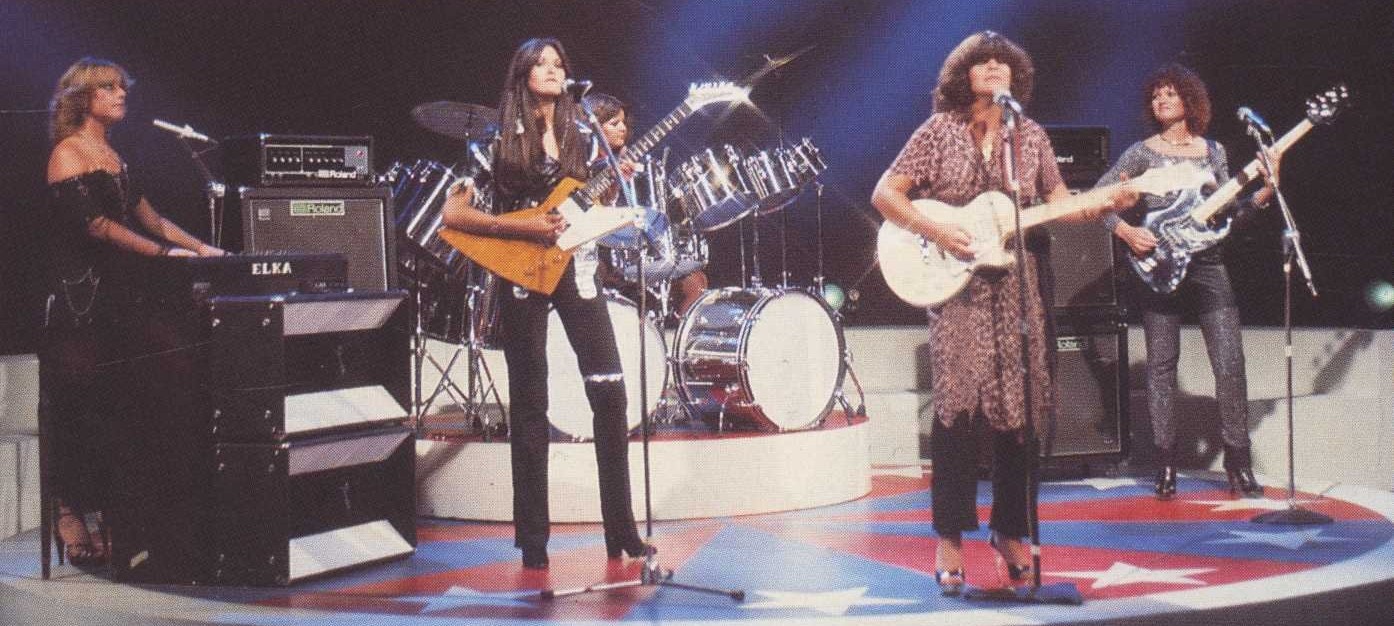
Another track heavily influenced by Abba would be 1978’s Substitute by all-girl South Africans Clout.

All the ingredients are there; the understated verse with low-key vocals, the restrained hysterics that you, the listener, know are going to slide up and out into the stratosphere very shortly…

CloutSubstitute

…and there they go. From pre-chorus into chorus, backed by brilliantly produced drums and piano trills, the vocals move through the gears with overlapping Beatles harmonies – “If she doesn’t come back…if she doesn’t come BACK!” – a wee falsetto woah-woah hook between chorus lines for good measure… Substitute is pure Abba and another unashamed favourite from my past.

It was only years later that I discovered, interestingly, that Substitute was a radically-altered cover of an old Righteous Brothers ballad, written by none other than Willie Nelson. What?! Yeah! What, right? Listen here:

The Righteous Brothers sound like they’re wading through ten feet of treacle by comparison, a 45 at 33 rpm, but amongst the slo-mo despair you can hear Wille Nelson, there in spirit through the Brothers’ (but not brothers) countrified phrased twang in their arrangement. Not a patch on Clout’s full-on, late ’70s Abba approximation though. No Substitute, in fact.

Hard-to-find

I Mean, Good Manners Don’t Cost Much, Do They?

There’s an adjective used to describe music of a certain ilk. If it’s lengthy, self-indulgent, meandering and sounds great in the middle of the night with a massive doobie wedged between your yellowing fingertips…if it’s carried along by slow-swelling synths and fringed by hints of electronica…if the guitars are massive and clean and reverberating one moment then fragile and tiny and weeping the next…if the vocals are half-sung, half-sighed and rounded in posh middle England burr…if side one of the record is 17 and a half minutes of the one track…or comprised of a suite of interlinked songs where there are no discernible beginnings and endings…if a female backing vocalist coos and aahs at significant moments…if the whole thing seems to lift itself straight offa the grooves and out into orbit…it’s Floydian, man.

There are two Pink Floyds. There’s The Pink Floyd, the definitive article spearheaded by Syd and his off-kilter melodies and subject matter. And there’s the Floyd, man. Long of hair and longer of solo, sonic architects and soundscapers more than straightforward songwriters, album chart squatters throughout the seventies and mainstays in seemingly every record collection from Accrington to Arkansas. Johnny Rotten may well have declared his distaste of the band through the medium of t-shirt, (and Mrs Pan, rather more vocally when I was playing Dark Side Of The Moon recently) but me? In a quiet sort of way, I kinda dig the Floyd, man.

These days, it’s Dark Side’s Us And Them that’s continually floatin’ my boat.

Pink FloydUs And Them

Lengthy and self indulgent? Yep. Meandering? Aye. Slow-swelling synths? Well, it’s Hammond in this case. The bedrock of many a great record, the Hammond organ. Massive, clean, beautifully played guitars? You better believe it. That arpeggiated riff that plays throughout is a beauty. Half-sung vocals that teeter on the verge of somnambulism? ‘Us (us…us…us…us) and Them (them…them…them…them)…‘ There they are! Skyscraping female backing vocalists? Here they come! Meandering and epic, out there yet melodic, Us And Them is Floydian to the absolute max.

With a Roger Waters lyric that decries the senseless nature of war and an increasingly consumer-led, materialistic society – yeah, even back in ’73 we were discussing such things – Us And Them is the centrepiece of DSOTM’s second side, placed straight after Money (and that’s no coincidence, eh, Roger?) before segueing itself seamlessly into the rambling and hippy Any Colour You Like, Roger the Hat (Pink Floyd’s roadie) leading us there with some spoken word mumbo jumbo.

The sax solo that blows its way between the cracks of consumerism and commerciality is a lovely and understated thing, at odds with Floyd’s more overblown sections, yet totally in simpatico with the delicate nature of the track. With freedom to roam, its honeyed notes seep everywhere, always warm, always welcome, an essential ingredient to one of Pink Floyd’s best tracks.

Some typically slow-paced footage here:


It’s a sound that seems to have found its way to Air’s Playground Love, a track so long and meandering and delicate and intense and Floydian, yeah, Floydian, as anything that might appear on Dark Side Of The Moon itself. Recorded after their groundbreaking Moon Safari album, Playground Love was used as the theme music for Sofia Coppola’s The Virgin Suicides.

AirPlayground Love

Sleepwalking Fender bass atop a beautiful chord progression…stoned and luscious groove…hypnotic slo-mo vibraphones…breathy, half-asleep vocals, lethargic saxophone given freedom to roam from the middle onwards…totally Floydian, man.

Hard-to-find

Magazine Article

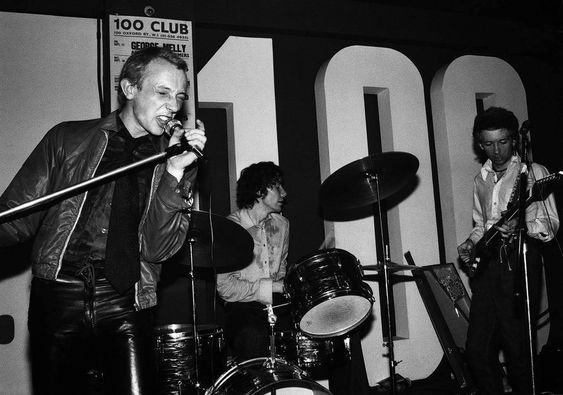
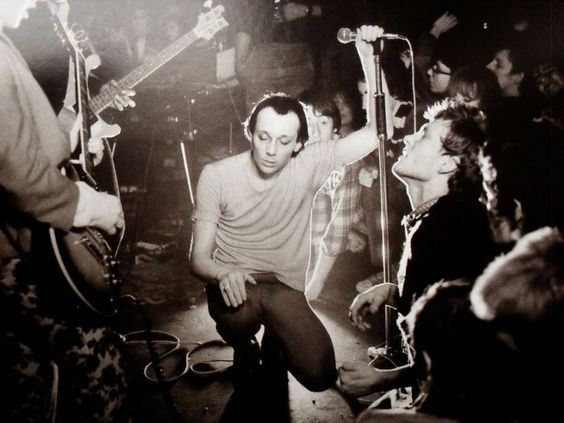
Howard Devoto was one forward-thinking guy. He gets the Sex Pistols up to Manchester for two shows. Is responsible for turning the whole of the city onto punk and, by default, is the catalyst for creating all the most important Mancunian acts in history  – every one of ’em. As leader of Buzzcocks, he creates and releases possibly the first-ever DIY single (Spiral Scratch, of course) and then, at the sharp razor’s edge of punk, calls time on his position in Buzzcocks and leaves to form Magazine, his Wings to Buzzcocks Beatles, the first post-punk act on the planet. Nowadays ‘post-punk’ is a term thrown at any old band post ’79 with a tinny guitar and a clever lyric, but without Howard having the foresight to leave Buzzcocks at such an early stage – in 1978! – when he could already see where punk was heading (Buzzcocks notwithstanding) – we might never have had the term ‘post-punk’ in the first place.

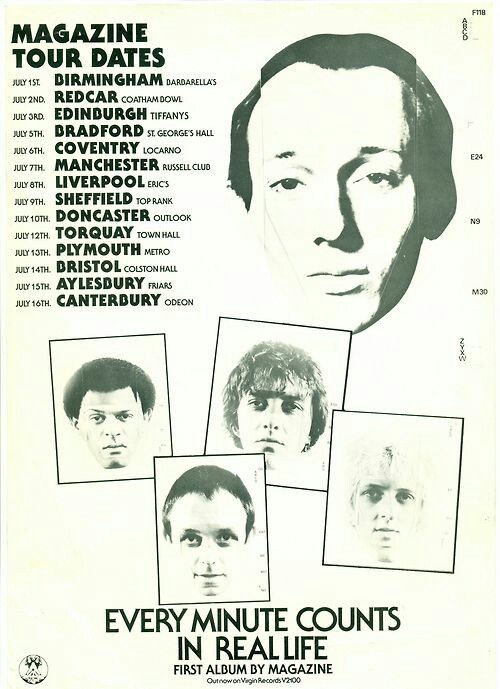
Anyway, Magazine. In Magazine, Howard pulled aside the ramalama of punk’s guitar attack and gave us a peek at what was hiding behind the scars; music that was arty, cerebral, clever. They’re a good band, Magazine. Quite possibly a great band. Those records – the first three especially – hold up strongly against anything released then or since.

Is there a better track out there than first album Real Life‘s The Light Pours Out Of Me? I think not. As much as I’ve been long-familiar with its buzzsaw riff and keyboard sheen, I heard the track at the weekend there as part of the warm-up music for the little-known Caezar – an anthemic Scots act with a neat line in soundscaping guitars and electro-throb bass – and, played loud in an empty room, it knocked the socks clean off me.

The sound engineer was playing around with the band’s intro playlist before doors opened – some Bowie (A New Career In A New Town), some early Talking Heads – and he happened to prick my ears by alighting briefly on the Magazine track. When he’d finished balancing sound levels, the room now empty of both engineer and, as yet, ticket holders, I jumped back on to the mixing desk to cue up and play The Light Pours Out Of Me, in full, with no interruptions…at ear splitting volume. It sounded glorious.

MagazineThe Light Pours Out Of Me

It’s a masterclass in studied repetition. Opened by a simple military two-step drum beat that never wavers or strays until almost – count ’em – the third minute, it’s joined by a strutting bass line, all sleek black cat purr and prowling menace, John McGeoch’s signature six note creeping riff surfing atop. With the group locked tightly together and playing the same thing over and over, we’re only then introduced to singer Devoto. High of fringe and high of ideal, he half sneers, half camps his vocal line, enunciating each lyric straight down the barrel of the mic.

Time flies…time crawls

Like an insect…up and down the walls

The light…pours out…of me

A chink in the repeating blackness of the riff, McGeoch switches to sliding barre chords then back to The Riff. That’ll be yr tension and release (and tension again). The jackboot stomp of the bass continues to mangle all who gets in its way. The drummer drums that same pattern, solid and steady, eyes front and focused. He could choose to scattergun the odd Moonism or two, of course he could – they all did that in the punk days, after all…but this is post-punk. Repetition is discipline, to quote another Mancunian trailblazer. The group soldiers on relentless and regardless.

The conspiracy…of silence ought

To revolutionise…my thought patterns

The light…pours out…of me

There’s another verse. Another two line chorus and then RAT-A-TAT-A-TAT the drummer rattles into action, McGeoch glides up the frets for some alterantive riffage, Barry Adamson switches his bass from sleek black cat to concrete block and briefly, the track soars, powered by glistening keyboards and Devoto’s wide-open imagination.
You’ll want to find yourself somewhere that you can blast this for all it’s worth. The Light Pours Out Of Me is a good track through a phone. A great track on record. An absolute killer through a proper P.A. With Magazine (McGeoch, Adamson et al), volume is king. Turn it up and play it loud.