Get This!, Sampled

And They Catch Him And They Say He’s Mental

Spring-Heeled Jack was a Victorian character of folklore; a leaping, springing, impish and devilish figure with gentlemanly characteristics that might tear you in two with his clawed fingers or simply stare you half to death with his fireball-red eyes. He was able to leap high across the sooty rooftops of old London town and vanish quickly into the thick and murderous night. I’m sure he must pop up (and pop off again) in some Sherlock Holmes story or other, but I’m no Conan-Doyle expert. If he doesn’t, then that’s a perfect opportunity wasted, Arthur. It truly is.

Spring-Heeled Jim is a track off of Morrissey‘s last great solo record, Vauxhall And I. Still dressed in decent jeans and with great hair, Morrissey takes the idea of Spring-Heeled Jack and turns the Victorian villain into a post-War East End gangster – pwopah salt of the earf, loves his mother, makes sure old Mrs Jones’ milk and paper is on her doorstep each and every morning…you gotta look after one annuva, aintcha? The sort of a figure that’s part Ronnie and Reggie Kray and part Jack-the-lad, just don’t you dare cross him. I’m sure you get the idea.

MorrisseySpring-Heeled Jim

The track creeps in on a highly atmospheric guitar track, all stealth and menace and ominous foreboding. It rolls slowly and stately like a pea souper curling from the Thames, a mixture of high in the mix plucked acoustics and a wash of reverb and sustain that would probably be more at home in Kevin Shields’ home studio but in the surroundings of a Morrissey record sounds exotic and perfectly-placed as track two’s wrong-footing mood setter. There’s sampled film dialogue playing in the background and, just as you’re trying to place it (it’s very Morrissey), the chords change and Morrissey makes himself known.

Spring-Heeled Jim winks an eye

He’ll ‘do’… he’ll never be ‘done to’

He’ll take on whoever flew through

It’s the normal thing to do

There’s scene-setting and then there’s Scene-Setting and Spring-Heeled Jim sets out its – his – stall very clearly.

So many women his head should be spinning…Spring-Heeled Jim slurs the words…once always in for the kill, now it’s too cold.

He’s an old soak, is Jim. Happy to sit in his armchair, French brandy by his side, Daily Mirror lying open at the racing pages, ready to share his stories with his many visitors – he still demands respect, after all. He’s a one-time womaniser who’d cut you from ear to ear (from ‘ere to ‘ere) should you as much as look at his female companion, although that’s probably all for show anyway, as Morrissey has pegged him as a mixed-up individual with latent homosexual tendencies that just won’t cut it in the world Jim has chosen for himself. (That’s just my opinion, your honour.)

That film dialogue that runs through the track until the last, “…and they catch ‘im and they say ‘e’s mentuhl” is from We Are The Lambeth Boys, a late ’50s documentary that follows a gang of young south London teddy boys, aiming to disepl the myth that they’re violent and delinquent youths.

When the plummy, clipped accent of the presenter isn’t spoiling things, the Lambeth Boys ride in an open top truck singing “We are the Lambeth Boys!” and shouting “‘allo darlin’” at every female they pass. They sing cockney knees-up ditties. They go to the dancing and eye up the girls (or boys) on the opposite side. They sidle up to prospective partners and with a cool nod of the head, lead them on a quickstepping jitterbug around the floor of the dusty dancehall while Lonnie Donegan’s ‘putting on the agony, putting on the style‘ skiffles its way to its conclusion. They care very much about their hair and their two-piece suits and ties. They also smoke like the London of the industrial revolution. As far as social history documentaries go, it’s a must watch.

Give yourself 50 minutes and watch the full thing here. You’d love it.

It’s an obvious Morrissey go-to, We Are The Lambeth Boys. There’s the us-against-them gang mentality that he instilled in The Smiths and every other group he’s formed around him since. There’s the rock ‘n roll reference points. The haircuts. The clothes. The attitudes. The good-looking male protagonists. Any still from the film could have been a piece of Smiths cover art.I can’t emphasise just how essential a watch it is!

For being fiercely Mancunian, Morrissey seemed to form a special bond with London in the early ’90s. That train heaved on to Euston and before you knew it he was referencing Battersea and Bethnal Green, Arsenal and West Ham, East End boxing clubs, Piccadilly and Dagenham and Ronnie and Reggie and having his picture taken outside the Grave Maurice pub, a favourite watering hole of those same Krays. Creating characters that were so clearly unfluenced by and based upon the unsavoury players of old London was the natural conclusion to this, and Spring-Heeled Jim endures as one of Morrissey’s best tracks on one of his greatest albums.
Gone but not forgotten

Lou York

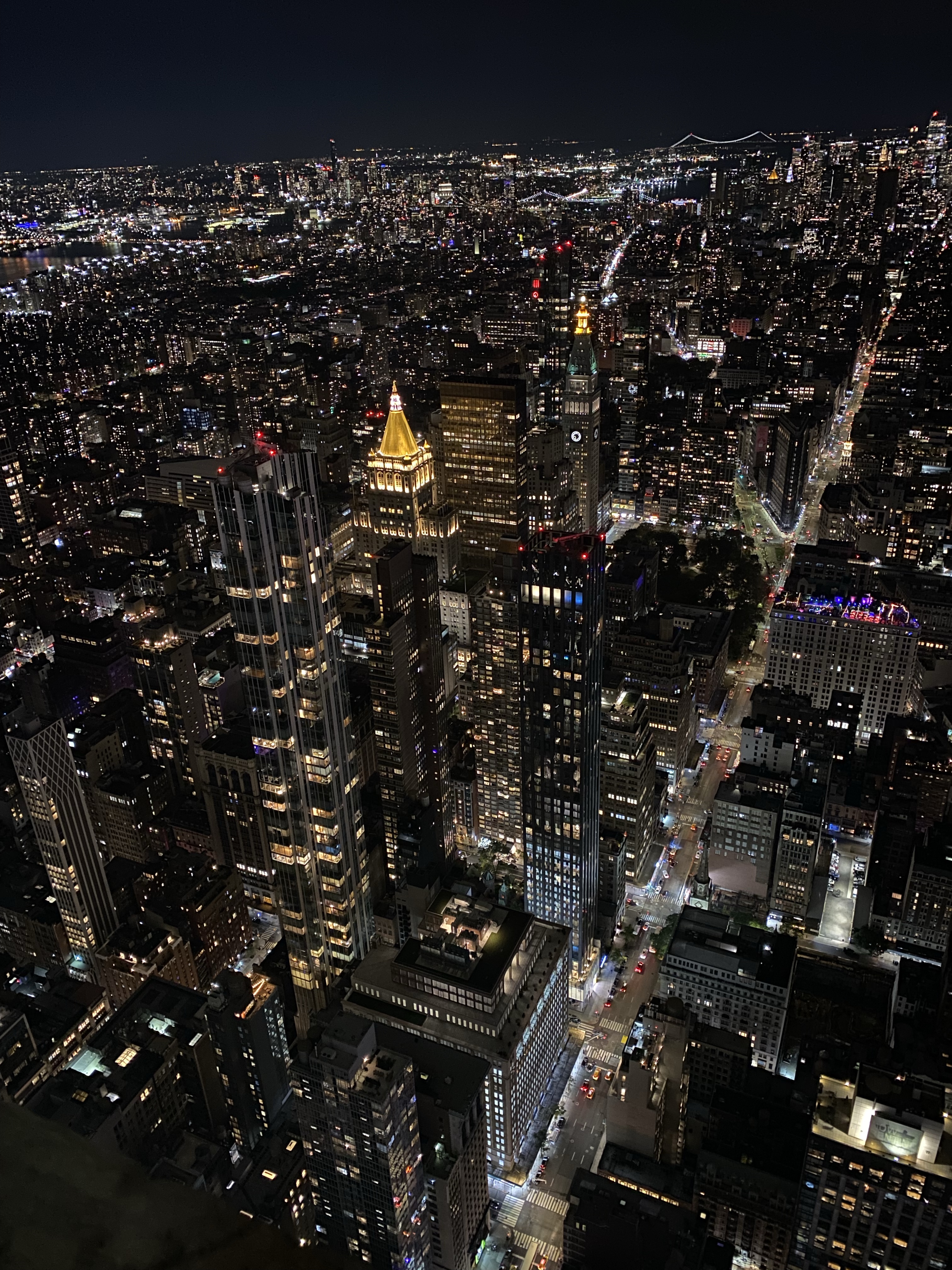
It’s been a year since I was last in New York City.

52 weeks since I last allowed myself to be happily ripped off in an off-Times Square pizza joint – “Seventy bucks for four slices of greasy, cheesy pizza and four cans of Coke? Tip that up to eighty and take my money ma man.

365 days since I last had a stiff neck from looking up, down, all around at the buildings and bridges and people and possibilities of the greatest city on the planet, listening surreptitiously to the natives as they passed, deep in loud conversation, loud in deep conversation. “I used t’be afraid of the Bronx…I heard chow chows are adorable…My social life is a gawd-damned diz-ass-tuh…and he was buh-leeding awl ovah the apartment…I dunno, John, it cawsts a lotta dough…Then he jumped on the window display and pretended to be a mannequin! Hur hur hur!!!…”

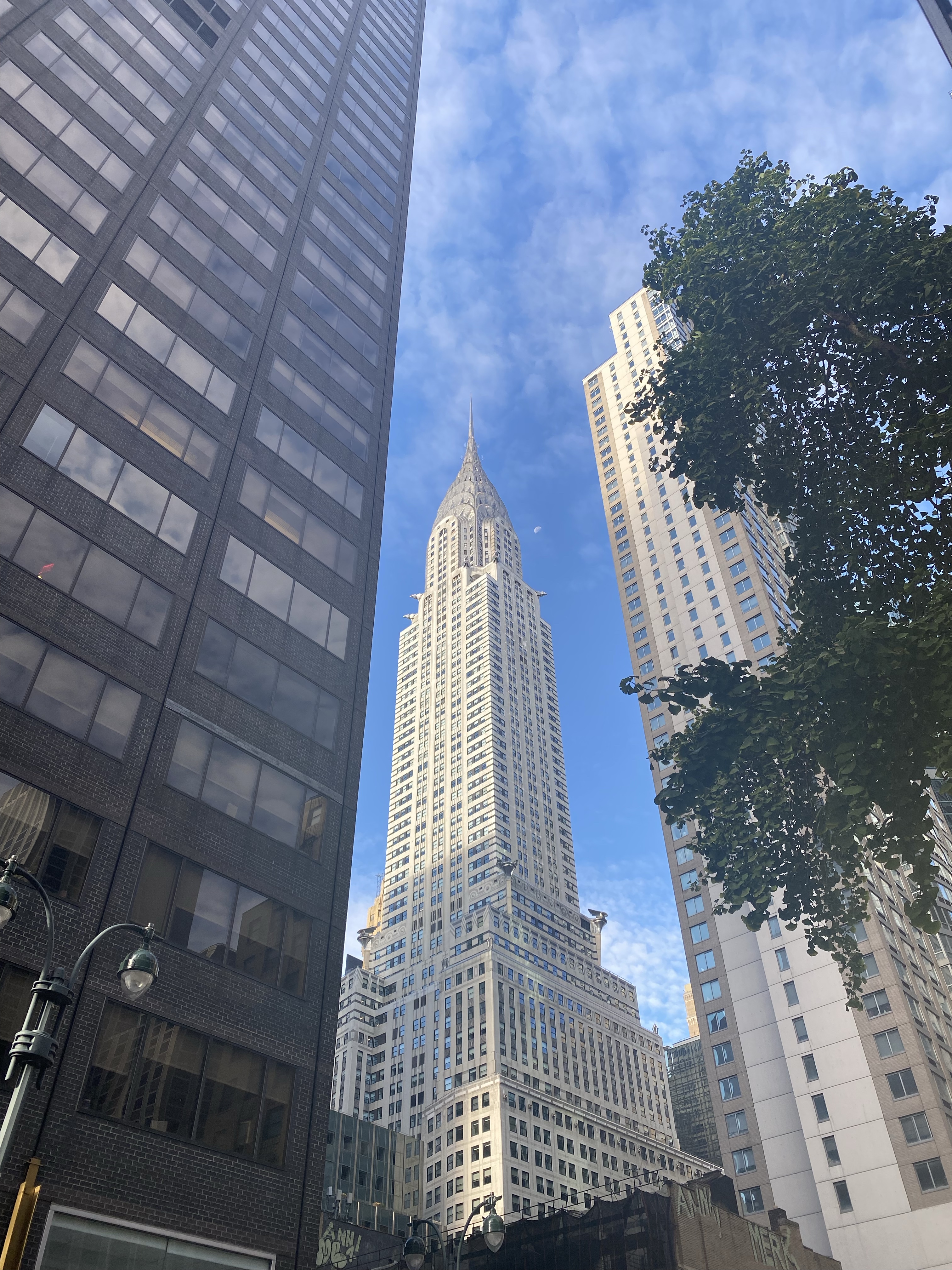
That’ll be 8760 hours since I last walked upwards of 35,000 steps each day in search of musical reference points the length and breadth of Manhattan, got passively high in Times Square, rode the subway from 42nd Street, listened to a great, soulful Beatles busker at the Lennon memorial spot in Central Park, admired the art deco wonder that is the Chrysler Building, got an hour to myself to shop for records, recreated Bob Dylan’s Freewheelin’ album cover in the wrong freakin’ street, looked into tiny but expensive apartment windows and took arty photographs atop the High Line, internally sang songs at every other street sign (Lexington Avenue, 10th Avenue etc etc), imagined seeing the singer Beck near the Empire State Building, jumped at the unexpected wail of a cop car siren, drank Brooklyn Pilsner and ate the greatest pizza in Juliana’s, sat on a brownstone stoop (should’ve broken into some doo-woo – missed opportunity) and generally had the most fulfilling experience possible.

I’m absolutely not kidding when I say that, outside of regular thoughts about family and work and what we’ll have for dinner that night and can I squeeze in a wheezy run while the boy is at the football training, the city of New York is an ever-present, permanent fixture in my head. Analytics being what they are, it’s there too in every other post in my social media feeds, and I ain’t complaining. Until I return – whenever the cost-of-living crisis hell that may be –  it’s just about the next best thing.

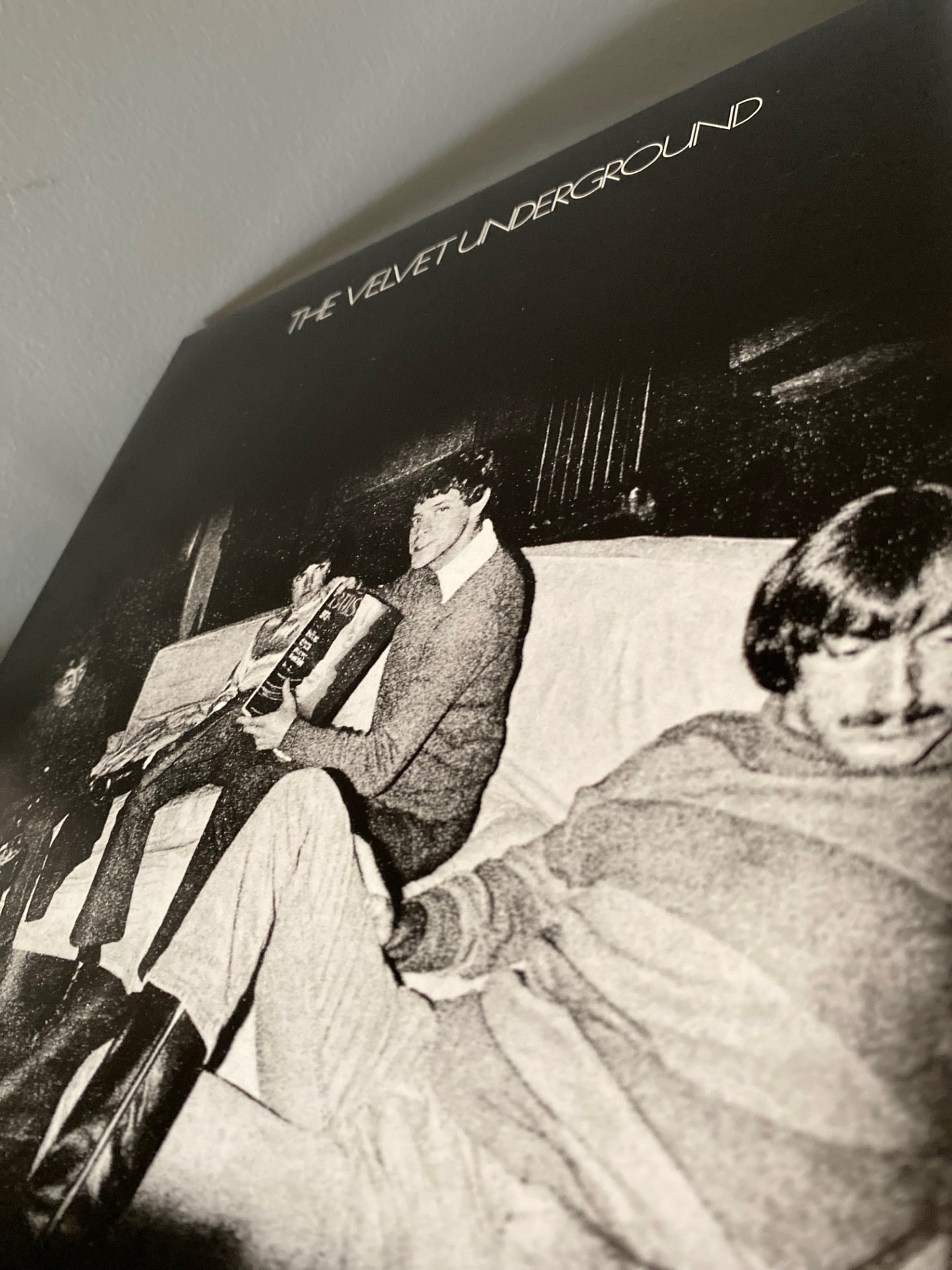
That most New York of bands, The Velvet Underground, decamped to L.A. for their third album, 1969’s eponymously-titled release. Following the white-hot, white light/white heat abrasiveness of its predecessor, the third album is gentle, rich in melody and only occasionally rips into cacophonous rackets of the knuckle bleeding overstrumming that’s come to define them (maybe just side 2’s Murder Mystery – and that’s pushing it.) The gossamer-light Candy Says sets the scene. The soporific Pale Blue Eyes, with its woozy, almost out of tune guitar lines and Moe Tucker’s steady tambourine rattle closes side 1 perfectly. Beginning To See The Light‘s chugging acoustic guitars and ‘here we go again‘ breakdown continues the mood into side 2, before the whole thing closes perfectly on After Hours, Moe Tucker’s surprising and wobbly lead vocal sending the whole thing off to bed.

The story – the legend- goes that the band had a whole bundle of gear stolen at some point in its journey through JFK Airport, hence the lack of distortion and discord, but Lou Reed has since debunked that by saying he simply wanted to play more melodically. Not having John Cale in the band by this point might have helped too.

I’ve been obsessing this week over Some Kind Of Love, all double twang and asthmatic slide, hypnotic and groovy and never-ending. It’s really great.

Some Kind Of LoveThe Velvet Underground

The lyrics are ambiguous but, naturellement, saucy, salacious and just a little perverse. “I don’t know just what it’s all about, but just, uh, put on your red pyjamas and find out,” croons ol’ Lou at the end, smiling at his smutty little self as he does so. They tell me that New York is somewhat cleaned up these days. Lou’s mind, seemingly, was as filthy as the streets that birthed his band. Lucky for us.

Get This!

Spatial Brew

Johnny Marr sat in on a two-week residency on BBC 6 Music recently. I tried to catch all eight (ten?) shows, either at the time or via catch up, as Johnny is, as you know, a genial conversationalist and someone worth listening to. He’s a music enthusiast as much as you or I, infectious, with stories to tell about the records he’s playing and the ability to have you instantly seeking out more about some of the artists he’s chosen.

Thomas Leer was one such artist. I wasn’t familiar with him at all but before the track in question had even played out, I had been on eBay and elsewhere to locate a copy of it.

Thomas LeerDon’t

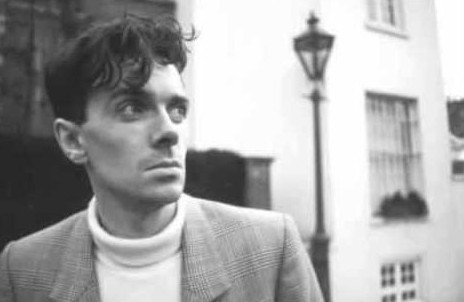
Cliché merchants will tell you it’s one of those tracks that could’ve been recorded and released yesterday…or 2001…or 1979…or indeed any time in the past 40-odd years (and the shot of Thomas above might well back up that theory) but come on – it’s so post-punk, so anything goes, so experimentally Sylvian and so early ’80s (1982) it’s absolutely of its time…and brilliantly so.

Repetitive and murky, hypnotic and other-worldly, it has bendy, slinky, Talk Talk-ish bass, weird and wired, tightly-strung electric guitar and a synthetic ambience that might find it sitting comfortably between the quirks and cracks in Talking Heads’ Remain In Light, Can’s Tago Mago and The The’s Soul Mining. Pretty great company, then.

There are no traditional verses and choruses, no whistleable melodies, no obvious hooks…until it dawns on you that the hook is in the arrangement and production; harmonic pings, rudimentary drum machine and huge swathes of reverbed electronics that give it a swampy, wee small hours creeping to the dawn vibe. It’s bedsit Brian Eno, warmly claustrophobic and flotation tank funk, edging up on you tightly wrapped in Leer’s own sinuous and serpentine vocal yet simultaneously widescreen and spatial and vast.

I love the half-sung, half-spoken vocal – Don’t make excuses about where you were last night. Don’t. – and the seedy yet sophisticated, meandering pull of the track. It could play for three hours straight and I doubt I’d notice. It’s not an in your face track, but it’ll certainly find its way into your ears. Its creator would, in a year or two, find a level of success playing in Act with ex-Propaganda vocalist Claudia Brücken, but that solo track above is the absolute equal of anything of his that’s better-known.

I must look into his back catalogue.


Live!

Great Scott! I Saw Brigadoon!

In the mid ’80s there was a wee gang of rockabilly-ish Kilmarnock buskers who used to play rock ‘n roll covers outside Woolworths on King Street. With battered Levis turned up to lick the shins and towering quiffs teetering on Johnny Dangerously levels of gravity defiance, they’d play Gene Vincent and Buddy Holly and Brand New Cadillac and very probably a Redskins song or two, although I wasn’t yet versed in Kick Over The Statues or the rest of their catalogue. I was still hanging onto my ’60s phase and one Saturday morning after buying an Old Gold copy of Shout by Lulu and the Luvvers (who knew there was a backing group?!), I left Woolworth’s to the sound of the buskers battering merry hell out of a track I’d become totally obsessed with after hearing it on a record I’d borrowed from Irvine library. The WaterboysBe My Enemy was being given a right good working over, the guitarists’ rapidly scrubbed acoustics and singing voices carried far and loud by King Street’s natural reverb and making the song’s frantic cowpunk all the more essential. Until now, buskers were old guys in crumpled suits singing American Pie. These buskers were not that much older than me and dressed a more outlandish version of me and could play contemporary stuff far better than me. This was the first time that I’d hear a Waterboys song live – my favourite Waterboys song back then too – but it wouldn’t be the last.

Until last night, I’d last seen The Waterboys 36 years ago. Back once more in the Barrowlands, where chief Waterboy himself Mike Scott cheerfully declares this to be the band’s 16th appearance at the iconic venue, I’m a bit apprehensive about how the show might unfold. I’ve lost my way somewhat with the band’s output in the intervening three and a bit decades and while This Is The Sea remains a firm favourite, played still and played regularly, I had no idea how the band might pitch their set. The pre-gig music  – The Beatles’ I Want You, the Stones’ Monkey Man, but stripped of their vocals to ensure you focused on the groove and swagger of the music – was a welcome portent of what would follow. So too was the Les Paul leaning against the drum riser. I’d said to Fraser that I was really hoping they’d do Be My Enemy or at least Medicine Bow, so to have them both pop up in a back-to-back, buy one, get one free deal was unexpected and magic. Indeed, as the 5 piece Waterboys thrashed their way through Be My Enemy with a vigour and fury that belies the greying hair and maturing years of the band’s focal point, I’m suddenly back on Kilmarnock’s King Street, watching which chords the buskers are using to play the tune, the confirmation that they were indeed spot on by watching the real deal dishing it out with a sped-up Subterranean Homesick groove on the stage in front of me almost 40 years later.

There’s a! gun at my back (chugga-chugga) And a! blade at my throat (chugga-chugga), I keep on findin’ hate mail in the pockets of my coat…I realise too that I still know all the words. All of them, even Mike Scott’s adlibs and woohoos. Music, eh?! What a trigger.

The current Waterboys are absolutely electrifying. The show – in two halves – ran the gamut of their rich and varied back catalogue, an illicitly stilled stew of Bob and Van and Patti and poetry and punk and folk and Kerouac ‘n roll, where their wholly obvious influences blow through the songs like the whistling winds of the west. Scott’s heavy riffing and one note soloing on his Les Paul whips up a Crazy Horse storm within the band, the Hammond organ, barroom piano and non-ironic key-tar adding colour and dimension to the material. At times he’s posturing and riffing like Strummer, left leg pumping up and down, kicking out in spasmic twitches. At other times he’s a balladeering hippy minstrel, leading communal singing on a roof-raising Fisherman’s Blues. It was around the time of that record that the band started to lose me, their hoedown raggle taggle coming a straight second best to the distortion and melody of the Creation Records roster, but last night it hit me that the power of the song endures and will usually outstrip the posture of the week’s big thing.

The WaterboysThe Pan Within

The whole set pivots on a searingly intense The Pan Within, in itself expertly fulcrumed by Scott and his hot-wired guitar around a faithful reworking of Patti Smith’s Because The Night. It’s epic on record and, as it turns out, it’s even more so in concert, a heady swirl of existentialism set to a thumping beat, that stupid key-tar replicating perfectly the recorded version’s orchestrated backing, Scott coaxing slivers of feedback and melody from his fretboard. As the song reaches its finale, the two keyboard players face off and take battle. Turn-by-turn they up the ante, outdoing one another with each subsequent flourish of the keys until, exhausted and with nowhere else to musically go, one turns and plants his backside flat on the ivories. Clang! In a night of incredible playing, it proved to be the only bum note. As the discord rings out, the band veers left and eases back into Because The Night, louder this time, more assured, aggressive, even. Take me now, take me now, take me now…. My ears are still ringing as I type this.

Oh yeah, the sound! Motorhead-loud yet crystal clear, every nuance of Scott’s refined Ayrshire burr is pitch perfect above the storm of the insruments. Credit must go out to the sound engineers for coaxing such a sweet sound from the maelstrom. It’s there on the stabbing London Callingisms of Ladbroke Grove, the jangling and Madnessish Girl Called Johnny, the snowglobe swirl of This Is the Sea, the rootin’, tootin’ Bang On the Ear and, of course, thrillingly, on a stomping Whole Of The Moon, replete with blazing comet sound effects and mass hysteria. If y’write just the one song, The Whole Of The Moon is quite the song to have written.

There’s only one song you can play after The Whole Of The Moon,” says a breathless and grinning Scott, and he leads the band into an outrageously on the money take of Purple Rain that stretches to 10 minutes and counting. The audience, already swinging from the Barrowlands’ white ceiling tiles are fired into orbit. Spent, saturated, saved. Epic stuff.