Gone but not forgotten

New Town Velocity

Sunday morning coming down. I was thinking about War Memorials; how every town and city the length and breadth of the country has one and that each name on every monument has a story to tell. The greatest thing I’ve ever done in my day job was enabling a class of young learners to research the local war memorial as a way of uncovering the stories behind the names chiselled into the sandstone and marble. The kids cracked open a wide seam of local social and historical significance. Underage conscripts, entire families of infantrymen who failed to return from France and Belgium, a soldier that had – incredibly! – once lived in the same house as one of the pupils, entire streets and streets and streets in the town named after its fallen sons… At the project’s conclusion I was invited to chat to various community and church groups to talk about what we’d uncovered. I’d always end my talk with the line that this was just one wee war memorial in one wee town – lest we forget that every town in the county had their own war memorials, no doubt containing similar as yet undiscovered stories just below the surface of brass and stone, waiting for the nosy and curious of the town to scratch beneath the surface one day to expose them.

I’d used the war memorials story as an analogy to a pal on Saturday night. We were out in Irvine, my hometown, to hear local boy made good, the writer Andrew O’Hagan chat to local girl made good, former First Minister Nicola Sturgeon about Mayflies, the novel that has propelled Andrew from the relative margins to the slap-bang-in-the-middle mainstream, with TV adaptations and translations into over 30 languages cementing just how good, just how essential the novel is. Modern classic? I’d say so. There won’t be many here who haven’t read it. Those who as yet haven’t will want to rectify that. 

Andrew O’Hagan is a great speaker; educated, philosophical, funny, self-deprecating and eloquent. “Eloquent as fuck!” as I quipped later on. He’s been all around the globe at all manner of high fallutin’ literary events, but back in Irvine he slips easily into the Ayrshire dialect of his youth, talking about how we in the west of Scotland use the ‘f’ word as punctuation and how some of the actors casting for the TV adaptation didn’t quite get the proper handle on the emphasis of the book’s incidental swearing.

Nicola Sturgeon has spent a lifetime in politics and as such can talk on any given subject. Indeed, she too is funny, self-deprecating and eloquent. Back in her hometown, she also slips back into a local dialect that has never really abandoned her, aligning her teenage years to that of Andrew’s through shared experiences at political meetings in the Volunteer Rooms (different parties, different rooms, but a shared loathing for the Conservative government) and in the Magnum, the oasis of the Irvine teenager in those awkward pre-pub days. She has real presence and charisma and when the talk inevitably turns political (the book’s background is political, after all), she speaks not in political soundbites but in plain and common, non-patronising terms. I liked her already, but I like her even more after this. As a duo, O’Hagan and Sturgeon would brighten the sofas of any chat show looking for fresh ideas.  

Nicola Sturgeon with a book about an Irvine band by another Irvine writer

Mayflies, as the clued-in amongst you know, centres around the friendship between a group of politically-charged, music-obsessed teenagers in 1980s Irvine, growing up against a backdrop of mass local unemployment, the Thatcher government’s relentless decimation of dignity in the working class and their determination to break free of the pre-determined mould that their lives seem cast in. The pages zing with brilliantly chosen words, viciously delicious conversational patter and multiple references to The Smiths and New Order and The Fall and The Shop Assistants, until the real crux of the story is revealed; one of the group, Tully, is terminally ill and wants his best pal Noodles to help him in his final months and weeks.

Mayflies is purely autobiographical. O’Hagan is Noodles. Tully is Keith Martin. And Keith, like Tully in the book, had cancer. In his dying days he asked Andrew to write about him, write about them; their strong friendship, the stuff and nonsense they got up to with their gang of like-minded, socially-conscious music nuts. The gigs, the girls, the gang mentality of a group still tight-knit to this day.

Everyone in Irvine knew Martian. Everyone. He was funny, kind, inquisitive, interested in you and what you had to offer, yet with a ferocious rapier wit that you didn’t want to be on the wrong end of.

At the bar in the snug of The Turf one night, Keith made a beeline for where the 17-year old me was standing. I pretended not to see him while he mentally sized up the double denim I’d dared to dress myself in. “Shift up, Shaky, and let me in,” he said as he elbowed his way into the bar. Hardly harsh by Martian’s standards, but a first-hand experience of his pop culture-referencing sense of humour. For the next few months, an unfortunate but accurate nickname came my way. Keith would never pass without an, “Awright, Shaky?

I watched from a safe periphery as O’Hagan and Martian and their gang held court, a rabble of loud opinions, leather jackets and, to use a line that I believe Andrew appropriated from a previous post on these very pages, a riot of considered hair. Sculpted, Brylcreemed Simonon quiffs, elegant and pop starrish and effortlessly just right. I didn’t yet know anyone that might play in a band, but these guys exuded exactly that. 

The Big GunHeard About Love

Keith and co did indeed constitute a band, the Peel-spun Big Gun. The handsome Keith was the group’s guitar-playing, lead singing focal point. This being the ’80s, O’Hagan was the band’s crucial tambourine player. Effervescent in a Buzzcocks meets Orange Juice fashion, The Big Gun promised much in an era when guitar bands were where it was at. The fantastic Heard About Love single would prove to be their lasting legacy though, a fizzing, climbing chord progression with a neat, nagging hook line – exactly the sort of track that should have seen the band become more well known beyond late night radio and the jukebox in The Turf.

That noisy group of agitators in The Turf contained not only apprentice popstars from multiple original and exciting bands. There were painters and artists and textile students and designers too. Real creative sorts that would go on to carve out interesting lines of paid employment. Andrew O’Hagan would soon swap the rattle of the tambourine for the rattle of the typewriter, decamped outside Fred and Rose West’s house to report on every gruesome going on, prolific and punchy with his prose, alternating easily between fact and fiction for each subsequent essay or article or novel. The acerbic John Niven, himself no stranger to the business end of an electric guitar, would weave his way through the music business of the early 90s before he too picked up a pen to put his outlandish and hedonistic experiences down on paper. If you’ve read Mayflies and you’re looking for a companion piece, John’s latest novel, ‘O Brother‘ and its memory triggers for life growing up in Irvine can’t come recommended highly enough.

Something was in the air of that pub. Or maybe it was in the beer. But for a small town, Irvine had a high proportion of creative minds, eager to make their mark by producing great work from straight outta the thin and clear seaside air. 

History shows that this is nothing new. The political novelist John Galt was born in Irvine in 1779, his words ringing the wrongs of the Industrial Revolution. Two years after Galt’s birth, Robert Burns found himself a job in (and setting fire to) the town’s heckling shop. It was his friendship with local sea captain Richard Brown that stopped Burns from giving up a career in writing. Brown encouraged Burns to keep at it, and a National Bard was born. That particular story is told in song in I Hung My Harp Upon The Willows by, yes, the Irvine band Trashcan Sinatras. Even Edgar Allan Poe’s 19th century gothic horror has roots in the town, his The Pit And The Pendulum inspired, they say, by the grand old clock that kept time in Irvine Royal Academy’s main hall. Irvine, it seems, has always been – and always will be – a hotbed of unique creativity. I like to think that the scene that unfolded every Friday and Saturday night in that 1980s Turf was every bit as fertile as the Beat scene in New York, with Kerouac, Ginsberg and Burroughs holding court in the bars around Columbia University, or  ‘20s Paris, with Dali, Matisse and Picasso the universe around which all Parisienne creativity orbited. But I also wonder if every wee provincial town, close to the city, but not so close as to be consumed by it, had the same creative noise as Irvine. Was there a pub in Elgin that was the equivalent? Or Hamilton? Or Stranraer, Kirkcaldy or Denny? Is it just that no-one has thought to join the dots of the goings-on in these places? Am I making too much of the Irvine scene, or is it that I’m the only person who’s chosen to shout about it? We Scots aren’t known for bullishness and self-promotion after all. Just as every town has a war memorial, does every town also have a Keith and Andrew, a Tully and Noodles, and a whirlwind of artistic possibility ricocheting around them like a jittery Alex Higgins break? I’m not so sure. Irvine, as it turns out, seems to have been quite the remarkable wee town in this respect.
Hard-to-find

Paul-itical

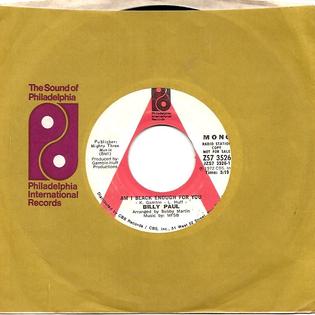
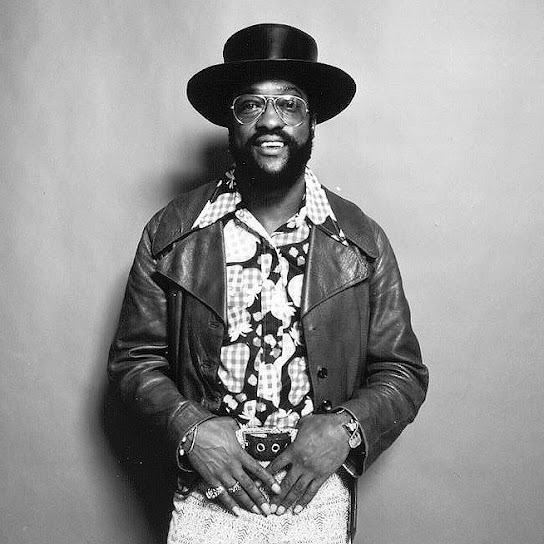
Billy Paul is best known for the smoothest of soul, his voice as silky as the bedsheets he could serenade you into. Me & Mrs Jones, I Want Cha’ Baby, Thanks For Saving My Life, Let’s Make A Baby… they all glide across the ears, airbrushed in Fender Rhodes, glossy orchestration and tasteful brass, Paul’s easy, conversational phrasing sung in a Barry White before-his-balls-had-dropped chocolate-coated vocal. Mainly written by Gamble & Huff, his music epitomises the pre-disco big band soul style that would morph into The Sound Of Philadelphia, a distinct style of music desperate to keep up and remain crucial while the world turned to synchopated beats and four-to-the-floor rhythms. In order to make its statement, the classic Philly sound – and by association, much of Billy Paul’s – relies on rhythmic hi-hats, lush orchestration and slick arrangements featuring a cast of players and entire choirs of backing vocalists. Save a few records, TSOP is not really my kinda stuff; it’s too slick, there’s no grit, it’s schmaltzy, even. I like my soul music down ‘n dirty and TSOP along with Billy Paul just doesn’t deliver. Or so I thought.

On his 360 Degrees of Billy Paul album, you’ll find the infectious and completely magic Am I Black Enough For You?

Billy PaulAm I Black Enough For You?

This – this! – is more like the Philly sound I’m into! Announcing itself on a clavinet run that I believe (although I’m no expert on this) spells out S.T.E.V.I.E.W.O.N.D.E.R. in morse code, it gives way to cop show brass; low and sliding in the verses, stiletto-sharp and stabbing in the chorus and answering the vocals between the singing. There’s the ubiquitous wah-wah, free-flowing polyrhythmic congas, a casually funky, octave-leaping bassline that even Bootsy Collins might have trouble playing and it all runs away on an elongated outro that features – yes! – a false ending, the fading brass ‘n bass cheekily picking things back up again for another minute of headnodding groove just when you’re sure the party is over. It’s one of those records you’ll want to play again and again as soon as it’s finished.

Unusually for Billy Paul, the song’s message is political. Sitting alongside other black pride records such as James Brown’s Say It Loud (I’m Black And Proud), its message was one of defiance in the face of white oppression.

We’re gonna move on up
One by one
We ain’t gonna stop
Until the work is done
We’re gonna move on up
Three by three
We gotta get rid of poverty
We’re gonna move on up
Six by six
I gotta use my mind
Instead of my fists

Coming hot on the Cuban stacked heels of Me & Mrs Jones, his Billboard Hot 100 Number 1 smash, the record was a flop. It failed to make the top 75, even although it sold extremely well amongst its target audience. But it was alienating. Too confrontational, not something the average American Joe would be comfortable buying. It was clear commercial suicide after the success of …Mrs Jones, and yet, it’s so obviously a brilliant record. Fifty years on, attitudes to such records may have improved. You’d certainly like to think so. Get down on it.

Hard-to-find

Mirror, Man!

When Steve Clarke was manager at Kilmarnock I’d often see him as we both made the daily commute from north to east Ayrshire. His pristine, glossy black Porsche Cayenne would ghost up behind me in the fast lane and I’d pull back into the slow lane, deferring to the superiority of both his mode of transport and his effortless man-management skills, skills that would see my team finish 3rd in the league while regularly beating both big Glasgow teams in the process. I was always desperate to catch his eye, give him a wee thumbs up by way of thanks from all Killie supporters who’d had little to cheer about since winning the League Cup in 2012. The closest I got to this was at the end of the bypass one morning, at the Moorfield roundabout on the outskirts of Kilmarnock. I’d pulled into the left hand lane and he’d pulled into the right, the turn-off you take for Rugby Park, the home of the Killie. Glancing right to check for traffic, I realised we were side by side. The thing was, he was also looking right for oncoming traffic and all I could see of him was the back of his tactically astute head. With no chance of catching his eye, my chance was gone. I never did get to show my appreciation, until

…a week or so ago. I’m driving back home from Kilmarnock this time. I’m in the process of overtaking an artic lorry near the crematorium when a large car appears out of the flood of late summer sunshine behind me, clearly on a mission to break whatever speed limit is in place, clearly with no time for any car in front of it. I look more closely in my mirror, ready to stare out the arrogance of the big car driver behind me, when I spot the wrinkled, perma-angry scowl of Steve Clarke. Even behind his mirrored sunglasses, I knew it was him. The deep and cavernous brow lines that curved above the sunglasses like a topographic map and the salt ‘n pepper beard set in a face of stone cast no doubt on the matter. As soon as there was a safe distance between myself and the lorry, I pulled back in, heart a-pounding. You don’t get in the road of the Scotland manager. Especially the best Scotland manager we’re maybe ever likely to have. As he pulled past me, I glanced to my right. His stoic face was looking straight ahead. Damn! He’s got a new car, but the personal licence plate confirmed the identity. An opportunity lost again. And this time I’d planned to offer up a double, McCartney thumbs aloft too, one for Killie and one for Scotland. It was not to be though, until…

…I reached the Morrisons roundabout a couple of miles up the road. Unbelievably, he was just in front of me! And, oh man! He was pulling into the straight ahead lane, just as I was filtering into the right hand lane. This time, he’d be looking in my direction! And, as we waited for the cars to clear, he did! He looked right at me. My mind a-scatter, I forgot all about the pre-planned double thumbs acknowledgment and instead I did what any self-respecting Killie//Scotland fan would’ve done. I gave him a proper left hand fist-pump, acknowledging his greatness with each exaggerated, shaken pump. Clarke looked away, looked back, stared at me. I was still fist pumping like a maniac when it dawned on me that the scowling Sir Steve thought I was shaking an angry, road-rage fist at him. Or maybe even, (oh no!) a wanker sign. As his squealing tyres moved onto a space in the roundabout that wasn’t really there, he sped off aggressively towards Saltcoats, no doubt wondering who the angry driver in the Vauxhall was.

Gutted.

I was double gutted a few days later when I stupidly reversed into my neighbour’s car. Parked awkwardly at the end of my drive, I was sure I could turn without much bother.

Bang.

It turns out I couldn’t.

An expensive lesson, as it’s proving to be, in having good spacial awareness.

It gets better.

A few days after that, with the bump in the hands of the insurance companies, I was sitting in the car in the hospital car park, early for a routine appointment and in the process of actually replying to the guy whose car I had reversed into. Suddenly there’s a thud and my car lurches forward. I look in the mirror. It’s not Steve Clarke this time. It’s an old lady reversing into me…and right into the exact spot that’s already a mess of ragged plastic and foreign paint.

I get out and signal to her. She rolls down her window.

You’ve just reversed into me.”

Naw ah didnae son.”

Eh…you did.”

She gets out and looks.
I didnae dae that!

You didn’t do all of it, but you’ve made it worse than it was.”

But I didnae dae onyhin’

You did! You reversed into me!

We look at her car. Not a mark on it. Not one.

See. I didnae hit you.”

You did though.”

You’ll need to speak to my husband.”

Forget it, I said. Don’t worry about it. You couldn’t make it up. You really couldn’t.

Adam & The Ants – Cartrouble

Here’s Adam & The Ants Cartrouble. I’m not so certain it’s anything much to do with bumps and breakdowns and more a metaphorical musing on the lack of bedroom activity, but it’s a great single. Not yet blessed with the Burundi beat, the Ants jerk away like a knock-kneed XTC, all crisp guitar lines and fluid hooks, in itself a metaphor for the crisp and fluid passing game that Steve Clarke has instilled in the Scotland national team this last wee while.

Anyway, check your mirrors. You never know who’s behind you…


Get This!, Live!

Good Golly Mr Molley

Jazz. Mention the word to a certain demographic and they”ll say one of two things; “Jazz? I don’t like it,” or “Jaaazz! Nnnice!” The more positive reaction is nearly always delivered mock-whispered and accompanied with a hand gesture, the index finger curling to pinch invisible air with the tip of the thumb, John Thompson Fast Show fashion. “Nnnice!” Pffft. The cliché kills.

Freckfest had a jazz gig the other night there, in the HAC in Irvine – the Brian Molley Quartet. One of Scotland’s leading saxophonists, Molley has played all over, from the Edinburgh Fringe to India to the jazz clubs of New York’s Greenwich Village. He’s involved with the Hacienda Classical thing. He’s an in-demand sessioneer for many of your favourite acts looking for sympathetic sax or flute on a recording. To have him in the HAC, a terrific wee 100-seater venue that has living room intimacy and a seriously great vibe was fantastic.

Firstly, I must paraphrase another well-worn cliché. I don’t know about jazz, but I know whatta like. Years behind the Our Price counter broadened my liking for and appreciation of its many strains, seeking out first the obvious artists, then the stuff name-checked by the groups I listened to, before finding my own way with it. I wrote about this recently, so I won’t repeat myself here. Suffice to say, jazz is just fine in my house. To say you don’t like it? That’s like saying you don’t like music itself. Jazz comes in many guises and sizes, from bebop to hard bop to post-bop, swing to modern to trad, modal, vocal, gypsy and fusion… Just because you don’t like Metallica doesn’t mean you won’t love the Human League or Laura Marling or Yard Act, so saying you don’t like jazz is a bit daft, if y’ask me.

The Molley Quartet played two sets, Espirito do Brasil, both built around the Brazilian jazz of Jobim and Gilberto and Getz. Lazy, summery and entirely accessible, it was the ideal gig for popping the live jazz cherry. The Quartet set up in typical jazz fashion; suited up, their leader out front, the other three curved in a semi-circle behind him, the keys to Molley’s right, the bass and drums of the rhythm section to his left. They’ve got their charts in front of them – the basic chords by which they hold the bones of the tune, looped and repeated to allow the individual players to stretch out and express themselves, playing by feel and intuition and, Molley assures me later, without repetition.

It was immediate that we were in the presence of seriously great players. The leader would count them in and from nowhere the most luxurious sound would unwind. The sax, rasping and honeyed, led the way. I was standing just off the stage, close enough to watch the little fountains of spit spray from the instrument as Molley worked his magic with the keys beneath his fingers. By the end of the Quartet’s second selection, I’d slunk down the wall and I was sitting on the floor, my legs stretched out, a week of hard work in the real job already far behind me. Molley ran wild and free, up the scales and down again, detouring with dexterity and imagination, leading the ears to new places but always bringing them back to the tune’s melody. With a nod so subtle the majority of the audience might’ve missed it, he’d reign himself in, step aside and, with the polite ripple of applause from the aficionados in the audience tailing off, allow the piano player (Alan Benzie) to stretch out and express himself.

Fingers a blur, Benzie was off and finding new melodies within the structure, uncovering the blue notes in each passage, stabbing at his keys then caressing them, firing off little triplets in the high octaves, the bass low and brooding through his left hand. Once or twice he even mistakingly played two side-by-side keys instead of the one, happening almost so fast as to be unnoticed, but adding to the heightened drama of jazz being played live and in the moment, right in front of you. Again, the keyboard player knew when to step back to allow the rhythm section to showcase their playing, and following another appreciative clap from the audience, double bass player Brodie Jarvie would take the lead.

Booming and twanging, his thick fingers worked the four strings like an archer restringing his bow, bending them up and out with his right hand, holding them fast and steady on the fretless neck with the left. Ba-dow! it went. Ba-dow! Ba-dunk! Ba-Der! Fantastic and thrilling and right there in front of you. Live jazz – who knew it could be so essential?

And perhaps the best was still to come. The remarkably-named Max Popp on drums has a languid American accent and a Chet Baker quiff that never droops, despite the heat of the band and the room, despite the intensity of the Quartet. His top button is loosened at one point, the only signifier that he is feeling anything other than the flow of music.

He rifles off rim shots, rides the splash with off-beat tingaling ease, rattles a small cymbal so violently it sounds just like breaking glass. At one point the other three musicans have stopped and it’s just him. He unfurls into the purest, most astonishing polyrhythmic hip hop beat not yet sampled on record. Molley stands off to the side, a wry smile creeping across his face. Jarvie wipes down his instrument in time to the bass ‘n snare ‘n whatever else Popp is employing to make this perfect storm. As he whips up the sound of the charge of the Light Brigade riding head-first into a thunder storm, Benzie on keys is head-nodding in enthusiastic appreciation. It’s wild and rockin’ and easily the equal of any of the drum passages on the just-won-the-Mercury Ezra Collective’s album. Seriously, that great. This is the Harbour Arts Centre in Irvine though. We’re a million miles and a million record sales from Ronnie Scott’s. But fuck that sniffy scene. This is where it’s at.

Despite not one player relying upon electricty for their instrument’s individual sound, the gig was exactly this: electric. Smokin’ hot yet simultaneously ice cool, the Brian Molley Quartet gained at least one new fan on Friday night. Don’t like jazz, mate? Go and see it live. It’ll change your mind forever.


Get This!, Gone but not forgotten

Sustain-ability

There’s the clip in Spinal Tap when Nigel Tufnel, all Jeff Beck hair and street punk gum snap, is showing off his collection of vintage guitars. He holds up a Les Paul (of course) – “s’a ’59” (of course) – and, as the interviewer asks him the value of the guitar (of course), Tufnel butts in and implores the interviewer to be quiet and listen to the sustain of his unplugged guitar.

Just listen…the sustayn…just listen to it…it’s faymous for its sustayn…eeaaaaaaahh…

It’s ridiculous and smart and very funny, with Christopher Guest playing it straight and just on the right side of dumb but rich Londoner, and with much of Spinal Tap being cribbed from stories involving real-life musicians, you wouldn’t bet against this being a true story too.

Is it a myth that old guitars sound better? Apparently not. Or maybe that should be apparently knot. Old guitars sing with the release of being played again. It’s a fact. Scientific too.

The science of it all (usually a subject that has me passed out and horizontal in under a minute) decrees that as wood ages, the sap in the wood dries out. So the more the guitar is played, the more the wood vibrates, y’see, and it’s those vibrations that help to speed up the drying out process. It stands to reason that an old guitar that’s been well played – a ’59 Les Paul, say, or my own ’78 Telecaster (most definitely well played rather than played well) – will indeed have a more cultured and refined tone than one that’s just straight from the luthier’s workshop.

Acoustic guitars tend to have a more noticeable improvement with age. There’s no pick-ups for starters, so the sound is made at the source rather than via amplification, and the instrument’s hollow body helps that sound to resonate. The wood the guitar is made from (and that could be alder, mahogany, ash, elder, a combination of some or all…) and the tension of strings used and how regularly it’s been played will all affect its overall tone.

When my dad passed away I inherited his Lag acoustic guitar. It wasn’t a particularly expensive guitar and it wasn’t that old when I fell heir to it, ten years maybe, but the old folkie (and that’s a story in itself) had treated it well and played it regularly enough (at gigs – I told you there was a story) that playing it is a proper joy. The action is low and smooth. There is no fret buzz. The bass notes are rich and reverberating. It handles the capo at the highest of frets, happily stays in tune and it responds really well to Keith Richards open G tuning. Best of all, what I’ve found if I tune it a whole step down, is that it sounds bassy and bluesy and bendy and exactly the sort of pitch and frequency that might have someone like Lee Mavers getting a whole set of songs from.

I’ve kept it in this tuning for over a year and there’s rarely a night when I don’t pick it up for a bit – anything from a few minutes to a few hours – and play it, the dusty ghosts of my dad’s fingers, just below my own, spidering up and down the fretboard and dancing across its six strings as I get to grips with a tricky Johnny Marr passage or a pastoral McCartney number or, this week, The La’s Son Of A Gun. Down-tuned and loose and funky, there’s enough give on the strings to give it soul, enough open strings in the picked verses to ring out naturally between the rhythmic off beats played by the right hand’s finger nails on the scratchplate and enough bass to make the strummed chorus full of fat and full of flavour. Unsurprisingly, The La’s version is also played in this tuning; the tuning of humming fridges and ’60s dust and the Merseyssippi and single bloody mindedness. Look long enough around this blog and you’ll probably find it.

Another guitarist more known for his skewed Telecaster playing than anything else is Blur’s Graham Coxon. He’s a great player too, happily chopping out punkish riffs and wiry leads and art-pop, rule-breaking bridges, employing two Rat distortion boxes simultaneously to devastating effect. What’s perhaps less-well known is that he’s also a fantastically accomplished acoustic player.

Graham CoxonSorrow’s Army

Sorrow’s Army from his 2009 Spinning Top solo album conjures up the spirit of Davy Graham and rattles its way out of the traps like Mrs Robinson on speed, strings snapping tautly – he favours skinny ones, a 9 gauge after some advice from Bert Jansch, every finger on his right hand employed in blurry syncopation, left hand shifting through 7ths and minors with dextrous ease, the squeaks and scrapes of flesh and nail against the strings adding fireside warmth. It’s not Girls & Boys or Popscene or Beetlebum, but when the song’s clattering Magic Bus rhythm announces itself around the minute mark, it all falls into place. The accompanying album is worth investigating too, should this be your kinda thing.

Old guitars, handed down, played forever. Now there’s your sustain-ability. Just listen.


Get This!

Thinking About Duran Duran

I’ve been thinking a lot about Duran Duran. Don’t ask me why.

I’ve been thinking about the electrified telegraph wire that helicopters its way in at the start of Planet Earth, and its synth hook and its bubbling bass breakdown and its flat, robotic lead vocal and its air-punching bah bah-bah pop refrain and I’ve been thinking that it’s a truly great track that I could never admit to liking at school. Or anytime even really until now.

Duran DuranPlanet Earth

I’ve been thinking about the band name. Duran Duran. It’s good. Runs off the tongue like a little slip of alliterative poetry in a ‘so good we named ourselves twice’ manner. It was cribbed, as you well know, from a character in a comic book series that became a cult movie, just like the literary/cinematic influences of (The) Heaven 17 and Fine Young Cannibals and The Tyrell Corporation, all bands who came after the pioneering Duran Duran.

I’ve been thinking how Duran Duran properly learned their chops and paid their playing dues in the swill circuit of toilet pubs around the Midlands, Bowie obsessives who admired a good cut of suit as much as a good riff, and as such should be correctly thought of in the same way as The Smiths or Dexys or The Specials. You might logically include early Spandau Ballet in the same way, of course, but personally, I…just…can’t…bring…myself…to…admit…this.

I’ve been thinking about how they made the most of their celebrity and their status, flicking casually yet eagerly through catalogues of supermodels in the upmarket agencies of early ’80s London, ordering girls like takeaway food to appear in their glossy, expensive videos and maybe even something more at the post-shoot pool party.

I’ve been thinking about effete Nick Rhodes, a very smart man in his lipstick and his blusher and his exaggerated cheek bones and his highlit Lady Diana blow-dry and his…woah!…totally gorgeous wife. Some guys have all the luck, as the song goes. Maybe he picked her out of one of those catalogues and the after-party went particularly swimmingly.

I’ve been thinking about that ridiculous BBC4 documentary from a couple of years ago where they drive around Birmingham in an old Citroen and discuss their career in those self-assured and rounded Mid Atlan’ic accents they’ve acquired through years of international jet set travel, le Bon’s aloofness and self-importance as inflated as his jowly, hungry-like-the-wolf face (no matter how hard he lemon sucks that affected pout), yet still is always overshadowed by effortless John Taylor and his cheekbones and his hair and his rockstar-on-a-day-off choice of wardrobe.

I’ve been thinking about those terrible, laughable, rich-guys-being-cool versions of 911 Is A Joke and White Lines that they released in the mid ’90s, the world turning to the bow-legged beat of Manchester while Duran Duran try to claim relevance with rap/rock abominations that even the Red Hot Chili Peppers would steer clear of. Don’t Do It, indeed.

I’ve been thinking also that I might need to reappraise that tatty copy of the Rio album that I found in a charity shop, £1, no bag, and me leaving with a face blushing the colour of the album cover itself. It’s filed there, spine-on and untouched since the day it was shamefully saved from the skip, just between Dr Feelgood’s Private Practice and Ian Dury’s New Boots And Panties!, an anomaly of airbrushed designer pop amongst the grit and grime of ‘real’ music.

Duran Duran on this blog? Makes you think, doesn’t it?