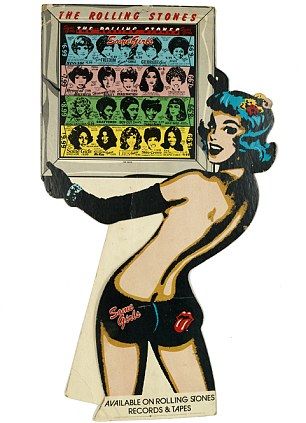
Underneath a handful of PWL singles and some battered old Decca 45s that looked like someone had been trying out a Torvill & Dean routine on both A and B sides, I uncovered a dusty but cleanable copy of The Rolling StonesMiss You in an Irvine charity shop a couple of weeks ago.
‘Record’s: Big one’s, various price’s. Wee one’s 49p.’
I paid a pound. “But ye kin get twa fur that,” came the reply after me as I left skipping out the door.
Miss You is the Stones at their grooviest, campest, louchest best. From Charlie’s hi hat ‘n four-to-the-floor disco beat, Richards’ slashing, fluid A minors and Wyman’s propulsive, trampolining, head-nodder of a bassline to Jagger’s praw-traahck-tayed delivery, it never outstays its welcome. Folk will point to Gimme Shelter and Tumbling Dice and Paint It, Black and Sympathy For The Devil and We Love You and She’s A Rainbow and Wild Horses and Street Fighting Man and (add your own here ______) but, for me, it’s Miss You‘s Sucking In The Seventies swagger that finds itself at the top of the tree when it comes to listing favourite Stones’ tracks.
Rolling Stones – Miss You
Jagger’s vocal on Miss You is borderline ridiculous, a mish-mash of wrongly pronounced vowels held in place by a random selection of unnecessary consonants. His approach to vowels is similar to that of a spin bowler taking a long, slow run up to his delivery at the wicket, with neither the receiving batsman nor, in Jagger’s case, the listener, knowing exactly what twisting and turning pitch they’re about to receive.
Ah’ve bin hangin’ aaat saw laang, ah’ve bin slaypin’ awl alahn, lawd ah miss yeeoow…Wit sum Poo-Ert-Oh-Reekin gihls who jist daaa-yn ta meetcha… And yet, and yet..he somehow finds a fantastically soulful vein during the song’s bridge; Ooh, baby, why you wait so long? Come awn! Come hawm!
Then he goes for some whispered pillow talk, eases his way into the song’s hooky ad-libbed falsetto and comes back to the coda with the same loose approach to vowels as he had at the start. It’s a masterclass in the many faces of Jagger, almost cliche and the blueprint for a hundred tired TV impressionists. Such is Mick’s personality, you can see him act it all out as you listen, the real deal in tiny-waisted satin pants and lemon blouson.
But it’s Wyman though who steals the show here. He’s on a whole other level of playing, conjuring up his greatest fret-spanning bassline on the back of a particularly funky seam of notes that Billy Preston, the Stones’ live keyboardist of the time, had pulled from the ether during rehearsals for some low-key Stones shows in 1977. Wyman aped Preston’s riff and out, it seemed, popped Miss You‘s elastic backbone. The bedrock of the record, yet, such is the way of the Stones, it’s neither credited to Wyman nor his source.
Every Rolling Stones’ track is a Jagger/Richards composition, regardless of how the song came to be. You could argue that Miss You‘s understated, tickled electric Wurlitzer piano track is pretty much indispensable to the record too, hearing the way it unobtrusively winds its way between Richards’ and Ronnie Woods tapestry of freeform guitars, but other than the small print on the credits of the song’s parent album (Some Girls), you’d never know this was the work of The Faces’ Ian McLagan. It would appear that playing on a Stones record is payment enough for anyone who finds themself in the studio with Mick ‘n Keef. And maybe for some it is. And maybe too, that’s why some key members have left through the years.
Them targetted ads, man. You don’t get nuthin’ for free. While you’re scrolling obliviously through social media, Zuckerberg’s and Musk’s analytics monkeys are harvesting your data; your likes and dislikes, the length of time you interact with something, the speed you scroll past, whether or not you click a follow-on link. It’s happening right now as you read – or don’t read – this. It’s all fed into the system and the next thing y’know, your timeline is full of desirables. You knew that already though. Mention car insurance to your significant other and sure as 4th gear follows 3rd, you’ll start to notice car insurance ads on your socials. I was tasked with booking Taylor Swift tickets a month or so ago and almost immediately I was being bombarded with ads for ‘the last remaining’ hotel rooms in Edinburgh. Turns out they were too.
I’m a sucker for well-placed social media marketing. In fact, the moment an eye-catching ad makes itself known, my PayPal account will be engaged before I’m fully aware of what I’m doing. The past couple of months has seen me buy a cord ‘shacket’, trainers, a sweat shirt, a 7″ EP with 4 reggaefied versions of James Brown’s Night Train and (imminently) this…
Sokabe Keiichi & Inokasira Rangers – Born Slippy
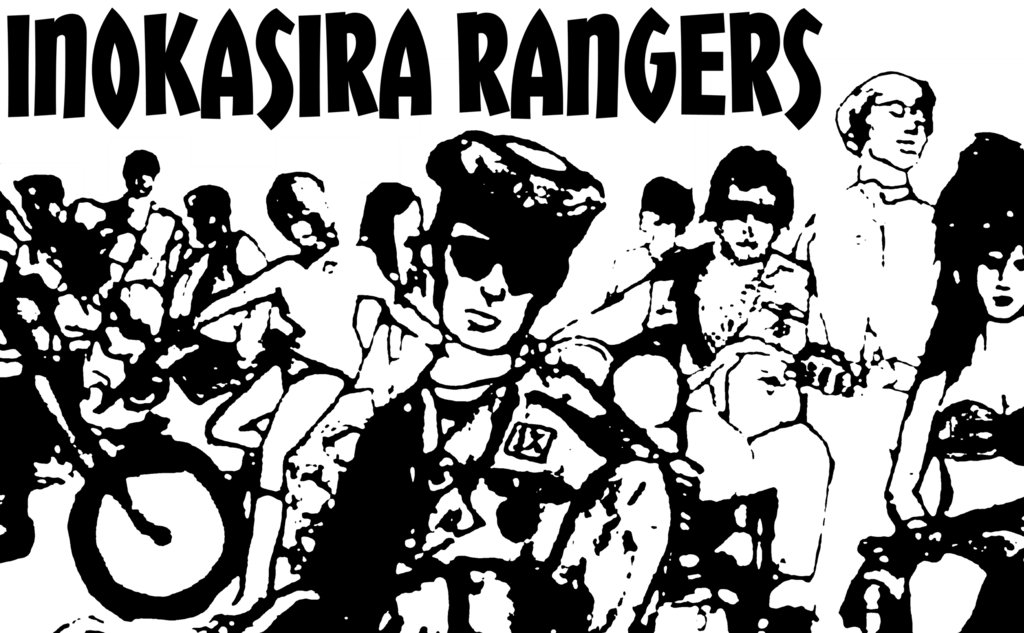
Yes! It’s a cover of Underworld’s relentless clattering techno thumper, used to great effect in Trainspotting and as such, the sound of 1996. You didn’t know you needed a cover of this, did you? Like all the best cover versions, it takes the original’s blueprint, throws it away and recasts the track in totally new light. This particular Born Slippy is slowed down, reworked and reborn as a laidback lilting rocksteady reggae cut from the sunbaked beaches of, eh, Tokyo-by-way-of-Kagawaken. It’s great, of course.
Off-beat organ, chicka-boom drums and scratch guitar, all reggae staples present and correct, but topped off with Keiichi Sokabe’s amazingly cod-Anglified vocals. “She was a lipstick boy, she was a beautiful boy…Let your feelings slip, boy, but never your mask, boy…Look at me, mum, squatting pissed in a tube hole on the Tottenham Court Road…Lager, lager, lager, shouting…” There’s a great wee slide guitar part that wheezes itself off and out in to the ether to introduce the “She smiled at you, booooy!” line, the Edge recast as a dreadlocked Japanese roots rocker. Listen out for it.
Turns out this was a track first released in 2017. The internet being the massive pool of never-ending music it is means that it may well have passed you by in the ensuing 6 years since. Luckily for all, Parktone Japan has just reissued it on 7″. It’s limited, so be quick.
In his day job, Keiichi Sokabe is vocalist in cult Japanese act Sunny Day Service, a band that’s never far from a 12 string jangle or well-worked harmony, and nothing like the track above. It turns out it’s the Inokasira Rangers who are the skank heads here. Back in 2016, the 4-piece ‘Rangers dispensed with a vocalist to play fantastic instrumental versions of the punk/new wave catalogue as authentic as The Upsetters at Black Ark with Lee Perry at the controls. The tracks coulda been straight out of 1972 or 2022, such is the Japanese approach to authenticity. A curio perhaps, but one worth further investigation. Want to hear Geno or Neat Neat Neat or What Do I Get? given similar treatment to Born Slippy above? Of course you do. The internet is your friend…
You can hear sound in pictures, can’t you? The slick, spitting whoosh of a car’s tyres on a wet road, the rush of wind in the ears as a hawk circles the sky. I can hear sound and music when I look at art. A far-off accordion on a Parisian arrondissement when I look at Van Gogh’s Starry Night. The gentle chirping, breezy sound of the Italian countryside in the background of the Mona Lisa. Low level muttered chatter, barely audible, when studying Hopper’s Nighthawks. Even if the current Banksy exhibition in Glasgow wasn’t soundtracked by background beats, I’d expect to hear fragmented hip hop, cut-up DJ Shadow-type rhythms as I observed Banksy’s highly intelligent mish-mash of politically-charged street art.
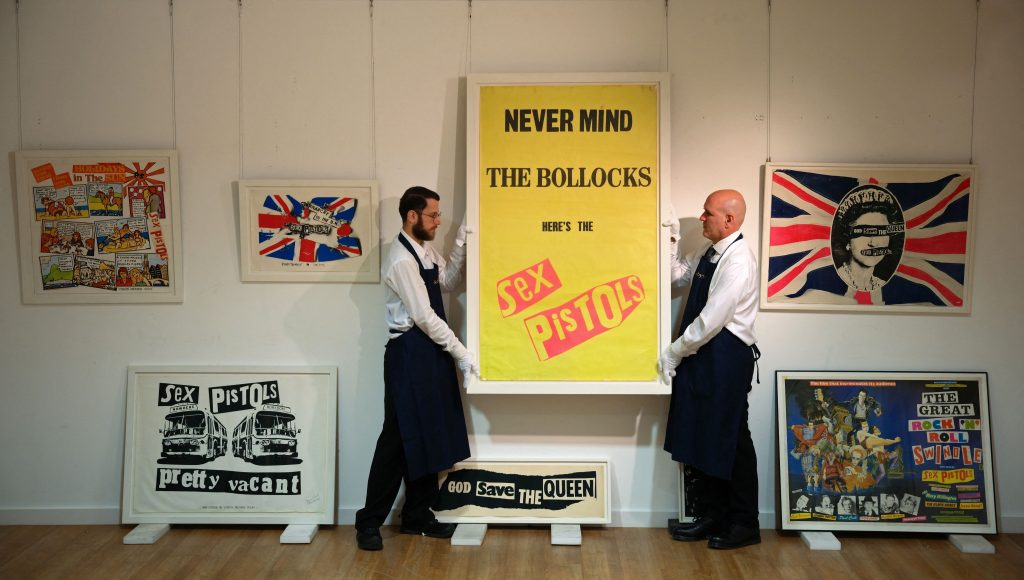
Jamie Reid’s art that went hand in hand with punk screams loudly at you. Ransom notes cut out from newspapers, laid off line with no regard for placement of capital letters was the perfect encapsulation of a scene at odds with the conventions of society. The ultimate statement – sticking a safety pin through the top lip of the Queen during Jubilee year – was perhaps his – and punk’s – defining moment.
If you’ve never heard a Sex Pistols’ record, I can imagine that Jamie Reid’s art tells you all you need to know about the noise that’ll fly off the grooves. Loud, in your face, unconventional, provocative, new, exciting…all these things relate to both the Pistols’ output and the artwork that it came wrapped in.
Sex Pistols – God Save The Queen
Other artists and labels have formed perfect marriages of visual to audio – the Factory Records catalogue, that run of unmatchable Smiths singles, Vaughan Oliver’s metaphorical interpretations of Pixies’ unholy racket, but without Jamie Reid’s redefining of what sleeve art could be, these bands’ and labels’ releases might have looked very different. Other than Prog, which had Hypgnosis and Roger Dean creating grand, sweeping and highly stylised visions of far-off lands and fantastical creatures that mirrored the widescreen and grandiose ideas of the music within, much music up until punk came wrapped in company sleeves or bog-standard band photos. I’m not sure, pre punk, bands had such things as logos. No band since punk would be seen without one.
With Malcolm McLaren dead and, more recently, Vivienne Westwood, Jamie Reid’s death has seen the end of punk’s holy triumvirate, its trio of agitators and prrrovocateurs now gone forever. Their art, their style, their influence lives on. No future? I don’t think so.
“I feel that having a No. 1 record derailed my career. It seems to me that being a pop star is almost like being in a type of prison. You have to be a good girl. The media was making me out to be crazy because I wasn’t acting like a pop star was supposed to act.
My tearing the photo put me back on the right track.”
I thought about not posting this. There’s been a flood of Sinéad O’Connor posts since the middle of last week, and the internet probably doesn’t need another one. But her sudden death had me scrambling back to Rememberings, her fascinating and brilliantly-written autobiography, and, by association, to some of her greatest music; the time-stopping Thank You For Hearing Me, the Thatcher-baiting Black Boys On Mopeds, the dubby majesty of her collaboration with Jah Wobble on Visions Of You. Social media threw up many others – deep cuts, as they say nowadays – that shone new light on under-appreciated songs sung by an under-appreciated artist. Morrissey, so often the bigmouth who strikes again, seemingly got it right with the statement he released the following day. I could have picked any of those tunes and pulled together a decent blog post, but the book had me scurrying around for unforgotten yet buried video footage that, coupled with Sinead’s written account of the events became the only thing worthy of my words.
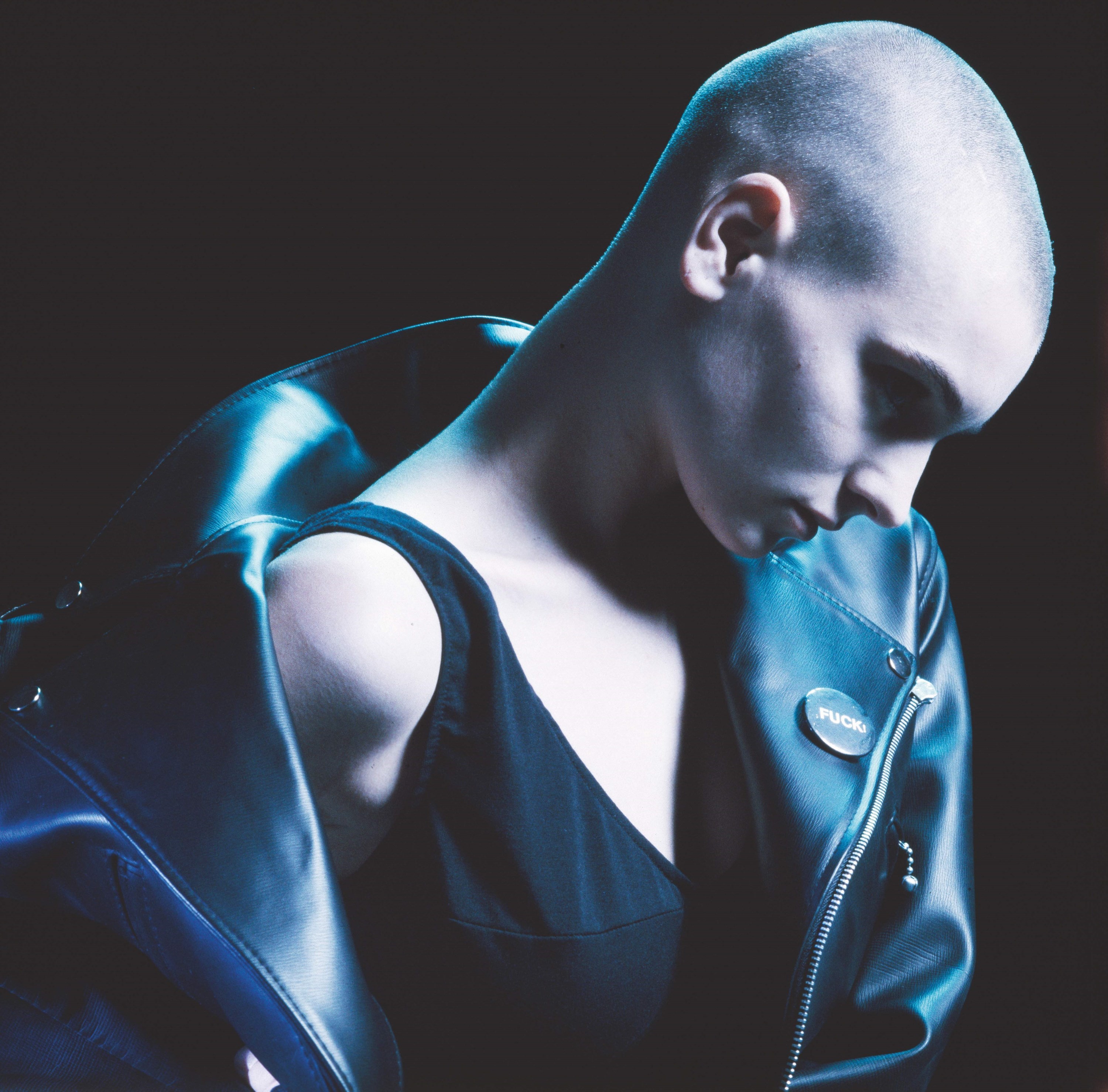
As she notes in Rememberings, there were two Sinéad O’Connors. The almond-eyed suedehead who cried real-time tears in the video for her definitive version of Prince’s Nothing Compares 2 U and the one who came after that; the misunderstood protestor who fought a tough war against the wrongs of the world and was condemned to hell for it.
It’s 1992 and down near the Bowery, where New York’s Avenue A meets St Mark’s Place, O’Connor frequents a ‘juice bar’ and has befriended its Rasta owner. Over time they become close enough friends that the night before Sinéad will be filming for an appearance on Saturday Night Live, he confides in her that his life will end abruptly and soon. He’s been running guns and drugs, using school kids as mules and moved his young couriers into a rival’s patch. Sinéad is horrified. “The fucking treacherous bastard,” she seethes. She draws parallels with Pope John Paul II, a far more prominenent figurehead than her Rasta pal, but one who also appears to condone the abuse of children. She thinks back to Bob Geldof ripping the poster of John Travolta and Olivia Newton-John live on Top of the Pops when the Boomtown Rats finally topple their reign with Rat Trap, and how she has always intended carrying out the same act with her mother’s photo of the pope, a photo that’s hung in the family home since John Paul’s visit to Ireland in 1982.
“(The photo) represented lies and liars and abuse. The type of people who keep these things were devils like my mother. I never knew when or where I would destroy it, but destroy it I would when the right moment came.”
For her Saturday Night Live performance, she’s wearing a dress that once belonged to Sade. It hangs ladylike, “a dress for women to behave badly in.” She hasn’t told anyone, but she’s going to change the words to Bob Marley’s War, dropping some of the lines – taken from a United Nations speech given by Haile Selassie – and replacing them with some lines of her own.
“It would be a declaration of war against child abuse. Because I’m pissed at Terry (her Rasta friend) for what he told me last night. I’m pissed he’s been using kids to run drugs. And I’m pissed he’s gonna be dead on Monday. I’m also pissed that I’ve been finding brief articles buried in the back pages of Irish newspapers about children being ravaged by priests but whose stories are not believed by the police or the bishops their parents report it to. So I’ve been thinking even more of destroying my mother’s photo of John Paul II.
And I decide tonight is the night. I bring the photo to the NBC studio and hide it in the dressing room. At the rehearsal, when I finish singing ‘War’, I hold up a photo of a Brazilian street kid who was killed by cops. I ask the cameraman to zoom in on the photo during the actual show. I don’t tell him what I have in mind for later on. Everyone’s happy. A dead child far away is no one’s problem.”
Maybe now you can appreciate what was firing through her mind in the run up to the show. Clever and calculated and willfully confrontational, this wasn’t a spontaneous act. This was years of built-up rage – rage at the Catholic church, at her own mother, at authority who ignored the cold truth – and she was using her status to highlight it.
“I know if I do this there’ll be war. But I don’t care.”
Afterwards: “Total stunned silence in the audience. And when I walk backstage, literally not a human being is in sight. All doors have closed. Everyone has vanished. Including my own manager, who locks himself in his room for three days and unplugs his phone. Everyone wants a pop star, see? But I am a protest singer.”
Two weeks later, Sinéad is booked to appear at New York’s Madison Square Garden, just one singer in a dazzling array of stars who will be gathered to celebrate her hero Bob Dylan’s 30 years in music. This time, she’s wearing a dress that she hates (‘bouffant, shoulder pads, Dynasty…I look ridiculous and underweight.‘) Introduced by Kris Kristofferson, the crowd turns an ugly shade of redneck, booing her from the moment her name is announced.
“I actually think it’s the outfit, because in my excitement at being part of the show, I’ve forgotten about the pope-photo incident on SNL.
Then the other half of the audience begins cheering to fight off the booers. And there ensues a noise the likes of which I have never heard and can’t describe other than to say it’s like a thunderclap that never ends. The loudest noise I’ve ever heard. Like a sonic riot, as if the sky is ripping apart. It makes me feel nauseous and almost bursts my eardrums. And for a minute or two I’m not sure the audience members aren’t going to actually riot. They’re clashing so badly already with their voices. How do I know what else might happen?”
She’d planned to sing an arrangement of Dylan’s I Believe In You – a song that means the world to her – and on more than one occasion, her band (assorted Booker T/MGs) attempts to strike up the opening notes and lead her into it, but the ferocity of the ugly crowd in front of her has forced Sinéad to stare them out defiantly instead, arms by her side, doe eyes blinking into the vast arena, a waif-like David against the ugly Goliath of the Garden masses.
“I look at Booker T’s beautiful face. He’s mouthing the words ‘Sing the song’, but I don’t. I pace awhile onstage. I realise that if I start the song, I’m fucked, because the vocal is so whispered, both sides of the audience’s battle are going to drown me out. And I can’t afford not to be heard; the booers will take it as victory.”
Kris Kristofferson arrives by her side. He’s been told to get her off the stage, but looking at the film of it, you wouldn’t know. “I don’t need a man to rescue me, thanks.” As he returns empty handed, Sinéad gets her instruction instead from God. With her voice wavering then settling into something strong and powerful, she yanks out her in-ear monitors and rages once again – “the biggest rage I can muster“- into an aggressive and impassioned version of War, emphasising her own fingerpointing lines about child abuse.
She leaves, only after the briefest of defiant, eyeballing glances at the audience, her sharp exit a metaphor for what would follow, Stateside at least. It’s an astonishing, powerful, uncomfortable event, captured forever on this outtake from the official film of the concert. Outtake? There was no way this was going on the official release.
Afterwards, her father (he’d been in the audience) suggests she rethink her career prospects as she’s just destroyed the one she has. And she feels let down by Dylan. It should have been him, not Kristofferson, she reasons, who came out and told the audience to let her sing. So she gives Bob the evil eye as he sits in the wings. Bob stares back, baffled and handsome. Sinéad calls it ‘the weirdest thirty seconds of my life.’ Quite the claim in a life packed with incidents and accidents, rage and regret.





 Plain Or Pan