Get This!

Power. Passion.

True story: At the tail end of the ’80s, a musician pal of mine shared not only management but a hotel with Debbie Harry. Different rooms, just to be clear, although I suspect that’s what you were thinking anyway. Weren’t she and Chris Stein an item at that time? I digress…

D’you want to meet her?” asked the manager.

Damn right I do,” said the musician.

Calls were made, diaries were checked, his people talked to her people and, in the lobby of one of New York’s more salubrious hotels, my pal was introduced to Debbie Harry, all chiseled cheekbones and Cupid’s bow red lips, grown-out bottle blonde bob and a dazzling mile-wide smile; classic Harry, in other words.

Very pleased to meet you!” he said aloud.

“(I used to masturbate to you!)”, he thought internally, “(…and with this very hand!)”, his palm finally coming into contact with the object of his decade-long lust.

He-eeeyyy! Great t’meet yoooouuu toooooo!” drawled Debbie with effortless ennui, shaking his hand loosely, the vowels trailing off like verbal ellipses into the night, quickly followed by her gaze as she scanned the room for someone, something more interesting. She’d carried out this sort of shit for longer than she cared to remember. Over and done with in less time than it takes to mouth “Atomic!“, with a flick of the bob and turn of the designer heel, she was gone.

I licked my hand after, but!” he offered as a way of winding his story up. “I could still taste her an hour later.” One day he’ll maybe ask me to ghost write his life story. There are plenty stories, he assures me, just like this one.

Union City Blue is Blondie on steroids, in widescreen.

Blondie Union City Blue

The airy spaces between those twanging electrified notes that play its signature riff are just as crucial to the feel of the record as the notes themselves; tension and release in an intro that’s become immediately recognisable – “I’ll name that tune in one!” – as Clem Burke’s Moonisms on the drum kit propel the whole thing forward.

The story goes that when Blondie recorded Heart Of Glass, producer Mike Chapman forced Burke to play to a click track as a way of ensuring he kept to its strict and rigid disco beat. Burke, being a Brit Beat-obsessed mod, hated the controlled regimentation of it. But on Union City Blue, he’s allowed to cut loose, and as a result, the whole tune from the intro forward is carried along on a wave of flailing arms and splashing cymbals, Chelsea-booted kick and rifle-sharp rattling snare. He loves his drums, but he hates his drums, knocking seven shades of shit from the skins like there’s no tomorrow; the reason it’s his favourite Blondie song to play live. Young Clem is almost the star of the show…until Debbie makes herself known.
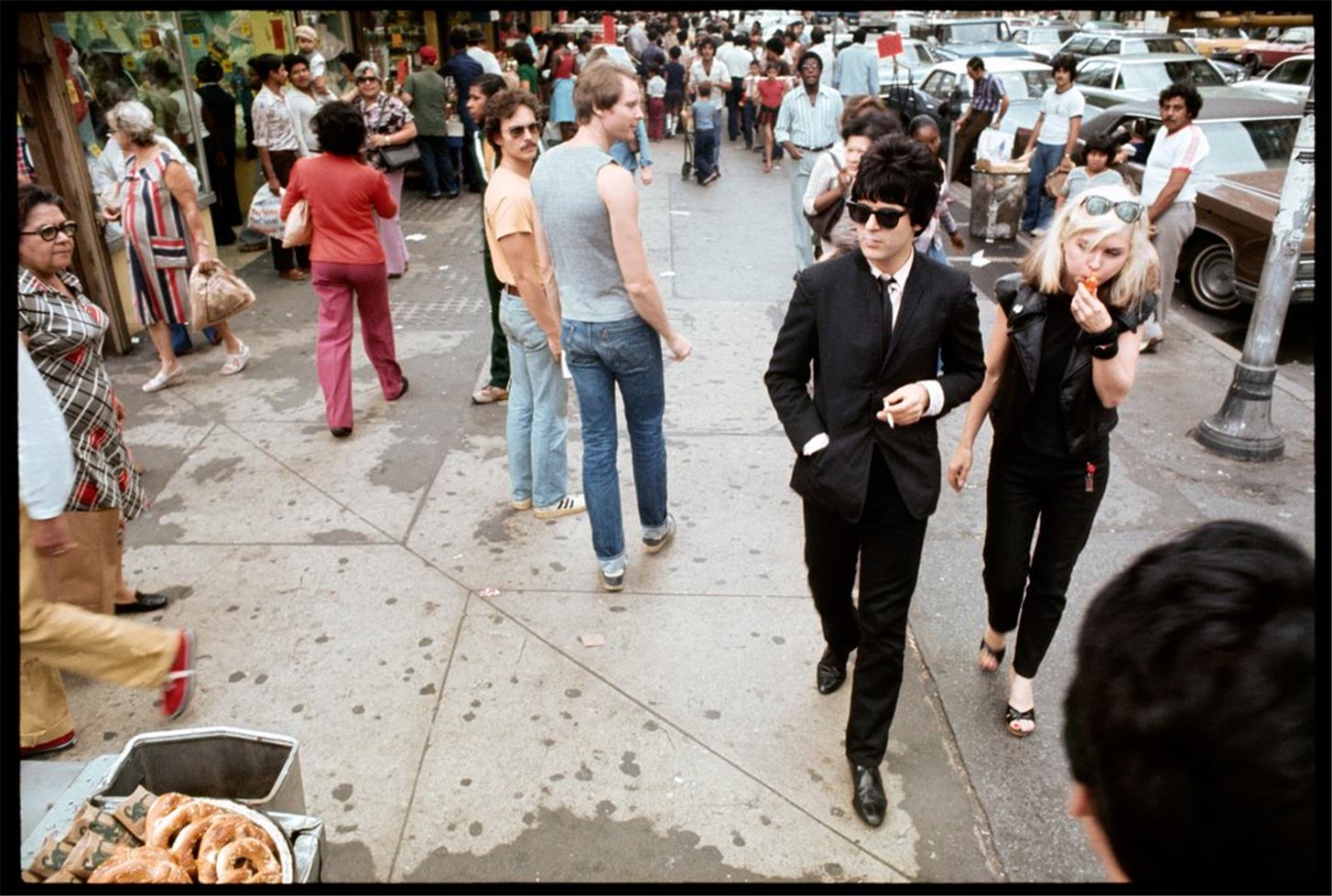
Oh oh, oh oh, what are we gonna do?

The juxtaposition between the melancholic melodrama in her voice and the controlled riot of the band behind her is what makes it. And that’s before we get to the key change.

Tunnel to the other side, it becomes daylight, I say he’s mine.’

Debbie’s voice is loud and central, the incontestable star of the show. You could fall in love with her just for her opening couplets on this song alone. Such is their power and engrained Proustian effect, I am immediately transported back by her breathy romantic yearning to a game of Subbuteo in my bedroom with Graham Crichton, my newly-bought copy of The Best of Blondie rotating continually (as he flicked to kick and I didn’t know).

It doesn’t matter that the lyrics are a load of nonsensical rubbish, it’s the sound of it that matters…the joy and freedom and soar as it reaches for the stratosphere and shoots far beyond. There are reign-ins (‘Power! Passion!‘), rock outs (‘Arrive! Climb up four flights...”) and drop outs; that little rev of bass at the 2 minutes and 3 seconds mark… it never fails to hit the spot.

Beyond their punk roots, beyond the jerky new waveisms of Parallel Lines, far beyond any of their peers at the time, Union City Blue is possibly Blondie’s finest moment. The video, a windswept Debbie in mirrored helicopter shades and orange jumpsuit, the band behind playing it straight and giving the lion’s share of the lens to the singer, only serves to enhance it.


Get This!, New! Now!

Sweeter Gabriel

Ten years ago, Jacob Lusk was one of the many big-voiced, big-hopes talents on American Idol that hung onto the fading coat tails of his dreams week on week until finally being eliminated at the top 5 stage. A decade later, dreams seemingly smashed, he’s back under the name Gabriels, signed to Parlophone and recording gospel-tinged soul that sounds authentically vintage but is as box fresh as a new pair of Air Jordans. American Idol’s loss is very clearly authentic, soul-stirring, respectable music’s gain. 

Sneaking out at the very end of last year, Love And Hate In A Different Time is the lead track from a long sold-out 6 track EP that’s already selling at eye-watering online prices. A low-key soul belter, Love And Hate… is all pounding rhythm, call-and-response, take-it-to-church vocals and snapping handclaps wafted straight off of some talc-dusted floor in a forgotten northern Mecca. Clomp your Weejuns at the appropriate time and you’ll convice yourself it’s 1975 and you’re hopped up on stolen Dexies in the Wigan Casino. It’s the sort of track that I know many of you will be familiar with and love already.

The music is great, on point as a long-lost 45 from the gospel/soul crossover era, the sort of thing Aretha Franklin’s early advisors might’ve had her lined up to sing on. It’s retro sounding, but brought right up to date with those wee synth whooshes – ‘eee-wooo!‘ – that separate the soul fug like a zip running up the middle of a mohair jumper. Not quite right on first impressions, yet unique, individual and totally acceptable once experienced.

The musicianship is one thing; those on-the-one cinematic string slides, the loose ‘n effortless jazz club piano and a snare beat that’s absolutely ripe for sampling, but it’s the vocal that elevates the track to greatness.

Having been pigeonholed as a Temptations’ covering, Luther Vandross loving crooner, those daft judges on the telly couldn’t hear Jacob’s true voice for all it was worth. With a tone that’s soft and rounded, he sounds not unlike Antony/Anohni channeling the spirit of Billie Holliday. Falsetto, yes, but with filling-loosening bass tenor when required, and dusted in the smoky undertone of a God-fearin’, spiritual-hollerin’ veteran.

Free from the naff pigeonholing shackles of mainstream TV and a need to compromise and fit in, he’s able to talk freely of his Christianity without alienating half his TV audience or making those slaves-to-sponsors telly executives jumpy and twitchy. Consequently, Jacob is much happier in the skin he’s in…and he’s unwittingly revealed himself as the most authentic soul singer since…well, add your name of choice here: __________ .

A recent run of UK ‘club’ dates, as they say, was abruptly cancelled recently, including a show at King Tuts. Shame that. No doubt greedy agents and double-crossing promoters are lining Gabriels up for headline shows in grander venues. Catch them before they become too big is what I say.

Get This!, Hard-to-find

Cullen Card

We asked 100 people to name a musical duo from Scotland.”

With a TV audience of millions watching and a five or six-figure jackpot prize hanging on your answer, the chances of a clued-in contestant offering up Boards Of Canada, let alone finding them in the list of Family Fortunes‘ half a dozen top answers would be slim to non-existent.

The Proclaimers!” Ding!

The Alexander Brothers?” Ding!

Eh… Arab??… eh… Strap??” Ding!

But not, never, Boards Of Canada. !Klax-on!

Boards Of Canada rarely make videos. Hardly ever (and possibly never) do press. Haven’t played live in over 20 years. The likelihood of them popping up between Phil and Ally to provide an alternative, modern-thinking, left-of-centre soundtrack while Jackie Bird brings in the bells from Edinburgh Castle is about as likely as a statue of Margaret Thatcher being erected in Auchinleck town centre. They are low-lying to the point of anonymity, and I suspect that’s the way, uh-huh uh-huh, they like it.

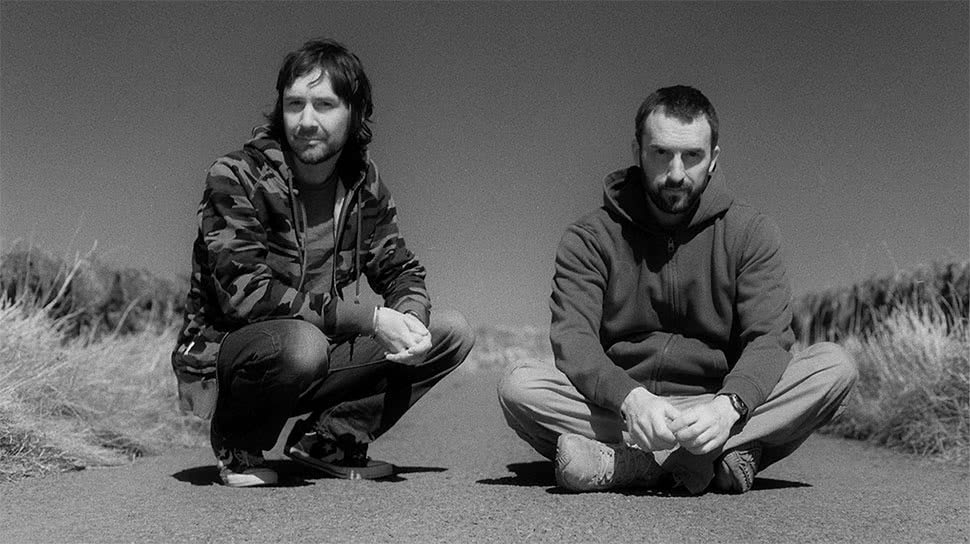
Formed in 1995 by brothers Mike and Marcus Sandison in the north east seaside town of Cullen, their music has given the world four albums and a handful of EPs. All are different yet all are fairly recognisable as the work of a band steeped in analogue production, vintage synths and the use of unfashionable and outdated technology as a means to produce warm, ambient electronic music that boils and bubbles with all the warm blooded soul of a beating human heart.

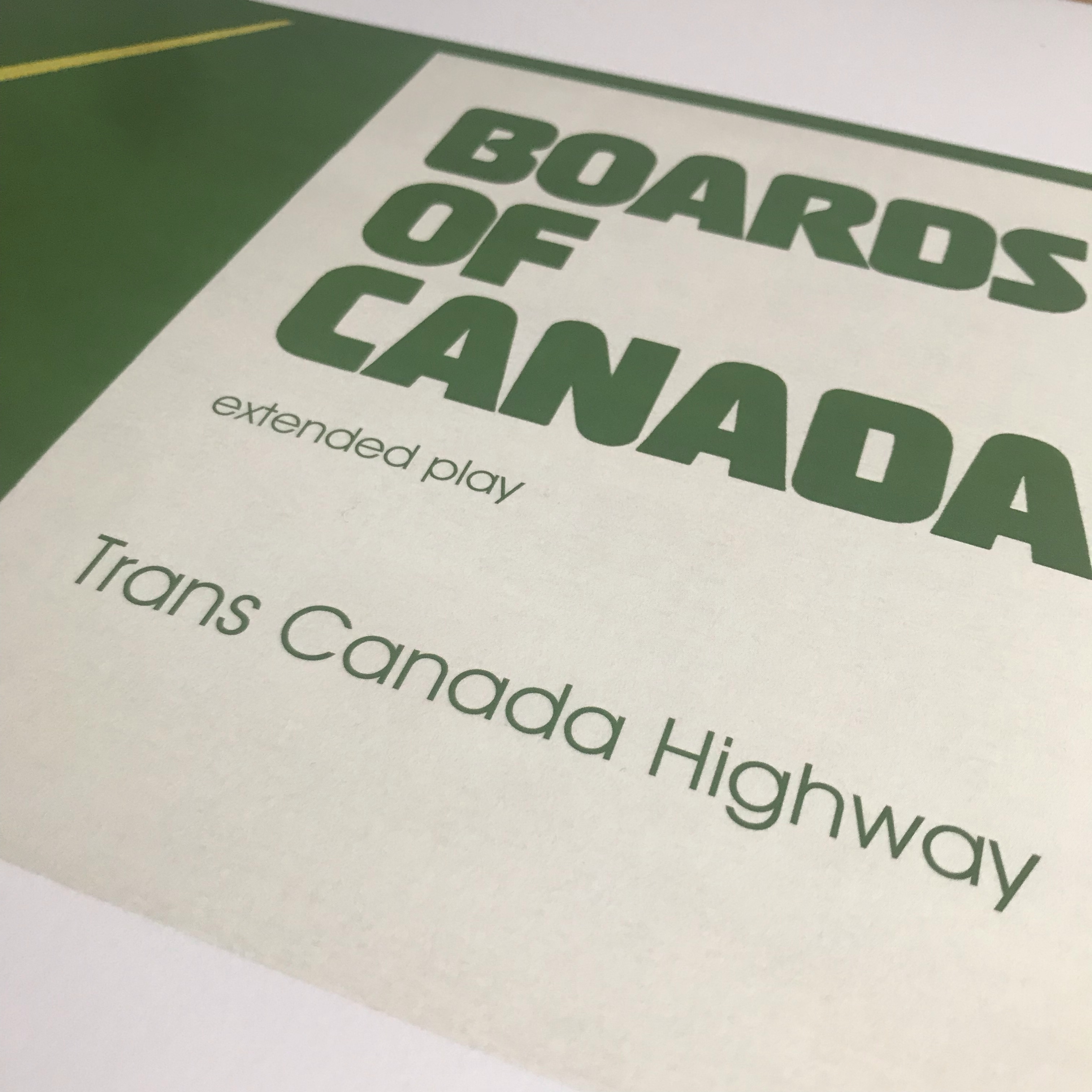
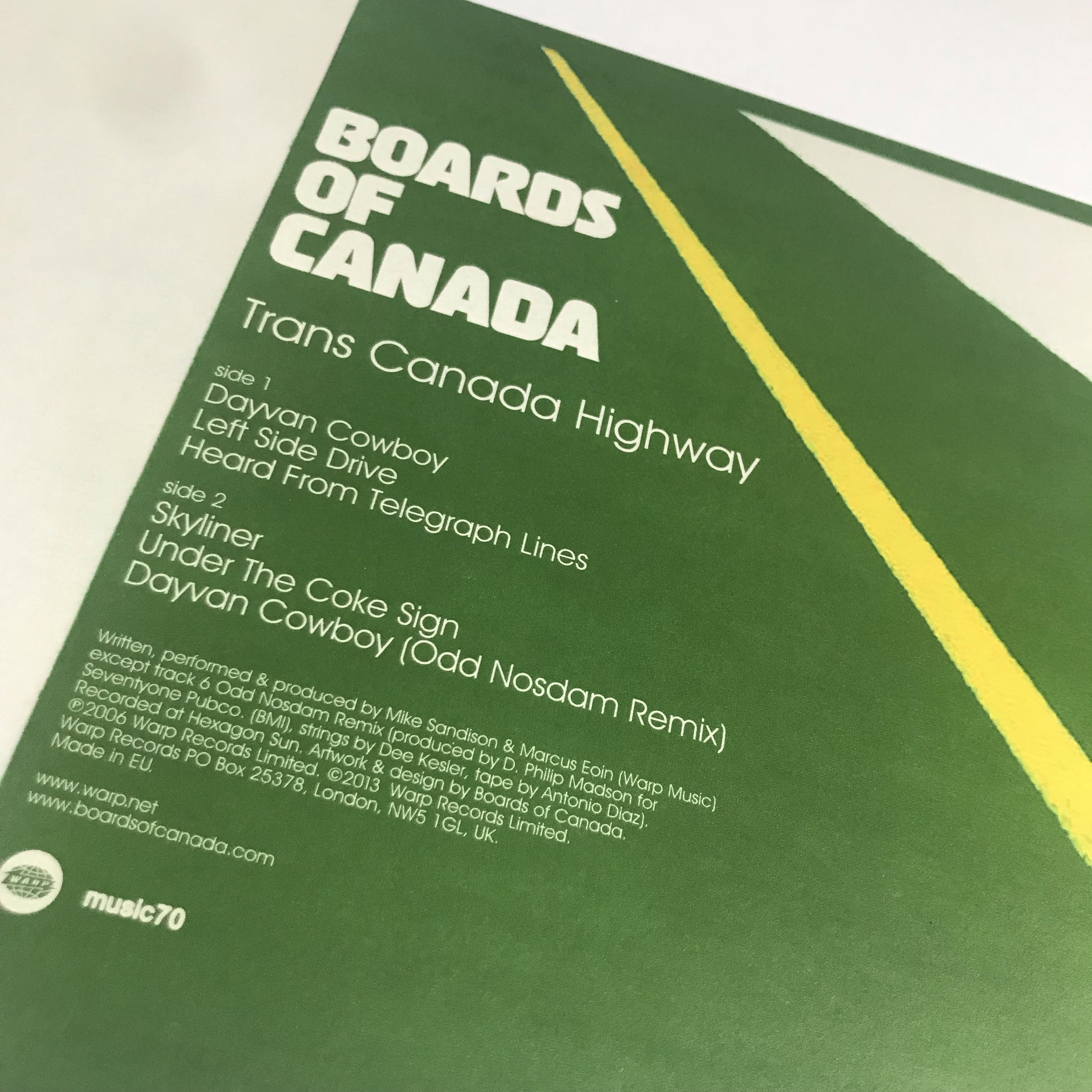
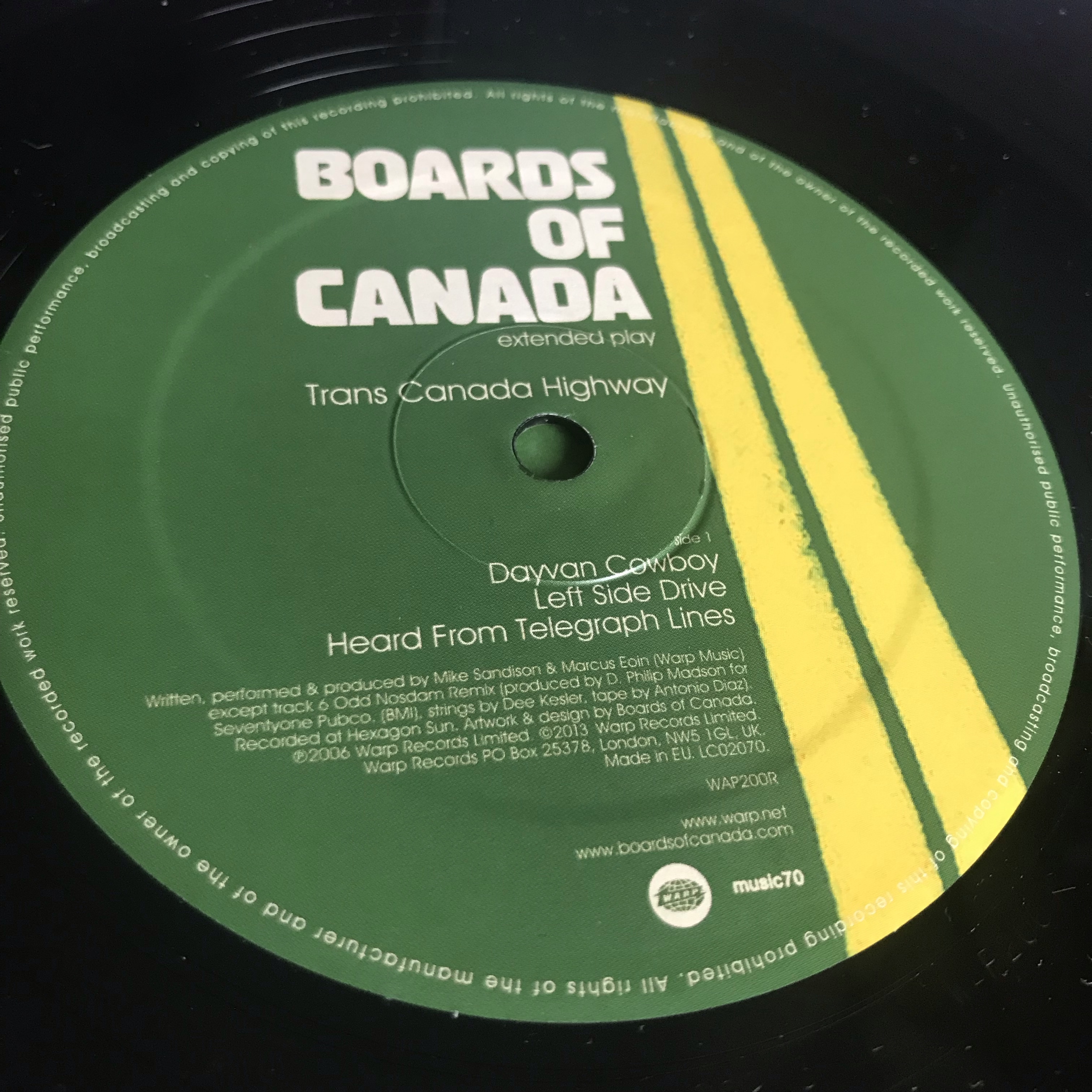
2006’s Trans Canada Highway EP may well be the missing link between Radiohead’s more adventurous excursions in electronica and My Bloody Valentine’s self-indulgent guitar manipulation.

Dayvan CowboyBoards Of Canada

Opening track Dayvan Cowboy is the band in miniature, its looping whitewash of fuzzed guitars, skeletal percussion and layered windrush of synths nestling murkily inside your head before the musical clouds part and, two minutes and seven seconds in, a bright light of aural sunshine sweeps the room. In dance terms, you would call this ‘the drop’. In Dayvan Cowboy, it’s the drop in reverse, the equivalent of coming up for air after a deep sea dive, a gasp of clean oxygen at the end of a journey living on borrowed air.

Gently broken hip hop beats rattle and ricochet, synthesised strings sweep across the ambient electronica, more rushing wind, more tinkling percussion, lovely wee doorbell-like chimes every now and then; head music for the soul as it peters out to its untimely multi-layered end. Someone should make one of those ultra slowed-down 3-hour versions and stick it on the internet for full-on effect. I suspect it would be just as brilliant.

All in, it’s lovely stuff and it makes even more sense in (slightly edited) video form:

Elsehwere on the EP you’ll find Left Side Drive – (LSD?) – yet more ear-burrowing, creeping electronica that features a borrowed rhythm that may well be a processed version of the beats in Massive Attack’s Karmacoma melded to slo-mo flotation tank music that very possibly was recorded in a dimly-lit bedroom or basement, with a couple of lava lamps and a copy of Pink Floyd’s Meddle for company, perhaps even the fragrant fug of Morocco’s finest curling tantalisingly around the nostrils.

Left Side DriveBoards Of Canada

Interestingly, or incredulously even, Solange Knowles – Beyonce’s wee sister – recorded a totally unofficial track that features her breathy soulful vocals floating across Left Side Drive‘s wafty ambience. It’s not the best track you’ll hear this week, but nor is it the worst. Chances are, given that it first surfaced in 2011, you’ve heard it before.

So there y’go; a track that links pop R’n’B superstar Beyonce to Scotland’s under the radar electronica pioneers Boards Of Canada. Who knew?!

Gone but not forgotten

I Don’t Understand This Thing At All

A work colleague pointed me in the direction of Tunnel 29, Helena Merriman‘s brilliant docu-novel of life in Cold War Berlin as the wall went up and it split into the Americanised west and Soviet-controlled east. The parallels with the war in Ukraine are never far from the mind as you read; the under-the-radar planning and meticulous thinking that kick-started things…the sudden, desperate need to escape the iron fist of Russian rule…the sheer numbers of Soviet troops surrounding the area; heavily armoured, well-drilled, seemingly impervious and always advancing, greedy for land and territory at any cost…with the unholy whiff of war crimes following their every leader-sanctioned move. If you didn’t know, the book might read like a Ukrainian refugee’s diary from this morning.

Merriman’s collected stories refers to a famous picture that I wasn’t aware of until now.

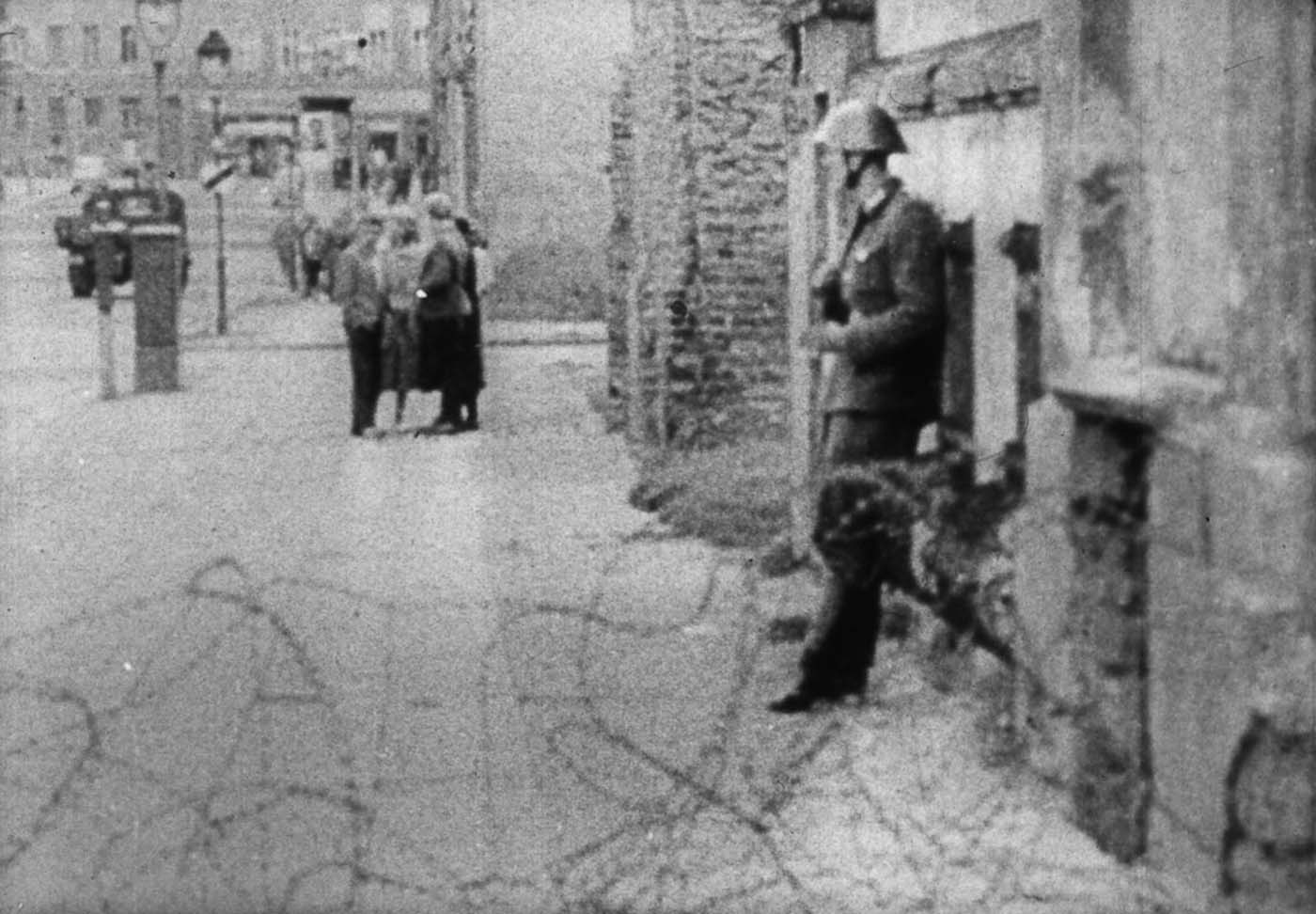
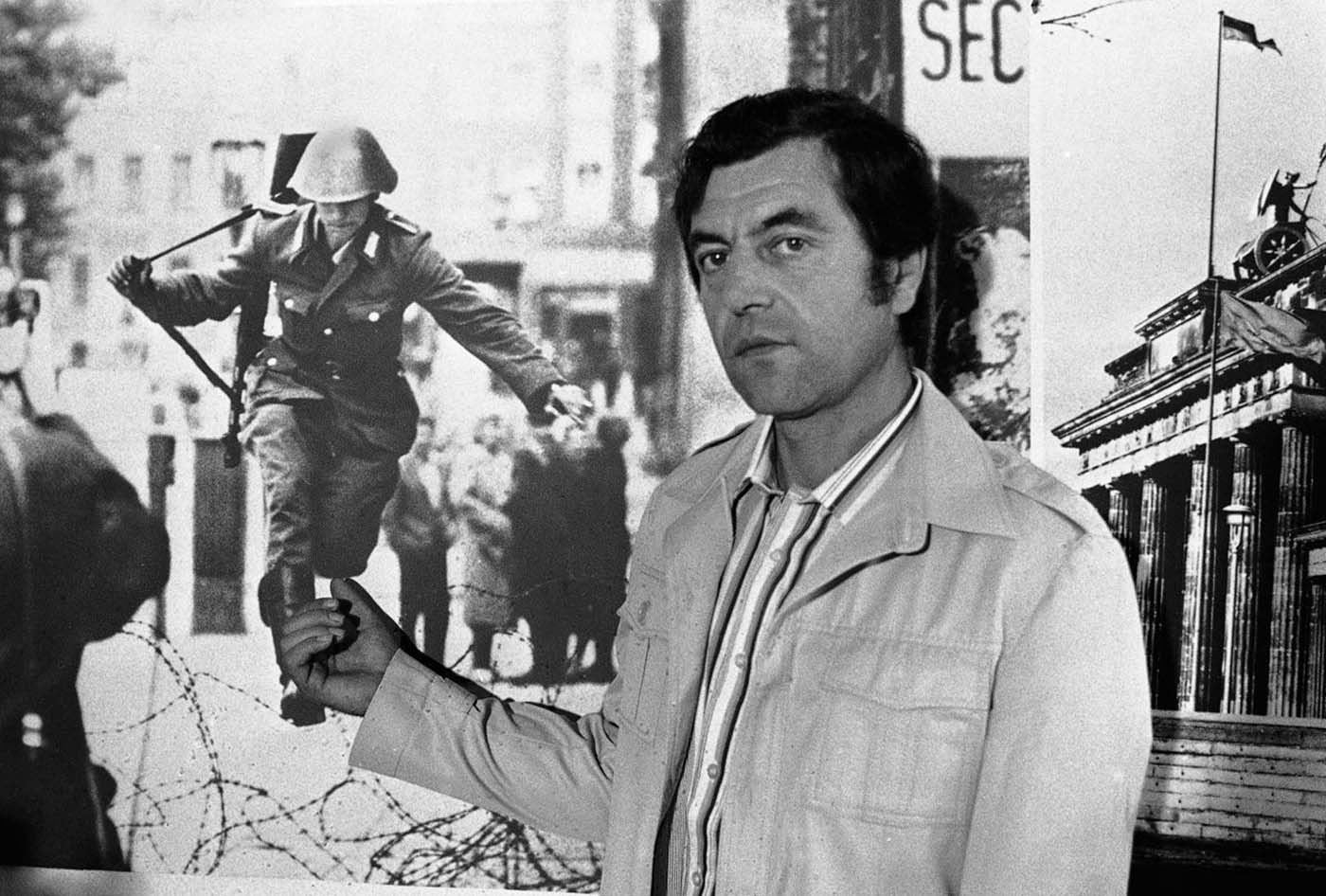
In the picture, taken in 1961, 19 year old Konrad Schumann, a recently-recruited member of the Bereitschaftspolizei (the riot police), is seen leaping the barbed wire fence that separates east Berlin from the west. Konrad is in mid-air, throwing off his gun, literally in the process of defecting from state-controlled aggression to the freedoms of the west; hamburger joints, rock and roll, education, opportunity.

It’s a powerful picture, with the blurry group of gossiping east Berliners looking pensively on and the half-hidden image of a West Berlin TV cameraman capturing it forever on film as young Konrad springs from the barbed wire he had been surreptitiously tramping down in the hours and minutes leading up to his leap to freedom.

The ‘wall’ was only three days old at this point. Put up without warning in the middle of the night, it snaked and scarred its way through Berlin, right down the middle of roads, across gardens, between houses, separating friends and family wherever they happened to be. Men and women who worked in the factories of West Berlin were suddenly cut-off from their terrified and confused families in the east. Men and women who worked in the factories of East Berlin were suddenly cut-off from their terrified and confused families in the west. Neighbours could look out at one another from across the barbed wire, but they were forbidden from talking to one another. They weren’t supposed to wave, acknowledge one another in any way at all. It fell to hastily-recruited border guards like Konrad to put the necessary muscle on them to ensure they complied. People in the east who were caught talking to their loved ones in the west were taken away by the Stasi, the secret police. Tensions were high.

West Berliners contrived to assist their eastern friends to escape. The less-guarded spots on the fence became escape routes, until more guards were added. Under cover of dark, many east Berliners swam the 30-yard wide stretch of River Spree to safety on the west bank. When the authorities found out, they simply dragged barbed wire under the water and blocked any opportunity of escape by river.

The guards on duty were very quickly the focus of abuse. As he paced his patch, Konrad was called a pig, a facist, a concentration camp enabler. The day before the picture was taken, a thousand-strong mob of protestors had been driven back by bayonet-wielding Soviet troops, but Konrad knew they’d be back.

He began to formulate a way of escaping without capture or punishment. One wrong move meant the end of his life. His decision process was sped up on day three with the sudden and unexpected arrival of concrete posts and steel plates. Quite rightly, the Russians had realised that their concertinaed barbed wire was insufficient in keeping easterns inside. Something more discouraging, more permanent was required.

For two hours, whenever no one was watching, Konrad would stamp and tramp the wire down to jumping-over height, building himself up to the state of mind where he’d be ready to leap. A few bystanders on the west picked up on what he was doing. When he was approached by one, Schumann faked a “Get back or I’ll shoot!” cry, before whispering to him that he was going to jump.

News of his planned escape travelled across west Berlin. A newsman appeared. A couple of photographers. A police van. The police in the west were friendly. They would help Konrad, but he needed to act fast. A crowd of westerners over the fence was not unusual, but they were encouraging him rather than decrying him. At some point, Konrad’s superiors would discover what was going on.

At 4pm, he flicked his half-smoked cigarette to the Soviet-controlled pavement, stepped back and faced the wall of barbed wire, took a run up and leapt. In mid air, he discarded his submachine gun, an unintentional but beautifully-timed metaphor. Photographer Peter Leibing, also 19, froze the moment forever. It remains an iconic photograph of late 20th century war.

Taken to safety by the police, Konrad was interrogated until found to be an ally. He was given a plane ticket to Bavaria, where he started a new life as a winery worker.

Konrad Schumann in 1981

However, it didn’t end well for Konrad. He was deeply distressed at what might happen to his family as a result of his defection. He felt shame at abandoning his comrades whilst saving his own life. Having broken the oath he swore upon when joining the police, he lived with the constant fear of death around every corner. He waited for bangs on doors than never came. He lived in anxiety-driven paranoia that he was being followed by Stasi agents wherever he went. He would read stories of eastern defectors who had been captured and tortured and never seen again. Even after 1989 and the fall of the wall, Konrad couldn’t face his family. His former comrades wanted nothing to do with him.

In 1998, suffering severe depression, Konrad hung himself in his Bavarian orchard.

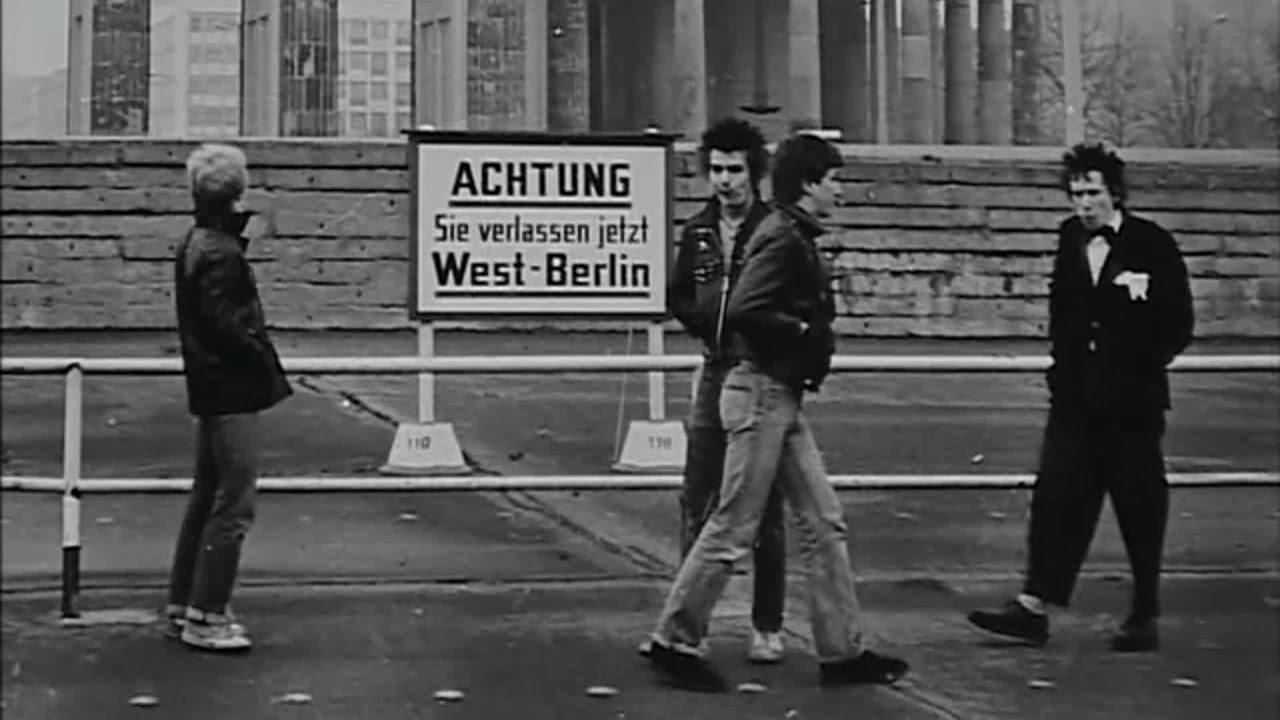
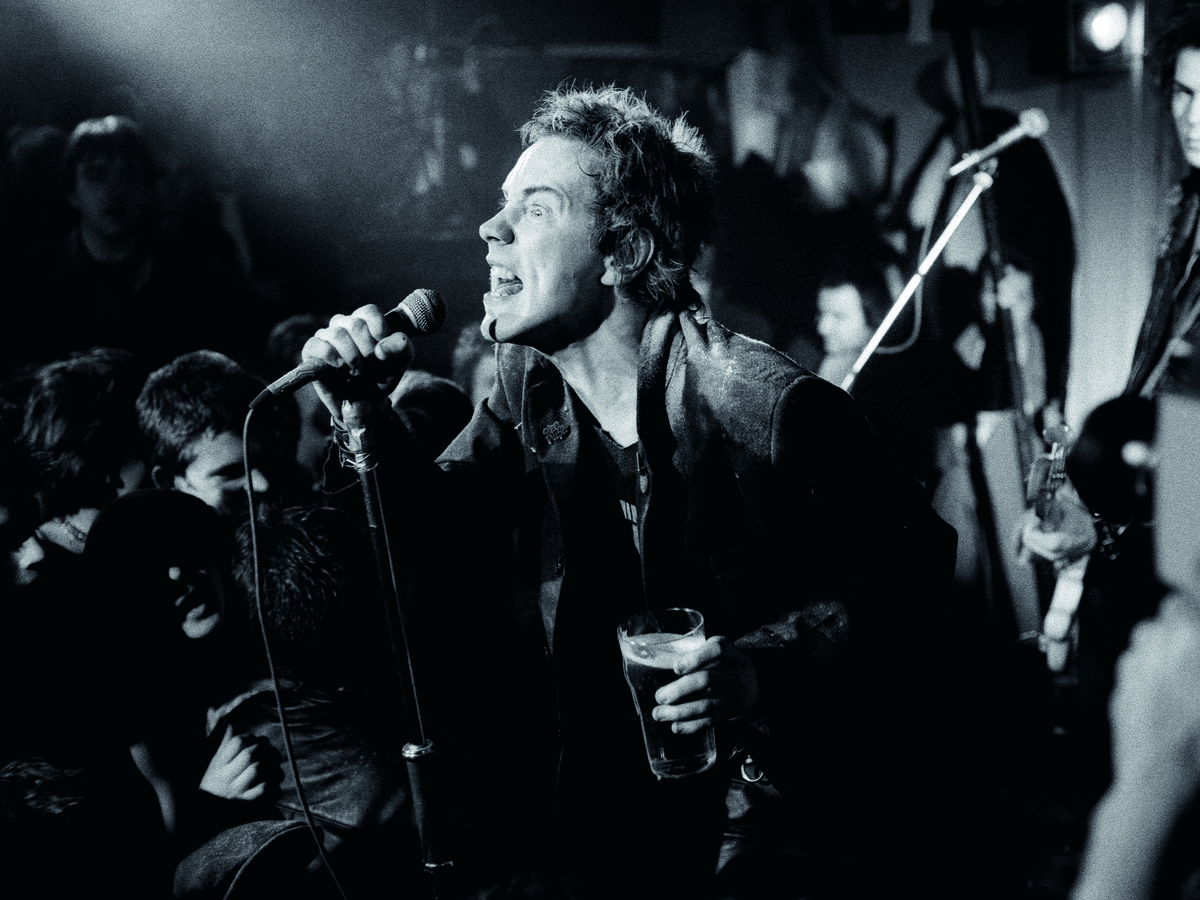
The Sex Pistols proved just as divisive as the wall Johnny Rotten sang off on the jackbooted sturm und drang of Holidays In The Sun. A howl of guitars and relentless razor-sharp attack, it never sounds anything less than insistent, urgent and now.

Sex PistolsHolidays In the Sun

I’m lookin’ over the wall/and they’re lookin’ at me!

I’m gonna go over the Berlin wall

I’m gonna go under the Berlin wall

I don’t understand this thing at all